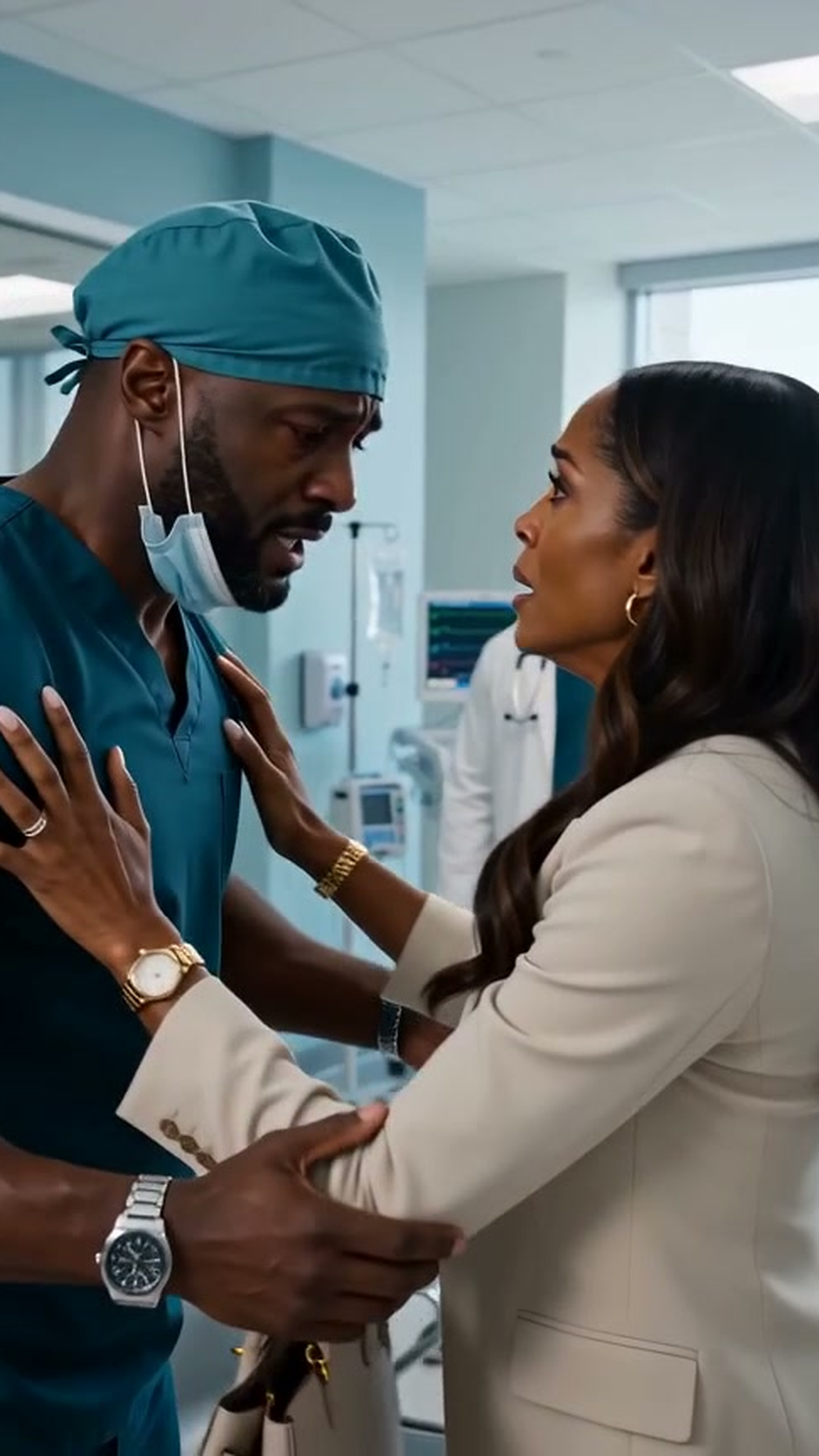
Story Genres: Family Drama

  • Chapter 6: What a Father Is For

    Chapter 6: What a Father Is For

    The board room had eleven chairs, and Marcus had counted them so many times in imagination that walking in felt like arriving at a place he'd already lived.

    He had not expected to walk in with his wife's hand in his.

    Naomi had refused, with a serenity that ended all discussion, to wait in the corridor. "I have been in the corridor for six weeks," she said, in the elevator, straightening his scrub top with both hands the way she used to straighten his tie. "I'm done with corridors, Marcus." Whitaker, arriving at a run with her briefcase and her composure in separate hands, took one look at the two of them — and at Denise Brooks, standing behind them with her folder — and made the fastest decision of her career. "The board can hear a family statement before it convenes formally," she said. "It's discretionary and it's unusual and I will trade every favor I own for it. Mrs. Brooks, when I nod — you talk. Tell them exactly what you'd tell a judge. Tell them the truth in your own words."

    The board filed in — surgeons, an administrator, a radiologist with a tablet, the chief of surgery with his jaw set like a man bracing for weather — and the chairman, Dr. Osei, seventy years old and famously immovable, opened the sealed file and said the formal words, and the room went through the timeline in the language of pressure readings and imaging sequences. Three bleeds. Two controlled. The third — the radiologist put the images up on the wall screen, six weeks of strangers' scrutiny frozen in gray light — a defect so deep in the architecture of the boy's chest that it looked, even enlarged, even knowing, like nothing at all.

    "Undetectable antemortem under trauma conditions," the radiologist said. "I've consulted two institutions. The word both used was *inevitable*."

    "Dr. Bennett," the chairman said, "the committee notes — unusually — that this review was convened at your own request."

    "Yes, sir."

    "Why?" It was not in the script; Naomi could tell by the way Whitaker's pen stopped. Dr. Osei leaned forward over the sealed file with his reading glasses low on his nose, and his voice, when it came, was not the voice of an institution. It was the voice of an old surgeon. "In forty years I have read reviews requested by families, by insurers, by this hospital's counsel, and — twice — by men who had something to hide and hoped to be caught somewhere smaller. I have never once read one requested by a surgeon against himself on a case with no complainant. Dr. Bennett, the floor would like to understand what you wanted from us."

    The room looked at Marcus. Naomi felt his hand tighten once around hers under the table, and then steady.

    "I wanted to know if I killed him," he said.

    Nobody wrote anything down.

    "I have run that night maybe ten thousand times. I know what the experts say, I know what the imaging says, and none of it reaches the place the question lives. I needed people whose job is not to comfort me to weigh my hands — because if I did it, if there's a second I could have bought that boy with a different choice, then I owe his mother that truth and I owe this hospital my license, and I'll hand both over in this room. And if I didn't—" His voice thinned, and he made it continue anyway. "If I didn't, I need to hear it from somebody whose word is heavier than mine, because mine isn't working. I can't sleep in my house, sir. I can't sit at my own table. I requested this review because I am trying to find out whether I'm fit to be believed — by a jury of the only people qualified to say. That's what I wanted from you."

    Dr. Osei regarded him for a long moment. Then he took off his glasses, folded them with great precision, and said something that Whitaker later claimed she would deny under oath if quoted, because chairmen of peer review boards do not say such things inside the record:

    "For what it is not worth, Doctor — the fact that you are sitting in that chair, asking that question, is data too. And this committee does not ignore data."

    "You understand that the preliminary finding—"

    Whitaker nodded.

    Denise Brooks stood up.

    She was not a tall woman, and she was not a practiced speaker, and her hands shook so hard on the folder that the papers inside it whispered. But she had buried a son and fixed, with her own hands and a borrowed surgeon, a porch rail her boy had promised to fix, and there are credentials no board can issue and none can take away.

    "My name is Denise Brooks," she said. "Jaylen Brooks was my son. He was seventeen. He liked his eggs scrambled hard and he was going to be an engineer and he is dead, and I have come here to tell you about Dr. Bennett, because I understand you may be deciding something about him today, and I am the only person in this room who was *owed* something by that night, so I figure my account ought to be in the record."

    The room was very still.

    "He told me himself. Sat right down. He didn't send a nurse or a chaplain, he came with his hat in his hands and he told me my baby was gone, and he answered every question I asked, including the ones that were just screaming with words on them. Then, when the funeral home talked money, it turned out it was handled. I didn't know by who. I run a register at the Dollar General and I clean offices at night, and my son got a stone with his name spelled right and flowers, and it was *handled*, and I found out from my cousin who works in billing at the funeral home that the man who handled it was the surgeon. And every Thursday since — every Thursday, rain or not — that man has come to my house and fixed my porch rail and my gutter and the step my mother broke her hip on in 2019, and he sits and he lets me talk about Jaylen until I run out, and when I run out he says *tell me the one about the science fair again*, and I have never — " Her voice went, but her chin didn't. "I have never once heard that man make an excuse. Not one. Not to me, who he could have made a hundred to. So whatever your papers say — my paper says this. My son died of something God hid in his chest. He did not die of Dr. Bennett. And if you take that man's license, you will not be punishing him for my boy. You'll be punishing every boy who comes after, for a flaw in the making of the first one."

    She sat down, abruptly, as if her legs had filed their own verdict, and Naomi — who had known this woman for less than an hour — reached across Marcus without thinking and took Denise Brooks's hand, and held it through everything that followed.

    It was not a long deliberation. The board was out for nineteen minutes. When they returned, the chairman read the finding in the flat, formal cadence of institutional mercy: no negligence; no deviation from the standard of care; the death of Jaylen Brooks attributable to a congenital defect incompatible with survival of the injuries sustained; the committee's additional commendation — and here Dr. Osei looked up from the page, directly at Marcus, and the formality cracked just slightly — "for the surgeon's conduct toward the family, which this institution will not detail in a public finding, but which it does not wish to leave unmentioned either."

    Whitaker closed her eyes like a woman whose parachute had opened. The chief of surgery exhaled six weeks in one breath.

    Marcus sat perfectly still with his hands flat on the table, and Naomi watched the verdict land on him and keep landing, the way rain keeps landing after the roof stops leaking — because clearance, she understood, was not the same thing as forgiveness, and the man who had requested his own judgment had never actually wanted to be *acquitted*. He had wanted to be *weighed*. It was the wanting that was the wound.

    In the corridor afterward, in the returning noise of the hospital — trolleys, voices, a monitor beeping its ordinary beep — Denise hugged him, hard, the way you hug a fence post you're determined to keep standing, and said, "Thursday. The gutter on the north side. And bring her," with a nod at Naomi that was half order, half adoption. "She's got the right hands for holding things."

    Then she was gone, into the elevator, with her folder against her chest.

    For a moment neither of them moved. The corridor went on being a corridor around them — a porter with a mop, a resident laughing once at something at the far end, the ordinary machinery of the hospital resuming its shift as if a man's whole life had not just been weighed in a room with eleven chairs. Naomi looked down at their joined hands, his surgeon's fingers still locked around hers hard enough to leave marks, and loosened them one by one, gently, the way you unclench something that has held on too long to know it is allowed to stop.

    David was waiting by the nurses' station with the lunch bag.

    He had carried it through the whole afternoon — through the corridor confrontation, the elevator, the hearing's long hour, all of it — this crumpled brown paper bag with a ruined pie in it, held first like evidence and then like an infant and finally, unmistakably, like a relay baton he had been appointed to deliver. He held it out to Naomi with both hands and the air of a man returning a hostage.

    "I picked it up off the floor," he said. "The sandwich survived, somehow. The pie did not. I—" He stopped, and the composure that had carried him through six weeks of corridors abandoned him all at once, and David Carter, who had cried in front of her that morning out of guilt, cried now out of something perilously close to joy. "I made him a bet in medical school. Did he ever tell you? I bet him fifty dollars he'd be married and divorced by thirty-five, because nobody could live with a man that incapable of asking for help." He wiped his face with the flat of his hand, unembarrassed, in front of the whole station. "I have never been so glad to lose fifty dollars in my life. Don't let him carry anything alone again, Naomi. He will try. It's a reflex, like breathing. It's your job to stand in the doorway with the bag."

    "I intend to," Naomi said, and took the bag, and found — because the day was not finished dismantling her — that the little folded note was on top, smoothed flat by somebody's careful hands. David's, probably. Or a nurse's. The whole hospital, handling her love letter like a fallen flag.

    *You don't have to take care of everyone. Let me have a turn.*

    "He read it?" she asked.

    "Three times," David said. "Standing right where you're standing. Then he folded it like it was made of glass and went in to face the board."

    "Whitaker." Marcus stopped the lawyer at the station, and his voice was hoarse and his eyes were on his wife. "The fund. I want Naomi's name on it as co-founder, and I want it announced properly — not buried in a newsletter."

    Naomi frowned. "What fund?"

    Whitaker looked at Marcus with the exhausted tenderness of a woman watching a client finally do the only healthy thing available to him. "Ah," she said. "He hasn't told you about the fund."

    And Marcus Bennett — cleared, commended, and forty pounds lighter in the soul than he had been at breakfast — took his wife's hand in a hospital corridor for the second time that day, and said the sentence that six weeks earlier would have cost him everything he was afraid of:

    "There's one more thing I never told you. Come home, and I'll tell you all of it — every last thing — in our own kitchen, where I should have told you the first night."
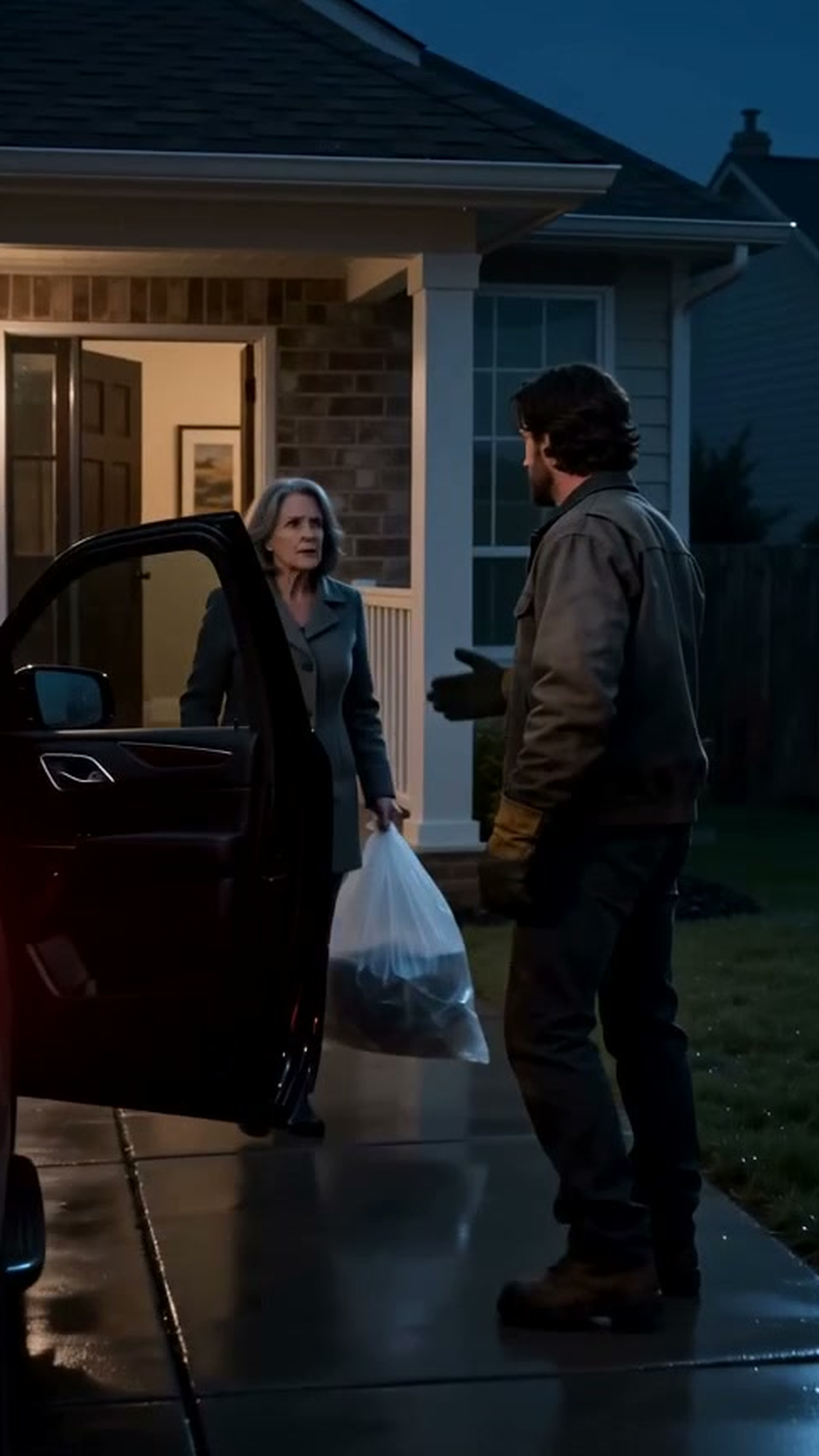
  • Chapter 5: Everything

    Chapter 5: Everything

    David said it again, gently, the way you lower something heavy to the ground: "Marcus. She deserves to know."

    For a moment nobody moved. The corridor held its bright, antiseptic breath. Naomi stood with her hand pressed to her mouth and her husband's unfinished sentence hanging in the air where it had broken — *Honey… there's something I—* — and the rest of it, the whole six weeks of it, stood behind that broken sentence like a wave behind a seawall, and she did the thing she had driven across town to do.

    She lowered her hand. She looked at him — his red eyes, the mask hanging beneath his chin, the shoulders of a man carrying something alone into the sea — and she asked the question like his wife, not like a prosecutor.

    "Marcus Bennett. What is Jaylen Brooks's middle name doing on a funeral receipt in your coat?"

    He made a sound then that she had never heard from him in eleven years. Not a word. The sound a structure makes.

    "Marcus—" she said, and stepped toward him.

    "Jaylen Marcus Brooks," he said. His voice came out raw and fast, a confession outrunning its own keeper. "It isn't his birth name. His mother put it on the stone because — she said I was the last person who held his heart and she'd be damned if—" He stopped. Swallowed. Started again, and this time he would not stop, and she could see him decide it, could see the seawall give. "Six weeks ago. A Tuesday. Car accident, a drunk ran a light. He was seventeen. He was bleeding in three places and I got two of them, Naomi. I got two of them and the third one was a flaw in his aorta he'd been born with, hidden, no scan ever caught it because nobody ever had a reason to look, and it tore while he was open on my table and he died with my hands in his chest. He died at one-fifty-two and I sat beside his mother in a plastic chair and told her and she thanked me. She *thanked* me, and I've been — "

    He ran out of air. David had moved, somewhere in there, had quietly gathered the fallen lunch bag and the pie container and the little folded note off the floor, and now he stood holding all of it against his white coat like an offering he didn't know where to set down.

    "The hospital sealed it," Marcus said. "Peer review. Lawyers. They told me anything I said could be discovered if the family sued, that you'd become a witness to my — state of mind. Whitaker did the math. Tell her after the ruling, she said. After. So I paid for the funeral out of my old residency account because he needed burying and his mama works two jobs and it was my table, Naomi, it was my *table*. And Thursdays I go to her house. The porch rail. Her boy was going to fix it in the spring. And the review board meets at three o'clock today — in less than an hour they decide whether I keep operating — and I was going to tell you tonight. At seven. With an ending. I've rehearsed it four hundred times in that chair and I never got past the first sentence, and I'm sorry, I am so — " His face finally, fully broke. "I'm sorry. I lied to you by silence for six weeks. You're the only person on earth I have never lied to, and I lied to you, and everybody in this building knew before you did, and I will spend the rest of my life being sorry for exactly that."

    The corridor was silent except for a monitor beeping somewhere, far away and ordinary.

    Naomi was aware of several things at once, in layers, like sediment. That her hands were shaking. That she was furious — a clean, bright fury, at Whitaker and the math and the hospital and him, at six weeks of cold beds and warm scrubs and her own voice saying *it's nothing* to an empty kitchen. That underneath the fury, vast and immovable, was grief — for a boy she had never met, whose middle name was her husband's — and that underneath the grief was something she had not expected to feel and would not have believed an hour ago: relief. The floor of her marriage had not rotted. It had been *loaded*. There was a difference, and the difference was everything.

    "You should have handed me the other handle," she said.

    His face crumpled. "Naomi—"

    "No. You listen to me now." She closed the distance between them and took his face in both hands, the way she had a thousand times, the way she had the morning of their wedding when his hands wouldn't stop shaking over his cufflinks. "I am not angry that a boy died, Marcus. I am not angry that you grieve him. I am angry that you decided what I could carry. Me. The woman who held your mother's hand in the ground. You don't get to decide that, beloved. That is not protection. That is you being the wall again, and I did not marry a wall. I married a *man*, and a man comes home, and a man sits at his own kitchen table, and a man says *a boy died in my hands today and I cannot stop seeing it*, and his wife — " Her voice broke at last, clean through. "His wife holds the other handle. That is the whole arrangement. That has always been the whole arrangement."

    He put his forehead against hers, right there in the corridor, in his scrubs, in front of God and the nurses' station, and wept without any attempt to hide it, and she held the back of his neck and let him, and neither of them cared, for the first time in six weeks, about a single other person in the world.

    "A reporter called me," Naomi said into his shoulder, because some confessions are easier made without faces. "Tuesday. At our house. She knew his name before I did, Marcus. She said *the Brooks case* like it was weather. A stranger stood in our kitchen through a telephone and told me, by accident, in the middle of apologizing, that my husband had a whole life I wasn't in."

    He went rigid against her. Of all the blows the day had stored up, she felt this one land the hardest — felt it go through him like a current — because it was the precise nightmare he had been trying, with all his ruinous discipline, to prevent, arriving anyway, by the back stairs, in a stranger's voice.

    "She knew before you," he said, hoarsely. "A *reporter*—"

    "She knew before me. The nurses knew before me. Paula knew. *D* knew—" She pulled back, and her hands were fists in the front of his scrubs, and the fury and the love were so braided by then that she couldn't have separated them with instruments. "Who is D, Marcus? Because I found the text. *Thursday still? The porch can wait if you're tired.* I stood in our bedroom and I read that and I did not call her, do you understand me? I did not call a grieving mother and interrogate her about my own marriage, because I wanted to hear it from *you*."

    "Denise," he said at once — too fast, the way innocent things are said when they've waited too long. "D is Denise Brooks. The porch is her porch. Thursdays I—" and then the enormity of it reached him, standing there, that his wife had spent two days imagining a lover where there was a grave, that his silence had furnished even *that* room for her, and he closed his eyes. "God. Naomi. There's no one. There's never been anyone. There's a porch rail and a grieving woman and a dead boy and a coward, and the coward is the only one of those that's mine."

    "I know," she said, and was startled, both of them were startled, by how true it sounded. "I knew it Tuesday. Renata knew it before I did. The only person who thought I needed protecting from the truth was the one who was drowning in it."

    He laughed then — a wrecked, astonished, single note — and then he was crying again, quietly, with her hands still fisted in his scrubs holding him up, and she thought: *here is the whole six weeks, right here. He has been standing in water up to his neck, waving me back from the shore, because he thought the shore was the safe place. He never understood the shore was the lonely one.*

    "The first night," Naomi said. "Tell me about the first night. You came in at two-forty-seven. I know because I was awake, Marcus. I heard the door. I heard the tap run. I lay there and I listened to my husband sit in our kitchen in the dark for twenty minutes and I told myself it was nothing, and then you came — you didn't come up. And in the morning your ring was by the glass."

    He stared at her. "You were awake."

    "I was awake the whole six weeks. That's the part nobody tells you about being the one who doesn't know — you're not asleep. You're just lying very still, in the dark, listening to somebody you love decide not to turn on the light." Her voice did not rise. It did something worse; it went very quiet and very exact. "You left your wedding ring by a glass of water you never drank, and I held it in my fist until it got warm, and I want you to know that a stranger's wife would have left. I want you to know what it cost to be the woman who picked it up and put it back on the dresser and waited to be told."

    "I found it in the morning," he said. "Back on the dresser, warm. I thought—" He had to stop. "I told myself you'd just tidied it. I told myself even that. I have been lying to myself in bulk, Naomi. You're not even the main account. You're just the one I couldn't afford."

    "Then hear me, so the account closes." She took his hand — the right one, the famous one, the one that had held a boy's heart and a thousand others — and put her own hand over it and held it still, like something she was setting down in its place at last. "The waiting is over. Whatever it is from now on, I hear it at the kitchen table, in order, from you. And you—" her grip tightened, "—you never, ever sit in our kitchen in the dark again. You come up the stairs. You wake me. That is what I am *for*. Do you understand what a wife is for, Marcus Bennett? It is not for being protected from the war. It is for being told."

    "Yes," he said. "Yes. I understand it now."

    It was David who finally spoke, softly, looking at his watch with the expression of a man reading a tide table. "It's two-fifteen," he said. "Marcus. The board room is being set up. And — " He hesitated, and glanced toward the elevators, and his voice changed. "And there's something else. She said she'd wait until after. She promised me she'd wait until after, but she's been downstairs since noon and I don't think she's going to—"

    The elevator chimed.

    The doors opened, and a woman stepped out into the bright corridor — small, graying, in her Sunday coat, with a folder held against her chest in both arms the way people carry babies and subpoenas. She looked at the knot of them — the surgeon, the wife, the doctor holding a lunch bag — and she stopped, and her chin rose, and Naomi knew before anyone spoke, knew by the shape of the woman's grief and the shape of her courage, knew the way you know weather in a scar.

    "Dr. Bennett," said Denise Brooks. "I know I'm not supposed to be up here."

    She looked at Naomi then — really looked, for the first time, wife to mother across forty feet of polished floor.

    "And you must be the one he does it for," she said. "He talks about you when he fixes my porch. Mrs. Bennett — I need to talk to that board before three o'clock, and I need you both to help me get in."

  • Chapter 4: The Man in the Photographs

    Chapter 4: The Man in the Photographs

    The risk management office had a bowl of mints on the table that nobody ever touched, and Marcus had come to understand, over six weeks of Thursday meetings, that the mints were the truest thing in the room. Everything else — the soft voices, the printed timelines, the phrase *adverse outcome* used in place of the word *death* the way a sheet is used in place of a body — was a way of not touching the thing in the middle of the table.

    "Let's walk it once more," Whitaker said. "The board will have the imaging by then. I want to be sure we're all hearing the same thing from the radiology review."

    The radiology review was the rock Marcus had been clinging to for six weeks, and he recited it now the way other men recited scripture. The aneurysm — the congenital flaw in Jaylen Brooks's aortic wall — had been invisible on every scan taken that night, because the scans taken that night were of a bleeding boy and nobody images the aorta of a trauma patient who is exsanguinating from three other places. It had been invisible on every scan of the boy's entire life, because no scan of the boy's entire life had ever had cause to look. Two outside experts had reviewed the file. Both used the same word, independently, in writing: *undetectable*. A third used a phrase Marcus had not been able to read without leaving the room: *no surgeon, however skilled, could have anticipated or repaired this defect under the conditions present.*

    The board was expected to clear him. Everyone said so. Whitaker said so, in the tone of a woman who charges four hundred dollars an hour to be right. The chief of surgery said so, with a hand on his shoulder.

    "It doesn't matter," Marcus said, quietly, to the mints, "what they decide. I want it in my file that I asked for this review. If they don't put it in, I'll write it myself. I asked to be judged. I want that somewhere permanent."

    Whitaker studied him. "It's already in the file, Marcus. It's the first page of the file. Do you know how many surgeons request their own review? In twenty years, I've had two. The other one was guilty of something."

    "I'm guilty of—" He stopped. The sentence had been trying to get out of him for six weeks, in kitchens and parking garages and scrub rooms, and it was not a legal sentence, so it had no business in this office, and he swallowed it the way he had swallowed it every time. "I'm guilty of being the one whose hands he died in. That's not a crime. I know it's not a crime. I've said it to the mirror. It doesn't — " He looked up, and his eyes were bright, and he hated it. "It doesn't *take*, is the problem. It doesn't take."

    He had been a teacher once, before he was a defendant — back when the corridor still belonged to him. The residency program put the third-years with him because he was patient with their questions and ruthless with their sloppy knots, and he had loved it, the watching-a-young-surgeon-happen part of the job. That Thursday at noon, two hours before the end of the world, a third-year named Okafor caught him outside the scrub room with a tablet and the specific bright terror of a young doctor who has just seen a scan she doesn't understand.

    "Dr. Bennett. Sorry — I know today's — sorry. It's the boy in four, the MVC from this morning, his pressure's soft and I can't— if you have two minutes, I just want to know what I'm missing."

    *A boy in four. A motor vehicle collision.* She watched his face change and didn't know what she'd done. The scrub room door was three steps away. The corridor chair was forty steps the other way. For a moment — a moment he would count among the six weeks' worst — Marcus Bennett stood in front of a frightened young resident with a dying boy's numbers on a screen and could not make a single word come out of his mouth, because all he could hear was a heart monitor from six weeks ago slowing down under his hands like a clock running out of spring.

    "Show me," he said at last, and his voice worked, and his hands worked — he took the tablet and walked her through the numbers standing up, and the boy in four was not Jaylen, and the problem was a spleen, and spleens could be fixed, and he told her exactly how and in what order, and by the end of it her shoulders had come down out of her ears. "You weren't missing anything," he told her. "You were two minutes from seeing it yourself. That's what two minutes is *for*. Go."

    She went, at a run, the way young doctors go toward their whole lives, and Marcus watched her disappear around the corner and understood that he had just done — fluently, usefully, well — the thing the board was about to decide whether he should ever do again, and that a boy upstairs would live tonight partly because a man who couldn't forgive himself had stopped in a corridor to teach.

    It was the first steady thing that had happened to him in six weeks, and it frightened him almost as much as the hearing did. Because if he was still that man, then the man was still in there, underneath — and he would have to decide, after three o'clock, what to do with him.

    He left the office at one-forty with his instructions — home, rest, arrive at two-thirty composed, say nothing to anyone — and instead of going home he did what he had done every day that week. He went to the waiting corridor outside the surgical wing, the one with the steel chairs and the glass doors, and he sat down in the chair at the end of the row, and he took off his mask and put his hand over his face and he rehearsed, for perhaps the four hundredth time, the conversation he was going to have with his wife at seven o'clock that evening, when it was over, when there was an ending.

    It began: *Naomi, sit down. Six weeks ago a boy died in my OR.*

    It had never once gotten further than that in rehearsal. Four hundred times he had sat his imaginary wife down in an imaginary chair and four hundred times he had watched her face from inside his own head and the words had simply stopped, the way a heart stops, without drama, just — stopped.

    On his way down the corridor he had stopped — out of a habit older than the crisis, a habit from residency — at his locker, to splash water on his face at the locker-room sink and look at the man he was about to present to a board. The inside of the locker door had been accumulating his real life for a decade, taped up in layers like sediment: a photo-booth strip from his own wedding after-party, four frames of Naomi in a borrowed veil making progressively worse faces while he laughed himself out of the frame; a photograph of the two of them on the porch of the house the year they bought it, paint on her nose, his arm around her waist, both of them squinting into a future they had every reason to trust; a child's drawing, crayon, from a grateful patient's daughter — a stick surgeon with an enormous heart drawn outside his body, labeled DR. B in wavering capitals.

    He stood there a long time, looking at the man in the photographs.

    That man had a tell-everything face. That man had once driven home at dawn, still in scrubs, to confess — before coffee, before she'd even asked — that he had scratched her car in the hospital garage and had been rehearsing the sentence for eleven miles. That man had called her from a conference in Denver to describe, in detail, a dream he'd had about her, because keeping even a dream felt like a filing error. The man in the photographs and the man in the mirror had the same face and the same wedding ring and six weeks of scorched earth between them, and Marcus did not know how to introduce them to each other, and in three hours a board was going to ask him, in effect, which one of them was the surgeon.

    He closed the locker door gently, like a man closing a door on a sleeping child, and went to sit in the corridor chair to wait for his verdict — all of his verdicts, as it turned out, though he only knew about one of them.

    He was on rehearsal four hundred and one, in the real chair, with his hand over his face and his shoulders doing the thing they did now when he was alone, when David's voice came from somewhere near the elevators, low and wrecked and unmistakable, saying words Marcus could not quite make out — and then a sound he would have known in a burning building.

    His name. In his wife's voice. Frightened.

    *Where is Marcus?*

    ★ ★ ★

    Paula did not let go of Naomi's hand all the way to the elevator alcove, which was absurd — they were already on the fourth floor; the surgical wing was forty yards away — but Paula held on as if the hand were a rail on a ship, and she talked the whole way in the hushed, rapid undertone of a woman delivering a eulogy and a weather report at the same time.

    "I wanted to call you a hundred times. A hundred times, honey, I had my phone in my hand. Doug said, 'Paula, it's not your place, it's sealed, it's legal' — *sealed*, like a tomb, and all of us walking around up here knowing and you down there not knowing, and I'd see him, Naomi. You have to understand what we've been watching. That man has been sleeping in the on-call room. He cries in the scrub room where he thinks the water covers it. He sits in that corridor—"

    "Paula." Naomi stopped walking. Her voice surprised her with its steadiness. "Is my husband *dying*?"

    Paula's face crumpled with relief so pure it was almost violent. "Oh, no. No, honey. No."

    "Is he sick? Is he — is there someone else? Another family, a child, is he—"

    "No." Paula took both her hands now. "No to all of it. He's not sick and he's not straying and there's no baby and no other woman, and I will have that on my conscience scrubbed clean, at least. It's *work*. It's a case. A bad case, a terrible case, and it's been sealed up by lawyers and he has been carrying it like a — " She searched for the word and found one that made Naomi's eyes fill instantly. "Like a *coffin*, sweetheart. Alone. Because they told him to, and because he's Marcus, and Marcus would carry a coffin alone into the sea before he asked his wife to pick up the other handle."

    "Where is he?" Naomi said. "Right now. Paula. Where is he sitting?"

    Paula pointed down the corridor, toward the surgical wing, past the nurses' station where two women in blue scrubs were watching them with the charged stillness of people who have waited six weeks for a door to open.

    "In the waiting corridor," Paula said. "End of the row. He's there every day at this time. Sitting."

    Naomi walked. She remembers very little of the forty yards — the brightness of the floor, the smell of antiseptic and coffee, her own heels announcing her like a drum line — until she rounded the station and David Carter stepped into her path with tears in his eyes and said the words that she had, in some chamber of herself, been hearing for six weeks without knowing it.

    *He hasn't told you anything, has he?*

    And down the corridor, in the end chair of the waiting row, her husband lifted his head at the sound of her voice asking where he was — and Marcus Bennett, who had rehearsed this moment four hundred times and never once gotten past the first sentence, stood up from that chair with his heart slamming and walked toward the end of the worst six weeks of his life, knowing there was no seven o'clock conversation anymore.

    There was only now.

  • Chapter 3: Thursday

    Chapter 3: Thursday

    Naomi did what she had done her whole life when the ground moved: she got quiet, and she got methodical, and she started with the room she was standing in.

    The reporter had recovered quickly — too quickly. *I must have the wrong Bennett,* she said, which was such an obvious lie that Naomi almost thanked her for it; it told her the other thing she needed to know, which was that whatever this was, it was big enough that a stranger's first instinct was to protect Marcus from his own wife. She had ended the call politely. She had not cried. She had written *Jaylen Brooks* and *the Brooks case* into her planner beneath the penciled phone number, in ink this time, and then she had gone looking.

    She found it in his coat.

    Not hidden, which somehow made it worse. Not locked in a drawer or burned or buried — just folded, soft with handling, in the inside pocket of the blazer he wore to hospital board functions, the way a man keeps something he takes out and looks at when no one is watching.

    It was a receipt from Herrington & Sons Funeral Home, made out to Marcus Bennett, paid in full.

    It was for a casket, a burial plot, a headstone, and a service, and the name engraved on the order — in the funeral home's tidy, terrible handwriting — was *Jaylen Marcus Brooks, beloved son, 17 years old*.

    Naomi sat down on the floor of the closet. She sat among her husband's shoes with the receipt in both hands and read the middle name six times. *Jaylen Marcus Brooks.* The dead boy had not been born with that middle name, she would learn later — Denise had added it, or the funeral home had suggested it, or grief had done it — but in the closet, on the floor, all Naomi knew was that her husband had paid to bury a seventeen-year-old boy with his own name in the middle of the boy's, and that there was a *D* who asked about Thursdays, and a porch, and a reporter who knew, and nurses and strangers and an entire lit city of people who knew, and the one person who did not know was the woman who had promised, in front of God and two hundred witnesses, to know this man in sickness and in health.

    She did not call the number in her planner.

    That is the thing she would remain proudest of, in the whole wreck of that week: on the worst morning of her marriage, with her hands shaking and a dead boy's name in her lap, Naomi Bennett declined to become the kind of wife who hears her husband's guilt from a stranger on the telephone. If there was a truth, it had an owner, and the owner was going to give it to her himself — to her face, in their house, like an adult. She owed their eleven years that much, and so did he.

    Instead she called her sister.

    Renata listened the way good sisters listen — in complete silence, standing in her own kitchen three states away, until Naomi ran out of facts. Then she said the thing that rearranged the furniture of Naomi's mind:

    "Okay. Listen to me carefully, because I've known that man since he was twenty-six and terrified of your mother. If there's another woman, it's the first new thing he's done in twenty years, and Marcus doesn't do new things in secret. Marcus once confessed to eating the last piece of your birthday cake *to the cake's face* before you got home. Whatever this is, Nay — it isn't perfume. It's weight. Men like Marcus don't hide affairs. They hide *collapses*, because they think their job is to be the wall, and a wall doesn't get to fall down where you can see it."

    "Then why didn't he just—"

    "Because you've never needed him to be anything but strong," Renata said gently, "and he doesn't know you're fluent in anything else. None of you idiots ever teach each other that part. Go feed him. That's my whole advice. Take that man his lunch, sit him down somewhere with food between you, and ask him what Jaylen Brooks's middle name is doing on a receipt in his coat. And Naomi — ask like his wife, not like a prosecutor. He's already on trial somewhere. I can hear it in everything you've told me."

    She did go to the hospital once before Thursday. She never told anyone, and for a long time afterward she wasn't sure why she'd gone, and then one night she understood that she had gone the way you go to stand outside a burning house you cannot enter: just to be near it.

    It was Wednesday, just after nine. She told herself she was bringing him a sweater — it was in the passenger seat, folded, a perfectly good lie that she never even had to use, because she never went inside. She found his car in the staff garage on the third level, nose-in under the fluorescent lights, and she parked two rows away and sat with her engine off and watched her husband through two windshields.

    He was asleep. In the driver's seat, in his scrubs, with his head tipped back against the headrest and one hand still on the wheel, as if he had meant to drive home and his body had simply filed an objection he couldn't overrule. As she watched, his phone lit up on the dash — once, twice — the hospital, probably, or *D*, and he didn't stir. Marcus, who woke at a pager under a pillow through two closed doors, slept through his own phone lighting up the dark like a struck match.

    She could have knocked on the window. She thinks about that, still. She could have knocked, and he would have jolted awake, and it would all have started there, in a parking garage, with a sweater as the pretext and no food and no plan and her fear talking instead of her love. Some instinct — the same one that had kept her from dialing the number in her planner — told her that the conversation this marriage needed could not begin with an ambush of a sleeping man. It needed her at her best and him at least upright. It needed daylight and a table and the dignity of being chosen, not stumbled into.

    So she sat until the phone went dark. She watched him breathe — actually watched, counting, the way she had counted his breaths through fevers and the bad flu of their third year — until she was certain the breaths were real and even. Then she started her car and drove home alone through the empty streets, and put the sweater back in his drawer, and got into the cold side of their bed, and lay awake rehearsing turkey on rye.

    ★ ★ ★

    On the other side of the city, in an office with no windows on the hospital's second floor, Marcus Bennett sat in front of a printed calendar and understood that he had run out of road.

    The peer review board would convene Thursday at three o'clock.

    Six weeks of sealed files and lawyers' language would end in a room with eleven chairs, and he would walk in and answer for the night Jaylen Brooks died — answer carefully, precisely, in the language of timelines and imaging and pressure readings — and the board would decide whether he kept operating. His attorney, a kind-eyed woman named Whitaker who billed by the hour and worried by the minute, had been clear about the stakes and clearer about the rules: until the board ruled, he discussed the case with no one outside the committee. Not colleagues. Not press.

    "And not my wife?" he had asked, three weeks earlier, in this same office, and Whitaker had looked at him over her glasses with an expression that said she had answered this question for other men in other hospitals and it had never once made her happy.

    "Your wife," she said, "is a potential fact witness to your state of mind during the relevant period, and anything you tell her can be reached by discovery if the family sues. I am not telling you to lie to her, Marcus. I am telling you that the safest version of the next six weeks is a version where she doesn't know things. After the ruling — God willing — you can tell her everything, and it will be a bad weekend instead of a catastrophe. That's the math. I hate it too."

    David Carter did not hate the math. David Carter despised the math, and said so on Wednesday evening, in the attending lounge, with the door shut and his coat already on.

    "The board moved it up," David said. "Three o'clock tomorrow. Everybody on this floor knows. Do you understand what I'm telling you? The scrub techs know. The *gift shop* knows. It is a miracle and a half that woman hasn't heard it from a stranger, and miracles run out, Marcus. You are one elevator ride away from your wife finding out from the coffee cart that her husband has been living in hell for six weeks."

    "After Thursday," Marcus said. "Twenty-four hours. When I can tell her with an ending."

    "There might not be—" David stopped. Started again, quieter. "And if there is no ending you like? If Thursday goes wrong, what's the plan? She learns it at a press conference?"

    "I can't put this on her during—"

    "You already put it on her!" David's voice cracked, and he pressed the heel of his hand into his own eye, hard. "You think she doesn't know? A wife knows. She just doesn't know *what*, and not-knowing-what is the only part of this that's actually cruel. The rest is just sad. Tell her tonight, Marcus. Sit her down tonight and tell her a boy died and you can't forgive yourself and you're scared. You think that's a burden? Brother, that is the *marriage*. That's the whole job description. The rest is furniture."

    Marcus stood in the lounge a long time after David left, with his phone in his hand and his wife's name on the screen, and he thought about the kitchen table at 2:47 in the morning, and the ring beside the glass of water, and how he had picked the ring up at dawn and put it back on with hands that shook, and he thought: *Tomorrow. After. With an ending. One more day.*

    It was the worst arithmetic of his life, and he didn't know it yet.

    ★ ★ ★

    Naomi made the turkey sandwich at eleven the next morning with the concentration of a woman defusing something.

    Turkey on rye, crusts on. The chips he liked. The apple pie from Ellison Street, still faintly warm through the paper. And last — because Renata was right, and because eleven years was not a rumor, it was a country she had citizenship in — she took a card from the drawer and wrote, in handwriting that only shook a little:

    *You don't have to take care of everyone. Let me have a turn.*

    She folded it into the top of the bag. She put on the cream suit, the good one, the one Marcus called her *don't-test-me* suit, and her mother's earrings, and she drove across town through bright Thursday light with the bag on the passenger seat, rehearsing a hundred openings and discarding all of them, arriving at last at the truest one, which was no opening at all — just his name, and the question, asked like his wife.

    She parked. She crossed the lobby. She pressed the button for the fourth floor, and the elevator carried her up toward her husband with his lunch in her hands and her whole heart in her throat — and when the doors opened, the first person she saw, turning from the nurses' station with a chart in her hand, was a charge nurse named Paula who had been to their house for barbecue, who had held Naomi's hand in that very hospital when her appendix came out six years ago, who loved Marcus like a brother.

    Paula smiled at her.

    And then the smile died — died visibly, in stages, the way a candle dies in a doorway — and Paula's eyes filled with something Naomi had never once been looked at with, in eleven years of walking into that hospital as Dr. Bennett's wife.

    Pity.

    "Oh, honey," Paula whispered. "Oh, no. Did nobody — honey, are you here *alone*?"

  • Chapter 2: The Only One Who Knew

    Chapter 2: The Only One Who Knew

    Here is what Marcus Bennett never told his wife.

    Six weeks before the Thursday of the lunch bag, on a rain-slicked Tuesday night, an ambulance brought Jaylen Brooks to St. Aurelia General. Seventeen years old. A senior at Roosevelt High with a scholarship essay half-written in his backpack and his mother's meatloaf still in a container between the seats of the family car, because Denise Brooks did not believe any journey of more than twenty minutes should be undertaken without food.

    A drunk driver ran a red light at forty miles an hour.

    By the time Jaylen reached Marcus's table, he was bleeding internally in three places, and Marcus — who had a reputation in that hospital the way cathedrals have reputations, quietly and among people who needed one — did what he had done four hundred times. He opened the boy up and fought the bleeding to a standstill with hands that nurses described to new residents in the reverent tones usually reserved for weather events.

    He won in two places.

    In the third place, he lost before he ever arrived. Jaylen Brooks had been born with a congenital defect in the wall of his aorta — a flaw so rare and so silent that it had survived seventeen years of physicals, football seasons, and growth spurts without casting so much as a shadow on a single scan, because nobody had ever had a reason to look for it. The collision tore it. Marcus found it with his fingers before the monitors understood what was happening, and by then the boy's blood was already going somewhere no clamp in the world could reach.

    Jaylen died on the table at 1:52 in the morning, under Marcus Bennett's hands, while his mother sat eleven yards away in a plastic chair drinking coffee from a machine and composing, in her head, the story she would tell her sister about how close they'd come.

    Marcus told her himself. He always told them himself. He sat down beside Denise Brooks in that waiting room with his cap in his hands and said the words in the order he had been taught and the tone he had taught himself, and she looked at him for a long time and then she said, very quietly, "You were the last person to hold my son's heart. I need you to know I don't blame you for that."

    Then she put her face in her hands and came apart, and Marcus sat there and let her, and something in him — some load-bearing part of the man — cracked along a line he did not know he had.

    The hospital's lawyers used the word *confidential* the way other people used the word *amen*. The peer review process, the risk assessment, the insurance inquiry, the possibility of litigation — all of it was sealed, privileged, and absolutely not to be discussed outside the review committee, and certainly not with the press, who had gotten hold of the drunk-driver angle by Friday and were circling the far more interesting scent of *what happened inside the hospital*.

    "Go home," the chief of surgery told him. "Let the process work."

    Marcus went home at 2:47 in the morning and sat in his dark kitchen and looked at his hands and did not tell his wife anything at all.

    He told himself it was the lawyers. He told himself it was protection — Naomi had a soft heart and a fierce one, and she would want to *do* something, go somewhere, help someone, and the one thing she could not be allowed to do, the lawyers said, was know things she could be deposed about. He told himself he would tell her when the review concluded. When it was clean. When he could hand her the whole story with an ending already attached, instead of handing her the live, bleeding middle of it.

    What he did not tell himself — what he could not afford to look at directly, the way you cannot look at a solar eclipse — was that he was ashamed. Not of the surgery. Of the sound he had made in the scrub room afterward, alone, when it finally hit him that the heart under his hands had stopped and was not going to start again, and of the fact that he had stood at a sink with the water running over his wrists for nine minutes because he could not stop seeing seventeen years ending in his palms.

    Surgeons are not supposed to need anything. Marcus Bennett had built an entire marriage on being the thing that did not need anything.

    So he paid for Jaylen Brooks's funeral out of a savings account Naomi didn't know existed, an old account from his residency years, and he told himself it was restitution.

    He visited Denise Brooks on Thursday afternoons, in the small blue house with the garden she no longer tended, and fixed her porch rail and drank her sweet tea and listened to her talk about Jaylen until she cried, and then he drove to the hospital parking garage and sat in his car for twenty minutes with his forehead against the steering wheel before he could make his face into the face of a man coming home from work.

    The funeral was on a Saturday, in a Baptist church with a leaking roof and a choir that sang like the roof didn't matter. Marcus sat in the last pew in a suit that felt like a costume, between a woman with a sleeping toddler and an uncle who kept saying *seventeen, man, seventeen* to nobody. He had told himself he would stay ten minutes. He stayed for all of it — for the eulogy Jaylen's physics teacher gave, weeping, about a boy who had rebuilt the school's broken telescope out of spite and brilliance; for the slide show, in which Jaylen grew from a gap-toothed six-year-old to a lanky young man squinting into the sun on a dock somewhere, holding a fish; for the moment Denise, passing the open casket on her way back to her seat, stopped — stopped the whole procession, the whole church — and put her hand flat on the lid and stood there until her sister came and bore her gently onward.

    It was in the parking lot afterward, in the thin October sun, that she found him. He had not expected to be findable. She came straight across the asphalt with her black dress snapping in the wind and he stood by his car with his keys in his hand like a man caught in a headlight, and she said, "Dr. Bennett. You didn't have to come."

    "Yes, ma'am," he said. "I did."

    "Then come Thursday," she said, as if they had been discussing it for weeks. "The porch rail's loose and Jaylen was going to—" She stopped. Breathed. "Jaylen was going to fix it in the spring. Thursdays I'm home by four. Come Thursday, Doctor. A house needs a man's hands when it's grieving, and so does a mother, apparently. Come Thursday."

    He came Thursday. He came every Thursday. He fixed the rail and the gutter and the back step, and he drank sweet tea out of a glass Jaylen had won at a fair, and he learned the science fair story and the telescope story and the one about the fish, and afterward he drove to the hospital and sat in the parking garage with his forehead against the wheel, and the grief went in and the composure came out, and he drove home to his wife and said *long case, baby* and hated the shape of his own mouth.

    He took extra shifts. He took all the extra shifts. He slept in the on-call room with his shoes on and woke up reaching for a pager that hadn't sounded.

    And every person in that hospital watched it happen. The nurses watched it. The residents watched it. The orderlies and the scrub techs and the woman who ran the coffee cart watched it, and they all knew the whole story, because a hospital is a small town with bright lights, and secrets in a small town are just news that hasn't reached one particular house yet.

    The house it hadn't reached was his.

    ★ ★ ★

    Naomi counted the changes the way you count stairs in the dark — by feel, one at a time, each one small enough to explain and all of them together amounting to a descent.

    He stopped eating at home. Not dramatically — he ate, he said the food was good, he asked about her day. But he ate the way a man refuels a car he isn't driving anywhere. He lost eleven pounds in six weeks. His scrubs, tailored once to a chest she loved to lean against, began to hang.

    He stopped sleeping, which was worse. Naomi would wake at three in the morning and find his side of the bed cold and Marcus downstairs with the television on a channel he wasn't watching, or not downstairs at all — at the hospital, at a hospital she could have driven to in fourteen minutes, where something was happening to her husband that had a shape and a name that everyone understood except her.

    Twice she found him asleep in his car in their own driveway, engine off, forehead against the wheel, still in scrubs — as if the last fourteen minutes home had been one mile too many.

    She tried, God knows. She was not a woman who let things rot in silence. She asked him straight, on a Sunday morning over coffee, with her hand flat on the table between them like a treaty:

    "Marcus. Look at me. Whatever it is — is it us?"

    The speed of his horror almost convinced her. "No. Naomi. No. It's work, it's just — there's a thing at work I can't talk about yet, and when I can, you'll be the first person I tell. I swear that to you."

    She believed him. That was the unbearable part, later — not that he had lied, but that she had believed him with her whole chest, because eleven years of evidence said this man did not lie to her.

    And then, on the Tuesday of the sixth week, she was folding laundry in their bedroom — his scrubs, still warm from the dryer — and his phone, charging on the dresser, lit up with a text from a number with no name saved.

    *Thursday still? The porch can wait if you're tired. D.*

    Naomi stood in her bedroom holding a pair of warm scrubs and read those two sentences perhaps forty times. *Thursday still?* Thursday was not a hospital day. Thursday was — had been — their day, the day Marcus came home by six, the day of the long dinners and the porch and the life they had built on purpose. For six weeks Thursdays had evaporated into "extra shifts," and now here was *D*, in a voice so familiar, so domestic, so *Thursday*, asking if Thursday still worked and offering — with the ease of a person who knew him well — to let him rest if he was tired.

    The porch can wait.

    *What porch?* Naomi thought. *Whose porch?*

    She did not confront him. She wants it understood, later, that she did not confront him, and that this was not weakness — it was the discipline of a woman who had been a court reporter's daughter and knew that an accusation made on two sentences is a fire set on a guess. She wrote the number down in the back of her day planner, in pencil, like a coward or a detective. She made dinner. She watched her husband eat standing up at the counter because sitting felt, he said, like he might not get back up, and she laughed at the joke because the laugh was also a place to hide.

    But she did not sleep that night, and the next morning, at 9:15, while she was looking at the number in her planner and deciding what kind of woman she was going to be about this, her phone rang.

    Unknown number.

    "Mrs. Bennett?" A woman's voice — young, professional, hungry. "This is Kara Lindqvist, I'm a reporter with the *Gazette*. I'm so sorry to call you at home. I'm working on a story about the Brooks case, and I was hoping you could tell me how your husband is holding up — off the record, of course."

    Naomi's voice, when it came, was somebody else's. Very calm. Very far away.

    "The Brooks case?" she repeated.

    There was a silence on the line — the silence of a person realizing, one half-second too late, that they have just stepped on a crack in the world.

    "You don't know," the reporter said softly. "Oh, God. Mrs. Bennett — you don't know about Jaylen Brooks at all, do you?"

  • Chapter 1: The Question That Changed Everything

    Chapter 1: The Question That Changed Everything

    Naomi Bennett had rehearsed her smile all the way up in the elevator.

    It was a good smile. It was the smile of a woman who had been married for eleven years and still, on an ordinary Thursday, packed her husband's favorite lunch — turkey on rye with the crusts left on because Marcus pretended not to care and absolutely cared, a bag of kettle chips, a slice of apple pie from the bakery on Ellison Street — and drove across town just to watch his face when he saw her standing there.

    She had folded a note into the bag that morning, her handwriting slanted with tenderness: *You don't have to take care of everyone. Let me have a turn.*

    The elevator doors opened onto the fourth floor of St. Aurelia General Hospital, and Naomi stepped out into the bright corridor with the brown paper bag swinging gently from her fingers, her cream handbag on her arm, her heels clicking softly on the polished floor.

    She got exactly six steps.

    A man in a white physician's coat stepped directly into her path.

    It was David Carter. She knew David. David had eaten Christmas dinner at their table for nine years running. David had danced — badly, gloriously — at their wedding. David, who had never once in eleven years looked at her the way he was looking at her now.

    His eyes were wet.

    Not damp. Not tired. Wet, the way a man's eyes look when he has been holding something back for a very long time and his body has simply stopped obeying him.

    Naomi stopped so abruptly that the lunch bag swung forward against her hip.

    "David?" she said, and her smile was still there, confused, trying to survive. "What — is everything okay?"

    David glanced toward the surgical corridor — a quick, frightened flick of his eyes — and when he looked back at her, his voice came out in a trembling whisper that she would hear in her sleep for the rest of her life.

    "He hasn't told you anything, has he?"

    Somewhere far down the hallway, a medical trolley struck a doorframe with a sharp metallic crash. Naomi flinched so hard the bag crumpled in her tightening fingers.

    "What?" she said. "Told me what? David — told me *what*?"

    But David didn't answer. He was looking past her now, and she turned and saw the two nurses at the station behind her, and understood, with a coldness that started in her stomach and climbed, that something was terribly wrong — because the nurses had gone completely silent, and when Naomi's eyes found theirs, both women looked down at their charts at the exact same moment, like children caught staring at an accident.

    The whole floor knew something.

    The whole floor was looking at her the way people look at the last person in the room to hear bad news.

    "Where is Marcus?" Her voice came out higher than she intended. "Where is my husband?"

    David reached toward her arm — then hesitated, his hand hovering, and she saw the hesitation and it terrified her more than the tears had. She pushed past him toward the surgical corridor, her heels suddenly too loud, her breathing going shallow and wrong, and a wheeled trolley burst through a swinging door directly into her path.

    David caught her forearm. Caught it hard, instinctively, and yanked her back a half-step as the trolley rattled past close enough to stir the fabric of her skirt.

    Her handbag swung against her hip.

    And the lunch bag — the turkey on rye, the chips, the apple pie she had bought still warm that morning — slipped from her other hand.

    It hit the polished floor with a soft, terrible finality. The pie container burst open and slid across the tile. The folded note — her note, her loving little joke of a note — skidded out and came to rest face-up beside a nurse's shoe.

    *You don't have to take care of everyone. Let me have a turn.*

    "What happened to him?" Naomi heard her own voice shaking. "David. What happened to Marcus?"

    He let go of her arm like it burned him.

    She didn't wait for an answer. She was already moving, past the station, past the nurses who would not meet her eyes, around the corner into the adjoining waiting corridor —

    And there he was.

    Marcus Bennett. Her husband. The man who had held her hand through her mother's funeral and laughed until he cried at her terrible karaoke and never — not once in eleven years — let her see him afraid.

    He was sitting on a stainless-steel chair against the wall, still in his dark teal scrubs, his surgical cap on, his mask hanging beneath his chin. He was bent forward with one hand gripping his forehead, and his broad shoulders — shoulders that had carried their whole life without complaint — were trembling.

    "Marcus?" It came out barely audible.

    He lifted his head.

    And Naomi watched her husband's face do something she had never seen it do. It did not light up. It did not soften. It collapsed — into guilt, into dread, into the expression of a man who has been rehearsing a moment for weeks and has just realized the moment has arrived before he was ready.

    He wasn't surprised to see her.

    He was terrified.

    "Why didn't you tell me?" The words tore out of her as she crossed the floor. "Marcus — why didn't you tell me?"

    He pushed himself upright so fast the metal chair scraped screaming across the tile, and he swayed — actually swayed, this man with surgeon's hands and a linebacker's build — and she caught him without thinking, both hands flying to his chest, and he caught her hand and held it there against his scrubs, over his racing heart, and for one second their eyes met and she saw six weeks of something enormous looking back at her.

    Then David's voice, quiet, from behind her:

    "Marcus. She deserves to know."

    Marcus's jaw tightened. His eyes pleaded with David over her shoulder — a silent, desperate plea. Her handbag bumped the metal chair with a sharp crack of sound and everyone froze, and Naomi's hand flew to her mouth, and the tears came, and she watched her husband — her honest, steady, tell-me-everything husband — open his mouth to confess.

    "Tell me the truth," she whispered.

    Marcus swallowed. Looked at David. Looked back into her eyes. His voice broke on the first word.

    "Honey… there's something I—"

    ★ ★ ★

    SIX WEEKS EARLIER

    The night Marcus Bennett came home at 2:47 in the morning, Naomi knew — in the wordless way wives know, the way you know weather in a scar — that something had happened that he was not going to tell her.

    She heard the front door. Not the slam of it. The care of it. Marcus had always come home from late surgeries a little careless — keys dropped in the bowl, shoes kicked off, the refrigerator opened and shut. That night he eased the door closed like the house was a church and he was late to prayer.

    She lay still in the dark and listened to him move through the kitchen. The tap ran for a long time. A cabinet opened. A glass. Then nothing. No refrigerator. No stairs.

    After twenty minutes, she got up.

    He was sitting at the kitchen table in his scrubs, in the dark, with a glass of water he hadn't drunk, staring at the backs of his own hands as if they belonged to a stranger he was trying to decide whether to forgive.

    "Marcus?"

    He looked up, and he smiled — and that was the moment, later, she would point to. Not the tears six weeks afterward in a hospital corridor. That smile. Because it was perfect, seamless, professional, and it was a lie, and some ancient instrument in her chest registered it the way a seismograph registers a tremor miles below the street.

    "Hey, baby." His voice was steady. Too steady, the way a held note is steady. "Didn't mean to wake you. Long case."

    "Did you lose someone?" she asked. Surgeons' wives learn to ask it plainly. She had asked it maybe a dozen times in eleven years, and he always answered plainly. *Yes. No. It was close.*

    This time there was a pause — one second, perhaps two — that had never been there before.

    "No," he said. "Nothing like that. Just long. Go back to bed, sweetheart. I'll be up in a minute."

    She went back to bed, because she trusted him the way she trusted her own name, and because everyone is allowed one strange night.

    He did not come up in a minute. When she finally fell asleep near dawn, his side of the bed was still empty, and in the morning the glass of water sat on the kitchen table exactly where he had left it — untouched, gone warm, with his wedding ring beside it, which he took off only for surgery and always, always put back on.

    She made eggs she didn't eat. She set two plates out of eleven years of habit and then stood looking at the second plate until the toast went cold. At six-forty she heard the shower shut off upstairs, and then the particular, careful silence of a man dressing quietly so as not to wake a woman he believed was asleep — and something about that tenderness, aimed at a version of her that didn't exist, undid her more than shouting would have.

    He came down in fresh scrubs with his hair still damp, and he stopped in the kitchen doorway, and she watched him do the math of the two plates and the cold toast and her face, and arrive, competently and incorrectly, at the belief that he could fix it with effort.

    "Hey," he said. "You didn't have to get up."

    "Couldn't sleep." She poured his coffee the way he liked it, because her hands needed a liturgy. "What time did you get in?"

    "Around two." A beat — small, but she had been married to this man's silences for eleven years and could read them the way nurses read monitors. "Case ran long. I'm sorry I didn't call. Phone died in the OR and then it was just — one thing after another."

    Every word of it was plausible. Every word of it was the sort of thing that had been true a hundred times. That was what made the cold move through her then — not that he was lying, she would not let herself use the word yet, but that she could no longer tell, and that she, Naomi, who had once been able to finish his sentences and predict his surgical schedule from the set of his shoulders at breakfast, had apparently lost the ability to tell whether her own husband was lying to her before coffee.

    He kissed her forehead at the door. It was their ritual — forehead, not lips, on surgery mornings, because of some long-ago joke about coffee breath and sterile fields — and he held it a fraction longer than usual, and she understood, without understanding anything, that he was not kissing her good morning. He was kissing something goodbye, or bracing it. She stood in the doorway in her robe and watched the car back out into the gray early street, and she did not wave, and he did not look back, which he always did. Always. Eleven years of always, ended on a Wednesday in the rain-season dark, over a glass of water and a ring.

    The ring was still there at seven the next morning when she came down to make coffee.

    And Naomi Bennett stood in her bright kitchen, looking at her husband's wedding ring sitting beside a glass of water he had never drunk, and felt the first cold finger of the thing that would spend the next six weeks eating her marriage alive — and she picked up the ring, and held it in her fist until it warmed, and told herself, out loud, to an empty room:

    "It's nothing. It's one night. It's nothing."

    She was wrong. It was the first night of all of them.

  • Chapter 7: Home

    Chapter 7: Home

    Evelyn told it to the detectives the following morning, with her lawyer present and her hands folded so tightly her knuckles shone.

    Her husband Robert had not fallen from a ladder in 1996. He had come home early and found his son — seventeen years old, a boy with forged checks spread on the garage workbench and a duffel of his father's tools already sold — and the two of them had gone up the garage stairs shouting, the way fathers and sons do at the exact age when a boy is big enough to be dangerous and young enough to think he already is. There was a shove. There was a railing that Mark had loosened the week before, practicing — even then, a boy who rehearsed accidents. Robert Bennett went down fourteen stairs and did not get up, and Evelyn came home at dusk to her son sitting on the concrete floor holding his father's head in his lap, weeping, begging.

    She called it a ladder. She called it an accident. She told a deputy and a pastor and a whole church the same clean story, and she buried her husband, and she raised his killer at her own table — and the boy grew up knowing that the truth lived in his mother's chest like a second heart, and that he owned it, and her.

    "Thirty years," she told the detective, "I carried that boy's sin like it was mine. And then he asked me to help him carry a worse one, and God forgive me, my hands were already trained." She looked up at the camera, and I like to believe she knew I'd watch it someday. "The bag was the first thing I ever refused him. Whatever that makes me. It has to count for the first one."

    It counted. Not for everything — the prosecutors were clear about that, and so was I — but it counted. Evelyn pleaded guilty to conspiracy and fraud, took probation and restitution, and signed her house on Maple Creek over, in full, into a trust for her granddaughter. Mark's "confused mother" defense died with his father's true story on the record. Facing the checklist, the forged signatures, the tampered furnace, the jail call — facing Lily's recorded statement, taken gently by a woman with puppets and all the time in the world — Mark Bennett pleaded guilty in February to two counts of attempted capital murder, arson, and insurance fraud, and was sentenced to thirty years.

    At the sentencing I read my statement standing, because I had decided Lily would one day read it too, and I wanted no crouch in it. I told the court about the braids. I told them about a teacher asking what the black in the drawing was, and an eight-year-old explaining that you can't see a leak, that's why she'd drawn it black. I told them about the words turn on the heat, and what it is to be given your own murder as a household instruction, in the syntax of care. I did not look at Mark while I spoke; the prosecutor had said I didn't have to, and Dana, in the second row, in her dress uniform, held my gaze like a console light the entire time — the voice in somebody's worst four minutes, returning the favor. The judge, sentencing him, used the phrase "a level of premeditation this court rarely encounters," and mentioned the checklist by exhibit number, and I watched my husband's square hands — the hands that built our house, that braided nothing, that held a crowbar in the rain — where they rested on the defense table, and I felt nothing at all, which was its own kind of verdict, and a mercy I hadn't expected.

    He wrote me one letter. It said he was sorry about the deck. I burned it in Dana's fire pit, on a cold night, with the heat in the house running high and every window in it open by my own choice.

    Before the sale closed, I took Lily back to the Katy house one time, at her request — children set their own ceremonies, and hers was specific: she wanted to stand in her old room and say goodbye to it out loud. The remediation crews had done their work. New furnace, sealed and inspected and certified by men with meters and clipboards; new detectors in every hall, blinking their small green reassurance; the attic aired and certified clean; the back door replaced, its frame rebuilt, its lock bright. It smelled of paint and new wood, a stranger's house wearing our address. Lily walked it room by room with her hands clasped behind her back like a building inspector — she noted the new door, the new thermostat, the garden Mark never got to ruin entirely, blooming recklessly by the fence — and in the doorway of her old room she stopped at the height chart penciled on the frame, the marks running from a toddler's totter to a mark beside the words LILY 8, TUES in my own handwriting, which I did not remember making and could not stop looking at. "Can we take the numbers with us?" she asked. We could not take the doorframe. I photographed every mark with my phone, close and straight, the way I'd once photographed a scratched brass fitting for a file — and later Dana, who contains multitudes, had them printed and framed as a narrow white strip, and it hangs in the Maple Creek house in Lily's new room, running upward beside her bed like a vine. The house kept its wall. We kept the growing. It seemed to both of us a fair division of the past.

    The Katy house was repaired and sold to a young couple who know none of it, and I hope the walls are kind to them. Lily and I spent the spring in Dana's spare room, and in May we moved into Evelyn's house — our house now, Lily's house, held in trust with her name on the deed and her christening cup on the mantel where it belongs. We painted the kitchen yellow. Lily chose it. Yellow, like her dress. Like my dress. Like the morning we survived.

    In my first training class that fall, a twenty-two-year-old with new-console nerves asked the question they always ask, the one the instructors usually deflect with a joke about coffee. "Did you ever take a call," she said, "that was about you?" The room went quiet in the particular way of people who already know the answer. I told them the truth — that I had spent seven years learning to be a voice in other people's worst four minutes, and then one Tuesday morning I had needed one, and my partner had been there, because I had asked her to be, in advance, out loud, on the record. "That's the lesson under all the lessons," I told them. "Nobody survives the worst four minutes on instinct. They survive them on arrangements. Be somebody's arrangement. And if you're ever the one in the car — make the call. Make it early. Make it ugly and half-finished and shaking. A logged call at the start of a crime is worth a hundred perfect statements after it." She wrote it down. They all wrote it down. I like to think of that sentence traveling now through Harris County in a dozen headsets, doing quiet work I'll never hear about.

    She sees a kind counselor with a dollhouse in her office, and she is relearning the world in the order children should: that houses are for sleeping in, that promises should be kept or spoken aloud, that secrets which hurt are not hers to carry. Some nights she still packs her backpack by the door. It gets lighter, month by month. In September she went back to school and told her teacher her summer project was "helping my mom answer phones" — because I'd gone back too, part-time, training new dispatchers at the county, teaching twenty-two-year-olds the thing Dana taught me: how to hear the difference between a shadow and a real fear, and how to stay calm enough to be somebody's voice in the worst four minutes of their life.

    Evelyn's own sentencing was a quieter room. Probation, restitution, a suspended sentence hanging over her like a held breath — and afterward, in a lawyer's office with rain on the windows that no one in the room remarked on, she signed the deed. Her hand shook on the first letter of her name, that tall slanted E with the flourish she'd learned in 1973, and then steadied, and she signed the house on Maple Creek into her granddaughter's trust with the same hand her son had once traced for a loan. "It was never really mine," she said to the notary, who wisely pretended not to hear. "I was just the one carrying it." She did not ask me for anything. She did not ask to see Lily. She asked the lawyer, as she stood to leave, whether the porch light at the Maple Creek house still worked, because Lily used to be afraid of the step down in the dark — and I drove home with that sentence riding beside me the whole way, because it was so ordinary, and so grandmotherly, and so thirty years too late to be simple.

    Evelyn writes to Lily on the first of every month. The letters come to me first — that's the rule, and Evelyn has never once broken it — and Lily reads them at the kitchen table and decides, each month, what to do with them. She keeps them in a shoebox. In October, she asked to send one back. It was a drawing: a yellow house, a red can crossed out with an X so firm it tore the paper, and three stick figures on the porch — two tall, one small — holding hands. The small one was in the middle.

    Progress, with children, does not announce itself; it accumulates in doorways. In June, Lily left the backpack in her room for the first time — forgot it, actually forgot it, and came back from the kitchen asking for a second helping of spaghetti with both hands free. In July she asked Ms. Okafor — who'd transferred to summer school, who'd been briefed, who'd volunteered — whether bad secrets are the kind you tell. When the teacher said yes, that's the rule, Lily considered this gravely and said, "I know. I already did. My mom says it was the bravest thing." Her counselor used the dollhouse. For months Lily placed the smallest figure outside the little house, on the lawn, facing the street, and no conversation could move her indoors. In August, the figure moved to the porch. In September, to the front room, by the window, where the dollhouse's tiny lamp stood. "She likes to see outside," Lily explained. "But she's inside now. Inside is warm." I reported this to Dana in the tone of a woman announcing a lottery win, and Dana, who had heard everything I know about survival through a headset before she ever heard it from me, said, "Log it, partner. That's a clear channel," and I laughed until I cried, one of the good cries, the kind with no sirens in it.

    On the first truly cold night of the year, I found Lily standing in the hallway in her nightgown, looking at the thermostat.

    "Mom," she said. "It's cold."

    "I know, baby."

    "Can I?" She looked at me seriously, the way she looks at me now before big things — checking my face for fear the way she used to check it for permission. There was none to find. "Can I turn on the heat?"

    I crouched down beside her, in the hallway of the yellow-kitchen house, in the warm dark with my daughter's hair falling out of its braids, and I said the truest thing I know.

    "It's your house, Lily. Turn it all the way up."

    She did. The furnace sighed awake below us — a good sound, an honest machine doing its one kind job — and Lily leaned her whole weight against my side, and together we listened to our home grow warm, and I understood that we were going to be all right.

    Not because the world had become safe. Because she had asked, and I had said yes, and neither of us was afraid of the answer anymore.

    "We're home now, right?" Lily said.

    "We're home," I said. "We're home."

    THE END

  • Chapter 6: What Was in the Bag

    Chapter 6: What Was in the Bag

    They opened the bag that night at the substation, with gloves on, in front of a camera, while I watched through glass with a paper cup of coffee going cold in my hands.

    It had burst on the concrete, but Evelyn — methodical, terrified Evelyn — had packed it in layers, and the layers told the story in order, like a confession read backward.

    On top: the fireproof lockbox from our hall closet. Inside it, inventoried one by one by a detective with a voice like a man reading a will: the deed to the house. Our wills. Three passports — mine, Mark's, Lily's. Eighteen thousand dollars in banded hundreds from the floor safe. My mother's jewelry, in its blue velvet box, every piece accounted for. Lily's silver christening cup. Her baby book, the one with the lock of hair taped to the first page and her first word written in my handwriting — banana — in green pen.

    Earlier that evening they had taken my full statement, two hours of it, in a room with a humming light, and I had given them the week whole — the letter, the phone, the policy, the scratched fitting, the battery-less detectors, the drawing with the black windows. Ruiz sat beside me with a legal pad and touched my elbow exactly twice, both times when a detective used the phrase the deceased-about my daughter and me in the grammar of people who discuss cases; I corrected the grammar both times, politely, and continued. Lily, meanwhile, was interviewed in a soft room at the children's advocacy center by a woman named Pruitt who had puppets and juice boxes and no uniform anywhere on her, and who told me afterward, in the corridor, the sentence I have tried since to live up to: "She's remarkably clear, Mrs. Bennett. Children usually are, when somebody finally asks them the question straight. She said her job was to tell a safe grown-up, and she was still deciding who was safe, and then on Tuesday morning she decided it was you." I stood in that corridor with my back against the wall and cried for the first time since the airport — not from grief, or not only grief: from the plain, devastating pride of it. My daughter had run her own investigation at eight years old and brought the results to exactly the right desk.

    Underneath the lockbox: a manila envelope of insurance papers. The two-million-dollar policy. The doubled homeowners' rider. The accidental-death clause, highlighted — highlighted — in yellow marker.

    And underneath everything, folded in thirds, a single sheet of notebook paper in my husband's handwriting. The detective flattened it under the glass for me, and I stood up without deciding to.

    TUE — 0600 L departs IAH run. 0640–0715 E. strips house (key). 0800 M lands "Denver" — cab — patio by 0845. L home by 0830 per instructions. Heat on = ignition. Fire reads furnace/gas leak. Alibi: flight manifest + E. confirms call. Accelerant staged as stored fuel (garage can). Door forced AFTER = break-in theory if needed.

    And at the bottom, in the same hand, the same pen, the afterthought of a man who trusted paperwork more than people:

    Lily policy — confirm active before Tue.

    Before the bag, they had shown me the signatures. A document examiner from the county — a soft-spoken woman with reading glasses on a beaded chain, the least dramatic person in Texas — laid three pages side by side under the interview room's light: my true signature, from our marriage license, eleven years old and girlish; my true signature from Lily's school forms, last September; and the signature on the insurance applications. "Yours loop the L upward," she said, tapping with one unpolished nail. "It's an optimistic hand, if you'll forgive the expression. His doesn't." On the third page my name stood in a stranger's careful forgery, the L dragged downward like a hook, the letters leaning away from each other as if even the ink had known. "He practiced," she said. "We found a sheet in his desk — forty-one attempts. He kept the best three. In my experience, Mrs. Bennett, they always practice the signature of the person they intend to survive." I asked to keep a copy of the practice sheet. It sounds morbid. It wasn't. Forty-one attempts at my name, worked at like a trade, in the desk where he also kept Lily's height chart taped inside the drawer — that sheet was the marriage, as far as I was concerned. Everything else was a story we'd both been telling the neighbors.

    They had to say my daughter's name twice before I heard them. A second policy. A quarter of a million dollars on the life of an eight-year-old girl, with my signature forged at the bottom in a hand that had practiced my loops, and next to it in the checklist, in her father's handwriting, the instruction to confirm her coverage before the day he planned to turn her into a payout.

    I was sick in a detective's trash can. Then I sat back down, because there was more, and because Evelyn, in the room next door, had begun to talk — and I had earned the right to hear every word of it.

    Once, between rooms, they walked her past the glass of mine — escorted, cuffed, her coat still damp at the hem — and Evelyn stopped. Not long; the deputy at her elbow allowed it a single second, the way people allow weather. She looked through the glass at me and mouthed, with great care, the only sentence she has ever addressed to me that required no translation and no forgiveness to understand: Is she all right? I nodded once. Evelyn closed her eyes like a woman setting down a weight she'd carried up a long flight of stairs, and let herself be led on to say everything.

    She talked for three hours. She talked about the loan first: Bennett Builders' 2023 development loan, the one that had failed, the one whose documents bore her signature as guarantor — a signature Mark had traced from her Christmas cards and promised was "just for the bank's file, Mom, just a formality." When the development collapsed, that signature became a leash. He'd come to her in the spring with the arithmetic of ruin: the fraud surfaces, she loses the house, the church, the good name she'd polished for sixty-two years — or she helps him with one clean insurance fire, an empty house, nobody hurt. That was the deal he'd sold her. Nobody hurt. A fire, a check, a fresh start.

    She described the spring afternoon he'd come to her kitchen with the folder — how he'd laid it out like a contractor showing a client a renovation: bank notices, the fraud exposure, the clean solution. A fire, a claim, a fresh start. He had even brought her own forged signature and set it in front of her like a place card, and Evelyn, who had kept a house and a church reputation and a terrible secret for thirty years, had looked at her son across her own kitchen table and understood that she had not been raising a boy all those years. She had been storing a fire. "He said your name like a line item," she told the detectives, and one of them repeated it back to me in the corridor with the air of a man who has heard the sentence he'll remember at retirement. "He said, 'Laura's the policy, Mom. Laura's how we get clear.' Not his wife. The policy."

    "When did you know it wasn't an empty house?" the detective asked her.

    Evelyn wept then — the first time, the deputies told me, in three hours. "When he told me Laura had to be the one to turn on the heat," she said. "Innocent men don't need their wives to light it, detective. I knew that night. I knew, and I packed the bag anyway, because I was a coward for thirty years before I was ever his accomplice. Ask Laura about thirty years. Ask her what I carried for thirty years. He knows. He's been spending it our whole lives."

    The detectives also showed me the second phone that night — the cheap prepaid from the glovebox, charged now and wearing a evidence tag — and the thread on it that had started my whole war. Tuesday. After that, we're free. — M. "The M is his mother," the lead detective said. "She confirmed it. She sent it the night she agreed to help him. Said she sat in her car outside her own house for an hour after she pressed send, trying to unsend it with her mind." I stared at the six words that had detonated my life, and what I felt was not triumph. It was a tired, cavernous pity — for the woman who had typed freedom and meant a leash, and for the wife who had read it in the dark and understood it instantly, correctly, in the worst of all its meanings.

    That night Lily and I slept at Dana's — Lily in the guest room with the fox and three night-lights, me on a couch I didn't sleep on, listening to another woman's good house make its ordinary noises. At some point after midnight my daughter padded out in her socks and stood in the doorway holding her backpack by one strap.

    "Mom," she said. "Do I still have to carry it?"

    I knew what she meant. Not the bag. The secret, the job, the whole unbearable promotion to witness she'd been serving since Sunday. I opened my arms and she climbed into the couch's narrow geography and arranged herself against me the way she had at four, at two, and I said, "No, baby. Grown-ups carry it now. Your job is done. You did your job better than anybody."

    "Even Dad?" she whispered.

    "Your dad," I said, carefully, in the dark of my best friend's living room, "has a different job now. And a lot of grown-ups are going to make sure he does it far away from us." She was asleep in four minutes. I lay awake until dawn being sure of it enough for both of us.

    I didn't understand that part. Not then. Not until the jail call, two days later, at Dana's kitchen table, with a detective's recorder running and my ex-partner's hand resting steady over mine.

    The prosecutor assigned to the case was a woman named Halsey with a voice like a closing door, and on the second day she walked me through what was coming with a candor I will always be grateful for. Mark had been denied bail — the checklist, she said, had done that nearly by itself; judges read the words confirm active before Tue in a defendant's handwriting next to his child's name and tend to stop being generous. His lawyer was already signaling the only defense the facts left standing: that Evelyn was the architect, Evelyn the insurance mind, Evelyn the one with a thirty-year-old secret to protect — that Mark was a weak son bullied by a monstrous mother. "He'll sell her to save himself," Halsey said. "Count on it. And he'll call you, because you're the only person left whose belief he ever actually enjoyed. When he calls, you're going to let him talk, and you're going to remember that the man who forged your signature forty-one times does not get to choose the story anymore." I said I understood. I had, after all, spent seven years coaching strangers through exactly this: the call where the person who harmed you asks to be remembered kindly, and your only job is to stay on the line and let the record keep its own counsel.

    Mark called collect. I accepted, because Ruiz and the detective both said the same thing: let him talk.

    "Laura." His voice was the kitchen voice, the turning-me-around-the-kitchen voice, worn thin. "You need to get me out of this. Whatever they're telling you — Mom is confused, Mom is old, Mom will say anything. You know me. You know me, Laura."

    "I know your handwriting," I said.

    A silence. Then, when he spoke again, the warmth was gone, and I heard for the first time the thing my daughter had heard in a dark kitchen — the voice under the voice.

    "Then ask my mother what was really in that bag," Mark said. "Ask her what I had her carrying. Thirty years she's been carrying it, Laura. Ask her what my father died of. It wasn't the ladder. IT WASN'T THE LADDER—"

  • Chapter 5: They’re Doing This Together

    Chapter 5: They’re Doing This Together

    "911, what's your emergency?"

    I knew the voice. Of all the shifts, of all the consoles — I knew the voice the way you know a song from your wedding.

    "Dana," I said. "Dana, it's Laura. Log this like a call, baby, please. Log it exactly like a call."

    There was a half-second — I heard her whole body change on the other end of the line — and then Dana Whitfield, who had held my bouquet and taught my daughter to whistle, went flat and professional and perfect. "Go ahead, Laura. I'm recording. Give me your location."

    "Fourteen-twelve Sycamore Bend, Katy. My address. My husband is on my back patio with a gasoline can and a crowbar. He's forced the back door once. The house has a tampered gas line — do not let fire stage inside, tell them the structure is charged with gas—" Rain spotted the windshield. Two houses down, in the white spill of our security light, Mark had raised his gloved hand to his mother like a man greeting a colleague at a job site, and Evelyn stood by her open car door with that heavy bag swinging against her leg, and I heard my own voice drop to a whisper I couldn't stop: "His mother just arrived. Dana. They're doing this together."

    "Units are rolling, Laura. Harris County sheriff, two minutes out, fire behind them. "Stay in the vehicle. Do not approach. Laura — do not approach the house."

    "Stay on with me," I said. "Dana. Stay on the line till they're on scene. Whatever happens — stay on, so it's all on the recording."

    "I'm not going anywhere." I heard the shift change in her voice, the sound of a woman settling in at a console like a pilot at a stick. "You're on the big board, Laura. I've got your location sharing up on my second screen and it is the steadiest thing in this county. You just keep talking to me. Tell me what you see, in order, like you taught me. Facts, partner. Give me facts and I'll give you sirens.""

    "I hear you."

    "Say it back."

    "I stay in the vehicle," I said. What I didn't tell Dana — what she would have heard in my voice anyway, because we were trained by the same woman — was that with my other hand I was wedging my phone upright against the windshield, camera open, recording. The rain, the light, the red can on the walkway, my husband's work gloves: whatever happened on that patio was going to exist somewhere besides my memory. A dispatcher learns it in her bones. Calls get recorded because people, afterward, remember what they can survive remembering. Machines remember the rest. I pointed my phone at my own front yard like a woman planting a flag, and then I reached for Lily and gathered her against me, because through the rain I'd seen Mark cross the wet grass toward his mother, seen him extend his gloved hand toward the bag, seen his fingers open—

    And that was when Lily, who had been silent since the airport, who had done everything right, saw her grandmother's face in the headlights and forgot — or remembered — everything at once.

    "GRANDMA!" The car window beside her was cracked two inches for air, and her voice went through it like a bell through fog. "GRANDMA, NO! DON'T HELP HIM! GRANDMA!"

    Evelyn's head came around so fast the bag swung wide on her wrist.

    What I saw on my mother-in-law's face in that second is the hinge my whole life turned on. Not guilt. Not fear of being seen. Recognition — the face of a woman who had been telling herself for six weeks that this was paperwork, that it was a fire in an empty house, that it was insurance, that no one — no one — was actually going to be inside it. And now here, in the rain, in the flesh, was the actual child. Screaming her name. Through a car window. Two houses from the furnace her son had opened like a throat.

    Evelyn pulled the bag back against her body with both arms, the way you'd shield a child, and stepped — I watched her decide it with her whole body — between Mark and the back door of my house.

    "Mom." Mark's voice carried in the wet air, reasonable as weather. "Mom. Give me the bag."

    "No."

    It was the smallest word of my whole life and it landed like a door slamming. I had heard Evelyn Bennett say no to waiters, to pastors, to the church roof fund, in the bright social register of a woman denying nothing of consequence. This no came from somewhere under the ribs. Mark heard the difference too — I watched his shoulders change. What crossed the wet lawn between them in that moment was thirty years of a shared secret doing the work it had always done: he didn't raise his voice. He lowered it, the way you lower a weapon.

    "You remember the stairs, Mom." Soft. Almost kind. "You remember what you told the deputy. You remember who cleaned the railing. Now — you want Laura to know that? You want Lily to know that? Give me the bag, and nobody ever has to know anything. That's still the deal. It's always been the deal."

    I did not understand the words then. I understood the shape of them — a leash, pulled — and I understood Evelyn's answer better: she clutched the bag tighter and took one step backward, toward the street, toward my daughter's voice, away from her son, in the rain, in front of witnesses, for the first time in three decades.

    "Evelyn—" He stepped closer. The crowbar was still in his left hand. "We talked about this. All of it. You know what happens if we stop now. You know what he does to both of us."

    "I know what you're doing now," Evelyn said, and her voice rose out of her, huge and cracking, sixty-two years of swallowing arriving all at once. "Get away from that door, Mark. GET AWAY FROM THAT DOOR. LAURA — RUN! LAURA, HE'S GOING TO—"

    Mark wrenched at the bag. It tore out of her hands and hit the wet concrete with a sound I felt in my teeth — glass, metal, weight — and Evelyn stumbled back against the door of her car and caught herself on the mirror, and her son turned on her with the crowbar coming up—

    —and I screamed his name. I don't remember choosing to. It tore out of me the way Lily's had torn out of her, one word, the first word of our whole marriage: "MARK!"

    He stopped. In the white glare of the security light, with the crowbar arrested in mid-air and the rain striping through the light like wire, my husband turned his head and found me — found the SUV he hadn't counted, found the phone at the windshield with its red recording eye, found his wife, alive, upright, unwitnessed by no one, at the end of the street he had arranged like a stage set for an audience of insurance adjusters. I have been asked since, by Ruiz, by Dana, by my own 3 a.m. self, what his face did in that second. It did the plainest thing a face can do. It recalculated. I watched the arithmetic fail in real time: the wife who was supposed to be a body in a burned house, reclassified before his eyes into the one category his paperwork had no form for — a witness. "Laura," he said — I read it more than heard it, across the wet grass, his mouth shaping my name like a man who has just found a load-bearing error in a structure he built himself — and whatever he would have done next, to his mother, to the door, to me, the morning took out of his hands entirely—

    —and the street filled with light.

    They came from both ends, the way Dana would have sent them: two Harris County units silent through the rain and then suddenly all siren and floodlight, and a deputy's voice over the loudspeaker flattening the whole street: "SHERIFF'S OFFICE. DROP THE TOOL. DROP IT NOW."

    Mark Bennett stood in my flooded driveway in his work jacket with a crowbar in his hand and a red gasoline can at his feet and his mother's bag burst open on the concrete — and I watched him do the arithmetic of his whole life one last time, and lay the crowbar down in the wet grass like a man setting a table.

    Lily and I were out of the SUV before I knew I'd moved. A deputy with a rain-slick poncho took her from my shaking arms — gently, so gently — and another one wrapped a blanket around shoulders I hadn't known were cold, and behind us the fire crews came up the street at a run with meters in their hands, and stopped at my front walk, and read the air of my home, and did not go in.

    The captain found me twenty minutes later under the Abernathys' porch, where half the street had gathered in robes and rain boots. He was young, with a soot-smudged jaw, and he took his helmet off before he spoke to me, which is how I knew.

    "Ma'am. The flex line on your furnace was backed off two full turns. Gas has been pooling in the attic space since sometime last night. Your husband texted you at 08:13 — my lieutenant showed me." He glanced at Lily, asleep at last against Dana — Dana, who had left the console the second her shift supervisor heard the address, who had driven through the rain to hold my daughter so I could watch. "If you'd gone home this morning, ma'am. If you'd walked in there and turned on that heat the way he asked— the thermostat's an ignition source. The whole structure—"

    "I know," I said. "I know what it was."

    A paramedic checked Lily under the porch light — pupils, pulse, the soft questions they ask children about their names and their foxes — and pronounced her unhurt, which I already knew and needed to hear from a stranger in uniform anyway. A deputy took my first statement standing in the Abernathys' garage with a body camera blinking red on his chest, and I gave it the way I'd been taught to receive them: times, directions, facts in order, no adjectives. 08:04, terminal. 08:13, the text. 08:41, the can. When I got to the words turn on the heat my voice did something it had not done all morning, and the deputy, who was maybe twenty-five, said "Take your time, ma'am" with a gentleness that told me he was somebody's good son, and I finished the statement, and signed it, and it is still the most orderly thing I have ever produced while coming apart.

    Mark went past us then, between two deputies, on his way to the second cruiser. His work jacket was dark with rain. His gloves were gone, bagged. He looked at me — not at Lily, never again at Lily, I would have come off that porch if he had — he looked at me with the expression of a man whose arithmetic had been interrupted by weather, and he said, quite calmly, "You were supposed to go home, Laura," as if the whole morning were a scheduling error I had made. The deputies put him in the car before I could decide what my hands wanted to do, and Dana — who had arrived in her own car with her headset still around her neck and her console abandoned mid-shift, who had taken my daughter out of the rain and into her arms like a transfer of sacred property — Dana said, from behind me, at exactly the right volume: "Let the record show he said that." And the closest deputy, without smiling, said, "Ma'am, the record shows everything on this street."

    From the far end of the street, handcuffed in the rain beside her own car, her gray-brown hair plastered flat and her charcoal coat black with water, Evelyn Bennett was watching me. And as they turned her toward the cruiser she spoke — not to the deputies, not to her son in the other car. To me. Across forty feet of wet pavement and the ruin of everything:

    "Laura. The bag. Don't let them just—" Her voice broke. "There's something in the bag. You make them open the bag."