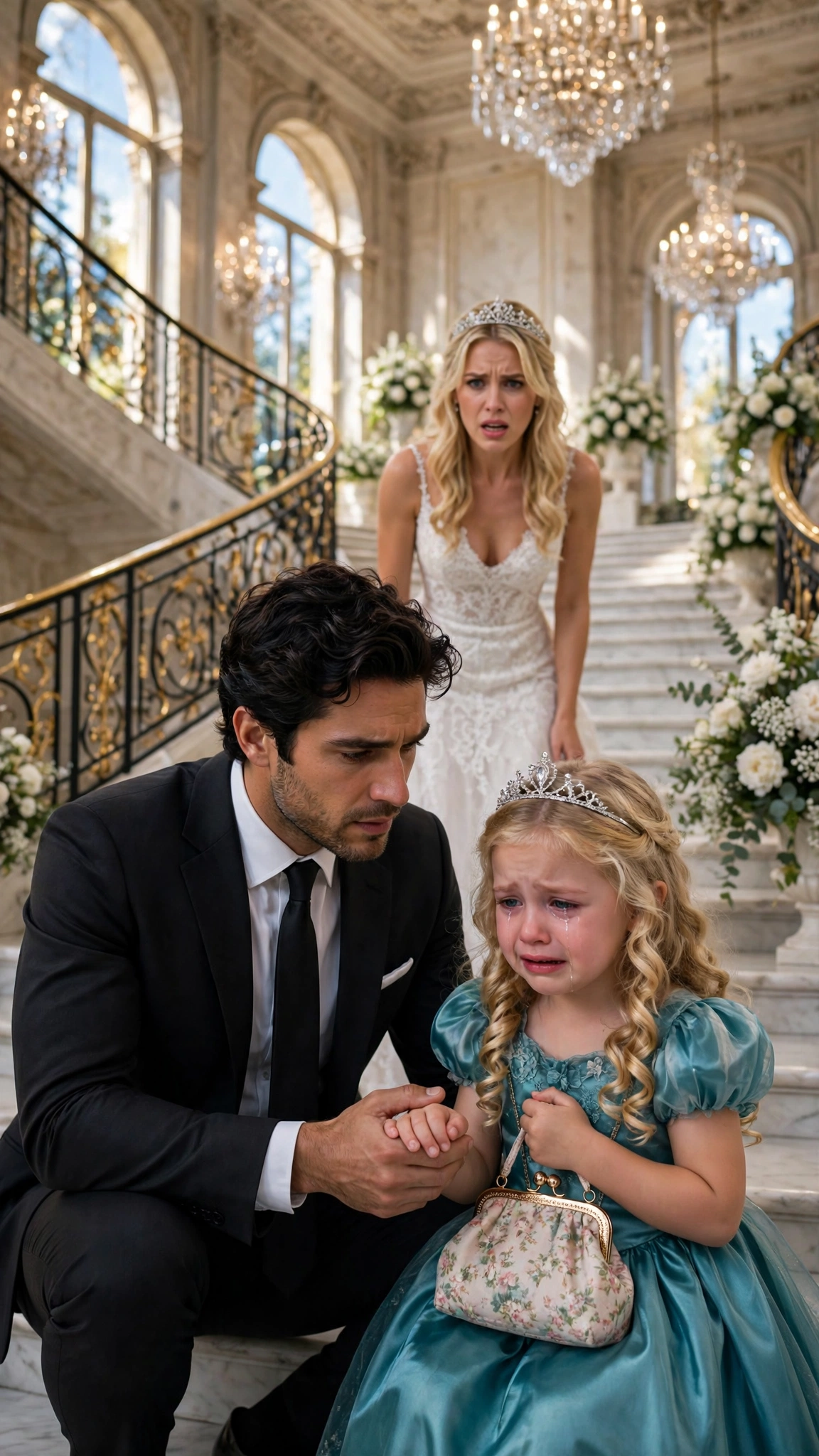
Story Genres: MAFIA BOSS

  • Chapter 4: The Cracks in the Gold

    Chapter 4: The Cracks in the Gold

    Daniel Moretti was a man who noticed things. It was his profession to notice things — a hesitation before an answer, a glance that lingered too long, a hand that trembled when it should have been steady. He had built an empire on noticing things other men missed. And so, in the week before his wedding, he began to notice his own house.

    He noticed it first at breakfast. Lily sat at the long table in the morning room, her small legs swinging under her chair, her spoon moving slowly through her oatmeal. She was quiet, as always. But there was something different about her quiet. It was not the peaceful quiet of a child lost in thought. It was the held-breath quiet of a child who is listening for footsteps.

    "Lily," Daniel said. "Are you all right?"

    She looked up. Her blue eyes were wide. "Yes, Daddy."

    "Are you excited about the wedding?"

    "Yes, Daddy."

    She went back to her oatmeal. Daniel watched her for a moment, and then he looked at Victoria, who was reading the newspaper at the other end of the table, her coffee cup held delicately between her fingers, her diamond ring catching the morning light.

    "Isn't she excited?" Victoria said, smiling. "She's been talking about it for days."

    Daniel nodded. But he had not heard Lily talk about the wedding for days. He had not heard Lily talk about anything, really, for days. And he realized, with a slow, sinking feeling, that he had not had a real conversation with his daughter in weeks — that he had been so busy with the wedding, with the business, with Victoria, that Lily had become a small, quiet presence at the edge of his life, like a photograph on a wall that you pass every day without truly seeing.

    He noticed it again that afternoon, in the garden. Lily was playing with her stuffed rabbit, sitting under the old oak tree, her mother's floral handbag on her lap, and when Victoria came out onto the terrace, Lily went very still. She did not run to Victoria. She did not wave. She simply went still, the way a small animal goes still when a shadow passes overhead.

    Daniel watched from the study window. He saw Victoria walk toward Lily, saw her say something, saw Lily nod, saw Victoria reach out and touch Lily's shoulder — and saw Lily flinch. It was a small flinch. A tiny, involuntary pull away. But Daniel saw it, and his hands tightened on the windowsill, because his daughter did not flinch. His daughter had never flinched from anyone. She was a brave little girl. She had been brave when her mother died. She had been brave every day since.

    Why would she flinch from the woman who was about to become her stepmother?

    That evening, he went to the nursery. Lily was already in bed, her eyes closed, her breathing slow and even. He stood in the doorway for a long time, watching her sleep, and he thought about Isabella, and about the rocking chair, and about the way the house had gone cold, and about the way it had stayed cold even after Victoria arrived — because, he realized now, Victoria had not warmed the house. Victoria had only lit candles in it. And candles, however beautiful, do not warm a house. They only make the shadows deeper.

    He noticed the bag. It was on the pillow beside her, the little floral purse with the pink roses, its gold clasp glinting in the light from the hallway. Lily slept with one hand on it, even in her sleep, her small fingers curled around the clasp as if someone might try to take it from her in the night.

    Daniel frowned. He had seen the bag a hundred times. But he had never asked himself why a five-year-old girl held on to a handbag as if her life depended on it. He asked himself now, standing in the dark doorway, and he did not like the question, and he liked the possible answers even less.

    The next day, Daniel did something he had not done in months. He left his office at noon, and he drove to Lily's school, and he stood by the gate at pickup time, watching the children come out in twos and threes, shouting and laughing, their backpacks bouncing. Lily came out last, alone, her teal coat buttoned to the chin, her mother's floral handbag on her arm, her small face serious in a way that made his chest ache. Her teacher, a kind woman named Mrs. Alvarez, walked her to the gate, and when she saw Daniel, she said, very quietly, "Mr. Moretti. I'm glad you're here. Lily has been very quiet lately. Quieter than usual. And she won't let go of that little bag. Not for painting, not for lunch, not for anything. The other day, another little girl tried to look inside it, and Lily cried. She never cries, Mr. Moretti. Not at school. Not ever." Daniel thanked her, and he took Lily's hand, and they walked to the car in silence, and he thought: My daughter is afraid at school, too. She is afraid everywhere. And I did not know. I did not know, because I was too busy to come to the gate.

    He noticed the tiara, too. The small silver tiara — Isabella's wedding tiara — sat in its velvet box on the nursery dresser, polished and bright, waiting. Lily took it out only on special days, on days when she needed to feel brave. Daniel had not known that. He had not known that his daughter had a ritual, a small private courage, that she practiced without him. He stood there, looking at the velvet box, and he thought: How much of my daughter's life have I missed? How much have I not seen, because I was too busy being happy to look?

    He went to find Carlo. Carlo was in his office downtown, working late, as always, and Daniel called him, and said, "I need you to look into Victoria."

    Carlo was quiet for a moment. Then he said, "What do you want me to find?"

    "Everything," Daniel said. "Where she came from. Who she talks to. What she wants. I need to know what she was planning. I need to know if there is anything — anything at all — that I should have seen."

    "It will take a day," Carlo said.

    "Take an hour," Daniel said. "Take whatever you need. Just find it."

    It took less than a day. It took four hours.

    Carlo called back at midnight. "The school is real," he said. "Switzerland. A strict boarding school in the Alps. I called them. They have a file. A girl named Moretti. A start date in September. A deposit paid — with your household account money, by the way. Victoria wrote to them three months ago."

    Daniel closed his eyes. "What else?"

    "She's been talking to the Rossis," Carlo said. The Rossis were a rival family, smaller than the Morettis, hungrier, always looking for a weakness. "Nothing solid yet. But she's angry, Daniel. Or she will be, if she finds out you're looking. And a woman with information is dangerous."

    "What information?"

    "She knows things," Carlo said. "She lived in your house for a year. She knows your schedule. She knows your men. She knows where the safe is. She knows about the shipment coming in on Thursday."

    Daniel was silent. He thought about the shipment — a legitimate shipment, wine from Italy, but routed through channels that would not survive close inspection — and he thought about Victoria, standing in his bedroom, and he understood that the danger was not over. The rehearsal had not happened yet. The wedding had not happened yet. And the woman he was about to marry had already made plans that did not include his daughter.

    "Watch her," Daniel said. "And watch the Rossis. And Carlo — thank you."

    He hung up. He sat in his study, in the dark, and he thought about what to do. He was a man who had spent his life solving problems with leverage and fear, and for the first time, he understood that the problem in front of him could not be solved that way. Victoria was not a rival boss. She was a woman he had loved, who had tried to hurt his daughter, and who was now angry and dangerous. He could not threaten her. He could not frighten her. He had to be smarter than that.

    He went to the nursery. He stood in the doorway, watching Lily sleep. Her blonde curls were spread across the pillow. Her small hand was curled around the gold clasp of her mother's handbag. Her breathing was slow and even. And on the wall above her bed, taped carefully in a row, were her drawings — the tall man, the small girl, the woman with yellow wings.

    Daniel felt something in his chest — not break, but open — and he made a promise, there in the dark doorway, to his sleeping daughter and to the wife he had buried and to the mother whose tiara sat in a velvet box on the dresser.

    I will not fail you again, he thought. Not you, Lily. Not ever again.

    Then he went back to his study, and he sat down, and he waited for morning, and for the rehearsal, and for the moment when his daughter would finally find her voice — and he would finally find his.

    He did not sleep that night. He sat in his study long after the house had gone quiet, the untouched drink on the desk beside him, Isabella's photograph in his hands. He looked at her face — the smile, the dark hair, the eyes that had seen straight through him from the very first night — and he thought about the day Lily was born, about the way Isabella had held their daughter and whispered, "She is going to be brave, Daniel. Braver than both of us."

    He had not been brave. He had been busy. He had hidden from his grief in work, and he had hidden from his daughter in silence, and he had let a stranger walk into the house his wife had made warm and turn it cold again, one small cruelty at a time.

    He thought about the tiara. Isabella's tiara. He had given it to her on their wedding day, and she had worn it once, and then she had kept it in its velvet box, and she had told him, laughing, "For our daughter, one day. For when she needs to feel like a princess." And Lily had found it, and she had worn it, and she had made it her own small courage, and Daniel had not even known.

    He stood up. He walked to the nursery, and he stood in the doorway, watching Lily sleep, and he thought about the rocking chair, and about the way she had read to Lily in that chair, her voice low and unhurried, one hand resting on the small curve of her daughter's back.

    And he thought: I have failed them both. I failed Isabella, because I let a stranger into the house she built. And I failed Lily, because I was too busy being happy to see that my daughter was afraid.

    He did not confront Victoria that night. He was too angry, and anger, he knew, made a man stupid. He needed to be smart. He needed to be sure. He needed to hear it from Lily herself, and he needed to see Victoria's face when she knew that he knew.

    So he waited. He waited for the rehearsal, which was the next morning, and he told himself that he would watch, and that he would listen, and that when the moment came, he would know what to do.

    He did not know that the moment would come in the form of his five-year-old daughter, standing at the foot of the grand staircase in her teal princess dress, her silver tiara bright in her blonde curls, her mother's floral handbag clutched to her chest, saying the words she had practiced a hundred times in her bedroom mirror.

    He did not know that she would be braver than he had ever been.

    But she was. And when she spoke, the whole house stopped, and the whole world changed, and Daniel Moretti — the most feared man in Chicago, the man who had buried his wife and raised his daughter alone and let a beautiful stranger into his house because he was tired of being cold — looked down at his little girl, and for the first time in two years, he truly saw her. And he knew, in that moment, exactly what he had to do.
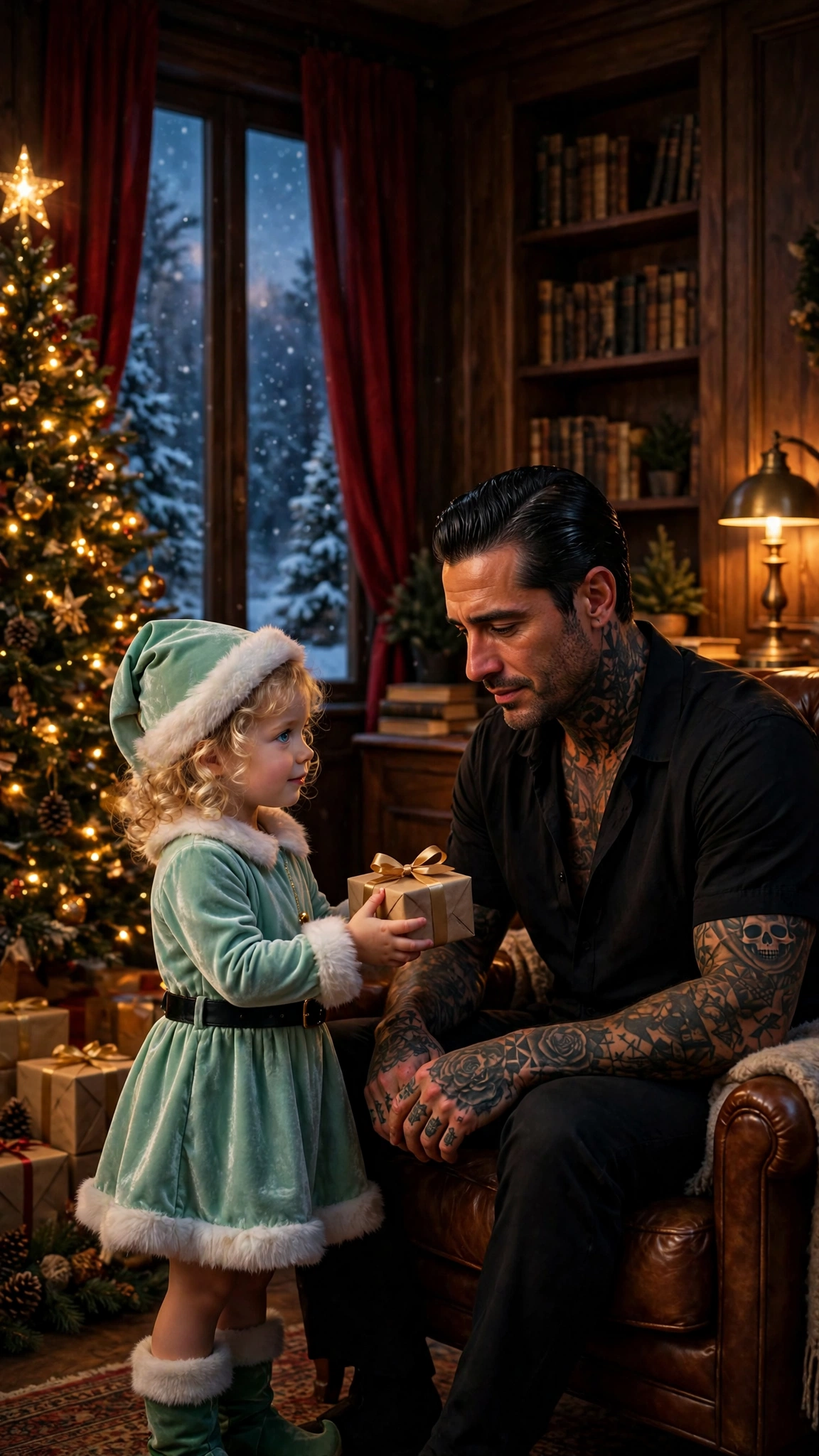
  • Chapter 3: The Locked Door

    Chapter 3: The Locked Door

    The cruelty did not stop. It grew, the way a small crack in a wall grows when water gets into it — slowly, quietly, and then suddenly the whole wall is coming down.

    Two weeks before the wedding, Victoria began to change the house. She ordered new curtains for the nursery — heavy, dark curtains, "to help Lily sleep better." She had the rocking chair removed — the chair where Isabella used to read to Lily, the chair Lily had sat in a hundred times with her mother's arm around her — because, Victoria said, "it takes up too much space, and it is old."

    Lily came home from school one afternoon and found the chair gone. She stood in the doorway of the nursery, staring at the empty corner, and her lower lip trembled, and she said, very quietly, "Where is Mommy's chair?"

    "It was old," Victoria said, from behind her. "We threw it away."

    Lily turned around. Victoria was standing in the hallway, her arms crossed, her eyes cool.

    "You threw it away?" Lily whispered.

    "Don't be dramatic, Lily. It was a chair. We will buy a new one."

    Lily did not answer. She walked into the nursery, and she sat down on the floor in the empty corner, and she stayed there until Carlo found her an hour later, still sitting, still staring at the space where the chair had been.

    That was the first crack. The second came three days later.

    Lily had been playing in the garden, chasing butterflies in her teal dress, her silver tiara catching the sun, her mother's floral handbag bouncing on her arm, and she had come inside with dirt on her cream shoes and a smudge of earth on her cheek. Victoria was in the hallway, talking on the phone, and when she saw Lily, her face tightened.

    "Look at you," Victoria said, her voice sharp. "You are filthy. A Moretti daughter does not run around in the dirt like a street child."

    "I was only playing," Lily said.

    "Playing," Victoria repeated, and she reached out and gripped Lily's arm — not hard enough to leave a mark that anyone would see, but hard enough that Lily gasped, hard enough that her small fingers curled into fists. "Go to your room. Now. And do not come out until I say so."

    Lily went. She went to her room, and Victoria followed her, and Victoria closed the door, and Lily heard the sound she would never forget for the rest of her life: the soft, deliberate click of a key turning in a lock.

    She was locked in.

    She stood in the middle of the nursery, her heart pounding, her breath coming fast, and she tried the door. It did not open. She knocked. No one came. She called for Carlo, but Carlo was at his office, and the house was quiet, and the only sound was the ticking of the clock on the nursery wall.

    She sat down on her bed. She pulled her knees to her chest. She held her stuffed rabbit — the one her mother had sewn for her — tight against her heart, and she held her mother's floral handbag in her other hand, and she waited. She waited for an hour. Then two. The sun moved across the nursery floor, and the room grew dim, and Lily's stomach growled, and her throat was dry, and she began to cry — not loudly, because she had learned not to cry loudly, but quietly, the tears running down her cheeks and soaking into the rabbit's fur.

    When Carlo came to the house that evening, he found the nursery door locked. He knocked. He called Lily's name. He heard a small, muffled voice say, "Carlo?"

    "I'm here, princess. I'm here."

    Carlo went to find Victoria, who was in the sitting room, reading a wedding magazine, her face calm, her diamond ring catching the light.

    "Victoria," Carlo said, his voice shaking. "The nursery door is locked. Lily is inside."

    "She needed to learn," Victoria said, without looking up. "She was filthy. She needs to understand that there are consequences."

    "She is five years old," Carlo said. "She was playing in the garden. Unlock the door."

    Victoria looked up then, and her eyes were cold, and her voice was very quiet, and she said, "Carlo. You are the lawyer. You do not give me orders in my own house."

    "This is not your house yet," Carlo said, and his voice was shaking, but he did not back down. "And that child is not yours to punish."

    They stood there, the old friend and the fiancée, staring at each other across the sitting room, and for a moment Carlo thought Victoria might strike him. But Victoria only smiled — the smile that did not reach her eyes — and she stood up, and she walked to the nursery, and she unlocked the door, and she said, "There. Happy now?"

    Lily came out of the nursery slowly, her eyes red, her cheeks streaked with tears, her stuffed rabbit clutched to her chest and her mother's handbag on her arm. She ran to Carlo and buried her face in his jacket.

    Victoria watched them, and her expression was unreadable, and then she turned and walked away, her heels clicking on the marble floor, and Carlo held Lily tight and thought, This cannot go on. This cannot go on.

    But it did go on. It went on, because Daniel was busy, and because Lily was quiet, and because Carlo was afraid — afraid of losing his friend, afraid that if he spoke too soon, Victoria would find a way to make him disappear from the house, and then there would be no one left in the house who loved Lily at all.

    The third crack came a week before the wedding, and it was the one that broke something in Lily that could not be put back together.

    Victoria found Lily in the nursery, drawing. Lily had a new picture — her family again, the tall man, the small girl, the woman with yellow wings, and now, beside them, a small house with a red door, and a garden full of flowers. She was concentrating very hard, her tongue caught between her teeth, her crayon moving carefully across the paper.

    "What are you drawing?" Victoria asked.

    Lily held it up, shyly proud. "Our family. And our house. See? The red door is for Mommy, so she can find her way home."

    Victoria looked at the drawing. She was silent for a long moment. Then she said, very quietly, "Lily. Come here."

    Lily went to her. Victoria knelt down, so that their faces were close, and her voice was low, and her eyes were cold, and she said the words that Lily would carry with her to the rehearsal, and beyond:

    "Listen to me, little girl. When your father marries me, things are going to change. You are not going to be the center of this house anymore. You are not going to be your daddy's little girl anymore. Do you understand?"

    Lily stared at her. Her mouth opened. No sound came out.

    "Your father loves me now," Victoria said. "He loves me more. And when we are married, you are going to a school. A school far away. A school where little girls learn to behave. And you will not come home for a very long time."

    "But —" Lily whispered.

    "No," Victoria said. "No buts. And if you tell your father what I said, I will tell him that you lied. And he will believe me, because I am going to be his wife, and you are only a child. Do you understand?"

    Lily nodded. She nodded because she was five, and because she was terrified, and because the woman in front of her was beautiful and cold and absolutely certain, and Lily did not know how to fight someone who was absolutely certain.

    Victoria stood up. She smoothed her skirt. She smiled. "Good girl," she said. "Now go and wash your hands. You have crayon on your fingers."

    Lily went to wash her hands. She stood at the bathroom sink, the water running over her small fingers, and she looked at herself in the mirror, and she saw a little girl with blonde curls and a silver tiara and blue eyes, and she thought, I am not going to be Daddy's little girl anymore. And the thought was so big, and so heavy, that she had to sit down on the bathroom floor, because her legs would not hold her up.

    That night, she did something she had never done before. She did not go to Carlo. She did not hide. She waited until the house was quiet, until Victoria was in the sitting room with her wedding magazines, until her father was in his study, and then she crept down the hallway in her nightdress, her bare feet silent on the marble floor, her mother's floral handbag on her arm, and she went to Victoria's study.

    She did not know what she was looking for. She only knew that Victoria had a secret — that beautiful, cold women always have secrets — and that if she could find the secret, she could stop what was coming.

    The study door was open. The desk drawer was not locked. Lily opened it, her small hands shaking, and inside, under a stack of wedding magazines, she found the letter.

    It was from a boarding school in Switzerland. It was addressed to Victoria. It spoke of "the Moretti child" and "firm guidance" and "distance from certain influences." It spoke of a start date — September, two weeks after the wedding — and a fee, and a uniform, and a rule: no visits for the first six months.

    Lily could not read all the words. She was five, and the letter was written in grown-up language. But she could read her name — or rather, she could read "the Moretti child," and she could read "September," and she could read the name of the school, and she understood, in the wordless way that children understand, that this letter was the thing Victoria had been hiding, and that it was the thing that would take her away.

    She folded the letter very carefully. She opened her mother's floral handbag — the little purse with the pink roses, the purse that had been her mother's, the purse that was the safest place in the whole world — and she put the letter inside it, beside the photograph of her mother holding her as a baby, beside the folded note her mother had written for her before she died. She closed the gold clasp. She held the bag tight to her chest.

    She went back to the nursery. She put the bag on the pillow beside her, the way she always did, and she lay down, and she pulled her blanket up to her chin, and she thought about the letter, and about the school far away, and about the woman with the cold eyes, and she made a promise to herself, in the wordless way children make promises:

    I will not let her take me away. I will hold on to Mommy's bag, and I will not let go. And when Daddy asks me, I will tell him the truth.

    She fell asleep with one hand on the gold clasp, and she dreamed of her mother — of a woman with wings, drawn in yellow crayon, smiling down at her from a sky full of early stars — and in the dream, her mother said, "Be brave, my little girl. Be brave, and hold on tight."

    When Lily woke, the sun was coming through the nursery windows, and the house was quiet, and the rehearsal was tomorrow, and the letter was safe in her mother's bag, and for the first time in a year, Lily was not only afraid.

    She was also, in a small and furious way, ready.

    The next morning, Lily went to find Carlo in the garden. He was sitting on the bench under the old oak tree, reading the newspaper, a cup of coffee in his hand, and she climbed up beside him without a word, and she put her mother's floral handbag in her lap, and she looked at the photograph inside it — her mother holding her as a baby, smiling down at her as if the whole world had just begun — and she said, very quietly, "Carlo, is Mommy watching me?"

    Carlo put down his newspaper. "Yes, princess. I believe she is."

    "Even when I am scared?"

    "Especially when you are scared," Carlo said. "That is when mothers watch the hardest."

    Lily nodded. She closed the handbag, and she held it tight, and she looked at the house — at the tall windows, and the marble steps, and the door to Victoria's study — and she said, "I found something, Carlo. In Miss Victoria's desk. A letter. I put it in Mommy's bag, so she couldn't take it back."

    Carlo went very still. "What kind of letter, princess?"

    "A letter about a school," Lily said. "Far away. I can't read all the words. But I know it is bad. I know it is the reason she wants my bag."

    Carlo looked at the little girl beside him — at her blonde curls, and her silver tiara, and her small fierce face — and he felt something in his chest tighten, because he understood, in that moment, that this five-year-old girl had done what no grown-up in the house had been brave enough to do. She had found the truth, and she had hidden it somewhere safe, and she was waiting for the right moment to show it to her father.

    "Keep it safe," Carlo said softly. "Keep it in Mommy's bag, and do not let anyone take it from you. Not anyone. Do you understand?"

    "I understand," Lily said. And she held the bag a little tighter, and she did not let go.

  • Chapter 2: The Woman in the White Dress

    Chapter 2: The Woman in the White Dress

    Victoria moved into Daniel Moretti's life the way a tide moves into a harbor — slowly, gracefully, and with a force you do not notice until the water is already at your door.

    In the beginning, she was everything Daniel had forgotten a woman could be. She laughed at his jokes. She asked about his work, and listened, and did not flinch when he told her things other people flinched at. She brought white roses for the hall table, and she knew the names of the wines in his cellar, and she played the piano in the evenings, her fingers moving over the keys with a confidence that filled the cold rooms with something almost like music.

    And she was good with Lily. Or she seemed good with Lily. That was the terrible part — the seeming.

    When Daniel was watching, Victoria was patient and warm. She knelt to Lily's height. She complimented the teal dress. She asked about the music box, and the stuffed rabbit, and the drawings taped to the nursery wall. She brushed Lily's blonde curls once, her fingers gentle, and Lily sat very still and let her, because her father was standing in the doorway smiling, and she wanted him to keep smiling.

    But when Daniel left the room, something in Victoria changed. It was never dramatic. Victoria was far too clever for drama. It was small things. A hand on Lily's shoulder that gripped a little too hard. A voice that went flat and cold, like a door closing.

    "Don't follow me around, Lily. Little girls should be seen and not heard."

    "Your father doesn't have time for your drawings. Stop leaving them everywhere."

    "That dress is too bright. A Moretti daughter should dress with dignity, not like a child at a birthday party."

    Lily was five. She did not have the words for what was happening. She only knew that her stomach hurt when Victoria was in the house, and that she felt safer in the nursery with her rabbit than anywhere else, and that she had started hiding her drawings in the back of the nursery closet, where Victoria would not find them and frown.

    She did not tell her father. She had made a decision, in the wordless way children make decisions, that telling would make him sad, and that her father's sadness was the worst thing in the world. So she was quiet. She was very good at being quiet. She had been practicing for two years.

    Carlo saw it, of course. Carlo Benedetti had known Daniel since they were boys, and he had been Daniel's lawyer and his oldest friend for twenty years, and he could read a room the way other people read a newspaper. He saw the way Lily flinched when Victoria's hand came near her shoulder. He saw the drawings disappearing from the nursery wall. He saw the music box — the one Victoria had given Lily, the one Lily had carried everywhere for a week — sitting untouched on the shelf, gathering dust.

    One afternoon, Carlo found Lily in the garden, sitting under the old oak tree, her teal dress spread around her, her mother's floral handbag in her lap, her small fingers tracing the pink roses printed on it.

    "Hello, princess," Carlo said, sitting down beside her on the grass. He was a big man, broad and graying, with kind eyes and a voice like gravel. "What are you doing out here?"

    "Hiding," Lily said.

    "From what?"

    Lily looked at her small cream shoes. "From Miss Victoria. She said my dress is too bright."

    Carlo was quiet for a moment. He reached out and touched the silver tiara in her hair — not the one she wore to the rehearsal, but a small silver hair clip, shaped like a star, that she wore every day.

    "Your dress is beautiful," Carlo said. "Your mother would have loved it."

    "Is Miss Victoria going to be my new mommy?" Lily asked.

    Carlo's heart twisted. "She is going to marry your daddy. That is different from being a mommy."

    "Will she throw me out?" Lily asked, and her voice was very small. "A girl at school said when a daddy gets a new wife, the old children have to go away."

    "That girl is wrong," Carlo said firmly. "No one is going to throw you out of your own home. Not while I am here. Not while your daddy loves you."

    "Does Daddy love me?" Lily asked. "He is always busy."

    "Oh, princess," Carlo said, and he pulled the little girl into his arms, grass stains and all. "Your daddy loves you more than anything in this world. He is just… he is a man who does not know how to say it. But he loves you. I promise you."

    Lily believed him, because Carlo had never lied to her. But that night, she lay awake in her bed, staring at the ceiling, listening to the piano downstairs — Victoria playing, her father laughing — and she felt the cold of the house creep in through the walls, and she pulled her blanket up to her chin, and she thought about her mother, and she wondered if her mother could see her, and if she was proud, and if she was sorry.

    The courtship, as the newspapers would later call it, lasted a year. Victoria was patient. She never pushed. She let Daniel come to her, let him believe that every step was his own idea. She hosted dinners. She attended charity events on his arm. She charmed his associates, who had never seen their boss look at a woman the way he looked at her. She sent Lily gifts on her birthday — a doll with real hair, a set of paints — and she was gracious and smiling when she gave them, and Lily smiled back, and said thank you, and put the gifts on her shelf, and never played with them when Victoria was not looking.

    Daniel was happy. That was the thing nobody could deny. After two years of grief, of silence, of coming home to a cold house and a quiet daughter, Daniel Moretti was happy. He laughed. He played the piano with Victoria. He took Lily to the park on Sundays, Victoria walking beside him, and for the first time since Isabella died, the Moretti family looked, from the outside, like a family.

    His men noticed. His lawyer noticed. Carlo took him aside one evening at the club and said, "She's good for you. But watch her with the girl."

    "What do you mean?" Daniel asked.

    "I mean," Carlo said, choosing his words carefully, "that she is very warm when you are looking, and I have never once seen her look at Lily when you are not looking."

    Daniel frowned. "You're imagining things."

    "Maybe," Carlo said. "But a man who imagines things lives longer than a man who ignores them."

    Daniel did not forget the conversation. But he did not act on it, either. He told himself Carlo was being overprotective. He told himself Victoria was simply a woman who had never raised a child, who needed time. He told himself Lily was shy, and that shy children took time to warm to new people. He told himself all the things a man tells himself when he is happy and does not want to look too closely at the thing making him happy.

    Victoria, meanwhile, was making plans.

    She had a mother, a woman named Rosa, who lived in a small apartment in Queens and who had raised Victoria to believe that beauty was a currency and that a woman's job was to spend it wisely. Rosa called every Sunday, and Victoria told her everything — the mansion, the cars, the accounts, the little girl who was always underfoot.

    "When you are married," Rosa said, "the girl goes to school. A good school. Far away. Switzerland, perhaps. That is what is done in families like this. A child needs structure."

    "She is only five," Victoria said.

    "Five is old enough," Rosa said. "Five is when they start to remember. You do not want her remembering that you were not always there. Send her away before she is old enough to fight you."

    Victoria did not argue. She had already written to the school — a strict, expensive boarding school in the Swiss Alps, the kind of place where little girls wore uniforms and spoke French and did not come home for Christmas. She had the brochure in her desk drawer, hidden under a stack of wedding magazines. She had already told the headmistress, in a letter written in her most elegant hand, that her stepdaughter would need "firm guidance" and "distance from certain influences."

    She had not told Daniel. She would tell him after the wedding, when it was too late to object, when the ring was on her finger and the papers were signed and the house was hers. She would tell him gently, as a mother concerned for her child's education, and he would agree, because he trusted her, because he was happy, because he did not know how to say no to a woman who smiled at him the way she smiled.

    That was the plan. It was a good plan. It was a careful plan. It would have worked, too, if Victoria had understood one thing about Daniel Moretti: that he was a man who had lost one woman he loved, and that he would burn the world down before he lost another person he loved — especially his daughter.

    But Victoria did not understand that. She understood money, and status, and the way a diamond caught the light. She did not understand that the quiet little girl in the teal dress, with the silver tiara in her hair and her mother's floral handbag on her arm, was the only thing in Daniel Moretti's life that he would kill for — and the only thing he would die for, too.

    She was about to learn. But not yet. First, there were small cruelties to commit, and small cruelties have a way of adding up, until one day a five-year-old girl stands at the foot of a marble staircase and says the words she has been practicing in her bedroom mirror, and the whole house stops, and the whole world changes.

    The first of the small cruelties happened on a Tuesday, three weeks before the wedding.

    Lily had drawn a picture. It was a good picture, for a five-year-old — her family, standing in front of the mansion, the tall man, the small girl, and a woman with wings, drawn in yellow crayon. She had drawn a new figure beside them, a woman in a white dress, and she had shown it to Victoria, shyly, hopefully, because she was trying, in the only way she knew how, to make room for the new woman in her family.

    Victoria looked at the drawing. She looked at it for a long moment. Then she smiled — the smile that did not reach her eyes — and she said, "That's very nice, Lily. But you spelled 'family' wrong. And your mother doesn't have wings. Your mother is dead. You should draw things that are real."

    Lily's face went white. Her small hand, holding the drawing, began to shake.

    Victoria took the drawing from her, folded it in half, and dropped it into the wastebasket.

    "There," she said. "Now you can draw something better."

    Lily stood there, staring at the wastebasket, and she did not cry. She had learned not to cry in front of Victoria. She waited until Victoria had left the room, and then she reached into the wastebasket, and she took the drawing out, and she smoothed it flat against her chest, and she carried it to her room, and she taped it to the nursery wall, right where her mother could see it.

    That night, Carlo found her sitting on the nursery floor, staring at the drawing.

    "Princess," Carlo said. "What happened?"

    Lily looked up at him, and her eyes were dry, and her voice was very steady, and she said, "Miss Victoria says Mommy doesn't have wings. But I think she does. I think Mommy is watching me from heaven, and she has the biggest wings of all."

    Carlo sat down beside her. He put his arm around the little girl. He did not say anything for a long time, because there was nothing to say that would make it better. Finally, he said, "Your mommy has the biggest wings of all. And she is very proud of you."

    Lily leaned against him. "Carlo," she said. "When Daddy marries Miss Victoria, will I still be his little girl?"

    Carlo looked at the drawing on the wall — the tall man, the small girl, the woman with yellow wings — and he said, very quietly, "You will always be his little girl. No one can change that. Not ever."

    But Carlo was not sure. And that night, after Lily was asleep, Carlo sat in his car outside the mansion for a long time, looking up at the lighted windows, thinking about the woman his oldest friend was about to marry, and about the little girl with the floral handbag, and about what he would do if the worst thing he feared turned out to be true.

  • Chapter 1: The Girl on the Stairs

    Chapter 1: The Girl on the Stairs

    The grand staircase hall of the Moretti mansion was full of daylight. It poured through the tall arched windows in wide white bars, it shone on the white marble stairs, it caught the gold in the black railings and the crystal of the chandeliers, and it made the white flower arrangements along the balustrade look as if they were glowing. It was the morning of the rehearsal, two days before the wedding, and the house was dressed for a celebration.

    Lily Moretti stood at the foot of the stairs and cried.

    She was five years old, and she wore her teal satin princess dress with the puffed sleeves and the layered tulle skirt, and her cream shoes, and on her head, bright against her long blonde curls, sat a small silver tiara. She clutched a little floral handbag to her chest with both hands — a small purse printed with pink roses, its gold clasp held tight under her fingers — and tears ran down her cheeks, and her whole small body shook with the effort of not wailing out loud.

    "Daddy, don't let her throw me out!"

    Her voice cracked on the last word, and it echoed up the marble stairs, and the wedding planner, a thin woman with a clipboard, froze halfway up the steps. The florist, arranging white roses by the newel post, stopped with her hands full of stems. Everyone in the great hall stopped, because a five-year-old girl was crying in the middle of a wedding rehearsal, and everyone knew, in the wordless way people know such things, that something had gone very wrong.

    Daniel Moretti came down the stairs toward her.

    He was a tall man, a broad man, a man other men stepped aside for in restaurants and boardrooms, and he moved fast, his black suit sharp against the white marble, his black tie neat, his white pocket square catching the light. His dark wavy hair was combed back. His gray-brown eyes were fixed on his daughter. He reached her in six strides, and he crouched down to her height, and he put one hand on her shoulder, and with the other he gently wiped the tears from her cheek with his thumb.

    "Lily," he said quietly. "Sweetheart. What are you talking about?"

    On the stairs behind them, Victoria stood very still in her wedding gown. The white lace caught the daylight. The thin straps showed her bare shoulders. Her blonde hair was swept up, a small tiara glittering in it, and her face — her beautiful, composed face — was pale. She did not move toward them. She did not speak. She simply watched, and her stillness was its own kind of answer.

    Daniel looked up at her. "Victoria, what did you say to her?"

    Victoria's hands tightened on the railing. "She's making a scene, Daniel."

    Daniel turned back to Lily. He took her small hand in his, and he held it, and his voice went soft, the way it only ever went soft for her. "Nobody is sending you away, sweetheart."

    Lily's fingers tightened around his. She pressed the floral handbag closer to her chest, as if it were the only solid thing in the world, and she looked up at him with her blue eyes wide and wet, and she whispered, "She said I have to go away. She said when you marry her, I won't be your little girl anymore."

    Daniel's whole body went still in the way it went still before he made a decision that would change a man's life.

    And then he noticed the bag.

    He had seen it a hundred times — the little floral purse, always in Lily's hands, always clutched tight — but he had never really looked at it. He looked at it now. He looked at the way her small fingers were wrapped around the gold clasp, white-knuckled, desperate, the way a person holds on to something they are afraid of losing. And he looked at Victoria, standing on the stairs, her eyes fixed not on Lily's face but on the little floral bag in Lily's hands.

    "Why does she want your bag?" Daniel asked.

    Victoria came down two steps. Her voice was sharp. "Daniel, don't open it!"

    Daniel looked at her. He looked at the bag. He looked at his daughter, crying, clutching her mother's purse to her chest, and he said, very quietly, "Lily, show Daddy what's inside."

    Lily's small fingers moved toward the gold clasp. Victoria took another step down, her gown rustling, her hand reaching out, her voice rising.

    "Please, don't—"

    And then — because this is where the story truly begins, two years before that bright morning, in a house that had forgotten how to be warm — let us go back.

    Two years earlier, the Moretti mansion had been a different house. It was the same marble and the same chandeliers, the same grand staircase and the same tall windows, but the air in it was different. Isabella Moretti was alive then, and where Isabella went, warmth followed. She was not a loud woman. She was a steady one. She sang while she folded laundry. She read to Lily in the nursery every night, her voice low and unhurried, one hand resting on the small curve of her daughter's back. She had a way of standing in a doorway and making the whole room feel like it had been waiting for her.

    Daniel had loved her for eleven years, since the night she had walked into a charity gala in a borrowed dress and told him, to his face, that he was the most feared man in Chicago and the worst dancer she had ever seen. He had married her six months later. He had never once regretted it. In a life built on fear and leverage and men who obeyed him because they were afraid not to, Isabella had been the one person who obeyed no one, and loved him anyway.

    When Lily was born, Isabella wept and laughed at the same time, and Daniel — Daniel Moretti, who had never once cried in front of another living soul — had stood at the hospital window with his forehead pressed to the glass and cried like a boy.

    Lily was three when Isabella got sick. It was not dramatic at first. A tiredness that would not lift. A cough that came back. A doctor's appointment, then another, then a hospital room with white walls and a window that looked out over a parking lot, and Isabella holding Lily's hand and telling her that Mommy was going to sleep for a little while, and that Daddy would take very good care of her.

    Isabella died on a Tuesday in October, while the rain was coming down outside in thin gray sheets. Lily was asleep in the nursery, her small fist curled around the stuffed rabbit her mother had sewn for her. Daniel sat beside the hospital bed long after the machines had gone quiet, holding his wife's hand, and when the nurse came to tell him it was time, he said, "Five more minutes," in a voice that did not sound like his own.

    He buried her on a Friday. The funeral was large and quiet and full of men in dark suits who did not know what to say to a grieving mafia boss. Lily wore a black dress that was too big for her, and she held her father's hand the whole time, because there was no one else to hold it, and her father could not stop shaking long enough to hold it himself.

    After that, the house went cold. Not all at once. Cold came into the Moretti mansion the way winter comes into a house with a broken window — slowly, and then all at once, and then it was simply the way things were.

    Daniel threw himself into work. It was the only thing he knew how to do with grief. He left before Lily woke and came home after she slept, and in between there were meetings and phone calls and men in suits who needed decisions. He told himself he was providing. He told himself Lily was safe, that the nannies would take care of her, that a little girl of three, then four, then five, did not need her father to sit on the floor and play with dolls. He told himself these things because the alternative was to sit in the nursery and look at the empty rocking chair where Isabella used to read, and he could not do that. He could face any man in Chicago. He could not face that chair.

    The nannies came and went. They were kind women, most of them, but they were not Isabella, and Lily knew it, and after the third one left, Lily stopped learning their names. She learned instead to take care of herself, in the small ways a little girl can. She learned to pour her own cereal. She learned to tie her own shoes, badly. She learned to carry her mother's things with her, because her mother's things were the only warm things left in the house.

    The floral handbag had been Isabella's. It was a small purse, printed with pink roses, its gold clasp worn smooth from years of use, and Isabella had carried it to church every Sunday. After she died, Lily found it in her mother's closet, and she took it, and she never put it down. She carried it to breakfast. She carried it to the garden. She carried it to bed, and she put it on the pillow beside her, and she slept with one hand on its clasp, as if it were her mother's hand, still holding hers.

    The silver tiara had been Isabella's too. She had worn it on her wedding day, a delicate thing, bright as frost, and afterward she had kept it in a velvet box in her drawer. Lily found the box one afternoon, and she opened it, and she lifted the tiara out with both hands, and she set it on her own head, and she stood in front of her mother's mirror, and she looked at herself — a small girl in a big house, wearing her mother's crown — and she whispered, "I'm a princess, Mommy. Like you."

    She kept the tiara in the velvet box after that, taking it out only on special days, on days when she needed to feel brave. She did not know, then, that she would wear it to a wedding rehearsal, on the brightest morning of her life, while she cried at the foot of the grand staircase.

    And the stuffed rabbit — the one her mother had sewn for her, with the crooked ear and the button eyes — stayed in the nursery, on her bed, waiting for her every night. It was the one thing she did not carry with her. The rabbit stayed home, and guarded the nursery, and waited. That was the rule Lily had made for herself, in the wordless way children make rules: the rabbit guards the room, the purse guards me, and the tiara makes me brave.

    Lily was a quiet child. She learned to play alone, to eat without spilling, to go to bed without fuss, to never ask her father for anything he could not give. She drew pictures of her family — a tall man, a small girl, and a woman with wings, drawn in yellow crayon — and she taped them to the nursery wall where only she could see them. She waited for her father to come home, and when he did, she ran to him, and he picked her up, and for a moment the house was warm again, and then he set her down and went to his study, and the cold came back.

    She was five when Victoria arrived.

    It was a charity gala, the same kind of gala where Daniel had met Isabella eleven years before, and Victoria was standing near the champagne table in a white dress, beautiful and composed and entirely unafraid of him. She was twenty-nine, elegant, with blonde hair swept up and a smile like a door opening, and she looked at Daniel Moretti the way a woman looks at a door she has decided to open.

    "Mr. Moretti," she said. "I've heard a great deal about you."

    "Most of it is true," Daniel said.

    "Then you must be very tired," Victoria said, "of being feared by everyone except the people you love."

    He laughed. He had not laughed at a gala in two years. She asked about Lily, and he told her about his daughter — the quiet girl with the blonde curls and the silver tiara and the little floral bag — and Victoria listened with her head tilted, her eyes warm, and said, "A little girl should not be quiet. A little girl should be loud. She should be impossible."

    Daniel took her to dinner the following week. Then again. She was charming. She was patient. She asked after Lily every time, and she sent the little girl a picture book about a brave princess, and a music box that played a lullaby, and Lily — who had not received a gift from a stranger since her mother died — carried the music box everywhere for a week.

    Victoria came to the house for the first time on a Sunday afternoon in spring. Lily hid behind the staircase railing and peeked out at the beautiful woman in the white blouse and the pearl earrings.

    "Hello, Lily," Victoria said, crouching down, smiling. "I'm Victoria. Your daddy talks about you all the time."

    Lily said nothing. She clutched her floral handbag.

    "She's shy," Daniel said gently.

    "Shy is fine," Victoria said, and she reached out and touched Lily's cheek with one cool fingertip. "Shy girls grow up to be interesting women."

    That night, Daniel sat on the edge of Lily's bed — something he had not done in months — and said, "What did you think of Victoria?"

    Lily looked at her music box. "She is very pretty, Daddy."

    "She likes you very much."

    Lily nodded. She did not say what she was thinking, which was that Victoria's fingertip had been cold, and that her smile had not reached her eyes, and that when Victoria had touched her cheek, Lily had wanted to hide. She did not say it because she was five, and because she had learned to be quiet, and because her father looked happy for the first time in two years, and she did not want to take that away from him.

    So she smiled. "I like her too, Daddy."

    And Daniel, who could read a lie on a man's face from across a room, believed his daughter — because he wanted to, because he needed to, because the house had been cold for so long and Victoria was warm, or seemed warm, and he had forgotten what it felt like to want something for himself.

    He proposed to Victoria six months later, on a rooftop in Manhattan, with a diamond solitaire so large it caught the light from three tables away. She said yes. She cried. She kissed him. She began planning the wedding the next morning — the flowers, the white roses, the guest list, the gown. And Lily, standing in the doorway of the nursery with her music box in her hands and her mother's floral handbag on her arm, watched her father's fiancée measure the windows for new curtains and understood, in the wordless way that children understand, that something in her house was about to change, and that she was not going to like it.

    She was right. She simply did not know how right she was.

    The morning of the rehearsal was two days before the wedding. The grand staircase hall was full of daylight. The white marble stairs shone. The black-and-gold railings gleamed. The chandeliers threw small rainbows across the ceiling. Victoria stood on the stairs in her wedding gown, radiant, composed, every inch the bride. Daniel stood near the foot of the stairs, handsome in his black suit, his black tie neat, his silver wristwatch catching the light. And Lily stood in the center of it all, in her teal princess dress, her silver tiara bright in her blonde curls, her mother's floral handbag clutched to her chest, and she said the words she had practiced a hundred times in her bedroom mirror.

    "Daddy, don't let her throw me out!"

    And Daniel Moretti — the most feared man in Chicago, the man who had buried his wife and raised his daughter alone and let a beautiful stranger into his house because he was tired of being cold — looked down at his little girl, and for the first time in two years, he truly saw her.

    Her eyes were wide. Her cheeks were wet. Her lower lip trembled. And behind the fear, behind the tears she was not trying to hide, there was something else. Something he recognized, because he had seen it in his own mirror a thousand times.

    It was the look of a person who has been hurt, and who has decided, finally, to tell the truth.

  • Chapter 7: Christmas Morning

    Chapter 7: Christmas Morning

    Sophia woke to the sound of music.

    It was not a loud sound. It was soft, and slow, and sweet, and it came from downstairs, from the back of the house, from the room that had been closed for two years, and for a moment Sophia lay in her bed with her eyes closed, listening, because she thought she must be dreaming.

    But she was not dreaming. The music was real. It was the tune from the music box, the slow, sweet melody that sounded like rain on a window, only bigger now, and warmer, and played on a real piano by real hands, and Sophia knew that tune, and she knew who had played it, and she knew that something wonderful had happened while she was asleep.

    She threw back her blankets and ran to the door in her bare feet, and down the hallway, and down the stairs, two at a time, her blonde curls flying behind her, and she followed the music through the house, past the portraits and past the tall clock, and she stopped in the doorway of the music room, and she stared.

    Her father was sitting at the grand piano.

    He was wearing a clean black shirt, and his hair was combed back, and his tattoos showed dark against his skin in the morning light, and his hands — his big, tattooed hands, the hands that had held a gun and signed papers and frightened grown men — were moving over the piano keys like birds over water, gently, carefully, as if the keys were made of glass. And the music that came out of the piano was "Silent Night," slow and sweet and perfect, and the whole house seemed to be holding its breath to listen.

    Sophia stood in the doorway for a long time, watching him, and then she went to him, very quietly, and she climbed up onto the piano bench beside him, and she leaned against his arm, and she began to sing.

    She did not sing well. She was five years old, and her voice was small, and she forgot half the words, and she made up the other half. But she sang, and her father played, and the music filled the room, and the sun came up over Chicago, pale and gold through the tall windows, and the snow glittered on the garden outside, and for the first time in two years, the music room was alive.

    When the song ended, Lorenzo lifted his hands from the keys, and he looked down at his daughter, and he smiled — really smiled, the way he used to smile in the photograph, before everything went quiet — and Sophia smiled back, and she threw her arms around his neck, and he held her, and they sat there together on the piano bench, in the morning light, while the whole house woke up around them.

    "Did you hear it, Daddy?" Sophia asked. "Did you hear Mummy singing?"

    "I heard her," Lorenzo said, and his voice was rough, but it was steady, and it was true. "I heard her, little one. She was singing to us both."

    After that, the whole day was Christmas.

    Rosa had been up since dawn, and the kitchen smelled of cinnamon and oranges and fresh bread, and the table in the dining room — the long mahogany table that had not been used for a celebration in two years — was laid with the best cloth and the best plates and the best silver, and there were candles in the middle, and holly, and a bowl of oranges, and a great golden turkey waiting in the oven.

    But first there was the tree.

    Lorenzo took Sophia by the hand, and they went into the study, where the Christmas tree stood in the corner, burning with small golden lights, and Sophia looked up at it, and her blue eyes went wide, because there, on the highest branch, right beside the glowing star at the top, hung her own gold star — the star she had cut from her mother's song and painted gold and written "For Daddy" on the back in green crayon — and it caught the morning light and shone like a small piece of the sun.

    "That's my star!" Sophia cried, and she clapped her hands, and she danced in a circle on the rug, her blonde curls bouncing. "Daddy! That's my star! You put it on the tree!"

    "I did," Lorenzo said, and he lifted her up so she could see it properly, high on the branch, shining in the light. "It is the finest star this tree has ever had. And it is going to stay there, little one, for every Christmas, for as long as we live in this house."

    Sophia looked at the star for a long time, and then she looked at her father, and she said, in a very serious voice, "Mummy would like that, Daddy. Mummy would like her star to be on the tree."

    "Yes," Lorenzo said. "I think she would."

    And then he took the star down, very carefully, just for a moment, and he carried it upstairs to Sophia's room, and he put it in a small silver frame, and he set the frame on the table beside her bed, next to the photograph of her mother, where the morning light would fall on it every day, and Sophia looked at the two of them together — the photograph and the star, her mother and her present — and she smiled, and she said, "Now Mummy can see it every morning, when I say good morning to her."

    After that came breakfast, and breakfast was the best part of all.

    Lorenzo sat at the head of the long mahogany table, in his clean black shirt, with Sophia beside him in her best dress — not the elf costume, which was hung carefully in the wardrobe for next year, but a soft blue dress with a white collar, the one Rosa had laid out for her that morning — and around the table sat the whole family of the house: Rosa, in her best uniform, with her silver cross shining at her throat; Macy, in a new dress Lorenzo had sent out for that morning, her dark hair braided neatly, her eyes shining, because she had a job, and a home, and a family, and she was never going to lose any of them; and John Barone, in his best coat, with his red scarf around his neck, sitting up very straight in his chair and trying very hard not to look as proud as he felt.

    They ate, and they laughed, and they told stories, and Macy told a story about the time she had dropped an entire tray of Christmas puddings in her first week, and Rosa told a story about the time Elena had tried to cook Christmas dinner herself and set fire to the turkey, and John told a story about the time he had planted a rosebush in the wrong place and it had grown into the most beautiful rosebush in the whole garden, and Lorenzo, who had not laughed in two years, laughed until his sides ached, and Sophia laughed loudest of all, because she was five years old and it was Christmas morning and her father was happy.

    After breakfast, they went into the music room again, all of them, and Lorenzo played the piano, and Rosa sang, in a voice that was not very good but was very loud, and Macy sang too, and John hummed along, and Sophia danced in the middle of the room in her blue dress, spinning in circles until she was dizzy, and the music filled the house, and the snow fell past the windows, soft and steady, and the whole big house, which had been silent for so long, was full of sound and light and life again.

    And then, because it was Christmas, and because Lorenzo Moretti had decided that this year would be different from every year before it, there were presents — not just the ones under the tree, but presents he had chosen himself, in secret, in the small hours of the morning while the house slept.

    For Macy, there was a warm wool coat, deep green, with brass buttons, and a letter, written in his own hand, confirming her position in the house and doubling her wages, and a small silver locket, plain and simple, with nothing inside it yet, because Lorenzo had said, when he gave it to her, "For the photographs you will take in the years to come, in this house, with us." Macy held the coat to her chest, and she held the letter in her hands, and she cried, and she laughed, and she hugged him, right there in front of everyone, and Lorenzo, who had never been hugged by a kitchen maid in his life, stood very still for a moment, and then he hugged her back.

    For John, there was a leather-bound book about roses, thick and heavy, with colored pictures on every page, and a new set of garden tools with handles of polished wood, and a bottle of the best wine from the cellar, and John, who had worked in the garden of this house for forty years and had never once been given a Christmas present by the boss himself, turned the book over in his weathered hands, and he looked at the pictures of the roses, and he said, in a voice that shook a little, "I will plant the red ones by the south wall, sir. The ones in the picture. They will be beautiful come June."

    For Rosa, there was a shawl of soft blue wool, and a new silver chain for her cross, because the old one had worn thin after twenty-two years, and Rosa, who had seen everything in this house and was surprised by nothing, put her hand over her mouth, and her eyes filled with tears, and she said, "You remembered. After all these years, you remembered."

    "I remember everything that matters," Lorenzo said. "I just forgot it for a while. I will not forget it again."

    That afternoon, when the sun began to go down and the snow turned blue in the evening light, Lorenzo took Sophia out into the garden, to the old oak tree, where John had been working that first morning of December, and they stood together in the snow, father and daughter, looking up at the great dark house with its windows lit gold, and Lorenzo picked Sophia up and set her on his shoulders, the way he had done when she was very small, and she laughed, and she put her small hands on his head to hold on, and he said, "Look, little one. Look at our house."

    Sophia looked. The house was beautiful in the snow, with its windows burning gold and its chimneys smoking and its garden white and still, and it did not look like a sad house anymore. It looked like a home.

    "Is Mummy watching us, Daddy?" Sophia asked.

    "Yes," Lorenzo said. "I think she is. I think she is watching us right now, and I think she is smiling."

    Sophia nodded, and she leaned down and kissed the top of his head, and she said, in a very small, very certain voice, "I told you, Daddy. I told you my present would make you smile."

    Lorenzo laughed, and he lifted her down from his shoulders, and he held her in his arms, and he looked at her — at her blonde curls, and her blue eyes, and her rosy cheeks, and the small gold star in its silver frame waiting for her upstairs beside her mother's photograph — and he said, "You were right, little one. You were right about everything."

    That night, when Sophia was in bed, and the house was quiet, and the Christmas tree burned gold in the study, Lorenzo went to the music room one last time, and he sat at the piano, and he played "Silent Night" once more, slowly, softly, for the woman he had lost and the child he had kept and the life he had chosen to live again.

    And when the last note died away, he closed the piano lid, very gently, and he went upstairs to his daughter's room, and he stood in the doorway for a moment, looking at her asleep in her bed, with the photograph and the star on the table beside her, and the snow falling past the window, and he whispered, to the empty room, to the snow, to the woman he had loved and lost and found again in the music:

    "Thank you, Elena. Thank you for the star. Thank you for the song. Thank you for our daughter. I am not sad anymore. I promise you. I am not sad anymore."

    And he went to bed, and he slept, and the house slept, and the snow fell, soft and steady, over the whole white world, and Christmas morning came, bright and gold, and the most feared man in Chicago woke up smiling, because a five-year-old girl in an elf costume had come into his study on Christmas Eve with a small box tied with a gold ribbon, and told him not to be sad anymore, and he had listened.

    THE END

  • Chapter 6: The Letter in the Piano

    Chapter 6: The Letter in the Piano

    Rosa came for Sophia just before midnight.

    She came quietly, the way she did everything, and she stood in the doorway of the study for a moment, looking at the two of them — the big man in the black shirt asleep in his leather armchair with his daughter curled against his chest like a small warm animal, the gold star still in his hand, the fire burned down to embers, the Christmas tree burning gold behind them — and she felt something in her own chest loosen, something that had been tight there for two years, and she smiled, and she wiped her eyes with the corner of her apron, and she went to wake the child as gently as she could.

    "Come along, little one," she whispered, lifting Sophia into her arms. "Time for bed. Your father needs his sleep, and so do you."

    Sophia murmured in her sleep, and her small hand tightened for a moment on Lorenzo's shirt, and then it loosened, and Rosa carried her out of the study and up the stairs to her room, and Lorenzo sat alone in his armchair for a long time, with the gold star in his hand, looking at the fire and the tree and the snow, and thinking about the woman he had lost and the child he had kept and the song that had brought them both back to him.

    And then he stood up, and he put the gold star carefully on the small table beside the chair, and he walked out of the study, down the dark hallway, past the portraits of men he did not know, past the tall clock that ticked in the corner, and he stopped outside the door of the music room.

    The music room door had been closed for two years.

    Lorenzo had closed it himself, on the day Elena died, and he had not opened it since, and the staff had learned, very quickly, never to go near it, never to dust it, never to speak of it. It was the one room in the house that belonged to the past, and Lorenzo had kept it that way on purpose, because opening it would have meant remembering, and remembering hurt too much, and he had decided, a long time ago, that it was easier not to remember at all.

    But tonight was different. Tonight his daughter had cut a star out of his dead wife's favorite song and brought it to him in the dark, and tonight he had wept for the first time in two years, and tonight something in his chest had loosened, the way something in Rosa's chest had loosened, and he stood outside the music room door with his hand on the handle, and he thought about the last time he had been in that room, and he opened the door.

    The music room smelled of dust and old wood and something else, something faint and sweet that he could not name at first, and then he knew what it was: Elena's perfume, still in the curtains after two years, still in the air, as if she had only just left the room.

    The grand piano stood in the middle of the floor, black and shining, its lid closed, its keys covered, exactly as it had been on the day she died. Lorenzo walked to it slowly, his footsteps loud in the silent room, and he lifted the cover from the keys, and he ran one tattooed hand over them, very lightly, and the keys were cold under his fingers, and he thought about her hands on those same keys, moving like birds over water, and he closed his eyes, and for a moment he could hear her playing, as clearly as if she were sitting beside him.

    He opened the piano bench.

    He did not know why he did it. He only knew that Elena had always kept her music in the bench, in neat stacks, tied with ribbon, and that he wanted to see it again, to touch something she had touched, to be close to her in the only way he still could.

    The music was there, just as she had left it — the Chopin, and the Bach, and the little book of Christmas carols with the red cover, worn soft at the edges from a hundred years of hands. And on top of the pile, where it had not been before — or where he had never noticed it before, because he had never looked — lay a single white envelope, sealed with wax, with his name written across the front in Elena's looping handwriting.

    LORENZO

    Beneath his name, in smaller letters, were the words:

    To be opened on a Christmas when you are ready.

    Lorenzo stared at the envelope for a long time. Then he picked it up with both hands, and he broke the wax seal, very carefully, and he took out the letter inside, and he sat down on the piano bench, in the dark music room, with the snow falling past the windows, and he read it.

    My dearest Lorenzo,

    If you are reading this, then it is Christmas, and you are ready, and I am so glad, because I have been waiting for you to be ready for a very long time.

    I know you. I know how you grieve. You go quiet, and you go hard, and you close doors, and you tell yourself that feeling nothing is better than feeling everything, and you are wrong, my love. You have always been wrong about that. Feeling nothing is not strength. Feeling nothing is just another kind of dying, and you are not dead, Lorenzo. You are alive. And our daughter is alive. And the house is alive. And Christmas is alive, if you will only let it be.

    I am not asking you to forget me. I would never ask you that. I am asking you to remember me properly — not with sadness, but with joy. Remember the way I laughed. Remember the way I played. Remember the way I loved you, and the way you loved me, and the way we made a beautiful, brave, wonderful little girl together, who has my eyes and your stubbornness and a heart bigger than this whole house.

    Let the house have Christmas again, Lorenzo. Let them put up the tree. Let them sing the carols. Let Sophia be a child, and let yourself be a father, and let the music room be open, and let the piano be played, because a piano that is never played is just furniture, and a house that is never happy is just a building, and you are worth more than that, and so is she.

    I made a star once, when I was a little girl, out of gold paper, and I kept it in my music box all my life, because it reminded me that light comes back, even in the darkest winter. If Sophia ever finds it, tell her it was mine, and tell her I loved her, and tell her that the star was my promise: that no matter how dark it gets, the light always comes back.

    Be happy, my love. Not for me. For you. And for her.

    All my love, always,
    Elena

    Lorenzo read the letter twice. Then he folded it, very carefully, and he put it back in the envelope, and he put the envelope in the inside pocket of his black shirt, close to his heart, and he sat on the piano bench for a long time, with his head in his hands, and he wept, and he laughed, and he wept again, and the music room, which had been silent for two years, was silent no longer, because it was full of the sound of a man coming back to life.

    When he came out of the music room, it was past midnight, and the house was dark and quiet, and the snow was still falling, and Lorenzo Moretti walked through his house like a man waking up from a long sleep.

    He went to the kitchen first, where Macy was sitting at the table with a cup of tea gone cold in front of her, because she had been too frightened to go to bed, and he stood in the doorway, and he said, in a voice that was not the voice he used for his men, but the voice he used for his daughter, "Macy. Look at me."

    Macy looked up, and her face went white, and her hands began to shake, and Lorenzo said, "You have a job in this house for as long as you want one. Do you understand me? For as long as you want one. You looked after my daughter today, and you helped her make me a present, and you did not tell anyone, and that is loyalty, and loyalty is the one thing in this world I will never forget."

    Macy stared at him. Then she burst into tears, and she put her face in her hands, and she sobbed, with relief and gratitude and exhaustion, and Lorenzo, who had never comforted a crying kitchen maid in his life, stood there awkwardly for a moment, and then he patted her shoulder, once, firmly, the way a man pats a soldier, and he said, "There now. That's enough. Go to bed, child. Tomorrow is Christmas."

    Then he went to the garden door, and he called John Barone in from the cold, and he gave him a bottle of wine from his own cellar, and he said, "John. Tomorrow morning, you will come in for Christmas breakfast, and you will sit at my table, and you will eat with my family, and if anyone has anything to say about it, they can say it to me."

    John looked at him for a long moment, and then he smiled, a slow, weathered smile, and he said, "It is good to have you back, sir."

    And then Lorenzo went to find Rosa, who was sitting in the sitting room by the kitchen, mending a stocking by the light of a single lamp, and he stood in the doorway, and he said, "Rosa. The staff party is on tomorrow. All of it. The tree, the carols, the supper, everything. And I want the big tree in the hall this year, not just the one in the study. Do you understand me?"

    Rosa looked up at him, and her hands went still on the stocking, and she looked at his face for a long time, and then she smiled, and her eyes filled with tears, and she said, "Yes, Lorenzo. I understand you perfectly."

    And then, last of all, Lorenzo went back to his study, and he took the gold star from the small table beside the chair, and he carried it to the Christmas tree in the corner, and he hung it on the highest branch he could reach, right beside the glowing star at the top, where it caught the light and shone like a small piece of the sun.

    He stood there for a long time, looking at the two stars side by side — the one from the shop, bright and perfect, and the one his daughter had made, crooked and gold and shining — and he thought about the letter in his pocket, and the woman who had written it, and the little girl asleep upstairs with a photograph and a star on the table beside her bed. And then he went to his desk, and he took out a sheet of paper and a pen, and he wrote, in his own hand, a letter back.

    He did not write very much. He was not a man of many words, and he had never been one for letters. But he wrote that he had read her letter, and that he had opened the music room, and that he had played the piano, and that their daughter had made him a star out of her favorite song, and that he was going to let the house have Christmas again, and that he was going to try, every day, to be the man she had believed he could be. And then he folded the letter, and he put it in the music box, beside the sheet music, where it would wait for Sophia to find it one day, when she was old enough to understand.

    "For the one who is brave enough to look," he whispered, to the empty room, to the snow, to the woman he had lost and the child he had kept. "I am looking now, Elena. I am looking."

    And he went to bed, and he slept, for the first time in two years, without dreaming of silence.

  • Chapter 5: Please Don’t Be Sad Anymore

    Chapter 5: Please Don’t Be Sad Anymore

    The study was warm, and it was dark, and it smelled of wood smoke and old books and the pine of the Christmas tree, and for a moment Sophia stood in the doorway and did not move at all, because the room was so beautiful, and so quiet, and so full of her father's sadness that she could feel it in the air, like the cold coming off the windows.

    Her father sat in the brown leather armchair by the fire, with a glass of whiskey in his hand that he had not touched, and he was staring at nothing at all, and the Christmas tree in the corner burned with small golden lights, and beneath it the presents lay in their paper and ribbon, untouched, and the snow fell past the tall windows in slow, fat flakes, and the red curtains hung still on either side of the glass.

    Sophia took one small step into the room, and then another, her green boots silent on the thick rug, and she stopped in front of his armchair and held the box out toward him with both hands.

    "Please don't be sad anymore," she said.

    Lorenzo looked up.

    He had been sitting alone in the dark for hours, and he had told the whole house not to disturb him, and he had meant it, and now his five-year-old daughter was standing in front of him in an elf costume, holding out a present, and telling him not to be sad anymore, as if sadness were a coat he could simply take off and hang up by the door.

    For a moment he could not speak at all. He set his whiskey glass down on the small table beside the chair with great care, the way a man might set down something that could break, and he leaned forward, his tattooed hands resting on his knees, and he looked at her — really looked at her, the way he had not looked at anyone in a very long time.

    "Who let you in?" he asked, and his voice was quiet, but it was the voice of a man who is used to being obeyed, and the room seemed to get a little smaller around the sound of it.

    Sophia looked at the door behind her, and then back at her father, and she said, in the clear, matter-of-fact voice of a child who has decided to tell the truth and be done with it, "The stairs."

    "The stairs," Lorenzo repeated.

    Sophia nodded. "The back stairs. The ones that don't squeak."

    Lorenzo almost smiled. He did not know the back stairs did not squeak. He had never used the back stairs in his life. But his daughter, it seemed, knew his house better than he did, and she had used that knowledge to do the one thing he had forbidden anyone to do, which was to come into his study on Christmas Eve and disturb him while he sat alone with his sadness.

    He looked at the box in her hands.

    "What is that?" he asked.

    Sophia held it out a little further, and her blue eyes were earnest, and there was nothing in them but honesty and hope.

    "I made this just for you," she said.

    Lorenzo took the box from her. It was light in his hands, lighter than he had expected, and the gold ribbon was tied in a bow that leaned to one side, and the brown paper was creased at the corners where small fingers had folded it too many times. He turned it over once, slowly, and he looked at his daughter, and he saw that she was watching his face the way a child watches a candle, waiting to see if it will catch.

    Behind her, in the doorway, someone cleared their throat.

    Rosa stood there, the housekeeper, her dark hair pulled back in its neat bun, her black-and-white maid uniform crisp, her white apron bright against the dark wood of the hallway. She had come back from the market to find the house in an uproar, and Macy running through the hallways calling Sophia's name, and she had followed the sound of the running feet to the study wing, and now she stood in the doorway with one hand pressed flat against her chest, and her face was pale, and behind her, half-hidden in the shadows of the corridor, stood Macy, the young kitchen maid, nineteen years old and new to the house, her hands twisted together in front of her apron, her eyes wide with terror.

    Lorenzo looked from Rosa to Macy, and his face went still in the way it went still when he was deciding something, and Macy, who had been afraid of him since the first day she had come to work in this house, took one small step backward, as if the floor itself might open up beneath her.

    "Macy!" Lorenzo said.

    Macy flinched. She came forward one step, and then another, her knees shaking so hard that Rosa put a steadying hand on her shoulder, and she stopped in the doorway of the study with her head bowed, waiting for the words she was certain were coming, the words that would send her out of this house and back to the cold streets with no wages and no reference and no hope at all.

    Lorenzo looked at her for a long moment. Then he looked down at the small box in his hands, and at his daughter in her elf costume, and at the Christmas tree burning gold in the corner of the room, and something in his face changed — not much, and not all at once, but enough that Rosa, who had worked in this house for twenty-two years and had seen every face her employer owned, drew in a sharp breath and held it.

    "You're not fired," Lorenzo said.

    Macy stared at him. Rosa stared at him. Sophia, who did not understand what fired meant but understood perfectly well that something good had just happened, smiled for the first time since she had come into the room.

    "Thank you, sir," Macy whispered, and her voice shook, and her eyes filled with tears, and she pressed her hands together in front of her apron as if she were praying. "Thank you. I will never let her out of my sight again, I promise, I swear it on my mother's life."

    Lorenzo did not answer her. He was looking at the box again, turning it over in his tattooed hands, and Rosa, who knew him better than anyone alive, saw something in his face that she had not seen in two years, and she quietly took Macy by the arm and led her back out into the hallway, and she closed the study door behind them, very gently, leaving the father and the daughter alone in the firelight with the Christmas tree and the snow and the small brown box with the leaning gold bow.

    "Sit with me, little one," Lorenzo said, and he lifted Sophia up onto his lap, into the big leather armchair, the way he had done when she was very small, before her mother died, before everything went quiet. She settled against his chest, small and warm, her elf hat crooked on her blonde curls, her green boots swinging above the rug, and she watched his face as he untied the gold ribbon, slowly, carefully, as if the ribbon itself were precious.

    He lifted the lid. And then he stopped.

    Inside the box, nestled on a bed of white tissue paper, lay a star.

    It was a small star, cut from paper, painted gold on both sides, with five points, one of them a little shorter than the others, one edge a little crooked. It was not perfect. It was not the kind of star you could buy in a shop. But it shone in the firelight like a small piece of the sun, and Lorenzo Moretti, the most feared man in Chicago, looked at it the way a man looks at a ghost.

    He turned it over. And on the back, in big, careful, wobbly letters, written in green crayon, were the words:

    FOR DADDY

    Lorenzo stared at the words for a long time. Then he turned the star over again, and he looked at the gold paint, and he saw, beneath the gold, the faint dark lines of the notes showing through, and he saw the shape of the page it had been cut from, and all at once he understood, and his breath caught in his chest, and his hands began to shake.

    "Sophia," he said, very quietly. "Where did you get this? Where did you get the paper?"

    Sophia looked up at him, and her blue eyes were wide and earnest, and there was nothing in them but honesty.

    "Mummy's music box," she said. "It was inside, under the velvet. The song is called 'Silent Night.' Mummy used to play it. I cut the star out of the song, Daddy. I painted it gold. I made it just for you."

    Lorenzo closed his eyes.

    He could see her. Elena, sitting at the grand piano in the music room, her blonde hair falling forward over her shoulders, her hands moving over the keys like birds over water, playing "Silent Night" on Christmas Eve while the snow fell past the windows and the whole house went quiet to listen. He could see the pencil marks in the margins of the sheet music, the little circles and stars she had drawn, the marks of a woman who had played this song a hundred times and loved it more every time. He could see her laughing, and turning the page, and looking up at him in the doorway with her arms crossed and her eyes closed, listening to the last notes die away.

    And he could see, too, the morning she had died, and the silence that had come after, and the two long years of silence that had followed, and the closed door of the music room, and the tree nobody celebrated, and the glass of whiskey he had not drunk, and the sadness he had carried around like a stone in his chest, everywhere he went, every day, for two years.

    His daughter had cut a star out of his dead wife's favorite song, and painted it gold, and written "For Daddy" on the back in green crayon, and brought it to him in the dark, on Christmas Eve, because she wanted him not to be sad anymore.

    Lorenzo Moretti opened his eyes, and he looked down at the small blonde girl in the elf costume sitting on his lap in his leather armchair, and he did something he had not done in two years.

    He wept.

    He did not weep loudly. He did not sob, or shake, or make a sound at all. The tears simply came, silently, down his face, and fell onto the gold star in his hands, and Sophia, who had never seen her father cry before, reached up with one small hand and wiped a tear away with her thumb, the way Rosa wiped away her tears when she was sad, and she said, in a very small, very brave voice, "Don't cry, Daddy. It's all right. Mummy is in the music. Rosa says so. Whenever you hear the piano, that is her, singing to you."

    Lorenzo held her then, properly held her, both arms around her small warm body, his face pressed against her blonde curls, breathing in the smell of her hair, which smelled of cinnamon and soap and cold air, and he held her for a long time, while the fire burned low in the grate and the Christmas tree burned gold in the corner and the snow fell past the windows, soft and steady, covering the whole white world outside.

    "I am not sad anymore," he said, at last, and his voice was rough, and it shook a little, but it was true, or as true as anything had been in two years. "Not tonight, little one. Not tonight."

    Sophia smiled, and she snuggled closer against his chest, and she closed her eyes, and within minutes she was asleep, her elf hat slipping sideways over one ear, her small hand still curled around the edge of his black shirt, and Lorenzo sat there in his leather armchair with his daughter asleep on his lap and the gold star in his hand, and he looked at the Christmas tree, and at the snow, and at the fire, and he thought about the woman he had lost, and the child he had kept, and the song that had brought them both back to him, and he knew, with a certainty that settled in his chest like warmth after a long cold, that something in this house had changed tonight, and that it was never going to go back to the way it was before.

  • Chapter 4: The Back Stairs

    Chapter 4: The Back Stairs

    Christmas Eve came in with snow and church bells.

    Sophia woke before anyone else in the house, the way she always did on Christmas Eve, and she lay in her bed for a while listening to the bells from the church at the end of the street, and then she got up and went to the window, and the whole world was white, and the garden was white, and the oak tree was white, and the stone paths had vanished under a smooth white skin, and somewhere in the distance a dog was barking at the snow.

    She dressed quickly, because today was the day, and she had a plan, and plans do not wait for anyone. She put on her warmest dress, and her thickest tights, and her red mittens, and she went downstairs to the kitchen, where Rosa was already at work and Macy was already washing dishes, and the whole kitchen smelled of cinnamon and oranges and fresh bread.

    "Good morning, little one," Rosa said, without looking up from the dough she was kneading. "Happy Christmas Eve. Now go and wash your hands, and then you can help Macy with the pies."

    Sophia washed her hands, and she helped Macy with the pies, and she was very good at helping, because she had been helping for three weeks now, ever since the day she had cut the star, and she knew exactly how to roll the pastry and exactly how much filling to put in and exactly where to put the little pastry stars on top. Macy watched her with a smile, and Rosa watched them both with a smile, and for a little while the kitchen felt like the warmest room in the whole world.

    But the warmth did not last. At noon, Rosa came into the kitchen with her coat on and her basket on her arm, and she said, "I am going to the market for the last of the shopping. Macy, you are in charge of Sophia until I get back. Keep her in the nursery until bedtime, and do not let her near the study wing. Her father has given his orders, and I do not want any trouble today."

    Macy nodded, and she stood up a little straighter, because being in charge was a big responsibility, and she wanted to do it well. "Yes, Rosa. I will keep her in the nursery. I promise."

    Rosa looked at her for a moment, and then she looked at Sophia, who was sitting on the counter with flour on her nose, swinging her legs, and looking as innocent as a child possibly can, and Rosa said, in the voice she used when she was giving an order that was not to be questioned, "Sophia. You will stay in the nursery with Macy. You will not go to the study. You will not disturb your father. Do you understand me?"

    Sophia nodded, and her blue eyes were wide and solemn, and she said, in the clearest voice she had, "Yes, Rosa. I understand."

    Rosa did not believe her. Rosa had been raising this child for five years, and she knew that look, and she knew that voice, and she knew that when Sophia said "I understand" in that particular way, it meant that Sophia understood perfectly well and was going to do exactly what she had planned to do anyway. But Rosa was late for the market, and the shopping would not wait, and so she put on her coat and she went out into the snow, and she left Macy in charge, and she hoped, with all her heart, that she was wrong.

    She was not wrong.

    After lunch, when the pies were in the oven and the kitchen was warm and quiet, Macy took Sophia up to the nursery, as she had been told to do, and she sat her down with her dolls and her picture books, and she said, "Now, little one, you stay here and play, and I will be just downstairs in the kitchen, and if you need anything, you call me, all right?"

    Sophia nodded, and she picked up her favorite doll, and she began to play with it, very quietly, very obediently, and Macy, who was relieved that the little girl was being so good, went back downstairs to the kitchen, where the Christmas puddings needed to be carried in from the pantry and the table needed to be set for the staff supper.

    But Sophia was not playing with her doll. She was waiting. She waited until she heard Macy's footsteps go down the stairs and into the kitchen, and then she waited a little longer, until she heard the clatter of the pudding basins and Macy's voice humming a Christmas carol, very softly, to herself. And then she put down her doll, and she stood up, and she walked, very quietly, to her wardrobe.

    She had hidden the box at the back of the wardrobe, behind her winter coats, where nobody would ever think to look, and she took it out now, carefully, with both hands, and she looked at it for a moment — the brown paper, the gold ribbon, the bow that leaned to one side — and she smiled, because it was the most beautiful present in the whole world, and because today, at last, she was going to give it to her father.

    But she could not go to the study in her dress. Her father had given his orders, and Rosa had given her orders, and the whole house knew that the study wing was forbidden. So Sophia did the cleverest thing she could think of. She went to the nursery cupboard, where the costumes for the staff's little nativity play were kept, and she took out the elf costume that Macy had helped her try on the week before — the mint-green velvet dress with the white fur trim, and the black belt with the gold buckle, and the green elf hat with the white fur trim, and the green boots with the white fur trim — and she put it on, quickly, over her dress, because an elf, she reasoned, was exactly the kind of person who was allowed to go into a study on Christmas Eve and give a sad man a present.

    She looked at herself in the nursery mirror. The hat sat crooked on her blonde curls, and the dress was a little too long, and the boots were a little too big, but she looked, to her own eyes, exactly like Christmas itself, and she nodded at her reflection, and she picked up the box, and she slipped out of the nursery, and she went down the hallway on tiptoe, past the doors that led to the main staircase, and around the corner to the back stairs.

    The back stairs were narrow and dark, and they smelled of polish and old wood, and they went down the back of the house in a steep, winding flight, past the linen cupboard and past the pantry and past the little window that looked out over the garden. Sophia knew them well. She had discovered them when she was three years old, chasing a cat that had gotten into the house, and she had used them ever since, whenever she wanted to go somewhere without being seen. They were her secret, and they were the reason she had told her father, with such confidence, that the stairs did not squeak — because she had tested every single one of them, a hundred times, and she knew exactly which ones to step on and which ones to skip.

    She went down the back stairs now, one careful step at a time, with the box held tight against her chest, and she came out at the bottom, in the little hallway that led to the study wing, and she stopped, and she listened.

    The house was quiet. The kitchen was far away, at the other end of the house, and Macy was still in there, humming her carol, and Rosa was still at the market, and her father was in his study, alone, with the door closed, and nobody in the whole world knew where Sophia was.

    She walked down the hallway, past the portraits of men she did not know, past the tall clock that ticked in the corner, past the door of the music room, which had been closed for two years, and she stopped outside the study door.

    The study door was tall and dark, and it was closed, and from behind it came no sound at all — no telephone, no papers, no footsteps, nothing. Just silence, and the faint smell of wood smoke from the fire inside.

    Sophia stood there for a long time, with her small hand on the door handle, and she thought about her father's face, and Macy's frightened face, and the tree in the study that nobody was allowed to celebrate, and the star in the box, and the words she had written on the back of it in green crayon, and she felt her heart beating very fast in her chest, the way it beats when you are about to do the bravest thing you have ever done in your life.

    And then, in the kitchen at the other end of the house, Macy came back from the pantry with the Christmas puddings in her hands, and she looked up at the clock, and she realized how long she had been gone, and she ran up the stairs to the nursery, two at a time, to check on Sophia.

    The nursery was empty.

    The doll lay on the floor where Sophia had dropped it. The picture books were scattered on the rug. The wardrobe door stood open, and the winter coats had been pushed aside, and the elf costume was gone from the cupboard, and Macy, standing in the middle of the empty room with the Christmas puddings still in her hands, understood, all at once, exactly what had happened.

    "Oh no," she whispered. "Oh no, oh no, oh no."

    She put down the puddings, and she ran out of the nursery, and down the stairs, and through the house, looking in every room, calling Sophia's name in a voice that got higher and more frightened with every room she checked. She looked in the kitchen, and the sitting room, and the dining room, and the ballroom, and the little room where the Christmas decorations were kept, and Sophia was not in any of them.

    And then Macy stopped, in the middle of the great hallway, with her heart pounding in her chest, and she looked toward the far end of the house, toward the dark corridor that led to the study wing, and she understood, with a cold, sick feeling in her stomach, exactly where the little girl had gone.

    Her father had given his orders. Rosa had given her orders. And Macy had been put in charge, and she had failed, and the little girl she was supposed to be watching was walking, at that very moment, toward the one room in the whole house she had been forbidden to enter, carrying a present for the most feared man in Chicago.

    Macy did not think. She ran. She ran down the hallway, past the portraits and past the tall clock, toward the study wing, her apron flying behind her, her shoes loud on the polished floor, and she prayed, with every step, that she would get there in time.

    But she was too late. By the time she reached the end of the corridor, Sophia Moretti had already put her small hand on the study door handle, and the door was already opening, an inch at a time, and the little girl in the elf costume was already stepping into the room where her father sat alone in his leather armchair, with the Christmas tree burning gold behind him and the snow falling past the windows and a glass of whiskey in his hand that he had not touched.

  • Chapter 3: The Star

    Chapter 3: The Star

    Sophia waited until the afternoon, when the house was at its quietest, to begin.

    The afternoons in the Moretti mansion belonged to Rosa, who did the mending in the sitting room by the kitchen, and to John, who worked in the garden even in the snow, and to Lorenzo, who shut himself in his study with his telephone and his papers and did not come out until supper. The afternoons were the safest time to do a secret thing, because nobody was watching, and nobody was asking questions, and a small girl could slip through the house like a mouse through a wall.

    Sophia went to her room and closed the door, and she took the sheet music from the music box, and she laid it flat on her bed, and she looked at it for a long time.

    It was a single page, old and soft at the edges, and across the top, in her mother's looping handwriting, were the words "Silent Night." The notes marched across the page in neat black rows, and in the margins were her mother's pencil marks — a circle here, a star there, the marks of a woman who had played this song a hundred times and loved it more every time. Sophia could not read music. Rosa had been teaching her to read words all autumn, but music was a different language, and the notes on the page looked to her like small black birds sitting on wires, waiting to fly away.

    She did not want to cut it. She knew, in the way that children know things without being told, that the page was precious, and that cutting it would be a little bit like breaking something that could never be put back together. She sat on the bed for a long time with the scissors in her hand, and she looked at the page, and she looked at the little gold star her mother had made, which lay beside it on the blanket, old and creased, with one point bent a little where it had been pressed flat for years.

    "Mummy," she whispered, to the empty room, to the photograph on the table, to the music box that still smelled faintly of her mother's perfume. "Mummy, I need to borrow your song. Just one page. Just the top part. I promise I will make something beautiful out of it. I promise Daddy will smile."

    The room did not answer. But the snow kept falling past the window, soft and steady, and the little gold star lay on the blanket catching the pale afternoon light, and Sophia, who had made up her mind three days ago and had not changed it since, picked up the scissors and began to cut.

    She cut slowly, because she wanted it to be perfect, and because her hands were small and the scissors were big and the paper was old and soft and wanted to tear. She cut a star with five points, the way her mother had cut hers, and when she was finished she held it up to the light, and it was not perfect — one point was a little shorter than the others, and one edge was a little crooked — but it was hers, and it was made from her mother's song, and that made it the most beautiful thing she had ever made in her life.

    Then she painted it.

    The paint came from Rosa's craft box, a little pot of gold paint that Rosa used for mending the Christmas decorations, and Sophia painted the star on both sides with her smallest brush, carefully, patiently, until every bit of the black notes was covered in gold, and the star shone in her hands like a small piece of the sun. She set it on the windowsill to dry, and she sat beside it and watched it, and she thought about what to write on the back.

    She could write only a few words. Rosa had been teaching her all autumn, and she knew her letters, and she knew how to spell the words that mattered most. She took her green crayon, the one she used for drawing trees, and on the back of the gold star, in big, careful, wobbly letters, she wrote:

    FOR DADDY

    She stared at the words for a long time, and then she smiled, because they were the truest words she had ever written, and because she knew, with the absolute certainty that only a five-year-old can feel, that when her father saw them, he would understand everything.

    But a star is not a present, not by itself. A present needs a box, and a box needs a ribbon, and Sophia had neither, and she had no money to buy them with, and no way to get to a shop even if she had. So that evening, when the house was busy with supper and nobody was watching the kitchen, she went downstairs to find Macy.

    Macy was in the kitchen, washing dishes, her sleeves rolled up to her elbows, her dark hair coming loose from its braid, and when she saw Sophia standing in the doorway with her hands behind her back, she dried her hands on her apron and knelt down so that she was at the little girl's height.

    "What is it, sweetheart?" she asked. "Are you hungry? I can get you a biscuit, but don't tell Rosa."

    Sophia shook her head. She looked around the kitchen to make sure nobody was listening, and then she leaned close to Macy and whispered, in the way a child whispers when she is sharing the most important secret in the world, "I need a box. A small box. And a gold ribbon. And you mustn't tell anyone. Not Rosa. Not Daddy. Not anyone."

    Macy looked at her for a moment, and then she smiled, because Macy was nineteen years old and she remembered, very clearly, what it was like to be five years old and to have a secret that felt as big as the whole world.

    "A box and a gold ribbon," she said. "For a present?"

    Sophia nodded, and her blue eyes were wide and serious. "For Daddy. For Christmas. It has to be a surprise."

    Macy thought for a moment. Then she went to the pantry, and she came back with a small box — the kind the kitchen used for storing tea, plain brown cardboard, just the right size — and from the drawer where the Christmas wrapping was kept, she took a length of gold ribbon, the last of it, saved for the staff's own presents.

    "Will this do?" she asked.

    Sophia took the box in both hands, and she looked at it the way a jeweler looks at a diamond, and she nodded, slowly, solemnly, as if she were accepting a great responsibility.

    "It will do," she said. "Thank you, Macy."

    Macy smiled, and she ruffled Sophia's blonde curls, and she said, "Your father is a lucky man, little one. I hope he knows it."

    Sophia did not answer. She tucked the box under her arm, and she took the ribbon, and she ran back upstairs to her room, and she wrapped the gold star in a piece of white tissue paper, and she put it in the box, and she tied the gold ribbon around the box in a bow that leaned to one side, because she had tied it three times and it still leaned, and she decided that a leaning bow was better than no bow at all.

    She hid the box at the back of her wardrobe, behind her winter coats, where nobody would ever think to look, and she went to bed that night with a smile on her face, and she dreamed of Christmas, and of her father's face, and of the moment when he would open the box and see the star and smile the way he used to smile in the photograph.

    She did not know that the next day would be the worst day of the whole month, or that the worst day would be the reason everything else happened the way it did.

    The next day began with a telephone call.

    Sophia did not hear the telephone call itself. She was in the kitchen with Macy, learning how to roll out the pastry for the Christmas pies, with flour on her nose and flour on her dress and flour in her hair, and she was laughing, because Macy had flour on her nose too, and they looked like a pair of snowmen. But she heard her father's voice, from the hallway, and it was not the voice he used when he spoke to her. It was the voice he used when he spoke to his men, the cold, controlled voice that made the whole house go quiet, and then she heard the study door slam, and then she heard his footsteps coming down the hallway toward the kitchen, fast and heavy, the footsteps of a man who owned every floorboard he walked on and was angry at all of them.

    Macy heard the footsteps too, and her hands went still on the pastry, and her face went white, and she whispered, "Oh no. Oh no, oh no."

    Lorenzo Moretti came into the kitchen like a storm coming into a room. His black shirt was open at the collar, and his tattoos showed dark against his skin, and his gray-brown eyes were hard, and his jaw was set, and he looked at the flour on the counter and the pastry on the board and the two of them standing there with flour on their noses, and he did not smile.

    "Macy," he said, and his voice was very quiet, which was worse than if he had shouted. "I told you. I told everyone in this house. I am not to be disturbed today. I have business that cannot wait, and I will not have noise in my house while I am conducting it. Is that understood?"

    Macy nodded, and her hands were shaking so hard that she hid them behind her back, and she said, in a voice so small it was barely a voice at all, "Yes, sir. I'm sorry, sir. It won't happen again, sir."

    Lorenzo looked at her for a long moment, and then he said, in the same quiet, terrible voice, "Anyone who disturbs me tonight will be dismissed on the spot. I do not care who it is. I do not care what the reason is. Tonight, I am not to be disturbed."

    And then he turned, and he walked out of the kitchen, and his footsteps went back down the hallway, and the study door slammed again, and the whole house seemed to hold its breath.

    Macy stood very still for a long time. Then she sat down on the kitchen stool, all at once, as if her legs had given way beneath her, and she put her face in her hands, and Sophia, who had never seen a grown-up cry before, stood beside her with flour on her nose and did not know what to do.

    "He doesn't mean it," Sophia said, at last, in a small, brave voice. "He's just sad. He's sad about Mummy. He doesn't really want to fire anyone."

    Macy looked up at her, and her eyes were wet, and she tried to smile, and the smile did not quite work.

    "I hope you're right, little one," she said. "Because if I lose this job, my mother and my brothers and my sisters will have nothing for Christmas. Nothing at all."

    Sophia looked at her for a long moment. Then she patted Macy's hand, the way Rosa patted her hand when she was sad, and she said, with the absolute certainty that only a five-year-old can feel, "Don't worry, Macy. I have a plan. And my plan is going to fix everything."

    Macy did not ask what the plan was. She was too frightened to ask, and too tired, and too grateful for the small warm hand on hers. But that night, when she went to bed in the little room at the top of the house, she lay awake for a long time, listening to the wind in the chimney, and thinking about the wages she sent home every week, and the rent, and the food, and the shoes her little brother needed, and the words her employer had said in the kitchen that afternoon.

    Anyone who disturbs me tonight will be dismissed on the spot.

    And in her room, in the dark, Sophia Moretti lay awake too, with the gold star hidden in the back of her wardrobe and the plan bright in her head, and she thought about her father's sad face, and Macy's frightened face, and the tree in the study that nobody was allowed to celebrate, and she made up her mind about something else, something even more certain than before.

    Tomorrow was Christmas Eve. And tomorrow, no matter what her father had said, no matter what anyone had said, she was going to give him his present. She was going to walk into his study, all by herself, and she was going to make him smile. And nothing — not his orders, not his anger, not the whole big silent house — was going to stop her.