Story Genres: Mafia Romance

  • Chapter 1: She Is My Mommy

    Chapter 1: She Is My Mommy

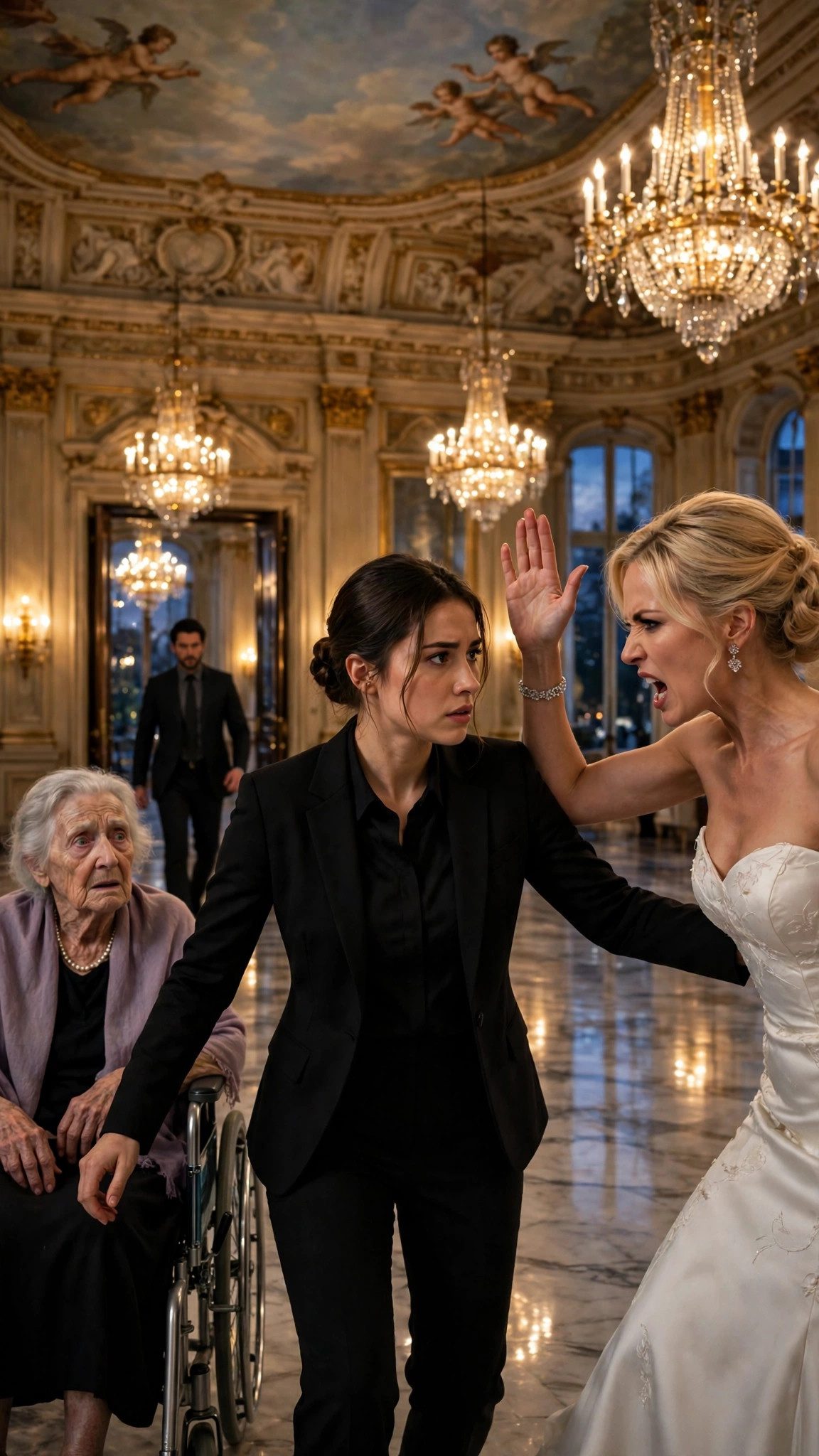
    My stepmother was standing outside the storage-room door, telling the men who had come to collect me that I was worth fifty thousand dollars.

    I heard her through the thin wood, her voice bright and reasonable, the way she always sounded when she was selling something that did not belong to her.

    "Fifty thousand, and she is yours," Regina said. "She is healthy. She is obedient. She will not cause trouble once she understands there is nowhere to run."

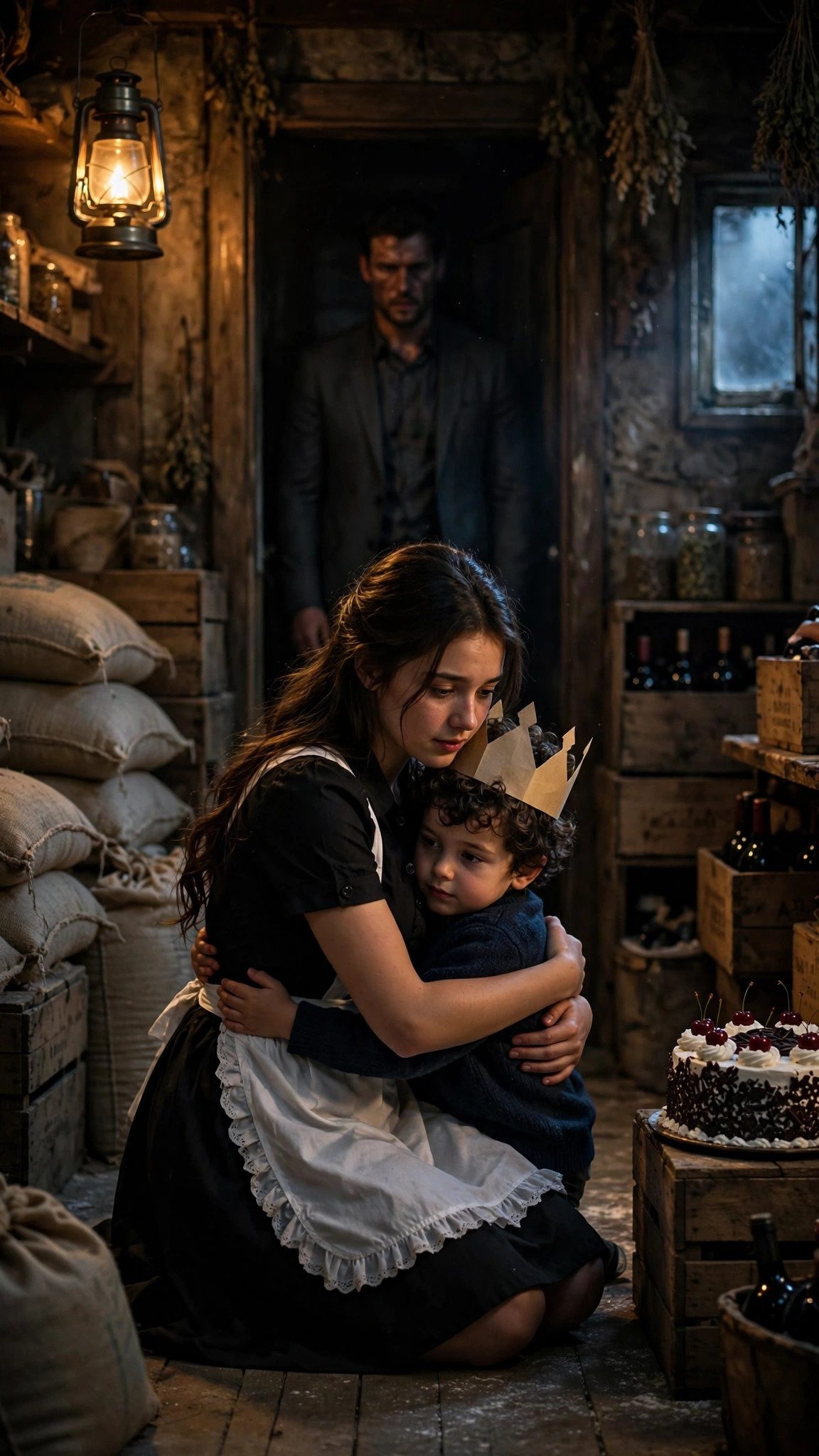
    I was still dressed in my black maid's uniform. I had sneaked into Bellarosa that Sunday with a cake in my hands, a Black Forest cake I had baked at three in the morning in a kitchen that was not mine, for a little boy who was turning four years old and who had no mother to bake for him.

    Zayn.

    The boy did not even have his father beside him that afternoon. Kian Moretti was somewhere in the building, shaking hands with men who feared him, and the party was happening without him, the way everything in that house seemed to happen without him.

    But Tony's men got there first.

    They had cornered me in the storage room, between the sacks of flour and the crates of wine, and one of them had his hand on my arm, and I could not breathe. My body was ready to return, ready to return to Tony's men's custody, the way a body learns to obey when it has been afraid for a very long time.

    And then a small sound cut through everything.

    Little feet. Running.

    Zayn stepped between us at his own birthday celebration, his small body planted in front of mine like a wall, his arms spread wide, his chin lifted, his dark eyes blazing.

    "She is my mommy," he said.

    His voice was not loud. It did not need to be loud. It was steady, and it was certain, and it shut the whole room down.

    "No one will take my mommy."

    I could not breathe. I could not move. A four-year-old boy had wrapped his arms around my waist as if nothing in the world could pull him away, and I stood there in my black maid's uniform with my hands full of cake crumbs and fear, and I thought: this is the first time anyone has ever stood between me and the people who wanted to take me.

    "This is my future wife," Zayn announced, louder now, to the whole room. "You can't take her away."

    His little voice was strong enough to shut down the room, and the adults stared at me with shock. Regina's mouth fell open. Tony's men looked at each other, uncertain, because nobody had told them what to do about a four-year-old boy who refused to move.

    My name is Aurora.

    I am the daughter of a Brooklyn mob boss, and I worked at a restaurant called Bellarosa as a maid, and Zayn's father, Kian Moretti, owned the entire building.

    Every single day, the kitchen had reminded me how much they had loved him since he was only eleven. The old cooks, the waiters who had been there for decades, they spoke about Kian the way people speak about a storm that passed through their town when they were children — with fear, and with awe, and with a strange kind of love.

    It was a wonderful speech, though his fierce, tall, and exhausted figure remained unattainable to me. He was the man criminals in New York were afraid to name too loudly. He was the man who owned the building I cleaned. He was the man whose son called me mommy.

    That Sunday, I sneaked into Bellarosa for my son's birthday, carrying a cake for Zayn. Not my son. Never my son, not by blood, not by law. But the boy had decided, and a four-year-old's decision has a way of becoming the truth if you let it stand long enough.

    It is the twentieth day I have been hiding from my stepmother, Regina, who constantly insists I marry someone. A simple life, she said. A simple life, as if a husband she chose for me would be simple. As if being sold to a man I had never met would be simple.

    But now, as we stood frozen, another frightening thing happened.

    The door opened.

    Cold air swept straight into the small storage room. A tall, broad-shouldered man filled the doorway, and every person in the room went suddenly quiet.

    Neither were Tony's men. This man did not need to announce himself. His face showed nothing before he spoke, and that was worse than anger.

    Kian Moretti.

    The man criminals in New York were afraid to name too loudly. It was Zayn's father.

    My stepmother opened her mouth with a clear voice. "I knew that if I had delivered this girl to Tony, the Black Forest cake wouldn't poison any of you," she said, the words tumbling out of her, desperate and strange, and I could not believe what I was hearing.

    Because suddenly, she was asking Tony's men not only to take me, but also to buy me from them. Fifty thousand dollars later, and she was just a porcelain doll that could be bought. Because suddenly, she was asking Tony's men not only to take me, but also to buy me from them.

    "Well, how many of them do you think are here for me?" one of the men muttered, and I did not know if he was talking about Kian's men or about the whole restaurant, because by then the doorway was full of dark suits, and every man behind Kian was waiting.

    "Vince Moretti," the boy said suddenly, pointing at the chef's whites in the corner. "He is a chef."

    It made no sense, and it made perfect sense, because Zayn was four and the world to him was divided into people who were safe and people who were not, and the chef was safe, and Tony's men were not.

    And yet, Kian did not say a word.

    He did not rush. He did not shout. He did not even look surprised.

    Kian reached into his suit pocket and took out his phone. He placed his phone into Zayn's hands and let the boy see a message.

    "I'm sorry I hurt you already."

    "I'm sorry, honey. I'm sorry. I'm sorry."

    The words were there on the screen in Kian's own hand, unsent drafts, apologies he had typed in the dark and never had the courage to send. Apologies to me.

    Zayn looked at the phone, and then he looked at his father, and then he looked at me, and he tightened his arms around my waist.

    "See?" he said. "Daddy is sorry. So you have to stay."

    And Kian Moretti, the man criminals in New York were afraid to name too loudly, looked at me across a storage room full of his enemies and his son, and for the first time in four years, he looked like a man who did not know what to do next.

    That was the moment everything changed. But to understand it, you have to understand how I got to that storage room in the first place.

    I was eighteen years old when I first walked into Bellarosa with a borrowed uniform and a lie on my tongue.

    The lie was my name. I told the hiring manager my name was Aurora Bell, because Bellini was a name that closed doors in some rooms and opened graves in others. My father, Salvatore Bellini, had been a Brooklyn mob boss, and he had been dead for two years, and his name was still the kind of name that made men go quiet.

    My mother had died when I was nine. Her name was Elena, and she baked Black Forest cake in a kitchen that always smelled of cherries and chocolate, and when she died, the smell went out of our house and never came back.

    Regina came into our lives a year later. She was beautiful, and she was patient, and she married my father for his money, and when he died, she inherited the house and the debts and me. She did not want me. She wanted the house. She wanted the money that was already gone.

    By the time I was eighteen, Regina had tried to marry me off three times. A grocer's son. A landlord's nephew. A man from her card games who was forty-one and smelled of cigars and looked at me the way you look at a house you are thinking of buying.

    So I ran. Not far. Just far enough. I took the maid's job at Bellarosa because it came with a uniform and a paycheck and a reason to be out of the house from seven in the morning until eleven at night, and because the kitchen at Bellarosa smelled like my mother's kitchen used to smell.

    The head chef, an old man named Vince Moretti — no relation to Kian, though everyone assumed — took one look at my hands and said, "You bake."

    "I used to," I said.

    "Then you will bake for us," he said. "The Black Forest cake. Your mother's recipe. I can smell it on you."

    I did not ask him how he knew. Old chefs know things. I baked the cake, and the waiters ate it, and the customers asked for it by name, and for the first time since my mother died, I felt like I was somewhere I belonged.

    And then, one Tuesday afternoon, a small boy wandered into the kitchen with chocolate on his face and a toy car in his hand, and he looked up at me with enormous dark eyes and said, "Are you my new mommy?"

    I was eighteen years old. I was a maid in a black uniform. I was the daughter of a dead mob boss, hiding from a stepmother who wanted to sell me.

    And a three-year-old boy looked at me like I was the answer to a question he had been asking since the day he was born.

    "No, sweetheart," I said, kneeling down so our eyes were level. "But I can be your friend. I'm Aurora."

    "Zayn," he said, very seriously. "I'm three and three-quarters. My daddy owns this building. He owns everything. But he doesn't own you."

    "That's right," I said, smiling despite myself. "Nobody owns me."

    Zayn considered this with the gravity of a judge. "Good," he said. "Then you can stay."

    That was the beginning. I did not know it then. I thought I was just a maid who had made a small boy laugh. I did not know that the boy's father had been watching from the kitchen door, tall and fierce and exhausted, and that he had seen his son laugh for the first time in months.

    I did not know that Kian Moretti had buried his wife a year before, and that Zayn had not spoken a full sentence to anyone since the funeral, and that my kneeling down in a flour-dusted kitchen was the first crack in a wall that had been sealed shut for a year.

    I did not know any of that. I only knew that a little boy had chocolate on his face, and that he had asked me to stay.

    The days that followed were the happiest I had known since my mother died. I learned the shape of Zayn's world, and he learned the shape of mine.

    Every morning I arrived at Bellarosa at seven, and the first thing I did was check the small table by the kitchen door, where Zayn and I would eat lunch at one o'clock. I wiped it down myself, even though it was not my job, and I set out two napkins, and sometimes I folded them into little boats, because Zayn liked boats.

    Mrs. Kowalski, the nanny, was a stern Polish woman in her sixties who had raised four children of her own and had no patience for nonsense. She watched me for a week with narrowed eyes, and then one morning she said, "You are good with him. He talks to you. He does not talk to me."

    "He talks to everyone," I said.

    "No," she said. "He does not. He has not spoken a full sentence to anyone since his mother died. Not to me. Not to his father. He speaks to you. Do you know why?"

    "Because I kneel down," I said, without thinking. "Everyone else talks down to him from above. I kneel down, so we are the same height. Children can tell the difference."

    Mrs. Kowalski looked at me for a long moment, and then she nodded, once, the way a general nods at a soldier who has passed inspection. "Then kneel," she said. "And do not stop."

    Zayn had nightmares. I learned that in the second week, when Mrs. Kowalski came to the kitchen at midnight and found me still there, finishing the baking, and asked if I would sit with him for an hour, because he had woken up crying and would not go back to sleep.

    I went upstairs to the apartment, and the boy was sitting up in bed with his blanket around his shoulders, his eyes huge in the dark.

    "I dreamed Mommy left," he whispered.

    "Your mommy did not leave," I said, sitting on the edge of his bed. "Your mommy loved you very much, and she had to go to heaven, but love does not leave. Love stays right here." I put my hand over his heart. "Can you feel it?"

    He put his small hand over mine. "It is warm," he said.

    "That is your mommy," I said. "That is how you know she is still with you."

    "Will you stay until I fall asleep?" he asked.

    "Yes," I said. "I will stay."

    I sang to him then, the lullaby my mother used to sing to me, in a low voice, in the dark, and his breathing slowed, and his eyes closed, and his hand stayed on top of mine, warm and trusting.

    When I finally stood up to go, I saw Kian standing in the doorway. He had been there the whole time, silent, in the dark hallway, listening. His face was unreadable, but his eyes were wet, and he put a finger to his lips, and he nodded at me — a small, broken nod, like a man who had just been handed something he thought he had lost forever.

    After that night, the lullaby became part of my job, though no one ever wrote it down. On the nights when Zayn had nightmares, Mrs. Kowalski would send for me, and I would come upstairs in my black uniform, and I would sing, and the boy would sleep.

    And on Sundays, I baked the Black Forest cake, and Zayn would stand on a stool beside me in the kitchen, wearing an apron that swallowed him whole, and he would stir the batter with enormous concentration, and old Vince would pretend to taste it and declare it "almost as good as your mother's, little boss," and Zayn would glow with pride.

    "One day I will bake it all by myself," Zayn announced one Sunday, licking chocolate off his fingers.

    "One day," I agreed. "But not today. Today you are my helper."

    "Like you are Mommy's helper?" he asked.

    "Exactly like that," I said.

    He thought about this, stirring solemnly. "Then when I grow up, I will be a helper too," he decided. "I will help everyone."

    "That is a good plan," I said.

    It was a good plan. It was the best plan I had ever heard. And I did not know then that the boy's father had been standing in the kitchen door again, listening, with his arms crossed and his face unreadable, and that he was thinking the same thing I was thinking: that this child, who had lost his mother, had found something worth holding on to, and that it would be cruel to take it away.

    So I stayed.
  • Chapter 3: Breathe With Me

    Chapter 3: Breathe With Me

    My first day as Leo Moretti's companion began on a Tuesday morning in April, with rain against the windows of the house on Willow Lane and a little boy who would not come out from under the kitchen table.

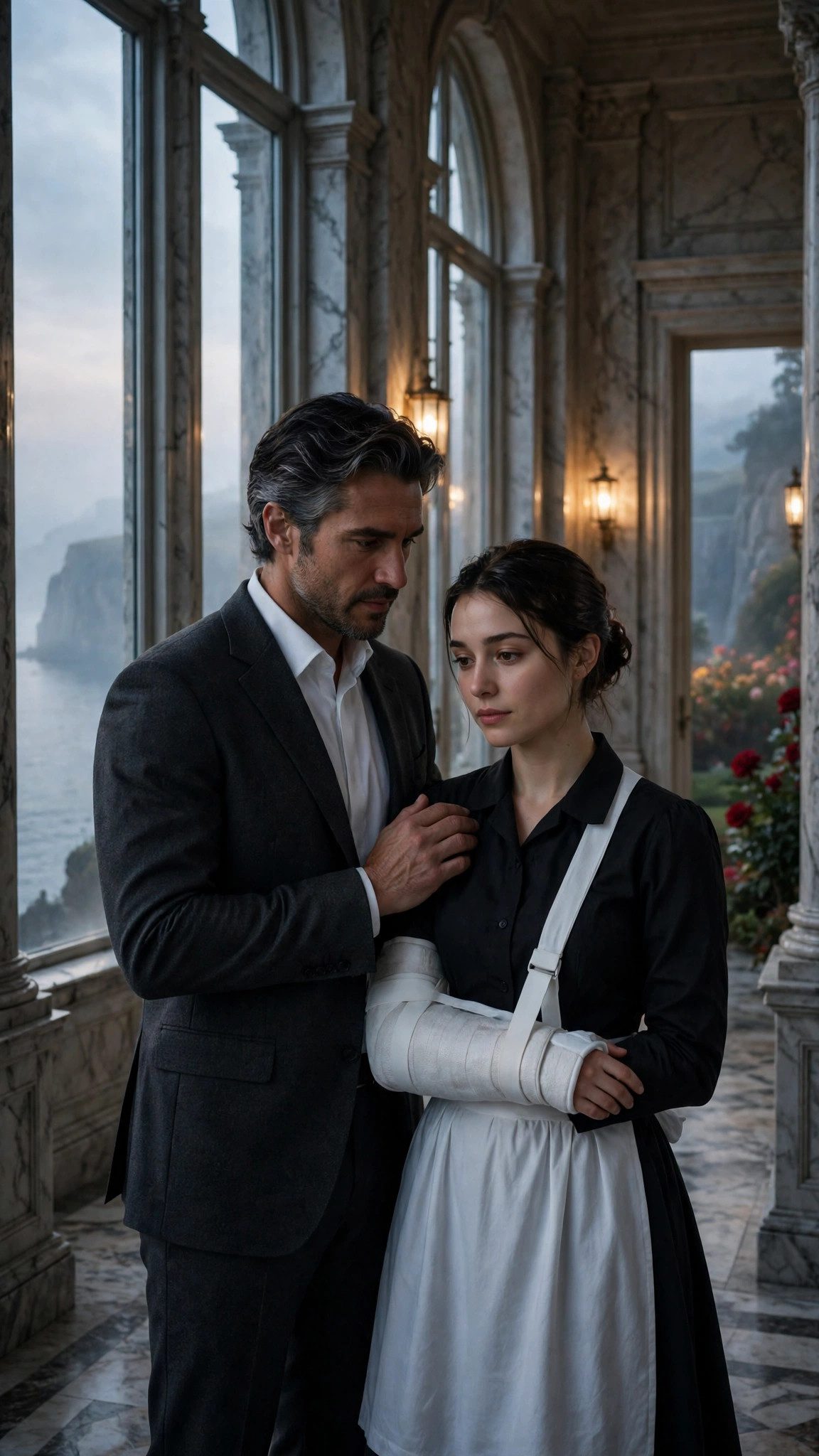
    "He does this sometimes," Dante said, crouching down to look under the table. His bandaged hand rested on his knee. "Since the funeral. He hides when the house is too loud. Or too quiet. Or when someone new comes."

    "I'm not new," I said. "He met me on Friday."

    "To him, Friday was a dream," Dante said. "Today is real."

    I set my bag down by the door and took off my cardigan. Then I did something Dante clearly did not expect. I got down on the kitchen floor, on my hands and knees, and I crawled under the table.

    Leo was curled in the far corner, his knees pulled up to his chest, his thumb in his mouth. His eyes were wide and wet. The space under the table smelled like lemon cleaner and old wood.

    "Hi," I said quietly. "It's me. Clara. From the milk."

    He stared at me.

    "I know about hiding," I said. "I used to hide under my grandmother's kitchen table when I was scared. She would pretend she couldn't find me. She would say, 'Clara? Clara, where did you go? Has anyone seen my Clara?' And then she would lift the tablecloth and say, 'There she is!' And I would laugh, even when I was scared, because she always found me."

    Leo took his thumb out of his mouth. "Milk?" he whispered.

    "After we come out," I said. "Milk is for the table. Not under it. Deal?"

    He thought about it for a long moment, the way three-year-olds think about things, with their whole face. Then he nodded, once, and crawled out from under the table, and I crawled out after him, and Dante was standing there with his arms crossed and an expression on his face that I had never seen on a man his size before.

    It looked a lot like hope.

    That was how the days went. Slowly. Gently. I learned Leo's rhythms the way you learn a language: by listening more than speaking.

    He woke up early, before six, and the first hour of the day was the hardest. He would cry for his mother — not with words, but with a sound that came from deep in his chest, a sound that made the whole house go still. I learned to sit with him through it. Not to fix it. Not to distract him. Just to sit on the floor beside his bed and breathe with him until it passed.

    One, two, three, four. In. One, two, three, four, five, six. Out.

    After breakfast — toast with jam, cut into triangles, always triangles — we went to the garden. The house on Willow Lane had a walled garden behind it, with a lemon tree and a bench and a patch of dirt where Leo liked to dig with a plastic spoon. I brought a blanket and a book of nursery rhymes, and I read to him while he dug, and sometimes he would stop digging and listen, and sometimes he would hand me a worm like it was a treasure, and I would say, "Thank you, Leo, that's a very fine worm," and he would almost smile.

    Almost. He never quite smiled. Not yet.

    In the afternoons, when he napped, I sat in the kitchen with a cup of tea and tried not to feel like an intruder in someone else's grief. The house was full of Elena. Her photographs lined the hallway. Her ballet shoes sat in a glass case in the living room, pink satin, worn at the toes. Her piano stood in the corner of the sitting room, its lid closed, a layer of dust on the keys that nobody had touched in six months.

    Rico came home at different times. Sometimes early, sometimes after Leo was asleep. He would stand in the doorway of the kitchen and ask, "How was he today?" And I would tell him. "He ate all his toast." "He dug up three worms." "He cried for twenty minutes this morning, and then he stopped on his own."

    Rico listened to every word like it was a report from a battlefield. And in a way, it was.

    On the third day, something changed. We were in the garden, and Leo was digging, and I was reading, and a bee landed on the blanket beside him. Leo froze. His chest started to rise too fast. His hands curled into fists.

    I put the book down and moved beside him, slowly. "Hey," I said. "Look at me. Breathe with me. In. One, two, three, four. Out. One, two, three, four, five, six."

    He copied me. Once. Twice. The bee flew away. Leo's shoulders dropped.

    "Good," I whispered. "You're doing so good."

    And then Leo looked at me, and his mouth opened, and he said, very clearly, "More."

    I froze. "More what, sweetheart?"

    "More," he said, and pointed at the book. "More story."

    It was two words. Two ordinary words. But I sat there in the garden with tears running down my face, because in three days, Leo Moretti had gone from hiding under a table to asking for more story, and I knew — I knew — that somewhere inside that frightened little boy, the voice his mother had loved was still alive.

    That evening, when Rico came home, I told him. He stood in the kitchen doorway for a long time without speaking. Then he walked into the sitting room and stood in front of Elena's piano, and he put his hand flat on the closed lid, and his shoulders shook once, hard, like a man holding back something enormous.

    "He said 'more,'" Rico said, without turning around. "My son said 'more.'"

    "He'll say more than that," I said. "Give him time. Give him safety. The words are in there. They're just scared."

    Rico turned around then, and his eyes were red, and he didn't try to hide it.

    "Clara," he said, "do you know what the doctors told me? They told me my son was spoiled. They told me to be firmer. They told me to stop letting him win. And you — you sat on the floor with him and breathed, and he asked for more story."

    "Children don't need to be fixed," I said. "They need to feel safe enough to heal."

    He nodded slowly. "Stay for dinner," he said. "Please. Cook is making pasta. Leo eats better when you're at the table."

    So I stayed. And Leo ate two whole bowls of pasta, and he pointed at the parmesan and said, "More," and Rico laughed — actually laughed, a real laugh that sounded rusty from disuse — and for one evening, the house on Willow Lane felt less like a house full of grief and more like a home.

    It was on the way home that night that I noticed the car.

    I took the bus from Brooklyn Heights, the way I always did, changing at Atlantic Avenue for the train to Ridgewood. The bus was half empty. I sat by the window and watched the city go by, tired in the good way, the way you feel tired after a day that mattered.

    At Atlantic Avenue, I got off and walked toward the subway entrance. That was when I saw it: a black SUV, parked across the street, its headlights off, its engine running. It had been behind the bus for three stops. I was sure of it. I had noticed it in the window's reflection when we crossed the bridge.

    I stopped walking. The SUV didn't move. A man sat in the driver's seat, his face in shadow. He was looking at me. I was sure of it.

    My chest went tight. My hands went numb. The old familiar feeling rose up like floodwater.

    One, two, three, four. In. One, two, three, four, five, six. Out.

    I walked into the subway station without looking back. I took the train. I changed lines twice, even though I only needed to change once. When I got out at my stop in Ridgewood, I stood on the platform for ten minutes, watching the trains come and go, until I was sure no one had followed me.

    Then I walked home fast, my keys already in my hand, and I locked my door behind me with both locks and the chain, and I sat on my bed in the dark and tried to tell myself I was imagining things.

    But I wasn't imagining things. I knew the feeling of being watched. I had felt it once before, years ago, when a man had followed me home from a late shift at a diner and I had run the last three blocks with my heart hammering. I knew what it felt like.

    The next morning, I told Dante.

    He listened without interrupting, his face growing harder with every word. When I finished, he said, "What did the car look like?"

    "Black SUV. New. Tinted windows. I didn't see the plates."

    "And the driver?"

    "A man. I couldn't see his face."

    Dante nodded once. "From now on, you don't take the bus home. I drive you. Or Sal drives you. Every night. No exceptions."

    "Sal?" I asked.

    "Sal Ferraro," Dante said. "Mr. Moretti's driver. He's been with the family for twelve years. He knows every street in Brooklyn."

    "Is it—" I hesitated. "Is it normal? Being followed?"

    Dante was quiet for a moment. Then he said, "Miss Bennett, the people who killed Mrs. Moretti were never caught. The police called it a random shooting. Mr. Moretti has never believed that. And if someone is watching this house now, it means they know about you. It means they know Leo has started to speak again. And it means they think you matter."

    "Do I matter?" I asked.

    Dante looked toward the garden, where Leo was digging with his plastic spoon.

    "To that boy," he said, "you are the only person in the world who understands him. Yes. You matter."

    That night, Rico came home early. He found me in the kitchen, making Leo's warm milk. One sugar cube. He stood in the doorway and watched me stir it.

    "Dante told me about the car," he said.

    "I might have imagined it," I said.

    "You didn't," Rico said flatly. "I had Sal check the cameras on the block. A black SUV with no plates was parked across from the bus stop for forty minutes. It left when you went into the station."

    My hand stopped stirring. "Who was it?"

    "I don't know yet. But I will find out." He stepped into the kitchen. "Clara, I need you to understand something. The people who killed Elena did it because they wanted me dead, and they were willing to kill her to get to me. If they are watching this house, it is because they want Leo. Or they want you, to get to Leo. I will not let that happen. But I need you to be careful. No more buses. No more walking alone at night. Dante or Sal drives you everywhere. Do you understand?"

    "I understand," I said.

    "And one more thing." He hesitated, and for a moment he looked less like the Butcher of Brooklyn and more like a man asking for something he wasn't sure he deserved. "Thank you. For telling Dante. For not keeping it to yourself. Most people in my world keep things to themselves until it's too late."

    I handed him the glass of milk. "I'm not most people in your world, Mr. Moretti."

    "No," he said, and for the first time since I had met him, he smiled — a real smile, small and tired and genuine. "You're not. That's the whole problem. And the whole reason Leo is getting better."

    He took the milk to Leo, and I stood in the kitchen and listened to them in the other room — Rico's low voice, Leo's small one saying "more" — and I thought about the black SUV and the man in the shadows, and I felt afraid.

    But I also felt something else. Something I hadn't felt in a very long time.

    I felt needed. And I felt like staying.

    The next morning, I woke up before my alarm and lay in bed listening to the rain on my fire escape, thinking about the black SUV and the man in the shadows. My first instinct was to call Rico and tell him I had changed my mind. My second instinct was to get up, get dressed, and go to Willow Lane anyway.

    The second instinct won.

    When I arrived, Leo was already in the garden, digging in the wet dirt with his plastic spoon, his hair damp from the mist. He looked up when he heard the gate, and his whole face changed, and he dropped the spoon and ran to me across the wet grass, and he threw his arms around my legs.

    "Clara!" he said. My name. Clear as a bell. The first time he had ever said it.

    I picked him up, mud and all, and I held him tight, and I felt his small heart beating against mine, fast and steady, and I thought about how three days ago this child had hidden under a kitchen table, and now he was running across a garden to greet me by name.

    "Good morning, Leo," I said. "Did you sleep well?"

    He nodded. "Milk," he said. "More story."

    "After breakfast," I said. "First toast. Triangles."

    Dante watched us from the kitchen doorway, his arms crossed, his bandaged hand resting on his forearm. When I caught his eye, he gave me a short nod — the kind of nod men like Dante give when they have decided something about you.

    "Miss Bennett," he said, as I carried Leo inside. "Mr. Moretti asked me to tell you something. He said to tell you that the car will be outside your building every morning at seven-thirty, and every night at eight. And he said to tell you that if you ever feel unsafe, even for one second, you call me. Not the police. Me. Do you understand?"

    "I understand," I said.

    "Good." Dante hesitated, and for a moment the big man looked almost awkward. "And Miss Bennett — my mother used to say that God sends the right person at the right time, and you only recognize them afterward. I think the little boss recognized you first."

    That afternoon, during Leo's nap, I called Rosa at the care home. I told her about the job, about the house, about the little boy who had said my name. I told her about the black SUV, too, because Rosa had always known when I was hiding something, and there was no point in trying.

    "Clara," she said, her voice thin over the phone but clear, "your mother used to say that brave people are not people without fear. Brave people are people who are afraid and do it anyway. You did it anyway. I am proud of you."

    "I'm scared, Nonna," I whispered.

    "Good," she said. "Scared means you understand what matters. Now go and be brave anyway."

  • Chapter 2: The Girl from Queens

    Chapter 2: The Girl from Queens

    Three weeks before the night of the milk, I had stood outside Il Destino in a borrowed blazer and shoes that pinched, trying to convince myself that I belonged in a place like that.

    I did not. I knew it the moment I walked in. The hostess looked at my resume like it was a parking ticket. The dining room smelled like truffle oil and money. The waiters moved like dancers, and the wine list was thicker than any book I had ever finished.

    But Marco hired me anyway, because the restaurant was short-staffed on Friday nights and because, as he put it while barely looking up from his clipboard, "You look like you can carry a tray without dropping it, and you look like you will show up."

    He was right about the second part. Showing up was the one thing I had never failed at.

    My name is Clara Bennett. I am twenty-six years old. I grew up in a two-bedroom apartment in Astoria, Queens, above a laundromat that hummed all night and smelled like detergent and other people's lives. My mother died when I was twelve. Aneurysm. One minute she was braiding my hair at the kitchen table, the next she was on the floor, and the paramedics were saying words I didn't understand yet.

    After that, it was my grandmother Rosa and me. Rosa had come from Naples when she was nineteen with a suitcase and a recipe for lemon cake and no English at all. She raised me the way she had raised my mother: with warm milk and one sugar cube when I couldn't sleep, with her hand on my back when I couldn't breathe, with the firm belief that a girl who could survive anything could do anything.

    She was right about most things. She was wrong about the panic.

    It started when I was fifteen. The first attack came in the middle of algebra class. My chest went tight. My hands went numb. I was sure I was dying, and the school nurse was sure I was faking it to get out of a test. By seventeen, the attacks came at night, and I would sit on the bathroom floor counting my breaths until the sun came up.

    One, two, three, four. In. One, two, three, four, five, six. Out.

    At twenty-one, after an attack so bad I called an ambulance for a heart I was certain was failing, a doctor at Elmhurst finally gave it a name: panic disorder. She sent me to a therapist named Dr. Patel, a small woman with a calm voice who taught me that panic was not weakness. "Your body," she said, "is a smoke alarm that goes off when there is no fire. It is trying to protect you. You do not have to be ashamed of it. You only have to learn how to answer it."

    I learned. Slowly. Breathing. Grounding. Warm milk with one sugar cube, the way Rosa made it. I learned to recognize the signs in myself: the tight chest, the fast shallow breaths, the hands that curled into fists without permission.

    What I did not expect was to recognize them in a three-year-old boy at the most feared table in Brooklyn.

    Rosa was seventy-nine now, and she lived in a care home in Flushing because her knees had given out and her memory had started to slip in small, frightening ways. The home cost more every year. My rent in a walk-up in Ridgewood cost more every year. I had worked in diners and coffee shops and a catering company that paid late and fired people by text message. Il Destino paid on time. Il Destino paid enough to cover Rosa's home and my rent and the bus fare between them, if I worked doubles and skipped lunch.

    That was why I needed the job. That was why Sarah's warning had stopped me cold for those few seconds by the espresso machine. Losing Il Destino would have meant choosing between Rosa's care and my apartment, and I had already decided a long time ago that I would never make that choice.

    So I went home that Friday night after the milk and the thank-you, and I sat on my fire escape with a cup of tea and tried to understand what had just happened to my life.

    Rico Moretti had thanked me. The Butcher of Brooklyn had thanked a waitress from Queens.

    I had heard the stories, of course. Everyone in Brooklyn had. Ricardo Moretti had taken over his father's organization at twenty-four, after old Salvatore Moretti died of a stroke at his desk. They said Rico had consolidated the family's businesses — restaurants, construction, freight, a dozen legitimate companies that everyone suspected were not entirely legitimate — in less than two years, without starting a single war. They said he was cold. They said he was precise. They said he had once walked into a room full of armed men who owed his family money and walked out with every dollar and not a scratch on him.

    They called him the Butcher because, the story went, when he was nineteen, a rival crew had tried to take one of his father's warehouses, and Rico had gone in alone and come out with blood on his shirt and the warehouse still his. Nobody ever said exactly what he had done in there. Nobody needed to. The name did the work.

    But the man I had seen that night did not look like a butcher. He looked like a father who had run out of answers.

    And his wife. Elena. I had heard that story too, from the kitchen staff, whispered between orders.

    Elena Moretti had been twenty-nine, beautiful, a former ballet dancer who had given it up to marry Rico. They said she was the only person who could make him laugh. They said she had softened him, that the Butcher of Brooklyn kept a photograph of her in his wallet and that his men had learned to read his mood by whether he had looked at it that morning.

    Six months ago, on a Tuesday night in March, Elena had been driving home from a charity gala in Manhattan. Her car stopped at a red light on Atlantic Avenue. A black sedan pulled alongside. The windows came down. The bullets were meant for Rico — everyone knew that, because Rico was supposed to be in that car, driving her home, and at the last minute he had stayed behind to finish a phone call.

    Elena died at the scene. She was twenty-nine years old.

    Leo was two and a half. He had been asleep in his bed at home. He woke up the next morning to a house full of crying adults and a mother who never came back.

    According to the kitchen staff, Leo had barely spoken since then. Before, he had been a chattering, laughing little boy who knew fifty words and used all of them. After, he went silent. He screamed instead. He threw things. He bit. The nannies quit, one after another — four of them in six months. The doctors said it was grief. The doctors said it was a phase. The doctors said he was spoiled and that his father needed to be firmer.

    Nobody said he was terrified. Nobody said his chest was too tight to breathe.

    Except me. A waitress from Queens who knew what terror looked like when it wore a child's face.

    The next morning, Saturday, I woke up at seven and stared at my ceiling for a long time. Rico had said nine o'clock. His house. Dante would give me the address. I had no address. I had no phone call. I had only the memory of a man in a dark suit saying, "We need to talk about my son."

    At eight-thirty, my phone buzzed. A text from an unknown number: "Dante. 9 AM. 14 Willow Lane, Brooklyn Heights. Black SUV outside your building at 8:45. Don't be late."

    I put on my best clothes, which were not very good clothes: a navy dress I had bought on sale three years ago, a cardigan with one button missing, flat shoes that didn't squeak. I brushed my hair until it shone. I stood in front of my mirror and practiced saying, "Mr. Moretti, I appreciate the opportunity, but I am a waitress, not a nanny," in case he offered me something I couldn't take.

    Then I went downstairs, and the black SUV was already there, and Dante was standing beside it with his hand wrapped in a fresh bandage, and he looked at me with an expression I couldn't read at all.

    "Miss Bennett," he said.

    "Mr. Dante," I said. "How is your hand?"

    He looked down at the bandage, surprised, as if he had forgotten it was there. "It will heal," he said. "The little boss has strong teeth."

    "He was scared," I said.

    Dante nodded slowly. "Yes," he said. "I think maybe you are the first person to understand that."

    He opened the car door for me. I got in. The leather seats smelled like polish and money. Dante drove in silence through streets I had only ever seen from a bus window, past brownstones with window boxes and wrought-iron fences, until we turned onto Willow Lane and stopped in front of a house that looked like it belonged in a magazine: red brick, white trim, a garden behind a low iron gate, a porch with a swing.

    "This is his house?" I asked.

    "This is his home," Dante corrected. "The house is where he works. This is where he lives with the boy."

    I followed Dante up the front steps. My heart was beating too fast, and I counted my breaths the way Dr. Patel had taught me. One, two, three, four. In. One, two, three, four, five, six. Out.

    The front door opened before we reached it.

    Rico Moretti stood in the doorway in a grey sweater and dark trousers, no suit, no tie, no jacket to hide a hand inside. He looked younger without the armor. He looked tired in a way that had nothing to do with sleep.

    "Clara Bennett," he said. "You came."

    "You said nine o'clock," I said. "I show up."

    Something flickered across his face. Almost a smile. Almost.

    "Come in," he said. "Leo is in the kitchen. He has been asking for milk since he woke up. Warm milk. One sugar."

    My throat went tight. "He asked for it? With words?"

    Rico nodded. "He pointed at the kitchen and said, 'Milk.' One word. The first word he has said to anyone in four days."

    I followed him inside, past a hallway lined with photographs — Elena laughing on a beach, Elena holding a newborn Leo, Elena in a ballet costume, young and weightless — and into a kitchen that smelled like coffee and toast. Leo sat at a small table in a high chair that was too small for him, his legs swinging, a plastic cup in front of him.

    He looked up when I came in. His eyes were still red at the edges, but they were clear. He pointed at me.

    "Milk," he said.

    And then, to my astonishment, he held out his arms.

    I went to him without thinking. I picked him up — he was heavier than he looked, warm and solid — and he buried his face in my shoulder and sighed, a long shaky sigh, like a person setting down something heavy.

    Rico stood in the doorway, watching us. His hands were at his sides. He looked like a man standing at the edge of a cliff, trying to decide whether to jump.

    "Miss Bennett," he said quietly. "I need to ask you something. And I need you to answer me honestly, because I am tired of people telling me what they think I want to hear."

    "All right," I said.

    "My son has not spoken in months. He screams. He bites. He throws plates. Four nannies have quit. Three doctors have told me he is spoiled. Last night, in thirty seconds, you did what none of them could do in six months. So tell me the truth. What is wrong with my son?"

    I held Leo a little tighter. He was warm against me. His breathing was slow and even now.

    "Nothing is wrong with him," I said. "He's grieving. He's three years old and his mother was taken from him, and nobody has told him in a way he can understand that he is safe. He screams because screaming is the only language he has left. And when his chest gets tight and he can't breathe, he panics, and the panic makes him scream more. It's a circle. Someone has to break it gently."

    Rico was silent for a long time. Then he said, "Can you break it?"

    "I don't know," I said honestly. "I'm a waitress, Mr. Moretti. I'm not a doctor. I'm not a nanny. I just know what panic feels like, and I know what helped me."

    "What helped you?"

    "Someone sitting with me. Someone breathing with me. Someone who didn't try to fix me or silence me or tell me to stop being afraid. Just someone who stayed."

    Rico looked at the photographs in the hallway. At Elena, laughing on a beach.

    "Stay," he said.

    I blinked. "What?"

    "Stay," he said again. "Not as a waitress. As Leo's companion. During the day. While I work. I will pay you three times what the restaurant pays you. You will have your own room here if you want it, or you can go home every night. Whatever you need. Just stay. Help my son."

    Three times what the restaurant paid me. That was Rosa's care home and my rent and food and the bus fare, with money left over. That was not having to choose. That was breathing room for the first time in years.

    And it was also the most dangerous offer anyone had ever made me. Because the Butcher of Brooklyn was asking a waitress from Queens to walk into his house and hold his son, and everyone in the city knew what happened to people who got close to men like Rico Moretti.

    I thought about Rosa, and her knees, and her slipping memory. I thought about my rent. I thought about Leo, warm and heavy in my arms, his face buried in my shoulder.

    "I need to think about it," I said.

    Rico nodded, as if he had expected that. "Take the weekend," he said. "But Clara — if you say no, I will understand. And you will still have your job at Il Destino. Marco will not fire you. I have already made that clear to him."

    "Thank you," I said.

    He walked me to the door. At the threshold, he stopped.

    "One more thing," he said. "Last night, when you walked across that dining room, every person in the room thought you were going to die. Do you know why you didn't?"

    I shook my head.

    "Because I saw your hands," he said. "They were steady. A person with steady hands in a moment like that is either very brave or very stupid. I needed to know which one you were."

    "And now?" I asked.

    "Now," he said, "I think you might be both. And I think my son needs both."

    I went home that afternoon and sat on my fire escape again, and this time I didn't have tea. I just sat there and watched the traffic on the street below and thought about a little boy who had asked for milk with one word, and a man who had thanked a waitress, and a choice that felt like standing at the edge of everything I had ever known.

    Sarah called me that evening. "Well?" she said. "Are you going to take it?"

    "I don't know," I said.

    "Clara. He offered you three times your pay to sit with a three-year-old. Take the money. Take it and run."

    "It's not that simple."

    "It is exactly that simple. You need the money. He needs someone who isn't afraid of his kid. Everybody wins."

    "And if the people who killed his wife come back?" I asked quietly. "What happens to the girl sitting with his son then?"

    Sarah was silent for a moment. Then she said, "Then you do what you did last night. You stay steady. And you breathe."

    I didn't sleep that night. I lay awake and counted my breaths. One, two, three, four. In. One, two, three, four, five, six. Out. And somewhere between the counting and the dark, I made my decision.

    On Monday morning, I called the number Dante had texted me from.

    "Mr. Moretti," I said. "It's Clara Bennett. I'll stay."

  • Chapter 1: Who Are You?

    Chapter 1: Who Are You?

    The plate hit the marble floor so hard that everyone in the restaurant flinched.

    It was eight o'clock on a Friday night at Il Destino, the kind of restaurant where people whispered over thousand-dollar bottles of wine and men in tailored suits made deals without ever raising their voices. Crystal chandeliers hung from a ceiling painted like a sky. The marble floor had been polished that afternoon until it reflected the candlelight. The tables were dressed in white linen, and every plate on them cost more than I made in a week.

    Tonight, nobody was whispering. Nobody was eating. Everyone was watching the child at the center table.

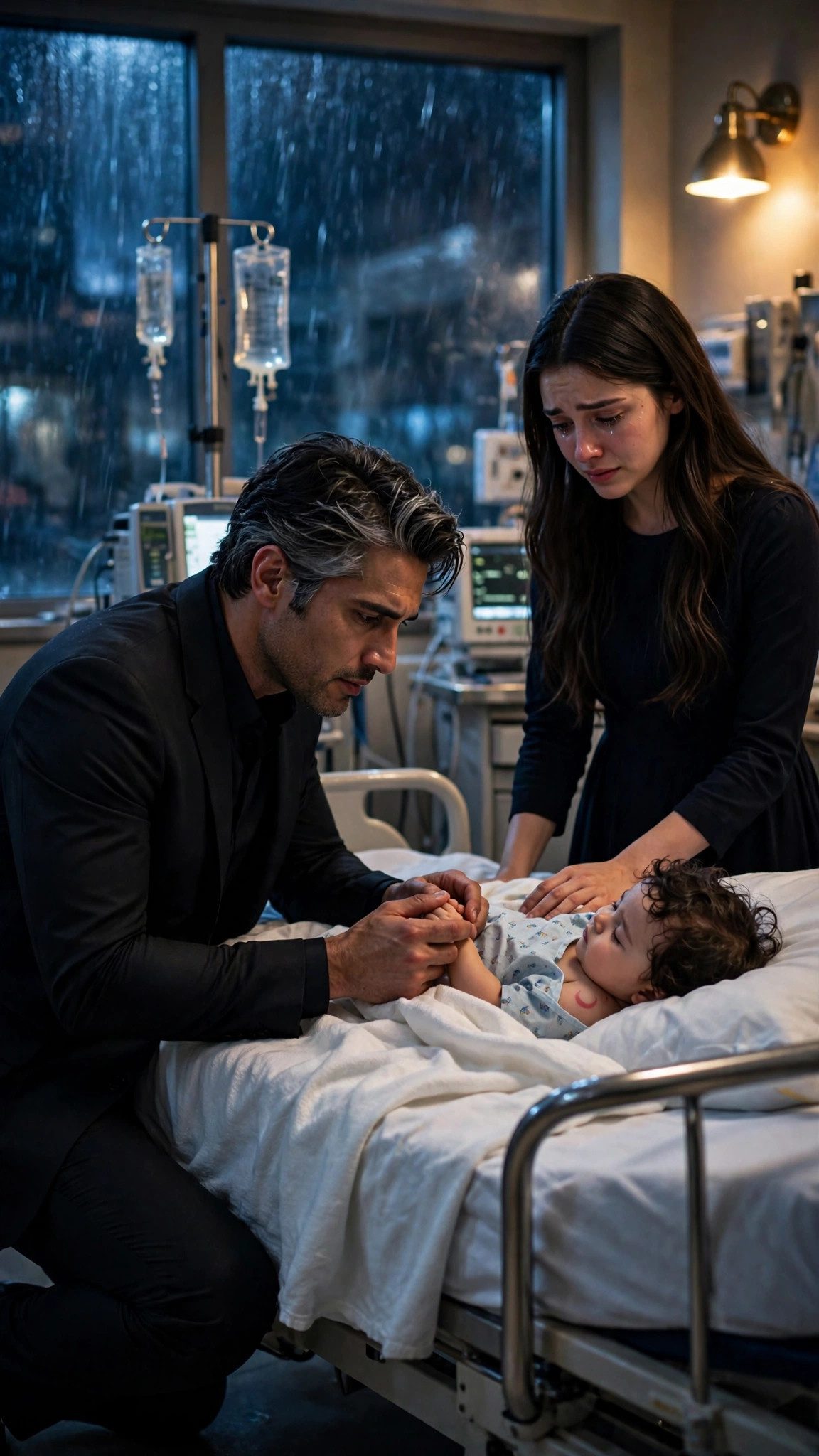
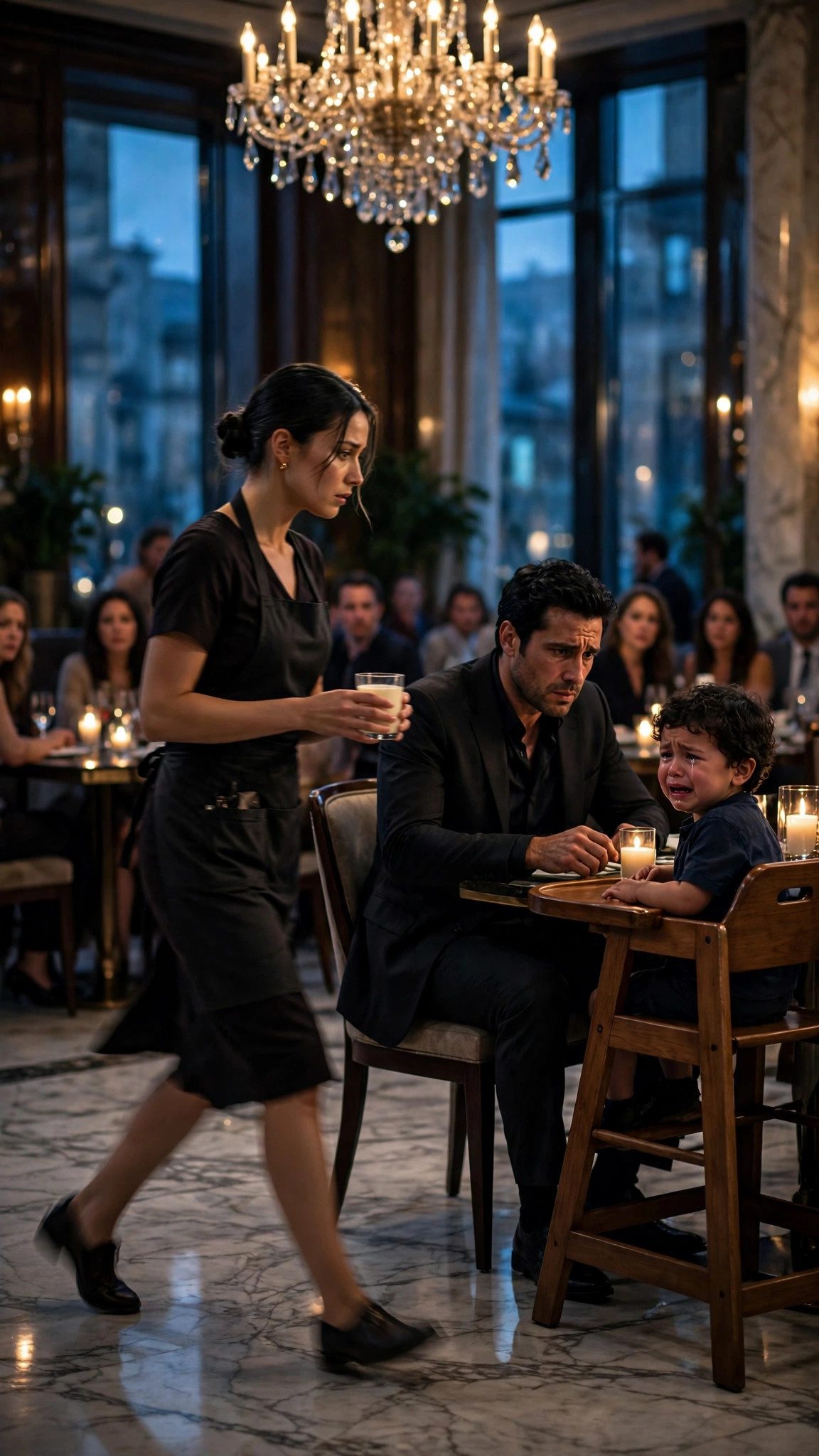
    Three-year-old Leo Moretti screamed again, his tiny hands shaking as shattered porcelain scattered beneath the most feared table in Brooklyn. His father slammed one hand against the table, and when Ricardo Moretti looked up, every employee in the room seemed to stop breathing.

    "Enough."

    But Leo only screamed louder.

    I was standing near the kitchen doors when it happened, holding a tray I had completely forgotten about. The crystal chandelier above us trembled faintly with the force of the boy's cries. I had heard his name before I ever started working there. Everyone had. Some called him a businessman. Some called him a capo. The employees used another name only when they were sure no one important could hear them.

    The Butcher of Brooklyn.

    He was thirty-two, dressed in a dark Brioni suit, his expression carved from stone. But that night, he didn't look powerful. He looked exhausted. Defeated, even. And somehow that frightened everyone more.

    "Leo," Rico said through clenched teeth. "Basta."

    The boy shook his head violently. "No! No! I want no!"

    Then Leo swept another plate toward the edge. A waiter jumped back just before it crashed. The sound echoed across the dining room. One woman near the bar covered her mouth. A man at the next table lowered his eyes as if witnessing something private could become dangerous.

    The manager, Marco, approached the Moretti table with the expression of a man walking toward an execution. "Mr. Moretti," he began carefully, "perhaps the young master would prefer something else."

    Rico slowly turned toward him. The entire room seemed to shrink. "He doesn't want food, Marco." His voice was quiet. That was worse than shouting. "He wants to torture me."

    Marco forced a nervous smile. "Perhaps if we brought him dessert—"

    "Do I look like a man who knows how to stop a toddler?"

    Nobody answered. Rico dragged one hand through his dark hair and gripped the roots. For just one second, I saw something in his face that didn't match the stories. Pain. Not irritation. Not embarrassment. Pain.

    I knew why. Everyone at Il Destino knew. Six months earlier, Rico's wife, Elena, had been killed in a drive-by shooting. The bullets had been meant for him. Leo had lost his mother. And Rico had been left with a three-year-old son who, according to the staff, had barely spoken since then. Mostly, he screamed.

    People called it bad behavior. I didn't. I had spent enough nights fighting panic attacks alone to recognize what terror looked like when it wore a child's face. And Leo looked terrified. He clutched the front of his shirt so tightly his knuckles turned pale. His face was red. Tears streamed down both cheeks. Between screams, he dragged in sharp, desperate breaths. Nobody else seemed to notice that part. They only noticed the noise.

    Rico's head of security stepped closer. Dante was enormous. I had seen him remove drunk customers without even appearing to strain. Rico pointed toward Leo. "Get him out of here."

    Dante hesitated. That caught my attention. Men like Dante weren't supposed to hesitate.

    "Come on, little boss," he murmured. He reached toward Leo.

    The boy screamed. Then he lunged forward and sank his teeth into Dante's hand. Dante jerked backward. Blood appeared almost instantly. A few people gasped.

    "Jesus—"

    Leo shrank into his chair and screamed even harder. Rico's palm came down against the table. Silverware jumped. Wine trembled inside crystal glasses.

    "Is everyone in my employment incompetent?"

    Marco went completely pale. Rico pointed toward his son. "Silence him, or I shut this place down."

    The sentence hung in the air. No one laughed. No one assumed he was exaggerating. Il Destino occupied one of the most expensive properties in the neighborhood. Rico Moretti owned the building. According to Marco, he owned enough of the surrounding block that arguing with him about money was beyond pointless.

    Beside me, Sarah whispered, "This is bad."

    I couldn't answer. I was still watching Leo. Not Rico. Not Dante's bleeding hand. Leo. His breathing had changed. Shorter. Faster. His shoulders were trembling. I had seen that exact look before. In mirrors. On nights when I couldn't breathe and no one was there to tell me I wasn't dying.

    "He's panicking," I whispered.

    Sarah stared at me. "What?"

    "He can't breathe properly."

    "He's having a tantrum."

    "No." I watched Leo press both hands against his chest. "He's scared."

    Sarah grabbed my wrist. "Clara." I looked down. Her fingers were tight around me. "Whatever you're thinking, don't."

    "I'm not thinking anything."

    "That's a lie."

    Leo screamed again. Rico turned toward the nearest waiter. "What are you standing there for?"

    The waiter flinched. I set my tray down. Sarah's eyes widened. "No."

    I walked toward the service counter. "Clara."

    There was a pot of milk warming near the espresso machine. I poured some into a clean glass. My hands were steady. That surprised me. I opened the sugar container. One cube. I dropped it into the milk.

    Sarah appeared beside me. Her voice was barely audible. "That's the Butcher of Brooklyn."

    "I know."

    "If you go over there, you're dead."

    I looked toward Leo again. He was gasping between sobs now. Rico was saying something to Dante, but I wasn't listening.

    "I'm bringing him milk."

    "You're bringing a mafia boss's child milk after his father just threatened to shut down the restaurant."

    "Yes."

    "Do you hear yourself?"

    Probably not. My heartbeat had become too loud. Sarah moved in front of me. "Marco will fire you."

    "I know."

    "You need this job."

    That stopped me. Because she was right. I desperately needed it. Rent was due. I had already worked a double shift. I hadn't eaten since morning because buying lunch at work meant spending money I couldn't afford to spend. Losing Il Destino could mean losing my apartment.

    For a few seconds, I stood there staring down at that stupid glass of warm milk. It would have been easier to stay behind the kitchen doors. Everyone else was. Nobody would blame me.

    Then Leo made a sound that was different from the others. Not anger. Not screaming. A broken little gasp.

    And something inside me refused to stay still.

    I stepped around Sarah. "Clara, please."

    "I'm only going to talk to him."

    "You don't understand people like Moretti."

    Maybe I didn't. But I understood fear. And I understood what it felt like when an entire room judged you for falling apart.

    So I started walking. My cheap rubber-soled shoes squeaked against the marble floor. Once. Twice. Every step felt louder than the last. People began looking at me. A couple seated near the aisle actually moved their chairs backward as I passed.

    Marco saw me coming from halfway across the dining room. His eyes nearly came out of his head. "What are you doing?"

    I kept walking. He hurried toward me. "Clara." I didn't stop. He caught my arm. "Get back to the kitchen."

    Leo screamed again. I looked at Marco's hand on me. Then at Leo. "Let go."

    His face changed. "Are you insane?"

    "Maybe."

    "If you embarrass him—"

    "I'm not trying to embarrass anyone."

    "This is not your table."

    "No."

    "You weren't called."

    "No."

    "Then turn around."

    I pulled my arm free. Marco stared at me like he had already decided how to write my termination notice. I kept moving.

    The closer I got to Rico's table, the colder the room felt. Dante noticed me first. His bleeding hand was wrapped in a napkin. His eyes narrowed. Another bodyguard shifted position. I nearly stopped.

    Then Leo looked at me. Just for one second. Red eyes. Wet cheeks. Chest rising too quickly. That was enough.

    I reached the table. Nobody spoke. I could hear my own breathing. Rico turned his head. Up close, he was more intimidating than the rumors. There was no wasted movement in him. No nervousness. No confusion. His gaze moved from my face to the glass of milk in my hand. Then back to me. His expression hardened.

    I noticed his right hand. It had moved toward the inside of his jacket.

    My stomach dropped. Everyone else noticed too. Dante straightened. Marco stopped several feet behind me. The entire restaurant went silent except for Leo's crying.

    I held the glass with both hands so Rico wouldn't see them beginning to shake. He studied me like he was trying to decide whether I was stupid, dangerous, or both.

    Then his voice cut through the silence.

    "Who are you?"

    I swallowed. My throat was dry. Every eye in the dining room was on me, and somewhere behind me I could hear Sarah breathing too fast, the way people breathe when they are watching someone walk off a cliff.

    "My name is Clara," I said. My voice came out quieter than I wanted, but it did not shake. "Clara Bennett. I work here."

    Rico's eyes did not leave mine. "And what do you think you are doing, Clara Bennett?"

    I looked at Leo. He was watching me now, his sobs breaking apart into hiccups, his small hands still fisted in his shirt. His chest was rising too fast. Too shallow. I had seen that rhythm a hundred times in my own mirror, on nights when the walls of my little apartment seemed to close in and my heart hammered so hard I was sure it would stop.

    "He can't breathe," I said.

    Rico's jaw tightened. "He is three years old and he is throwing a tantrum in my restaurant."

    "No." I shook my head, slowly, because sudden movements felt dangerous in that moment. "He's not throwing a tantrum. He's panicking. His chest is too tight. He can't get enough air. That's why he's screaming. The screaming is the only way his body knows how to ask for help."

    A muscle jumped in Rico's cheek. For a moment I thought he would order Dante to throw me out. Instead, he looked at his son. Really looked at him. At the pale knuckles. At the shaking shoulders. At the way Leo's little hands pressed against his own chest, as if he were trying to hold himself together from the outside.

    "Leo," Rico said, and his voice was different now. Lower. Uncertain. "Leo, look at me."

    Leo didn't. He kept his eyes on me.

    I knelt down beside his chair, slowly, so I was smaller than the table and no taller than he was. I set the glass of milk on the table where he could see it, and I put my own hand flat against my chest.

    "Hey," I said softly. "Can you do what I do? Just for a second. Breathe in with me. Like this."

    I breathed in, slow, through my nose. I counted in my head. One. Two. Three. Four. Then I breathed out through my mouth, even slower.

    Leo stared at me. His breath hitched. Then, to my amazement, he copied me. A ragged inhale. A shaky exhale.

    "Again," I whispered. "In. One, two, three, four. Out. One, two, three, four, five, six."

    He did it again. His shoulders dropped a fraction. The red in his face began to fade at the edges.

    "Good," I said. "You're doing so good. One more."

    On the third breath, his hands uncurled from his shirt. I picked up the glass and held it out to him. "Warm milk," I said. "One sugar. My grandmother used to make it for me when I couldn't sleep."

    Leo reached for it with both hands. His fingers were sticky with tears. He drank. A little dribbled down his chin. He didn't care. He drank half the glass in three long gulps, and then he set it down carefully, like it was something precious, and looked at his father.

    The dining room was so quiet I could hear the ice settling in someone's glass three tables away.

    Rico was staring at me. Not at Leo. At me. His hand had come away from his jacket. His expression had changed completely, and I couldn't read it at all. It wasn't anger. It wasn't gratitude, either. It was something older and more confused, like a man who had just watched a locked door open by itself.

    "Clara Bennett," he said slowly, tasting the name.

    "Yes, sir."

    "How did you know?"

    "Know what?"

    "That he couldn't breathe. That it wasn't a tantrum. Every doctor in Brooklyn has told me my son is spoiled. Every nanny has quit. You have worked here for three weeks and you knew in thirty seconds."

    I thought about the nights I had spent on my bathroom floor at two in the morning, counting my own breaths. One, two, three, four. In. One, two, three, four, five, six. Out. I thought about my therapist, Dr. Patel, saying, "Panic is not a tantrum, Clara. It is a body that believes it is dying, and it deserves the same gentleness you would give a dying person."

    "Because I know what it looks like," I said simply. "That's all."

    Rico was quiet for a long moment. Then he reached out and took Leo's small hand in his own. Leo didn't pull away. He leaned against his father's arm, his eyelids heavy, the milk and the breathing finally doing their work.

    "Marco," Rico said, without looking away from his son.

    Marco stepped forward so fast he nearly tripped over his own feet. "Yes, Mr. Moretti?"

    "Miss Bennett is not fired."

    Marco blinked. "Of course not, sir. I would never—"

    "And from tonight," Rico said, "no one in this restaurant touches that boy's chair, his plate, or his glass without asking her first."

    Sarah made a small sound behind me. I didn't turn around. I was still kneeling beside Leo's chair, and my knees were starting to ache, and my heart was beating so hard I was sure the whole room could hear it.

    Rico looked down at me. "Stand up, Clara Bennett."

    I stood. My legs felt unsteady. He was taller than I had realized, and standing this close to him I could see the exhaustion under his eyes, the kind that doesn't come from one bad night but from six months of nights that never really end.

    "Tomorrow morning," he said. "Nine o'clock. My house. Dante will give you the address. We need to talk about my son."

    "About Leo?" I asked.

    "About Leo," he said. "And about you."

    He picked Leo up then, gently, the way a man handles something breakable, and the boy's head fell against his shoulder without a single protest. Rico walked toward the door with his son in his arms, Dante and the other bodyguard falling in behind him, and the whole dining room watched them go in silence.

    At the door, Rico stopped. He turned back and looked at me across the length of the restaurant.

    "Clara," he said.

    "Yes, sir?"

    "Thank you."

    Then he was gone, and the chandelier kept trembling faintly above the shattered plates, and Sarah grabbed my arm so hard it hurt.

    "Clara," she whispered. "Do you have any idea what you just did?"

    I looked down at the empty glass on the table. At the milk drying on Leo's chin. At the space where the most feared man in Brooklyn had just thanked a waitress.

    "No," I said honestly. "Not even a little."

    But my hands had stopped shaking. And for the first time in a very long time, I didn't feel afraid at all.

  • Chapter 7: The Crescent on His Shoulder

    Chapter 7: The Crescent on His Shoulder

    It was a Saturday in June, six months after the night in the hospital, and the garden behind Dante's house in the North End was full of white lilies and sunlight, and Noah was running — really running, on his own two feet, wobbling and laughing — across the grass in a tiny blue suit, chasing a butterfly.

    I stood at the edge of the garden in a white dress, and I watched him, and I thought about how much had changed. Six months ago, my son had been a secret, hidden in a nine-hundred-dollar apartment. Today, he was the center of the world, and the whole world knew it.

    Dante came up behind me and put his arms around my waist, and he kissed the top of my head, and he said, "Are you ready?"

    "Ready for what?" I asked, though I already knew. I had known for weeks. I had known since the night in the nursery, when he had asked me to stay, and I had said yes, and we had both known it was not only for Noah.

    "To marry me," Dante said. "For real this time. Not a deal. Not an arrangement. Not a mistake. A wedding. In this garden. With Rosa and Mrs. Darrow and Noah and everyone we love. Will you marry me, Mariah Cole?"

    I turned around in his arms, and I looked up at him, and I thought about the library gala, and the borrowed dress, and the dance, and the one night, and the envelope, and the fourteen months, and the hospital, and the birthmark, and everything that had brought us here, to this garden, on this perfect June morning.

    "Yes," I said. "Yes, I'll marry you."

    He kissed me then, properly, in the sunlight, while Noah chased his butterfly and Rosa cried happy tears into her handkerchief, and Mrs. Darrow clapped her hands like a girl.

    The wedding was small. Rosa insisted on making the sauce. Mrs. Darrow insisted on making the cake. Noah was the ring bearer, and he carried the pillow very seriously for about ten seconds before he dropped it and ran off to chase a pigeon, and everyone laughed, and Dante laughed hardest of all.

    I wore my mother's pearls. They were the only thing of hers I had left, besides the book of poems with her handwriting in the margin, and I wore them, and I felt her there with me, in the garden, smiling.

    Dante wore a black suit, and he looked beautiful, and when the priest asked him if he took me to be his wife, he said, "I do," in a voice so clear and so sure that the whole garden seemed to hold its breath.

    And when the priest asked me, I said, "I do," too, and I meant it with my whole heart.

    After the ceremony, we danced in the garden, to the same slow, sad song the band had played at the library gala, and Dante held me close, and he whispered in my ear, "Do you remember the first night we danced?"

    "I remember," I said. "You asked me to dance, and I said yes, because my mother always told me to say yes to a dance."

    "Your mother was a wise woman," Dante said. "And I am going to spend the rest of my life being grateful that you listened to her."

    Noah fell asleep in Rosa's arms halfway through the dancing, and Mrs. Darrow took him upstairs to bed, and the guests drifted away, one by one, until it was just Dante and me in the garden, under the string lights, with the lilies glowing white in the dark.

    "There's something I want to show you," Dante said, and he took my hand and led me to the back of the garden, where a small stone bench stood under an old oak tree. Carved into the bench, in careful letters, were two names: Antonio Russo and Rosa Russo. And underneath, in smaller letters, freshly carved: Dante Russo and Mariah Russo. And underneath that, in the smallest letters of all: Noah Russo.

    "My father had this bench made when he married my mother," Dante said. "He said that a family is like a tree. It grows slowly, and it needs strong roots, and it needs someone to tend it, and if you do it right, it will outlast you. I had our names added this morning. So that one day, when Noah is old enough to read, he can come here and see that he belongs to something. That he has roots. That he has a family."

    I touched the carving, and I traced the letters of my son's name with my finger, and I thought about the crescent moon on his shoulder, and the moon over the harbor, and my mother's words, and I understood, finally, what she had meant.

    The moon is always there, even when you can't see it. Love is like that, too. It is always there, even in the darkest nights, even when you are running, even when you are afraid. It waits for you. It finds you. It brings you home.

    We spent our honeymoon at a small cottage on Cape Cod, the same one where the Darrow family used to summer, with a porch that looked out over the water and a kitchen barely big enough for two. Rosa and Mrs. Darrow watched Noah, and Dante and I had seven whole days alone together, the first seven days we had ever had that belonged entirely to us.

    We walked on the beach in the mornings, and we cooked dinner together in the evenings, and we talked. We talked about everything: about his father, about my mother, about the fourteen months, about the future. Dante told me about the first time he saw the ocean, when he was six years old, and how his father had held him up so he could see over the dunes. I told him about the bookstore, and about the afternoons I spent doing my homework behind the counter, and about the day my mother taught me to shelve books by the author's last name, and how I got it wrong for a whole summer, and how she never once scolded me for it.

    On the last night, we sat on the porch, watching the moon rise over the water, and Dante took my hand, and he said, "Mariah, I want you to know something. I have spent my whole life being afraid. Afraid of losing the family. Afraid of losing the money. Afraid of losing my mother. Afraid of becoming my father, and afraid of not becoming him. But I am not afraid anymore. Because I have you, and I have Noah, and I have a home, and that is all I ever needed. Everything else was just noise."

    I leaned my head on his shoulder, and I watched the moon, and I thought about my mother's words, and I said, "The moon is always there, even when you can't see it."

    "Your mother was right," Dante said. "And so are you. You were always right, Mariah. About everything."

    Noah turned two that autumn, and we had a party in the garden, with a cake shaped like a boat and balloons in every color, and all the children from the neighborhood came, and Rosa made sauce, and Mrs. Darrow made shortbread, and Noah wore a tiny sailor suit that Rosa had sewn herself, and he spent the whole afternoon chasing bubbles and laughing, and Dante spent the whole afternoon chasing Noah, and I spent the whole afternoon watching them both, thinking that this — this ordinary, noisy, joyful afternoon — was what I had been fighting for all along.

    Dante started teaching Noah Italian that winter, one word at a time, the way his own father had taught him. "Mamma," he would say, pointing at me. "Papà," pointing at himself. "Luna," pointing at the moon through the nursery window. Noah repeated them all, in his small, serious voice, and when he said "Papà" for the first time, Dante picked him up and spun him around the room, laughing, and Noah laughed too, and Rosa cried, and I cried, and the whole house was full of joy, the kind of joy that comes when a family finally, finally feels complete.

    That winter, Cole's Books reopened. The bell over the door was the same one my mother had hung there forty years ago — Dante had found it in a box in the basement, wrapped in newspaper, and had it polished and rehung. The shelves went all the way to the ceiling, just the way they used to. The first day, a little girl came in with her mother, and she asked me if I had any books about the moon, and I gave her my mother's book of poems, the one with her handwriting in the margin, and I watched her read it, sitting on the same stool I used to sit on, and I cried, just a little, because some circles close so quietly that you don't even notice until they're complete.

    Dante came by that afternoon, with Noah on his shoulders, and he looked around the shop, and he said, "Your mother would be proud, Mariah."

    "She would be proud of all of us," I said.

    The spring after the wedding, the Mariah Cole Foundation gave out its first scholarships: ten children from public schools across Boston, each one receiving books, a backpack, and a promise that someone would be there to help them with their homework, every single week. I stood on the stage at the library, looking out at ten small faces, and I thought about my second graders, and about the little girl who had asked me for a book about the moon, and about Noah, sitting in the front row in his tiny blue suit, clapping louder than anyone else in the room.

    Afterward, one of the scholarship children, a shy girl of eight with braids and a missing front tooth, came up to me and tugged on my sleeve. "Miss Mariah," she whispered, "is it true that your mama owned a bookstore?"

    "It is true," I said, kneeling down so we were eye to eye. "And do you know what she used to tell me? She used to tell me that the moon is always there, even when you can't see it. And that books are like that, too. Even when you feel alone, even when the world feels dark, there is always a story waiting for you, somewhere, to light the way."

    The little girl smiled, and she hugged me, hard, and she ran off to find her mother, and I stood there for a moment, watching her go, and I thought about how far a single kindness can travel. My mother was kind to me. Mrs. Darrow was kind to me. And now, I get to be kind to them. That is how the world gets better, I think. Not all at once. One child at a time. One story at a time.

    One year later, on a rainy evening in November, exactly one year after the night Noah got sick and I carried him into the emergency room, we were sitting in the living room of our house, and Noah was playing on the rug with his toy trucks, and Dante was reading the newspaper, and Rosa was knitting, and I was holding the book of poems my mother had left me, open to the page with her handwriting in the margin.

    "For Mariah," she had written. "The moon is always there, even when you can't see it."

    Noah looked up from his trucks, and he crawled over to me, and he climbed into my lap, and he put his small hand on my cheek, and he said, "Mama, read."

    So I read to him. I read him the poem about the moon over the harbor, the one my mother used to read to me, and Dante put down his newspaper and listened, and Rosa stopped knitting and listened, and the rain fell on the windows, and the house was warm, and the world was quiet and safe.

    When I finished, Noah yawned, and he laid his head on my shoulder, and he fell asleep, and Dante came and lifted him gently, and he carried him upstairs to bed, and I followed, and we stood together in the nursery doorway, watching our son sleep, and Dante put his arm around me, and he whispered, "Look."

    I looked. Noah had rolled over in his sleep, and his little shoulder was bare, and there, in the soft light from the hallway, I could see it: the faint red crescent moon, shaped like a small curved smile, on the soft skin above his shoulder blade.

    "The crescent on his shoulder," Dante whispered. "The mark of a Russo. The mark of our son."

    "He's not just a Russo," I whispered back. "He's a Cole, too. He's both. He's ours."

    "He's ours," Dante agreed, and he kissed my forehead, and we stood there together, two parents watching their son sleep, while the rain fell on the North End and the moon hid behind the clouds, waiting, as it always does, to come out again.

    Cole's Books reopened that spring, with a bell over the door and shelves all the way to the ceiling, and children come every afternoon to do their homework behind the counter, the way I did. The Mariah Cole Foundation funds libraries in schools all over Boston. Dante's shipping company is real now, with real books and real taxes, and he comes home for dinner every night. Marcus Hale is serving his eight years. Tommy Falco is serving his eight. Vincent Castellano died in prison last winter, alone, with no heir and no one to mourn him. Mrs. Darrow still comes for tea every Sunday, and she still tells Noah stories about Harold, and she still says, "I told you so, Mariah. I told you he would come find you."

    And she was right. He did come find us. Not because he was looking. Because my son got sick on a rainy night, and I carried him into a hospital, and the most feared man in Boston was sitting three chairs down from the triage desk, waiting for news about his mother, and a small boy reached for his finger and held on.

    That is how it happened. That is how a schoolteacher and a mafia boss and a fourteen-month-old boy with a crescent moon on his shoulder became a family.

    And that, in the end, is the whole story.

    The End.
    THE END

  • Chapter 7: He Came Home

    Chapter 7: He Came Home

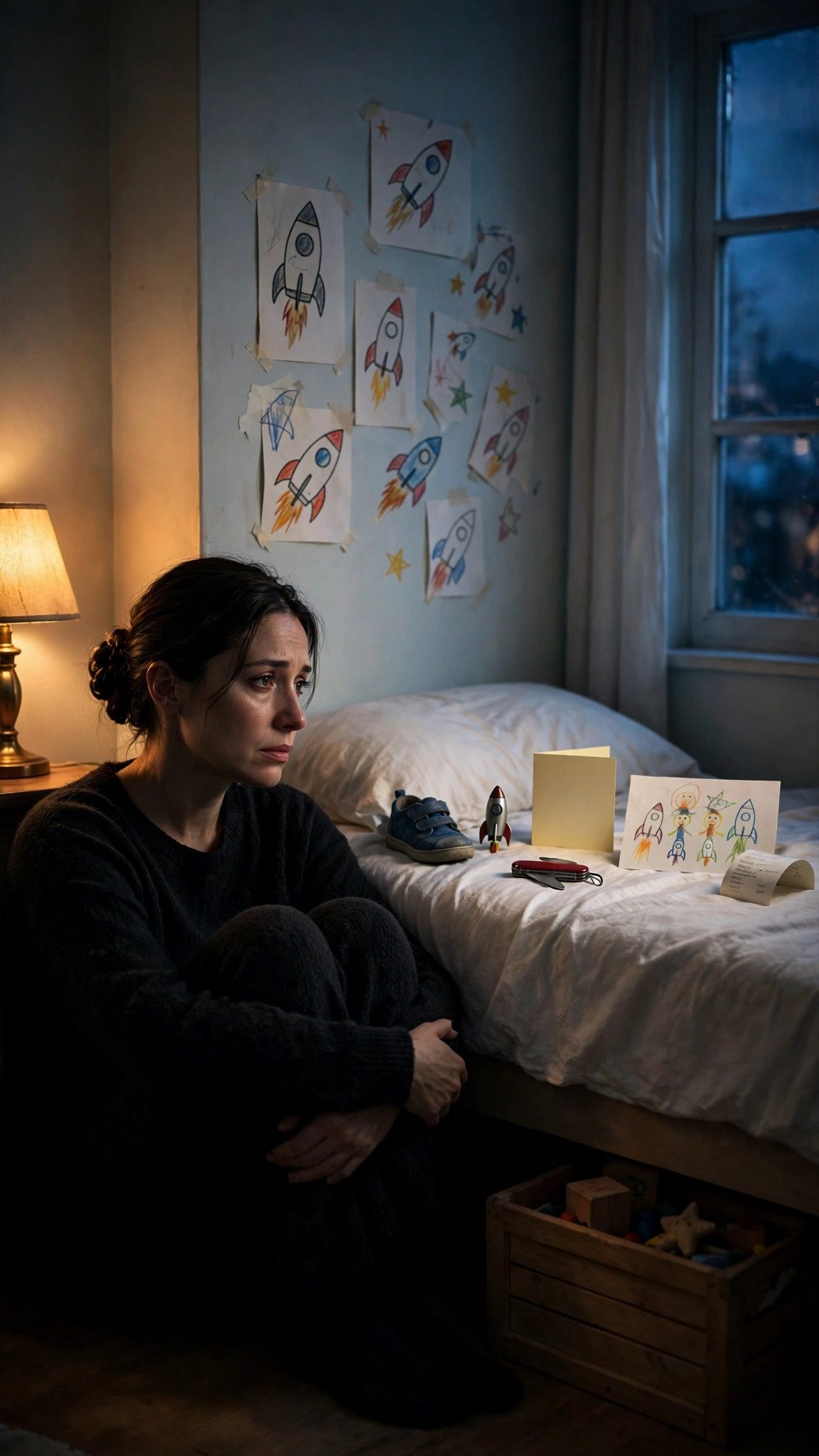
    A year passed. Then another. The foundation grew. The hospital built a new wing with Noah's name on it, the Noah Vale Wing, with bright windows and a playroom full of rockets, because I told the architects that the children needed to see the stars, even from inside.

    Marcus worked for the foundation now. Not as a boss. Not as a donor. As a driver. He drove the van that took the sick children to their appointments, and he carried their bags, and he waited in the hallways, holding the hands of frightened parents, the way someone had once held my hand in a hallway a long time ago.

    Frank had taught him how to drive the van. Frank had taught him how to be patient. Frank had taught him that sometimes the most important thing a man can do is show up, and stay, and not leave, even when it is hard, even when it hurts, even when he would rather be anywhere else.

    Marcus showed up every day. He was never late. He never missed a shift. He learned the children's names. He learned their favorite colors. He learned which ones liked rockets and which ones liked dinosaurs. And the children loved him, because children can always tell when a man is truly sorry, and when he is trying, really trying, to be better than he was.

    I watched him from a distance for a long time. I watched him carry a little girl's oxygen tank up three flights of stairs. I watched him sit on the floor of the playroom, building a rocket out of blocks with a boy who had no hair left from the treatments. I watched him hold a mother's hand in the hallway while the doctors talked to her husband, and I watched him cry, quietly, in the van, after he dropped them off, because he could not help them, and he wanted to, more than anything.

    One evening, after a long day, he came to my office at the hospital. He knocked on the door, very gently, and he said, "Claire. I know I have no right to ask. But would you have dinner with me? Not as my wife. Not as anything. Just dinner. Two people who once loved the same little boy, having dinner together."

    I looked at him for a long time. He was wearing a plain shirt and jeans, not a suit. His hands were rough from carrying bags and oxygen tanks. There was a smudge of paint on his cheek from the playroom. He looked nothing like the man I had married, the man in the black suit who owned half the shipping on the lake. He looked like a man who had been broken, and who had put himself back together, piece by piece, into something smaller, and kinder, and truer than what he had been before.

    "All right," I said. "Just dinner."

    We went to a small restaurant, not Duca's, not anywhere fancy, just a quiet place with white tablecloths and a waitress who called us honey. We talked about the foundation. We talked about the children. We talked about Noah, for the first time in two years, really talked about him, not in anger, not in grief, but in love. Marcus told me about the time Noah had hidden his shoes in the oven. I told him about the time Noah had tried to teach the cat to fetch. We laughed, and then we cried, and then we laughed again, because that is what grief does, when you finally let it breathe. It turns into love, and love, it turns out, does not die. It only changes shape.

    After dinner, he walked me to my car. He did not try to kiss me. He did not try to hold my hand. He only said, "Thank you, Claire. Thank you for tonight. I know I do not deserve it. But thank you."

    I drove home that night, to Grace's house, where I still lived, and I lay awake for a long time, thinking about the man in the plain shirt with paint on his cheek, and about the boy who had once said his father was his hero just because he always came back, and I thought about what coming back really meant.

    It did not mean bringing presents. It did not mean flying home on a private jet. It did not mean saying sorry and expecting everything to be all right.

    It meant showing up, every day, even when it was hard. It meant staying, even when you wanted to leave. It meant doing the work, the slow, quiet, unglamorous work of becoming a person who deserved to be loved again.

    Marcus was doing that work. He had been doing it for two years. And I was starting to see it. I was starting to believe it.

    The opening of the Noah Vale Wing was on a bright morning in May, two years after Noah died. The hospital had painted the walls the color of the sky, and the playroom had rockets on every wall, and there was a ceiling full of glow-in-the-dark stars, so the children could connect the dots and draw their own rockets, even at night.

    I gave a short speech. I told the crowd about Noah, about his questions, about his wooden box, about the sword and the magnet and the little Swiss army knife, and about the way he had once said that his father was his hero just because he always came back. I told them that the wing was not a memorial. It was a promise. A promise that every child who came through those doors would be cared for, and loved, and listened to, and that no mother would ever have to sit alone in a hallway, holding her child's hand, wondering if anyone was coming.

    Marcus was in the back of the crowd, standing beside Frank, in his plain shirt and jeans, with his hands in his pockets. He did not speak. He did not come forward. He only stood there, listening, and when I finished, he nodded, once, very slightly, and I nodded back, and that was enough.

    After the ceremony, a little boy came up to me. He was seven years old, with dark hair and a missing front tooth, and he tugged on my sleeve and said, "Nurse Claire, is it true that the wing is named after your son?"

    "Yes," I said. "It is."

    "Was he brave?" the boy asked.

    "He was the bravest boy I ever knew," I said.

    The boy nodded. "I want to be brave like him," he said. "When I grow up, I want to be a rocket man. I want to draw rockets on the ceiling."

    "You already are brave," I said, and I knelt down so I was at his level. "You are here, and you are smiling, and you are asking questions. That is what brave looks like."

    He grinned, and he ran off to the playroom, and I stood there for a moment, watching him go, and I felt Noah very close, closer than he had been in a long time, as if he were standing right beside me, tugging on my sleeve, asking me if the stars were working yet.

    Later that day, Marcus found me in the playroom, sitting on the floor, building a rocket out of blocks with three children. He sat down beside me, very quietly, and he picked up a block, and he helped us build, and for a while, we did not speak at all. We only built, together, in silence, while the children chattered around us, and the sun came through the bright windows, and the stars on the ceiling glowed softly overhead.

    One of the children, a little girl with a bandage on her arm, looked at Marcus and said, "Are you Nurse Claire's friend?"

    Marcus looked at me. I looked at him. And then he said, very gently, "I am trying to be. I am trying very hard to be."

    The little girl nodded, satisfied, and went back to her blocks. And Marcus and I kept building, side by side, in silence, and I thought about the man he had been, and the man he was becoming, and about the long road between those two men, and about how far he had already traveled, one day at a time, one shift at a time, one child at a time.

    We had dinner again the next week. And the week after that. And then we started going to the cemetery together, on Sundays, standing side by side at Noah's grave, bringing white lilies, telling him about the foundation, and about the children, and about the rockets in the playroom, and about the new wing with his name on it.

    One Sunday, a year after that first dinner, Marcus took my hand. Not in the cemetery. Afterward, in the parking lot, in the rain, with no umbrella, the way it had been that first time, all those years ago, on the terrace at the gala, when he had asked me if I would rather be anywhere else.

    "Claire," he said. "I am not going to ask you to come back. I am not going to ask you to forgive me. I am only going to ask you one thing. Will you let me keep showing up? Will you let me keep coming home? Because I have learned, finally, what home means. Home is not a house on the lake. Home is not an empire. Home is where you are. And I want to come home, every day, for the rest of my life, if you will let me."

    I looked at him, standing in the rain, holding my hand, with his hair getting wet and his shirt sticking to his shoulders, and I thought about the six items on Noah's bed. The shoe. The magnet. The Swiss army knife. The birthday card. The drawing of the four of us as rocket ships. And the receipt from Zurich, for a dinner for two, 3,680 Swiss francs, on the day our son died.

    I thought about all the things Marcus had left behind. The empire. The money. The power. The fear. And I thought about the one thing he had not left behind, the one thing he had carried with him through all of it, even when he did not deserve to carry it.

    His promise. The promise he had made in the maternity ward, with Noah in his arms, that no harm would ever come to his son while he was alive to stop it. He had broken it once, and it had cost him everything. But he had spent two years trying to keep it in the only way left to him: by making sure that no other child, no other family, would ever have to go through what we went through. By showing up. By staying. By coming home.

    "Yes," I said. "You can keep showing up. You can keep coming home."

    He did not kiss me. He only held my hand, a little tighter, and we stood there in the rain, and I thought about Noah, and about the stars, and about the rocket on the ceiling, and about the boy who had once believed, with his whole heart, that his father was his hero just because he always came back.

    This time, I thought, he came back. This time, he stayed. This time, he meant it.

    And that, in the end, is the whole story. Not the story of a marriage that ended. The story of a man who lost everything, and a woman who lost more, and a little boy who taught them both, even after he was gone, what it meant to come home.

    The six things are still on Noah's bed. I never moved them. The shoe. The magnet. The Swiss army knife. The birthday card. The drawing of the four of us as rocket ships. And the receipt, faded now, from a restaurant in Zurich, on the day our son died.

    They are not a monument to what we lost. They are a reminder of what we learned. That a promise is only as strong as the man who makes it. That love is only as strong as the choices you make when no one is watching. And that coming home, really coming home, is the bravest thing a man can do.

    Marcus comes home every night now. He puts his keys in the bowl by the door. He takes off his shoes. He asks me about my day. And every Sunday, we go to the cemetery together, and we bring white lilies, and we sit beside our son's grave, and we tell him about the rockets, and about the stars, and about the foundation, and about the children, and about the life we are building, slowly, carefully, one day at a time, in his name.

    We moved into a new house that autumn, a small house with a garden, not on the lake, not anywhere near the old life, just a quiet street with good neighbors and a school nearby. It was not grand. It was not impressive. But it was ours, and it was honest, and every room in it had light, and every window looked out on something living.

    Marcus built a bookshelf in the living room, with his own hands, because he had never built anything with his own hands before, and he wanted to learn. He put Noah's wooden box on the top shelf, with the sword and the magnet and the little Swiss army knife inside it, and he put the drawing of the four of us as rocket ships in a frame on the wall beside it, and he put the birthday card, the one that said "To Daddy, my hero," on the mantelpiece, where he could see it every morning.

    The receipt from Zurich is in a drawer now, in my desk, folded up small. I keep it because I never want to forget what it cost us. But I do not look at it anymore. I do not need to. I have learned the lesson it taught me, and the lesson is this: a man is not his worst day. A man is what he does after his worst day. And Marcus, after his worst day, chose to come home, and to stay home, and to mean it.

    And every night, before I fall asleep, I whisper the same three words I whispered to him on the last night of his life.

    "Mommy's here."

    And now, finally, so is Daddy.

    The End.
    THE END