Story Genres: Mafia Romance

  • Chapter 4: The Girl Who Knew Too Much

    Chapter 4: The Girl Who Knew Too Much

    Emily did not sleep that night.

    She lay in her small apartment above a bakery on the West Side — one room, a hot plate, a mattress on the floor, a suitcase she had never fully unpacked in three years of moving — and she stared at the ceiling, and she thought about the transfer orders.

    She remembered them the way you remember a car accident: in flashes, in fragments, in the wrong order. The foundation's office, on the fourteenth floor, with the view of the river. Isabella's desk, always neat, always a fresh cup of coffee at nine. The mornings when Isabella would come in with a folder and say, "Emily, I need these done today, and I need them done quietly," and Emily would open the folder, and there would be wire instructions, and account numbers, and amounts that made her hands go cold.

    Ten thousand here. Fifty thousand there. A hundred thousand on a Tuesday. Always to the same place: a trust in Geneva, under a name that did not exist — the Amara Foundation, which was not a foundation at all, but a shell, a box with nothing inside it except money and a signature that looked like Isabella's but was not quite Isabella's, because Emily had typed it, and she knew the difference.

    She had asked, once. She had been twenty-three years old, and brave in the way that only twenty-three-year-olds are brave, and she had said, "Isabella, what is this money for?"

    And Isabella had looked at her for a long moment, and she had said, "It's for my freedom, Emily. And one day, if you're ever in a position where you need to choose between the truth and your life, I want you to remember that I told you that. Freedom is worth the price. Even when the price is everything."

    Emily had not understood, then. She had typed the orders, and she had filed the copies — every one of them, in a small notebook she kept in her desk drawer, because her mother had taught her to always keep a copy, because her mother had been a secretary for thirty years and had seen what happened to girls who did not keep copies — and she had gone home, and she had not thought about it again, until the morning Isabella Romano disappeared.

    The morning after, Giovanni Ferrante had come to the office.

    Emily would never forget that morning. The office had been full of police, and the phones had been ringing, and everyone had been crying, and Giovanni had walked through it all like a man walking through rain without getting wet, calm and silver-haired and perfectly composed, and he had come to her desk, and he had said, "Emily. You worked closest with her. Did she say anything to you? Anything at all?"

    And Emily had looked at him, and she had seen something in his eyes that she had never seen in anyone's eyes before — not anger, not grief, but calculation, the cold arithmetic of a man who is deciding whether you are useful or whether you are a problem — and she had said, "No. Nothing. She didn't say anything."

    It was the first lie she had ever told that mattered. It was not the last.

    That night, she had gone home, and she had taken the notebook from her desk drawer, and she had packed a bag, and she had left Chicago on a bus to Milwaukee, and she had not stopped running for three years.

    Now, lying in her apartment above the bakery, staring at the ceiling, she understood what she had not understood then: Giovanni Ferrante had known. He had known from the very beginning. The accountant — her — had come to him, white-faced, with the transfer records, and he had looked at them, and he had understood, and he had chosen not to tell Lorenzo. He had chosen to take his cut, and to keep Isabella hidden, and to wait.

    And now she had walked back into his restaurant, and she had sung, and he knew she was there.

    She got up before dawn. She packed her bag — the same bag, the same suitcase she had never fully unpacked — and she stood in the doorway of her apartment, and she looked at the room, and she thought about leaving. She could be on a bus by eight. She could be in St. Louis by noon. She could disappear again, the way she had disappeared before, and no one would ever find her, because she was good at disappearing, because disappearing was the only thing she had ever been truly good at.

    And then she thought about Lorenzo Bianchi, sitting alone at his table by the window, listening to her song, and the way his face had changed when he heard the melody — the way the stone had cracked, just for a moment, and she had seen the man underneath — and she thought about the notebook in her bag, and the copies of the transfer orders, and the truth she had been carrying for three years, and she understood something else, something she had not understood until that moment:

    She was tired of running. She was tired of being invisible. She was tired of carrying a truth that belonged to someone else.

    She unpacked the bag. She put on her black dress and her white apron. She tied her hair back. And at nine o'clock in the morning, she walked into Il Cielo, and she went to the kitchen, and she started her shift, and when Tony looked at her with wide eyes and said, "You came back?", she said, "I said I would. And I keep my promises."

    The walk to work that morning was the longest walk of her life, and also the shortest, because she spent all of it rehearsing what she would say, and none of it arriving anywhere.

    She passed the bakery below her apartment, and the baker's wife was already at the window, arranging the morning rolls, and she waved, and Emily waved back, and she thought about how ordinary the morning was — the delivery trucks, the commuters with their coffee, the old man walking his dog past the shuttered storefronts — and how strange it was that the world could be so ordinary on a morning when everything was about to change.

    She stopped at the corner, at the bus stop where, three years ago, she had stood with a suitcase and a notebook and a heart beating so hard she thought it would break her ribs, and she looked at the bus schedule, and she thought about the bus to St. Louis, and the bus to Milwaukee, and all the buses she had ever taken, to all the cities she had ever hidden in, and she understood, suddenly, that every one of those buses had been a mistake — not because she had been wrong to run, but because running had never actually saved her. It had only postponed the moment when she would have to stand still and tell the truth.

    She checked her bag, twice, to make sure the notebook was there. It was. The small notebook, worn at the edges, three years old, with the copies of every transfer, every date, every amount. She had carried it through Milwaukee, and St. Louis, and Cleveland. She had carried it under her pillow, and in her coat pocket, and in the bottom of her suitcase. It was the only proof she had that the truth was real, and that she had not imagined it, and that she was not crazy.

    And as she walked the last block to Il Cielo, past the awning and the brass-handled door and the window with the white tablecloths inside, she rehearsed the first sentence she would say to Lorenzo Bianchi, if he asked her, and the sentence was simple, and it was true, and it was the sentence she had been carrying for three years without knowing it: I kept the copies. I kept them because someone had to remember.

    Lorenzo arrived at noon. He did not go to his table. He went to the office upstairs — the small office above the dining room, with the desk and the locked drawer and the window that looked out over the street — and he sent Marco down to fetch her.

    Marco Santini was forty-five years old, broad-shouldered, dark-suited, with the calm, watchful face of a man who has spent twenty years standing behind other men and watching the doors. He had been Lorenzo's bodyguard for fifteen years, since the day Lorenzo's father had hired him, and he was the only man in the family who had ever told Lorenzo the truth to his face.

    "Mr. Bianchi wants to see you," Marco said, and his voice was gentle, which surprised Emily, because she had expected it to be hard. "Don't be afraid. He doesn't hurt women. That's one thing about him that's never changed."

    Emily followed him upstairs. The office was small and quiet, and Lorenzo was standing by the window, looking out at the street, and when she came in, he turned, and he gestured to the chair across from the desk, and he said, "Sit. Tell me everything. Start at the beginning."

    And so she did.

    She told him about the foundation's office, and the transfer orders, and the Amara Foundation, and the trust in Geneva. She told him about the notebook, and she took it out of her bag — the small notebook, worn at the edges, three years old, with the copies of every transfer, every date, every amount, every account number — and she laid it on his desk, and she watched his face as he opened it, and she saw the stone crack again, just for a moment, when he saw Isabella's signature on the first page.

    "She did this herself," he said, very quietly. "She moved the money herself. She planned it."

    "Yes," Emily said. "I think she planned it for months. The transfers started six months before she disappeared. Small amounts, at first. Then bigger. She told me it was for her freedom. I didn't understand what she meant. I do now."

    Lorenzo turned the pages slowly. Forty million dollars. Six months. A trust in Geneva. A shell foundation. A woman who had planned her own disappearance down to the last detail — the abandoned car, the ring on the passenger seat, the silence.

    "And Giovanni?" he asked. "What did Giovanni know?"

    Emily swallowed. "He came to the office the morning after she disappeared. He asked me what I knew. I lied to him. I said nothing. But —" She stopped. "But he looked at me the way a man looks at a problem he's deciding how to solve. And that night, I ran. And I've been running ever since."

    Lorenzo closed the notebook. He looked at her for a long time. "You kept the copies," he said. "For three years. Why?"

    "Because my mother taught me to always keep a copy," Emily said. "And because —" She stopped again, and this time, when she started again, her voice was steadier. "Because I knew, even then, that the truth would matter to someone, someday. I just didn't know it would be you."

    Lorenzo stood up. He walked to the window, and he looked out at the street, and he was quiet for a long time, and when he turned back, his face was not the face of a man made of stone. It was the face of a man who has just learned that the worst thing he believed for three years was not true — and that the truth is worse, and better, in ways he has not yet begun to understand.

    "She's alive," he said. "Isabella is alive. She took the money, and she left, and she has been alive for three years, while I have been —" He stopped. "While I have been dead."

    "Yes," Emily said softly. "She's alive."

    "And Giovanni knows," Lorenzo said. "He has known all along. He took his cut. He has been keeping her hidden. He has been building his kingdom inside mine, waiting for me to break."

    "I think so," Emily said. "Yes."

    Lorenzo nodded slowly. He picked up the notebook, and he held it for a moment, and then he handed it back to her. "Keep this safe," he said. "Don't let it out of your sight. And don't leave this restaurant without Marco. Do you understand?"

    Emily nodded.

    "Good," Lorenzo said. "Now go back to work. And Emily —" He stopped her at the door. "Thank you. For the truth. It's the first true thing anyone has given me in three years."

    She went back downstairs, and she worked her shift, and she sang — no, she did not sing, she was careful, she kept her voice quiet, she did her job — and all afternoon, she felt the weight of the notebook in her bag, and the weight of Lorenzo's words, and the weight of three years of running, finally, finally beginning to lift.

    She did not know that upstairs, in the office, Lorenzo was already on the phone — to his lawyer, to his accountant, to a private investigator in Geneva — and that within hours, he would know the name of the trust, and the number of the account, and the address of the small house upstate where a woman with dark hair and a new name had been living for three years, waiting for someone to come and find her.

    She did not know that Giovanni Ferrante, sitting in his own office across town, was also on the phone, and that the man on the other end was saying, "She told him. The girl from the office told him everything. We need to move tonight."

    She did not know any of that. She only knew that she had finally told the truth, and that the truth had not killed her, and that for the first time in three years, she was not running.

    And that was enough. For now.
  • Chapter 2: The Woman Who Spoke Plainly

    Chapter 2: The Woman Who Spoke Plainly

    Three years passed in the villa, and they passed the way years pass in a house that is loved: slowly on the surface, and all at once underneath.

    Giulia became the heart of the house. She was not the housekeeper — Rosa still ruled the kitchen, and the maids still answered to Rosa — but she was something the villa had never had before: a person who belonged to no one's fear. The gardeners asked her opinion about the roses. The driver, old Tomas, told her his troubles with his daughter. The maids came to her when they were frightened, and they were frightened often, because the villa was the home of a man whose name made the whole city careful.

    And Raphael Carbone, who had never once asked anyone in his house for their opinion, began to ask Giulia.

    It started with small things. He would find her in the library in the evening, and he would stand in the doorway, and he would say, "The new shipment comes on Thursday. The men want to use the north warehouse." And she would look up from her book and say, "The north warehouse floods when it rains. You told me so yourself last winter." And he would nod, and the shipment would go to the south warehouse, and no one in the house would ever know that the most feared man in the city had changed his plans because a woman in a plain dress had told him he was wrong.

    It went on to larger things. One evening he came into the library carrying a letter, and he laid it on the table in front of her without a word. It was a letter from a man who owned a small restaurant by the harbor, a man who had borrowed money from the family years ago and could not pay it back. The letter begged for more time. It begged in the careful, trembling handwriting of a man who was afraid.

    "What would you do?" Raphael asked.

    Giulia read the letter twice. "I would give him the time," she said. "He has a wife and two children. He is not refusing to pay. He is drowning. You do not drown a man for being in deep water."

    "He owes the family forty thousand dollars," Raphael said.

    "Then let him pay it back slowly," Giulia said. "A man who pays slowly still pays. A man you ruin pays nothing, and his children remember who ruined him."

    Raphael looked at her for a long time. Then he took the letter, folded it, and put it in his jacket pocket.

    "The restaurant man gets six months," he told Charles the next morning. "And no one touches him before then."

    Charles DeLuca, his consigliere, raised one eyebrow. Charles had served Raphael's father before him, and he had seen many things, but he had never seen the boss change his mind because of a woman's opinion. He said nothing. Charles was a wise man, and wise men know when to be silent.

    But Giulia knew. She knew because Rosa told her, in the kitchen, while kneading dough, that the boss had never once shown mercy to a debtor in twenty years. And she knew because that night, when she came down to the library, there was a small box waiting for her on the table.

    Inside the box was a necklace. Not a grand one — a simple silver chain with a small pendant shaped like a leaf. It was beautiful, and it was worth more than three months of her wages, and Giulia held it in her hands and understood, with a clarity that frightened her a little, that this was how he spoke. Raphael Carbone did not know how to say thank you. He did not know how to say you were right. He did not know how to say I listened to you. He knew how to give things. Gifts were his language, the only language the family had ever taught him.

    She put the necklace on, because it would have hurt him to refuse it, and because it was beautiful, and because she told herself that a gift was only a gift, and that it meant nothing more than gratitude.

    But the gifts kept coming. A dress, deep green silk, left folded on her bed with no note. A pair of earrings, small pearls, in a velvet box on the library table. A shawl, soft as smoke, draped over the back of her chair one cold morning. Each gift was chosen with a care that surprised her. He noticed things. He noticed that she liked green. He noticed that she never wore gold except for the bracelet. He noticed that she read late into the night and that her hands got cold, and so the shawl appeared, and she wore it, and she told herself again that a gift was only a gift.

    The house noticed too. Rosa watched her with knowing eyes. The maids whispered. Old Tomas, the driver, smiled at her in a way that made her uncomfortable, as if he knew something she did not.

    "You are the only person in this house who is not afraid of him," Rosa said to her one afternoon, while they shelled peas together in the kitchen. "Do you know that?"

    "I am not afraid of him," Giulia said, and it was true. She had never been afraid of him, not from the first day on the stairs. She had seen the boy in him, the boy who had picked dandelions, and once you have seen the boy, the man is harder to fear.

    "Then you are the only one," Rosa said. "And he knows it. That is why he gives you things. He does not know what else to do with a person who is not afraid."

    The annual ball came that autumn, as it did every year. It was the family's great event, a night when the villa opened its doors to the city's important people, when the chandeliers blazed and the orchestra played and the champagne flowed, and when everyone who mattered came to show Raphael Carbone that they respected him. Giulia had helped prepare for it every year since she came to the villa. She arranged the flowers. She checked the table settings. She stood in the background, in her plain dark dress, and watched the glittering people move through the rooms like fish in an aquarium.

    That year, something was different. A week before the ball, a dressmaker came to the villa, a thin woman with pins in her mouth and measuring tape around her neck, and she measured Giulia from shoulder to hem, and she did not explain why. Two days later, a dress arrived, wrapped in tissue paper, the color of midnight, silk that moved like water. Giulia held it up, and Rosa, standing in the doorway, clapped her hands together.

    "He wants you at the ball this year," Rosa said. "Not in the background. At the ball."

    Giulia wore the dress. She wore the silver necklace and the pearl earrings. She pinned her dark hair up the way Elena had once shown her, and she looked in the mirror, and for a moment she did not recognize herself. She looked like a woman who belonged in a ballroom.

    Raphael found her at the top of the stairs, just before the first guests arrived. He stood at the bottom, looking up, and for a moment his face was not the face of the boss. It was the face of a man who had been given something he did not know how to hold.

    "You look beautiful," he said, and his voice was quiet, almost rough, as if the words had cost him something to say.

    "Thank you," Giulia said.

    He offered her his arm, and she took it, and they walked down the stairs together, into the light and the music and the eyes of the whole room. And for one evening, Giulia let herself believe that this was a story with a simple ending: a man who had forgotten how to be kind, and a woman who had reminded him, and a house that had learned to breathe again.

    She did not know then that the gifts were getting heavier. She did not know that each one was a stone added to a wall she could not yet see. She only knew that the music was playing, and that his hand was warm on hers, and that the boy who had picked dandelions was standing beside her in a black suit, trying, in the only language he knew, to say that she mattered.

    That night, after the last guest had gone and the chandeliers had been dimmed, she found a marble statue on the table in the library. It was a small thing, a woman with her arms open, carved from white stone, and it was the most beautiful object she had ever seen. There was no note. There never was. But she stood looking at it for a long time, and she understood that he had given her the statue because he could not give her the words. And she understood something else, something that frightened her more than the gifts ever had: she was beginning to love him. Not the boss. Not the name that made rooms go quiet. Him. The man who left coffee cups outside study doors and who noticed that her hands got cold. And she did not know whether that love was a gift or a danger, only that it was there, growing quietly in the dark, like the roses in Elena's garden.

    She learned how deep that love already ran on a rainy afternoon in March, when she heard shouting in the courtyard and went to the window to see one of Raphael's men, a broad-shouldered enforcer named Enzo, gripping a delivery boy by the collar and shaking him. The boy could not have been more than seventeen. A crate of wine lay shattered on the wet stones, red running into the gutters like blood, and the boy was crying and saying he was sorry, he was sorry, the crate had slipped, it had been raining, he had not meant it.

    Giulia did not think. She went down the stairs and out into the rain, and she walked straight up to Enzo, and she put her hand on his arm, and she said, "Let him go."

    Enzo stared at her. He was a man who had broken bones for the family, and he had never once been spoken to that way by a woman in a plain dress with rain in her hair.

    "The boy broke a crate," Enzo said. "The boss will want to know."

    "Then tell the boss that a crate broke," Giulia said, "and that the boy is seventeen, and that he is soaked to the skin, and that if you frighten him any further, he will never deliver anything to this house again, and neither will anyone else who hears about it."

    She took the boy's arm, and she led him into the kitchen, and Rosa dried him with a towel and gave him hot tea, and Giulia paid for the broken wine out of her own wages, because she would not have the boy owe the family anything. When she came back out into the courtyard, Enzo was still standing there in the rain, looking at her the way a man looks at a door he has never noticed before.

    "You are not afraid of me," Enzo said, and it was not a question.

    "No," Giulia said. "Should I be?"

    Enzo shook his head slowly. "No one has ever said that to me. Not ever. Not even the boss."

    That evening, Raphael came to the library, and he stood in the doorway, and he said, "Enzo told me what happened in the courtyard."

    Giulia looked up from her book. "And?"

    "And Enzo has worked for this family for twelve years," Raphael said. "In twelve years, no one has ever stopped him from doing his job. Today, you stopped him. And he thanked me for it."

    "He thanked you?" Giulia said, surprised.

    "He said that for the first time in twelve years, he went home and felt like a man instead of a weapon," Raphael said. "He said it was because of you."

    He came into the room then, and he sat down across from her, and for a while neither of them spoke. The rain was falling outside, and the fire was low, and the marble statue stood on the table between them, white in the firelight.

    "My mother used to say that a house is only as good as the people in it," Raphael said quietly. "I never understood what she meant. I thought a house was walls and gates and men with guns. But she was right. It is the people. And you are the best person in this house, Giulia. I want you to know that I know it."

    It was the closest he had ever come to saying what he felt, and Giulia felt her heart turn over in her chest, because she understood that he was trying, in the only language he knew, to tell her that she mattered more than the house, and more than the family, and more than the name that made rooms go quiet.

    She reached across the table, and she put her hand over his, and his hand was warm, and it was still, and she said, "Then be the kind of man this house deserves. That is all I have ever asked of you."

    Later that week, Giulia found Elena's garden journal in the library, tucked between two leather-bound volumes no one had opened in years. It was a small book, its pages soft with handling, filled with Elena's careful handwriting: notes about the roses, about when to prune them and when to feed them, about the lemon trees and the fountain and the exact week the dandelions came up in the spring. On the last page, in handwriting that shook a little, Elena had written: "A garden is like a man. If you only ever cut it back, it will grow hard and thorny. If you tend it gently, and you are patient, it will surprise you." Giulia pressed the journal to her chest, and she thought about the man across the table, and about the statue on the shelf, and about the boy who had picked dandelions, and she knew, with a certainty that settled over her like evening light, that Elena had left the journal for her to find, and that it was not really about the garden at all.

  • Chapter 3: Sing That Again

    Chapter 3: Sing That Again

    The hours between Lorenzo's command and closing time were the longest of Emily Carter's life.

    She worked them the way a person walks through a burning building — one step at a time, eyes forward, not thinking about what comes next, because thinking about what comes next would mean stopping, and stopping would mean falling apart. She carried trays. She poured wine. She smiled at tables. She said "enjoy your meal" and "can I get you anything else" and "of course, right away," and every word came out steady and normal, and none of it felt real, because underneath all of it, underneath the dress and the apron and the smile, her mind was running in circles around a single sentence: Sing that again. Tonight, after closing.

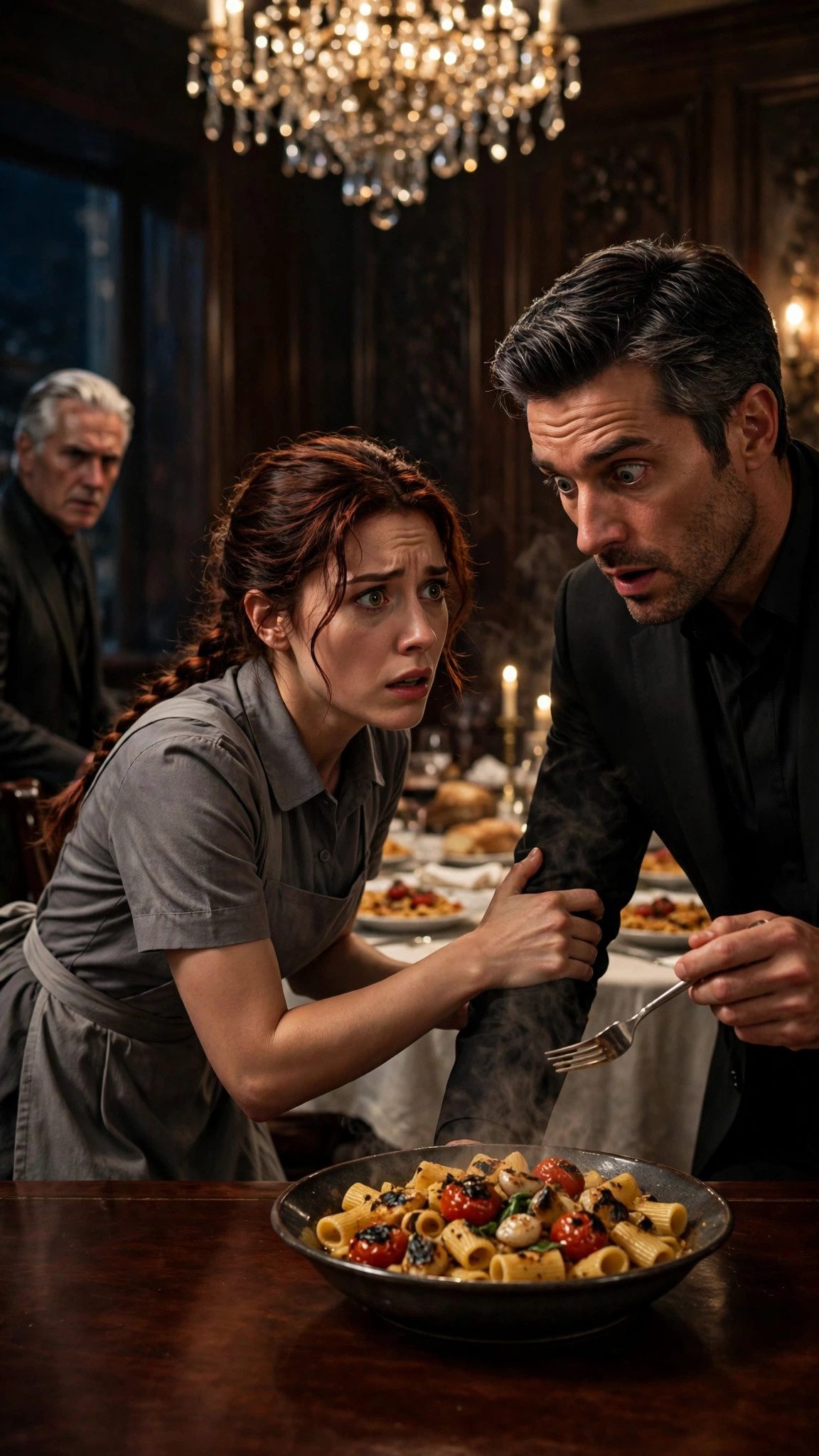
    Tony found her in the service corridor, halfway through the evening, and grabbed her elbow — not roughly, but firmly, the way a man grabs someone who is about to step off a curb into traffic.

    "What did you do?" he hissed.

    "I didn't mean to," Emily said. "It just — the piano — I didn't even realize I was doing it until—"

    "Do you have any idea who that man is?" Tony's face was pale. He had worked at Il Cielo for twenty-two years, and Emily had never seen him afraid before, and that frightened her more than anything else that night. "That's Lorenzo Bianchi. He owns this restaurant. He owns half the restaurants on this street. And the last time anyone sang in his dining room, his fiancée disappeared the next morning and was never seen again. Do you understand what I'm saying to you?"

    "I understand," Emily said, and she did — she understood better than Tony could possibly know, because she had been there, three years ago, in the foundation's office, typing the transfer orders that had made that disappearance possible, and she had spent three years running from the consequences, and now she had walked directly into the center of them and started singing.

    "He told me to sing again after closing," she said.

    Tony closed his eyes. "Then you sing again after closing," he said. "You do exactly what he says. You don't argue. You don't ask questions. You sing the song, and then you go home, and you pray he forgets you by morning."

    "I don't think he'll forget me," Emily said quietly.

    "No," Tony agreed. "I don't think he will either."

    The rest of the evening passed in a blur of trays and tables and wine glasses, and Emily worked it the way a person walks a tightrope — carefully, and without looking down.

    Table twelve sent back a plate, and then sent it back again, and Sofia leaned over in the service corridor and whispered, "They do that every week. The wife hates the chef. The husband hates the wife. Don't take it personally." Table four's anniversary couple asked Emily to take their photograph, and she did, and the husband said, "Fifty years," with the wonder of a man who still cannot believe his luck, and the wife said, "Fifty-one next year, if he behaves," and Emily laughed, and for a moment, she almost forgot why she was afraid.

    She almost dropped a tray near the piano. Old Enzo caught her eye and winked — a slow, deliberate wink, the wink of a man who has seen everything and is surprised by nothing — and he played a few bars of something soft and wordless, and Emily understood, suddenly, that he knew. He had heard her sing that afternoon. He had heard Lorenzo stop in his tracks. He knew what the song was, and he knew what it meant, and he was telling her, in the only language he had, that it was all right.

    At ten o'clock, the dining room began to empty. At ten-thirty, Tony started turning down the lights. At eleven, the last table left — a pair of businessmen who had argued quietly over dessert and then shaken hands, the way men do when they have decided to pretend the argument never happened — and Carlo the chef came out of the kitchen, wiping his hands on his apron, and looked around the empty room, and said, "Bene. We survived another one."

    The staff began their closing routine: wiping tables, stacking chairs, polishing glasses, counting the till. Sofia found Emily in the service corridor and grabbed her arm. "Are you all right?" she asked. "You've been white as a sheet since seven o'clock."

    "I'm fine," Emily said, and it was a lie, and Sofia knew it was a lie, and Sofia did not push, because Sofia was the kind of friend who knows when to push and when to wait, and this was a time to wait.

    "Whatever he wants," Sofia said quietly, "you give it to him. And then you go home. And tomorrow, if you need a day off, you take it. I'll cover for you. All right?"

    "All right," Emily said, and she meant it, and she was grateful, and she was also certain, in a way she could not explain, that tomorrow she would not need a day off — because tomorrow, everything was going to be different, and she could feel it, the way you can feel a storm coming, in your bones, before the first drop of rain.

    The dining room emptied slowly, the way a tide goes out — table by table, candle by candle, until the only people left were the staff, wiping tables and stacking chairs, and Lorenzo Bianchi, sitting alone at his table by the window, a glass of red wine untouched in front of him, watching the door to the kitchen as if he were waiting for something he had been waiting for for three years.

    Emily stood in the kitchen doorway for a long time. Her hands were shaking. She pressed them flat against her apron and took a breath, and then another, and then she walked out into the empty dining room, and the room was so quiet that her footsteps sounded too loud, and the chandeliers seemed too bright, and Lorenzo Bianchi looked up at her, and his eyes were not cold at all.

    Up close, in the empty restaurant, he looked different. Not softer — he would never look soft — but younger, somehow. The stone was still there, but underneath it, she could see the man he had been three years ago, the man who had smiled at a song on the night before his wedding, waiting.

    "Where did you learn that song?" he asked.

    "I wrote it," Emily said.

    "When?"

    "Three years ago." She swallowed. "On the worst night of my life."

    Something moved behind his eyes. "What is it about?"

    Emily looked at him for a long moment. She could lie. She had been lying for three years — lying about where she had worked, lying about where she had lived, lying about who she was. Lying had kept her alive. But standing in front of this man, in the empty restaurant, with the piano silent behind her, she found that she did not want to lie. Not about the song. The song was the only true thing she had left.

    "It's about a woman who leaves everything behind," she said. "And the man she leaves. And how both of them are still singing the same song, three years later, even though they're in different rooms."

    Lorenzo was quiet for a long time. Then he said, "Sing it. All of it. From the beginning."

    And so Emily sang.

    She sang the whole song, the way she had written it, in that one-room apartment with the curtains drawn, on the worst night of her life. She sang about the door closing, and the car driving away, and the ring left on the passenger seat. She sang about the money, and the silence, and the years. She sang about a woman who had wanted to escape the darkness and had not known any other way, and a man who had been left standing in the dark, holding a ring that did not belong to anyone anymore.

    And then, because he asked her to — because Lorenzo Bianchi, sitting at his table by the window, leaned forward and said, very quietly, "The last verse. Sing the last verse" — she sang the last verse, the one she had never sung for anyone, not even for herself, not since the night she wrote it. It was the verse about the singer herself: about a girl in an office with a notebook, who had seen something she should not have seen, and who had run, and who had spent three years waiting for someone to tell her that running was not the same as living. Her voice broke, just once, on the line about the notebook, and she stopped, and she looked at him, and she saw that his eyes were wet — not with tears, exactly, but with something that looked like tears, and that she understood, suddenly, was recognition. He had heard his own story in her song. He had heard the three years. He had heard the silence. He had heard everything. And her voice — soft yet powerful, the way it always was when she stopped being afraid of it — filled the empty dining room, and rose to the chandeliers, and came back down again, and Lorenzo Bianchi sat at his table by the window, and he listened, and he did not move, and he did not speak, and when she finished, the silence that followed was so complete that it felt like the whole city was holding its breath.

    "That melody," he said, very quietly. "The middle part. Where does it come from?"

    Emily's heart stopped. "What do you mean?"

    "The middle part," he said. "The part about the woman in the doorway. I've heard it before." He looked at her, and his eyes were sharp now, sharp and cold and dangerous, and she understood, suddenly, that the stone was still there, and that it had teeth. "My fiancée used to hum a melody. An old Italian song her grandmother sang. That was the melody. You just sang it. So I am going to ask you one more time, and I want the truth. Where did you learn that song?"

    Emily opened her mouth. She closed it. She looked at the door, and she looked at the windows, and she looked at Lorenzo Bianchi, and she understood that there was nowhere left to run — not in this restaurant, not in this city, not anywhere, because the man in front of her was the man she had been running from for three years, and he had finally caught her, not with his hands, but with a song.

    "I heard her hum it," she whispered. "In the foundation's office. I was her assistant. I typed her letters. I made her coffee. I heard her hum that melody a hundred times, and I didn't even know I remembered it until tonight, when the piano played it, and it just — it just came out."

    Lorenzo went very still. "Her assistant," he said. "You worked for Isabella."

    "Yes."

    "And you left. Three years ago. The same week she disappeared."

    "Yes."

    "Why?"

    "Because I knew something," Emily said, and her voice was shaking now, and she did not try to stop it. "Because I typed the transfer orders. I saw the money moving. Forty million dollars, a little at a time, into a trust in Geneva. And then she was gone, and Giovanni's men came to the office asking questions, and I knew — I knew that if I stayed, I would disappear too. So I ran. I've been running for three years. And tonight, I walked into your restaurant, and I sang a song I didn't even know I remembered, and —" She stopped. She looked at him. "I'm sorry," she said. "I didn't mean to come here. I didn't mean to sing. I didn't mean any of it."

    Lorenzo stood up. He was taller than she remembered, and the room seemed smaller with him standing in it, and Emily braced herself — for anger, for shouting, for the cold fury she had heard about all her life, the fury of the man who had built walls around his heart and never let anyone through.

    But he did not shout. He walked to the piano, and he stood there for a long moment with his hand resting on the polished wood, and when he turned back to her, his face was not angry. It was something else. It was the face of a man who has been carrying a question for three years, and who has just been handed the first piece of the answer.

    "You're going to tell me everything," he said. "Not tonight. Tonight, you go home. You sleep. Tomorrow, you come back, and you tell me everything — the transfers, the trust, the men who came to the office, all of it. Do you understand?"

    Emily nodded. She could not speak. She did not trust her voice.

    "And Emily," he said, and his voice was low, and it was not a threat, and it was not a kindness, and it was something in between, something she had never heard from anyone in three years. "Thank you. For the song."

    She left the restaurant that night with her hands still shaking, and she walked home through the dark Chicago streets, and she did not see the man standing in the shadows across from Il Cielo, watching her go. She did not see him lift a phone to his ear. She did not hear him say, very quietly, "She's back. The girl from the office. She's working in his restaurant, and she's singing."

    She did not hear the voice on the other end of the line — calm, and silver, and dangerous — say, "Then we have a problem. Bring her to me. No — wait. Not yet. Let her sing one more time. Let him believe he has found the truth. And then, when the time is right, we will finish what we started three years ago."

    But Giovanni Ferrante heard it. And Giovanni Ferrante smiled — the cold, thin smile of a man who has waited three years for the final piece of his plan to walk into his restaurant and start singing.

  • Chapter 1: The Leather Box

    Chapter 1: The Leather Box

    The villa was quiet, but the silence was not peaceful. It was the kind of silence that remained after something important had been taken away, the way a room feels after the furniture has been carried out and only the dust stays behind to show where everything used to stand.

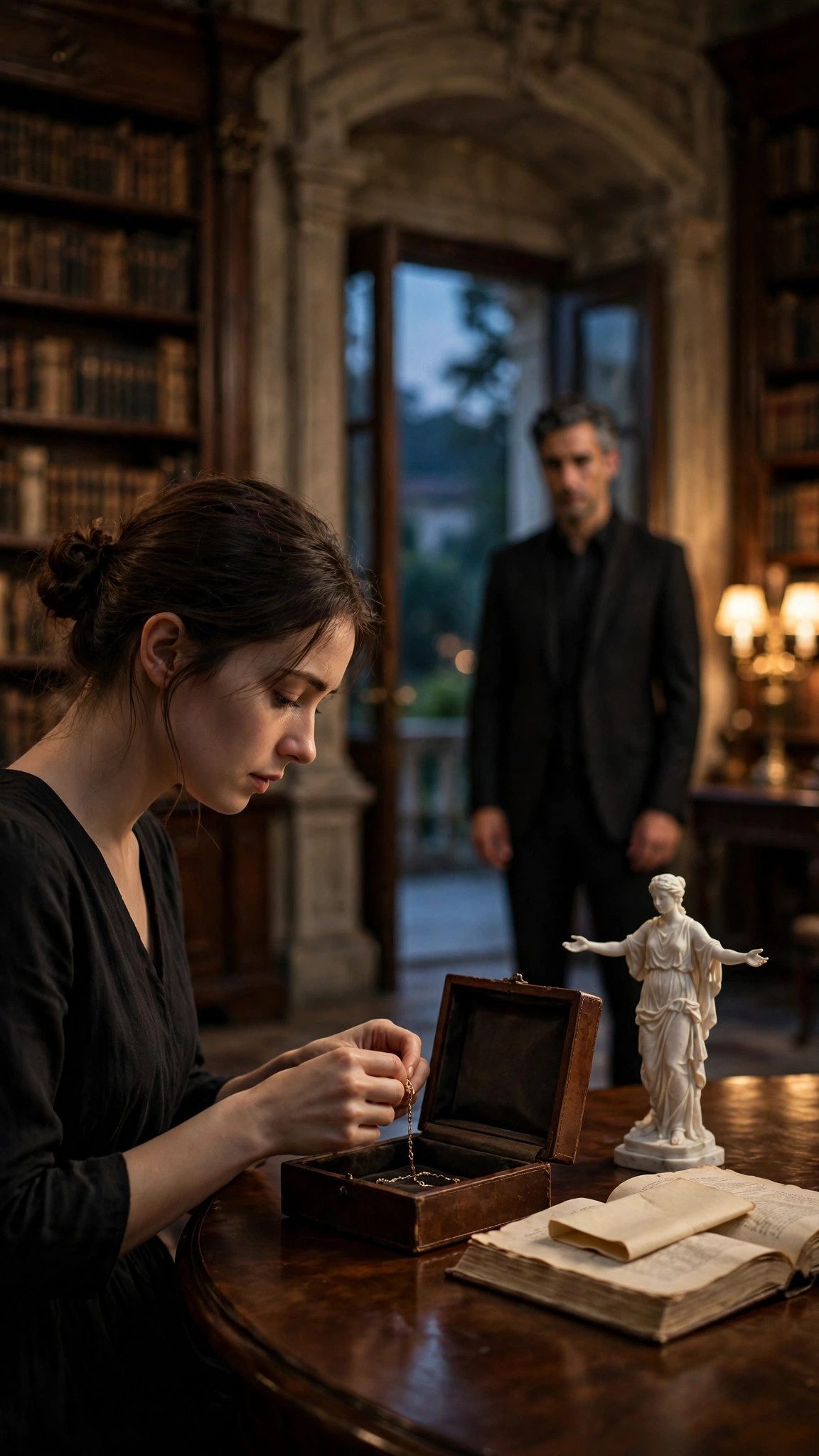
    Giulia Ferraro moved through the rooms with care, the way she had always moved through them, placing each gift in a leather box. A gold bracelet sat beside an old statue in the middle of the table. She picked up the bracelet last, because it had been the first thing he had ever given her, and her fingers closed around it for a moment longer than they needed to.

    He watched her from the doorway, both hands still at his sides.

    She put the bracelet gently into the box and closed the lid. She pressed a folded letter between the pages of a book, then left it on the polished table. And then she walked toward the door.

    She did not run. She did not look back. She walked the way a woman walks when she has already said everything she came to say and there is nothing left in the room that belongs to her.

    Raphael Carbone stood in the doorway and did not move. He had spent twenty years learning how to make men move when he wanted them to move, and how to make them stay still when he wanted them still, and now, for the first time in his life, he could not make the one person who mattered do either. He watched her go, and something in his expression changed, the way a building changes when a crack runs through it and the whole structure has to decide, in a single second, whether it will hold or fall.

    For the first time, the mafia boss was stepping out of his own world. He did not know it yet. He only knew that the villa had never been this quiet, and that the quiet had her name in it.

    Five years earlier, Giulia Ferraro had come to the villa for the first time, and the villa had been quiet then too, but it had been a different kind of quiet. It had been the quiet of a house holding its breath.

    She was twenty-four years old, and she had answered an advertisement in the newspaper for a companion for an elderly woman. The address had been written in careful handwriting on the back of a card: a villa on the hill above the harbor, behind iron gates, with a garden that no one in the neighborhood had ever seen from the inside. The woman who opened the gate was a housekeeper named Rosa, sixty years old, with flour on her hands and eyes that looked Giulia up and down the way a woman looks at a girl she is deciding whether to trust.

    "You are younger than I expected," Rosa said.

    "I am older than I look," Giulia said, which was not true, but she had learned that sometimes you had to say a thing before you could grow into it.

    Rosa led her through the garden, past lemon trees and a fountain that had not run in years, and into a house that smelled of beeswax and old books and something medicinal underneath it all. The hallway was lined with photographs in silver frames, and Giulia slowed without meaning to, looking at a wedding photograph of a handsome young couple, a photograph of a boy of about ten holding a dog, a photograph of a woman with dark hair laughing at something outside the frame.

    "That is the family," Rosa said. "The boy is the boss now. The woman laughing is his mother, Signora Elena. She is the one you will be looking after."

    The signora's room was on the second floor, at the end of a corridor with windows that looked out over the harbor. Elena Carbone was seventy-one years old, thin as a winter branch, her dark hair gone almost entirely white, her hands folded on the coverlet the way nuns fold their hands in prayer. But her eyes were alive. They were the kind of eyes that had seen everything and forgiven most of it, and when they settled on Giulia, they did not look away.

    "So," Elena said, in a voice that was softer than Giulia had expected, "you are the girl who is going to sit with an old woman while she dies."

    Giulia did not flinch. She had sat with dying people before. Her own grandmother had died in her arms when Giulia was nineteen, and she had learned then that the worst thing you could do for a dying person was pretend that death was not in the room.

    "I am the girl who is going to sit with you while you live," Giulia said. "As long as that is."

    Elena laughed then, a real laugh, rusty from disuse, and Rosa, standing in the doorway, made a small sound that might have been surprise.

    "Rosa," Elena said, "bring us tea. And bring the good cups. This one has a spine."

    That was how it began. Giulia came every morning at eight o'clock, and she stayed until six, and her work was simple: she read to Elena, she helped her to the window when the light was good, she measured her medicine and wrote down her temperature and her appetite in a small notebook, and she talked. Elena liked to talk about the old days, about the village she had come from, about the husband she had married when she was seventeen and buried when she was sixty, about the son who had been a sweet boy and had grown into a man she sometimes did not recognize.

    "He was a sweet boy," Elena said one afternoon, looking out at the harbor. "He used to bring me flowers he had stolen from the neighbors' gardens. Dandelions, mostly. He thought they were the most beautiful flowers in the world because they were the only ones nobody guarded."

    "What happened to him?" Giulia asked.

    "The world happened to him," Elena said. "And his father. His father gave him the family when he was twenty-four years old, and the family is a heavy thing to carry. It makes a man hard, Giulia. It makes him forget that he was ever a boy who picked dandelions."

    Giulia met Raphael Carbone for the first time on her third day at the villa. She was coming down the stairs with Elena's empty teacup in her hand when she heard the front door open, and the whole house seemed to change its posture. Rosa straightened. The maid in the hallway stopped what she was doing. Even the air felt different, the way the air feels before a storm.

    He came up the stairs two at a time, and he was not what she had expected. She had expected someone older, someone harder to look at. He was thirty-three years old, tall, dark hair going gray at the temples, a face that would have been handsome if it had ever once relaxed. He wore a black suit that fit him like armor, and his left hand had a thin scar running across the knuckles, white against the skin.

    He stopped when he saw her. His eyes moved over her the way a man reads a contract, looking for the parts that matter.

    "Who are you?" he asked.

    "Giulia Ferraro," she said. "I look after your mother."

    "My mother has had three companions this year," he said. "They all left."

    "Then they were not very good companions," Giulia said.

    Something flickered in his face then, so fast she almost missed it. It might have been amusement. It might have been warning.

    "My mother is not an easy woman," he said.

    "Your mother is a wonderful woman," Giulia said. "She is dying, and she is braver than anyone I have ever met. If your other companions left, it was because they were afraid of the dying, not of her."

    He looked at her for a long moment. Then he nodded once, the way a man nods when a matter is settled, and went on up the stairs toward his mother's room.

    That night, when Giulia went home to the small apartment she shared with her friend Marta, she told Marta about the villa, and about the old woman, and about the son.

    "He sounds frightening," Marta said.

    "He is frightening," Giulia said. "But his mother is not. And she needs someone."

    She went back the next morning, and the morning after that, and the morning after that. Elena grew weaker, but her mind stayed sharp, and she told Giulia everything: about the village, about the husband, about the son who had been a sweet boy. And Giulia told Elena about her own life: about growing up in a small flat above a bakery, about her father who had died when she was twelve, about her mother who still lived in that flat and called every Sunday to ask if Giulia was eating enough.

    "You are a good girl," Elena said one day, taking Giulia's hand in hers. Her hand was so light it felt like a bird. "I am glad you came. My son does not have enough good people around him. He has men who obey him. That is not the same thing."

    "Does he know that?" Giulia asked.

    "He knew it once," Elena said. "When he was a boy, he knew it. Then his father died, and the family came to him, and he forgot. Perhaps one day someone will remind him."

    Elena died on a Tuesday in October, two years after Giulia came to the villa. She died in the morning, with the light coming through the window and Giulia holding her hand, and her last words were not dramatic. She looked at Giulia and said, "Tell my son that I loved him. Tell him that Victor was the best part of him, and that I hope he finds him again someday."

    "Victor?" Giulia asked, but Elena was already gone, and the room was suddenly very still.

    Giulia stayed for the funeral, because Rosa asked her to, and because it felt wrong to leave. The villa filled with men in black suits, men with hard faces and quiet voices, men who looked at Giulia the way you look at a piece of furniture you are not sure belongs in the room. She stood at the back of the chapel in her plain black dress and watched Raphael Carbone stand beside his mother's coffin, his face like stone, his hands still at his sides, and she thought about the boy who had picked dandelions.

    After the funeral, she packed her small bag and went to Rosa to say goodbye.

    "Where will you go?" Rosa asked.

    "Home," Giulia said. "To my flat. I will find other work."

    Rosa looked at her for a long moment, and then she went into the kitchen and came back with a small leather box.

    "Signora Elena left this for you," Rosa said. "She told me to give it to you when the time came."

    Inside the box, wrapped in tissue paper, was a small gold bracelet. It was simple, a thin band of gold with a single tiny charm shaped like a flower. Giulia stared at it, and her throat closed.

    "She said you were the daughter she never had," Rosa said quietly. "She said you were to stay, if you wanted to. There is a room for you here. The family always needs someone who is not afraid."

    Giulia stayed. She did not know then that the bracelet was the first gift, and that there would be many more, and that each one would be a little heavier than the last. She only knew that the villa was quiet, and that someone had to stay in it, and that the man who stood in doorways with his hands still at his sides did not have enough good people around him.

    She stayed for the mother. She stayed for the boy who had picked dandelions. She stayed because someone had to remind him, one day, that he had once been Victor.

    In those first weeks after the funeral, the villa settled into a new shape around her. Rosa gave her a room on the second floor, small and bright, with a window that looked out over the lemon trees, and a set of keys that opened every door in the house except one: the study at the end of the hall, where Raphael kept his papers and his secrets and where no one went without being called.

    Her days found a rhythm. She rose before dawn and opened the shutters. She made coffee the way Elena had liked it, strong and black, and left a cup on the tray outside the study door, because Raphael was often already working by then, and no one else in the house dared to knock. She walked the garden in the afternoons, pulling weeds from the beds Elena had loved, and she talked to Rosa in the kitchen while the bread rose, and in the evenings she read in the library, the room with the tall windows and the smell of old paper, where the family's history sat in leather-bound volumes no one ever opened.

    It was in the library, on a Thursday evening three weeks after the funeral, that Raphael found her. She was sitting in Elena's old chair by the window, a book open on her lap, and she did not stand up when he came in. Everyone else in that house stood up when he came in. She had noticed it on her first day, and it had bothered her ever since, the way people rose like grass bending before wind.

    "You are in my mother's chair," he said.

    "Your mother liked this chair," Giulia said. "She said the light was best here in the evening. I am keeping it warm for her."

    He looked at her for a moment, and then, to her surprise, he did not order her out. He walked to the window and stood there with his back to her, looking out at the dark garden.

    "Rosa tells me you have taken over the household," he said.

    "Someone had to," Giulia said. "The house was falling apart. The garden was dying. Your mother's roses were choking on weeds."

    "My mother's roses," he repeated, and something in his voice changed, almost too quiet to hear. "She used to cut them every Sunday. She put them on the table. She said a house without flowers is just a building."

    "I know," Giulia said. "She told me."

    He turned then, and for the first time since she had met him, he looked at her not the way a man reads a contract, but the way a man looks at a door he did not know was there.

    "Why did you stay?" he asked.

    It was a simple question, and she gave him a simple answer, because simple answers were the only kind she knew how to give.

    "Because your mother asked me to," she said. "And because this house needs someone who is not afraid of it."

    He nodded once, the way he always did when a matter was settled, and he left the library without another word. But the next morning, there was a second cup on the tray outside the study door, and a small plate of the almond biscuits Rosa made on Sundays, and Giulia understood, without anyone having to say it, that something had shifted. The villa was still quiet. But it was no longer the quiet of a house holding its breath. It was the quiet of a house learning, very slowly, how to breathe again.

  • Chapter 2: Three Years Without a Smile

    Chapter 2: Three Years Without a Smile

    Three years ago, Lorenzo Bianchi had been a different man. People said that, and it was true, and it was also not true at all — because the man he had been three years ago was still inside him, buried under the stone, waiting. But the world had only ever seen the stone, and after a while, the world had stopped looking for anything else.

    Three years ago, he had been thirty-five years old, and he had been engaged to be married, and for the first time in his life, he had believed that the Bianchi family could be something other than what it had always been. His father, Antonio Bianchi, had built the family the old way — with fear, and with blood, and with money that moved through restaurants and docks and warehouses in the dark. Lorenzo had inherited it all at thirty, when his father died of a heart attack in his own office, and he had spent five years running it the way his father had run it, because that was what he knew, and because no one had ever shown him another way.

    And then he had met Isabella Romano.

    She was thirty-one, dark-haired, quick-witted, beautiful in the way of a woman who knows exactly how beautiful she is and has decided not to care. She ran the Bianchi Family Foundation, the legitimate face of the family, the charity arm that built clinics and funded scholarships and kept the family's name in the papers for the right reasons. She was not afraid of Lorenzo. That was the first thing he had loved about her: she looked at the most feared man in Chicago and saw a man, not a monster. She argued with him. She made him laugh. She made him believe, for the first time, that he could be the kind of man who built things instead of taking them.

    On the night before their wedding, she had sung in the dining room of Il Cielo.

    It was a private party, just family and the inner circle, and the piano had played, and Isabella had stood up — she had never been able to resist a piano, Lorenzo would remember that later, the way she had stood up without being asked — and she had sung an old Italian song her grandmother used to hum, a song about a woman who leaves everything behind for love. Her voice had filled the room. Lorenzo had watched her, and he had smiled, and he had thought: this is my life now. This is what my life is going to be.

    She was gone by morning.

    Her car was found abandoned on the lakefront, the driver's door open, her engagement ring on the passenger seat. There was no note. There was no body. There was no ransom demand, no phone call, no trace at all — just an empty car, and a ring, and a silence that swallowed the whole family.

    And in the same week, forty million dollars went missing from the family's bank accounts.

    The police investigated. The FBI investigated. Lorenzo investigated, in his own way, with his own men, and his own questions, and his own long nights in his office with the door locked and the lights low. Nobody found anything. The money was gone. Isabella was gone. And Lorenzo Bianchi, who had smiled at a song on the night before his wedding, never smiled again.

    He threw himself into the family business with a coldness that frightened even his own capos. He cut deals. He ended rivalries. He made the Bianchi family richer and quieter and more feared than it had ever been under his father. He stopped going to the foundation's galas. He stopped visiting the house he had bought for Isabella on the North Shore. He came to Il Cielo every night and sat at his table by the window, and he ate in silence, and he left in silence, and the restaurant learned to be silent around him.

    The only man who seemed to thrive in those three years was Giovanni Ferrante.

    Giovanni was fifty-four years old, silver-haired, calm, and dangerous in the way that only a man who has never once raised his voice can be dangerous. He had been Lorenzo's father's right hand for thirty years, and when Antonio died, Giovanni had stepped back gracefully and let the son take the chair — or so it had seemed. In the three years since Isabella vanished, Giovanni had quietly become the man the capos called when Lorenzo would not take their calls. He handled the docks. He handled the warehouses. He handled the money. He told the family, gently, reasonably, that the boss was grieving, that the boss needed time, that the boss could be trusted to come back to them eventually — and all the while, he made certain that more and more of the family's business passed through his hands.

    Lorenzo knew. Lorenzo had always known. He was not a fool; grief had not made him blind. He knew that Giovanni was building a kingdom inside his kingdom. But knowing and proving were different things, and Giovanni was careful, and Lorenzo was tired — tired in the way that only a man who has lost everything can be tired — and so he let it go, night after night, year after year, telling himself that he would deal with Giovanni when he had the strength, and never quite finding the strength.

    What Lorenzo did not know was what those visits looked like.

    Once a month, always at night, Giovanni Ferrante drove upstate to a small house at the end of a dirt road, past a mailbox with no name on it, and he let himself in with a key he kept on a separate ring, and he sat at the kitchen table with Isabella Romano, and he drank her coffee, and he told her the news.

    The news was always the same, and always a lie. Lorenzo is worse, he would say. Lorenzo is drinking now. Lorenzo has stopped coming to the foundation's galas entirely. The family is worried. The capos are talking. If you were to come back now, it would destroy him all over again — the shock, the questions, the scandal. Better to wait. Better to let me handle it.

    Isabella knew he was lying. She had known from the second month, when she had asked him for a newspaper and he had brought her one with the dates cut out. She had known from the sixth month, when she had asked him for a phone and he had smiled and said, "Soon," in the tone of a man who means "never." She had known from the first year, when she had tried to walk to the nearest town and found that the car had no keys, and the road had no sidewalk, and the nearest neighbor was four miles away, and Giovanni's men were parked at the end of the driveway, smoking, watching, waiting.

    But knowing and escaping were different things, and Isabella was careful, and Giovanni was patient, and so she stayed, month after month, year after year, in the small house upstate, with a new name — Claire, she called herself Claire now, after her grandmother — and no phone, and no friends, and a garden she tended because there was nothing else to tend, and a radio she listened to because it was the only voice in the house besides her own.

    She thought about Lorenzo every day. She thought about the night before their wedding, and the song she had sung, and the way he had smiled at her, and she wondered whether he still smiled at anything, and whether he had forgiven her, and whether he even knew she was alive. She thought about Emily, too — the young assistant with the careful hands and the notebook, who had typed the transfer orders and asked, once, what the money was for. She wondered what had happened to Emily. She hoped Emily had run. She hoped Emily was safe. She hoped Emily had not ended up like her — a woman in a small house at the end of a dirt road, waiting for a man to decide what she was worth.

    On the last visit, the one before the Friday night at Il Cielo, Giovanni had come with a different kind of news. "There's a girl," he had said, stirring his coffee, not looking at her. "A waitress. In his restaurant. She sings. She sings your song, Isabella. The one your grandmother used to hum. She sings it while she works, and he heard her, and he smiled. The first time in three years."

    Isabella had gone very still. "Who is she?"

    "Her name is Emily," Giovanni had said. "Emily Carter. The girl from the office. The one who typed your transfers. The one who kept the copies. She's been hiding for three years, and now she's walked into his restaurant and started singing, and if she talks, everything falls apart — the money, the trust, the house, all of it. So here's what we're going to do. You're going to come with me, on Friday night, to the restaurant. You're going to stand in the back room, and you're going to wait. And when the time is right, you're going to walk out, and you're going to tell him the truth — your truth, the way I tell you to tell it — and then we're going to finish this, once and for all."

    Isabella had looked at him for a long moment. And then she had said, very quietly, "No."

    Giovanni had smiled his cold, thin smile. "It wasn't a question, my dear."

    And so, on Friday night, Isabella Romano — Claire, the woman with no phone and no friends and a garden at the end of a dirt road — had gotten into Giovanni Ferrante's car, and she had ridden back to Chicago, to the restaurant where she had sung on the night before her wedding, to the man she had left behind, to the waitress who was singing her song, and she had stood in the back room, behind the door, listening to the music, waiting for the moment Giovanni had planned — and thinking, with every beat of her heart, that she had spent three years waiting for someone to come and find her, and that she was done waiting, and that whatever happened next, she would decide it herself, this time.

    What Lorenzo did not know — what no one in the family knew — was that Giovanni had known the truth about Isabella from the very beginning.

    He had found out within days of her disappearance. A junior accountant in the foundation's office had come to him, white-faced, with a stack of transfer records, and Giovanni had looked at them, and he had understood in about thirty seconds what had happened: Isabella Romano had not been taken. She had left. She had moved forty million dollars out of the family accounts, a little at a time, over six months, into a trust in Geneva under a name that did not exist — and then, on the night before her wedding, she had walked out of her own life and disappeared into it.

    Giovanni had a choice, that day. He could have told Lorenzo. He could have brought the accountant to the boss and laid the records on his desk and let the truth do what the truth does.

    Instead, he had done something else. He had paid the accountant — a young woman named Emily Carter, twenty-six years old, who had typed the transfer orders Isabella dictated and who had kept copies of every one, because she was careful, because her mother had taught her to always keep a copy — and he had told her to forget what she had seen, and he had watched her face, and he had known, the way a man like Giovanni always knows, that she would not forget, and that she would run.

    And then he had gone to Isabella, and he had made her a different kind of offer.

    "You took forty million dollars from the most dangerous man in Chicago," he had said to her, in the small house upstate where she had been hiding, waiting for the trust to clear, waiting for her new life to begin. "He thinks you are dead. I know you are alive. I can keep it that way — for a price."

    The price was half the money. And the price was her silence. And the price was that she would stay exactly where he put her, in the small house upstate, with a new name and no phone and no friends, until Giovanni decided what she was worth to him. She had agreed, because she had no choice, because the alternative was Lorenzo finding her, and she was more afraid of Lorenzo finding her than she was of Giovanni owning her. At least, that was what she told herself, on the nights when she could sleep at all.

    For three years, Giovanni had kept her there. For three years, he had taken his cut of the money, and he had told the family that Lorenzo was broken, and he had waited for the day when the boss would finally break completely — or when Giovanni could arrange for him to break, in a way that looked like an accident, or a rival's bullet, or a tragedy.

    And Emily Carter — the girl who had typed the transfers, the girl who had kept the copies, the girl who had run — had spent those same three years moving from city to city, from job to job, always looking over her shoulder, always waiting for Giovanni's men to find her. She had waitressed in Milwaukee, and in St. Louis, and in Cleveland. She had learned to be invisible. She had learned to keep her head down and her voice quiet and her name forgettable.

    And then, nine days ago, she had walked into Il Cielo in Chicago, and she had taken a job as a waitress, because she needed the money, because she was tired, because she had told herself that Chicago was too big for anyone to find her in, and that Lorenzo Bianchi never came to the restaurant anymore —

    Except he did. He came every night. And on the tenth day, she forgot, and she sang.

    And that was how, on a Thursday night in October, three years after the night Isabella Romano disappeared, the song that Emily Carter had written about a woman who left everything behind drifted across a hushed dining room and reached the ears of the man that woman had left behind — and Lorenzo Bianchi, who had not smiled in three years, smiled.

  • Chapter 1: The Song That Stopped the Room

    Chapter 1: The Song That Stopped the Room

    The restaurant was always quiet when Lorenzo Bianchi walked in.

    It was not the kind of quiet that comes from an empty room. Il Cielo was full that evening, every white tablecloth taken, every candle lit, the low murmur of Chicago's richest diners rising and falling like a tide. And then the door opened, and the tide went out. The clink of silverware faded. A wine glass stopped halfway to a woman's lips. Even the pianist in the corner let his hands hover above the keys for one held breath, as if the music itself knew better than to play while the Mafia boss crossed the floor.

    Emily Carter felt it before she saw him. She was balancing a tray of bread and olive oil near table twelve when the whole room seemed to lean away from the door, the way tall grass leans away from a coming storm. She looked up, and there he was.

    Lorenzo Bianchi was a man made of stone. That was the first thought she had, and it stayed with her for a long time afterward, because it was the truest thing anyone had ever said about him in her hearing, even if she only said it inside her own head. He was tall, dark-haired, his face sharp and cold and handsome in the way of a statue in a museum — beautiful, and untouchable, and not quite alive. He wore a tailored dark suit with a white shirt and no tie, and he moved through his own restaurant like a man walking through a house he had already decided to sell. His eyes were cold and distant. They did not land on anyone. They passed over the room the way a searchlight passes over water.

    No one had seen him smile in three years. Emily knew that the way everyone in Chicago knew it, the way you know things about the weather: it was simply a fact of the city. Lorenzo Bianchi did not smile. Not since the night his fiancée had disappeared without a trace, three years ago, the night before their wedding. Not since forty million dollars had gone missing from his family's bank accounts in the same week. The papers had called it a tragedy. The police had called it an open case. The men who worked for Lorenzo called it nothing at all, because men who worked for Lorenzo Bianchi had learned when to be silent, and the answer was almost always.

    Emily had been working at Il Cielo for nine days. She was twenty-six years old, with a soft pretty face and light brown hair tied back, and she wore the simple elegant black waitress dress with the white apron that all the waitresses wore, and she had spent nine days learning the floor, learning the tables, learning which regulars wanted their bread warm and which ones wanted to be left alone. She had spent nine days being invisible, which was exactly what she wanted. Invisibility was a skill she had practiced for three years, ever since the night she had run from a job she could never put on a résumé, from men who had come asking questions she could never answer safely.

    The nine days had taught her the shape of the place. Il Cielo was the kind of restaurant where the menus had no prices and the waiters wore white gloves for the wine service and the kitchen ran like a ship — the chef, a broad man named Carlo who shouted in Italian and English in the same sentence, the line cooks who moved without talking, the dishwasher who had been there longer than anyone and knew everyone's secrets and kept all of them. Emily had learned the floor the way you learn a new city: table by table, face by face. Table four wanted the bread warm and the butter cold. Table nine was a couple celebrating their fiftieth anniversary, and the husband always ordered the same bottle of Barolo, and the wife always pretended not to notice the price. Table twelve sent things back. Table twelve always sent things back.

    There was another waitress, Sofia, twenty-four years old, with dark curls and a laugh that came out of her before she could stop it, and Sofia had taken Emily under her wing on the first day, showing her where the extra aprons were kept, which elevator was faster, which of the busboys would steal your tips if you turned your back. "You'll get used to it," Sofia had said, on the third day, when Emily had dropped a fork and nearly cried over it. "Everyone drops something in the first week. The trick is to drop it like you meant to."

    And there was the piano player, old Enzo, seventy-eight years old, with white hair and hands that shook until they touched the keys, and then did not shake at all. He played without sheet music, without looking at his hands, and he knew a hundred songs, and he played them in the order the room seemed to need them — something slow when the couples arrived, something brighter when the wine started flowing, something quiet and sad near the end of the night, when the candles burned low.

    And there was the table by the window. Lorenzo Bianchi's table. It was always set, even when he did not come — white tablecloth, two glasses, a single candle — and the staff treated it the way sailors treat a shrine: with respect, and with a little fear. Emily had seen him four times in nine days, always at the same hour, always alone, always in the dark suit with the white shirt and no tie, and each time, the restaurant had gone quiet, and each time, she had watched him from the kitchen doorway, and each time, she had thought the same thing: he looks like a man who is waiting for someone who is never going to come.

    She had not known, in those nine days, that he was waiting for her. She had not known that the song she carried in her head — the song she had written in a one-room apartment with the curtains drawn, on the worst night of her life — was the key to a door he had kept locked for three years. She had only known that she needed the job, and that Chicago was big, and that invisibility was a skill, and that she was good at it.

    Every night, after her shift, she walked home through the dark streets to the small apartment above the bakery on the West Side, and she counted her tips at the kitchen table, and she checked the locks twice, and she slept with the notebook — the small notebook with the transfer records, the copies of every order Isabella had dictated — under her pillow. And every morning, she woke up and told herself the same thing: one more day. Just one more day of being invisible. Just one more day of surviving.

    She did not know who Lorenzo Bianchi was when she took the job. That was a lie she told herself on the first day, and a lie she stopped telling herself on the second, when Tony the maître d' pulled her aside and said, very quietly, "That's his table, the one by the window. You don't speak to him unless he speaks to you. You don't look at him too long. You don't ask him anything. And whatever you do, you do not sing."

    "Sing?" Emily had said.

    Tony had looked at her the way you look at someone who has just asked whether the stove is hot. "The last girl who sang in this dining room," he said, "was his fiancée. On the night before she vanished. He has not allowed music with words in this room since. The piano plays. Nobody sings. Do you understand?"

    Emily had understood. She had nodded, and she had gone back to work, and for nine days she had not sung a single note inside Il Cielo.

    But on the tenth day, she forgot.

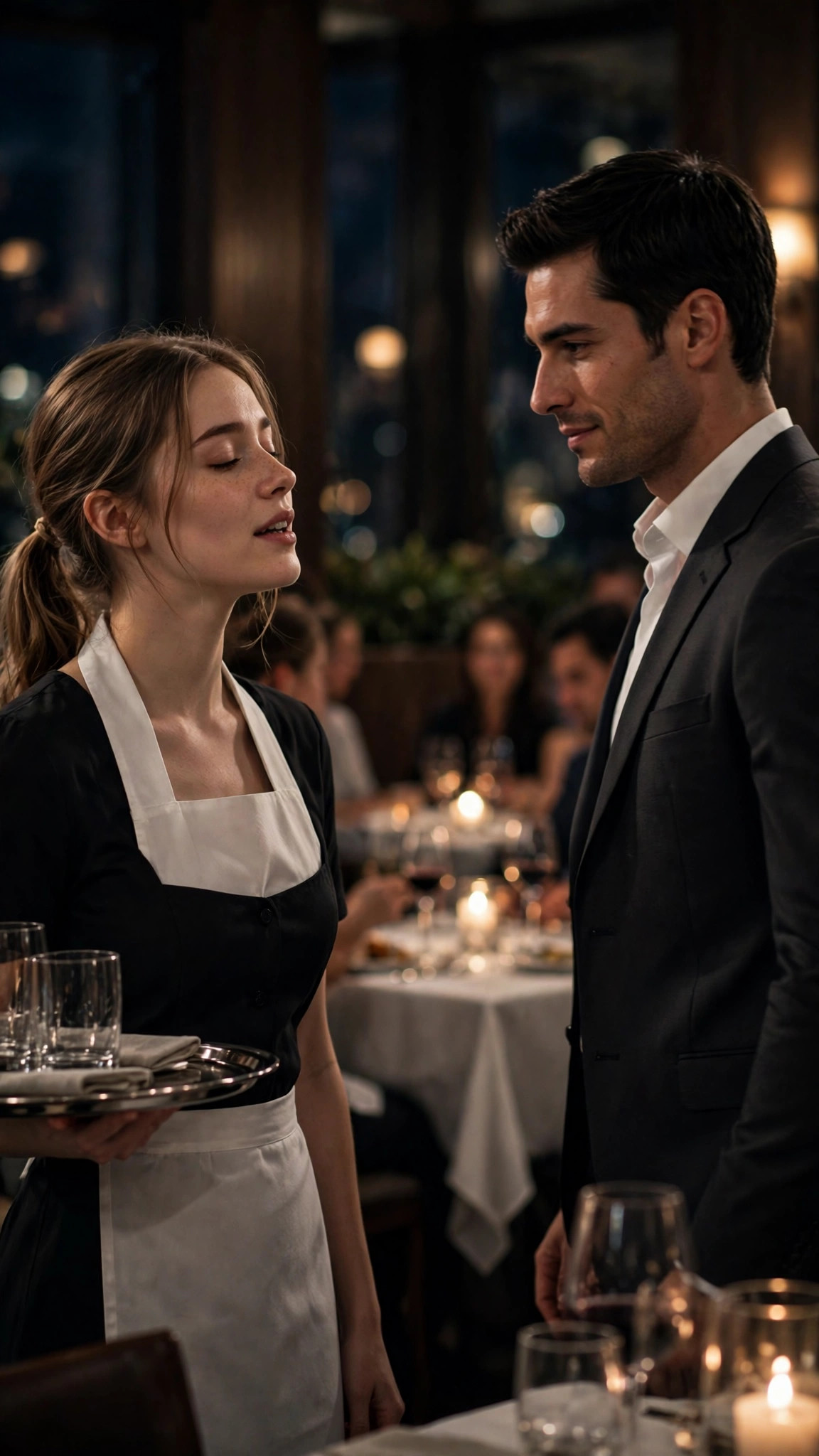
    It was not a decision. That was the thing she would tell herself later, and it was true: it was not a decision at all. It was a Thursday, and the dining room was full, and table twelve had sent back a plate, and the kitchen was behind, and her feet ached, and her head ached, and she was carrying a tray past the piano when the pianist began to play a melody she knew — not a song she knew, exactly, but a shape of a song, a few notes that rose and fell the way a question rises and falls — and without thinking, without meaning to, without any warning at all, she began to sing softly while she worked.

    It was a song she had written herself, three years ago, in a one-room apartment with the curtains drawn, on the worst night of her life. A song about love, and loss, and everything in between. She had never sung it for anyone. She had barely sung it for herself. But her voice came out soft yet powerful, the way it always did when she stopped being afraid of it, and it filled the room the way light fills a room when someone opens a door.

    Her voice, soft yet powerful, filled the room.

    And then, something incredible happened.

    Lorenzo Bianchi stopped dead in his tracks.

    He had been halfway to his table, halfway through the dining room, a man in motion the way a glacier is in motion — slow, unstoppable, indifferent. And then he stopped. He turned slowly, his whole body turning, and his eyes locked onto the waitress, and for a moment the room seemed to disappear, and all that was left was the song, and the voice, and the woman singing it.

    Emily saw his face change. She saw it the way you see a crack appear in ice: slowly, and then all at once. His face softened, just for a moment. His lips curled into the faintest smile — the first one in three years, though she did not know that yet, though no one in the room had ever expected to see it again — and for one heartbeat, Lorenzo Bianchi looked like a man who had been touched by something unexpected. Like a man who had forgotten, for one second, how to be made of stone.

    But the smile quickly faded, replaced by his usual cold stare. He walked over to Emily, his steps slow and deliberate, and the whole dining room held its breath, and Emily's heart beat so hard she was certain everyone in the room could hear it, and she thought, absurdly, of Tony's warning, and of the last girl who had sung in this dining room, and of how she had spent three years being invisible, and how she had thrown it all away in eight bars of a song she had never meant to sing out loud.

    He stopped in front of her. He was taller than she had thought. Up close, his eyes were not cold at all. They were something worse than cold. They were hungry.

    "Sing that again," he said, his voice low and commanding. "Tonight, after closing."

    Emily's heart skipped a beat. She had no idea who this man was — no, that was another lie; she knew exactly who he was, and that was the problem, that was always the problem, that was why she had run in the first place — but she knew one thing, and she knew it with a clarity that cut through the fear like a knife: this was no ordinary request.

    "Mr. Bianchi," she said, and her voice came out steadier than she felt, "I didn't mean—"

    "After closing," he said again. "Just you. Just the song."

    And then he turned and walked to his table by the window, and sat down, and picked up the menu, and the dining room exhaled, and the pianist began to play again, and the clink of silverware came back like rain after a drought.

    Sofia found her by the service door a minute later, her eyes wide, her voice a frantic whisper. "What did he say to you? What did he want?"

    "He wants me to sing again," Emily said. "After closing. Just the song."

    Sofia stared at her. "Do you know what that means? Nobody sings for him. Nobody. In nine days, have you ever seen him speak to anyone in this room? Have you ever seen him look at anyone the way he just looked at you?"

    "No," Emily said. "And I don't want to know what it means. I just want to get through the next nine hours without dropping anything."

    But as she went back to work, carrying her tray from table to table, she could feel his eyes on her — not constantly, not obviously, but in glances, the way you feel the sun through a window even when you're not looking at it — and she understood that the next nine hours were not going to be ordinary hours, and that the man at the table by the window was not going to forget her, and that the song she had sung by accident had just become the most important thing she had ever done. And Emily stood there with her tray of bread and olive oil, her hands shaking so slightly that only she could feel it, and she understood two things with perfect, terrible clarity.

    The first was that Lorenzo Bianchi had smiled at her song, and that meant he had heard something in it that no one else had ever heard.

    The second was that the song she had written three years ago, on the worst night of her life, was a song about a woman who had disappeared — and the man who had just asked her to sing it again was the man that woman had left behind.

    She did not know, then, how the night would end. She did not know about the police lights, or the FBI, or the gun, or the woman who would step out of the back room with dark hair and a familiar face. She did not know that by midnight, everything she had spent three years hiding from would be standing in the middle of the dining room with her, under the chandeliers, with nowhere left to run.

    She only knew that she had nine hours until closing, and that the most dangerous man in Chicago had asked her to sing, and that she was going to do it — because she had been running for three years, and she was tired of running, and because somewhere underneath the fear, in a place she had not visited in a very long time, a small stubborn voice was saying that maybe, just maybe, this was why she had written the song in the first place.

  • Chapter 7: The First Meal

    Chapter 7: The First Meal

    We walked in the garden, Arthur Moretti and I, in the late afternoon, when the light was gold and the air smelled of roses and cut grass, and the mansion stood behind us, quiet now in a good way — the quiet of a house at peace, instead of the quiet of a house holding its breath.

    "I have been thinking," Arthur said, "about what my father would say, if he could see this house now. He would say that a family is not the walls, or the name, or the money. A family is the people who sit at the table together, and eat together, and tell each other the truth. He would say that we forgot that, for a little while, and that you reminded us."

    I did not know what to say to that, so I said nothing, and we walked, and the roses smelled sweet, and the air did not smell of rhubarb at all.

    "Pascal is cooking tonight," Arthur said. "A real dinner. For the whole family. Not a trap. Not a test. A dinner. And I want you to cook with him."

    "Me?" I said. "I'm a maid, Mr. Moretti. I clean. I serve. I don't —"

    "You are not a maid," Arthur said. He stopped walking, and he turned to face me, and his gray eyes were very serious. "Not anymore. You are the woman who saved my family. You are the woman who smelled the poison first, when no one else could smell it, and who stood in my dining room in front of twenty people and told the truth, when no one else would tell it. That is not a maid, Nora. That is —" He stopped, and he took a breath, and for a moment, he looked like a man who was about to do something very frightening, and very brave. "That is the woman I want beside me. At the table. And everywhere else. If you will have me."

    I stared at him. The Don of the Moretti family. The most feared man in Chicago. The man who had not eaten in three weeks, who had sat at an empty table and stared at poisoned food and refused to die. He was standing in a garden, in the gold light, asking me — a maid, a girl from a bakery, a girl whose father had died of a smell — if I would have him.

    "Mr. Moretti," I said, "I don't know how to be the wife of a Don. I know how to cook. I know how to clean. I know how to smell poison. I don't know how to —"

    "You know how to tell the truth," Arthur said. "And you know how to protect the people you love. That is all a Don's wife needs to know. The rest, we will learn together."

    I thought about my father, and about my grandmother, and about the cardboard box, and about the nine-year-old girl in her nightdress who had promised herself that she would never let what happened to her father happen to anyone else. And I thought about the house behind us, and the table inside it, and the family that would sit at that table tonight, and eat together, and live.

    "Yes," I said. "Yes, I will have you."

    That night, Pascal and I cooked together in the great kitchen, side by side, the way my grandmother had cooked beside me when I was a girl standing on a chair. We made the blistered-tomato and burned-garlic pasta — the tomatoes pressed with a wooden spoon until their skins split, the garlic burned just dark enough on the iron pan to turn golden at the edges, the olive oil, the salt, the patience. I cooked it the way I had cooked it the night before, in my own small kitchen, and this time, when I lifted the lid, there was no other smell underneath it. No sweetness. No oiliness. No wrongness. Only tomatoes, and garlic, and safety.

    We carried it to the dining room together, and the family was already there — Aria, and Mrs. Delgado, and Dr. Ellison, and Chef Pascal, and all the cousins, and all the people who had sat at that poisoned table the night before. And Arthur stood at the head of the table, and he looked at the food, and he looked at me, and he picked up his fork.

    He took a bite. He chewed it slowly. He closed his eyes. And then he smiled — the real smile, the warm smile, the smile of a man eating a meal cooked by someone he loves, in a house that is finally safe.

    "It is perfect," he said. "It is the best thing I have eaten in three weeks. In three years. In my whole life."

    And then everyone ate. Everyone at the table ate together, laughing, talking, reaching across for the bread, arguing about the wine, the way a family is supposed to eat — and I sat beside Arthur at the head of the table, not behind it, not against the wall, but beside him, where I belonged.

    After dinner, Aria came to me with a glass of wine in her hand, and she raised it, and she said, "To Nora. Who smelled it first." And everyone at the table raised their glasses, and they said my name, and for the first time in seventeen years, the smell in my nose was not the smell of poison. It was the smell of tomatoes, and garlic, and roses, and a house full of people who were alive because a maid had trusted her nose.

    Six months later, we were married in the garden, under the roses, with the whole family watching, and Chef Pascal cooked the wedding dinner himself, and he tasted every dish before it left his stove, and he said, loudly, to anyone who would listen, "No one poisons my kitchen. Not while I am alive. Not while Nora is alive."

    Gabby came to the wedding, with her baby in her arms, and she cried, and she hugged me, and she said, "You did what I couldn't do. You stayed. And you saved them."

    The wedding itself was everything a wedding in that house should have been, and nothing like what I had imagined when I was a girl standing on a chair in my grandmother's bakery, stirring a pot and dreaming about a future I could not yet see. It was held in the garden, under the roses, on a day so bright and clear that the sky looked like it had been washed clean just for us. Mrs. Delgado had spent a week arranging the flowers, and she had cried twice while doing it, and she had told me, both times, that she was crying because she was happy, and I had believed her, because I was crying too.

    My dress was simple — white, plain, with no lace and no jewels, because I am a maid, and a cook, and I have never wanted jewels. Aria had offered me her mother's pearls, and I had said no, and then she had offered me her mother's veil, and I had said yes, because a veil is not a jewel, it is a promise, and I wanted to wear something that had belonged to a woman who had loved this family. Aria cried when I put it on. She cried, and she laughed, and she said, "My mother would have loved you, Nora. She would have loved you the way I love you now — like a sister."

    Arthur waited for me at the end of the garden path, in a black suit, with a rose in his buttonhole, and his gray eyes were wet, and his hands were steady, and when I reached him, he took my hands in his, and he said, very quietly, so that only I could hear it, "I have not eaten in three weeks, once in my life, because I was afraid. I will never be afraid again, as long as you are beside me. You are my proof, Nora. You are the proof that this family can be saved."

    We said our vows under the roses, with the whole family watching, and with Chef Pascal standing at the back, in his whites, crying openly into his apron, and with Dr. Ellison smiling, and with Gabby holding her baby, and with Old Enzo nodding slowly, the way a man nods when he has seen something he did not expect to see, and he is glad he lived long enough to see it.

    After the ceremony, Pascal cooked the wedding dinner himself — seven courses, each one more beautiful than the last, and he tasted every dish before it left his stove, and he announced it loudly, to anyone who would listen: "I taste everything! Everything! No one poisons my kitchen! Not while I am alive! Not while Nora is alive!" And everyone laughed, and everyone ate, and the candles burned down, and the music played, and the night went on until the stars came out, and Arthur danced with me in the garden, under the roses, to a song I did not know, and he held me close, and he said, "This is the first meal of the rest of our lives, Nora. And every meal after this one will be like this one. Clean. And safe. And ours."

    In the year that followed, I learned what it meant to be the wife of a Don — and I learned that it meant, more than anything else, what it had always meant to be a cook. It meant feeding people. It meant keeping them safe. It meant smelling the food before it reached the table, and telling the truth when something was wrong, and standing beside the man you love when the whole world is watching.

    I taught the staff's children to bake, on Sunday afternoons, in the great kitchen, standing them on chairs beside the stove the way my grandmother had stood me on a chair beside hers. I taught them to knead dough, and to smell bread, and to tell when a tomato is ready, and I taught them the most important lesson of all — the lesson my grandmother had taught me when I was twelve years old, holding a rhubarb root under my nose. I taught them the smell that kills quietly, and I told them, the way she had told me: "If you ever smell it in a kitchen where it does not belong, you run, and you tell someone."

    Arthur learned to cook, too — badly, at first, burning the garlic and splitting the tomatoes too hard with the spoon, and laughing at himself, and laughing with me, and trying again, until one night he made the pasta all by himself, from beginning to end, and he carried it to the table, and he set it down in front of me, and he said, very proudly, "Taste it." I tasted it. It was perfect. It was the best thing I had eaten in months. And he smiled — the real smile, the warm smile — and he said, "I learned from the best."

    And Dominic's daughter — the frightened nineteen-year-old girl who had come to the front door with her hands twisted together — she came to the house often, after that. She came for Sunday dinner. She came for Christmas. She came to learn to bake, standing on a chair beside my stove, the way I had stood beside my grandmother's. And one day, she looked up at me with flour on her nose, and she said, "Thank you for saving my father, Mrs. Moretti. Even though he did a terrible thing. Thank you for letting him live."

    I held her hands — her young hands, clean, unmarked — and I said, "Your father is paying for what he did, every day, in prison. But you are not your father. You are you. And you are welcome here. Always."

    Dominic was tried in a courtroom, in front of the whole city, with the ledger, and the bag, and the handkerchief, and Gabby's testimony, and Dr. Ellison's test. He was found guilty, and he was sentenced to life in prison. Vincent Castellano was arrested a month later, on the evidence in the ledger, and the Castellano family — the family that had tried to destroy the Morettis for thirty years — fell apart, the way a house falls apart when its foundations are rotten.

    And the Moretti house — our house — went on. Pascal cooked. Aria laughed. Mrs. Delgado ran the household. Dr. Ellison came for Sunday dinner. And every night, I cooked for the man I loved, in a kitchen that smelled of garlic and butter and clean iron, and every night, before I served a single plate, I leaned over it, and I smelled it, the way my father taught me, the way my grandmother taught me.

    Because a gift like that is also a burden. And a burden like that is also a gift. And I would rather smell the poison first, every night, for the rest of my life, than let what happened to my father happen to anyone I love ever again.

    Six months after the wedding, on a bright morning in spring, I opened the door of my own small bakery — not a grand place, not a palace, but a warm room with flour on every surface and a wood-fired oven and a bell over the door that rang every time a customer came in. I named it after my grandmother. I named it after my father. I hung a wooden spoon on the wall beside the door, and underneath it, I put a small sign, in my own handwriting, that said: "Here, we smell everything before we serve it."

    Arthur came to the opening, in his best suit, with a bouquet of roses in his hands, and he stood in the doorway of my little bakery, and he looked at the oven, and at the flour, and at the sign, and he smiled — the real smile, the warm smile — and he said, "Your grandmother would be proud of you, Nora. And your father would be proud of you, too."

    On the first anniversary of the night I gripped his forearm at the mahogany desk, Arthur took me back to that dining room, and we sat at the great table together, just the two of us, and Pascal cooked for us himself — the blistered-tomato and burned-garlic pasta, the tomatoes pressed with a wooden spoon until their skins split, the garlic golden at the edges, the olive oil, the salt, the patience — and before we ate, Arthur leaned over his plate, and he smelled it, the way I had taught him, the way my father had taught me, and he smiled, and he said, "Clean."

    "Clean," I agreed. "Every night. For the rest of our lives."

    And every night since then, in our house, in our kitchen, before a single plate is served, I lean over it, and I smell it. I smell the tomatoes. I smell the garlic. I smell the butter, and the bread, and the roses from the garden. And I smell for the other thing, too — the sweet thing, the oily thing, the wrong thing — because a gift like that is also a burden, and a burden like that is also a gift, and I will carry it gladly, for as long as I live, for the people I love.

    The End.
    THE END

  • Chapter 6: The Confession

    Chapter 6: The Confession

    They kept Dominic in the small room off the library — the room with no windows, where the family had always kept its most difficult conversations. Arthur went in alone, and he stayed in there for a long time, and no one in the house spoke above a whisper while he was gone.

    I waited in the kitchen with Dr. Ellison and Mrs. Delgado and Chef Pascal, and none of us said anything, because there was nothing to say. The pasta had been taken away. The table had been cleared. The candles had been blown out. And the house, which had been silent for three weeks, was silent in a different way now — not the silence of fear, but the silence of a wound that has finally been opened and cleaned.

    After an hour, Arthur came out. His face was gray, and his hands were steady, and he looked older than he had looked that morning, as if the night had added ten years to him. He sat down at the kitchen table — not the great mahogany table in the dining room, but the small wooden table in the kitchen where the staff ate — and he put his head in his hands, and for a moment, he was not the Don of the Moretti family. He was a son who had lost his father, and a brother who had almost lost his sister, and a man who had almost been killed in his own house.

    "He confessed," he said. His voice was flat, the way it had been flat for three weeks, but underneath the flatness there was something else now — relief, and grief, and a terrible, tired anger. "All of it. The tea. The pasta. The Castellanos."

    He told us then, slowly, what Dominic had said in that small room. How Vincent Castellano had come to him a year ago, with money, and with promises, and with a plan. How the Castellanos had been trying to destroy the Morettis for thirty years, and how they had finally understood that they could not do it from the outside — the Morettis were too strong, too loyal, too feared — so they would do it from the inside, with a man the family trusted, and a poison no one could taste, and a death that would look like a heart attack.

    How Dominic had poisoned Vittorio's birthday tea — just a pinch of rhubarb root in the pot, enough to make the tea taste bitter, enough to stop an old man's heart. How he had laughed afterward, on the telephone, and said, "It worked. The old man is dead." How he had hidden the paper bag in the pantry ceiling, where no one would look, and how he had dosed Arthur's food lightly, day after day, so that Arthur would grow weaker and weaker, and more and more afraid, until the family lost faith in him and turned to Dominic instead.

    "He said the boy wouldn't eat," Arthur said, and his voice cracked, just once, on the word "boy." "He said I was too frightened to eat, and that was even better, because a Don who won't eat is a Don who can't lead. He was right. I was frightened. I have been frightened for three weeks. I sat at that table every night and I stared at the food, and my body told me not to eat it, and my mind told me I was going mad, and I did not know which one to believe."

    "You believed your body," I said. "That is why you are alive."

    Arthur looked at me. "My father used to say that a Don's instincts are his best weapon. I thought I had lost mine. I thought grief had taken them. But you —" He stopped. "You smelled it. In three days. What I could not prove in three weeks, you smelled in three days."

    "I smelled it because I have smelled it before," I said. "My father died of it. When I was nine years old. I have carried that smell with me ever since, and I have been waiting for the day I could use it to save someone instead of just remembering it."

    Arthur was quiet for a long time. Then he said, "Dominic asked me for mercy. He said he did it for the money, and for the promise of the family, and that Castellano had threatened his own daughter if he refused. I don't know if that's true. I don't know if any of it is true. But I know this: my father believed in mercy, even for his enemies. He believed that a man who chooses revenge over justice becomes the thing he is fighting." He looked at Dr. Ellison, and at Mrs. Delgado, and at Chef Pascal, and then at me. "So I am not going to kill him. I am going to hand him to the police, with the ledger, and the bag, and Gabby's testimony, and Dr. Ellison's test. And Vincent Castellano —" His gray eyes went cold. "Vincent Castellano will answer for this, too. In a courtroom. In front of the whole city. Not in an alley. Not in the dark. In the light."

    It was the right decision. I knew it as soon as he said it, because it was the decision of a man who had chosen to live, and to lead, instead of to die of poison or of revenge.

    The next morning, the police came. They took Dominic away in handcuffs, and they took the paper bag, and the ledger, and the handkerchief, and they took statements from Dr. Ellison and Mrs. Delgado and Chef Pascal and Gabby — Gabby, who came back to the house for one hour, with her baby in her arms, and told the police everything she had heard on the landing, and then left again, to her small flat above the laundry, to a life that was finally safe.

    Aria came to find me that afternoon. She found me in the kitchen, scrubbing the great iron pans, and she stood in the doorway for a long time without saying anything, and then she said, "I was wrong about you."

    I kept scrubbing. "Wrong about what, miss?"

    "About everything," Aria said. "I thought you were a silly girl with an imagination. I thought my brother had lost his mind. I thought —" She stopped. Her voice shook, just once. "I thought my father died of a broken heart, and that my brother was dying of one too. I was wrong. My father was murdered. And my brother was right. And you — you saved us. All of us. You saved the whole family."

    She came into the kitchen then, and she did something I had never seen a Moretti do. She took my hands — my wet, soapy hands, the hands of a maid — and she held them, and she said, "Thank you, Nora. Thank you for smelling it first."

    Chef Pascal cleared his throat, loudly, from the other side of the kitchen. "The girl is right about the kitchen, too," he said, gruffly, staring at his stove. "I have cooked for this family for thirty years, and I did not smell it. I did not see it. I thought the tea tasted bitter because I was getting old and heavy-handed with the leaves." He turned to me, and his red eyes were wet. "You smelled it. You saved us. And I — I owe you an apology, girl. And a debt. A debt I can never repay."

    "You don't owe me anything," I said. "You cooked the food. Someone else poisoned it. That is not your fault."

    "It is my kitchen," Pascal said. "And from now on, no one touches my kitchen without my say-so. No deliveries I haven't checked. No bags I haven't opened. No one." He looked at Arthur, who had come into the kitchen behind Aria, and he said, "And you, young man. You will eat in my kitchen again. Starting tonight. I will cook for you myself, and I will taste every dish before it leaves my stove, and if anyone tries to poison my food again, they will have to go through me first."

    Arthur smiled. It was the first time I had seen him smile — really smile, not the cold, careful smile of a Don, but the smile of a man who has been given his life back. "I would like that, Pascal," he said. "Very much."

    And then he turned to me, and his gray eyes were warm, and he said, "Nora. Walk with me."

    But before we walked, there was one more thing Arthur had to do, and it was the hardest thing of all — harder than facing Dominic, harder than facing the police, harder than facing his own grief. He had to face his family. Not the twenty frightened faces at the dinner table, but the men who ran the family with him — the capos, the lieutenants, the old soldiers who had served his father and who had watched him starve himself for three weeks and wondered if the Moretti family still had a Don at all.

    The next morning, Arthur called the council. They met in the library, in the great room with the dark wood and the leather chairs, and I was not invited — I was a maid, and councils are not for maids — but Mrs. Delgado left the door open a crack, and I stood in the hall, and I listened, because I had earned the right to listen.

    There were eight of them. Old Enzo, who had been Vittorio's right hand for forty years, with his white hair and his scarred hands. Frankie the Bull, who was not a bull at all, but a thin, quiet man with glasses. Sal, and Marco, and Tony, and the others — men who had built the family with their hands and their blood, and who had watched Arthur fall apart for three weeks and wondered if they would have to choose a new Don.

    Arthur stood at the head of the room, and he told them everything. He told them about the tea. He told them about the pasta. He told them about the paper bag, and the handkerchief, and the ledger, and Gabby, and the doctor's test. He laid it all out on the table, piece by piece, the way a man lays out evidence in a courtroom, and when he was done, the room was silent.

    Then Old Enzo spoke. His voice was rough, and slow, and it carried the weight of forty years. "Your father," he said, "would have killed him. Dominic. He would have killed him in that small room, with his own hands, and he would not have lost a night's sleep over it. That is how the family has always done it. That is the law."

    "I know," Arthur said. "My father believed in the old law. And the old law kept this family alive for fifty years. But the old law also made us feared, and hated, and alone. And the old law did not save my father. It did not save him from a teacup, Arthur. It did not save him from a paper bag in a ceiling."

    Frankie the Bull cleared his throat. "What are you saying, boss?"

    "I am saying that Dominic will go to prison," Arthur said. "Not to a grave. To a prison. With the ledger, and the bag, and the testimony, and the doctor's test. And Vincent Castellano will go to prison with him. In a courtroom. In front of the whole city. In the light. Because I am not going to be the Don who kills his enemies in dark rooms anymore. I am going to be the Don who puts them in prison, and who keeps his family alive, and who eats dinner with his family at night, in his own kitchen, without being afraid of his own food."

    The room was silent. Then Old Enzo stood up, slowly, and he walked around the table, and he put his scarred hand on Arthur's shoulder, and he said, "Your father would have killed him. But your father is dead. And you are the Don now. And a Don who chooses the law over revenge — that is a Don I can follow." He turned to the others. "Any man here who disagrees can say so now."

    No one disagreed. One by one, they stood up, and they put their hands on Arthur's shoulders, and they said his name, and they said the family's name, and the council was over.

    Later that day, Dominic's daughter came to the house. She was nineteen years old, thin, frightened, with her father's eyes and none of his cruelty, and she stood at the front door with her hands twisted together, and she asked to see Arthur. He met her in the garden, and she cried, and she said, "My father did a terrible thing. I know he did. But he is still my father. Please. Please don't kill him."

    "I am not going to kill him," Arthur said. "He is going to prison, and he is going to answer for what he did, in front of a judge, and in front of this city. And you — you are not your father. You are welcome in this house. You are welcome at our table. That is my promise to you, and it is a promise I will keep."

    She cried harder then, and she thanked him, and she left, and Arthur stood in the garden for a long time, looking at the roses, and I stood in the doorway, watching him, and I understood something I had not understood before: mercy is harder than revenge. Revenge is easy. It is quick, and it is clean, and it feels like justice. Mercy is slow, and it is messy, and it costs you something. But mercy is what keeps a family alive, and revenge is what kills it, one dark room at a time.

  • Chapter 5: The Poisoned Table

    Chapter 5: The Poisoned Table

    The dining room had never looked more beautiful, or more frightening.

    By seven o'clock, the great mahogany table was laid for twenty, with white linen and silver and candles in tall glass holders, and the chandeliers threw their hard small lights down onto the polished wood. The family came in slowly, in their best clothes, talking in low voices, as if they were arriving at a funeral instead of a dinner — and in a way, they were. This was the first family dinner since Vittorio had died. Everyone in the room knew it. Everyone in the room felt it.

    Aria came in last, in a black dress, her dark hair pulled back, her face pale and set. She went to her place, halfway down the table, and she did not look at her brother. Arthur came in after her, and the room went quiet, the way a room goes quiet when the most dangerous man in it walks through the door. He was thinner than he had been three weeks ago. His suit hung on him. His gray eyes moved slowly around the table, taking in every face, and I saw him pause on Dominic, who was already seated near the head of the table, smiling, relaxed, a glass of wine in his hand.

    "Eat," Dominic said, raising his glass. "Tonight, we eat together, like a family. For Vittorio."

    The staff brought the pasta in on great silver trays. It was beautiful — the blistered tomatoes shining, the garlic golden at the edges, the steam rising in the candlelight. Chef Pascal had outdone himself. Every plate looked as if it had been created by an artist. Each was seasoned with care. And every single plate was poisoned.

    I stood against the wall with my own bowl in my hands — the bowl I had cooked myself the night before, clean, safe, warm — and I waited. Dr. Ellison stood beside me, his medical bag in his hand, his face white. We had agreed on the plan that morning: I would put my bowl in front of Arthur, and the doctor would test the house pasta, and whatever happened next would happen in front of everyone, so that no one could bury it afterward.

    But before I could move, Dominic stood up.

    "Before we eat," he said, "I want to say something." He looked around the table, and his voice was warm, and reasonable, and full of the easy charm that had made him the family's second-in-command for twenty years. "Arthur has not eaten in three weeks. He sits at this table and stares at his food, and we all pretend it is grief. But it is not grief. It is madness. And a family cannot be led by a man who is afraid of his own kitchen." He turned to Arthur. "So tonight, I am going to eat first. I am going to eat the pasta, here, in front of everyone, to show you that there is nothing wrong with it. And then you are going to eat, and you are going to stop this — this performance — and you are going to be the Don again."

    He picked up his fork. He took a mouthful of pasta. He chewed it slowly, theatrically, and swallowed, and spread his arms wide, and smiled.

    "There," he said. "You see? Nothing. No poison. No curse. Just pasta."

    The room exhaled. Aria's shoulders dropped. One of the cousins laughed, a short, relieved sound. Someone raised a glass. And I stood against the wall with my bowl in my hands, and I felt the whole plan falling apart in front of me — because Dominic had just eaten the poisoned pasta, in front of everyone, and nothing had happened to him.

    Except that I knew something the rest of the room did not know. I knew that rhubarb-root poison does not work in a single mouthful. A pinch makes the food taste bitter. A spoonful stops a man's heart. But a single mouthful, eaten slowly, by a man who knows what he is eating — a man who has been building up a tolerance, a mouthful at a time, for three weeks — that mouthful does nothing at all.

    Dominic knew. He had been tasting his own poison for weeks, a little at a time, so that tonight he could eat it in front of the family and smile.

    But I also knew something else. I knew about the paper bag in the ceiling. And I knew about Gabby. And I knew about the tea. And I knew that a man who will eat poison to prove a lie will do anything to protect that lie.

    So I stepped forward, and I put my bowl down on the table in front of Arthur, and I said, in a voice loud enough for the whole room to hear, "Don't eat the pasta, Mr. Moretti. It was poison."

    The room went silent. Not the ordinary silence. The other kind. The kind that comes after a gunshot.

    Dominic's smile froze. "She made all of this?" he said, turning to Arthur. "She made this? A girl who has been here three days is telling the Don of this family that his own kitchen is poisoned? Arthur, this girl is hysterical. She has been asking questions all week. She accused the tea. She accused the pantry. Now she accuses the dinner. She is a silly girl with an imagination, and she is making a fool of you in front of your own family."

    "She made this?" Aria said, standing up. "Nora. What are you doing? I told you — my brother is grieving. He is not —"

    "Your brother is not grieving," I said. My voice did not shake. I was surprised, but it did not shake. "Your brother is right. He has been right for three weeks. Someone in this house has been poisoning the food, and your father died of it, and your brother's body knew it before his mind could prove it. And I can prove it. Now. Here. In front of everyone."

    Arthur had not moved. He sat at the head of the table with his hands flat on the wood, and his gray eyes were fixed on me, and I saw in them something I had not seen before — not suspicion, and not anger, but hope. A thin, desperate hope, the hope of a man who has been waiting three weeks for someone to say the thing he could not say himself.

    "Show me," he said.

    So I showed them. I turned to Dr. Ellison, and he stepped forward, and he opened his bag, and he took out a small glass vial and a strip of paper, and he scraped a little of the pasta sauce onto the paper, and he added a drop from the vial, and the paper turned a deep, ugly purple — the color, the doctor said, of rhubarb-root poison, the color it turns when it meets the reagent.

    A gasp went around the table. A woman put her hand to her mouth. A glass tipped over and rolled, and no one caught it.

    "That proves nothing," Dominic said. His voice was still calm, but there was an edge under it now, like a knife under silk. "A parlor trick. A piece of paper that turns purple. The girl could have put anything on that paper."

    "Then let me show you something else," I said. And I turned to Mrs. Delgado, who was standing in the doorway with her hands twisted in her apron, and I said, "Mrs. Delgado, would you fetch the paper bag from the pantry? The one above the ceiling tiles. The one Mr. Dominic hid there the night before the birthday party."

    Mrs. Delgado went white. Dominic went whiter. And for a moment, no one in the room moved at all.

    Then Dominic laughed. It was a short, hard laugh, and it did not sound like the laugh of a man who was innocent. "A paper bag," he said. "In the ceiling. You are inventing fairy tales now, girl."

    But Mrs. Delgado had already gone, and she came back a moment later with a chair, and she stood on it, and she lifted the ceiling tile in the pantry — I could hear the scrape of it from the dining room — and she came back carrying the paper bag, folded over at the top, with the white powder inside it, and the handkerchief tucked into the fold.

    She set it on the table in front of Arthur. And Arthur opened it. And he looked at the powder. And he picked up the handkerchief, and he read the initials stitched into the corner in dark blue thread, and his face changed — not all at once, but slowly, the way a man's face changes when he understands that the person he trusted most in the world has been killing his family.

    "D.F.," he said, very quietly. "Dominic Ferrante."

    "It is not mine," Dominic said. "Anyone could have put that there. Anyone could have —"

    "Gabby saw you," I said. "Gabby, the maid before me. She saw you stand on a chair in the pantry the night before the birthday party, and lift the ceiling tile, and hide this bag. She heard you on the telephone, talking about the tea. She heard you say, 'It worked. The old man is dead.' She heard you say, 'The next one will be the pasta. All of it. The whole order. Let them eat it together, like a family.' She left that night because she was afraid you would kill her next. And she was right to be afraid."

    The room was so silent now that I could hear the candles burning. Dominic stood at the table with his wine glass in his hand, and his face was gray, and his eyes moved from me to Arthur to the bag to the door, the way a trapped animal's eyes move, looking for a way out.

    "You were wrong about me, Aria," Arthur said. He did not raise his voice. He did not have to. Every person in the room heard him. "You said grief had broken me. You said I had lost my mind. You were wrong. I was right. I knew the food was poisoned. My body knew it. I just didn't know who." He stood up, slowly, and he looked at Dominic, and his gray eyes were cold as winter. "Now I know."

    "Arthur," Dominic said. "Arthur, listen to me. I have served this family for twenty years. I have —"

    "You poisoned my father's tea," Arthur said. "You poisoned my food. You poisoned this table. You would have poisoned every person in this room tonight, and you would have called it a tragedy, and you would have taken this family for yourself." He picked up the paper bag, and he held it out, and his hand did not shake. "I will swallow the poison, but I need to think," Dominic had said once, in the kitchen, when I asked him about the tea. Now I understood what he had meant. He had been thinking about it for weeks. He had been thinking about how to kill us all, and make it look like grief.

    Dominic set his wine glass down, very carefully. "You can't prove any of this," he said. "A maid's word. A purple piece of paper. A bag that anyone could have hidden. You can't prove it."

    "Then I will prove it another way," Arthur said. And he turned to the door, and he said, "Bring him in."

    The door opened. Two of Arthur's men came in, holding a third man between them — a thin, frightened man in a delivery uniform, with his cap in his hands. And behind them came a woman I had never seen before, carrying a leather ledger, and she set it on the table, and she opened it, and the pages were full of numbers, and names, and dates.

    "His name is Marco," Arthur said. "He delivers flour to this house. And to three other houses. And he keeps a ledger. And in that ledger, there is a page for Dominic Ferrante — every bag of rhubarb root he ever ordered, every payment he ever made, every delivery he ever received. And at the bottom of the page, there is a name. The name of the man who paid for it all."

    He turned the ledger around, so that everyone at the table could see it. And at the bottom of the page, written in a careful hand, was a name I had never heard before, but that made every person in the room go still.

    Vincent Castellano.

    "The Castellanos have been trying to destroy this family for thirty years," Arthur said. "And tonight, they almost did it. With a paper bag. And a teacup. And a bowl of pasta." He looked at Dominic. "Take him away."

    Dominic did not struggle. He stood very still as Arthur's men took his arms, and he looked at me — just once — and in his eyes there was no anger. There was only a kind of tired surprise, as if he could not understand how a girl who had been in the house for three days had seen what no one else had seen in three weeks.

    "It was the smell," I said, though he had not asked. "You forgot about the smell."

    And then they took him away, and the dining room was silent, and the pasta sat on the table, steaming, beautiful, poisoned, and nobody in the room ate a single bite.

    For a long moment, no one in the dining room moved. The candles burned. The pasta steamed. The great silver trays sat on the white linen like accusations. And then Aria stood up, slowly, and she walked around the table to where I was standing, and she took my hands — my hands, the hands of a maid, still holding the empty bowl — and she held them, and she looked into my eyes, and she said, in a voice that everyone in the room could hear, "Thank you."

    It was the first time anyone in that house had thanked me. It would not be the last.

    Arthur stood at the head of the table, and he looked at the pasta, and at the paper bag, and at the ledger, and at the faces of his family — twenty faces, pale, frightened, alive — and he said, very quietly, "Clear the table. All of it. Take it away. Nothing on this table is to be eaten. Not tonight. Not ever again."

    Mrs. Delgado and the staff moved then, quickly and quietly, the way staff move when they have been given an order they understand. They took the trays away. They took the plates away. They took the bread, and the wine, and the candles, and they left the table bare — white linen, polished wood, nothing else. And Arthur stood at the head of that bare table, and he looked at his family, and he said, "We will eat again. Tomorrow. In the kitchen. Together. Food cooked by hands we trust, in a kitchen we have cleaned ourselves. But tonight, we will not eat. Tonight, we will remember my father. And we will remember that this family is still alive — all of us, every one of us — because a girl who had been in this house for three days smelled what none of us could smell."

    He turned to me then, and his gray eyes were wet, and he said, "Nora. Come with me. There is something I need to do, and I need you to be there when I do it."