Story Genres: Mafia Romance

  • Chapter 7: Two Bracelets

    Chapter 7: Two Bracelets

    In the morning, Giulia laid the table, and she placed the two small bracelets on it, one for him and one for her, and she waited for Raphael to come.

    He came at nine o'clock, as he had come every morning since he had found her, and he knocked softly, and she opened the door, and she led him to the table, and she sat down across from him, and she looked at him, and she said the words she had practiced all night.

    "I will come home," she said, "if you will come home with me. Not to the villa as it was. To a new life. To a house where the name on the door is Victor, and where no one is afraid, and where the only gifts are the ones we give each other freely, with open hands."

    Raphael looked at the two bracelets on the table. He looked at them for a long time, the way a man looks at something he has been searching for without knowing its name.

    "Then that is the house we will build," he said. "And I will build it with you, not for you. That is the difference. I am learning that now. Everything I build from now on, I build with you."

    He picked up one of the bracelets, and he held it out to her, and she held out the other one to him, and they put them on each other's wrists, there at the small table in the room above the bookshop, with the snow falling outside and the light coming through the window. And it was the simplest ceremony in the world, and it was the most important one either of them had ever been part of, because for the first time in his life, Raphael Carbone had received a gift from a woman who owed him nothing, and for the first time in her life, Giulia Ferraro had given a gift to a man who frightened no one.

    They went back to the villa together in the spring, when the lemon trees were in flower and the garden was waking up. But they did not go back to the villa as it was. They went back to build something new.

    Raphael called his men together, all of them, in the great hall where the family had met for fifty years, and he stood in front of them, and he told them the truth. He told them that the family was going to change. He told them that from now on, no one would be threatened in the family's name. He told them that debts would be collected with patience, not with fear. He told them that the men who had frightened Antonio the baker were no longer welcome in his house, and that any man who frightened an innocent person would answer for it, in the open, in the light.

    Some of the men left. They left because they did not know any other way to live, and because a family without fear was a family they did not recognize. Raphael let them go. He did not threaten them. He did not punish them. He wished them well, and he paid them what they were owed, and he watched them walk out of the hall, and he felt lighter with every step they took, the way a man feels lighter when he sets down a weight he has carried for twenty years.

    The men who stayed were the men who had always wanted a different life and had never dared to say so. Charles stayed, and he stood beside Raphael, and he said, "It will be harder this way, Boss. But it will be better. I have waited thirty years for someone to say what you just said."

    The family changed. The shipping company, Carbone Holdings, became a real company, with real books and real contracts and real employees who were paid on time and treated with respect. The restaurants and the clubs that had once paid for protection began to pay for partnership instead, and they flourished, because a business that is not afraid grows faster than a business that is. The docks, which had once been a place of whispers and threats, became a place of honest work, and the men who worked there began to bring their sons to see what their fathers did, and to be proud of it.

    And the villa changed too. The iron gates, which had been closed for fifty years, were opened. The garden, which no one in the neighborhood had ever seen from the inside, was opened to the town on Sundays, and children came to pick lemons, and old women came to sit by the fountain, which ran again for the first time in years. Rosa wept when she saw it, and she said, "Signora Elena would have loved this. She always said a garden is wasted if no one sees it."

    The annual ball came again that autumn, and it was different from every ball that had come before it. There were still chandeliers, and there was still music, and there was still champagne. But the ball was no longer a night for showing the city how powerful the family was. It was a charity gala, for the children's hospital, and the guests were not only the city's important people, but also the bakers and the teachers and the shopkeepers, the people who had once been afraid to say the family's name. Antonio the baker came, and he brought bread, and he laughed, and he did not jump when the door opened. Marta came, and she danced, and she did not hold anyone's arm for fear. The restaurant man came, with his wife and his two children, and he shook Raphael's hand, and he said, "Thank you," and he meant it.

    And Giulia stood at the top of the stairs that night, in a dress of deep green, the silver bracelet on her wrist, and she watched the room, and she saw what she had wanted to see for so long: no one lowered their voice when Raphael walked in. No one stopped laughing. No one made themselves smaller. They stood taller. They smiled. They came forward to greet him, not because they were afraid not to, but because they wanted to.

    Raphael came up the stairs to her, and he took her hand, and he led her down into the ballroom, and the orchestra played, and they danced. And as they danced, he leaned close to her, and he said, very quietly, so that only she could hear it, "I used to think that respect was something you took. Now I know it is something you are given. And you gave it to me first, when you were the only person in this house who was not afraid of me."

    "I was never not afraid," Giulia said, smiling up at him. "I was afraid too. I was afraid of losing you. That is why I left. And that is why I came back."

    They were married in the spring, in the garden of the villa, under the lemon trees, with the fountain running and the roses in bloom. It was a small wedding, not a grand one, because Giulia had asked for it to be small, and because Raphael had learned that the best things in life are the small ones, freely given. Rosa cried. Marta cried. Charles stood as best man, and he cried too, though he would deny it for the rest of his life. Old Tomas drove them to the chapel in the car he had polished for three days, and he cried all the way there.

    Giulia wore a simple white dress, and on her wrist she wore two bracelets: the thin silver band from the town market, and beside it, the small gold bracelet with the tiny flower charm, the one Elena had left her, the one she had returned in the leather box, the one Raphael had brought back to her on the morning of the wedding, with a note that said only, "This one was always given in love. It was never a chain."

    Raphael wore a black suit, and on his wrist he wore the other silver bracelet, and when the priest asked him if he took this woman to be his wife, he said, "I do," and his voice did not shake, because for the first time in his life, he was not afraid of the answer.

    After the wedding, they danced in the garden, under the lights Rosa had hung in the lemon trees, and the guests danced with them, and the music played, and the night was warm, and the villa, which had been quiet for so many years, was full of laughter.

    Late that night, when the last guest had gone and the lights had been dimmed, Raphael and Giulia stood together in the library, in front of the table where the leather box had once sat, and where the book of poems had once held a letter. The table was empty now, except for a single photograph: Elena, laughing, her dark hair blowing in the wind, the way she had looked in the photograph in the hallway all those years ago.

    "Do you think she would be proud?" Raphael asked.

    Giulia took his hand, and she laid it against her cheek, and she said, "She always knew you were Victor. She just needed you to remember it. And you did. That is the bravest thing you have ever done."

    He held her then, in the quiet library, with the photograph on the table and the garden outside the window, and he thought about the boy who had picked dandelions, and about the man who had learned to knock softly on a door, and about the woman who had returned every gift he had ever given her, and who had come back to him with two small silver bracelets and an open hand.

    He had spent twenty years teaching people to fear him. It had taken one woman, one letter, and one winter to teach him the price of fear, and the value of the only thing fear could never buy.

    Trust. Freely given. Freely returned. And kept, at last, in the light.

    One year later, on a bright morning in May, Giulia stood in the garden of the villa with a basket of dandelions in her hands, and Raphael stood beside her with a small spade, and together they planted a patch of dandelions at the foot of Elena's roses, in the sunniest corner of the garden, where the light fell longest in the evening.

    "A garden needs dandelions," Giulia said, pressing the earth down gently around the roots. "Your mother told me so. She said they were the most beautiful flowers in the world because they were the only ones nobody guarded."

    Raphael smiled, and he wiped the earth from his hands, and he looked at the garden, at the roses and the lemon trees and the fountain running in the sun, and at the children playing on the lawn, the children of the town who came on Sundays now, and he thought about how far he had come from the man who had stood in doorways with his hands still at his sides.

    The first charity gala had raised enough money to build a new wing at the children's hospital, and the second had raised more, and the ballroom that had once been a place of fear was now a place where the whole town gathered, bakers and teachers and shopkeepers and students, to eat and dance and give. Antonio the baker had become famous in the town, and his bread was served at every table, and he had named his newest loaf after Giulia, though he still did not know that she was the woman the boss had once loved from a distance.

    Rosa had grown old gracefully, and she still ruled the kitchen, and she still made her almond biscuits on Sundays, and she still told anyone who would listen that she had known, from the very first day, that the girl with the spine would change everything.

    And Charles, who had served the family for thirty years, had finally retired to a small house by the sea, where he wrote his memoirs and fished in the mornings, and where he told his grandchildren that the bravest thing he had ever seen was not a man with a gun, but a man who walked into a room full of his enemies, alone and unarmed, and spoke about the light.

    That evening, as the sun set over the harbor, Raphael and Giulia walked together through the garden, past the roses and the lemon trees, to the patch of dandelions they had planted that morning. The flowers were small and yellow and brave, standing up straight in the earth, and Giulia bent down and picked one, and she held it out to him, and he took it, and he tucked it behind her ear, the way a boy tucks a flower behind his mother's ear, and she laughed, and he laughed, and the garden laughed with them, in the way gardens laugh when they are loved.

    "Victor," she said softly, using the name only she used, the name his mother had used, the name that meant the boy and the man were finally the same person. "Thank you for learning how to knock."

    "Thank you for leaving the door open," he said. "Just a little. Just enough for the light to come through."

    And they stood there together, in the garden, in the evening light, with the dandelions at their feet and the roses above them, and the villa behind them with its doors wide open, and the whole town spread out below them, unafraid, and the future stretching out in front of them, bright and ordinary and entirely theirs. The gold bracelet glinted on Giulia's wrist beside the thin silver band, two gifts at last in agreement with each other: one given in love by a mother who had seen her clearly, and one given in freedom by a woman who had chosen for herself. And neither of them was a chain. Neither of them would ever be a chain again.

    The End.
    THE END

  • Chapter 6: The Desk in January

    Chapter 6: The Desk in January

    Giulia left the apartment on the final night of November, and she boarded a train, and she did not tell Raphael where she was going.

    It was not cruelty. She had told him the truth in her letter, and she had told him the truth at her door, and she had told him the truth over tea, and the truth had not changed: she loved him, but she could not come home to a life built on fear, even a life that was learning to change. She needed to know that the change was real, and that it would last, and that it was not only something he was doing to win her back. And the only way to know that was to step away from it, and to let him prove it without her watching.

    She took the train north, to a small town she had never seen before, a town with a university and a river and streets lined with trees that had lost their leaves. She rented a small room above a bookshop, and she found work at the university, at the customer service desk in the main hall, answering questions for students who had lost their keys and their schedules and their way. It was simple work, and it was honest work, and no one in that town knew her name, and no one flinched when they heard it, and for the first time in five years, Giulia Ferraro was only herself.

    She sat by the window of her small room at night, and she watched the cars pass on the street below, and she thought about the villa, and about the garden, and about the man who had stood outside her door and knocked softly, and she waited to see what he would do.

    For two weeks, nothing happened. No cars. No men. No messages. No gifts. The silence was complete, and it frightened her more than any noise ever had, because she had told him to come himself, and he had come himself, and now she had left without telling him where she had gone, and she wondered if she had asked too much of him, and if she had lost him by asking for the one thing he could not give her: a life without fear.

    Then, one cold morning in January, she looked up from her desk at the university, and she saw him.

    He was standing in the doorway of the main hall, alone, in his black suit, with snow on his shoulders, and he looked out of place in a way that almost made her laugh: a man built for ballrooms and boardrooms, standing in a hallway full of students with backpacks and wet boots. He saw her, and he stopped, and for a moment neither of them moved.

    Then he walked toward her, slowly, the way a man walks when he is afraid of frightening someone, and he stopped on the other side of the desk, and he stood there, and he waited.

    "How did you find me?" Giulia asked.

    "Charles found you," Raphael said. "I did not send him. He found you on his own, because he was worried about me, and he told me where you were, and he told me not to come. He said that if I came, I would ruin it. He said that a boss does not chase a woman across the country."

    "And yet here you are," Giulia said.

    "And yet here I am," he said. "I sat alone in the villa for two weeks, and I waited, and I thought about your letter, and about the Meridian Club, and about Antonio the baker, and about everything you said to me in the study that night. And I realized that I had been waiting for you to come back to my world. But my world was the problem. So I came to yours."

    He looked around the hall, at the students, at the notice boards, at the rain on the windows, and he smiled, a small, uncertain smile, the smile of a man who is far from home.

    "It is a good world," he said. "It is quiet. No one is afraid here. I can see why you like it."

    Giulia felt her throat close. She had imagined this moment a hundred times, lying awake in her room above the bookshop, and in every imagining she had been strong and certain. But now that he was standing in front of her, in his black suit with snow on his shoulders, looking at her the way a man looks at the only good thing he has ever known, she was not strong and certain at all. She was a woman looking at a man she loved, and wondering whether love was enough.

    "I am not coming back to the villa," she said quietly. "Not to the villa as it was. Not to the gifts, and not to the fear, and not to the name that makes rooms go quiet."

    "I know," he said. "I am not asking you to. I am asking you to let me stay here, in your world, for a while. I am asking you to let me sit with you, and drink tea with you, and walk with you, and learn how to be a man who does not frighten people. I am asking you to let me be Victor, here, where no one knows the Boss at all."

    She looked at him for a long time. Then she stood up from her desk, and she came around to his side, and she took his hand, and his hand was cold from the snow, and she held it between both of hers to warm it, the way she had once held his mother's hand.

    "There is a small café on the corner," she said. "They make good soup. Come with me."

    They walked to the café together, through the snow, and they sat by the window, and they ate soup, and they talked. He told her about the villa, about the garden, about Rosa, who sent her love and a jar of her almond biscuits. He told her about the family, about the men who had been frightened at first when he told them that things were going to change, and who had slowly, one by one, begun to believe him. He told her about the restaurant man, who had paid back his debt in full, and who had sent a letter thanking him, and who had invited him to dinner. He told her about Antonio the baker, who had started sleeping through the night, and who had named a new loaf of bread after her, though he did not know her name.

    And Giulia told him about the university, and about the students, and about the bookshop below her room, and about the river, and about the way the light came through her window in the morning. And as they talked, the snow fell outside, and the café grew warm, and the space between them, which had been full of fear and gifts and names, grew smaller and smaller, until it was only the space between two people sitting at a table, drinking soup, and telling each other the truth.

    That night, back in her small room above the bookshop, Giulia opened the drawer where she kept her few belongings, and she took out the two small bracelets she had bought in the town market the week before. They were simple things, thin bands of silver, nothing like the gold bracelet Elena had given her, nothing like the gifts he had given her. They were plain, and they were cheap, and they were hers.

    She laid out a table, and she placed the two small bracelets on it. One for him, and one for her.

    She sat looking at them for a long time, and she thought about what they meant. They were not gifts. A gift is something one person gives to another, and it carries the weight of the giver. These were something else. They were a promise, made by two people at the same time, in the same place, with the same words. They said: I choose you, and you choose me, and neither of us is afraid, and neither of us owes the other anything at all.

    She picked up one of the bracelets, and she held it in her hand, and she knew what she was going to do in the morning. She was going to lay the table, and she was going to place the two bracelets on it, and she was going to ask him to sit down, and she was going to tell him the last truth she had left to tell him.

    She was going to tell him that she would come home, if he would come home with her. Not to the villa as it was. To a new house, in a new life, where the name on the door was Victor, and where the only gifts were the ones they gave each other freely, with open hands, and without fear.

    But the weeks before that morning had been quiet ones, and they had taught her things she had not expected to learn.

    Her room above the bookshop belonged to a widow named Mrs. Alden, seventy years old, with silver hair and a sharp tongue and a heart as soft as the bread Antonio made. On Giulia's first evening, Mrs. Alden brought her a bowl of soup and sat on the edge of the bed, and said, "You are running from something, child. I can always tell. But this is a good town for running to, not just running from. The river is kind. The people are kind. Stay as long as you need."

    Giulia stayed. She learned the town the way you learn a new language: slowly, one word at a time. She learned the name of the man who sold flowers on the corner, and the name of the girl who worked in the bakery, and the name of the old professor who came into the bookshop every Tuesday to argue about poetry. She learned the way the light fell across the river in the morning, and the way the snow sounded when it fell on the roof at night, and the way it felt to walk down a street where no one knew her name, and where no one was afraid of it.

    At the university desk, she found a different kind of purpose. The students came to her with small disasters: lost keys, lost schedules, lost courage before examinations. A girl named Sofia came in one morning in tears because she had lost her grandmother's ring, and Giulia helped her search the lost-and-found box, drawer by drawer, until they found it, tangled in a scarf at the very bottom, and Sofia cried with relief, and Giulia thought about how much of her life had been spent finding things that were lost, and how good it felt to find them.

    A letter came from Rosa, two weeks after Giulia arrived, written in Rosa's careful handwriting on lined paper. "The villa is quiet without you," Rosa wrote. "The garden misses you. The roses are confused. The boss walks the halls at night, and he does not sleep, and he reads your letter every evening in the library, and I think he is learning something, though I do not know what it is yet. Come home when you are ready, child. Not before. The house will wait for you. Houses are patient. Men are not, but houses are."

    Giulia read the letter three times, and she put it in the drawer with the two silver bracelets, and she thought about the villa, and about the garden, and about the man who walked the halls at night reading her letter, and she wondered if he was learning, and if the learning would last, and if it was enough.

    And in the villa, on the other side of the country, Raphael was sitting in the library on the fourteenth night after she left, reading her letter for the hundredth time, when Charles came in without knocking, which Charles had never done in thirty years.

    "I found her," Charles said.

    Raphael looked up, and his hands went still on the paper.

    "Where?"

    "A small town, north, with a university," Charles said. "She works at the customer service desk. She has a room above a bookshop. She is well. She is safe. No one there knows who she is, and no one is afraid of her. She is happy, Boss. Or as happy as a woman can be when she is waiting for something."

    "Waiting for what?" Raphael asked.

    "For you to decide what kind of man you are going to be," Charles said. "And I told you not to go, because a boss does not chase a woman across the country. But I am going to tell you something else now, and I want you to listen. I have served this family for thirty years, and I have never once seen the boss do the brave thing when the easy thing was standing right there. Going to her is the brave thing. Staying here is the easy thing. And I think you already know that."

    Raphael stood up, and he put the letter in his pocket, and he went upstairs, and he packed a small bag, the way an ordinary man packs a bag, with a change of clothes and a book and nothing else. He did not call for his car. He did not call for his men. He walked to the station in the dark, and he bought a ticket north, and he boarded a train, and he sat by the window, and he watched the city fall away behind him, and he thought about the woman waiting in a small town with a university and a river, and about the two silver bracelets he did not yet know she had bought, and about the question he was going to ask her when he found her.

    He was going to ask her if he could stay. Not as the Boss. As Victor. As a man who had finally learned how to knock.

  • Chapter 7: The First Real Smile

    Chapter 7: The First Real Smile

    One year later, on a Friday night in October, Il Cielo was full again.

    The white tablecloths were back. The candles were lit. The pianist was playing in the corner — and this time, when the melody rose and fell, nobody told him to stop, because the rule about no singing in the dining room had been broken, and broken for good, and the man who had made the rule had been the one to break it.

    Lorenzo Bianchi sat at his table by the window, and he was smiling.

    It was not the faintest smile. It was not a crack in the ice. It was a real smile — wide, and warm, and unguarded, the smile of a man who has finally, after a very long time, come home to himself — and the whole dining room could see it, and the whole dining room smiled back, because a year is a long time, and a lot had changed in a year.

    Giovanni Ferrante had been sentenced to life in prison, without parole, for attempted murder, embezzlement, money laundering, conspiracy, and racketeering. The trial had lasted six weeks. Emily had testified. Isabella had testified. Marco Santini had testified, with his arm still in a sling, and the jury had taken less than a day to convict. Giovanni had not spoken a word in his own defense. He had sat at the defendant's table, silver-haired and calm, and he had looked at Lorenzo exactly once, and Lorenzo had looked back at him, and neither of them had said anything, because there was nothing left to say.

    Isabella Romano had pleaded guilty to wire fraud and embezzlement, and she had returned every cent of the forty million dollars — including Giovanni's half, which the FBI had frozen the night of the raid — and she had cooperated fully, and the judge, taking into account her cooperation and the restitution and the three years she had already spent as Giovanni's prisoner in all but name, had sentenced her to four years in a minimum-security facility, with the possibility of parole after two. She wrote to Lorenzo once a month, from prison, and he wrote back, and the letters were not love letters — they were something better, and something harder: they were honest. In her last letter, she had written, "You were right. I was wrong about the way out. But I was right about one thing: you did change. I just wish I had stayed to see it." And Lorenzo had written back, "I wish you had stayed too. But I'm glad you're somewhere safe. And I'm glad you're still singing, even if it's only in the shower."

    Marco Santini had recovered fully. He had spent two months in physical therapy, complaining the entire time, and then he had gone back to work, standing behind Lorenzo, watching the doors, exactly as he had always done — except now, when Lorenzo smiled, Marco smiled too, and when the waitress sang, Marco hummed along, very quietly, very badly, and pretended not to notice when everyone laughed.

    The family had changed, too. Lorenzo had spent the year doing something no Bianchi had ever done before: he had legitimized the business. The docks, the warehouses, the restaurants — all of it, brought into the light, audited, taxed, legal. Some of the old capos had left. Some had stayed. The ones who stayed were the ones who understood what Lorenzo had understood on the night of the raid: that a family built on fear is a family that will always be afraid, and that a family built on something better is a family that can last.

    The foundation had changed most of all.

    The Bianchi Family Foundation — the charity arm Isabella had run, the legitimate face of the family, the clinics and the scholarships and the galas — had been drifting for three years, leaderless, kept alive by habit and by the staff who refused to let it die. Lorenzo had walked into its offices a month after the trial, and he had looked around at the empty desks and the dusty files, and he had said to Emily, who had come with him because she went everywhere with him now, "This was hers. She built this. And I let it rot."

    "Then rebuild it," Emily had said. "Not for her. For the people it was supposed to help."

    And so they had. Emily took over the foundation — not as a figurehead, but as its director, with a real office and a real budget and a real staff, and she threw herself into it the way she had once thrown herself into typing transfer orders: carefully, and completely, and with a notebook in which she wrote down everything. She reopened the clinic on the South Side. She funded twenty scholarships for girls who wanted to study music. She started a program, in Marco's name, for the families of men who had been hurt protecting others — because Marco had been hurt protecting Lorenzo, and because Emily believed that a family should take care of the people who take care of it.

    The first Friday-night singing tradition had started by accident. A month after the trial, on a slow Friday, old Enzo had begun to play Emily's song — the song about the woman who leaves everything behind — and Emily, who was carrying a tray past the piano, had joined in, softly, without thinking, the way she had a year ago, on the night it had all begun. And Lorenzo, sitting at his table by the window, had looked up, and he had smiled, and the whole dining room had gone quiet, and when she finished, the diners had applauded — not politely, but truly, the way people applaud when they have been moved — and Tony the maître d' had come to her afterward, with tears in his eyes, and said, "Every Friday. You sing every Friday. It's a rule now. I just made it up, and it's a rule."

    So every Friday, she sang. Sometimes the old song. Sometimes new ones — songs she had written in the year since the trial, songs about coming home, and about second chances, and about a man who had not smiled in three years. The regulars began to come on Fridays specifically to hear her. A music critic from the Tribune came, once, and wrote a small, kind review that called her "the voice of Il Cielo," and Emily had cut it out and put it in her notebook, next to the transfer records, because her mother had taught her to always keep a copy, and because this, too, was a kind of proof: proof that the truth had not destroyed her, and that she had built something better out of it.

    And there was the plaque. Lorenzo had put it up himself, on a quiet Tuesday afternoon, with a drill and a level and Marco holding the ladder, and it was small and brass and simple, and it read: "In this room, a waitress sang, and a man remembered how to smile." He had not told anyone he was putting it up. He had simply done it, and when Emily found it, she had cried, and he had held her, and he had said, "It's the truest thing in this building."

    Isabella's letters came once a month, from the minimum-security facility upstate, and Lorenzo read them, and he wrote back, and Emily read them too, when Lorenzo asked her to, because there were no more secrets in their house. In her last letter, Isabella had written about the prison choir — she had joined it, she said, because it was the only place where she could sing without anyone asking her why — and she had written, "I sing your song sometimes, Emily. The one about the woman who leaves. I sing it differently now. I sing it as a warning, not as an excuse." And Emily had written back, "Sing it however you need to sing it. That's what songs are for."

    And Marco — Marco had recovered fully, and he had gone back to work, and he had also, to everyone's surprise, started dating a nurse from the hospital, a woman named Rosa, who had no patience for his jokes and no fear of his temper, and who had told him, on their third date, that if he ever stepped in front of a bullet again, she would kill him herself. Marco had laughed, and then he had proposed, six months later, in the hospital cafeteria, with a ring he had bought with his own money, and Rosa had said yes, and the wedding was set for the spring.

    And Emily Carter —

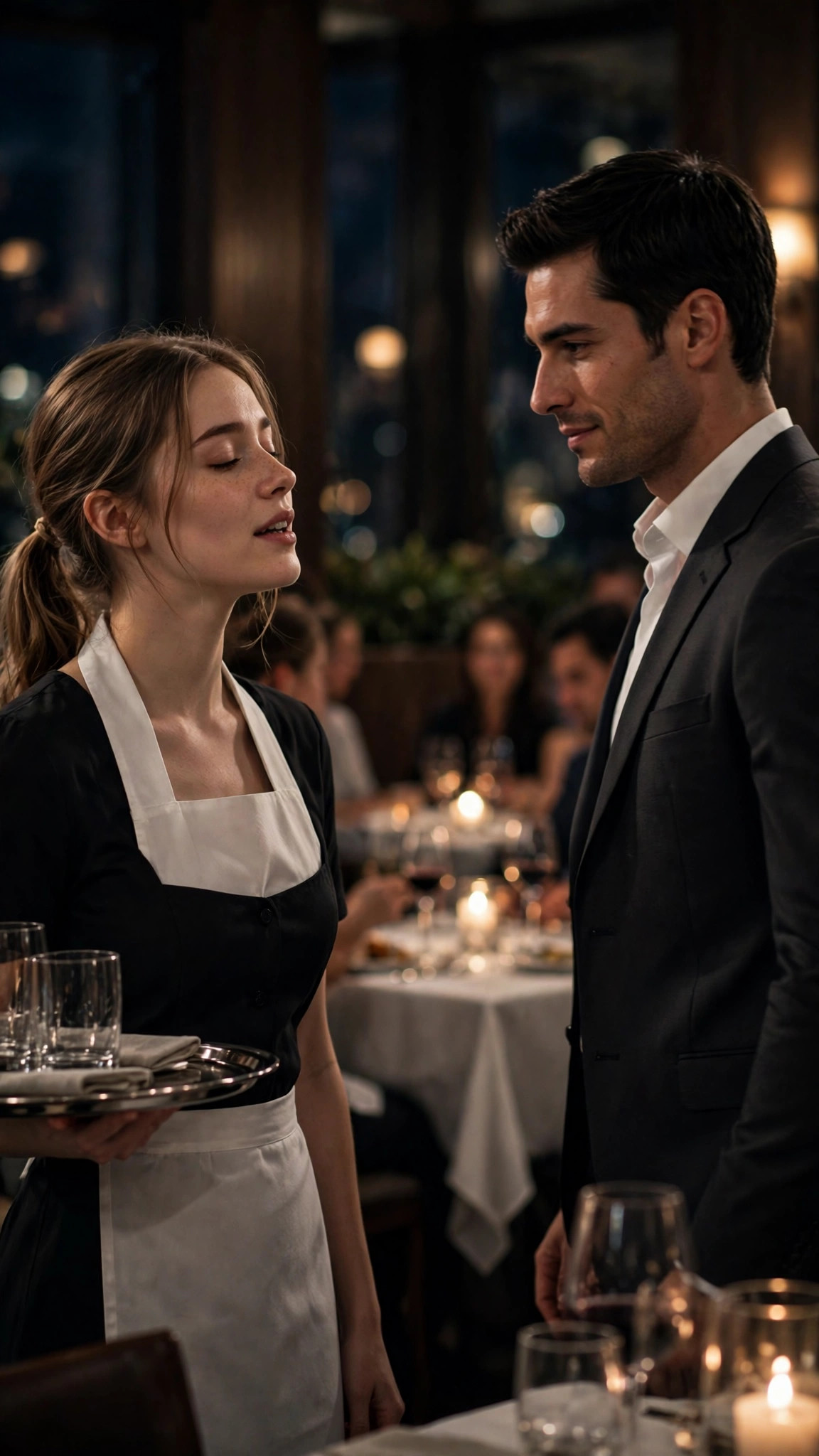
    Emily Carter was standing in the middle of the dining room, holding a tray, wearing her black dress and her white apron, with her light brown hair tied back, and she was singing.

    She sang every Friday night now. It was a tradition, one that Lorenzo had started the week after the trial, when he had stood up in the middle of dinner and said, very simply, "From now on, this restaurant has music with words. And the first song is hers." She sang the song she had written three years ago, about a woman who leaves everything behind, and she sang new songs, too — songs about coming home, and about second chances, and about a man who had not smiled in three years and then had smiled at her, in a hushed restaurant, on a Thursday night in October.

    And tonight, as she sang, Lorenzo stood up from his table, and he walked across the dining room, and he took her hand — gently, in front of everyone, with no shame and no fear — and he knelt down on one knee, in the middle of Il Cielo, under the chandeliers, with a ring in his hand that was not an engagement ring left on a passenger seat, but a new ring, bought with clean money, for a woman who had chosen to stay.

    "Emily Carter," he said, and his voice was low, and it was steady, and the whole dining room was holding its breath, the way it had held its breath a year ago, when a waitress had started singing and a man who never smiled had stopped dead in his tracks. "Sing that again. Tonight, after closing. And tomorrow night. And every night after that. For the rest of our lives. Will you marry me?"

    Emily looked down at him, and she laughed, and she cried, and she said, "Yes," and the dining room erupted — not into chaos, but into applause, and cheering, and the clink of glasses raised in a toast, and the pianist played her song, and she sang it, right there, with Lorenzo Bianchi holding her hand and smiling up at her, and it was the most beautiful sound she had ever heard, because it was the sound of a man who had been made of stone, learning, at last, how to be a man.

    They were married six months later, in the dining room of Il Cielo, under the chandeliers, with Marco Santini standing as best man and Tony the maître d' crying into a handkerchief and the whole family — the real family, the one Lorenzo had chosen, not the one he had inherited — gathered around them. Emily wore a white dress, and she sang as she walked down the aisle, and Lorenzo smiled, and he did not stop smiling, not for the rest of the night, not for the rest of the week, not for the rest of his life.

    The wedding was small, by Bianchi standards — only a hundred people, which in this family counted as intimate — and it was held on a Friday night, because of course it was, because Fridays belonged to Emily's song, and Lorenzo had insisted that their wedding night be a Friday, so that the song would be part of it. Emily walked down the aisle between the tables, past the white tablecloths and the candles, past Sofia crying into a napkin and Rosa the nurse holding Marco's hand and old Enzo at the piano, playing the melody — the old Italian melody, the one Isabella's grandmother used to hum, the one Emily had built her song around without knowing it — and she sang as she walked, softly, the verse about coming home, and Lorenzo stood at the front of the room, in his dark suit with his white shirt and no tie, and he watched her come toward him, and he smiled, and the whole room smiled with him.

    The vows were simple. Lorenzo said, "I spent three years being made of stone, and you sang, and I remembered how to be a man. I promise to never be stone again." And Emily said, "I spent three years running, and you asked me to sing, and I remembered how to stand still. I promise to never run again." And Marco, standing as best man with his arm — fully healed now, though he still complained about it when it rained — raised his glass and said, "To the boss, who finally learned that the strongest thing a man can do is let someone in. And to Emily, who had the courage to sing first."

    They danced their first dance to the piano, to the old melody, and Emily sang the last verse of her song — the verse about the notebook, and the truth, and the woman who had finally stopped running — and Lorenzo held her, and he did not let go, and the chandeliers burned above them, and the whole dining room, full of the people they had chosen, full of the family they had built out of truth and mercy and second chances, sang along, softly, on the chorus, because by then, everyone in the room knew the words.

    And on the wall of the restaurant, next to the piano, there is a small brass plaque, put there by Lorenzo himself, and it reads, in simple letters:

    "In this room, a waitress sang, and a man remembered how to smile."

    And every Friday night, if you go to Il Cielo in Chicago, and you sit at a table by the window, and you listen very carefully, you can still hear her — soft yet powerful, the way she always was when she stopped being afraid of it — singing the song she wrote three years ago, about love, and loss, and everything in between.

    And Lorenzo Bianchi, sitting at his table, listening to his wife sing, smiles.

    The End.
    THE END

  • Chapter 5: The Price of Fear

    Chapter 5: The Price of Fear

    Vincent Castellano had been waiting for a weakness in Raphael Carbone for fifteen years, and when Giulia left the villa, he thought he had finally found one.

    Castellano was sixty years old, with silver hair and a smile that never reached his eyes, and he ran the north side of the city the way a spider runs a web: quietly, patiently, and always from the center. He had watched Raphael's father, and then Raphael, and he had learned everything there was to learn about the Carbone family except one thing: how to break it. He had tried money. He had tried threats. He had tried taking their docks and their trucks and their men. Nothing had worked, because Raphael Carbone had never once shown fear, and a man who shows no fear is very hard to break.

    But now Raphael was standing outside a woman's door every day, alone, without guards, knocking softly like a boy asking for a dance. And Castellano smiled his smile that never reached his eyes, and he said to his lieutenant, Dominic Voss, "The boss has gone soft. Let us see how soft."

    It started small. A car with dark windows began parking on Giulia's street at night, its engine running, its headlights off. The men inside did not get out. They did not have to. Their presence was the message, and the message was simple: we know where she lives, and we know she is alone.

    Then the whispers began. In the restaurants and the bars and the clubs where the city's important people gathered, men began to say, very quietly, that Raphael Carbone had lost his woman, and that a man who cannot keep his own woman cannot keep his family. They said it the way men always say such things: as a joke, with a laugh, and then they watched to see who laughed with them.

    Then the threats began. Marta's cousin Antonio, the baker, found a note on his shop door one morning: a single sheet of paper, with one sentence written on it in block letters. "TELL YOUR COUSIN TO COME HOME." Antonio brought the note to Marta, and Marta brought it to Giulia, and Giulia brought it to Raphael, and Raphael read it, and his hands, which had been learning how to be still, closed into fists.

    "He is using her," Charles said, when Raphael showed him the note. "He is using the girl to get to you. He wants you to do something foolish. He wants you to send your men to his territory and start a war."

    "Then what do I do?" Raphael asked. "Do I stand here and let him frighten her? Do I let him frighten Antonio? Do I let him frighten Marta?"

    Charles was quiet for a moment. Then he said, "Boss, I have served this family for thirty years, and I have never once told you what to do. But I will tell you this. If you send your men to Castellano's territory tonight, with guns, then you will win the night, and you will lose everything your letter was about. Because the moment you answer fear with fear, you prove that fear is the only language you speak. And the girl will hear it, wherever she is, and she will know that nothing has changed."

    Raphael looked at the note for a long time. Then he folded it, and he put it in his jacket pocket, next to Giulia's letter, and he said, "Then we will answer him in a different language."

    That night, Raphael Carbone went to the Meridian Club, the most public place in the city, the place where every important man in the city drank and talked and watched each other. He went alone, without guards, without men, without a gun. He walked through the doors in his black suit, and the room went quiet, the way rooms always went quiet when he walked into them, and he crossed the floor to the table where Vincent Castellano sat with his lieutenant and his men, drinking whiskey and smiling his smile.

    Castellano looked up, and his smile widened.

    "Raphael," he said. "To what do I owe this pleasure?"

    "You sent a car to Giulia Ferraro's street," Raphael said, and his voice was calm, and it carried across the room, and every man in the club stopped talking to listen. "You sent a note to a baker. You have been telling men in this city that I have gone soft."

    Castellano spread his hands. "I have no idea what you are talking about."

    "Then let me make it clear," Raphael said, and he leaned forward, and he put both hands on the table, and he looked Castellano in the eyes. "Giulia Ferraro is under my protection. Not because she belongs to me. She does not belong to me. She belongs to herself. She is under my protection because she is a good woman, and good women are not to be frightened in my city. If any man in this room frightens her, or frightens her friends, or frightens a baker who has done nothing wrong, then that man will answer to me. Not with a gun. Not in the dark. Here. In the open. In front of everyone. Because I am done with fear, Vincent. I am done with the dark. From now on, everything I do, I do in the light, where everyone can see it."

    The room was silent. Castellano's smile did not move, but something behind it did, the way a wall shifts when the ground underneath it moves.

    "You have gone soft, Raphael," Castellano said softly. "A boss who talks about the light is a boss who has forgotten the dark."

    "Then I have forgotten it," Raphael said. "And I am better for it."

    He turned then, and he walked out of the club, alone, and the room stayed silent behind him, and every man in that room watched him go, and every man in that room understood, whether he wanted to or not, that something had changed. The most feared man in the city had just walked into the most public room in the city, unarmed and alone, and he had not threatened anyone. He had protected someone. And protection, offered openly, without fear behind it, was a thing none of them had ever seen before.

    The car disappeared from Giulia's street that night. The whispers stopped. Antonio the baker slept through the night for the first time in two years, and in the morning he opened his shop and he baked his bread, and he did not jump when the door opened.

    And Giulia, sitting at her table with her cup of tea, heard about what had happened at the Meridian Club, because Marta told her, and Marta had heard it from Antonio, and Antonio had heard it from a man who had been in the room. And Giulia sat very still, and she thought about the man who had walked into a room full of his enemies, alone and unarmed, and who had spoken about the light.

    That evening, when Raphael came to her door, and he knocked softly, she opened it before he could knock a second time.

    "I heard what you did," she said.

    "I did it for you," he said. "But I also did it for me. Because your letter was right. I had taught people to fear me, not to trust me. And if respect only stays while I stand still and hold a gun in my hand, then it is not respect at all. I am learning that now. Slowly. But I am learning."

    Giulia looked at him, and she saw the man who had stood in the Meridian Club, and she saw the boy who had picked dandelions, and she saw, for the first time, that they might be the same person after all.

    "Come in," she said. "Just for tea. Just for tonight."

    He came in. He sat at her small table. He drank her tea. He did not bring guards. He did not bring gifts. He brought only himself. And for the first time since she had left the villa, Giulia felt the quiet in the room change, the way a room changes when the winter is ending and the light is coming back through the window.

    But the night at the Meridian Club had not come easily, and it had not come without a fight inside his own house first.

    The day after the note appeared on Antonio's door, Raphael called his men into the study, and the study filled with the smell of leather and cigar smoke and old anger. Enzo stood by the window, his arms crossed. Frankie, the youngest of the capos, paced by the fireplace. Dominic Voss's name was spoken like a curse. Castellano's name was spoken like a war drum.

    "We go tonight," Frankie said. "We go to Castellano's territory, and we burn his cars, and we break his lieutenant's hands, and we send a message that no one touches the boss's woman."

    "She is not the boss's woman," Raphael said quietly, and the room went still. "She is a woman. She is her own woman. And she left me because I treated her like something I owned. I will not win her back by proving to the whole city that I own her."

    "Boss, with respect," Enzo said, and his voice was rough, "if we do nothing, they will think we are weak. And weak men in this city do not live long."

    Raphael looked at Enzo for a long moment. He thought about the rainy afternoon in the courtyard, about the delivery boy, about Enzo's face when Giulia had stopped him, about the way Enzo had said that for the first time in twelve years he had gone home feeling like a man instead of a weapon.

    "Enzo," Raphael said, "when Giulia stopped you in the courtyard, did you feel weak?"

    Enzo frowned. "No, Boss. I felt… I felt like I had been given something. I do not know what it was."

    "It was a choice," Raphael said. "She gave you a choice, and you chose to be a man instead of a weapon. I am giving you all the same choice tonight. We can answer Castellano with fear, and we can win the night, and we can lose everything. Or we can answer him in the open, in the light, where everyone can see, and we can win something that lasts longer than a night."

    The room was silent. Frankie stopped pacing. Enzo uncrossed his arms. And one by one, the men in that room looked at their boss, and they saw something they had never seen before: a man who was not asking them to be afraid, but asking them to be brave in a different way.

    The morning after the Meridian Club, Raphael did one more thing, alone, before he went to Giulia's door. He walked down the hill to Antonio's bakery on Via Roma, and he went inside, and the bell over the door rang, and Antonio looked up from his dough, and his hands went still.

    Raphael took off his coat, and he hung it on the hook by the door, and he walked to the counter, and he stood there, in his shirtsleeves, in the warm smell of bread, and he said, "Antonio. My name is Raphael Carbone. Men who work for my family frightened you, and threatened your hands, and stole your sleep. I did not send them. But they came in my name, and that makes it my fault. I have come to apologize, and to tell you that it will not happen again. And I have come to ask you something."

    Antonio stared at him. His mouth opened, and no sound came out.

    "Will you teach me how to make bread?" Raphael asked. "My mother used to say that a man who knows how to make bread will never go hungry, and a man who knows how to wait for it to rise will never be in a hurry to hurt anyone. I would like to learn."

    Antonio laughed then, a real laugh, the first real laugh Giulia had ever heard from him, and he wiped his hands on his apron, and he said, "You are a strange man, Signor Carbone. But yes. I will teach you. Come on Saturday, early, before the sun is up. That is when the bread is best."

    Raphael came on Saturday, early, before the sun was up. He learned to knead, and to wait, and to listen for the sound the dough makes when it is ready. And Antonio watched him, and his hands stopped shaking, and that night, for the first time in two years, Antonio slept through the night, and he dreamed of nothing at all, which was the most peaceful dream he had ever had.

    Word of the Meridian Club spread through the city the way news always spreads through the city: quickly, and in whispers, and with every retelling growing a little larger. Dominic Voss, Castellano's lieutenant, heard it in a bar on the north side, and he laughed, and he said the boss had gone soft, and that a soft boss was a dead boss. But the men at the bar did not laugh with him. One of them, an old soldier who had served Castellano's father, shook his head and said, "You do not understand, boy. Any man can walk into a room with a gun. It takes a different kind of man to walk into a room full of his enemies with nothing in his hands and tell them the truth. I have been in this life for forty years, and I have never once seen a boss do that. Mark my words. That man is not soft. That man is more dangerous than he has ever been, because now he has nothing left to lose, and a man with nothing to lose is the most dangerous man of all."

    Dominic Voss did not laugh again. He finished his drink in silence, and he went home, and he told Castellano what the old soldier had said, and Castellano sat very still for a long time, staring at the wall, and then he poured himself another whiskey, and he said, very quietly, "Then we wait. We wait and we watch. And we do not touch the girl. Not now. Not ever. Because a man who will walk into my club alone to protect a woman will do anything, and I am not yet ready to find out what anything means."

  • Chapter 6: What the Money Really Was

    Chapter 6: What the Money Really Was

    Marco Santini lived.

    That was the first thing Emily learned, in the hospital waiting room at three in the morning, with Lorenzo Bianchi sitting beside her in a chair that was too small for him, his suit jacket off, his shirtsleeves rolled up, his hands clasped so tightly together that his knuckles were white. The surgeon had come out and said the words — through and through, shoulder, no major vessels, he'll be fine, he'll need time — and Emily had cried, right there in the waiting room, in front of everyone, because she had been holding it in for hours, and because Marco had stepped in front of a bullet for a man who had not smiled in three years, and because the world, for once, had not taken the good man.

    "He's going to be all right," Lorenzo said, and his voice was rough, and he was not looking at her, and he was not looking at anyone. "Marco has survived worse. He was shot in Naples, in '09. He walked out of the hospital in four days and went back to work. He'll do the same now."

    When the sun was fully up, and the waiting room had emptied except for the two of them, a nurse came and said that Marco was awake, and that he was asking for the boss, and Lorenzo stood up so fast that his chair scraped across the floor, and Emily followed him down the corridor, past the nurses' station, past the carts of medicine and the smell of antiseptic, to a small room with a window that looked out over the parking lot, where Marco Santini lay in a hospital bed with his shoulder bandaged and an IV in his arm, looking, absurdly, annoyed.

    "You're supposed to be resting," Lorenzo said, standing in the doorway.

    "I am resting," Marco said. "This is me resting. You should see me working." He looked at Emily, and he smiled — a real smile, crooked and tired, but real. "You. The singer. You did all right last night. You kept your head. Most people don't, when the guns come out."

    "I didn't do anything," Emily said. "You stepped in front of a bullet."

    "That's my job," Marco said simply. "Has been for fifteen years. The boss pays me to stand behind him and watch the doors. Last night, the door was in front of him, so I stood in front of him. It's not complicated."

    "It is complicated," Lorenzo said, and his voice was rough again, and he sat down in the chair beside the bed, and he looked at his bodyguard — his friend, the only man in the family who had ever told him the truth to his face — and he said, "You took a bullet for me, Marco. You don't get to pretend that's not complicated."

    Marco was quiet for a moment. Then he said, "Boss. Listen to me. For three years, I've watched you sit at that table by the window, and I've watched you eat in silence, and I've watched you come home alone, and I've watched you be made of stone. And last night, I watched you smile at a waitress who was singing, and I watched you stand up to a man with a gun, and I watched you choose to protect her instead of running. So don't tell me about complicated. You did the right thing last night. For the first time in three years, you did the right thing. And I'd take a bullet for that man every day of the week, and twice on Fridays."

    Lorenzo laughed — a short, surprised sound, the sound of a man who has forgotten what his own laughter sounds like — and Emily laughed too, and Marco laughed, and the nurse came in and told them all to keep it down, and they laughed harder, because they were alive, and because Marco was alive, and because, for the first time in three years, the future did not look like a wall. It looked like a door.

    "You don't have to pretend you're not scared," Emily said quietly.

    Lorenzo looked at her then, and for a moment, the stone was gone entirely, and she saw the man underneath — tired, and frightened, and human, in a way she had never seen him before, in a way she suspected no one had ever seen him before.

    "I am scared," he said. "I have been scared for three years. I just got very good at hiding it."

    They sat in the waiting room until dawn, and when the sun came up over the lake, Agent Daniel Reyes found them there, with two cups of coffee and a folder under his arm, and he sat down across from them, and he said, "We need to talk. All three of us. Or, well — two of you, and the one in the hospital bed, when he's ready."

    Reyes was forty years old, with the tired, patient face of a man who has spent his career watching guilty men lie to him, and he laid the folder on the table between them, and he opened it, and inside were the transfer records — the same records Emily had typed, the same records she had kept copies of in her notebook, the same records Giovanni had looked at three years ago and decided to bury.

    "We've been building this case for fourteen months," Reyes said. "Giovanni Ferrante has been laundering money through this restaurant, and through three others, for years. The Geneva trust was the key. The Amara Foundation. Forty million dollars, moved a little at a time, into an account that doesn't officially exist. We knew someone inside the family was moving it. We didn't know who. And then, three weeks ago, a waitress started singing in the dining room, and the boss started smiling, and Giovanni started making mistakes."

    "Like what?" Lorenzo asked.

    "Like moving five million dollars in one night, the night after your waitress told you the truth," Reyes said, looking at Emily. "Like calling a number in Geneva from a phone he thought we weren't listening to. Like going to a house upstate and bringing a woman to a restaurant on the night of a raid he knew was coming — because he knew, Mr. Bianchi. He knew we were coming. He has a source inside the Bureau, and we've already arrested him.

    Reyes opened the folder wider, and inside were photographs — the small house upstate, taken from a distance, with a woman's garden in the front yard and a car with no license plates in the driveway; a bank statement with the Amara Foundation's name on it, the numbers blacked out except for the total at the bottom; a photograph of Giovanni Ferrante shaking hands with a man in a dark suit outside a warehouse, the timestamp reading 2:14 a.m. "Your underboss has been careful for thirty years," Reyes said, "but in the last three weeks, he's been sloppy. Moving five million in one night. Calling Geneva from his own phone. Bringing Isabella to a restaurant on the night of a raid. A man gets sloppy when he's scared, Mr. Bianchi. And Giovanni Ferrante is scared — of you, of the girl, of the truth finally catching up with him. Men like that make mistakes. And tonight, he made his last one."

    Emily looked at the photographs, and she felt something she had not felt in three years: not fear, but relief. The truth was not a secret anymore. It was in a folder, on a table, in a hospital waiting room, with an FBI agent explaining it in plain language. It was real. It was documented. It was over. Giovanni's plan was to kill you in the chaos tonight, blame it on the raid, and walk out of the family with the money and the woman and the throne. The only thing he didn't plan for was your bodyguard."

    Lorenzo was quiet for a long time. Then he said, "And Isabella?"

    Reyes sighed. "Isabella Romano is in custody. She's cooperating. She has been, since the moment we put the cuffs on her — she asked for a lawyer, and then she asked to talk to you, and then she changed her mind and asked to talk to the prosecutor instead. Here's what she told us, and here's what the records support: she planned the theft herself. She moved the money herself. She staged her own disappearance. Giovanni found out within days, took half the money for himself, and kept her hidden — not to protect her, but to own her. She was his insurance. If you ever found out, he could produce her. If he ever wanted the throne, he had the money and the secret."

    "And the order to kill her?" Lorenzo asked. "Emily said Giovanni gave the order to kill her."

    "There was no order to kill her," Reyes said gently. "There was an order to make it look like she was dead. A staged car, a ring on the passenger seat, a story the family would believe. Giovanni arranged that part — the staging, the silence, the three years of nobody asking the right questions. Emily heard the word 'kill' because that's what it looked like from the outside. From the inside, it was a disappearance that was supposed to look like a murder, so that no one would ever go looking for a woman who was still alive."

    Lorenzo closed his eyes. "She left me because she thought I would never change."

    "That's what she says," Reyes said. "She says she saw what you were becoming, and she thought the only way out was to disappear. She says she was wrong — not about the darkness, but about the way out. She says she should have told you. She says she knows that now."

    "Can I see her?" Lorenzo asked.

    Reyes hesitated. "She's asked to see you too. But I want you to understand something first, Mr. Bianchi. What happens to Giovanni — that's the law's job now. Attempted murder, embezzlement, money laundering, conspiracy, racketeering. He'll die in prison. What happens to Isabella — that's more complicated. She stole forty million dollars. She's returning all of it — every cent she can account for, including Giovanni's half, which we've already frozen. She's cooperating fully. The prosecutor is willing to discuss a reduced sentence. But she's going to prison, Mr. Bianchi. There's no version of this where she walks away clean."

    "I know," Lorenzo said. "I don't want her to walk away clean. I want her to face what she did. I just want to look her in the eye when she tells me why she did it."

    He saw her that afternoon, in a small room at the federal building, with a lawyer on either side of the table and a guard at the door, and she looked smaller than he remembered — not weaker, exactly, but smaller, the way a person looks when they have been living in a small house with a new name for three years, waiting for someone to come and find them.

    "Lorenzo," she said, and her voice broke on his name, and for a moment, he was thirty-five years old again, and she was singing in the dining room, and the night before their wedding had not happened yet.

    "Why?" he asked. "That's all I want to know. Why?"

    And Isabella Romano told him. She told him about the night she had watched him come home with blood on his cuff and lie about it, smoothly, the way he lied about everything in those days. She told him about the foundation's galas, and the way the wives of his capos looked at her, and the way she had begun to understand that she was not a wife, she was a hostage with a ring. She told him about the morning she had realized that if she married him, she would spend the rest of her life waiting for the phone call that said he was dead, or the knock on the door that said he had killed someone, and she had decided that she would rather be a thief than a widow.

    "I thought you would never change," she said. "I thought you would never let go of the darkness. But then she came —" She stopped. "The waitress. Emily. Giovanni told me about her, the night he brought me to the restaurant. He said, 'Your replacement is singing your song.' And I thought — if he can hear her, if he can smile at her, then maybe I was wrong. Maybe he could have changed. Maybe I just never gave him the chance."

    Lorenzo looked at her for a long time. And then he did something that surprised everyone in the room, including himself: he forgave her.

    Not in the way of forgetting — he would never forget, and neither would she — but in the way of a man who has spent three years being made of stone, and who has finally understood that stone does not protect you, it only buries you. He forgave her for leaving. He forgave her for the money. He forgave her for the three years. And he told her that he would not use his power, or his money, or his name to hurt her — that he would let the law do what the law does, and that he would make sure she had a good lawyer, and that he would testify, if it helped, that she had cooperated, and that she had returned the money, and that she had told the truth.

    "You're not the villain of this story, Isabella," he said, standing up to leave. "Giovanni is. You were a woman who made a terrible choice because she couldn't see another one. I made terrible choices too. The difference is, I get to make better ones now. And so do you."

    He left the room, and he did not look back, and he understood, as he walked down the corridor of the federal building with the afternoon sun coming through the windows, that he had just done the hardest thing he had ever done in his life — harder than taking the family, harder than surviving the three years, harder than standing in front of a gun — and that he had done it not with his fists, but with mercy.

    And mercy, he was beginning to understand, was a kind of strength he had never tried before.

  • Chapter 4: Victor

    Chapter 4: Victor

    Giulia left on a Thursday morning in November, three weeks after the night in the study.

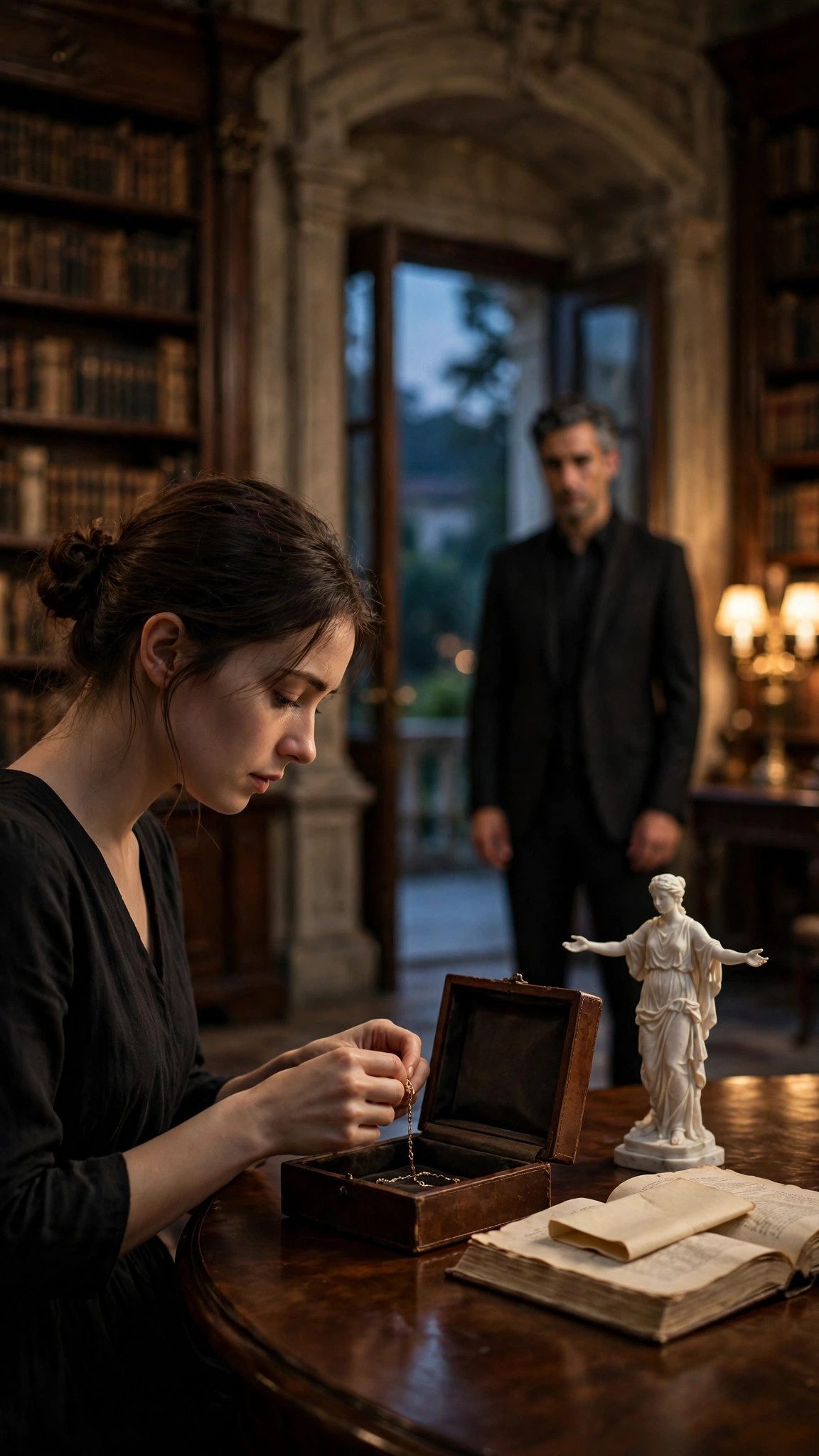
    She had spent those three weeks the way a woman spends the weeks before a journey she does not want to take: quietly, carefully, putting things in order. She cleaned her room. She folded the dresses and laid them on the bed. She wrapped the statue in tissue paper. She put the necklace and the earrings in their velvet boxes. She placed everything in the leather box, one piece at a time, the way you lay flowers on a grave.

    Last, she took the gold bracelet from her wrist, and she held it for a moment, and she remembered Elena's hands, light as a bird, and Elena's voice saying that she was the daughter she never had. The bracelet was different. The bracelet had been given in love, not in fear. But it had his name on it too, in the end, because everything in that house had his name on it, and she could not keep one piece and return the rest without the whole thing becoming a lie.

    She put the bracelet in the box, beside the statue, and she closed the lid.

    Then she sat down at the small desk in her room, and she took out a sheet of paper, and she wrote the letter. She wrote it slowly, because she wanted every word to be true, and she wanted it to be the kind of letter a person keeps, not the kind a person burns.

    She began it with the word Victor.

    "Victor," she wrote, "I do not hate you. I want you to know that first, because everything else I have to say will be easier to hear if you know that. I do not hate you. I love you. I have loved you for a long time, and I think you know that, because you have always known more than you let yourself say.

    "But the man I love is not the Boss. The man I love is the man who sat with his dying mother and held her hand. The man I love is the man who left coffee outside a study door and noticed that my hands got cold. The man I love is Victor, the boy who picked dandelions and brought them to his mother because he thought they were the most beautiful flowers in the world.

    "I cannot live beside the Boss. I have tried. For three years I have tried, and I have told myself that the gifts meant love, and that the fear was only the world's problem, not ours. But it is ours, Victor. It is in this house. It is in the way your men lower their eyes. It is in the way my friend's hands shook when she heard your name. It is in the way Antonio the baker does not sleep.

    "I am returning every gift you ever gave me, because gifts bought with fear are not gifts. I am keeping nothing, because I want you to understand that I did not stay for the gifts. I stayed for you. And I am leaving for the same reason.

    "If you ever want to find me, do not send your men. Do not send your cars. Do not send your money. Come yourself. Come without your guards and without your name. Come as Victor. And knock on my door the way an ordinary man knocks, and ask me, the way an ordinary man asks, if I will come home.

    "Giulia."

    She folded the letter, and she pressed it between the pages of a book — the book of poems Elena had loved, the one with the worn leather cover — and she left it on the polished table in the library, where she knew he would find it.

    And then she walked toward the door.

    Raphael found the letter an hour later. He had come home early from a meeting, and the villa was quiet, and he had gone to the library looking for her, the way he had gone to the library looking for her every evening for three years, and the room was empty. The book was on the table. The letter was inside it. The leather box was on the table beside the book, closed, its lid smooth and dark.

    He stood there for a long time, holding the letter in his hands, and he did not open it at first, because some part of him already knew what it would say, and some part of him was afraid to know.

    When he finally read it, he read it twice. Then he read it a third time. Then he sat down in Elena's old chair by the window, and he put his face in his hands, and he stayed that way for a very long time.

    Charles found him there an hour later.

    "Boss," Charles said, and then he stopped, because in twenty years of service he had never once seen Raphael Carbone sit with his face in his hands.

    "She is gone," Raphael said, without looking up.

    "Giulia?" Charles said. "Gone where?"

    "She returned everything," Raphael said. "Every gift. She put them in a box and left them on the table. And she left me a letter."

    Charles was silent for a moment. Then he said, carefully, "Shall I send men to bring her back?"

    Raphael looked up then, and his eyes were red, and Charles took a step backward, because he had never seen the boss cry, and he did not know what to do with a boss who cried.

    "No," Raphael said. "No men. No cars. No money. She said to come myself. She said to come as Victor."

    "Boss, with respect," Charles said, "you are not Victor. You are the head of this family. You cannot go knocking on doors like an ordinary man."

    "Then what am I?" Raphael asked, and his voice was quiet, so quiet that Charles had to lean forward to hear it. "If I am not Victor, and I am not the man she loves, then what am I? A name that frightens people? A chair that men bow to? Is that all I am?"

    Charles had no answer. He had served Raphael's father, and he had served Raphael, and he had never once been asked a question he could not answer with a plan. But this was not a question with a plan in it. This was a question with a wound in it.

    Raphael stood up, and he put the letter in his jacket pocket, next to his heart, and he walked out of the library, and he went to the door, and he did not call for his car, and he did not call for his men. He walked, alone, down the hill from the villa, through the streets he had ruled for twenty years, to the small flat where Giulia had gone to stay with her friend Marta.

    He stood outside her door as the silence stretched. No words were spoken. He saw her, through the small window beside the door, sitting at a table with a cup of tea, and something in his expression changed. He raised his hand to knock, and then he lowered it, because he did not know what he would say if she opened the door.

    He stood there for a long time. Then he turned around and walked back up the hill, alone, in the dark.

    The next day, he came back. He knocked softly, as he had the day before, and this time Giulia opened the door.

    She stood in the doorway, and she looked at him, and he looked at her, and neither of them spoke for a long moment.

    "I read your letter," he said.

    "I know," she said.

    "I did not send men," he said. "I did not send cars. I came myself."

    "I know," she said again.

    He stood there, and he did not know what to do with his hands, and for the first time in his life, Raphael Carbone, the most feared man in the city, stood in front of a woman and felt helpless. He had built an empire on the certainty that he could make anyone do anything. And now he was standing outside a door, asking, without words, for something no amount of power could buy.

    "I am not here to take you back," he said finally. "I am here because your letter said to come as Victor, and I do not know how to be Victor anymore. But I want to learn. And I thought that perhaps, if I stood here long enough, and if I came back tomorrow, and the day after that, you might teach me."

    Giulia looked at him for a long time. Then she nodded, once, the way he always nodded when a matter was settled.

    "Tomorrow, then," she said, and she closed the door.

    He came back the next day. And the day after that. And the day after that. He came every day, and he knocked softly, and he stood outside her door, and he spoke. Not with demands. Not with power. Just with words that grew simpler and quieter each time. He told her about his day. He told her about the shipments and the warehouses, and then he stopped telling her about the shipments and the warehouses, and he told her about the garden, and about the roses, and about the dandelions he had picked when he was a boy.

    He stayed outside her door. No surveillance. No guards. No men outside her door. Just a man, standing alone, learning how to knock.

    And Giulia, sitting on the other side of that door, listened. And slowly, very slowly, she began to believe that the man on the other side of the door might be someone she could come home to. Not yet. Not today. But someday, perhaps, if he kept coming back, and if he kept knocking softly, and if he kept learning how to be Victor, then someday she might open the door and let him in.

    But before any of that, there had been the days after she left, when the villa was empty and Raphael Carbone learned what his house sounded like without her in it.

    The first morning, he came downstairs and the coffee was not ready, because no one had ever made the coffee but Giulia, and Rosa was in the kitchen with her hands on her hips, looking at him the way a mother looks at a son who has broken something precious and does not know how to fix it.

    "She is gone because of you," Rosa said, and her voice was not unkind, but it was not gentle either. "Not because of the family. Not because of the money. Because of you. Because you gave her things instead of yourself, and you thought that was enough, and it was never enough. Signora Elena knew it. She told me so, before she died. She said, 'That boy gives gifts because he is afraid to give himself.' And she was right."

    Raphael said nothing. He went to the library, and he sat in Elena's old chair by the window, and he took the letter out of his jacket pocket, and he read it again. He read it until the words blurred, until the paper was soft at the edges from his fingers, until he knew it by heart: Victor. I do not hate you. I love you. Come as Victor. Knock on my door the way an ordinary man knocks.

    Charles found him there that evening, and he sat down across from him without being asked, which was something Charles had never done in thirty years.

    "Boss," Charles said, "I have a question for you, and I want you to answer it honestly, because I have never once lied to you, and I will not start now. When you stood outside that girl's door, with no guards and no men, were you afraid?"

    Raphael thought about it for a long time. "Yes," he said finally. "I was terrified. I have faced men with guns and I have never been afraid. But standing outside her door, with nothing in my hands, I was afraid she would not open it."

    "Then you are learning something," Charles said. "Fear is not only something you give to other people. It is something you feel yourself, when you want something and you cannot take it. That is what it is to be an ordinary man, Boss. And it is not a weakness. It is the beginning of being human again."

    Raphael nodded, and he put the letter back in his pocket, and he went to bed, and he lay awake for a long time, listening to the quiet of the villa, and thinking about the boy who had picked dandelions, and about the man he had become, and about the distance between them, which was not as far as he had always believed.

    And on the other side of the city, in Marta's small flat, Giulia was lying awake too, listening to the rain on the window, and thinking about the train she would take in the morning, and about the small town she had never seen, and about whether she was doing the right thing. Marta slept in the next room, and the flat was warm, and Giulia was safe, and she was free, and she had never been more frightened in her life. Because freedom, she was learning, is not the absence of fear. It is the decision to walk forward anyway, even when you are afraid, and to trust that the person you love will learn to walk beside you, instead of ahead of you, clearing the path with threats.

    In the morning, she packed her small bag, and she hugged Marta, and she went to the station, and she bought a ticket north, to a town with a university and a river and streets lined with trees. And as the train pulled away from the city, she pressed her forehead to the cold window, and she whispered, "Come as Victor," to the glass, and to the morning, and to the man she loved, wherever he was.

  • Chapter 5: The Night the FBI Came

    Chapter 5: The Night the FBI Came

    It happened on a Friday night, three weeks after Emily sang.

    Three weeks in which Lorenzo Bianchi had quietly, methodically, taken his family back. The lawyer in Geneva confirmed the trust. The accountant confirmed the transfers. The private investigator confirmed the small house upstate, and the woman with dark hair and a new name who lived there, and the silver-haired man who visited her once a month, always at night, always alone.

    It had not been easy, those three weeks. Lorenzo had spent them the way a general spends the weeks before a battle — quietly, and carefully, and without telling anyone the full plan, not even Marco, not even his lawyer, not even Emily, who had given him the truth and then had gone back to work, carrying trays, pouring wine, singing softly on the quiet nights when the dining room was nearly empty and the only people listening were the piano and the candles.

    There had been a Tuesday night, in the second week, when the restaurant was slow — a rainy night, only a dozen tables taken — and Lorenzo had come to his table by the window, and he had looked up at Emily as she passed with a tray, and he had said, very quietly, "Sing."

    And she had. She had stood beside the piano, with old Enzo playing softly behind her, and she had sung the song again — the whole song, from the beginning, about the woman who leaves everything behind — and Lorenzo had listened, and the dozen diners had listened, and nobody had spoken, and when she finished, an old woman at table four had wiped her eyes with her napkin, and a man at table nine had ordered another bottle of wine, and Lorenzo had said, "Thank you," in a voice so low that only Emily could hear it, and she had understood that he was not thanking her for the song. He was thanking her for the truth.

    Meanwhile, across town, Giovanni Ferrante had been making his own preparations. He had moved money — five million dollars in a single night, the night after Emily told Lorenzo the truth, a move so large and so clumsy that even his own accountant had questioned it, and Giovanni had told the accountant to mind his own business, in a tone that made the accountant decide, very quickly, to mind his own business. He had called Geneva, from a phone he thought no one was listening to, and he had said, "It's time. Move the rest." He had gone to the small house upstate, and he had told Isabella to pack a bag, and he had told her, "Friday night. The restaurant. We're going to finish this."

    And he had posted a man across the street from Il Cielo — a young man with a newspaper he never read, sitting on a bench, watching the door — and the man had reported back, every night, the same thing: the girl is still there. She comes at nine. She leaves at eleven. She walks home alone. She is not afraid. She should be afraid.

    Giovanni had smiled, when he heard that. She should be afraid, he had thought. On Friday night, she will be.

    Lorenzo had not confronted Giovanni. Not yet. He had waited, because he had learned — in three years of silence, in three years of being made of stone — that the man who moves first is not always the man who wins. He had waited, and he had watched, and he had let Giovanni believe that nothing had changed, that the boss was still broken, that the girl from the office was just a waitress who sang a pretty song.

    And Giovanni, believing all of that, had decided to move first.

    It was a Friday night, and Il Cielo was full, and Emily was working the floor — she had been working the floor for three weeks now, and she had gotten good at it, and she had even started to feel, in a way she had not felt in three years, like she belonged somewhere — and Lorenzo was at his table by the window, and Marco was standing by the door, and everything was ordinary, and everything was fine, until the moment it was not.

    Emily was carrying a tray past table six when she began to sing.

    She did not mean to. It was the same as the first time — the piano, the melody, the shape of a song rising and falling — and this time, she did not stop herself, because this time, she was not afraid. She had told the truth. She had kept her promise. She had nothing left to hide. And so she sang, softly, while she worked, the song she had written three years ago, about a woman who leaves everything behind, and the man she leaves, and how both of them are still singing the same song.

    And Lorenzo Bianchi, sitting at his table by the window, looked up, and he smiled.

    Not the faintest smile. Not a crack in the ice. A real smile — small, and slow, and surprised, as if he had forgotten what his own face could do — and the whole dining room saw it, and the whole dining room went quiet, because no one had seen Lorenzo Bianchi smile in three years, and no one had ever expected to see it again.

    And then, suddenly, everything stopped.

    The police lights flashed through the windows — red and blue, red and blue, painting the white tablecloths in colors that did not belong in a restaurant — and a voice boomed over the intercom, loud and flat and official:

    "FBI, everyone out now."

    The dining room erupted. Chairs scraped. Glasses fell. People stood, and shouted, and pushed toward the doors, and Emily stood frozen in the middle of it all, her tray still in her hands, her song dying in her throat, and she saw Lorenzo rise from his table, and she saw Marco move to his side, and she saw Marco lean in close and whisper, urgently, "Boss, we need to go. They know."

    Tony was shouting, trying to herd the diners toward the exits the way he had been trained to do in a fire drill, except this was not a drill, and the red and blue lights kept flashing through the windows, painting his face in colors that made him look like a stranger. Old Enzo had stopped playing, his hands frozen above the keys, and the piano stood silent for the first time all night. A woman at table four was crying. A man at table nine had dropped his wine glass, and it had shattered on the marble, and nobody had even noticed, because the intercom was booming again — "FBI, everyone out now, FBI, everyone out now" — and the whole room seemed to tilt, the way a room tilts in a dream, and Emily thought, with a clarity that surprised her, that this was the moment she had been running from for three years, and that it had finally caught up with her, here, in the middle of the dining room, under the chandeliers, with her tray still in her hands and her song still dying in her throat.

    "Know what?" Lorenzo said, and his voice was calm, and it was cold, and it was the voice of a man who has just been told that the world is ending and has decided not to be impressed by it.

    "They know about the money," Marco said. "The Geneva trust. The Amara Foundation. Agent Reyes has been building the case for months. It's not you they're after, boss. It's Giovanni. The laundering. The restaurant accounts. But if we stay here—"

    Before Marco could finish, Emily's eyes locked onto Lorenzo's. And Lorenzo's voice was calm but deadly when he spoke, and it was not the voice of a man who was afraid, and it was not the voice of a man who was angry, and it was the voice of a man who has finally, after three years, found the person he has been looking for.

    "Who are you really, Emily?" he said.

    She froze, her heart pounding. She took a breath, and she whispered, "I'm the one who knows where the money is. I'm the one who knows who gave the order to kill her."

    Lorenzo's eyes narrowed, his body tense. "The money that disappeared three years ago? The money that went missing from my family's bank accounts?"

    "Yes," Emily's voice trembled. "But it's not just the money. It's the truth behind the night you lost everything. The night your fiancée disappeared. I know the truth, Lorenzo."

    He grabbed her arm, his grip firm but not cruel. "Then you're not just a waitress. You're a con artist."

    Emily looked at him steadily, her voice calm but filled with pain. "I was just trying to survive. And now I'm caught in the middle of something far bigger than I ever imagined."

    Lorenzo's eyes flickered with a mix of anger and curiosity. He didn't know whether to trust her or throw her out. But one thing was certain — Emily wasn't an ordinary waitress.

    He leaned in closer, his voice low. "What do you mean by that? You've been lying to me this whole time. What is the money really?"

    She swallowed hard. "It's not just about the money. The truth is… the man who gave the order to kill your fiancée was someone you trusted. Someone close to you."

    Lorenzo's face darkened. "Who?"

    Emily hesitated, then spoke softly. "Your own underboss, Giovanni."

    The room went silent. Lorenzo's eyes widened, as if the pieces of a puzzle were falling into place.

    "No," he said, his voice low. "Giovanni would never betray me."

    Emily's voice was barely a whisper. "But he did. He betrayed you, Lorenzo. He arranged everything — the money, the disappearance, everything."

    Lorenzo, stunned, slowly turned, staring at the man who had been standing beside him all these years. Giovanni had betrayed him.

    Just as Lorenzo was about to speak, the door to the restaurant swung open, and a man stepped in.

    It was Giovanni.

    He was here to finish what he started.

    "Boss," Giovanni said, his voice calm but dangerous. "You should have never trusted her."

    Lorenzo turned to face Giovanni, his fists clenched. The truth was now out. And Lorenzo was going to make sure Giovanni paid for every betrayal. The air was thick with tension, and for the first time, Lorenzo realized that his revenge was not just about the money or the past — it was about the people who had betrayed him.

    But just as Giovanni was about to strike, the door to the back room swung open, and another figure appeared.

    It was a woman. A woman with dark hair, a familiar face, standing in the doorway.

    Lorenzo's heart stopped.

    It was his fiancée. She was alive.

    Lorenzo turned to Emily, eyes wide with confusion. "Emily… who is she?"

    Emily swallowed, her voice quiet. "She's the one who gave the order. She was the one who arranged everything — disappearing, leaving you broken. It wasn't Giovanni. It was her."

    Lorenzo's eyes widened in disbelief. His fiancée had betrayed him, faking her disappearance to escape with the money.

    "Why?" he asked, his voice shaking. "Why would you do this?"

    Isabella Romano stepped forward, and her eyes were filled with regret, and her voice, when she spoke, was the voice Lorenzo had heard in his dreams for three years — the voice that had sung an old Italian song on the night before their wedding, and then had never sung again.

    "Because I saw what you were becoming, Lorenzo," she said. "I thought you would never change, never let go of the darkness. But then she came… I didn't know how else to escape."

    Lorenzo's face twisted with rage, but before he could react, Giovanni stepped forward, raising a gun.

    "You don't get to walk away from this, Lorenzo," Giovanni said, and for the first time in thirty years, his voice was not calm. "You thought you could have it all. But it's over."

    The room erupted into chaos. The gun was raised. The tension was rising. Emily screamed — she did not mean to, it just came out of her, a sound she had never made before — and Lorenzo moved, not away from the gun but toward it, toward Giovanni, the way a man moves when he has nothing left to lose and everything left to protect —

    And then a loud bang echoed through the restaurant.

    Marco Santini took the shot.

    He had been standing behind Lorenzo, as he had stood behind Lorenzo for fifteen years, watching the doors, and when the gun came up, he did what he had always done: he stepped in front of it. The bullet caught him in the shoulder, and he went down hard on the marble floor, and the whole room seemed to stop, and for one terrible moment, Lorenzo Bianchi stood frozen, staring at the man who had just taken a bullet for him, staring at the blood spreading across the white tablecloth that had fallen with him, staring at the price of three years of silence.

    And then the police stormed in.

    They came through the doors in waves — FBI, in vests, with their weapons drawn, with Agent Daniel Reyes at the front, shouting orders, and Giovanni was on the floor before he could fire again, and Isabella was standing in the doorway with her hands up, and Emily was on her knees beside Marco, pressing her apron against his shoulder, telling him to stay awake, telling him to breathe, telling him that he was going to be all right, even though she did not know if it was true.

    And as they left — as the agents took Giovanni away in handcuffs, as the paramedics lifted Marco onto a stretcher, as the dining room emptied out into the flashing red and blue light — Lorenzo turned to Emily, his eyes still wild with confusion, and he leaned in, his voice barely above a whisper.

    "You saved my life," he said. "But this isn't over. Not yet."

    Emily nodded, her voice steady. "I'll be here when you need me."

    Then Lorenzo, with a cold, dangerous smile, said, "Take care of her. I'll go deal with Giovanni. And when I'm done, you'll see what happens to people who betray me."

    He left, and Emily stood in the middle of the restaurant, her heart pounding, in the wreckage of the dining room — the overturned chairs, the shattered glasses, the blood on the marble — and she knew that night would change everything.

    And she was certain that the next time she saw him, he'd be more than just the Mafia Boss.

    He was going to ask where the singer is.

  • Chapter 3: The Name That Made Rooms Go Quiet

    Chapter 3: The Name That Made Rooms Go Quiet

    The second ball came a year later, and by then Giulia had learned to watch people the way Elena had once taught her to watch them: not for what they said, but for what their hands did when they thought no one was looking.

    She stood at the top of the stairs that night in a dress of deep blue, the pearl earrings in her ears, the gold bracelet on her wrist, and she watched the guests arrive. She watched the men in their black suits and the women in their shining gowns, and she watched what happened to their faces when they said his name.

    It was a small thing. It was always a small thing. A man would be laughing, and then someone would say, "Raphael Carbone is coming," and the laughter would stop, not all at once, but the way a light dims when someone turns a switch halfway. A woman would be telling a story, and she would lower her voice when she mentioned the family, as if the walls themselves might be listening. A waiter, carrying a tray of champagne, would go still when Raphael passed, the way a deer goes still when it smells a wolf.

    Giulia had seen it before. She had seen it a hundred times in three years. But that night, for the first time, she saw it through someone else's eyes, because her friend Marta was standing beside her, and Marta had never been to the ball before, and Marta's face did what everyone's face did.

    "Is that him?" Marta whispered, as Raphael crossed the ballroom, and the crowd parted around him the way water parts around a stone.

    "Yes," Giulia said.

    Marta's hand found Giulia's arm and held it, and her fingers were cold.

    "He frightens me," Marta said. "I did not think he would frighten me. But he does. Everyone is afraid of him, Giulia. Can't you feel it? The whole room is afraid."

    Giulia looked at the room. She looked at the glittering people, at the chandeliers, at the orchestra playing in the corner, at the champagne in the crystal glasses. And she saw what Marta saw, because for the first time she was looking at it from the outside, the way a stranger would.

    The room was beautiful. The room was also afraid.

    That night, after the ball, Marta stayed late, and they sat in the kitchen with Rosa, drinking tea that had gone cold, and Marta told her a story Giulia had never heard before.

    "Do you remember my cousin Antonio?" Marta said. "The one with the bakery on Via Roma?"

    Giulia nodded. She had met Antonio once, a cheerful man with flour on his apron and a laugh that filled a room.

    "Two years ago, Antonio's ovens broke," Marta said. "All three of them, in the same week. He needed money to fix them, and the bank would not lend to him, so he went to a man who lends money for the family. He borrowed eight thousand dollars. He paid it back, every cent, but he was two weeks late on the last payment, because his daughter was sick, and he had to choose between the medicine and the money."

    Marta's voice shook. "They came to his bakery at night. Three men. They did not hurt him. They did not have to. They stood in his shop and they told him, very politely, that if he was ever late again, they would break his hands. His hands, Giulia. The hands he bakes with. He has not slept properly since. He jumps every time the door opens. He is afraid of his own shadow, and he was never afraid of anything before."

    Giulia sat very still. The kitchen was warm, and the tea was cold, and Rosa was looking at her hands, and Marta was looking at Giulia, and Giulia was looking at nothing at all, because she was seeing the villa, and the ballroom, and the men who parted like water, and she was understanding something she had been refusing to understand for three years.

    Raphael had not sent those men. She knew that. She knew it the way she knew her own name. But the men had come in his name. They had spoken with his authority. They had used his fear the way a man uses a tool, and the fear had done its work, and Antonio the baker had not slept properly since.

    "That is not who he is," Giulia said, but her voice sounded thin, even to herself.

    "Isn't it?" Marta said gently. "Giulia, I love you, and I know you love him. But look at what his name does. Look at what it did to this room tonight. Look at what it did to Antonio. That is who he is to the rest of the world. The man you see is not the man the world sees."

    After Marta left, Giulia sat alone in the library for a long time, with the marble statue on the table beside her, and she thought about the gifts. The necklace. The earrings. The shawl. The dresses. The statue. Each one beautiful. Each one chosen with care. Each one a word he could not say.

    And she thought about what Marta had said, and about what she had seen at the ball, and about the restaurant man who had owed forty thousand dollars, and about the way the whole house stood up when Raphael walked into a room, and about the way his own men lowered their eyes when they spoke to him, and she understood, finally, what the gifts were.

    They were not gratitude. They were not love. They were the price of fear. He gave things to the people he valued because he did not know how to give them safety. He gave things because giving was the only way he knew to say: you are mine, and because you are mine, no one will hurt you. But the gifts did not make anyone safe. They only marked the people who belonged to him, the way a brand marks cattle.

    She thought about her own life in the villa. She thought about the room on the second floor, and the keys that opened every door except the study, and the dresses that were not hers, and the necklace that was worth three months of her wages, and she asked herself a question she had never dared to ask before: if she left tomorrow, what would she take with her?

    The answer frightened her. She would take the bracelet, because Elena had given it to her, and Elena had loved her. Everything else — the necklace, the earrings, the shawl, the dresses, the statue — belonged to him. They had always belonged to him. They were not gifts. They were chains, beautiful and golden and soft, but chains all the same.

    The next morning, she went to Raphael's study. It was the first time she had ever knocked on that door without being called, and the sound of her own knuckles on the wood surprised her.

    "Come in," he said.

    He was sitting at his desk, a letter in his hand, and he looked up when she entered, and his face did what it always did when he saw her: it softened, just a little, around the eyes.

    "Giulia," he said. "Is something wrong?"

    She stood in front of his desk, and she looked at him, and she tried to find the words. She had practiced them all night, lying awake in her room, staring at the ceiling, but now that she was here, the words would not come in the order she had planned.

    "Do you know what your name does to people?" she asked.

    He frowned. "What do you mean?"

    "At the ball last night," she said, "I watched the room when you walked in. Everyone stopped laughing. Everyone lowered their voice. My friend Marta was frightened, and she had never even met you. She was frightened of your name."

    "That is respect," he said.

    "No," Giulia said, and her voice was steady, because she had decided that if she was going to say this, she was going to say it plainly, the way she had always spoken to him. "That is fear. Respect is when people stand taller because you are in the room. Fear is when they make themselves smaller. I watched them make themselves smaller, Raphael. All of them. Even your own men."

    He was very still. The letter in his hand did not move.

    "Antonio the baker," she said. "Marta's cousin. He borrowed money from your men, and he was two weeks late, and three men came to his shop at night and told him they would break his hands. He has not slept since. Is that respect?"

    "I did not send those men," Raphael said, and his voice was cold now, the voice of the boss.

    "But they came in your name," Giulia said. "They used your fear. And you let them, because fear is how this family has always worked. Fear is the currency, Raphael. You taught them that. You taught all of them that."

    He stood up then, slowly, and he came around the desk, and he stood in front of her, and for a moment she thought he was going to be angry. She had seen him angry once, at a man who had lied to him, and it had been a terrible thing to see, the way a storm is terrible to see from a window.

    But he was not angry. He was something worse. He was confused, the way a man is confused when someone tells him that the ground he has been standing on his whole life is not ground at all, but a floor someone else built.

    "I protect my people," he said.

    "You frighten your people," Giulia said. "And you frighten the people who love you most of all. You frighten me, sometimes. Not because you would ever hurt me. But because I look at the life you have built, and I see a man standing alone in the middle of it, holding gifts in his hands, and wondering why no one will come close enough to take them."

    She turned then, and she walked to the door, and she stopped with her hand on the handle, and she said the last thing she had practiced all night, the thing she had been most afraid to say.

    "If respect only stays while you stand still and hold a gun in your hand, then it is not respect at all. And if I stay here, and I keep taking your gifts, and I keep telling myself that they mean love, then one day I will wake up and I will be afraid too. And I do not want to be afraid. Not of you. Not of anyone. Not ever again."

    She left the study, and she closed the door behind her, softly, the way you close the door of a room where someone is sleeping. And she went to her room, and she opened the drawer where she kept the gifts, and she looked at them for a long time: the necklace, the earrings, the shawl, the dresses, the statue.

    The next morning, before the sun was fully up, Giulia walked down the hill from the villa to Antonio's bakery on Via Roma, because she needed to see with her own eyes what fear had done to a man who had done nothing wrong.

    The bakery was small and warm, and it smelled of yeast and sugar, and Antonio was behind the counter in his flour-dusted apron, shaping loaves with hands that shook, just slightly, every time the bell over the door rang. He smiled when he saw her, because he was a man who smiled even when he was afraid, but the smile did not reach his eyes, and his eyes kept going to the door, and to the window, and to the street outside, as if he were waiting for something to come through it.

    "Antonio," Giulia said gently, "Marta told me what happened. About the men. About your hands."

    Antonio's hands stopped moving. He looked down at them, at the flour on his knuckles, at the small scar on his thumb from a burn he had gotten twenty years ago.

    "I am not angry," he said. "I know it was not the boss himself. But it does not matter whose hands held the knife, Giulia. It matters that the knife was there. My daughter asks me why I check the locks three times every night. What do I tell her? That the men who came to our shop were only being polite?"

    Giulia bought a loaf of bread she did not need, and she paid him, and she walked back up the hill to the villa with the bread warm against her chest, and she thought about his hands, and about the way they shook, and about the way he smiled while he was afraid. And she understood, finally and completely, that fear does not stay where it is put. It spreads, the way water spreads through a house when a pipe breaks, quietly, in the dark, until everything is wet.

    She did not pack them that night. She was not ready yet. But she knew, as she stood there in the dark, that the decision had already been made, the way a seed is already a tree before it ever breaks the ground.

    She was going to return every gift he had ever given her. And then she was going to leave. And he was going to have to decide, for the first time in his life, what a man does when fear stops working.

    On Sunday, her mother called, as she did every Sunday, and asked if Giulia was eating enough, and if she was sleeping enough, and if the people in the big house were treating her kindly. Giulia held the telephone to her ear, and she looked out of her small window at the garden below, and she almost told her mother the truth. She almost said, "Mama, I am in love with a man whose name frightens people, and I am going to leave him, and I do not know if I am brave or foolish." But she did not say it, because she was not ready to hear her mother's answer, and because some truths have to be lived before they can be spoken. "I am eating enough, Mama," she said instead. "And I am sleeping enough. And I am going to be all right. I promise you that."