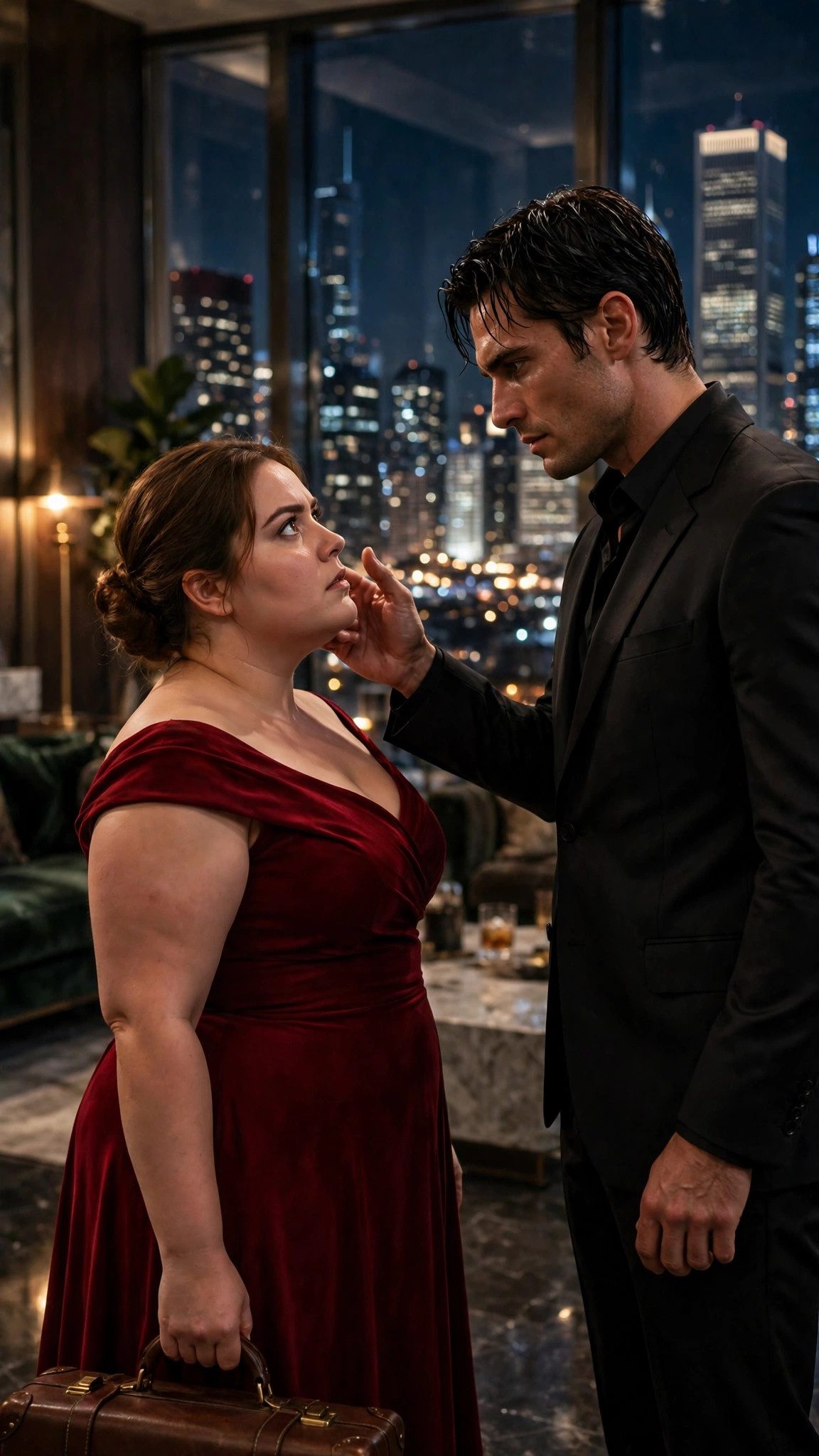
Story Genres: Mafia Romance

  • Chapter 5: The Photograph

    Chapter 5: The Photograph

    Dessert was a chocolate cake, dark and rich, and no one was eating it, because everyone in the room was watching Salvatore.

    He stood at the head of the table, his glass raised, his smile wide and warm, and he looked like a man about to give a toast at a wedding, and Charlotte knew, with a cold certainty in her stomach, that this was the moment he had been waiting for all night.

    "My friends," Salvatore said, his deep voice rolling across the room. "My family. Tonight we are gathered to celebrate strength, and loyalty, and the future of this family. And I would like to propose a toast — to my nephew, Roman, who has led us for two years, and who tonight has brought us a… surprise."

    He paused, and his eyes found Charlotte, and his smile sharpened.

    "To Roman," he said, "and to his lovely date, Charlotte. A woman of spirit. A woman of honesty. A woman who told us herself, with such pride, that she takes care of my nephew's home. That she mops his floors."

    The room went very still.

    "But I wonder," Salvatore said, and he set down his glass, and he reached into his jacket, and he took out a photograph, and he held it up for the whole table to see, "if my nephew's lovely date has told us everything."

    It was a photograph of Charlotte. She recognized it instantly, and her blood went cold, because it was a photograph of her that morning, in the penthouse, on her knees on the marble floor, in her black uniform with the white apron, scrubbing the grout between the tiles with a brush. Her hair was in its low bun. Her face was red from the work. She looked tired, and ordinary, and small.

    Someone had taken it that morning. Someone had been in the penthouse, watching her, waiting. Salvatore had planned this. He had planned all of it — the questions, the test, the photograph — and he had been saving the photograph for this moment, for the toast, for the moment when the whole room was watching.

    "This," Salvatore said, holding the photograph higher, "is Charlotte. Not a date. Not a lady. A maid. A servant. A woman who scrubs my nephew's floors on her knees. And my nephew has brought her here, to the most important dinner of the year, in a red dress he bought her, and sat her at his right hand, and asked this family to respect her as his equal."

    He lowered the photograph, slowly, and looked around the table, and his voice dropped to something cold and hard.

    "Is this what we have become? Is this the judgment of the man who leads us? A boss who cannot tell the difference between a woman and a servant? A boss who brings his cleaning girl to the family table and calls her his?"

    Marco stood up beside his father, smooth and smiling, and said, "Father is right. We all love Roman. But a leader must have judgment, and tonight Roman has shown us that his judgment is… clouded. I move that we take a vote. A vote of confidence. Tonight. Right now. Let the family decide whether Roman Rossi is still fit to lead us."

    The room erupted. Men were talking over each other, shouting, arguing, and Charlotte sat very still in the middle of it, with the photograph of herself on her knees still hanging in the air, and she felt the whole room's eyes on her, and she felt the shame rising in her throat like something hot and bitter, and she understood that this was the moment Salvatore had designed: not to expose her, but to destroy her, to make her so small and so ashamed that she would run from the room, and Roman would be left standing alone, humiliated, with his family's respect in ruins.

    She did not run. She stood up.

    She stood up slowly, in the red dress, and she pushed her chair back, and the sound of it scraping on the floor cut through the shouting, and the room went quiet again, and every eye turned to her.

    And Charlotte, who had spent eleven months being invisible, looked at Salvatore Rossi, and looked at Marco Rossi, and looked at every man and woman at that long table, and she spoke, in a clear, steady voice that carried to every corner of the room.

    "Yes," she said. "That photograph is me. That is who I am. I am a maid. I scrub floors. I mop marble. I fold shirts. I change sheets. I have done it for eleven months in your nephew's house, and I did it for three years before that in a hotel in the Loop, and I did it before that in offices at night, beside my mother, when I was sixteen years old and my father had just died and someone had to pay the rent."

    She took a breath, and her voice did not shake.

    "I am not ashamed of that photograph. I am proud of it. That woman on her knees, scrubbing grout, is a woman who works, and who takes care of people, and who has never stolen a dollar or lied to a friend or betrayed anyone who trusted her. Can everyone at this table say the same?"

    She looked at Salvatore, and her eyes were steady.

    "You asked me tonight what I do, Mr. Rossi, and I told you the truth. You asked me how Roman and I met, and I told you the truth. You asked me what I know about your nephew, and I told you the truth. I have not lied to anyone in this room tonight, and I will not start now. I am a maid. I am also the woman Roman Rossi chose to sit at his right hand. Both of those things are true. And if you think one of them cancels out the other, then you do not understand your nephew at all."

    She turned to the table, to the wives with their diamonds, to the old men with their heavy rings, and she said, "You all know what it is to work. Every one of you started somewhere. Your fathers started somewhere. Your grandfathers started somewhere. Some of them scrubbed floors, too. Some of them washed dishes. Some of them carried boxes on the docks until their backs broke. And now you sit here in a beautiful house, eating chocolate cake, and you look at a woman who does honest work and you call her nothing. I am not nothing. I am Charlotte. I am thirty years old. I take care of my mother. I take care of the people around me. And I am standing here, in a red dress, telling you the truth, while a man who has never worked an honest day in his life tries to use me to steal his nephew's chair."

    She pointed at Salvatore, and her hand did not shake.

    "That is what this is about. It is not about me. It has never been about me. It is about power. Your uncle wants his son to lead this family, and he thinks the way to do it is to humiliate me in front of all of you. And if you let him do it, if you sit here and let him turn a working woman into a weapon, then you are not a family. You are an audience. And I will not perform for you."

    The silence in the room was enormous. It filled the dining room like water filling a glass, and Charlotte stood in the middle of it, breathing hard, her heart hammering, her hands shaking now, finally, now that it was over, and she waited for someone to speak.

    Roman stood up.

    He stood up slowly, and he came around the table to her side, and he took her hand in his, in full view of everyone, and he turned to face the room, and when he spoke, his voice was the voice of a boss, low and measured and absolutely certain.

    "My uncle is right about one thing," he said. "Charlotte is a maid. She scrubs my floors. She folds my shirts. She leaves a glass of water on my desk every night. And she is the most honest person I have ever known."

    He looked down the table, slowly, meeting every eye.

    "My father taught me that a boss is judged by the people he surrounds himself with. Not by how feared he is. Not by how rich he is. By who stands beside him. My father surrounded himself with honest men, and he led this family for thirty years, and no one ever questioned him. Tonight, I have surrounded myself with the most honest person I know. If that makes me unfit to lead, then vote. Vote now. I will accept whatever this family decides."

    He paused, and his hand tightened around Charlotte's.

    "But know this. If you vote against me tonight, you are not voting against a boss who brought a maid to dinner. You are voting against a boss who tells you the truth, and who stands by his people, and who refuses to be ashamed of them. And if that is not the kind of boss you want, then perhaps you should ask yourselves what kind of boss you do want — and whether my uncle, who sent a man into my home this morning to photograph a woman on her knees, is the kind of man you trust to lead you."

    A murmur ran around the table. An old man at the far end, white-haired, with a face like carved wood, stood up slowly and said, "Roman is right. A man who spies on a woman in her own workplace is not a man I follow. I vote confidence."

    One by one, around the table, the men stood. One by one, they said the same words. "Confidence." "Confidence." "I vote confidence." The wives nodded. The old men nodded. And Salvatore stood at the head of the table with the photograph still in his hand, and his face went white, and then red, and then white again, and Marco sat down slowly, as if his legs had given out, and the vote was over before it had properly begun.

    Roman looked at his uncle, and his voice was quiet, and it was the quietest voice in the room, and that made it the loudest.

    "Uncle," he said. "You have embarrassed yourself, and you have embarrassed this family, and you have tried to embarrass the woman I chose. I will not have you killed. I will not have you hurt. You are my blood, and my father loved you, and I will honor that. But you will no longer sit at this table. Tomorrow morning, you will go to Milwaukee, and you will run the family's shipping business there, and you will do it honestly, and you will stay there until I say otherwise. That is my mercy. Do not mistake it for weakness."

    Salvatore stared at him. For a moment, Charlotte thought he might argue. For a moment, she thought he might shout, or threaten, or do something desperate. But then he looked around the table, and he saw that no one would meet his eyes, not even his own son, and he folded the photograph, slowly, and put it back in his jacket, and he nodded once, stiffly, like a man accepting a sentence.

    "As you wish," he said, and his voice was hoarse. "Nephew."

    And then he walked out of the dining room, and the door closed behind him, and the room let out a breath it had been holding all night, and Charlotte stood there in the red dress with Roman's hand in hers, and she realized that she was shaking, and that Roman was holding her up, and that the whole room was looking at her with something she had never seen directed at her before.

    Respect.

    It was the strangest feeling in the world. It was better than the dress. It was better than the chandeliers. It was better than anything she had ever owned.

    And then the old white-haired man at the far end of the table raised his glass, and he said, in a voice that shook a little with age and with feeling, "To Charlotte. To the woman who did not flinch."

    And the whole table raised their glasses, and said it back, and Charlotte stood there with tears running down her face, in a red dress, in a room full of dangerous men, and she did not try to hide them, because she had nothing left to hide.

    The Moretti matriarch came around the table then, slowly, leaning on her cane, and she took Charlotte's face in her hands, the way a grandmother takes a granddaughter's face, and she kissed her on both cheeks, and she said, loudly enough for everyone to hear, "My mother scrubbed floors in Palermo. My mother would have been proud to stand where you are standing. Welcome to this family, child."

    Don Enrico, the white-haired old man, came next, and he took Charlotte's hand in both of his, and his hands were shaking a little with age, and he said, "My wife is right. I started on the docks, carrying boxes until my back broke, and I never forgot it. A family that forgets where it came from is already dead. You reminded us tonight, Charlotte. You reminded all of us."

    One by one, the captains came to her. A big man with a scar through his eyebrow shook her hand and said, "You have more guts than most men I know." A younger captain, barely thirty, said, "My sister cleans houses in Pilsen. I am going to tell her about you." And the wives came, too, touching her arm, asking her name again, telling her she must come to tea, telling her she looked beautiful in the dress, and Charlotte stood there in the middle of it all, dazed and overwhelmed, with Roman's hand on her back, steady as a wall, and she thought about the photograph, still folded in Salvatore's jacket, and how it had been meant to destroy her, and how it had done the opposite.

    It had shown the room who she was. And the room had decided that who she was was enough.

    She had told the truth. She had not flinched. And she had won.

  • Chapter 5: The Night at the Meridian

    Chapter 5: The Night at the Meridian

    Enzo's voice on the phone was calm, which frightened me more than shouting would have. Enzo Marchetti was never calm when something went wrong. He was loud. He was furious. He was the kind of man who broke furniture when he was angry. Calm meant he was past anger. Calm meant something had gone very wrong indeed.

    "Nico is hurt," Enzo said. "Not badly. A graze. A bullet along the ribs. He will live. But Arthur is gone. He ran. He took the car and he ran, and we do not know where he went. And Castellano's men knew we were coming. They knew the room. They knew the exits. They knew everything. Someone told them, and it was not just Arthur. Arthur had help."

    Sofia put the phone on speaker so I could hear. I stood in the kitchen with my hands on the counter, listening to Enzo's calm voice, and I felt the floor tilt under my feet.

    "How did they know?" I asked.

    "Because Arthur is not the only mole," Enzo said. "There is another one. Inside the house. Someone who has been listening. Someone close."

    The listening device. My office. My desk. I had found it three weeks ago and left it there. But if Arthur had planted it, and Arthur was gone, then who was listening now?

    "Norah," Enzo said. "I need you to listen to me very carefully. Do not leave the house. Do not open the door for anyone. Not the guards. Not the police. Not anyone. Sofia stays with you. I am sending two of my own men, men I trust with my life, and they will be there in twenty minutes. Until then, you lock every door, and you do not trust anyone you have not seen with your own eyes in the last hour."

    "Where is Nico?" I asked.

    "On his way home," Enzo said. "He is coming now. He is hurt, but he is coming. Stay where you are. Do not move."

    The phone went dead. Sofia looked at me. I looked at Sofia. And in the silence of the kitchen, I heard something I had never heard before in Nico's house. A sound from upstairs. A door closing. Softly. Carefully. Like someone who did not want to be heard.

    Sofia's hand went to her waist, where I knew she carried a gun. She had shown it to me that morning, casually, the way other women show you a photograph of their children. "Just in case," she had said. "I hope I never need it."

    "Upstairs," I whispered. "Someone is upstairs."

    Sofia nodded. She moved toward the stairs, silent on the marble, her gun in her hand, and I followed her, because I could not stay in the kitchen alone, and because my legs would not let me sit still, and because for the first time in three years, I was not going to hide behind Nico's walls and wait for someone else to save me.

    We went up the stairs together. The hallway was dark. The doors were all closed. My room. Nico's room. The guest room. The study. And then I saw it. The study door was open, just a crack, and there was light coming through it, thin and yellow, and I could hear the sound of paper. Someone was going through Nico's desk.

    Sofia raised her hand. Stop. She moved toward the study, one step at a time, and I stayed behind her, my heart pounding so loudly I was sure whoever was in there could hear it.

    She pushed the door open with her foot. The gun was up. Her voice was steady.

    "Do not move."

    The man at Nico's desk froze. He was not a stranger. He was not one of Castellano's men. He was a man I had seen every day for three years, a man who had poured my coffee and carried my bags and opened doors for me.

    It was Marcus Hale, Nico's driver. The quiet one. The one who never spoke unless spoken to. The one who knew every route Nico ever took, every place Nico ever went, every time Nico ever left the house.

    "Marcus," I said. "What are you doing?"

    He turned slowly, his hands up, and his face was gray, and his eyes were wet, and he looked like a man who had been caught doing something he had prayed no one would ever see.

    "They have my daughter," he said. "Castellano's men took her three weeks ago. They said if I did not tell them everything, if I did not plant the device and report Nico's movements, they would kill her. She is nineteen. She is in college. She has done nothing. I did what I had to do. I am sorry. I am so sorry."

    The listening device. It had not been Arthur's. It had been Marcus's. Arthur had been the one who told Castellano about me, but Marcus had been the one who listened, who reported, who made sure Castellano knew where I was every hour of every day.

    And now Marcus was in Nico's study, going through his desk, looking for the one thing Castellano wanted more than anything. The ledger. The book Nico kept in his desk drawer, the book with every name, every deal, every secret his family had kept for thirty years. The book that could destroy Castellano, or destroy Nico, depending on whose hands it fell into.

    "Where is your daughter?" Sofia asked. Her gun did not waver.

    "I do not know," Marcus said. "They move her every few days. A warehouse. A motel. I get a photograph every morning, to prove she is alive. This morning's photograph was taken in a parking garage. I do not know which one. I do not know where. I just know she is alive, and if I stop helping them, she will not be."

    I looked at Marcus Hale, and I saw a man who had done a terrible thing for a reason I understood completely. He had chosen his daughter over me. Any father would. Any parent would. I could not hate him for it, even though his choice had nearly gotten me killed.

    "Put the ledger down," Sofia said. "Step away from the desk."

    Marcus did. He put the small black book down on the desk, and he stepped back, and he put his hands on his head, and he started to cry, quietly, the way a man cries when he has been holding it in for weeks.

    "They are coming tonight," Marcus said. "Castellano's men. They are coming to the house. Arthur told them the Meridian was a trap, and they knew, and they let Nico walk into it, and while Nico was at the Meridian, they were coming here. For you, Norah. For the woman at his table. They will be here in less than an hour. I was supposed to unlock the gate. I was supposed to turn off the alarm. I was supposed to make it easy for them. But I could not do it. Not after the roses. Not after I saw what they did to the coffee shop. I came here to take the ledger instead. To give them the ledger and beg them to leave you alone. To beg them to give me my daughter back."

    Sofia lowered her gun, just a little. "You are going to help us now," she said. "You are going to tell us everything. How many men. When. Where they are coming from. And then you are going to help us stop them. Because if you do, Nico will help you find your daughter. I promise you that. Nico Moretti does not forget a debt, and he does not forget a man who helps him when it matters."

    Marcus nodded. He wiped his face with his sleeve. He told us everything. Four men. Coming through the garden, through the gap in the hedges, the same gap I had squeezed through on the night I ran. They would come at midnight, when the guards changed shifts, when the house was quiet. They would come for me. They would not stop until they had me, or until someone stopped them.

    It was eleven o'clock. We had one hour.

    Sofia moved fast. She called Enzo. She told him about Marcus, about the four men, about the gap in the hedges. Enzo said his men were already on their way, and Nico was ten minutes out, and we were to lock ourselves in Nico's room and not come out until he told us to.

    But I did not go to Nico's room. I went to the garden.

    I know it sounds insane. I know it sounds like the stupidest thing a woman who had already run once could do. But I had spent three years being protected, and I had spent a month being hidden, and I had spent a night running barefoot through the roses, and I was done. Done hiding. Done waiting. Done being the woman at the table who needed a soldier to take her bullets.

    Sofia followed me. Of course she did. She was a soldier, and soldiers do not let civilians walk into danger alone. Marcus followed us too, because he had a daughter to save, and because he had finally chosen a side.

    We stood in the garden, in the dark, among the roses, and we waited. The floodlights were off. The alarm was on. The guards were at the gate, and Enzo's men were coming, and Nico was coming, and somewhere beyond the hedges, four men were walking toward us with guns and orders to take me alive or dead.

    At midnight, exactly, the first man came through the gap.

    He did not see us. He was looking at the house, at the windows, at the doors, the way a man looks at a target. He had a gun in his hand. He took two steps into the garden.

    And then Sofia stepped out from behind the roses, and she said, in a voice as calm as Enzo's had been on the phone, "Drop it."

    He did not drop it. He raised it. And Sofia shot him. Once. In the shoulder. He went down, screaming, and the other three came through the gap behind him, and the garden erupted.

    I do not remember all of it. I remember the sound. I remember the floodlights snapping on, all of them, white and blinding. I remember the alarm. I remember Nico's voice, shouting my name, and I remember turning and seeing him running across the garden toward me, his shirt soaked with blood from the graze on his ribs, his face white with fury and fear.

    I remember the second man raising his gun toward Nico, and I remember moving without thinking, the way I had moved in the hotel ballroom three years ago, catching a falling tray, and I remember grabbing a garden spade from the soil beside me and swinging it, hard, into the man's wrist. The gun went flying. The man went down. Sofia was on him in a second.

    I remember the third man running, and Enzo's men arriving, and the shouting, and the sirens in the distance, and I remember Nico reaching me, and pulling me against him, and holding me so tightly I could not breathe, and saying my name over and over again, like a prayer.

    "Norah. Norah. Norah."

    "I am here," I said. "I am here. I am not going anywhere."

    And for the first time in three years, I meant it. Not because I was trapped. Not because I had nowhere else to go. Because I had chosen it. In the garden, in the dark, with blood on the roses and sirens in the distance, I had chosen to stay. I had chosen him. And that choice, finally, was mine.

    The minutes after the garden went quiet were the strangest of my life. The floodlights were still on, white and merciless, and the roses were scattered across the lawn, and the men on the ground were groaning, and Enzo's men were moving through the garden with their guns up, checking every shadow, and I was standing in the middle of it all with a garden spade in my hand, shaking so hard I could barely hold it.

    Nico took the spade from me, gently, the way you take a knife from a child, and he put it down in the grass, and he looked at my hands, at the dirt under my nails, at the scratch on my wrist where a thorn had caught me, and he said, "You are hurt."

    "I am fine," I said. "You are the one bleeding."

    He looked down at his shirt, at the dark stain spreading across his ribs, as if he had forgotten it was there. "It is nothing," he said. "A graze. Enzo already looked at it. It will heal."

    "It is not nothing," I said. "You were shot at a hotel, and then you ran across a garden to get to me, and you are standing here telling me it is nothing. Sit down, Nico. Let someone look at you."

    He sat. On the steps of the house, with the blanket the paramedics had given me around his shoulders instead of mine, and he let a young paramedic with shaking hands clean the graze on his ribs, and he did not flinch, not once, and he kept his eyes on me the whole time, as if he were afraid that if he looked away, I would disappear.

    The police came, and then the FBI, and Agent Daniel Reyes took my statement in the kitchen, at the table where Sofia and I had eaten pancakes that morning. He was patient. He asked me to tell it slowly. He asked me about the gap in the hedges, and the spade, and the second man, and the gun that had gone flying. He wrote everything down in a small notebook, and when I was finished, he said, "You did well tonight, Ms. Bennett. Most people freeze. You did not freeze."

    "I was not brave," I said. "I was angry. There is a difference."

    "Anger is a kind of bravery," Reyes said. "The useful kind."

    Outside, they were loading the four men into ambulances. One of them, the first one, the one Sofia had shot in the shoulder, was shouting something in Italian, and Enzo was standing over him, translating for a detective, his face like stone.

    "They were paid fifty thousand each," Enzo said, when he came inside. "Fifty thousand to take Norah. Alive, if possible. Dead, if necessary. Castellano paid them through a shell company. Arthur set it up. We have the account numbers now. We have everything."

    Nico nodded. He did not say anything. He just took my hand, and he held it, and he did not let go, not when the detectives asked him questions, not when the paramedics finished with his ribs, not when the sun came up over the garden and the roses looked, impossibly, like they had never been disturbed at all.

    At dawn, Sofia came and sat with us on the steps. She had a bandage on her cheek and a bruise on her arm, and she was holding a cup of coffee, black, the way I drank it, the way she had learned to drink it.

    "Well," she said. "That was a night."

    "Yes," I said. "It was."

    "Do you know what I was thinking," Sofia said, "when the first man came through the gap? I was thinking about my brother. About Marco. About pancakes on a Sunday. And I was thinking, not this time. Not this woman. Not tonight. And then I shot him, and I felt nothing at all, and that frightened me more than the shooting did."

    "You felt nothing because you were doing your job," Nico said. "That is what training does. It takes the feeling away until later. The feeling will come later. When it does, you will not be alone."

    Sofia nodded. She drank her coffee. The sun came up. And the three of us sat on the steps of the house, in the morning light, and for the first time in weeks, no one was afraid.

  • Chapter 4: The Man Behind the Door

    Chapter 4: The Man Behind the Door

    The roses changed everything. Not because of what they were, but because of what they proved. Castellano's men were not just watching me. They were close enough to leave a box on a counter and walk out. Close enough to have killed Sofia, or me, or the coffee shop owner, and no one would have known until it was too late.

    Nico doubled the guards. He moved Sofia into my room, because the guest room faced the street and mine faced the garden, and he moved me into his room, because his room was in the center of the house, behind three locked doors, with no windows anyone could shoot through. He did not ask me. He told me. And for the first time in three years, I did not argue with him about it.

    I slept in Nico's bed, in Nico's room, with Nico on the floor beside the bed in a sleeping bag, like a guard dog. He did not touch me. He did not try. He just lay there, in the dark, awake, listening to the house the way a man listens for a sound he has been waiting his whole life to hear.

    On the fourth night, I could not sleep. I lay in the dark and listened to Nico breathing, slow and even, and I thought about Arthur. About the way he had smiled at Sofia that afternoon in the garden. About the way he had kissed her hand. About all the questions he had asked me over the years. Where I would be on Thursday. What time I left the office. Which route I took home.

    And I thought about something else. Something I had not told Nico. Something I had almost forgotten.

    Three weeks ago, I had found a listening device in my office. A small black disc, no bigger than a coin, stuck to the underside of my desk. I had found it by accident, reaching for a pen I had dropped, and I had stared at it for a long time, and then I had done something I was not proud of. I had left it there. I had told myself it was probably Nico's, that he had men who listened to everything in his house, that it was just business. I had told myself not to make a fuss. I had told myself that if Nico wanted me to know, he would tell me.

    I had not told him. I had not told anyone. And now, lying in the dark in his room, I understood what I had done. I had left a door open for the man who wanted me dead, and I had done it because I was afraid of asking a question I did not want the answer to.

    "Nico," I whispered. "Are you awake?"

    "Yes," he said.

    "I found something three weeks ago," I said. "In my office. Under my desk. A listening device. I left it there. I did not tell you. I am sorry."

    He was quiet for a moment. Then he sat up in the dark, and I could see the outline of his shoulders, and I could hear the change in his breathing.

    "Show me," he said.

    We went to my office in the dark, the two of us, barefoot, moving through the house like thieves in our own home. Nico carried a flashlight, and I carried the shame of three weeks of silence, and when we got to my desk, I knelt down and reached underneath, and my fingers found the disc, still there, still stuck to the wood, still listening.

    Nico took it from me and held it up to the light. It was small and black and ordinary, the kind of thing you could buy anywhere, the kind of thing that meant nothing until you understood what it was for.

    "This is not mine," he said. "My men do not listen to you. I told them never to listen to you. This is Arthur's. Or Castellano's. It has been here for weeks. Everything you said in this room, everything you did, they heard it."

    "Then they heard me," I said. "They heard me talking to you. They heard me on the phone. They heard everything."

    "Yes," Nico said. "And that is why they know your routine. That is why they know the coffee shop. That is why they know the bookshop. Arthur has been listening to your life for weeks, and he has been selling it, piece by piece, to a man who wants you dead."

    I sat down at my desk, in the dark, and I put my head in my hands. Three weeks. For three weeks, a stranger had been listening to me live my life, and I had known, and I had said nothing, because I had been afraid.

    Nico knelt beside me. He did not touch me. He just waited, the way he had waited in the garden, the way he had waited in my room, patient and still, until I was ready to look at him.

    "Norah," he said. "I need you to do something for me. I need you to stop being afraid of asking questions. The questions are the only thing that will keep you alive now. Ask me anything. I will answer. I promise."

    So I asked him. I asked him everything I had been afraid to ask for three years.

    I asked him how many men he had killed. He said he had lost count, and that he remembered every one of them, and that he did not sleep well because of it.

    I asked him if he had ever loved anyone before me. He said no, not like this, not in a way that made him afraid.

    I asked him if Arthur had always been a traitor, or if something had changed him. He said Arthur's wife had died two years ago, and after that, Arthur had started drinking, and started gambling, and Castellano had found him at a card table in Atlantic City, down two hundred thousand dollars, and had offered him a way out. Money. Protection. A future. All Arthur had to do was tell Castellano what he needed to know.

    I asked him if he had known about Arthur for a long time. He said he had suspected for a year, and known for a month, and that the hardest thing he had ever done was sit across a table from a man he knew was betraying him and smile like he did not know.

    I asked him what he was going to do to Arthur. He said, "When this is over, Arthur will answer for what he has done. But not before. Not until I have the proof, and not until Castellano is finished. If I move too soon, I lose everything."

    I asked him about his father. He said his father, Vittorio Moretti, had built the family from nothing, from a fish market stall in Naples to an empire in Chicago, and had died when Nico was twenty-four, shot in his own driveway, and Nico had taken over the family the next morning, before the body was cold, because that was what the family expected, and because there was no one else.

    "He taught me two things," Nico said. "Never show fear. Never trust a man who smiles too much. I have spent fourteen years trying to unlearn the first one. I have never unlearned the second. Arthur smiled too much. I should have seen it sooner."

    I asked him about his mother. He said she had died when he was sixteen, quietly, in her sleep, and that she had been the only gentle thing in his life, and that after she was gone, his father had become harder, and Nico had become harder too, and that was when he had stopped believing that the world was a kind place.

    "She used to sing in the kitchen," he said. "In Italian. Old songs. I have not heard them since. Sometimes I hear a woman humming in a restaurant, and for one second, I am sixteen again, and I think she is still alive. Then I remember."

    I asked him about Enzo. He said Enzo Marchetti had been his father's driver, then his bodyguard, then his consigliere, then the closest thing to a brother he had ever had. Enzo had carried him out of the parking garage the night of the knife, when Nico was twenty-two and bleeding, and Enzo had held pressure on the wound with both hands and told him, over and over, "Do not die. Do not you dare die on me."

    "Enzo is the only man alive who has ever seen me cry," Nico said. "He saw it that night, in the garage, and he has never mentioned it since. That is loyalty. Not the kind you buy. The kind you earn by bleeding next to someone."

    I asked him the hardest question of all. I asked him if he had ever killed a man with his own hands, and if he remembered their faces, and if he was sorry.

    He was quiet for a very long time. The flashlight was still on, lying on the desk, throwing our shadows up onto the wall, huge and strange.

    "Yes," he said, finally. "I have. And I remember every face. And I am sorry for all of them, and I am not sorry for any of them, and both of those things are true at the same time. That is what this life does to a man. It makes two opposite things true, and it makes you live with both of them, every day, until you die."

    I did not ask him anything else after that. I had asked enough. More than enough. And I understood, sitting there in the dark, that the man I loved was not a monster and not a hero. He was a man who had been handed a life he did not choose, at twenty-four, before his father's body was cold, and who had done what he had to do to survive it, and who had spent fourteen years trying to be better than it, and mostly failing, and trying again anyway.

    I asked him what would happen to Sofia. He said, "Sofia knows the risk. She chose it. But I will not let her die if I can help it. She is under my protection now, the same as you."

    And then I asked him the question I had been most afraid to ask. The question that had been sitting in my chest since the night I ran.

    "Do you love me?" I asked. "Not protection. Not ownership. Love. Do you love me?"

    Nico was quiet for a long time. The flashlight was still on, lying on the desk, throwing our shadows up onto the wall, huge and strange. I could hear the house breathing around us. I could hear my own heart.

    "Yes," he said. "I love you. I have loved you since the night you caught a falling tray in a hotel ballroom and smiled like nothing had happened. I loved you when you were my assistant. I loved you when you became the woman at my table. I love you now, in the dark, in my office, with a listening device in my hand and a killer outside my walls. I love you, Norah Bennett. And I am sorry it took a man trying to kill you for me to say it out loud."

    I cried then. Not loudly. Quietly, the way you cry when something you have been holding for a very long time finally breaks. Nico held me, and for the first time in three years, he did not hold me like a man protecting something he owned. He held me like a man holding something he was afraid to lose. There is a difference. I felt it in the way his hands shook. I felt it in the way he pressed his forehead to mine and whispered, "Stay. Please. Just stay."

    "I am staying," I said. "But not because you told me to. Because I choose to. And when this is over, Nico, you and I are going to have a very different conversation about what love means. Because I am not replaceable. No one is. And if you ever say that word about me again, even as a performance, even to save my life, I will walk out of this house and I will not come back."

    "I understand," he said.

    "Do you?" I asked.

    "Yes," he said. "And I will never say it again."

    We went back to his room, and I slept, really slept, for the first time in a week. And in the morning, Sofia was waiting for us at breakfast, and she had made pancakes, which was strange, because Sofia Romano did not look like a woman who made pancakes, and she had set the table with the good plates, and she was humming, very quietly, an old song in Italian.

    "My brother used to make pancakes," she said, when she saw me looking. "Marco. Every Sunday. He burned them, every single time, and he served them anyway, and he said, 'Eat them, Sofia, they are made with love.' He was twenty-six when he died. A drive-by. Wrong place, wrong time, they said. But it was not wrong place. It was a message. A man wanted to send a message to a rival family, and my brother was the envelope."

    She flipped a pancake, and it landed perfectly, golden on both sides, and she looked at it for a moment, and she said, "I have spent eight years looking for the man who ordered it. I found three of them. They are all in prison now, or in the ground. The fourth is Castellano. When this is over, I will have found all four. And then I will be able to make pancakes on a Sunday without thinking about a brother who will never eat them again."

    I sat down at the table, and Sofia put a plate in front of me, and I ate the pancakes, and they were perfect, and I thought about how strange it was that the bravest woman I had ever met made pancakes like a mother, and shot a gun like a soldier, and hummed old Italian songs like a girl from Naples who had lost her brother and never stopped looking for the men who took him.

    "Thank you," I said to her. "For being here. For being me, when I could not be."

    "Do not thank me," Sofia said. "When this is over, you will owe me nothing. But if you want to do something for me, learn to make pancakes. Burn them, the first time. It is tradition."

    I laughed. I had not laughed in days, and it felt strange, and good, like a muscle I had forgotten I had.

    And then Sofia's face went serious. "Arthur called me last night," she said. "He wanted to know where you would be today, Norah. He said Nico had a meeting at the Meridian Hotel, and he wanted to know if you were going with him. I told him you were staying home. I told him you were sick. He sounded disappointed."

    "Good," Nico said. "Let him be disappointed. The Meridian is a trap. Castellano's men will be there. Enzo and I will be there too. And this time, we will be ready for them."

    "What about me?" I asked. "What do I do while you walk into a trap?"

    "You stay here," Nico said. "With Sofia. Behind these walls. And you wait. And when it is over, I will come home, and I will tell you everything."

    I wanted to argue. I wanted to go with him. I wanted to stand beside him the way I had stood beside him for three years. But I had promised myself I would stop being the woman who mistook protection for love, and I had promised Nico I would stay, and a promise is a promise, even when it tastes like ash in your mouth.

    So I stayed. Sofia and I stayed in the house, behind the walls, with the guards at the gate and the alarm on and the floodlights ready. And we waited. And at seven o'clock that evening, the phone rang, and Sofia answered it, and her face went white, and she looked at me, and she said, "It is Enzo. Something has gone wrong."

  • Chapter 4: The Uncle’s Questions

    Chapter 4: The Uncle’s Questions

    Dinner was served in a dining room the size of a ballroom, under chandeliers that dripped light like honey, and Charlotte was seated at Roman's right hand, in the place of honor, where everyone in the room could see her and she could see everyone in the room.

    It was the worst seat in the house. She knew it the moment she sat down. From here, there was nowhere to hide. The long table stretched out in front of her, white cloth and silver and crystal, and along both sides sat the heads of the families — men with grey hair and heavy rings and faces that had seen everything, and their wives, elegant and watchful, with diamonds at their throats and questions in their eyes. At the far end, beside the Moretti patriarch, sat Salvatore, and beside Salvatore sat Marco, and both of them were looking at her the way hunters look at something they have already decided to catch.

    Roman leaned close to her as the first course arrived, and said, very quietly, "Eat slowly. Drink water. Do not drink the wine. And whatever he asks you, answer it like you are telling the truth, because you are."

    "Easy for you to say," she whispered back, and to her surprise, the corner of his mouth twitched, almost a smile.

    "Charlotte," he said, "you have been lying to your mother for three months and you have not slept properly in a week, and you still walked into this room with your head held high. You are braver than anyone at this table. Do not forget that."

    She did not forget it. She held onto it like a rope while the soup was served and the bread was passed and the conversation flowed around her like a river she was not supposed to swim in.

    Salvatore waited until the second course. He was patient, the way a cat is patient, and when he finally spoke, his voice carried easily down the length of the table, friendly and warm and sharp as a razor.

    "Charlotte," he said, smiling. "Such a beautiful name. Tell me, my dear, how did you and my nephew meet?"

    The table went quiet. Everyone stopped eating. Everyone looked at her.

    Charlotte set down her fork, very carefully, and folded her hands in her lap, and looked Salvatore straight in the eye.

    "We met in his home," she said, and her voice was clear and steady, and she was proud of how steady it was, because her heart was beating so hard she was certain the whole table could hear it. "I work there."

    A small ripple went around the table. Someone coughed. Someone else set down a glass a little too hard.

    Salvatore's smile widened. "You work there," he repeated. "How interesting. And what is it that you do, exactly, in my nephew's home?"

    "I take care of it," Charlotte said. "I make sure everything is clean, and everything is in its place, and everyone who lives there is looked after. It is honest work, Mr. Rossi. I am proud of it."

    "Honest work," Salvatore said, and he said it the way a man says a word he does not believe in. "How admirable. And how long have you been… taking care of my nephew's home?"

    "Eleven months," Charlotte said.

    "Eleven months," Salvatore repeated. "And in eleven months, my nephew has never once mentioned you. Not to me. Not to anyone at this table. And yet tonight, at the most important dinner of the year, he brings you here, in a red dress, and sits you at his right hand. Do you not find that… sudden, my dear?"

    Charlotte felt Roman tense beside her, and she put her hand on his arm under the table, very lightly, just enough to say, let me handle this, and she turned back to Salvatore with her mother's smile on her face — the smile her mother used when a man thought he could frighten her.

    "Mr. Rossi," she said, "I have spent eleven months making a home for a man who lives alone and eats standing up at his kitchen counter because he has forgotten how to sit down at a table with another person. If that seems sudden to you, then perhaps you have not been paying attention to your nephew."

    There was a sound from somewhere down the table — a woman's laugh, quickly stifled. Salvatore's eyes narrowed.

    "And what do you know about my nephew?" he asked, and his voice had lost some of its warmth. "What do you know about this family, and what it takes to lead it?"

    "I know that he works eighteen hours a day," Charlotte said. "I know that he reads the newspaper with a pen in his hand and underlines the things that matter. I know that he drinks his coffee black and that he leaves a glass of water on his desk every night and it is always empty in the morning. I know that he has not smiled in two years, and I know that his father died, and I know that he carries that with him every single day. That is what I know about your nephew, Mr. Rossi. What do you know about him?"

    The silence at the table was so complete that Charlotte could hear the chandeliers humming.

    Salvatore stared at her. Marco stared at her. The wives stared at her. Roman stared at her, and there was something in his eyes she had never seen before, something fierce and proud and almost tender, all at once.

    Then Salvatore laughed. It was a big, booming laugh, the laugh of a man who has just been handed a gift, and he slapped the table with one heavy hand, and he said, "Well! She has spirit, I will give her that. My nephew has chosen a spirited one. Tell me, my dear, do you know what it takes to be the woman of a man like Roman? Do you know what the family expects?"

    "I know what I expect," Charlotte said. "I expect to be treated like a person, not a decoration. I expect the man I am with to be honest with me, and I expect to be honest with him. And I expect that if someone at this table thinks I do not belong here, they will say so to my face, the way you are doing now, and I will answer them to their face, the way I am doing now."

    Marco leaned forward, smiling his smooth, empty smile. "You are very confident, Charlotte, for a woman who mops floors."

    "And you are very confident, Marco," Charlotte said, without missing a beat, "for a man who has never mopped one."

    Someone at the table laughed out loud. Someone else choked on their wine. Marco's smile froze on his face, and Salvatore's eyes went flat and cold, and Charlotte understood that she had just made an enemy for life, and she did not care, because her mother had taught her that a woman who lets a man talk to her like that will let a man do worse, and she was not that woman.

    Roman put his hand over hers on the table, in full view of everyone, and his fingers were warm and steady, and he said, in a voice that carried to every corner of the room, "My uncle asked what it takes to be my woman. I will tell you what it takes. It takes honesty. It takes courage. It takes a person who does not flinch. Charlotte has all three. I chose her. That is all anyone at this table needs to know."

    He looked down the length of the table, slowly, meeting every eye, and the room was very quiet.

    "And if anyone here has a problem with my choice," he said, "they can say so now, to my face, the way a man says it. Or they can keep their peace for the rest of the night."

    Nobody said anything. Salvatore picked up his glass and drank, slowly, and his eyes were on Charlotte the whole time, and she could see the calculation happening behind them, the way a chess player recalculates when a piece moves in a way he did not expect.

    Dinner went on. The courses came and went. The conversation started again, quieter now, more careful. Charlotte ate slowly, the way Roman had told her to, and drank water, and smiled when she was spoken to, and answered questions about Cicero and her mother and the bakery on Cermak, and she did it all without flinching, without looking away, without apologizing for who she was.

    Between the soup and the fish, the elderly woman seated across from her leaned forward. She was the Moretti matriarch, white-haired and straight-backed, with diamonds at her throat and eyes like a hawk's, and Charlotte had been aware of her watching all evening, the way a judge watches a witness.

    "Tell me about your mother," the old woman said, and her voice was softer than Charlotte expected. "You mentioned Cicero. You mentioned a bakery."

    So Charlotte told her. She told her about Angela, and the little house, and the hospital, and the pan dulce from the bakery on Cermak, and the way her mother had raised her alone after her father died, and the way her mother still called every Sunday at seven o'clock sharp. And as she spoke, the old woman's face changed, the hawk's eyes softening, and she reached across the table and patted Charlotte's hand with a hand that was thin and spotted with age and surprisingly warm.

    "My own mother scrubbed floors," the matriarch said, quietly, so only Charlotte could hear. "In a hotel in Palermo, before we came to this country. She scrubbed floors until her hands bled, and she sent me to school with the money, and I married a man who built all of this." She gestured at the great room, at the chandeliers, at the silver. "Do not let anyone in this room make you ashamed of honest work, child. The ones who do have forgotten where they came from. I have not forgotten."

    Charlotte's throat went tight, and she squeezed the old woman's hand, and she understood that she had an ally at the table, one she had not expected, and that the room was not entirely against her.

    Roman leaned close then, and said under his breath, "That is Don Enrico's wife. She has been the real head of this family for forty years. If she likes you, Salvatore has already lost."

    Charlotte almost laughed, and she had to cover it with a cough, and Roman's mouth twitched, almost a smile, and for a moment, in the middle of the most dangerous dinner of her life, Charlotte felt something she had not expected to feel.

    She felt like she belonged.

    And then, between the main course and the dessert, Roman stood up and said, "Excuse us," and took her hand, and led her out onto the terrace, into the cool night air, away from the eyes and the questions and the chandeliers.

    The terrace overlooked a garden, dark and sweet-smelling, and the city glittered far away beyond the trees, and for a moment they just stood there, side by side, not touching, breathing.

    "You were magnificent," Roman said finally, and his voice was low and rough. "Do you know that? You were magnificent in there."

    "I was terrified," Charlotte said.

    "I know," he said. "That is what made it magnificent. You were terrified and you did not flinch. Do you know how rare that is, in my world? Everyone in that room is afraid of something, and every one of them hides it. You did not hide it. You let them see you were afraid, and you stood your ground anyway. That is the bravest thing I have ever seen."

    She looked at him, there in the dark with the garden smells around them, and she asked him the question she had been carrying since the night with the suitcase.

    "Why me, Roman? Really. Why did you choose me? There are a hundred beautiful women in this city who would kill to sit at your right hand. Why a maid?"

    He was quiet for a long time. He looked out at the garden, and then he looked at her, and when he spoke, his voice was different from any voice she had ever heard from him — not the boss's voice, not the measured voice, but the voice of a man telling the truth for the first time in years.

    "Because my father died two years ago," he said, "and since then, everyone in my life has wanted something from me. My uncle wants my chair. My captains want more territory. My lawyers want more money. The women I have met want the penthouse and the cars and the name. Everyone wants something, Charlotte. Everyone except you."

    He turned to face her fully, and his dark eyes were steady on hers.

    "You never wanted anything from me. You came to my house every morning and you made it shine, and you folded my shirts, and you left a glass of water on my desk, and you never asked me for a thing. Not a raise. Not a favor. Not a kind word. You just… took care of me, the way you take care of everyone, because that is who you are. And I watched you do it for eleven months, and I realized that you were the only honest person in my life, and that I had not had an honest person in my life since my father died."

    He took a step closer, and his voice dropped lower.

    "And then I heard you in the kitchen, whispering that you needed a boyfriend by tomorrow, and I heard the fear in your voice, and I understood something. You needed someone to stand next to you, the way I needed someone to stand next to me. And I thought — maybe we could stand next to each other. Just for one night. Just to see what it felt like."

    Charlotte's eyes filled with tears, and she did not try to hide them, because she was done hiding things from this man.

    "It feels like this," she said, and her voice shook. "It feels like being seen for the first time in my life."

    Roman reached out, slowly, giving her time to pull away, and he touched her face, very gently, with the back of his fingers, the way you touch something precious.

    "Then let me see you," he said. "For the rest of the night. No pretending. Just you, and me, and whatever happens next."

    She leaned into his touch, just a little, and closed her eyes, and for one moment, on a terrace in the dark with a garden below and a room full of dangerous men behind them, Charlotte felt something she had not felt in years.

    She felt safe.

    And then, from inside the dining room, a voice called out, loud and cheerful and false: "Roman! Charlotte! Dessert is served! Come back inside, my dears. The night is young, and my uncle has a toast to make."

    Charlotte opened her eyes. Roman's hand dropped from her face. They looked at each other, and they both understood the same thing at the same time.

    Salvatore was not finished. The test was not over. The toast was coming, and whatever Salvatore was about to say, it was going to be the real attack.

    Roman held out his hand. Charlotte took it. And together, they walked back into the dining room, into the light, into the danger, side by side.

    And Charlotte did not flinch.

  • Chapter 3: The Replacement

    Chapter 3: The Replacement

    Nico kept his word. That night, in my room, with the door closed and the house quiet around us, he told me everything.

    It started, he said, six weeks ago, with a phone call. Not to him. To Enzo Marchetti, his consigliere, the one man in his organization Nico trusted the way other men trust their own hands. The call had come from a source inside Castellano's crew, a man Enzo had been paying for two years. The message was simple. Castellano had a new plan. He was done trying to kill Nico directly. He had tried four times in ten years, and each time Nico had survived, and each time Castellano had lost good men. So Castellano had found a softer target.

    Me.

    "They know about you," Nico said. "They know your name. They know your routine. They know you go to the same coffee shop every morning at eight, and the same grocery store on Thursdays, and the same bookshop on Sundays. They know you are the only person in my life I would burn the city down to protect. And they know that if they take you, I will come for them, and when I come for them, I will be reckless, and reckless men make mistakes."

    "How did they find out?" I asked.

    "Arthur," Nico said. "I believe it was Arthur. I cannot prove it yet. But the information Castellano has could only have come from inside my house. From someone who eats at my table and walks my halls. Arthur has been my underboss for eight years. He has been Castellano's man for longer. I do not know when it started. I do not know what Castellano offered him. Money, probably. Arthur has always loved money more than loyalty."

    I thought about Arthur's smile, the one that never reached his eyes. I thought about the way he had kissed Sofia Romano's hand that afternoon, like a man greeting an old friend. I thought about all the times Arthur had asked me, casually, about my schedule. Where I would be on Thursday. What time I left the office. Which route I took home.

    I had answered him every time. Because he was Nico's underboss. Because he was family. Because I had no reason not to.

    "I have been feeding Arthur false information for a month," Nico said. "Small things. Wrong times. Wrong places. Watching to see which ones reached Castellano. Every one of them did. So I know. It is him. I just do not have the proof yet, and without proof, if I move against my own underboss, the family splits. Half of them will follow Arthur. There will be a war in my own house, and Castellano will win it without firing a shot."

    "So your plan is to pretend I mean nothing to you," I said.

    "My plan is to make Arthur believe you mean nothing to me," Nico said. "So that Arthur tells Castellano you mean nothing to me. So that Castellano stops wasting men on you and starts looking for another way in. And in the meantime, I put Sofia in your place, in public, where Castellano's men can see her, and I wait for them to come for her. Because when they do, I will be ready. Enzo will be ready. And we will finally have what we need."

    "And Sofia agreed to this?" I asked.

    "Sofia Romano spent six years in the army," Nico said. "She lost her brother to a man like Castellano. She came to me two years ago and asked for work, and I gave her a job in my security team, and she has been waiting for a chance like this ever since. She is not a victim, Norah. She is a soldier. She knows exactly what she signed up for."

    "And what did I sign up for?" I asked. "Because no one asked me."

    Nico was quiet for a moment. Then he said, "You signed up for me. Three years ago, in a hotel ballroom, you caught a falling tray and you smiled at two hundred people like nothing had happened. That was the day I decided I wanted you in my life. I never asked you if you wanted to be in mine. I never asked you if you understood what my life was. I just built a world around you and called it protection, and I told myself that was the same as love."

    "It is not the same," I said.

    "No," he said. "It is not. I know that now. I knew it the moment I saw your shadow under the study door and realized I was about to say the cruelest thing I have ever said to another human being, and that you were going to hear every word of it, and that there was nothing I could do to stop it, because Arthur was standing right there, watching my face."

    "Did you mean any of it?" I asked. "When you said you would forget my name by Friday?"

    "I have known your name for three years," Nico said. "I will know it on my deathbed. There is no Friday in my life where your name is forgotten. But Arthur needed to hear me say it. And you needed to be the one who heard it, because if you had not run, if you had not heard it, Arthur would have wondered why you were so calm. Your fear made it real. Your running made it real. I am sorry for that. I am sorry for all of it. But I am not sorry I did it, because it kept you alive."

    I wanted to believe him. I wanted it so badly that my hands were shaking with it. But I had spent three years learning how Nico Moretti worked, and I knew one thing about him above all else. Nico Moretti was a man who always had a plan, and his plans always had a price, and the price was always paid by someone else.

    "What is the price this time?" I asked.

    "The price," he said, "is that you stay in this house until it is over. No coffee shop. No bookshop. No Sundays. No phone. No contact with anyone outside these walls except through me. And you do it knowing that the woman the world thinks replaced you is sleeping in the guest room down the hall, eating at my table, riding in my car, while you sit in this room and wait."

    "For how long?" I asked.

    "Until Castellano moves," Nico said. "Days. Weeks. I do not know. But I promise you this, Norah. When it is over, you will have a choice. A real one. Not the choice I gave you three years ago, which was no choice at all. You will be able to walk out of this house with money and a new name and a life anywhere in the world, and I will never come after you. Or you will be able to stay. As my equal. Not my assistant. Not my woman. My partner. That is the choice I owe you."

    I looked at him for a long time. At the man who had just offered me my freedom in the same breath as he had told me I was a prisoner. And I realized, with a clarity that hurt, that I did not know whether to believe him or to run again the first chance I got.

    But I was tired. My feet were bandaged. My arms were scratched. My heart was bruised in ways no bandage could reach. And the truth was, I had nowhere to run to. No phone. No keys. No money of my own. The world outside Nico's walls was Castellano's world, and Castellano's world wanted me dead.

    So I said the only thing I could say.

    "Tell me about Sofia," I said. "If I am going to hide in this house while another woman takes my place and takes my bullets, I want to know who she is."

    Nico nodded, and he told me. Sofia Romano, thirty-four, born in Naples, raised in Queens. Six years in the army, two tours, a commendation she never talked about and a brother she never stopped talking about. Marco Romano, killed in a drive-by shooting when Sofia was twenty-six, a shooting ordered by a man who wanted to send a message to a rival family and did not care whose brother died delivering it. Sofia had spent eight years looking for the men who ordered it, and she had found three of them, and the fourth was Vincent Castellano.

    "She is not afraid of him," Nico said. "She has been waiting eight years to stand in front of him."

    "And Arthur?" I asked. "What happens to Arthur when this is over?"

    Nico's face went still, the way it went still when his phone rang after midnight. "Arthur made his choice a long time ago," he said. "When this is over, he will answer for it. In my house, there is only one punishment for betrayal. But I will not ask you to watch it. That is not your burden."

    I should have been satisfied with that. I was not. I was a woman who had just learned that the man she loved had been lying to her for a month, that his underboss had been selling her life to a killer, and that a stranger was about to risk her life pretending to be me. Satisfaction was not on the menu.

    But exhaustion was. I fell asleep sitting up, with Nico still talking, and when I woke up, it was morning, and he was gone, and the door was unlocked, and there was a note on the dresser.

    "Breakfast is downstairs. Sofia will be there. Be kind to her. She is braver than both of us."

    I went downstairs. The dining room was bright with morning light, and Sofia Romano was sitting at my place at the table, drinking my coffee from my cup, wearing a dress I recognized as one of mine. She looked up when I came in, and she smiled, and the smile reached her eyes, and I hated her for it.

    "You must be Norah," she said. "I am Sofia. Nico told me everything. I am sorry about last night. I am sorry about the keyhole. I am sorry about all of it. But I am not sorry to be here. I have been waiting eight years for a man like Castellano to look at me and see a target instead of a soldier. He is going to be very disappointed."

    She stood up and held out her hand. I looked at it for a moment. Then I shook it, because my mother had raised me to be polite even to women who were wearing my dress and drinking my coffee and about to die in my place.

    "How long have you known?" I asked her.

    "Two weeks," Sofia said. "Nico came to me himself. He told me the whole plan. He told me about you. He told me you were the bravest person he had ever met, and that he was going to ask you to do the hardest thing in the world, which was nothing. Sit still. Stay hidden. Let someone else be you. He said you would hate it. He was right. I can see it in your face."

    "I do hate it," I said.

    "Good," Sofia said. "Hating it means you are alive. Dead women do not hate anything. Now sit down. Eat something. You look like you have not slept in a month, and I need you sharp. If I am going to be you, I need to know how you move, how you talk, how you drink your coffee. Nico says you take it black. Is that true?"

    "Yes," I said.

    "Then I will take it black," Sofia said, and she pushed my cup across the table toward me, and she poured herself a fresh one, and she drank it black, and she did not flinch.

    We spent the morning together, Sofia and I, in the dining room of the house I had lived in for three years, and she asked me questions about my life. What time I woke up. What route I took to the office. Which coffee shop I went to. What I ordered. Who I talked to. What my favorite book was. What my mother's name had been. Small things. The details of a life. The details a killer would need to believe she was me.

    And as I answered her, I realized something strange. Sofia Romano was not stealing my life. She was studying it the way a soldier studies a map. Carefully. Respectfully. Like it mattered.

    By noon, I did not hate her anymore. By evening, I almost liked her. By the end of the second day, I understood something Nico had not said out loud. Sofia was not just my replacement. She was my mirror. And the woman in the mirror was braver than I had ever been.

    On the third day, the phone in the kitchen rang. Not my phone. The house phone. Sofia answered it, because she was the woman of the house now, and she listened, and her face went very still, and she said, "Thank you," and she hung up, and she looked at me.

    "That was the coffee shop," she said. "Someone left a package for you there this morning. The owner opened it. It was a box of roses. White roses. With a card. The card said, 'For the woman he called replaceable. We know where you drink your coffee.'"

    My hands went cold. The coffee shop. Eight o'clock every morning. The same table by the window. The same order. Castellano's men had been there. They had been watching. They knew.

    Sofia put her hand over mine. Her hand was warm. Steady. A soldier's hand.

    "Good," she said. "Let them come. I have been waiting eight years. Let them come."

    That evening, Nico came home early, which he never did, and he found the box of white roses on the kitchen counter, where Sofia had left it, and he went very still, the way he had gone still at the dinner table with Charles Whitfield all those years ago. He did not touch the box. He just looked at it, and at the card, and at Sofia, and at me, and something in his face changed, the way a sky changes before a storm.

    "They were in the coffee shop," he said. "They stood at the counter where you stand every morning, Norah. They spoke to the owner. They smiled. And then they left this, so that you would know."

    "They wanted me to be afraid," I said.

    "Are you?" he asked.

    I thought about it. I thought about the roses tearing my arms in the garden, and the floodlights, and the alarm, and the sound of my own name shouted into the dark. I thought about the box on the counter, white and clean and terrible.

    "No," I said, and I was surprised to find that it was true. "Not anymore. I was afraid when I did not understand what was happening. Now I understand. They want me because you love me. That is not something to be afraid of. That is something to be proud of."

    Nico looked at me for a long moment. Then he crossed the kitchen, and he took my hands in his, and he looked at the scratches on my arms, still faintly pink from the roses, and he said, very quietly, "I am going to end this, Norah. Soon. I promise you. No more boxes. No more roses. No more men standing at your coffee shop counter."

    He doubled the guards that night. He moved a car to the end of the street. He put a man on the roof, though he did not tell me that until much later. And he sat in the kitchen with Sofia and me until midnight, drinking coffee, going over the plan again and again, until every detail was perfect, until there was nothing left to chance.

    "Sleep," he said to me, finally. "Tomorrow will be a long day."

    I slept. And I dreamed of white roses, and of a coffee shop, and of a man standing at a counter, smiling, with no face at all.

  • Chapter 2: Three Years at His Table

    Chapter 2: Three Years at His Table

    The morning after the night I ran, I woke up in my own bed, in my own room, in Nico's house, with the door locked from the outside.

    That was new. In three years, my door had never been locked. Not from the inside, not from the outside. Nico's house had always been open to me. My room was at the end of the hall from his, and the door between our lives had always been a matter of choice. I walked in. I walked out. No one stopped me. No one ever had to.

    Now there was a lock. And on the other side of it, silence.

    I sat up slowly. My arms were scratched from the roses. My shoulder was bruised where it had clipped the gate. My feet were cut from the stones and the concrete. Someone had bandaged them while I slept, neat white strips, careful knots. I did not remember anyone touching me. I did not remember falling asleep at all. The last thing I remembered was Nico's hand on my arm, and the garden, and the light, and then nothing.

    There was a tray on the dresser. Coffee. Toast. A glass of orange juice. A small white envelope with my name on it in Nico's handwriting. I opened it with hands that would not stop shaking.

    "Stay in your room today. Do not answer the door. Do not use the phone. I will come for you at six."

    No apology. No explanation. No "I am sorry." Just orders, the way Nico gave orders, as if the world would rearrange itself to suit them.

    I should have been angry. I was angry. But underneath the anger there was something worse, something colder. Fear. Not of Nico, exactly. Of what I had heard. Of what it meant. Of the fact that the man I loved had discussed my disappearance the way other men discussed the weather, and then had the nerve to lock me in my room and send me toast.

    I ate the toast because my body demanded it. I drank the coffee because my hands needed something to hold. And then I sat on the edge of my bed and did what I had done for three years whenever I did not understand something about Nico Moretti.

    I thought about it. Carefully. The way he had taught me to think about everything. Slowly. Without panic. Looking for the pattern.

    The pattern was this. For the last month, Nico had been pulling away from me. Not all at once. Slowly. The way the tide goes out. Dinners cancelled. Meetings I was suddenly not invited to. Conversations that stopped when I walked into the room. A new lock on his study door. A new guard at the gate. A new tension in his shoulders that had not been there before.

    I had told myself it was business. Nico's business was always complicated, and there were always rivals, always deals, always something. I had told myself that a man like Nico did not owe me an explanation for every bad month. I had told myself that love was not a report you filed at the end of every day.

    But now, with the words from the keyhole still ringing in my ears, the pattern looked different. It looked like a man preparing to let go of something. It looked like a man clearing the table before a guest arrived.

    And then there was the other sentence. The one that had frightened me more than the first.

    "She has already been replaced."

    Replaced. Not "will be." Already. As if it had happened while I was still sitting at his table, still pouring his coffee, still believing I was the only woman in his life who mattered. As if I had been replaced and no one had bothered to tell me.

    Who? That was the question I could not stop asking. Who had replaced me? And when? And why had Nico not told me himself, instead of letting me hear it through a keyhole like a servant?

    I got up and went to the window. The garden was below me, green and perfect in the morning light, as if nothing had happened there. The roses were still blooming. The gap in the hedges was invisible from up here, just a dark seam in the green. Two guards stood at the gate. Not the usual two. These were men I did not recognize. Bigger. Harder. The kind of men Nico hired when he expected trouble.

    Trouble. That was the word that kept coming back to me. Nico was expecting trouble. He had been expecting it for a month. And whatever it was, I was somehow at the center of it, and he had decided the safest thing was to cut me out of it entirely.

    I turned away from the window and looked at my room. My clothes were in the closet. My books were on the shelf. My laptop was on the desk. Everything was exactly where I had left it. Nothing had been packed. Nothing had been moved. If Nico had wanted me gone, he would have had my things boxed by morning. That was how his world worked. Efficient. Final.

    But my things were still here. I was still here. So whatever he had told Arthur, it was not the whole truth. It could not be. Men who throw women away do not bandage their feet and send them toast.

    Unless, of course, they do. Unless the bandages and the toast were just the last kindness before the door closed for good. Unless I was reading hope into a breakfast tray the way a drowning woman reads hope into a piece of driftwood.

    I did not know. And not knowing was worse than knowing. Not knowing meant I had to sit in this room until six o'clock and wonder whether the man I loved was going to explain himself or erase me.

    I sat down at my desk and opened my laptop. No internet. The wifi was off. I checked my phone. It was not in the room. My bag was not in the room. My keys were not in the room. Everything I owned in the world that could get me out of this house was gone.

    I laughed then. A short, ugly sound. Three years at his table, and I had nothing. No money of my own that he did not control. No car that he had not bought. No phone that he had not given me. I had built my whole life inside his world, and now his world had locked the door on me.

    I thought about the first time I had understood how deep I was in. It was a business dinner, six months after I started working for him, at a restaurant Nico owned on the river. A developer named Charles Whitfield, a man with too much money and too little shame, had put his hand on my knee under the table, and I had frozen, because I was twenty-three and I did not know what to do, and Nico had gone very still, the way he went still when his phone rang after midnight, and he had looked at Whitfield and said, in a voice so quiet the whole table leaned in to hear it, "Take your hand off her, or I will take it off for you."

    Whitfield had laughed. He had said, "She is just your assistant, Moretti."

    And Nico had said, "She is mine. Do not touch what is mine."

    Whitfield never touched me again. He never came to another dinner, either. I never asked what Nico had done to him. I never wanted to know. But I remembered the words. "She is mine." I had heard them as protection. I had heard them as love. I had not heard what they really were. A claim. A brand. A fence built around something a man had decided belonged to him.

    I thought about the scar on his left shoulder, too. The one I had seen for the first time on a summer morning, when he came out of his bedroom in a towel and I was standing in the hallway with his coffee, and we both froze, and he did not cover it, and I did not look away. Later that night, over dinner, he told me about it. A knife, when he was twenty-two, in a parking garage, a man who had wanted his father's territory and had decided Nico was the price. Nico had survived. The other man had not. He told me the story the way other men tell stories about a car accident. Flat. Distant. Like it had happened to someone else.

    "Does it hurt?" I had asked.

    "Only when it rains," he had said. And then, after a pause, "And sometimes when I am afraid."

    I had not known what to say to that. I had reached across the table and taken his hand, and he had let me, and we had sat there like that until the food went cold.

    That was the night I had first understood that Nico Moretti was not made of stone. He was made of the same things everyone else was made of. Fear. Pain. A past he could not outrun. He had just learned, earlier than most men, how to hide it.

    That was when I understood, really understood, what I had done. I had mistaken protection for love. Nico had protected me for three years. He had given me a job, a home, a life. He had kept me safe. And I had called that love. But protection is not love. Protection is what you do for something you own. Love is what you do for someone who is free to leave.

    I had never been free to leave. I had just never tried.

    I spent the day doing the only thing I could do. I waited. I watched the garden. I watched the guards change shifts at noon. I watched a black car pull up to the gate at two o'clock and a woman get out. A woman I had never seen before. Tall. Dark hair. A red coat. She walked into the house like she owned it, and Arthur met her at the door, and he smiled at her, the smile that never reached his eyes, and he kissed her hand.

    So that was her. The replacement.

    I watched her through the window until she disappeared inside, and I felt something in my chest go very quiet and very still. Not anger. Not yet. Just a kind of cold clarity, like the moment after you fall through ice and the water closes over your head and you realize you are going to have to save yourself.

    At six o'clock, exactly, the lock turned. The door opened. Nico stood in the doorway, and he looked at me the way he had looked at me in the hotel ballroom three years ago, like I was the only real thing in a room full of performances.

    "We need to talk," he said.

    "Yes," I said. "We do."

    He stepped into the room and closed the door behind him. He did not lock it. I noticed that. I noticed everything about him now, the way a prisoner notices the guard's keys.

    "Sit down, Norah," he said.

    "I will stand," I said.

    For a moment, something almost human flickered across his face. Then it vanished, like it had never been there.

    "As you wish," he said. "What you heard last night was not what you think it was."

    "I heard you tell Arthur that if I disappeared, you would forget my name by Friday," I said. "What should I think it was?"

    "A performance," he said. "For Arthur's benefit. And for the benefit of the man Arthur reports to."

    I stared at him. "You knew I was listening."

    "I saw your shadow under the door," he said. "I have known your shadow for three years, Norah. I know the way you stand. I know the way you breathe when you are trying not to be heard."

    "Then why?" I asked. "Why say those things if you knew I was there?"

    "Because Arthur needed to believe them," Nico said. "And because the man he reports to needed to believe them. And because if either of them had doubted for one second that you meant nothing to me, you would already be dead."

    The words landed like stones in still water. I did not believe him. I wanted to believe him, and that was worse. Wanting to believe a man who has just told you that you mean nothing is the most dangerous thing a woman can do.

    "Who wants me dead?" I asked.

    "A man named Vincent Castellano," Nico said. "He has wanted me dead for ten years. He has finally understood that killing me is difficult, so he has decided to kill the thing I love most instead. He believes that will break me. He is not wrong. It would."

    "So you decided to protect me by telling the world I am replaceable," I said.

    "Yes," Nico said. "And by replacing you. Publicly. Visibly. The woman you saw this afternoon is Sofia Romano. She is not my lover. She is a former soldier, and she is very good at her job, and her job is to be the woman Vincent Castellano's men shoot at when they come for the woman at my table. She knows the risk. She volunteered. She is being paid a fortune, and she has a team behind her, and she is the best chance we have of drawing Castellano's people out into the open."

    I sat down then. My legs had decided for me.

    "And me?" I asked. "What is my job in this plan?"

    "Your job is to stay alive," Nico said. "Your job is to stay in this house, behind these walls, until Castellano is finished. Your job is to let the world believe you are nothing to me, so that the world leaves you alone."

    "And if I refuse?" I asked.

    "Then you will die," Nico said, simply. "Not by my hand. By his. And I will not be able to stop it, because I will not know where you are."

    I looked at him for a long time. At the man I had loved for three years. At the face I knew better than my own. And I tried to see the lie in it. I tried to find the coldness, the casual cruelty, the man who had spoken through the keyhole. But all I saw was a man who looked tired in a way I had never seen before. Tired, and afraid, and furious about being afraid.

    "Prove it," I said.

    "How?" he asked.

    "Tell me everything," I said. "No more performances. No more locked doors. Everything. From the beginning. Or I walk out of this house tonight, and I do not care who is waiting for me."

    Nico was quiet for a long time. Then he nodded, once, the way a man nods when he has lost a negotiation he knew he was going to lose.

    "Everything," he said. "From the beginning."

  • Chapter 3: The Red Dress

    Chapter 3: The Red Dress

    Charlotte did not sleep. She lay in her narrow bed in the staff quarters and watched the dark change shape on the ceiling, and when the first grey light came through the air-shaft window, she got up and stood in front of the closet for a long time, looking at the red dress the way a soldier looks at a uniform before a battle.

    Mrs. Alvarez found her there at six o'clock, the way she always did, and for once Mrs. Alvarez did not bark an order. She stood in the doorway with her arms crossed, looking at Charlotte in her nightgown and the dress on its hanger, and then she said, "Come. We have work to do."

    It took three hours. Charlotte had never spent three hours getting ready for anything in her life, and she would not have believed it was possible if she had not lived through every minute of it.

    First there was the bath, hot enough to turn her skin pink, with salts Mrs. Alvarez produced from somewhere like a magician producing a rabbit. Then there was her hair, which Mrs. Alvarez unpinned from its low bun and brushed until it fell in soft brown waves over Charlotte's shoulders, and then pinned up again, higher this time, in a loose knot that left curls framing her face. "You have beautiful hair," Mrs. Alvarez said, gruffly, as if the compliment annoyed her. "You should not hide it in a bun every day."

    Then there was the dress itself, and that was the hardest part, because Charlotte had to be brave enough to step into it. It was heavier than she expected, the fabric thick and cool and smooth, and it fit her the way Mrs. Alvarez had promised it would fit her: perfectly. The bodice held her without squeezing her. The waist sat exactly where her waist was. The skirt fell to the floor in a long, liquid line, and when she walked, it moved like water. There was a slit up one side, just high enough to be dangerous, and a neckline that showed her collarbones and nothing more, and when she looked at herself in the narrow mirror, she did not recognize the woman looking back.

    "You look like a queen," Mrs. Alvarez said, and her voice was rough, and she turned away quickly and started fussing with the hem, because Mrs. Alvarez did not cry in front of anyone, ever.

    "How does he know my size?" Charlotte whispered. "Mrs. Alvarez, how does he know?"

    Mrs. Alvarez did not look up from the hem. "He asked me for your measurements last week. I took them from your uniform while you were in the laundry. He said it was for a present. I did not ask what kind of present. I am not blind, girl, but I am also not stupid. I gave him the numbers and I kept my mouth shut, and now here you are."

    "Why me?" Charlotte asked. "There are a hundred beautiful women in this city. Why a maid?"

    Mrs. Alvarez stood up, slowly, and looked at her with those eyes that missed nothing. "Because beautiful women lie to him, girl. Everyone lies to him. His own blood lies to him. You are the only person in this house who has never lied to him, except for one lie you told your mother, and he heard that one, too, and he did not punish you for it. He bought you a dress. Think about that."

    Charlotte thought about it. She thought about it while Mrs. Alvarez put small pearl earrings in her ears — her own earrings, lent for the night, warm from Mrs. Alvarez's own skin. She thought about it while Mrs. Alvarez dabbed a little color on her lips and told her not to rub them together. She thought about it while she put on the only good shoes she owned, black heels that pinched a little, and stood up straight, the way her mother had taught her, shoulders back, chin up, like a woman who belonged in the room she was about to enter.

    At five o'clock, the doorbell rang upstairs, and Mrs. Alvarez went up to answer it, and came back down with her face very still.

    "He is here," she said. "He is waiting in the living room. Go."

    Charlotte went. She climbed the stairs from the staff quarters to the penthouse, one step at a time, holding her skirt up with one hand, and with every step her heart beat harder, until she was standing in the doorway of the living room, and Roman Rossi was standing by the windows with his back to her, looking out at the city, and he turned around.

    He stopped. He simply stopped, the way a man stops when the world has just changed shape in front of him, and he looked at her, and for a long moment he did not say anything at all.

    "You look…" he began, and then he stopped, and then he started again, and his voice was rougher than she had ever heard it. "You look like you belong in that dress."

    "Thank you," she said, and her voice came out steadier than she felt. "It is beautiful."

    "I chose it," he said. "I went to the shop myself. I told the woman what I wanted, and she showed me twenty dresses, and I looked at all of them, and I kept thinking, no, not that one, she would drown in that one, she would disappear in that one. And then she showed me this one, and I thought, that is the one. That is the dress for a woman who has been invisible for too long."

    Charlotte's throat went tight. "You think I have been invisible?"

    "I know you have," he said. "I have watched you be invisible for eleven months. I have watched you move through my house like you were apologizing for being in it. I have watched you make my home shine and fold my shirts and leave a glass of water on my desk, and I have watched you do it all as if you did not exist. And I am tired of it, Charlotte. I am tired of watching the only honest person in my life pretend she is nothing."

    She stared at him. "You do not know me."

    "I know you hum when you think no one is listening," he said. "I know you leave the good pastries for Benito downstairs. I know you call your mother every Sunday at seven o'clock, and I know you have been lying to her about having a boyfriend, and I know you were going to get on a train tonight to tell her the truth. I know you are kind, and I know you are brave, and I know you do not flinch. I have been watching you, Charlotte, and I know you better than you think."

    She did not know what to say. She had spent eleven months being invisible, and now the most dangerous man in Chicago was standing in front of her telling her he had been watching her all along, and it did not feel frightening. It felt like being found.

    "Tonight," he said, and his voice went back to being low and measured, the voice of a boss giving an order, "my uncle will be there. Salvatore. He has been telling the family for two years that I have gone soft since my father died. He thinks a boss should be feared, and he thinks I am not feared enough. He has a son, Marco, and he wants Marco to take my place. Tonight he will try to prove it. He will test you. He will ask you questions. He will try to make you stumble. Do not stumble, Charlotte. Do not flinch. Do not look away. Whatever he says, whatever he does, you stand next to me, and you remember that you are mine for tonight, and no one in that room is allowed to hurt what is mine."

    "What if he finds out I am the maid?" she asked, and her voice was small.

    "Then he finds out," Roman said. "And we deal with it. But he will not find out from you. You will not apologize for who you are. You will not shrink. You will wear that dress like you were born in it, and you will look him in the eye, and you will let him see that I chose you, and I do not choose weak things."

    He held out his hand. She looked at it for a moment — a strong hand, with a scar across one knuckle, a hand that had done things she did not want to think about — and then she put her hand in his, and his fingers closed around hers, warm and certain, and he led her to the elevator, and the doors closed, and they went down, fifty-two floors, to the black car waiting at the curb.

    The drive to the Moretti estate took forty minutes, and Charlotte spent every one of them looking out the window at Chicago sliding past, trying to memorize the feeling of sitting next to Roman Rossi in a black car in a red dress, because she was certain it would never happen again, and she wanted to remember it exactly.

    Roman did not speak for most of the drive. He looked out his own window, his jaw tight, his hands folded in his lap, and Charlotte understood that he was preparing himself the way a man prepares himself for a fight. But once, halfway there, he turned to her and said, "Your mother. Tell me about her."

    So she told him. She told him about Angela, and the little house in Cicero, and the hospital, and the lie, and the train ticket, and the pan dulce, and by the time she finished, they were pulling through the iron gates of the Moretti estate, and Roman was looking at her with an expression she could not read at all.

    "Tomorrow," he said quietly, "after the dinner is over, whatever happens tonight, I will drive you to Cicero myself, and you will not have to lie to your mother anymore."

    "Why would you do that?" she whispered.

    "Because I heard you whisper that you needed a boyfriend by tomorrow," he said. "And I am a man of my word, Charlotte. Even when the word was whispered to someone else."

    Then the car stopped, and the door opened, and the night air came in, cool and smelling of cut grass and cigar smoke, and Roman got out and came around to her side and opened her door and held out his hand again, and Charlotte took it, and stepped out of the car in the red dress, and looked up at the Moretti house.

    It was enormous. A great stone mansion with lights burning in every window, and cars lined up along the drive, and men in dark suits standing on the steps, talking in low voices, and music drifting out through the open doors, and Charlotte felt her knees go weak, because this was not a dinner. This was a gathering of power, a room full of men who decided things, and she was about to walk into it on the arm of the most dangerous man in the city, wearing a dress he had chosen for her, pretending to be his.

    Roman leaned down, close to her ear, and said, very quietly, "Do not flinch."

    She nodded. She took a breath. She straightened her shoulders the way her mother had taught her.

    And she walked into the Moretti house on Roman Rossi's arm, in the red dress, with her head held high.

    The great hall was full of people, and every one of them turned to look when they entered. Charlotte felt their eyes on her like hands, touching her hair, her dress, her face, her shoes, weighing her, measuring her, deciding what she was worth. She kept her eyes forward. She did not flinch. She did not look away.

    Roman's hand was warm on the small of her back, steady as a wall, and he guided her through the crowd, stopping to shake hands, to nod, to exchange a word here and there, and Charlotte smiled when he smiled, and nodded when he nodded, and tried to remember to breathe.

    And then she saw him. The uncle. Salvatore Rossi.

    He was standing by the fireplace with a glass in his hand, a big man in his late sixties, silver-haired, heavy-built, with a face like a cliff and eyes like a hawk, and he was watching them cross the room with an expression of cold, amused contempt. Beside him stood a younger man, early thirties, smooth and handsome and smiling a smile that did not reach his eyes. Marco. The son. The replacement.

    Salvatore raised his glass as they approached, and his smile was the smile of a man who has just found exactly what he was looking for.

    "Roman," he said, his voice deep and gravelly, carrying across the room. "You brought a guest. How… unexpected. And who is this lovely creature?"

    Roman's hand tightened almost imperceptibly on Charlotte's back. "Uncle Salvatore," he said, his voice calm and even. "This is Charlotte. She is with me tonight."

    "With you," Salvatore repeated, tasting the words. "How charming. And tell me, Charlotte — what do you do? Where does a lovely creature like you come from?"

    Charlotte looked him in the eye. She did not flinch. She did not look away. She smiled, the way her mother had taught her to smile at men who thought they could frighten her, and she said, in a clear, steady voice, "I come from Cicero, Mr. Rossi. And I do whatever needs doing."

    Salvatore's eyes narrowed, just a fraction. "Whatever needs doing," he repeated. "How… versatile."

    "She is," Roman said, and his voice was quiet, and the whole room seemed to go still around them, because everyone in that hall knew what it meant when Roman Rossi spoke in that voice. "She is the most versatile person I know. And she is mine tonight. I suggest everyone remember that."

    Salvatore smiled, and raised his glass, and drank, and his eyes never left Charlotte's face.

    "Of course," he said. "How could anyone forget?"

    And Charlotte understood, standing there in the red dress with Roman's hand on her back and a hundred eyes on her, that the test had already begun, and that Salvatore Rossi was not going to stop until he had found her weakness, and that the only way through the night was to not have one.

    Or at least, to not let him see it.

  • Chapter 2: The Girl Who Mopped His Floors

    Chapter 2: The Girl Who Mopped His Floors

    Charlotte had come to the Rossi penthouse on a Tuesday in April, eleven months before the night with the suitcase, carrying a reference letter from a hotel in the Loop and a pair of shoes that pinched her toes and a determination so fierce it surprised even her.

    She had not planned to work for a mafia boss. Nobody plans that. She had planned to work for a nice family in Lincoln Park, or a quiet old lady in Evanston, or anyone, really, who would pay her on time and treat her like a person. But the agency had called on a Monday morning and said there was a live-in position, good pay, a private room in the staff quarters, and the employer was a Mr. Rossi who lived alone in a penthouse and wanted someone discreet. Charlotte had asked what discreet meant, and the woman at the agency had paused for a second too long and said, "It means you do your work and you do not ask questions."

    Charlotte had needed the money. Her mother had just come home from the hospital the first time, and the bills were stacked on the kitchen table in Cicero like a small, white mountain, and Charlotte had looked at that mountain and said yes before the woman had even finished describing the job.

    She remembered her first morning in the penthouse with perfect clarity, because it was the morning she learned what it meant to be invisible in a rich man's house.

    Mrs. Alvarez had met her at the service elevator at six o'clock sharp. Mrs. Alvarez was sixty-four years old, short and square and iron-grey, with hands like a bricklayer's and eyes that missed nothing. She had looked Charlotte up and down once, the way a woman looks at a horse she is thinking of buying, and then she had said, "You are bigger than the last girl. Good. The last girl was too thin to carry the vacuum up the stairs. Come. I will show you everything, and I will only show you once."

    And then Mrs. Alvarez had shown her everything. The marble floors that had to be mopped in straight lines, never circles. The glass walls that had to be cleaned with newspaper, never paper towels. The black leather furniture that had to be conditioned every Friday. The kitchen, where everything had its place and the knives were sharper than anything Charlotte had ever touched. The laundry room, where Mr. Rossi's shirts were washed separately, in cold water, and hung to dry, never in the machine. The staff quarters downstairs, where Charlotte's room was small and clean and had a window that looked out onto an air shaft, and a bed that was narrow but hers, and a closet with exactly six hangers.

    "These are the rules," Mrs. Alvarez had said, standing in the middle of the living room with her hands on her hips. "One: you do not speak to Mr. Rossi unless he speaks to you first. Two: you do not enter his office. Ever. Three: you do not answer the telephone. Four: if men come to the house in the evening, you stay downstairs until they leave. Five: you do not ask questions about anything you see or hear. Six: you do not steal. Seven: you do not cry in front of the employer. Do you understand?"

    Charlotte had understood. She had nodded. She had spent the rest of that first day learning the shape of the penthouse with her hands — the cool marble under her knees, the smooth glass under her cloth, the weight of the vacuum, the smell of the lemon polish — and by the end of the day she had understood something else, too, something Mrs. Alvarez had not said out loud.

    The penthouse was a beautiful, empty place, and the man who lived in it was the loneliest person she had ever seen.

    She saw him for the first time on her third day. She was polishing the dining table when the elevator opened and he walked in, and she froze with the cloth in her hand, because she had not expected him to be so young, or so tall, or so tired.

    He was thirty-six years old, but he carried himself like a man who had been carrying weight for much longer than that. His dark hair was damp, as if he had just come from the shower or the rain. His eyes were dark and sharp, and they moved across the room the way a soldier's eyes move across a street, checking everything, trusting nothing. He wore a black suit with a black shirt, no tie, and he looked like a man who had dressed in the dark and did not care.

    He stopped when he saw her. He looked at her for exactly two seconds. And then he said, "You must be the new girl."

    "Charlotte," she said. "Sir."

    He nodded once. "The table looks good," he said, and then he walked past her into his office and closed the door, and she stood there with the cloth in her hand and her heart beating too fast, because no employer had ever noticed her work before, and she did not know what to do with being noticed.

    That was how it went, for months. He noticed things. He noticed when the flowers on the dining table were fresh. He noticed when she left a glass of water on his desk, exactly where he always left his glass. He noticed when she folded his shirts with the collars straight. He never said thank you. He never said much of anything. But he noticed, and Charlotte, who had spent her whole life being overlooked, felt the noticing like sunlight on her face, and she tried very hard not to need it.

    She learned his routines the way you learn the weather. He left at seven in the morning, every morning, and he came home late, sometimes after midnight. He ate standing up at the kitchen counter. He drank his coffee black, two cups, no sugar. He read the newspaper with a pen in his hand, underlining things. He never watched television. He never had friends over. He never laughed. Once, she heard him on the telephone in his office, his voice low and hard, saying words like "shipment" and "the docks" and "make sure it is done," and she remembered Mrs. Alvarez's rule number five and went back to mopping, and she did not ask questions.

    She learned the other people in the house, too. There was Benito, the doorman downstairs, seventy-one years old, with a bad knee and a kind smile, who saved her the good pastries from the bakery on the corner. There was Lauren, her best friend since childhood, who worked at a diner in Pilsen and called her three times a week to gossip and complain and make her laugh. And there was Mrs. Alvarez, who ran the penthouse like a ship and who, Charlotte slowly realized, had a soft spot she hid very carefully under her iron-grey exterior.

    Mrs. Alvarez had a soft spot for Charlotte. It took Charlotte almost two months to see it, because Mrs. Alvarez's soft spot looked exactly like her hard spot from the outside. But it was there. It was there in the way Mrs. Alvarez saved her the last empanada from the staff lunch. It was there in the way Mrs. Alvarez taught her how to fold a fitted sheet properly, standing behind her with her hands over Charlotte's hands, patient as a mother. It was there in the way Mrs. Alvarez, on Charlotte's thirtieth birthday, had left a small chocolate cake on her bed with a candle in it, and had pretended the next morning that she had no idea how it got there.

    Charlotte's thirtieth birthday had been the loneliest day of her life, and also the kindest, because of that cake.

    She was thirty years old, and she had never had a boyfriend. Not a real one. There had been a boy in high school, for three weeks, who had held her hand at a dance and then stopped calling. There had been a cook at the hotel in the Loop, for two months, who had liked her laugh and then liked someone else's laugh better. There had been men who looked at her the way men look at a woman they want to be useful to them, and men who did not look at her at all. There had never been a man who looked at her the way Roman Rossi had looked at her that night in the living room, like she was a puzzle he wanted to solve.

    She had made her peace with it, mostly. She had her mother. She had Lauren. She had her work. She had a room of her own and a paycheck that arrived on time and a pair of hands that could make anything shine. It was a small life, but it was hers, and she had told herself for years that small was safe.

    Then her mother got sick, and safe stopped being enough.

    Angela had always been strong. She had raised Charlotte alone after her husband died, working two jobs, cleaning offices at night and sewing during the day, and she had never once complained. She had a laugh like a bell and a stubbornness like a wall, and she had taught Charlotte everything that mattered: how to make beans taste like a feast, how to stretch a dollar, how to stand up straight when the world tried to make you small.

    But three months ago, Angela had gone to the hospital with chest pains, and the doctors had kept her for four days, and they had used words that made Charlotte's hands shake. And when Charlotte had sat beside her mother's bed, holding her hand, her mother had looked at her with tired eyes and said, "Mija, I just want to know you will not be alone when I am gone."

    And Charlotte had lied. She had said, "Mama, I am seeing someone. He is kind. Do not worry." And her mother had smiled, and the machines had beeped more steadily, and Charlotte had walked out of that hospital room carrying a lie that grew heavier every single day.

    Her mother called every Sunday at seven o'clock. Every Sunday, the same questions. Are you eating? Are you sleeping? Are you happy? And then: Tell me about him, mija. What is his name? What does he do? When will I meet him?

    And every Sunday, Charlotte invented a little more. His name is… she never gave a name, because a name would be a person, and a person could be checked. She said he was kind. She said he was busy. She said he worked long hours. She said, soon, Mama, soon, and her mother said, "Good. Bring him on Sunday. I want to cook for him."

    That was how the suitcase had happened. Her mother had called that morning, bright as a bell, to say she had bought a train ticket to Chicago, that she would arrive tomorrow, that she could not wait to meet him, that she was bringing pan dulce from the bakery on Cermak. And Charlotte had stood in the kitchen with the phone pressed to her ear and said, "That is wonderful, Mama," and then she had hung up and gone to her room and started packing, because she was going to get on a train to Cicero tonight and tell her mother the truth before her mother got on a train to Chicago tomorrow, and she was going to hold her mother's hand while she said it, and her mother was going to be disappointed, and Charlotte was going to survive it, the way she survived everything.

    She had not counted on Roman Rossi coming home early. She had not counted on him hearing her whisper in the kitchen three nights ago. She had not counted on a red dress.

    And she had not counted on the morning the dress arrived.

    It had been that morning, before her mother called, before any of it. Charlotte had come downstairs to the staff quarters to get her apron, and there it was: a long garment bag hanging on her closet door, with a white card tied to the zipper. She had opened the card with shaking hands, and the card had said, in a neat, dark handwriting she did not recognize: "For tomorrow night. — R."

    She had unzipped the bag, and the red dress had spilled out like wine, and she had stood there staring at it for a full minute, unable to move, unable to think. A dress. For her. From him. The man who had never said more than ten words to her at a time had sent her a dress, and he had signed the card with a single letter, as if that explained everything.

    Mrs. Alvarez had found her there, standing in front of the closet with her mouth open, and Mrs. Alvarez had looked at the dress, and then at Charlotte, and then she had said, in her flat, iron-grey voice, "Well. It is about time."

    "What is about time?" Charlotte had asked.

    Mrs. Alvarez had sniffed. "He has been watching you for months, girl. Do you think I do not see? He comes home early on the nights you work late. He asks me if you have eaten. He asked me for your measurements last week, and I gave them to him, because he is the employer and I do not ask questions, but I am not blind. That man has not smiled in two years, and then you came here, and now he sends you a dress."

    Charlotte had stared at her. "He has not smiled in two years?"

    "Not since his father died," Mrs. Alvarez had said, and then she had stopped, as if she had said too much, and she had gone back to the laundry with her arms full of towels, and she had not said another word about it all day.

    But Charlotte had thought about it all day. Roman Rossi's father. Frank Rossi, she had heard the name once, in a whisper between two men in the hallway. Frank Rossi had been the head of the family, and he had died two years ago, and Roman had taken over, and ever since then, Roman had been carrying the whole world on his shoulders, alone, without smiling.

    She thought about that while she polished the marble. She thought about it while she folded his shirts. She thought about it while she stood at the sink that night, whispering to Lauren on the phone about needing a boyfriend by tomorrow, and she did not know that he was standing in the doorway, listening.

    She did not know any of it. She only knew that a red dress was hanging in her closet, and a man she barely knew had chosen it for her, and tomorrow night she was supposed to wear it to a dinner full of dangerous men and pretend to be his.

    And somewhere in Cicero, her mother was packing a bag with pan dulce and excitement, getting ready to meet a boyfriend who did not exist.

    Charlotte had spent her whole life being invisible. Tomorrow night, in a red dress, she was going to be the most visible woman in the room. And she had no idea whether that was going to save her or destroy her.

    She only knew one thing, as she lay awake that night in her narrow bed, listening to the building breathe.

    She was going to wear the dress. She was going to walk into that room. And she was not going to flinch.

  • Chapter 1: Replaceable

    Chapter 1: Replaceable

    I was standing six feet outside the study door when the man I had loved for three years told his underboss that if I disappeared that night, he would forget my name by Friday. The only problem? He did not know I understood every word coming through the keyhole.

    "Arthur, if she is gone by morning, good riddance. Women come and go. I will not remember her name by Friday."

    Nico's voice, cold and casual, like he was discussing the weather.

    I had spent three years next to him. In meetings. In his car. At his table. And suddenly I was nothing. A footnote he was already erasing.

    But he was not done.

    "She has already been replaced," he continued. Then, something worse.

    The door handle turned.

    I did not think. I ran.

    Bare feet on cold marble. Heart slamming against my ribs. I ran toward the back garden, toward the narrow gap in the hedges I had noticed weeks ago. Behind me, I heard footsteps, voices, someone shouting my name.

    Norah.

    Wait. I need to grab my phone. I left it on the kitchen counter next to my bag. I cannot leave without it. The keys. The car.

    I stopped at the threshold of the kitchen. Too late.

    Five seconds too late. If I stopped, they would catch me. If I kept going, I would leave everything behind.

    So I ran.

    I hit the garden path hard, my bare feet slipping on the stones. The cold air burned my lungs, my hair tangling in my face. I did not look back.

    Not until I heard the alarm.

    A sharp, rising sound cut through the night.

    The floodlights snapped on.

    Every one of them.

    "Stop her!" Nico's voice cracked through the darkness, no longer calm, no longer casual.

    Nothing had prepared me for that.

    If they caught me now, I knew exactly how the story would end. No, not exactly. I just knew it would end badly. And badly was not a word people survived easily in Nico's world.

    So I ran.

    Through the garden. Toward the gap between the roses.

    I heard footsteps behind me, closer now. Someone grabbed the back of my dress.

    I twisted. My hand connected with something warm. I heard a voice curse.

    "Let me go!"

    I broke free, my shoulder clipping the gate, skin tearing.

    Ten feet to the gap. Five. Two.

    I squeezed through. Branches scratching, thorns tearing at my arms. And then I was on the sidewalk, the cold concrete under my bare feet.

    No car. No phone. No plan.

    Just the night and the sound of my heart pounding in my ears.

    "Norah!"

    The name echoed behind me. This time not shouted by his guards, but by him.

    What made me stop? My legs gave out.

    I dropped onto the wet pavement, gulping air, trembling against the cold.

    Do not find me. Please do not find me.

    I closed my eyes for a second. Because they were heavy, not because I wanted to rest. And then a hand grabbed my shoulder.

    I screamed.

    A body blocked the streetlight. Tall. Broad. Smelling of cold night air and something expensive I could never name.

    "Nico."

    "Norah." His voice was low, furious.

    "Let me go."

    I shoved him, but he did not move.

    "You are mine. Understand?"

    Actually, I understood everything. That was the problem.

    I had been too young to know what love was. I had mistaken protection for love and control for caring.

    For a moment, something almost human flickered across Nico's face. Then it vanished, like it had never been there.

    "You do not know me," I said finally.

    "We will see." I could not tell if it was hope or a threat.

    And just as I thought I might pull away, Nico's fingers tightened on my arm, and he pulled me back toward the house, toward the light, toward the life I had just tried to run from. I did not fight him. My legs had nothing left. But in my head, one sentence kept repeating, louder than the alarm, louder than my own heartbeat.

    If I disappeared that night, he would forget my name by Friday.

    Three years. I had given him three years, and that was what I was worth. A name he would forget by Friday.

    I did not know then that the words had not been meant for me at all. I did not know that the man dragging me back through his own garden had spent the last month building a wall of lies around me, and that every cold word was a brick in it. I did not know that somewhere in the dark beyond his hedges, a man I had never met had already put a price on my life, and that Nico Moretti, the coldest man I had ever known, had decided that the only way to keep me alive was to convince the whole world, including me, that I meant nothing to him.

    I knew none of that on the night I ran. I only knew the sound of his voice through a keyhole, and the way my bare feet had sounded on his marble floor, and the way the roses had torn my arms as I squeezed through the gap.

    This is how it began. Not with the night I ran. With the night I met him, three years earlier, in a hotel ballroom full of people who were all pretending to be someone else.

    My name is Norah Bennett. I was twenty-three years old, and I was the events manager at the Whitmore Hotel on Michigan Avenue, and I was very good at my job. Good at remembering which fork went where. Good at smiling at men who thought a smile was an invitation. Good at making a room full of strangers feel like they belonged there.

    The Moretti Foundation gala was the biggest night of my year. Two hundred guests. A string quartet. A silent auction. A seating chart that had taken me three weeks and two shouting matches with the caterer. I had been on my feet since six in the morning, and by nine at night my shoes felt like they were made of broken glass, and my smile felt like it had been nailed on.

    That was when I saw him.

    He was standing alone near the bar, not drinking, not talking, just watching the room the way a man watches a chessboard. Dark suit. Dark hair. A face that looked carved rather than born. He did not look like the other men in the room. The other men were trying to be noticed. He was trying not to be.

    A waiter passed with a tray of champagne, and the man at the bar did not take one. A woman in a red dress drifted toward him, and he looked at her the way you look at a painting in a museum you have already decided not to buy. Polite. Final.

    And then, because the universe has a sense of humor, the string quartet's cellist knocked over a music stand, the stand hit a table, the table tipped, and a tower of champagne glasses came down in a slow, glittering avalanche, right in the path of a woman in a white dress who was carrying a tray of canapes toward the silent auction table.

    I moved without thinking. I caught the woman's elbow with one hand and the tray with the other, and I kept moving, steering her around the falling glass like we were dancing, and by the time the last glass hit the floor, she was safe, the canapes were safe, and I was standing in the middle of a puddle of champagne with glass in my shoes and two hundred people staring at me.

    Someone started clapping. Then everyone was clapping. I smiled, because that was my job, and I bowed my head a little, because that was also my job, and then I looked up and saw him.

    He was not clapping. He was looking at me the way a man looks at a door he did not know was there. And then he walked toward me, through the applause, through the puddle, and he stopped in front of me and said, "You move like someone who has done that before."

    "I have never done that before in my life," I said.

    "Then you are either very lucky or very fast," he said. "Which is it?"

    "Both," I said. "Usually."

    Something crossed his face then. Not a smile. The promise of one, maybe, somewhere far away. "My name is Nico Moretti," he said. "I need someone who can keep a room from falling apart. Come and work for me."

    It was the strangest job offer I had ever received. It was also the most interesting. I was twenty-three years old, and I was tired of champagne puddles and seating charts and men who thought a smile was an invitation. I was tired of being the woman who made everything work and got thanked by no one.

    "Doing what?" I asked.

    "Whatever needs doing," he said. "My office. My calendar. My meetings. My life, when it needs managing. I pay very well. I expect everything. And I do not tolerate lateness."

    "I am never late," I said.

    "Good," he said. "Start Monday."

    I should have asked what kind of business he was in. I should have asked why a man who looked like that needed an events manager to run his office. I should have asked a hundred questions. But I was twenty-three, and my feet hurt, and there was champagne in my shoes, and the man in front of me was looking at me like I was the only real thing in a room full of performances.

    So I said yes.

    On Monday, I walked into an office on the fortieth floor of a building with no name on the door, and I met Arthur Voss, who would become the man I trusted least and feared most, though I did not know it then. Arthur was forty-five, silver at the temples, a smile that never reached his eyes, and a handshake that lasted one second too long. He showed me to a desk outside Nico's office and told me, in a voice full of false warmth, that Mr. Moretti did not like mistakes, did not like questions, and did not like people who talked about what they heard in his office.

    "Then it is a good thing I am excellent at all three of those things," I said, and Arthur laughed, and I filed the sound away under "do not trust."

    Nico's office had a view of the whole city and a desk the size of a small car and a coffee machine I never learned to use properly. He worked the way other men breathed. Constantly. Without visible effort. He read contracts the way other men read newspapers, signed papers without looking up, took calls in a low voice in a language I did not recognize, and somehow, in the middle of all of it, he noticed everything.

    He noticed when I skipped lunch. He noticed when my shoes pinched. He noticed when I was tired, and on the third Friday, a pair of flat shoes appeared on my desk in exactly my size, with no note and no explanation. I wore them. I did not ask. I learned, very quickly, that Nico Moretti did not do kindness the way other men did it. He did it the way a man builds a fence. Quietly. Without asking. Without ever admitting it was kindness at all.

    The first year, we were only work. Long days. Longer nights. I learned his calendar, his moods, his coffee order, the way he tapped his pen twice when a meeting was wasting his time. He learned my handwriting, my shorthand, the fact that I took my coffee black and my sandwiches without crusts. We were a machine, the two of us, and the machine ran beautifully.

    The second year, the machine started to change. It started with a dinner. A client cancelled, a reservation went to waste, and Nico looked at the table for two in a restaurant he owned and said, "Come and eat with me. I hate eating alone." I went. We talked about nothing. Books. The city. The terrible coffee in his office. He walked me to my car afterward and said good night, and I drove home with my heart doing something stupid in my chest.

    It went on like that. Dinners that were not dates. Drives that were not quite drives. A hand on my back in a crowded room, guiding me through. A coat over my shoulders when it rained. Small things. Careful things. The kind of things a man does when he is falling in love and does not know how to say it, or does not want to admit it, or both.

    By the third year, I was not just his assistant. I was the woman who sat beside him at his table, who rode in his car, who stood next to him in meetings and watched the room the way he watched it. I knew the names of his rivals. I knew which of his men to trust and which to watch. I knew the sound of his laugh, which was rare and low and made my chest hurt. I knew the scar on his left shoulder, and the way he went still when his phone rang after midnight, and the way he looked at me in the morning, in the quiet of his kitchen, like I was the only good decision he had ever made.

    I loved him. I loved him the way you love a storm. Completely. Stupidly. With your eyes open.

    And for three years, I believed he loved me back. Not in words. Nico Moretti did not do words. But in the thousand small ways he showed it. The shoes. The coat. The hand on my back. The way he said my name, like it was something worth protecting.

    I believed it right up until the night I stood six feet outside his study door and heard him tell Arthur Voss that if I disappeared that night, he would forget my name by Friday.

    That was the night I learned the difference between being loved and being kept. Or at least, that was the night I thought I learned it.

    I was wrong about almost everything that night. But I did not know that yet. All I knew was the cold marble under my bare feet, and the roses tearing at my arms, and the sound of my own name shouted into the dark by a man who had just told the world I meant nothing to him.

    And the worst part, the part I could not admit even to myself as he dragged me back through the garden, was that a small, traitorous piece of me still hoped he was lying.

  • Chapter 1: The Woman with the Suitcase

    Chapter 1: The Woman with the Suitcase

    March 17, 2025. Nine o'clock at night. The Rossi penthouse, fifty-two floors above Chicago, glittered like a held breath, and Charlotte was standing in the middle of the living room with a suitcase in her hand, a lie on her tongue, and nowhere left to hide.

    She had been so careful. She had waited until the penthouse went quiet, until the dinner dishes were cleared and the staff had gone down to their quarters and the only sound was the low hum of the city through the glass. She had packed in the dark, folding her good blouse and her mother's birthday card into the small brown suitcase she had owned since she was nineteen, and she had told herself that if she moved quietly enough, no one would ever know she had been here at all.

    Then the elevator dinged.

    "Roman!" she called, turning toward the sound, her heart already hammering, because she knew that voice in the elevator could only belong to one person, and that person was not supposed to be home until midnight.

    But when she saw him, her breath caught in her throat. He had changed into a black suit, his dark hair still damp from the shower, his gaze sharp as he stepped into the living room, a small frown creasing his forehead. Roman Rossi did not walk into rooms. He arrived in them, the way weather arrives, and everything in the room rearranged itself around him.

    "You are still here at this hour?" he asked, his eyes flicking from her face to the suitcase in her hand. "I did not think you were scheduled tonight."

    Charlotte swallowed. "I was… just finishing up."

    "Finishing up?" He raised one brow. "With a suitcase?"

    She panicked. "Oh, this? It is… mine. I was just heading out."

    Roman stepped closer, and the scent of his cologne wrapped around her, something dark and expensive and clean. "Charlotte, we both know you live in the staff quarters downstairs. You do not have a suitcase like that."

    She clutched the handle tighter. "I was borrowing it."

    "From who?"

    Her brain scrambled. "From… my friend. I am going to visit my mother tomorrow, and she wanted to—"

    He did not buy it. Not for a second.

    "Charlotte." His voice was low, measured, the kind of voice that made people all over the city straighten up. "You are lying to me."

    She opened her mouth, but nothing came out.

    Roman tilted his head, studying her like she was a puzzle he had not solved yet, and he kept looking at her that way even as he waited, thinking about whether to push her or let it go.

    "Fine," he said finally, his voice quieter now. "Keep your secrets."

    He turned to leave, but then he paused at the doorway.

    "Oh, and Charlotte?" He looked back, his gaze cutting straight through her. "Tomorrow night, you will be at the Moretti family sit-down."

    Her stomach dropped.

    "The… what?"

    "The family dinner." His eyes held hers. "All the heads will be there. I want you present."

    "But I am just the maid—"

    "Not tomorrow night." His tone was final. "Tomorrow, you will be my date."

    She froze.

    "Your… date?"

    He nodded once, his expression unreadable. "There is a problem in the family. My uncle thinks I have gone soft since I took over."

    "But I am not—" she started.

    "You will be," he said. "And you will be convincing."

    She opened her mouth to argue, but he silenced her with a look.

    "Charlotte," he said quietly. "You cannot refuse me. Not when the whole family will be watching."

    Her heart was pounding so hard she could barely breathe. Roman Rossi, the mob boss of Chicago, was asking her — a plus-size maid who mopped his floors — to pretend to be his date at the most dangerous family dinner in the city.

    "I cannot do that," she whispered. "I am not—"

    "You will," he said. His voice was calm, certain. "Because I am not asking. And Charlotte…"

    He stepped closer, his eyes locking with hers until she felt her breath hitch.

    "You are going to wear the red dress."

    She frowned. "What red dress?"

    "The one I had delivered this morning," he said. "It is hanging in your closet right now."

    She swallowed hard. "You bought me a dress?"

    "Charlotte," he said, his voice dropping lower. "You are going to need to look the part."

    He turned toward the door, but before he left, he paused once more, his gaze sweeping over her from head to toe. It was not the look of a boss inspecting his employee. It was the look of a man seeing a woman for the first time.

    "And Charlotte?" he added, his voice softer now, almost gentle. "My uncle will test you. He will try to find a weakness. So whatever happens tomorrow night, do not flinch. Do not look away."

    He leaned in close enough that she could feel his breath against her ear.

    "Understand?"

    She nodded slowly, her throat too dry to speak.

    "Good," he said. "Because I need you to pretend to be mine for one night."

    He did not smile when she approached. He simply looked at her. And then he was gone, and Charlotte was alone in the glittering living room with a suitcase in her hand and a red dress hanging in a closet downstairs that she had not even known existed, and a tomorrow that had just become the most dangerous night of her life.

    She stood there for a long time after the elevator doors closed, listening to the city hum through the glass, and then she did the only thing she could think of to do. She set the suitcase down, very carefully, the way you set down something that might explode, and she went downstairs to look at the dress.

    It was there. Of course it was there. A long garment bag hung on the front of her closet door, and inside it was the most beautiful thing Charlotte had ever owned, or ever would own: a deep red dress, the color of wine held up to candlelight, with a bodice that would fit her the way a glove fits a hand and a skirt that moved like water when she touched it. There was no note. There was no price tag. There was only the dress, and the faint smell of his cologne on the garment bag, as if he had carried it here himself.

    Charlotte sat down on the edge of her narrow bed and stared at it, and for the first time since she had come to work in the Rossi penthouse, she allowed herself to ask the question she had been refusing to ask for almost a year.

    How did Roman Rossi know her size?

    She had never told him. She had never tried on a dress in front of him. She had never even spoken to him for more than thirty seconds at a time, and yet the dress hanging in her closet was cut for her body, for her shoulders and her waist and her hips, as if someone had measured her in her sleep.

    Someone had. She knew who. Mrs. Alvarez, the housekeeper, ran the penthouse staff the way a general runs an army, and Mrs. Alvarez knew everything: who was sick, who was stealing sugar, who cried in the laundry room on Sunday nights. Mrs. Alvarez could have taken Charlotte's measurements from her uniform in ten minutes, and she would have done it without a word, because when Roman Rossi asked for something, Mrs. Alvarez did not ask why.

    But that only moved the question one step further back. Why had Roman Rossi asked for her measurements at all? Why had he ordered a dress for his maid? Why had he been watching her closely enough to know that she needed a boyfriend by tomorrow?

    Because he had heard her. That was the part that made her face burn when she thought about it, there on the edge of her bed with the red dress glowing in the dark like a coal. He had heard her whisper it.

    It had happened three nights ago, in the kitchen, late, when she thought the penthouse was empty. Her best friend Lauren had called, and Charlotte had been standing at the sink with the phone pressed to her ear, scrubbing a pan that did not need scrubbing, and she had said it out loud, the thing she had been carrying around for weeks like a stone in her pocket.

    "I need a boyfriend by tomorrow," she had whispered, and she had almost laughed at herself, because it sounded so ridiculous, so small and so ordinary, and yet it had felt like the most urgent thing in the world. "My mother is coming, and she keeps asking, and I told her I was seeing someone, and now she wants to meet him, and I do not have anyone, Lauren, I do not have anyone at all."

    She had not known he was standing in the doorway. She had not known he had heard every word. She had only known, when she turned around with the pan still in her hands, that the kitchen was empty and the hallway was dark and she was alone, and she had told herself she was being paranoid.

    She had not been paranoid. Roman Rossi had heard everything. And he had not laughed. He had not told anyone. He had gone out the next morning and ordered a red dress for his maid, and he had waited until tonight, until she was standing in his living room with a suitcase in her hand, to tell her what he wanted.

    She did not understand him. That was the truth of it, sitting there on her bed in the staff quarters, fifty-two floors below the glittering city. She had worked in this penthouse for eleven months, and she did not understand Roman Rossi at all.

    She understood the job. The job was simple. She arrived at six in the morning, in her black uniform with the white apron, her warm brown hair pulled back in a low bun, and she made the penthouse shine. She polished the marble and the glass. She changed the sheets. She folded his shirts the way Mrs. Alvarez had taught her, with the collars exactly straight. She was invisible, and she was good at being invisible, because invisibility was the whole skill of the job: you moved through a rich man's house like weather moves through a room, present and unnoticed, and you never, ever spoke unless spoken to.

    She understood the house. The penthouse was beautiful and cold, all glass and marble and black leather, and it was the loneliest place Charlotte had ever worked. Roman Rossi lived there alone. No wife. No girlfriend that anyone had ever seen. No photographs on the tables. No children's drawings on the refrigerator. Just a man, thirty-six years old, tall and dark and sharp-eyed, who came home late and left early and ate standing up at the kitchen counter like a man who had forgotten how to sit down at a table with another person.

    She understood her own life, too, or she thought she did. She was thirty years old. She was a plus-size woman with a soft round face and warm brown hair and hands that were always a little red from hot water, and she had spent most of her adult life being told, in a hundred small ways, that women who looked like her did not get chosen. Not for the good tables at restaurants. Not for the front row at weddings. Not for the kind of love that made a man cross a room. She had learned to be useful instead of beautiful, and she was very good at being useful. She could stretch a dollar until it screamed. She could make a room shine. She could take care of everyone around her and ask for nothing in return, and she had told herself for years that this was enough.

    It was not enough. That was the other thing she had been refusing to admit, there on the edge of her bed, looking at a red dress she had not asked for and did not deserve and wanted so badly it hurt.

    Her mother was the reason. Angela, fifty-eight years old, living alone in Cicero in the little house where Charlotte had grown up, calling every Sunday night at seven o'clock sharp, asking the same questions in the same order: Are you eating enough? Are you sleeping? Are you happy? And then, always, the last one, the one that made Charlotte's chest go tight: Have you met anyone yet, mija?

    For years Charlotte had said no, and her mother had sighed, and they had both pretended it did not matter. But three months ago her mother had been in the hospital for four days with her heart, and the doctors had used words like "stress" and "watch her closely," and Charlotte had gone to see her in that white room with the machines beeping, and her mother had taken her hand and said, very quietly, "I just want to know you will not be alone when I am gone."

    And Charlotte, who had never been able to lie to her mother, had lied. She had said, "Mama, I am seeing someone. He is kind. Do not worry." And her mother had cried with relief, and the machines had beeped a little more steadily, and Charlotte had walked out of that hospital room knowing she had just promised her sick mother a man who did not exist.

    Now her mother was coming to visit. Tomorrow. She had called that morning, bright and excited, to say she had bought a train ticket, and she could not wait to meet him, and she was bringing Charlotte's favorite pan dulce from the bakery on Cermak, and Charlotte had stood in the kitchen with the phone to her ear and said, "That is wonderful, Mama," while her whole life quietly fell apart.

    That was why she had packed the suitcase. Not to run away. To go to her mother first, to get there before her mother got on the train, to tell her the truth in person, in her own kitchen, where she could hold her mother's hand while she said it. I made it up, Mama. There is no one. I am sorry.

    But Roman Rossi had heard her whisper, and Roman Rossi had other plans, and now there was a red dress in her closet and a family dinner tomorrow night and a man who needed her to pretend to be his for one night, and Charlotte did not know whether to laugh or cry or run.

    She reached out and touched the dress again, very gently, the way you touch something that might be a dream. The fabric was soft and heavy and cool under her fingers, and it smelled faintly of cedar and new cloth, and it was the color of the wine her father used to drink on Sundays, back when her father was alive and the world made sense.

    Her father had died when she was sixteen. A heart attack, sudden, in the middle of making coffee, and after that it had just been Charlotte and her mother in the little house in Cicero, and Charlotte had learned early that the world did not give you what you deserved. It gave you what you could carry. And she had carried a lot.

    She stood up, slowly, and took the dress out of the garment bag, and held it up against herself in the narrow mirror on the back of her door. The woman in the mirror was not a maid. The woman in the mirror was not invisible. The woman in the mirror was tall and soft and strong, with warm brown hair and a soft round face and a red dress the color of wine, and for one dizzying second Charlotte saw what Roman Rossi must have seen when he looked at her, and her breath caught, because the woman in the mirror looked like someone who could walk into a room full of dangerous men and not flinch.

    Then the second passed, and she was Charlotte again, a maid in a staff-quarters bedroom with a suitcase half-packed on the floor, and she hung the dress back up with shaking hands and went to bed without sleeping, listening to the building breathe around her, waiting for morning.

    Tomorrow she would wear the red dress. Tomorrow she would sit at a table with the heads of the Rossi family and pretend to belong to a man she barely knew. Tomorrow her mother would arrive in Chicago expecting to meet a boyfriend who did not exist.

    Charlotte closed her eyes and thought about her mother's voice on the phone that morning, bright and excited, and she thought about Roman's voice in the living room, low and certain, and she thought about the dress hanging in her closet like a promise she had not made, and she understood, finally, that tomorrow was going to change everything, whether she was ready or not.

    She was not ready. But she had never been ready for anything that mattered, and she had survived all of it anyway. She would survive this, too. She would put on the red dress. She would not flinch. She would not look away.

    And if Roman Rossi thought he had chosen a maid to play a part for one night, then Roman Rossi was about to learn something about Charlotte that no one in his world had ever bothered to learn.

    She was not playing. She never played. And when Charlotte made a promise, even a pretend one, she kept it.