Story Genres: Mafia Romance

  • Chapter 2: Ten Years at the Whitfield

    Chapter 2: Ten Years at the Whitfield

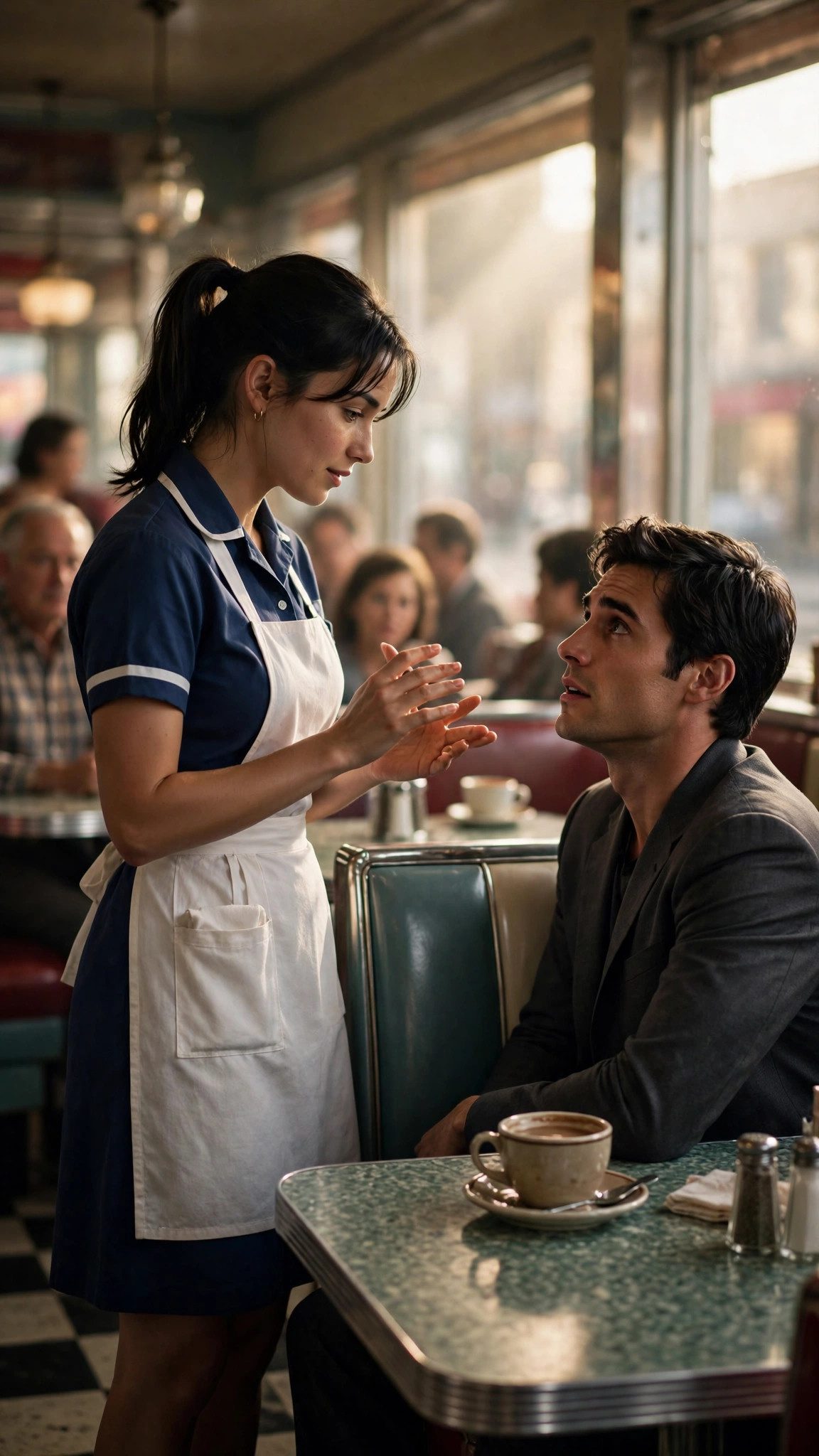
    The Whitfield Diner had been on the corner of Halsted and 18th Street for forty-one years, and I had worked there for ten of them. The building was old brick, the windows were big and streaked, the counter was long and scratched, and the coffee machine hissed like an angry cat every morning at six. The regulars called it the Whitfield, and the owner, Mr. Whitfield, called it his life, and both of them were right.

    Mr. Whitfield was seventy-four years old, with white hair and hands that shook a little when he poured coffee, and he had run the diner since before I was born. He had hired me when I was seventeen, after my father died in a warehouse accident and my mother needed me to bring in money. He didn't ask me about school. He didn't ask me about my grades. He just handed me an apron and said, "You watch people's hands, girl. Hands tell you everything."

    He was right. In ten years, I learned to read a room by its hands. The truck drivers drummed their fingers when they were impatient. The old ladies folded their napkins into perfect squares when they were lonely. The teenagers texted under the table when they were bored. And the men who came in alone, the ones in the good suits who sat in the corner booth and never looked at the menu, they kept their hands flat on the table, very still, like men who were used to being watched and had learned not to give anything away.

    After that first day, Salvatore Marquetti came every day at eleven forty in the morning. He always sat at table twelve, the corner booth by the window, where he could see the whole room and the door at the same time. He always ordered the same thing: black coffee, toast, and two eggs, scrambled. He always tipped exactly twenty dollars, folded neatly under the coffee cup. And he always waited for me.

    The first week, he didn't say much. He would sign, "Good morning," and I would sign, "Good morning," and he would eat his eggs slowly, watching the room, watching the street, watching my hands when I passed his table. Sometimes he would catch my eye and sign, "Busy today," and I would sign, "Always busy," and he would nod, like that was a real conversation, like that was enough.

    The second week, he started asking questions. "How long have you worked here?" he signed. "Ten years," I signed back. His eyebrows went up. "You started young," he signed. "I needed the money," I signed. "My father died. My mother needed help. My brother needed help." He nodded slowly, and he didn't ask any more questions that day, but the next day he signed, "Your brother. Chris. He is deaf like me?" And I signed, "Yes. Born deaf. He is nineteen. He just finished school." And Salvatore nodded again, and for a long moment he just looked at his coffee, and I wondered what he was thinking.

    The third week, Gabby cornered me in the kitchen during the afternoon lull. "Okay," she said, her voice low, her eyes wide. "What is going on with you and the mafia boss? Because everybody is talking about it, and I need to know before I hear it from someone else."

    "Nothing is going on," I said, which was true, and also not true, because something was going on, I just didn't have a name for it yet.

    "He comes every day," Gabby said. "He sits at your table. He talks to you with his hands. He tips twenty dollars. Val, men like that do not tip twenty dollars for eggs. Men like that do not come to diners. What does he want?"

    "I don't know," I said honestly. "He wants someone to talk to, I think. In his language. I think nobody has ever talked to him in his language before. Not in a place like this."

    Gabby stared at me. "You are not scared of him?"

    I thought about it. Was I scared of Salvatore Marquetti? The newspapers called him Chicago's most dangerous man. The whispers in the diner said he had men killed, that he ran the docks and the trucks and the unions, that his father's killers had never been found because Salvatore had found them first. I had heard all of it. And I had also watched him sit in my booth for three weeks, eating scrambled eggs, signing politely, tipping twenty dollars, and looking at my hands the way a thirsty man looks at water.

    "No," I said. "I'm not scared of him. He has never once raised his voice to me. He has never once been rude. He signs please and thank you. He asks about my brother. The men I am scared of are the ones who shout. He doesn't shout. He doesn't even speak."

    Gabby shook her head. "You're crazy, Val. You're absolutely crazy. But also," she added, grudgingly, "he is very handsome."

    "He is," I agreed, and we both laughed, and for a moment it felt like a normal day in a normal diner with a normal crush on a normal man, instead of what it really was.

    Because the truth was, I was starting to look forward to eleven forty. I was starting to check the clock at eleven thirty, and fix my ponytail, and make sure my apron was straight. I was starting to think about what I would sign to him, what I would ask him, what his hands would say back to me. I was starting to feel something I hadn't felt in years, something warm and frightening and completely impractical, and I was doing my best to ignore it, because waitresses at the Whitfield Diner did not fall in love with mafia bosses. That was not a thing that happened in real life. That was a thing that happened in movies.

    But Salvatore Marquetti was not a movie. He was a man who came to my diner every day, and sat in my booth, and spoke my brother's language, and looked at me like I was the first person in years who had actually seen him.

    One afternoon, near the end of the third week, he was finishing his coffee when a man in a gray suit came into the diner and slid into the booth across from him without being invited. The man was younger than Salvatore, with slicked-back hair and a gold watch and a smile that didn't reach his eyes. He talked fast, with his mouth, not his hands, and he kept glancing at the door, like he was afraid someone might be listening.

    I was wiping down the next table, and I couldn't help overhearing. The man in the gray suit said, "The Collection wants the whole block, Sal. The gallery needs the space. The diner is the last holdout. Whitfield won't sell, but he's old, and he's sick, and his daughter in Florida keeps calling him. We can push him. We can make him an offer he can't refuse."

    Salvatore didn't answer. He just looked at the man, very still, his hands flat on the table.

    "The boss wants it done by Christmas," the man said. "Sixty days. That's the timeline. The lawyers are ready. You just have to say the word."

    Salvatore lifted one hand, slowly, and made a single sign. I didn't know the sign. It was fast and sharp, and the man in the gray suit flinched, and then he slid out of the booth and left the diner without looking back.

    I stood there with my rag in my hand, frozen. The Collection. The whole block. Sixty days. The diner is the last holdout.

    I knew what the Central Illinois Collection was. Everybody in Chicago knew. It was Salvatore Marquetti's legitimate company, a private art collection and gallery business, the clean face of his empire. And if the Collection wanted the whole block, and the diner was the last holdout, then the man who had been coming to my table every day, the man who signed "Stay. Talk to me," was the man who was going to buy my diner and close it down.

    That night, I went home and I didn't tell my mother. I didn't tell Chris. I sat at our kitchen table and I looked at the bills stacked by the phone, and the tip jar on the counter, and the calendar on the wall where I had marked Chris's job interviews in red pen, and I thought about what would happen to us if the Whitfield closed. Where would I work? Who would hire a twenty-seven-year-old waitress who had spent ten years in one diner? How would I pay for Chris's bus pass, and my mother's medicine, and the rent on our little apartment?

    And I thought about Salvatore Marquetti, sitting in my booth, signing "Good morning" with his beautiful, careful hands, and I thought about how I had spent three weeks thinking he was the first person who had ever really seen me, when all along he might have just been looking at the building.

    That evening, after my shift, I came home to find Chris sitting at our kitchen table with a stack of job applications spread out in front of him, his face tight with concentration. He looked up when I came in, and he signed, "How was work?"

    "Busy," I signed back, which was true, and also the biggest lie I had told all day.

    He nodded toward the applications. "I applied to four more places today," he signed. "A warehouse. A grocery store. A print shop. The man at the print shop said they would call me. He said it very slowly, like I was a child. I wanted to tell him I can read lips faster than he can talk, but I just smiled."

    My heart ached for him. Chris was nineteen, smart, fast with his hands, good with machines, and the world kept looking at his deafness first and him second. I sat down across from him and I signed, "You will find something. You are the smartest person I know. Any place would be lucky to have you."

    He smiled, a small, brave smile, and he signed, "You always say that."

    "Because it is always true," I signed, and I reached across the table and squeezed his hand, and I made myself a promise, right there in that kitchen, with the bills on the counter and the applications on the table. Whatever happened with the diner, whatever happened with Salvatore Marquetti, I would not let my brother's future depend on the kindness of strangers. I would build it myself, the way I had built everything else in my life, one day at a time, one shift at a time, one pair of hands at a time.

    The next morning, Mr. Whitfield called me into his office before my shift. His office was a tiny room behind the kitchen, with a desk covered in papers and a window that looked out onto the alley. He sat down heavily in his chair, and he looked older than I had ever seen him look.

    "Val," he said, "I need to tell you something, and I need you to hear it from me before you hear it from someone else."

    My heart sank. "Is it about the Collection?" I asked.

    He blinked. "You already know."

    "I overheard something yesterday," I said. "A man in a gray suit. He said the Collection wants the whole block. He said the diner is the last holdout. He said sixty days."

    Mr. Whitfield nodded slowly. "It's true. They've made me an offer. A good offer. More money than this diner has made in five years. My daughter wants me to take it. My doctor wants me to take it. My knees want me to take it." He rubbed his hands together, and I saw that they were shaking more than usual. "I'm seventy-four years old, Val. I can't run this place forever. And the roof needs fixing, and the grill needs replacing, and the health inspector was here last month, and I just… I don't know if I can keep going."

    "But the diner is your life," I said.

    "It is," he said. "And it has been a good life. But lives end, Val. Places end. And I need to know that when I go, the people I love will be all right. You, and Gabby, and the cooks, and the regulars. I need to know you'll be all right."

    "Will we?" I asked. "If the diner closes, where do we go?"

    He didn't answer that. He just looked at me, and I saw something in his eyes that I had never seen before. Guilt. And something else. Something that looked almost like hope.

    "There's one more thing," he said quietly. "The man who comes every day. The man in the charcoal suit. His name is Salvatore Marquetti, and he is the one buying the block. And Val, I think you should know… he asked me about you. The first day he came in, after you served him, he came to my office and he asked me who you were. He asked me how long you'd worked here. He asked me if you had family. And I told him."

    I stared at him. "You told him about Chris?"

    "I told him you were the best waitress I ever had," Mr. Whitfield said. "And I told him your brother is deaf, and that you learned sign language for him. And do you know what he did? He sat in that chair right there, and he cried. Just for a second. Just one tear, running down his face, before he wiped it away and pretended it never happened. A man like that doesn't cry, Val. Not in front of strangers. Not ever. But he cried in my office, because of you."

    I didn't know what to say to that. I stood in Mr. Whitfield's little office, with the papers on the desk and the window looking out on the alley, and I felt like the floor had tilted under my feet.

    "He's coming back today," Mr. Whitfield said. "At eleven forty, like always. And Val, whatever you decide to do about him, about any of this, I want you to know that you have a job here for as long as I own this diner. And if I sell it, I'll make sure you get a recommendation that will get you hired anywhere in this city. That's a promise."

    I thanked him, and I went out to start my shift, and I tried to focus on the coffee and the orders and the regulars, but all I could think about was eleven forty, and the man in the charcoal suit, and the tear running down his face in Mr. Whitfield's office, and the sixty days until the diner closed, and the fact that the man I was starting to fall for might be the same man who was going to take everything from me.
  • Chapter 1: The Man in the Charcoal Suit

    Chapter 1: The Man in the Charcoal Suit

    My coworkers sent me to serve Chicago's most feared mafia boss because they thought watching me humiliate myself would be the funniest moment of the night.

    The lunch rush had just started at the Whitfield Diner, and the whole room smelled like coffee and bacon grease and rain coming in off the street. Every table was full. The bell over the door hadn't stopped ringing since eleven. I had a tray balanced on one hand, an order pad in my apron pocket, and a knot in my stomach that had nothing to do with hunger.

    "Val, table twelve," Gabby hissed, grabbing my arm as I came out of the kitchen. Her eyes were wide and her face was pale under the fluorescent lights. "The man in the charcoal suit. He just walked in. He wants a table, and nobody else will take him."

    I looked across the room. The entire diner had gone quiet in that strange, sudden way a room goes quiet when something dangerous walks through the door. Conversations stopped mid-sentence. A fork clinked against a plate and nobody picked it up again. You could almost hear the tension humming like a live wire.

    He was tall, with dark hair and a handsome face that looked like it had been carved out of something expensive and cold. His charcoal suit fit him the way suits fit men who never have to look at a price tag. He stood just inside the door, rain on his shoulders, looking around the room with calm, dark eyes, and he did not seem to notice or care that every single person in the place was staring at him.

    "Salvatore Marquetti," Gabby whispered, her voice shaking. "The mafia boss. He's the one they say is Chicago's most dangerous man. He supposedly took over his father's family at twenty-two, when his father was taken out in a drive-by."

    I had heard the name. Everybody in Chicago had heard the name. Salvatore Marquetti ran half the city from an office nobody could find, and the newspapers called him the silent boss, because he never gave interviews, never made speeches, never said a word in public that anyone could quote.

    "He's deaf," Gabby added, her voice dropping even lower. "He can't hear a word anyone says. He can only talk in sign language. He can't even hear the word thanks unless you speak sign language."

    Behind the counter, two of the other girls were trying not to laugh. One of them mouthed, "She's totally taking this one for herself." Another one whispered something about a bet, about how fast I would empty my tray all over the most feared man in Chicago.

    "Bet she empties her tray," I heard one of them say, and then they started giggling, the way people giggle when they think someone else's embarrassment is going to be the best entertainment of their shift.

    I didn't giggle. I set my tray down on the counter, wiped my hands on my apron, and walked toward table twelve.

    Gabby grabbed my arm again. "Val, don't," she whispered. "Just don't. He can't hear you. You'll make a fool of yourself."

    "I know," I said, lowering my voice so only she could hear. "I know."

    She blinked at me. "Hold on. You know?"

    "He's deaf," she repeated, as if she didn't believe me, as if saying it twice would make it more true.

    "I know," I said again, and I gently lifted her hand off my arm and kept walking.

    Because here is the thing my coworkers didn't know. Here is the thing nobody at the Whitfield Diner knew, except the owner, and my mother, and my little brother. I had been learning sign language since I was eight years old, not because of a class assignment, not because it looked good on a resume, but because my little brother Chris was born deaf, and when he was a baby I decided that if the world wasn't going to learn how to talk to him, then I was going to learn how to talk to him in the only language he had.

    My brother is nineteen now. He finished school last spring. He is smart and funny and stubborn, and the world still treats him like he is broken, like he is less than other people, like his life is something to feel sorry about. I have spent my whole life standing between him and a world that doesn't bother to learn his language. I work at this diner because I have to be here every single day, after I help Chris get to school in the morning, after I help my mother with the bills at night, after I do all the small, invisible things that keep our little family standing.

    I am a waitress. That is who I am. It is not glamorous, and my coworkers are weird, and the pay is barely enough, and I have been working at the same diner for ten years. I have seen every cook get fired or promoted. I have seen every waitress come and go. I have never left. This diner is mine in the way a place becomes yours when you have mopped its floors ten thousand times and you know which table wobbles and which regular takes his coffee black and which one needs extra sugar because his hands shake.

    The owner, Mr. Whitfield, taught me to make coffee for other people when I was seventeen and didn't know anything about anything. He taught me that a diner is not about the food. It is about showing up. Every day. Even when you're tired. Even when your feet hurt. Even when your little brother needs you and your mother needs you and the whole world needs something from you. You show up.

    So when the most feared man in Chicago walked into my diner, and my coworkers pushed me toward him like I was a joke they couldn't wait to watch, I did what I always do. I showed up.

    I stopped at table twelve and I looked at him, really looked at him, and I saw what nobody else in that room had bothered to see. He was not looking at the menu. He was not looking at the room. He was watching people's hands. He was watching the waitress at the next table pour coffee, watching her mouth move, watching the way the whole room talked with their hands without even knowing it. He looked tired. Not the tired of a man who hasn't slept. The tired of a man who has spent his whole life watching a world talk around him, and never once being talked to.

    I smiled at him. Not a customer-service smile. A real one. And then I lifted my hands, and I signed.

    "Welcome to the Whitfield," I signed. "My name is Valentina. What can I get you?"

    The silence in the diner got deeper. Somewhere behind me, someone dropped a spoon, and it sounded like a gunshot.

    Salvatore Marquetti stared at me. His dark eyes went wide. His hands, which had been resting flat on the table, curled slowly into fists and then opened again. He leaned forward, just a little, like a man who thinks he might be dreaming and doesn't want to wake up.

    And then he lifted his hands, and he signed back to me, his movements sharp and fast and beautiful, the hands of a man who has spoken this language his whole life.

    "You know sign language?" he signed.

    "My little brother is deaf," I signed back. "I learned for him."

    He stared at me for a long moment. Then he signed, slowly, carefully, like he was choosing each word the way a man chooses a gift.

    "Stay," he signed. "Talk to me."

    I felt my heart beating in my throat. Behind me, Gabby was holding her breath. The whole diner was holding its breath. The man in the charcoal suit, the most feared man in Chicago, was asking the waitress to stay and talk to him, and he was asking in the language my little brother spoke, in the language I had learned at my kitchen table when I was eight years old, practicing the alphabet with my fingers until they cramped.

    "I work here every day," I signed, and I meant it as an apology. I had tables. I had orders. I had a shift that didn't end for six more hours.

    He nodded, like that was the answer he had been waiting for. He smiled then, a small, real smile that changed his whole face, and he signed, "Then I'll come every day."

    That was how it started. That was the first day. I didn't know it then, but that was the day my whole life changed, the day the coldest, quietest, most dangerous man in Chicago walked into my diner and asked me to speak his silence, and I said yes without even knowing I was saying it.

    My name is Valentina Cruz. I am twenty-seven years old. I am a waitress at the Whitfield Diner in Chicago, and this is the story of the night the man in the charcoal suit came back, and the morning everything I thought I knew about him turned out to be wrong, and the day I learned that silence is not empty. Silence is where the truth lives, if you know how to read it.

    But before that day, before the lunch rush and the charcoal suit and the hands that spoke my brother's language, there was an ordinary life. A small life. A life of early mornings and late nights and coffee pots and tip jars and a little brother who deserved a world that would learn to talk to him. Let me tell you how it began, from the beginning, because the beginning is the only way any of it makes sense.

    I was eight years old when my mother brought my baby brother home from the hospital and told me, very quietly, in the kitchen, while my father was still at work, that Chris couldn't hear. She said it the way you say something you have been carrying for weeks and you finally have to set it down. She said the doctors had tested him three times. She said he was born deaf, and he would always be deaf, and there was nothing anyone could do to change it, and she was sorry, as if it were her fault, as if she had done something wrong by bringing a deaf baby into the world.

    I didn't understand what deaf meant, not really. I thought it meant he couldn't hear music, or the television, or my voice when I told him stories. I thought it meant he would be lonely. And I was eight, and I loved him already, this tiny baby with his fists curled tight and his eyes following my face around the room, and I decided, right there in that kitchen, that if my brother couldn't hear the world, then I would learn to speak to him in a way he could understand.

    My mother found a woman at the community center, an old deaf woman named Mrs. Alvarez, who taught sign language classes on Tuesday nights in a room that smelled like chalk and old coffee. My mother took me every Tuesday for three years. I learned the alphabet first, then the numbers, then the words for mother and father and sister and brother and hungry and tired and happy and sad. I practiced at the kitchen table until my fingers cramped. I practiced in the mirror. I practiced on Chris, who would watch my hands with his enormous dark eyes and then laugh, a big, silent, shaking laugh, and reach for my fingers with his tiny hands.

    By the time I was twelve, I could hold a whole conversation in sign language. By the time I was fifteen, I was interpreting for my mother at Chris's school meetings, because the school never bothered to hire an interpreter, and my mother never learned more than a few dozen signs, and somebody had to tell the teachers what Chris needed. By the time I was seventeen, I was working at the Whitfield Diner after school, and Mr. Whitfield, who had a deaf nephew of his own, taught me to make coffee and told me that the best waitresses are the ones who watch people's hands, because hands tell you what people need before their mouths do.

    I never told my coworkers about Chris. Not really. They knew I had a little brother. They knew I went home early on Tuesdays sometimes, when Chris had a doctor's appointment. But they didn't know that I could sign, because nobody ever asked, and because in a diner, nobody cares what you can do until the moment they need you to do it. They thought I was just Val. Quiet Val. The girl who never left, who never complained, who showed up every single day and did her job and went home.

    They didn't know that my life was held together by sign language and early alarms and a tip jar I kept in a coffee can under my bed, saving for the day Chris finished school and needed something more than what our mother and I could give him. They didn't know that when Chris was nineteen and finished school, he cried in our kitchen because every job he applied for looked at him like he was a problem to solve instead of a person to hire. They didn't know that I had promised him, on the night he finished school, that I would find a way, that his life was not too short to take a break, that he would have a future, even if I had to build it for him with my own two hands.

    That was my life before Salvatore Marquetti. A small life. A good life, but a small one. And then one rainy morning, during the lunch rush, the man in the charcoal suit walked through the door, and my coworkers pushed me toward him, and I lifted my hands, and I signed, "Welcome to the Whitfield," and everything changed.

    I didn't know, standing at table twelve with a tray in my hand and my heart beating in my throat, that the man looking up at me was the head of the Marquetti family. I didn't know that he had taken over his father's empire at twenty-two, after his father was killed in a drive-by on a street not far from my diner. I didn't know that he owned half the buildings on our block, or that his company, the Central Illinois Collection, was buying up the whole neighborhood, one storefront at a time, or that the Whitfield Diner was the last piece he didn't own yet.

    I didn't know any of that. All I knew was that for the first time in my life, a stranger had looked at my hands and seen a language instead of a trick. All I knew was that when he signed, "Stay. Talk to me," something in my chest opened up like a door I didn't know was locked.

    And all I knew was that when he signed, "Then I'll come every day," I believed him. I believed him completely, and I had no idea what it would cost me.

  • Chapter 7: The Woman Who Changed Everything

    Chapter 7: The Woman Who Changed Everything

    The law moved slowly, the way the law always moves, but it moved.

    On Tuesday morning, Alessandro took his father's ledger to the chief of police, a man named Commissioner Ricci — no relation to Paolo — who had been waiting for twenty years for someone in the DeLuca family to walk through his door with evidence instead of a bribe. Marco testified. The two men from my bedroom testified. The accountant produced his second set of books. And within a week, Dominic Voss was arrested at the airport, trying to board a plane to Dubai with a suitcase full of cash. Within a month, Vincent Castellano was arrested at his villa on Lake Como, in his dressing gown, shouting that the DeLucas had no right, that no one had the right, that this was a war and wars did not end in courtrooms.

    He was wrong. The trial lasted four months. I testified, in three languages, about the telephone calls I had overheard, and the mistranslations in the boardroom, and the night the men came to my room. Marco testified about the warehouse, and the man from Naples, and the threats against his wife and his son. The ledger testified loudest of all, in Vittorio DeLuca's careful handwriting, page after page of payments and dates and names, a record of betrayal so complete that even Castellano's lawyers could not explain it away.

    Castellano was sentenced to life in prison. Voss was sentenced to thirty years. The two men from my bedroom were sentenced to eight years each, and they wept in the courtroom, and I felt nothing for them except a distant pity, the way you pity a storm that has passed.

    Paolo's death was investigated too. The police found the men who had killed him at the station in Naples, and they were arrested, and they were sentenced, and I went to Paolo's grave one cold morning in November, and I stood there for a long time, and I thought about a nervous man who gambled, and who owed money, and who had been given no choice, and who had paid for it with his life. I left flowers. I did not forgive him, exactly. But I understood him. And understanding, I have learned, is the beginning of mercy.

    The port venture flourished. Volkov's cranes arrived before winter, and Ferrante's ships filled the docks, and the Genoa port became the busiest on the Mediterranean. The deal that had nearly died in the boardroom became the foundation of something larger: a legitimate shipping company, owned jointly by the DeLucas, the Ferrantes, and the Volkovs, run by accountants and engineers instead of capos, paying taxes, hiring hundreds of people. Alessandro called it the new empire. I called it the honest one.

    And the empire kept changing. Alessandro closed the businesses that could not survive in daylight. He sold the warehouses that had no purpose except to hide things. He ended the arrangements with the men who had profited from fear. Some of the old capos left, angry, calling him soft, calling him weak. He let them go. "An empire built on fear," he told me once, late at night in the library, "is an empire waiting to fall. An empire built on trust is an empire that lasts." He was right. The men who stayed were the loyal ones, and the loyal ones worked harder than the frightened ones ever had.

    In the spring, we opened the school.

    It was my idea, and Alessandro made it happen the way he made everything happen: quickly, completely, and without asking permission from anyone. We bought a building near the university, a beautiful old palazzo with tall windows and a garden, and we filled it with classrooms and books, and we named it the Marchetti School of Languages, after my father and my mother. It teaches seven languages — Italian, Russian, English, French, Spanish, German, and Arabic — to anyone who wants to learn, for free. The first students were the children of the dockworkers, and the daughters of the maids, and the sons of the drivers, children who had grown up the way I had grown up, believing that the world was closed to them. On the first day, I stood in front of a classroom of twenty children, and I wrote on the blackboard in seven languages, "The river is wide," and I watched their faces light up, and I thought about my father, testing me at the kitchen table, and my mother, laughing on the telephone in Russian, and I knew they would have been proud.

    Rosa came to the opening. She wore her best coat, and she cried, and she told everyone who would listen that she had known me since I was a girl with a suitcase, and that she had always known I would do something extraordinary. She still works in the house, because she refuses to retire, but now she is the head of the household, and the maids call her Signora Rosa, and she pretends not to like it, and she likes it very much.

    Marco Bellini's wife and son came to Milan, as Alessandro had promised. They live in a small house near the garden, and his son, whose name is also Marco, goes to the Marchetti School, and he is learning Russian, because he says he wants to speak to the woman who saved his father. Marco himself works in the shipping company now, counting cargo honestly, and he is a good man, and he will be a good man for the rest of his life, because mercy, once given, is a debt that can never be repaid, only passed on.

    Enzo, my guard, is still my guard, though now he guards me as a friend, and he comes to Sunday dinner, and he tells terrible jokes, and Alessandro pretends to hate them, and laughs anyway.

    And Alessandro — Alessandro is no longer just the Don. He is still the head of the family, still the man the city fears and respects, but he is also the man who comes home at night and takes off his jacket and sits in the library with me, reading, while the fire burns low. He is the man who learned Russian for me, one sentence at a time, and who is now learning Arabic, because he says a man should know all seven of his wife's languages, and I tell him he will never manage the pronunciation, and he tells me to wait and see.

    We were married in June, in the garden of the DeLuca house, under the olive tree where Alessandro had once told me to keep talking. Rosa cried. Volkov came from Moscow, and he danced with Rosa, and he drank too much vodka, and he told everyone that I was the best negotiator he had ever met, and that he had once tried to hire me away from Alessandro, and that Alessandro had refused, and that he had never seen Alessandro so happy. Ferrante came from Genoa, and he brought his wife, and his wife told me that Ferrante had not smiled like that in years. My mother's sister came from Moscow, the aunt I had not seen since I was a child, and she wept, and she told me I had my mother's eyes, and my father's stubbornness, and that they would have loved Alessandro, because he was a man who had learned to listen.

    I wore a white dress. Not a uniform. A white dress, simple and beautiful, with no apron, and no tray, and no one to serve but myself. And when Alessandro took my hand, and the priest asked if I would take this man, I answered in seven languages, one after another, because I could, and because it made everyone laugh, and because it was the truest thing I had ever said.

    "Yes," I said, in Italian. "Da." In Russian. "Oui." In French. "Sí." In Spanish. "Ja." In German. "Na'am." In Arabic. "Yes." In English.

    And then, because it was our wedding, and because I could not resist, I added one more, in the Neapolitan dialect my father had taught me, the dialect of the docks, the dialect of men who curse in their mother tongue: "Sì, pe' sempre." Yes, forever.

    The garden erupted. Rosa wept. Volkov roared. Alessandro kissed me, and the olive tree shook in the summer wind, and the bells of the church down the hill began to ring, thin and golden, the way they had rung on the evening I first stepped into the boardroom.

    The wedding preparations took a month, and Rosa supervised every detail with the iron hand of a general and the tenderness of a grandmother. She chose the flowers. She chose the music. She chose the dress, a simple white dress with no apron and no uniform, and when I tried it on, she wept, and she said, "Your mother would have loved this. She would have loved him, too. A man who learns Russian for love is a man worth marrying."

    Volkov returned for the wedding, and he brought his wife, a formidable woman named Irina, who took one look at me and said, in Russian, "So you are the maid who saved my husband's money. I have heard a great deal about you. I approve." She became, over the course of the evening, one of my favorite people in the world.

    In the first month of the school, we had two hundred students. By the third month, we had five hundred. The children of the dockworkers sat next to the children of the bankers, and they learned Italian and Russian and Arabic together, and they taught each other the way children always do, without fear and without prejudice. One afternoon, I walked into a classroom and found a boy of eight, the son of one of our drivers, teaching a girl of seven, the daughter of a judge, how to count to ten in Arabic, and I had to turn away, because my eyes were full of tears, and I did not want them to see their teacher cry.

    Alessandro's Arabic lessons became the great comedy of our household. He practiced every morning, in the library, with a tutor I had hired, a patient woman from Cairo named Layla, and his pronunciation was, in the beginning, terrible. Rosa would stand in the doorway, listening, and she would shake her head, and she would say, "The Don can negotiate a two-billion-euro deal, but he cannot say 'good morning' in Arabic." Alessandro would laugh, and he would try again, and slowly, word by word, he got better, until one morning he greeted me in perfect Arabic, and I laughed, and I kissed him, and I told him he was the most stubborn student I had ever met.

    In the autumn, the foundation gave its first scholarship, to a girl of seventeen whose parents had died, a girl with a suitcase full of books and no one to take her in. We brought her to the school, and we gave her a room, and a job, and a future, and when I looked at her, I saw myself, nine years earlier, arriving at the station with nothing, and I understood, finally, what my mother had meant when she wrote that one day the world would need me. The world had needed me. And now I was the world, for someone else.

    On the first anniversary of the school, we held a celebration in the garden, and the children performed a play in seven languages, each child speaking a different tongue, telling the same story seven different ways, and the parents wept, and Volkov, who had flown in from Moscow for the occasion, stood up and said, in Russian, "I have built ships, and I have built companies, and I have never built anything as good as this." Alessandro took my hand, and he squeezed it, and he whispered, in Arabic, the language he was still learning, "You did this." And I whispered back, in Italian, "We did this."

    That night, after the guests had gone, Alessandro and I sat in the garden, under the stars, and he held my hand, and he said, "Do you remember what you said to me, in the boardroom, on the first night?"

    "I said I was a woman who could change everything," I said.

    "And you did," he said. "You changed the deal. You changed the family. You changed the empire. You changed me."

    I leaned my head against his shoulder. The garden smelled of jasmine. The house was quiet. The city spread out below us, gold and dark, and somewhere in it, in a building near the university, twenty children were dreaming in seven languages.

    "I didn't change everything," I said. "I just finally spoke. The words were always there. I was just waiting for the right moment."

    "Then I'm glad you waited," he said. "And I'm glad you spoke."

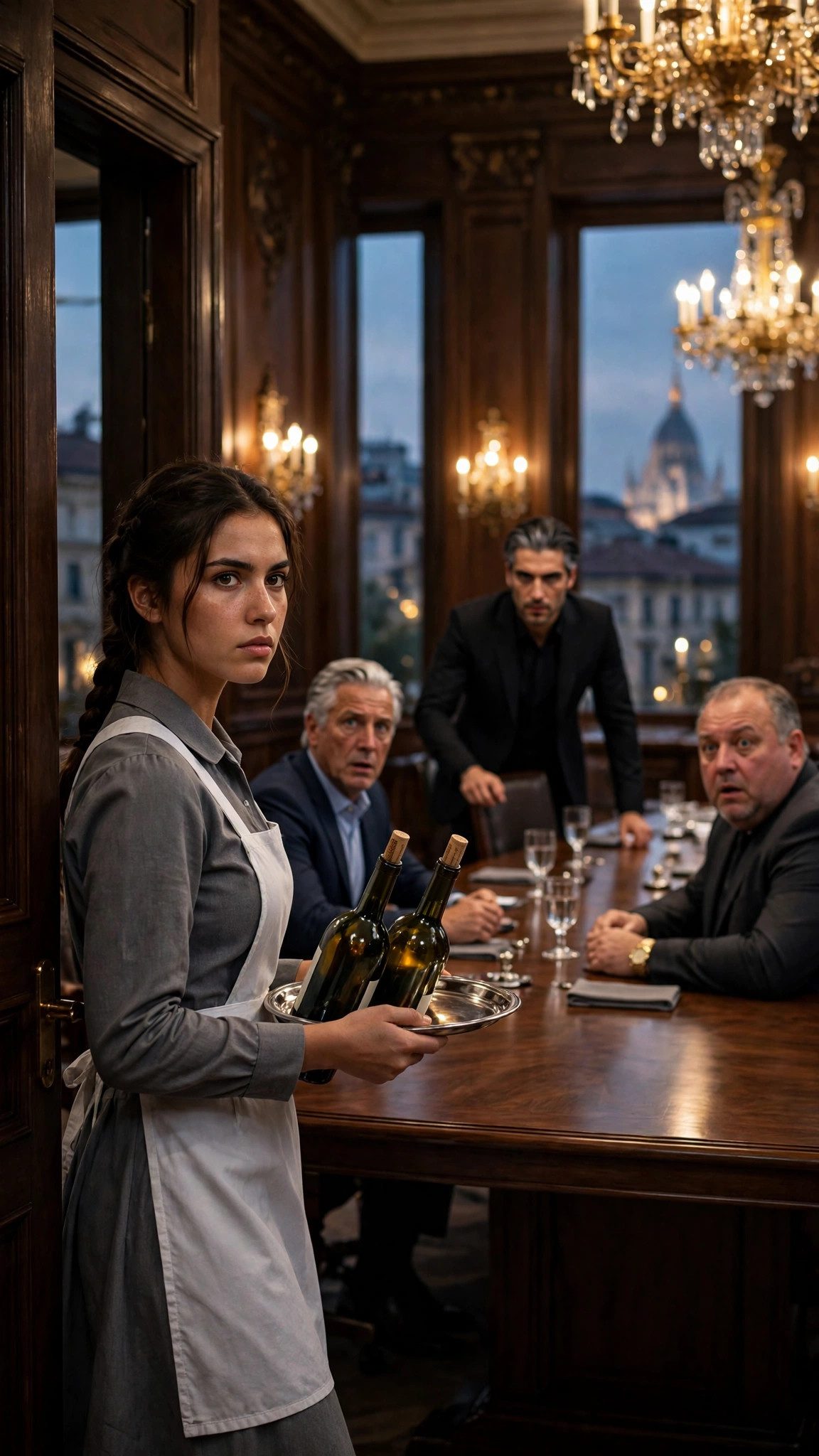
    So am I. I am glad I spoke, and I am glad he listened, and I am glad that a maid who carried a tray of wine into a room full of the most feared men in Milan was brave enough to say, in a voice barely above a whisper, "I can help."

    Because I could. And I did. And the empire will never be the same.

    Sometimes, late at night, when the house is quiet and Alessandro is asleep beside me, I lie awake and think about the seven languages, and how each one of them saved me in a different way. Italian gave me a home. Russian gave me my mother. English gave me the world. French gave me diplomacy. Spanish gave me warmth. German gave me precision. Arabic gave me poetry. And together, they gave me a life I never dared to dream of, in a house I once cleaned in silence, beside a man I once feared, in a city that once felt like a door closing. Now the door is open. Now the words are mine. And now, finally, I am exactly who I was always meant to be.

    The End.
    THE END

  • Chapter 6: What the Ledger Said

    Chapter 6: What the Ledger Said

    On Monday morning, the deal was signed.

    The boardroom was full again, but it was a different room than it had been a week before. Volkov was there, in a new suit, smiling. Ferrante was there, relaxed, his hands open on the table. The lawyers were there, with their papers and their pens. And I was there, sitting at Alessandro's right hand, in the gray suit Rosa had chosen for me, translating the final terms, watching the numbers line up the way my father had once taught me numbers should line up: honestly, and in everyone's favor.

    When it was done, when the pens had been put down and the hands had been shaken, Volkov stood up, and he came around the table, and he took my hand, and he kissed it, in the old Russian way, and he said, in Russian, "You are a remarkable woman, Lucia Marchetti. My father built his first ship with his hands. You built this deal with your tongue. I will remember your name."

    Ferrante kissed my hand too, and he said, in Italian, "My grandmother always said that the smartest person in the room is the one nobody notices. She was right. Thank you, Lucia."

    They left. The room emptied. And Alessandro and I were alone, in the boardroom where it had all begun, with the sun coming through the tall windows and the city spread out below us like a map.

    "Two billion euros," he said. "The largest deal this family has ever made. And it happened because a maid walked into a room with a tray of wine."

    "And because you listened to her," I said.

    He smiled. It was a real smile this time, not the almost-smile from the garden, but a full smile, and it transformed his face, and I understood, suddenly, what he must have looked like as a boy, before the empire and the weight and the brother in Naples.

    "Lucia," he said, "there is something I have to tell you. About the ledger."

    "The ledger?" I asked.

    He went to the sideboard and opened a drawer, and he took out a leather book, old and worn, its pages full of handwriting I recognized, even upside down, as the careful script of a man who had kept accounts for a very long time.

    "This belonged to my father," he said. "Vittorio DeLuca kept a ledger of everything. Every deal, every payment, every debt, every favor. When he died, I inherited it, and I have kept it locked in that drawer for eight years, because I was afraid of what it would tell me."

    He opened the book. He turned the pages, slowly, until he found the one he was looking for, and he laid it on the table in front of me.

    "Read it," he said.

    I read it. It was a page from two years ago, the month Enzo died. There were entries for payments to a man in Naples, a man named Dominic Voss. There were entries for a car, and a restaurant, and a bomb. And there, at the bottom of the page, in my father's — no, in Vittorio's — handwriting, were the words: "Voss is Castellano's man. He has been in my house for six years. I do not know how to remove him without starting a war. God forgive me."

    I looked up. Alessandro's face was pale.

    "My father knew," he said. "He knew Voss was a traitor, and he did nothing, because he was afraid of the war. And Voss killed my brother. And then Voss stayed, for two more years, in my house, eating my food, smiling at my table, while I looked for a killer I could not find."

    "I'm sorry," I said. It was all I could think to say.

    "Don't be sorry," he said. "Be angry. I was angry, for two years, and anger did not help me. But you — you found him in a week. You found him by listening. And now I have a choice to make, and I want you to help me make it."

    "What choice?" I asked.

    "The old choice," he said. "The choice every Don makes. Revenge, or the law. My father chose to do nothing, and my brother died. I could choose revenge. I could have Voss killed tonight, and Castellano too, and no one would ever know. It would be easy. It would be justice, in the old way."

    He paused. He looked at the ledger, and then he looked at me.

    "Or I could choose the law," he said. "I could give this ledger to the police, and Marco's testimony, and the two men from your bedroom, and let the law do what the law does. It would be slower. It would be harder. And it would mean that the DeLuca family admits, in public, that it was betrayed from the inside, and that it needs the police to save it."

    I thought about Marco, kneeling in the council room, weeping with gratitude because I had chosen mercy. I thought about my mother, who had believed that books were stronger than bullets. I thought about my father, who had believed that a bridge could stop a war.

    "The law," I said. "Choose the law. Revenge makes the empire smaller. The law makes it bigger. If you kill Voss, you are a Don who kills his enemies, and everyone will fear you, and fear is not the same as respect. But if you hand him to the police, with evidence, and the Castellanos fall with him, then you are a man who cleaned his own house, and everyone will respect you, and respect lasts longer than fear."

    He was quiet for a long time. Then he closed the ledger, gently, the way a man closes a book he has finally finished reading.

    "Then the law," he said. "Tomorrow morning, I will take this ledger to the chief of police myself. And Marco will testify. And the two men from your bedroom will testify. And Vincent Castellano will answer for my brother, and for Paolo, and for everything else he has done."

    The meeting with Commissioner Ricci took place on a Tuesday morning, in an office with tall windows and a view of the cathedral. The commissioner was a man in his sixties, with white hair and tired eyes, and he listened to Alessandro without interrupting, his hands folded on his desk, while the ledger lay open between them like an accusation.

    When Alessandro finished, the commissioner was quiet for a long time. Then he said, "Don Alessandro, I have been chief of police in this city for eleven years. In eleven years, no member of your family has ever walked through my door with evidence. They have walked through my door with lawyers, and with money, and with threats. But never with evidence. Do you know what this means?"

    "It means my brother's killer will go to prison," Alessandro said.

    "It means more than that," the commissioner said. "It means the DeLuca family is changing. And a family that changes is a family that survives. I will take your evidence, and I will act on it, and I will protect your people while I do. You have my word."

    On the way home, Alessandro was quiet. He stared out of the car window at the streets of Milan, and I knew he was thinking about his father, and his brother, and the eight years he had spent carrying a ledger he was afraid to open.

    "My father would have called me a traitor," he said at last.

    "Your father was afraid of a war," I said. "You ended one. That is not treason. That is courage."

    On the drive home, we passed the port, and I saw the cranes standing against the sky, and the ships lined up at the docks, and I thought about how a week ago this had all been falling apart, and how now it was coming together, and how strange it was that the difference between ruin and triumph had been a maid with a tray of wine who decided, for once, to speak. Alessandro must have been thinking the same thing, because he said, quietly, almost to himself, "My father kept a ledger of everything he owned. He never kept a ledger of what he owed. I think that was his mistake. I will not make it."

    He took my hand, there in the back of the car, and he held it all the way home.

    When we reached the house, Rosa was waiting in the doorway, her arms folded, her face stern, and when she saw us, her expression softened, and she said, "Well? Did the law listen?" Alessandro nodded, and Rosa closed her eyes for a moment, and she said, "Good. Your mother would have been proud, Don Alessandro. And Lucia — your mother would have been proud of you most of all."

    That afternoon, I sat with Petrov, Volkov's lawyer, for three hours, going over the final terms of the port contract in Russian and English, clause by clause, until every number was exact and every obligation was clear. Petrov was a careful man, and a suspicious one, and by the end of the afternoon he was smiling, and he said, in Russian, "You are wasted as an interpreter, Lucia Marchetti. You should have been a lawyer."

    "I am not wasted," I said. "I am exactly where I belong."

    When I told Rosa about the commissioner that evening, she put down her spoon, and she looked at me, and she said, "Your father used to say that the law is a bridge, too. A bridge between what is and what should be. He would have been proud of you today, Lucia. They both would have."

    That evening, after the commissioner, Alessandro took me to dinner at a small restaurant on the Navigli, a place with candles on the tables and a waiter who had known Alessandro since he was a boy. Volkov and Ferrante joined us, and for the first time since I had met them, they were not negotiating. They were celebrating. Volkov told stories about his father and his first ship, and Ferrante told stories about the storms he had sailed through, and Alessandro listened, and laughed, and I translated the jokes, and the laughter, and the toasts, and I thought about how strange it was that three men who had nearly destroyed each other a week ago were now sharing bread and wine like old friends. "This," Alessandro said quietly, as the candles burned low, "is what the deal was for. Not the money. This." And I knew he meant it.

    He stood up. He walked to the window, and he stood there, looking out at Milan, and I stood beside him, and for a while neither of us spoke.

    "There is one more thing," he said at last, and his voice was different now, softer, and I could hear the man underneath the Don, the man I had first glimpsed in the garden. "After the signing, I said I wanted to talk to you about something important. This is it."

    He turned to face me. He took my hands in his.

    "Lucia Marchetti," he said, "three years ago, you came to my house with a suitcase and a secret, and you cleaned my floors, and you carried my wine, and you listened to my enemies plotting in my own corridors, and you said nothing, because you were afraid. And then, one night, you walked into my boardroom, and you saved my empire, and you changed everything. You changed the deal. You changed the family. You changed me."

    My heart was beating so hard I was sure he could hear it.

    "I am a Don," he said. "I have spent eight years being a Don, and I am good at it, and I am tired of it. I am tired of the silence, and the fear, and the men who smile at my table and sell me to my enemies. I want something else. I want a partner. Not a maid. Not an interpreter. A partner. Someone who sees what I cannot see, and hears what I cannot hear, and tells me the truth when everyone else is lying."

    He paused, and his eyes held mine, and the whole city seemed to go quiet.

    "Stay," he said. "Stay in this house, not as my interpreter, but as my equal. Help me change this empire into something my father would not recognize and my brother would be proud of. Help me make it honest. Help me make it last. And Lucia —" His voice dropped, and he spoke slowly, carefully, in Russian, my mother's language, the language of the lullabies she had sung to me when I was small. "Ya lyublyu tebya." I love you.

    I stared at him. He had learned Russian. He, the Don of the DeLuca family, the man who had never needed anyone, had learned a sentence in my mother's language, and he had said it to me, in the boardroom, with the sun coming through the windows.

    And I answered him in Italian, because Italian was the language of the house, and the language of the life I had built here, and the language I wanted to build the rest of my life in.

    "Anch'io ti amo," I said. I love you too.

    He kissed me then, in the boardroom, with the city spread out below us, and it was the first time anyone had kissed me in three years, and it felt like coming home.

    When we finally pulled apart, he was smiling, and I was smiling, and the ledger was closed on the table, and the deal was signed, and the empire was already changing, and I understood, with a clarity that made my breath catch, that the girl who had arrived at the station with a suitcase and a secret was gone forever, and that the woman standing in her place was exactly who she had always been meant to be.

  • Chapter 5: The Night They Came for Her

    Chapter 5: The Night They Came for Her

    They came for me three nights later, on a Thursday, when the house was quiet and the rain was falling over Milan like a curtain.

    I had spent the day translating for Volkov's lawyers, and the evening in the library with Alessandro, going over the final terms of the port venture. The deal was nearly closed. Volkov and Ferrante had agreed on the percentages, the timeline, the cranes. All that remained was the signing, which was scheduled for Monday morning, in the boardroom where it had all begun. Alessandro had told me, as I was leaving the library, that after the signing, he wanted to talk to me about something else. Something important. He had not said what, and I had not asked, but his eyes had been soft in a way I had never seen, and I had gone to bed thinking about it, and about him, and about the strange new life I was living.

    I woke at two in the morning to the sound of my door opening.

    I had locked it. I was sure I had locked it. But the door opened anyway, slowly, without a sound, and a man stepped into my room, and then another, and I knew, with the cold clarity that comes in moments of terror, that someone had given them a key.

    The first man was tall and thin, with a scar across his cheek. The second was shorter, broader, with hands like hammers. Neither of them spoke. The thin one came toward the bed, and I did what Rosa had taught me to do when I was a girl and a man frightened me in the street near the station: I screamed.

    I screamed as loudly as I could, and the thin man lunged, and his hand came down over my mouth, and I bit it, hard, and he cursed in a language I recognized instantly. Neapolitan dialect, thick and fast, the dialect of the docks in Naples, the dialect my father had once taught me to recognize because, he said, a man always curses in his mother tongue.

    "She bit me," the thin man said, in Neapolitan, shaking his hand. "The little bitch bit me."

    "Then gag her," the broad one said, also in Neapolitan. "And hurry. The guard changes at half past two."

    They had a cloth. They had rope. They had planned this. But they had made one mistake, the same mistake every man in this story had made: they thought I was only a maid.

    I did not fight them with my hands. I fought them with my voice.

    I spoke in Russian, loudly, clearly, the words ringing out in the small room: "Pomogite! Menya pokhishchayut! V dome!" Help! I am being kidnapped! In the house!

    The thin man froze. He did not speak Russian. He stared at me, and for a moment he did not know what to do, because I was not screaming, I was speaking, and speaking was the last thing he had expected.

    Then I switched to Arabic, just as loudly: "Sa'iduni! Ana fi khatar!" Help me! I am in danger!

    The broad man grabbed for the cloth, but I twisted away, and I shouted in French: "Au secours! On m'enlève!" And then in German: "Hilfe! Ich werde entführt!" And then in Spanish: "¡Ayuda! ¡Me están secuestrando!"

    I was shouting in seven languages, one after another, as loudly as I could, and the men were staring at me as if I had gone mad, and then the door burst open, and Enzo was there, and he was not alone.

    Enzo filled the doorway like a wall. Behind him were two more guards, and behind them was Alessandro, in his dressing gown, his hair wild, his eyes blazing, holding a pistol in his hand.

    "Get away from her," Alessandro said, in a voice so quiet it was more frightening than a shout.

    The thin man moved. He reached inside his jacket, and Enzo moved faster, and there was a sound like a door slamming, and the thin man fell to his knees, clutching his shoulder, and the broad man put his hands in the air, and it was over in less than a minute.

    Alessandro crossed the room in three strides. He knelt beside my bed. His hands were on my face, and his eyes were searching mine, and for a moment he was not a Don at all. He was a man who had been terrified.

    "Are you hurt?" he asked. "Lucia, are you hurt?"

    "No," I said. My voice was shaking. "No, I'm not hurt. They didn't — they were going to take me. They had rope. They had a key. Someone gave them a key."

    He stood up. He turned to the two men, who were now on their knees with Enzo's gun at their heads.

    "Who sent you?" Alessandro asked.

    The thin man said nothing. The broad man said nothing. Alessandro looked at me.

    "Lucia," he said. "Ask them. In their language. Ask them who sent them."

    I looked at the thin man, and I spoke in the Neapolitan dialect my father had taught me, the dialect of the docks, the dialect of men who curse in their mother tongue.

    "Who sent you?" I asked. "Who gave you the key? Tell me, or the Don will ask you himself, and he will not be as gentle as I am."

    The thin man stared at me. His face went gray.

    "Voss," he whispered. "Dominic Voss. He gave us the key. He said to take the girl to the warehouse. He said the Castellanos would pay us. He said —" He stopped, and he looked at Alessandro, and he began to tremble. "He said she hears too much."

    Dominic Voss. The Castellano lieutenant. The same man Enzo the driver had named, three days ago, in the meeting of the capos. The same man who had recruited the driver, and the same man, I now understood, who had recruited Marco Bellini, and who had ordered Paolo's death at the station in Naples.

    Alessandro was very quiet. He looked at the two men on their knees, and then he looked at Enzo, and he said, "Take them to the cellar. Do not hurt them. I want them alive. I want them to talk to the police in the morning."

    Then he turned to me, and he held out his hand, and I took it, and he helped me to my feet, and he wrapped his dressing gown around my shoulders, because I was shaking, and my nightdress was thin, and the night was cold.

    "Come with me," he said. "You will not sleep alone tonight. You will sleep in the room next to mine, with Enzo outside the door, and in the morning, we will finish this."

    I went with him. I did not argue. I was too tired, and too frightened, and too grateful to argue.

    The next morning, Alessandro called a meeting of the family council. It was the first time I had ever been in the council room, a long dark room with a table that had been in the DeLuca family for a hundred years, and around it sat the capos, the advisers, the men who ran the empire. And Marco Bellini sat among them, pale and silent, his hands folded on the table, and I knew, the moment I saw him, that he had not slept either.

    Alessandro stood at the head of the table. He told the council what had happened in the night. He told them about the two men, and the key, and the name Dominic Voss. And then he turned to Marco, and he said, very quietly, "Marco. Stand up."

    Marco stood. His legs were shaking.

    "Three nights ago," Alessandro said, "you went to the old warehouse by the docks. You met a man from Naples. He told you that Paolo was dead, and that your wife and your son would be next if you talked. And then he told you to take care of the girl, or they would. Is that true?"

    Marco closed his eyes. "Yes," he whispered.

    "And did you give them the key to her room?"

    "No!" Marco said, and his voice broke. "No, Don Alessandro, I swear it. I did not give them the key. I refused. I told them I would not do it. I told them to kill me instead. And then —" He stopped, and tears were running down his face. "And then they told me they would take my son from his school. My son is seven years old. I did not give them the key. But I did not stop them either. I did not warn you. I was afraid. I am sorry. I am so sorry."

    The room was silent. The capos watched Alessandro, waiting to see what he would do. In the old days, in his father's day, a man who had betrayed the family like that would not have left the room alive.

    Alessandro looked at Marco for a long time. Then he looked at me.

    "Lucia," he said. "You are the one they tried to take. What should happen to this man?"

    Every eye in the room turned to me. I felt the weight of it, the terrible weight of being asked to decide a man's fate. I thought about Marco's wife, and his seven-year-old son, and the house by the sea in Naples. I thought about my own parents, and the rainy night, and the way the world takes everything. I thought about Rosa, who had told me that the Don was a man who wanted to be good and did not always know how.

    "He did not give them the key," I said. "He was afraid, and he did not warn us, and that is a crime. But he did not betray us. He is a man who was given no choice, and he chose the smallest evil he could find. I think —" I paused, and I looked at Marco, and I saw a man, not a traitor. "I think he should live. I think his family should be brought here, where they will be safe. And I think he should work for the rest of his life to earn back what he almost lost."

    Alessandro was quiet for a moment. Then he nodded, slowly.

    "Then that is what will happen," he said. "Marco Bellini will live. His wife and his son will be brought to Milan tonight, under guard. And Marco will tell the police everything he knows about Dominic Voss, and Vincent Castellano, and the men who killed my brother. And if he lies, even once, he will answer to me."

    Marco fell to his knees. He wept. He kissed Alessandro's hand, and then he turned to me, and he kissed my hand, and he said, in Italian, "Thank you. Thank you. You saved my life, and my son's life, and I will never forget it."

    I did not know what to say. I had never saved a man's life before. I had saved a deal, and I had saved a Don's empire, but this was different. This was a man, kneeling in front of me, weeping, because I had chosen mercy.

    Alessandro helped him to his feet. He dismissed the council. And when the room was empty except for the two of us, he came to me, and he took my hands, and he said, "You did something in there that I have never seen anyone do. You chose mercy, when you had every right to choose revenge. My father would not have done that. My brother would not have done that. I would not have done that, until today."

    "Then maybe," I said, "the empire is already changing."

    He looked at me for a long moment, and his eyes were soft, and his hands were warm around mine, and I understood, suddenly and completely, what he had wanted to talk to me about the night before, in the library, when he had said there was something important.

    But he did not say it then. He let go of my hands, gently, and he said, "Go and rest, Lucia. Tomorrow, we sign the deal. And after that — after that, we will talk."

    The morning after the council meeting, I went to find Rosa. She was in the kitchen, kneading dough, flour on her hands and on her apron, and she looked up when I came in, and she said, "You look like a woman who did not sleep."

    "I slept," I said. "For the first time in days, I slept."

    "Good," she said. "And the man? Marco?"

    "He will live," I said. "His wife and his son are coming to Milan tonight. Alessandro has given him a second chance."

    Rosa nodded, slowly, and she went back to her dough. "Your mother used to say that mercy is the only revenge that doesn't rot the hand that holds it. She was right. She was right about most things, your mother."

    I stayed with her for a while, watching her work, breathing in the smell of bread and yeast, and for a little while the house felt like an ordinary house, and I felt like an ordinary woman, and the men who had come to my room in the night felt very far away.

    Later, Enzo found me in the garden. He was carrying a cup of coffee, and he held it out to me, and he said, "The Don told me to tell you that the guards have been doubled, and that no one enters this house without his permission, and that you are to go nowhere without me."

    "Thank you, Enzo," I said.

    He hesitated, and then he said, "My brother — the Don's brother, the Enzo I was named for — he used to say that the bravest thing a person can do is speak when silence would be safer. I think he would have liked you, signorina. I think he would have said you were the bravest person in this house."

    I did not know what to say to that. I thanked him, and I drank the coffee, and I watched the morning light move across the garden, and I thought about a young man I had never met, who had wanted to open a restaurant in Naples, and who had died because of it, and I thought about how strange it was that his name was now guarding me.

    I went to my rooms. I locked the door. I lay down on my bed, and I slept, deeply and dreamlessly, for the first time in days, while Enzo stood guard outside my door, and the house settled around me, quiet and safe, and the rain washed the streets of Milan clean.

  • Chapter 4: The Price of Being Heard

    Chapter 4: The Price of Being Heard

    The morning after my sleepless night, I told Alessandro about the voice from Naples.

    We were in his study, the door closed, the fire burning low. I told him what Rosa had heard in the garden, and what I had heard on the telephone, and why I believed Paolo had not acted alone. I told him that the mistranslations had been too perfect, too precise, and that someone else had chosen the words.

    He listened the way he always listened, without interrupting, his hands flat on the desk, his eyes fixed on mine. When I finished, he stood up and walked to the window, and he stood there for a long time, looking out at the garden where his brother had once played as a boy.

    "Naples," he said at last. "My brother died in Naples. Two years ago. A car bomb, outside a restaurant. The Castellanos denied it, and no one was ever arrested, and I have spent two years looking for the man who planted it."

    "Do you think Paolo knew something about Enzo?" I asked.

    "I think Paolo knew many things," he said. "And I think I sent him to Naples with a ticket and a warning, and that if the wrong men find him there, he will not live long enough to tell anyone what he knows."

    He turned around. His face was hard, but his eyes were different. There was something in them I had never seen before. Not anger. Not suspicion. Something softer, and more dangerous.

    "Lucia," he said, "I am going to ask you to do something that may put you in danger. If you refuse, I will understand, and you will keep your rooms, and your salary, and your place in this house. No one will think less of you."

    "What is it?" I asked.

    "Find the man from Naples," he said. "The man who was afraid. The man who told Paolo, 'They will kill me if you don't.' He is still in this house, or he comes to this house, and he knows who ordered the mistranslations, and he may know who killed my brother. You are the only person who can find him, because you are the only person in this house who listens."

    I thought about Rosa's warning. I thought about my father's notebooks, and my mother's photograph, and the letter that said one day the world would need me. I thought about the three years I had spent being invisible, and how safe it had felt, and how small.

    "I'll do it," I said.

    He nodded, as if he had expected nothing else. "Then you will need protection. From today, a man named Enzo will be with you whenever you leave the house. Not the driver. A different Enzo. He is my most trusted guard, and he is loyal, and he is very good at his job."

    "Enzo," I repeated. "Like your brother."

    "Yes," he said quietly. "Like my brother. I named him myself, after Enzo died. He was my brother's best friend. He will keep you alive."

    That afternoon, I met Enzo. He was thirty years old, broad-shouldered, with a scar through his left eyebrow and kind eyes that did not match the rest of his face. He shook my hand gently, as if he were afraid of breaking it, and he said, "Don Alessandro told me to keep you alive, signorina. I intend to do exactly that."

    The next few days were the strangest of my life. I translated for Volkov's lawyers in the morning, and in the afternoon I walked through the house, listening. I listened in the kitchen, where the cooks gossiped in dialect. I listened in the garden, where the guards smoked and complained. I listened in the corridors, where the maids whispered about the new interpreter who used to be one of them. And I listened for a voice from Naples, a voice with an accent from the south, a voice that was afraid.

    The next day was my first full day of listening as the Don's interpreter, and I learned that listening, when you are allowed to do it openly, is a very different thing from listening in secret.

    In the morning, I translated for a German supplier, a stiff man from Hamburg named Herr Weber, who wanted to sell the family a fleet of refrigerated trucks. I spoke German with him for an hour, and I caught him trying to hide a clause about maintenance costs, and I translated it exactly, and Alessandro renegotiated the price on the spot, and Herr Weber left looking as if he had been robbed by a ghost.

    In the afternoon, I walked through the kitchen, and I heard the cook's assistant, a thin boy named Matteo, whispering on his telephone in the pantry, selling the family's movements to a journalist for fifty euros a story. I told Alessandro. Matteo was gone by evening, with a warning and a month's wages, because Alessandro said a boy who sells gossip for fifty euros is a boy who has never been given anything better, and that the family should give him something better, or at least not destroy him for being poor.

    That night, Alessandro found me in the library. I was shelving books, the way I always did when I could not sleep, and he stood in the doorway for a moment, watching me, and then he said, "My father kept this library locked. He said books made men soft. I think he was afraid of them."

    "Books don't make men soft," I said. "They make men wide. There's a difference."

    He smiled, and he came in, and he took a book from the shelf at random — a volume of Russian poetry, my mother's favorite kind — and he handed it to me. "Read me something," he said. "In Russian. I want to hear what it sounds like when it's beautiful."

    So I read to him. I read Pushkin, the way my mother used to read it to me when I was small, and the words filled the dark library like music, and Alessandro closed his eyes, and when I finished, he was quiet for a long time.

    "I don't understand a word," he said at last. "But I understand that it matters. My father never understood that. He thought power was the only language. You are teaching me that there are others."

    He left then, and I stayed in the library for a long time, among the books, thinking about the man who had locked this room because he was afraid of softness, and the son who had opened it because he was learning to be wide.On the second day, I sat in on a dinner with two of the capos, translating nothing, only listening, because Alessandro had asked me to learn the sound of the house when it thought no one was paying attention. The capos argued about the docks in a thick Sicilian dialect, about which ships should be searched and which should be waved through, and I understood every word, and I wrote none of it down, and I remembered all of it. That evening, Rosa brought dinner to my rooms herself, a plate of pasta and a glass of wine, and she sat with me while I ate, and she said, "You are doing what your father did, Lucia. You are building bridges. He would be proud. Eat. You will need your strength."

    On the third day, I found it.

    I was in the library, shelving books that did not need shelving, because the library was the one room in the house where men went to be alone and to talk on the telephone, believing no one was listening. And a man was talking on the telephone, in a low voice, in Italian with an accent from Naples, and he was saying, "I did what you asked. The deal is dead. No — the girl saved it. The maid. She speaks Russian, she speaks everything, she heard — no, I don't know how she heard. Please. I did what you asked. Tell him I did what he asked."

    I froze behind the bookshelf. My heart was beating so hard I was sure he could hear it. I pressed myself against the spines of the books, and I listened, and the man said, "Paolo is gone. They sent him to Naples. If they find him, he will talk. You have to —" And then he stopped. And then he said, in a different voice, a frightened voice, "Yes. I understand. I will be there tonight."

    He hung up. I heard his footsteps cross the room. I heard the door close. I waited until I could not hear him anymore, and then I stepped out from behind the bookshelf, and I saw, on the desk where he had been standing, a glass of water, and a cigarette burning in an ashtray, and a photograph, face down.

    I turned the photograph over. It was a picture of a woman and a small boy, standing in front of a house by the sea. On the back, in faded ink, someone had written: "Mama and Marco, Naples, 1987."

    Marco. The name stayed in my head all afternoon. Marco, Naples, 1987. A man with a wife and a son, or a mother and a brother. A man who was afraid. A man who had been told to do something, and who had done it, and who was now being told to be somewhere tonight.

    That afternoon, when I returned to my rooms, I found that someone had been inside them. Nothing was taken. Nothing was broken. But my father's notebooks, which I always kept in a neat stack on the desk, had been moved — the top one was now at the bottom, and a page I had marked with a ribbon was no longer marked. Someone had been looking for something. Or someone had wanted me to know that they could come in whenever they wished. I told Enzo. He searched the rooms, and he found nothing, and he said, "They are trying to frighten you, signorina. Do not let them." I straightened the notebooks. I put the ribbon back. And I understood, with a clarity that frightened me, that the men who had paid Paolo knew my name now, and knew where I slept, and that the next move would not be a search. It would be something worse.

    That evening, I told Alessandro. I told him about the library, and the telephone call, and the photograph, and the name Marco.

    He went very still. "Marco," he said. "There is a man in this house named Marco. Marco Bellini. He is my head of security for the docks. He has worked for me for six years. He has a wife and a son in Naples. His mother lives in a house by the sea."

    "Then he is the man," I said.

    "Or he is a man with the same name," Alessandro said. But his voice was flat, and I knew he did not believe that. "Tonight," he said, "he was told to be somewhere. Where?"

    "I don't know," I said. "He didn't say."

    Alessandro stood up. He walked to the door and opened it, and Enzo was standing outside, as if he had been waiting there all along.

    "Follow Marco Bellini tonight," Alessandro said. "Do not let him see you. Find out where he goes, and who he meets. And Lucia —" He turned back to me. "Stay in the house tonight. Lock your door. Do not open it for anyone except Rosa or me."

    I went to my rooms. I locked the door. I sat by the window, and I waited, and I thought about Marco Bellini, a man with a wife and a son in Naples, a man who was afraid, a man who had done what he was told because someone had threatened the people he loved. I thought about my own parents, and the rainy night on the autostrada, and the way the world can take everything from you in a single moment, and I wondered if Marco had been given a choice at all, or if he had simply been a man with a gun to his family's head, doing what any man would do.

    Late that night, there was a knock on my door. Three knocks, soft and quick. I froze. I did not move. The knock came again.

    "Lucia," Rosa's voice said, low and urgent. "Open the door. Quickly."

    I opened it. Rosa came in, her face pale, her dressing gown pulled tight around her.

    "Enzo is back," she said. "Marco went to the old warehouse by the docks. He met a man there. A man from Naples. And Lucia —" She took my hand, and her hand was shaking. "The man from Naples told Marco that Paolo is dead. They found him at the station. And they told Marco that if he talks, his wife and his son will be next. And then the man said something else. He said, 'The girl is the problem now. The girl who hears everything. Take care of her, or we will.'"

    I sat down on the edge of my bed. My legs would not hold me.

    "Alessandro knows," Rosa said. "He has doubled the guards. Enzo is outside your door right now, and he will stay there all night. But Lucia, child, you must understand something. The men who killed Paolo are the same men who killed the Don's brother. And they are not afraid of the Don. They are afraid of you. Because you are the one person who can hear them."

    I looked at her. I looked at the small room, and the window, and the garden beyond it, dark and still.

    "Then they will come for me," I said.

    "Yes," Rosa said. "They will. And when they do, you must be ready."

    I nodded. I did not sleep that night. I sat by the window, my father's notebooks open on my lap, and I listened to the house, and I waited for the morning, and I thought about what my mother had written in her letter, that one day the world would need me.

    The world needed me now. And the world, it turned out, was coming to kill me for it.

  • Chapter 3: The Interpreter’s Lie

    Chapter 3: The Interpreter’s Lie

    Paolo Ricci was gone by noon, exactly as Alessandro had promised. I did not see him leave. I heard about it from Rosa, who heard about it from the cook, who heard it from one of the guards: two men had come to Paolo's room, packed his suitcase while he watched, and driven him to the station with enough money for a ticket to Naples and a warning never to come back to Milan. It was, by the standards of the DeLuca family, an act of mercy. In another house, in another year, a man who sold his Don's words would not have left in a car. He would have left in a box.

    I tried not to think about that. I tried to think about the work.

    The work began the next morning. I was given rooms on the second floor — two rooms, actually, a sitting room and a bedroom, with windows that looked out over the garden and a wardrobe full of clothes that Rosa had chosen for me: dark skirts, silk blouses, a gray suit that made me look like a woman who belonged in a boardroom instead of a kitchen. I stood in front of the mirror for a long time, looking at a stranger. The girl in the gray uniform was gone. The woman in the mirror had my face, but she stood straighter, and her eyes were harder, and I was not sure whether I liked her or feared her.

    Alessandro sent for me at nine. There was a meeting with Volkov's people, a smaller meeting this time, in the library, to work out the details of the port venture. I sat at his right hand, and I translated, and I discovered something I had not expected: I was good at this. Not just the languages — the languages were easy, they had always been easy — but the rest of it. The watching. The listening. The reading of a room. When Volkov's lawyer, a thin man named Petrov, tried to slip a clause into the agreement that would have let Volkov take control of the docks after five years, I caught it, and I translated it exactly, and I watched Alessandro's face go still, and I watched him say, in Italian, "Tell him no. Tell him the docks stay shared, or there is no deal." And I told him, in Russian, and I watched Petrov's face go pale, because he had not expected a maid to understand contract law.

    After the meeting, Alessandro walked with me in the garden. It was the first time we had ever been alone together outside a room full of men, and the garden was quiet, and the air smelled of jasmine.

    "You were listening for three years," he said. "Tell me what you heard. All of it. Start with the thieves."

    So I told him. I told him about Salvatore, the capo who was skimming from the docks, and how I knew — the telephone arguments with his wife, the new car, the way he always volunteered to count the cargo on the nights when the manifests were thin. I told him about Enzo, the driver, and the whispers in the garage, and the dialect he thought no one understood. I told him about the cook's assistant who was selling information about the family's movements to a journalist, and the guard who drank on duty, and the accountant who kept two sets of books.

    He listened without interrupting. When I finished, he was quiet for a long time, watching a bird move through the branches of an olive tree.

    "Three years," he said at last. "You knew all of this for three years, and you said nothing."

    "I was a maid," I said. "Maids who talk do not live long in houses like this."

    "And now?"

    "Now I am your interpreter," I said. "And interpreters talk. That is the job."

    He almost smiled. It was the first time I had ever seen anything close to a smile on his face, and it changed him completely, the way sunlight changes a room.

    "Then talk," he said. "And Lucia — thank you. For the thieves. For the liars. For all of it."

    That afternoon, Alessandro called a meeting of his capos. I sat beside him, in the chair that had once belonged to his most trusted adviser, and I watched him do what Dons do when they discover they have been robbed by their own men. He did not shout. He did not threaten. He laid out the facts, one by one, in a voice so calm it was frightening, and he watched their faces as he did it. Salvatore went white. Enzo began to sweat. The accountant started to cry.

    "You have all been stealing from me," Alessandro said. "Some of you have been stealing money. Some of you have been stealing information. One of you has been stealing my words." He paused. "I know everything. I know how much, and I know how long, and I know who you sold it to. I am going to give you one chance, because my father taught me that a man who has been loyal for twenty years and steals once is a different man from a man who has been stealing for twenty years. Those of you who confess, and repay what you took, and name the men you sold to, will live, and will work, and will earn back my trust. Those of you who lie to me now, in this room, will not leave it."

    One by one, they confessed. Salvatore wept and promised to repay every euro. The accountant produced a second set of books from his briefcase, his hands shaking. Enzo, the driver, fell to his knees and begged, and named the Castellano lieutenant who had recruited him, a man named Dominic Voss.

    It was a victory. It should have felt like a victory. But as I sat there, translating nothing, just listening, I felt a cold weight settle in my stomach. Because I knew something Alessandro did not know yet, and I had not told him, because I was not sure, and because I had learned in three years of silence that being sure matters more than being first.

    I was not sure about Paolo.

    Paolo had been the interpreter for nine years. He had been trusted. And yes, I had heard him on the telephone, and yes, he had been paid to kill the deal. But the telephone call had troubled me. The man on the other end had not sounded like a Castellano. He had sounded like someone else, someone I could not place, and the words Paolo had used — "the job is done" — had sounded rehearsed, the way a man sounds when he is saying what he has been told to say.

    And there was something else. The mistranslations in the boardroom had been too perfect. Too precise. Paolo had not just mistranslated; he had mistranslated in exactly the way that would make both men angriest, in exactly the words that would wound each of them most. That was not the work of a careless interpreter, or even a bribed one. That was the work of someone who understood both men very well. Someone who knew Volkov's father, and Ferrante's pride, and exactly which buttons to press.

    Someone who had been in the room.

    That evening, before I went to my rooms, Alessandro asked me to join him for dinner. Not to serve. To sit. To eat at the long table in the dining room, in the chair across from his, while the cook — who had known me for three years as the girl who carried the trays — set plates down in front of us with hands that shook a little, and would not meet my eyes.

    "I have eaten alone at this table for eight years," Alessandro said, pouring the wine himself, which he never did. "My father ate here with his capos. My brother ate here with his friends. I eat here with my accounts. Tonight I would like to eat with someone who tells me the truth."

    He told me about Enzo then. Not the guard. His brother. Enzo had been twenty-nine when he died, two years younger than Alessandro, the funny one, the one who could make their father laugh, the one who had wanted to leave the family and open a restaurant in Naples. "He said the family was a cage," Alessandro told me, staring into his glass. "He said he wanted to cook for people who came to him because they were hungry, not because they were afraid. I told him he was a fool. Two weeks later, he was dead, and I have spent two years wondering if the bomb was meant for him, or for me."

    I did not know what to say. I thought about my own parents, and the rainy night, and the way a single moment can divide a life into before and after. "My father used to say," I told him, "that grief is love with nowhere to go. He said the only cure is to give it somewhere to go."

    "And where does yours go?" he asked.

    "Into languages," I said. "Into listening. Into keeping seven small fires alive."

    He nodded, as if that made perfect sense, and he poured more wine, and for the first time since I had met him, he looked almost at peace.

    Later that night, before I went upstairs, the telephone rang in the study. It was a French investor, a Monsieur Dubois from Lyon, calling about a shipment of wine, and Alessandro handed me the receiver, and I spoke to him in French, smooth and easy, and I negotiated the price of three hundred cases while Rosa stood in the doorway, listening, her arms folded, a small smile on her face. When I hung up, she said, "Your mother would have been proud. She always said French was the language of diplomats, and you just proved her right."

    That night, I could not sleep. I lay in my new bed in my new rooms, and I listened to the house, and I thought about Paolo, and about the telephone call, and about the fact that Alessandro had sent Paolo away to Naples with a ticket and a warning, and that if Paolo was not the real traitor, then the real traitor was still in the house, and now he knew that I was listening.

    At two in the morning, I got up. I put on my dressing gown. I went down to the kitchen, where Rosa sometimes sat late with a cup of tea, and she was there, as I had hoped, and she looked at me, and she said, "You can't sleep either."

    "I need to ask you something," I said. "About Paolo. Did you ever hear anything about him? Anything strange?"

    Rosa was quiet for a moment, stirring her tea. "Paolo was a nervous man," she said at last. "He gambled. Everyone knew. He lost money at the card tables in the Navigli, and he borrowed, and he could never pay it back. A man like that is easy to buy."

    "Who did he owe money to?" I asked.

    She looked at me. "The same men everyone owes money to, child. The Castellanos. But Lucia —" She leaned forward. "There was something else. Two weeks ago, I heard Paolo arguing with someone in the garden. Not on the telephone. In person. A man with a voice I did not recognize. And Paolo was not the one begging. The other man was. The other man was saying, 'You have to do it. They will kill me if you don't.' And Paolo said, 'Then they will kill us both.'"

    I felt the cold weight in my stomach grow heavier.

    "Rosa," I said, "who was the other man?"

    "I don't know," she said. "I never saw his face. But I know his voice. He spoke Italian with an accent from the south. From Naples."

    Naples. The city where Alessandro's brother Enzo had been killed two years ago. The city where the Castellanos had their oldest friends. The city Paolo had just been sent to, alone, with a ticket and a warning.

    "Thank you, Rosa," I said. "Go to bed. And lock your door tonight."

    I went back upstairs. I stood at my window, looking out at the dark garden, and I thought about what I knew and what I did not know. I knew Paolo had been paid. I knew someone else had been afraid. I knew the mistranslations had been too perfect to be Paolo's work alone. And I knew that if the real traitor was still in this house, then the next move would not be against Alessandro. It would be against me.

    I was the woman who had heard too much. And in the DeLuca house, women who heard too much had a way of disappearing.

    Before I went to my rooms, I stopped in the small study off the kitchen, where I kept my father's notebooks in the drawer Rosa had given me, and I opened the one where he had written, in his careful hand, the words for the Neapolitan dialect. "A man always curses in his mother tongue," he had written in the margin, "and a man who is afraid speaks it even when he is trying not to." I read those words three times, and I thought about Paolo, and the voice on the telephone, and the man in the garden, and I knew, with a certainty that settled over me like cold water, that the fear I had heard in that voice was real, and that whoever was pulling the strings was pulling them from Naples, and that Naples was where Alessandro's brother had died. I closed the notebook. I put it back in the drawer. And I went upstairs to wait for the morning.

    I did not sleep that night. I sat by the window until dawn, my father's notebooks open on my lap, and I waited for the morning, and for whatever would come with it.

  • Chapter 2: Seven Languages

    Chapter 2: Seven Languages

    The first time I spoke seven languages in one day, I was nine years old, and I did not know it was unusual.

    My father, Marco Marchetti, was an interpreter for the United Nations, and our apartment in Milan was the kind of place where languages collided the way weather collides over the mountains. In the morning my father spoke Italian to the baker and French to the postman. At lunch my mother, Katya Morozova Marchetti, spoke Russian to her sister on the telephone, long rolling conversations full of laughter that made the whole kitchen smell like tea. In the afternoon my father would come home from the Palazzo delle Nazioni in Geneva or the offices in New York, and he would sit at the kitchen table with his notebooks, and he would test me.

    "How do you say 'the river is wide' in Russian?" he would ask.

    "Reka shirokaya," I would say.

    "And in French?"

    "La rivière est large."

    "And in German?"

    "Der Fluss ist breit."

    He would smile, and my mother would put a hand on my head, and the apartment would feel like the safest place in the world. I learned Spanish from our neighbor, Señora Alvarez, who taught me while we shelled peas on her balcony. I learned Arabic from my father's colleague, a kind man from Cairo named Omar, who came to dinner on Sundays and taught me to write my name in letters that flowed like water. By the time I was twelve, I spoke Italian, Russian, English, French, Spanish, German, and Arabic, and I thought everyone did. I thought it was like having brown eyes. I did not know it was a gift. I did not know it would one day save a man's empire, or that it would make me dangerous.

    I also did not know that the DeLuca family existed. My parents kept that world far away from me. My father interpreted for diplomats and bankers, not for men with guns. My mother taught Russian literature at the university and believed, with all her heart, that books were stronger than bullets. They were wrong about that, the way good people often are. But they were right about almost everything else, and they loved me, and for seventeen years that was enough.

    The crash happened on a rainy night in October, on the autostrada between Milan and Turin. My parents were driving home from a conference. A truck crossed the median. The police said it was quick, that they did not suffer, and I have spent nine years trying to believe that. I was seventeen. I had a suitcase, a bank account with almost nothing in it, and a box of my father's notebooks. I had no other family. My mother's sister lived in Moscow and had not spoken to us in years, not since the argument about the marriage. My father's brother had died when I was small.

    Rosa Benedetti came for me. Rosa had been my mother's closest friend at university, before Rosa had left teaching to become a housekeeper, before my mother had married my father and moved to Milan. Rosa was sixty-one years old, with silver hair pulled back in a severe bun and hands that had scrubbed a thousand floors, and she met me at the central station in her black coat, and she took my suitcase out of my hands, and she said, "Your mother was my dearest friend. You will live with me now. You will work, and you will be safe, and no one will ever know what you are."

    Rosa worked in the DeLuca house. She had been the housekeeper there for twenty years. She had a small room off the kitchen, and the Don's mother had been kind to her once, long ago, and that kindness had bought her a lifetime of employment. She took me to the house the next morning, and she introduced me to the staff, and she told the head of the household that I was her niece from the south, a girl who needed work, a girl who spoke only Italian and not much of that.

    "Say nothing about your languages," she told me that night, holding my face in her hands. Her eyes were fierce. "In this house, Lucia, being clever is more dangerous than being stupid. The men in this house use clever people, and then they throw them away, or worse. If they know what you are, they will use you. If they think you are nothing, they will leave you alone. Keep your mouth shut and your head down, and you will live."

    So I did. For three years, I kept my mouth shut and my head down. I learned to be invisible. I learned to move through the house like a shadow, carrying trays, making beds, polishing the silver in the dining room while the men talked about things that would have terrified me if I had not already known the world could end in a single rainy night. I learned to listen without seeming to listen. I learned that the capo named Salvatore was skimming money from the docks, because I heard him arguing with his wife on the telephone in the garden. I learned that the driver named Enzo was reporting to the Castellanos, because I heard him whispering in the garage in a dialect he thought no one in the house understood. I learned that the Don took his coffee black at six in the morning, that he read the financial pages with a pencil, that he had a scar on his left hand from a knife fight when he was nineteen, and that he had not laughed, really laughed, in the two years since his brother Enzo had been killed in Naples.

    I learned everything. And I said nothing.

    It was not a bad life, as lives go. I had a room above the kitchen, small and clean, with a window that looked out over the garden. I had Rosa, who brought me soup when I was sick and taught me to make her mother's ragù. I had the books in my father's box, which I read at night when the house was quiet, keeping all seven languages alive in my head like seven small fires. I had the garden, where I sometimes sat in the early morning before the house woke, listening to the birds and pretending I was a girl in an ordinary life.

    But there were nights when the silence of the house pressed down on me like a weight, and I would lie awake and think about my mother, who had believed that books were stronger than bullets, and my father, who had believed that a bridge between two languages could stop a war. I would think about the girl I had been, the girl who had spoken seven languages before breakfast and thought it was normal, and I would wonder if that girl was gone forever, buried under a gray uniform and a white apron.

    The morning after the boardroom, I woke before dawn, as I always did. I dressed in my uniform. I braided my hair the way Rosa had taught me, low and tight. I went down to the kitchen, and Rosa was already there, making coffee, and she looked at me with eyes that had seen everything.

    "So," she said. "It happened."

    "Rosa—"

    "Don't." She held up a hand. "I heard. The whole house heard. The maid who speaks seven languages saved the Don's deal. Lucia, what have you done?"

    "I saved his deal," I said. "The interpreter was lying. He was paid to kill it. If I had said nothing, the deal would have died, and Volkov would have gone to Marseille, and Ferrante would have gone to the Castellanos, and there would have been a war."

    Rosa closed her eyes. "I know. I know, child. I am not angry. I am afraid. You were safe when you were invisible. Now you are visible, and visible people in this house are targets. The man who paid Paolo will know your name by tonight. Do you understand that?"

    "I understand," I said.

    She came around the counter and took my face in her hands, the way she had done on my first day. Her hands were warm and rough, and they smelled of coffee and soap.

    "Then listen to me now, the way you listened to me then," she said. "The Don is not a bad man. I have worked in this house for twenty years, and I have seen him do cruel things and kind things, and I believe he is a man who wants to be good and does not always know how. But he is still a Don. He will protect you as long as you are useful to him. The day you stop being useful, you must have somewhere else to go. So keep your father's notebooks. Keep your mother's photograph. Keep something that is yours, and no one else's. Do you understand?"

    "I understand," I said again, and I meant it.

    She let me go. "Then go," she said. "He sent word an hour ago. You are to report to his study at eight o'clock. Not the kitchen. Not the dining room. His study. Bring nothing. And Lucia —" She paused, and her voice softened. "Your mother would be proud of you. She always said you were smarter than anyone would ever guess. She was right."

    I walked through the house that morning the way I had walked through it for three years, but everything was different. The maids I passed stared at me. The guards nodded at me, which they had never done before. The cook pressed a warm roll into my hand and whispered, "Brava, Lucia," and then looked frightened of her own words. The house itself seemed to be holding its breath.

    At eight o'clock, I knocked on the door of the Don's study. It was a room I had cleaned a hundred times, but I had never entered it when he was inside. The door was heavy oak, and the handle was brass, and my hand shook when I turned it.

    "Come in," he said.

    I went in. The study was long and dark, lined with bookshelves, with a great desk by the window and a fire burning low in the grate even though it was spring. Alessandro DeLuca stood by the window, looking out at the garden, his hands behind his back. He did not turn around.

    "Sit down, Lucia," he said.

    I sat in the chair across from his desk. I folded my hands in my lap. I waited.

    He turned. His eyes were the color of winter rain, and they were fixed on me with an intensity that made my breath catch.

    "Tell me about yourself," he said. "All of it. Your parents. Your languages. How you came to this house. Everything."

    So I told him. I told him about my father, the interpreter, and my mother, the professor. I told him about the crash, and Rosa, and the three years of silence. I told him about the seven languages, and how I had learned them, and how I had kept them hidden. I told him about Paolo's telephone call, which I had overheard two nights before in the service corridor, and the words I had heard: that the job was done, that the money should be in the account by Friday. I told him everything, because Rosa had told me to keep something that was mine, but I had already given the most important thing away in the boardroom, and there was no taking it back.

    When I finished, he was quiet for a long time. The fire crackled. A clock ticked somewhere. Outside, a bird sang in the garden.

    "Paolo Ricci has worked for this family for nine years," he said at last. "I trusted him. I trusted him with my words, which is the same as trusting a man with your life. And he sold them."

    "He sold them to the Castellanos," I said. "I heard him say a name on the telephone. Vincent Castellano."

    The Don's jaw tightened. "Of course. Vincent has wanted the Genoa deal dead since the day it was proposed. If Volkov goes to Marseille, the port stays divided, and divided ports are easy to rob."

    He walked to his desk and sat down. He leaned forward, his hands flat on the polished wood, and he looked at me the way a general looks at a map.

    "Here is what will happen," he said. "Paolo is finished. He will be gone by noon, and he will never work in this city again. You will take his place. You will be my interpreter, and my adviser, and you will sit at my right hand in every meeting that matters. You will be paid ten times what you earned as a maid. You will have rooms on the second floor, not above the kitchen. And you will tell me everything you hear in this house, everything you have heard for three years, starting with the names of the men who are stealing from me and the men who are reporting to my enemies."

    I nodded. My throat was dry.

    "And one more thing," he said, and his voice dropped, and for a moment he did not sound like a Don at all. He sounded like a man. "Thank you. No one has ever saved something of mine before. Not like that. Not with words."

    I stood up. My legs were unsteady, but I stood.

    "Thank you, Don Alessandro," I said.

    "Alessandro," he said. "When we are alone, you will call me Alessandro. Interpreters do not call their Don 'Don.' They call him by his name. That is the rule in every language."

    I walked out of the study, and the house was different again. The maids stared. The guards nodded. And I understood, with a clarity that frightened me, that my life as an invisible girl was over, and that whatever came next would be decided in rooms like that one, with men like him, and that I would need every one of my seven languages to survive it.

  • Chapter 1: The Maid Who Spoke

    Chapter 1: The Maid Who Spoke

    The deal was dying in front of me, and no one in the room knew how to save it except the woman carrying the wine.

    I had been standing in the doorway of the DeLuca boardroom for eleven minutes, holding a silver tray with two bottles of Barolo, watching the most feared men in Milan fail at the one thing that was supposed to make them rich. The room smelled of cigar smoke and expensive cologne and fear, though none of the men in it would have admitted to the last one. The long walnut table gleamed under the chandeliers. On one side sat Giovanni Ferrante, fifty-five years old, silver-haired, the shipping magnate who owned half the docks at Genoa, his hands folded so tightly his knuckles had gone white. On the other side sat Dmitri Volkov, the Russian oligarch, fifty-eight, broad as a door, his heavy gold watch catching the light every time he gestured, which was often, and always in anger.

    Between them sat the Don.

    Alessandro DeLuca was thirty-eight years old and had run the DeLuca family for eight years, since the night his father Vittorio had died of a heart attack in this very house. He was tall, dark-haired with silver beginning at his temples, and his eyes were the color of winter rain. He wore a black suit that had been cut for him in Rome, and he had not moved in four minutes. He was watching the two men the way a man watches a fire he cannot put out.

    The interpreter was the problem. Paolo Ricci sat at the Don's right hand, sweating through his shirt, translating badly and slowly, and every time he opened his mouth the deal slipped a little further away. Volkov would say something in Russian, long and blunt and full of numbers. Paolo would turn it into Italian that was shorter, softer, and wrong. Ferrante would answer in Italian, sharp and offended. Paolo would turn that into Russian that was shorter, colder, and wrong in the other direction. I had been listening from the doorway, and I knew exactly what was happening. I had known for nine minutes. I had been counting the money as it burned.

    The deal was a joint venture on the Genoa port. Ferrante would bring the docks and the ships. Volkov would bring two billion euros and the Eastern routes. The DeLuca family would bring the permits, the protection, and the peace that made the whole thing possible. Everyone in the room would get richer than they already were, which was saying something. But Volkov believed Ferrante had just insulted his dead father. Ferrante believed Volkov had just threatened to walk away and take his money to Marseille. Neither of those things had actually been said. Paolo had invented both of them, one word at a time, with the careful, sweating precision of a man who was being paid to destroy something.

    I knew, because I had heard Paolo on the telephone two nights before, in the service corridor behind the kitchen, telling someone that the job was done and the money should be in the account by Friday. I knew, because I had spent three years in this house listening through doors and I knew the sound of a lie in seven languages.

    My name is Lucia Marchetti. I am twenty-six years old. I have worked as a maid in the DeLuca house for three years, and before that I cleaned rooms in a hotel near the central station, and before that I was a girl with two dead parents and a suitcase full of books in six languages. Nobody in this house knew that I spoke seven languages fluently. Nobody knew that my father had been an interpreter for the United Nations and my mother a professor of Russian literature, or that I had grown up at a dinner table where four languages were spoken before dessert. Rosa, the housekeeper, knew. Rosa had been my mother's friend at university, and Rosa had brought me here after the crash, and Rosa had told me on my first day, holding my face in her hands, "In this house, Lucia, being clever is more dangerous than being stupid. Keep your mouth shut and your head down, and you will live."

    I had kept my mouth shut for three years. I had kept my head down. I had carried trays and made beds and polished silver, and I had listened. I knew which capo was skimming from the docks. I knew which driver was reporting to the Castellanos. I knew the Don took his coffee black at six in the morning and read the financial pages with a pencil, and that he had not laughed, really laughed, in the two years since his brother Enzo had been killed in Naples. I knew everything, and I had said nothing, because Rosa was right. In this house, being noticed was the most dangerous thing of all.

    But the deal was dying. And the deal was the Don's whole future. And if the deal died, Volkov would go to Marseille, Ferrante would go to the Castellanos, and the war that had been simmering between the families for two years would boil over, and men would die, and one of them might be the man who had given me a home when I had nothing.

    So I stepped into the room.

    The door creaked. Every head turned. I felt the weight of twelve pairs of eyes, and the silence that followed was the kind of silence that comes before a gunshot.

    "I can help," I said quietly. My voice was barely above a whisper. My hands were shaking so hard the bottles rattled on the tray.

    The room went dead silent. The Don's dark eyes fell on me, and a chill swept through the room. I had no right to speak. No right to be there. I was a maid, and maids in the DeLuca house did not speak unless spoken to, and they certainly did not interrupt a meeting of the most feared men in Italy.

    But something in my eyes must have been different. Something in the way I stood there, shaking and unafraid at the same time.

    "What do you know about this?" the Don asked. His voice was low and dangerous, the voice of a man deciding whether to have someone thrown out or shot.

    I set the tray down on the sideboard with hands that would not stop trembling. I stepped forward. My heart was racing so hard I could hear it in my ears. But my voice, when it came, was steady.

    "Signor Volkov did not insult Signor Ferrante's father," I said in Russian, looking straight at Volkov. "He said his own father built his first ship with his hands, and that a man who builds with his hands does not break his word. Your interpreter told Signor Ferrante that Volkov called his father a thief."

    Volkov's eyes widened. He leaned forward, his big hands flat on the table.

    "And Signor Ferrante did not threaten to take his ships to Marseille," I continued, turning to Ferrante and switching to Italian. "He said the Genoa docks need new cranes before winter, and that the cranes must come from Volkov's factories, because only his factories can deliver them in time. Your interpreter told Signor Volkov that Ferrante called him a beggar."

    Ferrante's mouth opened. No sound came out.

    I turned back to Volkov and spoke in Russian again. "Signor Ferrante's deadline is not a threat. The harbor authority fines the docks for every week the old cranes stay up past November. He loses money every day the deal waits. He needs you. He is not trying to frighten you. He is trying not to go bankrupt."

    Then I turned to Ferrante, in Italian. "Signor Volkov's money is not a gift. His London accounts were frozen for eleven months last year, and he cannot afford another failed venture. He needs this deal to close before the end of the quarter, or his own partners will remove him. He is not trying to dominate you. He is trying to survive."

    The tension in the room shifted. It was like watching ice crack on a river in spring. Volkov sat back slowly, his eyes never leaving my face. Ferrante unfolded his hands. Paolo Ricci had gone the color of old paper.

    "How do you know these things?" Volkov asked in Russian. His voice was rough, but the anger was draining out of it.

    "Because I have been listening," I said in Russian. "And because I speak your language, and his, and five more. And because the man translating for you has been lying to both of you since the meeting began."

    The Don stood up. He was very tall, and when he stood the whole room seemed to tilt toward him. He looked at Paolo, and Paolo shrank in his chair like a man who had just realized the floor was gone.

    "Lucia," the Don said, and my name in his mouth sounded like something I had never heard before. "Come here."

    I walked to the table. My legs felt like water. He gestured to the empty chair at his right hand, the chair where his most trusted adviser usually sat. I sat down. The leather was warm.

    "Translate," he said. "Everything. Exactly. From now on, no one in this room speaks except through you."

    So I did. For the next forty minutes, I translated between a Russian oligarch and an Italian shipping magnate, and I did not just translate. I negotiated. When Volkov dug in on the percentage, I reminded him in Russian that Ferrante's cranes would save his quarter. When Ferrante balked at the timeline, I reminded him in Italian that Volkov's factories were the only ones that could deliver. When they both started shouting about the harbor authority, I switched to English, the neutral ground, and laid out the numbers in a way that made them both look like winners. I kept my voice steady. I kept my hands folded in my lap where no one could see them shaking. I thought about my father, who had once told me that an interpreter is not a mirror but a bridge, and that a bridge has to be strong enough to carry the weight of two armies walking toward each other.

    Within minutes — no, within the hour — the deal was saved. Volkov laughed, a great barking laugh that shook his shoulders, and slapped the table so hard the glasses jumped. Ferrante laughed too, and then they were shaking hands, and then Volkov was pouring vodka for everyone, and Ferrante was calling for the Barolo, and the Don was watching me with an expression I had never seen on his face before.

    But my secret had been revealed. The Don, who had built his empire on control and loyalty, now held a power in his hands he had not expected. A maid who spoke seven languages. A maid who had been listening for three years. A maid who knew things.

    When the room finally emptied, when Volkov and Ferrante had gone downstairs to celebrate with the Don's best wine, Alessandro DeLuca stayed behind. He stood by the window, looking out over the rooftops of Milan, his hands behind his back. The evening light turned the city gold.

    "You're not just a maid," he said, his voice softer now, almost dangerous. "Who are you really?"

    I looked up. My eyes met his. I had been afraid of this man for three years, and now, standing in the ruins of the deal I had just saved, I was not afraid at all.

    "I'm someone who has been watching, learning, and waiting for the right moment," I said. "I'm not just a maid. I'm a woman who can change everything."

    The Don stared at me, stunned. For the first time, he saw me not as a servant, but as a force to be reckoned with.

    "You pick things up," he said slowly, and it was not a question.

    "Yes," I said. "I pick things up."

    He was quiet for a long moment. Outside, the bells of a church began to ring, and the sound drifted up through the open window, thin and golden.

    "Then tomorrow," he said, "you will pick up something else. My interpreter is finished. You will take his place. And Lucia —" He paused, and his eyes held mine. "From now on, when you hear something in this house, you tell me. Everything you hear. Everything you have heard for three years. Do you understand?"

    I understood. I understood that my life as an invisible maid was over. I understood that I had just stepped out of the shadows and into the center of the most dangerous room in Milan. I understood that Vincent Castellano, the man who had paid Paolo to kill this deal, would now know my name.

    I understood all of that. And I said yes anyway.

    That night, I went back to my small room above the kitchen, and I sat on the edge of my narrow bed, and I took out the box I kept under the floorboard. Inside it were my father's notebooks, full of vocabulary in seven languages, and my mother's photograph, and the letter Rosa had given me the day she brought me here, the letter my mother had written to her old friend years before she died. I read it again, the way I did whenever I needed to be brave. It said, in my mother's neat handwriting, that if anything ever happened to her, Rosa should look after her daughter, and that her daughter was smarter than anyone would ever guess, and that one day the world would need her.

    I put the letter back. I put the notebooks back. I lay down in the dark and listened to the house settling around me, the way I had listened for three years, except now I was not listening as a maid. I was listening as the woman who had just changed everything.

    Three years earlier, I had arrived at this house with a suitcase and a secret. I had been seventeen years old, and my parents had been dead for six weeks, and the world had felt like a door closing. Rosa had met me at the station in her black coat, and she had taken my suitcase, and she had said, "Your mother was my dearest friend. You will live with me now. You will work, and you will be safe, and no one will ever know what you are."

    What I was, it turned out, was the one person in Milan who could save Alessandro DeLuca's empire. I just had not known it yet.

    But I know it now. And so does he.