Story Genres: Mafia Romance

  • Chapter 2: The Man Who Remembered Everything

    Chapter 2: The Man Who Remembered Everything

    People ask me now what it was like to be married to Vincent Moretti, and I never know how to answer them, because the truth is that for two years it was like being married to the best man I had ever known, and for five years after that it was like being married to a stranger who wore his face.

    The stranger did not arrive all at once. He arrived the way winter arrives in Chicago, a degree at a time, until one morning you wake up and the lake is frozen and you cannot remember when it was ever warm.

    In the beginning, Vincent remembered everything. He remembered that I took my coffee with one sugar and a splash of cream, never milk. He remembered that I hated the smell of lilies and loved the smell of white roses. He remembered that my grandmother had kept a garden in Ohio and that I missed the sound of bees in the summer, so he had a gardener plant a rooftop garden above our penthouse and fill it with white roses, and on warm nights we would sit up there with a bottle of wine and listen to the city below us, and he would tell me about his day as if I were the only person in the world he wanted to tell it to.

    He was, in those first years, the most attentive husband any woman could ask for. He called every night when business took him away. Not a quick call, not a text, but a real call, twenty minutes, half an hour, his voice low and warm in my ear while I lay in our bed in the dark and told him about my day. He asked about the hotel events I was still coordinating, about the charity gala I was planning, about the difficult client who had changed her mind about the flowers for the third time. He listened. He remembered the names. The next time he called, he would ask how the difficult client was doing, and I would laugh because no husband in the world remembered the name of his wife's difficult client.

    That was the man I married. That was the man I believed would never lie to me.

    Our home was the penthouse at the top of the Meridien Hotel, twenty-eight floors above the city, with windows that looked out over Lake Michigan and a kitchen I rarely used because Vincent insisted on hiring a cook, a woman named Rosa who had cooked for his family for thirty years and who treated me like a daughter from the first day. Rosa taught me to make her red sauce. She told me stories about Vincent as a boy, about how he had been quiet and serious even then, a child who watched everything and said very little, a child who had learned early that in his family, love was something you protected by never showing weakness.

    "His father was a hard man," Rosa told me one afternoon while we were rolling pasta in the kitchen. "A hard man who loved his son in the only way he knew how, which was to teach him that the world takes what you do not guard. Vincent learned that lesson too well. He guards everything, Claire. Money. Territory. His men. But you—" She wiped her hands on her apron and looked at me with eyes that had seen fifty years of that family's history. "You are the one thing he does not know how to guard, because he has never had anything he was afraid to lose before."

    I did not understand what she meant then. I understand it now.

    Vincent's empire was not a single thing. It was hotels, first, the Meridien in Chicago and two more in Miami and New York, beautiful buildings with marble lobbies and restaurants that served food I could never have afforded on my own. It was casinos, two of them, one in Atlantic City and one outside Las Vegas, places I visited exactly twice and never enjoyed, because the air in them tasted like smoke and desperation. It was shipping companies, a fleet of container ships that moved goods across oceans, and I never asked what was in those containers, because Vincent told me not to ask, and in the first years of our marriage, I did not want to know.

    And underneath all of it, the thing no one said out loud at dinner parties, was the underground empire. The part worth hundreds of millions of dollars that did not appear on any balance sheet. The part that made dangerous men tremble when Vincent Moretti picked up the phone.

    I knew about it. I am not a fool, and I was not a child. I knew the man I married was not simply a hotelier. But Vincent kept that part of his life behind a door I never opened, and I let him, because the man who came home to me at night was the man who remembered my coffee order, and I told myself that was enough.

    For two years, it was enough.

    The change began the way I said it began: after our second anniversary. But looking back now, I can see the signs were there earlier, small and easy to miss, the way the first crack in a windshield is easy to miss until it spreads across the whole glass.

    His phone calls became shorter. Not all at once. First they went from thirty minutes to twenty. Then from twenty to ten. Then to five, and then to a text that said *Running late. Love you.* and nothing more. I told myself he was busy. A man who ran an empire could not spend half an hour on the phone every night. I told myself that and I believed it, because I wanted to believe it.

    His trips grew longer. A two-day trip to New York became three days, then four. A weekend in Miami became a week. He said the meetings ran long. He said the deals were complicated. He said the shipping contracts needed his personal attention. I nodded and packed his suitcase and kissed him goodbye at the door, and I did not ask to see the contracts, because wives in my position did not ask to see contracts.

    His voice grew softer when he was around me, but colder when the world demanded his attention. I noticed it first at a dinner party, when one of his men called him to the hallway and he came back with his jaw set and his eyes flat, and for the rest of the evening he spoke to me in a voice that was polite and distant, as if I were a business associate and not his wife. I asked him what was wrong. He said, "Nothing, Sweetheart. Just business." And he smiled, and the smile did not reach his eyes.

    That was the first time I was afraid of my own husband. Not afraid that he would hurt me. Vincent never raised a hand to me, not once in seven years, and I will say that for him until the day I die. I was afraid because I realized, sitting across a dinner table from him in our own home, that I no longer knew what he was thinking, and that he no longer wanted me to know.

    The lies began small, too. He said New York, but photographs placed him in Miami. I did not find those photographs at first. A friend of mine, a woman I had known since college who worked in travel, mentioned in passing that she had seen Vincent at a restaurant in Miami on a weekend he had told me he was in New York. I laughed it off. I told her she must have been mistaken. But I remembered it. I wrote it down in the back of my mind, next to the phone call at the anniversary dinner and the trip that lasted two days too long.

    He claimed late meetings, but hotel receipts showed private dinners for two. I found the first receipt by accident, in the pocket of a jacket I was taking to the dry cleaner. It was from a restaurant in Miami, a table for two, a bottle of champagne, two desserts. I stared at it for a long time. I told myself it could have been a business dinner. Men in his position had business dinners all the time. But business dinners did not usually end with two desserts and a bottle of champagne at midnight, and I knew it, even then.

    At first, I blamed myself.

    Maybe he no longer loved me. Maybe the spark was gone. Maybe I had become boring, a wife who coordinated charity galas and kept a rooftop garden and waited at home while her husband ran an empire. Maybe the woman he had married at twenty-two was not the woman he wanted at thirty.

    I tried to fix it. I bought new dresses. I learned to cook the dishes he liked. I stopped asking him about his trips and started asking him about his day, the way I had in the beginning, as if the right question asked in the right voice could bring back the man who had once called me every night for half an hour.

    It did not work. Nothing I did worked, because the problem was not me, and it had never been me. The problem was that Vincent Moretti had found something he wanted more than his marriage, and he had decided, somewhere in the second year of our life together, that he could have both. He could have his wife at home, keeping his house and his name and his reputation, and he could have someone else in hotel rooms in other cities, and no one would ever know.

    He was wrong about that. I knew. I just did not know how much I knew yet, or what I was going to do about it.

    I tried to talk to him about it once. It was a Sunday morning, the kind of morning we used to spend in bed with coffee and the newspaper, and he was sitting at the kitchen table with his phone in his hand, smiling at the screen.

    He was smiling at his phone. I had not seen him smile like that in months. Not at me, not at Rosa's cooking, not at anything in our house. He was smiling at a rectangle of glass in his hand, and the smile was soft and private, the smile of a man reading a message from someone he wanted to hear from.

    "Who's that?" I asked.

    He looked up, and the smile vanished so fast it was as if I had imagined it.

    "Business," he said. "A supplier in Miami. Nothing interesting."

    "A supplier who makes you smile on a Sunday morning?" I asked, and I tried to keep my voice light, because I did not want a fight. I wanted the truth, but I wanted it gently, the way you want a doctor to tell you bad news gently.

    "You're imagining things, Claire," he said. He stood up and kissed the top of my head, the way a father kisses a child, and went to shower. "You worry too much. Everything is fine."

    Everything is fine. He said it the way men say it when they want a conversation to end. I stood in the kitchen with my coffee going cold in my hands and I knew, with a certainty that sat in my stomach like a stone, that everything was not fine.

    That afternoon, I had lunch with Grace Hollis. Grace had been my best friend since college, and she was now a divorce attorney in Chicago, a woman who had seen a hundred marriages end and could spot a dying one from across a restaurant.

    "You look terrible," she said, the way only a best friend can.

    "I'm fine," I said.

    "You're not fine," she said. "You're the wife of a man who is never home, and you have the face of a woman who has started to notice. Tell me."

    So I told her. I told her about the shorter calls and the longer trips and the phone call at the anniversary dinner and the smile at the phone on Sunday morning. I told her about the restaurant receipt for two in Miami and the friend who had seen him there when he said he was in New York. I laid it all out on the table between us, the way you lay out pieces of a puzzle, and Grace listened without interrupting, the way a lawyer listens.

    When I finished, she was quiet for a long moment. Then she said, "Claire. I am going to tell you something as your friend, not as your lawyer. But you need to hear it as if I were your lawyer, because one day you may need me to be."

    "What?" I asked.

    "Document everything," she said. "Every trip. Every receipt. Every lie. Dates, times, places. If he is cheating on you, you will need proof. And if he is not cheating on you, then you will have a notebook full of nothing, and no harm done. But do not confront him again without proof. A man like Vincent, when you confront him without proof, he will tell you that you are imagining things, and he will be so good at it that you will start to believe him. And then he will be more careful, and you will never find out the truth."

    "I'm not going to divorce him," I said. "I just want to know the truth."

    "I know," Grace said. "And the truth is what the notebook is for. Start tonight."

    I went home that evening and I bought a notebook. A plain black notebook, the kind students use, nothing fancy, nothing that would look like evidence if anyone found it. I wrote the date on the first page. I wrote down the anniversary dinner phone call. I wrote down the Miami trip. I wrote down the restaurant receipt. I wrote down the smile at the phone.

    I did not know, sitting at my kitchen table that night with a pen in my hand, that I was beginning the three weeks that would end my marriage. I thought I was just writing things down. I thought I was just being careful.

    But Grace was right. A notebook full of nothing would have been harmless. My notebook was not going to stay empty for long.

  • Chapter 1: The Question

    Chapter 1: The Question

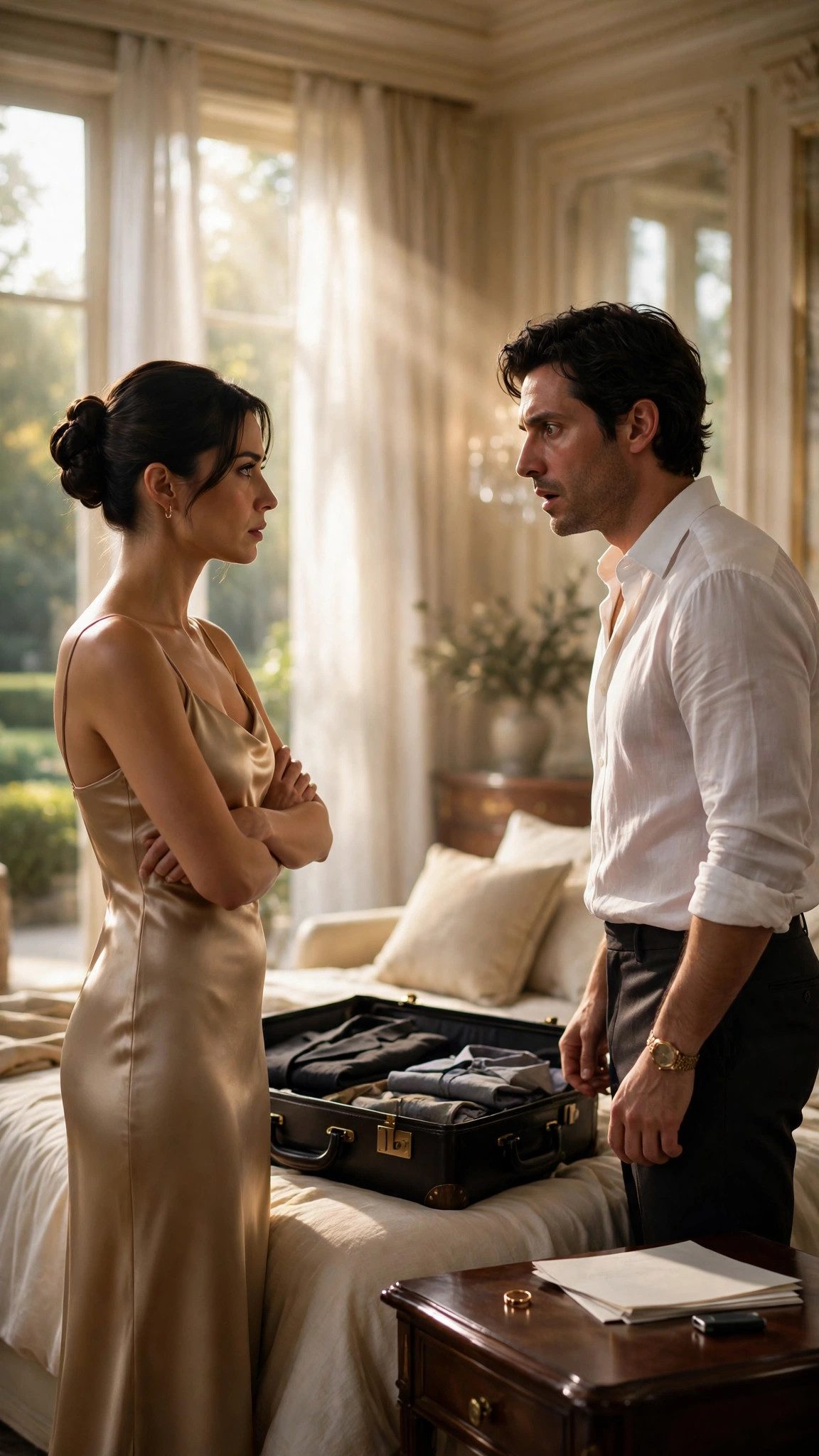
    The man I had been married to for seven years stood beside an open suitcase in expensive trousers and a crisp white shirt, folding a jacket the way a man folds a jacket when he is going somewhere he does not want to talk about, and said, "Don't wait up, Sweetheart, just try to sleep."

    I watched him the way you watch a movie you have already seen a hundred times and suddenly understand for the first time. The suitcase was the same one he always took. The shirt was the same white shirt he always wore on these trips. The voice was the same soft voice he had used on me for three years, ever since he stopped being the man I married and started being a man who kept secrets in hotel rooms.

    For the first time in his eyes, I saw uncertainty.

    "Actually," I said slowly, "which hotel are you taking your mistress to this time?"

    His face went completely pale.

    The color left him the way light leaves a room when someone closes a door. Vincent Moretti, the most feared Mafia boss in Chicago, a man who could make dangerous men tremble with a single phone call, stood frozen in our bedroom with a folded jacket in his hands and looked at me as if I had just put a gun on the table between us.

    "How did you find out?" he asked.

    I almost laughed. It was not a laugh of joy. It was the laugh of a woman who had spent three weeks collecting proof while her husband slept beside her, a woman who had finally stopped being afraid of the answer.

    "You're kidding," I said. "It's so easy to know what someone's been hiding when they've been lying for three years."

    His eyes darkened, and I knew he was panicking. He set the jacket down carefully, the way a man sets down something fragile, and took a step toward me. I did not move. I had spent seven years moving toward him. Tonight, I was done moving.

    "Tell me, Vincent," I said. "I'm curious. Was she even beautiful enough to risk everything for?"

    He opened his mouth. Nothing came out. For the first time in seven years of marriage, Vincent Moretti had nothing to say.

    "I trusted you," I said, "and this is how you repaid me."

    He froze. I could see the words landing on him one by one, the way rain lands on a man who has just realized he left the roof open.

    "You slept beside me the first night after holding her," I said, "and you weren't afraid of what might happen. But I wasn't afraid either."

    Then I finally said the words I had been waiting seven years to say.

    "Tell her she's welcome to you, Vincent. And you might want to check the nightstand before you leave."

    He turned back, confused. And then he saw it.

    My wedding ring sat on the nightstand beside signed divorce papers and a USB drive. Inside that drive were photographs, videos, hotel records, and travel dates documenting every woman, every lie, every so-called business trip.

    Vincent's mouth opened, but he said nothing.

    I picked up my bag, walked past the man I had loved for seven years, and left the bedroom without looking back. Behind me, in that enormous mansion, Chicago's most feared Mafia boss grabbed his phone and shouted.

    "Find her. Check every airport, every hotel, everywhere she could have gone. IMMEDIATELY!"

    That was the end of my marriage. Or at least, that was the night I stopped pretending it was still a marriage.

    But this story does not begin in that bedroom. It begins eight years earlier, on a night when the man standing beside that suitcase was not yet my husband, and I believed, with my whole heart, that I had found the one person in the world who would never lie to me.

    I met Vincent Moretti at a charity gala in the ballroom of the Meridien Hotel in Chicago. I was twenty-two years old, working as an events coordinator for the hotel, and I had spent the entire evening making sure the flowers were straight, the candles were lit, and the champagne was cold. The gala was raising money for a children's hospital, and the ballroom was full of the kind of people who wrote large checks and expected to be thanked for it in front of a photographer.

    I was not one of those people. I was the girl in the plain black dress with the clipboard, the one who made sure the evening ran on time and nobody noticed her doing it.

    Vincent noticed me.

    He was thirty years old then, already a name people whispered in that city, though I did not know it yet. I knew only that he was the most beautiful man I had ever seen, with dark wavy hair and eyes the color of a winter sea, and that he had spent the first hour of the gala doing something no one else in that room had done: he had thanked the staff.

    "Excuse me," he said, appearing at my elbow while I was checking the seating chart for the third time. "The woman at table twelve has a nut allergy, and the kitchen just sent out the wrong dessert. I thought you should know before she finds out the hard way."

    I stared at him. "How did you know about her allergy?"

    "I asked her," he said. "She's the wife of a man who owes me money, and I would rather she not die at my table. It would be bad for business."

    He said it with a straight face, and then he smiled, and the smile changed everything. It was not the smile of a dangerous man. It was the smile of a man who was pleased with his own joke and wanted to see if I would laugh at it.

    I laughed. I could not help it.

    "I'm Claire," I said. "Claire Donovan. I run the events here."

    "Vincent Moretti," he said. "I own the building. Or most of it. The details are boring."

    He stayed for the rest of the evening. Not in the front of the room, where the photographers were, but near the back, near me, asking me questions about the flowers and the candles and the children's hospital, as if the answers mattered to him. When the gala ended and the guests had gone, he helped me stack chairs. A man who owned the building helped me stack chairs.

    "You don't have to do that," I said.

    "I know," he said. "That's why I'm doing it."

    He asked for my number. I gave it to him. He called the next day, and the day after that, and the day after that. He took me to dinner at a small Italian restaurant where the owner knew his name and did not charge him, which should have told me something, but all I noticed was that he remembered my coffee order after hearing it once.

    He brought me flowers for no reason. White roses, because he had noticed I wore a white rose in my hair at the gala and never forgot it. He called every night when business took him away, and his voice on the phone was warm and close, as if he were in the next room instead of another city.

    For a while, I believed I had married my perfect match.

    We married a year later, in a small church with fifty guests and a cake my mother had insisted on baking herself, because Vincent said the size of the wedding did not matter to him. What mattered, he said, was that I was his.

    On our wedding night, in the penthouse of the Meridien, he took my face in his hands and said, "I have spent my whole life being afraid of losing things. Money. Territory. Men. But I have never been afraid of losing a person, because I never had one worth losing. Until you."

    I believed him. God help me, I believed every word.

    The first two years of our marriage were the happiest years of my life. Vincent was attentive in ways that made me feel treasured. He remembered my coffee order. He brought flowers home for no reason. He called every night when business took him away. He built me a garden on the roof of the penthouse, because I had once told him I missed the garden my grandmother kept in Ohio, and he had a gardener plant white roses there in the middle of winter.

    I was thirty years old and I had everything. A husband who adored me. A home that felt like a palace. A life that felt, for the first time, like it belonged to me.

    I did not know that the man who remembered my coffee order was also a man who kept a second life in hotel rooms in other cities. I did not know that the flowers he brought home were sometimes the same flowers he had bought for someone else first. I did not know that the phone calls that made me feel loved were sometimes made from a bed that was not ours.

    Everything began to change after our second anniversary. Slowly at first, the way a tide goes out so gradually that you do not notice the water is gone until you are standing on dry sand.

    His phone calls became shorter. His trips grew longer. His voice grew softer when he was around me, but colder when the world demanded his attention.

    I told myself it was business. I told myself that a man who controlled luxury hotels, casinos, shipping companies, and an underground empire worth hundreds of millions of dollars could not be expected to be home for dinner every night.

    I told myself that for a year. And then I stopped telling myself anything at all, because the truth had started leaving evidence everywhere, and I was too afraid to look at it.

    Our second anniversary should have been the proof that everything was perfect. Vincent took me to dinner at the restaurant where we had our first date, the small Italian place where the owner knew his name. He ordered my favorite dish without asking. He held my hand across the table and told me that the last two years had been the best of his life.

    "I want to give you something," he said, and he slid a small velvet box across the table.

    Inside was a necklace. A thin gold chain with a single diamond, small and perfect, the kind of gift a man buys when he has paid attention to what his wife likes instead of what a jeweler tells him to buy.

    "It's beautiful," I said, and I meant it.

    "Turn it over," he said.

    On the back of the diamond's setting, so small I almost missed it, were two words engraved in flowing script: *My Claire.*

    I wore that necklace every day for the next five years. I wore it the night I found the receipt. I wore it the night I found the photographs. I wore it the night I left him. And when I finally took it off, in a motel room two hundred miles from Chicago with my wedding ring sitting in a velvet box beside a divorce lawyer's business card, I understood something I had not understood at that anniversary dinner.

    The necklace had been real. The man who gave it to me had been real too. That was what made everything that came after it so hard to survive — because I was not mourning a man who had never loved me. I was mourning a man who had loved me once, and then, somewhere along the way, had decided that love was not enough to keep him faithful.

    That night at the restaurant, after the necklace and the toast and the dessert we shared from one plate the way we always did, Vincent's phone rang. He looked at the screen, and for the first time in our marriage, I saw something cross his face that I did not recognize. It was gone in a second. He silenced the phone and put it face down on the table.

    "Business," he said, smiling. "It can wait. Tonight is ours."

    But it could not wait. That was the first lie I ever caught him in, although I did not know it was a lie at the time. I know it now, because I have the records. That call came from Miami. It came from a number that would appear on his phone a hundred times over the next three years, a number I would eventually learn by heart, the way a detective learns the license plate of a car she is following.

    That night, I went home happy. I fell asleep in his arms with the necklace around my neck and the taste of tiramisu still on my tongue, and I dreamed that our life would go on like that forever.

    I woke up the next morning to an empty bed and a note on the kitchen counter in his handwriting: *Gone to New York. Back Thursday. I love you.*

    He did not come back Thursday. He came back Saturday. He said the meetings ran long. He smelled of aftershave I did not recognize, and when I asked him about it, he laughed and said the hotel must have changed brands.

    I believed him. I had no reason not to. I was twenty-four years old, and I had married a man who remembered my coffee order and built me a garden on a roof in the middle of winter. Why would I doubt him?

    That was the beginning. Not a betrayal, not yet. Just a phone call at dinner, a trip that lasted two days longer than it should have, a smell that did not belong in our house. Small things. The kind of things a wife notices and forgives, because she loves her husband and because the alternative — that the man she married is lying to her — is too terrible to think about.

    I forgave those small things for a year. Then the small things stopped being small, and I stopped being able to forgive them, and the woman who had once believed she had married her perfect match began to keep a list in the back of her mind. A list of every trip, every phone call, every excuse. A list that would, three years later, become a USB drive on a nightstand beside a wedding ring and a set of signed divorce papers.

    But I am getting ahead of myself. The night of our second anniversary, I was still happy. I was still the woman who believed. And Vincent was still the man who came home to her, even if he was starting to come home a little less often, and stay a little less long, and look at her a little less like she was the only thing in the world he was afraid to lose.

  • Chapter 7: The Waltz at Eighty

    Chapter 7: The Waltz at Eighty

    The night of Rosa Moretti's eightieth birthday party, it rained.

    It was the soft, golden kind of rain that makes the city lights blur and the streets shine like polished wood, and by seven o'clock the house in Lake Forest was full of people — half of Chicago, just as Gabriel had predicted, in their finest clothes, drinking champagne and talking in low voices about business and family and the old woman who had brought them all together.

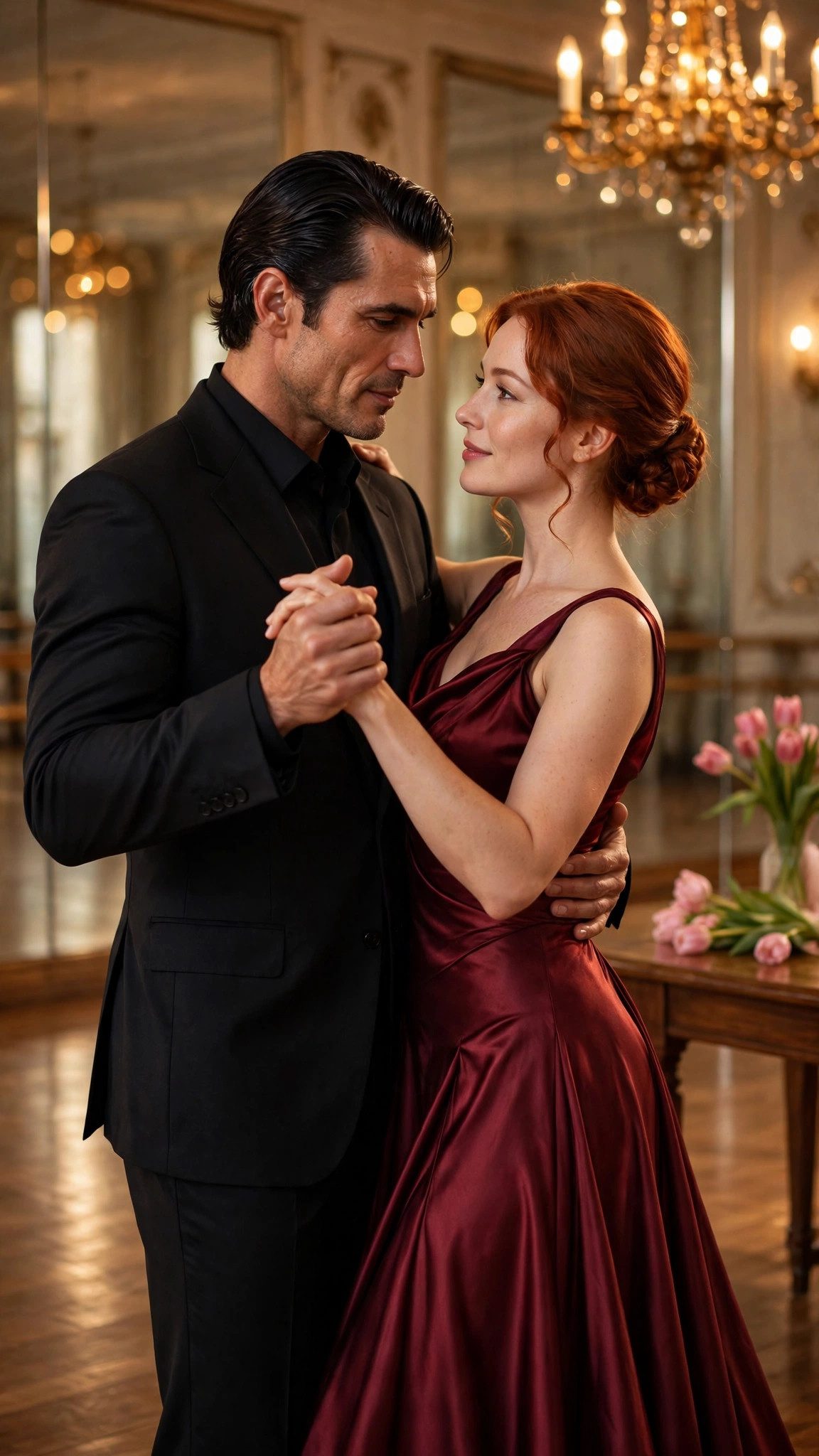
    I arrived alone, in a dress I had bought specially for the occasion: deep burgundy satin, simple and elegant, with a neckline that showed my shoulders and a skirt that moved when I moved. My copper-red hair was pinned up in a low twist, the way I wear it when I dance. Jenna had done my makeup in her flower shop that afternoon, between customers, and she had pressed a single pink tulip into my hand as I left.

    "For luck," she had said. "And for Rosa. She loves the pink ones."

    The house was beautiful — a grand old place with high ceilings and polished floors and a ballroom at the back that had been cleared for dancing, with a string quartet in the corner and candles on every table and roses everywhere, white and pink, spilling out of vases in every room. I stood in the doorway for a moment, feeling very small and very out of place among the diamonds and the tailored suits and the women in gowns that cost more than my car.

    Then I saw her.

    Rosa was sitting in a chair by the fireplace, wearing a powder-blue gown with her rose brooch, her white hair waved and perfect, her wrist out of its cast at last, her enormous pink purse nowhere in sight — for once — and she was holding court like a queen, surrounded by grandchildren and great-grandchildren and old friends, laughing and telling stories with her hands.

    When she saw me, her whole face lit up.

    "There she is!" she cried, loud enough for the whole room to hear. "There is my dance teacher! Claire, dear, come here at once!"

    Everyone turned to look at me. I felt my face burn. I crossed the room, very aware of the eyes on my burgundy dress and my copper hair and my simple shoes, and I knelt beside Rosa's chair and took her hand.

    "Happy birthday, Rosa," I said.

    "Happy birthday, indeed," she said, beaming. "You came. I knew you would come. And you wore the burgundy. I told Gabriel you would wear the burgundy. He did not believe me. He owes me twenty dollars."

    I laughed. "Rosa, you bet on my dress?"

    "I bet on everything, dear. It keeps me young." She leaned closer, conspiratorial. "Now. Listen to me. In one hour, the quartet will play a waltz. Gabriel will dance with me first — he promised, when he was fourteen, in my kitchen — and then he will dance with you. And when he does, you must remember everything you taught him. Hold your frame. Count one-two-three. And do not let him lead with his shoulders. He still does that when he is nervous."

    "I will remember," I promised.

    "Good," she said. "And Claire —"

    "Yes?"

    "Whatever he asks you tonight," she said, very quietly, so only I could hear, "remember that he has never asked anyone for anything in his life. Not once. So if he asks, it means everything."

    My heart stopped. "Rosa — what is he going to ask me?"

    She smiled, bright and mysterious, exactly the way she had smiled in my studio a hundred times.

    "You will see, dear," she said. "You will see."

    The hour passed in a blur of champagne and introductions and small talk with people whose names I forgot the moment they told me. Gabriel was across the room most of the time, talking to men in suits about business I did not understand, but every few minutes his eyes found mine across the crowd, and every time they did, something in my chest tightened, the way a violin string tightens before it sings.

    And then the quartet began to play.

    The room went quiet. The candles flickered. Gabriel crossed the floor to his grandmother's chair, and he knelt beside her, and he took her hand, and he said, very clearly, so the whole room could hear:

    "Rosa Moretti. May I have this dance?"

    She laughed — that small, delighted laugh, like a bell — and she stood up, slowly, leaning on his arm, and he led her to the middle of the ballroom, and the quartet played a waltz, and Gabriel Moretti danced with his eighty-year-old grandmother in front of half of Chicago.

    He danced beautifully.

    I stood at the edge of the floor with tears in my eyes, watching them — his frame perfect, his steps sure, his shoulders down, his hands gentle — and I thought about the first lesson, when he had stood stiff as a board in my studio and told me he attended meetings, not dances. I thought about the tulips in the dark, and the broken window, and the night in the smoke, and the morning he had bought a building to protect a dance studio. And I thought about Rosa, who had watched my classes through a window for a month and had known exactly what her grandson needed, long before he knew it himself.

    When the waltz ended, the room erupted in applause. Rosa curtsied — actually curtsied, at eighty years old, in the middle of a ballroom — and Gabriel bowed, and then he took her hand and led her back to her chair, and he kissed her cheek, and he turned.

    And he walked straight across the ballroom to me.

    The quartet began a new waltz. The candles burned low. The whole room was watching, but I could not have told you who was in it, because there was only Gabriel, standing in front of me in his dark suit, holding out his hand, and saying the words he had practiced a hundred times in my studio, in a voice that was steady and clear and entirely his own:

    "Claire Donovan. Will you save me the last dance?"

    "Yes," I said.

    He took my hand. He placed his other hand on my waist. I put my hand on his shoulder. And we danced.

    One-two-three. One-two-three. Around the ballroom, past the candles, past the roses, past the watching faces, past everything. His frame was perfect. His steps were sure. His shoulders were down. And his eyes — his dark eyes — never left mine, not once, not for a single step.

    "Claire," he said, as we turned beneath the chandeliers. "I have something to ask you."

    "I know," I said.

    "I have never asked anyone for anything," he said. "Not in forty-two years. My father taught me to take. Rosa taught me to waltz. You taught me the difference. And now I am going to do the hardest thing I have ever done. I am going to ask — and I am going to wait for the answer, instead of taking it."

    The music slowed. The quartet played the final bars. Gabriel stopped dancing, right there in the middle of the ballroom, in front of half of Chicago, and he took both my hands in his, and he looked at me, and he said:

    "Claire Donovan. You taught me to hold a person instead of controlling one. You taught me to ask instead of taking. You taught me that a man can be strong and gentle at the same time, and that the strongest thing a man can do is kneel and ask. So I am asking you now, in front of everyone I know, in the only way I know how to ask."

    And then Gabriel Moretti — the most feared man in Chicago, the man who controlled warehouses and nightclubs and half the criminal operations in the city — went down on one knee, in the middle of his grandmother's eightieth birthday party, and held out a small velvet box, and inside it was a ring: a single diamond, set in gold, simple and perfect, like a tulip in the morning light.

    "Will you marry me?" he said. "Properly. Not because I decided it. Not because I bought something. Because I am asking you, and because I will wait for your answer, whatever it is."

    The room went silent. The candles flickered. Rosa, in her chair by the fireplace, had both hands pressed to her heart, and her bright eyes were shining with tears.

    I looked down at Gabriel, on one knee, holding out a ring, waiting — actually waiting — for my answer. I thought about the first day he had walked into my studio, furious, in a ten-thousand-dollar suit. I thought about his hand in mine, learning to hold instead of grip. I thought about tulips in the dark, and a twenty-year lease, and a night in the smoke, and a man who had bought a building to protect a dance studio, and a grandmother who had known all of this from the very beginning.

    "Yes," I said.

    The room erupted. People cheered. The quartet burst into a joyful waltz. Rosa stood up from her chair and clapped her hands and cried, "I knew it! I knew it from the very first day!" — and Gabriel stood up and slid the ring onto my finger, and then he took me in his arms, right there in the middle of the ballroom, and he kissed me, gently, in front of everyone, the way a man kisses a woman he has asked for, properly, and waited for.

    Later that night, when the party was winding down and the candles were burning low and the quartet was packing up their instruments, Rosa found me by the fireplace with a glass of champagne in my hand and my new ring catching the light.

    "Well, dear," she said, smiling brightly. "How does it feel to be engaged to the most feared man in Chicago?"

    "It feels," I said, "like being engaged to a man who can waltz."

    She laughed. "Exactly, dear. Exactly. I told you from the beginning — if a man has forgotten how to be gentle, dancing can teach him again. And you, my dear, are the best teacher in Chicago."

    "Rosa," I said, "did you know? From the very first day, when you came into my studio with your pink purse — did you know all of this would happen?"

    She patted my hand with her small, warm fingers. "I knew," she said, "that my grandson needed someone who would not be afraid of him, and who would teach him to hold a person instead of controlling one. The rest — the tulips, the ring, the party — that was all Gabriel. He did that himself. He learned. That is the thing about my grandson, dear. Once he learns something, he never forgets it."

    We stood together by the fireplace, watching Gabriel across the room, talking to Sal and laughing — actually laughing, the short, rough laugh I had first heard in my studio — and I thought about my life, and how it had changed in seven weeks, from a small, ordinary, carefully ordered life to something I had never dreamed of.

    My studio was safe for twenty years. The block was safe. The flower shop was safe. The community center in Castellano's old warehouse would open in the spring, with a dance floor and my name on the door. And in the summer, Gabriel and I would be married — in my studio, he had insisted, on the polished wooden floor, with tulips on the table and Rosa in the front row with her pink purse — and he would waltz with me down the aisle, one-two-three, one-two-three, in front of everyone we loved.

    I am Claire Donovan. I am thirty-six years old, with copper-red hair, a curvy figure, and a small ballroom dance studio on Chicago's west side. I teach ordinary people to waltz. Retired couples. Nervous brides and grooms. Men who want to surprise their wives on anniversaries.

    And one mafia boss, forty-two years old, tall, dark-haired, in an expensive suit, who walked into my studio wearing a ten-thousand-dollar suit and looking like he wanted to fire everyone in the building — and who stayed, and learned, and asked, properly, the way a man asks when he has finally learned the difference between holding a person and controlling one.

    He learned to waltz. And in learning to waltz, he learned to be kind. And in learning to be kind, he learned to love.

    And that, dear reader, is how the most feared man in Chicago became the gentlest man I have ever known — one lesson at a time, one-two-three, one-two-three, all the way home.

    The morning of the party, I taught one last lesson.

    The Hendersons came at ten o'clock, as they always did on Saturdays, and Mrs. Henderson took one look at my hair — pinned up in a low twist, with a single pink tulip tucked behind my ear — and she clapped her hands and said, "Oh, Claire, you look beautiful! Is tonight the night?"

    "Tonight is Rosa's birthday party," I said.

    "And?" Mrs. Henderson said, raising an eyebrow. "Is tonight the night he finally asks you properly? Because Mr. Henderson and I have been taking bets, dear, and I have money on tonight."

    "Do not listen to her," Mr. Henderson said, but he was smiling. "She has had money on tonight since the first week. She says a man who brings tulips in the dark is a man who is working up to something."

    I laughed, and I taught them the waltz, one-two-three, one-two-three, and when the lesson ended, Mrs. Henderson hugged me and whispered, "Whatever he asks you tonight, dear — say yes. A man who learns to waltz for the woman he loves is a man worth having."

    Sal drove me to Lake Forest that evening, in the big black car, and the rain came down soft and golden on the windshield, and the city lights blurred past the windows like a dream. Sal did not say much — Sal never says much — but as we turned into the long driveway of the house, with the lights glowing in every window and the roses wet with rain in the garden, he glanced at me in the rearview mirror and said, "You look beautiful, Miss Donovan. Mr. Moretti is a lucky man."

    "Thank you, Sal," I said.

    "He does not know I am telling you this," Sal said, "but he has been practicing all week. In his office. With a chair. Rosa caught him twice. She pretends she did not see, but she told me herself. He has been practicing the proposal, Miss Donovan. With a chair. In his office. A man who has faced down half of Chicago, practicing a proposal with a chair."

    I laughed, and then I nearly cried, and then I laughed again, because it was the most Gabriel thing I had ever heard — the most feared man in Chicago, rehearsing the bravest thing he would ever do, alone in his office, with a chair for a partner.

    "Thank you for telling me, Sal," I said.

    "Anytime, Miss Donovan," he said, and he opened my door, and he held an umbrella over me as I walked up the steps to the house, to the lights, to the music, to Rosa, to Gabriel, to the rest of my life.

    The End.
    THE END

  • Chapter 6: To Protect It

    Chapter 6: To Protect It

    Castellano struck on a Tuesday night, a week after Gabriel bought the building.

    I was upstairs in my apartment, grading nothing, sleeping badly, listening to the wind rattle the windows, when I heard it: glass breaking below me, and then shouting, and then the sharp, acrid smell of gasoline seeping up through the floorboards.

    I ran downstairs in my bare feet, my heart hammering against my ribs, and I found my studio full of smoke. Two men in dark jackets were at the back door with a can of gasoline, and a third was smashing the mirror with a crowbar, and the tulips on the table were scattered across the floor in a drift of pink petals.

    I screamed. I do not remember what I screamed. I think it was his name.

    "Gabriel!"

    And then the front door burst open, and Sal came through it like a wall falling down, and behind him came three more of Gabriel's men, and the men with the gasoline can did not get a second chance to use it. It was over in less than a minute — no gunfire, no shouting, just the fast, brutal efficiency of men who knew exactly what they were doing — and then the intruders were on the floor, zip-tied, coughing in the smoke, and Sal was on his phone, and someone had opened the windows, and someone else was already mopping up the gasoline with towels from the back room.

    Gabriel arrived four minutes later. He came through the door at a run, his suit jacket half off, his tie loose, his face white under the streetlights. He took one look at me — barefoot, in my nightdress, standing in the middle of my smoke-filled studio with a broom in my hands — and he crossed the floor in three strides and pulled me into his arms.

    "Are you hurt?" he demanded. "Claire. Are you hurt?"

    "No," I said, and my voice shook. "No, I'm all right. The mirror —"

    "The mirror can be replaced," he said. "You cannot." He held me tighter. "You cannot."

    Sal came over, wiping his hands on a towel. "Three men, Mr. Moretti. Castellano's. The police are on their way. They had gasoline, rags, and a crowbar. They were going to burn the place."

    Gabriel's face went very still. It was the stillness I had learned to fear — the stillness of a man deciding how much damage he was about to do. He looked down at the men on the floor. He looked at the broken mirror. He looked at the scattered tulips. And I saw his hands curl into fists at his sides, and I knew, with a terrible certainty, what he was about to do.

    "No," I said.

    He looked at me. "Claire —"

    "No," I said again, and I took his fists in my hands, and I uncurled his fingers one by one, the way I had taught him to uncurl his hands for the waltz. "Not like this. Not with blood. Not for me. Rosa said the right way is the way where nobody gets hurt. Do you hear me, Gabriel? Nobody gets hurt. Not even them."

    "They came to burn your studio," he said, his voice low and dangerous. "They came with gasoline while you were sleeping upstairs. They could have killed you."

    "I know," I said. "And you stopped them. Your men stopped them. The police are coming. That is enough. That has to be enough. Because if you go after Castellano the way your father would have, then he wins — he turns you back into the man you were before you walked into my studio. And I will not let him do that. Not to you."

    For a long moment, he said nothing. The smoke drifted through the open windows. The sirens wailed in the distance, getting closer. The three men on the floor stared up at the ceiling, waiting to see what the most feared man in Chicago would do to them.

    And then Gabriel Moretti did something I had never seen him do. He let go. He unclenched his fists. He stepped back. He looked at Sal and said, in a voice that was calm and cold and absolutely final, "Give them to the police. All three. With the gasoline can and the crowbar. Make sure the police know whose men they are."

    "And Castellano?" Sal asked.

    "Castellano," Gabriel said, "gets a visit from me. In the morning. In his office. In front of his lawyers and his accountants and everyone he pays to make him feel respectable." He looked at me. "And I will make him an offer he understands. Not a threat. An offer. The way you would make it, Claire. With papers. With signatures. With witnesses."

    "What offer?" I asked.

    He smiled then — a real smile, small and sharp and entirely his own. "I am going to buy his warehouse," he said. "The one next door to this block. The one he uses for his storage. I am going to buy it for twice what it is worth, and I am going to turn it into a community center, with a dance floor, and I am going to put your name on the door. And then I am going to tell him that if he ever comes near this block again, I will buy every building he owns, one by one, and turn them all into dance studios."

    I stared at him. "You can't —"

    "I can," he said. "I have the money. I have the lawyers. And now, thanks to you, I have the patience to do it the right way." He took my hand — gently, the way I had taught him. "Rosa always said a man who can waltz can talk to anyone. Tomorrow morning, I am going to talk to Vincent Castellano. And I am going to waltz him right out of this neighborhood."

    The police came. They took the three men away. They took statements. They took the gasoline can as evidence. One of the officers, an older man with tired eyes, looked at the broken mirror and the scattered tulips and Gabriel standing beside me with his hand on my shoulder, and he said, "Miss Donovan, you are very lucky. That could have been much worse."

    "I know," I said. "I was lucky. I have good neighbors."

    The officer nodded, as if he understood exactly what I meant, and went back to his car.

    Gabriel stayed that night. He did not leave until the glazier had boarded up the broken mirror and the smoke had cleared and the floor was mopped and the tulips — the ones that could be saved — were back in water on the table. He sat on the bench by the mirror, in the dark, while I swept the last of the glass into the dustpan, and he watched me the way a man watches the only steady thing in a shaking world.

    "Claire," he said, when the studio was quiet again. "I need to tell you something."

    "Yes?" I said, setting down the broom.

    "I have spent my whole life believing that protection means control. That if you love something, you hold it tighter, and you frighten everyone else away from it. My father taught me that. The men who work for me believe it. Castellano believes it." He looked down at his hands. "But tonight, when I saw you standing in the smoke with a broom in your hands, refusing to let me hurt anyone — I understood something. Protection is not control. Protection is making sure that what you love is safe enough to be free. That is what you taught me. That is what the waltz taught me. You hold a person. You do not control them. You hold them, and you let them move, and you move with them."

    I sat down beside him on the bench. The studio was dark except for the streetlight coming through the window. The mirrors held our reflections, two people sitting close together in the quiet.

    "Then you have learned the lesson," I said softly.

    "Have I?" he asked.

    "Yes," I said. "And there is one more lesson, Gabriel. The most important one. Are you ready?"

    "What is it?"

    I took his hand. I placed it the way I had placed it a hundred times — palm open, fingers relaxed, the hand of a man who is holding a person, not controlling one.

    "The last lesson," I said, "is that you have to ask."

    He looked at me. His dark eyes were very serious in the half-light.

    "Ask what?" he said.

    "You will know," I said. "When the time comes, you will know. And you will ask — properly, the way Rosa taught you, the way the waltz taught you — and you will wait for the answer, instead of taking it."

    He nodded slowly. He held my hand for a long time, and neither of us spoke, and the studio was quiet around us, and the tulips stood in their water on the table, pink in the dark, waiting for morning.

    The next morning, Gabriel went to see Vincent Castellano.

    I do not know exactly what was said in that office. Gabriel never told me the details, and I never asked. What I know is this: by noon, Castellano had signed the papers selling his warehouse. By one o'clock, his men were gone from our block — the black cars, the watchers, all of them. By two o'clock, the retired couple came back to the studio, and the nervous bride called to rebook, and the office workers returned, and Jenna brought over a fresh bunch of tulips and put them on the table herself, and the whole block seemed to breathe again, like a person waking up from a long, bad dream.

    And that evening, Gabriel came to the studio for his lesson, fifteen minutes early, alone, and he danced with me as if nothing had happened — as if the smoke and the gasoline and the broken mirror had never been — and when the lesson ended, he stood in the middle of the floor and said, very quietly:

    "Five weeks from Saturday, my grandmother turns eighty. I would like you to be there. Not as my teacher. As my guest."

    "I will be there," I said.

    He nodded. He put on his jacket. He walked to the door. And then he stopped, and he turned back, and he said the words I had been waiting a month to hear — not a command, not a demand, not a decision made for me, but a question, asked properly, by a man who had finally learned how.

    "Claire Donovan," he said. "Will you save me the last dance?"

    The morning after the fire, the retired couple came back.

    Mr. and Mrs. Henderson arrived at nine o'clock sharp, as they always did on Wednesdays, carrying a casserole dish wrapped in a tea towel, and Mrs. Henderson set it on the table by the mirror — next to the tulips, which Sal had rescued and put back in water — and said, "We heard what happened, dear. We brought lasagna. Everyone needs lasagna after a fire."

    I nearly cried. I did cry, a little, and Mrs. Henderson patted my shoulder and told me not to be silly, and Mr. Henderson went straight to the broken mirror and inspected the damage with the careful eye of a man who had spent forty years as a carpenter.

    "I can fix this," he announced. "Not today — the glass has to be ordered — but I can fix the frame, and I can board it properly, and when the new mirror comes, I will hang it myself. No charge. You have taught my wife and me to dance for three years, Miss Donovan. It is the least we can do."

    By noon, the word had spread, and my students began to trickle back — the office workers, the nervous bride, the young couple learning for their wedding — and they all brought something: a plate of cookies, a bunch of flowers, a card, a promise to come to every lesson from now on. Jenna came over with a fresh bunch of tulips and a sign she had painted herself, in bright pink letters: DONOVAN DANCE STUDIO — OPEN, AND STAYING OPEN.

    She taped it to the window, right where the brick had come through, and she stepped back to admire it, and she said, "There. Let Castellano read that."

    Sal stayed outside all day, directing the cleanup, and in the afternoon, when the studio was quiet for a moment, he came inside and stood by the barre, turning his cap in his hands, looking uncharacteristically uncertain.

    "Miss Donovan," he said. "May I tell you something?"

    "Of course, Sal."

    "I have worked for Mr. Moretti for twelve years," he said. "I have seen him do many things. I have seen him frighten men twice his size with a look. I have seen him buy buildings and sell them and ruin men who crossed him. But I have never — not once, in twelve years — seen him ask anyone for anything." He looked at me, and his big, impassive face was entirely serious. "Last night, when those men came with the gasoline, I watched him. I watched him decide not to hurt them. I watched him choose the police over his own hands. And I have never seen him do that before. Not once."

    "Why are you telling me this, Sal?" I asked.

    "Because you changed him, Miss Donovan," Sal said simply. "You taught him something in this studio that no one else could teach him. And I wanted you to know that the men — all of us, the drivers, the guards, everyone who works for him — we see it. And we are glad of it. A man who can ask is a better man to follow than a man who can only take."

    He put his cap back on and went outside, and I stood alone in my studio with the lasagna on the table and the pink sign in the window and the tulips in their water, and I thought about what Sal had said. A man who can ask is a better man to follow than a man who can only take.

    That evening, Gabriel came for his lesson, fifteen minutes early, as always, and he looked at the sign in the window, and at the casserole on the table, and at the students' cards lined up on the mirror, and he stood in the middle of the floor for a long moment without saying anything. Then he turned to me, and he said, very quietly, "They came back."

    "Yes," I said. "They came back."

    "Because of you," he said. "Not because of me. Not because of my men. Because of you. Because this place is yours, and people know it, and they will not let anyone take it from you."

    "Because of us," I corrected him gently. "You bought the building, Gabriel. You stopped the fire. You gave me the lease. I only taught the lessons."

    "No," he said, shaking his head. "You taught me the lesson. There is a difference." He held out his hand. "Shall we dance, Miss Donovan?"

    We danced until the sun went down, and the studio was full of gold light, and the sign in the window glowed pink, and for the first time in a week, the whole world felt steady under my feet.

  • Chapter 5: I’ve Decided to Buy the Studio

    Chapter 5: I’ve Decided to Buy the Studio

    Friday morning dawned gray and cold, the kind of Chicago morning when the sky presses down on the rooftops and the wind comes off the lake with knives in it. I arrived at the studio at seven, as always, and I unlocked the door and I put fresh tulips on the table — the pink ones, Rosa's favorites — and I turned on the lights one by one and I waited.

    Gabriel arrived at 3:47, exactly on time. He was alone. He was wearing a dark suit, and he was carrying a leather folder under one arm, and there was an unmistakable question on his face — the look of a man who has made a decision and is not sure how it will be received.

    He did not take off his jacket. He did not step onto the floor. He stood in the middle of my studio, holding the folder, and he looked at me across the polished wood, and he said:

    "This is the last lesson."

    The words landed like a blow. The music was still playing — a slow waltz, looping softly from the sound system — and the tulips were pink on the table, and the mirrors held our reflections, and Gabriel Moretti was standing in my studio telling me it was over.

    "What?" I said. My voice sounded very far away. "What do you mean, the last lesson? The party is in five weeks. Rosa —"

    "Rosa will still have her waltz," he said. "That is not what I mean." He held up the folder. "Claire. I've decided to buy the studio."

    For a moment, I could not breathe. I could not think. I could only stare at him, and at the folder in his hand, and feel my dreams shattering into pieces on the polished floor, one by one, like the glass from my broken window.

    Buy the studio. Buy my studio. The studio I had built with eight years of mornings and tulips and waltzes. The studio that was mine. The studio that no one could take from me.

    And when I finally lost it — when my voice finally came back, shaking with fury — I said the only thing I could say.

    "To close it?" I demanded. "Is that it? You spent a month learning to waltz in my studio, and now you are going to buy it and close it, just like Castellano would have, only with better manners?"

    He stepped closer. He lowered his voice. And he said something I was not expecting — something he had never said before, to me or to anyone, in a voice so quiet I had to lean in to hear it.

    "Not to close it," he said. "To protect it."

    I stared at him. "What?"

    "Castellano made his offer to the landlord yesterday," Gabriel said. "Five times the market price, in cash, with a deadline of Monday. If the landlord refuses, Castellano has made it clear what will happen next. A fire. He did not say the word fire, but he did not need to. I have heard that tone before. I have used that tone before."

    He opened the folder. Inside were papers — a deed, a contract, a lease — and he laid them on the table beside the tulips, and he turned them toward me so I could read.

    "I bought the building this morning," he said. "The whole building. The studio, the flower shop, the apartments above. I paid the landlord double what Castellano offered. He signed an hour ago. The building is mine now. And this —" he tapped the lease — "this is a twenty-year lease on the studio, in your name, at the rent you pay now, locked for twenty years. No one can raise it. No one can break it. No one can take this floor from you. Not Castellano. Not anyone."

    I looked down at the papers. My name was on them. Claire Donovan. Twenty years. My rent, locked. My studio, protected.

    "But she said it has nothing to do with money," I whispered — and then I realized I did not know what I was saying, because the words were Rosa's, or mine, or both, tangled together in my head. What I meant was: this is not a purchase. This is not a transaction. This is something else entirely.

    "I know," Gabriel said. "It has nothing to do with money. It has to do with the fact that someone tried to frighten you out of the only thing you have ever built, and I will not allow it. Not while I am alive."

    He stepped closer still, until he was standing right in front of me, close enough that I could see the flecks of gold in his dark eyes, close enough that I could smell his cologne and the cold air still clinging to his suit.

    "Claire," he said, very quietly. "The moment I stopped pretending not to care, something changed inside me. I have spent forty-two years taking what I wanted. I have never once asked for anything. I have never once protected something that was not mine. But this studio — you —" He stopped. His jaw worked. "I do not know how to say this properly. I was never taught. My father taught me to control. Rosa taught me to waltz. You taught me the difference."

    Something changed inside me then. It was the feeling that, in a way, he hadn't told me — the feeling that everything I had believed about Gabriel Moretti, about dangerous men and cold men and men who take what they want, had been wrong, or at least incomplete. Because the man standing in front of me was not taking anything. He was giving. He was giving me my studio, my safety, my future — and he was asking for nothing in return except, perhaps, the one thing he had never learned to ask for.

    I looked at the papers on the table. I looked at the tulips. I looked at Gabriel Moretti, standing in my studio in the gray afternoon light, holding a leather folder full of deeds and leases, looking at me the way a man looks at the only person in the world who can tell him whether he has done the right thing.

    "Why?" I asked. My voice was shaking. "Why would you do this for me?"

    He was quiet for a long moment. The waltz played on, soft and patient, one-two-three, one-two-three.

    "Because," he said at last, "if you keep looking at me like that, we can never hang out again."

    It was the same thing he had said to me weeks ago, standing among the tulips, and this time I understood it. It was not a warning. It was a confession. He was telling me that he felt it too — whatever this was between us, this thing that had started with a hand placed in waltz position and a pair of shoulders learning to relax — and that he did not know what to do with it, and that it frightened him more than any rival, any threat, any danger he had ever faced.

    "Gabriel," I said, and my voice was steady now, my teacher's voice, the voice I use when a student is about to get something right for the first time. "Take off your jacket."

    "What?"

    "Take off your jacket," I said. "Roll up your sleeves. Step onto the floor. We are going to dance. And this time, you are going to lead."

    He stared at me. Then, slowly, he took off his jacket and folded it over the chair. He rolled his sleeves up to his elbows. He stepped onto the floor, and he held out his hand, and I took it, and I placed his other hand on my waist, and I put my hand on his shoulder, and I looked up at him.

    "One," I said. "Two. Three."

    We danced. Around the floor, past the mirrors, past the tulips, past the table with the papers on it. One-two-three. One-two-three. And this time, he did not count under his breath. This time, he looked at me the whole time, and his shoulders were down, and his hands were gentle, and the most feared man in Chicago danced with me in my studio on a gray Friday afternoon as if there were nothing else in the world worth doing.

    When the music ended, he did not let go of my hand.

    "Claire," he said. "There is something else. Castellano is not finished. He will not accept losing this building. He will come after you, or after Rosa, or after me. I need you to know that. And I need you to know that I will not let him hurt you. Whatever it takes."

    "Whatever it takes," I repeated. "Gabriel. What does that mean?"

    "It means," he said, "that I am going to end this. Not with a brick. Not with a fire. With something he understands. I am going to make him an offer of my own."

    That night, I could not sleep. I lay awake in my apartment above the studio — my apartment, in the building Gabriel now owned, in the building he had bought to protect me — and I thought about the papers on the table, and the twenty-year lease with my name on it, and the man who had given me all of it and asked for nothing.

    And I thought about what Rosa had said in the hospital. Protecting someone does not mean owning them.

    Gabriel had not bought my studio to own it. He had bought the building to protect it. He had given me a lease that no one could break, not even him. He had protected me the only way he knew how — and then he had stood in my studio and let me teach him, again, how to hold a person instead of controlling one.

    I got up before dawn. I went down to the studio. I put on a waltz, and I danced alone across the empty floor while the sun came up over the rooftops, and I thought about Friday, and about what Gabriel was going to do, and about the birthday party in five weeks, and about the man who had walked into my life wearing a ten-thousand-dollar suit and looking like he wanted to fire everyone in the building.

    I did not know then that Castellano would strike first, or that the next week would bring the worst night of my life — and the moment when Gabriel Moretti would have to choose, in front of everyone, between the man his father had made him and the man his grandmother had always believed he could be.

    I only knew that my studio was mine for twenty years, that the tulips were pink on the table, and that the most dangerous man in Chicago had just done the most dangerous thing a man like him can do.

    He had asked for nothing. And he had given me everything.

    After we finished dancing, Gabriel showed me the plans.

    He spread them out on the table beside the tulips — architectural drawings, crisp and white, with measurements and notes in the margins in his own handwriting. A floor plan. A community center, in Castellano's old warehouse, two blocks away. A dance floor in the middle, big enough for fifty couples. Classrooms along the sides. A kitchen. A garden out back, with roses.

    "Rosa's roses," Gabriel said, tapping the garden on the plan. "She has always wanted a garden she could give to the neighborhood. And here —" he pointed to a room marked STUDIO B — "children's classes. Free. On Saturdays. Your classes, if you want them. Or someone else's, if you don't. But free. For the children on this block."

    I stared at the plans. "Gabriel. This is — this is an entire community center."

    "I bought the warehouse this morning," he said, as if he were telling me he had bought a loaf of bread. "Castellano signed an hour ago. He did not want to sell. I offered him twice what it is worth, and I told him the alternative was that I would buy every building he owns, one by one, and turn them all into dance studios. He signed."

    "And the money?" I asked. "The building. The lease. The warehouse. Gabriel, this must have cost —"

    "It cost what it cost," he said. "Money is the one thing I have never had to worry about, Claire. What I have worried about, my whole life, is whether any of it meant anything. Whether any of it was worth anything. And now I know. It is worth this." He gestured at the plans, at the studio, at the tulips. "It is worth a floor where people can dance. It is worth a garden where an old woman can cut roses. It is worth you, standing in your own studio, in your own building, teaching people to hold each other properly."

    I could not speak. My throat had closed up entirely.

    That evening, I called Rosa from the studio phone. She was home from the hospital by then, resting in her little house with the rose garden, and when she heard my voice, she laughed with delight.

    "Claire, dear! Tell me everything!"

    I told her. The building. The lease. The warehouse. The community center. The garden with her roses. She listened without interrupting, and when I finished, she was quiet for a long moment, and then she said, very softly, "I told you, dear. I told you from the beginning. My grandson fixes things. Sometimes he fixes them the wrong way. But when someone teaches him the right way —" her voice caught a little — "when someone teaches him the right way, he fixes them beautifully."

    "Rosa," I said, "did you know? When you came into my studio that first morning, with your pink purse — did you know all of this would happen?"

    "I knew," she said, "that my grandson needed someone who would not be afraid of him. I knew that you were that someone the moment I watched you teach that nervous bride. The rest —" she laughed, that small, delighted laugh — "the rest was Gabriel. He did it himself. He learned, dear. That is the thing about my grandson. Once he learns something, he never forgets it."

    After I hung up, I sat in my studio for a long time, looking at the architectural plans on the table beside the tulips, and I thought about what Rosa had said. Once he learns something, he never forgets it.

    Gabriel had learned to waltz. He had learned to hold a person instead of controlling one. He had learned to protect something without owning it.

    And I had a feeling — a strong, certain feeling, the way a dancer feels the music change before the next bar begins — that he was about to learn the most important lesson of all.

  • Chapter 4: The Men in the Black Cars

    Chapter 4: The Men in the Black Cars

    The next morning, someone threw a brick through my studio window.

    I found it when I arrived at seven, as always, with my key in my hand and a bunch of fresh tulips from Jenna's shop in my arms. Glass glittered across the polished wooden floor like spilled diamonds. The brick lay in the middle of the room, wrapped in a sheet of paper, and on the paper, in block capital letters, someone had written: SELL. BEFORE IT GETS WORSE.

    My hands shook so hard I nearly dropped the tulips. I set them down on the table by the mirror — the mirror that was now cracked in a spider's web from the corner — and I stood there in the cold morning air coming through the broken window, and I did what I always do when I am afraid.

    I started to clean.

    I swept the glass into a dustpan, shard by shard. I picked up the brick and set it on the table. I called the glazier, and I called Jenna, and I called the police, who came and took a report and told me, with the weary kindness of men who have seen this a hundred times, that there was not much they could do about a brick with no fingerprints and no witnesses.

    By nine o'clock, Gabriel was standing in my doorway.

    He did not knock. He did not call. He simply appeared, the way he always did when something had gone wrong — as if the city itself had told him. He looked at the broken window. He looked at the brick on the table. He looked at the glass I had swept into a neat pile by the door. And his face went very still, in the way I had learned to recognize: the stillness of a man deciding exactly how much damage he was about to do to someone.

    "Who did this?" he asked. His voice was quiet. That was the most frightening thing about it. It was quiet.

    "Vincent Castellano," I said. "Or one of his men. The note says sell."

    He picked up the brick. He turned it over in his hands. He read the note twice. Then he set it down again, very carefully, as if it were made of glass instead of the thing that had broken my glass.

    "Go home, Claire," he said.

    "No," I said.

    "Go home. Let me handle this."

    "No," I said again, and I folded my arms, and I stood in the middle of my broken studio, and I looked him in the eyes. "This is my studio, Mr. Moretti. My floor. My mirrors. My tulips. You do not get to send me home from my own studio."

    Something moved in his face then. It might have been respect. It might have been frustration. It might have been both.

    "Then stay," he said. "But do not leave this building alone. Not today. Not until I tell you it is safe."

    "Your men are already outside," I said. "They have been outside for a week. They did not stop a brick."

    "My men were watching the street," he said. "From now on, they will watch the building. All of it. The roof. The back door. The alley." He turned to Sal, who had appeared in the doorway behind him without a sound. "Double the men. No one comes near this block without my knowing about it."

    "Yes, Mr. Moretti," Sal said, and vanished.

    Gabriel stayed. He did not dance that day. He stood by the broken window with his arms folded while the glazier worked, and he watched the street, and every few minutes his phone buzzed and he stepped outside to take a call in a low voice, and every time he came back, his face was a little harder.

    At noon, Jenna came over from the flower shop with a tray of coffee and a plate of pastries, and she looked at the broken window and the men outside and Gabriel standing guard like a statue, and she said, very quietly, so only I could hear, "Claire. Who is that man?"

    "My student," I said.

    "Your student," she repeated, in a tone that said she did not believe me for one second. "Claire, honey, students bring apples. That man looks like he brings funerals."

    "He brings tulips," I said. "And he is learning to waltz."

    Jenna looked at Gabriel. Gabriel looked at Jenna. Jenna decided, very wisely, to go back to her flower shop.

    That afternoon, while the glazier fitted the new glass, Gabriel finally spoke about Castellano. He told me the whole story, in short, flat sentences, the way a man tells a story he has told himself a hundred times and still does not like.

    Vincent Castellano was a developer. That was what his business cards said. In reality, he was a front for the Castellano family — a smaller family, hungry, always looking for a way to grow. For two years he had been buying up the west side block by block, turning old storefronts into warehouses, laundries, and storage units that nobody ever seemed to use but everybody understood. My block was the last piece he needed. The building my studio was in — a beautiful old brick building with a dance studio on the ground floor, a flower shop next door, and apartments above — stood in the way of his warehouse.

    "He offered the landlord three times the market price," Gabriel said. "The landlord refused. He is an old man, and his father built this building, and he will not sell. So Castellano changed his approach. He started with the tenants. The bakery on the corner lost its lease. The tailor upstairs got a rent increase he could not pay. Now it is your turn."

    "Why me?" I asked. "I am only a tenant. I do not own the building."

    "Because you are the heart of this block," Gabriel said, and the way he said it — simply, as if it were obvious — made my throat tighten. "People come here for you. The flower shop sells tulips to your students. The bakery sells bread to your students' families. If your studio closes, the block dies a little, and Castellano can buy the rest of it for nothing."

    I sat down on the bench by the mirror. My legs felt weak. "What does he want from me, exactly?"

    "He wants you to leave," Gabriel said. "He wants you frightened enough to break your lease and go somewhere else. And if fear does not work, he will try something else. A fire, maybe. A flood. An accident." He looked at the broken window. "A brick is a beginning, Claire. It is not an end."

    I thought about my studio. Eight years of mornings. Eight years of tulips and waltzes and nervous brides and retired couples. Eight years of building something that was mine, something no one could take from me — until now, when a man I had never met wanted to take it because it stood in the way of a warehouse.

    "What do we do?" I asked. It was the same question I had asked him days before, in the hospital hallway, and it was the same question Rosa had answered for me: the way where nobody gets hurt, and the studio stays yours.

    "We do what I should have done a week ago," Gabriel said. "We make sure he understands that this building is protected. Not by my men standing outside. By something he cannot frighten, cannot buy, and cannot break."

    "What is that?" I asked.

    He did not answer. Not then. He only looked at me for a long moment, and then he looked at the new glass in the window, and the tulips on the table, and the polished floor, and he said, very quietly, "I will tell you on Friday. At the lesson. Bring your grandmother's patience, Miss Donovan. You will need all of it."

    He left then, and Sal and the men stayed outside, and I locked up that night and went home and sat in my kitchen with a cup of tea, and I thought about the brick on my table and the note that said SELL. BEFORE IT GETS WORSE.

    I thought about leaving. I will not pretend I did not. I thought about packing up my sound system and my mirrors and my tulips and finding a little studio somewhere else, somewhere quiet, somewhere no one wanted to turn into a warehouse. It would have been easy. It would have been safe.

    But then I thought about Rosa, in her hospital bed, counting the days until her eightieth birthday party, when her grandson would waltz with her. I thought about the retired couple who had learned to waltz in my studio after fifty years of marriage. I thought about the nervous bride who had cried through her first lesson and then danced at her wedding like she had been born to it.

    And I thought about Gabriel Moretti, who had walked into my studio furious and had stayed to learn to count one-two-three, and who was standing guard over my broken window like it was his own.

    I was not going to leave. Not for Vincent Castellano. Not for a brick. Not for anything.

    On Thursday, Rosa came home from the hospital.

    Gabriel brought her to the studio himself, in the afternoon, with her wrist in its cast and her pink purse on her lap and her bright smile firmly in place. She looked at the new window glass and the swept floor and the fresh tulips, and she nodded with satisfaction, as if she had inspected the premises and found them acceptable.

    "Good," she said. "Now. Gabriel. Lesson."

    And so we danced — Rosa watching from the bench, Gabriel counting under his breath, me calling out the steps — one-two-three, one-two-three — while the late light came through the new glass and turned the mirrors gold. And for one hour, there was no brick, no Castellano, no black cars outside. There was only music, and a man learning to be gentle, and an eighty-year-old woman who had known all along that this was what he needed.

    When the lesson ended, Rosa patted my hand and said, "Friday, dear. Something important is happening on Friday. Wear something nice."

    "Rosa," I said, "what is happening on Friday?"

    She smiled, bright and mysterious, and tucked her pink purse under her arm.

    "You will see, dear," she said. "You will see."

    The next morning, I went to see the landlord.

    Mr. Abernathy was eighty-four years old, and he lived in a small apartment above the bakery on the corner, and he had owned our building for fifty years. His father had built it with his own hands, brick by brick, in 1948, and Mr. Abernathy had told me once, when I signed my lease, that he would rather die than sell it to a developer.

    I found him in his kitchen, drinking tea from a chipped mug, reading the newspaper with a magnifying glass.

    "Miss Donovan," he said, looking up. "I heard about the window. I am sorry. I have already called the glazier. He will send me the bill."

    "Mr. Abernathy," I said, sitting down across from him, "a man named Vincent Castellano has been trying to buy this building."

    "I know," Mr. Abernathy said calmly. "He has offered me five times what it is worth. In cash. He sent a lawyer, and then he sent a nicer lawyer, and then he sent a man who did not say he was a lawyer at all." He sipped his tea. "I told them all the same thing. My father built this building. My children were born in the apartment upstairs. My wife died in the bedroom at the end of the hall. This building is not for sale. Not for five times. Not for fifty times. Not while I am alive."

    "And if he keeps pressing?" I asked.

    Mr. Abernathy looked at me over his magnifying glass, and his old eyes were very steady. "Then he will find," he said, "that an old man who has nothing left to lose is a very stubborn creature. And Miss Donovan —" he reached across the table and patted my hand — "you are the best tenant this building has ever had. Your studio is the heart of this block. Whatever happens, you will always have a home here. I promise you that."

    I left his apartment with tears in my eyes, and I walked back down the street to my studio, past Jenna's flower shop — where Jenna was standing in the doorway, pale, holding a letter — and I stopped.

    "Jenna?" I said. "What is it?"

    She held out the letter. It was from her landlord — a different landlord, a company, not Mr. Abernathy — and it said her rent was doubling next month, effective immediately, and that if she could not pay, she would have to leave by the first of the month.

    "Claire," Jenna whispered, "I cannot pay double rent. The shop barely breaks even as it is. If I leave, I lose everything. The shop. The customers. All of it."

    I took the letter from her hands and read it twice, and I felt a cold anger settle in my chest, the way ice settles on a window. This was Castellano's work. Not a brick this time. A letter. A rent increase. A quiet, legal, bloodless way to strangle a small business.

    "Jenna," I said, folding the letter carefully and handing it back. "Listen to me. You are not leaving. I do not know how yet, but you are not leaving. This block is our home. Your shop. My studio. Mr. Abernathy's building. We are not going anywhere."

    That afternoon, when Gabriel came for his lesson, I told him about Jenna's letter. He listened without interrupting, his face growing darker with every word, and when I finished, he said only, "I see."

    "What does that mean?" I asked. "What are you going to do?"

    "It means," he said, "that Castellano is not only after the building. He is after the block. He is squeezing every tenant, one by one, until the whole street is empty and he can buy it all for nothing." He looked at me, and his eyes were hard. "And it means I should have acted sooner. I waited too long. I will not wait any longer."

    He did not dance that day. He stood by the window with his phone, making call after call in a low voice, and every few minutes Sal appeared in the doorway with a message, and Gabriel nodded, and Sal vanished again. I taught my empty studio to the mirrors, and I waited, and I thought about Jenna's letter, and Mr. Abernathy's kitchen, and the brick on my table, and I understood, finally, that this was not only about my studio anymore. It was about all of us — the flower shop, the bakery, the tailor upstairs, the old man whose father had built the building with his own hands. Castellano wanted the whole block. And Gabriel Moretti, who had walked into my life a month ago wearing a ten-thousand-dollar suit, was the only person standing between him and it.

  • Chapter 3: The Woman with the Pink Purse

    Chapter 3: The Woman with the Pink Purse

    The trouble started on a Monday morning, with a phone call.

    I was arranging tulips on the table by the mirror — the bunch Gabriel had brought me was still fresh, the petals just beginning to open — when my phone rang. It was Sal, Gabriel's driver, a big quiet man with a shaved head who had started waiting outside the studio during lessons, reading a newspaper in the front seat of a black car.

    "Miss Donovan," he said, and his voice was wrong. Flat. Careful. "Mr. Moretti asked me to call you. His grandmother fell this morning. At home. In the garden. She is in the hospital. Northwestern Memorial. Room 412."

    The tulips blurred in front of my eyes. "Is she —"

    "She is awake," Sal said quickly. "She is talking. The doctors say she broke her wrist and bruised her hip, but she is awake, and she is asking for two things. Her pink purse. And you."

    I did not remember driving to the hospital. I remember the elevator, and the smell of antiseptic, and the long white hallway, and then Room 412, where Rosa Moretti lay in a hospital bed with her white hair spread on the pillow and her wrist in a cast and her bright eyes fixed on the door as if she had been waiting for me.

    "There you are, dear," she said, smiling. "I told them you would come."

    Gabriel was standing by the window with his back to the room, his hands in his pockets, his shoulders up around his ears. He turned when I came in, and his face was gray. I had seen Gabriel Moretti furious. I had seen him cold. I had never seen him afraid.

    "She fell in the garden," he said. "The roses. She was cutting roses for the birthday party and she fell. She lay there for twenty minutes before the housekeeper found her."

    "Gabriel," Rosa said, in a small, firm voice. "Stop telling the story as if I died. I did not die. I fell. Old ladies fall. It is in the contract."

    "Mrs. Moretti —" I began.

    "Rosa," she corrected me. "You are family now, dear. Call me Rosa."

    I went to the bed and took her good hand. It was small and warm and papery, and it held mine with surprising strength.

    "Will you still waltz at your party?" I asked.

    She laughed — a small, delighted sound, exactly like the laugh in my studio. "I will waltz at my party if I have to do it in a wheelchair, dear. Gabriel has promised to carry me if necessary. Haven't you, Gabriel?"

    "I have promised no such thing," he said, but his voice was rough, and he came to the other side of the bed and took her other hand, very gently, as if she were made of glass.

    "You have promised," she said firmly. "You promised when you were fourteen and I tried to teach you in the kitchen, and you are going to keep that promise now. Claire will make sure of it. Won't you, dear?"

    "Yes," I said. "I will."

    The doctors came in then, and they talked about the wrist and the hip and the need for rest, and they used words like "observation" and "physical therapy," and Gabriel listened with his arms folded and his jaw set, the way a man listens when he is memorizing the names of everyone he might need to blame. When they left, Rosa patted the bed beside her.

    "Sit, dear," she said to me. "I want to tell you something, and I want Gabriel to hear it too, because he needs to hear it from someone who is not me."

    I sat. Gabriel did not move from the window, but he was listening. I could tell by the stillness of his shoulders.

    "I have watched my grandson for forty-two years," Rosa said. "I watched him grow up in a house where his father taught him that love is a weakness and kindness is a door you leave open for your enemies. I watched him become the man his father wanted him to be, because he thought that was the only way to survive. And I watched him become lonely, in a way that no amount of money or power or fear can fix."

    "Grandmother," Gabriel said quietly. "Please."

    "No," she said. "You will listen. I am eighty years old and I have a broken wrist and I have earned the right to say what I think." She squeezed my hand. "I chose your studio, Claire, because I watched you through the window for a month. I watched you teach a nervous bride who cried through her first lesson, and you did not hurry her. I watched you teach a retired couple, and the husband stepped on his wife's foot, and you made them both laugh. I watched you treat every person who walked through your door as if they mattered. And I thought: this woman can teach my grandson something no one else in his life has ever taught him. How to hold a person without owning them. How to ask instead of taking."

    Gabriel's face was turned away, toward the window, toward the city spread out below. His shoulders were shaking. Just slightly. Just enough for me to see.

    "She knew what he needed wasn't dance lessons," I said softly, more to myself than to her. "It was to learn how to be kind and connect with people."

    "Exactly, dear," Rosa said, beaming. "You understand. I knew you would."

    I stayed at the hospital until visiting hours ended. Gabriel walked me to the elevator in silence, and when the doors opened, he put a hand on my arm — gently, the way I had taught him, a hand that holds instead of grips.

    "Thank you for coming," he said.

    "She asked for me," I said.

    "She asks for very few people," he said. "You should know that. In forty-two years, I have seen her ask for exactly three things. A waltz. Her pink purse. And you."

    The elevator doors closed between us, and I rode down to the lobby with my heart hammering, and I thought about what Rosa had said. Family now. You are family now, dear.

    Over the next few days, everything changed — and I do not mean in a good way.

    Word spread through our neighborhood that something terrible had happened to Gabriel Moretti's grandmother. People whispered in the flower shop and the bakery and the laundromat. They thought Moretti was planning to hit the studio — that his grandmother's fall was somehow my fault, or that his grief would turn into rage, and that the little dance studio on the west side would pay for it.

    Then the black cars appeared.

    Tall men in dark suits began standing outside my studio, watching the door, watching the street, watching me work from their black cars. They scared my students away. The retired couple stopped coming. The nervous bride canceled. The office workers who had always wanted to learn the waltz suddenly remembered urgent business elsewhere.

    I tried to pretend not to notice them. I taught my classes to empty rooms. I played the waltz for myself and danced alone across the polished floor, and I told myself it would pass. But it did not pass. The men stayed. The cars stayed. And every day, fewer people came through my door.

    On Friday morning, a week after Rosa's fall, I walked out of the studio and straight up to the nearest black car, and I knocked on the window.

    The window rolled down. Sal looked out at me, impassive.

    "Miss Donovan," he said.

    "Sal," I said. "You are scaring my students away."

    "I am sorry, Miss Donovan," he said. "Mr. Moretti's orders. After what happened to his grandmother, he wants to be sure no one bothers you."

    "No one is bothering me," I said. "You are bothering me. Your cars are bothering me. Your men standing on my sidewalk like a funeral procession are bothering me. Tell Mr. Moretti that if he wants to protect me, he can do it by letting my students come back."

    Sal looked at me for a long moment. Then, very slowly, he nodded.

    "I will tell him, Miss Donovan," he said.

    That afternoon, Gabriel came to the studio himself. He did not come for a lesson. He came with a powerful hand and an unmistakable question on his face, and he stood in the middle of my empty floor and looked around at the silent mirrors and the wilting tulips and the chairs where my students used to sit, and he said nothing for a long time.

    "Your students are gone," he said at last.

    "Yes," I said. "Because your men are standing outside my door."

    "My men are standing outside your door because someone has been asking questions about this building," he said. His voice was low and hard. "A developer. Vincent Castellano. He has been buying up this block, one building at a time. He made an offer on this building last month. The landlord refused. Now Castellano is making a different kind of offer."

    "What kind of offer?" I asked, though I was not sure I wanted to know.

    "The kind where your students stop coming," he said. "The kind where the flower shop next door loses its lease. The kind where a building that will not sell suddenly becomes a building no one wants to visit. He wants this block for a warehouse. He wants the property. And he does not care who he frightens to get it."

    I stared at him. "And you knew this, and you did not tell me?"

    "I am telling you now," he said. "And I am telling you something else. Castellano is not a man who takes no for an answer. He has men of his own. He has lawyers. He has money. And if he decides this building is his, he will not stop at scaring your students."

    "Then what do we do?" I asked.

    Gabriel looked at me, and for the first time since I had met him, I saw something in his eyes that was not anger and not fear. It was resolve. Cold, clear, absolute resolve.

    "We do what my grandmother would do," he said. "We dance. And we do not let him take a single step of this floor."

    That night, I went to see Rosa in the hospital. She was sitting up in bed, her wrist in its cast, her pink purse on the bedside table, watching a cooking show on the small television bolted to the wall.

    "Ah, dear," she said, when I came in. "You look worried. Sit. Tell me."

    I told her everything. The black cars. The students who had stopped coming. Vincent Castellano and his warehouse. She listened without interrupting, her bright eyes fixed on my face, and when I finished, she patted my hand with her good one.

    "My grandson will fix this," she said, with complete confidence. "He fixes things. It is what he does. Sometimes he fixes them badly, and sometimes he fixes them the wrong way, but he fixes them. And you, dear — you will make sure he fixes this one the right way. That is why I chose you."

    "What is the right way?" I asked.

    She smiled. "The way where nobody gets hurt, and the studio stays yours, and my grandson learns that protecting someone does not mean owning them." She leaned back against her pillows. "Now go home, dear. It is late. And Claire —"

    "Yes?"

    "Bring tulips on Thursday," she said. "The pink ones. They are my favorite."

    I went home that night and I sat in my kitchen with a cup of tea gone cold in my hands, and I thought about Rosa in her hospital bed, and Gabriel standing in my empty studio, and Vincent Castellano — a name I had never heard before that afternoon — who wanted to take the only thing I had ever built for myself.

    And I thought about what Rosa had said. Protecting someone does not mean owning them.

    I did not know then that Gabriel had already made his decision. I did not know that by the end of the week, he would walk into my studio and tell me he had bought the building. I did not know that the most feared man in Chicago was about to do the most dangerous thing a man like him can do — choose love over control, in front of everyone.

    I only knew that my studio was empty, my students were gone, and the tulips on the table were wilting, and that somewhere across the city, an eighty-year-old woman with a broken wrist was counting the days until her birthday party, when her grandson would waltz with her in front of everyone.

    I was not going to let her down. And neither, I suspected, was Gabriel.

    The next day, I brought Rosa pink tulips.

    The nurses on the fourth floor had already fallen in love with her — she was, one of them told me with a laugh, the favorite patient on the ward, because she tipped the orderlies with butterscotch candies from her purse and called every doctor "dear" and insisted on knowing all their names. When I came in with the tulips, she was sitting up in bed, telling a young nurse about the time Gabriel, at nine years old, had tried to cook her breakfast and set fire to a dish towel.

    "He was so proud of those eggs," Rosa said, laughing, her eyes bright. "Burned black, every one of them. And he stood there with the dish towel smoking in his hand and said, 'Grandmother, I have decided cooking is not my talent.' And I said, 'Gabriel, my love, perhaps your talent is something else.' And do you know what he said? He said, 'My talent is protecting you.' He was nine years old, dear. Nine."

    The nurse left, smiling, and Rosa patted the bed beside her, and I sat down, and I put the tulips in the plastic pitcher on her bedside table, next to the pink purse.

    "Tell me about his mother," I said quietly. "Your daughter."

    Rosa's smile faded a little, the way sunlight fades when a cloud crosses it. "My daughter, Sofia, died when Gabriel was twelve. An illness. Quick, and cruel, and there was nothing anyone could do. After that, his father became harder, and Gabriel became harder too, because he thought that was what his father wanted. But underneath —" she tapped her chest, over her heart — "underneath, he is still the boy who tried to cook me eggs and set fire to a dish towel. He is still the boy who wanted to protect me. He just forgot how to do it gently. That is all. He forgot."

    "I will remind him," I said.

    "I know you will, dear," Rosa said. "That is why I chose you. Now — tell me about the lessons. Has he stepped on your feet again?"

    "Only twice this week," I said, and she laughed, and the sound of it filled the little hospital room like sunlight, and for a moment, with the tulips pink on the table and her hand warm in mine, it was easy to forget about black cars and threats and men who wanted to take my studio away.

  • Chapter 2: Fifteen Minutes Early

    Chapter 2: Fifteen Minutes Early

    The next afternoon, Gabriel Moretti arrived fifteen minutes early.

    Alone.

    I was on my knees in the middle of the studio floor, polishing a scuff mark near the mirror, when the door opened and his shadow fell across the wood. I looked up, and there he was — no grandmother, no pink purse, no audience. Just Gabriel Moretti in a charcoal suit, standing in my doorway with his hands in his pockets, looking at the empty floor the way a man looks at a room he is not sure he is allowed to enter.

    "Mrs. Moretti is not with you," I said. It was not a question. It was an observation, and I tried to keep my voice steady, because the truth was that my heart had started beating very fast indeed.

    "My grandmother had a hair appointment," he said. "She sent me. She said —" He stopped. His jaw worked. "She said I should not waste your time by being late."

    I stood up slowly, wiping my hands on my apron. "You're early," I said.

    "Fifteen minutes," he said, as if confessing to a crime.

    I almost smiled. I did not. I was not sure it was safe to smile at Gabriel Moretti yet. Instead I walked to the sound system and put on a slow waltz, the same one we had used the day before, and I turned to face him across the polished floor.

    "Shall we begin?" I asked.

    He took off his jacket — carefully, folding it over the back of a chair the way a man does when the jacket costs more than my monthly rent — and he rolled his shirtsleeves up to his elbows, and he stepped onto the floor.

    He danced differently this time. Yesterday he had moved like a man being led to an execution. Today he was truly trying. His frame was still too stiff, his steps still too large, and he still counted under his breath — one-two-three, one-two-three — but there was something new in the way he held himself. Attention. He was paying attention. To the music. To my hands. To the space between us, which he was learning, one step at a time, not to fill with force.

    "You're not as terrible as my grandmother thinks," I joked, when he managed three full turns without stepping on my feet.

    He almost smiled. It was the strangest expression I had ever seen on a man's face — a smile that started somewhere deep and got caught halfway up, as if it had forgotten the way. It made me wonder who Gabriel Moretti might have been if his father hadn't died in prison, if his world hadn't been built on fear, if someone had once taught him that a man's hands could hold something gently and not lose anything by it.

    "My grandmother thinks I am terrible at everything that matters," he said. His voice was low and careful, the way a man speaks when he is saying something he has never said out loud before. "She may be right."

    "She thinks you need dance lessons," I said.

    "She thinks I need a great many things," he said. "Dance lessons are the only ones she can buy me in cash from a pink purse."

    I laughed then. I could not help it. He looked startled — and then, to my amazement, he laughed too. It was a short, rough sound, like a man clearing his throat, but it was real, and for a moment the most feared man in Chicago stood in my studio laughing at his grandmother's pink purse, and the afternoon sun came through the windows and turned the mirrors gold.

    "Tell me about her," I said, when the music ended and we stood facing each other in the middle of the floor. "Your grandmother. Rosa."

    He went still. "She told you her name."

    "She told me she has been watching my classes through the window for a month," I said. "She told me her grandson needs kind people. She did not tell me you were —" I stopped. I did not say the word. I did not need to. "She told me she wants to waltz at her eightieth birthday party."

    "She will be eighty in seven weeks," he said. "The party is at the house in Lake Forest. Half of Chicago will be there. The other half will be watching from the street."

    "And you will waltz with her," I said.

    "I will waltz with her," he agreed, and the way he said it sounded like a vow. "It is the one thing she has asked me for in ten years. She has never asked me for anything else. Not money. Not protection. Not favors. Just this." He looked down at his hands. "I do not know how to give it to her."

    "That is what the lessons are for," I said gently.

    He was quiet for a long moment. The waltz had ended, and the studio was silent except for the hum of the old refrigerator in the back room and the distant sound of traffic on Halsted.

    "My father died in prison when I was nineteen," he said at last. His voice was flat, the way a man speaks when he has rehearsed the facts so many times that the feelings have worn off them. "He never taught me to dance. He taught me how to count money and how to count enemies and how to make men afraid of me. He taught me how to control a room. He never taught me how to be in one."

    "People in your world think you are cold," I said, before I could stop myself. "Because of your father."

    "People in my world think a great many things," he said. "No one dares to say them out loud."

    "I am saying it out loud," I said.

    "Yes," he said, and there was something almost like respect in his eyes. "You are."

    We danced for another hour. He did not step on my feet once in the last twenty minutes, and when the lesson ended he stood in the middle of the floor looking faintly stunned, the way a man looks when he has just discovered that he can do something he believed he could not do.

    "Thursday," he said, as he put his jacket back on.

    "Thursday," I agreed.

    He was at the door when he stopped and turned back. "Miss Donovan," he said.

    "Yes?"

    "My grandmother was right," he said. "About the lessons. And about you." Then he left, and the door closed behind him, and I stood alone in my studio with the mirrors and the tulips and the fading afternoon light, and I thought about the man who had just walked out — a man who controlled warehouses and nightclubs and half the criminal operations in Chicago, a man who had just spent an hour learning to count one-two-three like a schoolboy — and I thought about his grandmother, small and bright-eyed, who had watched my classes through the window for a month and had known exactly what her grandson needed.

    It was not dance lessons. It was learning how to be kind, and how to connect with people. She had known that all along.

    The lessons went on. Thursday became Tuesday and Thursday, and then Monday, Wednesday, and Friday too, because Gabriel Moretti, who had once told me he attended meetings and not dances, began arriving fifteen minutes early to every lesson, alone, and staying late to practice the box step by himself in the corner while I wiped down the barre and pretended not to watch.

    He began to reveal a little more of himself with each lesson, the way a man reveals himself when he thinks no one is looking. He told me his family operated the shipping business his grandfather had started with two trucks and a warehouse on the South Side. He told me his mother had died when he was twelve, and that Rosa had raised him after that, in a small house with a garden full of roses, and that she had tried — God, she had tried — to teach him the waltz when he was a boy, in the kitchen, while the radio played. He had refused. He had been too proud, too angry, too much his father's son even then.

    "I remember the kitchen," he said one afternoon, standing by the mirror with his hand on my waist, counting under his breath. "The radio. Her hand on my shoulder. She said, 'Gabriel, a man who can waltz can talk to anyone.' I told her I did not need to talk to anyone. I was fourteen. I thought I knew everything."

    "What do you think now?" I asked.

    "I think," he said slowly, "that I was wrong about a great many things."

    One afternoon we finished our lesson by walking past the rest of the building while another student arranged floral tulips on a nearby table — Jenna, from the flower shop, had brought over a fresh bunch for the studio, and the whole room smelled like spring. When I looked up, I saw his dark eyes were already deep in thought, fixed on me in a way that made my breath catch.

    "Why are you looking at me like that?" I asked.

    He was quiet for a moment. The tulips glowed in the late light. The mirrors held our reflections, two people standing very close together in an empty studio.

    Then he finally said something I never expected to hear from a mafia boss.

    "Because if you keep looking at me like that," he said, very quietly, "we can never hang out again."

    I broke his gaze and turned my head, my face burning. I did not know what he meant. I did not know whether he meant it as a warning or a confession. I only knew that my heart was beating so hard I was certain he could hear it, and that for the first time in my life, I understood what it meant to want something I had no business wanting.

    Two days later, Gabriel arrived at my studio with large bouquets of tulips.

    It was already dark outside, and my building had been closed for hours. I was alone, locking up, when I heard the knock — three soft raps on the glass door — and I looked up and saw him standing there in the dark with his arms full of flowers, looking like a man who had rehearsed this moment a hundred times and still did not know what to say.

    "I hope you're not taking a break," he said, when I opened the door.

    "I'm locking up," I said.

    "I know," he said. "I waited until the students left. I did not want an audience."

    He held out the tulips. There were so many of them that I had to take them with both arms, and they smelled like rain and spring and something I could not name, and I stood there in the doorway of my own studio holding an armful of flowers from the most feared man in Chicago, and I did not know whether to laugh or cry.

    "Thank you," I said.

    He nodded. He looked at me for a long moment, and then he said, very quietly, "Good night, Claire."

    It was the first time he had used my first name.

    That night, I put the tulips in water on the table by the mirror, and I stood in my empty studio for a long time, looking at them, and thinking about the man who had brought them. I thought about his hands, learning to hold a person instead of controlling one. I thought about his grandmother, who had seen all of this coming from a month away, through a window, with a pink purse on her lap. And I wondered — I wonder if this, that we could actually do something, something serious, has passed through his mind too.

    I did not know then that within days, word would spread through our neighborhood that something terrible had happened to his grandmother, and that tall men in black cars would appear outside my studio, and that everything I had built would be threatened by a man I had never met.

    I did not know any of that yet.

    All I knew was that Gabriel Moretti had brought me tulips in the dark, and that he had called me Claire, and that the most dangerous man in Chicago was learning, one lesson at a time, how to be gentle.

    At the fourth lesson, Gabriel asked me a question of his own.

    We were resting between songs — he was drinking water from the bottle he had started bringing, and I was wiping down the barre — when he said, quite suddenly, "Why did you open this place?"

    I looked at him. No student had ever asked me that before. Students ask about steps and timing and whether they will embarrass themselves at their weddings. They do not ask why a woman opens a dance studio on the west side of Chicago and spends eight years teaching strangers to count one-two-three.

    "My grandmother taught me to dance," I said, after a moment. "Not in a studio. In a church hall, on Saturday mornings, with a record player that skipped and a floor that sloped a little to the left. She was not a professional. She was a seamstress. But she believed that every person deserves one hour a week when someone holds them properly and the world goes quiet. When she died, I promised myself I would give people that hour. So I saved for five years, and I found this building, and I opened the studio."

    Gabriel was quiet for a while. He looked at the mirrors, at the tulips, at the polished floor, as if he were seeing the room for the first time.

    "My grandmother taught me in a kitchen," he said at last. "With a radio. She said a man who can waltz can talk to anyone. I told her I did not need to talk to anyone." He shook his head slowly. "I was fourteen. My father had just gone to prison. I thought softness was something you could not afford. I thought if I let anyone hold me, even for three minutes, I would lose something I could never get back."

    "And now?" I asked.

    "Now," he said, "I think I was wrong about that too."

    We danced for another hour after that, and he did not count under his breath once. He simply moved — one-two-three, one-two-three — looking at me the whole time, as if I were the only steady thing in the room. And when the lesson ended, he stayed to help me stack the chairs, without being asked, and he carried the old sound system speaker back to the storage room, and he asked me what time I locked up, and whether the back door locked properly, and whether the alley light worked.

    It was the first time anyone had ever asked me whether my studio was safe. I did not know then that within weeks, that question would matter more than either of us could have imagined.

  • Chapter 1: I Attend Meetings, Not Dances

    Chapter 1: I Attend Meetings, Not Dances

    Chicago's most feared mafia boss walked into my dance studio wearing a ten-thousand-dollar suit and looking like he wanted to fire everyone in the building.

    It was 3:47 on a Thursday afternoon.

    He did not come alone. A tiny eighty-year-old woman with a bright smile was dragging him by the sleeve with one hand and dragging an enormous pink purse with the other, and she marched him straight across my polished wooden floor as if she owned the place, as if she had already decided exactly how this afternoon was going to go.

    "Don't be rude, Gabriel," she said, smiling brightly. "Behave yourself."

    Gabriel Moretti looked at me the way a man looks at a problem he intends to solve by removing it. He was tall, dark-haired, broad-shouldered, and furious, and every line of his expensive suit said that he did not belong in a small ballroom studio on Chicago's west side, among mirrors and tulips and retired couples learning to waltz.

    "I attend meetings, not dances," he said.

    I looked him in the eyes and said, "Mr. Moretti, I don't care how scary you are. This is my studio, and inside these walls you are just another student."

    Something flickered in his face then. Surprise, maybe. Nobody talked to Gabriel Moretti like that. I could see it in the way his jaw tightened, in the way his shoulders went up another inch, in the way the air in the room seemed to get thinner. The retired couple by the window stopped mid-step. The nervous bride in the corner stopped breathing. Even the tulips on the table by the mirror seemed to hold still.

    His grandmother patted his arm with one small hand and beamed at me.

    "She paid in full, in cash," she told me, as if she were announcing a birthday. "Twelve lessons. I need to learn waltzing for my eightieth birthday party."

    Moretti looked like he would rather be anywhere else on earth. He told me, in a voice cold enough to frost the mirrors, that he attended meetings, not dances, and he hinted — very clearly, very politely, the way only a dangerous man can hint — that my studio might soon be under new ownership if I insisted on wasting his time.

    I had been teaching ballroom dance for eleven years. I had taught men who stepped on my feet and blamed me for it. I had taught brides who cried and grooms who froze. I had taught a seventy-year-old retired bus driver who showed up to every lesson in a tuxedo because he said his wife deserved the full occasion. I had never once been threatened in my own studio.

    I looked Gabriel Moretti in the eyes, and I did not step back.

    "Then you had better learn quickly, Mr. Moretti," I said. "Because your grandmother has already paid, and I do not give refunds."

    His grandmother laughed. It was a small, delighted sound, like a bell.

    "See?" she said to him. "I told you she was wonderful."

    That was how it started. That was how the most feared man in Chicago became my student, and how my small, ordinary, carefully ordered life began to come apart at the seams in the best possible way.

    But I am getting ahead of myself. To understand what happened that Thursday afternoon, you have to understand what my life looked like before Gabriel Moretti walked into it — and what his grandmother had already seen in me long before he did.

    My name is Claire Donovan. I am thirty-six years old, with copper-red hair, a curvy figure, and a small ballroom dance studio on Chicago's west side. The studio is everything to me. I opened it eight years ago with my savings, a secondhand sound system, and a stubborn belief that people deserved one beautiful hour a week when somebody held them properly and the rest of the world went quiet.

    Most of my students are ordinary people. Retired couples. Nervous brides and grooms. Men who want to surprise their wives on anniversaries. Office workers who have always wanted to learn the waltz and finally, at fifty or sixty, decided to stop waiting. I teach them to count one-two-three, to hold a frame, to trust their partner's hands. I teach them that dancing is not about being perfect. It is about paying attention to another person for three whole minutes.

    I love the mornings best. I arrive at seven, before anyone else, and I unlock the door and breathe in the smell of polished wood and lemon cleaner. I put fresh tulips on the table by the mirror — I buy them from Jenna at the flower shop two doors down, and she always saves me the best bunch, the ones with the stems still firm and the petals just beginning to open. I turn on the lights one by one. I run a cloth over the barre. I play a slow waltz on the sound system, just for myself, and I dance alone across the empty floor while the sun comes up over the rooftops, and for those few minutes the studio belongs only to me.

    Three weeks before that Thursday, on an ordinary Tuesday morning, I was doing exactly that when the door opened and a tiny old woman came in carrying an enormous pink purse.

    She was no taller than my shoulder. Her hair was white and carefully waved. She wore a powder-blue coat with a brooch shaped like a rose, and she smiled at me as if we had known each other for years.

    "Good morning, dear," she said. "I have been watching your classes through the window for a month. You are very kind to your students. My grandson needs kind people. He does not know it yet, but he does."

    I did not know then who her grandson was. She introduced herself as Rosa Moretti, and she asked me about my prices, and she listened very carefully while I explained the packages, and then she asked me the strangest question.

    "If a man has forgotten how to be gentle," she said, "can dancing teach him again?"

    I told her the truth. I told her that dancing cannot change a person's past, but it can teach a person to listen with their hands, and that sometimes that is enough to begin.

    She nodded as if I had confirmed something she already believed. She booked twelve lessons, paid in full, in cash, counting out the bills from that enormous pink purse with small, steady fingers. She told me her eightieth birthday party was in two months and she wanted to waltz at it. She did not tell me that her grandson was Gabriel Moretti. She did not tell me that he would have to be dragged here. She simply smiled, patted my hand, and said, "Thursday, at a quarter to four. Bring your patience, dear. You will need all of it."

    Then she left, and I went back to my waltz, and I did not think about her again until Thursday at 3:47, when the door flew open and the most feared man in Chicago came in wearing a ten-thousand-dollar suit, being dragged by the sleeve by a tiny old woman with a pink purse.

    Gabriel Moretti. The Gabriel Moretti. A forty-two-year-old mafia boss who controlled warehouses, nightclubs, shipping businesses, and half the criminal operations in Chicago. People whispered his name. Even dangerous men stepped aside when he entered a room.

    But apparently, none of that impressed his grandmother.

    I took a breath. I put on my teacher's voice — the calm, clear voice I use with nervous grooms who are about to faint.

    "Thank you for coming, Mrs. Moretti," I said. "Mr. Moretti, if you will stand here, please. Feet apart. Arms relaxed. We will begin with the basic box step."

    He stared at me.

    "Do you know who I am?" he asked.

    "Yes," I said. "You are my three forty-seven appointment. And you are late by four minutes, because your grandmother is a very determined woman and the traffic on Halsted is terrible. Please stand here."

    His grandmother laughed again, delighted, and settled herself on the bench by the mirror with her pink purse in her lap like a queen taking her throne.

    "I like her," she announced to the room. "Gabriel, do what the nice lady says."

    For a moment I thought he was going to walk out. His jaw worked. His hands curled into fists at his sides. He looked at the door, and I could see him calculating — the drive back to his office, the meetings waiting for him, the men waiting for his orders, all the important, dangerous business of being Gabriel Moretti, all of it so much more sensible than standing in a dance studio in a ten-thousand-dollar suit.

    Then he looked at his grandmother, small and bright-eyed on the bench, watching him with complete trust, and something in his face gave way. Not softened — not yet. But gave way, the way a locked door gives a fraction of an inch when someone leans on it long enough.

    "Twelve lessons," he said, through his teeth. "And then we are done."

    "Twelve lessons," I agreed. "And then you will waltz at your grandmother's birthday party like a man who has always known how."

    He stepped onto the floor. He stood where I told him to stand. He held out his hand the way I showed him, stiff as a board, his palm flat and his fingers rigid, as if I had asked him to hold a live wire.

    I took his hand in mine. His hand was large and warm and calloused in places I did not expect — the hands of a man who had done hard things, whatever else he was. I placed his other hand on my waist, the way the waltz requires, and I put my hand on his shoulder, and I looked up at him.

    "Mr. Moretti," I said quietly, "you're holding a person, not controlling one."

    And that was the moment everything changed.

    I felt it happen under my hands, the way a dance teacher feels everything. His shoulders dropped. Just an inch. Just enough. The tension ran out of his arms like water. He stopped glaring at me, and for the first time since he had walked through my door, Gabriel Moretti looked like a normal human being — a man standing in a dance studio, holding a woman's hand, not knowing what to do next, and quietly terrified of getting it wrong.

    "One," I said. "Two. Three. One. Two. Three."

    We moved. Slowly. Badly, at first — he stepped on my foot twice and apologized in a voice so stiff it sounded like a threat, and his grandmother clapped from the bench and called out, "Beautiful, Gabriel, beautiful!" — but we moved. One-two-three. One-two-three. Around the floor, past the mirrors, past the tulips, past the retired couple who had resumed their own careful steps in the corner.

    By the end of the lesson, the sun had moved across the mirrors and the room was full of gold light, and Gabriel Moretti was sweating through his ten-thousand-dollar suit and counting under his breath like a schoolboy.

    "One-two-three," he muttered. "One-two-three."

    When the music stopped, he stood there holding my hand, breathing hard, looking down at our joined hands as if he had never seen his own hands before.

    His grandmother stood up from the bench, tucked her pink purse under her arm, and walked over to us.

    "Same time Thursday?" she asked me brightly.

    "Same time Thursday," I said.

    Gabriel cleared his throat. He looked at me, and then he looked away, and then — very quietly, as if the words were being pulled out of him against his will — he asked, "How much are the next twelve lessons?"

    "Same price," I answered.

    He nodded once, sharply, the way a man nods when he has just signed a contract he did not intend to sign.

    "Thursday," he said.

    Then he took his grandmother's arm, very gently, and walked her out of my studio into the late afternoon sun, and I stood alone on the polished wooden floor, holding the echo of his hand in mine, and I thought: what have I just done?

    I did not know then that Gabriel Moretti would come back the next afternoon, fifteen minutes early, alone. I did not know that within a month, tall men in black cars would be parked outside my studio, watching the door. I did not know that a man I had never met would try to take my studio from me, or that Gabriel Moretti would decide to buy it out from under him to protect it, or that the most feared man in Chicago would stand in my studio in the dark holding a bunch of tulips and say the words that changed everything.

    I did not know any of that yet.

    All I knew, standing there in the gold light with the tulips on the table and the music still hanging in the air, was that for one hour, Gabriel Moretti had not been a mafia boss. He had been a man learning to hold another person gently. And his grandmother, small and bright-eyed on the bench, had known exactly what she was doing all along.

    That evening, after I locked up the studio, I stopped at Jenna's flower shop two doors down. She was sweeping the floor, and she looked up when the bell over the door rang, and she took one look at my face and said, "Well. That is the face of a woman who has had a day."

    "Something like that," I said.

    Jenna leaned on her broom. "Was that the man? The one in the ten-thousand-dollar suit? The one who came in with the little old lady and the pink purse?"

    "That was him," I said.

    "And?" she said.

    "And he is my student now," I said. "Twelve lessons. Paid in full, in cash."

    Jenna stared at me. "Claire. Honey. Men like that do not take dance lessons. Men like that buy the building and knock it down."

    "He is not going to knock it down," I said, with more confidence than I felt. "His grandmother wants to waltz at her eightieth birthday party. That is all this is."

    Jenna did not look convinced, but she handed me a bunch of pink tulips — on the house, she said, for the new student — and I carried them home to my apartment above the studio. I put them in water on my kitchen table, and I sat there for a long time, looking at them, thinking about Rosa's question from that first morning. If a man has forgotten how to be gentle, can dancing teach him again?

    I did not know the answer. But as I sat there with the tulips and the quiet of my little apartment, I thought about the way Gabriel Moretti's shoulders had dropped when I placed his hand in waltz position, and I thought: maybe. Maybe it can. Maybe that is exactly what dancing is for.