Story Genres: Mafia Romance

  • Chapter 6: The Man in the Black Car

    Chapter 6: The Man in the Black Car

    Daniel Hart was not hard to find, once I knew his name.

    He had not hidden. That was the first thing I learned about him, and it told me everything I needed to know about the kind of man he was. He had not changed his name. He had not covered his tracks. He had driven his sister to a cottage on a lake that had belonged to their mother, and he had stayed there with her, and he had gone into town every day to buy milk and bread and diapers, and he had paid in cash, and he had not been afraid, because he had done nothing wrong, and he knew it.

    I found the cottage on the eleventh day. My men traced Daniel's phone — he had not turned it off, because he had nothing to hide — and they traced his car, and they traced a cash withdrawal from a bank in a town I had never heard of, and by the afternoon of the eleventh day, I was driving north, alone, in a black car of my own, with Tony following at a distance because I had told him to, and with a folder on the passenger seat that contained everything I had learned: the toxicology report, Rosa's written statement, the custody papers my men had found in Don Arturo's lawyer's office, and the photograph of my son that I had carried in my jacket pocket since the morning I found it on the bed.

    But before I drove north, I did one more thing. I went to see Don Arturo Bellini.

    His house was on a hill outside the city, behind iron gates, with guards at the door and cameras on the walls, and when I drove up, the guards stopped me, and one of them said, "Mr. Bellini isn't seeing anyone today."

    "Tell him Michael Carter is here," I said. "Tell him I want to talk about my son."

    They let me in. They took my gun — I let them, because I had not come to shoot anyone, and because a gun would not have helped me with what I needed to say — and they walked me through a house that was bigger than mine, and colder, and emptier, into a study where Don Arturo Bellini was sitting behind a desk the size of a small boat, smoking a cigar, looking at me the way a man looks at a problem he has already decided how to solve.

    "Michael," he said. "Sit down. Have a drink."

    "I didn't come to drink," I said. "I came to tell you something."

    He smiled, and he said, "Then tell me."

    "You poisoned my wife," I said. "Your daughter paid my housekeeper to put a drug in my wife's tea. A slow poison. It was supposed to kill her in one more week. And you prepared papers — custody papers — that would take my son away from me the moment she was dead, and give him to your family, to be raised by the woman who tried to kill his mother."

    Don Arturo did not deny it. He did not even look surprised. He took the cigar out of his mouth, and he tapped the ash into a tray, and he said, "Your wife was weak, Michael. She was always weak. A woman who waits for dinner is not a wife for a man like you. Vanessa is strong. Vanessa would have made you a king."

    "Vanessa tried to kill my wife," I said.

    "Vanessa did what was necessary," he said. "That is what strong women do. Your wife — your wife was going to die anyway. She was sick. She was always sick. The drug only hurried what was already happening."

    "She wasn't sick," I said. "She was poisoned. By your daughter. And you knew. You knew all of it, and you wrote the papers, and you were going to take my son."

    He leaned back in his chair, and he said, "Your son is a Carter. But he could have been a Bellini. He could have had a future. With you, what future does he have? A father who is never home. A father who cheats on his wife. A father who missed his own son's birth. You talk to me about papers, Michael, but I have seen the way you live, and I ask you — honestly, man to man — do you think you deserve that child?"

    For a moment, I did not answer. Because the terrible thing was that part of what he said was true. I had cheated on my wife. I had missed my son's birth. I had not been there when they needed me. Don Arturo knew it, and he was using it, the way a man uses a knife, to cut me where I was already bleeding.

    But then I thought about Emily, sitting in a wheelchair by the back door of a hospital, holding our son, making a decision that no woman should ever have to make. I thought about Rosa, kneeling beside her chair, crying. I thought about Daniel, driving through the night. I thought about Noah, six pounds and four ounces, born at 1:17 in the morning, while his father was asleep in another woman's bed.

    And I said, "You're right. I didn't deserve him. I didn't deserve any of them. But I am his father, and she is his mother, and you are never going to touch either of them again. Not while I'm alive. Do you understand me?"

    Don Arturo looked at me, and for the first time, the smile went away from his face, and I saw what was underneath it — an old man, afraid, holding on to an empire that was already slipping through his fingers.

    "The alliance is over," I said. "The shipping contracts are over. The casino arrangements are over. If your men come near my ports, I will sink them. If your daughter comes near my house, I will have her arrested. And if you ever — ever — put my son's name on a piece of paper again, I will come back here, and I will not be alone, and I will not be unarmed."

    I walked out. The guards did not stop me. They watched me go, and I could feel their eyes on my back, and I knew that Don Arturo would not forget what I had said, and I knew that he would try again, someday, in some other way, because men like him always try again.

    But that day, he let me go. And I got in my car, and I drove north, and I did not stop until I reached the town by the lake.

    The drive took four hours, and I spent all four of them thinking. The folder was on the passenger seat — the toxicology report, Rosa's written statement, the custody papers my men had found in Don Arturo's lawyer's office, and the photograph of my son that I had carried in my jacket pocket since the morning I found it on the bed. I had brought them because I thought Emily might need proof. I thought she might need to see, in black and white, that I knew, and that I understood, and that I was sorry. But as the miles went by, and the city fell away behind me, and the highway opened up into farmland and forest, I began to understand that no folder in the world would be enough. Proof was not what she needed. She needed a man who had changed. And a folder could not prove that. Only time could prove that. Only staying could prove that.

    I stopped once, at a diner off the highway, for coffee I did not drink. The waitress was a woman about Emily's age, with tired eyes and a kind face, and she asked me if I was all right, and I said I was fine, and she looked at me the way people look at a man who is lying, and she said, "You're going to see someone, aren't you? Someone you hurt."

    "My wife," I said. "And my son. He's eleven days old, and I've never held him."

    She did not say anything for a moment. Then she refilled my cup, and she said, "Then you'd better say that first. Before anything else. Say that first, and mean it, and the rest will follow."

    I thanked her, and I got back in the car, and I drove the last hour in silence, and I practiced the words in my head. "I'm sorry. I know. I was wrong. I'll stay." They sounded small. They sounded like nothing, after fourteen years of promises. But they were all I had.

    In the town by the lake, I stopped at a gas station, and I asked the attendant if he knew a man named Daniel Hart. He did. Everyone in a small town knows everyone, and Daniel had been coming in every day for milk and bread and diapers, and the attendant pointed down the road and said, "White cottage, blue shutters, at the end of the lane. He's been there about a week, with his sister and a baby. Nice people. Quiet. The sister doesn't go out much. The brother does the shopping."

    I drove down the lane, slowly, and I parked on the road outside the cottage with the blue shutters, and I sat there for a long time, looking at the small white house, and trying to find the words to say to the woman inside it.

    Daniel came out first. He must have seen the car from the window, because he came out onto the porch with a shotgun in his hands — not pointed at me, but held ready, the way a man holds a weapon when he is protecting something precious — and he said, "That's far enough, Carter."

    I got out of the car, slowly, with my hands where he could see them, and I said, "I'm not here to fight you, Daniel. I'm here to see my wife. I'm here to see my son."

    "She doesn't want to see you," he said.

    "I know," I said. "I know she doesn't. But I need to tell her something, and I need her to hear it from me, not from a letter, not from a phone call, not from anyone else. Will you tell her I'm here? Will you let her decide?"

    Daniel looked at me for a long moment, and then he lowered the shotgun, and he went inside, and a minute later, the door opened again, and Emily came out onto the porch.

    She was thinner than I remembered. Her face was pale, and her hair was pulled back, and she was wearing a sweater that was too big for her, and she was holding Noah in her arms, wrapped in a white blanket, asleep. She looked at me, and she did not speak, and I looked at her, and I did not speak, and the lake was behind her, and the sky was grey, and the whole world seemed to hold its breath.

    "Emily," I said. "I know."

    She did not move. "Know what?"

    "I know about the tea," I said. "I know about the poison. I know about Vanessa, and her father, and the papers. I know that if you had stayed one more day, you would have died, and they would have taken Noah, and I would never have seen him again. I know that you left to save him. I know that you left to save yourself. And I know that I am the reason you had to."

    She looked at me, and her eyes filled with tears, and she said, "Then you know everything. So why are you here?"

    "Because I want to ask you something," I said. "And I want you to answer me honestly, the way you have always answered me honestly, even when it hurt."

    She waited.

    "Do you still love me?" I asked. "Not the man I was. Not the man who cheated on you, and missed your son's birth, and turned his back on you in my study. Do you still love the man I could be? The man you married in a courthouse, who ate takeout on the floor with you and promised you would never have to wait again? Do you still love him? Because if you do — if there is anything left, even a little, even a spark — I will spend the rest of my life earning it back. I will end the casinos. I will end the alliance. I will sell everything that kept me away from you, and I will come home, and I will stay. I will be your husband. I will be Noah's father. I will be the man you waited fourteen years for. But I need you to tell me if it's too late. I need you to tell me the truth."

    She looked down at Noah, sleeping in her arms, and then she looked back at me, and she said, very quietly, "It's not too late, Michael. But it is almost too late. And I will not wait another fourteen years. If you come home, you come home all the way. No more Chicago. No more Vanessa. No more tomorrow. You come home now, and you stay, or you don't come home at all."

    Daniel stepped forward then, and he put a hand on my shoulder — not hard, but firm, the way a medic holds a man who is about to do something foolish — and he said, "She means it, Carter. I have known her since she was born. I have never once heard her say a thing she did not mean. If you walk through that door, you walk through it all the way. If you can't, then get back in your car, and drive away, and don't come back. Because if you hurt her again, I will not be standing on a porch with a shotgun next time. Do you understand me?"

    "I understand," I said. "And I am not going anywhere."

    Emily looked at Daniel, and she nodded, very slightly, and Daniel took his hand off my shoulder, and he stepped aside, and Emily turned, and she walked back into the cottage, and she left the door open behind her.

    An open door. After fourteen years of closed ones, she had left the door open.

    I nodded. I could not speak. I nodded, and I took a step toward the porch, and Daniel watched me, and Emily watched me, and Noah slept on, unaware that his father had just been given the one thing he did not deserve — a second chance.
  • Chapter 5: What the Report Said

    Chapter 5: What the Report Said

    For a moment, I did not understand. I stood in Dr. Whitfield's office, staring at the report, and the words on the page swam in front of my eyes, and I said, "What are you talking about? What do you mean, I might never have seen my son again? My son is my son. Nobody can keep him from me."

    Dr. Whitfield took off his glasses, and he cleaned them with a cloth, and his hands were shaking so badly that he dropped the cloth twice, and he said, "Mr. Carter, I am a doctor. I have delivered a thousand babies. I have seen a thousand families. And I have never — never — seen what I saw in your wife's blood."

    He pointed at the report, at a line of numbers I could not read, and he said, "Seven months ago, your wife came to me in secret. She did not come to the hospital. She came to my private office, after hours, and she asked me to run a test — a toxicology screen. She told me she had been feeling ill. Dizzy. Tired in a way that sleep did not fix. Her hands shook. She fainted twice. She said she thought it was the pregnancy, but she wanted to be sure."

    He turned the page, and he showed me the results, and he said, "There was a drug in her blood, Mr. Carter. A slow poison. A drug that crosses the placenta. In small doses, over time, it makes a woman weak, and dizzy, and tired. In larger doses, it causes a miscarriage. In still larger doses, it kills."

    I stared at him. I could not speak. I could not breathe. I could feel my heart beating in my chest, hard and slow, like a drum.

    "Someone was poisoning my wife," I said. It was not a question. It was the only sentence my mind could form.

    "Yes," he said. "And your wife knew. She did not know who, but she knew. That is why she had the test done in secret. That is why she asked me to keep it between us. And that is why, after your son was born, she asked for the genetic test — not because she doubted you were the father, Mr. Carter. She never doubted that. She wrote 'That was never what I needed tested' because what she needed to know was whether the poison had reached her baby. Whether the drug had crossed the placenta in time to harm him. Whether her son would live."

    "And?" I said. My voice sounded like it was coming from very far away. "Did it? Did the poison reach him?"

    Dr. Whitfield looked at me, and for the first time since I had walked into his office, his hands stopped shaking, and he said, "No. Noah is healthy. The dose never reached him in enough quantity to harm him. Your wife — your wife protected him. She stopped drinking the tea two days before she gave birth. She stopped eating the food. She starved herself, Mr. Carter, for two days, to keep the poison away from her son. And it worked. He is alive, and he is healthy, and he is perfect."

    I sat down. I do not remember sitting down. I remember the chair being under me, and the office being very quiet, and Dr. Whitfield's voice going on, telling me the rest of it, telling me the thing I had come to hear and the thing I had been afraid to hear, all at the same time.

    "The poison was in her tea," he said. "The evening tea. The special tea, with honey and lemon. Your wife told me that Rosa — your housekeeper — made it for her every evening, and that Rosa had told her it was full of vitamins, good for the baby. But the powder Rosa stirred into it was not vitamins. It was the drug. And Rosa did not know. At first, she did not know. Someone told her it was medicine. Someone paid her to do it. Someone she trusted."

    "Who?" I said. "Who paid her?"

    Dr. Whitfield shook his head. "I don't know. Your wife didn't tell me. She said she needed to find out for herself, and that she needed to protect her son first. But she told me one more thing, Mr. Carter, and I think it is the most important thing she told me. She said — her exact words — 'If I stay one more week, Doctor, I will be dead. And if I die, they will take my son. They have papers. They have a plan. And my husband will never see him again.'"

    "Papers," I said. "What papers? Who are 'they'?"

    "I don't know," he said. "She wouldn't tell me. She said it wasn't safe to tell anyone. She said the only thing she could do was leave, and leave fast, and take her son with her, and trust that her brother would help her. And that is what she did."

    I stood up. I thanked him — I don't know what I said, exactly, but I thanked him — and I walked out of his office, and I drove home, and I went into my house, and I called for Rosa.

    She came to the study with a tray, the way she always did, with a cup of tea on it, and when she saw my face, she put the tray down, very slowly, and she folded her hands, and she said, "Mr. Carter."

    "Rosa," I said. "Sit down."

    She sat down. She was sixty-one years old, and she had kept my house for nine years, and she had watched my wife grow thinner and dizzier and more afraid, and she had made her tea every evening, and she had stirred a powder into it that she believed was medicine, and she had not slept for three nights after she learned what it really was.

    I did not shout at her. I did not threaten her. I looked at her, and I said, "Tell me everything. Tell me who paid you. Tell me what they told you. Tell me what the powder was. Tell me everything, and tell me the truth, because my wife is gone, and my son is gone, and you are the only person in this house who knows why."

    And she told me. She told me about the money — the money Vanessa had paid her, every month, in cash, in an envelope left in the mailbox. She told me about the tea. She told me about the clinic across town, and the powder, and the three nights she did not sleep, and the day she went to Emily's room and knelt beside her chair and told her everything.

    And she told me about the phone call. She had been in the kitchen, two days before the birth, and she had heard Vanessa talking on the phone — not to me, but to her father — and Vanessa had said, "One more week. The doctor said one more week and it will be finished. And then the papers are ready. The custody papers. Michael will never see the baby again. He'll be ours."

    Ours. The Bellinis'. Don Arturo Bellini had prepared papers — papers that said I was an unfit father, a criminal, a man who could not be trusted with a child — and the moment Emily was dead, Vanessa would step in as the mother of my heir, and Noah would be taken to be raised by the Bellini family, far away, where I would never be allowed to see him again.

    That was the plan. That was the secret my wife had taken with our son. She had not run away from me. She had run to save us both — to save herself from the poison, and to save Noah from the family that wanted to steal him.

    I looked at Rosa, and she was crying, and I said, "Rosa, did you know? When you stirred that powder into her tea, did you know what it was?"

    She shook her head, and she said, "No, Mr. Carter. I swear on my mother's grave, I did not know. I thought it was medicine. Miss Vanessa told me it was medicine, and she paid me, and I believed her, because she is a beautiful woman from a good family, and I am just a housekeeper, and I did not think — I did not think a woman like that would ask me to kill another woman. When I learned the truth, I went to Mrs. Carter, and I told her everything, and I begged her to forgive me, and she did. She forgave me. She said, 'I already have.' And then she asked me to do one more thing for her. She asked me to drive her to the hospital, and to stay with her, and to never tell anyone what I had told her. And I did. I did all of it."

    I believed her. I believed every word, because Rosa was crying, and because she had no reason to lie, and because the woman who had paid her was the same woman who had laughed at me in her penthouse and said, "She'll come back. Women always come back."

    I sat in my car outside the clinic for twenty minutes after I left Dr. Whitfield's office, with my hands on the steering wheel, staring at nothing. My hands were shaking. I had not shaken like that since the night I was stabbed, twenty years ago, in an alley behind a bar, when I was twenty-five and stupid and lucky. I called Tony, and I told him what the doctor had said, and there was a long silence on the other end of the line, and then Tony said, "Boss, I'm sorry. I didn't know. None of us knew."

    "None of us knew," I said, "because none of us were looking. Because I wasn't looking. Because I was in Chicago."

    I drove home slowly, through streets I had driven a thousand times, and I looked at the city the way a man looks at a place he has just realized he does not know at all — the shops, the lights, the people walking on the sidewalks, all of them going about their lives, all of them unaware that a woman had almost died in a house three miles away, and that her husband had not even noticed.

    I told Rosa to pack a bag. I told her to leave the house, and to go to her sister's, and to stay there until I called her, because the house was not safe for her anymore, and because I did not want her in the middle of what was about to happen. She went. She kissed my hand before she left, the way she used to when I was a young man with nothing, and she said, "Find her, Mr. Carter. Find your wife. Find your son. And be the man she married, not the man you became."

    Then I called Tony, and I said, "Bring the men. All of them. We're going to see Vanessa."

    We drove to the penthouse in Chicago that night — twenty men, in ten cars, in the dark — and I walked into the building, and I took the elevator to the fortieth floor, and I knocked on the door, and Vanessa opened it, wearing a silk robe, with her hair spread across her shoulders, and she smiled at me, and she said, "Michael. You're back."

    I walked past her, into the penthouse, and I said, "Tell me about the tea, Vanessa."

    Her smile did not move. It stayed on her face, perfectly still, like a painting, and she said, "What tea, darling?"

    "The tea you paid Rosa to make," I said. "The tea with the poison in it. The tea that was supposed to kill my wife in one more week. The tea that was supposed to give you my son."

    For a moment, she said nothing. And then she laughed — a short, sharp laugh, like a door slamming — and she said, "You can't prove anything, Michael. Rosa is a housekeeper. She's old. She's confused. Nobody will believe her."

    "I believe her," I said. "And Dr. Whitfield believes her. And the toxicology report believes her. And my wife believed her, which is why she is gone, and my son is gone, and you are standing here in a silk robe, lying to my face."

    Vanessa's face changed. The smile went away, and what was underneath it was cold, and hard, and very old — older than thirty, older than the penthouse, older than the Bellini family itself. It was the face of a woman who had never been told no, and who had just realized that the word no had finally arrived.

    "My father will hear about this," she said.

    "Your father already knows," I said. "He wrote the papers. The custody papers. The ones that say I'm an unfit father. The ones that were going to take my son away from me. Tell him I said this: if he comes near my wife, or my son, or anyone I love, ever again, I will burn his empire to the ground, and I will do it with my bare hands if I have to."

    I left the penthouse. I did not hit her. I did not shout. I did not need to. I had said what I came to say, and I had seen her face when she realized that the game was over, and that was enough.

    But as I rode the elevator down, with Tony beside me, I understood something that I had not understood before. Vanessa was not the plan. Vanessa was only a part of it. The plan belonged to her father, Don Arturo Bellini, and Don Arturo did not give up. He had wanted my ports for a decade. He had wanted my routes. He had wanted my casinos. And now he wanted my son.

    I would have to go and see him. I would have to end this, the way it should have been ended a long time ago — face to face, man to man, with no one else in the room.

    But first, I had to find my wife. I had to find Emily, and Noah, and I had to tell them the truth — that I knew, that I understood, that I was sorry, and that I would spend the rest of my life making it right.

    I had the name of the man in the black car. I had the name of the cottage on the lake. And I had, for the first time in ten months, a reason to drive north, and not to stop until I found them.

  • Chapter 4: One Hundred and Thirteen Calls

    Chapter 4: One Hundred and Thirteen Calls

    I read the letter three times. Then I folded it, very carefully, the way a man folds a thing he is afraid will fall apart in his hands, and I put it in my jacket pocket, next to my heart, and I went downstairs, and I became a different man.

    Not a better man. Not yet. A different one — the man I had been before Emily, the man who had built an empire out of threats and debts and favors, the man who knew how to find things that did not want to be found.

    I called my second-in-command, Tony Ricci, a man who had been with me since the days of the small apartment and the gun beneath the bed, and I said, "My wife is gone. My son is gone. I want every man we have, and I want them now."

    By noon, I had a hundred and twenty men looking for her. They searched the airports. They searched the train stations. They searched the bus depots and the taxi stands and the hotels and the hospitals, and they called in favors from policemen and port officials and men who owed me their lives, and by evening I had a list of every flight, every train, and every car that had left the city in the last twenty-four hours, and Emily Carter was not on any of them.

    I called her phone a hundred and thirteen times. I know the number because I counted. I called her in the morning, and I called her at noon, and I called her at night, and every time the phone rang and rang and went to voicemail, and every time I heard her voice on the recording — "Hi, you've reached Emily Carter. I'm sorry I can't come to the phone right now" — I felt like I was listening to a ghost.

    I left messages. The first ones were angry. "Emily, call me back. This is not funny. Where are you?" The middle ones were desperate. "Emily, please. I'm sorry. I know what I did. Please come home. Please let me see my son." The last ones were just her name, said over and over, the way a man says a prayer when he has forgotten all the other words.

    On the third day, I went to Vanessa's penthouse, and I told her it was over. I told her Emily was gone, and my son was gone, and I did not know where they were, and I did not know if they were alive, and I needed to find them, and I could not do that with Vanessa in my life. She laughed at me. She was lying in bed in a silk robe, with her hair spread across the pillow, and she laughed, and she said, "She'll come back, Michael. Women always come back. She has nowhere else to go."

    "She has a son," I said. "She has my son. And she has somewhere to go, or she wouldn't have gone."

    Vanessa sat up, and her face changed, and for a moment I saw something in her eyes that I had never seen before — not love, not anger, but calculation, the cold, quick arithmetic of a woman deciding what a thing is worth.

    "Find her, then," she said. "Find her and bring her home. But don't expect me to wait forever, Michael. My father is already asking questions."

    I left. I did not go back. I would not see Vanessa again for nine days, and when I did, it would be in a room full of men with guns, and she would not be laughing.

    On the fourth day, I went back to the hospital. Not the emergency room — the maternity ward, the place where my son had been born while I was asleep in another woman's bed. I walked in through the front doors in my black suit, with Tony and two of my men behind me, and the nurses at the desk looked up, and one of them — a young woman with tired eyes — said, "Can I help you, sir?"

    "My wife gave birth here four days ago," I said. "Emily Carter. I want to see her records. I want to see who came to see her. I want to see everything."

    The nurse looked at Tony, and then at the two men behind me, and then at me, and she said, "Sir, I can't give you medical records without —"

    I put a hand on the desk, very gently, and I said, "My wife is gone. My son is gone. I am not asking you to break the law. I am asking you to help me find my family."

    She looked at me for a long moment, and then she picked up the phone, and she called the administrator, and the administrator came down, and I said the same thing to him, and he said the same thing the nurse had said, and then I said, "I will pay for a lawyer. I will pay for a court order. I will do this the right way, and it will take three weeks, and my son will be three weeks older, and I will still not know where he is. Or you can help me now, and I will remember that you did."

    He helped me. Not with the medical records — those, he said, he truly could not give me — but with the security footage. He took me to a small room with a monitor, and he played the cameras from the night of the birth, and I watched my wife — my wife, exhausted, holding a newborn baby in her arms, sitting in a wheelchair by the back door of the hospital — and I watched a man I had never seen before walk in through the service entrance, take her bag, and help her into a black car.

    "Who is that?" I asked.

    The administrator shook his head. "I don't know. He signed in as a visitor, but the name on the log is false. He was in and out in six minutes."

    I had the footage copied. I had the car traced — a black sedan, no plates on the camera, registered to a rental company that had no record of the rental, because the man had paid in cash. I had the man's face printed, and I gave it to my men, and I said, "Find him. Find the man in the black car. He knows where my wife is."

    That same night, I went through our house the way a detective goes through a crime scene — room by room, drawer by drawer — looking for anything Emily might have left behind that would tell me where she had gone.

    Her closet was half empty. She had taken the practical things: jeans, sweaters, the warm coat, the boots. She had left the dresses, the jewelry, the things that belonged to the life of a mafia boss's wife. On the dresser, her perfume was gone, but her wedding ring box was still there, empty, the velvet worn where the ring had sat for fourteen years. In the nursery, everything was in place — the stars, the tiny clothes, the crib — except for one thing: the white blanket with the blue anchors, the one she had knitted herself, was gone. She had taken it for Noah.

    I stood in that nursery for a long time, holding the edge of the empty crib, and I thought about the fact that my wife had packed a bag and left my house in the middle of the night, with a newborn baby, and I had not even known she was gone until I walked in at 4:26 in the morning. I had not known my own wife was gone. That was the measure of the man I had become.

    The next morning, I talked to the neighbors. Mrs. Kowalski, who lived across the street and had watched our house for fourteen years the way only a retired schoolteacher can, told me she had been awake at four in the morning — she never slept well — and she had seen a black car pull up to our house, and a man help a woman inside, and then the woman came out again, carrying something small and white, and the car drove away. She had thought it was a taxi. She had thought Emily was going back to the hospital. She had not thought to call anyone, because why would she? It was four in the morning, and the street was dark, and the car was gone before she could even put her glasses on.

    "Did you see the man's face?" I asked her.

    She shook her head. "Only his back. Tall. Dark hair. He moved like a soldier, Mr. Carter. Like a man who knew what he was doing."

    A soldier. A medic. Daniel.

    On the sixth day, one of my men found a gas station camera, forty miles north of the city, that had caught the black car at 5:12 in the morning. The car had stopped for fuel. The man had paid in cash. The camera had caught his face, just for a second, as he turned toward the pump — and it was the same face as the man in the hospital footage. He had bought coffee, and a bottle of water, and a pack of diapers, and the attendant remembered him, because he had been polite, and because he had asked for directions to the lake.

    "The lake," the attendant said. "He asked which road goes to the lake. I told him the north road. He thanked me. He seemed like a nice man. Tired, though. Like he hadn't slept."

    The lake. Emily's mother's cottage was on a lake. I did not know that then — I did not know about the cottage at all — but I wrote the word down in my notebook, and I circled it, and I told my men to check every lake, every cottage, every rental within two hundred miles, and to start with the ones to the north.

    On the eighth night, I made the one hundred and thirteenth call. It was two in the morning, and I was sitting in my study, in the dark, with the letter in front of me and the photograph beside it, and I dialed her number, and I listened to it ring, and when the voicemail came on, I did not leave a message. I just sat there, holding the phone to my ear, listening to her voice on the recording, over and over, until the phone went dead in my hand.

    "Hi, you've reached Emily Carter. I'm sorry I can't come to the phone right now."

    I played it five times. And then I put the phone down, and I put my head in my hands, and for the first time since I was a boy, I prayed — not to God, exactly, but to whatever was listening — and I said, "Let them be alive. Let them be safe. And let me find them. Please. Let me find them."

    Nine days. It took nine days to find him, and in those nine days I did not sleep. I ate standing up. I drank coffee until my hands shook. I went to every place Emily had ever loved — the park where we used to walk, the restaurant where we had our first dinner, the church where she used to light candles for her mother — and she was not in any of them. I went to her brother's apartment two states away, and the landlord said Daniel Hart had moved out a month ago, and no, he did not know where he had gone, and no, he did not leave a forwarding address.

    On the ninth day, Tony came to my office with a folder in his hand, and he put it on my desk, and he said, "We found the car. And we found the man. And you're not going to like what we found."

    The man was Daniel Hart. Emily's brother. The brother I had met twice in fourteen years, at our wedding and at a Christmas dinner, a quiet man with a medic's hands and a soldier's eyes, a man I had dismissed as unimportant because he had no money and no power and nothing I wanted. He had driven through the night to reach his sister, and he had taken her away from me, and he had done it because she had asked him to.

    But Tony's folder had something else in it, too. Something worse.

    "There's a doctor," Tony said. "Her obstetrician. Dr. Whitfield. He's been trying to reach you. He called the house three times. He said it's about Emily, and it's about the baby, and he said — his exact words — 'Tell Mr. Carter his wife didn't leave because of the affair.'"

    I drove to Dr. Whitfield's office that afternoon. It was a small office in a medical building near the hospital, with a waiting room full of pregnant women and nervous husbands, and I sat among them in my black suit, with my hands folded, and I waited, and when the nurse called my name, I followed her down a hallway, and Dr. Whitfield was standing in his office doorway, a man in his late fifties with grey hair and glasses, wearing a white coat over a grey suit, and his face was pale, and his hands were shaking.

    "Mr. Carter," he said. "Thank you for coming. Please. Sit down."

    I did not sit down. I stood in the middle of his office, and I said, "Where is my wife?"

    "I don't know," he said. "I swear to you, I don't know. But I know why she left, and I think you need to hear it from me before you hear it from anyone else."

    He opened a drawer, and he took out a folder, and he laid it on his desk, and he opened it, and inside were two reports. The first was a genetic test, done after Noah's birth. The results confirmed what I already knew — that I was Noah's father — but beneath the results, in Emily's handwriting, were seven words that I did not understand.

    "That was never what I needed tested."

    The second report was attached behind the first, dated seven months earlier. It had Emily's name on it, and a medical result I could not understand — a page of numbers and chemical names, a toxicology screen, a list of substances found in her blood.

    I stared at it, and I said, "What is this? What does this mean?"

    Dr. Whitfield looked at me, and his hands trembled, and he said, "Mr. Carter, your wife didn't leave simply because of your affair."

    "Then why?" I said. "Tell me why."

    He stared at the report, and he said, very quietly, "Because if she had stayed even one more day…"

    He stopped. He looked at the door, as if he were afraid someone was listening. And then he finished the sentence — the sentence that would change everything I thought I knew about my life, my marriage, and the woman I had married.

    "You might never have been allowed to see your son again."

  • Chapter 3: The Night Noah Came

    Chapter 3: The Night Noah Came

    The first contraction came at 9:40 in the evening, while Emily was folding laundry in the bedroom, and she did not call me.

    I know this because she told me later — not in person, but in the letter she left behind, and in the things Rosa told me, and in the things Daniel told me, and in the pieces I put together afterward, the way a man puts together a puzzle after the picture is already gone.

    She was folding the tiny clothes — the white ones, the blue ones, soft as clouds — and her belly tightened, and she stood very still, with a small white sock in her hand, and she waited. It passed. She put the sock in the drawer. She went downstairs and made herself tea, and she drank it slowly, standing at the kitchen window, looking out at the garden in the dark.

    The second contraction came at 10:15. Stronger. She timed it on the kitchen clock. Seven minutes. She called Rosa, who was already in bed, and Rosa came downstairs in her robe and her slippers, and she took one look at Emily's face and said, "It's time."

    Emily shook her head. "It's twelve days early. It's too early."

    "Babies don't read calendars," Rosa said. "Call your husband."

    Emily picked up her phone. She called me. Once. My phone was on the nightstand in Vanessa's penthouse, on silent, because I had put it on silent when I walked in the door, the way I always did, so that nothing could interrupt us. I did not hear it. I was asleep. Vanessa was asleep beside me, her hair spread across the pillow, her hand on my chest, and the city was forty floors below us, and the night was quiet, and I was exactly where I had chosen to be.

    The third contraction came at 10:40. Emily called me again. Then again. Five times in total, and with each call she sent a message, and the messages grew more desperate, the way a person drowns slowly, one inch at a time.

    "I'm having contractions."

    "I'm going to the hospital."

    "I'm scared."

    Rosa drove her. Rosa, who was sixty-one years old and had never driven faster than the speed limit in her life, drove Emily to the hospital with both hands on the wheel and her foot flat on the floor, running red lights, praying out loud in Spanish, while Emily sat in the passenger seat with her hands on her belly, breathing the way the classes had taught her, in through the nose, out through the mouth, in through the nose, out through the mouth.

    At the hospital, the nurses took her upstairs, and the doctor came — Dr. Whitfield, her obstetrician, a man in his late fifties with grey hair and glasses, who had delivered a thousand babies and who still, after all those years, treated every birth like it was the first one. He examined her, and he said, "You're in labor, Mrs. Carter. Your son is coming tonight. Where is your husband?"

    Emily looked at him, and she said, "He's not coming."

    Dr. Whitfield did not ask again. He had been a doctor for thirty years, and he knew the look on a woman's face when she had stopped expecting the man she loved to walk through the door.

    The labor lasted two hours and thirty-seven minutes. Emily did not scream. Rosa told me that later, with tears in her eyes. She said Emily gripped the bed rail so hard her knuckles went white, and she breathed, and she pushed, and she did not scream, because she had decided, somewhere in the middle of that night, that she would not give this night any more of herself than it had already taken.

    At 1:17 in the morning, our son was born.

    He weighed six pounds, four ounces. He was twelve days early, and small, and perfect, and when the nurse put him on Emily's chest, he opened his eyes — dark eyes, my eyes — and he looked at his mother, and Emily looked at him, and she whispered, "Noah. Your name is Noah. It means rest. And I promise you, my love, you will never have to wait for anyone the way I did."

    She held him for one hour. One hour, in the quiet of that hospital room, with the machines beeping softly and the city asleep outside the window, and she counted his fingers and his toes, and she kissed the top of his head, and she memorized his face, the way a woman memorizes the face of someone she is about to lose.

    And then she made her decision.

    It was not a decision she made in anger. It was not a decision she made in the heat of the moment. It was a decision she had been making for weeks, slowly, the way a river carves a canyon — one small choice at a time, until the shape of it was finished.

    Two days before the birth, Rosa had come to her room in tears. Rosa, who had kept our house for nine years, who had made Emily's tea every evening, who had watched her grow thinner and dizzier and more afraid, had finally broken. She had knelt beside Emily's chair, and she had taken her hands, and she had said, "Mrs. Carter, I have to tell you something, and God forgive me for not telling you sooner."

    And she had told her. She had told her about the money — the money Vanessa had paid her, every month, in cash, in an envelope left in the mailbox. She had told her about the tea — the special tea, the one with honey and lemon, the one Rosa had been told was full of vitamins, good for the baby. She had told her that the powder she stirred into it was not vitamins at all, but a drug — a slow poison, meant to make Emily sick, meant to make her lose the baby, meant to make her die quietly, in her own house, of what would look like a natural illness, while her husband was forty floors up in another woman's bed.

    Rosa had not known. Not at first. She had believed Vanessa when Vanessa told her the powder was medicine. But when Emily started fainting, when her hands started shaking, when the weight fell off her face, Rosa had begun to understand, and she had gone to a clinic across town, and she had shown them the powder, and they had told her what it was, and she had come home and hidden the envelope of money in a drawer, and she had not slept for three nights, and then she had come to Emily's room and told her everything.

    Emily listened to all of it. She did not cry. She did not shout. She asked Rosa one question: "How much longer?"

    Rosa said, "The woman — Miss Vanessa — she said the doctor told her one more week. She said if you stay one more week, it will be finished."

    One more week. Emily did the arithmetic in her head. One more week of the tea, and she would be dead, and Noah would be born into a house where his mother was gone and his father's mistress was waiting to take her place. And Don Arturo Bellini, Vanessa's father, had already prepared the papers — Rosa had heard Vanessa talking about it on the phone — papers that would take Noah away from Michael, papers that said Michael was an unfit father, a criminal, a man who could not be trusted with a child, papers that would send Noah to be raised by the Bellini family, far away, where Michael would never be allowed to see him again.

    That was the secret. That was what the doctor would later try to tell me, with trembling hands, in his office. If Emily had stayed even one more day, she would have died, and I would never have been allowed to see my son again.

    So Emily made her decision. She would not stay one more day. She would not drink one more cup of tea. She would not give Vanessa one more week.

    She called her brother.

    Daniel Hart was thirty-eight years old, a former army medic, now a paramedic, a man who had spent his life running toward the things other people ran away from. He lived two states away, and he had not seen his sister in two years, because Michael Carter's world did not have much room in it for a brother-in-law who asked questions. But when his phone rang at two in the morning, and he heard his sister's voice, small and steady, saying, "Danny, I need you. I need you now. Bring the black car. Don't tell anyone," he did not ask why. He got in his car, and he drove through the night, and he arrived at the hospital at 3:30 in the morning, and he walked in through the service entrance, the way Emily had told him to, and he found her sitting in a wheelchair by the back door, holding her newborn son in her arms, with a bag at her feet and Rosa standing beside her, crying.

    "Are you sure?" he asked her.

    She looked at him, and she said, "If I stay, he dies. If I stay, I die. There is nothing to be sure about. There is only going."

    So they went. Daniel helped her into the black car — the same black car the hospital cameras would later catch on film, nine days later, when my men finally obtained the footage — and Rosa kissed Noah's forehead, and she whispered, "Forgive me," and Emily said, "I already have."

    But they did not drive straight to the lake. Emily asked Daniel to take her home first — home, to the house where she had lived for fourteen years, to the bedroom where she had waited for dinner a thousand times — because there were things she needed to leave behind, and things she needed to take, and she wanted to do it herself, one last time, in the dark, while her husband was still asleep in another woman's bed.

    Daniel waited in the car with Noah sleeping in his arms. Emily went inside alone, moving quietly through the house she knew better than her own heartbeat. In the bedroom, she took off her maternity dress — the floral one, the one she had worn to her last appointment — and folded it once, and laid it on the bed. She took off her wedding ring, and she stood it upright on its edge against the pillow, the way she had once stood a coin upright on the dresser when she was a girl, for luck. She took the Polaroid the hospital nurse had snapped — Emily holding Noah, both of them exhausted and alive — and she laid it face down on the mattress.

    And then she sat at the kitchen table, in the dark, and she wrote the letter. Not a long letter. She did not have the words for a long letter, and she did not have the time. She wrote about the contractions, and the calls, and the door she had expected him to walk through. She wrote about the tea, and the poison, and the week she had been given to live. She wrote about Noah, and about the name she had chosen, and about the promise she had made him in the hospital room. And at the end, she wrote the seven words that would destroy me more completely than any bullet ever had.

    "You were never there when we needed you."

    She left the letter on the bed, beside the ring. She took her mother's locket from the jewelry box — a small gold oval with a photograph inside, the only thing of her mother's she had left — and she put it around her neck. She stood in the doorway of the nursery for a long moment, looking at the paper stars and the tiny clothes and the crib she had built with her own hands, and she whispered, "Goodbye," to the room, and to the life she had lived in it, and to the man she had loved in it for fourteen years.

    Then she went back out to the car, and Daniel handed her the baby, and the car pulled away from the house into the dark, and by the time the sun came up, they were a hundred miles away, in a cottage on a lake that had belonged to Emily's mother, a place Michael Carter had never been, a place nobody in my world knew existed.

    In the back seat, somewhere on the highway, Noah woke up and cried — a thin, new sound, like a kitten — and Emily held him against her chest, and she fed him, and she talked to him softly, the way new mothers do, telling him where they were going, telling him about the lake, telling him about his grandmother, a woman he would never meet, who had once told Emily, when Emily was sixteen and her mother was dying, "Never wait for a man to choose you, my love. Choose yourself, and let him catch up if he can."

    Emily had waited fourteen years for Michael to catch up. She was done waiting. But she was not done loving him — not yet, not entirely — because as the car drove north and the city fell away behind them, she looked back once, at the lights on the horizon, and she thought about the man she had married in a courthouse, the man who had held her close and promised her things would change, and she whispered, so quietly that Daniel could not hear her, "Come and find us, Michael. If you can. If you still can."

    Daniel heard her anyway. He was her brother. He had known her longer than anyone alive. He looked at her in the rearview mirror, and he said, "He won't, Em. You know he won't."

    She looked down at her son, and she said, "Then Noah and I will learn to live without him. But I want him to have the chance to try. Just once. One chance. That's all he gets."

    It was more than I deserved. It was more than any man in my position deserved. But she gave it to me anyway, because that was who Emily was — a woman who could leave a man and still leave the door open behind her, just wide enough for him to walk through, if he ever learned how.

    At 4:26 in the morning, my helicopter landed on the roof of my mansion, and I came home to an empty house, and I found a ring, and a photograph, and a letter, and I thought my wife had left me because of my affair.

    I was wrong. She had left because staying would have killed her, and because the people who wanted her dead were already planning to take my son.

    She had not run away from me. She had run to save us both. And I did not know it. I would not know it for nine more days, and when I finally learned it, it would be too late to undo any of it — but not, as it turned out, too late to do something about it.

  • Chapter 2: The Woman Who Waited

    Chapter 2: The Woman Who Waited

    The morning sickness started in the sixth week, and Emily hid it from me for a month.

    I know that now because Rosa told me later — Rosa, who had kept our house for nine years, who had watched Emily grow from a young bride into a woman who ran a household the way generals run campaigns, quietly and without asking for credit. Rosa told me that Emily was sick every morning before dawn, and that she would sit on the bathroom floor with a cold cloth on her neck, and then get up, wash her face, put on her makeup, and go downstairs to make breakfast as if nothing had happened.

    "She did not want to worry you, Mr. Carter," Rosa said. "She said you had enough to worry about."

    I had enough to worry about. I was always worrying about something — a shipment, a route, a man who owed me money, a man I owed money to. I never once worried about the woman in my own house who was vomiting before sunrise and smiling at me over breakfast.

    The first ultrasound was on a Thursday. Emily put the appointment card on the refrigerator with a magnet shaped like a lemon, and she circled the time twice in red ink, and she told me three times the night before: "Eleven o'clock, Michael. The clinic on Meridian. It's the first time we'll see the baby."

    I did not go. A freighter came in early at the second port, and a customs inspector I had not paid yet decided to do his job properly for once, and I spent the morning on the phone, and by the time I remembered, it was two o'clock, and Emily was already home, sitting in the kitchen with a photograph in her hand — a grainy black-and-white image of something the size of a peanut — and she showed it to me like a child showing a parent a drawing, and she said, "Look. That's our baby. That's his heartbeat, right there."

    I looked. I said it was wonderful. I asked her what the doctor had said, and she told me, and I nodded, and I went back to my study, and I did not think about it again until the second ultrasound, which I also missed, because Vanessa called that morning and said her father wanted to see me in Chicago, and I went, and the contract that did not exist took four hours to discuss, and the penthouse took the rest of the night.

    There were three ultrasounds in total. I missed all three. Emily went alone to all three, and she came home alone from all three, and she put the photographs in a drawer in the nursery, one on top of the other, like pages in a book nobody would ever read to the child they were about.

    The sixth call came on a Tuesday afternoon. I was in a meeting about the third casino, and my phone buzzed, and I saw Emily's name, and I let it go to voicemail. It buzzed again. And again. Six times in total, and when I finally listened to the messages that evening, her voice was shaking with excitement, and she said, "Michael, it's a boy. We're having a boy. Call me back. I want to tell you his name — I want us to choose it together."

    I called her back two hours later, from the car, on my way to the airport. I told her to choose the name herself. I told her she had better taste than I did. I told her I loved her, and I meant it, and then I got on a plane to Chicago, and I did not think about the name again for three weeks.

    She chose Noah. She told me over dinner, the way she told me everything in those days — quietly, without ceremony, as if she were afraid that if she made it important, I would find a reason to leave the room. "Noah," she said. "It means rest. Comfort. I thought — after everything — that he should have a name that means rest."

    I said it was a beautiful name. It was. I did not ask her what "after everything" meant. I already knew. I just did not want to hear her say it.

    The nursery took her six weeks. She painted the walls herself, a soft blue that she mixed three times before she was satisfied, and she hung paper stars from the ceiling on fishing line, and she built the crib with her own hands because the instructions were in Swedish and she refused to wait for me to translate them. She sewed the curtains. She washed the tiny clothes — the smallest clothes I had ever seen, white and blue, soft as clouds — and folded them into the drawers, and she put a rocking chair in the corner, by the window, where the afternoon light came in.

    One evening I came home at nine o'clock, which was early for me, and I found her standing in the middle of that room with her hands on her belly, looking at what she had made. The room was finished. Every star was hung. Every drawer was full. The crib was made up with a blanket she had knitted herself, white, with a border of tiny blue anchors, because she said our son should have anchors, because his father spent his life on the water and never learned how to stay in one place.

    She turned when she heard me, and she did not smile. She just looked at me, and she said, very quietly, "I don't want your money, Michael. I want my husband."

    I had nothing to say to that. There was nothing to say. So I said nothing, and I went to my study, and I poured a drink, and I told myself I would fix it tomorrow.

    But the truth — the truth I did not know then, and would not know until much later — was that something else was already wrong in that house, something that had nothing to do with Vanessa and everything to do with the slow, quiet way a woman can be hurt without anyone noticing.

    Emily had started feeling ill in a way that was not morning sickness. She told Rosa first, because she told Rosa everything she did not tell me. She was dizzy in the afternoons. She was tired in a way that sleep did not fix. She had lost weight in her face, and her hands shook sometimes when she held a cup, and once she fainted in the pantry and woke up on the floor with Rosa kneeling over her, pressing a cold cloth to her forehead.

    "I'm fine," she said, every time. "It's the pregnancy. The doctor says it's normal."

    The doctor did not say it was normal. The doctor had not been told. Emily did not tell the doctor, because she was afraid — not of being sick, but of being told to rest, of being told to stop, of being told that something was wrong with the baby. So she kept going. She kept painting stars and folding tiny clothes and waiting for dinner, and she kept drinking the tea Rosa brought her every evening, the special tea, the one Rosa said was good for the baby, the one with honey and lemon, the one Emily drank because she trusted the woman who made it.

    I did not know about the tea. I did not know about the dizziness, or the fainting, or the weight falling off her face. I did not know, because I was not there. I was in Chicago, in a penthouse on the fortieth floor, with a woman who laughed at my jokes and told me I was the most interesting man she had ever met, and I believed her, because it was easier to believe her than to come home and see what I was doing to my wife.

    Vanessa, meanwhile, was growing impatient. That was the other thing I did not see, or did not want to see. She had begun as a diversion — a laugh, a dance, a kiss I should never have given her — and she had become something else: a woman with expectations. She wanted me to leave Emily. She said it plainly, one night in the penthouse, lying in the dark with her head on my chest.

    "She knows, Michael. She has to know. A woman always knows. Leave her. Marry me. My father would make you a king."

    I told her I could not. I told her Emily was my wife, and the mother of my child, and that some lines I would not cross. She laughed, and she kissed my shoulder, and she said, "You already crossed them, darling. You crossed them the night you danced with me."

    She was right. She was right about that, too.

    Two months before Emily was due, she confronted me. She did not shout. She did not throw anything. She stood in the doorway of my study with her arms folded over her belly, and she said, "I know, Michael. I have known for months. I was waiting to see if you would tell me yourself."

    I did not deny anything. There was nothing left to deny. And when she said, "Nobody stole you from me. You walked away," I turned my back on her. I turned my back, and I walked to the window, and I stood there looking out at the city I owned, and I listened to her footsteps going down the hall, and I told myself I would fix it tomorrow.

    That night, for the first time in fourteen years, Emily did not wait for dinner. She ate alone in the kitchen, and she went to bed alone, and when I came to the bedroom at two in the morning, she was lying on her side of the bed with her back to me, and she was awake — I could tell by her breathing — and she did not turn around, and she did not speak, and I lay down beside her in the dark, and I stared at the ceiling, and I understood, finally, that I had already lost her. Not all at once. Not in a single moment. But slowly, the way a tide goes out, one small wave at a time, until one day you look down and the shore is bare, and you cannot remember when the water left.

    I should have gotten up. I should have put my arms around her. I should have said the words that had been sitting in my chest for months, the words I had been too much of a coward to say: I am sorry. I was wrong. I will end it. I will come home. I will be your husband again.

    I said none of them. I fell asleep, and in the morning she was gone from the bed before I woke, and the house was quiet, and Rosa was in the kitchen making tea, and the day went on as if nothing had happened.

    But something had happened. Something had broken, quietly, in the dark, and neither of us knew how to fix it. And in the weeks that followed, while Emily's body grew heavier and her face grew thinner, and while the dizziness came more often and the tea kept coming every evening, I kept going to Chicago, and I kept telling myself that I would fix it tomorrow.

    I should have known something else was wrong, and the shame of it is that I did know — I just refused to see it.

    One evening, about a month before the birth, Emily and I had dinner together. It was one of the rare nights I was home, and Rosa had made roast chicken, and Emily was sitting across from me, and I noticed her hands shaking when she reached for her glass. Just a little. Just enough to make the water tremble. I asked her if she was all right, and she said, "I'm fine. It's the pregnancy. The doctor says it's normal." And I believed her, because it was easier to believe her than to ask another question, and because I had a meeting in the morning, and because I had already decided that everything in my house was fine.

    It was not fine. Nothing in my house was fine. But I had trained myself, over ten months, not to look too closely at anything, because looking too closely would have meant seeing what I was doing, and I was not ready to see it.

    Emily's mother had died when Emily was sixteen, of an illness that came on slowly and then all at once, the way illnesses do. Emily had told me about her once, early in our marriage, on a night when we were lying in bed in the small apartment, and she had said, "My mother used to say that a woman's job is to make a home, but a home is not a place, Michael. A home is a person who comes back." She had a cottage on a lake, two states away, a small white house with blue shutters that her mother had left her, and Emily went there once a year, alone, to clean it and open the windows and sit on the dock and remember. She had asked me to go with her, once, in our second year of marriage, and I had said I was too busy, and she had never asked me again.

    I think about that cottage now, and I think about the fact that I had never been there, and I think about the fact that my wife had a whole life — a whole place, a whole history — that I had never bothered to see, because I was too busy building an empire to notice that the woman beside me had a world of her own.

    The night before the birth, Emily sat in the nursery for a long time, in the rocking chair by the window, with her hands on her belly, and she talked to our son. Rosa heard her, from the hallway. She was telling him about the lake. She was telling him about his grandmother. She was telling him that his name meant rest, and that she would make sure he had it, no matter what it cost her.

    Rosa did not tell me that until much later. She told me because she thought I should know that my wife had not left me in anger. She had left me the way a mother leaves a burning house with her child in her arms — not because she wanted to go, but because staying would have killed them both.

    Tomorrow never came. The baby came instead.

  • Chapter 1: Three Hours and Nine Minutes

    Chapter 1: Three Hours and Nine Minutes

    At 4:26 in the morning, my helicopter set down on the roof of my own mansion, and I came home to a house that had already learned how to live without me.

    The rotors were still slowing when I crossed the roof and took the private elevator down to the top floor. Another woman's perfume was still on my collar. I had spent ten months cheating on my pregnant wife, and thirty-four nights in my mistress's secret penthouse in Chicago, and I had told myself, the way men like me always tell themselves, that I would fix it tomorrow. Tomorrow had run out while I was in the air.

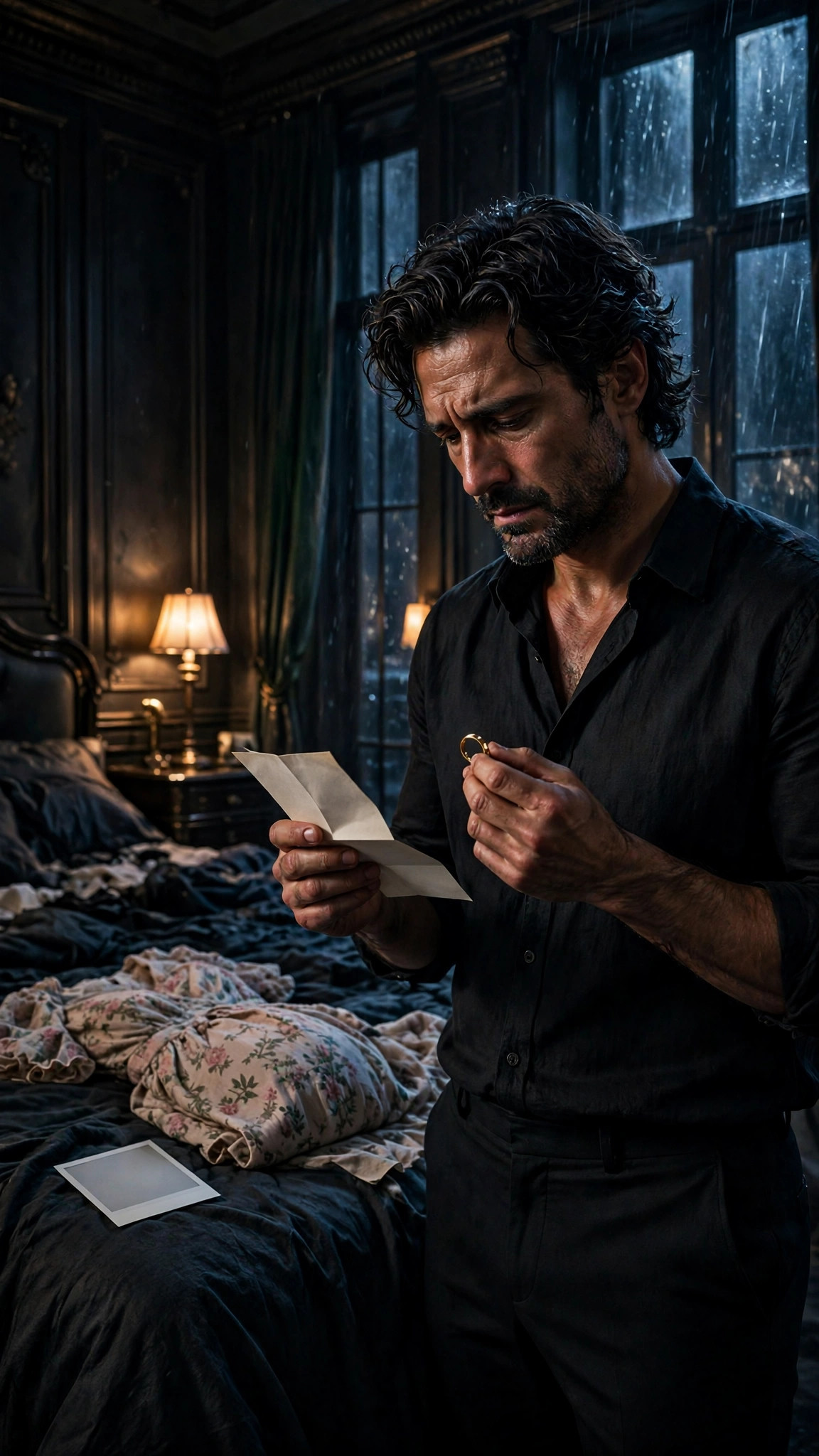
    The bedroom door was open. The bed was unmade. On the mattress, laid out with a terrible, deliberate care, were three things: a floral maternity dress, folded once; a gold wedding ring, standing upright on its edge against the pillow; and a Polaroid photograph, face down.

    I picked up the photograph first. On the back, in Emily's handwriting, were the words that would follow me for the rest of my life.

    "Noah Carter. Born at 1:17 a.m. You missed it by exactly three hours and nine minutes."

    My son had been born while I was asleep in another woman's bed, and my wife had taken him and gone.

    Under the photograph was a letter. Seven words at the end of it destroyed me more completely than any bullet ever had.

    "You were never there when we needed you."

    My name is Michael Carter, and at forty-five I controlled four shipping ports, thirteen freight routes, and three underground casinos. Men in three cities called me a mafia boss, and they were not wrong. I had built an empire out of threats and debts and favors, and I had believed, the way powerful men always believe, that the empire was the thing that mattered, and that the woman who had stood beside me for fourteen years would simply always be there, waiting, the way she had always waited.

    Emily married me when I had nothing but a small apartment, a gun beneath my bed, and enemies who wanted me dead.

    I met her on a Tuesday in October, in the emergency room of a county hospital, when I came in with a knife wound in my side and a lie about a bar fight already prepared. She was twenty-four years old, a nurse on the night shift, with dark hair pulled back and tired eyes and hands that did not shake. She cleaned the wound, stitched it, and looked at me the way nobody in my life had ever looked at me — not afraid, and not impressed, either. Just unimpressed, and faintly annoyed that I had waited so long to come in.

    "You're lucky," she said. "Another inch and you would have bled out in the street."

    "I've been lucky before," I told her.

    "Then stop spending it," she said, and went to the next bed.

    I came back the next week with a bruised rib and no good reason. I came back the week after that with a split lip. The third time, she looked at me over her clipboard and said, "Mr. Carter, if you want to ask me to dinner, ask me to dinner. Stop getting yourself hurt to do it."

    So I asked her to dinner. She said yes, and then she said, "But I pay for my own. I don't owe anyone anything."

    We married eight months later in a courthouse, because I had no family to invite and she had a mother who had died when she was sixteen and a brother who lived two states away. She wore a dress she had bought on sale. I wore the only suit I owned. Afterward we went back to my small apartment and ate takeout on the floor, because I had sold my table to pay a man who had threatened to burn the building down.

    That was the beginning of everything. Emily bandaged my wounds. She waited through hospital nights. She learned the names of my enemies and the sound of a car slowing down outside our window at two in the morning. Once, when I came home late for the fourth night in a row and found her asleep at the kitchen table with two plates of food gone cold, she woke up and said, "I wait for dinner because I like feeling I still have a husband."

    I promised her, then, that one day she would never have to wait again. I meant it. I meant every word of it, the way I meant everything in those days, before I learned how easy it is for a man to mean something and still not do it.

    The empire came slowly, and then all at once. A shipping route. A second port. A favor called in, a debt collected, a rival persuaded to retire to Florida. By the time I was thirty-five, we lived in a house with a name instead of an address, and Emily had a closet full of dresses she never wore and a calendar full of charity galas she attended alone, because I was always somewhere else, closing something, collecting something, becoming something.

    She never complained. That was the worst of it. She never once raised her voice and told me that the bargain had changed. She just kept waiting for dinner, and I kept telling myself that the waiting was temporary, that the empire would be finished soon, that one day I would come home early and stay.

    Then Vanessa appeared.

    It was a charity gala in the spring, the kind of event where the city's two kinds of power — the kind with money and the kind with guns — pretend to be the same thing for one evening. Vanessa Bellini was thirty years old, beautiful in the way that women who have never been told no are beautiful, the daughter of Don Arturo Bellini, whose family and mine had been allies for a decade. She wore a red dress and laughed at something I said, and when the music started she took my hand and said, "Dance with me, Michael. Your wife is across the room, and she won't mind."

    Emily was across the room. She was talking to a woman from the hospital board, and she was smiling, and she did not look at me once.

    I danced with Vanessa. I should not have. I knew it even then, with her hand in mine and her perfume in the air, and I did it anyway, because the music was loud and the room was warm and she looked at me the way Emily had stopped looking at me years ago — like I was the most interesting man in the room, instead of the man who had forgotten to come home.

    One drunken kiss became twenty-one secret trips. Twenty-one trips became thirty-four nights away from the woman who still believed I would come home.

    I told myself it was nothing. I told myself it was business — that keeping the Bellini alliance warm mattered, that Vanessa was a complication I could manage. I told myself that Emily did not know, and that what she did not know could not hurt her, and that I would end it soon. I told myself all of it, and I believed all of it, because that is what men do when they are walking away from their own lives one small step at a time.

    Then Emily told me she was pregnant.

    She came into my study one evening with a small white stick in her hand and tears in her eyes, and she said, "We're having a baby, Michael." I stood up from my desk, and I held her close, and I promised her things would change. I promised her the affair was over. I promised her I would be there for every appointment, every ultrasound, every kick. I promised her I would be the husband she had waited fourteen years for.

    Three days later, I was back in Vanessa's bed.

    I do not know how to explain that, except to say that a man can be two men at once, and both of them can believe they are telling the truth. The man who held Emily and promised to change was real. The man who drove to Chicago three days later was real too. They lived in the same body, and they took turns, and the second one always won when the first one was not looking.

    I missed the ultrasounds. I ignored six calls the day she learned we were having a boy, and when she finally reached me, I told her to choose our baby's name herself, as if a name were something a father could delegate, as if it were a shipment or a contract.

    One evening I came home early — early for me, which meant nine o'clock — and found her standing in the nursery she had decorated alone. She had painted the walls herself, a soft blue, and hung paper stars from the ceiling, and built the crib with her own hands because I had not been there to do it. She was standing in the middle of that room with her hands on her belly, and when she turned and saw me, she did not cry. She just looked at me, and said, very quietly, "I don't want your money, Michael. I want my husband."

    I had nothing to say to that. There was nothing to say. So I said nothing, and I went to my study, and I poured a drink, and I told myself I would fix it tomorrow.

    Two months before her due date, she confronted me about Vanessa. She did not shout. She did not throw anything. She stood in the doorway of my study with her arms folded over her belly, and she said, "I know, Michael. I have known for months. I was waiting to see if you would tell me yourself."

    I did not deny anything. There was nothing left to deny. And when she said, "Nobody stole you from me. You walked away," I turned my back on her. I turned my back, and I walked to the window, and I stood there looking out at the city I owned, and I listened to her footsteps going down the hall, and I told myself I would fix it tomorrow.

    Tomorrow never came. The baby came instead, twelve days early, while my phone lay silent beside Vanessa's bed, and my wife called me five times and I did not answer a single one.

    That was the man I had become. And at 4:26 in the morning, standing in an empty bedroom with a ring and a photograph and a letter in my hands, I finally understood what Emily had known for months: nobody had stolen me from her. I had walked away. And now she had walked away too — and she had taken the one thing I could never buy back.

    My son.

    I sat down on the edge of the unmade bed, still holding the photograph, and I thought about the night I had almost lost her once before — not to another man, but to my own life.

    It was our third year of marriage. I had a shipment coming through the second port that a rival family wanted, and the rival family sent two men to my apartment to explain, in their own way, that the shipment would not be arriving. I was not home. Emily was. She heard them picking the lock, and she did what she had always done: she stayed calm. She put the ledger — the one book that could have put me in prison for twenty years — into the oven, under a roasting pan, and then she opened the door before they could break it, and she told them, in a voice so steady it could have cut glass, that her husband was at the hospital with a dying man and would be home any minute, and that if they wanted to wait, they could wait on the landing, where the neighbors could see them.

    They left. She never told me until a year later, when she mentioned it the way another woman might mention a leaking pipe. "I knew what to do," she said. "I always know what to do. I just wish, sometimes, that I did not have to."

    That was Emily. She had never once asked me to be a different man than the one she married. She had only asked me to come home. And I had spent fourteen years promising her that I would, and ten months proving that I would not.

    I thought about the first secret trip, too, because a man who has lost everything replays the moment he started losing it, the way a driver replays the moment before the crash.

    It was a Tuesday. Vanessa called me from a number I did not recognize and said her father wanted to discuss a shipping contract, and could I meet her in Chicago to go over the terms. There was no contract. There was a hotel suite on the fortieth floor, and a bottle of wine already open, and a woman who knew exactly what she was doing and exactly who I was. I stayed one night. I told Emily I had been delayed at the port. She believed me, because she had no reason not to. She made me dinner the next night, and she asked me how Chicago was, and I lied to her face across a table she had set with the good plates, and she smiled at me, and I told myself it would never happen again.

    It happened twenty more times. The trips got longer. The lies got easier. The penthouse in Chicago — Vanessa's secret penthouse, the one her father did not know about, the one she kept for the things she did not want her family to see — became a second home, with my toothbrush in the bathroom and my shirts in the closet, and I never once stopped to ask myself what kind of man keeps a toothbrush in another woman's apartment while his pregnant wife paints a nursery alone.

    I know what kind of man now. A man who wakes up at 4:26 in the morning to an empty house, holding a photograph of a son he has never met, and a letter that tells him the truth he spent fourteen years refusing to hear.

    "You were never there when we needed you."

    She was right. God forgive me, she was right about every word of it.

  • Chapter 7: A Name for the Future

    Chapter 7: A Name for the Future

    Seven months later, my mother walked out of Boston General Hospital on her own two feet.

    It was a Tuesday in October, and the leaves were turning gold and red along the river, and my mother — Margaret Hale, fifty-two years old, five feet four inches tall, and sixty-one pounds heavier than the day I had signed the contract — walked out of the front doors of the hospital with a nurse on one side and me on the other, and she stopped on the steps, and she closed her eyes, and she tilted her face up toward the sun.

    "Fresh air," she said. "I had forgotten what fresh air smells like."

    The doctors had called it a remission. They had used careful words, the way doctors do — "significant reduction," "no detectable disease," "cautious optimism" — but my mother had translated it into her own language, which was simpler and truer: "I am going to live, Evelyn. I am going to live to see my grandchild."

    The treatment had continued, paid for in full, without a single phone call from a billing office, without a single threat to discontinue anything. Luca had seen to that personally. He had gone to the hospital himself, in the first week after Aldo's exile, and he had sat down with the hospital's director, and he had established a fund — not just for my mother, but for any patient in the oncology ward who could not pay. He had named it the Margaret Hale Fund, and he had not told me about it until the director sent me a letter, and I had cried when I read it, because my mother had always been the kind of woman who helped other people, and now, because of her, other people would be helped too.

    My father came to the hospital to take my mother home. He stood in the lobby, holding her coat, and he looked at me, and for the first time in my life, he looked at me the way a father is supposed to look at his daughter.

    "Evelyn," he said, and his voice was rough, and he cleared his throat, and he tried again. "Evelyn. I am sorry. For all of it. For the way I treated you. For the contract. For everything. Your mother told me that you signed that paper to save her life, and I have thought about that every day since, and I want you to know that I know what it cost you. And I want you to know that I am proud of you. I should have told you that a long time ago."

    I did not forgive him all at once. Forgiveness is not a door that opens; it is a road that you walk, slowly, one step at a time. But I took his hand, and I said, "Thank you, Dad. That means more than you know."

    And that was the first step.

    The baby was born on a snowy morning in January, in a private room at Boston General, with Luca holding my hand and my mother sitting in the chair beside the bed, and the doctor saying, "One more push, Evelyn. One more."

    She was born at 6:14 in the morning, weighing seven pounds and two ounces, with dark hair like her father's and my mother's gray eyes, and when the nurse placed her in my arms, I looked down at her face, and I understood, finally, what my mother had meant when she said that a woman's worth is not decided by the men who notice her, but by the life she chooses when nobody is watching.

    I had chosen this life. Not the contract. Not the year. This life. This man. This child.

    Luca bent down, and he kissed the top of our daughter's head, very gently, and he whispered something to her in Italian — a language I did not speak, but whose meaning I understood perfectly, because it was the sound a man makes when he is holding the whole world in his hands.

    "What did you say to her?" I asked.

    "I told her," Luca said, and his eyes were shining, "that her name is Lucia. After my mother. Lucia Varenna. And I told her that her father waited twelve years to meet her, and that she was worth every single day of the wait."

    My mother reached out, and she touched Lucia's tiny hand with one finger, and Lucia curled her fingers around it, and my mother laughed, and she cried, and she said, "Hello, little one. I am your grandmother. I have been waiting for you for a very long time."

    Three months later, on a spring evening, Luca took me to the rose garden behind the Varenna mansion — the garden his mother had planted, the garden that had been closed and locked for twelve years, ever since his father had died — and he had unlocked it, and he had filled it with candles, and he stood in the middle of it, in a black suit, with his dark hair combed back and his eyes shining in the candlelight, and he got down on one knee.

    "Evelyn Varenna," he said, and he took my hand, and he held up a ring — not the ring from our wedding, which had been chosen by a lawyer, but a new ring, a simple gold band with a single diamond, chosen by him. "I married you with a contract. I want to marry you again, without one. No terms. No conditions. No end date. Just you, and me, and our daughter, and the rest of our lives. Will you marry me? Properly, this time?"

    I looked at him — at the man who had once been the most feared name in Boston, and who was now the man who made my daughter laugh by pulling faces at her, and who had unlocked a garden that had been closed for twelve years — and I said, "Yes. Yes, Luca. A thousand times, yes."

    We were married again, in the rose garden, with my mother and my father and Lucia in her white christening dress, and Enzo standing beside Luca as his best man, and Rosa crying in the front row, and Joseph the driver playing the violin — badly, but with great feeling — and the whole Varenna family watching, not as a tribunal, but as a family.

    And at the christening dinner that followed, in the great dining room of the mansion, at the same long table where Aldo had once slammed his fist and demanded to know whose baby I was carrying, Luca stood up, and he raised his glass, and he looked around the room at the twenty men who had once judged me, and he said, "Twelve years ago, someone told me that my family line would end with me. Tonight, I am holding my daughter, and I am looking at my wife, and I am telling you that the line does not end. The line begins again. And it begins with love, not with fear. And it begins with truth, not with lies. And it begins here, at this table, with all of you, as my family."

    The men raised their glasses. My mother raised hers. My father raised his, and his hand shook, but he raised it high.

    And I sat beside my husband, with my daughter in my arms, and I thought about a hospital room, and a contract, and a brown envelope, and two pink lines, and a man who had spent twelve years believing a lie — and I thought about how the most dangerous thing about Luca Varenna had never been his reputation, or his power, or his name.

    It was his heart. And his heart had been mine from the beginning, even when neither of us knew it yet.

    And sometimes, on quiet evenings, Luca and I sit in the rose garden, and we watch Lucia chase butterflies between the roses, and he holds my hand, and I think about a dinner table, and a slammed fist, and a question that changed everything — "Tell me whose baby that is" — and I think about how the answer to that question was never really about the baby at all.

    The first weeks with Lucia were the hardest and the happiest weeks of my life.

    She woke every two hours, all night, every night, and I woke with her, and I fed her in the dark, in the rocking chair by the window, with the city lights spread out below us like a field of stars. Luca woke with us, every time, without being asked. He would sit on the edge of the bed, half asleep, and he would watch us, and sometimes he would fall asleep sitting up, and I would wake him gently, and he would say, "I am awake. I am here. Go back to sleep," even though he was the one who needed sleep more.

    He learned to change diapers. He learned badly, at first — he put them on backward, twice — and Rosa laughed at him, and I laughed at him, and he laughed at himself, and then he got better, and then he was better at it than I was, which he pointed out at every opportunity.

    He learned to hold her. He held her the way a man holds something he is afraid of breaking, and then, slowly, he learned to hold her the way a father holds a daughter — close to his chest, with one hand under her head, humming a song his mother used to sing to him, a song he had not thought about in twenty years, a song that came back to him the first time Lucia cried in his arms.

    My mother came to see Lucia every day. She would sit in the rocking chair, with Lucia in her arms, and she would sing to her, the same songs she had sung to me, and she would tell her stories — about the street where I grew up, about the soup she used to make, about the time I fell off my bicycle and broke my wrist and my father said, "Your mother will have to drive you to school now."

    "She is going to be strong, this one," my mother said, one afternoon, looking down at Lucia's sleeping face. "She has her father's eyes and her mother's stubbornness. That is a dangerous combination, Evelyn. You are going to have your hands full."

    "I know, Mama," I said. "I am counting on it."

    The vow renewal took a month to plan. Rosa insisted on cooking everything herself. Joseph insisted on playing the violin, even though everyone knew he could not play the violin. Enzo insisted on standing beside Luca as his best man, and he cried during the ceremony, and he did not apologize for it, and nobody asked him to.

    And on the day itself, in the rose garden, with the candles burning and the roses in full bloom, Luca took my hand, and he looked at me, and he said the words he had written himself, without a lawyer, without a contract, without any conditions at all.

    "Evelyn," he said, "I married you once because of a piece of paper. I am marrying you again because of who you are. You are the bravest person I have ever met. You are the kindest person I have ever met. You are the mother of my daughter, and you are the love of my life, and I will spend the rest of my days trying to deserve you."

    I cried. My mother cried. Rosa cried. Even Joseph, who was supposed to be playing the violin, stopped playing and wiped his eyes with his sleeve.

    A month after the wedding, we held the first event for the Margaret Hale Fund, in the ballroom of one of Luca's hotels. My mother stood at the front of the room, in a yellow dress, with Lucia in her arms, and she told the audience — doctors, nurses, donors, families — about the drug that had cost thirty-eight thousand dollars a month, and about the phone call from the billing office, and about the daughter who had signed a contract to save her life.

    "I am standing here today," my mother said, "because my daughter loved me enough to give up a year of her life. And I am standing here today to tell you that no mother should have to ask her daughter to do that. No family should have to choose between a life and a bill. And because of this fund, because of my daughter and my son-in-law, fewer families will have to make that choice."

    The room stood up and applauded. My mother bowed her head, and Lucia reached for her grandmother's necklace, and Luca put his arm around me, and I thought: this is what a family is. Not a contract. Not a bloodline. Not a name on a building. A family is the people who stand beside you when you are afraid, and who tell the truth when the truth is hard, and who love you even when you are difficult to love.

    A year after Lucia was born, on a warm evening in June, we sat in the rose garden as a family — my mother, my father, Enzo, Rosa, Joseph, and the three of us — and Lucia took her first steps on the grass between the rose beds, wobbling from my arms to Luca's, and falling into his hands with a laugh that sounded like a bell.

    "She is going to be trouble, that one," my father said, and he was smiling, and for the first time in my life, his smile reached his eyes.

    "She is going to be wonderful," my mother said, and she took my hand, and she squeezed it, and she said, very quietly, so that only I could hear, "You did this, Evelyn. You built this. Not the contract. Not the money. You."

    It was about the truth. And the truth was that the baby was his, and the lie was twelve years old, and love — real love, the kind that waits, and protects, and tells the truth even when the truth is frightening — love was the thing that finally set us all free.

    The End.

    THE END

  • Chapter 6: The Twelve-Year Lie

    Chapter 6: The Twelve-Year Lie

    I did not hear what Luca said to Aldo in the dining room that night. Luca asked me to wait in the study, and he closed the door, and for twenty minutes I sat in his chair and listened to the murmur of voices through the wall — Aldo's voice, rising and falling, and Luca's voice, low and steady, like a river running under ice.

    When Luca came back, his face was calm. Too calm. The kind of calm that comes after a storm has already done its damage.

    "He denies it," Luca said. "Of course he denies it. He says the second report is a forgery. He says you made it up. He says I am being manipulated by a girl who wants to save her mother's treatment by giving me an heir."

    "Then we prove it," I said. "We go to the clinic. We find the records. We find the truth."

    "The clinic is gone," Luca said. "The Meridian Fertility Clinic closed eight years ago. Dr. Ferrante, the doctor who signed the report, died six years ago. Heart attack. There is nothing left to find."

    "There is always something left to find," I said, and I stood up, and I took his hand. "Luca. I was a home-care aide. I know how medical records work. A clinic does not close and simply vanish. The records go somewhere. The billing goes somewhere. The payments go somewhere. And if someone paid a doctor to falsify a report, there is a record of the payment, because men like Aldo do not pay in cash. They pay in transfers. They pay in favors. They pay in ways that leave a trail."

    Luca looked at me for a long moment. Then he said, "All right. Tomorrow morning. We will find the trail."

    We started with the bank. Luca's family owned a private bank in Boston, a small institution that handled the Varenna accounts and the accounts of a dozen other families, and the bank's records went back forty years. Luca called the bank's president at seven in the morning, and by nine o'clock we were sitting in a conference room with a stack of ledgers, and a thin, nervous accountant named Mr. Okafor was laying out twelve years of transfers on the table in front of us.

    "Mr. Varenna," Mr. Okafor said, "I have found what you asked for. Between 2014 and 2016, there were fourteen transfers from an account controlled by Mr. Aldo Varenna to an account held by Dr. Emiliano Ferrante, at the Meridian Fertility Clinic. The total was two hundred and ten thousand dollars."

    "Two hundred and ten thousand dollars," Luca repeated, very quietly.

    "Yes, sir," Mr. Okafor said. "And there were three more transfers, in 2015, from the same account to a laboratory technician named Paul Hensley, who worked at the clinic. The total was forty thousand dollars."

    I felt Luca's hand tighten around mine under the table.

    "And the reports?" Luca asked. "Can you tell me which report was real?"

    Mr. Okafor shook his head. "The bank cannot tell you that, sir. But I can tell you this: the transfers to Dr. Ferrante began one week after your car accident, sir. The accident when you were twenty-three. The accident after which you went to the clinic for testing."

    Luca went very still. I remembered the accident. He had mentioned it once, in passing, during one of our late-night conversations — a car that had run a red light, a hospital stay, a long recovery, and after it, a visit to a fertility clinic, because his father had insisted, because the family needed to know if the heir could produce an heir.

    "After the accident," Luca said slowly, "my father took me to the clinic. Dr. Ferrante did the tests. A week later, Aldo came to my room, and he told me the results. He said the doctor had found no sperm. He said it was permanent. He said he was sorry. And he showed me the report."

    "And the real report?" I asked Mr. Okafor.

    "Was sent to your late father, sir," Mr. Okafor said. "According to the clinic's mailing records — which we obtained from the laboratory's archive, which was sold to a records company when the clinic closed — the real report was mailed to your father, at the family compound, on the same day. Your father filed it in his desk. He died three years later, of a heart attack, before he ever told you."

    Luca closed his eyes. For a moment, he looked like a man who had been holding his breath for twelve years and had only just remembered how to breathe.

    "My father knew," he said. "My father knew I was fertile, and he died before he could tell me. And Aldo knew that my father knew. And Aldo waited."

    We went to the clinic's archive next. The records company kept its files in a warehouse in South Boston, in rows of gray metal cabinets that smelled of dust and old paper. A clerk named Mrs. Delaney, a woman in her sixties with reading glasses on a chain, led us to the cabinet marked "Meridian Fertility Clinic, 2013–2016," and she pulled out a folder, and inside it was the original laboratory worksheet for Luca's test.

    The worksheet was in Dr. Ferrante's handwriting. It said: "Sperm count 68 million/mL. Motility 72%. Morphology normal. Result: NORMAL."

    And underneath it, in a different hand — Paul Hensley's hand, the laboratory technician — was a note: "Per Dr. Ferrante: prepare second report. Diagnosis: azoospermia. Patient copy to be given to family representative (A. Varenna). Original to be mailed to father."

    Mrs. Delaney looked at the note, and she looked at Luca, and she said, "I'm sorry, Mr. Varenna. I didn't know. I just file the papers."

    "It's all right," Luca said, and his voice was gentle, which surprised me, because I had expected rage. "You did your job. Thank you."

    We drove to the family compound that afternoon. Aldo was waiting for us in the library, sitting in the chair that had belonged to Luca's father, with a glass of whiskey in his hand, and his son Enzo standing beside him.

    Enzo Varenna was thirty-one, with his father's narrow eyes and his mother's kind mouth, and he looked at us the way a man looks at a storm he has known was coming for a long time.

    "Uncle Luca," Enzo said, and he stepped forward, and he held up his hand. "Before you say anything, I want you to know: I did not know. I swear to you, on my mother's grave, I did not know what my father did."

    Aldo stood up. "Enzo. Be quiet."

    "No, Father," Enzo said, and his voice shook, and he did not back down. "I will not be quiet. Not anymore. I have known for three years that something was wrong. I found the bank statements. I found the transfers. I asked you about them, and you told me it was family business, and you told me not to ask again. But I kept the copies. I kept them because I knew that one day, someone would ask."

    He took a folder from inside his jacket, and he handed it to Luca, and Luca opened it, and inside were copies of the same transfers Mr. Okafor had found — fourteen payments to Dr. Ferrante, three to Paul Hensley — and a letter, in Aldo's handwriting, to a lawyer, dated twelve years ago.

    The letter said: "Ensure that the marriage contract for Luca Varenna's future wife contains a clause forbidding children. The clause must be absolute. It is essential to the succession."

    Luca read the letter twice. Then he folded it, very carefully, and he put it back in the folder, and he looked at his uncle.

    "Why?" Luca asked. "Twelve years. Why?"

    Aldo was silent for a long moment. Then he set down his whiskey glass, and he looked at Luca, and for the first time since I had met him, he did not look powerful. He looked old. He looked like a man who had spent twelve years carrying a weight that had finally become too heavy.

    "Because your father was going to give you everything," Aldo said. "The shipping. The hotels. The security firms. All of it. And I was his brother, and I had served this family for forty years, and I was going to get nothing. Nothing but a title and a chair at the end of the table. And then you had your accident, and I saw my chance. If you could never have an heir, then when you died, everything would go to my son. To Enzo. It was not personal, Luca. It was business. It was always business."

    "It was my life," Luca said. "Twelve years of my life. You took twelve years of my life, and you took my father's last years, and you took my wife's peace, and you call it business."

    "It was business," Aldo said again, but his voice was smaller now.

    Luca was quiet for a moment. Then he said, "Here is what is going to happen, Aldo. You are going to leave Boston. Tonight. You are going to take nothing with you except what you can carry in one suitcase. Your accounts are frozen. Your properties are seized. Your name is struck from the family. If you ever come back, if you ever contact my wife, if you ever contact my child, I will not be as merciful as I am being now."

    "And Enzo?" Aldo asked.

    "Enzo stays," Luca said, and he looked at his cousin, and his voice softened, very slightly. "Enzo did not know. Enzo brought me the proof. Enzo is family. You are not. Not anymore."

    Aldo picked up his glass, and he drank the last of the whiskey, and he set the glass down on the table, and he walked out of the library without looking back. I watched him go, and I felt no triumph. I felt only a kind of tired sadness, for a man who had wanted everything and had ended up with nothing, and for a family that had let him do it for twelve years because no one had thought to ask a question.

    That night, Luca called a meeting of the family council — the five oldest men in the Varenna family, the men who decided matters of succession and marriage and war. He laid the two reports on the table. He laid the bank records on the table. He laid Aldo's letter on the table. And he told them everything.

    "My wife is pregnant," he said. "The child is mine. The contract's clause forbidding children was written at Aldo's instruction, to protect a lie. I am asking the council to void that clause, and to recognize my wife as the true Mrs. Varenna, and my child as the heir to this family."

    The five old men looked at the papers. They looked at each other. They looked at me.

    And then the oldest of them, a man named Giuseppe Moretti, who had known Luca's father for fifty years, stood up, and he walked around the table, and he took my hand, and he said, "Mrs. Varenna. Welcome to the family. Truly welcome. We are sorry it took us twelve years to see what was in front of us."

    The council voted unanimously. The clause was voided. The contract was rewritten — not as a one-year arrangement, but as a marriage, with no end date, and no conditions, and no lies.

    The council meeting took three hours. I sat beside Luca at the long table in the family compound, with the two reports and the bank records and Aldo's letter laid out in front of us, and the five oldest men in the Varenna family looked at the papers, and then they looked at me, and then they looked at each other, and nobody spoke for a long time.

    Giuseppe Moretti spoke first. He was eighty-one years old, with white hair and hands that shook slightly when he picked up the bank records, and he read them slowly, with his reading glasses perched on the end of his nose.

    "Fourteen transfers," he said, finally. "Two hundred and ten thousand dollars. To a doctor who is now dead. And a letter, in Aldo's own hand, about a clause in a marriage contract." He set the papers down, and he looked at Luca. "I knew your father for fifty years, Luca. I knew Aldo for sixty. And I am telling you now, in front of this council, that I believe you. I believe your wife. And I believe that Aldo Varenna has shamed this family in a way that cannot be undone."

    The second man, a quiet man named Carlo Benedetti, who had said perhaps ten words in the entire meeting, nodded slowly. "I was there," he said, "the night of Luca's accident. I was at the hospital. I saw Aldo come out of the doctor's office with a paper in his hand. I thought nothing of it at the time. I thought he was bringing good news. I have thought about that night for twelve years, and I have never understood why Aldo looked so pleased. Now I understand."

    The third man, Franco Russo, who had always been Aldo's closest friend, was silent for a long time. Then he stood up, and he walked to the window, and he stood there with his back to the table, and he said, "I defended Aldo for forty years. I told people he was a loyal brother. I told people he was a good man. I was wrong. And I am sorry, Luca. I am sorry that none of us asked the question your wife asked. I am sorry that it took a twenty-seven-year-old girl from nowhere to see what five old men could not see."

    Enzo was waiting for us outside the council room when the meeting ended. He stood in the hallway, alone, with his hands in his pockets, and he looked at me, and he said, "Mrs. Varenna. I want to apologize to you. Not for what my father did — I cannot apologize for that, because it is not mine to apologize for. But for the way I treated you. At the family dinner, in the hallway, when Rocco threatened you — I was there. I saw it. And I said nothing. I am sorry for that. And I want you to know that if you need anything — anything at all, now or ever — you can come to me."

    I looked at him, and I saw a man who was trying very hard to be better than his father, and I said, "Thank you, Enzo. That means a great deal to me. And for what it is worth — your father made his choices. You are making yours. That is what matters."

    He nodded, and he shook Luca's hand, and he walked away down the hallway, and I thought: this family is not what I thought it was. It is not a single thing. It is a dozen different people, making a dozen different choices, and some of them are good, and some of them are terrible, and the difference between them is not blood. It is character.

    And my mother, when I told her the news the next morning in her hospital room, cried for the first time in months — not from pain, but from happiness — and said, "Evelyn. My girl. You are going to be a mother. And I am going to be a grandmother. And I am going to live to see it."

  • Chapter 5: The Dinner of Twenty Men

    Chapter 5: The Dinner of Twenty Men

    The dinner was Aldo's idea. He called it a family dinner, but it was not a family dinner. It was a tribunal, and I was the accused, and the twenty men around the table were the jury.

    I knew it the moment we walked into the dining room. The table was set for twenty-two, and the chairs were all occupied except for two at the far end — ours — and every man in the room stood up when we entered, and none of them smiled.

    Aldo sat at the head of the table, in the chair that had belonged to Luca's father, and he watched us walk to our seats with the patient, hungry eyes of a man who has waited twelve years for his plan to work.

    "Luca," he said, as we sat down. "Evelyn. How good of you to come. I hope you are feeling well, Evelyn. You looked a little pale when you came in."

    "I am fine," I said, and my voice sounded steady, which surprised me, because nothing else about me was steady.

    "Good," Aldo said, and he smiled, and his smile did not reach his eyes. "Good. Because there is something I would like to discuss with the family tonight, and it concerns you."

    The first course came. Soup. I lifted my spoon, and the smell of it hit me — cream and butter and something rich — and my stomach turned over, hard, and I put the spoon down, and I pressed my hand flat against my stomach, the way I had been doing for three days without noticing.

    Aldo watched my hand. He watched it the way a hunter watches a deer step into a clearing.

    "My dear," he said, and his voice was loud enough for the whole table to hear. "Are you unwell?"

    "I am fine," I said again.

    "Are you sure?" Aldo said. "Because you have been holding your stomach all evening. And a woman holds her stomach for only two reasons, in my experience. One is that she has eaten something bad. The other is that she is carrying a child."

    The room went silent. Twenty men put down their forks. Twenty men looked at me.

    "Tell me whose baby that is."

    Aldo slammed his fist on the table so hard the crystal jumped. "The contract forbade children. You were told. Everyone in this family was told. You signed a contract, Evelyn Hale, and you broke it, and now you will tell this family whose child you are carrying, because it cannot be Luca's. Luca cannot father children. He has known that for twelve years. So tell me. Tell all of us. Whose is it?"

    I could not speak. My throat had closed. My hands were shaking. I felt Luca's hand close around mine under the table, warm and steady, and I held on to it like a rope.

    Luca rose from his chair. He did not raise his voice. He never raised his voice.

    "Step away from my wife," he said.

    Aldo did not step away. "Your wife signed a contract, Luca. One year. Financial support for her mother. No children. No heirs. You know why. You were told twelve years ago that you could never father children, and you accepted it, and this family accepted it, and now this girl—"

    "Do not call her a girl," Luca said, and his voice dropped lower, and the whole room seemed to lean back from the table at once. "Do not finish that sentence, Aldo."

    Aldo leaned across the table toward me, his face going red, his hand reaching for my arm as if he meant to drag the answer out of me by force.

    Luca moved faster than I had ever seen him move. His hand closed around his uncle's wrist, and he held it, firmly, in midair, and he did not let go.

    "Do not touch my wife," Luca said. "Not tonight. Not ever."

    Aldo stared at him. The whole room stared at him. For a moment, nobody moved, and the candles hissed, and the crystal trembled on the table, and I thought that the whole world had stopped.

    Then Luca let go of Aldo's wrist, and he turned to me, and he said, very quietly, "Come with me, Evelyn."

    He took me out of the dining room, past the twenty silent men, past the untouched soup and the trembling crystal, and down the hallway to his private study, and he closed the door behind us, and he turned to me, and he glanced at the hand I had unconsciously placed over my stomach, and he asked one question.

    "Evelyn," he said quietly. "Tell me the truth."

    As I stood there, in the study, with the two reports in my mind and the pregnancy test hidden in my dresser drawer, I thought about the first dinner I had ever attended at the Varenna compound — the dinner where I had met Aldo for the first time, three weeks into my marriage. He had raised his glass that night, too, and he had said, "To family. To loyalty. To the future of this house." And he had looked at me, and he had smiled, and I had thought, at the time, that he was simply an old man who liked to make toasts.

    Now I understood. He had not been toasting the future. He had been toasting his own plan. He had been standing at the head of the table, in Luca's father's chair, drinking to a future in which Luca died without an heir, and his son took everything, and I — the contract wife, the girl from nowhere — was simply a detail he had not bothered to plan for.

    He had not planned for me to fall in love with Luca. He had not planned for me to look in a desk drawer. He had not planned for a second report, or a bank ledger, or a son who kept copies of his father's crimes. He had planned for twelve years, and he had planned for everything — except for a woman who refused to be afraid.

    I could not lie to him anymore. And something lined up too perfectly, and I had known it for days, and I had been too afraid to say it out loud, because saying it out loud would mean that everything his family believed about him, everything he believed about himself, had been built on a lie.

    I could not lie to him anymore. And something lined up too perfectly, and I had known it for days, and I had been too afraid to say it out loud, because saying it out loud would mean that everything his family believed about him, everything he believed about himself, had been built on a lie.

    "Luca," I said, and my voice shook, and I made it steady, because this was the most important thing I would ever say to him. "The child is yours. I know that because there has never been anyone else. But that is not the whole truth. The whole truth is that you were never infertile. Someone made you believe you were. Someone falsified the report twelve years ago, and hid the real one in your desk, and the real one says you are perfectly healthy, and the copy of the real one was sent to Aldo."

    Luca was very still. He looked at me for a long moment, and I saw a dozen things cross his face — disbelief, and hope, and rage, and a kind of grief so deep it frightened me, the grief of a man who has just learned that twelve years of his life were stolen from him.

    "Show me," he said.

    I went to the desk. I opened the top drawer. I took out the brown envelope, and I laid the two reports on the desk, side by side, and I pointed to the line at the bottom of the real one.

    "Copy to: Mr. Aldo Varenna," I said. "And I went to a doctor, Luca. An independent doctor. Dr. Sarah Lindqvist. You went with me. You heard what she said. Your results are normal. They have always been normal. Someone lied to you, and someone paid for that lie, and the person who benefited from it is the person who has been sitting at the head of your father's table, telling the family that the line ends with you."

    Luca picked up the two reports. He read them. He read them again. His hands did not shake. His face did not change. But I saw his jaw tighten, and I saw his eyes go dark, and I understood that I was watching a man decide something, and that the decision, once made, could not be unmade.

    "Twelve years," he said, very quietly. "For twelve years, I believed I would never hold my own child. I accepted it. I built my life around it. I told you, on our wedding night, that the line ends with me. And all that time, my uncle knew. All that time, he was waiting for me to die without an heir, so that his son could take what was mine."

    "Luca," I said, and I put my hand on his arm. "What are you going to do?"

    He looked at me, and he put his hand over mine, over my stomach, very gently, and he said, "I am going to find out exactly what he did. And then I am going to end it."

    He opened the study door, and he walked back into the dining room, and the twenty men were still sitting there, in the silence, with their untouched soup going cold, and Aldo was still sitting at the head of the table, in Luca's father's chair, and Luca walked to the end of the table, and he stood behind Aldo's chair, and he said, in a voice that carried to every corner of the room, "The dinner is over. Everyone out. Except you, Aldo. You stay."

    The twenty men filed out of the dining room, one by one, in a silence that felt like a funeral. And I stood in the doorway of the study, with my hand on my stomach, and I listened to the sound of their footsteps fading down the hallway, and I thought: this is the moment everything changes.

    The drive to the mansion took forty minutes, and I spent all of them staring out the window at the highway lights, with my hand on my stomach and my heart beating too fast. Luca drove in silence, and Joseph sat in the front seat, and neither of them spoke, and I was grateful for the silence, because I did not trust my voice.

    I had spent an hour getting dressed. I had chosen a dark evening gown, elegant and simple, with long sleeves, because I wanted to look like a woman who belonged at a table with twenty powerful men, and not like a girl who had been bought to pay a hospital bill. Rosa had helped me with my hair, pulling it back into a low knot, and she had said, "You look beautiful, Mrs. Varenna. You look like a queen." And I had thanked her, and I had looked at myself in the mirror, and I had seen a woman I barely recognized — a woman with dark wavy hair and a pale, fearful face, wearing a gown that cost more than my old apartment's rent, about to walk into a room full of men who had already decided what she was.

    When we arrived, the mansion was lit up like a palace. Cars lined the driveway. Men in suits stood on the front steps, smoking cigars, talking in low voices, and they went quiet when they saw us, the way men always went quiet when Luca walked into a room.

    Inside, the dining room was warm and bright, and the table was set with crystal and silver, and the candles were already lit, and the smell of roast lamb came from the kitchen, and for a moment — just a moment — it looked like an ordinary family dinner. Like the kind of dinner my mother used to make on Sundays, when my father was still kind, and the world was still simple.

    But it was not ordinary. I knew it the moment Aldo stood up and raised his glass and said, "To family. To loyalty. To the truth, whatever it may be."

    He looked at me when he said the word "truth." He looked at me the way a hunter looks at a deer step into a clearing.

    The soup came, and I lifted my spoon, and the smell hit me, and my stomach turned over, and I put the spoon down, and I pressed my hand flat against my stomach. I saw Aldo notice. I saw the men at the far end of the table notice. I saw Giuseppe Moretti, the oldest man in the family, frown slightly, the way a man frowns when he sees something he does not like but cannot yet name.

    And then Aldo said it. "Tell me whose baby that is."

    After the dinner ended — after the twenty men filed out in silence, after Luca took me into the study, after I showed him the two reports and told him about Dr. Lindqvist and the pregnancy — we stood in the study together, in the dark, with only the desk lamp burning, and Luca put his hand over mine, over my stomach, very gently, the way a man touches something precious and breakable.

    "Evelyn," he said, and his voice was rough, and I realized that he was trying not to cry, and that he had not cried in front of anyone in twelve years. "If this is true — if what you are telling me is true — then I have lost twelve years of my life. Twelve years of believing I would never be a father. Twelve years of building walls around myself because I thought there was nothing inside worth protecting. And you — you found the truth in a drawer, in my own house, in my own desk, because you were brave enough to look."

    "I was not brave," I said. "I was terrified. I am still terrified."

    "Then we are terrified together," Luca said, and he kissed the top of my head, very gently, and he held me, and we stood there in the dark study, with the two reports on the desk and the future of our family balanced on a knife's edge, and I thought: this is the moment everything changes.

    What I was about to tell him would not just change our marriage. It could expose a twelve-year-old lie at the heart of his family's empire.

    And now, finally, it had.