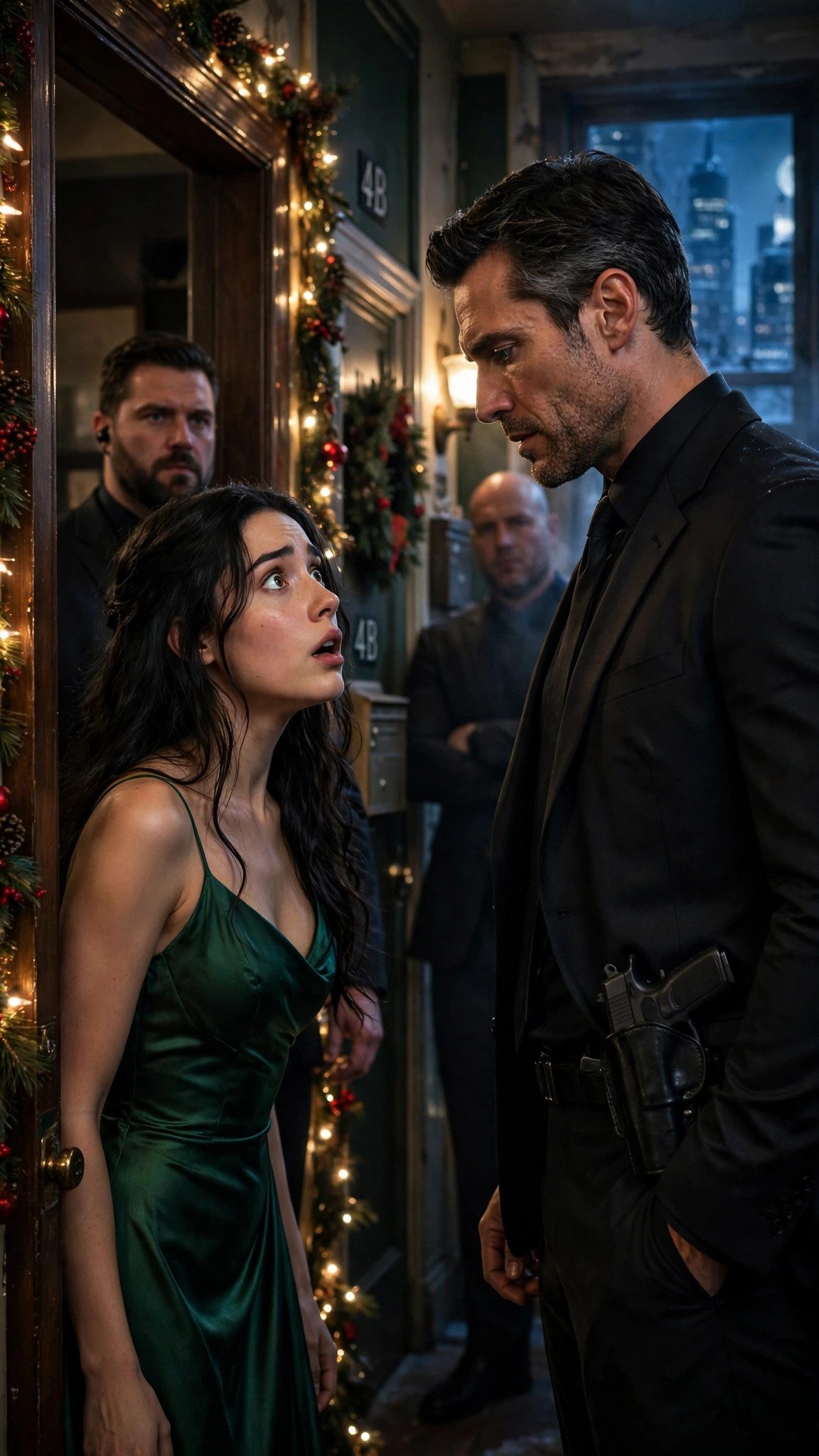
Story Genres: Mafia Romance

  • Chapter 7: Home

    Chapter 7: Home

    The week after Pier 17 felt like waking up from a dream.

    Silas Kane was in prison, awaiting trial on charges that would keep him behind bars for the rest of his life. Victor Lang was in prison beside him. Marcus Hale was in prison too, and though he would spend years there, the judge had listened to his story — about his brother, about the warehouse, about twelve years of waiting — and the sentence was lighter than it might have been. Cassian had made sure of that. "He did a terrible thing," Cassian had said, "but he did it for a reason I understand. And understanding doesn't forgive it. But it matters."

    The organization — the family — was changed forever. Cassian called a meeting of every man who owed him loyalty, in the same boardroom where he had once silenced executives with a single look, and he told them the truth: that there had been a traitor, that the traitor was gone, and that from now on, things would be different.

    "No more secrets from the people who protect this family," he said. "No more shadows. We are going to be a legitimate business, and the rest — the rest we are going to close down, piece by piece, until there is nothing left for a man like Silas Kane to steal."

    It was a bold promise. It was a dangerous promise. And I watched the men in that room — hard men, men who had lived their whole lives in the shadows — nod their heads, one by one, because they trusted the man standing in front of them.

    Afterward, Cassian found me in the hallway outside the boardroom, and he said, "Walk with me."

    We walked through the office, past the desks and the meeting rooms, past the conference room where Vanessa Cole had laughed at my dress, past my own desk — my desk, with its neat stacks of papers and its one-page briefings and its drawer where I kept a note that said "Good work. — C.B."

    "Your apartment is safe now," Cassian said. "The men watching it are gone. The building has new security. You can go home whenever you want."

    "Home," I repeated. The word felt strange in my mouth, like a word from a language I had half forgotten.

    "But I want you to know something," Cassian said, and he stopped walking, and he turned to face me, and for the first time in three years, he looked nervous. Cassian Blackwood, the man who could silence a boardroom with one look, the man who had faced down Silas Kane on a pier at midnight — nervous.

    "Elara, I brought you into my world to protect you. But the truth is, I don't want you in my world as my secretary. Not anymore. I want you in my life as my partner. Not because you saved me. Not because you remember things. Because in three years, you are the only person who has ever seen me — the real me, not the boss, not the name, not the empire — and stayed."

    He reached into his jacket pocket and took out a small box. It was not a ring box. It was a key.

    "This is the key to the penthouse," he said. "Not as an employee. Not as a guest. As the person who lives there. If you want it. And if you don't want it, I'll understand, and I'll drive you home myself, and I'll never ask you again."

    I looked at the key. I looked at him. I thought about the emerald dress hanging in my closet, unworn, waiting for a party that had already happened without me.

    "I want something else first," I said.

    "Anything," he said.

    "I want to wear the dress," I said. "Not to a party. Not for anyone else. For me. Tonight. Just dinner. You and me. In the penthouse. With the fire going and the city outside the windows. I want to wear the dress I bought, and I want to stop waiting for a reason to feel beautiful."

    Cassian smiled — a real smile, warm and unguarded, the smile of a man who has just been given the one thing he wanted most and did not dare to ask for.

    "Then wear the dress," he said.

    That evening, I went home to my apartment for the first time in four days. The chicken was still on the table, long past saving. The wine glass was still on the coffee table. My phone was still on the kitchen counter, its battery long dead. I stood in the middle of my small living room, and I looked at the life I had lived there — the small couch, the small kitchen, the small, quiet, invisible life — and I felt a strange tenderness for it. It had not been a bad life. It had been a waiting life. A life spent preparing for something I had not yet dared to name.

    I took the emerald dress out of the closet. I laid it on the bed. I took a long, hot shower, and I did my hair the way I had imagined doing it for the party, and I put on the dress, and I stood in front of the mirror.

    The woman in the mirror was not a secretary. She was not an assistant. She was not furniture.

    She was Elara Whitmore. Twenty-six years old. A woman who had faced down a traitor, lied to a mafia boss on a pier at midnight, and walked out alive. A woman who remembered everything.

    And she was beautiful.

    I took a car to the penthouse. Danny drove, and he did not say a word about the dress, but he smiled when he opened the door for me, and he said, "You look nice, Miss Whitmore."

    Cassian was waiting by the fireplace when I walked in. He was wearing a dark suit, no tie, his collar open. He had set the table himself — I could tell, because the candles were slightly crooked and the plates did not match, and it was the most charming thing I had ever seen.

    He turned around. And he stopped. And he stared at me the way he had stared at me in the hallway of my apartment building, at nine o'clock at night, when he had said, "You're coming home with me."

    Only this time, there was no fear in his eyes.

    There was only wonder.

    "Elara," he said softly. "You look—"

    "I know," I said, and I smiled. "I look like a woman who bought a dress and finally got to wear it."

    "No," he said, and he walked toward me, and he took my hands in his. "You look like the rest of my life."

    Dinner was simple: pasta he had ordered from a restaurant downtown, a bottle of wine, bread still warm from the oven. We ate by the fire. We talked. And for the first time in three years, we talked about things that had nothing to do with business.

    He told me about his mother, who had died when he was nineteen, and who had taught him to cook the pasta we were eating. I told him about my mother in Ohio, and the Sunday phone calls, and the student loans, and the three jobs. He told me about the first time he had ever fired a gun, and how his hands had shaken for an hour afterward. I told him about the first time I had ever stood up to Vanessa Cole — which was, I realized, the night I had thrown a phone at Marcus Hale's face.

    We laughed. We drank wine. And when the fire had burned down to embers, Cassian stood up, and he held out his hand, and he said, "Dance with me."

    "There's no music," I said.

    "Then we'll dance without it," he said.

    And so we did. In the middle of the penthouse, in the dark, with the city glittering outside the windows and the fire dying behind us, I danced with Cassian Blackwood in my emerald-green dress. And he held me close, and he whispered in my ear, and what he whispered was not a business plan, or an order, or a warning.

    It was three words I had waited three years to hear.

    Not "You're coming home with me."

    But: "Stay with me."

    I stayed.

    One year later, the Blackwood Group held its annual Christmas party again. The string quartet played in the lobby. The tree stood tall, brought in through the loading dock just like always. The champagne sparkled in glasses that cost more per bottle than I used to spend on groceries in a month.

    And I walked in wearing the emerald-green dress.

    It still fit perfectly. The fabric still fell like water. The color still made my dark hair look darker and my skin look warmer. But the woman wearing it was not the same woman who had bought it a year ago. That woman had been hoping to belong. This woman knew she did.

    Vanessa Cole was standing near the bar with a group of executives, and when she saw me, her smile froze halfway to her lips. She opened her mouth — and then she saw who was standing beside me, his hand resting lightly on the small of my back, his eyes on me the way they had been on me for a year now — and she closed her mouth again, and she turned away, and she did not say a word.

    Cassian leaned down and whispered in my ear, "Do you want me to fire her?"

    "No," I said, and I smiled. "I want her to watch."

    We walked through the party together, and people came up to us — executives, clients, friends — and they greeted Cassian with respect, and they greeted me with something I had never received in that building before: warmth. Genuine warmth. Not the politeness you give to furniture. The warmth you give to a person who matters.

    "Elara," one of the junior executives said — the same one who had laughed about the dress a year ago — "you look beautiful tonight."

    "Thank you," I said. "I know."

    Later, when the party was in full swing and the music was loud and the lights were bright, Cassian took my hand and led me to the window, away from the crowd. Outside, snow was beginning to fall over Manhattan, soft and silent, turning the city white.

    "A year ago," he said, "I knocked on your door at nine o'clock at night and told you that men had been watching your apartment. Do you remember what you said to me?"

    "I said, 'I just got home,'" I said. "And then I said, 'What's wrong?'"

    "And I said, 'You're coming home with me,'" he said. "I didn't know then what I know now. I didn't know that home wasn't a place. It was a person."

    He reached into his jacket pocket. My heart stopped. It was a small box, and this time, it was a ring box.

    "Elara Whitmore," he said, and he went down on one knee, right there in front of the window, with the snow falling outside and the whole party behind us, "you spent three years taking care of me. You spent one year saving me. Will you spend the rest of your life letting me take care of you?"

    The room went quiet. The music seemed to stop. Every face in the lobby turned toward us.

    I looked down at him — the cold, impossible, ruthless billionaire CEO, the mafia boss, the man who had knocked on my door and changed my life — kneeling on the floor of his own Christmas party, holding a ring, waiting for my answer with an expression I had never seen on his face before.

    Hope. Pure, unguarded hope.

    "Yes," I said. "Yes. A thousand times, yes."

    He slid the ring onto my finger. The room erupted. People cheered. Someone popped a bottle of champagne. Vanessa Cole stood frozen by the bar, holding a glass she had forgotten to drink.

    And Cassian stood up, and he took my face in his hands, and he kissed me, and the whole world — the party, the music, the snow, the city — fell away, and there was only us.

    Later that night, after the party had ended and the guests had gone home, we stood on the balcony of the penthouse, looking out over the city. The snow had stopped. The streets glittered. Cassian's arms were around me from behind, and his chin rested on the top of my head, and I could feel the steady beat of his heart against my back.

    "Do you ever think about that night?" he asked. "The knock at nine?"

    "Every day," I said.

    "And if you could go back? If you could change any of it — the dress, the party, the men watching your apartment — would you?"

    I thought about it. I thought about the laughter in the hallway, and the chicken going cold on the table, and the gun under his jacket, and the lights going out, and the elevator dinging in the dark, and Marcus Hale's face, and Silas Kane on the pier, and the lie I had told that saved us all.

    "No," I said. "I wouldn't change a single thing. Because every step of it led me here. To you. To this. To home."

    He tightened his arms around me. "Then it was worth it," he said. "All of it. Every bit of it was worth it."

    Below us, the city slept. Above us, the stars came out, one by one, over Manhattan. And I stood in my emerald-green dress, with a ring on my finger and the man I loved holding me close, and I thought about the secretary I used to be — the invisible woman with the neat desk and the one-page briefings and the note in her drawer that said "Good work."

    She had not disappeared. She was still there, inside me, organized and reliable and watchful, remembering everything.

    But she was no longer alone. She was no longer invisible. She was no longer waiting for someone to notice her.

    She had been noticed. She had been chosen. She had been saved — not by a billionaire, and not by a mafia boss, but by a man who had knocked on her door at nine o'clock at night and said, "You're coming home with me."

    And she had gone. And she had never looked back.

    The End.

    THE END
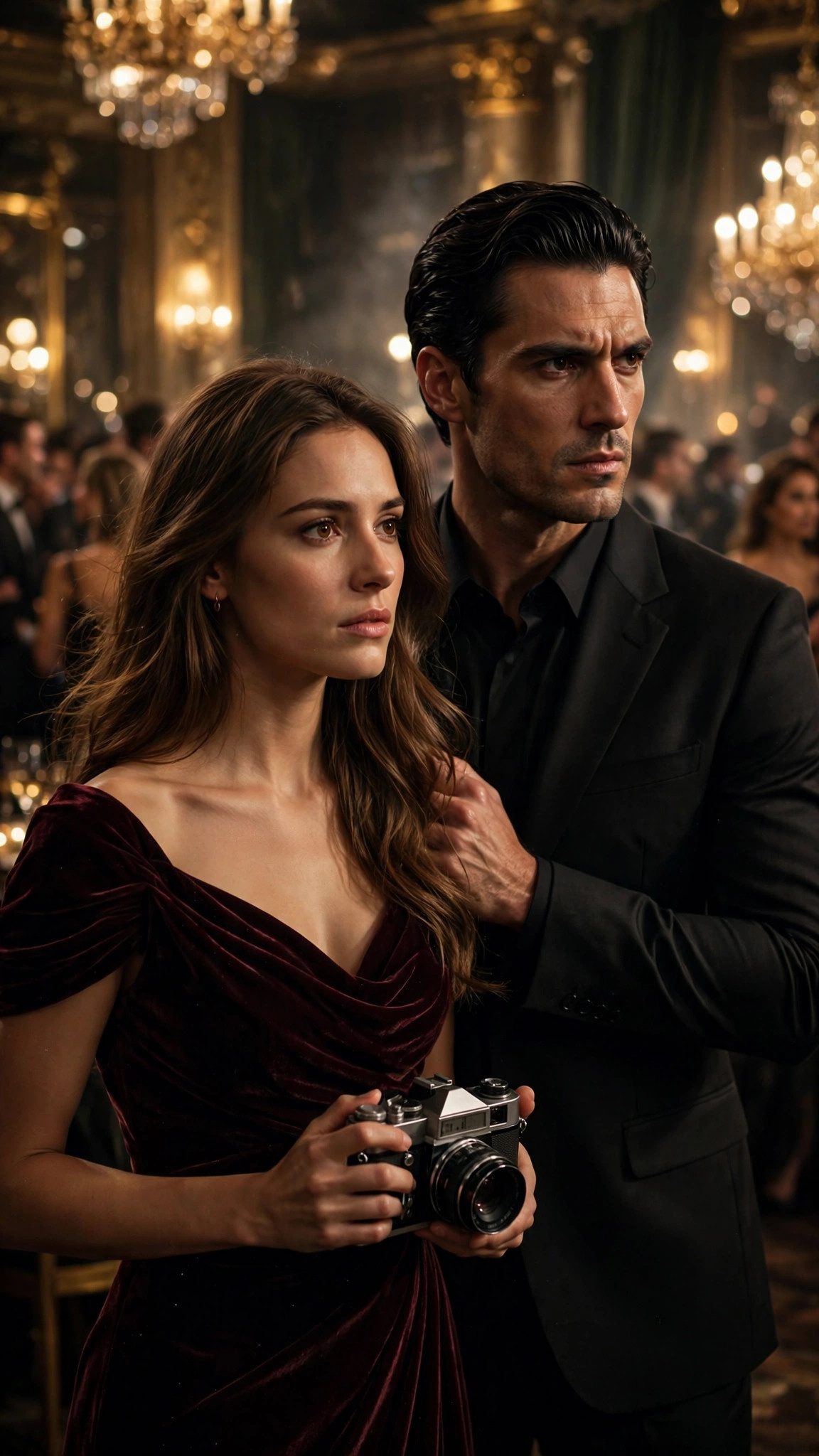
  • Chapter 6: The Price of Protection

    Chapter 6: The Price of Protection

    I cried for a long time.

    I cried in the bedroom doorway, with Cassian's arms around me and the penthouse full of his men pretending not to notice. I cried for the dress in my closet, and the party I had missed, and the three years I had spent being invisible. I cried for the man who had tried to sell me, and for his brother who had died twelve years ago, and for the strange, tangled world I had walked into without ever knowing it was there.

    And when I finally stopped, Cassian handed me a glass of water, and he sat down on the edge of the bed beside me, and he said, "It's not over yet."

    "Marcus is gone," I said. "The police have him."

    "Marcus was a soldier," Cassian said. "Silas Kane is the general. And generals don't surrender because they lose one soldier. Kane's men were at the docks tonight. By now, they know the shipment was fake. By now, Kane knows that Marcus has been arrested. And a man like Silas Kane does not accept that kind of humiliation quietly."

    As if his words had summoned it, Danny appeared in the bedroom doorway, his face grim.

    "Boss," he said. "We have a problem. Two of Kane's cars just pulled up outside the building. They're not hiding. They're sitting right there on the street, headlights on, waiting."

    Cassian stood up. "How many men?"

    "Six that we can see. Probably more we can't."

    "And the police?" Cassian asked.

    "On their way," Danny said. "But Kane's men won't wait for them. They'll come up here. They want the girl. They want her alive, and they want her now, because she's the only leverage Kane has left."

    I felt my stomach drop. "What do we do?"

    "We leave," Cassian said. "Now. Before they get organized. Anthony's house in Connecticut — it's two hours away, it's off every map Kane has, and it's the one place Marcus never knew about, because I never told him. Danny, Cole — with me. The rest of you, hold this building until the police arrive."

    He turned to me. "Elara, put your shoes on. We're going out the back."

    "The back of what?" I asked. "We're on the top floor."

    "The roof," he said. "There's a service stair to the building next door. From there, a garage. From there, a car that isn't mine, with plates that aren't mine, driven by a man Kane has never seen."

    I put my shoes on. My hands were still shaking, but they were steadier than they had been an hour ago. Fear, I was learning, had a strange way of sharpening you once you stopped fighting it.

    We moved through the penthouse in silence. Danny led the way, his gun drawn, his eyes sweeping every corner. Cole brought up the rear. Cassian stayed beside me, his hand on my back, guiding me forward. We took the service stairs up to the roof, and the cold December air hit my face like a slap, and for a moment I could see the whole city spread out below us, glittering and indifferent, and I thought: this is the last time I will ever see the world the way I used to see it.

    From the roof, we crossed to the next building on a narrow walkway that made my knees go weak. Below us, thirty stories down, the street was a river of headlights. I did not look down. I looked at Cassian's back, and I followed him, one step at a time, the way I had followed his schedule for three years: one thing at a time, in order, without stopping.

    The garage was dark and smelled of oil and concrete. A black sedan waited in the far corner, its engine already running. The driver was a man I had never seen before — older, with gray hair and a quiet face.

    "Mr. Blackwood," he said. "Miss Whitmore. I'm Henry. I'll be driving."

    We climbed in. Danny and Cole got into a second car behind us. And then we were moving, out of the garage and into the night, and the city slid past the windows again — but this time, I was not a passenger in someone else's story. This time, I was watching for the cars behind us, counting the headlights in the mirrors, the way Danny had taught me to do without ever teaching me.

    "There," I said suddenly, pointing at the rear window. "That gray sedan. Two cars back. It's been there since the garage."

    Henry glanced in the mirror. "Good eye," he said. "Hold on."

    What happened next, I will remember for the rest of my life.

    Henry drove the way I imagine a man drives when he has done it a hundred times and is not afraid of doing it a hundred more. He turned down a side street, then another, then doubled back through an alley so narrow the mirrors nearly scraped the walls. The gray sedan followed for three blocks, and then it didn't — it got caught behind a delivery truck at a light, and Henry took a left, and a right, and a left again, and by the time we reached the highway, the road behind us was empty.

    "They'll find another way," Cassian said. He was sitting beside me, his phone in his hand, his eyes on the road ahead. "Kane has men all over this city. But they don't know where we're going. And that gives us time."

    "Time for what?" I asked.

    "Time for you to tell me everything you remember about the Kane family," he said. "Every document. Every name. Every number. Because somewhere in those papers, Elara, there is a reason why Silas Kane wants this territory so badly that he would pay two million dollars for a secretary. And I intend to find out what it is before he finds us."

    I closed my eyes and thought. The documents. Three years of documents. Contracts, manifests, financial statements, legal papers. I had filed them all. I had read them all, at least enough to know where they belonged.

    And then I remembered something.

    "There was a company," I said slowly. "A real estate company. Kane Properties. It appeared in the legal papers about eighteen months ago, in a dispute over a warehouse on the waterfront. The warehouse was small, and old, and by every measure it was worthless. But Silas Kane spent two years and almost a million dollars in legal fees trying to buy it. And I remember thinking: why would anyone spend a million dollars to buy a worthless warehouse?"

    Cassian went very still. "Which warehouse?"

    "Pier 17," I said. "On the East River. It was in the papers your father left behind, too. I remember the name because it was the same pier where—" I stopped. "It was the same pier where your father was killed."

    The car went silent. Henry's eyes flicked to the mirror. Danny's voice came through the radio, low and tense: "Boss?"

    Cassian did not answer him. He was looking at me, and his face had gone pale in the dark of the car.

    "Pier 17," he said softly. "My father died on Pier 17. And Silas Kane has spent two years trying to buy it. Do you know why?"

    "No," I said.

    "Because underneath that warehouse," Cassian said, "there is a vault. A vault my grandfather built during the war, and my father used for thirty years. It holds the records of everything this family has ever done — every deal, every name, every secret. If Kane gets that vault, he doesn't just get the territory. He gets the power to destroy every family in this city, including his own enemies, including mine. He gets the whole map."

    "And the only person who knows where the key is—" I began.

    "Is me," Cassian finished. "And the only person who knows the combination, besides me, is the lawyer who drew up my father's will. Victor Lang."

    The car turned off the highway, and the city fell away behind us, and the dark road to Connecticut stretched out ahead, lined with bare winter trees.

    "Then we have a problem," I said. "Because Victor Lang was one of the six people who touched the manifest today. And if Marcus wasn't working alone—"

    "He wasn't," Cassian said. "I know that now. Marcus was the hand. But someone else is the head. And if that someone is Victor Lang, then Kane already knows about the vault. And the only thing standing between him and it is us."

    He took my hand. His fingers were cold, but his grip was steady.

    "Elara," he said, "I brought you into this world to protect you. But the truth is, you may be the only person who can help me end it. Are you with me?"

    I looked at him. I looked at the dark road ahead, and the empty highway behind, and the man who had knocked on my door at nine o'clock at night and changed my life forever.

    "I'm with you," I said.

    Anthony's house in Connecticut was not a house. It was a fortress disguised as a farmhouse, with thick stone walls, a driveway that curved out of sight of the road, and a view of the hills that went on forever. Anthony himself was waiting on the porch when we arrived, wrapped in a heavy coat, a shotgun leaning against the railing beside him like a walking stick.

    "Boss," he said. "Miss Whitmore. You're safe here. My men have the road covered for two miles in both directions."

    Inside, the house was warm and smelled of wood smoke and coffee. Anthony's wife, a small woman with silver hair and sharp eyes, took one look at me and said, "You poor child. Come sit by the fire. I'll make you something hot."

    I sat by the fire. I drank the hot chocolate she made me. And for the first time in what felt like days, I allowed myself to breathe.

    But Cassian did not rest. He was on the phone for hours, his voice low and urgent, calling in favors, calling in men, calling in every debt the Blackwood family had ever collected. And when he finally came to sit beside me, his face was set with a resolve I had never seen before.

    "Kane wants a meeting," he said. "He sent word through a lawyer — not Victor, a different one. He wants to meet at Pier 17, tomorrow night, at midnight. Just him and me. No men. No guns. He says he wants to talk."

    "It's a trap," I said immediately.

    "Of course it's a trap," Cassian agreed. "But it's also the only chance I'll ever get to end this. If I don't go, he'll keep coming. He'll come for you, he'll come for Anthony, he'll come for everyone I care about, until there's nothing left. If I go, I have a chance to finish it. On my ground. On the pier where my father died."

    "Then I'm going with you," I said.

    "No," Cassian said. "Absolutely not."

    "Yes," I said, and I stood up, and I looked him in the eye, and I did not back down. "You told me I was the most dangerous person in the penthouse because I remember things. Well, I remember something else. I remember the combination to that vault."

    Cassian stared at me. "What?"

    "Your father's will," I said. "I filed it, three years ago, when you updated it after your mother's funeral. The will mentions a safe deposit box, and the box number, and a combination written in your father's handwriting. I remember it because it was the same as your birthday, backwards. March 14th. 3-1-4. And I remember it because I thought it was a strange thing for a man like your father to do — to hide a vault combination in a will that any lawyer could read."

    "Victor Lang read that will," Cassian said slowly.

    "Victor Lang read that will," I agreed. "And Victor Lang is the only person, besides you, who knows the combination. So if Kane has Victor, then Kane already knows how to open the vault. The only thing he doesn't have is you — the only person who can authorize the opening, the only person whose fingerprint unlocks the vault door. That's why he wants the meeting. He doesn't want to kill you, Cassian. He wants to use you."

    Cassian was quiet for a long moment. The fire crackled. Outside, the wind moved through the bare trees.

    "Then we go together," he said at last. "But you stay in the car. With Danny. And if anything goes wrong, you drive away, and you don't look back."

    "I won't promise that," I said.

    "Elara—"

    "I won't promise to leave you," I said. "Not after everything. Not after tonight."

    He looked at me, and for a moment, the cold mask was gone completely, and I saw the man underneath it — not the billionaire, not the mafia boss, but the man who had knocked on my door at nine o'clock at night because he could not bear the thought of something happening to me.

    "Then we go together," he said.

    Pier 17 at midnight was the coldest place I had ever been. The wind came off the East River like a blade, and the warehouse loomed over the dock, dark and empty, its broken windows staring out at the water like blind eyes.

    Silas Kane was waiting inside, standing in the middle of the empty floor with two of his men behind him. He was a tall man, silver-haired, with a face that might once have been handsome and was now only hard. He looked at Cassian, and then he looked at me, and he smiled.

    "So this is the famous secretary," he said. "The girl who knows everything."

    "I know enough," I said.

    Kane laughed. "She has spirit. I'll give her that. Now, Cassian. Let's talk about the vault. You know what's in it. I know what's in it. Your father kept records of every family in this city — including mine. Including yours. Open it for me, and I'll let the girl walk away. Refuse, and I'll take her anyway, and then I'll open it myself."

    "You're lying," Cassian said. "You can't open it without me. That's the whole reason I'm here."

    "Am I?" Kane said. And he nodded to one of his men, and the man stepped forward, and I saw who it was: Victor Lang. The family lawyer. The man who had read my father's will. The man who had countersigned the manifest.

    "Victor," Cassian said, and his voice was very quiet. "You were the head. Not Marcus. Marcus was just the hand."

    Victor Lang did not look at Cassian. He looked at the floor. "Your father had my brother killed too, Cassian. Did you know that? Twelve years ago. The same night. The same warehouse. Marcus's brother and my brother, both of them, because they asked too many questions. I have waited twelve years for this."

    "Then you waited for the wrong thing," I said, and my voice sounded louder than I expected in the empty warehouse. "Because I know something you don't."

    Kane turned to look at me. "And what is that, girl?"

    "The combination," I said. "3-1-4. March 14th. Cassian's birthday, backwards. And the fingerprint lock? It doesn't unlock for Cassian. It unlocks for the person your father designated in his will. And that person isn't Cassian."

    The warehouse went silent. Even the wind seemed to stop.

    "It's me," I said. "Your father's will names the executor of the vault as the Blackwood family's executive secretary. Whoever holds that position. Whoever files the papers. Whoever remembers. For three years, that person has been me."

    It was a lie. A complete, total, desperate lie. The will said nothing of the sort. But I had spent three years watching Cassian lie to boardrooms with a straight face, and I had learned something from him: a lie only works if you believe it yourself.

    And Silas Kane believed it. I could see it in his face — the sudden doubt, the sudden calculation, the sudden realization that the girl he had spent two days watching, the girl he had paid two million dollars to capture, might be the only person in the world who could open the vault he wanted so badly.

    "You see?" I said, and I took a step forward, and my voice did not shake. "You can't kill me, Mr. Kane. You can't take me. Because if you do, the vault stays shut forever. And everything you have spent twelve years trying to steal stays locked inside it, where it belongs."

    Kane stared at me. Victor stared at me. Cassian stared at me. And in that moment of perfect, frozen silence, Danny moved.

    He came through the side door with Cole and four of Anthony's men, and the warehouse erupted into chaos — shouting, and running, and the sound of guns being drawn and lowered again as Kane's men realized they were surrounded. The police arrived three minutes later, called by Anthony an hour before, their sirens wailing across the water, their flashlights sweeping the dock.

    Silas Kane was arrested on Pier 17 at 12:24 A.M., on charges of conspiracy, attempted kidnapping, and the murder of two men twelve years ago — charges built on the evidence Marcus Hale had given the police, and on the phone records, and on the photographs, and on everything my memory had helped Cassian's men piece together in the last twenty-four hours.

    Victor Lang was arrested beside him.

    And I stood in the middle of the warehouse, in the cold and the dark, with Cassian's hand in mine, and I realized that I had just saved us all with a lie.

    Or maybe it wasn't a lie. Maybe, in some way I did not yet understand, it was the truth: that the person who files the papers, who remembers the numbers, who notices what no one else notices — that person is the one who holds the real power. Not the man with the gun. Not the man with the money. The person who remembers.

    Cassian looked at me, and he laughed — a real laugh, deep and surprised and full of something I had never heard in his voice before.

    "Elara Whitmore," he said, "you are the most dangerous person I have ever met."

    "And you," I said, "are the most stubborn."

    "Come home with me," he said. "For real this time. Not because you're in danger. Because I want you there."

    And I said yes.

  • Chapter 5: The Traitor’s Name

    Chapter 5: The Traitor’s Name

    The trap was Elara's idea.

    That was the part Cassian would remember later, when he told the story to Anthony in the quiet hours after it was all over. Not that his men had caught a traitor. Not that a gun had been drawn in his own penthouse. But that the idea had come from his secretary — the woman who had spent three years filing papers and answering phones, and who understood, better than any of his soldiers, how information moved through his organization.

    "If the traitor is one of the six people with access to my calendar," I said, "then he will be watching for a new opportunity. He will be waiting for the next shipment, the next meeting, the next piece of information worth selling. So we give him one."

    Cassian was sitting across from me at the kitchen table, his second cup of coffee going cold between his hands. Outside the window, the city glittered in the morning light. Inside the penthouse, the air was still thick with the smell of smoke from the fireplace and the tension of a night no one had slept through.

    "We give him a fake shipment," I said. "A manifest for Harborline Logistics, just like the real ones. Same warehouse, same cargo, same enormous payment. But this time, the shipment doesn't exist. The only thing that exists is the paper. And we watch to see who touches it."

    Cassian studied me for a long moment. "And if he doesn't touch it?"

    "Then we learn something anyway," I said. "Because the only people who will see that manifest are the six people with access. If none of them touches it, then the traitor isn't one of the six. And if one of them does—"

    "Then we have him," Cassian finished.

    Anthony Russo, who had been standing by the window with his arms crossed, turned around. "It's a good plan," he said slowly. "But it's dangerous. If Hale is the traitor, and he realizes the manifest is fake, he'll know we're hunting him. A cornered man is the most dangerous kind."

    "Then we don't give him time to realize," I said. "We make the manifest real enough to sell and fast enough to act on. The shipment leaves tonight. If he wants to sell it, he has to move today."

    Cassian looked at Anthony. Anthony looked at Cassian. And in that silent exchange, the way men who have worked together for decades communicate without words, the decision was made.

    "Do it," Cassian said to me. "Make the manifest."

    I had never forged a document in my life. But I had filed thousands of them, and I knew exactly what a real Harborline manifest looked like: the weight of the paper, the blue ink, the layout of the boxes, the signature lines at the bottom. I sat at Cassian's desk with a blank form from the legal department and I built a lie so carefully that even I almost believed it.

    Cargo: restaurant equipment, forty-two crates, Newark warehouse. Payment: four hundred and eighty thousand dollars. Date: tonight, eleven P.M. Route: the same route the real shipments always took, down the highway to the docks.

    And at the bottom, two signature lines. One for Cassian. One for the countersigner.

    Cassian signed it without hesitation. Then he looked at me, and he said, "Now we wait."

    The waiting was the worst part.

    We placed the manifest in the locked courier case, the same way the real ones always arrived. We sent it through the normal channels, to the normal distribution list, at the normal time. And then we sat in the penthouse, and we watched the security cameras, and we waited to see who would come for it.

    The first person to touch the case was Victor Lang, the family lawyer. He opened it, read the manifest, frowned, and put it back exactly where he found it. He made a phone call — to his wife, I learned later, to tell her he would be late for dinner.

    The second was Elena Voss, the financial manager. She photographed the manifest with her phone — which made Cassian's jaw tighten — but when Danny checked her phone an hour later, the photograph was attached to an email to the accounting department, with a note: "Payment looks high. Please verify against the Harborline contract."

    The third was Danny himself, who carried the case from the office to the penthouse without opening it.

    The fourth was Cole, who did not touch it at all.

    The fifth was Anthony Russo, who read it twice, folded it carefully, and put it back.

    And the sixth — the sixth was Marcus Hale.

    He came at four o'clock in the afternoon, dressed in his usual dark suit, his face calm and professional, the way it always was. He walked into the office, picked up the courier case, and carried it to the copy machine in the hallway. He made a copy of the manifest. He folded the copy and put it in his inside jacket pocket. And then he put the original back in the case, closed the lid, and walked out of the room as if nothing had happened.

    The security camera caught all of it. Every second. Every movement.

    Cassian watched the footage on the monitor in his office, and I watched his face, and I saw the exact moment when eight years of trust died in his eyes.

    "Marcus Hale," he said quietly. "My head of security. The man who knows every code, every route, every safe house. The man I trusted with my life."

    "And with mine," I said.

    He turned to look at me. "Elara, I need you to listen to me very carefully. Marcus knows this penthouse. He knows the service elevator code. He was here last night — or his men were — and he knows that we know something is wrong. If he has already sold the fake manifest to Silas Kane, then Kane's men will be at the docks tonight at eleven, waiting for a shipment that doesn't exist. And when they realize it's a trap—"

    "They'll come here," I finished.

    "They'll come here," he agreed. "And Marcus will be with them. Because the only way to save himself now is to finish what he started."

    Anthony stepped forward. "Boss, we should move her. Now. A safe house in Connecticut. My men can have her there in two hours."

    "No," Cassian said.

    "Boss—"

    "No," Cassian said again, and his voice was iron. "If we move her, Marcus will know we have him. He will disappear, and we will never find him, and Silas Kane will simply buy another man inside my organization. This ends tonight. Here. With Marcus Hale walking through that door, believing he is coming to finish the job — and finding us waiting for him instead."

    He turned to me. "Elara, I am asking you to trust me. I am asking you to stay in this room, behind that door, and let my men do their work. Can you do that?"

    I looked at him. I looked at the camera monitor, where Marcus Hale's face was frozen in the act of folding a stolen manifest into his pocket. And I thought about the emerald dress hanging in my closet, and the women who had laughed at me, and the three years I had spent being invisible.

    "I can do that," I said. "But I have one condition."

    "Name it," Cassian said.

    "When this is over," I said, "I want a gun of my own. Not because I want to shoot anyone. Because I never want to stand behind a sofa again while other people decide whether I live or die."

    Cassian stared at me for a long second. And then, to my complete surprise, he laughed. It was a short, rough sound, the first real laugh I had ever heard from him.

    "Done," he said. "When this is over, I will teach you myself."

    It was six o'clock in the evening. The trap was set. The manifest was sold. And somewhere in the city, Marcus Hale was making a phone call to Silas Kane, telling him that the Blackwood shipment would be at the docks at eleven, and that the secretary — the girl who knew everything — would be alone in the penthouse, unprotected, waiting to be taken.

    He was wrong about the last part.

    But he was right about one thing: tonight, everything would end.

    The hours between six and eleven moved like water through sand — slow, and then suddenly gone.

    Cassian's men took their positions quietly, the way professionals do. Danny stationed himself in the hallway by the service elevator, the same elevator the intruders had used the night before. Cole took the stairwell. Anthony positioned four men in the apartment below, and two more on the roof. Every exit was covered. Every entrance was watched. The penthouse, which had felt like a fortress that morning, now felt like a cage with the door standing open, waiting for the animal to walk in.

    I sat in the bedroom with the door locked, just as Cassian had asked me to. I had a phone in my hand — a new one, given to me by Danny, with only one number programmed into it. Cassian's. "If anything goes wrong," Danny had said, "you call him. You don't call the police. You don't call anyone else. You call him."

    I sat on the edge of the bed, fully dressed, my shoes on, my heart beating so hard I could hear it in my ears. Through the wall, I could hear the low murmur of men's voices, the occasional click of a radio, the sound of the city far below. I thought about my apartment. I thought about my mother, who lived in Ohio and called me every Sunday and had no idea that her daughter was sitting in a mafia boss's penthouse waiting for a traitor to come through the door. I thought about the emerald dress, and I thought about how strange it was that a dress had been the beginning of all of this — a dress, and a laugh, and a decision to go home early.

    At 10:47 P.M., my phone buzzed. One word from Cassian: "Ready."

    At 10:58, I heard the service elevator ding.

    At 11:02, I heard footsteps in the hallway. Not the heavy, hurried footsteps of the night before. Slow footsteps. Confident footsteps. The footsteps of a man who believed he was walking into a room full of people who had no idea he was coming.

    "Marcus," Cassian's voice said from the living room, calm and clear. "You're early. The shipment isn't until eleven."

    There was a pause. I pressed my ear against the bedroom door, my hands shaking.

    "Boss," Marcus Hale's voice said. "I came to check the perimeter. The docks—"

    "The docks are empty, Marcus," Cassian said. "There is no shipment. There never was. The manifest was fake. Elara made it. And you sold it to Silas Kane four hours ago, for what? How much did he pay you for my secretary's life?"

    Silence. A long, terrible silence.

    And then Marcus laughed. It was not a nervous laugh. It was the laugh of a man who has been caught and has decided, in that instant, that he no longer cares.

    "Two million," he said. "Two million dollars, and a seat at Kane's table when he takes your territory. Which he will, Cassian. Not tonight, maybe. Not this month. But soon. Because you made the same mistake your father made."

    "And what mistake was that?" Cassian asked.

    "You trusted people," Marcus said. "You trusted me. You trusted Anthony. You trusted that girl in there." His voice rose, and for the first time, I heard the anger underneath the calm. "Do you know what your father did to my brother, Cassian? Do you know what happened to Daniel Hale, twelve years ago, on the night your father died?"

    I heard Cassian's sharp intake of breath. "Your brother was killed in the war with the Kanes."

    "Your brother?" Marcus said. "No. My brother was killed by your father's men, in a warehouse in Newark, because he asked too many questions about a shipment that didn't add up. The same kind of shipment you just faked, Cassian. The same kind of money. Your father had him killed to protect the family. And I have spent eight years inside your organization, waiting for the chance to do the same to you."

    The bedroom door was locked, but I could hear everything. I could hear Marcus moving across the living room. I could hear Danny's voice, sharp: "Don't move." I could hear the sound of a gun being drawn.

    "Marcus," Cassian said, and his voice was low and dangerous. "Put the gun down."

    "I came here to finish this," Marcus said. "Kane's men are at the docks. They'll know in ten minutes that the shipment is fake. And when they do, they'll come here. And by the time they arrive, I'll have the girl, and you'll have a choice: your territory, or her life."

    I heard the bedroom door handle rattle. I stumbled backward, my heart pounding, and the door burst open — not kicked, but opened with a key, a key Marcus Hale had as head of security, a key that opened every door in the building.

    He stood in the doorway, a gun in his hand, his face twisted with twelve years of hatred.

    "Hello, Elara," he said. "You're coming with me."

    I did not think. I did not plan. I did what three years of working for Cassian Blackwood had taught me to do: I paid attention, and I acted.

    Marcus was standing in the doorway, his gun pointed at me. But his eyes flicked, for half a second, toward the hallway behind him — toward Cassian's voice, toward the sound of Danny moving. And in that half second, I did the only thing I could do.

    I threw the phone at his face.

    It was not a weapon. It was a phone, small and light, and it bounced off his cheekbone without doing any real damage. But it startled him. His gun hand jerked upward. And in that instant, Cassian was there — not behind me, not in the living room, but in the doorway, moving faster than I had ever seen a man move, his hand closing around Marcus's wrist, twisting, the gun clattering to the floor.

    What happened next took less than five seconds, but I remember every frame of it.

    Cassian drove Marcus backward out of the doorway and into the living room. Danny was there, and Cole, and Anthony, and suddenly the room was full of men, and Marcus was on the floor with Danny's knee in his back and Cole's gun at his head, and Cassian was standing over him, breathing hard, his suit torn at the shoulder, his face like stone.

    "It's over, Marcus," Cassian said. "Your brother's death was a tragedy. But you didn't avenge him tonight. You sold an innocent woman to a man who would have killed her. And that is something I will never forgive."

    Marcus looked up at him, blood trickling from his nose, and he smiled. "Then kill me," he said. "It's what your father would have done."

    Cassian was quiet for a long moment. The room was quiet. I stood in the bedroom doorway, shaking, watching the man I worked for decide the fate of the man who had tried to sell me.

    "No," Cassian said at last. "I'm not my father. And you're not worth a bullet. Danny — take him to the police. The manifests, the photographs, the phone records. Give them everything. Let him spend the rest of his life in a cell, thinking about his brother, instead of dying like a martyr."

    Danny hauled Marcus to his feet. As they led him toward the elevator, Marcus turned his head and looked at me, and his eyes were full of something I did not expect: not hatred, but envy.

    "You don't know what you have," he said to me. "A man who would burn his whole empire down for you. I waited twelve years for someone to care about me that much. Nobody ever did."

    And then the elevator doors closed, and he was gone.

    Cassian turned to me. His suit was torn. There was a cut on his cheek. And his eyes — his dark, cold, impossible eyes — were looking at me the way they had looked at me in the hallway of my apartment building, at nine o'clock at night, when he had said: "You're coming home with me."

    "Elara," he said. "Are you hurt?"

    I looked down at my hands. They were shaking. But they were empty, and they were mine, and I was alive.

    "No," I said. "I'm fine. I'm just — I'm fine."

    And then, because I had been holding it together for what felt like a lifetime, I started to cry.

  • Chapter 4: What the Secretary Knows

    Chapter 4: What the Secretary Knows

    The elevator doors opened, and the penthouse went from silence to chaos in the space of a single breath.

    I did not see what happened next. Cassian kept me down behind the sofa, his arm across my back, his body a wall between me and the room. I heard footsteps — too many, too fast. I heard Danny shout something I could not make out. I heard a crash, glass breaking somewhere near the bar, and then a sound I had never heard before in my life and hope never to hear again: the flat, hard crack of a gunshot, muffled by something, followed by another, and then silence.

    It lasted less than a minute. It felt like an hour.

    When it was over, Cassian lifted his head slowly, listening. Danny's voice came from the hallway, calm and steady: "Clear. Two down. One ran."

    Cassian helped me up. My legs were shaking so badly I could barely stand, and he kept one hand on my elbow until I found my balance. The living room was a mess — the bar mirror cracked, a chair overturned, a dark stain spreading on the rug near the elevator that I refused to look at for more than a second.

    "They came up the service elevator," Danny said, wiping blood from his knuckles with a handkerchief. "Cut the power to the floor first. Knew the layout. Knew the service code."

    "Knew the service code," Cassian repeated, and his voice was very quiet. "Only my own people know that code."

    Danny nodded. He did not say anything else. He did not need to.

    Within twenty minutes, the penthouse was full of Cassian's men. I sat on the sofa with a blanket someone had draped over my shoulders and watched them move through the rooms like a tide coming in: men in dark suits checking windows, checking doors, sweeping the hallway with flashlights, speaking into radios in low voices. One of them — an older man with silver hair and a face like carved stone — came and stood in front of Cassian and said, "Boss, the building is locked down. Nobody in or out without your word."

    "Thank you, Anthony," Cassian said. "Keep it that way."

    Anthony Russo. I knew that name. I had typed it a hundred times in three years — on meeting agendas, on contracts, on the distribution lists for the board papers. Anthony Russo was Cassian's consigliere, his right hand, the man who had been with the Blackwood family since before Cassian was born. He looked at me for a moment, and his eyes were kind in a way I had not expected.

    "Miss Whitmore," he said, "are you hurt?"

    "No," I said. "I'm fine. I'm just — I'm fine."

    He nodded, as if he had heard that exact sentence from frightened people many times before, and went back to his work.

    I did not sleep that night. I do not think anyone in the penthouse slept that night. I sat by the fireplace long after the fire had burned down to embers, wrapped in the blanket, listening to the low murmur of men's voices from the other rooms, and I tried to make sense of what had happened to my life.

    By morning, the penthouse looked almost normal again. The rug had been replaced. The bar mirror was covered with a cloth. The chair was upright. If you did not know what had happened, you would never have guessed. That frightened me more than the mess had — the way this world could absorb violence and smooth it over before breakfast, like a lake smoothing over a stone.

    Cassian found me in the kitchen at dawn. I had gotten up to make coffee because I needed something to do with my hands, and because the kitchen was the only room in the penthouse that felt anything like a normal place. He stood in the doorway in a fresh suit, his hair damp from a shower, and watched me for a moment before he spoke.

    "You didn't sleep," he said.

    "Neither did you," I said.

    He came into the kitchen and sat at the small table by the window. Outside, the city was waking up. Delivery trucks rumbled past below. The sky was the color of pearl.

    "Elara," he said, "last night, in the car, you said you didn't know anything. I need you to think about that again. Not about what you think you know. About what you remember. Anything. Anything at all that struck you as strange in the last six weeks. A name. A number. A document that didn't look right."

    I poured the coffee slowly, giving myself time to think. Six weeks. What had happened six weeks ago? The shipments had started going missing, Cassian had said. Routes had started leaking. Men had started getting arrested at exactly the wrong time.

    "I remember a manifest," I said slowly. "About six weeks ago. A shipping manifest for a warehouse in New Jersey. The cargo was listed as restaurant equipment — ovens, refrigerators, that kind of thing. But the payment attached to it was enormous. Far too much for restaurant equipment. I remember thinking it was a typo, and then I remember thinking it wasn't my job to think about it, so I filed it and moved on."

    Cassian's eyes sharpened. "Which warehouse?"

    "Harborline Logistics," I said. "In Newark. The manifest came through the legal department, and it was countersigned by two people. One of them was you. The other one—" I closed my eyes, trying to picture the paper. I had handled thousands of papers in three years. But this one, for some reason, I could see clearly: the heavy paper, the blue ink, the two signatures at the bottom. "The other one was Marcus Hale."

    "Marcus Hale," Cassian repeated. His voice did not change. But his hand tightened around his coffee cup.

    "Head of security," I said. "He's one of the six people with access to your calendar. Isn't he?"

    Cassian nodded slowly. "He's been with me for eight years. He runs my security. He knows every route, every safe house, every code. If anyone could feed Silas Kane what he needs, it's Marcus."

    "But it might not be him," I said quickly. "A signature doesn't mean—"

    "No," Cassian agreed. "It doesn't. But it's a thread. And right now, a thread is more than I have."

    He stood up and walked to the window, looking out over the city he owned and the empire he had inherited, and for the first time, he told me how he had become the man he was.

    "My father died when I was twenty-eight," he said. "Not a heart attack, the way the newspapers said. A hit. Ordered by Silas Kane's father, in a war over the docks that had been going on since before I was born. I was in London that week, closing a deal for the legitimate side of the business, and by the time I flew home, my father was in the ground and the family was falling apart. Men were leaving. Territory was being taken. Anthony came to me and said, 'Your father built this. You are the only one who can hold it.'"

    He turned back to me. "I was twenty-eight years old, and I had never fired a gun in my life. But I learned. I learned fast. And for twelve years, I have held this family together with my own two hands, and I have never once let anyone take what is mine."

    "And now someone is trying," I said.

    "And now someone is trying," he agreed. "And they are using you to do it. Because they know something about me that I did not know about myself until last night."

    "What?" I asked.

    "That you matter to me," he said simply. "That if they took you, it would break me in a way that losing a shipment never could. I have spent twelve years making sure no one could find a weakness in me. And then I hired a secretary who remembers every document she files, and I let her sit outside my office for three years, and I never once realized that she had become the one thing in my life I could not afford to lose."

    I stared at him. The kitchen was quiet except for the hum of the refrigerator. The coffee in my cup had gone cold.

    "Mr. Blackwood," I said, and my voice shook, "I think you should know something. About that manifest. There was a second one. A week later. Same warehouse, same cargo, same enormous payment. And that one was countersigned by Anthony Russo."

    Cassian went very still.

    "Anthony has been with my family for forty years," he said.

    "I know," I said. "I'm not saying it's him. I'm saying the manifests passed through both of them. And I'm saying that if I were looking for the man who sold me to Silas Kane, I would start by asking who had access to the manifests, the calendar, the service codes, and my home address — and then I would ask which of those men was in the building last night when the power went out."

    Cassian looked at me for a long moment, and then, slowly, he smiled. It was not a cold smile. It was the smile of a man who has just found a weapon he did not know he had.

    "Elara Whitmore," he said, "you may be the most dangerous person in this penthouse. And you don't even know it."

    Before the sun rose, Cassian came back into the kitchen and set a phone down on the table in front of me. It was a plain black phone, new, with no contacts and no history.

    "Call your mother," he said.

    I stared at him. "What?"

    "Your mother calls you every Sunday at six o'clock," he said. "It's Saturday now. If you don't call her tomorrow, she'll call the building manager. And the building manager will tell her that men were watching your apartment, and that you left in a convoy of black SUVs, and she will spend the rest of her life worrying. So call her. Tell her you're safe. Tell her you're staying with a friend in the city. Tell her whatever you need to tell her — but tell her something."

    I picked up the phone. My hands were shaking. "You remember that? About my mother? About the Sunday calls?"

    "I remember everything you tell me, Elara," he said simply. "That's my job. Just like remembering is yours."

    I called my mother. It was just after five in the morning in Ohio, and she answered on the second ring, her voice thick with sleep and instantly worried.

    "Elara? Baby, is everything all right? It's five in the morning."

    "I'm fine, Mom," I said, and my voice cracked, just a little, on the word fine. "I'm sorry to wake you. I just wanted you to know that I'm safe. I'm staying with a friend in the city for a few days. Work stuff. Nothing to worry about."

    There was a pause. My mother had raised me alone after my father died when I was twelve, and she had a way of hearing the things I did not say.

    "Elara Whitmore," she said, "are you in trouble?"

    "No, Mom," I said. "I'm not in trouble. I'm just — I'm with someone who is taking very good care of me."

    "Is it a man?" she asked, and despite everything, I almost laughed.

    "Yes, Mom. It's a man."

    "Is he kind to you?"

    I looked across the kitchen at Cassian, standing by the window with his back to me, giving me privacy the way a gentleman gives a lady privacy, and I thought about the gun under his jacket, and the hand that had grabbed mine in the hallway, and the way he had stood between me and the dark.

    "Yes, Mom," I said. "He's kind to me."

    "Then that's all I need to know," my mother said. "Call me tomorrow. Six o'clock. Don't be late."

    "I won't," I said. "I love you, Mom."

    "I love you too, baby. Be safe."

    I hung up. Cassian turned around.

    "Thank you," I said.

    "For what?"

    "For remembering," I said. "For knowing that she would worry. For giving me the chance to tell her I'm safe."

    He nodded, and he did not say anything, because there was nothing to say. And then he did something that surprised me: he went to a closet in the hallway and came back with a folded stack of clothes — a soft sweater, a pair of dark trousers, clean socks.

    "These are from the guest room," he said, setting them down on the table. "They'll be too big for you, but they're clean. The guest room is the second door on the left. There's a bathroom. Get some rest, Elara. You've been awake for almost twenty hours. Tomorrow, we find the traitor. But tonight — tonight, you sleep."

    I took the clothes. The sweater smelled faintly of cedar and clean laundry. It was the kindest thing anyone had done for me in a very long time.

    "Mr. Blackwood," I said.

    "Cassian," he corrected. "When we're alone, it's Cassian."

    "Cassian," I said, testing the name, feeling how strange and how right it sounded in my mouth. "Thank you. For coming to my door tonight."

    "There was nowhere else I would have been," he said.

    I went to the guest room. I changed into the too-big clothes. I lay down on a bed softer than any bed I had ever slept in, and I stared at the ceiling, and I listened to the quiet sounds of the penthouse — the murmur of men's voices, the hum of the city far below, the soft ticking of a clock I could not see.

    And for the first time since the knock on my door, I felt something I had not expected to feel.

    Safe.

    Outside, the sun rose over Manhattan, and the city turned to gold. And for the first time since the knock on my door, I felt something other than fear.

    I felt useful.

  • Chapter 3: The Men Outside

    Chapter 3: The Men Outside

    The SUV moved through the city like a shark through dark water — smooth, silent, and utterly certain of where it was going. I sat in the back seat in my socks, my arms wrapped around myself, watching Manhattan slide past the tinted windows. Christmas lights hung from the lampposts. People hurried along the sidewalks with shopping bags and scarves pulled up around their ears. A couple laughed outside a restaurant, their breath fogging in the cold air. The whole city looked normal. The whole city looked safe.

    And yet, somewhere behind us, men had been watching my apartment for forty-eight hours.

    "Mr. Blackwood," I said. My voice sounded small in the quiet car. "I need you to explain this to me. Slowly. From the beginning. Because right now, none of this makes sense."

    Cassian did not look at me. He was looking out his own window, his jaw set, his phone still in his hand. The bodyguard in the front passenger seat — the one with the shaved head and the scar — was speaking quietly into a radio clipped to his collar. I caught fragments: "Route clear." "Two cars behind." "No tail."

    "Cassian," I said. I had never called him by his first name before. In three years, it had always been "Mr. Blackwood." But "Mr. Blackwood" was a boss, and the man sitting next to me was no longer just my boss. "Please. Talk to me."

    He turned to look at me then, and the expression on his face was one I had never seen before. Not cold. Not angry. Tired. Deeply, bone-deep tired, the way a man looks when he has been carrying something heavy for a very long time and has just realized he cannot carry it alone anymore.

    "My name is Cassian Blackwood," he said. "You know that part. What you don't know is that the Blackwood Group is only half of what I am. The other half — the half that pays for the building, and the cars, and the security — is something I inherited from my father, and his father before him. An organization. A family, in the old sense of the word. Men who owe me loyalty, and men I owe protection to, and a set of rules that have kept us alive for three generations."

    "A mafia family," I said.

    "If you want to call it that," he said. "We don't use the word. But yes."

    I stared at him. "For three years, I have scheduled your meetings. I have filed your contracts. I have booked your flights. And in three years, you never once—"

    "That was the point," he interrupted, and his voice was gentle, which somehow made it worse. "The point was that you never knew. The point was that you were separate from it. Clean. Safe."

    "Safe," I repeated, and I almost laughed. "Men have been watching my apartment for two days, and you call that safe?"

    "They started watching you forty-eight hours ago," he said. "Do you know why? Because two days ago, one of my men was arrested in New Jersey with a truck full of cargo that should never have been on the road. And when the police opened his phone, they found photographs. Photographs of you. Your building. Your schedule. Photographs taken by someone inside my own organization."

    The SUV turned a corner, and the lights of Times Square washed over us, red and gold and white, and then we were past it, and the streets grew darker and quieter.

    "Someone inside your organization wants me dead," I said slowly, testing the words, hating the way they sounded in my own mouth. "Because they think I know things about you."

    "They think you know everything about me," Cassian corrected. "Every deal. Every name. Every place I go. They think that because you handle my papers, you must know where the money goes. And they have decided that the best way to weaken me is to take you."

    "But I don't know anything," I said. "I file papers. I don't read them. I don't—"

    "You read them," Cassian said. "You told me yourself, in your interview, that you read every email twice before you send it. You are the most organized person I have ever met, Elara. You remember things. You notice things. And that is exactly what they are afraid of."

    He paused, and the SUV slowed at a red light, and in the quiet I could hear my own breathing.

    "There is a man inside my organization who has been selling information to a rival family," Cassian said. "The Kanes. Silas Kane has wanted my territory for five years, and for five years I have held him off. But six weeks ago, something changed. Shipments started going missing. Routes started leaking. Men started getting arrested at exactly the wrong time. Somebody close to me is feeding Silas Kane everything he needs to take me apart, piece by piece."

    "And you think it's—"

    "I don't think," Cassian said. "I know. I just don't know who yet. And until I do, you are the most valuable piece on the board, because you are the one person in my life who is not part of the organization. You are the one person they can take without starting a war."

    "Who are the six?" I asked.

    Cassian was quiet for a moment, and I could see him weighing whether to tell me. Then he said, "Marcus Hale. Head of security. Eight years with me. He knows every route, every safe house, every code in this organization. If I am in danger, he is the man who is supposed to keep me alive."

    "And the others?"

    "Anthony Russo. My consigliere. He's been with my family since before I was born. He held my hand at my father's funeral. I would trust him with my life." He paused. "Victor Lang. The family lawyer. He has handled our affairs for twenty years. He knows every contract, every account, every secret we have ever put on paper."

    "Elena Voss," he continued. "Financial manager. She moves the money. She knows where every dollar goes, and she has never once made a mistake. Danny Reyes — the man in the front seat. My head bodyguard. He's taken a bullet for me, Elara. Literally. Three years ago, outside a restaurant in Brooklyn. And Cole Bennett, my driver. He has driven me through three cities and two wars, and he has never once asked me where we were going."

    He looked at me. "Six people. Six people I have trusted for years. And one of them sold you to Silas Kane."

    I sat with that for a moment, turning the names over in my mind. Marcus Hale. Anthony Russo. Victor Lang. Elena Voss. Danny Reyes. Cole Bennett. I knew all of these names. I had typed them a hundred times. I had scheduled meetings with them, filed their contracts, answered their phone calls. They were not strangers. They were the architecture of Cassian's life, the people who held his world together.

    And one of them had decided that my life was worth selling.

    "How will you find out which one?" I asked.

    "The same way I found out about you," Cassian said. "By watching. By waiting. By giving them a reason to move. A traitor is patient, Elara, but he is also greedy. And greedy men always reach for the next thing."

    He reached across the seat then, and he took my hand. Not the way he had grabbed it in the hallway — not urgent, not desperate. Gently. His fingers closed around mine, and he held my hand the way a man holds something he is afraid of losing.

    "Do you trust me?" he asked.

    It was a strange question. Twelve hours ago, I would have answered it without thinking: of course, he was my boss, I trusted him to pay my salary on time. But now the question meant something else entirely. It meant: do you trust me with your life? Do you trust the man who has just told you he is a mafia boss? Do you trust the man who is driving you through the night in a black SUV, away from everything you have ever known?

    I looked at our hands, joined together on the leather seat. I thought about the three years of mornings, and the one-page briefings, and the note in my drawer that said "Good work." I thought about the Thai food, and the laughter, and the taxi he had paid for in the snow.

    "Yes," I said. "I trust you."

    "Good," he said. "Then whatever happens tonight, remember this: no one touches you while I breathe. Not Marcus. Not Kane. Not anyone. Do you understand?"

    "I understand," I said.

    The light turned green. The SUV moved forward.

    "Where are we going?" I asked again.

    "My penthouse," he said. "It has its own security, its own elevator, and walls that no one gets through without me knowing about it. You will stay there tonight. Tomorrow, we find the man who sold you out."

    I wanted to argue. I wanted to tell him that I had a life, an apartment, a job, a chicken going cold on my table. But the words died in my throat, because I could see the truth in his face: none of those things mattered anymore. The moment those men had started watching my apartment, my old life had ended. Whether I liked it or not, I was in his world now.

    The penthouse was on the top floor of a building I had passed a hundred times without ever noticing. The SUV pulled into an underground garage, and the bodyguards moved with us through a private elevator that opened directly into a living room the size of a ballroom. Floor-to-ceiling windows looked out over the entire city. The furniture was dark leather and polished wood. A fire burned in a stone fireplace. It was the most beautiful room I had ever seen, and it felt like a fortress. Books lined one wall from floor to ceiling, their spines worn and familiar, as if someone actually read them. A grand piano stood silent in the corner, its lid closed, a thin layer of dust on the polished wood. I wondered who played it. I wondered if Cassian played it, late at night, when the city was quiet and there was no one left to impress. The thought of it — this cold, impossible man sitting alone at a piano in the dark — made my chest ache in a way I did not understand.

    "Stay away from the windows," Cassian said, and he said it the way he said everything: as an order, not a suggestion.

    The bodyguard with the scar — Danny, I heard Cassian call him — checked every room. The other one, a younger man named Cole, stationed himself by the elevator. Cassian went to a bar in the corner and poured two glasses of whiskey. He handed one to me without asking.

    "Drink," he said. "You need it."

    I drank. The whiskey burned going down, and I coughed, and he almost smiled. Almost.

    "Tell me about the men watching my apartment," I said. "How many?"

    "Three that we know of," Cassian said. "Two in a gray sedan across the street. One on foot, rotating shifts. They have been there since Tuesday morning."

    "Tuesday morning," I repeated. "That was the day I stayed late to finish the Henderson contracts."

    "Yes," he said. "And that was also the day someone in my organization accessed my private calendar and pulled your home address from the personnel files. Only six people have that kind of access. Six people I have trusted for years."

    He set his glass down on the bar, and his hand was steady, but I could see the tension in his shoulders, the way a man holds himself when he is trying very hard not to break something.

    "One of those six people sold you to Silas Kane," he said. "And I am going to find out which one."

    I looked at him — really looked at him, the way I had never allowed myself to look at him in three years of working across a desk from him. His dark hair was slightly disheveled from the cold wind. His suit was perfect, as always, but his tie was loosened, and there was a smudge of something on his cuff. He looked younger than forty tonight, and older than forty at the same time, and for the first time since I had met him, he looked like a man who was afraid.

    Not afraid for himself. Afraid for me.

    "Why did you come yourself?" I asked. "You could have sent Danny. You could have sent anyone. Why did you come to my door?"

    He was quiet for a long moment. The fire crackled. Somewhere below us, the city hummed.

    "Because," he said at last, "if something had happened to you tonight, I would never have forgiven myself. And because you have spent three years taking care of me, Elara, and no one has ever taken care of you. Not once. Not that I ever saw."

    I did not know what to say to that. So I said nothing. I stood by the fireplace in my socks, holding a glass of whiskey I did not want, in a penthouse I had never seen, with a man I had worked for for three years and was only now beginning to meet.

    And then the lights went out.

    Not just in the penthouse. Everywhere. The whole room went dark in a single instant, the fire the only light left, throwing long shadows across the floor. Danny's voice came sharp from the hallway: "Power's cut. Whole floor."

    Cassian was already moving. He pulled me away from the fireplace and down behind the heavy leather sofa, his body between me and the windows, his hand over mine, his voice low and steady in my ear.

    "Stay down. Don't move. Don't make a sound."

    Outside, somewhere in the dark, I heard the elevator ding.

    And I understood, with a clarity that turned my blood to ice, that the men who had been watching my apartment had not been watching my apartment at all.

    They had been waiting for us to run.

    And someone close to Cassian had told them exactly where we would run to.

  • Chapter 2: Three Years of Silence

    Chapter 2: Three Years of Silence

    Three years earlier, I had walked into the Blackwood Group headquarters with a resume, a borrowed blazer, and a kind of hope I had not felt since college. I was twenty-three years old, fresh out of a business administration program I had paid for with student loans and three part-time jobs, and I had applied for the executive secretary position because the salary was the first one I had ever seen that might actually let me live in New York instead of just surviving in it.

    There were forty-seven other applicants. I know that number because the receptionist told me while I waited, the way receptionists tell you things they are not supposed to tell you when they like the look of you.

    "Mr. Blackwood interviews every finalist himself," she said, lowering her voice. "He fired the last three secretaries in under a year. One of them cried in the elevator. Just so you know."

    I thanked her. I sat down. I waited for two hours while the other candidates went in and came out, some of them looking pale, one of them actually wiping her eyes with a tissue in the hallway. And then my name was called, and I walked into an office the size of my entire apartment, with floor-to-ceiling windows looking out over Manhattan, and a man sitting behind a desk so large it looked like it had been built for a king.

    Cassian Blackwood did not stand up. He did not smile. He looked at my resume for exactly four seconds, set it down, and said, "Tell me why I should hire you."

    It was not a friendly question. It was a test, the kind of question that has no right answer and a hundred wrong ones. I took a breath, and I told him the truth.

    "Because I am the most organized person you will ever meet," I said. "Because I never miss a deadline, I never lose a document, and I never gossip about what I see on your desk. Because I read every email twice before I send it, and because I will learn how you like your coffee on the first day and never get it wrong again."

    He studied me for a long moment. His eyes were dark, and his expression gave away nothing at all.

    "Most people tell me they are passionate," he said.

    "I'm not passionate," I said. "I'm reliable. Passionate people burn out. Reliable people show up."

    Something flickered in his face then — not a smile, exactly, but the smallest possible softening at the corners of his mouth, the way ice softens at the edges before it melts.

    "Be here Monday at eight," he said. "Don't be late."

    I was never late. Not once in three years.

    The first month was the hardest. Cassian's schedule was a battlefield. He had meetings in three time zones before lunch, conference calls that ran past midnight, and a habit of changing his mind about his own calendar without telling anyone. His previous secretaries had all failed for the same reason: they tried to manage him the way you manage a normal executive, with reminders and color-coded calendars and gentle suggestions.

    I learned quickly that Cassian Blackwood did not want to be managed. He wanted a system that worked so quietly he never had to think about it. So I built one.

    I arrived at seven-thirty every morning, half an hour before him. I checked the overnight emails from London and Tokyo. I prepared a one-page briefing on his desk: the day's meetings, the people he would see, the one thing he needed to remember about each of them. I learned that he took his coffee black, no sugar, exactly two hundred degrees — I measured it once with a thermometer from the office kitchen, because he had sent back three cups in my first week and I refused to send back a fourth. I learned that he hated small talk, loved punctuality, and had a memory for numbers that bordered on frightening. He could glance at a spreadsheet once and quote the third-quarter revenue figure from it a week later.

    And slowly, without either of us ever saying so, we developed a rhythm.

    He would walk in at eight, hang his coat on the hook by the door, and say, "Morning, Elara." Just that. Two words. And I would say, "Good morning, Mr. Blackwood. Your nine o'clock moved to ten. The Tokyo call is at eleven. The board papers are on your desk."

    He would nod. He would go into his office. And the day would begin.

    It was not a warm relationship. It was not a friendship. But it was something steady, and after the chaos of my early twenties — the student loans, the three jobs, the tiny apartment with the radiator that clanged all night — steady felt like a luxury.

    I handled his confidential documents. That was the part of the job no one else in the office ever saw. Every afternoon, a locked courier case would arrive from the legal department, and inside it would be contracts, acquisition papers, shipping manifests, and financial statements that I was responsible for filing, copying, and tracking. I signed a non-disclosure agreement on my first day that was thicker than most novels, and I took it seriously. I never read the documents for curiosity. I read them because my job required me to know where they went and when they were due.

    But over three years, a person notices things, even when she is not trying to.

    I noticed that certain names appeared in the shipping manifests more often than others. I noticed that one particular company — a logistics firm with an address in New Jersey that I had never heard of — received payments that were much larger than the shipments it seemed to handle. I noticed that Cassian sometimes took phone calls in his office with the door closed, and when he came out, his expression was colder than usual, and he would ask me to clear his afternoon without explanation.

    I noticed these things the way you notice that a neighbor's car has been parked in the same spot for too long. Not with suspicion. Just with the quiet awareness of a person who pays attention for a living.

    And I noticed something else, too, something I did not admit to myself for a long time: I had begun to look forward to seeing him every morning.

    It was not a crush. I told myself that firmly, many times, usually at two in the morning when I could not sleep. It was not a crush. It was respect. It was the simple fact that in a city full of people who talked too much and meant too little, Cassian Blackwood was a man who said exactly what he meant and meant exactly what he said. He was cold, yes. He was demanding. But he was also fair. He never blamed me for a mistake he had made himself. He never raised his voice. And once, when I had stayed until midnight to finish the board papers for a merger, he had left a note on my desk the next morning: "Good work. — C.B." Two words and two initials, and I had kept that note in my desk drawer for two years.

    There was one night, about a year into the job, that I have never forgotten. It was a Thursday in February, and a snowstorm had shut down the airports, and a deal in London was falling apart in real time. Cassian had been on the phone for six hours straight. At nine o'clock, I was still at my desk, finishing the revised contracts, and he came out of his office, loosened his tie, and said, "Elara, have you eaten?"

    "No," I said. "Have you?"

    "No," he said. And then, to my complete surprise, he picked up the phone and ordered Thai food for two. Not through me. Himself. He ordered it, and when it arrived, he carried the bags into his office, set them down on the conference table, and said, "Eat with me. I can't look at another spreadsheet on an empty stomach."

    We ate in silence for a while. The food was good. The office was quiet except for the hum of the heaters and the distant sound of the snow against the windows.

    "Where are you from, Elara?" he asked suddenly. "Not the resume version. The real version."

    "Ohio," I said. "A small town outside Columbus. My mother still lives there. She calls me every Sunday at six o'clock, and if I don't answer, she calls again at six-oh-five, and then she calls the building manager."

    He almost smiled. "Does she know what you do?"

    "She knows I work for a very important man in New York," I said. "She thinks I make a great deal of money and meet a great many handsome men. I have not corrected her on either point."

    "And do you?" he asked. "Meet a great many handsome men?"

    "Only one," I said, before I could stop myself. "And he is my boss, and he never smiles, and he works me until midnight."

    There was a pause. I was certain I had gone too far. I was certain I would be fired by morning.

    And then Cassian Blackwood laughed. Not a big laugh. A short, quiet laugh, the kind of laugh a man makes when he has forgotten how to do it and is surprised to find he still can.

    "Go home, Elara," he said, when the laughter faded. "It's late. The snow is getting worse. I'll finish the contracts myself."

    "The contracts—" I began.

    "Will be here tomorrow," he said. "Go home. And Elara?"

    "Yes?"

    "Thank you. For staying."

    I went home that night in a taxi he had already paid for, and I sat in the back seat watching the snow fall over Manhattan, and I thought: he noticed. He noticed that I was still there. He noticed that I was hungry. He noticed me.

    It was a small thing. But in three years of silence, it was the loudest thing that had ever happened.

    That was the sum of our relationship. A nod in the morning. A note in a drawer. Three years of silence, broken only by the business of the day.

    Until the December when everything changed.

    It started, oddly enough, with a dress.

    I had been saving for months — small amounts, tucked away from each paycheck, the way you save for something you want but cannot quite justify. And in the first week of December, walking home from the office on a cold evening, I saw it in the window of a small boutique on Fifth Avenue: an emerald-green dress, simple and elegant, the kind of dress that did not shout but did not need to.

    I went inside. I tried it on. And for a moment, standing in that fitting room with the warm lights and the soft carpet under my feet, I did not look like a secretary. I looked like a woman going to a Christmas party, a woman who belonged in a room full of music and laughter and people in beautiful clothes.

    I bought it. It cost more than I should have spent. I did not care.

    For two weeks, I imagined the party. I imagined walking into the lobby in that dress, the string quartet playing, the tree glittering, the champagne sparkling. I imagined Cassian seeing me — not as his secretary, but as a woman in a green dress — and I imagined, just for a second, that his cold expression might soften the way it had softened once in that job interview, all those years ago.

    It was a foolish fantasy. I knew it was a foolish fantasy. But it was mine, and it kept me warm through the cold December days, the way a small candle keeps a room from being entirely dark.

    And then, on the afternoon of the party, I heard Vanessa Cole laughing in the hallway, and the candle went out.

    Vanessa had worked at Blackwood Group for almost as long as I had. She was beautiful in the polished, expensive way that comes from money and time, and she had made it clear from my first week that she considered secretaries to be furniture: useful, unremarkable, and best kept in the background. She had never said it to my face. She did not need to. The way she looked through me in meetings said it clearly enough.

    That afternoon, I stood outside the conference room with a folder in my hands, and I heard her voice, bright and cruel.

    "Did you see what Elara bought for tonight?" she laughed. "She really thinks a dress will hide that she's nothing but the boss's assistant."

    And another voice — a man, one of the junior executives — added, "Someone should tell her the dress doesn't change the job description."

    I stood there for a long moment, the folder pressed against my chest, and I felt something inside me go very quiet. Not angry. Not sad. Just quiet, the way a room goes quiet when everyone in it has stopped talking at once.

    I did not go to the party.

    I went home. I hung the dress in the closet. I roasted a chicken. I poured a glass of red wine. And I told myself that I did not care.

    I did care. That was the worst part. I cared about the dress, and the party, and the laughter, and the three years I had spent being reliable and invisible and good at my job, only to be laughed at by people who had never once stayed until midnight to finish the board papers.

    But I did not know, sitting on my couch that night with my wine glass in my hand, that the worst part of my day had not happened yet.

    I did not know that in less than an hour, there would be a knock on my door.

    And I did not know that the man on the other side of it would change everything I thought I knew about my life — and about him — forever.

  • Chapter 1: The Knock at Nine

    Chapter 1: The Knock at Nine

    At exactly 9:00 P.M., the billionaire CEO I had worked for for three years appeared outside my apartment with two armed bodyguards and asked, "Are you alone?"

    I had skipped our company Christmas party that night after overhearing my coworkers mock the emerald-green dress I had bought for the occasion. But Cassian Blackwood had not come to ask why I was absent. He had come to tell me that men had been watching my apartment for forty-eight hours, and that if I stayed there that night, I might die.

    "You're coming home with me," he said.

    I thought he was just a ruthless businessman. I had no idea he was a mafia boss. And I had no idea that someone had already decided I was his greatest weakness.

    My name is Elara Whitmore. I am twenty-six years old, and for three years I have worked as the executive secretary to Cassian Blackwood, one of the wealthiest businessmen in New York. People in the office whispered about him the way people whisper about storms: with respect, with fear, and with the quiet certainty that you did not want to be standing in his path when he decided to move.

    Cassian was famous for three things. His cold expression, which never seemed to change no matter what news you brought him. His impossible standards, which had reduced grown executives to stammering apologies in the middle of meetings. And his ability to silence an entire boardroom with a single look, the way a hand closing around a throat silences a voice.

    I organized his meetings. I handled his confidential documents. I remembered every deadline, every flight, every name he pretended to forget. I kept his chaotic schedule running smoothly, and I did it so well that most days he barely seemed to notice I existed at all.

    But I never imagined he noticed anything about me beyond my work.

    That December, our company was preparing for its annual Christmas party. It was the one night of the year when the office stopped pretending to be a machine and pretended to be a family instead. There would be a string quartet in the lobby, a tree so tall it had to be brought in through the loading dock, and champagne that cost more per bottle than I spent on groceries in a month.

    I had bought a beautiful emerald-green dress for the occasion. It was the most expensive thing I had ever bought for myself, and I had stood in the fitting room for a long time before I finally said yes to it, because the woman in the mirror looked like someone who belonged in a room full of beautiful people. The fabric fell like water. The color made my dark hair look darker and my skin look warmer. For the first time in a long while, I felt excited about going somewhere.

    Then, on the afternoon of the party, I overheard several executives talking near the conference room. I had gone to collect a folder Cassian needed before the evening, and their voices carried clearly through the half-open door.

    "Did you see what Elara bought for tonight?" one woman laughed. Her name was Vanessa Cole, and she had the kind of laugh that was designed to be heard by everyone except the person it was about.

    Another voice snickered. "She really thinks a dress will hide that she's nothing but the boss's assistant."

    "Three years fetching coffee and she thinks she's one of us," a man said. "Someone should tell her the dress doesn't change the job description."

    They laughed again, and I stood in the hallway with the folder pressed against my chest, feeling my excitement die the way a candle dies when someone closes a door on it. Not all at once. Just a slow, quiet going-out.

    I did not go into the conference room. I did not say anything. I put the folder on Cassian's desk, I went back to my own desk, and I sat there for a long time looking at my computer screen without seeing any of the words on it.

    By six o'clock, the office had emptied. The lobby below was already filling with music and laughter and the sound of glasses. I could hear it all the way up on the forty-second floor, faint and bright, like a party happening in another country. I took the elevator down, I walked out into the cold December air, and I went home.

    At home, I changed out of my work clothes and into comfortable ones. I put the emerald dress back in its bag and hung it in the closet, where it would stay unworn. I roasted a chicken for dinner because cooking something with my hands felt better than sitting still and thinking. I poured myself a glass of red wine. I sat on my small couch in my small apartment, and I told myself that I did not care about a party, or a dress, or a group of people whose opinions had never once paid my rent.

    I had nearly finished the wine when I heard a knock on my door.

    It was not a polite knock. It was three sharp raps, the kind of knock that does not ask for permission. It was the kind of knock that says: open this door now.

    "Elara. Open up."

    I froze with the glass halfway to my lips.

    I knew that voice. I had heard it every working day for three years, across boardroom tables and through office doors and on the phone at two in the morning when a deal in another time zone needed a signature. But I had never heard it outside an office. I had never heard it in my own hallway, in the dark, at nine o'clock at night.

    I put the glass down. My hands were shaking. I went to the door and opened it just enough to look outside, the chain still on, my heart beating so hard I could feel it in my throat.

    Cassian Blackwood stood in the hallway.

    But the man I had known for three years was gone.

    The one standing before me wore a dark suit that cost more than my car, and beneath his jacket, when he shifted his weight, I saw the shape of a gun holstered against his ribs. Behind him stood two men I had never seen before, both in dark suits, both with their hands near their jackets, both looking up and down the hallway the way men look when they are expecting trouble to come through a door.

    "Are you alone?" Cassian asked.

    "Mr. Blackwood," I said. My voice sounded like it belonged to someone else. "What are you doing here?"

    "Are you alone?" he asked again, and this time it was not a question. It was a check, the way a soldier checks a room before he steps into it.

    "Yes," I said. "I just got home. What's wrong?"

    "Come with me. Now."

    "I just got home," I said again, because my brain had not caught up with my mouth. "What's wrong?"

    He looked at me for a long second, and in that second I saw something I had never seen on his face in three years of working for him. It was not coldness. It was not anger. It was urgency, raw and undisguised, and it frightened me more than the gun had.

    "If we stay here tonight, you might die," he said. "Men have been watching your apartment for forty-eight hours."

    The words did not make sense. I heard them the way you hear words in a dream, clearly and yet somehow in the wrong order.

    "Men have been watching my apartment," I repeated. "Why would anyone watch my apartment?"

    "Because someone inside my organization believes you know everything about me," Cassian said. "And they have decided that the best way to weaken me is to take you."

    I tried to turn back inside to grab my phone. It was a stupid instinct, the instinct of a person whose whole life has been organized around a small glowing rectangle. But Cassian blocked my way with one arm, and his hand closed around the doorframe, and he looked down at me with an expression that made it very clear that my phone was the least important thing in the world right now.

    "You don't understand," he said. "It's not safe to pack. It's not safe to stay. It's not safe to go anywhere but where I take you."

    "Then why me?" I asked. "Why would anyone target me? I'm a secretary. I answer phones. I schedule meetings. I am nobody."

    "You're involved with organized crime," I said, and then I stopped, because I had meant it as a question and it had come out as a statement, and the look on his face told me it was true before he opened his mouth.

    "Yes," Cassian said.

    I could not bring myself to believe it. Three years. Three years of meetings and memos and coffee orders and flight confirmations, and the man I had worked beside every single day had been something else entirely. The man whose calendar I managed, whose suits I had sent to the cleaner, whose birthday I had remembered when no one else in the company had bothered to — that man controlled a criminal empire.

    His real name was Cassian Blackwood. But his empire had been built on something far darker than business.

    "You're a mafia boss," I whispered.

    "Yes," he said again. He did not flinch. He did not look away. "And someone inside my organization has decided that you are the way to get to me."

    "But I don't know anything," I said. "I don't know about your business. I don't know about any of this. I've spent three years scheduling your meetings and I never once—"

    "They don't know that," Cassian said. His voice dropped lower. "They believe you know everything about me. Every deal. Every name. Every place I go. And they have decided that the best way to weaken me is to take you."

    I had no idea what to do. I was trapped between a man who might be cold-blooded and a threat I did not fully understand, and both of them were standing in my hallway at nine o'clock at night while my dinner sat going cold on the table behind me.

    The next moment, something hit the building.

    It was not a loud sound at first. It was a deep thud, somewhere below us, the kind of sound you feel in your feet before you hear it in your ears. The lights in the hallway shook. My wine glass, still sitting on the coffee table inside, rattled against the wood.

    Cassian did not hesitate. He grabbed my hand — his fingers closing around mine, warm and hard and certain — and he pulled me out of the doorway and toward the side exit at the end of the hall. One of the bodyguards moved ahead of us. The other fell in behind. They moved like men who had done this a hundred times before, and I moved like a woman who had never done it once in her life, stumbling in my socks on the thin hallway carpet, my free hand clutching at the wall for balance.

    But before we escaped, I saw what was waiting for us outside: a fleet of black SUVs lined up along the curb, their headlights off, their engines running. My bodyguard's car was there too, and Cassian's own security vehicles, a whole silent convoy waiting in the dark December street like something out of a movie I had never agreed to be in.

    And as Cassian pulled me toward the nearest car, as the cold air hit my face and the city noise rushed back in around me, I realized something that frightened me even more than the men who had been watching my apartment.

    The danger might not be coming only from the men chasing us.

    Someone close to him could have told them exactly where we would be.

    Someone close to him had known about this apartment. Someone close to him had known that I would be home alone tonight, that I had skipped the party, that I would be sitting on my couch with a glass of wine and no one to call.

    And if someone close to him knew that much, then the man holding my hand — the man who had just told me he was a mafia boss — might be the only person in the world I could trust tonight.

    Or he might be the reason I needed saving in the first place.

    The SUV door opened before I could decide which one it was. One of the bodyguards — a broad-shouldered man with a shaved head and a scar through his left eyebrow — held it open and gestured me inside with a nod, the way a doorman gestures a guest into a hotel. I climbed in because there was nowhere else to go. Cassian slid in beside me, and the door closed with a heavy, expensive sound, and suddenly the noise of the street was gone, replaced by the low hum of the engine and the smell of leather and the faint, clean scent of his cologne.

    "Go," Cassian said to the driver, and the SUV pulled away from the curb so smoothly that I barely felt it move.

    I turned in my seat and looked back through the rear window. My building was already shrinking behind us, its windows lit up warm and yellow against the dark. Somewhere up there, on the third floor, my dinner was still sitting on the table. My wine glass was still sitting on the coffee table. My phone was still sitting on the kitchen counter where I had left it when I went to answer the door.

    Everything I owned was up there. Everything I was, or thought I was, was up there. And I was driving away from it in my socks, holding the hand of a man I had worked for for three years and apparently never known at all.

    "Where are we going?" I asked.

    "Somewhere safe," Cassian said. He had his phone out now, and he was typing with one hand, his thumb moving fast across the screen. "Somewhere they can't follow."

    "Who are they?" I asked. "Who is watching me?"

    He looked up from his phone, and for a moment the cold mask was gone again, and I saw the man underneath it — tired, and angry, and afraid in a way he clearly hated being.

    "That," he said, "is what I intend to find out tonight."

    The SUV turned onto the avenue, and the city opened up around us, all lights and traffic and people walking home with shopping bags, completely unaware that anything in the world was wrong. I pressed my hand against the cold window and watched them pass, and I thought about the emerald dress hanging in my closet, and the party I had skipped, and the women who had laughed at me that afternoon.

    They had laughed because they thought I was nothing but the boss's assistant.

    They had no idea how right they were — or how wrong.

  • Chapter 7: The Woman Behind the Camera

    Chapter 7: The Woman Behind the Camera

    Christmas came to Chicago with snow and light, and the brownstone was full of people, and Rosa had been cooking for three days, and the whole house smelled like garlic and rosemary and fresh bread, and I stood in the kitchen in a red dress I had bought for the occasion, holding a glass of wine I was too nervous to drink, and I watched King across the room, talking to Sal, and I thought about how much had changed in three months.

    Three months earlier, I had walked into a nightclub alone, wearing the only good dress I owned, holding a camera I could not afford to lose. Now I was standing in a house full of family, wearing a red dress, holding a glass of wine, and the man across the room was about to ask me to marry him, and I already knew what I was going to say.

    Vera came and stood beside me, and she was wearing a green dress, and she looked beautiful, and she said, "Are you nervous?"

    "Terrified," I said.

    "Good," Vera said. "That means it matters. I was terrified when I opened the shelter. I was terrified when I went looking for King. Being terrified doesn't mean you shouldn't do it. It means you should do it anyway."

    "Is that what you told yourself?" I asked. "When you went to the warehouse?"

    "Yes," Vera said. "And it worked. I'm still here. And so are you. And so is my brother. And that is the whole secret, Harper. You just keep doing the terrifying thing, one more time, until one day you realize you aren't terrified anymore. You are just living."

    Rosa came over then, wiping her hands on her apron, and she kissed my cheek, and she said, "It is time. Go to him. He has been practicing that speech for a week, and he is terrible at speeches, so be kind to him."

    I went to him. He took my hands, and the whole room went quiet, the way a room goes quiet when something important is about to happen, and King Moretti, the most feared mafia boss in Chicago, the man who had never raised his voice in his life, looked at me, and he said, "Harper Bennett. Three months ago, you walked into a nightclub, and a man told you that you didn't belong there, and I stood up, and I said, 'She's with me.' I didn't know then what I was saying. I thought I was protecting a stranger. I didn't know I was claiming the woman I was going to spend the rest of my life with. You taught me that standing up for someone is not a moment. It is a promise. And I am here to make you a promise, in front of everyone I love. I promise I will stand between you and the world, for the rest of my life. And I promise I will never ask you to be smaller than you are. Will you marry me?"

    He opened the velvet box, and inside was the ring, the simple gold band with the tiny camera engraved on the inside, and I looked at it, and I looked at him, and I said yes.

    The room erupted. Rosa cried. Vera cried. Sal pretended not to cry, and failed, again. Enzo's children cheered. Someone opened champagne. Someone else started music. And King put the ring on my finger, and it fit perfectly, because Rosa had measured my finger while I was asleep, the way only Rosa would think to do, and he kissed me, and the whole world went quiet and bright at the same time.

    Later, when the noise had settled, I went up to the guest room, the room with the window that looked out over the small garden, and I stood at the window, and I looked at the snow coming down over Lincoln Park, and I thought about the woman I had been, and the woman I was now, and the road between them.

    I thought about Detroit, and the birthday cake in the refrigerator, and the two suitcases, and the drive to Chicago, and the little apartment above the bakery, and the photographs of strangers on the street. I thought about the nightclub, and the man who had said I didn't belong, and the man who had stood up and said, "She's with me." I thought about the restaurant, and the drink, and the photograph of Marcus Blake, and the family dinner, and the envelope on the door, and the van, and the warehouse, and the motel, and the bottling plant, and the ledger, and the trial, and the shelter, and the exhibition, and all of it, all of it, had started with a camera and a woman who refused to be afraid.

    King came up behind me, and he put his arms around me, and he said, "What are you thinking about?"

    "I was thinking about the photograph," I said. "The first one. The one of Marcus Blake. I took it without thinking, the way a photographer does. And it changed everything."

    "It didn't change everything," King said. "You changed everything. The photograph was just a tool. You were the one who stood up. You were the one who called Sal. You were the one who walked into that bottling plant. You were the one who said, 'The light is good here.' You did that, Harper. Not the camera. You."

    I turned around in his arms, and I looked at him, at the scar above his eye, thin and white, like a signature, and I said, "Then we did it together. You stood between me and the world. I stood between you and the world. That is how this works. That is how it will always work."

    He kissed me then, and outside the window, the snow kept falling, and the city kept shining, and the world kept turning, and I thought about the title of my exhibition, and I thought about the title of my life, and they were the same.

    The man who stood between me and the world. The woman who stood between him and the world. Two people, standing back to back, facing the world together, refusing to move.

    The weeks between Christmas and spring were the happiest of my life, and also the busiest, because Rosa had decided that our wedding would be the greatest event the family had ever held, and Rosa did not do anything halfway. She tried seven different cakes before she chose one. She argued with the florist for an hour about the color of the roses. She made Vera try on six dresses before she found the right one for a maid of honor. And every night, she sat in the kitchen with a notebook, crossing things off lists and writing new lists underneath them, and she was happier than I had ever seen her.

    Vera and I spent those weeks together, too, in the shelter garden and in the brownstone kitchen, talking the way sisters talk, about everything and nothing. She told me about the women in the shelter, about Ana, who was learning to be a photographer, about Maria, who had found a job in a bakery, about the twelve women who had become a family of their own. And I told her about Detroit, about the cake, about Derek, about the two suitcases, and she listened without judging, the way only a sister can listen.

    "You know what I love most about your story?" Vera said to me one afternoon, as we sat in the garden with cups of tea going cold beside us. "It is not the nightclub, or the photograph, or the bottling plant. It is the fact that you kept going. You kept going when Derek betrayed you. You kept going when Blake threatened you. You kept going when my brother was taken. Most people stop. They stop and they stay stopped. You didn't."

    "I had help," I said.

    "We all had help," Vera said. "That is the point. No one does it alone. Not you. Not King. Not me. We do it together, or we don't do it at all."

    Sal, for his part, took his role as the man who would walk me down the aisle very seriously. He bought a new suit. He practiced walking slowly, because Rosa told him he walked too fast. He asked me, three separate times, if I was sure, if I was happy, if there was anything I needed, and each time I told him the same thing. "I am sure. I am happy. I need nothing." And each time, he nodded, and he looked relieved, as if he had been carrying a weight and I had just lifted it off him.

    "You are like a daughter to me," he said to me one evening, standing in the garden as the snow began to melt and the first green shoots came up through the cold ground. "I have a daughter of my own, in California, and I don't see her enough. But you, Harper, you are here, and you are brave, and you are kind, and you are going to be a wonderful wife to a man who deserves a wonderful wife. I am proud to walk you down that aisle. I am prouder than I have been of anything in a long time."

    I hugged him then, and he hugged me back, and neither of us said anything more, because there was nothing more to say.

    For our honeymoon, King took me to a lake house in Michigan, a quiet place with a dock and a rowboat and a kitchen with a view of the water, and for one whole week, there were no telephones, no meetings, no family business, no danger, just the two of us, and the lake, and the light. I taught him to use a camera, and he was terrible at it, and we laughed until our sides hurt, and he taught me to row a boat, and I was terrible at it, and we laughed again, and on the last night, we sat on the dock with our feet in the water, and we watched the sun go down, and King said, "This is the first time in my life I have ever been completely at peace. Do you know why? Because for the first time in my life, I am not waiting for something bad to happen. I am just here. With you. And that is enough."

    "It is enough," I said. "It is more than enough. It is everything."

    In the spring, we were married in the garden of the brownstone, under the same trees where Rosa's herbs grew, and Vera was my maid of honor, and Sal walked me down the aisle, because my father was gone, and Sal was the closest thing to a father I had, and Rosa cooked for two hundred people, and Enzo's children threw flower petals, and Detective Alvarez came, in her sharp suit, and she danced with Enzo, and even Sal danced, which no one had ever seen before.

    Derek sent a letter from prison. It was short, and it was honest, in a way Derek had never been honest before. It said, "Harper, I am sorry. For Detroit. For Chicago. For all of it. I am learning to be a better man. I don't expect you to forgive me. I just wanted you to know that I am glad you found someone who stood up for you, because I never did, and you deserved someone who would. Be happy. Derek."

    I read the letter twice, and then I put it in a drawer, and I did not answer it, because some things do not need an answer. Some things just need to be true, and then you move on.

    My exhibition traveled to three more cities after Chicago. New York, Los Angeles, and finally, Detroit. In Detroit, I hung the photographs in a small gallery not far from the apartment where I had found Derek and Tessa, and the opening night was full, and a young woman came up to me, a girl really, no more than twenty years old, with a camera around her neck, and she said, "Your photographs taught me that I don't have to be afraid. That I can look at the world and see what is actually there. Thank you."

    I looked at her, at her camera, at her brave young face, and I said, "Then go and take photographs. Take photographs of everything. Take photographs of the truth. And when someone tells you that you don't belong, you stand up, and you say, 'I belong wherever I decide to belong.' And if you ever need someone to stand beside you, you call me. Because that is what we do. We stand beside each other. That is how we survive. That is how we win."

    She smiled, and she walked away, and I watched her go, and I thought about the woman I had been, carrying a birthday cake through the rain, and the woman I was now, standing in a gallery in Detroit, with a ring on my finger and a camera in my hand and a husband waiting for me at home, and I knew, with a certainty I had never felt about anything in my life, that I had finally, truly, come home.

    King was waiting for me outside the gallery, leaning against the car, in his black suit, with his hands in his pockets, and when he saw me, he smiled, the small, careful smile, and he said, "Ready to go home, photographer?"

    "Yes," I said. "Take me home."

    And as we drove through Detroit, past the apartment where it had all begun, past the photography studio where I had bought the cake, past the streets I had once walked with a broken heart, I took one last photograph through the car window, a photograph of the city at dusk, gold and low and beautiful, and I knew it was the last photograph of my old life, and the first photograph of my new one.

    Because I was not the woman who had left Detroit anymore. I was Harper Moretti now. Wife. Photographer. Sister. Daughter. Friend. A woman who had learned to stand up, and who had found a man who would stand beside her, and a family who would stand behind her, for the rest of her life.

    And whenever anyone asked me how it all began, I told them the truth.

    It began with a man in a nightclub who said I didn't belong. And a man who stood up and said, "She's with me. Touch her and you're done."

    It began with a photograph. And it ended with a family. And everything in between was the story of a woman who learned that the most powerful thing in the world is not fear, or money, or power.

    It is a person who stands between you and the world, and refuses to move.

    THE END