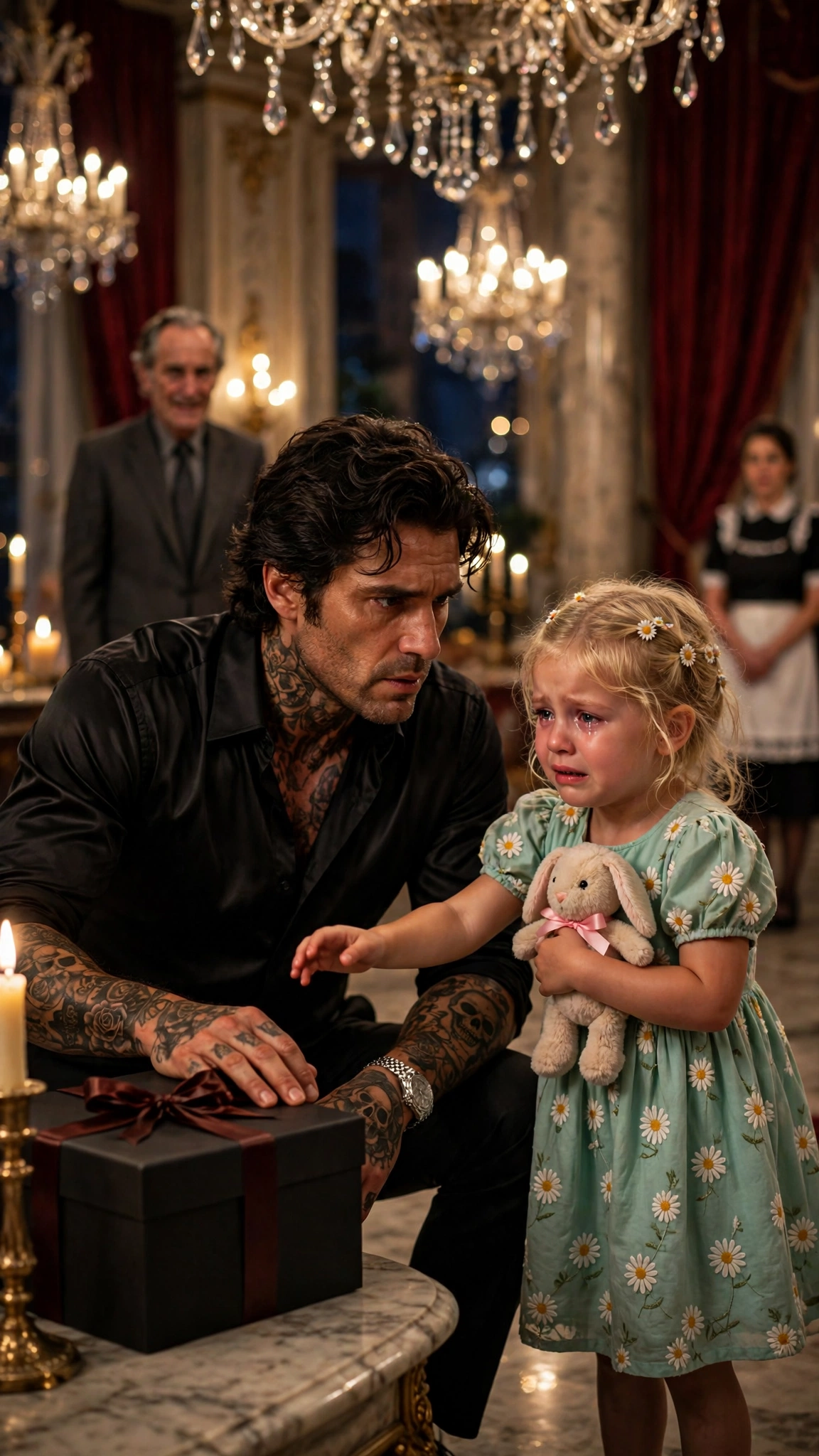
Story Genres: MAFIA BOSS

  • Chapter 2: The House on the Hill

    Chapter 2: The House on the Hill

    The house on the hill had not always been a fortress.

    When Lorenzo was a boy, it had been his grandmother's house, a white clapboard place with a garden full of roses and a kitchen that always smelled of garlic and bread. His grandmother had been a small, fierce woman from Naples who had come to America with nothing and built a family out of stubbornness and Sunday dinners. She had taught Lorenzo to read the newspaper at the kitchen table and to never trust a man who smiled too quickly. She had died when he was nineteen, the same year his father had handed him the family business and told him, in the quiet way his father had of saying the most important things, that a man who could not protect his own house did not deserve to own one.

    Lorenzo had spent the next seventeen years turning the white clapboard house into something else. He had bought the land around it, acre by acre, until the house stood alone on its hill above the water, surrounded by lawns and old trees and a stone wall that was higher than it looked from the road. He had rebuilt it in stone and dark wood, with tall windows, a grand ballroom that could hold a hundred guests, a library, and a study with a locked drawer, and a nursery on the second floor with a window that looked out over the water. He had done it because he believed, the way his father had believed, that a house was a promise: as long as the house stood, the family stood.

    But a house is only as safe as the people inside it. Lorenzo had learned that the hard way, three years ago, when Elena had died.

    Elena Moretti had been the best thing that had ever happened to him. She had been a schoolteacher when he met her, a woman with dark hair and a quick laugh who had no idea who he was and did not care when she found out. She had married him in a small church with fifty guests, and she had given him Mia, and she had made the house on the hill into a home in a way that all his money and all his men never could. She had a way of seeing straight through people — through their noise and their performance, to the small true thing underneath — and she had taught Mia to do the same, without ever meaning to. It was in the blood, Rosa said. The child saw what she saw.

    Elena had died on a Tuesday night in November, of a fever that came on fast and did not leave. Lorenzo had sat beside her bed all night, holding her hand, calling every doctor he knew, offering money that no one could take because there was nothing left to buy. She had died just before dawn, with the rain falling outside, and she had looked at him with clear eyes and said, "Take care of our girl. She sees everything. Don't let the world teach her to stop."

    He had promised. He had kept the promise the only way he knew how: by working harder, by making the family stronger, by making sure no one would ever dare to touch what was his. He had thrown himself into the business — the docks, the restaurants, the construction contracts, the quiet arrangements that kept the Moretti name at the top of the city — and he had told himself that he was protecting Mia. It had taken him three years to understand that a little girl does not need a fortress. She needs her father at the dinner table.

    Rosa had understood it before he did. Rosa had been in the house for twenty years, since she was a girl of twenty-eight hired to help Lorenzo's mother. She had been Elena's friend first — they had cooked together, and laughed together, and Rosa had been the first person Elena had called when she found out she was pregnant. When Elena died, Rosa had not asked Lorenzo what to do. She had simply moved her things into the small room next to the nursery, and she had taken Mia's hand, and she had become the person Mia ran to first. She dressed her in the morning. She read to her at night. She knew that Mia liked her toast cut in triangles, and that she was afraid of thunder, and that she had a stuffed rabbit named Mr. Buttons who had to be in the bed or she could not sleep.

    Rosa was not Mia's mother. She would never claim to be. But in the only sense that mattered to a five-year-old — the person who is there, every day, when you wake up and when you fall asleep — Rosa was Mia's mother now. And Lorenzo, who had lost his wife and nearly lost himself, had learned to be grateful for it, and to trust Rosa with the one thing in the world he could not afford to lose.

    "Mr. Moretti," Rosa had said to him once, in the kitchen, in the second year after Elena's death, when he had come home at three in the morning and found her sitting at the table waiting for him, "your daughter asked me today where you go at night. I told her you go to work. She said, 'Daddy's work is very far away.' I did not know what to tell her."

    He had not known what to tell her either. He had gone upstairs and stood in the doorway of the nursery and watched Mia sleep, her blonde hair spread on the pillow, Mr. Buttons tucked under her arm, and he had felt the weight of the promise he had made to Elena like a stone in his chest.

    That was when he had started coming home earlier. That was when he had started eating dinner at the table instead of in the car. That was when he had decided that his thirty-sixth birthday would be different — that he would be home all day, that there would be a party, that Mia would wear her princess dress and he would be there to see it.

    It was also when Marcus Bellini had started to change.

    Lorenzo had known Marcus since they were boys on the same street in Bensonhurst, stealing peaches from the market and running from the shopkeeper, two skinny kids with nothing who had decided, the way boys decide, that they would have everything one day. They had come up together through the family, shoulder to shoulder, and when Lorenzo had inherited the top, Marcus had taken the place at his right hand without a word of complaint. He was the only man Lorenzo trusted completely. He was Mia's godfather. He had held her at the christening, in the church with the candles, and he had cried, and Lorenzo had never forgotten it and had never mentioned it.

    But in the last few months, Marcus had changed. He had lost weight. He had stopped laughing the way he used to laugh. He came to meetings late, and he left early, and when Lorenzo asked him what was wrong, he said, "Nothing, Lorenzo. I am fine. You worry too much." He said it the way a man says it when he is not fine at all.

    Lorenzo had told himself it was the pressure. The business had been hard that year. The De Luca family — the Morettis' oldest enemy, led by Vincent De Luca, a man who had wanted the Moretti docks and the Moretti name erased for a decade — had been pushing on every front: undercutting prices at the docks, leaning on the restaurant owners, sending men to stand outside the construction sites and stare. It was the kind of slow, patient pressure that wore men down. Lorenzo had assumed Marcus was worn down. He had assumed that was all it was.

    He had not asked the right questions. He had not asked where Marcus went on the nights he left early. He had not asked why Marcus had stopped bringing his son Marco around the house. He had not asked why, when the phone rang, Marcus now went into the other room to answer it.

    Marco was nineteen, Marcus's only son, a tall, earnest boy who had grown up in the house on the hill almost as much as Mia had, playing in the garden, eating Rosa's cooking, calling Lorenzo "Uncle." Lorenzo had watched him grow from a child into a young man, and he had been proud of him the way a man is proud of his best friend's son. But Marco had not been around in months. When Lorenzo asked about him, Marcus said, "He is busy. He is young. He has his own life." And Lorenzo, who had his own daughter to worry about and his own business to run, had let it go.

    That was his second mistake. He would remember that too, later, in the ballroom, with the candles burning down and his daughter's hand on his wrist.

    The house on the hill was beautiful that October day. The rain fell soft on the lawns, and the trees were turning gold and red, and the stone wall stood solid around the garden, and the windows glowed warm against the gray sky. From the road, it looked like the safest place in the world. From the nursery window, where Mia stood that afternoon looking out at the water, it looked like a castle.

    Mia liked the house. She liked her room, and the garden, and Rosa's kitchen, and the library where her father let her sit on his lap and turn the pages of the big books. She liked the ballroom best of all, because it was where the family came together, and because the chandeliers made the light dance on the marble tables like stars. She did not know what her father did for work. She knew that he was important, and that men came to the house and called him "boss," and that sometimes he came home late and tired. She knew that Rosa loved her, and that her godfather Marcus brought her candy, and that her mother was in heaven, watching her, which Rosa had told her, and which she believed completely.

    She did not know that the house had enemies. She did not know that there were men in the city who wanted her father dead, and who had been patient enough to wait for the right day to try. She did not know that her godfather had been given a choice no man should ever have to make.

    She only knew what she had seen, two days earlier, in the study, when she had been playing hide-and-seek and had hidden behind the heavy curtain and had watched her godfather take a phone call he did not know she could hear.

    She had not understood the words. She had understood the fear in his voice.

    And she had carried it inside her small chest for two days, waiting, the way children wait, for the moment when someone would ask her, and she could tell the truth.

    That moment was coming. It would come in the ballroom, in front of a hundred guests, with the candles burning down and the rain falling outside and a black gift box with a dark red ribbon sitting on the marble table like a heart.

    The ballroom had been Elena's idea. When Lorenzo rebuilt the house, she had asked for one room that belonged to joy alone — no business, no guards at the door, just music and light. He had given her high ceilings and red curtains and a floor of pale marble, and on their wedding night they had danced there until the candles burned down. After she died, he had kept the room locked for a year. Then Mia had found the key, and she had opened the doors, and she had twirled across the empty floor in her socks, and Lorenzo had understood that a room built for joy should not be allowed to grieve forever.

    And when it came, Mia Moretti — five years old, in a mint-green daisy dress, with an daisy clip in her hair — would not hesitate. She would step forward, and she would put her small hand on her father's wrist, and she would say the words that would save his life.

    She did not know that yet. That afternoon, she was only a little girl in a castle on a hill, looking out at the rain, waiting for her birthday party to begin.

  • Chapter 1: The Warning in the Ballroom

    Chapter 1: The Warning in the Ballroom

    The candles had burned down to stubs before anyone noticed the silence.

    It was Lorenzo Moretti's thirty-sixth birthday, and the grand ballroom of his mansion on Long Island had been dressed for it the way his mother used to dress it: crystal chandeliers blazing overhead, red curtains drawn against the October night, the long marble tables polished until they threw back the light. A hundred guests filled the room in evening dress — his men in their best suits, their wives in gowns, friends of the family, the waitstaff moving quiet and quick between the tables with trays of champagne. The air smelled of roast lamb and cigar smoke and the cold rain that had been falling since dusk, drumming softly against the tall windows.

    At the center of the main table, where the roast should have been, sat a gift.

    It was a black box, large and square, tied with a dark red ribbon and a bow so perfect it looked like it had been tied by a machine. There was no card. No name. Only the box, sitting where everyone could see it, waiting.

    Lorenzo stood at the head of the table with his hand on the ribbon.

    He was a handsome man, tall and broad in a black satin shirt, open at the collar, the sleeves rolled to his forearms. Heavy black tattoos covered his neck and chest and arms, curling up from beneath his collar and down to his wrists, and a silver watch caught the candlelight on his left wrist. He had been smiling a moment before — the easy, practiced smile of a man who had survived thirty-six years in a business that killed most men before thirty — and the smile was still on his face. But his eyes had gone still.

    Because his daughter was standing beside him, and she was frightened.

    Mia Moretti was five years old. She was small even for five, with long blonde hair that fell past her shoulders, small daisy clips holding it back from her face, and wide blue eyes that were too watchful for a child. She wore the mint-green dress Rosa had laid out for her that evening, white daisies embroidered on the skirt, lace at the collar, small white shoes that barely made a sound on the marble floor. In her arms she held Mr. Buttons, her stuffed bunny with the pink ribbon around its neck, hugging him so tight his long ears were bent double. She had been allowed to stay up past her bedtime for her father's birthday, and she had been so proud of it, sitting on the chair Rosa had pulled close to the table, swinging her legs, eating her cake in small careful bites.

    Now she was on her feet. She had stepped forward without anyone seeing her move, and her small hand had closed around her father's wrist, over the silver watch, and she was looking up at him with the absolute seriousness of a child who has seen something she cannot explain and knows, with all of her small heart, that it matters.

    "Don't open it! He put something inside!" Mia cried. Her voice was high and sharp, and it cut through the music and the laughter like a bell.

    The ballroom went silent. A hundred guests turned. A waiter froze with a tray in his hands. Somewhere near the red curtains, a glass was set down too hard, and the sound of it was very loud in the quiet.

    Lorenzo looked down at her. "Mia—"

    "He put something inside," Mia said again, and her voice shook, but she did not let go of his wrist. "Don't open it, Daddy. Please."

    Lorenzo's fingers tightened on the ribbon. He did not pull it. He looked at his daughter, and then he looked at the box, and then, slowly, he crouched down until he was on her level, his black satin shirt catching the candlelight, his tattoos dark against his skin, his gray-brown eyes steady on her face.

    "Who did you see, sweetheart?" he asked quietly. "Tell me. Who did you see?"

    Mia leaned close to him, rising on her toes, her small hand resting on the box now, her fingers spread on the black lid as if she could hold it closed by will alone. She glanced across the ballroom, toward the red curtains, where the light did not quite reach.

    "Uncle Marcus, he said just open it," she whispered.

    And then the whole room was holding its breath, and Lorenzo Moretti — the most feared man in New York, the man whose name made restaurant owners lock their doors and policemen look the other way — rose slowly to his feet, and turned his head, and looked across the ballroom at the man standing near the red curtains.

    Marcus Bellini stood very still, a glass of champagne in his hand, lean and elegant in his charcoal suit, his graying hair slicked back, his dark tie perfectly knotted. He was smiling. It was a good smile — warm, practiced, the smile of a man who had stood at Lorenzo's right hand for twenty-five years. But the smile did not reach his eyes. His eyes were cold and calculating, and for one fraction of a second, before he caught himself, they flickered toward the box.

    Lorenzo saw it. He saw it the way a man who has survived this long sees everything: in the space between heartbeats, in the things people do not say.

    He turned back to the box. He looked at his daughter, and he nodded, just once. And then, with the whole ballroom watching, with a hundred guests holding their breath, Lorenzo Moretti untied the dark red ribbon with slow, deliberate fingers, and he lifted the lid of the box.

    Inside, nestled in white tissue paper, there was a small matte-black voice recorder, no bigger than a matchbox, with a single red light blinking on its side.

    And then, in the silence, the recorder spoke.

    "Happy birthday—" it said, in a thin, metallic voice, a voice Lorenzo knew, a voice he had heard a hundred times across a table, a voice that belonged to Vincent De Luca.

    Lorenzo's hand came down on the lid. He slammed it shut before the voice could say another word. The ballroom was so quiet he could hear the rain on the windows, and his own breathing, and the small, fast breathing of his daughter beside him.

    Across the room, Marcus Bellini took a step forward. His hand reached out, toward the box, toward the recorder inside it, as if he meant to take it back, as if he meant to make it disappear.

    "Marcus, don't touch it," Lorenzo said. His voice was calm. It was the calm that made grown men put down their glasses and sit up straighter.

    Marcus froze, his hand in the air. For a moment, no one in the ballroom moved. The chandeliers blazed overhead. The candles burned down. The red curtains hung still against the windows. And Lorenzo Moretti stood with his hand on the lid of a black box, with his daughter's hand on his wrist, and he looked at the man who had been his best friend for twenty-five years, and he understood, all at once, that the world he thought he lived in was not the world he actually lived in.

    "Rosa," he said quietly, without taking his eyes off Marcus. "Take Mia upstairs."

    Rosa was already moving. She crossed the ballroom in quick, sure strides, her dark uniform neat, her white apron bright, her small silver cross catching the light, and she took Mia's hand, and she pulled the little girl gently behind her, the way a mother pulls a child behind her when a car is coming too fast. Mia went without a sound, her eyes wide, Mr. Buttons clutched tight to her chest, her small white shoes silent on the marble floor. She looked back once, over Rosa's shoulder, at her father. He looked back at her. He nodded, just once. It was enough.

    "Friends," Lorenzo said, and his voice was calm, and it filled the ballroom the way it always filled a room when he wanted it to. "The party is over for tonight. Go home to your families. I will see you in the morning."

    There was a moment of confusion — a ripple of surprise, a few exchanged glances, a glass set down too hard. But no one argued. When Lorenzo Moretti told a hundred guests to go home, they went home. They filed out in silence, their shoes loud on the marble of the hall, their voices low. Within ten minutes the ballroom was empty except for two men: Lorenzo Moretti and Marcus Bellini, who had not moved from his place by the red curtains. And between them, on the marble table, the black box, its lid closed again, its dark red ribbon untied and lying loose across the black paper — and twenty-five years of history between them.

    Lorenzo did not open the box again. Not then. Not in front of Marcus, with the recorder inside it still blinking its small red light. He did something else. He did the thing that had kept him alive for fifteen years at the top of a business that killed most men before thirty. He stopped. He looked. And he waited.

    —

    Twelve hours earlier, the gift had not existed yet, and Lorenzo Moretti had woken up in a quiet house to the sound of rain.

    It was a gray October morning, and the mansion on the hill above the water was still asleep when he came down the stairs in his shirtsleeves, his hair still damp from the shower, his watch the only jewelry he wore. He liked the house at that hour. Before the men arrived, before the phones started, before the day filled up with the business that had owned him since he was nineteen, the house belonged to the people who actually lived in it: to Rosa, who was already in the kitchen with the coffee on, and to Mia, who was still asleep upstairs under her quilt, one arm thrown over Mr. Buttons.

    "Happy birthday, Mr. Moretti," Rosa said, without looking up from the stove. She said it the way she said everything: warm, dry, and entirely without ceremony, as if she had not just wished a happy birthday to one of the most dangerous men in America. She had been saying it to him for twenty years, since she had first come to work in this house as a girl of twenty-eight, hired to help his mother. She had stayed through his mother's death, through his marriage, through Elena's death, and through every year after, when the house had needed someone who knew where everything was and who could be trusted with everything that mattered.

    "Rosa," Lorenzo said, and took the coffee she handed him. "You remembered."

    "I remember every year. You forget every year. That is the arrangement." She set a plate of toast in front of him. "Mia has a surprise for you. She has been working on it since Tuesday. Do not pretend you do not know, or she will be heartbroken."

    "I know nothing," Lorenzo said solemnly. "I am a man who knows nothing, and I am very good at it."

    Rosa snorted. It was a sound she had perfected over two decades. "You are a man who pretends to know nothing. There is a difference, and your daughter knows it. She told me yesterday, 'Daddy is a very good pretender, Rosa. But I can always tell.'"

    Lorenzo smiled into his coffee. That was the thing about Mia. She was five years old and she could always tell. She could tell when he was lying about being fine. She could tell when one of his men was afraid. She could tell when Rosa was sad, even when Rosa smiled. Elena had been like that too, his wife, Mia's mother — she had seen straight through people, through their noise and their performance, to the small true thing underneath. Elena had died when Mia was two, a fever that came on fast in the night and did not leave, and Lorenzo had spent three years since trying to be both parents to a little girl who saw everything and forgave almost everything, except absence.

    He was absent too much. He knew it. That was why this birthday mattered to him in a way birthdays had not mattered since he was a boy. He had promised Mia he would be home all day. No meetings. No calls after six. A party in the ballroom, his men and their wives and friends of the family, and a cake with thirty-six candles that Mia had insisted on counting herself, twice, to make sure there were enough.

    "Where is she?" he asked.

    "Still asleep. I told her she could sleep until eight, because it is a special day. She argued. She lost. She will be down by eight-fifteen at the latest, and she will be furious that she missed anything." Rosa wiped her hands on her apron. Her silver cross necklace swung as she moved. "Marcus called. He will be here at ten to go over the arrangements. He said he has something special for tonight."

    Lorenzo nodded. Marcus Bellini. His oldest friend. They had grown up on the same street in Bensonhurst, two skinny boys stealing peaches from the market and running from the shopkeeper, and they had come up together through the family the same way, shoulder to shoulder, until Lorenzo had inherited the top and Marcus had taken the place at his right hand. Marcus was Mia's godfather. He had held her at the christening, in the church with the candles, and he had cried, which Lorenzo had never forgotten and never mentioned. Marcus was the man Lorenzo trusted with his life, his money, and his daughter.

    "Good," Lorenzo said. "Tell him ten is fine."

    The morning went the way mornings in the house went when Lorenzo was home. Mia came down at eight-fifteen, exactly as Rosa had predicted, furious and radiant, her blonde hair still tangled from sleep, a daisy clip in her hand instead of in her hair, demanding that Rosa fix it immediately because it was Daddy's birthday and she had to look like a princess. Rosa fixed it. Lorenzo ate toast with her on his knee and let her steal the crusts, which she did with great ceremony, announcing each theft as if it were a military victory. She showed him the drawing she had been working on since Tuesday — a picture of the three of them, himself and Mia and Rosa, standing in front of the house, all of them smiling, the sun yellow and enormous in the corner — and he told her it was the best drawing he had ever seen, which was true, and she beamed so hard her cheeks went pink.

    Then, at ten o'clock, Marcus arrived, and the day changed.

    He came in through the kitchen door, the way he always did, shaking the rain off his coat, and he kissed Rosa on the cheek and swung Mia up into the air, and she shrieked with delight, and for a moment everything was exactly as it had always been. But Lorenzo, who had known this man for twenty-five years, saw something in his face that he did not like. Marcus was smiling, and his suit was perfect, and his hair was perfect, and his eyes were tired in a way Lorenzo had never seen before. There were lines around them that had not been there a month ago. He looked like a man who had not slept.

    "You look terrible," Lorenzo said, when Mia had run off to fetch her drawing to show her godfather.

    "Thank you," Marcus said. "You look old."

    "Thirty-six is not old."

    "It is old for us." Marcus poured himself a coffee. His hand shook, just slightly, as he lifted the cup. Lorenzo saw it. He said nothing. "I have the arrangements for tonight. The guests will be here at seven. Dinner at seven-thirty. The cake at nine. Rosa has the menu."

    "And the special thing?" Lorenzo asked.

    Marcus looked at him for a long moment. "It comes in the morning," he said. "A gift. From an old friend. I thought it would be nice, something for the table."

    "A gift from an old friend," Lorenzo repeated. "Which old friend?"

    "An admirer," Marcus said, and smiled, and the smile did not reach his eyes. "You have admirers, Lorenzo. You forget that sometimes."

    Lorenzo watched him. He had known Marcus Bellini for twenty-five years. He knew the man's tells — the way he touched his tie when he was nervous, the way his voice went a fraction too light when he was lying. Marcus was not touching his tie. His voice was not too light. There was nothing to catch. And yet Lorenzo felt the small cold tug in his gut that had kept him alive for fifteen years at the top, the instinct that said: something is wrong here, and I do not yet know what it is.

    He let it go. It was his birthday. His daughter was showing her godfather a drawing. The rain was falling outside, and the house was warm, and for once he was going to be home.

    That was his first mistake. He would remember it later, in the ballroom, with his hand on the dark red ribbon and his daughter's hand on his wrist, and he would think: I knew. I knew at ten o'clock in the morning, and I let it go.

    The gift arrived at noon.

    It came to the gate in a black car with no plates that anyone could remember afterward, driven by a man nobody in the house had seen before, who handed the box to the gate guard with a small, polite nod and said, "For the boss. Happy birthday." Then he drove away, and the rain washed the tire tracks off the drive within the hour.

    The guard brought the box into the house. It was heavy — heavier than a box that size should have been, he said later, though nobody could say why. Rosa took one look at it and frowned. There was no card. No name. No return address. Just a black box and a dark red ribbon and a bow so perfect it looked tied by a machine.

    "Put it in the ballroom," Marcus said, when Rosa asked what to do with it. "On the marble table. In the center. It is the boss's birthday. The gift should be where everyone can see it."

    Rosa did not like it. She told Lorenzo so, in the kitchen, in a low voice, while Mia was upstairs changing into her mint-green dress.

    "There is no card, Mr. Moretti," she said. "A gift with no card, from no one, delivered by a man no one knows. I do not like it."

    "Marcus says it is from an old friend," Lorenzo said.

    "Marcus says many things," Rosa said. "And he has looked like a ghost all day."

    Lorenzo thought about that. He thought about the tired eyes, and the shaking hand, and the smile that did not reach Marcus's eyes. He thought about the cold tug in his gut, which had not gone away since ten o'clock. And then he thought about the fact that it was his birthday, and that his daughter was upstairs putting on a mint-green dress with daisies on the skirt, and that he had promised her a party.

    "Leave it," he said. "It is a gift. We will open it at the table, in front of everyone, like a celebration. If there is something wrong with it, I would rather know in front of my guests than alone in the dark."

    Rosa looked at him for a long moment. Then she nodded, because that was who he was, and because she had known him for twenty years, and because she trusted his judgment even when she did not agree with it. She went back to the kitchen. Lorenzo went upstairs to change into his black satin shirt.

    He did not know that two days earlier, his five-year-old daughter had been playing hide-and-seek in the study, and had seen something she did not understand, and had been carrying it inside her small chest ever since, waiting for the right moment to say it.

    He did not know that the moment would come at his own birthday table, in front of a hundred guests, with the candles burning down and the rain falling outside and the whole room holding its breath.

    He did not know that his daughter was about to save his life.

    But Mia knew. Mia had known for two days. And when her father put his hand on the dark red ribbon, she did the bravest thing she had ever done in her short life.

    She stepped forward, and she told him the truth.

  • Chapter 7: Forever

    Chapter 7: Forever

    The adoption was final on a bright morning in April, when the cherry trees on the hill were in blossom and the whole city smelled of rain and new leaves.

    Judge Vance signed the papers, and she looked at Alexander, and at the four girls in their best dresses, and she said, "Mr. Hayes, by the power vested in me by the State of Illinois, you are now, legally and forever, the father of Gabriella Hayes, Harper Hayes, Nora Hayes, and Sophie Hayes."

    And the courtroom — which had been so silent at the first hearing — erupted. Sister Agnes clapped. Rosa wept openly. The social worker smiled. And the four girls threw their arms around Alexander, all at once, and he knelt down in the middle of the courtroom, in his black suit, and he held them, and he did not care who was watching.

    They celebrated at the house on the hill, and it was the kind of celebration the mansion had never seen in all its long history.

    The children from St. Agnes came — all fourteen of them, dressed in their best clothes, their faces scrubbed, their hair combed — and they ran through the garden, and they played on the lawn, and they ate Rosa's cakes until their stomachs hurt. Sister Agnes sat in the shade of the old oak tree, watching them, her face lined with happiness, and she told anyone who would listen that she had always known it would turn out all right in the end.

    There were balloons in the great hall, and flowers on every table, and a cake so large that it took two people to carry it — a cake with four candles on it, and the words "Welcome Home, Hayes Family" written in pink icing.

    Alexander stood in the doorway of the living room, watching it all, and he thought about the night the girls had come — the rain, the dark, the restaurant table, the small frightened faces — and he thought about how far they had all come, and he felt his heart so full that he thought it might burst.

    In the evening, when the guests had gone and the children from St. Agnes had been driven home in a borrowed bus, and the house was quiet again, the family gathered in the living room, just the five of them, and Rosa, who was family too.

    The room had changed. The dark wood was still there, and the marble fireplace, and the tall columns — but now the sofa was covered in soft blankets, and the shelves were full of the girls' books and toys, and the windows were open to the spring evening, and the light that came through them was warm and golden, and the whole room glowed.

    Nora sat at the grand piano, her small hands on the keys, and she played — not a halting little melody, but a real song, a long and beautiful one, the song Sister Agnes had taught her, about a river and a road and a home at the end of it. She played it all the way through, without stopping, and when she finished, the room was silent, and then everyone clapped, and Nora blushed, and smiled, and played it again.

    Sophie sat on the plush sofa beside Alexander, her elephant in her lap, her head resting against his shoulder, her eyes heavy with sleep. Harper sat on his other side, peeking at him from behind a cushion, giggling every time he pretended not to see her. Gabriella leaned against his shoulder, her long black curls falling over his arm, her pink dress with its white flowers bright in the lamplight.

    And on the mantelpiece, glowing warmly, stood the old brass lantern — the lantern the girls had held together on the night of the fire, the lantern Rosa had lit every night for thirty years.

    Alexander looked around the room — at the piano, at the sofa, at the lantern, at the four small girls who had walked into his life on a rainy night and remade it entirely — and he understood, finally, what his mother had meant when she told him, so long ago, that a strong man protects people who cannot protect themselves.

    He had spent his life believing that strength meant being feared. He had been wrong. Strength meant this: a warm room, a full house, and four small girls who trusted him with their whole hearts.

    "Daddy," Nora said softly, from the piano bench, her fingers resting on the keys. "Daddy, can we stay forever?"

    Alexander looked at her. He looked at Gabriella, and Harper, and Sophie, and Rosa, who was sitting in her chair by the fire, smiling through her tears.

    "Forever," he said, and his voice was steady, and sure, and full of a happiness he had not felt in five years — a happiness he had thought he would never feel again. "Forever, my girls. This is your home. I am your daddy. And nothing — no man, no fire, no storm — is ever going to change that."

    Sophie lifted her head from his shoulder, and she looked up at him with her bright innocent eyes, and she said, in her soft, clear voice, "Good. Because we are never leaving."

    And Gabriella laughed, and Harper clapped her hands, and Nora began to play again — a happy song this time, a dancing song — and Alexander Hayes, the most feared man in Chicago, sat on his sofa in his living room, with his four daughters around him, and he laughed, and he cried, and he held them close, and he knew that he was, at last, home.

    Before the cake was cut, Alexander stood up, and the room went quiet, and he looked at his daughters, and at Rosa, and at Sister Agnes, and at all the children from St. Agnes, and he cleared his throat, because he had something to say, and he had never been good at speeches.

    "I am not a man of many words," he began, and Gabriella whispered, "That's true," and everyone laughed, and Alexander laughed too. "But there are some things I need to say. Five years ago, I lost my wife, and I lost my daughter, and I decided that the world was a cold place, and that the best thing a man could do was to be colder than the world. I was wrong."

    He looked at the four girls, sitting in a row on the sofa, their dresses bright, their faces shining.

    "These four girls came to my house on a rainy night, with nothing but each other, and they were afraid, and they were brave, and they asked me for something I did not think I had left to give. They asked me to be their father. And I said yes — not because I was brave, but because they were. They taught me that a house is not a home until it is full of laughter. They taught me that strength is not about being feared. Strength is about being there — at breakfast, at bedtime, in the rain, in the fire — and never leaving. So I want to thank them. Gabriella, for your courage. Harper, for your gentleness. Nora, for your music. Sophie, for your elephant, and for your heart, which is the biggest heart I have ever known."

    He raised his glass. "To my daughters. To my family. To forever."

    "To forever!" everyone cried, and the glasses clinked, and the cake was cut, and the children cheered, and Rosa wept into her handkerchief, and Sister Agnes stood up, and she raised her own glass, and she said, in her clear, steady voice, "To Alexander Hayes — who was once the most feared man in Chicago, and who is now, quite simply, the best father I have ever known."

    And then the girls had a surprise for him. They had been planning it for weeks, in secret, with Rosa's help, and they had kept it hidden in the library, under a cloth, and now Gabriella and Harper carried it out together, and set it on the table in front of him, and pulled off the cloth with a flourish.

    It was a drawing — a big one, on four sheets of paper taped together, drawn in crayon and coloured pencil, in the girls' four different hands. It showed the big house on the hill, with a red roof and a yellow sun, and in front of it stood five figures, holding hands: a tall man in a black suit, and four small girls in pink and blue and green and white. And above them, in Gabriella's careful handwriting, were the words: "Our Daddy. Our Home. Forever."

    Alexander looked at the drawing for a long time, and he did not say anything, and then he picked it up, very carefully, as if it were the most precious thing in the world, and he said, "This goes on the wall. In the study. Where everyone can see it."

    And then Sophie tugged at his sleeve, and she held out something small and wrapped in tissue paper, and when he opened it, he found a new lantern — a small brass one, just like the old one on the mantelpiece, but new, and shining, and engraved on its side, in tiny letters, were the words: "For Daddy, who found us in the dark."

    Alexander knelt down, and he took Sophie in his arms, and he held her, and he whispered, "Thank you, my love. Thank you."

    That night, after the party, after the dancing — Harper had danced with Rosa, and Gabriella had danced with Sister Agnes, and Nora had played a waltz on the piano while Alexander had danced, very badly and very happily, with Sophie standing on his feet — after all of it, Alexander sat in his study, and he hung the drawing on the wall, right where he could see it from his desk, and he set the new lantern beside the old one on the mantelpiece, and he looked at them both, and he thought about how much light four small girls could bring into a dark house.

    One year later, the roses came back at St. Agnes, red and pink and white, and the home was full of children again, and the new shed stood where the old one had burned, and Sister Agnes planted a new oak tree in the garden, to replace the one that had been damaged in the fire.

    One year later, Gabriella won first prize in the school reading competition, and Harper's roses won a ribbon at the county fair, and Nora played her first recital — a real one, on a real stage, with a hundred people listening — and Sophie, who had decided that she would be a doctor for elephants, had already begun saving her pocket money for the trip to Africa, which she planned to take when she was ten.

    One year later, the house on the hill was no longer the dark house, or the feared house, or the empty house. It was the house with the bicycles in the driveway, and the drawings on the refrigerator, and the piano playing in the evening, and the lantern glowing in the window — a light for anyone who was lost in the rain, and looking for a home.

    Outside, the spring rain began to fall softly on the roof of the big house on the hill. Inside, the lantern glowed, the piano played, and the fire crackled in the marble fireplace, and the house — which had been cold and dark for so very long — was warm, and bright, and full of life.

    A simple childlike courage had saved a broken heart. And a broken heart, made whole again, had saved four small girls.

    And they lived, all of them, happily — not just ever after, but every day, in the small, ordinary, wonderful ways that make a family: in pancakes burned and laughed over, in stories told at bedtime, in braids that came out crooked and were loved anyway, in songs played on the piano, and in a lantern, held together, glowing warm against the dark.

    And if you walk past the big house on the hill on a rainy night, even now, you will see the lantern burning in the window, and you will hear the piano, faint and sweet, and you will know that inside, a family is sitting together by the fire — a tall man with dark hair and tattooed forearms, and four small girls in pink and blue and green and white — and that none of them is afraid of the dark anymore, because they have each other, and they have a home, and they have love enough to light the whole house.

    Forever.

  • Chapter 6: Papers and Promises

    Chapter 6: Papers and Promises

    The morning after the fire, Alexander Hayes did something he had never done in his life: he went to a lawyer's office and asked, in plain language, how a man became a father.

    His lawyer was an old man named Samuel Okonkwo, who had worked for the Hayes family for forty years, and who had buried Alexander's father, and married Alexander to Elena, and buried Elena too. He listened to Alexander's story — the girls, the fire, the night in the study, the words "Please… be our daddy" — and he did not smile, and he did not laugh, and he did not say it was impossible.

    "It is not impossible," he said. "It is unusual. Four children at once, to a single man, a man with your… reputation. The court will ask questions. They will look into your business. They will look into your past. They will want to know that these children will be safe, and loved, and provided for."

    "They will be," Alexander said.

    Kane's emergency order, Okonkwo added, had already been quashed — the judge who signed it was under investigation, and the police report from the fire had destroyed what was left of Kane's claim. The children were, legally, exactly where they had been before Kane appeared: in the care of St. Agnes Home, and — for tonight, at least — in the care of Alexander Hayes.

    "Then we will file," Okonkwo said. "Temporary guardianship first. That is quick — a matter of days, given the circumstances. The fire, the home, the fact that the girls are already living with you. Then the full adoption. That will take months. There will be hearings. There will be home visits. There will be a social worker who will come to your house and look in your cupboards and ask your girls questions you cannot answer for them."

    "Let them come," Alexander said. "Let them ask anything. Let them look anywhere. I have nothing to hide — not anymore."

    The guardianship hearing was held on a grey November morning, in a courtroom with high windows and wooden benches, and Alexander sat at the front with his lawyer, wearing his best black suit, and the four girls sat behind him with Rosa, in their best dresses — Gabriella in pink, Harper in blue, Nora in green, Sophie in white with the elephant on it, her stuffed toy hidden in her lap where the judge could not see it.

    The judge was a woman named Eleanor Vance, sixty years old, with sharp eyes and a reputation for asking hard questions. She read the papers. She read the police report about the fire. She read Sister Agnes's statement, and Rosa's statement, and the social worker's first report, which said that the girls were happy, and healthy, and thriving, and that the house was clean, and warm, and full of laughter.

    Then she looked at Alexander, and she asked the question he had been dreading.

    "Mr. Hayes," she said. "You are a man with a considerable reputation in this city. A reputation for violence. A reputation for… business that the law does not always approve of. Why should I believe that four little girls are safe with you?"

    Alexander stood up. He had prepared a speech with his lawyer — a careful, legal speech about his legitimate businesses, about his record, about the trust he had set up for the girls. He had rehearsed it three times. And then, standing in the courtroom, looking at the judge, he forgot every word of it, and he told her the truth instead.

    "Your Honour," he said, "five years ago, my wife died, and my daughter died with her, before she was ever born. And I decided that the best thing I could do was to stop feeling anything, because feeling hurt too much. I built a wall around myself, and I lived behind it, and I told myself that was enough."

    He paused, and his voice shook, and he did not try to hide it.

    "And then, three weeks ago, four small girls ran through the rain to the Meridian Grand, and they hid under my table, and they asked me to pretend to be their daddy. And one of them — the smallest one — asked me to be her daddy. And I realised that the wall I had built was not protecting me. It was a prison. And those four girls — they did not break down the wall. They just walked around it, and held out their hands, and waited for me to take them."

    He looked back at the girls, and Gabriella was crying, and Harper's hands were clasped, and Nora was holding Sophie's hand, and Sophie was looking at him with her bright innocent eyes.

    "I cannot change my past, Your Honour," Alexander said. "But I can promise you this: those girls are the best thing that has ever happened to me, and I will spend the rest of my life making sure they are safe, and loved, and happy. If you give me the chance."

    The courtroom was silent. The judge looked at him for a long moment. Then she looked at the girls.

    "Gabriella," she said. "Would you like to tell me, in your own words, how you feel about living with Mr. Hayes?"

    Gabriella stood up, smoothing her pink dress, and walked to the front of the courtroom, and she stood very straight, and she looked the judge in the eye.

    "He makes terrible pancakes," she said, and the courtroom laughed — even the judge smiled. "But he tries. And he reads us stories every night, and he is learning to braid hair, and he carried Mary out of the fire, and when we are scared, he sits with us until we are not scared anymore. And he is our daddy. He just doesn't have the paper yet."

    The judge granted temporary guardianship that morning. She signed the papers, and she looked at Alexander, and she said, "Mr. Hayes. Do not make me regret this."

    "I won't, Your Honour," Alexander said. "I promise."

    The weeks that followed were full of papers, and visits, and questions — but they were also full of something else: the slow, steady transformation of a house into a home.

    Alexander bought the land under St. Agnes Home, and he deeded it to the home in a trust that could never be sold, and could never be taken, so that no man like Marcus Kane would ever threaten it again. He paid for the repairs after the fire, and for a new shed, and for new windows, and for a garden where the roses would come back in the spring.

    He hired a teacher to come to the house three afternoons a week, so the girls could keep up with their lessons while the home was being repaired. He built a bookshelf in the library, just for them, low enough for small hands to reach. He had the old grand piano tuned, and Nora played it every day, and her little melodies grew longer and more confident, until one evening she played a whole song, all the way through, without stopping, and Rosa cried, and Alexander pretended he had something in his eye.

    And then, one cold Sunday morning in December, he took the four girls to the cemetery, to the grey stone that said only two names: Elena Hayes, and the small stone beside it, which said only "Baby Hayes."

    He had not been there in five years. He had not been able to bear it. But now he stood in front of the stone with four small girls holding his hands, and he told them about Elena — about her laugh, and her bread, and her songs, and the way she had loved the house on the hill, and the way she would have loved them.

    "She would have liked you," he said to Gabriella. "She would have said you were brave. And she would have liked you," he said to Harper, "because you are gentle, and she was gentle too. And you," he said to Nora, "because you play the piano, and she played the piano. And you," he said to Sophie, kneeling down so that his eyes were level with hers, "because you hold your elephant the way she used to hold her doll when she was small."

    Sophie looked at the stone for a long moment, and then she took her stuffed elephant from under her arm, and she set it gently on the stone, and she said, in her soft, clear voice, "He can keep her company. So she won't be lonely."

    Alexander closed his eyes, and he felt the grief — the grief he had carried for five years, the grief he had thought would kill him — and he felt it change. It did not go away. It would never go away. But it became something else: not a wall, but a window. Not a prison, but a memory. A sad memory, and a sweet one, and one he could carry without it crushing him.

    "Thank you, Sophie," he whispered. "Thank you."

    On the way home, the girls were quiet, and then Gabriella said, "Daddy, is it all right to be sad and happy at the same time?"

    "Yes," Alexander said. "I think that is the most all-right thing in the world."

    The adoption hearing was set for the spring. The social worker's final report said that the girls were thriving, that the house was a home, and that Alexander Hayes was, in her words, "a devoted and loving father." Sister Agnes wrote a letter to the court, in her careful handwriting, saying that she had known Alexander's mother, and that she had no doubt at all.

    And on the day before the hearing, Alexander sat in his study, looking at the papers on his desk — the guardianship order, the trust deed for St. Agnes, the inspector's report, the police report about the fire — and he thought about how much had changed in five months, and how little he had done to deserve it, and how much he intended to do to keep it.

    Rosa came in with tea, and she set it down on the desk, and she looked at him, and she smiled the smile she had been smiling for five months now, the smile of a woman who had waited five years for a miracle and had finally seen one.

    "Your mother would be proud of you," she said.

    "I hope so, Rosa," Alexander said. "I hope so."

    The home visit came on a rainy Thursday in February, and Alexander spent the whole morning before it in a state of nervousness that his men would not have believed if they had seen it. He checked the girls' rooms twice. He made Rosa check the kitchen three times. He stood in the hallway, straightening a painting that had not moved in thirty years, and Rosa watched him and shook her head.

    "Alexander," she said, "the woman is coming to see if the children are loved and safe. She is not coming to inspect your paintings. Go and sit down. You are making the whole house nervous."

    The social worker was a woman named Mrs. Whitfield, fifty years old, with kind eyes and a notebook, and a manner that put children at ease within minutes. She walked through the house with Alexander, looking in the kitchen, the library, the girls' rooms — four small rooms, each painted a different colour, each with a bed, a bookshelf, and a window looking out over the garden.

    Then she sat down with the girls, one by one, in the living room, while Alexander waited in the study, trying — and failing — not to listen through the door.

    She asked Gabriella if she was happy. Gabriella said yes, and then she talked for ten minutes about her books, and her sisters, and the time Daddy had carried Mary out of the fire, and Mrs. Whitfield wrote it all down, nodding.

    She asked Harper if she was afraid. Harper thought about it, her hands clasped in her lap, and then she said, "I used to be afraid of thunder. But Daddy sits with me when it storms, and he tells me that thunder is just the sky moving its furniture around. So now I am only a little bit afraid."

    She asked Nora what she liked best about the house. Nora was quiet for a long time, and then she said, "The piano. And the quiet. And the way Daddy listens when I play, even when I make mistakes."

    And she asked Sophie if she missed the home at St. Agnes. Sophie hugged her elephant, and she said, "I miss Sister Agnes. But Sister Agnes visits every Sunday. And Daddy says this is our home now, and Elephant agrees, because Elephant has his own bed here, and at St. Agnes he had to share."

    Mrs. Whitfield closed her notebook, and she went into the study, and she looked at Alexander — who was standing by the window, pretending to look at the rain — and she said, "Mr. Hayes, I have been doing this job for twenty-six years. I have seen houses that were clean and cold, and houses that were warm and chaotic, and houses that were neither. Your house is warm, and it is full of children who feel safe. That is the whole of my report. The rest is paperwork."

    Alexander exhaled, a breath he felt he had been holding for a month. "Thank you, Mrs. Whitfield."

    "Do not thank me," she said, smiling. "Thank them. Children do not lie about feeling safe, Mr. Hayes. They cannot. It is the one thing they never learn to fake."

    After she left, Alexander found the four girls in the kitchen, helping Rosa make cookies, flour on their noses and their dresses, and he stood in the doorway, watching them, and he thought about the courtroom, and the judge, and the long road still ahead — and he thought that whatever the court decided in the spring, this, right here, was already a family. The papers would only make it official.

  • Chapter 5: The Night of the Fire

    Chapter 5: The Night of the Fire

    It happened on a Tuesday night, nineteen days after the girls came to the mansion, and two days before the city council was due to vote.

    Alexander had spent the day in meetings, and he had come home late, and tired, and quietly hopeful. His lawyer had bought the debt on the St. Agnes land that morning — quietly, through a holding company, so that Kane would not know until it was too late. The honest inspector had filed his report: the building was old, but it was sound, and the condemnation order was a fraud. The councilman had promised to read the report aloud at the vote.

    It was going to work. Alexander could feel it. For the first time in weeks, he allowed himself to believe that the home was safe, and that the girls would never have to run again.

    He was sitting in his study, reading the inspector's report for the third time, when Rosa came in, her face pale, a telephone in her hand.

    "Alexander," she said. "It is Sister Agnes. The home is on fire."

    He was on his feet before she finished speaking, his chair falling backwards onto the rug. He did not remember picking up his coat. He did not remember running to the car. He remembered only the drive — the rain-slick streets, the red light of the fire already glowing against the low clouds long before he reached the South Side, and the sound of his own heart hammering in his chest.

    The girls had woken when they heard the front door slam. Gabriella was the first out of bed. She ran to the window and saw the black car tearing down the hill, and she knew, instantly, where it was going. She did not hesitate. She did not stop to think. She ran down the stairs, pulled on her shoes, and shouted for her sisters.

    "Sophie! Harper! Nora! The home is on fire! We have to go!"

    Rosa caught her at the front door, and for a moment Gabriella thought the old woman would stop her. But Rosa looked at her — at her fierce hazel eyes, at her chin lifted the way it lifted when she had decided something — and Rosa did something she would later say she should not have done, and would do again in a heartbeat.

    "Then we go together," Rosa said, and she took the car keys from the hook, and she drove the four girls through the rain, behind Alexander's car, toward the fire.

    St. Agnes Home was burning from the back. The shed where the firewood and the old paint were stored had gone up first, and the flames had spread to the rear wall of the building, licking at the wooden window frames, sending thick black smoke rolling across the garden. The younger children — ten of them, from four years old to thirteen — were standing in the street in their nightdresses, barefoot in the rain, crying and shivering, while Sister Agnes, in her robe, counted them over and over again, her voice shaking.

    "Fourteen," she said. "There should be fourteen. Where is — oh, God. Where is little Mary? Mary is still inside!"

    Gabriella did not think. She pushed through the crowd, past Sister Agnes, past the neighbours who were shouting for her to stop, and she ran toward the back door of the burning building.

    She had almost reached it when a hand caught her shoulder and pulled her back.

    "NO!" Alexander's voice was like thunder. He had arrived seconds before, and he had seen the small figure in the pink dress running toward the fire, and his heart had stopped. "Gabriella, no! You do not go into a burning building!"

    "Mary is in there!" Gabriella cried, struggling against his grip. "She is four years old! She sleeps in the back room! Please, let me go!"

    "Listen to me." Alexander knelt down in the wet street, in front of her, his hands on her shoulders, his face inches from hers. "Listen to me, Gabriella. You are brave. You are the bravest girl I have ever known. But brave does not mean running into a fire. Brave means staying here and helping me. Do you understand?"

    Gabriella stared at him, tears and rain running down her face, and then she nodded, once, and Alexander stood up, and he turned toward the building, and he did something he had not done in twenty years: he ran into a burning building.

    The smoke was thick inside, and the heat pressed against his face like a hand. He covered his mouth with his sleeve and moved through the dark hallway, calling Mary's name, and he found her in the back room, under the bed, curled into a small ball, crying silently, her face black with soot.

    He picked her up, wrapped her in his coat, and carried her out through the smoke and the rain, into the street, where Sister Agnes took her with a cry, and the neighbours cheered, and the fire engines — which had finally arrived — began to spray water onto the flames.

    And then, as the fire began to die, a black car pulled up at the end of the street, and Marcus Kane got out of it.

    He stood there in the rain, in his brown suit, looking at the burning building, and at the children in the street, and at Alexander Hayes standing in the middle of it all with soot on his face and a small girl's hand in his, and he smiled his cold, oil-smooth smile.

    "Mr. Hayes," he said. "What a terrible accident. Old buildings, as I have said. So flammable."

    Alexander walked toward him, slowly, through the rain. His men, who had arrived with the fire engines, moved to follow him, but he held up one hand, and they stopped.

    "Kane," he said, his voice low and calm, the way it was when he was at his most dangerous. "I know what you did. Your men cut the wires. Your men set this fire. And you are going to pay for it."

    "Prove it," Kane said, and his smile widened. "You cannot prove anything. It was an accident. The inspector said so. The building was condemned."

    "The inspector," Alexander said, "was your man. And he has already told the police everything."

    For the first time, Kane's smile faltered. "What?"

    "Your inspector came to see me this morning," Alexander said. "He is not as brave as he thought he was. He told me about the report you paid him to write. He told me about the men you sent to cut the wires. And he told me about the money you paid the councilman — the same councilman who is, at this very moment, sitting in a police station, telling them everything he knows."

    It was not entirely true — the councilman was not in a police station yet — but Alexander had learned long ago that a lie told at the right moment, in the right voice, could do the work of a hundred truths. And he could see, in Kane's eyes, that it was working.

    "And there is something else," Alexander said. He took a small phone from his pocket — Sister Agnes's phone, which she had given him that afternoon, after the third time Kane's men had driven past with their lights off. "Sister Agnes records everything, Kane. Every visit. Every threat. Including the day you stood in her hallway and said it would be a shame if anything happened to those pretty little girls. The police have the recording. They have the inspector. They have the councilman. And in the morning, they will have the men who set this fire — because my men followed them here tonight, and they are waiting at the end of the street."

    As if on cue, two police cars turned into the street, their lights flashing red and blue through the rain. And behind them came Alexander's men, walking two frightened, soot-covered men between them — the men who had set the fire, caught as they ran from the shed.

    Kane looked at the police cars. He looked at the arsonists. He looked at Alexander Hayes, standing in the rain with a small girl's hand in his, and for the first time in his life, Marcus Kane understood what it felt like to be afraid of someone.

    "You cannot do this," he whispered. "I have money. I have lawyers. I have —"

    "You have nothing," Alexander said. "You threatened children, Kane. And children have a way of finding the one man you should never have threatened them in front of."

    The police took Kane away in handcuffs, in the rain, in front of the whole street, while the children of St. Agnes watched from the pavement, wrapped in blankets, and Sister Agnes stood in her robe, holding little Mary, and wept with relief.

    The fire was out by midnight. The building was damaged, but it was standing — the rear wall blackened, the shed gone, but the home itself saved. The children were taken to the mansion for the night, all fourteen of them, and Rosa made cocoa for all of them, and laid out blankets in the great hall, and the mansion — which had once been the coldest house in Chicago — was full of small, sleeping children, and the sound of their breathing, and the smell of cocoa and wood smoke.

    Late that night, when all the children were asleep, Alexander sat by the fireplace in the living room, and the four girls came and sat with him. Gabriella sat on his left, Harper on his right, Nora at his feet, and Sophie in his lap, her elephant tucked under her arm.

    And then, without a word, the girls picked up the old brass lantern that stood on the mantelpiece — the lantern Rosa had lit every night for thirty years — and they held it together, all four of them, their small hands around its handle, and they set it on the hearth, where its warm light glowed against the marble and the dark wood.

    "We did it, Daddy," Gabriella said quietly, and then she stopped, and her eyes went wide, because she had called him Daddy, and she had not meant to say it out loud — not yet, not like that.

    Alexander looked at her. He looked at Harper, and Nora, and Sophie, and at the lantern glowing on the hearth, and at the fourteen small children sleeping in his hall, and he felt something in his chest break open, and heal, all at the same time.

    "Yes," he said, and his voice was rough with tears. "Yes, you did. All of you."

    And the fire crackled, and the lantern glowed, and the rain fell softly on the roof of the big house on the hill, and for the first time in five years, Alexander Hayes was home.

    The morning after the fire dawned grey and cold, and the whole city seemed to be holding its breath. Alexander was up before sunrise, and he drove back to St. Agnes with his lawyer and the honest inspector, to walk through the damage in the daylight and to see, with his own eyes, what could be saved.

    The shed was gone — nothing but blackened timber and ash. The rear wall of the home was scorched, and two windows were broken, and the smell of smoke hung in the air like a fog. But the building stood. The roof was sound. The front rooms, where the children slept and ate and did their lessons, were untouched.

    "It can be repaired," the inspector said, tapping the walls, peering at the beams. "A month of work, perhaps six weeks. The structure is good. Whoever built this place built it to last."

    "The repairs start tomorrow," Alexander said. "I will pay for all of it. And I want a new alarm system, and new locks, and lights on every corner of the property. No one will ever walk up to this house in the dark again."

    Sister Agnes, who had come with them in her coat and her stout shoes, walked through the garden, touching the blackened wall with one hand, and then she turned to Alexander, and she said, "Mr. Hayes, in twenty-two years, I have seen this home threatened by storms, by the Depression, by mayors and by men like Kane. And do you know what I have learned? A home is not a building. A home is the people in it. And last night, when those children stood in the street in the rain, they were not afraid — not really — because they knew someone was coming for them. You came, Mr. Hayes. That is what a home is."

    That afternoon, the police came to the mansion to take statements. A detective named Ruiz, a patient woman with tired eyes, sat in the study with Alexander and asked her questions, and Alexander answered all of them — about the inspector, about the recording, about the men his people had caught running from the shed. And when she asked him why he had done it — why a man like him had risked himself for a children's home — he looked at the four small girls, who were sitting on the rug by the fire, doing their lessons, and he said, "Because they are my daughters, Detective. And that is the whole of it."

    The detective wrote it down. And then she closed her notebook, and she said, "Mr. Hayes, in twenty years on the job, I have arrested a great many men. I have very rarely met one who became a better man because of it. Whatever you were before, I hope you keep being whatever you are now."

    The council vote, when it came two days later, was not even close. The inspector's report was read aloud. The recording of Kane's threats was played. The councilman who had taken Kane's money resigned that same morning, in disgrace. And the rezoning was defeated, eleven votes to one, while Sister Agnes sat in the gallery, holding little Mary's hand, and wept with relief.

    Marcus Kane, from his cell, sent one message through his lawyer: that he was sorry, and that he would not trouble them again. Alexander read the message, folded it, and put it in the fire. Some apologies, he decided, were best answered with silence — and with a house full of children, laughing, in a home that would stand for another hundred years.

  • Chapter 4: Four Small Shadows in a Big House

    Chapter 4: Four Small Shadows in a Big House

    The first morning, Alexander Hayes did not know how to make breakfast for four little girls.

    He stood in his kitchen at six o'clock, in his shirtsleeves, staring at the contents of the pantry as if they were written in a foreign language. Rosa watched him from the doorway for a full minute, her arms folded, before she took pity on him.

    "Pancakes," she said. "Children like pancakes. The flour is on the second shelf. The eggs are in the icebox. And Alexander — you do not need to look so frightened. It is only breakfast."

    "I have negotiated with men who would kill me for a smaller sum than the cost of this house," Alexander said, rolling up his sleeves. "I can make pancakes."

    He could not make pancakes. The first batch burned. The second batch stuck to the pan. The third batch came out in the shape of something that might have been a map of Italy, and when he set it on the table, four small girls in borrowed nightdresses looked at it, and then at him, and then — all at once, as if they had agreed beforehand — they burst out laughing.

    It was the first time anyone had laughed in that house in five years.

    Alexander stood there with the spatula in his hand, and he laughed too — a rusty, surprised sound, like a door opening — and the kitchen, which had been a cold, silent room for so long, suddenly felt like a kitchen.

    By the end of the first week, the mansion had begun to change, in small ways that added up to something large.

    Rosa found tiny shoes lined up neatly by the front door, where the girls had left them after coming in from the garden. Stuffed animals appeared on the sofa in the library, sitting in a row like a small audience. A soft blanket, pink and white, was draped over the arm of the chair in the study — Sophie's blanket, left there after she had fallen asleep reading with Gabriella. The girls' drawings began to appear on the refrigerator door: a house with a red roof, a man with dark hair holding four small hands, a dog that did not exist yet but that Sophie had decided they would get someday. And on the dresser in the girls' rooms, four small silver tiaras stood in a neat row, a little bent from the rain, kept like treasure — the tiaras they had worn to little Mary's birthday party, on the night they ran.

    Each girl found her own corner of the house, and her own way of belonging in it.

    Gabriella took charge of the library. She read everything she could reach, sitting cross-legged on the rug with a stack of books beside her, and she asked Alexander a hundred questions a day — about the ships in the paintings, about the maps on the walls, about the city outside the gates. She was the bravest, and she was also the most watchful; she always knew where her sisters were, and she always knew when one of them was frightened, even before they knew it themselves.

    Harper found the garden. She spent hours out there in the rain-washed autumn air, her light blonde hair tied back, tending the rose beds with Rosa, her hands always gentle, always careful. She talked to the plants, very quietly, the way she talked to everything — as if she were afraid of startling them. And in the evenings, she sat by the fire and drew pictures of flowers, her tongue caught between her teeth in concentration.

    Nora found the piano. There was an old grand piano in the music room, a beautiful black instrument that Elena had played, and that had sat silent and covered for five years. On the third day, Rosa lifted the cover to dust it, and Nora — who had never touched a piano in her life — sat down on the bench, put her small hands on the keys, and played a single note. Then another. Then, slowly, haltingly, a little melody that Sister Agnes had taught her at the home, a simple song about a river and a road.

    Alexander heard it from the hallway, and he stopped, and he stood there for a long time, listening, his hand on the doorframe, his eyes closed.

    Sophie found Alexander. Wherever he was in the house, she was nearby, small and quiet, her elephant tucked under her arm, watching him with her bright innocent eyes. She did not cling to him — she simply stayed close, as if she had decided that he was her person, and that was that. In the evenings, she would climb into the big armchair in the study with her elephant and her blanket, and she would fall asleep there, and Alexander would carry her — carefully, as if she were made of glass — up to her bed.

    He was learning. Slowly, awkwardly, and with many mistakes, he was learning how to be a father.

    He learned to braid hair — badly at first, and then, with Rosa's patient instruction, a little better. He learned that Harper was afraid of thunder, and that Nora needed to be asked twice before she would tell you what she wanted, and that Gabriella pretended to be brave even when she was scared, and that Sophie would only eat her carrots if they were cut into stars. He learned that bedtime took an hour, that stories had to be told in exactly the right voices, and that four small girls could ask more questions in a single evening than his entire organisation could answer in a month.

    And he learned something else, too: that the house was no longer cold. The chandeliers still hung, and the marble floors were still marble, but there was warmth in the rooms now — the warmth of small feet on the stairs, of laughter in the kitchen, of four small shadows moving through the big house like sunlight through a window.

    But outside the gates, the trouble was not over.

    On the eighth day, Alexander drove to St. Agnes Home to see Sister Agnes. He went alone, in his black car, and he parked outside the worn brick building, and he sat for a moment, looking at the broken window — now boarded up — and at the small garden where the roses had given up for the year, and at the notice still nailed to the door.

    Sister Agnes opened the door before he knocked. She was smaller than he remembered, and older, but her eyes were as sharp as ever, and she looked at him for a long moment before she stepped aside.

    "Mr. Hayes," she said. "I have been expecting you. Come in. The girls — are they well?"

    "They are safe," Alexander said. "They are in my house. They are eating Rosa's pancakes and reading my books and playing my piano. They are… they are well, Sister."

    Sister Agnes closed her eyes for a moment, and her shoulders dropped, as if she had been carrying something heavy and had finally been allowed to set it down.

    "Thank God," she whispered. Then she straightened up, and her voice was brisk again. "Come into the kitchen. There is tea. And there are things you need to know."

    Over tea, in the small kitchen where the girls had eaten their breakfasts for years, Sister Agnes told him everything.

    Marcus Kane's development group had bought the debts of the company that owned the land under the home. The condemnation order was real, but the inspection had been rigged — the inspector was Kane's man, and the report had been written before he ever set foot in the building. Kane wanted the land for a casino hotel, and the home was the last parcel he needed. The city council would vote on the rezoning in three weeks, and Kane had already paid for the votes he needed.

    "He came here twice," Sister Agnes said. "The second time, he brought men. They broke the window. They frightened the children. I told the girls to run to you because — forgive me, Mr. Hayes — because I remembered your mother, and because I knew that Kane is afraid of you, and I hoped that would be enough."

    "It is enough," Alexander said quietly. "Sister, I need the inspector's report. I need the name of the company that holds the debt. And I need to know — has Kane threatened you again since that night?"

    "His men drive past the house every night," Sister Agnes said. "Slowly. With their lights off. They want me to know they are there."

    Alexander stood up. He looked around the small kitchen — at the chipped mugs, at the girls' drawings pinned to the wall, at the photograph of the home's first class — and he thought about the four small girls in his house, and about Elena, and about the promise he had made to his wife six years ago: that he would never bring his work home.

    "I am going to fix this," he said. "Not with threats. Not the way Kane does it. The right way. I will buy the debt. I will have the building inspected by an honest man. And I will make sure that when the council votes, they vote with the truth in front of them."

    "Mr. Hayes," Sister Agnes said, and for the first time, her voice shook, "why are you doing this? For children you did not know a week ago?"

    Alexander was quiet for a moment. He looked out of the kitchen window, at the small garden, and he thought about Gabriella's hazel eyes, and Harper's clasped hands, and Nora's silent piano, and Sophie's elephant.

    "Because they asked me to be their daddy," he said simply. "And a man does not say yes to that, and then do nothing."

    He drove home through the rain, and when he came through the front door, four small girls came running down the stairs, and they threw their arms around him, and Sophie pressed her elephant into his hands, and Gabriella said, "You came back!" as if his coming back were the most wonderful thing in the world.

    And Alexander Hayes, the most feared man in Chicago, picked up a small girl in a white dress with an elephant on it, and carried her into the kitchen, and sat down at the table with his daughters — for that was what they were now, in every way that mattered — and he ate Rosa's stew, and he listened to them talk about their day, and he thought that perhaps, after five years in the dark, his house was finally becoming a home.

    That night, after the girls were asleep, he sat in his study and made his calls. He called his lawyer. He called an honest building inspector he had known for twenty years. He called a friend on the city council — a man who owed him a favour and, more importantly, a man who had a daughter of his own.

    And then he sat in the dark, looking at the fire, and he thought about Marcus Kane, and about the men who drove past St. Agnes with their lights off, and about the fact that Kane had threatened children — his children, now — and his jaw tightened, and his eyes went cold.

    Kane had made a mistake. He had frightened four small girls. And four small girls had run to the one man in Chicago who would not be frightened back.

    The next three weeks would decide everything. And Alexander Hayes intended to win them — not with guns, and not with fear, but with the truth, and the law, and a house full of small girls who had taught him, in eight days, how to feel alive again.

    On the Sunday before the fire, they had dinner together in the dining room — the first time the great dining table had been used for a meal in five years. Rosa cooked roast chicken with potatoes and carrots, and there was apple pie for dessert, and the girls sat in a row on one side of the table, swinging their legs, while Alexander sat at the head, carving the chicken with great concentration, as if it were the most important task he had ever been given.

    "Daddy," Sophie said — and then she stopped, and her eyes went wide, and she looked down at her plate, her cheeks turning pink. "I mean — Mr. Hayes —"

    "You can call me whatever you like, Sophie," Alexander said gently.

    Sophie thought about this for a moment, and then she said, very quietly, "Daddy. I want to call you Daddy. Is that all right?"

    "It is more than all right," Alexander said, and his voice was rough, and he had to clear his throat before he could go on. "It is the nicest thing anyone has called me in a very long time."

    "When I grow up," Gabriella announced, in the confident voice of a child who has given the matter serious thought, "I am going to be a lawyer. So that no one can ever take anyone's home away. And I will wear a black robe, and I will say 'objection' very loudly."

    "I am going to have a garden," Harper said, "with roses, and tomatoes, and a pond with frogs. And I will grow enough food to feed a whole street."

    "I am going to play the piano on a stage," Nora said, so softly that everyone leaned in to hear her, "with a thousand people listening. And I will not be scared at all."

    "And I," Sophie said, hugging her elephant, "am going to be a doctor for elephants. Real ones. In Africa. And Elephant will come with me, and he will be the head nurse."

    Alexander looked at the four of them — the lawyer, the gardener, the pianist, and the elephant doctor — and he laughed, a real laugh, deep and warm, and he raised his glass of water, and he said, "To the Hayes family. Whatever the future holds."

    "To the Hayes family!" the girls chorused, raising their glasses of milk, and they clinked them together, and milk sloshed onto the tablecloth, and nobody minded at all.

    Two nights later, the shed at St. Agnes burned, and the future they had toasted came very close to being taken from them. But that Sunday, at that table, with the roast chicken and the apple pie and the milk in the glasses, it had felt certain — as certain as anything had ever felt in Alexander Hayes's life.

  • Chapter 3: The Man Who Knelt

    Chapter 3: The Man Who Knelt

    For a long moment, nobody in the dining room of the Meridian Grand moved.

    The pianist had stopped playing. The waiters had stopped moving between the tables. Every diner in the room was looking at the corner table by the window, where a tall man in a navy three-piece suit stood facing a shorter man in a brown suit, and a woman in a light-blue suit stood a step behind him with a leather folder in her hands.

    And under the white tablecloth, four small girls in party dresses and tiaras clung to the tall man's legs, and tried not to breathe too loudly.

    Alexander Hayes looked down at Marcus Kane, and his face was the face the whole city feared. But his voice, when he spoke, was quiet — the quiet voice of a man who does not need to shout, because everyone in the room is already listening.

    "Say that again," he said. "Slowly. So that everyone here can hear you."

    Kane's smile did not fade, but something in it tightened, the way a smile tightens when the room is no longer on your side.

    "Those girls belong with me," Kane said. "The court has placed them in my care. St. Agnes Home is condemned. The children are to be transferred to my private care facility. My lawyer has the order. It is all perfectly legal."

    Diane Mercer opened the leather folder, and she laid the papers on Alexander's table, beside the cold teapot, with the brisk, practised air of a woman who had done this a hundred times. The topmost page bore a judge's signature, and a seal, and the names of four small girls — Gabriella, Harper, Nora, Sophie — typed in neat black letters.

    "They need to accept me as their father now," Kane said. "It is only a matter of time — and of paperwork. Hand them over, Mr. Hayes, and there will be no trouble. Refuse, and I will have the police here within the hour, and you will be explaining to them why the most feared man in Chicago is hiding four small children under his dinner table."

    Alexander looked at the papers. He picked up the topmost page, and he read it, slowly, from top to bottom, while the whole dining room held its breath. Then he set it down again, very carefully, on top of the others, and he looked at Diane Mercer.

    "Ms. Mercer," he said. "You are a lawyer. You know what this order is worth. It was signed by a judge who is under investigation for taking money from developers. It names a 'private care facility' that does not exist — I know, because I checked, the day your client first came to St. Agnes. And it was obtained without a hearing, without the children's guardian present, and without the knowledge of the woman who has raised them for years."

    Diane Mercer's smile did not move. "The order is valid until a court says otherwise, Mr. Hayes."

    "Then a court will say otherwise," Alexander said. "Tomorrow morning. In the meantime, these children are in immediate danger, and I am sheltering them. Any police officer in this city will tell you that is not a crime. It is a duty."

    He took his telephone from his pocket, and he made a call, standing at his table in the middle of the silent dining room, while Kane watched him and the four small girls clung to his legs.

    "Samuel," he said. "It is Alexander. I need you at the Meridian Grand, now. Bring the papers on St. Agnes Home, and the inspector's report, and everything you have on Marcus Kane. Yes. Tonight."

    He put the telephone away. And then he did something that no one in that dining room had ever seen the most feared man in Chicago do.

    He knelt down.

    Slowly, carefully, in his navy suit, he lowered himself to one knee on the marble floor, beside his table, until his eyes were level with the four small faces hiding under the white tablecloth. His suit would be ruined — the marble was wet where the girls' dresses had dripped — and he did not care at all.

    "Come out," he said softly. "It is all right. No one is going to take you. Not from this table. Not tonight. Not ever, if I can help it."

    For a moment, nothing happened. Then, very slowly, the oldest girl — Gabriella, in her pink dress with the white flowers, her long curly black hair plastered to her cheeks, her tiara slipping sideways over one eye — crawled out from under the table, and she looked up at him, and her hazel eyes were full of tears, but she did not look away.

    "Are you really going to help us?" she whispered. "Even though the court gave us to him? Even though he's a rich man, and you're — you're —"

    "I am the man who is sitting at this table," Alexander said. "And you are the girls who hid under it. That is enough for tonight. The rest we will sort out tomorrow."

    And then Harper, the shy one, the one with the clasped hands, let go of her sisters and walked across the marble to him, and put her small arms around his neck, and buried her face in his collar, and her tiara slipped off her head and fell to the floor with a small, bright sound, like a bell.

    Alexander picked it up, very gently, in his big, tattooed hand, and he set it back on her head, straightening it the way a father might, and his hand — the hand that had signed orders and held guns and carried his wife's coffin — was shaking.

    "Please," Harper whispered, her voice trembling and broken, her face pressed against his neck. "Please… be our daddy."

    Alexander Hayes, the most feared man in Chicago, knelt on the floor of a hotel dining room with four small girls in his arms, and he did not know what to say. So he said nothing. He just held them, and let them cry, and felt his heart — the heart he had believed was buried with his wife — beat again, slow and painful and alive.

    One by one, the other girls came out from under the table. Nora, the quiet one, who had not spoken a single word since she arrived, came and stood beside him, and put her small hand on his shoulder, and looked at him with her big brown eyes. Sophie, the smallest, came last, holding her stuffed elephant in one hand and her tiara in the other, and she climbed into his lap as if she had been doing it all her life, and she laid her head against his chest, and closed her eyes.

    Rosa Delgado arrived twenty minutes later, in her coat and her stout shoes, with four warm blankets over her arm and a face like thunder. Alexander had called her from the restaurant, and she had come at once, the way she had come at once for thirty years whenever he needed her.

    She took one look at the four small girls in party dresses and tiaras, one look at Alexander kneeling on the dining room floor in his navy suit, and she did not ask a single question. She wrapped each girl in a blanket, as if she had been expecting them all along, and she knelt beside them, and she spoke to them in the voice she had used for thirty years to calm frightened things.

    "Oh, my little ones," she said softly. "Look at you, wet through and shaking. Come, come. We will get you dry. We will get you warm. There is cocoa, and there are blankets, and there is a fire."

    She reached out a hand. Sophie, without thinking, took it — and then, as if a dam had broken, all four girls came to her at once, and they crowded around her, and they began to cry in earnest, the way children cry when they finally feel safe enough to do so.

    Kane watched all of this, standing beside the table with his papers, and his smile was gone now, and his face was the colour of old paper.

    "This is not over, Hayes," he said. "You cannot steal children from a court order. I will have the police. I will have the judge. I will —"

    "You will go home, Kane," Alexander said, rising to his feet, with Sophie still in his arms and the other three girls pressed against his legs. "You will go home, and you will tell your men to go home too. And tomorrow morning, my lawyer will be in court, and your judge will be answering questions, and your 'private care facility' will be an empty lot with a fence around it. That is what will happen. Now go."

    Kane looked at the dining room — at the waiters, at the diners, at the pianist who had not played a note in twenty minutes — and he understood, perhaps for the first time, that he had walked into the wrong room, on the wrong night, in front of the wrong man.

    He turned, and he walked out through the revolving door, with Diane Mercer at his side, and the door turned behind them, and the rain went on falling on the street outside.

    But his men were still there, in the cars across the street, their headlights off, waiting. And when Alexander came out of the hotel an hour later, carrying Sophie in his arms, with Rosa and the other three girls behind him, the men got out of their cars, and they stood in the rain, four big men in dark coats, and one of them spoke into the dark in a low, impatient voice.

    "Mr. Hayes. We know the girls are with you. They belong to Mr. Kane's people now. Hand them over, and there will be no trouble."

    Alexander walked to the edge of the pavement, and he stood in the lamplight, in the rain, with a small girl asleep in his arms and three more holding on to his coat, and he looked at the men, and his face was the face the whole city feared.

    "The girls," he said, his voice carrying clearly through the rain, "are under my protection. You will tell Marcus Kane that if he sends his men after my children again, I will come to his house. And I will not come alone."

    The man laughed, a short, nervous laugh. "Mr. Kane won't like that, Mr. Hayes. The home is his business. The city has already condemned it."

    "The city," Alexander said, "has not condemned anything yet. And St. Agnes is not Kane's business. It is mine now." He took one step closer. "Go."

    The men looked at each other. The rain hammered down. And then, slowly, they got back into their cars, and the cars pulled away down the avenue, their taillights fading into the dark.

    Alexander stood on the pavement for a long time, letting the rain soak his hair and his suit, feeling the cold bite into his skin and not minding it. For the first time in five years, he felt something other than grief. It was not happiness — not yet. It was something harder and older than happiness. It was purpose.

    Rosa drove the girls to the mansion, and Alexander followed in his own car, and when they arrived, the house was dark except for one lamp burning in the hallway, and Rosa led the girls upstairs to the guest wing, where there were four small beds that had not been slept in for years, and warm towels, and dry nightdresses from the linen cupboard.

    Alexander stood in the study, listening to their small footsteps on the stairs, and then he went to the window and looked out at the rain, and at the iron gates at the bottom of the hill, and he thought about Sister Agnes, alone in a broken house with bad men, and his jaw tightened.

    That night, after the girls were asleep in the guest wing — four small shapes under four warm blankets, Rosa sitting in the chair between their beds like a guardian — Alexander sat in his study, in the dark, and looked at the empty table where his dinner had been, and thought about his wife, and his daughter who had never lived, and the four small girls upstairs who had asked him to be their daddy.

    And for the first time in five years, he did not sleep in his chair. He went upstairs to his own bedroom, and he lay down in his own bed, and he slept — deeply, dreamlessly, like a man who had finally come home.

    But before he slept, he did one more thing. He got up, quietly, in his bare feet, and he walked down the hallway to the guest wing, and he stood in the doorway of the room where the four girls slept. The night-light Rosa had left burning cast a soft glow over the four small beds. Gabriella was asleep on her side, one arm thrown over her blanket. Harper's hands were clasped even in sleep. Nora lay perfectly still, her breathing slow and even. Sophie had her elephant tucked under her chin, and her thumb, at seven years old, was almost — but not quite — in her mouth.

    On the dresser, in a neat row, stood four small silver tiaras, a little bent from the rain, kept like treasure.

    Alexander stood there for a long time, watching them breathe. He thought about the men in the cars, and about Kane, and about the long road ahead, and he made a promise to himself, in the dark, in silence: no one would ever frighten these children again. Not while he was alive. Not while he had breath in his body and a roof over his head.

    Rosa found him there an hour later, still standing in the doorway, and she did not say a word. She simply put a hand on his shoulder, and went back to her chair between the beds, and kept her watch, so that he could go and rest.

    That night, four small girls slept safely in the house of the most feared man in Chicago, and the most feared man in Chicago slept like a man who had finally found something worth protecting.

  • Chapter 2: The Man in the Empty House

    Chapter 2: The Man in the Empty House

    Alexander Hayes had not slept in his own bed for five years.

    He slept, when he slept at all, in the chair in his study, with a glass of whiskey on the desk and the lamp burning low, because the bedroom upstairs was where Elena had braided her hair in the mornings, and where the small white crib had stood in the corner, waiting for a baby who never came home.

    The house knew it. The whole mansion knew it. The marble floors were cold. The chandeliers hung like ice. The tall columns held up a roof that sheltered one man, one housekeeper, and a great many ghosts.

    He had been twenty-eight when he married Elena Marchetti, a schoolteacher with dark curls and a laugh that could fill a room. She had known exactly who he was — the son of a dock boss, the heir to a family that settled its arguments in back rooms — and she had married him anyway, on one condition: that he never bring his work home. For six years, he kept that promise. The house on the hill was her place. The garden was hers. The kitchen, where she baked bread on Sundays and sang old Italian songs while the dough rose, was hers.

    And then, on a rainy night in October, almost exactly five years before the night the girls came, a car had followed Elena home from her sister's house. The men in it had not meant to kill her. They had meant to kill him. They had mistaken her small blue car for his, in the rain and the dark, and they had driven her off the road and into the river.

    She had been seven months pregnant.

    Alexander had buried his wife and his unborn daughter on the same grey afternoon, in the same grave, under a stone that said only their names. And then he had gone back to the house on the hill, and he had become what the city said he was: the most feared man in Chicago. He ran his family's business with a coldness that frightened even his own men. He stopped going to church. He stopped smiling. He kept his promise to Elena in the only way he still could — he never brought his work home — but home had become an empty place, and he was its only ghost.

    Rosa Delgado had been the housekeeper for thirty years, since before Elena, since before Alexander was a man. She was sixty-two now, with grey hair pulled back in a knot and hands that had cooked ten thousand meals in the mansion's kitchen. She was the only person alive who spoke to Alexander Hayes as if he were still a human being.

    "You eat like a man who is already dead," she told him on the morning the trouble began, setting a plate of eggs in front of him at the kitchen table. "And you sleep in that chair like a dog. Your mother would be ashamed."

    "My mother is dead, Rosa."

    "And your wife is dead, and still you punish yourself as if that will bring them back." Rosa poured his coffee, black, the way he always took it. "A house is not a tomb, Alexander. You are forty-one years old. You have a life. Or you could, if you would let yourself have one."

    He did not answer. He never answered when she spoke like that. He ate his eggs, drank his coffee, and went out to his car, where his driver was waiting.

    His days were made of meetings in rooms with no windows, phone calls in low voices, and decisions that other men were afraid to make. He settled a dispute between two of his captains over a warehouse on the river. He refused, flatly, a proposal to move into the casino business on the South Side — "We do not take children's homes," he said, and his men looked at each other, because it was a strange thing to say, and none of them knew why he said it. He visited the docks, where his father had worked, and stood for a while looking at the water.

    And in the evenings, he went to the Meridian Grand.

    He had started going there the winter after Elena died, when the silence of the mansion had grown too loud to bear. The dining room was warm, and it was full of people, and nobody asked him for anything. He always took the same corner table by the window, at seven o'clock, and he always ordered the same thing — a plate he rarely finished, and a pot of tea he drank slowly, one cup at a time, until the dining room began to empty and the pianist began to play the last songs of the night. The waiters knew him. The pianist knew him. Nobody bothered him. That was the whole point.

    It was the only hour of the day when he did not feel entirely alone — and the loneliest hour of the day, too, because Elena had loved that room, and every chandelier in it reminded him of her.

    He came home late, as he always did. Rosa had left his dinner covered on the stove and gone to bed. He ate standing up in the kitchen, the way he always did, and then he went into his study to work through the papers on his desk, because work was the only thing that kept the quiet from closing over him.

    That was his life. It had been his life for five years. He expected it to be his life for the rest of it.

    He did not know that, on the other side of the city, four small girls in party dresses and tiaras were sitting in a garden, listening to a man in a brown suit threaten the only home they had ever known.

    St. Agnes Home for Girls had been founded in 1911 by a nun with a stubborn streak, and it had survived the Depression, the war, and three mayors who wanted its land. Sister Agnes, who had run it for twenty-two years, had survived all of them too, and she had no intention of letting a man in a brown suit frighten her.

    But she was frightened. She would not have admitted it to anyone, but that night, after the girls were in bed, she sat in her small office and looked at the notice on her desk — the city's condemnation order, thirty days — and at the guardianship papers, and at the photograph on the wall of the home's first class of girls, and she prayed.

    She prayed for the building. She prayed for the children. And she prayed, though she did not know why, for the man in the big house on the hill, whose mother she had known, and whose wife she had once taught in Sunday school.

    "Lord," she whispered, "if you are listening, send us someone the bad men are afraid of."

    She did not know that her prayer was about to be answered in the most unlikely way possible — by four small girls in wet party dresses, running through the rain on bare feet, carrying nothing but each other, to a hotel dining room where a lonely man ate his dinner alone.

    After the girls fled, the night at St. Agnes grew worse before it grew better.

    Kane's men searched the house room by room, throwing open doors, looking under beds, shouting the girls' names. Sister Agnes stood in the hallway, small and straight and unafraid, and she told them, in a voice that did not shake, that the children were gone, and that they would not find them here, and that if they laid one hand on any child in her care, she would see them in prison for it.

    One of the men laughed at her. The other one raised his hand — and then he saw her face, and the way the other children were watching from the top of the stairs, ten small girls in their nightdresses, holding each other, and something in him, some last scrap of shame, made him lower it again.

    They left within the hour, slamming the front door so hard that the broken window rattled in its frame. Sister Agnes locked the door behind them, and she went from room to room, counting the children — ten of them, all safe, all accounted for, all except the four who had run — and then she went to the telephone in her office, and she called the police.

    She told them everything: the threats, the condemnation order, the guardianship papers, the men at the door. The officer who came was young, and tired, and he wrote it all down, and he told her, honestly, that a guardianship order signed by a judge was a difficult thing to fight in a single night, and that she should keep the children inside, and lock the doors, and call again if the men returned.

    After he left, Sister Agnes sat in her office in the dark, with the telephone in her lap, and she waited. She did not know where the girls were. She did not know whether they had reached the hotel. She did not know whether Mr. Hayes had been at his table, or whether the dining room had been empty, or whether the girls were even now being dragged back to Kane's car.

    She sat there until the rain stopped, and the sky began, very slowly, to lighten in the east, and then she got up, and she went into the kitchen, and she made breakfast for ten frightened little girls, and she smiled as if nothing had happened, because that was her job, and she had done it for twenty-two years.

    But inside, where no one could see it, she was praying still — praying for four small girls in party dresses, and for a man in a navy suit, sitting alone at a corner table, with a pot of tea going cold beside his plate.

    Kane, meanwhile, had not gone home.

    He sat in his car outside the Meridian Grand, watching the golden windows, waiting for his men to report. When the telephone rang, and his man told him the girls had slipped away — run, in the rain, barefoot, in the dark — Kane was silent for a long moment. Then he said, very quietly, "Find them. They cannot have gone far. Four little girls, in party dresses, on a night like this. Someone will have seen them."

    His men had heard Sister Agnes shout it, as the girls ran — "To the Meridian Grand! Go!" — and they had reported it, and Kane had driven straight to the hotel, and sat in his car outside it, watching the golden windows, thinking.

    And Kane, who had built his whole life on the belief that every man had a price, began to wonder, for the first time, what the price of Alexander Hayes might be — and whether he could afford it.

    He decided, sitting in his car in the rain, that he would find out. He would go into the dining room himself, with his lawyer and his papers, and he would take what the court had given him. He would walk up to the most feared man in Chicago, in front of a room full of witnesses, and he would tell him that the girls belonged to him now.

    It was, Kane thought, a perfectly reasonable plan. The law was on his side. The papers were in order. And Alexander Hayes, whatever his reputation, was only one man, sitting alone at a table, with a cup of tea in his hand.

    Kane did not know that Alexander Hayes had spent five years waiting, too — waiting for something he could not name, in a house that had forgotten how to be a home.

    And he did not know that, at that very moment, four small girls were hiding under that man's table, holding on to his leg, and whispering the words that would change everything.

    That night, in the dormitory at St. Agnes, the ten girls who had stayed behind lay awake long after the lights were out, whispering under the covers while the rain drummed on the roof.

    "Do you think they'll be all right?" little Mary whispered — Mary, who had just turned five, whose birthday cake still sat on the kitchen table with five candles no one had blown out. "Gabriella and Harper and Nora and Sophie. Do you think the bad men will find them?"

    "They ran to Mr. Hayes," one of the older girls whispered back. "Sister Agnes said so. She said his mother was a good woman. Good mothers raise good sons. That's what she always says."

    "But everyone says he's scary," Mary whispered. "The men at the market say he makes people disappear."

    "Bad men say scary things about him because they're afraid of him," the older girl said. "That's different. Being afraid of someone and someone being bad are not the same thing. Sister Agnes taught us that. Remember?"

    Mary was quiet for a while. Then, in her softest voice, she whispered, "If they go to his house, will there be a fire? A warm one? And will he let them stay?"

    "I think so," the older girl said. "I think he will. And I think — I think maybe, just maybe, he has been waiting for them, too."

    Outside their door, in the dark hallway, Sister Agnes stood listening, her hand pressed to her heart. She had heard every word. She stood there for a long time, until the whispering stopped and the girls' breathing slowed into sleep, and then she went downstairs to her little office, and she opened her Bible, and she read by lamplight until the rain stopped.

    She did not know whether the girls had reached the hotel. She did not know whether Mr. Hayes had been at his table, or whether the dining room had been empty, or whether the girls were even now being dragged back to Kane's car. She knew only that she had sent them to the one man the bad men feared — and that her prayer, whispered over a photograph of a long-ago class of girls, was now in the hands of four small girls in wet party dresses, and a man who had forgotten how to love, and who was about to remember.

  • Chapter 1: The Girls Under the Table

    Chapter 1: The Girls Under the Table

    The rain had been falling on Chicago for six hours, and it showed no sign of stopping.

    Inside the dining room of the Meridian Grand hotel, the chandeliers burned warm and low over white tablecloths, and the tall windows looked out on a wet street where the traffic lights smeared themselves across the pavement in ribbons of red and gold. A pianist played softly in the corner. Waiters moved between the tables with silver trays. And at the corner table by the window, a man sat alone, as he did almost every night, with a pot of tea going cold beside his plate.

    His name was Alexander Hayes, and he was the most feared man in Chicago.

    He was forty-one years old, tall and powerfully built, with thick dark hair, a strong jawline, and piercing dark eyes. Tattoos covered his forearms, curling up from beneath his cuffs like dark vines. That night he wore a navy three-piece suit, a white shirt, and a paisley tie, with a pocket square folded sharp as a blade and a watch on his wrist that cost more than most men earned in a year. He held a teacup in one tattooed hand, and he was not drinking from it. He was only holding it, the way a man holds something to keep his hands from shaking.

    He had not come to the Meridian Grand because he was hungry. He came because the dining room of his own house seated twenty people, and one man rattled in it like a single coin in an empty jar. He came because the hotel dining room was warm, and full of people, and nobody here asked him for anything. He came because five years ago, his wife had loved this room — she had loved the chandeliers and the piano and the smell of rain on the street outside — and sitting here, alone, was the closest he could still come to sitting beside her.

    The waiter knew him. The waiter knew not to ask whether he was expecting anyone, because the answer was always no.

    Alexander lifted the teacup to his lips. And that was when the revolving door at the far end of the room turned, and four small girls slipped through it, and into his life.

    They were soaked to the skin. Their dresses — pink and blue and green and white, party dresses, their best dresses — were plastered to their small bodies and dark with rain. Their hair was wet and streaming. And on their heads, tilted and slipping, were four small silver tiaras, catching the chandelier light like sparks.

    They were barefoot. Their shoes were gone — lost in the rain, or left behind in the hurry — and their small feet made no sound on the marble floor as they darted between the tables, past the waiters, past the staring diners, straight toward the corner table where the most feared man in Chicago sat alone with his tea.

    Alexander froze, the teacup halfway to his mouth.

    The smallest girl — the one in the white dress — reached his table first, and she did not stop. She ducked under the white tablecloth and vanished beneath the table, and the others followed her, one after another, quick as minnows, until all four of them were crouched under the marble table with its gold trim, pressed together in the dark space between his chair and the floor, their arms wrapped around each other, their small hands clutching at his trouser leg.

    A tiny hand closed around his ankle. Another found his shoe — a brown oxford, polished to a shine — and held on to it as if it were the edge of a cliff.

    Alexander looked down.

    Four small faces looked up at him from beneath his table. Four pairs of eyes, wide and wet and terrified. The oldest girl, the one in the pink dress with white flowers, had long curly black hair plastered to her cheeks and hazel eyes that were full of tears, but she did not look away. She had promised her sisters she would be brave, and she meant to keep that promise even if her knees were shaking so hard she thought they might give out.

    "Please," she whispered. Her voice shook, but she made herself say it. "Please, pretend you're our daddy."

    Alexander Hayes, the most feared man in Chicago, stared down at the four small girls hiding under his table, and for a moment he could not speak at all.

    "Who are you hiding from?" he asked at last, his voice low and rough, the voice of a man who had not spoken gently to anyone in five years.

    "The bad man," the oldest girl whispered. "He came to take us away. Sister Agnes told us to run. She said — she said you eat your dinner here every night, and the bad men are afraid of you, and we should run to you."

    A small voice from the dark under the table — the shy one, the blonde in the blue dress, her hands clasped so tightly together that her knuckles had gone white — whispered, "We don't want him."

    "Who?" Alexander asked. "Who don't you want?"

    "The man who says he owns us now," the oldest girl said. "Mr. Kane. He says the court gave us to him. He says we have to go and live in his house, and call him father. We don't want him. Please. Please don't let him take us."

    Alexander set his teacup down on the saucer, very carefully, the way a man sets down something fragile. His hand was steady now. His voice, when he spoke, was quiet, and it was the quietest voice in the room — and somehow, it was the one that carried the farthest.

    "Stay close to me," he said. "All of you. Stay right where you are, and do not come out until I tell you to. Do you understand?"

    Four small heads nodded in the dark under the table.

    "You're safe," he said. "No one is going to take you from this table. Not while I am sitting at it."

    He picked up his teacup again, and he took a slow sip, and he looked out at the dining room as if nothing at all had happened — as if there were not four small girls in party dresses and tiaras hiding under his table, clinging to his leg.

    But his eyes were not on the dining room. His eyes were on the revolving door.

    And the revolving door turned.

    A man came through it, shaking the rain from his shoulders. He was not tall, but he was broad, and he wore a brown suit that cost more than the orphanage spent on food in a month, and his smile did not reach his eyes. Behind him came a woman in a light-blue suit, with red hair pulled back and a leather folder in her hands, and she looked around the dining room the way a lawyer looks around a courtroom — measuring it, owning it, finding the exits.

    The man in the brown suit crossed the dining room without hurry, past the pianist, past the waiters, past the diners who had gone very quiet, and he stopped beside Alexander's table. He looked down at the white tablecloth, and at the small bare feet just visible beneath it, and his smile widened.

    "Mr. Hayes," he said, in a voice as smooth as oil. "What a pleasure. I believe you have something of mine."

    Alexander did not stand up. He did not look at the man. He took another slow sip of his tea.

    "Those girls belong with me," the man said. "The court has placed them in my care. They need to accept me as their father now. It is only a matter of time — and of paperwork. Hand them over, and there will be no trouble."

    Under the table, four small girls pressed themselves tighter against Alexander's legs, and the smallest one, in the white dress, made a sound so soft it was almost not a sound at all.

    Alexander set his teacup down on the saucer. He folded his napkin. And then, slowly, he rose to his feet, and he looked down at the man in the brown suit, and his face was the face the whole city feared.

    "Then you should have asked their father," he said.

    And the whole story — how four little girls in party dresses and tiaras came to be hiding under a stranger's table in a hotel dining room on a rainy October night — had begun three weeks earlier, on a morning that had seemed perfectly ordinary.

    St. Agnes Home for Girls stood on a quiet street on the South Side, a worn brick building with white window frames and a small garden where the roses had mostly given up for the year. Seventy-one-year-old Sister Agnes ran it with a spine of iron and a heart that had room for every child who came through its doors. There were fourteen girls in the home that autumn, ranging from four years old to thirteen, and the four youngest of the older group — Gabriella, Harper, Nora, and Sophie — were inseparable.

    They had arrived at St. Agnes at different times and for different reasons, and they had found each other the way lost things find each other: by staying close.

    Gabriella was eight, nearly nine, and the oldest of the four. Her father had been a dockworker named Daniel, a big man with a bigger laugh, who had died two years earlier when a crane cable snapped at the port. Her mother had died when Gabriella was four, and Gabriella barely remembered her except for the smell of cinnamon and the sound of a lullaby. She had decided, the day she arrived at St. Agnes, that she would be the brave one. Somebody had to be. She wore a soft pink dress with white flowers, and she kept her long curly black hair tied back with a ribbon so it would not get in her way when there was something to be done.

    Harper was eight, with long light blonde hair and a face so innocent that strangers stopped on the street to smile at her. She had come to St. Agnes when her parents' car went off an icy road outside Rockford. She was shy, and her hands were almost always clasped together in front of her, as if she were holding on to something invisible. She wore a light blue dress, and she was the one who always remembered everyone's birthday and saved the best piece of bread for the smallest child at the table.

    Nora was eight as well, quiet as snowfall, with long brown hair and big brown eyes that seemed to take in everything and say nothing. She had been left at the door of St. Agnes as a baby, wrapped in a green blanket, with no note and no name except the one Sister Agnes gave her. She wore a soft green dress, and she hid behind the other girls whenever strangers came, but she was the first to notice when someone was sad, and the first to sit beside them without a word.

    Sophie was the youngest, seven years old and small for her age, with long brown-blonde hair and bright innocent eyes. She wore a white dress with a little elephant stitched on the front, and she never went anywhere without her stuffed elephant, a grey, much-loved creature with one ear flatter than the other from years of being squeezed. Her parents had died of an illness that took them both in the same winter, and Sophie had not spoken a single word for three months after she arrived. Now she spoke, but softly, and mostly to her sisters and her elephant.

    On the morning the trouble began, the four of them were in the garden, helping Sister Agnes tie up the last of the tomato plants before the frost came. The air smelled of wet leaves and wood smoke. Harper was humming. Nora was carefully winding twine. Sophie was telling her elephant, in a whisper, that winter was coming and they would need to be brave.

    A black car pulled up outside the gate.

    It was not a car anyone in the neighbourhood owned. It was long and low and polished, and the man who got out of it wore a brown suit that cost more than the orphanage spent on food in a month. He was not tall, but he was broad, and his smile did not reach his eyes. Two larger men stayed by the car, their arms folded, watching the street.

    "Good morning, Sister," the man said, in a voice as smooth as oil. "My name is Marcus Kane. I represent a development group. We are very interested in this property."

    Sister Agnes straightened up slowly, wiping her hands on her apron. She was a small woman, but she had faced down worse men than Marcus Kane in seventy-one years, and she did not step back.

    "This property is a children's home, Mr. Kane," she said. "It is not for sale."

    "Everything is for sale, Sister. At the right price." Kane's smile widened. "The city has questions about this building. The wiring, the plumbing, the fire safety. Old buildings like this… they can be condemned, you know. It would be a shame if the children had to be moved in the middle of winter. My group is prepared to offer you a very generous sum, and we would even help you relocate."

    "We are not relocating," Sister Agnes said. "Good day, Mr. Kane."

    Kane's smile did not fade, but something cold moved behind his eyes. "Think it over, Sister. I will be back. And Sister — do think carefully. Accidents happen in old buildings. Fires, for example. A home like this, full of children… it would be a terrible thing."

    He got back into his car, and the car pulled away. The two large men followed in a second car.

    Sister Agnes stood in the garden for a long time, her hands trembling slightly, before she turned to the girls and smiled as if nothing had happened.

    "Come inside, my dears," she said. "It is nearly time for lunch. And Gabriella — would you help me with the bread?"

    But Gabriella had heard every word. She had heard the word "fire," and she had seen the way Sister Agnes's hands shook. That night, after the other girls were asleep, Gabriella sat up in her bed and stared at the ceiling, thinking.

    She thought about what Sister Agnes had told them once, on a winter evening when the wind was rattling the windows and the girls had asked her about the big dark house on the hill, the one with the tall gates and the black cars and the men who never smiled.

    "That house belongs to Mr. Alexander Hayes," Sister Agnes had said, her voice low. "He is the most feared man in Chicago. Even the bad men are afraid of him. But I knew his mother, God rest her, and I will tell you this: a man who is feared by bad men is not always a bad man himself."

    Gabriella held on to those words. She held on to them through the days that followed, as Marcus Kane's men began to appear on their street — a car parked too long at the corner, a man smoking on the opposite pavement, watching the house. She held on to them when the city's inspector came, a nervous man with a clipboard who would not meet Sister Agnes's eyes, and left a notice on the door saying the building had failed its inspection and would be condemned within thirty days. She held on to them when the lights in the home began to flicker and die, one by one, and the plumber who came to fix them shook his head and said someone had cut the wires.

    And then, a week later, Kane came back — and this time he did not come to talk about the building. He came with the woman in the light-blue suit, and she carried a leather folder, and she laid papers on Sister Agnes's kitchen table with the brisk, practised air of a woman who had done this a hundred times.

    "An emergency guardianship order," the woman said. She was Kane's lawyer, and her name was Diane Mercer, and her voice was as cool and smooth as the leather of her folder. "The home is condemned, Sister. The children cannot remain in a condemned building. The court has placed the children of St. Agnes Home in the temporary care of my client, Mr. Kane, pending their transfer to a private care facility. The order takes effect tonight."

    Sister Agnes read the papers twice, her hands shaking, and then she set them down, very carefully, on the table.

    "I will not sign these," she said.

    "You do not need to sign them, Sister," Diane Mercer said, and she smiled, a thin, professional smile. "The order is already signed. By a judge. My client will send his people for the children this evening."

    After they left, Sister Agnes sat in her small office for a long time, looking at the papers, and at the photograph on the wall of the home's first class of girls, and she prayed. Then she called the four girls into the kitchen, and she spoke to them plainly, because she had always believed children deserved the truth.

    "There is a man who wants this house," she said. "He wants the land it stands on, and now he says the court has given him you, as well. He will send his men tonight, to take you to his house. We will not let that happen. But I want you to know something. If anything ever happens — if you ever feel unsafe here — you run to the Meridian Grand hotel, on the corner of the avenue. Mr. Alexander Hayes takes his dinner there every night at seven o'clock, alone, at the corner table by the window. Do you understand?"

    "Why him, Sister?" Harper asked, her hands clasped tightly. "Everyone says he's a bad man."

    "Everyone says many things," Sister Agnes said. "I knew his mother. She was a good woman, and she raised a good son, even if the world has been unkind to him since. And I will tell you this, my dears: a man who is feared by bad men is not always a bad man himself. Kane is afraid of him. That is why you run to him. Now — no more questions. Go and do your lessons."

    The girls went. But Gabriella remembered. She remembered the way Sister Agnes's voice had sounded when she said it — not like a story, but like a promise.

    That evening was little Mary's fifth birthday, and the home had planned a small party for her — a cake with five candles, and paper crowns, and the girls in their best party dresses, with silver tiaras in their hair. Gabriella wore her pink dress with the white flowers. Harper wore her light blue dress. Nora wore her soft green dress. Sophie wore her white dress with the elephant on it, and she had tucked her stuffed elephant into the pocket of her dress, because even at a party, Elephant went everywhere.

    The cake had just been cut when the knock came at the front door.

    It was not a knock. It was a hammering — a fist on wood, again and again — and then a voice, low and rough, calling for Sister Agnes, and the sound of the front door being rattled in its frame.

    Gabriella sat up. Harper was already awake to the danger, her hands clasped. Nora was sitting up too, her eyes wide. Sophie was clutching her elephant, her face pale.

    "Stay here," Gabriella whispered. But even as she said it, she heard the glass break downstairs — a sharp, bright sound, like ice cracking — and Sister Agnes's voice, raised and furious, and a man's voice answering, low and threatening.

    Gabriella did not think. She grabbed her sisters' hands and pulled them out of bed. They did not stop for shoes. They did not stop for coats. They ran down the back stairs in their party dresses, their tiaras slipping sideways on their wet hair — for the rain had started in the afternoon and grown heavier with every hour — and out through the kitchen door into the rain.

    The rain was cold, so cold it took their breath away. The garden was dark, and the wet grass sucked at their bare feet. Behind them, the house was lit up, and through the broken window they could see the shapes of men moving inside, and Sister Agnes standing in the hallway, small and straight and unafraid, facing them down.

    "Run," Sister Agnes had shouted, and her voice cut through the rain like a bell. "Run, girls! To the Meridian Grand! Go!"

    So they ran.

    They ran down the wet street, past the parked cars, past the dark shops, their dresses plastered to their skin, their hair streaming behind them, their tiaras catching the streetlights like sparks. Sophie fell once, and Gabriella pulled her up without stopping. Harper was crying, but she kept running. Nora did not make a sound, but she held Sophie's hand so tightly that her fingers left marks.

    The hotel was four blocks away, on the corner of the avenue, its windows blazing gold against the rain. The girls ran toward the light, and they reached the revolving door, and they pushed through it, all four of them at once, into the warmth and the music and the smell of good food — and there, at the corner table by the window, sat a tall man in a navy three-piece suit, with dark hair and a paisley tie and a teacup in his tattooed hand, eating his dinner alone.

    Gabriella did not hesitate. She ran to his table, and she ducked under the white tablecloth, and her sisters followed her, and they pressed themselves together in the dark space beneath the marble table, and they wrapped their arms around each other, and around his leg, and they tried not to breathe too loudly.

    They had been hiding for eleven minutes when the revolving door turned again, and a man in a brown suit walked into the dining room, with a woman in a light-blue suit at his side.

    And the man in the brown suit looked down at the white tablecloth, and at the small bare feet just visible beneath it, and he smiled his cold, oil-smooth smile.

    "Mr. Hayes," he said. "I believe you have something of mine."