Story Genres: Mafia Romance

  • Chapter 2: The House on the Hudson

    Chapter 2: The House on the Hudson

    The Whitmore House had been dying for five years before Julian Cross bought it, and everyone who worked there knew it, even if no one said it out loud.

    We said it in other ways. We said it when the boiler rattled so hard in January that the guests on the third floor complained, and my father stuffed rags into the pipes and prayed for spring. We said it when the roof leaked over the library and Rosa Delgado put a bucket under the drip and emptied it every morning like a ritual. We said it when the bank sent its letters, thin white envelopes with the kind of handwriting that means trouble, and I hid them in the bottom drawer of my desk so my mother would not see them and worry.

    My mother worried anyway. Mothers always know.

    "Emma," she said to me one cold morning in March, standing at the kitchen door with her bucket in one hand and her bad knee bent at an angle that made my chest hurt. "If the house goes, where do we go? Your father and I have lived here for twenty-three years. We do not know how to live anywhere else."

    "We are not going anywhere," I told her, and I took the bucket out of her hand, and I carried it up the stairs myself, because her knees were shaking and the stairs were steep and I was not going to let her fall. "The house is not going anywhere. I will not let it."

    That was a promise I had no right to make. The bank owned the house, not me. The bank owned the gardens and the ballroom and the roof that leaked, and the bank was going to sell all of it to the highest bidder, and the highest bidder was going to tear it down and build condominiums with a view of the river. I knew it. My father knew it. The whole staff knew it. We just did not say it, because saying it would have made it real.

    Then the email came. Cross Holdings. Friday. Have the books ready.

    I spent three days getting the books ready, and I do not think I slept for any of them. I went through every ledger and every invoice and every payroll sheet, and I wrote a letter to the new owner, a letter I never sent, explaining that the hotel was not just a building, that it was a home for twenty-one people, that my parents had given it their whole lives, that the roses in the garden had been planted by my father's own hands. I wrote it and I tore it up, because men who buy hotels out of bankruptcy do not read letters from hotel managers. They read numbers. And our numbers were terrible.

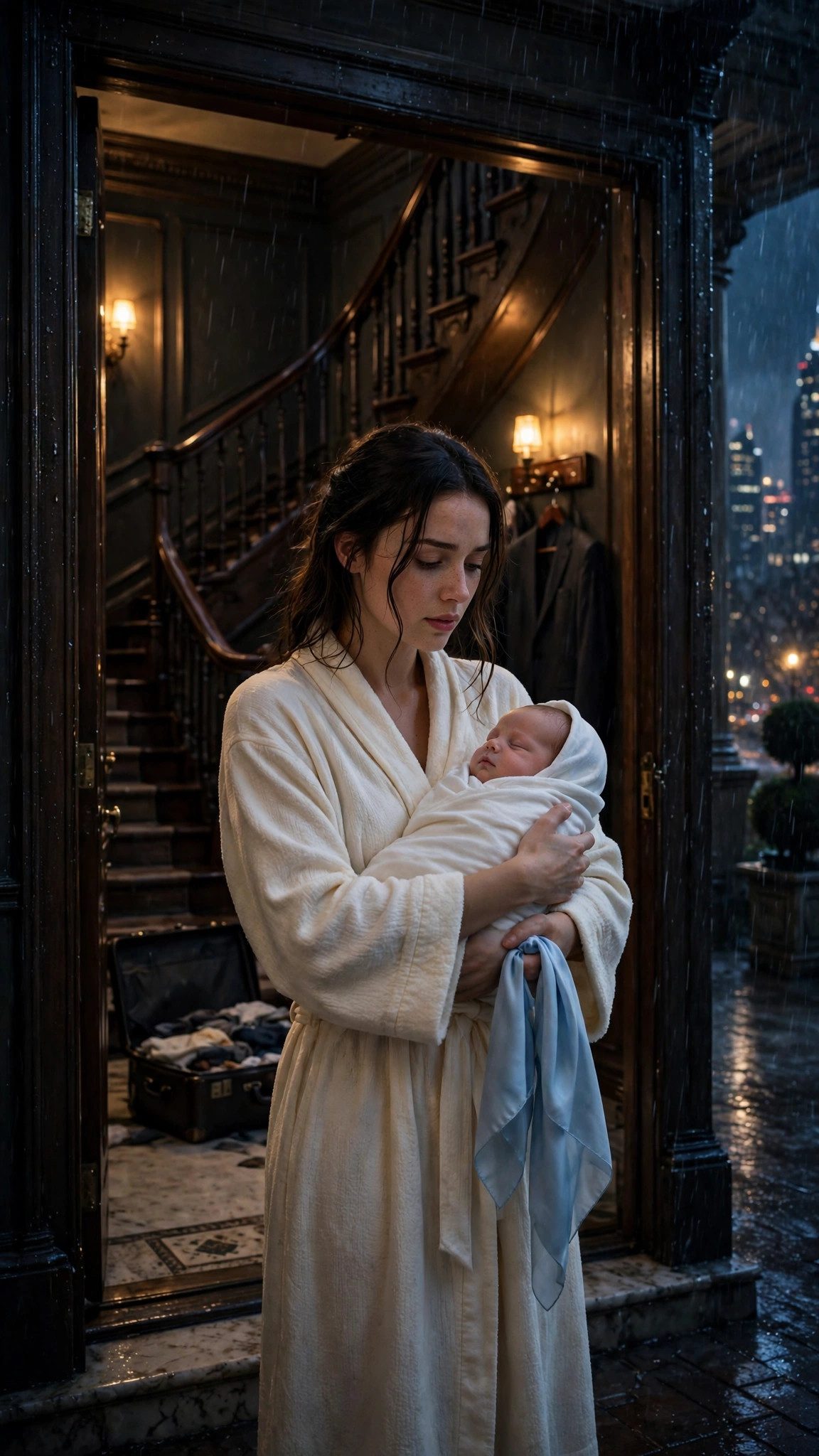
    On Friday, it rained. It rained the way it only rains in the Hudson Valley in the spring, hard and cold and sideways, and the river went gray, and the gardens went dark, and I stood at the front door in my black manager's suit with my hair pulled back and my hands folded in front of me, the way I had been taught to stand when important guests arrived. Behind me, the whole staff stood in a line in the lobby, housekeepers and cooks and gardeners and waiters, all of us in our uniforms, all of us waiting to find out if we still had jobs.

    The black cars came up the drive at four o'clock. Three of them, long and dark and silent, the kind of cars that cost more than any of our salaries combined. The doors opened, and two men in black suits got out first, and they looked at the house the way soldiers look at a building they are about to search. And then Julian Cross got out of the middle car, and I understood, in one look, why powerful men lowered their voices when they said his name.

    He was tall, taller than any man I had ever stood next to, with dark hair going gray at the temples and eyes the color of the river on a cloudy day. He wore a black suit that fit him like it had been sewn onto him, and a white shirt with no tie, and he moved the way a man moves when he has never once in his life been afraid of anything. He did not look at me. He looked at the house. He looked at the porch and the windows and the gardens going dark in the rain, and his face did not change at all.

    "Show me everything," he said. "All of it."

    So I showed him everything. I showed him the lobby with its marble floor and its chandelier, and the ballroom with its painted ceiling, and the library where the roof leaked, and the kitchens where my mother had worked since she was nineteen. I showed him the boiler room where my father had stuffed rags into the pipes, and the staff quarters where my parents had lived for twenty-three years, and the little office off the kitchen where I kept the books. I showed him the gardens, even though it was raining, because the gardens were the most beautiful part of the house, and I wanted him to see them before he decided to tear them down.

    He did not say much during the tour. He asked questions, short ones, in a voice so low I had to lean in to hear him. How many rooms? How many staff? How much does the boiler cost to replace? How old is the roof? And then, at the end, in the garden, with the rain coming down on the roses, he asked me the question I had been dreading.

    "Why is this place still standing?" he said. "The books say it should have died five years ago."

    I could have lied. I could have told him about the occupancy rates and the wedding bookings and the corporate retreats. But I was tired, and I was wet, and my mother's knees were shaking on the stairs that morning, and I told him the truth.

    "Because the people who work here love it," I said. "Because my mother climbs those stairs every morning on knees that do not work anymore. Because my father prunes roses nobody pays him to prune. Because I have not taken a day off in three years. Because this house is not a building to us. It is our home."

    He looked at me for a long time. The rain ran down his face, and he did not wipe it away, and his gray eyes did not give anything away.

    "Then you will run it," he said. "You will run it, and I will pay for the roof and the boiler, and no one here loses their job. That is the arrangement. Do you accept?"

    I accepted. I signed the papers, and he signed the papers, and The Whitmore House belonged to Julian Cross, and I belonged to The Whitmore House, and for a year, that was enough.

    For a year, the hotel came back to life. The roof was fixed. The boiler was replaced. The gardens bloomed. My mother got a new cart so she did not have to carry her bucket up the stairs. My father got a boy to help him with the heavy work. The ballroom was painted, and the chandeliers were cleaned, and the weddings came back, one after another, brides in white dresses dancing under the painted sky.

    And Julian Cross came once a month, always on a Friday, always in the rain or the sun, always with his two men in black suits behind him. He walked through the rooms and he looked at the books and he never said very much. But he always stopped in the library, where Eleanor Cross sat by the window in her wheelchair, and he always knelt down beside her, and he always took her thin old hand in both of his, and he always asked her the same question.

    "How are you, Grandmother?"

    And Eleanor, who was eighty years old then, would smile up at him with her sharp blue eyes, and she would say, "I am fine, Julian. The girl reads to me. She has a lovely voice. You should listen to her sometime."

    The girl was me. I read to Eleanor every evening, after the dinner service, in the library, while the light went down over the river. I read her novels and poetry and old magazines, and sometimes she listened, and sometimes she fell asleep, and sometimes she held my hand and told me stories about Julian when he was a boy, stories about a little boy who was afraid of thunderstorms and who hid under his grandmother's bed, stories about a young man who had lost his parents and had decided, at seventeen, that he would never need anyone ever again.

    "He built walls around himself," Eleanor told me one evening, her voice clear and sharp, the way it got when the fog lifted. "My grandson built walls so high that no one could climb them. Not his mother. Not his father. Not me. But walls keep people out, Emma. They also keep a person in. Remember that."

    I remembered it. I just did not understand what it meant, not yet.

    In the second year, everything changed. Julian came to the hotel on a Friday in June, and he was not alone. Beside him, stepping out of the black car in a white dress and high heels that sank into the gravel of the drive, was the most beautiful woman I had ever seen.

    Vivian Calder was twenty-nine years old, with blonde hair that fell to her shoulders in perfect waves and blue eyes the color of a summer sky and a smile that never quite reached her eyes. She wore a white dress that cost more than my mother's whole year of wages, and she carried a small white dog in a bag that cost more than my father's truck. She looked at The Whitmore House the way a woman looks at a dress in a shop window, trying to decide if it is worth the price.

    "Julian, darling," she said, her voice high and bright. "It is charming. In a rustic sort of way. We will have to redo everything, of course, but the bones are good."

    Julian did not answer. He looked at me, standing at the front door in my black suit, and he said, "Emma, this is Vivian Calder. We are engaged. The engagement party will be held here, in the ballroom, in three weeks. You will be in charge of all of it."

    "Of course, Mr. Cross," I said, and I lowered my head, the way I had been taught to lower my head when important guests arrived.

    But inside, something cold settled in my stomach, because I had seen the way Vivian Calder looked at the house, and I had seen the way she looked at the staff standing in the lobby, and I had seen the way she looked at my mother, standing at the back of the line with her bucket and her bad knees, and I knew, in the way you know things without anyone telling you, that this woman was going to be trouble.

    That night, after the dinner service, I read to Eleanor in the library, and she was restless, turning her head toward the door, listening for footsteps in the hallway.

    "She is here," Eleanor whispered. "The Calder girl. I knew her mother. Her mother was the same. Beautiful and cold and always counting what things cost."

    "Grandmother," I said gently, "it is just an engagement. Mr. Cross is happy. That is what matters."

    Eleanor looked at me then, and her eyes were clear, clearer than I had seen them in weeks, and she took my hand with her thin, cold fingers, and she squeezed it so hard it hurt.

    "Emma," she said. "You are not just a maid. You are the best thing that has ever happened to this house. And one day, my grandson is going to see it. One day, he is going to look at you the way he looks at the river. Like you are the only thing in the world that is real."

    I laughed it off. I told her she was being silly. I told her Julian Cross was engaged to a beautiful woman from a rich family, and that I was the hotel manager, and that the two things had nothing to do with each other.

    But Eleanor just smiled, and she said, "We will see, Emma. We will see."

    And then she closed her eyes, and the fog came back, and she forgot what she had said, and I kept reading, and the evening went on, and I told myself that an eighty-one-year-old woman's dreams were just dreams.

    Three weeks later, Vivian Calder moved into the hotel to plan her engagement party, and the dreams ended, and the trouble began.

    She arrived with twelve suitcases and a team of wedding planners and a small white dog that barked at everyone, and within one day she had rearranged the lobby furniture, fired the florist, and told Rosa Delgado that the housekeepers' uniforms were "depressing" and needed to be replaced with something "more elegant." She walked through the kitchens and wrinkled her nose at the smell of bread baking. She walked through the gardens and told my father that the roses were "the wrong color." She stood in the ballroom and told me, in front of the whole staff, that the painted ceiling was "tacky" and that she wanted it covered with white fabric for the party.

    "The ceiling stays," I said. It was the first time I had ever said no to a guest, and my voice shook when I said it. "The ceiling is original to the house. It has been there for a hundred and forty years. It stays."

    Vivian looked at me for a long moment, and her blue eyes went cold, and she smiled, the way a cat smiles at a bird.

    "We will see about that, Emma," she said. "We will see about a lot of things."

    That was the first warning. There were more. She sent my mother's cleaning cart back to the storage room because it "ruined the look of the hallway." She told the cooks that their food was "too heavy" and ordered a new menu from the city. She stood in the doorway of my little office and looked at the books on my desk, and she said, "It is a shame, really. A girl with your face, working in a place like this. You could have been something, if you had any ambition at all."

    I said nothing. I had spent my whole life learning how to disappear into a room without making a ripple, and I disappeared. I went back to my work, and I planned her party, and I ordered the flowers and the champagne and the string quartet, and I told myself that three weeks would pass, and the party would be over, and Vivian Calder would go back to the city, and the house would be quiet again.

    But the morning of the party, everything changed. The morning of the party, Vivian Calder's diamond engagement ring went missing. And by noon, the whole hotel knew that someone had stolen it. And by one o'clock, the security men were searching my locker.

    And that was when I understood that Vivian Calder had not come to The Whitmore House to plan a party. She had come to destroy someone. And she had chosen me.
  • Chapter 2: Fourteen Months of Hiding

    Chapter 2: Fourteen Months of Hiding

    I woke up in the hospital to the sound of my son laughing.

    It was a small, hiccuping laugh, the kind Noah made when something surprised him, and for one confused second I thought I was in my own apartment, in my own bed, with the radiator clanking and the morning light coming through the cracked window. Then I opened my eyes and saw the white ceiling and the IV pole and the curtain, and I remembered where I was, and who was sitting across from me.

    Dante Russo was still there. He was holding Noah up on the bed, and Noah was patting his face with both hands, delighted, and Dante was smiling. Not the cold smile I had seen in photographs, not the smile of a man who owned half of Boston. A real smile. A father's smile.

    "Good morning," Dante said, when he saw me awake. "The doctor says his fever is gone. It was a virus. He needs rest and fluids, and he can go home today."

    "Home," I said. My home. My nine-hundred-dollar apartment with the clanking radiator.

    "My home," Dante corrected, gently. "The North End. I have a doctor coming to the house. Rosa is already there — my mother came home last night with a cast on her wrist, and she has been asking about you since six this morning. She wants to meet her grandson."

    I sat up slowly. My neck was stiff from sleeping in the chair. "Dante, I need to think about this."

    "You've had fourteen months to think," he said. "I've had one night, and I've already decided. Noah is my son. You are his mother. You are both coming home with me. We will sort out the rest later."

    It was not a request. But it was not a threat, either. It was the voice of a man who had made up his mind, and I was too tired to fight him, and Noah was laughing, and the truth was that I had been tired for fourteen months, and some part of me — the part I had buried under rent receipts and night shifts and fear — was relieved.

    I thought about the night the radiator broke, in the middle of January, when the temperature outside was nine degrees and Noah was six months old. I had wrapped him in every blanket we owned, and I had held him against my chest all night, and I had whispered to him, over and over, "It's all right, baby. Mama's here. Mama will keep you warm." And in the morning, Mrs. Darrow had come with a space heater and a pot of soup, and she had stayed with us until the landlord finally sent someone to fix it, three days later. That was the night I understood what it meant to be a mother. It meant that there was no problem too big, no night too cold, no fear too large, as long as your child was breathing in your arms.

    I thought about Noah's first word, too. It was "Mama," said on a Tuesday morning in March, while I was changing his diaper on the kitchen table, and I had cried so hard that Mrs. Darrow, who was visiting, had to finish the diaper for me. "He said it," I kept saying, over and over, like a fool. "He said Mama. He said my name." And Mrs. Darrow had just smiled and said, "Of course he did, child. You are his whole world."

    Those were the moments that had kept me going. Not the money. Not the fear. The moments. And now, sitting in a hospital with the father of my child, I wondered if there could be more moments like that — better ones, safer ones — if I stopped running.

    "All right," I said. "But I need to go to my apartment first. Noah's things are there. His clothes. His blanket. My mother's book."

    "I'll send a car," Dante said. "We'll stop on the way."

    The apartment in Dorchester looked even smaller in the daylight, with Dante Russo standing in the middle of it. He filled the whole room. He looked at the secondhand crib, and the stack of diapers on the kitchen counter, and the single hot plate, and the window that looked out on a brick wall, and his face did not change, but his hands curled into fists at his sides.

    "You lived here," he said. It was not a question.

    "It was what I could afford," I said, and I busied myself packing Noah's bag so I would not have to look at him. "The rent is nine hundred a month. The heat works most of the time. Mrs. Darrow lives three blocks away, and she watched Noah while I worked nights."

    "Worked nights doing what?"

    "Cleaning offices downtown. Ten o'clock to four. I made fourteen dollars an hour. It paid the rent and the diapers and the food, and Mrs. Darrow never took a cent for watching him, no matter how many times I tried to pay her."

    Dante was quiet for a long moment. Then he said, "Fourteen dollars an hour. And you never once called me."

    "You sent a man with an envelope, Dante. You sent Marcus Hale to my classroom with fifty thousand dollars and a message that I should disappear. What was I supposed to do? Call you and ask for more?"

    "I never sent Marcus Hale to your classroom," Dante said. His voice was very quiet. "I never gave that order. I never knew you were pregnant. I never knew Noah existed until last night, when my son reached for my finger in a hospital waiting room."

    I stopped packing. The bag slipped from my hands. "What?"

    "Marcus Hale has worked for my family for nine years," Dante said. "He is my head of security. He is also, I am beginning to suspect, a man who has been selling my family's secrets for a very long time. Last night, after you fell asleep, I made some calls. Marcus told my people that you left Boston of your own accord. He told them you wanted nothing to do with me. He never told me you were pregnant. He never told me there was a child."

    "Why would he do that?" I whispered.

    "That," Dante said, "is what I intend to find out."

    We drove to the North End in silence, Noah asleep in his car seat, and I watched the city go by through the tinted windows. I had not been to the North End in over a year. It was where my mother had kept her bookstore, where I had grown up doing my homework behind the counter, where Dante's family had lived for three generations. The streets were narrow and old, and the smell of bread and coffee drifted out of the bakeries, and for a moment I was seven years old again, sitting on a stool in Cole's Books, watching my mother shelve novels and argue about poetry with the fishermen.

    Cole's Books was gone now. I had sold the lease to pay my mother's debts, and a coffee shop stood in its place. I looked away as we passed it.

    Dante's house was a tall brick townhouse on a quiet street, with black shutters and a brass knocker in the shape of a lion's head. Inside, it was warm and dark and beautiful, all polished wood and old paintings and the smell of my mother-in-law's sauce — no, not my mother-in-law. Dante's mother. Rosa Russo.

    Rosa was sitting in the living room in a wingback chair, her wrist in a white cast, a blanket over her knees, and when she saw us come in with Noah, she stood up so fast the blanket fell to the floor.

    "Oh," she said, and her hands flew to her mouth. "Oh, my God. Dante. He looks just like you did. He looks just like you did when you were his age."

    She came to us slowly, and she looked at Noah, sleeping in my arms, and then she looked at me, and her eyes filled with tears.

    "You must be Mariah," she said. "My son told me about you this morning. He told me everything. Come here, child. Let me see my grandson."

    I let her take Noah, gently, and she held him against her good shoulder and rocked him, and she whispered something in Italian, and Noah slept on, trusting, the way babies do when they know they are safe.

    "Fourteen months," Rosa said softly, looking at me. "You kept him safe for fourteen months, all alone. That is not a small thing, Mariah. That is everything."

    I had not cried in the hospital. I had not cried in the apartment. But I cried then, standing in Dante Russo's living room, while his mother held my son and called me child, and Dante stood behind me with his hand hovering near my back, not quite touching me, as if he were afraid I might break.

    "Come," Rosa said, wiping her own eyes. "You need food and rest. There is a room upstairs, next to the nursery. Dante had it made up this morning. Go. I will watch the baby."

    I did not argue. I went upstairs, and I found a beautiful room with a soft bed and clean sheets, and a nursery next door with a crib and a rocking chair and a mobile of little silver moons, and I lay down on the bed fully clothed, and I slept for six hours, the longest sleep I had had in fourteen months.

    When I woke up, it was dark outside, and there was a tray on the table beside the bed: soup, bread, a glass of water, and a note in a strong, slanted hand. "Eat. Then come downstairs. We need to talk. — D."

    I ate the soup. It was the best thing I had tasted in a year. Then I washed my face, and I changed into the clean clothes someone had laid out for me, and I went downstairs to find Dante waiting in his study, with two glasses of wine on the desk and a file folder open in front of him.

    "Sit down," he said. "I want to tell you what I found out today."

    I sat. He poured the wine. He did not drink his.

    "Marcus Hale has been taking money from Vincent Castellano for two years," Dante said. "Fifty thousand dollars, in cash, every month, delivered through a shell company called Bellini Holdings. In exchange, Marcus has been giving Castellano my schedules, my routes, and my plans. He told Castellano about the charity gala the night I met you. He told Castellano when I went to New York. And when you became pregnant, Marcus saw an opportunity. If Castellano knew I had an heir, the boy would become a target. But if the boy simply disappeared — if you disappeared, quietly, with no one the wiser — then Castellano would have nothing to use against me, and Marcus could keep collecting his fifty thousand a month without anyone asking questions."

    "So he lied to me," I said. "He told me you ordered me gone."

    "He lied to you, and he lied to me," Dante said. "He told me you left because you wanted nothing to do with me. He told me you took the money. I believed him, Mariah. I am not proud of that, but it is true. I believed him because it was easier than believing that the woman I had spent three weeks falling in love with had walked away without a word."

    "You were falling in love with me?" I asked, and my voice came out small.

    "I was," Dante said. "I am a man who has spent his whole life being careful about who he trusts. I trusted you in three weeks, Mariah. I trusted you with things I had never told anyone. And then you were gone, and Marcus told me you had taken fifty thousand dollars to go, and I told myself that was the answer. That you were like everyone else. That I had been a fool."

    "I never took the money," I said. "I threw it back at him. I would have thrown it back at you, too, if you had come yourself."

    "I know that now," Dante said. "And I am sorry. I am sorry I did not come to you myself. I am sorry I sent a man to do what I should have done face to face. And I am sorry that my son spent fourteen months in a nine-hundred-dollar apartment while I sat in this house believing a lie."

    He opened the file folder. Inside were photographs. My apartment building. The grocery store where Mrs. Darrow had found me. The office building where I cleaned at night. A photograph of me carrying Noah in a sling, taken from across the street. A photograph of Noah in his stroller outside Mrs. Darrow's house.

    "Marcus had you followed," Dante said. "He knew where you were the whole time. He knew about Noah. He was waiting, Mariah. He was waiting for the right moment to sell the boy to Castellano."

    My blood went cold. "Sell him?"

    "Castellano has no heir," Dante said. "His own son died ten years ago. A Russo heir — my son — would be the most valuable bargaining chip in Boston. Marcus was going to hand Noah to Castellano's men, and Castellano was going to use him to force me to hand over the docks, the routes, everything my father built. That was the plan. That is why Marcus kept you close and kept me blind."

    "And now?" I asked. "What happens now?"

    "Now," Dante said, "Marcus Hale is in a room downstairs, and he is going to tell me everything he knows, or he is going to spend the rest of his life regretting that he didn't. And Castellano is going to learn that no one touches my son. No one touches you. Not ever again."

    He stood up and came around the desk, and he knelt in front of my chair, so that we were eye to eye, and he took my hands in his.

    "Mariah," he said. "I am not asking you to forgive me tonight. I am not asking you to love me. I am asking you to stay here, in this house, where I can keep you safe, while I end this. And when it is over, when Castellano is finished and Marcus is finished, I am going to ask you to stay for a different reason. But tonight, I am only asking you to stay because my son needs his mother, and his mother needs a roof that does not leak, and a bed that does not hurt her back, and a life that does not make her afraid."

    I looked at his hands holding mine. They were the same hands that had shaken in the hospital waiting room when our son held his finger. They were steady now. They were warm.

    "All right," I said. "I'll stay. For Noah."

    "For Noah," Dante agreed. But we both knew it was not only for Noah. It had never been only for Noah. Not since the night at the library gala, when a schoolteacher in a borrowed dress had made the most feared man in Boston laugh.

    That night, I went to sleep in the beautiful room upstairs, with Noah sleeping in the nursery next door, and Rosa Russo humming in the kitchen below, and Dante Russo standing guard downstairs like a man who had finally found the thing he had been missing without knowing it.

    It was the second night in a row that I slept without dreaming of running.

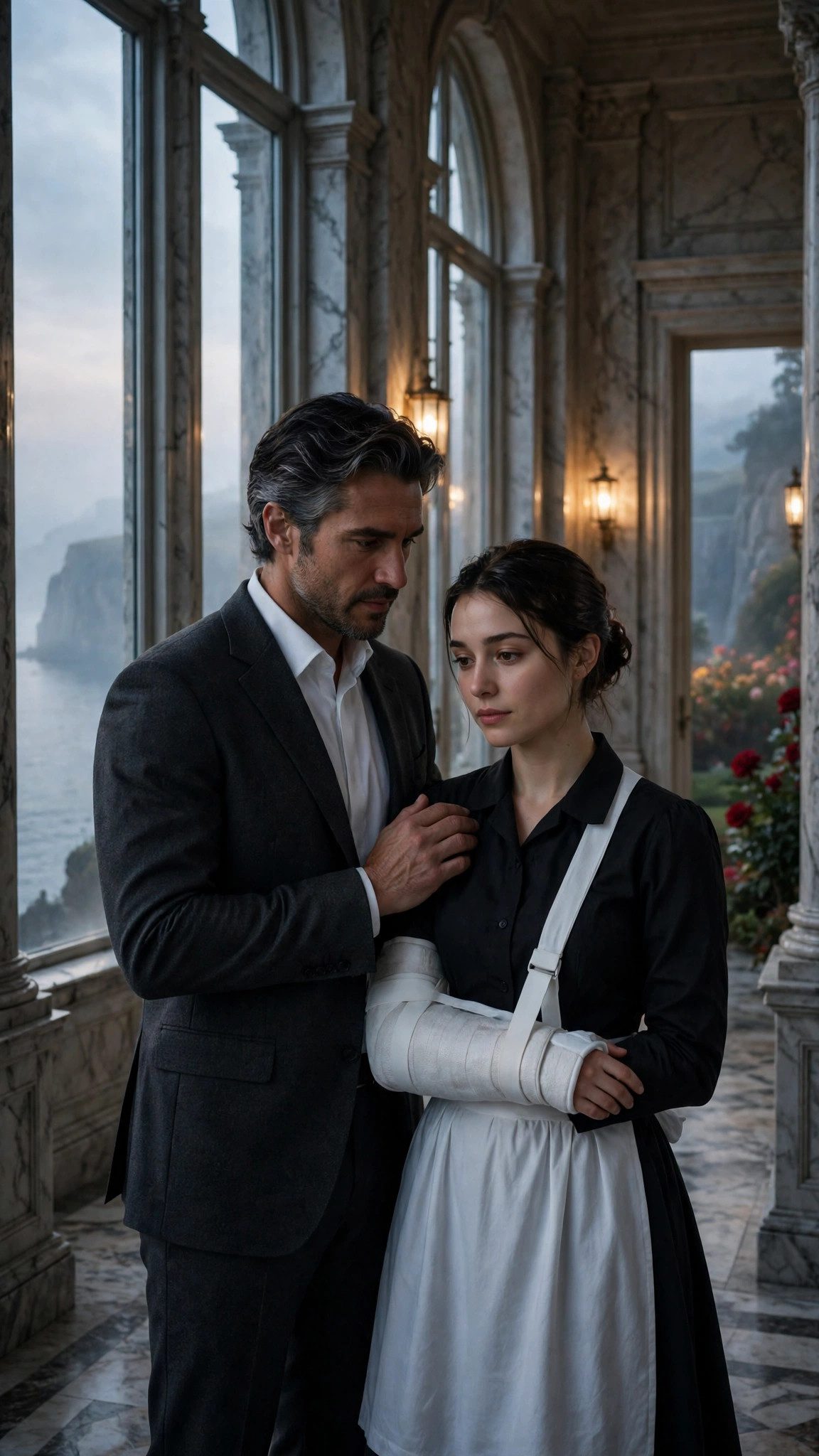
  • Chapter 1: The Maid with the Broken Arm

    Chapter 1: The Maid with the Broken Arm

    The morning Damon Blackwell noticed the maid's broken arm, fifteen men vanished from his house before sunrise, and nobody in the city of Bayport ever saw them again.

    It was a Tuesday in October, and the light coming off the bay was the color of cold pewter. Damon stood at the tall windows of his study on the second floor of the Blackwell estate, a cup of black coffee in his hand, watching the gardeners rake the first fallen leaves off the gravel drive. Below him, the house was waking up the way it always did: the kitchen staff moving through the service corridors, the housekeeper Mrs. Calloway checking the silver in the dining room, the drivers polishing the black cars in the courtyard. The house was a machine, and every person in it had a place, a task, and a name that the house knew.

    Every person except one.

    She came through the garden door with a bucket and a mop, moving the way people move when they are trying not to be noticed. She was young, twenty-six at most, with dark brown hair pulled back into a low bun and a plain black maid's uniform under a white apron. She carried the bucket in her left hand. Her right arm hung close to her body, stiff and guarded, the sleeve of her uniform pulled down low over her wrist. When she reached for the door handle, she used her left hand. When she set the bucket down, she did it slowly, carefully, as if the weight of a bucket of water might break something inside her.

    Damon watched her for a long moment. He had seen men hide injuries before. He had seen soldiers in his father's warehouses hold a broken rib with one hand and lift crates with the other, and he had seen dockworkers tape their fingers together and keep working because a day without pay was a day without food. He knew what a person looked like when they were carrying pain and pretending they were not.

    This girl was carrying pain, and she was pretending very hard.

    He set his coffee down and went downstairs.

    The hallway on the ground floor smelled of lemon polish and fresh bread. The maid was on her knees by the marble floor near the library door, wringing out the mop with one hand. Her right arm stayed tucked against her side. When she heard his footsteps, she looked up, and for a second her face was open and unguarded, and Damon saw what she was: tired, frightened, and very young.

    "Good morning," he said.

    "Good morning, Mr. Blackwell," she said. Her voice was quiet and steady. She did not stand up. She stayed on her knees, as if standing would make her more visible, and being visible was the last thing she wanted.

    "What is your name?" he asked.

    She blinked. It was a simple question, and the look on her face said that no one in this house had ever asked it before.

    "Kate, sir," she said. "Kate Bennett."

    "Kate Bennett," he repeated. "How long have you worked in this house?"

    "Three weeks, sir."

    "And your arm?" he said. "What happened to your arm?"

    Her face closed like a door. "Nothing, sir. I am fine."

    "You are favoring it," he said. "You carry everything with your left hand. You have not used your right hand once since I have been watching you."

    "I fell, sir," she said quickly. Too quickly. "On the stairs at home. It is only a bruise."

    Damon looked at her wrist. The sleeve had ridden up a fraction when she reached for the mop, and he could see the edge of a dark bruise, purple and yellow, spreading up from her wrist toward her elbow. Below the bruise, her wrist was swollen, and there was a faint smell of menthol in the air, the smell of the ointment she had rubbed into it.

    A fall on the stairs did not bruise a wrist like that. A hand did. A hand that had grabbed a wrist and twisted it until something inside had given way.

    "Show me," he said.

    "Sir, I—"

    "Show me your arm, Kate."

    She hesitated, and then, slowly, she pushed her sleeve up. Her forearm was swollen from the wrist to the middle of the arm, the skin mottled purple and green and yellow, and when she tried to turn her hand over, her face went white and she caught her breath.

    "That is broken," Damon said quietly. "That is not a bruise. That is a broken arm, and it has been broken for days, and you have been working with it anyway."

    "It will heal, sir," she whispered. "I cannot afford to stop working. Please do not tell Mrs. Calloway. Please. I need this job."

    "Who did this to you?" he asked.

    "No one," she said. "I fell. I told you, I fell."

    She was lying, and they both knew it. But Damon did not press her. He had spent his whole life around people who lied because the truth was more dangerous than the lie, and he knew that pushing a frightened person only made them lie harder.

    "Go to the kitchen," he said. "Mrs. Calloway will make you tea. Rest your arm. I will send for a doctor."

    "Sir, I cannot—"

    "Go," he said, and his voice was not unkind, but it was the voice of a man who was used to being obeyed.

    She went, carrying her bucket in her left hand, and Damon stood in the hallway and watched her go, and he thought about the house he had inherited from his father, and the men who moved through it, and the things that happened in it that he did not see because he had trained himself not to look.

    His father had built the Blackwell family on shipping and the waterfront and construction, and his father had taught him that a house is only as strong as the people who keep it. But his father had also taught him something else, something Damon had spent the last ten years trying to forget: that there were men in this family who believed that fear was the only tool that worked, and that a person who could not be bought could always be broken.

    Damon went back upstairs to his study and made two telephone calls. The first was to a doctor he trusted, a man who asked no questions. The second was to his head of security, a quiet man named Tony, who had worked for the Blackwell family for twenty years and who knew every corridor of the estate, every camera, every door that was supposed to be locked.

    "I want to know who hurt the new maid," Damon said. "Her name is Kate Bennett. She has a broken arm, and she is afraid to say who did it. Find out. Do not ask her. Ask the house."

    Tony was silent for a moment. "Sir," he said at last, "there are things in this house you have chosen not to see."

    "Then it is time I saw them," Damon said.

    He hung up and stood at the window again, and he watched the bay, and he thought about his wife, Marla, who had been dead for five years, killed by a car bomb that had been meant for him. Marla had loved this house. She had planted the roses in the garden and chosen the curtains in the library, and she had once told him that a house was not a building, it was a living thing, and that a house learned the names of the people who belonged in it, and forgot the names of the people who did not.

    Damon had not understood her then. He was beginning to understand her now.

    He thought about his father, too, and about the day his father had died, ten years earlier, sitting in this same study, looking out at this same bay. His father had called him in that morning, and he had taken Damon's hand, and he had said, "This family is yours now, Damon. The ships, the warehouses, the men. All of it. And I want you to remember one thing: a man who does not know what happens in his own house does not own his house. The house owns him."

    Damon had nodded, and he had promised, and he had spent ten years believing he had kept that promise. He had gone to the meetings. He had signed the papers. He had shaken the hands. But he had not walked the corridors at night. He had not asked the maids their names. He had not looked at the boathouse after midnight, and he had not wondered why the housekeeper left tea in the library at an hour when no one was supposed to be there.

    He had chosen not to see, because seeing would have meant a fight with his uncle, and a fight with his brother, and a war inside his own family, and he had told himself that peace was worth the price of blindness. But the price of blindness had been a girl on her knees in the hallway with a broken arm, and the price had been too high, and he would not pay it anymore.

    Downstairs, in the kitchen, Kate sat at the small table with a cup of tea, and Mrs. Calloway stood at the stove, and neither of them spoke, because there was nothing safe to say. Mrs. Calloway kept glancing at Kate's arm, and Kate kept her sleeve pulled down, and the clock on the wall ticked, and the house went about its business, and outside the window, the gardeners raked the leaves, and the bay glittered, cold and grey and beautiful, and neither woman knew that upstairs, in the study, the master of the house had just decided to take his house back.

    By noon, Tony came back with the answer, and the answer was worse than Damon had expected.

    Three days earlier, Kate had been dusting the library, and she had found a folder on the desk. Inside the folder there had been a diagram of an explosive device, and a black envelope full of money, and a list of names. She had put the folder down and backed away, and she had been turning to leave when his younger brother Daniel had come into the room behind her.

    Daniel had grabbed her wrist. He had told her that if she ever spoke about what she had seen, she would disappear, and so would her family. And then he had twisted her arm until the bone cracked, and he had walked out of the room as if nothing had happened, and Kate had gone back to work, because she could not afford to stop.

    "Daniel," Damon said.

    "Yes, sir," Tony said. "Your brother. On your uncle Victor's orders, as far as I can tell."

    Victor Blackwell. Damon's uncle, sixty-two years old, a man who sat on the state parole board and shook hands with judges and gave money to the symphony, and who had been running an arms-dealing operation out of the Blackwell estate for years, using Damon's name and Damon's shipping routes and Damon's house.

    "The folder," Damon said. "Where is it now?"

    "Gone," Tony said. "Victor's men took it the same night. But I know who they are. Fifteen men, sir. Fifteen men who work for your uncle, not for you. They come and go through the service entrance at night. They use the boathouse. They have been using this house as a warehouse for Russian arms for two years."

    Damon was quiet for a long time. Then he said, "Fifteen men."

    "Yes, sir."

    "By morning," Damon said, "I want fifteen men gone from this house. All of them. I do not want them hurt. I want them gone. Call Agent Vasquez at the FBI. Tell her everything. Give her the names, the routes, the boathouse. And then make sure that when the sun comes up, there is not one of Victor's men left on this estate."

    "Sir," Tony said, "your uncle will not forgive this."

    "My uncle broke a maid's arm in my house," Damon said. "There is nothing to forgive."

    That night, Damon did not sleep. He walked the corridors of his house in the dark, and he listened to the sounds it made, the creak of the old floorboards and the sigh of the wind off the bay, and he thought about the girl on her knees in the hallway, and about his wife Marla, and about the house that had learned the names of the people who belonged in it.

    He went down to the kitchen at midnight, and he found Kate sitting at the small table by the window, a cup of tea going cold in front of her, her broken arm resting on a folded towel. Mrs. Calloway had gone to bed. The house was quiet.

    "You should be asleep," he said.

    "I cannot sleep, sir," she said. "It hurts."

    "The doctor will come in the morning," he said. "He will set it properly. You will not work until it heals. You will still be paid."

    She looked at him, and her eyes were wide. "Why?" she asked. "Why would you do that for me? I am only the maid."

    Damon sat down across from her, and for the first time in five years, he told someone the truth about his house.

    "Because this house has forgotten how to be a home," he said. "And because someone broke your arm in my house, and that is my responsibility. And because, Kate Bennett, I intend to learn your name, and I intend to make sure this house learns it too."

    She stared at him. Outside the window, the first pale light of dawn was touching the bay, and somewhere in the dark corridors of the estate, fifteen men were quietly, carefully, and completely vanishing.

    My name is Kate Bennett. My earliest memory is the smell of bleach in the two-bedroom apartment where my mother cleaned houses for people who had never once asked her name. My mother tended broken people and hidden people for a living, and by the time I was seven, I had learned to clean houses without disturbing whatever violence had happened the night before. Most of that violence belonged to the Blackwell family.

    I was twenty-six years old, and I worked at the Blackwell estate, a sprawling mansion that overlooked a bay no one in my neighborhood could ever afford to visit. I made less than a thousand a week. My family's most valuable possession was a small wooden box filled with twenty-one folded dollar bills that my uncle Ray had set aside for emergencies, one dollar for every year of my life when he started it, and I carried that little emergency box with me every single day, in the bottom of my bag, because it was the only thing in the world that was truly mine.

    It had nothing to do with Damon Blackwell. He was a man people never approached with the name of their trouble, because trouble around Damon Blackwell had a way of disappearing, or worse.

    But on a Tuesday in October, Damon Blackwell saw my broken arm, and by morning, fifteen men had vanished, and my life, which had been small and invisible and carefully quiet, was never quiet again.

  • Chapter 1: 8:42 P.M.

    Chapter 1: 8:42 P.M.

    At 8:42 P.M., I signed the papers to withdraw life support from my eight-year-old son while my husband, Chicago's most feared mafia boss, celebrated his anniversary with my friend in Zurich.

    My name is Claire Vale. I am thirty-three years old, and my heart barely comprehends the words I am writing. But I have to write them, because if I do not write them, they will stay inside me, and I am afraid of what they will do to me if they stay.

    Noah was eight years old. He was a boy who once told me that his favorite question in school was asking who his hero was, and if he could connect the dots of the stars to draw a rocket on the ceiling. He said it the way only an eight-year-old can say it, like the stars were a puzzle someone had left out for him on purpose, and all he had to do was draw the lines.

    He was a boy who was in an emergency state, and to him, his father was his hero just because he always came back. Marcus Vale, one of Chicago's most feared mafia bosses, was the man my son worshipped, because every time he returned, he brought something for him: a sword, a magnet, a small Swiss army knife from his pocket. Noah kept them all in a wooden box under his bed, and he could tell you the story of every single one.

    In the last twenty-four hours, a rare neurological disorder killed him. The doctors called it acute fulminant encephalopathy, a storm in the brain that no medicine could stop. He was fighting, but he could not breathe. He was only kept alive by a ventilator, a machine doing the work his body had forgotten how to do.

    Noah was dying fast. The doctor repeated it twice, gently, the way doctors do when they are telling you something that will break your life in half and they have no softer way to say it. And the law needed a consenting parent's signature to withdraw life support.

    Under any other circumstances, it would have been one signature from his father. But Marcus was nowhere to be found.

    He was in Zurich, having a candlelight dinner to mark another year of his marriage. Not with me. With Rebecca. The nanny who stole his heart.

    The pediatrician had called twice and sent six messages. Marcus's driver, Frank DeLuca, who had been working for the family for years, had seen with his own eyes who Marcus had left with. He had driven me to the hospital himself that morning, and when the nurses would not let him past the doors, he had stood at the nurse's station and told the nurse, in his thick Italian accent, to call the police, or he would take care of it himself. But there was nothing for the police to do. There was no crime. There was only a father who was not there, and a mother who was.

    It was a decision I had never imagined in my wildest dreams, and it was worth my own life.

    At 8:42 P.M., I took the pen, looked at Noah's face one more time, held his chest, and signed it.

    I signed because Noah begged me not to let him suffocate. He could not speak anymore by then, not with the tube in his throat, but his eyes were open, and they were afraid, and he squeezed my hand twice, the way we had always done it, two squeezes for yes, and I understood. He was asking me to let him go. He was asking me not to make him fight a fight he had already lost.

    I signed because his father was not there to hold his broken promise. Marcus had made a promise that no harm would come to his son, and he had failed to keep it. He had promised Noah, on the night of his seventh birthday, with his hand on the boy's head, that nothing in this world would ever hurt him while his father was alive to stop it. And then he had gone to Zurich, and he had not answered his phone, and the promise had broken like a glass dropped on a tile floor.

    After Noah passed away, I did not scream. I did not throw anything. I sat beside his bed for a long time, holding his hand, which was still warm, and then, slowly, it was not warm anymore, and I knew that the warmth had gone somewhere I could not follow.

    I went home in Frank's car. He did not speak. He did not ask me anything. He only opened the door for me and waited until I was inside, and then he sat in the car outside the house all night, because that is what Frank does. He stays.

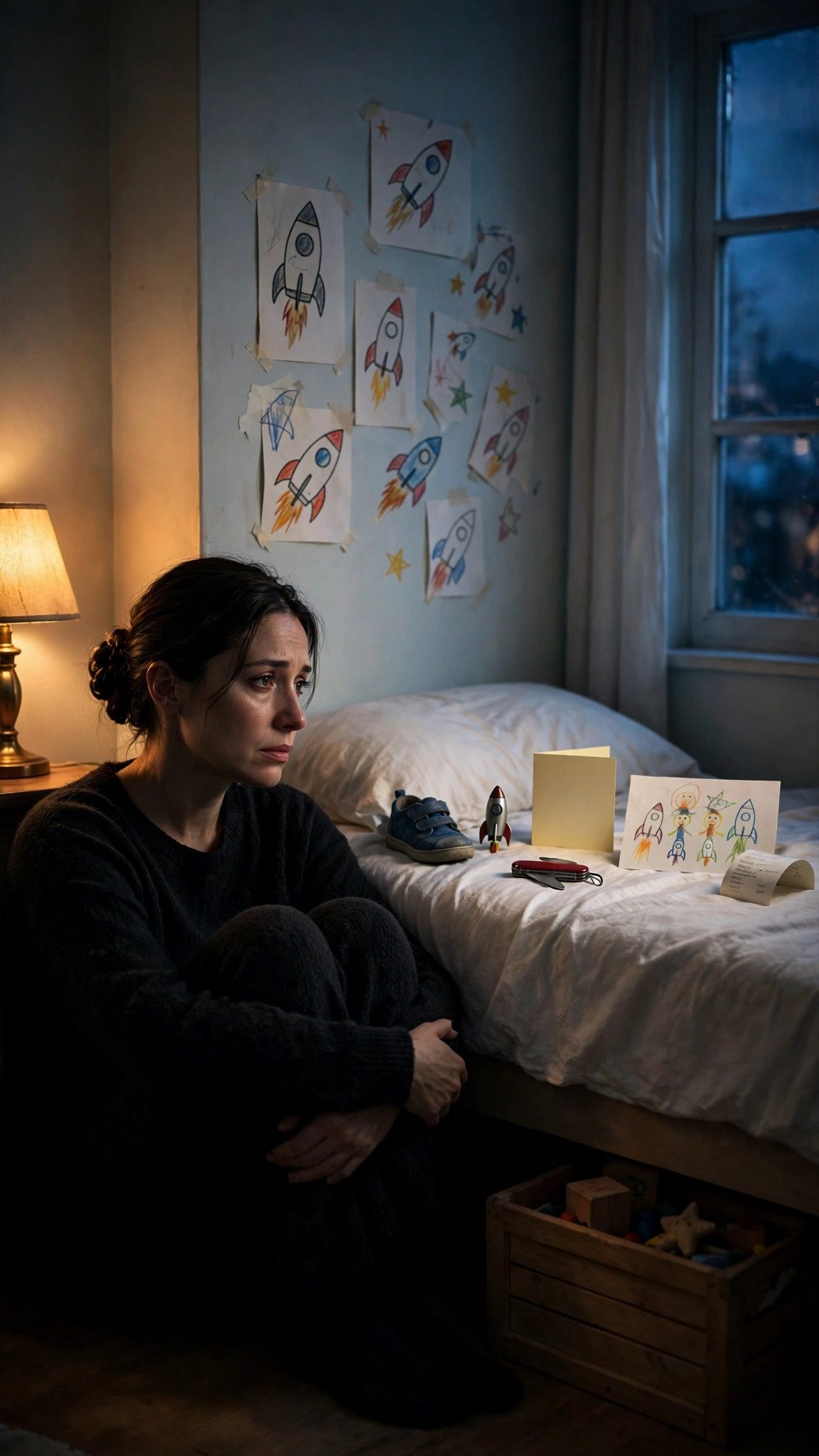
    I cleaned Noah's room. I took out his belongings, and I put his drawings on a table near his bed. I packed his uniform, his shoes, his backpack, and the photograph of them at Duca's, Marcus still holding Noah's small hand in his apron, the two of them laughing over a plate of pasta. I also placed two photographs in the bedroom where my husband kept his handkerchief: one taken on the day Noah was born, in the maternity ward of the hospital, my best friend holding my hand while I held him for the first time; and the other taken during our trip to the zoo a month before his death, Noah pointing at the elephants with his whole arm stretched out, as if he could touch them from across the fence.

    I did not leave in panic. I did not change the locks. I did not write him an angry note. I placed six items on the bed.

    A child's shoe. A small magnet. A Swiss army knife. A birthday card. A crude drawing of the four of us as rocket ships. And a receipt from a Zurich restaurant dated the day Noah died, showing Marcus and Rebecca's dinner for two: 3,680 Swiss francs.

    For years, I had carried the weight of a possibility. From that night onwards, I carried a different weight: the need to protect my son's dignity, so that his life would not have been spent in vain.

    I took his hand one last time and whispered: "Mommy's here." "Mommy's here." "Thank you for being brave."

    After Noah died, I didn't cry. And for a long time after that, I didn't sleep. My only solace was to leave flowers on his grave on Sundays, white lilies, because he had once said they looked like stars that had fallen down to live in the grass.

    When Marcus finally appeared at home at 10 a.m., fourteen hours after Noah's death, I sat in the corner of Noah's bedroom on the floor. I didn't move. I didn't speak.

    He was wearing a wrinkled suit and he smelled of jet fuel. He assured me that he had flown back from Chicago, that he had come as fast as he could, that he was sorry. But when he saw what was on the bed, he stopped.

    The six items.

    He exploded. "Where is Noah?!" His voice boomed through the entire house. I hadn't seen Marcus in a state like that in a long time. His cold, pallid expression shifted into something I had only seen briefly, the expression of a man from one of the bloodiest crime families in Illinois, a man who had built an empire on the promise that no one touched what was his.

    He grabbed the receipt in his hand and crumpled it into a ball, letting out a low scream. He saw the accident had happened before he got home. He couldn't find his child, yet he looked for conflict instead of comfort. All he wanted was to join the war.

    Marcus Vale was a criminal, a criminal empire protected by armed men. A husband who was obsessed with one thing: maintaining his authority as an authority over everything and everyone he protected. But he had no authority to stop the people he loved from leaving him. And the wealthiest person was still a man, and he was the accomplice in our stealing of the clock.

    I paced toward the door and walked through it.

    "What about Noah?" he repeated.

    I twisted a small smile and whispered. "I can forgive a husband who no longer loves me. I don't know how to live with a father who would never come home. And I will always remember Noah, who thought his hero would never come, but he never did."

    Then I walked out of the house, and I did not look back, because if I had looked back, I would have stayed, and staying would have meant forgiving something that had not yet earned forgiveness.

    The nurse who had been with us all day, a young woman named Sofia with dark hair and kind eyes, came and stood beside me. She did not say anything at first. She only put her hand on my shoulder, and we stood there together, looking at Noah, and after a while she said, very quietly, "He was a brave boy. I have seen a lot of brave children in this ward, Mrs. Vale, but your son was one of the bravest. He never cried when we changed his lines. He asked us questions about the machines. He wanted to know how everything worked."

    "He wanted to know how everything worked," I repeated, and my voice sounded far away, like it belonged to someone else. "That was Noah. He wanted to know how the stars worked, and how the rockets worked, and how the ventilator worked. He was eight years old, and he thought that if he understood how something worked, it could not hurt him."

    Sofia nodded. "The doctor will come and talk to you about what happens next. The paperwork. The arrangements. You do not have to decide anything tonight. Take your time. There is no hurry. He is at peace now."

    I nodded, but I did not move. I could not move. My legs would not work. My hands were still holding Noah's hand, and I could not make them let go, because letting go felt like the last thing, the final thing, and once I let go, there would be nothing left to hold onto.

    Frank came into the room then. He had been standing in the doorway for hours, his cap in his hands, his head bowed, and now he came and stood on the other side of the bed, and he looked down at Noah, and his big shoulders shook, once, twice, and then he was still again.

    "Mrs. Vale," he said, very gently. "The car is outside. Whenever you are ready. There is no hurry. I will wait all night, if you need me to."

    "Thank you, Frank," I whispered. "Thank you for staying."

    "I will always stay, Mrs. Vale," he said. "That is my job. That is what I do. I stay."

    I do not know how long I sat there. It could have been an hour. It could have been three. Time had stopped meaning anything. The clock on the wall said 11:47, and then it said 12:15, and then it said 1:03, and each time I looked at it, I was surprised, because I had not felt the minutes passing. I had only felt the stillness, and the weight of Noah's hand in mine, growing cooler, and the sound of my own breathing, in and out, in and out, the only breathing left in the room.

    Finally, Sofia came back with a blanket, and she put it around my shoulders, and she said, "Mrs. Vale. You need to go home. You need to rest. You have been through something no mother should ever have to go through, and you need to take care of yourself now. Noah would want that. He would want his mommy to be all right."

    I looked at her, and I wanted to tell her that I would never be all right again, that the word "all right" had stopped meaning anything the moment I signed those papers, but I did not say it. I only nodded, and I stood up, slowly, like an old woman, and I kissed Noah's forehead one last time, and I whispered, "Goodnight, my rocket boy. Mommy loves you. Mommy will always love you. Fly to the stars now. Draw your rocket on the ceiling. I will look up at it every night, and I will think of you."

    Then I walked out of the room, and Frank walked beside me, and we went down in the elevator, and out through the lobby, and into the cold night air, and I stood on the sidewalk for a moment, looking up at the hospital, at the window of Noah's room, at the light still burning there, and I thought about how strange it was that the world was still going on, that cars were still driving past, that people were still walking their dogs, that the city was still alive, when my son was dead.

    Frank opened the car door for me. I got in. He drove me home in silence, through the empty streets, past the lake, past the houses with their lights off, past the world that did not know what had happened, and did not care, because the world never stops for one mother's grief.

    When we got to the house, Frank walked me to the door. He did not come inside. He only said, "Mrs. Vale. If you need anything, anything at all, you call me. Day or night. I mean it."

    "I know, Frank," I said. "Thank you."

    I went inside, and the house was dark, and quiet, and so empty that the silence felt like a physical thing, pressing against my ears. I walked through the living room, past the photographs on the wall, past Noah's shoes by the door, past the drawing of the rocket taped to the refrigerator, and I went upstairs, to Noah's room, and I sat down on the floor in the corner, with my back against the wall and my knees pulled up to my chest, and I stayed there all night, listening to the silence, and thinking about the six items I was going to place on the bed in the morning, and about the man in Zurich, and about the promise that had been broken, and about the boy who had once believed, with his whole heart, that his father was his hero just because he always came back.

    That was the night my marriage ended. But it was not the night my story ended. It was the night it began.

  • Chapter 1: The Slap

    Chapter 1: The Slap

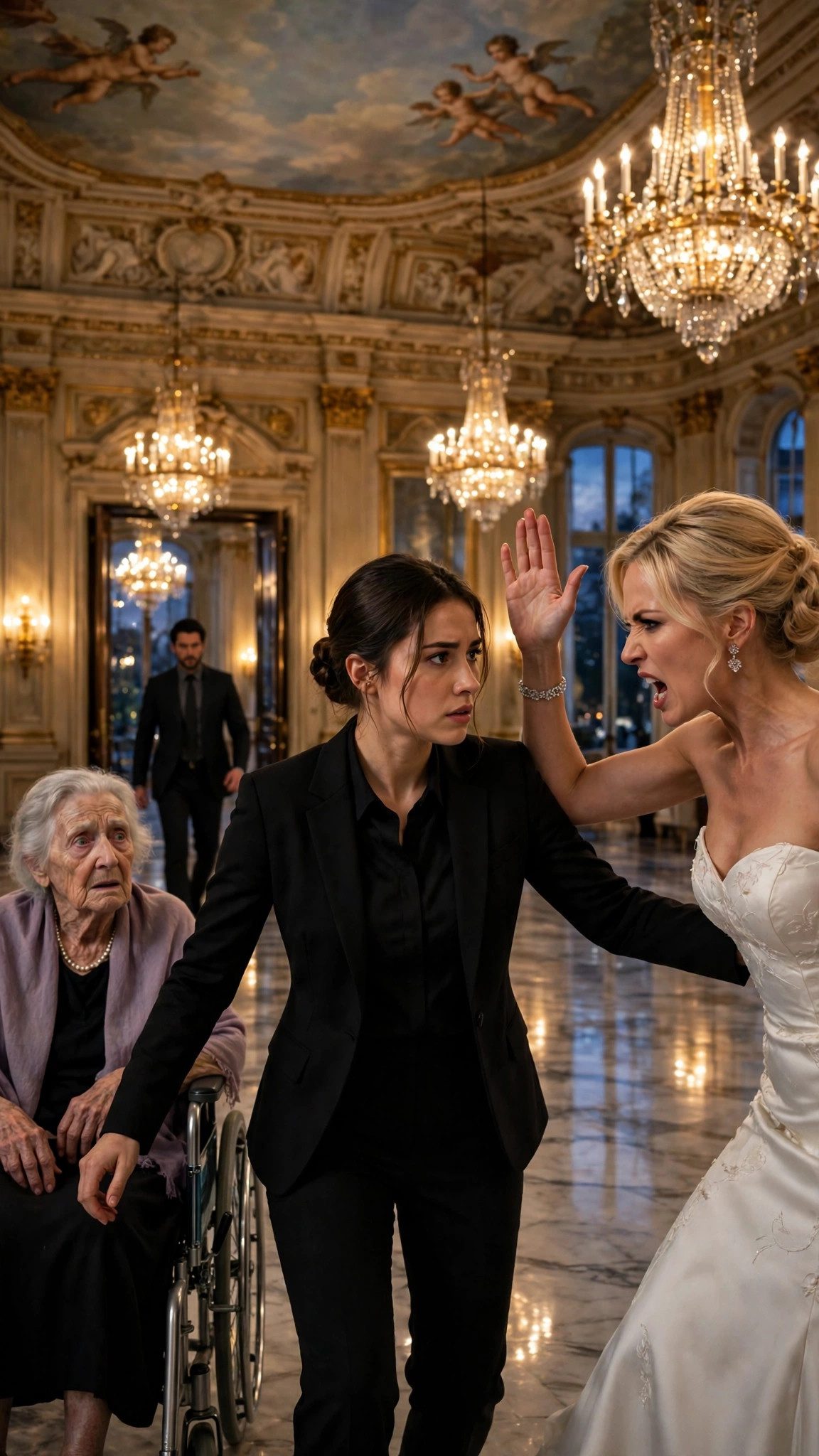
    The slap was meant for an eighty-one-year-old woman's face, and I stepped between them before I even had time to think.

    One second Vivian Calder's hand was in the air, her diamond ring catching the light of the chandeliers, her mouth twisted into something I had never seen on a bride's face before. The next second the whole ballroom of The Whitmore House seemed to tilt, and my body moved on its own, the way it had moved a hundred times before when a tray was falling or a guest was about to trip on the stairs. I put myself between Vivian and Eleanor Cross, and I heard the sound before I felt it, a crack like a champagne glass breaking on marble, and then the floor came up to meet me.

    I was on the marble floor of the grand ballroom while the billionaire crime boss hosting his own engagement party walked in.

    My name is Emma Hart, and I ran the large historic hotel in the Hudson Valley where my parents had worked for over two decades. That night, lying on the cold marble with my cheek on fire and three hundred guests staring down at me, I understood something I had spent a year pretending not to know. The house I loved, the house that had raised me, had finally asked me to choose between the man who owned it and the woman who was about to marry him. And I had chosen without thinking at all.

    Julian Cross stopped in the doorway. He was thirty-six years old and he controlled shipping interests, private security companies, and enough quiet influence along the Hudson docks to stop whole projects with a single phone call. Powerful men lowered their voices when they said his name. He never needed to shout. That was the frightening part. That night, he did not shout. He looked at his fiancee, at his grandmother trembling in her wheelchair, and at me on the floor, and his voice came out low and flat, the way a river sounds right before it goes over a dam.

    "You slapped her."

    Vivian's hand was still in the air. She lowered it slowly, as if she had only just remembered it belonged to her.

    "You raised your hand to an eighty-one-year-old woman inside my house, at my party."

    The ballroom had gone so quiet I could hear the ice melting in the champagne buckets. Three hundred of the richest people in New York stood frozen with their glasses in their hands, and not one of them moved, because everyone in that room knew what Julian Cross did to people who hurt his family. Everyone except, apparently, the woman he was about to marry.

    "Is that her?" Vivian said. Her voice was high and bright and completely unaware of the consequences. She pointed at me with one shaking finger. "Is that the girl from the kitchen? The one who just stepped between us and took the hit?"

    She laughed then, a short, ugly sound that did not belong in a ballroom.

    "Imagine you have a table full of stupid women," she said to the room, as if she were telling a joke at a dinner party. "The girl from the kitchen just stepped between them and took the hit."

    I tried to get up. My cheek was burning, and my knees were shaking, and the marble was cold through my dress. Someone's hand closed around my arm and helped me to my feet. It was Rosa Delgado, our head housekeeper, seventy-one years old and steady as a stone wall. She did not say a word. She just held me up and glared at Vivian Calder with all the fury of a woman who had cleaned up after rich people's parties for fifty years and had never once raised her voice.

    Vivian turned back to Julian, and her voice went sweet, the way it always went sweet when she wanted something.

    "Darling," she said. "She is mine. She works for me now. Tell her to go back to the kitchen where she belongs."

    "Help me, Emma," Eleanor whispered. She was sitting in her wheelchair beside the head table, her thin hands gripping the armrests, her silver hair coming loose from its bun. She was eighty-one years old, and she had been the kindest person I had ever known, and she was looking at me the way a drowning woman looks at a rope. "Don't look away, Emma. Don't look away."

    Julian walked across the ballroom. He did not hurry. He never hurried. His shoes made no sound on the marble, and the crowd parted for him the way water parts for a ship. He stopped in front of Vivian, and he looked at her for a long moment, and I saw something in his face I had never seen before. Not anger. Something colder than anger. Something final.

    "Take off my ring," he said.

    Vivian blinked. "What?"

    "Take off my ring, Vivian. Give it back to me. Now."

    "Julian, you cannot be serious." Her voice rose. "In front of all these people? Over a maid? Over an old woman who called me a scar to my face?"

    "She called you what she saw," Julian said. "Take off the ring."

    Vivian's hand went to her finger, and for a moment I thought she would refuse, and then she saw his face, and she twisted the diamond off her finger and held it out to him, her hand shaking so hard the stone threw sparks across the ceiling.

    "So that's how you got your diamond ring," she said to me, her voice cracking. "You are in another box now, Emma. There was already a diamond there. In your locker. Everyone saw it. Ask anyone. Ask the security men. They found it in your box."

    She was talking about the morning. The morning the ring had gone missing, and the morning they had searched my locker, and the morning everything had started to fall apart. But that was later in the story. That night, in the ballroom, with three hundred people watching, Julian Cross took his ring back from his fiancee, and he turned to his grandmother, and he knelt down beside her wheelchair, and he took her thin old hand in both of his, and he said the words that changed everything.

    "Grandmother," he said softly. "Tell me what you saw."

    And Eleanor Cross, eighty-one years old, looked at the woman who had tried to hit her, and then at me, and then at her grandson, and she smiled, a small, fierce, triumphant smile.

    "I saw everything," she said. "And I am going to tell you all of it."

    That was the night my life changed. But to understand why a hotel manager would throw herself in front of a slap meant for an old woman, and why a billionaire crime boss would kneel on a ballroom floor in front of three hundred guests, you have to go back to the beginning. You have to go back to the house itself, because the house is where all of it started, and the house is the reason I could never walk away.

    The Whitmore House stood on a bluff above the Hudson River, forty miles north of the city, a great white Victorian pile of a building with a wraparound porch and a ballroom with a ceiling painted like a summer sky. It had been a hotel for a hundred and forty years. Presidents had slept there. Movie stars had married there. And for twenty-three years, my parents had worked there, and I had grown up in its kitchens and its gardens and its long, echoing hallways, the way other children grow up in a house with a yard.

    My father, Thomas Hart, was the head groundskeeper. He had strong hands, the kind of hands that could lift a fallen tree limb or fix a broken gate hinge or carry my mother up the stairs when her knees gave out. He still kept saying the same thing he had said my whole life, every time someone praised the gardens or the roses or the way the lawn rolled down toward the river like green velvet.

    "Let this be about your talent, not us," he would say, and he would duck his head and go back to his roses.

    My mother, Ruth Hart, was a housekeeper. She had worked at The Whitmore House since she was nineteen years old, and her job had shaky legs now, the way a table gets when one leg is shorter than the others. Her knees had given out years ago, and she still climbed the stairs every morning with her bucket and her rags, because the house needed her, and because she needed the house, and because neither of them knew how to live without the other.

    I lowered my head and answered for them, the way I always did, whenever anyone asked about my parents. I told people they were fine. I told people they were happy. I did not tell people that my mother's knees were getting worse every winter, or that my father's back had started to ache in the mornings, or that the hotel had almost gone bankrupt twice in the last five years, and that we had all been holding our breath, waiting for the day the bank would finally take the keys.

    I was six years old the first time my mother carried me into the kitchen of The Whitmore House. I remember the smell of bread baking and the sound of the dishwasher humming and the way the morning light came through the high windows and turned the steam gold. I remember sitting on a flour sack and watching the cooks move around each other like dancers, and thinking that this was the most beautiful place in the whole world. I loved this house for years before I ever heard anyone say a single thing about owning it or running it or losing it. I loved it the way you love a person, quietly and completely, without ever asking for anything back.

    By the time I was twenty-eight, I ran the place. Not on paper, not at first. On paper, the hotel belonged to a company in the city, and the company belonged to a bank, and the bank did not care about the roses or the ballroom ceiling or the way the light came through the kitchen windows in the morning. But in practice, in the real life of the house, I was the one who knew which room had the draft and which guest liked extra pillows and which vendor would deliver flowers on a Sunday. I was the one who hired the staff and balanced the books and stood in the doorway of the ballroom on wedding nights and made sure everything was perfect. I owned my father's strong hands, my mother's humor, and the ability to disappear into a room without making a ripple. I would have traded any fortune for an unmade mess and a borrowed laptop, because a mess could be cleaned and a laptop could be returned, but the house could not be replaced.

    Then, one year ago, Julian Cross bought The Whitmore House.

    I froze when the line arrived. It came in an email from the bank, short and cold and final: the hotel had been sold to Cross Holdings, and the new owner would be visiting on Friday, and I should have the books ready. I read it three times, and then I sat down at my desk in the little office off the kitchen, and I put my head in my hands, because I knew what happened when men like Julian Cross bought places like The Whitmore House. They tore them down. They turned them into condominiums. They fired the staff and sold the furniture and put up a sign that said something new and shiny and soulless.

    But Julian Cross did not tear the hotel down. He walked through the front door on a rainy Friday afternoon, tall and dark and quiet, with two men in black suits behind him, and he looked at the ballroom ceiling, and he looked at the gardens, and he looked at my mother struggling up the stairs with her bucket, and he said five words that I did not understand until much later.

    "Show me everything," he said. "All of it."

    I showed him everything. I showed him the kitchens and the cellars and the ballroom and the gardens and the little office where I kept the books. I showed him the roof that leaked and the boiler that rattled and the staff quarters where my parents had lived for twenty-three years. And at the end of the tour, in the garden, with the rain coming down on the roses, he asked me one question.

    "Why is this place still standing?" he said. "The books say it should have died five years ago."

    "Because the people who work here love it," I said. "Because my mother climbs those stairs every morning on knees that do not work anymore. Because my father prunes roses nobody pays him to prune. Because I have not taken a day off in three years."

    He looked at me for a long time. His eyes were gray, the color of the river on a cloudy day, and they did not give anything away.

    "Then you will run it," he said. "You will run it, and I will pay for the roof and the boiler, and no one here loses their job. That is the arrangement. Do you accept?"

    I accepted. What else could I do? I signed the papers, and he signed the papers, and The Whitmore House belonged to Julian Cross, and I belonged to The Whitmore House, and for a year, that was enough. For a year, the hotel came back to life. The roof was fixed. The boiler was replaced. The gardens bloomed. My mother got a new cart so she did not have to carry her bucket up the stairs. My father got a boy to help him with the heavy work. And I told myself that Julian Cross was just a landlord, just a name on a piece of paper, just a quiet man in a black suit who came to the hotel once a month and walked through the rooms and never said very much.

    I told myself that right up until the day he brought Vivian Calder to the hotel for the first time, and announced that they were engaged, and that the engagement party would be held in our ballroom, and that I would be in charge of all of it.

    That was the day everything started to go wrong. And that was the day I started to understand what Eleanor Cross had been trying to tell me for months, in the evenings when I read to her in the library, in the small, fierce voice she used when the fog lifted and her mind came back to her, sharp as a knife.

    "Emma," she used to say, holding my hand with her thin, cold fingers. "You are not just a maid. You are the best thing that has ever happened to this house. And one day, my grandson is going to see it. One day, he is going to look at you the way he looks at the river. Like you are the only thing in the world that is real."

    I laughed it off, every time. I told her she was being silly. I told her Julian Cross was engaged to a beautiful woman from a rich family, and that I was the hotel manager, and that the two things had nothing to do with each other.

    But Eleanor Cross just smiled, the way she smiled that night in the ballroom, and she said, "We will see, Emma. We will see."

    And then she would close her eyes, and the fog would come back, and she would forget what she had said, and I would keep reading, and the evening would go on, and I would tell myself that an eighty-one-year-old woman's dreams were just dreams.

    I was wrong. About all of it. And the night of the engagement party was the night I found out how wrong I had been.

  • Chapter 1: The Boy in the Waiting Room

    Chapter 1: The Boy in the Waiting Room

    The first time Boston's most feared billionaire mafia boss saw the son I had hidden from him for fourteen months, he didn't shout, threaten me, or reach for a weapon.

    He stopped smiling. Straightened. And reached for the boy's hand.

    When my son laughed and held him back, Dante Russo's hands shook for the first time in his life. He whispered in Italian. And my name was not on his lips at all. It was my son's.

    "Noah," he said, very quietly, like a man saying a prayer he did not quite believe. "Noah."

    I was twenty-six years old, and my name was Mariah Cole, and I had spent fourteen months being very good at not being found. I had quit my teaching job. I had stopped returning calls from the only friends I had left. I had rented a nine-hundred-dollar-a-month apartment in Dorchester with a radiator that clanked and a window that looked out on a brick wall, because I did not tell the family I had a child, and I did not tell the child's father either.

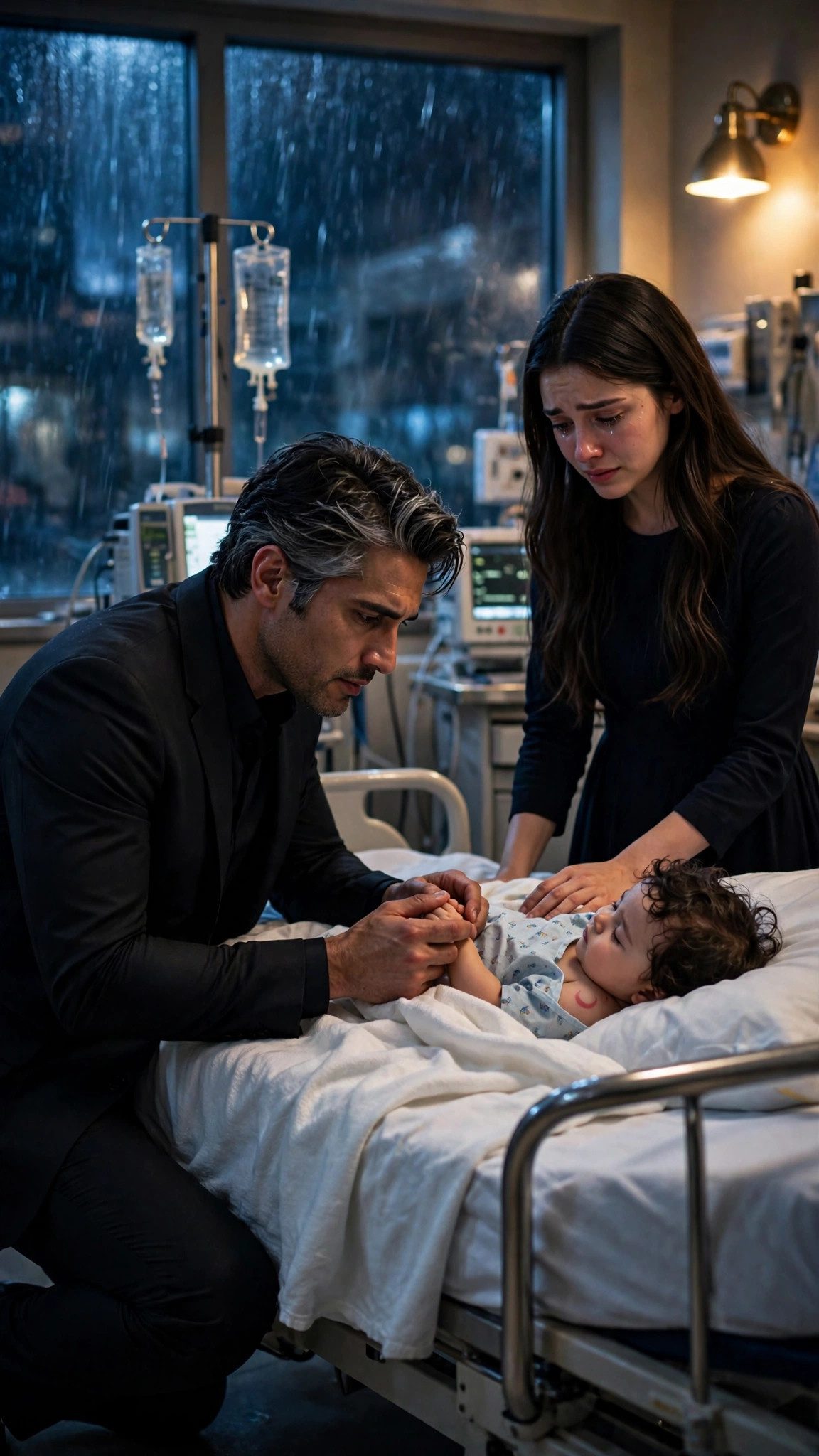
    And then, on one rainy evening in November, my son barely touched his supper, and his forehead was hot under my palm, and by nine o'clock his temperature was a hundred and four, and there was a red fever rising on his skin, and I did what any mother would do. I wrapped him in his blue blanket and I ran for the hospital, and I did not know that the most dangerous man in Boston was sitting in the same emergency room, three chairs down from the triage desk, waiting for news about his own mother.

    I did not know. I swear to God, I did not know.

    Noah was fourteen months old, with dark curly hair and ambitious eyes, the kind of eyes that looked at the world like it owed him an explanation. Most days were calm. Most days he woke up laughing and fell asleep with his fist curled around my finger, and most days I could almost believe we were safe. That night was not most days. That night his small body burned in my arms, and his breathing came fast and shallow, and when I pressed my lips to his forehead to check him again, he opened his eyes and looked at me, and he said, in his clear little voice, "Mama."

    "Mama's here," I told him. "Mama's right here. We're going to make it better."

    The waiting room at Mass General was full of the rain and the sick and the frightened, and the fluorescent lights buzzed overhead, and a television in the corner played the news with the sound turned down. I had Noah on my lap, and I was rocking him, and I was trying not to cry, because mothers are not supposed to cry in waiting rooms, because if you cry in a waiting room then everyone knows you are afraid, and I was afraid.

    That was when I felt someone watching us.

    I looked up, and the whole room seemed to go quiet, the way a room goes quiet when a storm is about to break. A man was standing by the vending machines, tall and broad-shouldered, in a black suit that cost more than six months of my rent, with dark hair going silver at the temples and eyes the color of a winter sea. He was looking at my son.

    He was looking at Noah the way a man looks at something he has lost and never expected to see again.

    "Mariah," he said.

    I had not heard my name in his voice for fourteen months, and it hit me like a door slamming shut. My arms tightened around Noah. My heart hammered so hard I was sure the triage nurse could hear it.

    "Dante," I said.

    He came closer, slowly, the way you approach a wild animal, with his hands where I could see them. He stopped a foot away from us, and he looked down at Noah, and Noah, my brave, foolish, beautiful boy, reached up with his small hand and caught Dante Russo's little finger and held on.

    Dante froze. His whole body went still. And then his hand began to shake. I watched it happen. I watched the most feared man in Boston stand in a hospital waiting room with his hand shaking like a leaf, because my fourteen-month-old son was holding his finger and laughing.

    "Buongiorno, piccolo," Dante whispered in Italian, his voice rough. "Hello, little one."

    Noah laughed again, and kicked his feet, and reached for Dante's face with his other hand. And Dante, very gently, as if the boy were made of glass, turned Noah's tiny shoulder just enough to look at the birthmark there. A faint red crescent moon, shaped like a small curved smile, on the soft skin above his shoulder blade.

    Dante looked up and stared at me as if he had just seen a ghost.

    That is when I realized that Noah was not just my son. He was a Russo. And Dante Russo had the same mark on his own shoulder. I knew it because I had seen it once, fourteen months and nine days ago, in the dark of a hotel room I had never meant to enter, on the shoulder of a man I had never meant to touch.

    "Dante," I said, and my voice came out thin and shaking. "Please. Not here. He's sick. He has a fever. Please."

    "How old is he?" Dante asked. His voice was very calm. Too calm. The kind of calm that comes before an earthquake.

    "Fourteen months," I said.

    "Fourteen months," he repeated. He did the arithmetic in his head, the way I had done it a hundred times in the dark of my little apartment. His eyes never left Noah's face. "And the mark. He has the mark."

    "It doesn't mean anything," I said, and even I could hear how much of a lie it was.

    "It means everything," Dante said. He looked at me then, really looked at me, and I saw fourteen months of questions in his eyes. "Mariah. Why did you run?"

    Because I had been told to. Because a man in a black car had come to my classroom door with an envelope full of money and a message that was not a message but a warning. Because I had believed, for fourteen months, that the father of my child did not want us. Because I had been twenty-five years old and pregnant and terrified, and the only thing I had known for certain was that I would rather raise my son in a nine-hundred-dollar apartment with a clanking radiator than let him grow up as a bargaining chip in a family that settled its arguments with guns.

    But I did not say any of that in the waiting room. I said, "He needs a doctor, Dante. Whatever you want to say to me, say it after they bring his fever down."

    A nurse came then, a tired woman with kind eyes, and took Noah's temperature, and frowned, and took us back through the double doors before I could argue. Dante followed. Nobody stopped him. Nobody in that hospital was going to stop Dante Russo from going where he wanted to go.

    In the little curtained bay, they put Noah on the bed, and they gave him medicine, and they put a cool cloth on his forehead, and I sat beside him and held his hand and sang the song my mother used to sing to me when I was small and sick, the one about the moon over the harbor. Dante stood at the foot of the bed, with his arms crossed, watching every move the nurses made, and I could feel his eyes on me, patient and relentless as the tide.

    "Your mother is gone," he said quietly, when the nurse had stepped away. "I heard. I'm sorry."

    "She's been gone a dozen months," I said. My mother had died the winter before Noah was born, and I had buried her in the same small cemetery where my father lay, and I had cried until there was nothing left to cry. "She never got to meet him."

    "She would have loved him," Dante said. It was a strange thing for him to say. It was a kind thing. I had not expected kindness from him.

    "How did you find me?" I asked.

    "I didn't," he said. "My mother fell this afternoon. Rosa Russo. She slipped on the wet steps at the house in the North End and broke her wrist. I brought her here. I've been sitting in that waiting room for three hours, Mariah, and then you walked in with my son."

    "Your son," I whispered. The words felt too big for my mouth.

    "My son," he said, and his voice broke on the second word, just a little, just enough that I heard it. "Fourteen months. You kept him from me for fourteen months, and I want to know why. But not here. Not while he's burning up. First we make him well. Then you tell me everything. Do you understand me?"

    I nodded, because there was nothing else to do. Noah's fever was coming down, slowly, and his eyes were fluttering closed, and his small hand was still curled around my finger, and Dante Russo was standing at the foot of his bed like a man who had just found something he thought he had lost forever.

    Fourteen months earlier, I had been a schoolteacher. I taught second grade at a public elementary school in South Boston, and my life was small and ordinary and entirely mine. I graded spelling tests at my kitchen table. I bought my clothes on sale and mended them myself when they tore. I called my best friend on Sundays. I had a sketchbook, a chipped blue mug, and a mother who had been gone for eleven years when I met Dante, and who still spoke to me in my head whenever I was about to do something stupid.

    My mother had run a small bookstore in the North End, Cole's Books, a narrow little shop with a bell over the door and shelves that went all the way to the ceiling. I grew up in that shop, doing my homework behind the counter while my mother recommended novels to old ladies and argued about poetry with the fishermen. When she died, the shop died with her. I sold what was left to pay her debts, and I kept one thing: a first edition of a book of poems she loved, with her handwriting in the margin. "For Mariah," she had written. "The moon is always there, even when you can't see it."

    That was the last thing she ever gave me. I carried it with me everywhere.

    I met Dante Russo on a Thursday night in October, at a charity gala for the Boston Public Library, in a ballroom full of chandeliers and people in black tie. I was there because my school had been invited, and my principal had asked me to come, and I had borrowed a dress from my best friend and done my hair myself, and I felt like a sparrow that had flown into a room full of peacocks. Dante was there because he had written the largest check of the evening, and everyone in the room knew his name, and everyone in the room was a little bit afraid of him.

    He found me hiding by the dessert table, eating a lemon tart and pretending to read the program.

    "You look like you'd rather be anywhere else," he said.

    "So do you," I said, before I could stop myself.

    He laughed. It was a real laugh, surprised and warm, and it changed his whole face. "I'm Dante Russo," he said.

    "I know who you are," I said. "Everyone knows who you are."

    "And you are?"

    "Mariah Cole. I teach second grade. I am very good at making seven-year-olds sit still, which is a skill no amount of money can buy."

    He smiled at that, a slow smile, and he asked me to dance, and I said yes, because my mother had always told me to say yes to a dance, and because the band was playing something slow and sad, and because for one evening I wanted to be a woman in a borrowed dress dancing with a beautiful, dangerous man instead of a tired teacher with spelling tests waiting at home.

    We danced. We talked. He told me about his mother, Rosa, who made sauce on Sundays and still told him to eat his vegetables. I told him about my students, and about my mother's bookstore, and about the moon poem. He walked me to my car at the end of the night, and he kissed my hand, very properly, like a man from another century, and he asked if he could see me again.

    I said yes. I should have said no. I know that now. But I said yes, and we had dinner the next week, and the week after that, and one night, three weeks after the gala, I went back to his hotel room with him, because he looked at me the way no one had ever looked at me, like I was the only real thing in a room full of glass.

    It was one night. One night, and then he went to New York on business, and then a man in a black car came to my classroom door with an envelope, and everything changed.

    The man said his name was Marcus Hale, and he said he worked for Dante Russo, and he said Mr. Russo wanted me to understand that what had happened between us was a mistake, and that he was a busy man with a family and a business, and that it would be best for everyone if I disappeared quietly. The envelope held fifty thousand dollars. "For your trouble," Marcus Hale said, with a smile that did not reach his eyes. "He'll come find you if you don't go. And you don't want him to come find you."

    I did not take the money. I threw the envelope back at him, and I told him to tell his boss that I did not want his money and I did not want him. And then I went home, and I cried, and two weeks later I found out I was pregnant, and I understood that I had a choice to make.

    I chose my son. I chose to keep him, and to hide him, and to raise him where no one could use him. I quit my teaching job. I stopped returning calls. I rented the apartment in Dorchester. I told no one. The only person who knew was Mrs. Darrow, an old widow from Beacon Hill whose grandchildren I had once tutored, who found me crying in a grocery store one afternoon and took me home and made me tea and said, "Child, you need a roof and a friend, and I have both."

    Mrs. Darrow became Noah's grandmother in every way that mattered. She watched him while I worked nights cleaning offices downtown. She taught me how to make his bottles and how to sing him to sleep. She was the one who told me, on the night Noah was born, holding his tiny hand in hers, "He'll come find you one day, Mariah. A father always does. And when he does, you tell him the truth, all of it, and you let him choose what kind of man he wants to be."

    I thought she was wrong. I thought Dante Russo would never come find us, because Dante Russo had sent a man with an envelope to make us disappear.

    But Mrs. Darrow was right. He did come find us. Not because he was looking. Because my son got sick on a rainy night, and I carried him into the same emergency room where Dante Russo was waiting for news about his mother, and the whole careful world I had built for fourteen months came apart in the time it took a small boy to reach for a stranger's finger.

    In the curtained bay, Noah's breathing slowed and steadied, and his fever broke, and he slept. The nurse came and went. Dante did not move from the foot of the bed.

    "When he wakes up," Dante said quietly, "I'm going to take you both home. To my house. To the North End. You will stay there, where I can keep you safe, until we sort this out. Is that clear?"

    "I have an apartment," I said.

    "You have a nine-hundred-dollar apartment with a broken radiator and a window that looks at a brick wall," Dante said. "I know. I've known for three hours. My people are very thorough, Mariah. Don't argue with me about this. Not tonight. Tonight, my son is sick, and I am going to sit in this chair, and I am going to watch him breathe, and tomorrow we are going to talk."

    I wanted to argue. I wanted to tell him he had no right to give me orders. But Noah was sleeping, and his fever was down, and for the first time in fourteen months I was not alone in a hospital waiting room at midnight, and I was so tired, so impossibly tired, that I just nodded.

    "All right," I said. "Tomorrow."

    Dante pulled a chair up beside the bed, on the other side from me, and he sat down, and he took Noah's other small hand in his, very gently, and he looked at our son, and he whispered something in Italian that I did not understand.

    "What did you say?" I asked.

    "I said, 'I have been waiting for you for fourteen months, and I did not even know it,'" Dante said. He did not look up. "Go to sleep, Mariah. I'll watch him."

    And because I was exhausted, and because my son was safe, and because the most feared man in Boston was sitting beside his bed holding his hand like it was the most precious thing in the world, I closed my eyes.

    It was the first night in fourteen months that I slept without dreaming of running.

  • Chapter 7: The First Birthday

    Chapter 7: The First Birthday

    Ren turned one year old on a Saturday in May, in Rosa's backyard, under a sky so blue it looked like someone had painted it that morning just for her.

    There were balloons, pale green and cream, the color of the nursery Colton had painted before she was born. There was a cake with one candle, and a high chair with a bow on it, and a table full of food that Rosa had cooked for two days: fried chicken, and potato salad, and peach cobbler, and sweet tea in a glass pitcher with ice. There were twenty people in the backyard, and every one of them was someone who had helped us survive the year.

    Hannah was there, in a yellow dress I had never seen her wear, laughing at something Rosa said, holding a glass of lemonade. Dr. Alvarez was there, with her husband, eating peach cobbler and talking about gardens. Two of Colton's former men were there, the ones who had gone straight, now working at the shipping company, now with wives and children of their own, now men who came home at six o'clock every night. Reyes sent a card. It said: Happy birthday, Ren. Your parents did a good job. Keep them in line.

    Ren sat in her high chair, wearing a white dress with tiny green flowers on it, her dark hair in a little curl on top of her head, her hands covered in cake frosting, laughing at everyone and everything, the way one-year-old children laugh, as if the whole world is a joke told just for them.

    Colton stood behind her, his hands on the back of her chair, watching her with an expression I had come to know well over the past year. It was the expression of a man who had learned, finally, how to be still. How to be present. How to be a father.

    "She looks like you," he said to me, quietly, so only I could hear. "Around the eyes."

    "She looks like you," I said. "When she laughs."

    "She looks like both of us," Rosa said, coming up behind us with a plate of cake. "That's how it's supposed to work."

    After the cake, after the presents, after the guests had gone home and the balloons were drooping in the evening light, Colton and I sat on Rosa's porch with Ren asleep in my arms, and we watched the fireflies come out, one by one, over the garden.

    "Do you remember the seventeenth day?" Colton asked.

    "I remember all of it," I said. "Every minute."

    "I've been thinking about it," he said. "About the morning I left. About the suitcase. About the scarf. I think about it every day, Lauren. Not because I want to punish myself. Because I never want to forget what it cost. I almost lost you. I almost lost her. I almost lost everything, because I was afraid, and because I ran. I never want to be that man again."

    "You're not that man anymore," I said.

    "I'm trying not to be," he said. "Every day, I'm trying."

    He reached into his pocket and took out a small box. Inside it, on a bed of white velvet, was a thin gold chain with a tiny pendant on it. A star. Small, and bright, and simple.

    "I bought this for you," he said. "Not in Greece. Here. In Atlanta. In a shop on Peachtree Street, where the woman behind the counter asked me what my wife liked, and I said, 'She likes the stars. She told me once, on the first night we drove home together, that she could see the stars over the city, and that it was the first time in months she'd seen them.' I remembered that, Lauren. I remembered everything you ever told me. I just forgot how to listen."

    He fastened the chain around my neck. His hands were steady. The star sat just below my collarbone, catching the porch light.

    "It's beautiful," I said.

    "It's not a scarf," he said. "It's not a gift bought in a hurry, in another country, for a woman I didn't know how to talk to. It's a gift bought here, at home, for the woman I married. For the woman who drove away from me in the middle of the night with our baby in the back seat, and came back, on her own terms, and taught me how to be a husband, and a father, and a man."

    I touched the star. I looked down at Ren, asleep in my arms, her fist curled against my collarbone, her breathing soft and even.

    "Seventeen days," I said. "She was seventeen days old when everything fell apart. And now she's one year old, and everything is different. Do you know what I think about, when I think about that morning? I think about the envelope. The one I left on your desk. With her name on it."

    "Jade Foresight," he said.

    "I wrote four lines inside it," I said. "She can have the house. She can have the name. She can have the scarf. Ren is mine. I meant every word of it, that morning. But I was wrong about one thing. I wrote 'Ren is mine.' And she is. She's mine. But she's yours too. She was always yours too. I just needed you to prove it. And you did. You proved it every day for a year. In the hospital. In the courtroom. In the nursery, at two in the morning, when you got up without being asked. You proved it."

    He put his arm around me. Ren stirred, just a little, and settled again.

    "Lauren," he said. "I have something else to tell you. The shipping company, the one we kept, the clean one. Hannah runs it now, and it made a profit this year. A real profit. Clean money. And I took some of that money, and I did something with it. I bought a house. Not a big house. Not a mansion. A house with a garden, and a porch, and a nursery painted pale green. I bought it for us. For you, and for Ren, and for me. If you want it."

    I looked at him. I looked at the star around my neck. I looked at the fireflies over Rosa's garden.

    "Show me," I said.

    We moved into the house three weeks later. It was on a quiet street, not far from Rosa's, with a garden in the back and a porch in the front and a nursery painted pale green, the color of new things. Colton painted it himself, the way he had painted Ren's first nursery, before she was born. He painted it slowly, carefully, and when he finished, he stood back and looked at it, and he said, "Green is the color of new things."

    Ren learned to walk in that house. She took her first steps in the living room, on a Tuesday afternoon, while Colton and I were sitting on the floor with her, and she stood up, wobbling, and took three steps toward her father, and fell into his arms, laughing. He picked her up and held her over his head, and she laughed harder, and I laughed, and for a moment, the whole house was full of nothing but laughter.

    Her first word was "Mama." Her second word was "Dada." Her third word was "star." She pointed at the sky, at night, from her bedroom window, and she said, "Star," and Colton pointed too, and he said, "That's right, baby. That's a star."

    We kept the envelope. Not on his desk. In a drawer, in our bedroom, in the new house. The one with Jade Foresight's name on it, and the four lines inside it. We kept it because we did not want to forget. We kept it because it was the beginning of the end of the old life, and the beginning of the new one. We kept it because it reminded us that we had survived the worst thing, and that we had chosen each other, not once, but every day, for a year, and that we would keep choosing each other, every day, for the rest of our lives.

    On Ren's first birthday, after the party, after the fireflies, after the star around my neck, I stood in the doorway of the nursery and watched my husband rock our daughter to sleep. He sang the lullaby I had taught him, one line at a time, in the dark, in a voice that was low and steady and sure. Ren's eyes closed. Her breathing slowed. Her tiny fist uncurled against his chest.

    Colton looked up at me. He smiled. And he whispered, so softly that only I could hear it, "You're the strongest woman I know."

    And I whispered back, "And you're the bravest man I know. Because you came home."

    Seventeen days after giving birth to our daughter, I discovered my husband had booked a one-way flight to Lisbon with his mistress.

    One year later, I watched him hold our daughter in his arms, in a house with a garden, and a porch, and a nursery painted pale green, and I knew that the story was not about the day everything fell apart.

    It was about the day we put it back together. And the days after that. And all the days still to come.

    Before the guests arrived, while Rosa was setting out the food and Colton was blowing up balloons in the backyard, I went into the spare room, and I opened the drawer where we kept the envelope, and I took it out, and I held it in my hands.

    Jade Foresight. The name was still there, in my handwriting, steady and clear. Inside, the four lines I had written on the seventeenth day. She can have the house. She can have the name. She can have the scarf. Ren is mine.

    I read the lines aloud, very quietly, to the empty room. Then I folded the paper, and I put it back in the envelope, and I put the envelope back in the drawer, and I closed it.

    I did not need it anymore. But I was not ready to throw it away. Some things you keep, not because you need them, but because they remind you of who you were, and how far you have come.

    Colton found me there, standing at the drawer, and he put his arms around me from behind, and he rested his chin on my shoulder, and he said, "What are you thinking about?"

    "About the seventeenth day," I said. "About the morning I left. About the night I came back. About everything in between."

    "And?" he said.

    "And I'm glad I left," I said. "I'm glad I had the strength to leave. Because if I hadn't left, you would never have understood what you were losing. And I'm glad I came back. Because if I hadn't come back, we would never have had this. The house. The garden. The party. Ren's first birthday. All of it."

    He turned me around, and he looked at me, and he said, "I love you, Lauren. I know I don't say it enough. I know I said it with my actions for a long time, and my actions were terrible. But I'm saying it now, with words, and I'm going to keep saying it, every day, for the rest of my life. I love you. I love Ren. I love this life. And I will spend every day I have proving it."

    "I love you too," I said. "And I believe you. Not because you said it. Because you proved it. Every day for a year. In the hospital. In the courtroom. In the nursery. You proved it."

    The doorbell rang. The first guests had arrived. Hannah, in her yellow dress, carrying a present wrapped in green paper. Dr. Alvarez, with her husband, carrying a plate of cookies. Colton's former men, with their wives, and their children, who ran straight for the balloons.

    And Rosa, standing in the kitchen doorway, wiping her hands on her apron, looking at all of us, and smiling the smile of a woman who had waited a long time to see her family whole.

    After the party, after the cake, after the presents, Colton stood up in the backyard, with Ren in his arms, and he looked at everyone, and he said, "I want to say something. A year ago, I almost lost everything. I almost lost my wife. I almost lost my daughter. I almost lost my life. And the reason I'm standing here today, holding my daughter on her first birthday, is because of the woman sitting over there." He pointed at me. "Lauren Beckett. The strongest woman I know. She drove away from me when I deserved it. She came back when I didn't deserve it. She stood in a hallway with a skillet and faced down a man with a gun. She taught me how to be a father. She taught me how to be a man. And I want everyone here to know: I am the luckiest man in this room, because I get to spend the rest of my life trying to deserve her."

    Everyone clapped. Ren clapped too, her hands covered in frosting, laughing, and I stood up, and I walked over to them, and I put my arms around both of them, and I thought about the stars over the city, on the night I drove away, and about how I had seen a few stars, for the first time in months, and about how I had not known then that the stars were a promise. That the dark was not the end. That the morning would come.

    And it had. The morning had come. And the year had come. And the birthday had come. And all the days still to come were waiting, bright and open, like a road I had chosen, with my daughter in my arms, and my husband beside me, and my family whole.

    The morning after the party, I woke early, before the sun was fully up, and I went into the nursery, and I found Colton already there, sitting in the rocking chair with Ren asleep in his arms, watching her breathe. He looked up at me, and he smiled, and he whispered, "She slept through the night. The whole night. First time." I sat down on the floor beside him, and I leaned my head against his knee, and we sat there together in the quiet of the early morning, listening to our daughter breathe, and I thought about the road that had brought us here. It had not been an easy road. It had been a road of suitcases, and scarves, and photographs, and parking garages, and hospital rooms, and courtrooms. But it had led here, to a nursery painted pale green, to a little girl asleep in her father's arms, to a morning full of light. And I knew, with a certainty I had not felt in a very long time, that whatever came next, we would face it together.

    THE END

  • Chapter 6: What the Law Could Do

    Chapter 6: What the Law Could Do

    The trial did not happen all at once. It happened the way justice happens in real life: slowly, in pieces, in rooms with bad lighting and hard chairs, with lawyers in dark suits and a court reporter whose fingers never stopped moving.

    Vincent Castellano was arrested three weeks after the night in Rosa's hallway. Not at his home, not in a dramatic raid, but in a parking garage in Midtown, walking to his car after lunch, the way ordinary men walk to their cars after lunch. The FBI took him quietly, and the news did not report it for two days, and when it did, it was a small story on the second page, about a businessman from out of state charged with conspiracy and attempted murder.

    Marcus Cole pleaded guilty. He had been caught in the act, in my aunt's hallway, with a gun in his hand and three FBI agents watching him, and his lawyer told him there was nothing to fight. He was sentenced to twenty-five years. He did not look at me when the sentence was read. He looked at the floor. I was glad. I did not want him to look at me.

    Jade Foresight testified for four days. She told the court everything: the fifty thousand dollars, the recordings, the Lisbon plan, the bugged office, the photograph she sent me, the email she sent Hannah. She cried twice on the stand, both times when she talked about the parking garage, and about Colton pushing her behind a car and taking the second bullet for her. The defense lawyer tried to make her sound like a liar and a gold digger, and she answered every question in the same steady voice, and by the fourth day, even the defense lawyer seemed tired of trying.

    Castellano was convicted on all counts: conspiracy to commit murder, attempted murder, racketeering, witness intimidation. Life in prison, without the possibility of parole. When the verdict was read, he did not react. He sat very still, his hands folded on the table, and looked straight ahead, the way men look when they have spent their whole lives believing they were untouchable and have just learned, too late, that they were wrong.

    Colton testified on the fifth day. He walked into the courtroom in a dark suit, with his shoulder still bandaged under his jacket, and he took the oath, and he told the truth. He told the court about the Lisbon flight. He told the court about the bugged office. He told the court about Jade, and about Greece, and about the kiss, and about the scarf. He told the court that he had been a fool, and a coward, and that he had nearly destroyed his family because he was afraid of being a father. He told the court that he was giving up the empire, all of it, and that he was cooperating with the FBI because it was the only way to keep his wife and his daughter safe.

    When he stepped down from the stand, he looked at me, in the second row, holding Ren in my arms, and he mouthed two words.

    Thank you.

    After the trial, the dismantling began. It took months. The shipping companies were audited, cleaned, and sold to legitimate buyers, or kept, under new management, with FBI oversight and open books. The warehouses were emptied and inspected. The men who had worked for Colton were given a choice, the same choice Reyes had offered in the hospital: go straight, or go to prison. Most of them went straight. A few did not, and they were arrested, and I did not feel sorry for them, because they had chosen.

    Hannah stayed. She became the operations manager of the one shipping company Colton kept, the smallest one, the one that had always been clean. She ran it with the same sharp eyes and sharper tongue, and she never once called me to tell me Colton would be late, because Colton was never late anymore. He came home every night at six o'clock, and he hung up his jacket, and he washed his hands, and he picked up his daughter.

    Learning to be a father took longer than the trial. It took longer than the dismantling. It took every day, for months, in small pieces.

    Colton did not know how to hold a baby. He held Ren like she was made of glass, stiff-armed and terrified, and I had to show him, the way the nurses had shown me, how to support her head, how to cradle her against his chest, how to let her hear his heartbeat. He did not know how to change a diaper. He did not know how to warm a bottle. He did not know the words to the lullaby my mother had sung to me, so I taught him, one line at a time, in the dark, in the nursery, while Ren slept between us.

    He learned. Slowly, clumsily, the way all new parents learn. He learned to get up at two in the morning without being asked. He learned to check her temperature with the back of his hand. He learned to make the face she liked, the one where he crossed his eyes and stuck out his tongue, and she would laugh, a high, delighted sound that filled the whole house.

    We went to therapy. Once a week, in a quiet office with plants on the windowsill, a woman named Dr. Alvarez asked us questions we did not want to answer, and we answered them anyway, because we had promised each other that we would not build a second marriage on the same lies as the first.

    "Why did you run?" Dr. Alvarez asked Colton, in our third session.

    "Because I was afraid," he said. "I was afraid of being a father. I was afraid of failing. I was afraid that Ren would grow up and see what I really was, and she would be ashamed of me. So I ran toward something that made me feel powerful, because being powerful was easier than being afraid."

    "And why did you come back?" she asked me.

    "Because he was bleeding," I said. "And because he asked for me. And because I realized that I didn't leave him because I stopped loving him. I left him because I loved Ren more than I loved the idea of us. And when I understood that, I understood that I could come back, not for the idea of us, but for the real thing, if he was willing to build it."

    Dr. Alvarez nodded. She wrote something in her notebook. "That's a good answer," she said. "Both of you. That's a good place to start."

    We started. We started with small things. Dinner together, every night, at the table, with our phones in another room. Walks in the park with Ren in her stroller, on Sunday mornings, when the light was soft. Conversations that were not about the trial, or the empire, or the past, but about the future. About the house we wanted. About the school Ren would go to. About the garden Rosa had always wanted us to plant.

    Colton sold the office his father had left him. He sold the building, and the furniture, and the chair his father had died in, and he donated the money to a foundation for children who had lost parents to violence. He said he never wanted to sit in that chair again, and he never wanted his daughter to know that a room like that had ever existed.

    He burned the blue scarf. Not in anger. Quietly, in the backyard, on a cool evening in October, while Ren slept inside and Rosa watched from the kitchen window. He held the scarf in his hands for a long moment, and then he put it in the fire pit, and he watched it burn, and he said, "I bought this for your mother. I got the color wrong. But I bought it because I loved her, and I didn't know how to say it anymore. I'm learning how to say it now."

    I stood beside him, and I took his hand, and I said, "You're learning."

    Jade moved to Portland, under a new name, with the FBI's help. She sent me a letter once, six months after the trial. It was short. It said: I am safe. I am working in a bookstore. I am learning to be a person who tells the truth. Thank you for letting me tell it. I wrote back. I told her I was glad she was safe. I told her Ren was growing fast. I told her I had forgiven her, not because what she did was forgivable, but because I did not want to carry it anymore. She wrote back once more, and then we stopped writing, and that was all right, because some people come into your life to teach you something, and then they leave, and the lesson stays.

    Reyes closed the case. He shook Colton's hand, and he shook mine, and he said, "Take care of each other. And take care of that little girl. She's lucky to have you both."

    On the last day of the trial, after Castellano had been sentenced and the courtroom had emptied, Colton and I walked out into the sunlight together, with Ren in her car seat between us, and I realized something I had not realized in a long time.

    I was not afraid anymore. Not of him. Not of the past. Not of the future. I was a mother, and a wife, and a woman who had driven away from her own house in the middle of the night with a seventeen-day-old baby in the back seat, and had come back, on her own terms, with her daughter in her arms and her head held high.

    And that was enough. That was more than enough. That was everything.
    Colton's first day at the clean shipping company was not what he expected. He had spent his whole life giving orders, and now he was sitting in a small office, at a small desk, learning how to read a manifest, how to check a shipment, how to do the work the way honest men do it. Hannah sat across from him, patient and sharp, and she taught him the way she had taught a hundred new employees over the years.

    "You don't get to skip steps," she told him. "Not anymore. Every box gets checked. Every form gets signed. Every dollar gets counted. That's how legitimate businesses work, Mr. Beckett. That's how you stay free."

    He learned. He came home every night at six o'clock, tired in a way he had never been tired before, the tiredness of a man who had worked an honest day, and he would sit on the floor with Ren, and he would tell me about the manifests, and the forms, and the dollars, and I would listen, and I would think about how strange it was, that the most feared man in Atlanta had become a man who got excited about a shipment of canned goods arriving on time.

    In therapy, Dr. Alvarez asked me a question I had been avoiding for months.

    "Have you forgiven him?" she asked.

    I thought about it for a long time. I thought about the scarf. I thought about the photograph. I thought about the night I drove away, and the night I came back, and the night in the hallway with the skillet, and the morning in the hospital when he held Ren for the first time and really looked at her.

    "I've forgiven the man he was running from," I said, finally. "I've forgiven the frightened father. I haven't forgiven the betrayal yet. Not all the way. But I'm working on it. And he's working on it too. And maybe forgiveness isn't a door you walk through once. Maybe it's a road you walk together, every day, for a long time. And maybe that's enough."

    Dr. Alvarez wrote something in her notebook. "That's the truest answer anyone has ever given me in this office," she said.

    Ren grew. She grew the way babies grow, impossibly fast, changing every week. Her first tooth came in on a Tuesday, and she cried all night, and Colton walked her around the living room, back and forth, back and forth, singing the lullaby I had taught him, until she fell asleep on his shoulder. Her first laugh came on a Sunday, when he crossed his eyes and stuck out his tongue, and she laughed so hard she hiccuped, and he laughed too, and I laughed, and the whole house was full of laughter, and I thought, this is what a family sounds like. This is what we almost lost. This is what we saved.

    He learned to make her baby food, mashing bananas and sweet potatoes, wearing an apron Rosa had given him, with flour on his shirt. He learned to sing, badly, and Ren didn't care. He learned to read her a story every night before bed, the same story, about a little bear who was afraid of the dark, and every night, Ren would point at the bear, and Colton would say, "The bear is brave. Just like you." And every night, I would stand in the doorway, and I would watch them, and I would think about the seventeenth day, and about how far we had come, and about how the road ahead, long as it was, was a road we were walking together.

    One evening, in the kitchen, while Ren slept and the dishes were still in the sink, Colton asked me a question he had never asked before. "Do you think she'll ever know?" he said. "When she's older. Do you think she'll know what happened? What I did?" I dried my hands on a towel, and I thought about it, and I said, "She'll know what we tell her. And when she's old enough, we'll tell her the truth. Not all of it at once. But the important part. That her father made a terrible mistake, and that he spent the rest of his life making it right. That her mother was brave enough to leave, and brave enough to come back. That our family was broken once, and we put it back together, piece by piece, because we loved each other enough to try." Colton was quiet for a moment. Then he said, "That's a good story. I hope she believes it." And I said, "She will. Because it's true."

  • Chapter 5: The Night They Came for Her

    Chapter 5: The Night They Came for Her

    That night, after visiting hours ended, I drove back to Rosa's house in Decatur. Ren was with me, asleep in her car seat, because I could not bear to leave her again, not after I had finally held her in my arms in that hospital room and watched her father look at her for the first time.

    Rosa had gone to bed. The house was quiet. I laid Ren in the laundry basket beside the spare bed, the way we had done the night before, and I sat on the edge of the bed in the dark, and I listened to her breathing, and I tried to believe that the worst was over.

    It was not over.

    At 2:17 in the morning, I heard a sound outside. A car door closing, very softly, on the street. Then footsteps on the gravel path beside the house. Then the sound of someone testing the back door, the handle turning, slowly, carefully.

    I did not scream. I had spent three years as an emergency room nurse, and I had learned that panic kills faster than anything else. I picked Ren up out of the basket, wrapped her in her blanket, and I carried her into the closet in Rosa's bedroom, and I laid her down on a pile of folded towels, and I whispered, "Stay quiet, baby. Stay quiet for Mama."

    Then I went back into the hallway, and I picked up the heaviest thing I could find, a cast-iron skillet from the kitchen, and I stood behind the bedroom door and waited.

    The back door opened. I heard footsteps in the kitchen. Slow. Deliberate. Whoever it was, he was not in a hurry. He knew the house was small. He knew there was nowhere to run.

    "Lauren Beckett," a man's voice said, low and calm. "I know you're here. I know the baby is here. I'm not going to hurt you. I just need you to come with me. Mr. Castellano wants to talk to you."

    I did not answer. I gripped the skillet tighter.

    "Mrs. Beckett," he said, and his voice was closer now, in the hallway. "Your husband is going to testify against my employer. That can't happen. If you come with me, no one gets hurt. Your daughter stays safe. Your aunt stays safe. All I need is for you to disappear for a few days. Just until the trial is over. Just until Castellano's lawyers can make this go away."

    He was in the doorway now. I could see his silhouette in the dark. A big man, broad-shouldered, wearing a dark jacket. His hand was inside his jacket, where a gun would be.

    "Don't," I said. My voice sounded steady, and I was glad, because my hands were shaking so hard I thought I would drop the skillet. "Don't come any closer. My baby is in this house. I will not let you take her. I will not let you take me. You need to leave."

    "I'm sorry, Mrs. Beckett," he said. "I really am. But I have a job to do."

    He stepped into the room. I swung the skillet with everything I had. It caught him on the side of the head, and he staggered, and his hand came out of his jacket, and there was a gun in it, and for one terrible second, I thought he was going to shoot me.

    Then the front door burst open, and the whole house filled with light and shouting.

    "FBI! Drop the weapon! Drop it now!"

    There were three of them, in dark vests with yellow letters, moving fast and low, and the man in the doorway froze, and then he dropped the gun, and they were on him, forcing him to the floor, cuffing his hands behind his back, reading him his rights while he stared up at the ceiling with an expression I had never seen on a man's face before.

    It was not anger. It was not fear. It was surprise. As if he had truly believed that he could walk into a small brick house in Decatur in the middle of the night and take a woman and her seventeen-day-old baby, and no one would be there to stop him.

    Daniel Reyes was the last one through the door. He looked at me, standing in the hallway in my nightgown with a cast-iron skillet in my hands, and he looked at the man on the floor, and he said, "Mrs. Beckett. Are you all right? Is the baby all right?"

    "She's in the closet," I said. "She's asleep. She didn't even wake up."

    Reyes nodded. He turned to the man on the floor. "Marcus Cole," he said. "You're under arrest for attempted murder, conspiracy, and intimidation of a witness. You have the right to remain silent."

    Marcus Cole. The name meant nothing to me. But it meant something to Reyes, and it would mean something to a jury, because Marcus Cole was the second man in the parking garage, the one who had gotten away, the one who had shot my husband and then come to my aunt's house to finish the job.

    "How did you know?" I asked Reyes, after they had taken Cole away, after the house was quiet again, after Rosa had come out of her bedroom in her nightgown, holding Ren, rocking her gently, the way she had rocked me when I was sixteen and angry at the whole world.

    "I told you I'd have someone watching the house," Reyes said. "Quietly. My agents were parked down the street. They saw his car. They followed him in. They were three minutes behind him, and I am sorry it took three minutes, because three minutes is a long time when a man with a gun is walking toward your bedroom."

    "Three minutes," I said. "I counted every second."

    "You're braver than you think, Mrs. Beckett," Reyes said. "Most people freeze. You picked up a skillet."

    "I wasn't brave," I said. "I was a mother. There's a difference."

    He smiled, just a little. "In my experience, there's no difference at all."

    After he left, after the house was quiet again, Rosa and I sat at the kitchen table, and Ren slept in her basket between us, and Rosa poured us both tea, and we did not speak for a long time.

    Finally, Rosa said, "Lauren. Do you know what today is?"

    "What?"

    "It's the eighteenth day," she said. "Ren is eighteen days old today."

    Eighteen days. Seventeen days after giving birth, I had discovered my husband had booked a one-way flight to Lisbon with his mistress. Eighteen days after giving birth, I had fought a man with a gun in my aunt's hallway with a cast-iron skillet, and I had won.

    "I sent the email," a voice said from the doorway.

    Jade Foresight was standing in Rosa's kitchen, in the same gray coat, looking smaller than ever. Reyes must have brought her. Or she had come on her own. I didn't know. I didn't care.

    "The email to Hannah," Jade said. "The one that said the Lisbon flight is a trap. I sent it. The morning of the flight. I didn't know if she'd read it. I didn't know if she'd believe it. But I had to try. I had already sent you the photograph. I had already done so much damage. I thought, if I could warn one person, maybe I could live with myself."

    "Why?" I asked. "Why did you send it?"

    "Because I watched your husband hold his daughter's photograph in his wallet," Jade said. "He carried it everywhere. A picture of Ren, taken in the hospital, seventeen days ago. He showed it to me once, in Greece. He said, 'This is my daughter. She's seventeen days old. I've never been so afraid of anything in my life.' And I realized that the man I was supposed to destroy was not a monster. He was a frightened father who had made a terrible mistake. And I realized that Castellano was going to kill him, and then he was going to kill me, and then he was going to come for you and Ren, because that is what men like Castellano do. They don't stop. They take everything, until there's nothing left."

    She sat down at the table. Rosa poured her a cup of tea without being asked.

    "I'm going to testify," Jade said. "Against Castellano. Against all of them. Reyes says I'll be safe, if I testify. I don't know if I believe him. But I know I can't live with myself if I don't try. And Lauren, I know you have no reason to trust me. I know I destroyed your marriage. But I'm asking you to trust me about one thing. Your husband loves you. He loves Ren. He made a terrible mistake, but he is not the man Castellano wanted you to believe he was. And if you give him a chance to prove that, I think he will spend the rest of his life trying."

    I looked at her. I looked at Ren, asleep in her basket. I looked at Rosa, who was watching me with those steady teacher's eyes.

    "Thank you," I said to Jade. "For the email. For calling me. For telling me the truth."

    She nodded. She stood up to leave. At the door, she turned back.

    "Lauren," she said. "The scarf. The blue one. He bought it for you. Not for me. He bought it in Greece, and he told the shopkeeper it was for his wife, and he described you, and he got the color wrong, because he was thinking of the sea, and the sky, and he wanted something beautiful, and he didn't know how to choose. He bought it for you. He just didn't know how to give it to you anymore."

    After she left, I sat at the table for a long time, holding Ren, thinking about a blue silk scarf with a silver thread in the hem, bought by a frightened man in a shop in Greece, for a wife he did not know how to talk to anymore.

    And I thought about the envelope on his desk, with Jade Foresight's name on it, and the four lines I had written inside it.

    She can have the house. She can have the name. She can have the scarf. Ren is mine.

    I had been wrong about one thing. The scarf was never hers. It had always been mine. And the house, and the name, and all of it, had never been the point. The point was the man who had carried his daughter's photograph in his wallet, and the baby asleep in her basket, and the choice I had to make now, not about the past, but about the future.
    The next morning, the FBI came back to Rosa's house. Not with guns, this time, but with gloves, and cameras, and evidence bags. They dusted the back door for fingerprints. They photographed the broken lock. They took the gun Marcus Cole had dropped, and the skillet I had swung, and they bagged them both, carefully, the way you bag things that are going to be shown to a jury.

    Rosa watched them work, standing in her kitchen in her robe, her arms crossed, her face set in the expression she used to wear when a student had done something unforgivable and she was deciding what to do about it.

    "My house," she said, to no one in particular. "A man with a gun walked into my house. In my neighborhood. Where children ride their bicycles in the street. Where I have lived for thirty years. A man with a gun."

    "I know, Aunt Rosa," I said. "I'm sorry. I'm so sorry I brought this to your door."

    "You didn't bring it," she said, firmly. "Castellano brought it. And his man brought it. And they will pay for it. That's what the law is for, Lauren. That's what it's for."

    Hannah arrived at noon. She came to Rosa's house, not to the hospital, because she had heard what happened, and she wanted to see me, and she wanted to see Ren. She stood in the doorway, in her dark suit, holding a paper bag from a bakery, and she looked around the small brick house, and she said, "This is a nice house. It's a safe house. It's a good place."

    We sat at the kitchen table, the three of us, Rosa and Hannah and me, with Ren asleep in her basket between us, and Hannah told us what she had found. The bug in the office was gone. She had removed it herself, the morning after Colton was shot, before anyone else could find it. She had also found something else: a second device, in Colton's car, and a third, in the phone line at the shipping office. Castellano had been listening to everything, for months.

    "I should have told someone sooner," Hannah said. "I should have told Colton. I should have told the police. I was afraid. I thought if I said something, they would come for me. And then I realized that they were going to come for all of us anyway, and that being afraid didn't keep anyone safe. It just kept us quiet."

    "You told me," I said. "In your own way. Every evening, you called me. You told me he'd come around. You kept calling. You didn't stop. That mattered, Hannah. It mattered more than you know."

    She looked down at her hands. "I never liked you," she said, honestly. "When Colton married you, I thought you were too soft for this life. Too kind. I thought this world would break you. I was wrong. You're not soft. You're the strongest person I know. Stronger than Colton. Stronger than me. You drove away from that house with a seventeen-day-old baby, and you came back, and you stood in a hallway with a skillet, and you faced down a man with a gun. That's not soft, Lauren. That's steel."

    Rosa reached across the table and took Hannah's hand. "You're family now," she said. "Whether you like it or not. Family is the people who show up. And you showed up."

    After Hannah left, after the FBI left, after the house was quiet again, I sat with Ren, and I thought about what Hannah had said. Steel. I had never thought of myself as steel. I had thought of myself as a nurse, and a wife, and a mother, and a woman who was doing her best. But maybe that was what steel looked like. Not a weapon. Not a wall. Just a woman, doing her best, refusing to break, refusing to run, refusing to let anyone take her daughter from her.

    That night, I slept in Rosa's spare room, with Ren in her basket beside me, and I did not dream about men with guns. I dreamed about a garden, and a house with a porch, and a nursery painted pale green, and I woke up in the morning, and I knew, for the first time, that the dream was not impossible. It was a plan. And I was going to make it happen.