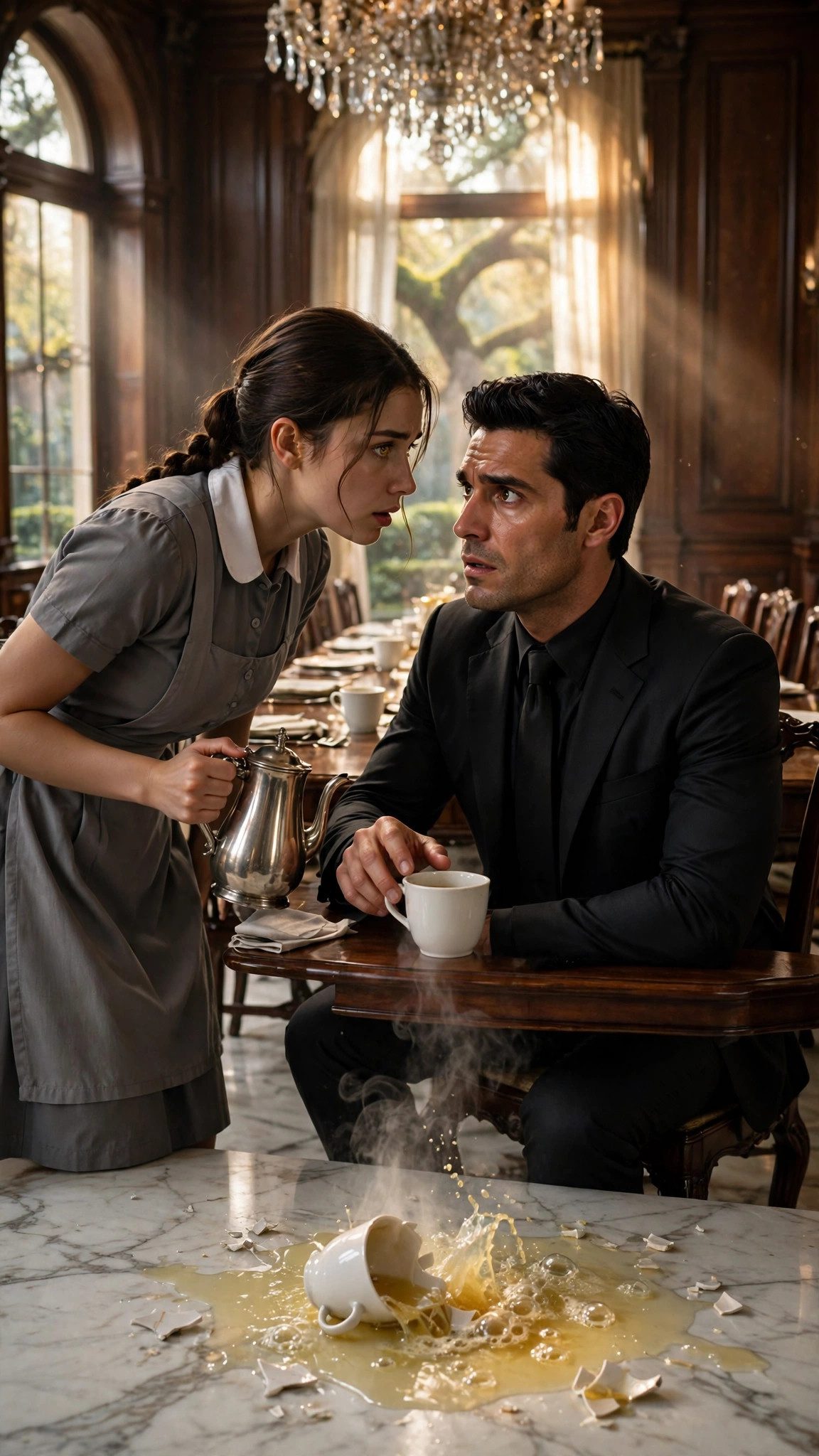
Story Genres: Mafia Romance

  • Chapter 7: The Passport

    Chapter 7: The Passport

    One year later, on the morning of July 25th, I woke up in the house my father had built, and I poured my own coffee, and I carried it to the dining room myself, and I sat down at the long table, and I waited for the woman I loved to come down the stairs.

    The house was different now. It was not a fortress anymore. It was a home.

    The guards still stood at the doors, because some things do not change in New Orleans, but they stood there as men I knew by name, with families I knew by name, and they ate breakfast at the staff table with the maids and the cooks and the drivers, and once a week I ate with them, because a man who does not know the names of the people in his house does not deserve the house.

    The hidden room behind the wine cellar was sealed up, and a small brass plaque had been set into the wall beside it. It said: "For Elena and Salvatore Orsini, and for Maureen Delacroix, who kept watch." The box of my mother's letters was back on the shelf in the library, where it belonged, and Elena's gold bangle lay on the table beneath her portrait, catching the light, and every morning I uncovered the portrait and said good morning to my mother, the way I should have been doing for fourteen years.

    Castellano was convicted in the spring. The trial lasted three weeks, and Clara testified, and Henri testified, and Agent Reyes laid out the ledger and my father's letter and my mother's letter, page by page, name by name, and the jury took less than a day to find him guilty on every count. He will spend the rest of his life in a federal prison in Louisiana, an old man in a cell, with nothing to do but think about the river he killed for and never got to keep.

    Clara was sentenced to eight years, with credit for her cooperation, and she writes to me once a month from the prison kitchen where she works now, and her letters are short and careful, and they always end the same way: "I am sorry I tried to kill you, and I am not sorry I tried, and both of those things are true at the same time." I write back. I tell her about the house, and about the garden, and I tell her that her father is not forgotten, and that the war that killed him is over, and that she is free to stop fighting it now.

    Henri died in the winter, peacefully, in his sleep, in the minimum-security facility where he was serving his sentence, with the photograph of his wife Colette on the table beside his bed. I paid for his funeral, and I stood at his grave with Violet, and I told him, out loud, in the quiet of the cemetery, that he was forgiven, and that his wife's six years were worth the price he paid, and that no one in my house would ever speak his name with anger again.

    Marcel is in prison too, and he does not write, and I do not write to him, and that is the end of his story.

    But this is not a story about them. This is a story about a maid in a gray uniform, and a cup of coffee, and a letter folded seven times.

    Violet came down the stairs that morning in a blue dress that was not a uniform, with her dark hair loose around her shoulders instead of pulled back, and the small white scar on her left wrist catching the light, and she sat down across from me at the long table, and I poured her coffee, and she poured mine, and we drank it together, the way we had done every morning for a year.

    "You are thinking about something," she said.

    "I am thinking about the first morning," I said. "July 25th, a year ago. You stood beside me for less than a second, and I noticed your hand, and you told me my coffee tasted like it had been poisoned, and you saved my life, and you gave me my mother's letter, and you changed everything."

    "I am thinking about it too," she said. "I am thinking about the three years before that morning, when I carried your mother's letter in my apron pocket and watched your house and waited for the day you would finally notice me. And I am thinking about Maureen, and my mother, and your mother, and how all three of them were standing behind me that morning, even though they were gone, guiding me to the moment when I would save you."

    I reached across the table and took her hand. Her hand was steady, the way it had always been steady, and I held it, and I looked at her, and I said the thing I had been practicing for a month, in the library, in front of my mother's portrait, until I could say it without my voice shaking.

    "Violet Delacroix," I said, "will you marry me?"

    She stared at me. Then she laughed, a real laugh, the kind that fills a room, and tears ran down her face, and she said, "Yes. Yes, of course, yes. I have been waiting three years for you to notice me, and a year for you to ask me, and the answer has always been yes."

    I took a small box out of my pocket, and inside it was a ring, simple and gold, with a single stone, and I put it on her finger, and it fit, because I had measured it in secret with a piece of string while she slept, the way a man does when he is planning something properly.

    We were married in the garden, under the oak tree, on a warm evening in August, with white jasmine on every table and candles in every window of the house, and Benny gave a toast that made half the guests cry, and Agent Reyes came, in a suit that did not quite fit, and he danced with the cook, and the staff of the house sat at the head table as guests of honor, because they were family now, all of them, and that was the point.

    Violet wore white, and I wore black, and when the priest asked if I took this woman to be my wife, I said yes, and I thought about my father, and my mother, and Maureen, and Thomas, and all the people who had loved each other so hard that it had broken them and saved them in the same breath, and I thought about the letter folded seven times, and the passport that had never been used, and the bangle on the table beneath my mother's portrait, and I understood that I was standing in the middle of a story that had started fourteen years ago, on a river road, with a driver who chose his baby, and that it had ended here, in a garden, under an oak tree, with a maid who had saved my life becoming the woman who would share it.

    The wedding itself was the kind of evening people in New Orleans talk about for years afterward. The garden was strung with lights, and the oak tree was wrapped in white jasmine, and the tables were set with my mother's china, which had been in boxes in the attic for fourteen years, and which Violet had unpacked and washed herself, plate by plate, humming a song her aunt used to hum while she worked.

    Benny gave the toast. He stood up with his glass in his hand, and he looked out at the garden full of people, and he said, "I have known Carmine Orsini since he was nineteen years old and angry at the whole world, and I have watched him become the hardest man in this city, and I have watched him become, in the last year, something I never thought I would see. A happy man. And I want to tell you all that the reason for that is sitting right here, in a white dress, and her name is Violet, and she is the bravest person I have ever met, because she walked into a dining room full of men with guns carrying nothing but a tray and a tape recorder, and she told the truth, and she did not flinch. To Violet, who saved him. And to Carmine, who finally learned how to see."

    The guests stood and cheered, and Violet cried, and I cried, and Benny pretended he had something in his eye, and the band played, and we danced our first dance under the oak tree, to a slow song that nobody remembered the name of, and the whole garden seemed to hold its breath.

    For our honeymoon, we did not go to Paris or Rome or any of the places a man like me is supposed to go. We drove down to a small house on the Gulf Coast, a white house with blue shutters that my mother had loved, and we stayed there for a week, and we cooked our own meals, and we walked on the beach in the mornings, and we talked, really talked, for the first time, about everything.

    Violet told me about the little house in the Ninth Ward, and about Maureen's soup, and about the nights when she was small and afraid of the dark, and Maureen would sit on the edge of her bed and tell her stories about her mother, a woman who had laughed easily and loved fiercely and died too young of a winter fever. She told me about the day Maureen gave her the folded letter, and about the three years she carried it in her apron pocket, and about the mornings she stood in my dining room pouring coffee for a man who did not know her name, and how she had almost given up, more than once, and how something always stopped her.

    "I used to stand in the hallway outside your office," she said, on the third night, sitting on the porch with her feet in my lap and the Gulf wind in her hair, "and I used to listen to you talking on the telephone, and I used to think, he sounds so lonely. He sounds like a man in a house full of people who is completely alone. And I used to think, if he would only look up, if he would only see me, I could tell him he is not alone. And then the morning came when you did look up, and I told you about the coffee, and everything changed."

    "I was lonely," I said. "I had been lonely for fourteen years, and I did not know it, because I had mistaken being feared for being loved, and being obeyed for being known. You knew me, Violet. You knew my coffee and my mornings and my habits, and you knew me, before I knew you. That is a strange and wonderful thing, and I am grateful for it every day."

    When we came home, Violet took over the running of the house, not as a maid, but as its mistress, and she did it the way she did everything: quietly, carefully, and with attention to the people in it. She raised the staff's wages. She gave every member of staff a day off each month, paid, to do whatever they liked. She turned the old servants' quarters, the rooms that had been boarded up for twenty years, into a library, with books on every shelf and comfortable chairs and a kettle that was always on, and she told the staff that the library was theirs, and that they could read there whenever they liked, and that no one in this house would ever be invisible again.

    She also started a fund, in Maureen's name, for the children of the people who worked in the house, to pay for their schooling and their books, and the first child it helped was the daughter of one of the drivers, a bright girl named Rosa, who wanted to be a doctor, and who is going to be one, because Violet Delacroix does not forget a promise, and she does not forget a debt.

    And me? I still run the family. I still sit at the long table and take Benny's folder and listen to the territory reports. But I do it differently now. I listen more, and I order less, and I ask the people around the table what they think, and sometimes I even take their advice, which shocks Benny every single time. The docks are mine, and the Quarter is at peace, and Commissioner Del Rio has stopped making noise in the papers, because a city that is at peace does not need a man like Del Rio to make speeches about it.

    After the wedding, I framed my mother's letter, the October 14 letter, in glass, and I hung it on the library wall beside her portrait, and beside it I hung the passport, the dark blue passport in Maureen Delacroix's name, unburned and unstamped, as a reminder that the women of this family protect each other, even when the men are killing each other, and that mercy is not weakness, and that the truth, once found, cannot be un-found.

    And every morning, Violet and I pour our own coffee, and we drink it together at the long table in the dining room, and the house is quiet, and the marble floors shine, and the portraits on the walls look down at us with their flat, painted patience, and I think, sometimes, that they are smiling.

    Three years passed before I truly noticed the quiet maid who moved through my mansion like a shadow. It took a cup of poisoned coffee to make me see her. It took a letter folded seven times to make me understand her. And it took a year of mornings, drinking coffee together at the long table, to make me love her the way she deserved to be loved.

    She saved my life on July 25th. She saved my family, and my father's name, and my mother's memory. But the truest thing I can say about Violet Delacroix, the maid who saved my life, is this: she did not just save me from dying. She saved me from living the rest of my life without ever truly seeing the people around me. And that is a harder thing to save a man from, and a better thing, and I will spend the rest of my life being grateful for it.

    The End.
    THE END
  • Chapter 6: What My Mother Left Behind

    Chapter 6: What My Mother Left Behind

    Benny's men searched the house all night, top to bottom, every room, every closet, every wall, and they found him at four in the morning, in the place where he had been hiding for twenty-five years, in plain sight.

    His name was Henri Laurent, and he was the butler. He had served dinner in my house for twenty-five years. He had poured my father's wine and my wine. He had stood behind my chair at a thousand meals, silent and correct, with white gloves and a straight back, and he had been Castellano's man for almost all of it.

    They found him in the pantry, sitting on the floor with his back against the wall, the same way Clara had sat, except Henri was not smiling, and he was not holding a gun or a knife. He was holding a photograph, old and creased, of a woman with dark hair and a tired smile, and when Benny's men came in with their flashlights, he did not run, and he did not fight. He held out his hands for the handcuffs, and he said, "I am ready. I have been ready for a long time."

    I went down to the pantry myself, because I needed to hear it from him, and I sat down on the floor across from him, the way I had sat across from Clara, and I looked at the man who had served my family for twenty-five years and betrayed us for almost as long.

    "Why, Henri?" I said.

    He looked at the photograph in his hands, and his voice was quiet, and his hands were shaking, the way the hands of an old man shake when he is holding something precious.

    "My wife," he said. "Her name was Colette. She got sick, twenty-six years ago, a cancer in her blood, and the doctors said the treatment would cost more money than I would earn in ten lifetimes. I went to Castellano because he was the only man in this city who had that kind of money to lend, and he lent it to me, and Colette lived for six more years, and I paid him back by doing what he asked. A door left unlocked. A letter moved from one room to another. A name whispered in the right ear at the right time. Small things, Mr. Orsini. Small things that added up to a life."

    "Did you know about my father?" I said.

    Henri closed his eyes. "I knew the night it happened. Castellano's men came to the house that evening, and they told me to leave the side door unlocked, and to make sure the driver left on time, and I did it, because Colette was still alive then, and I was still paying for her life with my soul. I have carried that night for fourteen years, Mr. Orsini. I have served your dinners and poured your wine for fourteen years, and every night I have gone home to an empty house and asked God to forgive me, and every morning God has said nothing, and I have come back to work."

    "And the bangle?" I said. "My mother's bangle? The letters?"

    "I moved them," Henri said. "Castellano told me to take one letter at a time from the library, and to give them to Marcel, and Marcel would take them away, so that when you finally went looking for the truth, there would be nothing left to find. I took your mother's bangle from her dressing table the week she died, because Castellano wanted something of hers, something to prove he could reach into this house and take whatever he wanted. I kept it in the hidden room because I could not bring myself to give it to him. It was the one thing I did not give him. Everything else, I gave."

    I sat on the pantry floor with the butler who had betrayed my family for twenty-five years, and I thought about my mother's letter, and about what she had written: If you ever have to choose between revenge and mercy, remember that every choice in this story was made out of love, even the ones that hurt.

    "Henri," I said, "my father would have had you killed. My uncles would have had you killed. Twelve years ago, I would have had you killed. But my mother wrote me a letter, and in it she told me to be better than the men who killed my father. So I am not going to kill you. I am going to turn you over to Agent Reyes, and I am going to tell him that you cooperated, and that you told the truth, and that you did what you did for your wife, and I am going to ask him to remember that when he writes his report."

    Henri stared at me. Tears ran down his face, into the lines around his mouth, and he held the photograph of his wife against his chest like a child holding a blanket.

    "Why?" he whispered.

    "Because your wife lived for six more years," I said. "And because my mother protected the family of the man who betrayed my father, and I have inherited that protection, and it is mine to give now. And because killing you will not bring my father back, and it will not bring your wife back, and it will not make this house any safer. The only thing that will make this house safe is the truth, and you have just given it to me."

    They took Henri away, gently, the way you take away an old man who has already punished himself more than any court ever could, and I stood in the pantry alone, and I listened to the quiet of my house, and I understood that Castellano's last man was gone, and that my house was finally, after fourteen years, clean.

    The next afternoon, Violet and I drove to the cemetery where my parents were buried, in the old part of the city where the tombs stand above the ground like small white houses, and the oak trees make a green roof over the paths, and the air smells like rain even when it is not raining.

    I had not been to their graves in three years. I told myself it was because I was busy, and because a man like me does not have time for cemeteries, but the truth was that I had not gone because I was afraid of what I would feel when I stood in front of my father's name carved in stone and remembered the argument on the telephone.

    Violet brought white jasmine, because Maureen had told her that Elena loved jasmine, and she laid the flowers on my mother's grave with the care of a woman laying flowers on her own mother's grave, and she stood back, and she did not speak, and she let me have the silence.

    I took my father's letter out of my pocket, the one from the safe-deposit box, and I read it aloud, standing in front of his tomb, my voice shaking in the quiet of the cemetery.

    "My son, if you are reading this, then the night I feared has come, and I am gone. Do not blame Thomas. Do not blame your mother. Do not blame yourself for the argument on the telephone. I made you angry on purpose, my son. I needed you to stay home. I needed you to live. Be better than me, Carmine. Be better than all of us."

    When I finished, I folded the letter again, and I put it back in my pocket, and I stood there for a long time with my hand on the warm stone of my father's tomb, and I felt fourteen years of guilt lift off my shoulders like a coat I had been wearing in the summer, and I understood, finally, that my father had not died believing I had failed him. He had died believing I would live, and that was enough for him.

    "He would be proud of you," Violet said quietly, beside me. "Your mother would be proud of you too. You chose mercy over revenge, and you chose the truth over a comfortable lie, and you did it in one week, after fourteen years of carrying a story that wasn't true."

    "I had help," I said. "I had a maid in a gray uniform who was paying attention."

    "And now you have something else," she said, and she took my hand, right there in the cemetery, in front of my parents' tombs, and her hand was steady, the way it had been steady on the morning of July 25th, when she poured my coffee and saved my life. "Now you have a woman who sees you. All of you. Not the boss. Not the name. You."

    I held her hand, and we stood together in the quiet of the cemetery, with the jasmine on my mother's grave and the oak trees overhead, and I thought about the passport in my pocket, and the letter folded seven times, and the bangle on the table beneath my mother's portrait, and I thought about how a family is not made of blood or names or houses, but of the people who choose to stand guard over each other, even when it costs them everything.

    Agent Reyes called me that evening, while Violet and I were walking back to the car, and he told me that Clara had pleaded guilty, and that she was cooperating fully, and that her testimony, along with the ledger and my father's letter, was enough to put Castellano away for the rest of his life. He told me that Marcel had been found hiding in a motel outside Baton Rouge, and that he was in custody, and that Henri's testimony had filled in the last gaps. He told me that the case was closed, and that my father's murder, fourteen years old, was finally solved, and that I would never have to wonder again.

    I thanked him, and I hung up, and I looked at Violet, and I said, "It is over. All of it. Fourteen years, over."

    "No," she said, smiling. "It is not over. It is just beginning."

    The next morning, I did something I had never done before. I went down to the kitchen at seven o'clock, and I sat down at the staff table with the maids and the cooks and the drivers, and I ate breakfast with them, and I learned their names, all of them, one by one, and I wrote them down in a notebook, the way Violet had written down the habits of my house.

    Violet watched me from the doorway, and when I caught her eye, she smiled, the first real smile I had ever seen from her, and it changed her whole face, the way the sun changes a room when it comes through the window.

    After breakfast, I took her up to the library, and I uncovered my mother's portrait, and I took Elena's gold bangle out of the evidence bag Benny had given me, and I laid it on the table beneath the portrait, where it belonged, and I put the box of my mother's letters back on the shelf where they had been stolen from, one bundle at a time, until the shelf was full again.

    And then I took the passport out of my pocket, the dark blue passport in Maureen Delacroix's name, with the young woman's photograph inside, holding a baby in her arms, and I held it out to Violet.

    "This is yours," I said. "My mother arranged it for your aunt, in case she ever needed to run. It was her way of protecting your family. But Maureen never used it, because she chose to stay and watch over mine. Now I am giving it to you. It is a passport, Violet. It means you can go anywhere in the world. You can start a new life, anywhere, as anyone, and no one in this house will ever ask you for anything again. You have paid your family's debt, and mine, a hundred times over."

    Violet looked at the passport in my hand. She looked at my mother's portrait. She looked at me. And then she did something I did not expect. She took the passport, and she walked over to the fireplace, and she held it over the flames for a moment, and then she put it back in my hand, unburned.

    "I don't need to run," she said. "I never did. Maureen raised me to stand guard, not to run away. And I am not a maid anymore, Mr. Orsini. Not in my own mind. I am the woman who saved your life, and the woman who stood in Castellano's dining room and told the truth, and the woman who is going to keep standing here until you tell me to go. So I am asking you, as an equal, for the first time in three years: will you have dinner with me tonight? Not as a master and a maid. As a man and a woman. In your dining room, at your long table, with candles, and no guards, and no folders, and no talk of territory. Just dinner."

    I stared at her. I thought about the morning of July 25th, and the cup of coffee, and the girl with the steady hand, and the three years I had walked past her without seeing her, and the letter folded seven times, and my mother's handwriting, and my father's letter, and all the ways my life had changed in the space of a week because a maid in a gray uniform had decided to pay attention.

    "Yes," I said. "Yes, I will have dinner with you tonight."

    That night, we ate in the dining room, at the long table, with candles, and no guards, and no folders, and no talk of territory. She wore a blue dress that was not a uniform, and I wore a suit that was not armor, and we talked about her aunt, and my mother, and the little house in the Ninth Ward, and the soup Maureen used to make, and for the first time in fourteen years, I sat in the house my father had built and felt like I was home.

    It was the best dinner of my life. It was not the last.

  • Chapter 5: Dinner with the Devil

    Chapter 5: Dinner with the Devil

    Castellano's house was on the other side of the Garden District, a white-columned mansion that looked like a wedding cake and smelled like money that had been laundered so many times it had forgotten where it came from. I arrived at seven o'clock sharp, alone, in my black suit, with my father's ledger in a leather folder under my arm and my mother's letter in my inside jacket pocket, over my heart.

    Benny had wanted to come with me. I told him no. The invitation said come alone, and I wanted Castellano to believe I was alone, because a man who believes you are alone is a man who tells the truth.

    I was not alone. Benny had six men in cars on the street outside, and a seventh man, a quiet young federal agent named Daniel Reyes, parked two blocks away with a warrant in his glove compartment and a radio in his hand, waiting for my signal. And Violet was in the back seat of Benny's car, in a gray uniform that was not hers, with a tray in her lap and a plan in her head that she had made herself and refused to explain to me in full, because, as she put it, "You have your way of walking into a room, Mr. Orsini, and I have mine."

    A butler led me through a marble hallway into a dining room that was smaller than mine and twice as grand, all gold and candlelight, and Vincent Castellano rose from his chair at the head of the table and spread his arms wide, the way a grandfather greets a grandson he has not seen in years.

    "Carmine!" he said. "My boy. Come in, come in. Sit. Eat. We have so much to discuss, and so little time left in this life for old men like me to make peace."

    He was seventy-four years old, with white hair and a white mustache and hands that trembled slightly when he reached for his wine glass, and he looked like everybody's grandfather, and I reminded myself that this was the man who had ordered my father's murder, and my murder, and who had paid a maid to put acid in my coffee.

    "Thank you for the invitation," I said, and I sat down, and I put the leather folder on the table beside my plate, where he could see it.

    "Peace," Castellano said, raising his glass. "To peace between our families. To the end of old quarrels. To the future."

    "To the future," I said, and I did not drink.

    The first course came, a clear soup, and we talked about the weather, and the Saints, and Commissioner Del Rio's antidrug campaign, and Castellano asked after my health with the tender concern of a man who had tried to kill me that morning and wanted to know if it had worked.

    "You look tired, my boy," he said. "Are you sleeping well?"

    "Well enough," I said.

    The second course came, fish in a butter sauce, and Castellano leaned forward, and his voice dropped, and the grandfather disappeared, and the man underneath showed through, the way the sun shows through a thin curtain.

    "I will be honest with you, Carmine," he said. "Your father and I were friends once. Did you know that? Before the docks, before the trouble. We were young men together, and we shared a bottle of wine on a riverboat, and we promised each other that we would never let business come between us. And then business came between us, and I did things I am not proud of, and your father did things he was not proud of, and here we are, two old stories sitting at one table, and I am tired, Carmine. I am tired of the war. Let us end it tonight."

    "How?" I said.

    "With a handshake," he said. "With an agreement. The docks are yours. The Quarter is mine. We divide the city, and we stop killing each other's men, and we grow old in peace."

    I looked at him for a long moment. Then I opened the leather folder, and I took out my father's ledger, and I laid it on the table between us, next to the fish in the butter sauce, and I watched his face.

    His face did not change. That was the most frightening thing about him. His face did not change at all.

    "Do you know what this is?" I said.

    "A book," Castellano said. "I have many books."

    "It is my father's ledger," I said. "In his own hand. Every payment you made to the men who betrayed us. Every name. Every date. Marcel Dubois. Aldo Boudreaux. The men on the river road. Fourteen years of it, written down in black ink."

    Castellano put down his fork. He dabbed at his mouth with his napkin. He looked at the ledger the way a man looks at a snake that has appeared on his dinner table.

    "Your father was a careful man," he said quietly. "I always admired that about him."

    "And this," I said, and I took out my father's letter, and I laid it on top of the ledger. "This is a letter my father wrote the night he died. In his own hand. It says: 'If you are reading this, I am gone, and Vincent Castellano did it.'"

    For a moment, nobody moved. The candles burned. The soup went cold. The waiter stood frozen in the doorway with the third course in his hands.

    Then Castellano smiled. It was a small smile, and a tired one, and it was the smile of a man who has been caught and has decided to stop pretending.

    "You found the box," he said. "I wondered if you ever would. Your mother was a clever woman, Carmine. Too clever. I spent fourteen years looking for that letter, and for the ledger, and for the key. I sent men into your house. I sent them to move your mother's letters, one at a time, out of your library, out of your walls, so that when you finally went looking, there would be nothing left. I sent Marcel to live behind your wine cellar. I sent Clara to learn your mornings. I sent them all, and they all failed, because of a maid in a gray uniform who was paying attention."

    "Why?" I said. "Why my father? Why me?"

    "Because your father would not give me the docks," Castellano said, and his voice was flat now, and old, and empty of the grandfather entirely. "I asked him, man to man, and he said no, and I asked him again, and he said no, and I understood that as long as Salvatore Orsini lived, I would never have the river. So I took the river. I gave Thomas Delacroix a choice, and he chose his baby, and your father drove himself to the meeting, and my men were waiting, and that was that. And then you grew up, Carmine, and you became your father, and you would not give me the docks either, and I understood that I would have to take them from you the same way. So I sent Clara. Two nights to make you slow. And this morning, the acid, to finish it."

    "You killed my father for the docks," I said.

    "I killed your father for the future," Castellano said. "And I would do it again."

    He raised one hand, very slightly, and the doors of the dining room opened, and four men came in with pistols in their hands, and the waiter in the doorway put down the third course and picked up a gun of his own, and I recognized him then, tall, gray at the temples, a wedding ring on his right hand, a limp on his left leg.

    Marcel Dubois. The chef. The delivery man. The man who had been sleeping behind my wall.

    "Kill him," Castellano said, pleasantly, as if he were asking for more wine. "And bring me the ledger and the letter. Burn them in the fireplace. And then find the girl. The maid. She knows too much, and she has a letter of her own, and I want it."

    The four men raised their pistols. And that was when the dessert tray came through the kitchen door.

    Violet walked into the dining room carrying a silver tray with a covered dish on it, in a gray uniform, with her hair pulled back and her eyes down, the way a maid walks into a dining room, and nobody stopped her, because nobody in that room was looking at a maid. They were looking at me.

    She set the tray down on the sideboard. She lifted the cover off the dish. Underneath it was not dessert. Underneath it was a small tape recorder, and it was running, and on it, in Clara's voice, clear as a bell, were the words: "Vincent Castellano ordered your father's death, Mr. Orsini, and he ordered yours."

    Violet looked up then, and she looked at Castellano directly, the way she had looked at me on the morning of July 25th, and she said, in a voice that carried to every corner of the room, "And I have the original of Elena Orsini's letter, in my apron pocket, and a copy is already with a federal agent two blocks from here, along with a copy of the ledger, and a copy of Salvatore Orsini's letter, and Clara's full confession, which Mr. Romano recorded this afternoon."

    Castellano's face changed then. It changed all at once, like a mask falling off, and underneath it was rage, pure and old and bottomless.

    "You," he said, and he pointed at her with a shaking finger. "You are Thomas's daughter. You are the baby in the car. I told them to kill the baby too, and they didn't, and now here you are, standing in my dining room, ruining everything."

    "No," Violet said. "My mother saved me. Your men chose not to kill a baby. And my aunt raised me to be the person standing between you and the people you want to destroy. That is what I am doing. Right now. In your dining room."

    I stood up. I took my mother's letter out of my pocket, and I held it up, and I said, "My mother wrote that if I ever had to choose between revenge and mercy, I should remember that every choice in this story was made out of love, even the ones that hurt. So I am going to be better than you, Vincent. I am not going to kill you. I am going to let the law do it."

    I pressed the small button in my pocket, the one Benny had given me that morning, and outside, two blocks away, Agent Daniel Reyes started his car, and Benny's men moved in from the street, and the front door of Castellano's mansion burst open, and the dining room filled with federal agents, and the four men with pistols put their guns down, and Marcel Dubois put his gun down, and Vincent Castellano sat in his chair at the head of his table, with his soup going cold in front of him, and he watched them come, and he did not run, because there was nowhere left to run.

    As they put the handcuffs on him, he looked at me, and his voice was quiet, and his eyes were clear, and he said the last thing he would ever say to me as a free man.

    "You think this is over," he said. "There is one more of mine in your house, Carmine. One more, and you will never find him."

    On the ride home, Violet sat beside me in the back seat of Benny's car, and neither of us spoke for a long time, and the streets of the Garden District went past the windows, dark and quiet, with the oak trees making shadows on the road like lace.

    "Are you all right?" I asked her finally.

    "No," she said. "But I am better than I was this morning. I have been carrying my mother's letter and my aunt's instructions for three years, and tonight I finally did the thing I was raised to do. I stood in a room full of men with guns, and I told the truth, and nobody shot me, and that feels like a miracle."

    "You were magnificent," I said.

    "I was terrified," she said, and she laughed, a short, surprised laugh, like she had not expected to laugh tonight. "My hands were shaking so hard I thought I would drop the tray. I kept thinking about Maureen, and about my mother, and about your mother, and I kept thinking that all three of them were standing behind me in that dining room, and that I was not alone, even though I looked alone."

    Benny's phone rang then, and he answered it, and he listened, and his face went grim in the dashboard light.

    "Marcel is in custody," he said, turning around in his seat. "Clara is talking to Agent Reyes right now, and she is giving him everything. Names, dates, bank accounts. She says Castellano paid her father to drive a truck full of guns, and when your men stopped the truck, they shot him, and she has been waiting twelve years to make you pay for it. She says she is sorry she tried to kill you, and she is not sorry she tried, and both of those things are true at the same time."

    "And the house?" I said.

    "My men are searching it now," Benny said. "Top to bottom. Every room, every closet, every wall. If there is one more of Castellano's men in that house, we will find him tonight."

    I looked at Violet beside me in the back seat, her hands folded in her lap, her face calm in the passing streetlight, and I knew, with a certainty I could not explain, that whatever Castellano meant, whatever man was still hiding in my house, we would find him together.

    Because that was what she had been doing for three years. Standing guard. Paying attention. Waiting for the day I would finally notice her.

    That day had come. And I was never going to stop noticing her again.

  • Chapter 4: October Fourteen

    Chapter 4: October Fourteen

    I waited until the house was quiet.

    It was past midnight when I went down to the library, and the mansion was dark except for the lamps I switched on as I went, and the portraits on the walls watched me the way they had watched me my whole life, with the flat, painted patience of dead men. My mother's portrait hung at the far end of the library, covered with a cloth, the way I had kept it for fourteen years. Once a month, on the fourteenth, I uncovered it and sat with it for an hour. Tonight was not the fourteenth. Tonight I uncovered it anyway, and I sat down in the chair across from it, and I took the folded letter out of my inside jacket pocket, and I held it in my hand for a long time without opening it.

    I was afraid of it. I had not been afraid of anything in twelve years, and I was afraid of a piece of paper folded seven times.

    My mother looked at me from the portrait. Elena Orsini, forty-one years old forever, dark hair and dark eyes and a mouth that smiled even when she was not smiling, the way my mouth did not smile anymore. She had been dead for fourteen years, and I had spent fourteen years being angry at her for leaving me, and fourteen years being angry at myself for the argument I had with my father on the telephone the night he died.

    I remembered the argument perfectly, the way you remember a wound. I was nineteen. I wanted to go with him to the meeting on the river road. I wanted to be at his side, to learn the business, to prove I was ready. He said no. He said stay home tonight, son, and I said I was not a child, and he said I know you are not a child, and that is why I am telling you to stay home, and I slammed the telephone down, and an hour later he was dead, and I spent fourteen years believing that if I had been in that car with him, I could have saved him, or died with him, and either one would have been better than living with the argument.

    I unfolded the letter. Once. Twice. Seven times, until it lay flat in my lap, and the paper was soft and thin with age, and my mother's handwriting covered both sides in her careful, looping script, and at the top was the date.

    October 14.

    The first line alone was enough to make me feel guilty.

    "Forgive me, my son," it said. "I let them take your father because I was afraid to lose you both."

    I stopped reading. I sat in the dark library with my mother's portrait looking down at me, and I read the first line again, and again, and I felt fourteen years of anger shift inside me like a building settling on its foundation, and I understood that I had been wrong about the most important night of my life.

    I read on.

    "My dearest Carmine," my mother wrote, "if you are reading this, then I am gone, and you are a man now, and there are things you must know that I could not tell you while I was alive, because telling you would have put you in danger, and I have already lost your father, and I will not lose you too."

    "Your father did not die because a driver ran. He died because a man named Vincent Castellano ordered it, and because Castellano is a patient man who has been waiting for fourteen years to finish what he started. On the night your father died, Castellano's men came to Thomas Delacroix, your father's driver, and they told him that if he drove Salvatore down the river road that night, they would kill his wife and his baby daughter. And if he did not drive, they would kill Salvatore. Thomas chose his family. He drove his wife and his baby out of the city, to a cousin's house in Baton Rouge, and your father drove himself to the meeting, because he knew. He had been warned, and he went anyway, because a man who does not go to his own meeting is a man who has already lost his city, and your father would rather die than lose his city."

    "Your father knew, Carmine. And he sent you away that night because he knew. The argument on the telephone was not an argument. It was your father protecting you the only way he knew how, by making you angry enough to stay home. He told me so, that morning, before he left. He said, 'If they come for me tonight, let them come for me alone. The boy stays home.' And I let him go, because I was his wife, and I knew that a man like Salvatore cannot be stopped once he has decided. And I have carried that guilt for every day since, because I let them take your father to save you, and I chose you over him, the way Thomas chose his family over your father, and the way any mother would choose, and I am sorry, my son, and I am not sorry, and both of those things are true at the same time."

    I put the letter down. My hands were shaking. I picked it up again.

    "There is proof," my mother wrote. "Your father kept a ledger, in his own hand, of every payment Castellano made to the men who betrayed us, and every name, and every date. The ledger is in a safe-deposit box at the First National Bank on Canal Street, box number 214, and the key is inside this letter, folded into the paper. The box is in my name, and the bank has instructions to open it only to you, my son, or to Maureen, my sister, who knows the words to say. Go and get it. Show it to the men who need to see it. Finish what your father started."

    "And one more thing, my son. Inside this letter you will find a passport, in Maureen's name. I arranged it myself, in case Castellano ever came for her and the baby. Maureen and little Violet are innocent, and I have protected them since the night your father died, the way I would protect you. If you ever have to choose between revenge and mercy, remember that your father chose his city, and I chose you, and Thomas chose his baby, and every one of those choices was made out of love, even the ones that hurt. Be better than the men who killed your father, Carmine. Be the man I raised you to be."

    "All my love, always. Your mother, Elena. October 14."

    I sat in the library for a long time after I finished reading, with the letter in my lap and my mother's portrait looking down at me, and then I felt something small and hard inside the folded paper, and I turned the letter over, and there, tucked into the last fold, were two things.

    A small brass key. And a passport, dark blue, with Maureen Delacroix's name on it and her photograph inside, a young woman with dark hair and tired eyes, holding a baby in her arms.

    The letter was not just a letter. It was a passport. It was my mother's way of saying that the women of this family protect each other, even when the men are killing each other, and that Violet's family had been under my mother's protection since the night my father died, and that I had inherited that protection along with everything else.

    I heard a sound behind me, and I turned, and Violet was standing in the library doorway, in her gray uniform, with her hands folded in front of her apron, watching me the way she had been watching me for three years.

    "Did you read it?" she asked quietly.

    "Yes," I said.

    "Are you all right?"

    "No," I said. "But I am better than I was an hour ago. My father sent me away that night to save me. I spent fourteen years believing I had failed him, and he had been protecting me all along."

    She came into the library and sat down in the chair beside mine, without being asked, and she looked at my mother's portrait, and then at me, and her eyes were steady.

    "Maureen told me to tell you one more thing," she said. "She said, 'Tell him to find the letter.' She meant this letter. But she also meant the other one. The one your father wrote."

    "My father wrote a letter?" I said.

    "Maureen said your father wrote a letter the night he died, and gave it to her for safekeeping, because he knew he might not come back. She said it is in the safe-deposit box too, with the ledger. She said your father's letter names the men who did it, in his own hand, so that no one could ever say it was a lie."

    I stood up. I put my mother's letter back in my pocket, carefully, seven folds, the way it had been folded when she gave it to me. I put the small brass key in my other pocket. I left the passport on the library table, because it belonged to a story that was finished, and I was about to start a new one.

    "First thing in the morning," I said, "we go to the bank."

    But the morning did not wait for the morning. Benny came into the library at that moment, without knocking, his face gray with exhaustion, and he held out a cream-colored envelope with my name on it, in handwriting I recognized, because I had seen it twice now, on a banknote in a coffee packet and on a note in a hidden room.

    Small. Careful. Deliberate.

    "That came an hour ago," Benny said. "A boy on a bicycle left it at the gate. It is an invitation to dinner. Tomorrow night. At Castellano's house."

    I opened the envelope. The invitation was written on thick cream paper, and it said: Vincent Castellano requests the pleasure of Carmine Orsini's company for dinner, to discuss peace between our families. Seven o'clock. Come alone.

    Violet leaned over my shoulder and read it, and her face went white.

    "That handwriting," she whispered. "That is the same handwriting as the banknote. The same handwriting as the note in the hidden room. Whoever wrote those wrote this."

    "Then it is a trap," I said.

    "Yes," she said. "It is a trap. And you are going to walk into it anyway, aren't you?"

    I looked at her. I looked at my mother's portrait. I looked at the passport on the library table, and the key in my pocket, and the letter over my heart.

    The next morning, before the sun was fully up, Benny drove Violet and me to the First National Bank on Canal Street, and I walked into that marble lobby with my mother's letter in my pocket and the small brass key in my hand, and I gave the key to a nervous young clerk, and I said the words my mother had written down for me, and the clerk led us down into the vault, past rows of steel doors, to box number 214.

    The key turned smoothly, as if it had been waiting fourteen years to be turned. The box slid out, and inside it, wrapped in oilcloth, were two things.

    A ledger, small and black, in my father's handwriting, full of names and numbers and dates, and on the first page, in Salvatore Orsini's own bold script: "Vincent Castellano paid Thomas Delacroix nothing. Thomas was threatened, not bought. Castellano paid Marcel Dubois. Castellano paid Aldo Boudreaux. Castellano paid the men on the river road. If you are reading this, I am gone, and Castellano did it, and this book is the proof."

    And underneath the ledger, a letter, in my father's handwriting, addressed to me.

    "My son," it said, "if you are reading this, then the night I feared has come, and I am gone. I am writing this in the library, an hour before I leave for the river road, because Benny's cousin heard Castellano's men talking, and I know what is waiting for me. I am going anyway, because a man who does not go is a man who has already lost. Do not blame Thomas. He was given a choice no man should have to make, and he chose his baby, and I would have chosen you, and that is not betrayal, that is love. Do not blame your mother. She begged me not to go, and I went, and that was my choice, not hers. And do not blame yourself for the argument on the telephone. I made you angry on purpose, my son. I needed you to stay home. I needed you to live. You are the future of this family, and I am the past, and the past must sometimes step aside so the future can walk through the door. Be better than me, Carmine. Be better than all of us. Your father, Salvatore."

    I stood in the vault of the First National Bank on Canal Street, holding my father's letter in one hand and his ledger in the other, and Violet stood beside me, very still, and Benny stood behind us with his hand on his pistol, and I understood that I was holding fourteen years of truth in my hands, and that tonight, at seven o'clock, at Castellano's table, I was going to lay it down in front of him and watch his face when he saw it. Fourteen years of waiting was over. Tonight, the truth would sit at Castellano's table, and it would not be leaving until it had been heard.

    "But this time, I am not walking in alone. And this time, I am bringing the truth with me."

  • Chapter 3: Follow the Blood Trail

    Chapter 3: Follow the Blood Trail

    The blood started in the kitchen.

    Benny found it first, because Benny always found things first. A drop on the white tile beside the stove, dark and almost black in the morning light. Another drop by the pantry door. A smear on the doorframe, as if someone had steadied themselves there with a bloody hand. And then a trail, thin and deliberate, leading down the back stairs toward the cellar, where the wine was kept and the old servants' quarters had been boarded up for twenty years.

    "Don't touch anything," Benny said to his men, and he followed the trail himself, one step at a time, his pistol in his hand and his flashlight in the other, while I stood at the top of the cellar stairs with Violet beside me, because she had refused to leave, and I had not asked her to.

    The cellar smelled of damp stone and old wine and dust. The blood trail led past the wine racks, past the crates of champagne no one had opened since my father's time, to the far wall, where a section of paneling stood a finger's width away from the rest of the wall, crooked in a way that was easy to miss if you were not looking for it.

    Benny pushed it. It swung open on silent hinges, and behind it was a room no bigger than a closet, with a camp bed, a blanket folded with military neatness, a small radio, a stack of newspapers, and a wooden box full of letters.

    Someone had been living inside my house. Inside my walls. For God knew how long.

    "Jesus Christ," Benny whispered, and he shone his flashlight around the little room, and the light caught on something gold on the camp bed, and he picked it up with two fingers, the way you pick up a thing that might bite you.

    It was a bangle. A round gold bangle, thin and plain, the kind a woman wears every day until it becomes part of her wrist. I knew it. I had seen it a thousand times when I was a boy, on my mother's wrist, catching the light when she reached for a book or poured tea. Elena Orsini's bangle. It had disappeared from her dressing table the week she died, and I had believed it was lost, or stolen by a nurse, or buried with her. It had been here, in a hidden room behind my wine cellar, on a camp bed where someone had been sleeping.

    "That's my mother's," I said, and my voice did not sound like my own.

    Benny opened the wooden box. It was full of letters, dozens of them, tied in bundles with string. Some were in my mother's handwriting. Some were in a handwriting I did not know. And at the bottom of the box, wrapped in a piece of oilcloth, was a ledger, small and black, with pages full of numbers and names and dates, and on the first page, in the same small careful handwriting as the banknote in the coffee packet, were the words: For the boy who owes us a father.

    I took the ledger out of the box, and I held it, and I understood, all at once, that someone had been slipping inside my house for years, moving hidden evidence from room to room, carrying my mother's letters and my mother's jewelry through my walls like a rat carries food through a house, and that everything they had moved was tied back to a night fourteen years ago, when my father died on a river road and a driver named Thomas Delacroix drove his family out of the city instead of driving my father to his meeting.

    "Get Clara up here," I said.

    They brought her up from the pantry, two guards on either side of her, and she walked between them the way she had walked through my house for six years, with her head high and her gray uniform neat, except now there was blood on her cuff and a knife in an evidence bag in Benny's hand and a gun on the table in the kitchen with her fingerprints on it. She sat down in the chair Benny offered her, and she folded her hands in her lap, and she smiled.

    "Good morning, Mr. Orsini," she said, as if we were meeting in the hallway and she was about to ask me if I wanted more coffee.

    "How long?" I said.

    "How long what?" she asked, and her smile did not move.

    "How long have you been putting things in my coffee?"

    "Two nights," she said, lightly, as if she were telling me about the weather. "Two nights of a little something to make you sleepy. To make you slow. To make sure that when the morning came, your hands would not be steady enough to catch the cup."

    "And this morning?"

    "This morning was the real one," she said. "Acid, in the packet, in the chef's room. Marcel made the packet. I carried it to the machine. It was supposed to be the last morning you ever had."

    "Why?" I said. "I have never done anything to you."

    Clara's smile faded then, and for the first time since I had known her, I saw what was underneath it. Not a maid. Not a servant. A woman with a wound so old it had grown into her bones.

    "My father was a Castellano soldier," she said. "His name was Aldo Boudreaux, and he drove a truck for the Castellano family, and twelve years ago, your men stopped his truck on the river road and put two bullets in him and left him in a ditch, and my mother got a letter that said he died in an accident. I was sixteen years old. I buried my father, and I watched my mother cry for a year, and then I watched her die too, of the same grief that killed your mother, and I promised myself that one day I would come into this house and I would take from you what you took from me."

    "My men killed your father in a war your family started," I said.

    "And your father killed mine by being a man who could not be beaten any other way," she said. "So the Castellanos found me, and they gave me a job in this house, and they told me to wait, and to watch, and to learn your mornings, and when the time was right, to put something in your coffee. Two nights of a little something, to make you slow. And this morning, the acid, to finish it. And Marcel was supposed to drive me out of the city afterward, but Marcel got frightened and ran, and now here we are."

    "Who is 'we'?" Benny said. "Who gave you the order?"

    Clara looked at him, and her smile came back, thin and cold. "You already know his name. The same name that has been at the bottom of everything in this city for fourteen years. Vincent Castellano. He ordered your father's death, Mr. Orsini, and he ordered yours, and he has been waiting fourteen years for the second one to work."

    I held up the ledger. "And this? The letters? The bangle? Who has been living behind my wall?"

    Clara laughed then, a short, sharp laugh that did not sound like a laugh at all. "Not me. I sleep in my own bed, in my own room, like a good maid. The room behind the wall belongs to the man who comes and goes through the kitchen door with the delivery boxes. The man who has been carrying your mother's things out of this house for years, one letter at a time, so that when the day came, there would be no proof left of what Elena Orsini knew."

    "What did she know?" I said, and my voice was quiet, and the room went quiet with it.

    Clara leaned forward in her chair, and her eyes were bright, and she spoke softly, the way you speak a secret you have been keeping for a very long time.

    "Your mother knew who killed your father," she said. "She knew the night it happened. She wrote it down. She wrote a letter, and she hid it, and the men who killed your father have been looking for it for fourteen years, and they have been moving every piece of evidence in this house, one letter at a time, to make sure that when you finally found it, there would be nothing left to find. Except they missed one. The one your little maid is carrying in her apron."

    I looked at Violet. She was standing in the doorway of the cellar, very still, her hand pressed flat against her apron pocket, where the folded letter was, and her face was white.

    "And the blood?" Benny said. "Whose blood is on the stairs?"

    Clara looked down at her hands, and for the first time, her composure slipped, and I saw that she was afraid.

    "Marcel's," she said. "He cut himself on the packet this morning, when he was mixing the acid. He left the trail. He was in a hurry. He always was in a hurry."

    Benny's men searched the hidden room again, top to bottom, and at the very bottom of the wooden box, under the bundles of letters, they found one more thing. A second folded note, written in the same small careful handwriting as the banknote, and it said only four words.

    Tomorrow, the girl.

    I folded the note and put it in my pocket next to my mother's letter, and I looked at Violet, standing in the doorway with her hand on her apron, and I understood that the people who had tried to kill me that morning had not finished, and that the next thing they intended to take from me was the woman who had saved my life.

    "Double the guards," I said to Benny. "No one comes in or out of this house without my say-so. And Violet does not leave my sight."

    "Mr. Orsini," Violet said, quietly, "I don't need a guard."

    "Yes," I said. "You do. Because tomorrow, the girl means you. And I am not going to let them take the only person in this house who ever told me the truth."

    After they took Clara away, I stayed in the cellar for a long time, alone with the little hidden room and the box of letters, and I untied one of the bundles with hands that were not steady, and I opened the top letter, and I read it by flashlight, sitting on the camp bed where a stranger had slept behind my walls.

    It was from my mother, Elena, to her sister Maureen, written in the looping handwriting I remembered from birthday cards and notes left on the kitchen table. It was dated three days after my father's death.

    "Maureen," it said, "they are telling me Thomas ran, and I do not believe it. Thomas loved Salvatore like a brother, and a man does not run from a brother. I believe someone gave him a choice no man should ever have to make, and I believe he chose his wife and his baby, and I cannot hate him for it, because if someone had come to me and told me to choose between Salvatore and Carmine, I would have chosen Carmine, and I would have lived with it, and I would have died with it, the way Thomas is dying with it now. Do not let them find Thomas. Do not let them hurt his family. Whatever happens to me, keep the baby safe. Her name is Violet, and she is innocent, and one day she may be the only person left who remembers that this family was once capable of mercy."

    I sat on the camp bed in the dark, holding my mother's letter, and I understood that my mother had known the truth about my father's death three days after it happened, and that she had chosen mercy over revenge, and that she had spent the last six months of her life protecting the family of the man who had betrayed her husband, while I had spent fourteen years building an empire on revenge against the wrong story.

    Violet came down the cellar stairs, quietly, the way she always moved, and she stood in the doorway of the hidden room and looked at me sitting on a stranger's bed with my mother's letter in my hand, and she did not say anything at all, which was exactly right.

    "She knew," I said. "My mother knew about your father. She knew he was given a choice. And she forgave him."

    "She was a good woman," Violet said softly. "Maureen told me that, too. She said your mother was the only person in this family who understood that a man can be both a traitor and a father, and that the two things can be true at the same time."

    "And the ledger?" I said, holding it up. "Who wrote this?"

    "I don't know," Violet said. "But I know that someone has been carrying your mother's letters out of this house for years, and I know that the man with the delivery boxes is the same man who has been coming to the kitchen door twice a week, and I know his face, because I have been watching him for three years, and I wrote it down in my notebook. He is tall, with gray hair at the temples, and he wears a wedding ring on his right hand, and he limps on his left leg. His name, on the delivery slips, is Marcel Dubois."

    "Marcel is the chef," I said.

    "No," Violet said. "Marcel Dubois is the chef's name. The delivery man uses it too. There are two Marcels, or there is one man with two jobs, and I have never been able to decide which. But I know that the chef left in the night, and the delivery man has not come back, and that means they are the same man, or they are working together, and either way, he is the one who has been sleeping behind your wall."

    I put my mother's letter back in its bundle, and I tied the string again, carefully, the way it had been tied, and I carried the box up the cellar stairs myself, because I did not trust anyone else to carry it, and Violet walked beside me, and neither of us spoke, because there was nothing left to say that would not sound too small for what we had found.

    That night, I sat in my office with the ledger open on my desk and the box of my mother's letters beside it, and I read the names and the numbers, and I saw how fourteen years of theft and murder had been written down in black ink by a careful hand, and I understood that the war I thought I had won twelve years ago had never actually ended. It had only been waiting, behind my walls, in a little room with a camp bed and a radio, for the right morning to come.

    The right morning had come. And I was still alive to meet it, because a maid in a gray uniform had been paying attention.

  • Chapter 2: The Girl in the Gray Uniform

    Chapter 2: The Girl in the Gray Uniform

    I was nineteen years old the night my father died, and I have spent fourteen years telling myself the same story about it.

    The story went like this: Salvatore Orsini, my father, the man who built our family from a single dockside warehouse into the most powerful name in New Orleans, was driving home from a meeting on the river road when a rival family ambushed his car. The driver panicked and ran. My father died alone on a dark road with two bullets in his chest, and I was at home, nineteen and useless, arguing with him on the telephone an hour earlier about a girl I wanted to marry and a life I wanted to live that had nothing to do with his world. I inherited everything the next morning. I buried him the next week. I took revenge on the men I believed had done it, and I told myself that was justice, and I told myself that was enough.

    It was not enough. It was never enough, because the story had a hole in it that I had never looked at directly. The driver. Thomas Delacroix. My father's driver for eleven years, a man who had eaten Sunday dinner at our table and taught me to drive in the empty lot behind the warehouse when I was fifteen. The official story said he ran. It said he abandoned my father on the river road and disappeared into the night, and nobody ever found him, and I accepted that because it was easier to hate a dead rival family than to ask what kind of man runs from a dying friend.

    My mother died six months after my father. Elena Orsini, forty-one years old, beautiful in the way that made men quiet when she entered a room, dead of what the doctor called a broken heart and what I called grief, because she stopped eating and stopped sleeping and stopped answering when I spoke to her, and one morning in October she simply did not wake up. October 14th was the day they buried her. I had forgotten that until the girl in the gray uniform put a folded piece of paper in my hand with that date written on the corner.

    I took over the family at twenty-one, after two years of my uncles running things badly and losing ground to the Castellanos, and I spent the next twelve years making sure no one ever doubted me again. I built the mansion up. I bought the docks outright. I made the police look the other way and the politicians take my calls, and I made the men who had killed my father pay in ways that are not written down anywhere. I became the man people chose their words carefully around, and I told myself that was what strength looked like.

    It was not strength. It was a wall, and I lived behind it, and the only people who ever got through it were Benny Romano, who had been my father's friend before he was mine, and my mother, in my memory, telling me to be better than the men who had raised me.

    Violet Delacroix came to work in my house three years ago, and I never noticed her because noticing people was not a thing I did anymore. The staff were furniture to me. The maids changed my sheets and polished my floors and carried my trays, and I did not learn their names because learning their names would have meant seeing them, and seeing them would have meant remembering that there were people in my house who were not soldiers and not enemies, and that was a kind of softness I had trained myself not to afford.

    She was twenty-three years old when she arrived, hired on Maureen's recommendation, and Maureen had worked in this house for thirty years before she retired to a little house on the edge of the Ninth Ward with a girl she called her niece. I knew Maureen. Everyone in the house knew Maureen. She made the soup my mother liked, and she ironed my father's shirts, and she had a way of looking at you that made you feel like she knew exactly what you were thinking and had decided to forgive you for it in advance. When she asked me for a job for her niece, I said yes without looking up from my papers, because that was the kind of thing I did to keep the house running smoothly, and then I forgot about it entirely.

    Violet learned my house the way a soldier learns a battlefield. She learned that I took my coffee at seven, black, with honey, and that I read the newspaper for exactly thirty minutes and never finished it. She learned that Benny arrived at seven-fifteen with his folder and his worries, and that the chef, Marcel Dubois, came in through the kitchen door at five-thirty and complained about the produce delivery every single morning. She learned that Clara, the other maid, the one with the loud laugh and the quick hands, always volunteered for the breakfast shift, and that Clara had a habit of standing too close to the guards and asking them questions about my schedule.

    She learned all of this because her aunt had told her to. Maureen had sat her down in the little kitchen of the little house in the Ninth Ward, the night before Violet's first day of work, and told her the story of this family the way it actually happened, not the way I told it to myself.

    "Your father drove for Salvatore Orsini," Maureen said. "He was a good boy who made a terrible choice. On the night Salvatore died, men came to your father and told him that if he drove Salvatore down the river road that night, they would kill your mother and you, a baby in her arms. And if he did not drive, they would kill Salvatore. Your father chose his family. He drove you and your mother out of the city that night, to a cousin's house in Baton Rouge, and Salvatore drove himself to the meeting, and the men who were waiting for him killed him. Your father came home the next morning and found out what he had done, and he never forgave himself. He drank. He stopped working. He died when you were six years old, of a liver that gave up and a heart that had already given up years earlier."

    "And you?" Violet asked. She was twenty-three, and her hands were shaking around her cup of tea.

    "I was your mother's sister," Maureen said. "I was a housekeeper in that mansion, and I stayed, because someone in this family had to stay and watch, and someone had to make sure that the boy Salvatore left behind did not end up the same way. Carmine was nineteen when his father died. He is a good boy who became a hard man, and hard men do not see the people who are trying to save them. So you will go into that house, and you will be quiet, and you will be invisible, and you will watch. You will learn every face and every habit. And if the day ever comes when someone tries to hurt him the way they hurt his father, you will be the one standing there, because nobody else in that house is watching."

    "And the letter?" Violet asked, because Maureen had been holding a small folded square of paper in her lap the whole time, turning it over and over in her fingers.

    Maureen held it out. It was folded seven times, soft at the creases, with two words written in faded ink on the corner. October 14.

    "This is from Elena Orsini," Maureen said. "His mother. She wrote it the night before she died, and she gave it to me and told me to keep it safe, and to give it to Carmine when he turned eighteen. But he was not ready at eighteen. He was angry and grieving, and a letter like this would have broken him. So I kept it. And now I am giving it to you. You will carry it with you every day you work in that house. And when the day comes that you have earned the right to give it to him, when you have saved him or served him in a way that proves you are not just another face in the hallway, then you will give it to him. And you will tell him what your mother told you to tell him, before she died."

    "What did she tell me?" Violet whispered.

    Maureen put her hand over Violet's, and her eyes were wet, and her voice was steady. "She said, 'Tell him to find the letter.' She said his mother did not leave him alone forever, and that the truth about his father's death is not the story he tells himself, and that the letter will show him the way."

    Three years. Three years Violet carried that folded letter in her apron pocket, through a thousand mornings of pouring coffee and changing sheets and polishing the marble floors of a house that belonged to a man who did not know her name. Three years of watching Clara volunteer for the breakfast shift, and watching the chef take phone calls in the pantry with the door closed, and watching men she did not recognize come in through the kitchen door with delivery boxes that were never opened in front of her.

    She watched, and she waited, and she learned the rhythm of my house so well that on the morning of July 25th, when the coffee came out of the kitchen a shade too yellow and smelling a shade too sharp, she knew before anyone else in the world that something was wrong.

    In her first weeks in the house, Violet started a small notebook. She kept it in the pocket of her apron, next to her mother's letter, and she wrote in it in tiny handwriting during the quiet hours of the afternoon, when the house was empty and the other maids were resting.

    She wrote that Clara always volunteered for the breakfast shift, and that Clara lingered near the office door when she thought no one was looking, and that Clara asked the guards questions about Mr. Orsini's schedule with a laugh that was a little too loud and a little too long. She wrote that the chef, Marcel Dubois, took phone calls in the pantry with the door closed, and that he always stepped outside to smoke afterward, and that he never smoked unless he had just been on the telephone. She wrote that a delivery man came twice a week with boxes marked as produce, and that the boxes went straight to the chef's room and were never opened in the kitchen, and that the delivery man never once spoke to anyone except Marcel.

    She did not know what any of it meant. She only knew that her aunt had told her to pay attention to the people who came in and out of the house, and to learn how they behaved, because behavior was a language, and people who were hiding something always spoke it, even when they thought they were being silent.

    Carmine, for his part, had his own rituals that Violet learned without ever being told. He walked the house every night before bed, all four floors, checking the locks himself, the way his father had done. He stood at the fourth-floor window sometimes, looking out over the garden, with his hands behind his back, and he stayed there for a long time, and Violet, polishing the banister on the landing below, understood that he was standing in the place where his father used to stand. He ate alone. He slept alone. He kept his mother's portrait in the library, covered with a cloth, and once a month, on the fourteenth, he uncovered it and sat with it for an hour, and no one in the house was allowed to disturb him.

    She watched all of this, and she wrote it down, and she waited, the way Maureen had taught her to wait, for the day when watching would not be enough.

    That night, after the dining room had been cleaned and the marble scrubbed and the shattered cup swept away, I sat alone in my office on the fourth floor, and I took the folded letter out of my inside jacket pocket, and I held it in my hand for a long time without opening it.

    I was afraid of it. I had not been afraid of anything in twelve years, and I was afraid of a piece of paper folded seven times.

    Benny knocked once and came in without waiting, the way he always did, and he stood in front of my desk with his hands behind his back, and he told me what his men had found.

    The chef's room was empty. Marcel Dubois had left in the night with a bag packed and his car gone, and his room had been searched before he left, or by someone after he left, and the drawers were open and the closet was bare.

    Clara was in custody in the pantry, sitting on the floor with her back against the wall, a gun in one hand and a knife in the other, smiling, and she had not said a word since they found her except one sentence, over and over, in a voice that was almost a song.

    "Tell him to follow the blood trail."

    And in the kitchen, on the counter beside the coffee machine, Benny's men had found a packet of coffee with a banknote folded inside it, and written on the banknote, in small careful handwriting, were the words: For the boy who owes us a father.

    I put the folded letter back in my pocket, and I told Benny to double the guards, and to find Marcel Dubois, and to keep Clara alive and talking, and to search this house from the cellar to the roof for blood, because someone had left me a trail and I intended to follow it to the end.

    Then I sat alone in my office, in the dark, in the house my father had built, and I listened to the quiet of three floors of rooms where a girl in a gray uniform had been standing guard over my life for three years without my knowledge, and I wondered how many other things I had been wrong about.

  • Chapter 1: The Coffee That Hissed

    Chapter 1: The Coffee That Hissed

    The morning they tried to kill me with a cup of coffee, I was reading about my own enemy in the newspaper and thinking about nothing at all.

    It was July 25th, and the heat had already settled over New Orleans like a wet blanket by seven in the morning. I sat at the far end of my long dining room table in the Garden District mansion my father had built with money nobody in this city asked too many questions about, and I drank the same stale coffee I drank every morning, from the same white cup, with the same spoonful of honey that never quite dissolved. Benny Romano, my security chief, stood at my elbow with a folder under his arm and talked about territory the way other men talked about the weather, and I listened with half an ear because I had heard it all before. The docks were quiet. The French Quarter was quiet. Commissioner Del Rio was making noise about a new antidrug campaign in the papers, and that was noise too, the kind that faded by the weekend.

    "Del Rio's people stopped two of our trucks on the river road," Benny said. "They let them go. No charges. He just wants us to know he's watching."

    "Let him watch," I said, and turned the page.

    The girl poured more coffee, and that was when I noticed her hand.

    She stood beside me for less than a second, the way the maids always did, gray uniform, dark hair pulled back, eyes down. But her hand did not shake. Every other person in this house trembled a little when they came near me. The guards, the chefs, the drivers, the men who had worked for my family for twenty years — they all had the same careful stillness around me, the stillness of people who know what I am and what I can order done with a nod. This girl's hand was still the way a surgeon's hand is still. Steady because she had decided to be steady, not because she was afraid.

    I looked up. She was already moving away, tray balanced, back straight, and I realized with a small shock that I had seen her a hundred times and never once actually seen her. Three years she had been moving through my house like a shadow. Three years of trays and folded towels and doors closing softly behind her, and I did not know her name.

    "Wait," I said.

    She stopped. She did not turn around at first. Then she turned, slowly, and looked at me directly, and that was the second shock, because nobody looked at me directly. Not my men. Not my enemies, when they could help it. Not the women who had shared my bed. This girl looked at me the way you would look at a stranger on a streetcar, with calm, unhurried interest, as if she did not know I ran this city.

    "Your coffee tastes like it has been poisoned," she whispered.

    She did not say it like a joke. She did not say it like a challenge. She said it the way you would tell a man it was going to rain, as a simple fact that had nothing to do with her and everything to do with him.

    My hand froze over the cup.

    Twelve years I had spent protecting myself from every assassin in the Gulf South. I was armed at all times. I slept with a pistol in the drawer beside my bed and a second one taped under the headboard. My food was tasted. My cars were swept. My enemies had tried bullets and bombs and knives and once, memorably, a woman with a garrote wire hidden in her hair at a charity gala. I did not expect danger to arrive through a coffee cup, in my own dining room, on a Tuesday morning, poured by a girl in a gray uniform.

    The cup was still warm in my hand. I lifted it to my lips, slowly, the way you lift something you are suddenly not sure you should be holding at all.

    "Carmine," the girl said.

    That caught me off guard more than the word poison had. The staff never called me by my first name. They called me Mr. Orsini, or sir, or boss, or nothing at all. My own mother had called me Carmine. My father had called me son. Nobody else had used my name in fourteen years.

    "I wouldn't drink that," she said.

    The cup fell. I do not remember dropping it. One moment it was in my hand and the next it was shattering on the white marble floor, and I was on my feet with my chair overturned behind me and Benny's men moving toward the doors with their hands inside their jackets, and the coffee was spreading across the marble in a pale, steaming pool that hissed and bubbled and ate at the stone like something alive.

    The coffee contained acid. Not poison. Acid. If I had drunk it, my throat would have been burned beyond saving, and I would have died choking on my own blood in my own dining room while my security chief watched.

    Benny stared at the hissing pool. He was fifty-two years old, built like a bank vault, and I had never seen him frightened. He was frightened now.

    "What did you say?" he said to the girl. "How did you know?"

    The girl looked at him calmly, the way she had looked at me, and I understood then that her calm was not an act. She was not a woman pretending to be brave. She was a woman who had already decided what she was willing to lose.

    "I've been watching the coffee since the morning, Mr. Romano," she said. "My job is to look after the people in this house, and I pay attention to the people who have been coming in and out of this place. I know how they behave."

    She held me in her gaze, and her eyes were hazel, I noticed, with gold in them, and there was a small white scar on her left wrist that I had never noticed because I had never looked.

    "That latte came from a kitchen packet with a note written on the money," she said. "If you open it, you can see for yourself. It was taken from the chef's room."

    The silence in the dining room was so complete I could hear the air conditioner humming in the wall and the ice settling in the water pitcher on the sideboard.

    Benny signaled his men with two fingers, and they moved toward the kitchen, quiet and fast, the way they had been trained. I stood there in my own dining room, my shirt spattered with coffee, staring at the girl who had just saved my life without asking for anything in return.

    "I didn't save you for me," she said, and her voice dropped until it was almost a whisper, and she stepped closer to me, close enough that I could smell soap and clean cotton and nothing else. "I saved you for her."

    "For who?" I said.

    She reached into her apron and pulled out a small square of paper, folded seven times, soft with age at the creases, with two words written in faded ink on the corner.

    October 14.

    "My aunt Maureen told me to give this to you," she said. "She said it was a letter for your mother, and I was to give it to you when you turned eighteen. But I never had a reason to give it away. Not until today."

    My throat tightened. I took the paper from her with fingers that were not steady, and I unfolded it once, twice, and saw my mother's handwriting, and my mother's name at the bottom, and the date written at the top in her careful, looping script.

    "Your mom was a good woman," the girl said. "If I hadn't saved you today, she wouldn't have been the only one."

    I looked up at her. The dining room was empty now except for the two of us and the hissing pool on the floor and the smell of burned stone.

    "Who are you?" I said.

    "My name is Violet," she said. "Violet Delacroix. And I have been waiting three years for you to notice me."

    "Violet," I repeated, and the name felt strange in my mouth, like a word in a language I had forgotten I knew. "Why now? Why today?"

    "Because today they finally tried," she said. "And because my mother is gone, and my aunt is gone, and your mother is gone, and there is nobody left to carry this except you and me."

    "Maureen," I said, and the name came back to me from a long way off, like a voice from another room. "Aunt Maureen. She worked in this house when I was a boy. She made the soup my mother liked. She left when I was — I don't remember. I was young."

    "She left because she had to raise me," Violet said. "My mother died when I was four years old. A fever, in the winter. Maureen took me in and raised me in a little house on the edge of the Ninth Ward, and she worked here in the daytime and came home to me at night, and she never once told me to be afraid of this house. She told me to watch it. She told me to learn the people in it, the way they moved, the way they behaved, because one day the people in this house would need someone who was paying attention."

    "And your father?" I said.

    Her face changed then, just slightly, the way a window changes when a cloud passes over the sun. "My father was a driver," she said. "He drove for your father. He was a boy who made a choice one night, fourteen years ago, and that choice killed your father, and it broke my father's heart, and it broke my aunt's heart, and it has been breaking mine for as long as I can remember. Maureen brought me to work in this house three years ago because she said our family owed yours a debt, and the only way to pay a debt like that is to be the person standing between you and the dark when it comes back."

    I stared at her. Fourteen years. The night my father died. I had been nineteen years old, and I had spent every day since then believing I knew exactly what had happened that night. I had believed it was the Castellanos. I had believed it was a rival family, an ambush on the river road, a thing done by men I could name and hate and one day kill. I had never once considered that the betrayal had come from inside my own house, from a driver, from a boy who had eaten at my father's table.

    "Your father betrayed mine," I said, and my voice sounded strange to me, flat and far away.

    "Yes," Violet said. She did not look away. She did not apologize for him, and she did not defend him. "And before my mother died, she whispered one final instruction to me. She always said, 'Tell him to find the letter.' She wanted you to know that your mother didn't leave you alone forever. That is why I am still here, Mr. Orsini. That is why I have been following you with my eyes for three years, learning your coffee and your mornings and the faces of the people who come in and out of this house. I have been looking for you, in my own way, for as long as I have been here. And today, finally, you looked back."

    I looked down at the folded letter in my hand. My mother's handwriting. October 14. Fourteen years old, folded seven times, carried in a maid's apron pocket through three years of mornings, waiting for the day I would finally notice the girl who carried it.

    "I'm sorry," I said softly. Of all the things I have said in my life, that one hurt me the most, because I did not know who I was apologizing to. To her. To her father. To my father. To my mother. To myself, for three years of walking past a woman who had been standing guard over my life without my knowledge.

    "Don't be," she said. "Be careful instead. The people who did this today have been planning it for years, and they are not finished."

    Before I could answer, the door to the kitchen burst open and Benny came through it at a run, his face white under his tan, his pistol in his hand, which I had seen exactly twice in twelve years.

    "Boss," he said, and his voice was wrong, tight and high. "The chef's room is empty. Marcel is running. And we found something else."

    "What?"

    "Clara," Benny said. "Your maid Clara. We found her in the pantry with a gun pressed against her own ribs and a knife in her hand, smiling like she was at a party. She's been planning this for years, boss. For two nights she has been putting something in your coffee."

    I looked down at the folded letter in my hand. October 14. My mother's handwriting. A date fourteen years old.

    "And one more thing," Benny said. "There was a note on the pantry door. Four words. It said, 'Follow the blood trail.'"

    I folded the letter again, carefully, seven times, the way it had been folded when she gave it to me, and I put it in my inside jacket pocket, over my heart.

    "Then we follow it," I said.

    Behind me, the coffee kept hissing on the marble, eating its slow yellow hole in the floor of the house my father had built, and the girl named Violet stood in the doorway of my dining room with her hands folded in front of her apron, watching me, waiting, the way she had been watching me for three years.

    I had spent twelve years believing I was the most protected man in New Orleans. I had been wrong about that. I had also been wrong about who was protecting me.

    That was the morning I learned my life had been saved by a maid I had never bothered to learn the name of. It was not the last thing she would save.

  • Chapter 7: For the Rest of Our Lives

    Chapter 7: For the Rest of Our Lives

    Castellano did not go quietly.

    The morning after Adrien tore up the contract, Castellano came back to the bakery with six men, and he stood in the doorway, and he told me that the lease meant nothing, and that his lawyers were better than Adrien's lawyers, and that in thirty days I would be on the street no matter what piece of paper Adrien had signed.

    But he had made a mistake. He had made the same mistake his whole life. He had believed that money could buy anything, and that fear could silence anyone, and he had forgotten that the one thing you can never be too careful about is who you trust.

    Sal Ferraro, the driver who had sold Adrien's mornings to Castellano for fifty thousand dollars, went to the police. He went because his wife was sick, and because he was ashamed, and because Asher Romano went to his house one night and sat at his kitchen table and told him that there was still time to do one right thing. Sal told the police everything: the payments, the shell company, the threats to Frank Deluca, the plan to take the bakery and the recipe. And the police, who had been waiting for years for a reason to open Castellano's books, opened them, and what they found was enough to put him away for a very long time.

    Castellano was arrested on a Tuesday morning, right when the sun hit the bakery window, and I watched it happen from behind the counter, and I did not feel triumph. I only felt relief, and then I felt sad, because he was an old man, and he had spent his whole life chasing something that had never belonged to him, and he had never understood that the thing he wanted was not a recipe at all. It was a kitchen where two women had once laughed together, a long time ago, in Palermo. And you cannot buy that. You cannot steal it. You can only be invited into it, and he never was.

    After Castellano was gone, the bakery went back to being an ordinary bakery. Mrs. Delgado came for her rosemary bread. Old Mr. Okafor came for his coffee and his newspaper and his one slice of lemon pound cake. Priya finished her nursing degree, and she still works the counter three mornings a week, because she says she likes the smell of oranges in the morning. And Adrien came every morning, right when the sun hit the window, and he sat at the small table, and he ordered one slice of orange almond cake, and he ate it, slowly, all of it, every crumb, and he left exact change on the table, and he smiled at me, and I smiled back.

    But it was not enough. Not for him, and not for me. Because the proposition he had made me, the one about the same cake every morning for the rest of our lives, had never really been about the cake. It had always been about the rest of our lives. And one morning, six months after the day he first sat down, he came into the bakery, and he did not sit at the window table. He came behind the counter, and he took my hands, flour and all, and he knelt down on the floor of my grandmother's bakery, in front of my ovens and my regulars and Priya and Mrs. Delgado and old Mr. Okafor, and he said, "Lucia Benedetti, I have been coming to this bakery every morning for one slice of cake. But the truth is, I never came for the cake. I came for you. I came because you are the only person in this world who ever asked me if something was good enough, and waited for the answer. Will you marry me? Will you bake the cake every morning, and let me sit at the window table and watch you work, for the rest of our lives? Not as a business. Not as a deal. As my wife."

    I looked down at him, kneeling on the floor in his charcoal suit, with flour on his knees, and I thought about my grandmother Rosa, and about Caterina Moretti, and about two women laughing in a kitchen in Palermo, a long time ago. And I thought about the recipe card, and the words at the bottom: "For the medicine. Forgive me." And I thought about the fact that Rosa had sold the recipe to save her daughter, and that her daughter had died anyway, and that for thirty years Rosa had believed she had failed, when really she had done the bravest thing a mother can do. And I thought about the fact that the recipe had survived anyway, because Rosa had kept the truth in her hands, and she had given it to me, and I had kept it, and now it was going to live on, not as a secret, and not as a piece of paper, but as a family.

    "Yes," I said. "Yes, Adrien. For the rest of our lives."

    We were married in the bakery, on a Sunday morning in October, when the light came through the window just right and the whole shop smelled like oranges and toasted almonds. Priya was my maid of honor, and she cried through the whole ceremony, and Asher Romano gave me away, because he said Rosa would have wanted someone who had known her to walk me down the aisle, and there was no aisle, only the space between the ovens and the counter, and it was perfect. Adrien wore a charcoal suit, and I wore my grandmother's dress, the one Rosa had been married in, a long time ago, in Palermo, and Mrs. Delgado played the piano, very badly and very beautifully, and old Mr. Okafor danced with Priya, and everyone ate orange almond cake, and everyone said it was the best cake they had ever tasted.

    After the wedding, we hung two photographs on the wall of the bakery, side by side, above the counter, where everyone could see them. One was the photograph from Adrien's house, of Rosa and Caterina laughing in a kitchen in Palermo, with the words on the back: "The only real one. Palermo, 1962." The other was a photograph of Adrien and me, on our wedding day, standing in the bakery with flour on our clothes and cake on our faces, laughing the same way our grandmothers had laughed, a long time ago.

    And every morning, I bake the orange almond cake before dawn, the way Rosa taught me, with the orange zested by hand, and the almonds toasted until the kitchen smells like autumn, and the spoonful of orange blossom water that I will never write down. And every morning, Adrien sits at the small table by the window, and I bring him a slice, and he eats it, all of it, every crumb, and he looks at me, and he says, "It is perfect, Lucia. It is always perfect. Always."

    And sometimes, in the quiet of the morning, before the regulars come, I think about my grandmother, and I think about his grandmother, and I think about the fact that the cake brought us together, and that the cake was never just a cake. It was a bridge between two families, and two women who loved each other, and a boy who stole almonds from a pantry, and a girl who sat on a flour sack and watched her grandmother work. It was the only real one. And now it is ours, for the rest of our lives.

    On the morning of our wedding, I woke up before dawn, the way I always do, and I went downstairs to the bakery, and I baked the wedding cake myself, with my own two hands, an orange almond cake with three layers, and white icing, and sugared orange slices on top, and Adrien came downstairs in his shirtsleeves, with his hair still wet from the shower, and he stood in the doorway and watched me work, and he said, "You don't have to bake on your wedding day, Lucia. We hired a caterer. We hired three caterers."

    "I know," I said, without looking up from the batter. "But Rosa always said that a bride should bake her own wedding cake, because then she knows exactly what she is promising. And I am promising you this cake, Adrien. Every morning. For the rest of our lives."

    He came and stood behind me, and he put his arms around my waist, and he rested his chin on my shoulder, and he watched me fold the batter, and he said, "Then I am the luckiest man in Chicago. Because no one has ever promised me a cake before."

    A year after the wedding, the bakery is still the same little shop on Taylor Street, with the bell over the door and the window that catches the morning sun. But some things have changed. There is a new sign above the door, painted in gold letters, that says "Benedetti Bakery," and underneath it, in smaller letters, "Est. Palermo, 1962." And there is a new girl in the kitchen, a girl named Sofia, sixteen years old, from the neighborhood, who sits on a flour sack in the corner and watches me work, the way I used to sit and watch Rosa. I let her lick the spoon when the batter is done, but only after she has washed her hands twice and promised not to tell anyone the recipe. And one day, when she is ready, I will teach her the spoonful of orange blossom water, and I will make her swear on her mother's memory that she will never write it down, and never tell anyone, and never sell it, not for any amount of money in the world. Because that is how a recipe lives. Not on a piece of paper. In hands, and in memory, and in the people who love it enough to keep it.

    On the anniversary of Caterina's death, every year, Adrien and I drive to the cemetery together, and we bring two slices of orange almond cake, wrapped in white paper, and we set one on Caterina's grave, and one on Rosa's grave, and we sit on the grass under the old oak tree, and we eat our slices, slowly, the way a cake like that deserves to be eaten. And Adrien tells me stories about his grandmother, about the way she laughed, and the way she cooked, and the way she used to hide almonds in his pockets when his father wasn't looking. And I tell him stories about Rosa, about the flour sack, and the wooden crate, and the tin box full of recipe cards. And the two women are together again, in our stories, the way they were together in that kitchen in Palermo, a long time ago, with their hands in the same bowl.

    And on the anniversary of the day we met, the Tuesday morning he first sat down at the window table, we close the bakery early, and we push the tables aside, and Mrs. Delgado plays the piano, very badly and very beautifully, and Adrien takes my hand, and he dances with me in the middle of my grandmother's bakery, in the light coming through the window, with flour still on my apron and cake crumbs on the floor. He is not a very good dancer. He steps on my toes twice, and he apologizes, and I laugh, and he laughs, and the bell over the door rings, even though no one has come in, as if the bakery itself is laughing with us. And I think about the first morning he walked through that door, and how frightened I was, and how far we have come, and I think that Rosa would have liked him, in the end. She would have looked at him, with his charcoal suit and his men with guns, and she would have seen past all of it, the way she always saw past everything, and she would have said, "He is a good man, Lucia. He only needs someone to bake for him." And she would have been right.

    And when we go home, in the evening, with the sun going down over the lake, Adrien sits at the kitchen table in our house, and I bring him one more slice of cake, and he eats it, all of it, every crumb, and he looks at me, and he says, "It is perfect, Lucia. It is always perfect. Always."

    And I look at him, and I look at the photographs on the wall, of Rosa and Caterina laughing in a kitchen in Palermo, and of Adrien and me on our wedding day, with flour on our clothes and cake on our faces, and I think about the fact that I am the luckiest woman in Chicago. Not because I married a billionaire. Not because I married a mafia boss. But because I married a man who comes to my bakery every morning for one slice of cake, and who looks at me the way my grandmother used to look at the oven, with patience, and with love, and with the certainty that what is rising inside is worth waiting for.

    And every morning, before dawn, when I light the ovens and the bakery fills with the smell of oranges and toasted almonds, I say good morning to Rosa, and to Caterina, and to my mother, wherever they are. I tell them the bakery is safe. I tell them the recipe is safe. I tell them the cake is still the only real one, and that it always will be, because it is baked with love, and love is the one ingredient no amount of money can ever buy, and no man with gold teeth can ever take away. And then I tie on my apron, and I wash my hands twice, and I begin again, the way Rosa began, and the way her mother began before her, one cake at a time, one morning at a time, for the rest of our lives.

    The End.

    THE END