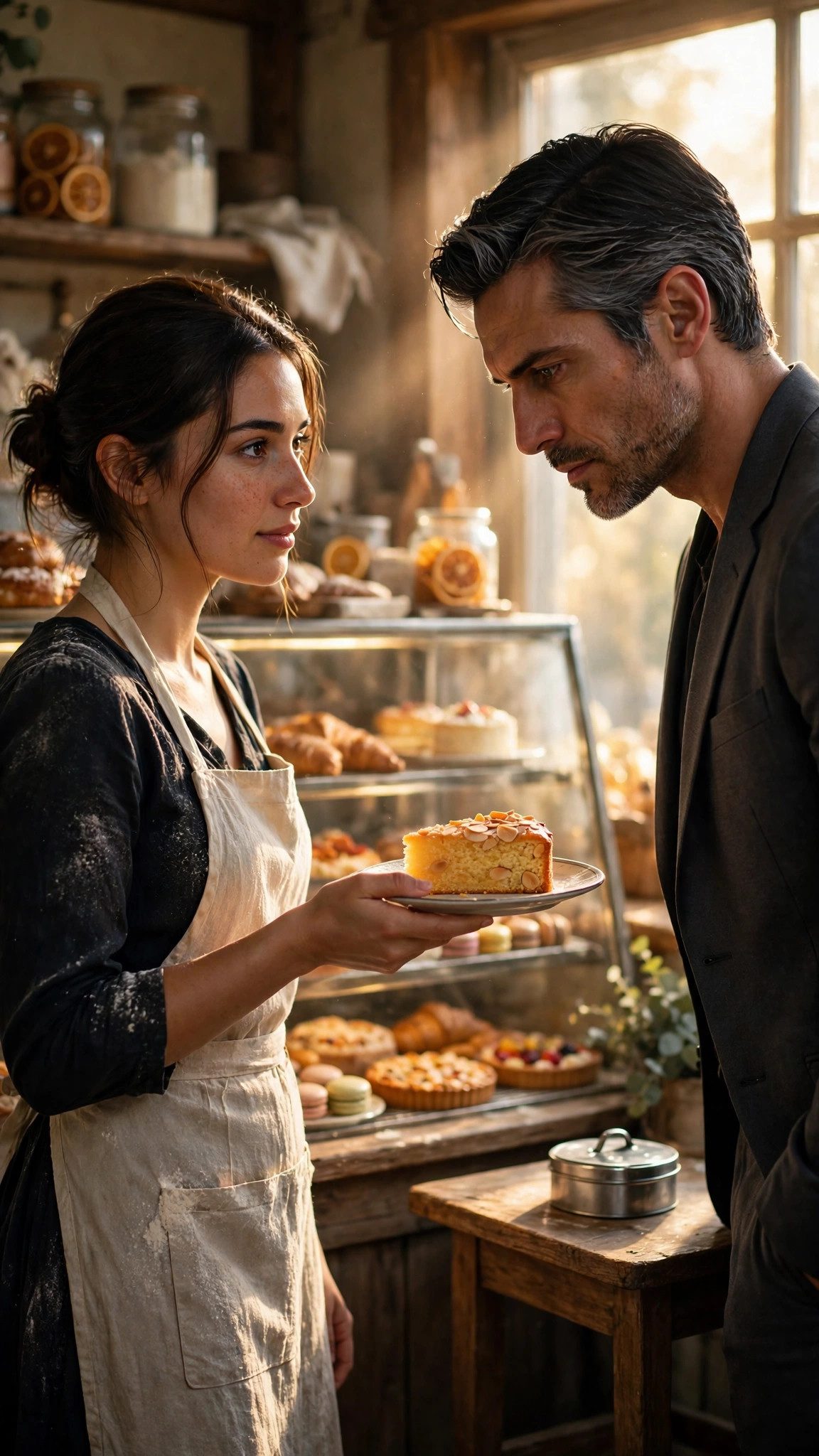
Story Genres: Mafia Romance

  • Chapter 6: What My Father Paid For

    Chapter 6: What My Father Paid For

    That night, I could not sleep. I went downstairs to the bakery in the dark, and I opened the tin box, and I took out the recipe card for the orange almond cake, and I looked at it for a long time, the way you look at something you thought you knew and suddenly do not.

    Caterina Moretti. The name was there at the bottom, in Rosa's handwriting, in blue ink. And underneath it, in even smaller writing, words I had never noticed before, because I had always been looking at the recipe and never at the margins: "For the medicine. Forgive me."

    For the medicine. Forgive me.

    I sat down on the flour sack in the corner, the same flour sack I used to sit on when I was a little girl, and I understood, all at once, what Rosa had never told me. My mother had been sick since Palermo. The doctors had wanted money before they would look at her. Rosa had sold the recipe to Vittorio Moretti to pay for my mother's medicine. She had not sold it because she was greedy, or because she was weak. She had sold it because she was a mother, and her daughter was dying, and a mother will give away anything, even the most precious thing she owns, to save her child.

    And the medicine had not worked. My mother had died anyway, first slowly in Palermo, and then finally in Chicago, when I was nine years old. And Rosa had carried the guilt of that sale for the rest of her life, and she had written "forgive me" on the back of a recipe card, because she did not know who else to ask.

    I cried that night, in the dark, in my dead grandmother's bakery, holding the recipe card in both hands. I cried for Rosa, and I cried for my mother, and I cried for Caterina Moretti, who had died asking for a slice of cake, and I cried for Adrien, who had spent three years eating a cake that tasted like grief. And I cried for myself, because I had spent my whole life believing that the recipe was a simple thing, a gift passed from mother to daughter, and it had never been simple at all. It had been bought and sold and stolen and kept and hidden, and it had cost my family almost everything, and it had still survived, because Rosa had been clever enough and stubborn enough to keep the real secret in her hands and not on any piece of paper.

    The next morning, Adrien came to the bakery, and I told him I needed time. I told him I needed to think. I told him that everything had happened too fast, and that I did not know what was real anymore, and that I needed him to leave me alone for a little while.

    He looked at me, and he nodded, and he said, "Take all the time you need, Lucia. I will be here when you are ready. I have waited three years. I can wait longer."

    But he did not leave. He went to the little table by the window, and he sat down, and he ordered one slice of cake, and he ate it, slowly, the way a man eats something he has been waiting for, and then he left exact change on the table, and he walked out the door. And the next morning, he did the same thing. And the morning after that. He never pushed. He never demanded. He only came, and he sat, and he ate his one slice of cake, and he left.

    On the third morning, an old man came into the bakery, a man I had never seen before, with silver hair and a quiet way of moving, like a man who had spent his whole life learning not to be noticed. He ordered a coffee, and he sat at the counter, and he watched me work for a long time, and then he said, "You must be Lucia. Rosa's granddaughter. You have her hands."

    "Who are you?" I asked.

    "My name is Asher Romano," he said. "I taught Adrien everything he knows, except the things that matter, which he taught himself. And I have come to tell you a story, because Adrien will not tell it himself. He is too proud. And you deserve to hear it."

    Asher told me that he had been in the room in Palermo, a long time ago, when Vittorio Moretti put the envelope on the table in front of Rosa Benedetti. He told me that Vittorio had not been cruel about it. He had been businesslike, the way he was about everything. He had wanted the recipe, and he had paid for it, and he had believed that was the end of it. But Asher had seen Rosa's face when she signed the paper, and he had seen the way her hands shook, and he had known, even then, that she had not given him everything.

    "Your grandmother was the bravest woman I ever met," Asher said. "She sold a piece of paper to save her daughter, and she kept the truth in her hands. And Vittorio knew. I think he always knew. He ate the cake for thirty years, and it was never quite right, never quite the way his mother made it, because the spoonful of orange blossom water was missing, and he knew it was missing, and he knew why. And he respected her for it. He never went after her. He never tried to take the rest. He let her go to America, and he let her open her bakery, and he told his son, on his deathbed, that the recipe had never really been his, and that if Adrien ever found the woman who baked the only real one, he should protect her with his life."

    Asher finished his coffee, and he stood up, and he left exact change on the counter, and at the door he turned back, and he said, "Adrien is not his father, Lucia. His father bought a recipe. Adrien wants to earn one. There is a difference, and it is the only difference that matters."

    That afternoon, Adrien came back, and he was carrying a leather folder, and he set it down on the counter, and he opened it, and inside was the paper Rosa had signed in Palermo, a long time ago, the paper that said the recipe belonged to the Moretti family. And beside it, there was another paper, a new one, already signed by Adrien, and already witnessed, and already stamped by a lawyer.

    "This is the paper my father made your grandmother sign," Adrien said. "And this is the paper that ends it. I am returning the recipe to you, Lucia. All rights, all claims, all of it, forever. The recipe belongs to the Benedetti family, and it always did. My father was wrong to buy it, and I am righting it. And I am also returning something else."

    He reached into his jacket, and he pulled out a small, yellowed card, and he set it down on the counter, very gently, like it was made of glass. It was a recipe card, written in blue ink, in Italian, in Rosa's handwriting. It was the card Rosa had given to Vittorio Moretti, a long time ago, in a kitchen in Palermo. And at the bottom, in smaller writing, were the words: "For the medicine. Forgive me."

    "I found it in my father's safe," Adrien said, and his voice was rough, like a man who had not slept. "I have kept it for three years, since my grandmother died. I looked at it every night, and I could not understand why it tasted wrong, why the cake was never right. Now I understand. The card was never the recipe. You are the recipe, Lucia. You and your hands, and your memory, and the spoonful of orange blossom water that your grandmother never wrote down. I am giving the card back to you, because it was never mine to keep."

    And then he did something I had never seen him do. He took the paper Rosa had signed, the paper that said the recipe belonged to his family, and he tore it in half. And then he tore it in half again. And he let the pieces fall on the counter, next to the pieces of Castellano's check, and he said, "As for the building, I have bought it. Not from Castellano. From Frank Deluca, before Castellano's sale was ever recorded. My lawyers found that the sale was made under a false name, through a company that does not legally exist, and Frank has signed a statement saying he was threatened into it. The building is mine now, Lucia. And I am giving you a lease for ninety-nine years, for one dollar a year, and the lease says that no one can ever take this bakery from you, not Castellano, not the Morettis, not anyone. It is yours. It has always been yours."

    I stood there, looking at the torn paper, and the recipe card, and the lease, and I did not know what to say. I had spent my whole life believing that powerful men only ever took things. And here was the most powerful man in Chicago, giving things back.

    "Why?" I whispered. "Why would you do all of this for me?"

    He looked at me, and for the first time since I had met him, he did not look like a mafia boss at all. He looked like a man who was afraid of the answer to his own question.

    "Because," he said, "three years ago, my grandmother died asking for a slice of cake, and I never brought her one. And for three years, I have been coming to your bakery every morning, eating one slice of cake, and every bite tasted like her, and every bite tasted like the thing I failed to do. And then I met you, Lucia, and you looked at me, and you asked me if the cake was good enough, and nobody has ever asked me that before. Nobody has ever cared whether something was good enough for me. They only care whether I am pleased. You cared whether the cake was good. And that is why I will do anything for you. Because you are the only person in this world who has ever asked me a question and waited for the answer."

    I reached across the counter, and I took his hand, and his hand was warm, and it was shaking, just a little, and I said, "Then ask me the question you really came here to ask, Adrien. Not about the cake. The real one."

    He held my hand, and he looked at me, and he said, "Stay. Bake the cake every morning. And let me sit at the window table and watch you work. For the rest of our lives."

    And I said yes.

    The next morning, before dawn, I went to the cemetery where Rosa is buried, and where my mother is buried beside her, in the quiet part of the cemetery under the old oak tree. I brought two slices of orange almond cake, wrapped in white paper, and I set one on each grave, and I sat down on the cold grass, and I told them everything. I told my mother about Adrien, and about the bakery, and about Castellano, and about the recipe card with the words "for the medicine" written on the back. I told Rosa that I understood now, that I forgave her, that there was nothing to forgive, because a mother who sells a recipe to save her daughter has not failed. She has loved, in the only way she knew how.

    Adrien waited for me at the cemetery gate, standing beside the black car, with his hands in his pockets, and he did not come in, because he said the cemetery was for family, and he was not family yet. But when I came out, with tears on my face and cake crumbs on my coat, he opened the car door for me, and he drove me back to the bakery, and he did not ask me what I had said to them, and I was grateful, because some things are too heavy to carry out loud, and he understood that, because he had carried his own heavy things for three years.

    That afternoon, we signed the lease together, at the little table by the window, with Priya as our witness and Asher Romano looking on, and the lease said ninety-nine years, and one dollar a year, and it said that no one could ever take the bakery from me, not Castellano, not the Morettis, not anyone. I signed my name, Lucia Benedetti, in the same careful handwriting Rosa had taught me when I was a little girl, and Adrien signed his, and Asher stamped it, and Priya cried, and Mrs. Delgado brought a bottle of sparkling wine, and old Mr. Okafor raised his glass, and he said, "To Rosa. To Caterina. To the only real one." And we all drank, and the bakery smelled like oranges, and for the first time in weeks, I felt like I could breathe.

    Later, when everyone had gone home, Adrien stayed, and he helped me clean the ovens, and he was terrible at it, and he got flour all over his charcoal suit, and he laughed, and I laughed, and we stood in the kitchen together, with the ovens cooling and the last of the light coming through the window, and he said, "Lucia, I want you to know something. My father bought a recipe. I am not my father. I will never buy anything from you. I will only ever ask. And if you ever say no, I will respect it. That is my promise to you, and it is the only promise that matters."

    I looked at him, with flour on his suit and a smudge of chocolate on his cheek, and I thought about the first morning he had walked through my door, with his men and his guns and his silence, and how frightened I had been, and how far we had come, and I said, "I know, Adrien. I know you are not your father. Your father bought a recipe. You returned one. There is a difference, and it is the only difference that matters."

    And then I took his hand, and I led him upstairs to my apartment, and I showed him the tin box, and I opened it, and I showed him all of Rosa's recipe cards, every one of them, written in blue ink, in Italian, on cards that were yellowed at the edges and stained with vanilla. And I showed him the card for the orange almond cake, with Caterina Moretti's name on it, and the words "for the medicine" on the back, and I said, "This is my family, Adrien. All of it. The recipe, and the box, and the bakery, and the women who made it all. And now it is yours too, if you want it. Not because you bought it. Because you earned it."

    He held the card very carefully, like it was made of glass, and he looked at it for a long time, and then he looked at me, and he said, "I want it, Lucia. I want all of it. I want the bakery, and the box, and the recipe, and you. I want all of it, for the rest of our lives."
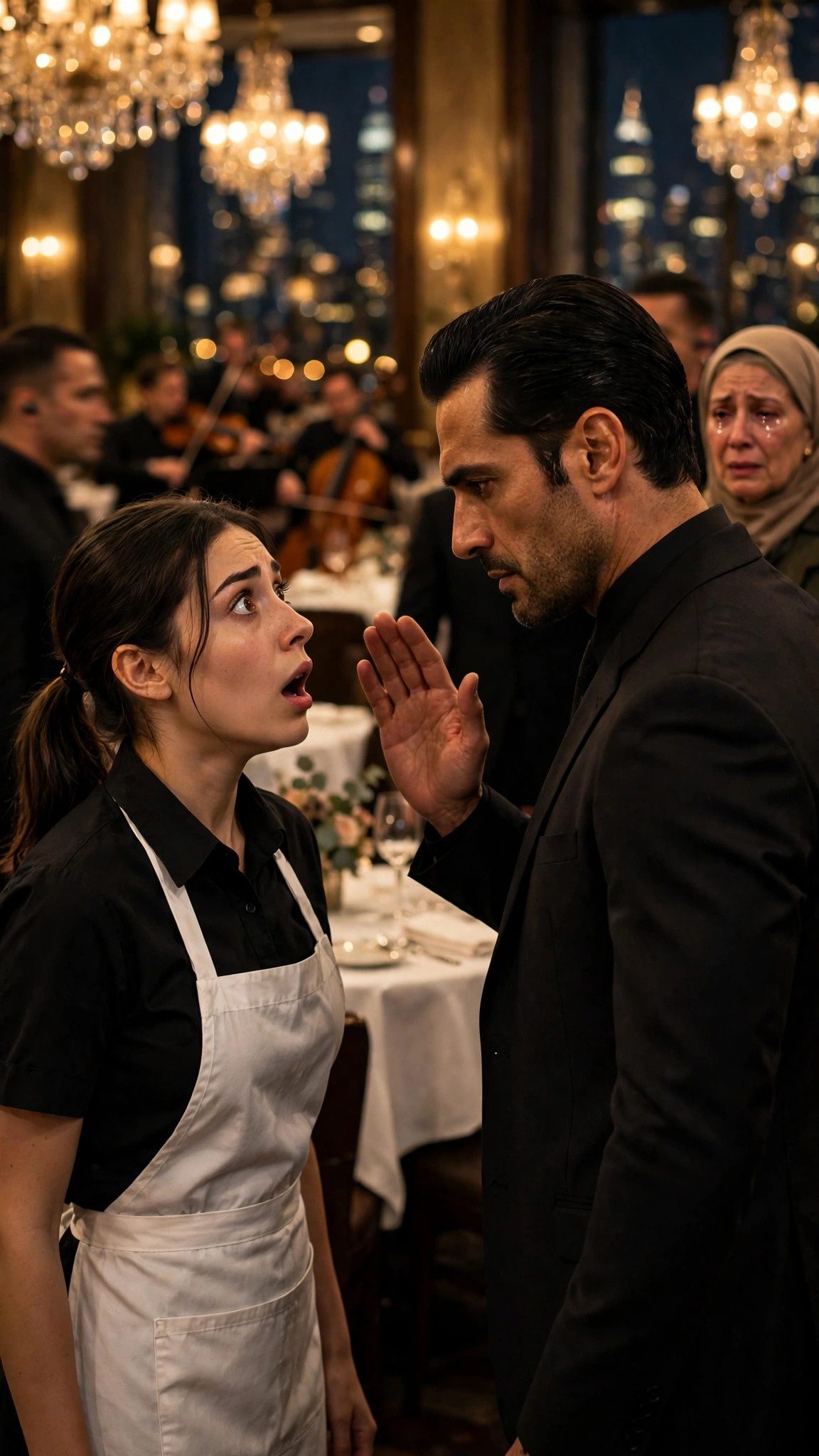
  • Chapter 5: The Man with the Gold Teeth

    Chapter 5: The Man with the Gold Teeth

    The trouble came on a Friday, three days after I went to Adrien's house, and it came in the form of a thin white envelope that Priya found slipped under the bakery door before dawn.

    It was an eviction notice.

    The letter said that the building had been sold. It said that the new owner was a company called Lakeshore Holdings, and that Lakeshore Holdings had decided not to renew the lease on the bakery, and that Benedetti Bakery had thirty days to vacate the premises. Thirty days. After three years. After Rosa had saved for thirty years to buy the shop, after I had kept it alive with my own two hands, after everything, I had thirty days.

    I read the letter three times, and my hands were shaking so badly that Priya had to take it from me, and she read it, and she went pale, and she said, "Lucia, who is Lakeshore Holdings?"

    I did not know. But I had a feeling, cold and certain in the pit of my stomach, that I knew exactly who it was.

    I called my landlord, Frank Deluca, a tired old man who had owned the building for forty years and who had always been kind to Rosa and to me. He did not answer. I went to his office, and his secretary told me he was out of town, and she would not meet my eyes. I went back to the bakery, and I sat at the little table by the window, the table where Adrien sat, and I stared at the eviction notice until the words went blurry.

    At ten o'clock, Adrien walked in, right when the sun hit the bakery window, and he took one look at my face, and he said, "What happened?"

    I showed him the letter. He read it once, and his face went very still, the way it had gone still when Castellano was shouting, and he folded the letter very carefully, and he put it in his jacket pocket, and he said, "Wait here."

    He stepped outside, and he made a phone call, and when he came back, his eyes were dark, and he said, "Lakeshore Holdings is a shell company. It belongs to Vincent Castellano. He bought the building from Frank Deluca two weeks ago, for cash, for twice what it is worth. Frank did not tell you because Castellano paid him not to. And Castellano did not buy the building because he wants the building, Lucia. He bought it because he wants the bakery. And he wants the bakery because he wants the recipe."

    "The recipe?" I whispered. "Why would he want the recipe?"

    "Because my father paid twenty-five thousand dollars for that recipe, and Castellano was there when he did it," Adrien said. "He was my father's associate, and he was in the room, and he heard my father say that the recipe was worth more than gold, because it was the only thing my mother, I mean my grandmother, had ever truly loved. And Castellano has spent thirty years believing that if he could own the recipe, he could own a piece of my family. He wants to open a chain of bakeries. He wants to put your grandmother's cake in a hundred shops across the country, and he wants to call it his own. And to do that, he needs you gone, and he needs the recipe card, and he needs the world to forget that Rosa Benedetti ever existed."

    I felt sick. I felt like the floor was tilting under my feet. "What do I do?" I asked. "I have thirty days. I don't have money for a lawyer. I don't have anywhere else to go."

    "You do not need a lawyer," Adrien said. "You have me."

    And then the door banged open, and Castellano walked in, with four men behind him, and this time he was not shouting. This time he was smiling, and the gold teeth were flashing, and he was carrying a thick brown envelope, and he set it down on the counter like a man setting down a winning hand of cards.

    "Good morning, Miss Benedetti," he said. "I have come to make you an offer. A very generous offer. I will buy your bakery, your ovens, your recipes, all of it, for a sum that will let you retire tomorrow and never work again. All you have to do is sign."

    He opened the envelope, and he spread the papers out on the counter, and there were a great many papers, and at the bottom of the last one there was a line for my signature, and beside it, a check, already filled in, for two hundred thousand dollars.

    "Two hundred thousand dollars," he said, and his voice was soft and warm, like honey. "For a little bakery on Taylor Street. For some old recipe cards. That is more than generous, wouldn't you say, Adrien?"

    Adrien did not answer. He was looking at something behind Castellano, and I followed his gaze, and I saw his driver, Sal Ferraro, standing by the door, and Sal was not looking at Adrien. Sal was looking at the floor, and his hands were shaking, and I understood, in that moment, what Asher had meant when he said you can never be too careful about who you trust.

    "Sal," Adrien said, very quietly. "How long?"

    Sal Ferraro did not answer at first. Then he swallowed, and he said, "Three weeks, boss. He paid me fifty thousand dollars. He wanted to know when you came here. He wanted to know what time, and how long you stayed, and what you talked about. I didn't think it would hurt anyone. I thought it was only a bakery."

    Adrien looked at him for a long time, and I had never seen a face so cold, and so sad, all at once. "You told him about the cake," he said. "You told him about the recipe. You told him about her."

    "I needed the money," Sal whispered. "My wife is sick. The doctors—"

    "Get out," Adrien said. "You are finished. You will never work for this family again. And if you ever come near this bakery, or near Lucia, I will forget that you once drove my car."

    Sal went out the door, and he did not look back, and the bell rang, and the bakery was quiet, and Castellano was still smiling, and he tapped the check with one thick finger, and he said, "Well? Two hundred thousand dollars, Miss Benedetti. Sign, and this can all be over."

    I looked at the check. Two hundred thousand dollars. It was more money than I had ever seen. It would pay off the ovens. It would pay off the rent. It would let me start over somewhere else, somewhere safe, somewhere Castellano could not find me. And all I had to do was sign my name, and give him the recipe, and walk away from everything my grandmother had built.

    I looked at Adrien. He was watching me, and he did not say a word, and he did not tell me what to do, and I understood that this was my choice, and my choice alone, and that whatever I chose, he would respect it.

    And then I thought about Rosa, standing in a kitchen in Palermo, looking at an envelope full of money, and choosing her daughter over her pride. And I thought about the tin box upstairs, and the recipe card with Caterina Moretti's name on it. And I thought about the photograph on Adrien's wall, of two women laughing in a kitchen, a long time ago.

    I picked up the check, and I tore it in half. And then I tore it in half again. And I let the pieces fall on the counter, and I said, very clearly, so that everyone in the bakery could hear me, "No. The recipe is not for sale. Not for two hundred thousand dollars. Not for any amount of money in the world. My grandmother told me that a secret is the only thing nobody can take from you unless you give it away yourself. And I am not giving it away."

    Castellano's smile went away, all at once, like a light going out. "You will regret this," he said, and his voice was low and ugly now, nothing like honey. "Thirty days, Miss Benedetti. Thirty days, and this bakery is mine, and you are on the street. And your friend here cannot protect you from the law. Even he cannot stop a legal eviction."

    He turned to leave, and his men followed him, and the bell rang, and the bakery was quiet again, and I stood there with my hands shaking, and the torn pieces of the check on the counter, and I did not know whether I had just done the bravest thing of my life or the stupidest.

    Adrien came and stood beside me, and he put his hand over mine, very gently, and he said, "You did the right thing. And Lucia, I promise you this: Castellano will not take this bakery. Not in thirty days. Not ever. I will stop him. Whatever it takes."

    And for the first time since I had met him, I believed him. Not because he was the most dangerous man in Chicago. But because, when he said it, he was not talking like a mafia boss. He was talking like a man who had finally found something worth protecting.

    That evening, after the bakery closed, Adrien's men came, two of them, quiet and professional, and they stood outside the bakery all night, in the dark, in the rain, watching the street. I told Adrien I did not need guards, and he told me I did not get a vote, and for once I did not argue, because the truth was that I was frightened, and knowing his men were outside made it possible for me to sleep.

    But I did not sleep well. I dreamed about the eviction notice, and about the torn check, and about Castellano's gold teeth flashing in the dark, and I woke up three times, and each time I went to the window and looked down at the street, and his men were still there, standing in the rain, and I felt grateful, and I felt guilty, and I felt angry, all at once, because I had built this bakery with my own hands, and I had kept it alive for three years, and now I needed a mafia boss's gunmen to keep it safe, and that did not feel like the life Rosa had wanted for me.

    The next morning, Priya came in early, before the sun was up, and she found me sitting at the little table by the window with the eviction notice spread out in front of me, and she sat down across from me, and she said, "Lucia, tell me the truth. Are you going to be all right?"

    "I don't know," I said. "I have thirty days. I don't have money for a lawyer. I don't have anywhere else to go. And Castellano is right about one thing: even Adrien cannot stop a legal eviction. The law is the law."

    "The law is the law," Priya said, "but the law also says a landlord cannot sell a building out from under a tenant without notice, and it says a lease cannot be broken without cause, and it says a man cannot threaten a woman in her own shop. I looked it up last night. I stayed up half the night reading about tenants' rights, Lucia, because you are my best friend, and I am not going to let that man with the gold teeth take your bakery without a fight."

    I stared at her. "You looked up tenants' rights?"

    "I looked up everything," she said, and she pulled a notebook out of her bag, full of pages of careful handwriting. "And I called my cousin, who is a law student, and he says Frank Deluca cannot do this, not the way he did it, and he says Castellano's company might not even exist, not legally, and he says if we can prove that, the whole sale falls apart. So we are going to fight, Lucia. You and me. And Adrien, if he wants to help. But mostly you and me."

    Mrs. Delgado came in that morning with a basket of flowers, not to sell, but to give to me, and she put them on the counter, and she said, "For the window, Lucia. So that everyone who walks past can see that this bakery is loved." And old Mr. Okafor came in, and he left a fifty-dollar bill on the counter, and he said, "For the lawyer, Lucia. Do not argue with me. I have been eating your lemon pound cake for three years, and it is the only good thing left in my life, and I will not lose it to a man with gold teeth."

    And then more people came. The young mothers with their children. The college students. The men from the garage down the street. They all came, and they all left something, a little money, a little food, a little note, and by noon the counter was covered in envelopes and flowers and casseroles, and Priya was crying, and I was crying, and the bakery smelled like oranges and like home, and I understood something I had never understood before: the bakery was not just mine. It belonged to the whole street. It belonged to everyone who had ever walked through that door and been fed. And Castellano could buy the building, and he could tear up the lease, and he could threaten me, but he could never buy the people who loved this place, and he could never make them stop coming.

    That afternoon, two of Castellano's men came to the bakery, not to buy anything, but to measure. They walked through the shop with tape measures, and they measured the windows, and they measured the ovens, and they measured the counter, and they wrote numbers down in little notebooks, and they did not look at me, and they did not speak to me, and I stood behind the counter with my hands in fists, and I wanted to scream at them, and I wanted to throw them out, and I did neither, because Adrien had told me not to be alone with them, and not to sign anything, and not to give them any reason to say I was difficult.

    When they left, Adrien's men came in, and one of them, a young man named Marco with kind eyes, said, "Miss Benedetti, Mr. Moretti says to tell you that his lawyers are working on it, and that the sale is not what it seems, and that you should not worry. And he says to tell you that he will come himself tomorrow morning, and that he has something to show you."

    "What does he have to show me?" I asked.

    Marco smiled, just a little. "I don't know, miss. But he has been smiling all day, and I have worked for Mr. Moretti for five years, and I have never seen him smile like that. Whatever it is, it must be good."

    That night, I slept better than I had in days. Not well, but better. Because for the first time since the eviction notice had arrived, I did not feel alone. I felt the whole street standing behind me, and I felt Priya beside me, and I felt Adrien's hand over mine, and I felt Rosa, somewhere, watching over all of it, and saying, in her quiet, certain voice, "You finish what you start, Lucia. A cake you throw away teaches you nothing. A cake you finish teaches you everything." And I knew that I was going to finish this. Whatever it took, I was going to finish it.

  • Chapter 4: The Same Cake, Every Day

    Chapter 4: The Same Cake, Every Day

    The next morning, Adrien came back, and this time he did not sit at the window table. He stood at the counter, and he waited until Mrs. Delgado had left with her rosemary bread and old Mr. Okafor had folded his newspaper and gone, and then he looked at me, and he said, "I have a proposition for you, Lucia. And I want you to hear all of it before you answer."

    My hands went still on the tray I was holding. "A proposition?"

    "My men will handle the paperwork," he said. "They will take care of the money. All you need to do is the same thing every morning. The same cake. Every day. For the rest of our lives."

    I stared at him. "For the rest of our lives?"

    He nodded, and he was very serious, and very calm, the way he always was when he was saying something that mattered. "You will bake the orange almond cake every morning. My men will pick it up, or I will pick it up myself. You will be paid more than this bakery makes in a year, every year, for as long as you live. You will never have to worry about rent, or ovens, or flour, or anything else, ever again. And in return, I ask only one thing."

    "Which is?"

    "That the cake is always the same," he said. "That it always tastes the way it tasted this morning. That it always tastes like my grandmother's."

    Those words made my eyes sting, but there was something else I could see in this man's face, a sincerity that made me stop in my tracks. He closed his eyes and gave me a crooked smile, and for one second he was not a mafia boss at all. He was just a man who missed his grandmother, and who had found the one thing in the world that could bring her back to him, even for a moment.

    "I'll pay you whatever it takes," he said. "Just say yes."

    I was still looking at him when he said the words that made my heart stop.

    "I like the angle. It's different."

    I did not know what he meant by that, not then. I thought he meant the bakery, the little shop on Taylor Street with its bell over the door and its window full of morning sun. I thought he meant the way I had built something small and honest in a city that only respected things that were big and loud. I did not understand until later that he meant me. He meant the way I had looked at him, not with fear, and not with hunger, but with the plain, ordinary honesty of a woman who bakes a cake and asks if it is good enough. He had spent his whole life being looked at by people who wanted something from him. I had only ever wanted to know if the cake was good.

    He asked me to remember the recipe secret, and he didn't even try to hide his desperation. It was the first time I had ever seen a real human emotion from him, and it frightened me, because a man like Adrien Moretti does not show desperation to anyone, and the fact that he was showing it to me meant that the cake mattered to him more than anything else in his life, more than his money, more than his power, more than his pride.

    And then he said the words that would haunt me forever.

    "The day my grandmother died, she asked me to bring her a slice of orange almond cake. I never got to bring her one. And in nearly three years, I couldn't bring myself to eat your grandmother's cake because every bite tasted like my grandmother's. It was her recipe, the exact one my father paid for."

    I felt the floor go out from under me. "Your father paid for it?"

    He nodded. "Twenty-five thousand dollars, in Palermo, a long time ago. My father bought the recipe from a cook named Rosa Benedetti. He believed he was buying the only copy. He believed the cake would belong to our family, and to no one else, forever. He was wrong. Rosa kept the recipe. She brought it to America. She gave it to you. And now you bake it every morning, three blocks from my office, and I have been eating my grandmother's cake for weeks without knowing how it was possible."

    "Come home with me," he said. "I have a picture of my grandmother I want to show you."

    I should have said no. Every sensible part of me was screaming no. A mafia boss was asking me to come home with him, to his house, to see a picture of his dead grandmother, and my grandmother had told me a hundred times that if a man looks at you the way the devil looks at temptation, you should run the other way. But I did not run. I looked at his face, and I saw the desperation, and I saw the sincerity, and I saw a man who had waited three years for a slice of cake, and I said yes.

    I told Priya to watch the bakery. I took off my apron. I washed the flour off my hands twice, the way Rosa had taught me. And I followed Adrien Moretti out of my bakery, past his men with their guns, and I got into his black car, and the door closed, and the city went past the windows, and my heart was beating so loudly I was certain he could hear it.

    His house was on the lake, behind a high wall, with a garden full of roses that were still blooming even though it was almost winter. Inside, the house was quiet and dark and full of old furniture and old photographs, and he led me through room after room, past paintings and books and a piano nobody played, until we came to a small room at the back, with a window that looked out over the garden, and on the wall there was a photograph in a silver frame.

    It was a photograph of two women in a kitchen, a long time ago, in a stone house in Palermo. One of them was Caterina Moretti, young and laughing, with flour on her cheek. The other was my grandmother Rosa, younger than I had ever seen her, with her hair in a braid and her hands in a bowl, and she was laughing too, and the two of them looked like sisters. On the back of the photograph, in faded blue ink, someone had written: "The only real one. Palermo, 1962."

    Adrien stood beside me, and he did not touch me, and he said, very quietly, "My grandmother kept this photograph on her bedside table until the day she died. She told me that the woman beside her was the best friend she ever had, and the best cook who ever lived, and that the cake they made together was the only real one in the world. She told me that if I ever found that cake again, I should hold on to the person who made it, and never let go."

    He reached out then, and he pulled me close, and I could feel his heart beating against mine, fast and hard, like a man who had been running for a very long time and had finally stopped.

    "Because the cake tastes exactly like my grandmother's," he whispered. "They're always perfect. Always."

    And I stood there in his house, in the room with the photograph of our two grandmothers, and I understood that this was not a business proposition at all. It was a man asking me, in the only way he knew how, to be part of his life. And I understood something else, too, something that frightened me even more: I wanted to say yes.

    But I did not go home right away. I stayed in that small room at the back of his house for a long time, looking at the photograph of our two grandmothers, and Adrien stood beside me, and he did not rush me, and finally I said, "Show me the rest. Show me where she lived. Show me her kitchen."

    So he took me through the house, room by room, and he showed me Caterina's bedroom, which had been kept exactly as she left it, with her rosary on the bedside table and her shawl folded on the chair and a vase of dried roses on the windowsill. And he showed me the library, where his father used to sit, and the dining room, where the family had eaten together on Sundays, and finally he showed me the kitchen, a great kitchen with copper pots hanging from the ceiling and a wood-fired oven that had not been lit in three years.

    "This was her kitchen," he said. "She cooked here every day, until the last week of her life, when she was too weak to stand. And on the last day, she asked me to bring her a slice of orange almond cake, and I told her I would, and then the phone rang, and there was a problem with a shipment, and men who needed to be dealt with, and I told myself I would bring it tomorrow. And there was no tomorrow. She died that night, in her sleep, the way your grandmother did. And I have carried that slice of cake with me for three years, Lucia. Everywhere I go. I have never been able to put it down."

    I looked at the kitchen, at the cold oven and the copper pots and the empty counters, and I did something I had not planned to do. I took off my coat, and I rolled up my sleeves, and I said, "Is there flour in this house? Is there butter? Is there an orange anywhere in this kitchen?"

    He stared at me. "Lucia, what are you doing?"

    "I am going to bake the cake," I said. "Right here. In your grandmother's kitchen. In her oven. And you are going to sit at that table, and you are going to eat a whole slice, not one bite in a car, not one bite standing up, but a whole slice, sitting down, in your grandmother's kitchen, the way it was meant to be eaten."

    He did not argue. He found the flour, and the butter, and the sugar, and the almonds, and there were oranges in a bowl on the counter, and I lit the oven, and I zested the oranges by hand, and I toasted the almonds until the kitchen smelled like autumn, and I beat the eggs, and I folded the batter, and I added the spoonful of orange blossom water that I had never written down anywhere, and I put the cake in the oven, and I sat on the floor in front of the oven door, the way I used to sit when I was a little girl, and I watched it rise.

    Adrien sat at the kitchen table, and he watched me, and he did not say a word, and when the cake came out, golden and perfect, I cut a slice, and I put it on a plate, and I set it down in front of him, and I said, "Eat it, Adrien. All of it. For her."

    He picked up the fork, and his hand was shaking, and he took a bite, and he closed his eyes, and he did not move for a very long time. And then he took another bite, and another, until the whole slice was gone, and he set the fork down very carefully, and he looked at me, and there were tears running down his face, and he did not try to hide them, and he said, "It tastes like her. It tastes exactly like her. I have been eating this cake for weeks, Lucia, one slice every morning, and every bite tasted like her, and I could never finish it, because finishing it felt like saying goodbye. But here, in her kitchen, eating it the way she would have wanted, it does not feel like goodbye. It feels like she is here. It feels like she never left."

    I sat down beside him at the table, and I took his hand, and I said, "She never left, Adrien. She is in the recipe. She is in the cake. She is in you, and she is in me, and as long as we bake this cake, she will always be here. That is what Rosa taught me. A cake is a kind of memory. And every time you bake it, you bring back everyone who ever made it before you."

    He drove me home that night, himself, without his driver, without his men, just the two of us in the black car, driving through the quiet streets of Chicago, and when we stopped outside the bakery, he walked me to the door, and he did not try to kiss me, and he did not try to hold me, and he only said, "Thank you, Lucia. For the cake. For the kitchen. For her. I will come back tomorrow. And the day after that. I have waited three years for this cake. I can wait one more day for you."

    I went upstairs to my apartment, and I stood at the window, and I watched his car drive away, and I thought about the photograph on his wall, and about the kitchen with the cold oven, and about the way he had cried over a slice of cake, and I understood something I had not understood before: Adrien Moretti was not a devil. He was a man who had lost his grandmother, and who had never forgiven himself, and who had been punishing himself for three years, one slice of cake at a time. And I was the only person in the world who could forgive him, because I was the only person in the world who could bake the cake the way his grandmother had made it.

    And I knew, standing at that window, that I was going to forgive him. I knew I was going to bake that cake for him every morning, for the rest of our lives, whether he asked me to or not. Because that was what the cake was for. That was what it had always been for. It was not for money. It was not for power. It was for bringing back the people we have lost, even for a moment, even for one bite, even for one morning.

  • Chapter 3: Learn from the Best

    Chapter 3: Learn from the Best

    The next morning, Adrien came back.

    He walked in right when the sun hit the bakery window, the same as always, and his men took their places by the door, and he looked at the display case, and he pointed at the orange almond cake, and he said, "One slice."

    But this time, he did not walk out. He sat down at the small table by the window, the same table as yesterday, and he folded his hands, and he waited.

    I brought him the slice myself. My hands were shaking so badly I was afraid I would drop the plate, and I set it down very carefully, and I stood there, and I did not know what to do with my own hands, so I wiped them on my apron twice, and then I said, "Would you like anything else, sir?"

    "Yes," he said. "I would like you to make me lemon cakes."

    I stared at him. "Lemon cakes?"

    "Lemon cakes," he said, and he reached into his jacket, and he pulled out a folded piece of paper, and he opened it on the table, and it was a list. Names and numbers, written in a neat, careful hand. The names of the most famous bakeries in the city. The names of the most famous pastry chefs in the country. Beside each name there was a phone number, and beside some of the numbers there were little notes in the margins, in the same neat hand: "best lemon tart in Chicago," "trained in Paris," "worth the price."

    "You need to learn from the best," he said, and he pushed the list toward me across the table. "These are the best. My men will arrange it. You will go to their kitchens. You will watch them work. You will learn everything they know. And then you will come back here, and you will make lemon cakes for me."

    I looked at the list, and I looked at him, and I did not know whether to laugh or to be afraid. "Mr. Moretti," I said, "I don't need to learn from anyone. I learned from my grandmother. She was the best."

    He smiled then, a small, crooked smile, nothing like the terrible smile from yesterday, and he said, "I know. That is why I am here. But a baker who only knows one cake is a baker with one string on her violin. I want to hear the whole orchestra."

    I told him, very carefully, that I wanted to learn from the best. I had always wanted to. When I was a little girl, I used to dream about going to Paris and learning to make croissants that shattered like glass, and going to Vienna and learning to make tortes with twenty layers, and coming home and making my grandmother proud. But there had never been money for that. There had been the bakery, and the rent, and the ovens that needed fixing, and Rosa's medicine at the end, and there had never been money for dreams.

    He listened to all of it without interrupting me, and when I was finished, he said, "I learned from a man named Asher. Asher Romano. He was my father's consigliere, and after my father died, he was my teacher. And the most important thing he taught me is that you can never be too careful about who you trust."

    "Is that why you have men with guns?" I asked, before I could stop myself.

    He laughed, a real laugh this time, short and surprised, like a man who had forgotten he knew how. "That is one of the reasons," he said. "The other reason is that men with guns are very good at carrying boxes of cake."

    I almost laughed too. I almost did. And then the door banged open, and the morning went cold.

    Vincent Castellano walked into my bakery like he owned it.

    He was a big man, in his fifties, with a belly that strained against his suit and a mouth full of gold teeth that caught the light every time he opened it, and he opened it a great deal. Behind him came a younger man, thin and nervous, with a notebook clutched to his chest like a shield, and Castellano was shouting at him before he was even properly through the door.

    "I told you Tuesday, you idiot!" Castellano shouted, and his voice filled the bakery, and Mrs. Delgado dropped her bag of rolls, and old Mr. Okafor put his newspaper down very slowly, and Priya went very still behind the counter. "Tuesday! Not Wednesday! Tuesday! Do you understand the word Tuesday, or do I need to write it on your forehead?"

    The young man nodded and apologized, and Castellano shoved him toward a table, and then he saw Adrien sitting at the window, and his whole face changed, and the gold teeth disappeared behind a smile that was not a smile at all.

    "Adrien," he said, spreading his arms wide. "My boy. What a pleasure. I didn't know you took your breakfast in a place like this."

    Adrien did not stand up. He did not even turn his head all the way. He only looked at Castellano the way you look at something you have already stepped around, and he said, "Vincent. You are shouting in a lady's bakery. Apologize to the lady, and lower your voice."

    For one second, nobody moved. The bakery was so quiet I could hear the ovens humming in the back. Castellano's smile stayed on his face, but his eyes went flat and hard, and he looked at me, really looked at me, for the first time, and I felt my skin go cold, because his eyes were the eyes of a man who was counting something. He was counting the tables. He was counting the ovens. He was counting me.

    "My apologies, miss," he said, and he gave me a little bow, and the gold teeth flashed. "I am an old man, and old men forget their manners. A beautiful bakery. A beautiful baker. Your father would be proud, Adrien, to see you taking an interest in local business."

    "He would," Adrien said, and his voice was very quiet, and very calm, and that was somehow more frightening than shouting would have been. "And he would want you to remember that this bakery is under my protection. Do you understand me, Vincent?"

    Castellano's smile did not move. "Of course," he said. "Of course. I understand everything." And then he turned to his associate, and he said, "Come, we are leaving, we have business across town," and he walked out the door, and the bell rang, and the bakery breathed again.

    But I had seen the way he looked at me. I had seen the way he counted. And I understood, in that moment, that the man with the gold teeth had not come into my bakery by accident. He had come to see the bakery. He had come to see me. And whatever he wanted, it was not a slice of cake.

    After he left, Adrien sat at the window table for a long time, finishing his slice, and then he stood up, and he left exact change on the table, and he walked to the door, and he stopped, and he said, without turning around, "Castellano is an associate of my late father. He made a deal with the devil a long time ago, Lucia, and he has been trying to collect on it ever since. Do not be alone with him. Do not take his money. Do not sign anything he puts in front of you. Do you understand?"

    "I understand," I whispered.

    "Good," he said. "And Lucia, about the lemon cakes. Think about the list. The offer stands. My men will handle the paperwork. You only have to say yes."

    And then he was gone, and the bell rang, and Priya came out from behind the counter with her hands shaking, and she said, "Lucia, who was that man? Who was the man with the gold teeth?"

    And I told her, "That was Vincent Castellano. And I think he wants my bakery."

    Priya stared at me. "Why would a man like that want a little bakery on Taylor Street?"

    I thought about the envelope of money Rosa had taken from Vittorio Moretti, a long time ago, in a kitchen in Palermo. I thought about the recipe card with Caterina Moretti's name on it. I thought about the way Castellano had counted my tables and my ovens, the way a man counts things he intends to own.

    "I don't know," I said. "But I think Adrien does. And I think that is why he comes here every morning."

    That night, Priya stayed late, and we sat at the little table by the window after closing, with two cups of tea going cold between us, and she asked me the question I had been asking myself all day.

    "Lucia, are you afraid of him?"

    I thought about it for a long time before I answered. "Yes," I said. "And no. I am afraid of what he is. I am afraid of the men with guns, and of the way the room goes quiet when he walks in, and of the way Castellano looked at me today, like I was a thing he intended to own. But I am not afraid of Adrien himself. When he sits at that table and looks at me, I do not feel like prey. I feel like… like someone is finally seeing me. Really seeing me. Not the bakery. Not the cake. Me."

    Priya reached across the table and took my hand. "Then be careful, Lucia. Men like that do not fall in love the way ordinary men do. When they want something, they take it. And when they love something, they protect it so hard they sometimes break it."

    "I know," I said. "Rosa told me the same thing, in different words. She said if a man looks at you the way the devil looks at temptation, run the other way."

    "And are you going to run?"

    I looked out the window at Taylor Street, dark and quiet, with the streetlights making little pools of gold on the wet pavement. "I don't know," I said. "I have been running my whole life, Priya. I ran from Palermo, in a way, even though I was never there. I ran from my mother's death. I ran from Rosa's death. I ran into this bakery, and I hid here for three years, and I told myself it was enough. But it is not enough. It has never been enough. And Adrien Moretti is the first person who has ever looked at me and seen past the bakery, past the cake, past all of it, and seen me. So no. I am not going to run. Not this time."

    The next morning, before Adrien arrived, I did something I had never done before. I took the list he had given me, the list of the most famous bakeries in the city, and I called the first name on it. A woman answered, with a voice like warm bread, and I told her who I was, and I told her that Adrien Moretti had given me her name, and there was a long silence on the other end of the line, and then she said, "If Adrien Moretti gave you my name, then you must be someone very special, my dear. Come tomorrow. Come at dawn. I will show you my kitchen."

    I went the next day, before the sun was up, to a bakery on the other side of the city, a grand place with marble counters and copper ovens, and the woman, whose name was Madame Colette, showed me how to make a lemon tart so perfect it shone like glass, and she showed me how to fold butter into dough a hundred times until it shattered like autumn leaves, and she told me that she had once baked for a president, and for a king, and that neither of them had ever looked at her the way Adrien Moretti looked at a slice of orange almond cake.

    "That man," she said, wiping her hands on her apron, "has been looking for something for a very long time. I have known his family for forty years. I knew his grandmother. Caterina Moretti was a woman who laughed like a door opening in a quiet house. And when she died, a part of this city died with her. If you have what he is looking for, Lucia, then you hold something more valuable than gold. Hold it carefully. And do not let anyone take it from you. Not even him."

    I came home that morning with lemon zest under my fingernails and a head full of new ideas, and when Adrien walked in, right when the sun hit the window, I told him I had gone to Madame Colette's kitchen, and I told him I had learned to make a lemon tart, and he smiled, and he said, "Good. Then you are learning. And Lucia, there is something else you should know about Asher, the man who taught me. Asher was not always a consigliere. When he was young, he was a baker's son, in Naples, and his father had a little shop, like yours, and his father trusted the wrong man, and he lost everything. Asher told me that story on the night my father died, and he said, 'Adrien, you can never be too careful about who you trust, because the people who smile at you in the morning are sometimes the same people who count your money at night.' I have never forgotten it. And I have never trusted easily since. Except you. I trust you, Lucia, and I do not know why. Perhaps because you have never asked me for anything. You have only ever asked me if the cake was good enough."

    I stood there behind the counter, with flour on my apron and lemon zest under my fingernails, and I looked at the most dangerous man in Chicago, and I realized that he was not dangerous to me. He was only lonely. And loneliness, I was beginning to understand, was the most dangerous thing of all, because it makes even the strongest men do foolish things, and it makes them vulnerable in ways no gun ever could.

  • Chapter 2: The Only Real One

    Chapter 2: The Only Real One

    My grandmother Rosa Benedetti was born in a stone house in Palermo, in a street so narrow that the neighbors could pass a plate of food from one window to another without going downstairs. She was the youngest of six children, and she learned to cook standing on a wooden crate so she could reach the stove, and by the time she was fourteen she could make a meal out of almost nothing: a handful of almonds, a little flour, an orange from the tree in the courtyard, and the patience to wait for the oven to be exactly right.

    When she was nineteen, she went to work as a cook in a great house on the hill. The house belonged to the Moretti family.

    She never talked about those years very much. When I was little and I asked her what it was like to cook for rich people, she would laugh and say, "Rich people eat the same as poor people, Lucia, they only complain more beautifully." But sometimes, late at night, when the bakery was closed and we were sitting at the kitchen table with two cups of tea going cold between us, she would tell me small pieces of it. The kitchen in that house was bigger than our whole apartment. The ovens were so hot you could feel them in your bones. And the lady of the house, Caterina Moretti, used to come down to the kitchen in the afternoons and sit on a stool and watch Rosa work, and the two of them would talk while the bread rose, the way women talk when they are friends and the world is not watching.

    Caterina Moretti was the wife of the old don, and the mother of Vittorio Moretti, and the grandmother of a little boy named Adrien who used to steal almonds from the pantry and hide under the kitchen table. Rosa told me that Caterina had the best laugh she had ever heard, loud and sudden, like a door opening in a quiet house. And she told me that Caterina loved the orange almond cake more than anything in the world, because it was the cake her own mother had made, and her mother's mother before her, and that she asked Rosa to teach her how to make it, the way one friend teaches another, with their hands in the same bowl.

    So Rosa taught her. She taught Caterina Moretti how to zest an orange without taking the bitter white part. She taught her how to toast the almonds until they smelled like autumn. She taught her how long to beat the eggs and when to stop, because a cake that is beaten too long will rise and fall like a promise that was never meant. And Caterina learned it all, and she made the cake for her family on Sundays, and for a little while, the two women and the cake were the warm center of a very cold house.

    Then the old don died, and Vittorio Moretti became the head of the family, and everything changed. Vittorio was not like his mother. He did not laugh in kitchens. He counted things. He counted money, and he counted men, and he counted favors, and one day he counted the recipe, and he decided that the recipe was worth money, and that it should belong to the Moretti family and to no one else.

    He came to Rosa in the kitchen one morning, and he put an envelope on the table, and inside the envelope was more money than Rosa had ever seen in her life. Twenty-five thousand dollars, in clean new bills, and a piece of paper for her to sign. The paper said that the recipe for the orange almond cake now belonged to the Moretti family, and that Rosa would never bake it for anyone else, and never teach it to anyone else, and never speak of it again.

    Rosa told me she stood there for a long time looking at that envelope, with flour on her hands and the smell of oranges in the air, and she thought about her daughter, my mother, who was sick even then, though none of us knew how sick yet. She thought about the doctors in Palermo who wanted money before they would even look at a patient. She thought about the little house in the narrow street, and the roof that leaked, and the winter that was coming. And she took the envelope, and she signed the paper, and she gave Vittorio the recipe card, written in her own hand, in blue ink, on a card that was already yellowed at the edges.

    But Rosa Benedetti was a clever woman, and she was a stubborn woman, and she had learned from her own mother that a recipe is not a piece of paper. A recipe is a thing you carry in your hands and in your nose and in your memory, and no piece of paper can hold all of it. She gave Vittorio the card, but she kept the recipe. She kept the way the zest should feel under your thumb. She kept the exact moment when the almonds are ready, the smell that tells you before the color does. She kept the little secret at the end, the spoonful of orange blossom water that she never wrote down anywhere, not even on the card. She gave him the map, but she kept the road.

    A year later, she left Palermo. She took my mother, who was only a little girl then, and she came to America, to Chicago, to a city where nobody knew her name and nobody cared who she had cooked for. She worked in other people's kitchens for thirty years, saving a dollar at a time, and when she finally had enough, she bought the little shop on Taylor Street, and she opened Benedetti Bakery, and she baked her orange almond cake every morning, and she called it "the only real one," because it was.

    She never told Vittorio Moretti. She never told Caterina, either, though I think Caterina knew. I think Caterina knew the day Rosa left, and I think she understood, because Caterina had once been a young woman who had to choose between her family and her own heart, too. Rosa told me that Caterina sent her a letter once, years later, with no return address, and inside the letter there was only one sentence: "I am glad the cake still lives somewhere in the world."

    My mother died when I was nine. The sickness that had started in Palermo finished its work in Chicago, quietly, the way a candle goes out when there is no more wax. After she was gone, Rosa raised me, and she taught me everything she knew, the way her mother had taught her. She taught me to knead, and to wait, and to listen to the oven. She taught me that the orange must be zested by hand, never by machine, because a machine cannot feel when it has gone too deep. She taught me to toast the almonds until the kitchen smelled like autumn. And when I was sixteen, she finally taught me the secret, the spoonful of orange blossom water, and she made me swear on my mother's memory that I would never write it down, and never tell anyone, and never sell it, not for any amount of money in the world.

    "They will come for it one day, Lucia," she said to me, and her voice was quiet and certain, the way it always was when she was telling me something true. "Men like the Morettis always come back for what they think they own. And when they come, you must remember: the recipe is not a piece of paper. It is us. It is our family. And nobody can buy a family."

    She died two years ago, in her sleep, in the bed she had slept in for forty years. I buried her in the rain, and I came back to the bakery, and I opened the tin box, and I looked at the recipe cards, and I saw the name at the bottom of the orange almond cake card for the first time, because I had never really read it before. Caterina Moretti. My grandmother's recipe card had the name of Adrien Moretti's grandmother written on it, in my grandmother's handwriting, in blue ink.

    I did not understand what it meant then. I understand now. The cake had never belonged only to my family. It had belonged to two families, two grandmothers, two women who had stood in the same kitchen with their hands in the same bowl, a long time ago, in a stone house in Palermo. And Adrien Moretti, who had been coming to my bakery every morning for one slice of cake, was not a stranger at all. He was the grandson of my grandmother's best friend. He was the boy who used to steal almonds from the pantry and hide under the kitchen table. And he had been eating my grandmother's cake since he was small, and he had never been able to replicate it himself, because the one thing Vittorio Moretti's money could never buy was the spoonful of orange blossom water that Rosa had never written down.

    I was sixteen the first time Rosa let me bake the orange almond cake alone. She stood in the doorway of the kitchen with her arms folded, and she did not say a word, and I could feel her watching every move I made. I zested the oranges too fast, and the white pith came off with the zest, and I could see her mouth tighten, but she did not stop me. I beat the eggs too long, and the batter went flat, and I wanted to throw it away and start over, but she shook her head. "No," she said. "You finish what you start, Lucia. A cake you throw away teaches you nothing. A cake you finish teaches you everything." So I finished it. I put it in the oven, and I sat on the floor in front of the oven door, and I watched it rise through the little glass window, and when it came out, it was lopsided and a little bit burned on one side, and Rosa cut two slices, and she took a bite, and she closed her eyes, and she said, "It is not perfect. But it is yours. And tomorrow, you will make it again, and it will be better."

    And I did. I made it again the next day, and the day after that, and every day after that, for years, until my hands knew the recipe the way Rosa's hands had known it, until I could tell by the smell when the almonds were ready, and by the feel when the zest was right, and by the sound when the batter was beaten enough. Rosa watched me, and she corrected me, and she praised me, and as she got older, her hands began to shake, and she could not zest the oranges anymore, and she could not lift the heavy bowls, and so she sat on a stool in the corner and told me what to do, and I did it, and that was how it went, until the morning she could not get out of bed at all.

    She was ninety-one years old when she died. She had lived long enough to see me open the bakery in her name, and to see the regulars come, and to see the little shop on Taylor Street become something real. On her last night, she called me to her bedside, and she took my hand, and her hand was so light it felt like a bird, and she said, "Lucia, the tin box is yours now. The cards are yours. The cake is yours. And remember what I told you. They will come for it one day. Men like the Morettis always come back for what they think they own. And when they come, you must remember: the recipe is not a piece of paper. It is us. It is our family. And nobody can buy a family."

    I promised her. I promised her with tears running down my face, and she smiled, and she closed her eyes, and she went to sleep, and she never woke up.

    I never told anyone about the name on the card. I never told anyone about Palermo, or about Vittorio Moretti, or about the envelope full of money. I kept it all inside, the way Rosa had kept it, because some things are too heavy to carry out loud. I only baked the cake, every morning, before dawn, the way she had taught me, and I told myself that was enough.

    But it was not enough. It was never enough. Because the past does not stay in the past, not when it is baked into a cake, and not when the grandson of the woman your grandmother loved best walks through your door every morning, hungry for the one thing in the world that can bring his grandmother back to him, even for a moment. Rosa used to say that a cake is a kind of memory, and that every time you bake it, you bring back everyone who ever made it before you. I did not understand her until the morning Adrien Moretti sat down at my window table. Now I understand. Every morning, when I bake that cake, I bring back Rosa. And every morning, when Adrien eats it, he brings back Caterina. And the two of them are together again, in a kitchen in Palermo, laughing, with flour on their cheeks, and the cake is the only real one, and it always will be. Rosa used to say that the secret ingredient was never in the recipe at all. It was in the hands that made it, and in the love that went into it, and no amount of money could ever buy either one.

  • Chapter 1: The Morning He Sat Down

    Chapter 1: The Morning He Sat Down

    Every morning, the same impossibly wealthy man walked into my little bakery, ordered one slice of orange almond cake, and left without a word.

    The feared mafia don never spoke to me.

    Until the morning he did.

    My grandmother always used to say that if a man looks at you the way the devil looks at temptation, then you should run the other way. Well, I wish I had listened to her. Because every morning for the past few weeks, right when the sun hit the bakery window, the same man would walk through my bakery door.

    Adrien Moretti. The billionaire mafia boss.

    Men with guns followed him everywhere, and he always had that look about him, the kind of look that makes you cross the street when you see him coming. He was handsome in the way devils usually are, with the smile of a man who has seen it all, the kind of smile that makes your mother cross the street when she sees him coming. And yet, every morning, he would come in, order exactly one slice of the cake my grandmother used to make, and then he would turn and walk out the door without saying a word.

    One day, he did something he had never done before. He sat down.

    It was a Tuesday morning, and in three years, I had never once seen him sit down anywhere except in the car he gets driven around in, or at a table where he was doing business. But this time, he sat at the small table by the window and stared at me while one of his men stood close by in the back.

    I could not believe he was sitting there, watching me work. So I swallowed my nerves and asked, "Would you like anything else, sir?"

    He just kept looking at me.

    I could feel his eyes burning into my skin. He had this intense stare, like he had seen it all before, but there was something else, something that made me feel like he was seeing through me in ways that made me uncomfortable. It felt like he was waiting for something. Or someone.

    "Would you like me to bring you the rest of the cake?" I tried again. I just wanted him to finish eating and leave. But he did not answer. "Was the cake good enough?" I asked, holding back tears. I was so nervous my hands were shaking so badly I thought I might drop the plate.

    Finally, he answered, "No."

    And then he folded his hands on the table, and I felt something else, something inside me that had been asleep for three years starting to wake up.

    "Tell me about this cake," he said.

    I was confused, but I answered him.

    "My grandmother used to make it," I told him. "She called it 'the only real one.' Her mother taught her how to make it, and her mother's mother before her. It was my grandmother's legacy, and her mother left a recipe that they had been following ever since."

    As I was speaking, I could feel my cheeks flush. "You have never tasted it before?"

    "Only once." He paused for a beat, caught his breath, and then continued. "Maybe I'll pay for it next time I come in, because I've been eating it since I was small and I haven't been able to replicate it myself."

    At that moment, the sun was shining through the bakery windows. And I felt like I was seeing him in a way I wouldn't have seen him before.

    "Did your grandmother teach you how to make it?" he asked.

    "My grandmother did, the woman who raised me." I answered, taking a deep breath. "She taught me all the recipes when I was still a little girl."

    "Then where is she now?" he asked.

    "She passed away two years ago." I whispered. "I made the recipe for my grandmother, and she passed it on to me as a gift."

    He shook his head, and his piercing gaze swept over me. Adrien was a man who owned this city. He had entered into deals with some of the most powerful men in the world and made them beg for what they had, but he was not going to beg me for anything.

    But then he reached into his jacket, and he pulled out a small silver tin. He opened it, and inside was a tiny bundle of tickets to the finest restaurants, all the places he would only enter with an invitation from the underworld.

    "Tell me your secret," he said, staring at me intently. "Tell me how you make this cake."

    I looked at him and answered, "I'm a perfectionist. I used to obsess over every detail."

    Then he smiled that terrible smile that made my heart stop, and my stomach turn. At that moment, I realized that the whole city knew that this man had never eaten in someone else's home before.

    Until now.

    And then the door banged open, and a man with a mouth full of gold teeth started shouting at his associate right there in front of me, loud enough that every customer in the bakery went quiet. I recognized the gold-toothed man. Everyone in this city recognized him. Vincent Castellano, an associate of Adrien's late father, a man who had made a deal with the devil a long time ago and had been collecting on it ever since.

    Adrien did not even turn his head. He only lifted one hand, and the shouting stopped like someone had cut a wire.

    The next day, Adrien came back to my bakery.

    He asked me if I would make him lemon cakes. He pulled out a list of names and numbers, names of famous bakeries, and he said, "You need to learn from the best."

    I confided in him that I wanted to learn from the best.

    He told me he learned from a man named Asher. "And the most important thing he taught me is that you can never be too careful about who you trust."

    Then he told me, "My men will handle the paperwork, they'll take care of the money. All you need to do is the same thing every morning. The same cake. Every day. For the rest of our lives."

    Those words made my eyes sting, but there was something else I could see in this man's face, a sincerity that made me stop in my tracks. He closed his eyes and gave me a crooked smile, and for one second he was not a mafia boss at all. He was just a man who missed his grandmother.

    "I'll pay you whatever it takes," he said. "Just say yes."

    I was still looking at him when he said the words that made my heart stop.

    "I like the angle. It's different."

    He asked me to remember the recipe secret, and he didn't even try to hide his desperation. It was the first time I had ever seen a real human emotion from him.

    And then he said the words that would haunt me forever.

    "The day my grandmother died, she asked me to bring her a slice of orange almond cake. I never got to bring her one. And in nearly three years, I couldn't bring myself to eat your grandmother's cake because every bite tasted like my grandmother's. It was her recipe, the exact one my father paid for."

    Then he was a stranger again.

    "Come home with me," he said. "I have a picture of my grandmother I want to show you."

    He reached out and pulled me close.

    "Because the cake tastes exactly like my grandmother's. They're always perfect. Always."

    That was the Tuesday morning everything changed. But to understand why a mafia boss would walk into a little bakery on Taylor Street every morning for one slice of cake, you have to go back to the beginning. You have to go back to my grandmother's kitchen, to the smell of orange zest and toasted almonds, to the woman who raised me and the recipe she guarded like it was made of gold. Because the cake was never just a cake. It was the only thing my grandmother left me, and it turned out to be the only thing Adrien Moretti had ever wanted and could never buy.

    My name is Lucia Benedetti. I am twenty-seven years old. I own Benedetti Bakery, a narrow little shop with a bell over the door and a window that catches the morning sun, and for three years I have baked my grandmother's orange almond cake every single morning before dawn. I thought I knew everything about that cake. I thought I knew everything about my grandmother. I was wrong about both, and Adrien Moretti was the man who proved it.

    The bakery had belonged to my grandmother Rosa before it belonged to me. She bought the little shop on Taylor Street with money she had saved for thirty years, a dollar at a time, working in other people's kitchens. When I was a little girl, I used to sit on a flour sack in the corner and watch her work, and she would let me lick the spoon when the batter was done, but only after I had washed my hands twice and promised not to tell anyone the recipe. There was no written recipe then. There was only her hands, and her memory, and the smell of orange zest that lived in her skin no matter how many times she washed.

    My mother died when I was nine years old. I barely remember her face now, only the sound of her humming in the kitchen and the way she used to braid my hair too tight. After she was gone, it was only Rosa and me in the little apartment above the bakery, and Rosa raised me the way she baked, with patience and with rules that never bent. You never rush the dough. You never open the oven door to check too early. You never, ever tell anyone the secret, because a secret is the only thing in this world that nobody can take from you unless you give it away yourself.

    Rosa died two years ago, quietly, in her sleep, in the same bed she had slept in for forty years. She left me the bakery, the apartment above it, a tin box full of handwritten recipe cards, and one instruction she had repeated to me a hundred times: the orange almond cake is the only real one, and it belongs to our family, and no amount of money is ever enough to sell it. I promised her. I promised her on the day we buried her, standing in the rain in a black dress that did not fit me, holding a paper umbrella that kept turning inside out.

    For three years, I kept that promise. I opened the bakery at six every morning. I baked the same cakes, I iced the same trays, I swept the same floor. The regulars came and went. Mrs. Delgado from the flower shop next door bought a loaf of rosemary bread every morning and told me about her grandchildren. Old Mr. Okafor came for his coffee and his newspaper and his one slice of lemon pound cake, and he always left the exact change on the counter in a neat little pile. College students came for croissants. Young mothers came for birthday cakes. Life was small, and it was ordinary, and it was mine.

    And then, a few weeks ago, Adrien Moretti walked through my door for the first time.

    I knew who he was the second I saw him. Everyone in Chicago knows who Adrien Moretti is, even the people who pretend they do not. He owns half the buildings on the river. He owns restaurants I will never be able to afford to eat in. His name is in the newspapers, and it is whispered in the kitchens of every restaurant in Little Italy, and it is never said out loud in his presence. Men with guns follow him everywhere, and when he walks into a room, the room goes quiet, the way a forest goes quiet before a storm.

    He walked in that first morning right when the sun hit the bakery window, and the light caught the edge of his charcoal suit, and for a moment he looked like something out of a photograph, too sharp and too still to be real. He looked at the display case for a long time, the way a man looks at something he has been looking for, and then he pointed at the orange almond cake and said, in a voice so low I almost did not hear it, "One slice."

    That was all. One slice. He paid in cash, exact change, and he took the little white plate and the little silver fork, and he walked out the door without another word, and his men followed him, and the bell over the door rang, and the bakery went back to being an ordinary bakery.

    But he came back the next morning. And the morning after that. And every morning after that, for weeks. Always at the same time, always the same order, always the same silence. One slice of orange almond cake. Exact change. Out the door.

    I started waking up earlier just to make sure the cake was perfect. I started checking the ovens twice. I started tasting the batter three times instead of once, and I told myself it was because I was a perfectionist, because I used to obsess over every detail, because that was what Rosa had taught me. But the truth was simpler and more frightening: I was baking for him. I was baking for the most dangerous man in Chicago, and I did not know why, and I could not stop.

    My best friend, Priya, who works the counter three mornings a week while she finishes her nursing degree, told me I was being ridiculous. "Lucia," she said, wiping down the display case with a rag, "he is a customer. He buys a slice of cake. He pays for it. That is the entire story. You are turning a slice of cake into a novel."

    But Priya had not seen the way he looked at the cake. He did not look at it the way a man looks at breakfast. He looked at it the way a man looks at a photograph of someone he has lost. He held the fork like it might break. He never ate it in the bakery. He always carried it out, wrapped in the white paper, held carefully in both hands, like it was something fragile. And one morning, when the sun was coming through the window just right, I saw him through the glass, standing beside his black car, and he was not eating the cake. He was only holding it, and staring at it, and for one second his shoulders dropped, and he looked like a man who was about to cry.

    That was the morning I understood that the cake meant something to him, and that whatever it meant, it was not about hunger.

    So when he sat down at the window table that Tuesday morning, I was not surprised. I had been waiting for it. I had been waiting for weeks for the morning when he would finally stop walking out the door and stay. I just did not know what he would say when he did.

    And now I know. He said my grandmother's cake tasted like his grandmother's cake. He said his father had paid for the recipe. He said his grandmother died three years ago asking for a slice he never brought her. And he asked me to come home with him, to see a picture of his grandmother, because the cake tastes exactly like hers.

    I did not go home with him that day. I told him the bakery was open and the ovens were hot and I had customers coming, and he nodded like he had expected me to say no, and he stood up, and he left exact change on the table for the slice he had not finished, and he walked out the door. But before he left, he turned back, and he looked at me, and he said, "Tomorrow, Lucia. I will come back tomorrow. And the day after that. I have waited three years for this cake. I can wait one more day for you."

    He knew my name. I had never told him my name. Nobody in the bakery had ever told him my name. And that frightened me more than anything else he had said, because it meant he had been asking about me. It meant the most dangerous man in Chicago had been asking questions about a baker on Taylor Street, and I did not know what those questions were, or who had answered them.

    That night, I could not sleep. I went downstairs to the bakery in the dark, and I opened the tin box where Rosa kept her recipe cards, and I looked at the card for the orange almond cake. It was written in her handwriting, in blue ink, in Italian, on a card that was yellowed at the edges and stained with vanilla. And at the bottom of the card, in smaller writing, there were words I had never really read before, because I had always thought they were only a note about the oven temperature. They were not. They were a name.

    Caterina Moretti.

    My grandmother's recipe card had Adrien Moretti's grandmother's name written on it. And in that moment, standing in the dark in my dead grandmother's bakery, holding the recipe that was supposed to be my family's secret, I understood that nothing about my life was what I thought it was, and that the cake had never belonged only to my family at all.

  • Chapter 7: Home in Two Languages

    Chapter 7: Home in Two Languages

    Three months later, on a cold evening in January, I stood in the Bellweather Room in a dress that was not a uniform, and I watched the string quartet tune their instruments in the lobby, and I thought about how strange it was that a room could look exactly the same and feel completely different.

    The white tablecloths were the same. The warm light was the same. The vanilla-scented tea was the same. But I was not the same. I was not the waitress with the soft nervous voice and the little notebook in her apron pocket, counting her tips and smiling while a thief stole from her. I was Nia Rahal Brooks, the granddaughter of Amina Rahal, the niece of Kareem Rahal, the daughter of Layla Rahal, and I was standing in the restaurant where my life had changed, and I was about to change it again, for every girl who worked there.

    Kareem had bought the Bellweather Room.

    He had bought it the week after Marcus Hale left New York, quietly, through a lawyer, for a price that made the previous owner's eyes widen, and he had signed the papers, and he had handed me the keys, and he had said, "It is yours, Nia. Not as a gift. As a trust. You will run it. You will hire the staff. You will set the wages. You will make sure that no waitress in this restaurant ever has to count her tips in a little notebook and wonder where the money went. That is your job now. That is what your mother would have wanted."

    I had cried. I had stood in the dining room with the keys in my hand, and I had cried, because nobody had ever trusted me with anything bigger than a tray, and now the most feared man in New York was trusting me with a restaurant on Fifth Avenue, and with the lives of twenty-three people who worked there.

    The first thing I did was raise the wages. The second thing I did was abolish the envelope. Tips went directly to the waitress who earned them, in cash, at the end of every shift, counted in front of her, with a witness, and written down in a ledger that anyone could inspect. The third thing I did was hire Rosa as the head waitress, and Mei as the assistant manager, and I gave them both raises, and I told them that the Bellweather Room was their restaurant now, too, and that no one would ever steal from them again, not while I was alive.

    The fourth thing I did was invite my father to dinner.

    He came on a Friday night, wearing his best suit, the one he had worn to my mother's funeral, and he sat at the table next to the main window, the table where Kareem had sat that October night, and he ordered vanilla-scented tea, and he looked around the dining room, at the white tablecloths and the warm light and the string quartet in the lobby, and he said, "Your mother would have loved this place, Nia. She would have loved to see you here, running it, standing tall in it. She always said you were braver than both of us."

    "She was wrong," I said. "I am brave because of both of you. Because she taught me the words, and because you kept the box, and because you loved her enough to let me find my family, even when it frightened you."

    He reached across the table, and he took my hand, and he held it, and for the first time in nineteen years, I saw my father smile without sadness behind it.

    Kareem came to dinner that night, too. He came with Amina, and with Nabil, and they sat at the table with my father, and they talked, and they laughed, and Amina told stories about my mother as a little girl in Beirut, stories I had never heard, stories about a girl who sang in the kitchen and chased birds on the balcony and laughed like a bell, and my father told stories about my mother in Brooklyn, about the night he heard her laugh in a little club and knew he would love her for the rest of his life, and the stories fit together like two halves of a photograph, and for the first time, I saw my mother whole.

    After dinner, Kareem took me aside, into the little office that had once been Marcus Hale's, with its smell of old coffee and cleaning fluid, and he said, "There is something I want to tell you, Nia. Tariq is gone. He left New York the night of the council, and he will never come back. Castellano has gone quiet. His men have stopped watching this restaurant. His men have stopped watching our ships. I think he has understood that the Rahal family is not as easy to break as he thought. And I have made a decision. I am going to turn our business toward the light. The shipping company will become legitimate, all of it, every ship, every route, every dollar accounted for. It will take years. It will cost us money. But it is the right thing to do, and it is what your mother would have wanted, and it is what I want, for the first time in my life."

    "Why?" I asked. "Why now?"

    "Because of you," he said, simply. "Because you spoke the words, and the words saved a man's life, and they changed my heart, and I do not want to be the man who orders killings in warehouses anymore. I want to be the man my sister would have been proud of. I want to be the uncle you deserve."

    I hugged him then, and he held me, and he was warm and solid, and he smelled of vanilla and smoke, and I thought about the night he had walked into my restaurant, cold and charming and silent, and I thought about how far we had both come since then.

    The string quartet played in the lobby. The guests laughed and talked and clinked their glasses. The Bellweather Room glowed with warm evening light. And in the corner, by the window, a young man with dark hair and a cello between his knees was watching me, the way he had watched me for weeks, ever since I had taken over the restaurant, and when our eyes met, he smiled, a shy, hopeful smile, and I smiled back.

    His name was Elias. He was the cellist in the quartet, and he had gentle hands, and a quiet voice, and he had once told me that my mother's lullaby, the words I had whispered to myself for nineteen years, sounded like a song his grandmother used to sing in Greece, and we had laughed about it, about how the whole world was smaller than anyone thought, and how music traveled across oceans the way families did.

    I did not know what would happen with Elias. I did not know if it would become something, or if it would stay a smile across a dining room. But I knew that I was not afraid anymore. I knew that I had a family, and a restaurant, and a future, and that the words my mother had taught me were not just a plea, but a promise.

    "Ya habibi, la tuqatiluh. Ya habibi, ruuh ahlaykum."

    My love, don't kill him. My love, go home to your family.

    That night, after the last guest had gone, and the quartet had packed away their instruments, and the lights in the dining room had begun to dim, Amina took my hand, and she led me to the table next to the main window, and she sat me down, and Kareem sat on one side of me, and Nabil sat on the other, and my father sat across from us, and we drank vanilla-scented tea, and we talked, in English and in Arabic, in two languages, in one family, and Amina looked at me, and she said, "You look like him, child. You look just like your grandfather. And your mother is smiling, wherever she is. I can feel it. She brought you home to us, Nia. She brought you home."

    And I sat there, in the Bellweather Room on Manhattan's Fifth Avenue, with my grandmother on one side and my uncle on the other and my father across the table, and my mother's locket warm against my skin, and I thought about the sentence that had turned the limousine around, and I thought about how a few words, spoken by a frightened waitress in a black uniform, had changed everything, and I thought about how life's gifts are often cloaked in its toughest lessons, and I thought about my mother, singing to me in a language I did not understand, in a room with white walls and a window that looked out over a parking lot, and I whispered the words one more time, not in fear, but in gratitude.

    "Ya habibi, la tuqatiluh. Ya habibi, ruuh ahlaykum."

    My love, don't kill him. My love, go home to your family.

    And this time, I knew exactly what they meant.

    One year later, on a cold evening in October, exactly one year after the night Kareem Rahal walked into my restaurant, I stood in the Bellweather Room in a dress that was not a uniform, and I looked around at the white tablecloths and the warm light and the string quartet in the lobby, and I thought about how much had changed, and how much had stayed the same.

    The restaurant was full. Every table was taken. Rosa moved between them with her tray balanced on her hand, smiling, and Mei stood at the door, greeting the guests by name, and my father sat at the table next to the main window, the table where Kareem had sat that first night, and he held his saxophone in his lap, and when the quartet took a break, he stood up, and he played, low and sweet, a song my mother had loved, a song I had heard him play a hundred times in subway stations and hotel lobbies where nobody listened, and tonight, everybody listened. The whole dining room went quiet, and the guests put down their forks, and the waitresses stopped in their tracks, and my father played, and I cried, because my mother would have loved to hear him play in a room like this, in a room full of people who were listening.

    Elias sat beside me at the table, the cellist with the gentle hands and the quiet voice, and he held my hand under the tablecloth, and he did not say anything, because there was nothing to say, and that was enough. We had been together for six months, and he had asked me, very shyly, over coffee in the kitchen after closing one night, if I would let him take me to dinner, somewhere that was not the restaurant where we both worked, and I had said yes, and he had taken me to a little place in the Village with candles on the tables, and he had told me about his grandmother in Greece, and about the songs she used to sing to him, and we had discovered, laughing, that one of her songs had the same melody as my mother's lullaby, and that the whole world was smaller than anyone thought, and that music traveled across oceans the way families did.

    Amina sat across from us, in her head-cover, neat and white, her cane leaning against the table, and she watched my father play, and she wiped her eyes with a handkerchief, and she said, "Your mother is here tonight, Nia. I can feel her. She is sitting right beside me, and she is listening to your father play, and she is so proud of you, so proud of all of you."

    Kareem arrived late, as he always did, in his dark tailored suit, with Nabil beside him, and the whole restaurant seemed to rearrange itself around him, the way water rearranges itself around a stone, but he did not sit at the best table, and he did not order vanilla-scented tea, and he did not sit in silence studying anyone's face. He walked straight to our table, and he kissed his mother's cheek, and he shook my father's hand, and he sat down beside me, and he said, "I have news. The last of the old contracts is finished. The shipping company is clean, Nia. Every ship. Every route. Every dollar accounted for. It took a year, and it cost us more money than I want to think about, but it is done. The Rahal family is legitimate now. All of it. Your mother would have been proud."

    I looked around the table, at my grandmother, and my uncle, and my father, and Elias, holding my hand under the tablecloth, and I thought about the girl I had been a year ago, the waitress with the soft nervous voice and the little notebook in her apron pocket, counting her tips and smiling while a thief stole from her, believing she was nobody, believing she was alone, and I thought about how that girl had spoken one sentence in Arabic, one sentence she did not understand, and how that sentence had turned a limousine around, and had brought her home.

    "Ya habibi, la tuqatiluh. Ya habibi, ruuh ahlaykum."

    My love, don't kill him. My love, go home to your family.

    And this time, I knew exactly what they meant.

    The Bellweather Room is still there, on Fifth Avenue, with its white tablecloths and its warm light and its string quartet in the lobby, and the envelope is gone, and the little notebook is gone, and in their place there is a ledger, open on the manager's desk, where every tip is written down in plain numbers that anyone can read, and where no waitress ever has to wonder where her money went. Rosa bought a house last spring. Mei's mother has a little house with a red door. And every night, when the last guest has gone and the lights begin to dim, I stand at the table next to the main window, and I touch my mother's locket, and I whisper the words, not in fear, but in gratitude, for the family that found me, and the home that waited for me, and the sentence that turned the limousine around.

    The End.

    THE END

  • Chapter 6: The Price of Mercy

    Chapter 6: The Price of Mercy

    The Bellweather Room looked different that night.

    I had walked through its doors a hundred times, a thousand times, in my black uniform with my tray balanced on my hand, and I had always felt small inside it, small and invisible, a piece of furniture that served food to people who owned buildings. But tonight, I walked in with Kareem Rahal beside me, and Nabil behind us, and my mother's locket around my neck, and my little notebook in my apron pocket, and I did not feel small at all. I felt like a woman who had come to collect a debt.

    Marcus Hale was standing by the kitchen door, the way he always stood, with his clipboard in his hand and his greasy smile on his face, and when he saw me walk in with Kareem, the smile slid off his face like butter off a hot plate, and his skin went the color of old paper, and he took a step backward, and then another, until his back was against the wall.

    "Nia," he said, and his voice came out high and thin. "You are not on the schedule tonight. You are not supposed to be here."

    "I am here to collect my tips," I said, and my voice was steady, and it surprised me, because nothing else about me had ever been steady. "All of them. Every dollar you stole from me for two years. And every dollar you stole from every other waitress in this restaurant."

    He laughed, a short, nervous laugh, and he said, "I don't know what you are talking about. The house takes its share. The kitchen takes its share. The bar takes its share. You know that. Everyone knows that."

    I took the notebook out of my apron pocket, and I opened it, and I held it up, and the pages were full of my tiny careful numbers, two years of numbers, table after table, week after week, and I said, "Table six, forty dollars. Table twelve, twenty-five. Table three, a hundred-dollar bill folded into a swan. I counted, Mr. Hale. I always counted. And at the end of every week, the numbers did not match. Do you know why they did not match? Because you took the difference. You took it from me, and from Rosa, and from Mei, and from every girl who ever worked in this restaurant, and you put it in your pocket, and you told us it was the house's share."

    The dining room had gone quiet. The guests at the tables were watching. The other waitresses were standing frozen with their trays in their hands, and Rosa, who had worked at the Bellweather Room for eleven years, was staring at me with her mouth open, and Mei, who was nineteen and sent half her pay home to her mother in Fujian, had tears in her eyes.

    "And that is not all you did," I said, and I took a step closer to him, and my voice did not shake, not once. "You sold information about this restaurant to Vincent Castellano's men. You told them who dined here, and when, and where they sat, and which car they drove. You told them Kareem Rahal would be here last night. You put a target on his back, and on mine, and on every person in this room, for money. How much did they pay you, Mr. Hale? How much was our safety worth?"

    His face went from white to a sickly gray, and his mouth opened and closed, and no sound came out, and then Kareem stepped forward, and he stood beside me, and he looked at Marcus Hale the way a mountain looks at a pebble, and he said, in his deep calm voice, "You have two choices, Mr. Hale. You can return every dollar you stole, from every waitress, with interest, and you can leave New York tonight, and you can never work in a restaurant again. Or you can explain yourself to the police, with Nabil's folder in their hands, and you can explain to them why a restaurant manager was selling the movements of a mafia boss to his enemies."

    Hale's knees buckled. He grabbed the doorframe to keep himself upright, and he looked at me, and his eyes were wild, and he said, "Please. Please, Nia. I have a family. I have children. I didn't mean… I didn't know… Castellano's men, they came to me, they said it was just information, just who was eating where, they said nobody would get hurt…"

    "Nobody got hurt," I said, "because my grandmother arranged a dinner, and because my mother taught me a sentence, and because a limousine turned around. But somebody could have been hurt, Mr. Hale. I could have been hurt. Rosa could have been hurt. Mei could have been hurt. You sold us, and you did it for money, and you did it while you smiled at us every day and told us the house takes its share."

    I looked at Rosa, and at Mei, and at the other waitresses, and I said, "He stole from all of us. And tonight, he is going to pay us all back."

    Kareem nodded to Nabil, and Nabil took out his phone, and made a call, and within twenty minutes, a man in a suit arrived with a briefcase, and Hale was taken into the back office, and the numbers in my notebook were added up, and the numbers in Rosa's memory were added up, and the numbers in Mei's careful records were added up, and by midnight, every waitress in the Bellweather Room had been paid back, in full, with interest, in cash, counted out on the kitchen table, and Marcus Hale had signed a confession, and had left New York in a car with two of Kareem's men, to catch a bus to a town far away, where he would never work in a restaurant again.

    But the night was not over. Because while I was collecting what I was owed, Tariq Rahal was making his own move.

    He had heard about the family council. He knew that Nabil had the bank records, and the shipping manifests, and the photographs. He knew that Castellano's money was in his account, and that there was no way to explain it away. And he knew that Kareem, the man he had grown up with, the man who had played soccer with him in the streets of Beirut, was going to stand before the council that night and ask for his exile, and that exile, for a man like Tariq, was a punishment worse than death.

    So Tariq did what frightened men do. He reached for a weapon he thought would save him. He reached for me.

    I was walking back to the limousine after midnight, with Kareem and Nabil beside me, the money from Hale safe in my bag, the locket warm against my skin, when a black car pulled up to the curb, and two men got out, and one of them grabbed my arm, hard, and said, "Come with us, miss. Mr. Castellano would like to have a word with you."

    I screamed. I do not remember deciding to scream. The sound came out of me before I could think, and Kareem moved faster than I had ever seen a man move, faster than I thought a man his size could move, and he was between me and the men before I had finished screaming, and Nabil was beside him, and the driver was out of the limousine with a tire iron in his hand, and the two men looked at the three of them, and at the bodyguards coming out of the restaurant behind us, and they let go of my arm, and they got back into their car, and they drove away, fast, into the October night.

    Kareem held me while I shook. His arms were strong, and his suit smelled of vanilla and smoke, and he said, "You are safe, Nia. You are safe. I will not let anyone hurt you. Not Tariq. Not Castellano. Not anyone. Not while I am alive."

    "They wanted to take me," I whispered. "Because I am your weakness. Because I am the one person you would not sacrifice."

    "Yes," he said, and he did not lie to me, not even to make me feel better. "That is why they wanted you. And that is why I will never let them have you. You are my sister's daughter. You are my family. And a Rahal protects his family."

    We drove to the council that night, to a house in Brooklyn with a long table and twenty chairs, where the elders of the family sat waiting, men with gray hair and lined faces, men who had served the Rahals for generations, and Kareem stood before them, and he laid out the evidence, the bank records, the shipping manifests, the photographs, and he told them what Tariq had done, and he told them what Castellano had tried to do, and he told them about me, about his sister's daughter, about the sentence that had turned the limousine around, and he asked them for one thing.

    Not death. Exile.

    "I will not kill my cousin," he said, and his voice filled the room, deep and calm and certain. "My sister's daughter spoke the words to me, and the words are the law of this family. 'Ya habibi, la tuqatiluh.' My love, don't kill him. I have heard those words, and I will obey them. Tariq will leave New York tonight, and he will never come back, and his name will be struck from our family, and his money will be given to the families of the men he endangered. That is my judgment. That is the mercy my sister would have wanted. That is the mercy I choose."

    The elders were silent for a long time. And then, one by one, they nodded. And the oldest among them, a man named Yusuf, who had known my grandfather, stood up, and he looked at me, sitting beside Amina at the end of the table, and he said, "Your mother would be proud of you, child. You spoke the words, and the words saved a life, and they changed the heart of the most feared man in New York. That is no small thing. That is the work of a Rahal."

    And that was the night I stopped being a waitress who counted her tips in a little notebook, and became something else entirely.

    I became family.

    The council did not end when the elders nodded. Old Yusuf, the man who had known my grandfather, stood up, and he walked slowly around the long table, and he stopped in front of me, and he looked down at me with eyes that had seen seventy years of the Rahal family's history, and he said, "Child, I knew your grandfather. I knew your mother when she was a little girl, running through this house with ribbons in her hair. And I am an old man, and I have seen this family do many things, some proud and some shameful, and I want you to know that what happened tonight, what your uncle did tonight, choosing mercy over vengeance, that is the proudest moment I have seen in fifty years."

    He took my hand in both of his, and his hands were spotted with age, and they shook a little, and he said, "Welcome home, Nia Rahal Brooks. Welcome home."

    After the council, we drove back to Brooklyn Heights in the limousine, and the streets were quiet, and the city glittered around us, and Kareem sat beside me, and he was very still, and I could see that the night had cost him something, that choosing mercy over vengeance had not been easy, that part of him had still wanted to go to the docks, and to say the six words, and to be the man his father had been. But he had chosen otherwise, and the choice had changed him, and I could see it in his face, in the way his shoulders had loosened, in the way his hands lay open in his lap instead of clenched into fists.

    "Are you all right?" I asked him.

    "I am," he said, and he sounded surprised by it. "I thought I would feel weaker, choosing mercy. I thought I would feel as if I had failed. But I feel lighter. I feel as if I have put down something heavy that I have been carrying for a very long time. Your mother used to say that mercy is not weakness, Nia. She used to say that it takes more strength to spare a life than to take one. I never believed her. Tonight, I do."

    Amina, sitting on my other side, reached across me and took her son's hand, and she said, "Your father would have been proud of you tonight, Kareem. He was a hard man, but he loved this family, and he loved Layla, and if he could see you now, he would know that his son has become a better man than he was."

    We arrived at the brownstone, and Amina went inside, and Nabil went to make a telephone call, and Kareem and I stood on the sidewalk for a moment, under the streetlight, with the jasmine smelling sweet in the garden, and he said, "Tomorrow, we will begin. Tomorrow, I will start turning the shipping company toward the light, and you will start learning how to run a restaurant, and we will build something new, you and I, something our family has never built before. A family that does not need to be feared to be respected."

    "And Tariq?" I asked.

    "Tariq is gone," he said. "He left tonight, on a plane to a country where no one knows his name. He will live. He will live with what he did, and that is punishment enough. Your mother would have wanted it that way. The words say so. 'Ya habibi, la tuqatiluh.' My love, don't kill him. I have heard them now, Nia. I will never forget them."

    I went inside, and I climbed the stairs to my mother's room, with its blue walls and its window looking out over the garden, and I lay down in her bed, and I touched the locket around my neck, and I whispered the words one more time, not in fear, but in gratitude, and I fell asleep to the sound of the city below, and for the first time in my life, I did not dream of being alone.

  • Chapter 5: The Locket and the Ledger

    Chapter 5: The Locket and the Ledger

    I did not sleep that night.

    Amina put me in a bedroom at the top of the brownstone, a room with blue walls and a window that looked out over the garden, and she told me it had been my mother's room, and she left a lamp burning in the hallway, the way a mother leaves a lamp burning for a child who is afraid of the dark, and she closed the door softly behind her, and I lay in my mother's bed, in my mother's house, in a room I had never seen before, and I stared at the ceiling, and I tried to make sense of everything I had learned.

    My mother had been Layla Rahal. My grandmother was Amina Rahal. My uncle was Kareem Rahal, the most feared Arab mafia boss in New York. I had a family, a real family, with a house in Brooklyn Heights and a history that went back generations to a white stone house in Beirut with olive trees in the garden, and I had not known any of it, because my father had hidden it from me, and my grandfather had burned the letters, and the world had conspired to keep me small and alone and counting my tips in a little notebook.

    I thought about my father, asleep in his apartment in Queens, with his saxophone in its case by the door, and I wondered if he knew. I wondered if he had known all along who my mother's family was, and had chosen to keep me away from them, to protect me, or to protect himself. I wondered if he had been afraid of them, the way I had been afraid of Kareem when he first walked into my restaurant. I wondered if he had done the right thing, or the wrong thing, or if there had ever been a right thing to do at all.

    And I thought about the little wooden box at the back of his closet, the locked box I had never been allowed to open, and I knew, with a certainty that felt like a hand closing around my heart, what was inside it. Photographs. Letters. Answers. My mother had left me more than words. She had left me proof. And my father had kept it locked away, because he had been afraid of what would happen if I ever found it.

    In the morning, I went downstairs, and Amina was in the kitchen, making breakfast, and Kareem was sitting at the table with Nabil, drinking coffee, reading a newspaper, and when I walked in, they both stood up, as if I were a guest of honor, and Amina put a plate in front of me, eggs and bread and olives and cheese, and she said, "Eat, habibti. You are too thin. Your mother was too thin, too. It runs in the family."

    I ate. I had not realized how hungry I was. And while I ate, Kareem watched me, not the way he had watched me in the restaurant, like a man studying a painting, but the way a man watches his family, with a kind of quiet wonder, as if he could not quite believe I was real.

    After breakfast, Amina took me into the sitting room, and she opened a drawer in an old wooden cabinet, and she took out a small velvet pouch, and she poured its contents into my hand.

    It was a locket. A small gold locket, on a fine gold chain, worn smooth by years of wear. I opened it, and inside, on one side, was a tiny photograph of a young woman with dark hair and a laugh like a bell, standing on a beach in Lebanon with the sea behind her. On the other side, in careful handwriting, were two words in Arabic, and underneath them, in English, in my mother's handwriting, the words I had carried in my chest for nineteen years.

    "Ya habibi, la tuqatiluh."

    My hands were shaking so hard I nearly dropped it.

    "This was your mother's," Amina said. "She wore it every day. When she left this house, she took it with her, and she never took it off, not once, not even in the hospital. The nurses gave it to your father, after she died. He brought it here, once, years ago, in the middle of the night, and he put it in my hands, and he said, 'This belongs to your family. I kept it for Nia, but she is too young, and I am afraid. Keep it until she is old enough to understand.' And then he left, and I never saw him again."

    She closed my fingers around the locket.

    "It is yours now," she said. "It has always been yours."

    I put the chain around my neck, and the locket settled against my skin, warm from Amina's hand, and I felt my mother's presence so strongly that for a moment I could not breathe, as if she were standing right behind me, with her arms around me, whispering the words into my ear.

    "Ya habibi, la tuqatiluh. Ya habibi, ruuh ahlaykum."

    My love, don't kill him. My love, go home to your family.

    Kareem cleared his throat. He set down his coffee cup, and he looked at Nabil, and Nabil nodded, and Kareem turned to me, and his face was serious, the face of a man who had a decision to make.

    "Nia," he said, "there is something else you need to know. Tariq is still out there. He knows that I know what he did. He knows that Castellano's money is in his bank account, and that Nabil has the records, and that the family council meets tonight. He is frightened, and a frightened man is dangerous. And Marcus Hale, your manager, he is still at the Bellweather Room, still stealing from you, still selling information to Castellano's men. I can deal with both of them. I can deal with them the way my father would have dealt with them. Or I can deal with them another way. The way your mother would have wanted."

    He paused, and he looked at me, and I understood what he was asking. He was asking me to choose. He was asking the girl who had spoken the sentence to decide what the sentence meant. Mercy, or vengeance. The old way, or a new way.

    "What is the other way?" I asked.

    "The family council," Nabil said. "Tonight. All the heads of the family, all the elders, all the men who have served the Rahals for generations. Kareem brings the evidence before them. The bank records. The shipping manifests. The photographs. Tariq is called to answer. If the council finds him guilty, he is cast out. Not killed. Cast out. He loses his name, his money, his place. He leaves New York, and he never comes back. It is a punishment our family has used for a hundred years, and it is a punishment worse than death, for a man like Tariq."

    "And Hale?" I asked.

    Kareem smiled, and for the first time, his smile did not frighten me.

    "Hale is yours," he said. "You have counted every dollar he stole from you, in your little notebook. Tonight, you will go back to the Bellweather Room, and you will show him the notebook, and you will tell him that you know, and you will watch him try to lie his way out of it, and then I will walk in, and I will tell him that he has two choices. He can return every dollar he stole, from every waitress, and he can leave New York, and he can never work in a restaurant again. Or he can explain himself to the police, with Nabil's folder in their hands."

    I thought about it. I thought about the envelope, and the numbers that never matched, and the two years I had spent smiling while a man stole from me, and I thought about the other waitresses, the girls who smoked on the fire escape and traded stories about the guests, girls who had counted their tips the way I had counted mine, girls who had gone home to walk-up apartments and eaten dinner standing at their kitchen counters, and I knew what my answer was.

    "I want to face him myself," I said. "I want to look him in the eye, and I want him to know that I know. I don't want you to do it for me. I want to do it myself."

    Kareem looked at me for a long moment, and then he nodded, slowly, the way a man nods when he has just learned something new about someone he thought he already understood.

    "Your mother would have said the same thing," he said. "She was brave, too. Braver than me. Braver than all of us."

    That afternoon, Nabil drove me back to Queens, to my father's apartment, and I stood outside the door for a long time before I knocked, because I did not know what I was going to say to him, and I did not know how he was going to react, and I was afraid, in a way I had not been afraid since I was nine years old and the machines in the hospital room made their long flat sound.

    He opened the door, and he looked at me, and his face went pale, because he could see it in my eyes, he could see that I knew, and he stepped back, and he said, "Nia. What happened?"

    I told him. I told him everything, about the Bellweather Room, and Kareem, and Amina, and the locket, and the sentence, and the limousine turning around, and he listened without interrupting, and his hands shook, and when I finished, he was quiet for a long time, and then he went to the back of his closet, and he took out the little wooden box, and he put it on the kitchen table between us, and he unlocked it with a key he wore on a chain around his neck, and he opened the lid.

    Inside were photographs. Dozens of them. My mother on a beach in Lebanon. My mother in a kitchen in Brooklyn, laughing, flour on her hands. My mother holding me as a baby, wrapped in a white blanket. My mother and my father on their wedding day, in a courthouse on a rainy Tuesday, two strangers standing behind them as witnesses, both of them smiling like they had just won the lottery.

    And underneath the photographs, at the very bottom of the box, was a letter, in my mother's handwriting, addressed to me.

    "My dearest Nia," it began. "If you are reading this, then you are old enough to know the truth, and I am not there to tell it to you, and I am sorry for that, more sorry than you will ever know…"

    I read it standing at my father's kitchen table, with tears running down my face, and when I finished, my father put his arms around me, and he held me the way he had held me in the hospital hallway nineteen years ago, and he said, "I kept it from you because I was afraid, Nia. I was afraid of them. I was afraid of what they would do to you. But I was wrong. I should have told you. Your mother would have wanted you to know."

    "I know now, Papa," I said. "And I am not afraid anymore."

    That night, the family council met. And I went back to the Bellweather Room, with my little notebook in my apron pocket, and my mother's locket around my neck, and Kareem Rahal walking beside me, and I was ready to face the man who had stolen from me, and to take back everything he had taken, not just from me, but from every girl who had ever counted her tips in a little notebook and smiled while a thief took them away.

    Before we left the house, Nabil took me into Kareem's study, and he opened the folder, and he showed me the pages inside, one by one, so that I would understand exactly what we were walking into. There were bank records, showing deposits into an account in Marcus Hale's name, deposits that matched, to the dollar, the tips that had gone missing from the envelope, week after week, for two years. There were photographs of Hale meeting a man in a gray coat in an alley behind the restaurant, handing over a folded piece of paper, taking an envelope in return. And there was a list, in Nabil's careful handwriting, of every waitress who had worked at the Bellweather Room in the last three years, with the amounts each one had lost.

    "This is your evidence," Nabil said, "and it is your right. You do not need Kareem to speak for you. You do not need me to speak for you. You have the numbers, Nia. Numbers do not lie, and numbers do not frighten. When you show him that notebook, he will know that you know, and he will know that there is nowhere left for him to hide."

    I thought about Rosa, who had worked at the Bellweather Room for eleven years, and who had once told me, on the fire escape during a break, that she had stopped counting her tips a long time ago, because counting only made the hurt worse. I thought about Mei, nineteen years old, who sent half her pay home to her mother in Fujian, and who had once shown me a photograph of a little house with a red door, and said, "One day, Nia. One day I will buy my mother that house." I thought about all the girls who had counted, and all the girls who had stopped counting, and I felt something harden inside me, something that had been soft and frightened for twenty-eight years, and I knew that when I walked into that restaurant, I would not be walking in alone. I would be walking in with every one of them beside me.

    Kareem was waiting by the door, and when I came down the stairs with the notebook in my hand, he looked at me, and he nodded, slowly, the way a man nods when he has just learned something new about someone he thought he already understood.

    "Your mother would have been proud of you tonight," he said.

    "She will be," I said. "She is. I can feel her. She is standing right beside me, and she is not afraid, and neither am I."