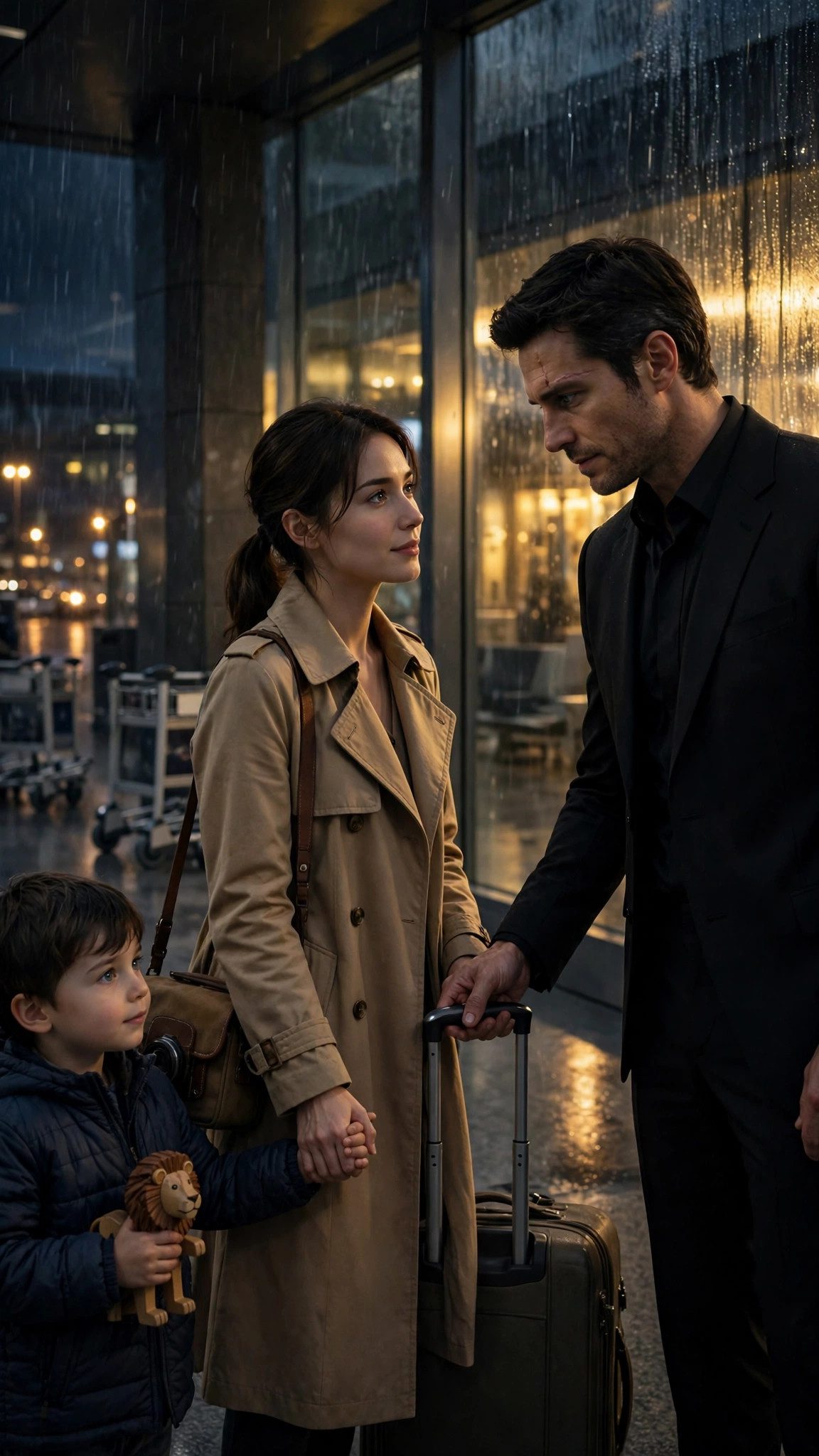
Story Genres: Mafia Romance

  • Chapter 4: Ten Minutes

    Chapter 4: Ten Minutes

    The text on my phone said: I know about the boy.

    No name. No number I recognized. Just seven words on a lit screen between us on the table at Sofia's, and the smell of garlic and bread suddenly seemed very far away.

    Dante saw my face change. He leaned forward, and his hands went flat on the table, palms down, fingers spread, the way a man holds himself down when everything in him wants to reach across and take hold of something.

    "You need to tell me," he said. "Tell me."

    I looked down at Leo, asleep against my shoulder, his small hand curled around my thumb, his dark hair falling across his forehead, and I thought about the promise I had made to myself in that little Swiss clinic, and I thought about the man in the grey coat on the bench across from the park, and I understood that the promise had been broken a long time ago, not by me, but by him.

    "How long have you known?" I asked.

    Dante closed his eyes for a second, and when he opened them, something in his face had changed, the careful control slipping, just a little, just enough for me to see the man underneath the boss.

    "Two years," he said.

    Two years. The words sat between us like stones.

    "Two years," I repeated.

    "I was in a meeting when the first one arrived," Dante said. "About the docks. Twelve men in a room, arguing about tariffs, and my phone buzzed, and I looked down, and there was my son on a swing in Geneva, and I stood up in the middle of the meeting, and I walked out, and I went to my office, and I closed the door, and I sat there for an hour, looking at that photograph. Twelve men waited for me. I did not care. I have never cared about a meeting less in my life."

    "Go on," I said.

    "There was a man in Geneva," he said. "Not to watch you. To watch over you. I told him never to approach you, never to speak to you, only to make sure you were safe. And then one day he sent me a photograph, and in the photograph you were holding a little boy in the park, and the boy had my eyes, and my hair, and my chin, and I knew."

    He reached into his jacket and took out his phone, and he turned it toward me, and on the screen was a photograph of Leo and me in the park in Geneva, Leo on the swing, me pushing him, both of us laughing, and I stared at it and I could not breathe, because someone had been standing close enough to take that photograph, and I had never seen them.

    "Every month," Dante said, his voice low and rough. "Every month he sent me a photograph. I have them all in my desk drawer. I have watched my son grow up in photographs, Elena, and I have never once held him, and I have never once been able to tell anyone that he exists."

    "Why didn't you come?" I whispered. "Why didn't you come to Geneva?"

    "Because you left," he said. "Because you chose to leave, and I told myself that if you wanted me to know, you would have told me. And because I was married to your sister, and I had made a promise, and I am a man who keeps his promises even when they are killing him."

    "Then why are you here now?" I asked. "Why the airport? Why tonight?"

    He looked down at his hands on the table, and for a moment he was silent, and I could see the struggle in his face, the boss and the man fighting for the same mouth.

    "Because Victoria told me to come," he said.

    The room tilted. I gripped the edge of the table.

    "What?"

    "Victoria knows," he said. "She has known for a year. I told her myself, the night the photograph of Leo's second birthday arrived. I could not carry it alone anymore. I went to her, and I told her everything, and I waited for her to destroy me, because she had every right to. And do you know what she did, Elena? She sat very still for a long time, and then she said, 'He has a son. Go to him.' And I said I couldn't, because of the marriage, because of the alliance, because of everything, and she said, 'Dante, I married you to save my father's company. You married me to save your docks. We have been business partners for three years, not husband and wife. Go to your son.'"

    I stared at him. "That's not true. Victoria loves you."

    "Victoria loves the idea of being loved," Dante said, and there was no cruelty in it, only a tired honesty. "She loved the wedding, and the house, and the name. But she never loved me, Elena. She told me so herself, a year ago, when she filed for divorce. Six months ago, the papers were ready. We have been living separate lives in the same house for a year, waiting for the right time to end it cleanly, without destroying the alliance, without destroying the company. She has been waiting for me to be brave enough to go to Geneva. And I wasn't brave enough. I was a coward, Elena. I sat in my office and looked at photographs of my son, and I did nothing."

    "Then why tonight?" I asked. "What changed tonight?"

    "The text," he said, and he nodded at my phone. "That message didn't come from me. It came from someone else. Someone else knows about Leo, Elena. Someone who is not my man in Geneva. Someone who wants me to know that they know."

    My blood went cold. "Who?"

    "I don't know yet," Dante said. "But I have a man inside my organization who has been selling information for months, and I think he sold this one too. And if the wrong people know about my son, then my son is in danger, and I will not sit in my office and look at photographs while my son is in danger. That is why I came to the airport. That is why I am begging you."

    "Begging me for what?" I asked.

    "Ten minutes," he said. "That's all I'm asking for. Ten minutes to tell you the truth, all of it, and then you can decide what happens next. Ten minutes, Elena. I've waited three years for ten minutes."

    I looked at him, this man who had never begged anyone for anything in his life, sitting across from me with his hands flat on the table and his eyes wet, and I thought about the eight years behind closed doors, and the ivory invitation, and the dressing room, and the little Swiss clinic, and the boy asleep in my arms, and I knew that whatever I decided in the next ten minutes would decide the rest of all our lives.

    "Talk," I said.

    He took a breath, and he began, and what he told me was worse, and better, than anything I had imagined.

    He told me about the marriage, the truth of it, not the story the newspapers had printed. He had married Victoria to save the Moretti docks, yes, but he had also married her because he believed, in that terrible winter after I left, that if he could not have the woman he loved, he would at least do his duty, and duty was something he understood. He had thought that marrying my sister would kill what he felt for me. It had not. It had only buried it, and buried things do not die. They wait.

    He told me about the divorce papers, signed six months ago, waiting in his lawyer's safe, and about the agreement he and Victoria had made: she would take Carter Freight back, free and clear, with enough money to rebuild it on her own terms, and he would take nothing from her, and they would tell the world that the marriage had simply run its course, and no one would ever know that it had never truly begun.

    He told me about the mole, the man inside his organization who had been selling information to Vincent Castellano, the head of the rival family, the man who had wanted the Moretti docks for twenty years and who would use anything, anyone, to get them. "Castellano has wanted my empire since before you were born," Dante said. "And now he knows I have a son, and a son is a weakness, and Castellano collects weaknesses the way other men collect art."

    He told me about the man in Geneva, whose name was Paolo, who had been his driver's cousin, a good man, a quiet man, who had watched over us for two years and had never once been seen, until the day he stopped reporting, three weeks ago, and Dante's people had found his car empty on a road outside Geneva, and Paolo had not been seen since.

    "Paolo is dead," Dante said, very quietly. "Or he is being held. Either way, someone took him, and someone took his photographs, and someone knows about Leo. And that is why I am here, Elena. Not to take him from you. Not to claim him like property. To protect him. To protect both of you. Because I have spent two years watching my son grow up in photographs, and I will not lose him to Castellano the way I lost Thomas on Mulberry Street."

    Thomas. The driver who had died taking a bullet for Dante. The man whose grave Dante visited every March fourteenth, alone, with a bottle of whiskey he never opened.

    "I know how you took your coffee," I said, and my voice was shaking. "I know which scars hurt during Chicago winters. I know how quiet you become when something goes wrong. But I don't know if I can trust you, Dante. You married my sister. You stayed away for three years. How do I know you won't stay away again?"

    "You don't," he said. "You can't know. All I can do is sit here and tell you the truth, and ask you for ten minutes, and then ten more, and then ten more after that, until you believe me. And if you don't believe me, then I'll stand outside your hotel every night until you do, because I have waited three years, Elena, and I am done waiting."

    "Let me tell you about the photographs," Dante said, and his voice dropped lower, and he looked down at his hands, and I saw that his hands were trembling, just slightly, the hands of a man who had held a city in his grip for twenty years and could not hold his own son.

    "The first one came in the spring, two years ago," he said. "You were in the park, and Leo was on the swing, and you were pushing him, and he was laughing, and I sat in my office and looked at that photograph for an hour, and I could not work, and I could not think, and I could not do anything except look at my son's face. The second one came a month later. He was taking his first steps, holding on to a chair, and Marta was behind him with her arms out, and I thought, he is walking, and I am not there, and I will never get that moment back. There was one of his first birthday, with the cake and the one candle, and one of him on the little red bicycle, and one of him asleep in the car, with his lion tucked under his arm. I have them all, Elena. Every single one. In my desk drawer, in a folder, in order, by date. Two years of my son's life, in photographs, and I have never once held him, and I have never once been able to tell anyone that he exists, and there are nights when I sit in my office and I take out that folder, and I look at those photographs, and I think about what kind of man watches his son grow up in photographs."

    Sofia came out of the kitchen then, with a bowl of soup, the soup Dante's mother used to make, garlic and basil and bread, and she set it down in front of me, and she put her hand on my shoulder, and she looked at Dante, and she said, "I always knew, you know. From the first night you brought her here. I knew. A woman can tell. And I have waited three years for this night, and I am glad it has finally come."

    She went back to the kitchen, and Dante and I sat in silence for a moment, and the soup steamed between us, and the candle in the red glass flickered, and I thought about the hundred quiet dinners we had eaten at this table, and how this one was different from all of them, because this time, for the first time, there was nothing left to hide.

    Leo stirred in my arms then, and opened his grey eyes, and looked up at Dante, and said, in his small, clear voice, "Mama, who is that man?"

    Dante looked down at him, and his face broke open, all the control gone at once, and he said, very softly, "I'm your father, Leo. My name is Dante. And I have been waiting a very long time to meet you."

    Leo studied him for a moment, the way he studied everything, with that grey, watchful gaze, and then he reached out one small hand, and he touched Dante's scar, the one through his left eyebrow, with one careful finger, and he said, "You have a boo-boo."

    And Dante Moretti, the most feared Mafia boss in Chicago, the man who had never cried in front of anyone in his life, closed his eyes, and a single tear ran down his face, and he whispered, "Yes. I do. And you just fixed it."
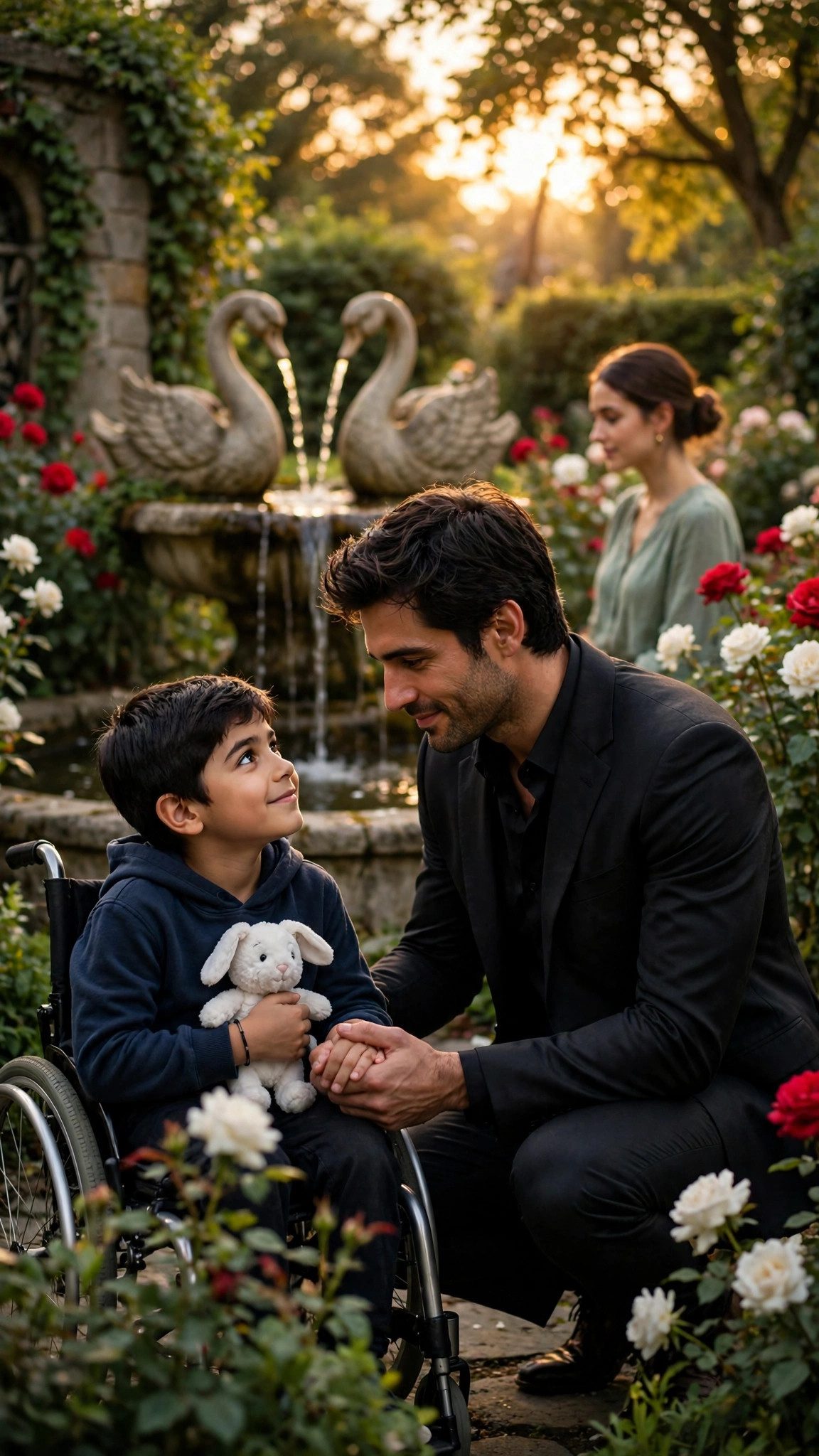
  • Chapter 3: Geneva

    Chapter 3: Geneva

    The doctor's office in Geneva was small and white and smelled faintly of antiseptic and snow. I remember the poster on the wall, a diagram of a hand, and the clock above the door, and the way the doctor folded her hands on her desk and looked at me over her glasses and said, in careful English, "You are pregnant, Miss Carter. About six weeks."

    Six weeks. I counted backward in my head, and I knew exactly when it had happened, and I knew exactly whose it was, and I sat very still and thought about the last time I had seen Dante, three weeks before the wedding, in the penthouse above the city, with the lights spread out below us and his hand on the back of my neck, and how he had looked at me that night like he already knew he was losing me.

    "Are you all right?" the doctor asked.

    "Yes," I said, and it was a lie, but it was the only word I had.

    I walked out of that clinic into the snow, and I stood on the pavement for a long time, watching my breath turn white in the cold air, and I thought about my mother, who had died four years earlier, and my father, who had passed long before that, and I thought about how alone I was in the world, and then I thought about the small life growing inside me, and for the first time in months, I did not feel alone at all.

    I did not call Dante. I did not call Victoria. I did not call anyone. I went home to my little apartment above the bakery on Rue de la Servette, and I sat by the window with a cup of tea going cold in my hands, and I made my decision the way I have always made my decisions: quietly, and all at once.

    I would keep the baby. I would raise him alone. I would never tell Dante, because by then he was my sister's husband, and I would not be the woman who destroyed her sister's marriage. I would not be the scandal twice over. I would be a mother, and that would be enough, because it had to be enough.

    It was harder than it looked.

    The first months were the worst, not because of the sickness, although there was plenty of that, but because of the loneliness. I photographed weddings with a camera that felt heavier every week, and I smiled at brides, and I went home to an empty apartment, and I talked to the small life inside me as if he could hear me, and I told him about Chicago, and about the lake, and about his grandfather, who had built a company with his hands and died at his desk, and about his grandmother, who had kept the books and made soup on Sundays.

    I named him Leo in the seventh month, after my father's middle name, because my father had always loved lions, and because I wanted my son to have something of my father in him, something brave. Leo Carter. It sounded right. It sounded like a boy who would grow up strong.

    He was born on a rainy night in September, in a hospital with white walls and a view of the rooftops, and when the nurse put him in my arms, wet and furious and perfect, I looked down at his face and I saw Dante. Not in the way I had feared, not as a ghost, but as a fact. The dark hair, already thick. The grey eyes, already watchful. The set of his chin, already stubborn. And then he opened his mouth and cried, and I laughed through my tears, because that cry was entirely his own, and entirely mine.

    Marta came into our lives when Leo was four months old. She was sixty-two, a widow from Ticino with silver hair and hands that had raised five children of her own, and she answered my advertisement for a nanny with a single sentence: "I have loved many babies. I will love yours too." She moved into the little room off the kitchen, and she taught me how to hold him, and how to feed him, and how to sleep when he slept, which I never learned, and she became the closest thing to family Leo and I had in Switzerland.

    "He has his father's eyes," Marta said to me once, when Leo was a year old, sitting on her lap in the kitchen, staring at the world with that grey, watchful gaze. "And your smile. You must be careful, Elena. A child like this one, everyone will want to know where he comes from."

    "I know," I said.

    "You have never told me," she said. "And I have never asked. But one day he will ask, and you must have an answer."

    "I'll tell him his father loved us," I said, "and that sometimes love isn't enough."

    Marta looked at me for a long time, and then she nodded, and she never mentioned it again.

    Leo grew the way children do, too fast and all at once. He walked at ten months, talked at fourteen, and by two he was taking apart everything in the apartment to see how it worked. The toaster. The radio. My camera, once, while I was in the shower, which I forgave him for only because the look on his face when I found him, surrounded by lens caps and screws, was so proud that I could not bring myself to be angry.

    He was itchy, always moving, always reaching, always asking why. He was incredibly clever and tenacious, but also very spontaneous, the kind of child who would decide at breakfast that he wanted to be a fireman and by lunch had moved on to being a lion tamer, and who meant both completely. He had my smile, the wide one that showed his teeth, and my stubbornness, the set of his jaw when he had decided something, but everything else belonged to Dante. The dark hair that fell across his forehead. The grey eyes that watched the world like it owed him an explanation. The way he held his chin when he was thinking, exactly the way his father did.

    At night, I could see myself rocking him while his face grew up, and I wondered if Dante had noticed. I wondered if he had ever stood at his window in Chicago and thought about me, or if the marriage and the empire and the organization had swallowed him whole. I wondered if Victoria had given him children, and if he held them the way he would have held Leo, and I hated myself for wondering, because wondering was just another way of not letting go.

    I never told Leo where he came from. That was dangerous, because a child who does not know where he comes from will invent an answer, and Leo was already inventing. When he was two and a half, he pointed at a man on the tram and said, "Is that my papa?" and my heart stopped, and I said, "No, sweetheart, that's just a man," and he said, "Then where is my papa?" and I said, "He lives far away, in a city across the ocean," and Leo thought about this for a moment and said, "Does he have a big house?" and I said, "Yes, a very big house," and Leo said, "Good. When I grow up I will go and find him," and I smiled, and I did not cry until he was asleep.

    Leo's first birthday fell on a rainy day in September, and Marta made a cake with one candle, and I took a photograph of him with frosting on his nose, and he laughed, and I laughed, and for a moment the little apartment above the bakery felt like the whole world. Marta gave him a wooden lion, carved by her late husband, and Leo carried it everywhere for a month, until the paint wore off its nose, and I thought about how a child can be happy with so little, a cake, a candle, a wooden lion, and how I had once thought I needed an empire to be happy, and how wrong I had been.

    That winter, I photographed a wedding in an old church in the Old Town, a small wedding, just family, and I watched the bride's father walk her down the aisle, his hand shaking on her arm, his eyes wet, and I thought about my own father, who would never walk me down any aisle, and I thought about Leo, who would never know his grandfather, and I went home that night and held my son a little tighter, and I told him about his grandfather, about the company he had built with his hands, and the soup his grandmother made on Sundays, and the way he used to take Victoria and me to the lake to fly kites, and Leo listened with his grey eyes wide, and he said, "Tell me again, Mama," and I did, and then he said, "Tell me about my papa," and I went very still, and I said, "Your papa lives far away, in a city across the ocean," and Leo said, "Is he tall?" and I said, "Very tall," and Leo said, "Is he strong?" and I said, "Very strong," and Leo thought about this for a moment, and then he said, "Good. When I grow up I will be tall and strong like him," and I smiled, and I did not cry until he was asleep, and then I cried for a long time, quietly, so Marta would not hear.

    There were things I did not notice in those years, things I only understood later. The man in the grey coat who sat on the bench across from the park every Tuesday, reading the same newspaper, never turning a page. The new family that moved into the apartment below us, quiet, polite, with a little girl Leo's age, who always seemed to be home. The way Marta would sometimes look out the window a little too long before she drew the curtains.

    I thought Geneva was safe. I thought the ocean was enough. I was wrong, and I would not understand how wrong I was until the night of June nineteenth, when Dante Moretti stood by the gate at O'Hare with my suitcase in his hand and asked me if the boy was my son, and I realized that the man in the grey coat had not been reading a newspaper at all. He had been watching my son. And he had been reporting back to Chicago every single week.

    On Sundays, Leo and I would walk to the lake, Lac Léman, with a bag of bread for the swans, and he would run ahead of me on the path, his little legs pumping, his lion tucked under his arm, and I would call after him to slow down, and he would slow down for exactly three seconds, and then run again, because that is what three-year-olds do. Marta would come with us sometimes, and she would teach Leo words in Italian, her mother tongue, and Leo would repeat them solemnly, "ciao" and "grazie" and "amore," and Marta would laugh, and say, "He has an ear for languages, this one, like his mother," and I would think about how Leo had never heard his father speak Italian, and how he would learn it anyway, because some things are in the blood, and cannot be kept away by an ocean. On the walk home, Leo would always ask for one more story about Chicago, about the big lake and the tall buildings, and I would tell him, and he would listen, and I would wonder if he could feel, the way I could, that the city across the ocean was calling us home.

    The reason I came back was my father. His ashes had been in Switzerland with me, in a small wooden box on the shelf above my desk, because when he died I could not bear to leave him in Chicago, and I could not bear to scatter him, either. For three years I had carried that box from apartment to apartment, and for three years I had told myself I would take him home one day, when I was ready, when it was safe, when the pain had dulled enough to do it properly.

    In May, Marta found me sitting by the window with the box in my lap, and she sat down beside me, and she said, "Elena. It is time."

    "Time for what?" I asked.

    "Time to take him home," she said. "A father should rest where his daughters can visit him. And you, my dear, have been running for three years. It is time to stop running."

    She was right, and I knew it. I booked the flights for June nineteenth, five days in Chicago, just long enough to move the ashes to the family plot at Graceland Cemetery, to stand by my parents' graves for the first time in three years, and to leave again before anyone who mattered even knew I was home.

    I told Leo we were going on an adventure, to the city where Mama grew up, to see the big lake and the tall buildings. He packed his little backpack himself, with his toy lion and his red truck and three books, and he asked me if the city had lions, and I said no, but it had a lake so big it looked like the sea, and he said that was almost as good.

    I did not tell Victoria I was coming. I did not tell Dante. I did not tell anyone. I bought the tickets under my own name, because I was too tired to be careful anymore, and I told myself that five days was not enough time for the past to find me.

    I was wrong about that, too. The past did not need five days. It needed five minutes, and a gate at O'Hare, and a man in a black suit who had been waiting for me for three years, and who had known about my son for two of them.

  • Chapter 2: Eight Years Behind Closed Doors

    Chapter 2: Eight Years Behind Closed Doors

    The first rule of loving Dante Moretti was that no one could know.

    Not his men. Not his family. Not my friends. Not my sister. Especially not my sister.

    The second rule was that I never called him. He called me. He would send a car, or a text with an address and a time, and I would go, and the door would open, and for a few hours the world would narrow down to a penthouse above the city, a bottle of wine, and a man who looked at me like I was the only honest thing he had ever touched.

    The third rule was that I never asked about his work. I never asked about the trucks, or the docks, or the men who came to the penthouse late at night with their hats in their hands. I never asked about the phone calls that made his face go still, or the mornings when he came home with blood on his cuff that was not his own. I learned to read his silences instead. There was the tired silence, after a long day, when he would sit on the couch with his shoes off and his head back and let me bring him coffee. There was the angry silence, when his jaw would set like stone and the whole room would feel smaller. And there was the frightened silence, which he would never have admitted was fear, when he would stand at the window looking down at the city for hours, and I would sit behind him on the bed and wait, because the only thing I could give him was my presence, and the only thing he would take from me was that.

    People think the wife of a powerful man lives in luxury. The secret of a powerful man lives in a small apartment with a leaky faucet and a camera bag by the door, and she counts her blessings in the hours she gets, not the things she owns.

    I did not mind, at first. I was twenty-two, and then twenty-three, and then twenty-four, and every time the car came for me it felt like being chosen. He would send Marco, his driver, a big quiet man with kind eyes who never spoke unless spoken to, and Marco would open the door for me like I was a lady, and I would ride through the city with my heart beating too fast, and Dante would be waiting at the top of the building with the lights low and dinner already ordered from Sofia's, and he would pour the wine himself, because he did not like staff in the penthouse when I was there, and he would ask me about my photographs.

    He remembered everything I told him. He remembered the name of the little girl whose birthday I had photographed in Pilsen, and the old man in the park who fed pigeons every morning, and the light in the botanical gardens in October. He remembered, and he asked after them, and I began to understand that the man the newspapers called a monster was, in private, a man starved for ordinary things. He wanted to hear about a birthday cake. He wanted to know if the pigeons had come back. He wanted, more than anything, to be a man for a few hours instead of a boss.

    I learned his body the way a photographer learns light. The knife scar across his ribs, white and old, from a fight when he was nineteen, before he was anyone, when his father was still alive and the family was still small. It pulled when the cold came in off the lake, and on winter nights he would press his hand against it without thinking, and I would warm my hands and put them over his, and he would close his eyes and breathe.

    The bullet scar on his left shoulder, from a night outside a restaurant on Mulberry Street, six years before I met him, when a rival's man had put a bullet through his shoulder and his driver, Thomas, had thrown himself in front of the second one. Thomas had died, and Dante had never forgiven himself, and he visited Thomas's grave every year on the fourteenth of March, alone, with a bottle of whiskey he never opened. He told me that on a night when the snow was coming down outside and the penthouse was warm and dark, and his voice was so low I had to lean in to hear it, and I understood that I was the only person in the world he had ever told.

    He told me about his father, who had built the family from nothing, from a pushcart and a butcher's shop, and who had died of a heart attack in his office when Dante was twenty-six, leaving him an empire he had not asked for and a war he had not started. He told me about his mother, who had died when he was twelve, and how he could still remember the smell of her kitchen, garlic and basil and bread, and how Sofia's restaurant was the only place in Chicago that smelled like that.

    He never told me he loved me. Not in words. He showed me in the way he held my hand under the table when we ate, in the way he remembered how I took my coffee, in the way he kept a spare toothbrush for me in his bathroom and a pair of my shoes by his door. He showed me, and I believed it was enough, and for a long time, it almost was.

    I remember one Christmas Eve, three years into it, when the snow was coming down so hard over the lake that the whole city looked like it had been shaken inside a snow globe. Dante had a family dinner he was supposed to attend, a table full of cousins and uncles and men who called him boss, and he told them he was sick, and he came to my little apartment instead, with a bottle of wine and a bag of groceries, and he cooked for me. He was terrible at it. He burned the garlic and undercooked the pasta and cut his finger on the bread knife, and we laughed until our stomachs hurt, and we ate it anyway, sitting on the floor by the window with the snow coming down outside, and he said, "This is the best Christmas I've had since I was twelve," and I believed him, because his eyes were shining the way a child's eyes shine, and for one night he was not the most powerful man in Chicago. He was just a man who had burned the garlic for me.

    I remember the night he taught me to dance in the penthouse, because I had told him I had never learned, and he had laughed, a real laugh, deep and surprised, and he had put on a record, an old Sinatra record his mother had loved, and he had taken my hand, and he had shown me, step by step, in the dark, with the city spread out below us, and I had stepped on his feet a dozen times, and he had not minded at all, and when the song ended he had not let go of my hand, and we had stood there in the dark, swaying, long after the music stopped.

    Those were the nights I held on to, in the years after, when the doors were closed and the invitation had arrived and I was alone in Geneva with snow on the windowsills. Those were the nights that made the eight years worth it, even when the price was everything else.

    My sister Victoria lived a different life. She was three years older than me, and she had always been the one our father could rely on. While I was out at night with a camera, she was at home learning the family business, Carter Freight, the little shipping company our father had built and our mother had kept alive with her bookkeeping. Victoria was calm where I was reckless. She was steady where I was restless. She wore her hair in a smooth knot and her suits pressed, and she could sit in a room full of angry men and make them all feel heard, and I admired her for it even as I resented it, because being the reckless sister meant always being the disappointment, the one who had chosen art over the family, the one who photographed other people's weddings instead of having one of her own.

    Our father died when I was twenty-four, a heart attack at his desk, the same way Dante's father had died, and I thought for a while that Victoria and I might finally become close, the two of us alone with the company and the house and the grief. But grief made Victoria harder, not softer. She threw herself into Carter Freight, working sixteen hours a day, and the company began to fail anyway, because our father had been the one who held the clients with his handshake, and without him the contracts drifted away like smoke.

    Our mother died four years before the wedding, quietly, in her sleep, a year after our father, and after that it was just Victoria and me, and the distance between us grew wider every year, until we were two women who shared a last name and a childhood and almost nothing else.

    I did not know, in those years, that Victoria had met Dante. I did not know that she had been introduced to him at a charity dinner as the head of Carter Freight, or that he had seen in her something I had never seen: a solution. The Moretti family needed the Carter docks. The Carter family needed Moretti money. It was, as these things always are, a perfect match on paper. She presented the flawless wife to the Moretti organization. Her calmness attracted him. Her smile improved the numbers. Her touch made the family even more envied.

    I found out the way you always find out the worst things in life: from an envelope with my name on it, delivered by a courier who did not know he was carrying a bomb.

    The ivory invitation. Gold edges. Two names in elegant black script. Dante Moretti and Victoria Carter.

    I sat on my kitchen floor with that invitation in my hands for an hour, and I did not cry, because crying would have meant accepting it, and I was not ready to accept it. I called Dante. He did not answer. I called again. He did not answer. On the third call, his voice came on the line, low and tired, and I said, "Is it true?"

    A long silence. Then: "Elena."

    "Is it true?" I asked again.

    "It's an alliance," he said. "The family needs the docks. The Carters need the money. It's business."

    "I'm your business?" I said. "Or is she?"

    "Don't do this," he said.

    "Do what?" I said. "Ask you to choose me? I've been asking you for eight years, Dante. Eight years behind closed doors. When are you going to stop treating me like a secret and start showing the world you care about me?"

    "I can't risk my Empire for you," he said, and his voice broke on the last word, just slightly, just enough for me to hear it, and I hated him for it, because if he had said it coldly I could have hated him cleanly, but he said it like a man being torn in half, and I loved him even then.

    "When you keep me in your past," I said, "I will always endure everything."

    I hung up. I did not go to the wedding. That is what I told everyone, and it was almost true. I did not sit in the church. I did not watch him say the vows. But I could not stay away entirely, and so on the day of the wedding I went to the church early, before the guests arrived, and I stood in the little dressing room off the vestry with my camera in my hands, and I listened to the organ through the wall, and I heard the doors open and the music change, and I heard the murmur of the crowd, and I knew that in the room beyond that wall my sister was walking down the aisle in the decorated room, in the dress I had seen in the shop window, and I was in the dressing room, in the dark, with a camera I could not use.

    She took the decorated room. I took the dressing room. She became Mrs. Moretti. And I learned to conceal how the pain felt.

    When it was over, I walked out through the kitchens, past the waiters carrying trays of champagne, and into the rain, and I did not stop walking until I was at the airport, and by midnight I was on a plane to Geneva with a suitcase full of clothes and a camera bag and a heart that felt like it had been cut out of my chest with a dull knife.

    Dante stayed away from me for three years after that. Or I stayed away from him. It was hard to tell the difference, and it did not matter. What mattered was that I was gone, and he was married to my sister, and the doors that had been closed for eight years were now locked, and I told myself I was free.

    I was not free. I was just far away. And far away, in a little apartment in Geneva with snow on the windowsills and a job photographing conferences for people whose names I could not pronounce, I learned the difference between being free and being alone. Free is a choice. Alone is just what is left when the choice is made for you.

    I threw myself into work. I photographed everything. Weddings in old churches. Babies in christening gowns. Businessmen shaking hands in hotel ballrooms. I built a small reputation, and a smaller life, and I told myself it was enough, and for a while, on good days, I almost believed it.

    But at night, in the dark, I could feel the absence of him like a missing tooth, a space my tongue kept finding. I missed the weight of his hand on the back of my neck. I missed the way he said my name when he was tired. I missed the coffee, black with one sugar, scalding hot, in a plain white mug. I missed the quiet, the long silences at the window, the way he would stand there for hours looking down at the city he owned, and I would sit behind him and wait, because waiting was the only thing I had ever been good at.

    And then, one grey morning in February, with snow falling outside the clinic window and my hands cold in my lap, a doctor told me I was pregnant, and I sat very still for a long time, and I thought about the man who was now my sister's husband, and the child growing inside me that belonged to both of us, and I understood that I had a choice to make, and I made it.

    I would keep the baby. I would raise him alone. I would never tell Dante, because telling him would mean going back, and going back would mean watching my sister's marriage fall apart, and I had already lost my father and my mother, and I would not lose my sister too, even if she had taken the only man I had ever loved.

    That was the promise I made to myself in that little Swiss clinic. And for three years, I kept it.

  • Chapter 1: The Man at the Gate

    Chapter 1: The Man at the Gate

    The first thing I saw when I stepped off the plane at O'Hare was Dante Moretti standing by the gate with my suitcase already in his hand, and for one wild second I thought the last three years had never happened.

    It was June nineteenth, a warm night, and the airport smelled like jet fuel and rain. My flight from Geneva had landed late. I had Leo's hand in mine and my father's ashes in my carry-on, and I had rehearsed this arrival a hundred times in my head: I would walk fast, head down, get a cab, disappear into the city for five days, move my father's ashes to the family plot, and leave again before anyone who mattered even knew I was home. I had not rehearsed Dante.

    He was leaning against the wall beside the gate in a black suit, no tie, his jacket open, his hands in his pockets like a man with all the time in the world. He looked older than I remembered and exactly the same. The same dark hair, a little more grey at the temples. The same grey eyes. The same scar through his left eyebrow that I had traced with my fingertip a hundred times in the dark. Three years had not softened him. If anything, Chicago had sharpened him.

    Leo tugged at my hand. "Mama, who is that man?"

    "Keep walking," I whispered, and I tried to walk straight past him.

    Dante stepped forward and gently took my suitcase from my hand before I could stop him. His fingers brushed mine, and my whole body remembered him at once, which was unfair, because bodies are not supposed to remember what the mind has spent three years trying to forget.

    "You don't run to say hello?" he asked.

    I looked up at him. "Dante, I don't think you should be here."

    He smiled, the slow smile that had always been the most dangerous thing about him. "We should probably talk. Let's catch up."

    "I'm only here for five days," I said. "I'm here for my father."

    "I know," he said. "I'm taking you to Sofia's restaurant."

    Before I could refuse, he had already turned toward the exit with my suitcase, and Marco, his driver, was standing by the doors with the black car waiting, and Leo was staring up at Dante with wide, curious eyes, and I understood with a sinking feeling that Dante Moretti had not come to the airport by accident. He had come because he knew. He had always known everything, and I had been a fool to think three years and an ocean would change that.

    The chauffeur drove us through the darkened streets of Chicago, and I kept hoping he would forget me and let the past stay where it belonged. Leo fell asleep against my shoulder halfway there, his small hand curled around my thumb, and I watched the city slide past the window, the lake on one side, the towers on the other, and I thought about how I had first come to this city as a girl of twenty-two with a camera around my neck and no idea what kind of man could ruin a life just by looking at it.

    I was twenty-two when I met Dante Moretti. I was a banquet photographer, the girl with the camera at weddings and galas and charity dinners, the one people forgot was in the room until they saw the photographs later and wondered who had caught that exact moment. I had no mutual friends with him. There was no possibility of anything unfolding. He was the most powerful man in Chicago, and I was a girl who carried spare batteries in her pockets and ate dinner standing up in hotel kitchens.

    It was a banquet at the Drake Hotel, a fundraiser for the children's hospital, and I had been hired to photograph the room. I remember the light that night, gold and low, coming through the tall windows, and the orchestra playing something soft, and the way the waiters moved between the tables like dancers. I remember lifting my camera and seeing him through the lens for the first time, standing alone near the bar, watching the room the way a wolf watches a field.

    He was not dancing. He was not talking. He was watching, and when my lens found him, he looked straight into it, straight through it, straight at me, and I lowered the camera with my heart hammering because no one had ever looked at me like that before, like I was the only real thing in a room full of painted people.

    He crossed the room to me. Later I would learn that Dante Moretti never crossed a room for anyone. That night he did.

    "You're the photographer," he said.

    "I am," I said, and my voice came out steadier than I felt. "Elena Carter."

    "Dante Moretti," he said, and held out his hand, and when I took it his palm was warm and rough, a working man's hand in a tailored suit, and I thought, this man has scars, and I wanted to know every one of them before I knew his name.

    "Don't photograph me," he said.

    "Why not?" I asked.

    "Because I don't like being seen," he said. "And you see too much."

    I laughed before I could stop myself. "That's my job."

    "Then do your job somewhere else tonight," he said, and there was no threat in it, only a kind of tired amusement, like a man who had spent his whole life being watched by people who wanted something from him and was briefly entertained by a girl who wanted nothing at all.

    I photographed the room for the rest of the evening, and I did not photograph him, and at midnight, when the band was packing up and the waiters were stacking chairs, he was still there, standing by the bar with a glass of whiskey he had not drunk, watching me coil my cables.

    "Let me drive you home," he said.

    "I have a cab coming," I said.

    "Cancel it," he said.

    I should have said no. I was twenty-two, and I knew who he was. Everyone in Chicago knew who Dante Moretti was, even a banquet photographer who had only been in the city for a year. The newspapers called him a businessman. The whispers called him something else. My mother was still alive then, and she would have told me to run. But my mother had also taught me that a life without risk is just a long wait, and so I said yes, and he drove me home himself, no driver, no bodyguard, just Dante Moretti in a black car with the windows down and the lake wind coming in, and he asked me about my camera, and my work, and the photographs I loved, and he listened the way no one had ever listened to me, like every word I said mattered.

    At my building he walked me to the door. He did not try to kiss me. He stood a careful distance away, his hands in his pockets, and said, "Good night, Elena Carter."

    "Good night, Mr. Moretti," I said.

    "Dante," he said.

    He came to the next banquet. And the next. He never asked me to photograph him, and I never did, and after the third banquet he asked me to dinner, and after dinner he asked me to stay, and I stayed, and that was how it began, quietly, in a penthouse above the city with the lights spread out below us like a map of everything he owned, and for eight years he loved me behind closed doors.

    Eight years. I knew how he took his coffee, black with one sugar, scalding hot, in a plain white mug, never a fancy cup. I knew which scars hurt during Chicago winters, the knife scar across his ribs that pulled when the cold came in off the lake, and the bullet scar on his left shoulder that ached so badly some January nights that he could not sleep on that side. I knew how quiet he became when something went wrong inside the Moretti organization, how he would stand at the window for hours without speaking, his jaw tight, his hands behind his back, and I knew not to ask, just to bring him coffee and sit nearby and wait until the quiet passed.

    I knew the exact weight of his hand on the back of my neck. I knew the way he said my name when he was tired, low and soft, like a secret. I knew everything about him except the one thing I kept asking for, the one thing he would never give me.

    "When are you going to stop treating me like a secret," I asked him once, on a rainy night in October, "and start showing the world you care about me?"

    He looked at me for a long time, and I saw something move behind his eyes, something that might have been love and might have been fear, and he said, "I can't risk my Empire for you."

    "Then what am I?" I asked.

    "You're the part of my life that's mine," he said. "The only part."

    It was not enough. It was never going to be enough. But I stayed, because when you are twenty-two and then twenty-five and then twenty-nine, and the most powerful man in Chicago looks at you like you are the only real thing in the room, leaving feels like dying, and I told myself that one day he would choose me, one day he would marry me, one day the doors would open and I would walk out of them beside him in the daylight.

    Then the ivory invitation arrived.

    It came in a cream envelope with gold edges, delivered by courier to my little apartment, and when I opened it I saw two names printed across it in elegant black script: Dante Moretti and Victoria Carter. My older sister.

    My sister. The perfect one. The calm one. The one whose smile improved the numbers and whose touch made the family even more envied. The one who had always been the right daughter, the steady daughter, the one our father could present to the world without apology, while I was the reckless sister, the one with the camera and the late nights and the ribs that were always tattooed with other people's stories.

    Victoria had entered the Moretti organization the way a queen enters a ballroom, and she completed the image. She was the flawless wife, and I was the scandal no one was allowed to name.

    I did not go to the wedding. I watched it from the dressing room, because I could not stay away entirely, and I could not stand in the church and watch him promise himself to my sister. I stood in the little room off the vestry with my camera in my hands, useless for once, and I listened to the organ and the vows through the wall, and when it was over I walked out through the kitchens and into the rain and I did not stop walking until I was at the airport.

    Dante stayed away from me for three years after that. Or I stayed away from him. It was hard to tell the difference. I took a job in Geneva, photographing conferences and weddings for people whose names I could not pronounce, and I told myself I was free, and then one morning in a little Swiss clinic, with snow on the windowsills and my heart hammering in my chest, a doctor told me I was pregnant, and I understood that I would never be free of him, and I would never tell him, because by then he was my sister's husband.

    I raised Leo alone. It was harder than it looked. At night, I could see myself rocking him while his face grew up, and I wondered if Dante had noticed. I knew very little about my son, in the way a mother knows everything and nothing at once. He was itchy, always moving, always reaching. He was incredibly clever and tenacious, but also very spontaneous, the kind of child who would take apart a clock to see how it worked and then be genuinely surprised when it did not go back together. I had never told him where he came from. That was dangerous, because my almost-three-year-old son had my smile and my stubbornness, but everything else belonged to Dante. The dark hair. The grey eyes. The way he held his chin when he was thinking, exactly the way his father did.

    And now here I was, back in Chicago for five days to move my father's ashes, sitting in the back of Dante Moretti's car with my sleeping son in my arms, driving through the darkened streets toward Sofia's restaurant, and Dante was watching me in the mirror, and I could feel his eyes on me the entire ride, and I knew he knew.

    At Sofia's, he carried my suitcase inside like it weighed nothing, and Sofia herself came out of the kitchen, wiping her hands on her apron, and looked at me and then at Leo asleep in my arms, and her face did something complicated, and she said, "Elena. It's been a long time."

    "Sofia," I said.

    She led us to the corner table, the one by the window with the candle in the red glass, the table where Dante and I had eaten a hundred quiet dinners, and she brought bread and oil without being asked, and then she left us alone, and Dante poured the wine himself, and for a while neither of us spoke, because there are some silences that have been waiting three years to be broken, and neither of us knew how to break them gently.

    Finally he set down his glass and looked at me, and his voice was low and careful, the voice of a man handling something explosive.

    "Is he your son?" he asked.

    My phone was on the table between us, and as if on cue it lit up with a text, and I glanced down and saw a message from a number I did not recognize, and my blood went cold, because the message said only: I know about the boy.

    Dante saw my face change, and he leaned forward, and his eyes never left mine.

    "You need to tell me," he said. "Tell me."

    I knew he knew. I knew he had known before he ever came to the airport. And I also knew, with a sudden terrible clarity, that whatever he was about to say next would change everything, because the most feared Mafia boss in Chicago, the man who had never begged anyone for anything in his life, was sitting across from me with his hands flat on the table like a man holding himself down, and he was begging me for ten minutes.

    Ten minutes. That was all he asked for. And I had no idea what he was about to confess.

  • Chapter 7: His First Word

    Chapter 7: His First Word

    Spring came late that year, the way it always comes late in Chicago, as if the city is reluctant to believe in it. But when it came, it came all at once — the sun, the warm wind off the lake, the roses opening in Elena's garden, red and white, all along the paths where Matteo used to chase butterflies before he knew what a wheelchair was.

    It had been three weeks since the arrests. Three weeks since Danny Brennan told the police everything, and Clara Brennan was taken away in handcuffs, and Salvatore Castellano's photograph was on the front page of every newspaper in the city. Three weeks since I had told Matteo the truth, and he had written four words on a notepad in large, shaky letters: I SAW THE MAN.

    In those three weeks, something had changed in the house. Not all at once. Not dramatically. But quietly, the way spring changes a garden — one bud at a time, until one morning you look out the window and realize that everything is green.

    Matteo was drawing every day now. Not just the fountain, not just the roses, but everything — the house, the garden, Rosa in the kitchen, Gabe at the gate, Lucia reading in the chair beside his bed. He drew himself, too, in his wheelchair, with the white rabbit in his lap, and in the drawings, he was always smiling. I kept every one of them in the drawer of my desk, next to the drawing of the woman in the red scarf, because I wanted to remember where we had started, and how far we had come.

    He was humming, too. Not just the lullaby, now, but other songs — songs Lucia sang to him, songs Rosa hummed in the kitchen, once, to my amazement, a few bars of a song Elena used to sing in the car, a silly pop song she had loved and I had pretended to hate. He hummed it while he drew, quietly, to himself, and when he caught me listening, he did not stop. He just kept humming, and he smiled, a small, private smile, the way a person smiles when they know a secret and are not quite ready to tell it yet.

    Lucia was there every day. She had moved from being a caregiver to being something else, something I did not have a name for yet — a friend, a presence, a part of the house. She ate dinner with us now, at the kitchen table, and Rosa had started setting a place for her without being asked, and Matteo had started saving her the best piece of bread, the way he used to save the best piece for his mother. She never asked him to speak. She never waited for him to speak. She simply sat beside him, and read to him, and talked to him about her day, and let him be exactly who he was, and in return, he gave her something he had given to no one else since the explosion.

    His trust.

    It was a Sunday morning in late April, warm and bright, the kind of morning Elena had loved best. I was in my study, going over some papers, when Lucia knocked on the door and said, "Vincent, would you come to the garden? Matteo wants to show you something."

    I put down my pen and followed her out the back door, into the sun. The garden was in full bloom. The roses were everywhere, red and white, and the fountain was running, the water falling over the stone swans, and the air smelled like earth and flowers and the lake, miles away.

    Matteo was sitting in his wheelchair beside the fountain, in the same place where Lucia had first brought him, on the day he had touched the water and laughed his silent laugh. The white rabbit was in his lap. His sketchbook was open on the stone wall beside him. And he was looking at me, his dark eyes wide and steady, with an expression on his face I had never seen before.

    Not fear. Not sadness. Not the flat, waiting look he had worn for fourteen months.

    Anticipation. The look of a child who has a secret, and who has finally decided to tell it.

    Lucia stood behind his chair, her hands resting lightly on the handles, and she looked at me, and she nodded, once, and she stepped back, giving him space.

    I walked toward him, slowly, and I knelt down beside his chair, the way I used to kneel beside his bed when he was small, and I said, "What is it, Matteo? What do you want to show me?"

    He looked at me. His mouth moved. His lips shaped a word, the way they had shaped it a hundred times before, in the hospital, in the car, in the dark of his bedroom, when I had asked him and he had tried and nothing had come out.

    But this time, something did come out.

    It was not loud. It was not clear, not at first. It was a small, rough sound, like a door opening after a long time shut, like a voice remembering how to be a voice.

    "Dad."

    One word. Three letters. The smallest word in the world, and the biggest.

    I stared at him. I could not move. I could not breathe. I could not believe what I had just heard, because for fourteen months I had dreamed of hearing it, and in my dreams it had always sounded exactly like that — small, and rough, and perfect.

    "Dad," Matteo said again, a little louder this time, a little clearer, and his eyes filled with tears, and his small hands came out from under the blanket, and he reached for me, and I took him in my arms, wheelchair and all, and I held him, and I cried, and he cried, and the fountain kept running behind us, and the roses kept blooming, and the sun kept shining, as if the whole world had been waiting for this one word, and now that it had come, everything could finally begin again.

    "I'm here," I said, and my voice was shaking, and I did not care. "I'm here, Matteo. I'm right here. I've always been here."

    He pulled back a little, and he looked at me, and his mouth moved again, and this time the words came faster, tumbling over each other, as if they had been waiting in line for fourteen months and were all trying to get out at once.

    "Dad," he said. "Don't go. Stay. Please. Stay."

    "I'm not going anywhere," I said. "I'm never going anywhere again. I promise."

    He nodded, and then he turned his head, and he looked at Lucia, standing behind his chair with her hands over her mouth and tears running down her face, and he reached out one small hand toward her, and he said, in the same small, rough, perfect voice:

    "Stay."

    Lucia made a sound — half a laugh, half a sob — and she knelt down beside his chair, and she took his hand, and she said, "I'm staying, Matteo. I'm not going anywhere, either. I'm staying right here."

    And that was how it began. Not with a miracle, not with a single moment that fixed everything, but with a word, and then another word, and then another, coming slowly, one at a time, the way water comes back to a fountain after a long winter.

    In the weeks that followed, Matteo's words came back the way spring comes back — gradually, and then all at once. First "Dad," and "Stay," and "Lucia," and "Rosa," and "Gabe." Then "hungry," and "tired," and "rabbit," and "fountain." Then whole sentences, short and simple, spoken in a voice that was still rough, still finding its way, but unmistakably his. "I want to go to the garden." "Can Lucia read to me?" "Dad, tell me about Mama."

    That last one was the hardest. He asked it one evening, sitting in his bed with the white rabbit in his arms, looking up at me with Elena's dark eyes, and for a moment I did not know what to say. How do you tell an eight-year-old boy about his mother, when the telling means remembering the worst day of your life?

    But I had promised myself I would never lie to him again, not even by silence. So I sat down on the edge of his bed, and I told him about Elena. I told him about the way she laughed too loud at dinner parties, and danced barefoot in the kitchen, and put too much garlic in everything she cooked. I told him about the beach in Amalfi, and the fountain she had found at the estate sale, and the roses she had planted with her own hands. I told him about the way she used to sing to him when he was a baby, the song about the river and the boat and the star. And I told him that she loved him more than anything in the world, and that she would be so proud of him — so proud of how brave he had been, and how strong, and how he had never, not once, given up.

    "Do you think she can hear me?" Matteo asked, quietly. "If I talk to her?"

    "I think she can," I said. "I think she has been listening all along. I think she heard every word you didn't say, and she was waiting, just like I was, for the day you could say them out loud."

    He nodded, and he hugged the white rabbit a little tighter, and he said, "Mama, I can talk now," in a small, clear voice, and I had to turn my face away for a moment, because the tears were coming again, and I did not want him to see them, and then I realized that it did not matter if he saw them. Tears count, too. Anna had said that, a lifetime ago, in the hospital. Tears count.

    "Tell me one more story about her," Matteo said, settling deeper under his blanket. "The one about how you met."

    So I told him, the way I had told him a hundred times before the explosion, and the way I would tell him a hundred times again: about a rainy evening in Rome, and a woman with dark hair laughing at a café table, and a man who walked past and then walked back again, because he could not bear to keep walking. Matteo listened with his eyes half closed, the white rabbit tucked under his chin, and by the time I reached the part where his mother had laughed and said yes to dinner, he was asleep, breathing slow and even, a small smile on his face, dreaming whatever dreams eight-year-old boys dream when the world has finally, finally gone quiet in the right way.

    The trials came and went. Danny Brennan was sentenced to twenty-five years. Clara Brennan was sentenced to fifteen. Eddie Marcone was sentenced to thirty. Salvatore Castellano was sentenced to life. The newspapers called it the biggest organized crime case in Chicago in a decade, and for a while, reporters camped outside our gates, and Gabe had to chase them away, and I refused every interview, because none of it mattered to me. What mattered was in the garden, and in the house, and in the small, rough voice of a boy who had found his way back to the world.

    Lucia stayed. She did not move into the house, not at first — she had her own small apartment, and her own life, and I did not want to rush anything, not after everything we had been through. But she was there every day, and she ate dinner with us every night, and on Sundays, the three of us went to the garden together, and Matteo would sit beside the fountain, and Lucia would read to him, and I would sit on the stone wall and watch them, and I would think about how strange life was, how it could take everything from you and then, slowly, carefully, give you something back — not the same thing, never the same thing, but something new, something you had not expected, something that was its own kind of gift.

    One evening, in late June, when the roses were at their fullest and the air was warm and the fountain was running, Matteo asked me a question.

    "Dad," he said. "Is Lucia going to be my new mama?"

    I looked at him, and I looked at Lucia, who was sitting beside him with a book in her lap, and I saw the way she was looking at him — not with pity, not with duty, but with love, plain and simple, the way a person looks at someone they have chosen — and I said, "I don't know, Matteo. That's something Lucia and I have to talk about. But I can tell you this: she loves you. And I love you. And whatever happens next, the three of us are going to figure it out together."

    "Okay," Matteo said, and he nodded, as if that were a perfectly reasonable answer, and he went back to his drawing, and Lucia reached over and squeezed my hand, and I squeezed hers back, and we sat there in the garden, in the sun, listening to the fountain, and for the first time in fourteen months, the silence in our house was not the silence of a locked door.

    It was the silence of a family, sitting together, with nothing left to hide.

    That night, after Matteo was asleep, I went out to the garden alone, the way I used to do, and I stood beside the fountain, and I looked up at the stars, and I said, out loud, to the empty air, to Elena, to the woman I had loved and lost and would love for the rest of my life:

    "He talks now, Elena. Our boy talks. He says 'Dad,' and he says 'Stay,' and he says your name, and he draws pictures of the fountain, and he laughs, and he is alive, Elena. He is really, truly alive. And I kept my promise. I found out who did this to us. And I brought him home — not the way he was before, because nothing will ever be the way it was before, but home, in the way that matters. He is safe. He is loved. He is heard."

    The fountain kept running. The water kept falling over the stone swans. And somewhere upstairs, in a room with a rocket-ship lamp and a white rabbit and a boy who had finally found his voice, the silence that had almost buried us was gone.

    And in its place, there was a family.

    The End.
    THE END

  • Chapter 6: What Matteo Saw

    Chapter 6: What Matteo Saw

    Friday came, and Salvatore Castellano did not give me Danny Brennan.

    Instead, he sent me a message of his own. It arrived at noon, in the form of a black car parked across the street from my house, its engine running, its windows dark. It sat there for an hour, not moving, just watching. Gabe called me from the gate, and I looked out the window of my study, and I understood.

    It was a reminder. A man like Castellano does not need to say "I am watching you." He simply watches you, and lets you do the worrying yourself.

    I called Gabe into the study. "Double the men on the gate," I said. "And I want someone with Matteo at all times. Not just Lucia. One of our men, in the house, at all times, until this is over."

    "Yes, boss," Gabe said.

    "And find Danny Brennan," I said. "I don't care where he is. Milwaukee, Gary, Mexico — find him."

    Gabe found him in Cleveland.

    It took four days. Four days of phone calls, and favors, and men asking questions in bars and garages and all the places where men like Danny Brennan go when they are trying not to be found. On Tuesday morning, Gabe came into my study with a photograph on his phone: Danny Brennan, sitting at a bar in Cleveland, drinking a beer, wearing a jacket with the collar turned up, looking over his shoulder the way a man looks when he knows someone is coming for him.

    "He's working at a body shop," Gabe said. "Under a different name. The owner doesn't know who he is. He thinks he's just a mechanic."

    "Get him," I said.

    Gabe took three men and drove to Cleveland that night. They waited until the body shop closed, and they took Danny Brennan off the street two blocks from his apartment, and they put him in a car, and they drove him back to Chicago, and by Thursday morning, he was sitting in a chair in the warehouse on the South Side, in the room where conversations happen that cannot happen anywhere else.

    I went to see him alone. Gabe wanted to come with me. I told him no. This was something I needed to do by myself.

    Danny Brennan was thirty-four years old, thin, with dark hair and a scar that ran from his left eyebrow down to his cheek. He looked smaller than his photograph. He looked tired. His hands were shaking, and there was a cut on his lip, and when I walked into the room, he looked up at me, and I saw something in his eyes that I recognized.

    Fear. Not the fear of a man who is afraid of being hurt. The fear of a man who has been afraid for a very long time, and who is tired of it.

    "Mr. Rossi," he said. His voice was hoarse. "I know why I'm here."

    "Do you?" I said.

    "Yes," he said. "The bomb. The SUV. Your wife. I know."

    I sat down in the chair across from him, and I looked at him for a long moment, and I thought about Elena, and about Matteo, and about the fourteen months of silence, and about the white rabbit on the floor of my son's bedroom, and I felt the cold fury rise in me, the way it always rose, and then I pushed it down, because fury was not what I needed right now. What I needed was the truth.

    "Tell me," I said.

    He told me.

    He told me that Eddie Marcone had come to him eighteen months ago, in the garage on the South Side, and had offered him fifty thousand dollars to plant a device under a car. He told me he had not asked whose car it was, at first, because fifty thousand dollars was more money than he had ever seen in his life, and because he owed money to men who were not patient. He told me that Marcone had given him the device, and a photograph of the car, and a schedule — Tuesdays and Thursdays, the armored SUV, the same route, the same red light on the edge of the Loop — and that he had waited at that red light for three weeks, in a borrowed car, watching, until one Tuesday in October, the SUV stopped beside him, and he had gotten out, and he had crouched beside it, and he had done what he was paid to do.

    "I didn't know there was a child in the car," he said, and his voice broke. "I swear to God, I didn't know. Marcone told me it was a business thing. He told me the car would be empty, that it was parked, that no one would be in it. He lied to me. He told me it was just a car. I didn't know your wife was in it. I didn't know your boy was in it. I didn't know until I saw it on the news, and by then it was too late, and Marcone told me that if I ever said a word, he would kill me, and my sister, too."

    "Your sister," I said. "Clara."

    "Yes," Danny said. "Clara. She's my little sister. After our mother died, I raised her. I was all she had. And when Marcone told me what he wanted, I said no, at first. But then Castellano's men came to see me, and they told me that Clara would be taken care of, that she would be given a job, a good job, and that all she had to do was watch the boy, and keep him quiet, and report back if he ever said anything about what he saw."

    "What did he see?" I asked. "What did Matteo see?"

    Danny looked down at his hands. "Me," he said. "He saw me. He was in the back seat, and he looked out the window, and he saw me crouching beside the car. He saw my face. He saw the scar. I saw him see me, and for a second, we just looked at each other, a grown man and a little boy, and then the light changed, and the car drove away, and I stood there on the sidewalk, and I knew. I knew that boy could point at me in a lineup and end my life. And I knew that Castellano knew it, too. That's why they sent Clara. Not to hurt him. Just to keep him quiet. To make him too afraid to speak."

    I sat there in the silence of that room, looking at the man who had killed my wife, and I felt something I had not expected to feel. Not just fury. Not just hatred. Something else, underneath it, something colder and heavier.

    Pity. Not for him. For all of us. For the way a single decision, made by a desperate man in a garage for fifty thousand dollars, had rippled outward and destroyed so many lives — Elena's, Matteo's, Lucia's parents', Clara's, Danny's own. A stone thrown into a pond, and the ripples had not stopped yet.

    "Why did Castellano want my wife dead?" I asked. "Why Elena? Why not me?"

    "Because you were the target," Danny said. "You were supposed to be in the car. Marcone told me you always rode in the back with your family on Tuesdays. But that day, you rode in the front, with the driver. I didn't know. I planted the device under the rear of the car, where you were supposed to be sitting. Your wife was sitting where you were supposed to be sitting."

    I closed my eyes. I had ridden in the front that day because Gabe had asked me to look at a map, because there was roadwork on our usual route, because of a hundred small, ordinary reasons that had nothing to do with anything. And Elena had sat in the back, where I was supposed to be, and she had died in my place.

    "I want you to do something for me," I said, and I opened my eyes. "I want you to tell the police. All of it. Marcone, Castellano, the device, the money, Clara. All of it. And in return, I will make sure the police know that you cooperated. I will make sure your sister is treated fairly. And I will not kill you."

    Danny stared at me. "Why?" he asked. "Why would you do that? After what I did?"

    "Because my son is alive," I said. "And because if I kill you, I become the man who killed a man in a warehouse, and my son will grow up in a house where that is what his father does. I have done enough of that in my life. I will not do it for you. You will go to prison, Danny. You will go to prison for a very long time. And you will live with what you did, every day, the way I live with what happened to my wife. That is your punishment. Not my hands. Your own conscience."

    He started to cry then, quietly, the way men cry when they have been holding it in for a very long time, and he looked up at me, and he said, "Will you tell him I'm sorry? Your boy. Will you tell him I didn't know he was in the car?"

    "I will tell him the truth," I said. "All of it. And one day, when he is older, he will decide for himself what to do with it. That is his right, not mine to give away."

    "Do you think he'll ever talk again?" Danny asked, and his voice was small, almost a whisper.

    "I don't know," I said. "But he is alive, and he is brave, and he drew a picture of a woman in a red scarf with a shaking hand, and that picture brought all of this down. So whatever happens next, he has already done more than most men ever do."

    I stood up, and I walked out of the room, and I told Gabe to call the police.

    Clara Brennan was arrested the next morning, in Milwaukee. She did not resist. The police found fifty thousand dollars in cash in a drawer in her apartment, and a prepaid phone with Castellano's number in it, and a notebook with dates and times in it — every time Matteo had cried, every time he had flinched, every time he had drawn a picture, every time he had almost spoken. She had been reporting it all, for three months, the way a scientist reports on an experiment.

    Eddie Marcone was arrested that afternoon, at his garage. Salvatore Castellano was arrested three days later, at his home in Lake Forest, in front of his wife and his children, and the photograph of it was on the front page of every newspaper in Chicago the next morning.

    I did not go to the trials. I did not need to. Gabe went, and he told me what happened, and the lawyers told me what would happen next, and it was enough to know that the men who had done this to my family were going to spend the rest of their lives in prison, and that the law, for once, was going to do what I had spent fourteen months wanting to do myself.

    But there was one thing the law could not do. One thing no court, no prison, no punishment could give back to me.

    My son's voice.

    That was something only Matteo could give back to himself, in his own time, in his own way. And all I could do was what Dr. Hale had told me to do, fourteen months ago, in his office, on a rainy day.

    Sit with him. Keep him company. And wait.

    So I went home, and I went upstairs to his room, and I sat down on the edge of his bed, and I told him the truth. Not all of it — he was eight years old, and some truths are too heavy for a child to carry — but enough of it. I told him that the bad men had been caught. I told him that Clara was gone, and that she would never come back. I told him that the man who had hurt his mama was going to prison, and that he would never hurt anyone again.

    And then I told him the thing I had been afraid to tell him for fourteen months, the thing I had carried inside me like a stone.

    "I was supposed to be in the back of the car that day," I said. "Not your mama. Me. I was supposed to be sitting where she was sitting. And I have spent fourteen months thinking that if I had been in the back, she would still be alive. And I want you to know that I am sorry. I am sorry I was not there. I am sorry I could not protect her. I am sorry I could not protect you."

    Matteo looked at me, and his eyes were wide, and his mouth moved, and for one wild second I thought he was going to speak. But no sound came out. Instead, he reached out, and he took my hand, and he put it over his heart, the way he had done in the drawing, the way he had done a hundred times since the hospital.

    I am here. You are here. We are still here.

    Then he did something he had never done before. He reached for the notepad on his bedside table — the notepad Lucia had left there for him, so he could draw whenever he wanted — and he picked up a pen, and he wrote something, slowly, in large, shaky letters, the way a child writes when he is concentrating very hard.

    He turned the notepad around so I could read it.

    I SAW THE MAN.

    Four words. The first words my son had communicated to anyone, in any form, in fourteen months. Not spoken. Written. But words. His words. The truth, in his own hand.

    I looked at those four words, and I felt the tears come, and I did not try to stop them, and Matteo reached out, and he wiped one of them away with his small thumb, the way Elena used to do, and he looked at me, and his eyes said what his mouth could not yet say.

    It's all right, Dad. I saw him. And now you see him, too. And it's over.

    "No," I said, quietly, and I took his hand, and I held it tight. "It's not over yet, Matteo. But it's beginning. It's finally beginning."

  • Chapter 5: The Fountain Keeps Running

    Chapter 5: The Fountain Keeps Running

    I did not go looking for Lucia Moretti. She came to me, the way the truth comes to you when you have finally stopped running from it.

    It was three days after I fired Clara. Matteo was back to eating only when Rosa served him, and he had stopped going to the garden entirely. He sat in his room, in his wheelchair, staring out the window, the white rabbit in his lap, and the house was quiet in the way it had been quiet before Clara came — a waiting quiet, a held-breath quiet.

    I was in my study, going over Gabe's reports, when Rosa knocked on the door and said there was a young woman at the gate, asking to see me. She said her name was Lucia Moretti, and she said she had met me at the memorial, and she said she had something to tell me.

    I told Rosa to let her in.

    Lucia came into the study in the same dark coat she had worn at the memorial, and she stood in front of my desk with her hands folded, and she looked nervous, but she did not look away.

    "Mr. Rossi," she said. "I heard what happened. With the caregiver. Rosa told me — I came by yesterday, to leave flowers at the gate, and Rosa told me. I'm sorry. I'm so sorry."

    "Thank you," I said. "Why are you here, Lucia?"

    She took a breath. "Because I want to help," she said. "I know that sounds strange. You don't know me. But I lost my parents in the same explosion that took your wife, and I have spent fourteen months trying to find a reason to keep going, and I think — I think maybe this is the reason. I used to work as a rehabilitation aide, at a children's hospital downtown. I worked with children who had spinal cord injuries. Children who had stopped speaking. I know what it looks like. I know how long it takes. And I know how to wait."

    I looked at her for a long moment. I thought about Dr. Hale's words. I thought about the neighbor's girl who had sat with his son every day after school and never once asked him to answer. I thought about the way Matteo had looked at Lucia at the memorial — the way his eyes had moved, just a little, the way a locked door rattles when someone knocks.

    "Why would you want to do this?" I asked. "Why would you want to come into this house, after what happened here?"

    "Because someone should have been here for me," she said, and her voice shook, just a little, and she looked down at her hands. "After my parents died, I was alone, and everyone was kind, and everyone brought food, and everyone said all the right things, and then after a month, they all went away, and I was still alone. I don't want Matteo to be alone. I don't want him to sit in a room, waiting for someone to knock. I want to be the person who knocks."

    I hired her that afternoon.

    Not the way I hired Clara — not on a recommendation, not on a resume, not because she reminded me of anyone. I hired her because she had stood at a memorial in a dark coat with a white rose, and because she had knelt down in front of my son's wheelchair and spoken to him as if he were a person, not a problem, and because when I asked her why, she had told me the truth.

    Rosa cried when I told her. She put her arms around Lucia in the kitchen and held her tight, and she said, "Welcome home, sweetheart," and Lucia cried, too, and for the first time in fourteen months, the house did not feel quite so empty.

    Lucia started the next morning. She arrived at eight o'clock, the way Clara had, but she did not come in smiling and talking. She came in quietly, and she knocked on Matteo's door, and she waited, and when there was no answer — there was never an answer — she opened the door gently and said, "Good morning, Matteo. It's Lucia. I'm going to sit with you for a while, if that's all right. You don't have to say anything. You don't have to do anything. I'm just going to be here."

    And then she sat down in the chair beside his bed, and she opened a book, and she started to read. Not to him, exactly. Just out loud, in a low, easy voice, as if she were reading to herself and he happened to be in the room. She read about a boy who lived in a lighthouse, and a girl who talked to the sea, and after a while, she stopped reading and she started talking — about the weather, about the roses in the garden, about a dog she had seen on the bus that morning — and she never once asked him a question. She never once said, "Can you say something?" She never once looked at him with that waiting, hungry expression that I had worn on my face for fourteen months, the expression that said: please, please, give me a word.

    She just kept him company.

    On the third day, she brought a sketchbook and a box of crayons, and she set them on the desk beside his bed, and she said, "I like to draw, too. I'm not very good at it, but I like it. If you ever want to draw, the crayons are here. If you don't, that's fine, too."

    On the fifth day, Matteo picked up a crayon.

    I was standing in the doorway — I had started standing in doorways again, watching, the way I had watched Clara, except this time I was watching for a different reason — and I saw his small hand reach out, slowly, as if the crayon might bite him, and close around the blue one, and he pulled a piece of paper toward him, and he started to draw. It was not a road, or a car, or a woman in a red scarf. It was a fountain. A stone basin with two swans, and water falling over the edge, and roses all around it, red and white, drawn in careful, crooked lines.

    Lucia looked at the drawing, and she smiled, and she said, "That's a beautiful fountain, Matteo. Is it the one in the garden?"

    He nodded. Once. His eyes were on the paper, but his shoulders had come down, just a little, from where they always lived, up around his ears.

    "Would you like to go and see it?" Lucia asked. "The real one? We could go together, if you want. Or we could stay here. It's your choice."

    Matteo looked at her for a long moment. Then he looked at the door. Then he looked back at her. And he nodded.

    She pushed his wheelchair out of the room and down the hallway and out the back door, into the garden, and I followed at a distance, the way a man follows something he is afraid to believe in. The sun was out. The roses were in bloom — Elena's roses, red and white, the ones she had planted with her own hands. The fountain was running, the water falling over the stone swans, and Lucia pushed Matteo's chair to the edge of the basin, and she sat down on the stone wall beside him, and they sat there together, in the sun, listening to the water.

    Matteo reached out with one hand, and he touched the water, just the tips of his fingers, and he pulled his hand back, and he laughed.

    It was not a sound. It was not a word. It was a movement — his shoulders shaking, his mouth open, his eyes crinkled at the corners, the silent shape of a laugh. But it was a laugh. The first one I had seen in fourteen months. Lucia laughed, too, out loud, a warm, surprised laugh, and she said, "It's cold, isn't it? I told you it would be cold," and Matteo nodded, and his shoulders shook again, and for a moment, sitting in the sun beside the fountain his mother had loved, my son looked like a child again.

    I stood behind the rose bushes, where they could not see me, and I put my hand over my mouth, and I cried. Not the silent, locked-up crying of the months after the explosion. Real crying, with sound, with tears running down my face and into my collar, because for the first time in fourteen months, I had seen my son laugh, and I had seen it happen not because someone had asked him to, or waited for him to, or tried to fix him, but because a young woman who had lost her own parents had sat beside him in the sun and let him be exactly who he was.

    After that day, the garden became their place. One afternoon, about a week after the fountain, Lucia arrived carrying a small potted rosebush, white blooms still tight in their buds, soil dark on her hands.

    "I brought something," she said to Matteo, holding it up so he could see. "A white rose. Your mama planted red and white roses here, Rosa told me. But I thought the garden could use one more white one. Would you help me plant it?"

    Matteo looked at the rosebush, and then at Lucia, and then at the garden, and he nodded. She pushed his chair to a bare patch of earth beside the fountain, where the sun fell strongest in the afternoon, and she knelt down and loosened the soil with a small trowel, and she showed him how to hold the plant steady while she filled the earth around it. His hands were small and careful, and the soil got under his fingernails, and he did not seem to mind. When it was done, he patted the earth flat with the palm of his hand, the way she showed him, and he sat back, and he looked at the little rosebush, and his shoulders came down, and something in his face softened, the way a face softens when it has done something real.

    "White roses mean remembrance," Lucia said quietly, sitting back on her heels beside him. "That's what my grandmother used to say. You plant a white rose for someone you love and someone you miss, so that a part of them is always growing."

    Matteo reached out and touched one of the closed buds with the tip of his finger, very gently, as if it might break. Then he looked at Lucia, and he pointed at the rosebush, and then he pointed at himself, and then he put his hand flat over his heart.

    Lucia's eyes filled with tears. "Yes," she said softly. "For your mama. She would have loved this, Matteo. She would have loved that you planted it yourself."

    After that, the white rose became part of their afternoons. Every day, when they came out to the fountain, Matteo would check on it first, leaning forward in his chair to see whether the buds had opened, and Lucia would water it with a small tin can, and they would sit beside it together, and she would read to him, and he would draw, and sometimes she would sing — old songs, lullabies, the kind of songs mothers sing to children when they are small.

    Every afternoon, Lucia pushed Matteo's chair out to the fountain, and they sat there together, and she read to him, and he drew, and sometimes she sang — old songs, lullabies, the kind of songs mothers sing to children when they are small. One afternoon, I heard her singing a song I recognized, a song Elena used to sing to Matteo when he was a baby, a song about a river and a boat and a star, and I stood in the doorway of the kitchen, listening, and I felt something inside me loosen, the way a knot loosens when you stop pulling on it.

    Matteo started to hum.

    It was so quiet, at first, that I thought I was imagining it. A low, tuneless hum, barely louder than breathing, coming from his room one evening while Lucia was reading to him. But then it came again, the next day, and the next, a small, wavering hum, following the shape of the lullaby Lucia had been singing. He was not speaking. He was not even trying to speak. But his voice — the voice I had not heard in fourteen months, the voice I had begun to think I would never hear again — was there, underneath the silence, like water moving under ice.

    Dr. Hale came to the house to see him, and he sat with Matteo for an hour, and afterwards he came into my study, and he said, "Something has changed."

    "What?" I asked.

    "He's not locked anymore," Dr. Hale said. "He's not hiding. He's listening. He's paying attention. Whatever this young woman is doing, keep doing it. Don't change anything. Don't push him. Don't ask him for more. Just let her keep sitting beside him."

    "Is he going to talk again?" I asked. It was the question I had asked a hundred times, in a hundred different ways, and I was afraid of the answer, the way you are afraid of an answer you have already heard too many times.

    Dr. Hale looked at me, and his old face was kind, and he said, "I don't know, Vincent. I still don't know. But I will tell you this: I have been doing this work for forty years, and I have never seen a child come back from silence without first coming back to the world. And your son is coming back to the world. I can see it in his eyes. He's not gone anymore. He's here. And that is the hardest part. The words, if they come, will come after."

    That night, I went out to the garden alone, after Matteo was asleep, and I stood beside the fountain, and I listened to the water falling over the stone swans, and I thought about Elena. I thought about the way she used to sit here with a book, and the way Matteo used to chase butterflies around the rose bushes, and the way the three of us had been a family, once, before the world tore itself in half.

    "I'm trying," I said, out loud, to the empty garden. "I'm trying to bring him back, Elena. I don't know if I'm doing it right. But I'm trying."

    The fountain kept running. The water kept falling. And for the first time in fourteen months, I did not feel quite so alone in the trying.

  • Chapter 4: The Man Who Planted the Bomb

    Chapter 4: The Man Who Planted the Bomb

    Gabe brought me Clara Hayes's life in a manila folder, and it took me less than five minutes to understand that almost everything in it was a lie.

    We sat in my study the morning after I fired her. It was barely seven o'clock. The house was quiet. Matteo was still asleep upstairs, and Rosa was in the kitchen, and the fountain was running in the garden, and the whole world looked ordinary, the way the world always looks ordinary on the morning after something terrible has been confirmed.

    Gabe put the folder on my desk and opened it. Inside were photographs, printouts, and a handwritten list of names and dates in Gabe's careful block letters. Gabe had been with me for twenty-three years. He had been my driver when I was twenty-one and stupid, and he had been the man who dragged me out of the burning car on the day my wife died. He did not do sloppy work.

    "Her name is not Clara Hayes," Gabe said. "Her real name is Clara Brennan. She was born in Gary, Indiana, thirty-four years ago, not thirty-two. Her mother did not work in cartography. Her mother worked in a diner off the highway and died of an overdose when Clara was sixteen. Her father did not run a business laying cables. Her father was in prison for most of her childhood, for armed robbery, and he died there."

    I stared at the folder. "And the references? The families in Winnetka?"

    "One of them is real," Gabe said. "She worked for them for six weeks, four years ago. They let her go because the mother caught her going through the father's desk. The other reference is fake. The phone number belongs to a prepaid phone. The woman who answered it and told you what a saint Clara was — that was Clara's friend."

    "And Dr. Pierce?" I asked. "He recommended her."

    Gabe's face did not change. "Dr. Pierce has a gambling problem, boss. He owes a great deal of money to a great many people. One of the people he owes money to is connected to the Castellano family. I think someone paid off his debt, or part of it, and in return he made a recommendation."

    The Castellano family. Salvatore Castellano, who had been trying to take my territory for ten years. Salvatore Castellano, who had smiled at me at Elena's funeral and told me how sorry he was, and whose men had been seen asking questions about my routes and my warehouses in the months before the explosion.

    "Keep going," I said.

    "Her brother," Gabe said, and he slid a photograph across the desk. It showed a man in his early thirties, thin, with dark hair and a scar that ran from his left eyebrow down to his cheek. "Danny Brennan. He has a record — theft, assault, arson. He did three years in Stateville. He got out eighteen months ago."

    "Eighteen months ago," I said. "Four months before the explosion."

    "Yes," Gabe said. "And after he got out, he went to work for a man named Eddie Marcone, who runs a garage on the South Side. Marcone does work for the Castellanos. Chop shop, mostly. But he also does other things, for the right price."

    I picked up the photograph and looked at it. Danny Brennan. The scar through the eyebrow. I had never seen this man before in my life. But my son had. My son had seen him, on the day his mother died, and he had locked the memory away inside his silence, the way a body locks away a bullet it cannot remove.

    "Where is Danny Brennan now?" I asked.

    "Gone," Gabe said. "He left Chicago the week after the explosion. No one has seen him since. But I found something else." He slid another paper across the desk. It was a bank statement, or part of one — an account in Clara Brennan's name, at a bank in Milwaukee. "Three deposits," Gabe said. "Fifty thousand dollars, each one, in the three months before she came to work for us. Cash deposits, made in person, in Milwaukee. And one more deposit, two weeks ago. Twenty-five thousand."

    "From the Castellanos," I said.

    "I can't prove that yet," Gabe said. "But the timing is right. The first deposit came the week Danny Brennan got out of prison. The last one came the week after Matteo drew the woman in the red scarf."

    I sat back in my chair and looked out the window at the garden, at the fountain, at the roses, and I felt the cold fury from the night before settle into something harder and clearer. This was not an accident. This was not a bad hire. This was a plan, and it had been running for eighteen months, and my son had been living inside it the whole time.

    "Tell me the rest," I said.

    Gabe nodded. "The woman in the red scarf," he said. "Matteo's drawing. I think she was at the roadside the day of the van. I think she was there to make sure the men in the van took him. And I think the reason she was hired to take care of him was to make sure he never told anyone what he saw."

    "What did he see?" I asked.

    "I think he saw Danny Brennan," Gabe said. "I think he saw the man who planted the bomb under your wife's car. He was eight years old, and he was in the back seat, and he saw a man with a scar through his eyebrow crouching beside the car at a red light, and he remembered it, even if he didn't know what it meant. And the Castellanos knew that. They knew that if he ever started talking again, he could describe the bomber. So they sent Clara to keep him quiet. Not to kill him — that would have brought too much attention. Just to keep him afraid. To keep him silent. A little pain, a little fear, every day, just enough to make sure the words never came back."

    I thought about Clara's hand in my son's hair. I thought about the rabbit on the floor. I thought about the way Matteo had flinched, every time, for three months, and how I had told myself it was the trauma, the adjustment, the sensory thing. I thought about how close I had come to letting it go on.

    "Where is she now?" I asked.

    "She left the city last night," Gabe said. "She took a bus to Milwaukee. I have two men watching the house she's staying at. She hasn't left it since she arrived."

    "And Danny Brennan?"

    "We're looking," Gabe said. "Marcone's garage is being watched. If Danny comes back to Chicago, we'll know."

    I stood up and walked to the window. The sun was coming up over the garden, and the light was falling on the fountain, on the water moving over the stone swans, and I thought about Elena, and about the way she used to sit beside that fountain with a book, and about the way she had trusted the world to be kind to her son.

    "Here's what we're going to do," I said. "First, I want every piece of paper Clara Brennan ever touched in this house collected and kept. Her contract, her references, everything. Second, I want you to find Danny Brennan. I don't care what it costs. I don't care how long it takes. Find him. Third, I want a message sent to Salvatore Castellano."

    "What message?" Gabe asked.

    "That I know," I said. "That's all. Just that I know."

    Gabe nodded. He understood. In my world, there are messages you send with words, and messages you send with silence, and the most dangerous message of all is the one that says: I know what you did, and I am coming.

    But before any of that, there was something else I had to do. Something I had been putting off for fourteen months, because I had not known how to do it, and because I had been afraid of what it would mean.

    I had to talk to my son. Not ask him to talk. Not wait for him to talk. I had to tell him the truth.

    I went upstairs to his room. He was awake, sitting up in bed, the white rabbit in his arms, staring out the window at the garden. The morning light was coming through the curtains, and his face looked pale and thin, and older than eight.

    I sat down on the edge of his bed, the way I had sat the night before, and I took the drawing out of my pocket — the drawing of the road, and the car, and the woman in the red scarf — and I laid it on the blanket between us.

    "Matteo," I said, quietly. "I need to tell you something. And I need you to listen, even though it's hard. Can you do that for me?"

    He looked at me. His eyes were dark and steady. He nodded, once.

    "The woman in the red scarf is gone," I said. "Her name is Clara, and she was not who she said she was. She was working for bad men. The same bad men who hurt your mama. She was supposed to keep you quiet, so you would never tell anyone what you saw. But you did tell me, Matteo. You drew it. You were so brave, and you told me, and now I know."

    His eyes filled with tears. His hands tightened on the rabbit.

    "I want you to know something," I said. "What happened to your mama was not your fault. What happened to you was not your fault. You did nothing wrong. You were a little boy in the back of a car, and bad men did a bad thing, and none of it — not one piece of it — was because of you."

    A tear ran down his cheek. He did not wipe it away.

    "And I want you to know something else," I said. "You are safe now. She is gone, and she is never coming back. And I am going to find the men who did this, and I am going to make them answer for it. I promise you that, on your mama's name."

    He looked at me for a long moment. Then, slowly, he reached out with one small hand, and he touched the drawing, right where the woman in the red scarf was standing at the edge of the road. And then he turned his hand over, and he pointed at himself, and then he pointed at me, and then he put his hand flat over his heart.

    I understood. I am here. You are here. We are still here.

    "Yes," I said, and my voice broke, just a little. "We're still here, Matteo. You and me. We're still here."

    That afternoon, the van came back.

    Gabe was driving Matteo home from physical therapy, the same route they always took, past the park and along the river road, and a black van pulled out of a side street and tried to force their car onto the shoulder. It was the same van, Gabe told me later — the same dent in the rear door, the same cracked taillight. This time, Gabe was ready. He had two of my men in a car behind him, and when the van swerved, the men pulled alongside it and forced it into a parking lot, and they dragged the driver out onto the asphalt.

    The driver's name was Tommy Costa. He was twenty-six, and he worked for the Castellanos, and he had a gun under his seat and a photograph of Matteo in his pocket — a photograph taken outside the therapy clinic, the day before.

    Gabe brought him to me. Not to the house — never to the house, never where Matteo could hear — but to a warehouse on the South Side, where I kept a room for conversations that could not happen anywhere else. I stood in front of Tommy Costa, and I looked at him, and I asked him one question.

    "Who sent you?"

    He tried to lie. They always try to lie, at first. But Gabe has a way of asking questions that makes lying feel very expensive, and after a while, Tommy Costa told me the truth.

    "Castellano," he said. "Mr. Castellano said the boy had to go. He said the boy saw something, and if he ever started talking, it would be a problem. He said to take him quiet, and bring him to the garage, and someone would take care of it from there."

    "Someone who?" I asked.

    "I don't know," Tommy said. "I swear, I don't know. I was just the driver."

    I believed him. In my world, drivers are rarely told the whole plan. But I had enough. I had the van. I had the photograph. I had the driver's confession. And I had Danny Brennan's name, and Clara Brennan's bank statements, and my son's drawing of a woman in a red scarf.

    I called Salvatore Castellano that night. I did not shout. I did not threaten. I simply told him, in a calm voice, that I knew about the bomb, and I knew about the caregiver, and I knew about the van, and that he had until the end of the week to give me Danny Brennan, or I would come and take him myself.

    "You don't have proof," Castellano said. His voice was smooth, unbothered, the voice of a man who has spent a lifetime not being caught.

    "I have a drawing," I said. "Drawn by an eight-year-old boy who hasn't spoken in fourteen months. A drawing of a woman in a red scarf, standing at the side of the road, watching a van try to take him. A jury would love that drawing, Salvatore. And so would the police. And so would every newspaper in Chicago."

    There was a long silence on the other end of the line.

    "You have until Friday," I said, and I hung up.

    I did not know, then, whether Castellano would give me Danny Brennan, or whether he would try to kill me first, or whether he would do nothing at all and wait to see what I would do. I did not know whether the police would believe a drawing. I did not know whether any of it would be enough.

    But I knew one thing. For the first time in fourteen months, I was not waiting anymore. I was moving. And my son, silent in his room upstairs, had given me the first piece of the truth with a red crayon and a shaking hand.

    It was time to find the rest of it.

  • Chapter 3: The Woman in the Red Scarf

    Chapter 3: The Woman in the Red Scarf

    For the first three weeks, Clara Hayes was everything I had hoped for.

    She arrived every morning at eight o'clock, always on time, always smiling, always wearing that red scarf. It was a bright, dark red, the color of wine, and she wore it knotted at her throat no matter the weather. She told me once that it had belonged to her grandmother, and that she wore it for luck. I thought it was charming. I thought it was the kind of small, human detail that made a person real.

    She read to Matteo. She pushed his wheelchair through the garden, along the paths between the rose bushes, and she talked to him the whole time — about the flowers, about the birds, about a book she was reading — in a voice that was warm and easy, the voice of a woman who was not in a hurry. She learned the names of his medicines. She learned the schedule of his therapy. She learned that he liked his toast cut into triangles and his milk in the blue glass, not the green one, and that he hated the smell of lavender, which reminded him of the hospital.

    Rosa liked her. "She's a good girl," Rosa told me one evening, while she was peeling potatoes at the kitchen table. "She has patience. That boy needs patience."

    Gabe said nothing. Gabe watched.

    And Matteo — Matteo was the problem. Or so I thought, at first.

    He did not warm to Clara the way I had expected him to. He did not smile at her. He did not reach for her hand. When she came into the room, his shoulders would go up, tight and high, the way a small animal's shoulders go up when a shadow passes over it. When she pushed his wheelchair, his hands would grip the armrests so hard his knuckles went white. When she served him his breakfast, he would stare at the plate for a long time before he ate, as if he were checking it for something.

    I told myself it was the trauma. I told myself it was the adjustment. I told myself what Clara told me, which was that children who had been through what Matteo had been through sometimes fixated on a caregiver, blaming them for things that were not their fault, because it was easier to be afraid of a person than to be afraid of the whole world.

    She said it so reasonably. She said it with such kindness. And I believed her, because I wanted to believe her, because the alternative — that I had brought a dangerous woman into my son's room — was something I could not afford to believe. I had already lost my wife. I had already lost my son's voice. I could not lose the idea that someone kind had come to help us.

    But the small things kept coming.

    One morning, I came downstairs early and found Clara in the kitchen, making Matteo's breakfast. She was humming, a low, tuneless hum, and Matteo was sitting at the table in his wheelchair, watching her. When she turned around with the plate in her hands and reached out to put it down in front of him, he jerked backward so hard that his chair rolled back from the table and hit the wall. The plate clattered. The toast slid off onto the tablecloth.

    "Matteo!" Clara said, and her voice was sharp, just for a second, before it went soft again. "It's all right, sweetheart. It's just breakfast. I'm not going to hurt you."

    She said it the way a person says something they have said many times before. And Matteo sat there, breathing hard, his eyes fixed on her hands, and I stood in the doorway, and I felt something cold settle in the bottom of my stomach.

    "Is everything all right?" I asked.

    Clara turned around and smiled at me, her warm smile, her Elena smile. "He startled," she said. "He's still getting used to me. It takes time."

    "It does," I said. And I believed her. Or I told myself I believed her.

    Another day, I came home from the office in the early afternoon, earlier than usual, and I found them in the garden. Clara was pushing Matteo's wheelchair along the path beside the fountain, and she was talking to him about the roses, and Matteo was sitting very still, his hands folded in his lap, staring straight ahead. As I watched, Clara reached down and put her hand on his shoulder, the way a caregiver does, a casual, affectionate gesture, and Matteo flinched. Not a small flinch. A full-body flinch, as if her hand had been hot. His shoulders came up. His head went down. His hands clenched on the armrests.

    Clara saw me standing there, and she took her hand away, smoothly, as if nothing had happened.

    "He doesn't like to be touched," she said, when she reached me. "Some children don't. It's a sensory thing, after trauma. I'm working on it, slowly."

    "Does he flinch with Anna?" I asked. Anna was the physical therapist, who touched Matteo every day, moving his legs through their exercises.

    Clara's smile did not move. "Anna is different," she said. "He's known Anna longer."

    I nodded. It sounded reasonable. Everything she said sounded reasonable.

    That evening, Rosa came to my study with a tray of coffee, and she did not leave right away, the way she usually did. She stood by the door, wiping her hands on her apron, and she looked at me with the expression she wore when she had something to say and was deciding whether it was her place to say it.

    "Mr. Vincent," she said, finally. "The boy is sleeping with the light on now. He never did that before. Not even in the hospital."

    "Since when?" I asked.

    "Since about two weeks after Miss Clara came," Rosa said. "And he hides his rabbit. He puts it under his pillow when she comes into the room, as if he is afraid she will take it. And yesterday, I found her red scarf on his chair. Just draped there, over the back. And when Matteo saw it, he pushed it onto the floor with his foot, and he would not look at it. I picked it up, and I put it in the hallway, and he watched me do it, and his shoulders came down, just a little."

    "Did you say anything to her?" I asked.

    "No," Rosa said. "I did not want to make trouble. She is very polite to me. She always says thank you. But Mr. Vincent — I have been in this house for twenty years, and I have seen many people come and go, and I know what a child looks like when he is afraid of someone. That boy is afraid of her. I don't know why. But he is."

    I thanked her, and she left, and I sat in my study for a long time, staring at the wall, thinking about the light left on in my son's room, and the rabbit hidden under a pillow, and a red scarf on a chair. Small things. Any one of them meant nothing. All of them together meant something, and I was a man who had built his life on reading patterns, and the pattern in front of me was one I did not want to see.

    But that night, I could not sleep. I lay in my bed, staring at the ceiling, thinking about the way Matteo had flinched. I thought about Dr. Hale's words: "Watch your son. He will tell you the truth, even if he cannot speak it."

    The next morning, I called Dr. Hale.

    "He flinches when she touches him," I said. "Every time. Not just sometimes. Every time."

    There was a long pause on the other end of the line. Then Dr. Hale said, "Has he ever flinched like that with anyone else?"

    "No," I said. "Not with Anna. Not with Rosa. Not with me."

    "Then believe him," Dr. Hale said. "Children who cannot speak still communicate, Mr. Rossi. They communicate with their bodies. If your son's body is telling you that this woman is not safe, you should listen."

    "But she has references," I said. "Dr. Pierce recommended her. Two families in Winnetka—"

    "References can be bought," Dr. Hale said. "And recommendations can be wrong. I'm not telling you she has done anything. I'm telling you that your son is afraid of her, and that fear is real, whether or not you understand the reason for it. A child does not flinch at a kind hand."

    I thanked him and hung up, and I sat in my study for a long time, looking out at the garden, at the fountain, at the roses Elena had planted, and I thought about what I was going to do.

    What I did, in the end, was nothing. Or rather, what I did was watch. I started coming home early. I started watching Clara with Matteo when she did not know I was watching. I stood in doorways. I listened from hallways. And what I saw was a woman who was always warm, always patient, always kind — whenever she knew I was there.

    But there were moments. Small moments, at the edges of things, that I almost missed.

    Once, I saw her take Matteo's white rabbit off his lap and set it on the table, out of his reach, and when he reached for it, she said, "You can have it back when you've finished your exercises," in a voice that was not unkind, exactly, but was not kind, either. It was the voice of someone who enjoys having something another person wants.

    Once, I saw her brush Matteo's hair back from his forehead, and her fingers caught in his hair, and she pulled — not hard, not enough to leave a mark, but enough that his head jerked back, and his eyes went wide, and she said, "Oh, I'm sorry, sweetheart, your hair is so tangled," and she smiled, and Matteo said nothing, because Matteo never said anything.

    And once, late in the afternoon, I came into his room without knocking, and I found her standing over his bed, and Matteo was curled on his side, and his face was wet, and Clara was holding his wrist in one hand, and her mouth was close to his ear, and she was saying something in a low voice, so low I could not hear the words. When she saw me in the doorway, she let go of his wrist at once, and she straightened up, and she smiled her warm smile, and she said, "He was having a bad dream. I was calming him down."

    "Was he?" I said.

    "Yes," she said. "He cries in his sleep sometimes. Did you know that?"

    I did not know that. I did not know whether it was true. Matteo cried silently, in his sleep and out of it, and I had never been sure what woke him. But something about the way she said it — the easy way she offered it, as if it explained everything — made the cold settle deeper in my stomach.

    That night, I went to Gabe.

    "I want a microphone in Matteo's room," I said. "A hidden one. Small. Sewn into the curtain, or behind the headboard. I want to hear what happens in that room when I'm not there."

    Gabe looked at me for a long moment. He did not ask why. He did not tell me it was wrong. He simply nodded and said, "I'll have it done tomorrow, while he's at therapy."

    "And I want you to watch her," I said. "When she comes and goes. Who she talks to. Where she goes when she leaves here."

    "Yes, boss," Gabe said.

    The microphone went in the next day, sewn into the seam of the curtain beside Matteo's bed. I told myself I would only listen if I had to. I told myself it was a precaution. I told myself I was being paranoid, and that in a week or two I would take it out again, embarrassed, and apologize to Clara for ever having doubted her.

    But before the microphone ever told me anything, Matteo told me something himself. Not with words. With a drawing.

    Matteo had always liked to draw. Before the explosion, he drew constantly — dinosaurs, race cars, superheroes, his mother. After the explosion, he stopped, the way he stopped everything else. For fourteen months, his crayons sat untouched in a box on his desk.

    One afternoon, about a week before the night of the microphone, I came home and found him at his desk, a crayon in his hand. Rosa was standing behind him, her hand over her mouth, tears in her eyes. On the paper in front of him was a drawing, crude and childish, the way an eight-year-old draws: a road, a car, and a woman standing beside the road. The woman was wearing a long coat, and she had dark hair, and around her neck, drawn in thick, urgent strokes of red crayon, was a scarf.

    A red scarf.

    Matteo looked up at me, and his eyes were wide, and his hand was shaking, and he pointed at the drawing, and then he pointed at the door, and then he pointed at the drawing again, as if he were trying to tell me something that was too big for his silence to hold.

    I knelt down beside his chair and looked at the drawing more closely. The car in the drawing was black. The road was gray. And the woman in the red scarf was standing at the edge of the road, watching the car, her hand raised, as if she were waving it down — or stopping it.

    "Did you see this, Matteo?" I asked, quietly. "Did you see a woman in a red scarf?"

    He nodded. Once. Hard. His eyes filled with tears.

    "When?" I asked. "When did you see her?"

    He pointed at the drawing again, and then he pointed out the window, toward the road that ran past our house, and I understood.

    The roadside. The kidnap attempt.

    Three weeks earlier, Gabe had taken Matteo to a physical therapy appointment, and on the way home, a van had tried to force their car off the road. Gabe had called it a traffic incident — a drunk driver, a near miss. He had not wanted to worry me. But now, looking at my son's drawing, I understood that it had not been a traffic incident at all. Someone had tried to take my son off the road. And the woman in the red scarf had been there, watching.

    I took the drawing and I put it in the drawer of my desk, and I told no one about it, not even Gabe. Not yet. I needed to hear what the microphone would tell me first.

    Three days later, at eleven forty-seven at night, the microphone told me everything I needed to know.

    And Clara Hayes, with her dark hair and her soft voice and her red scarf, walked out of my house for the last time.