Story Genres: Mafia Romance

  • Chapter 1: The Woman in the Back Row

    Chapter 1: The Woman in the Back Row

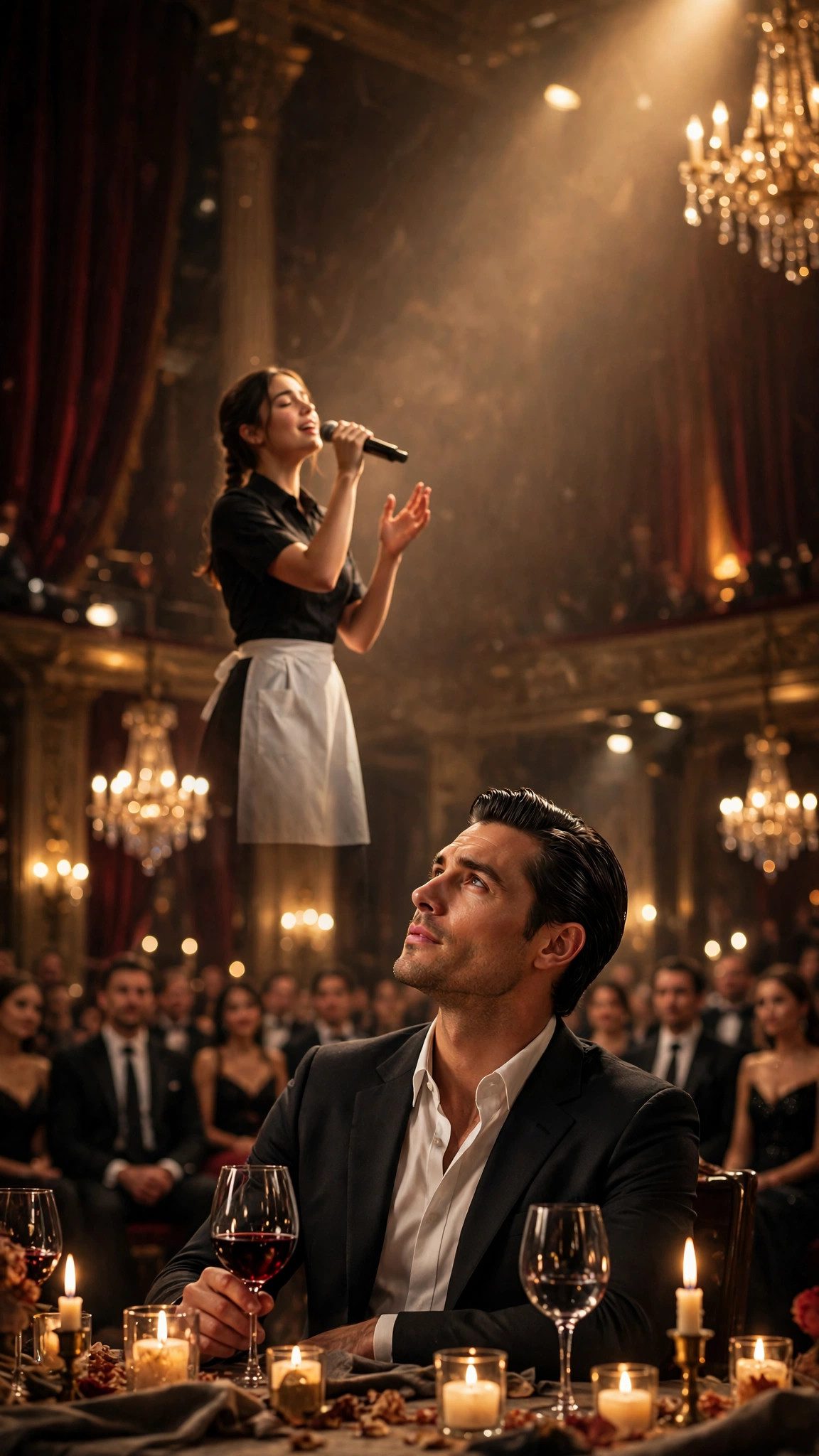
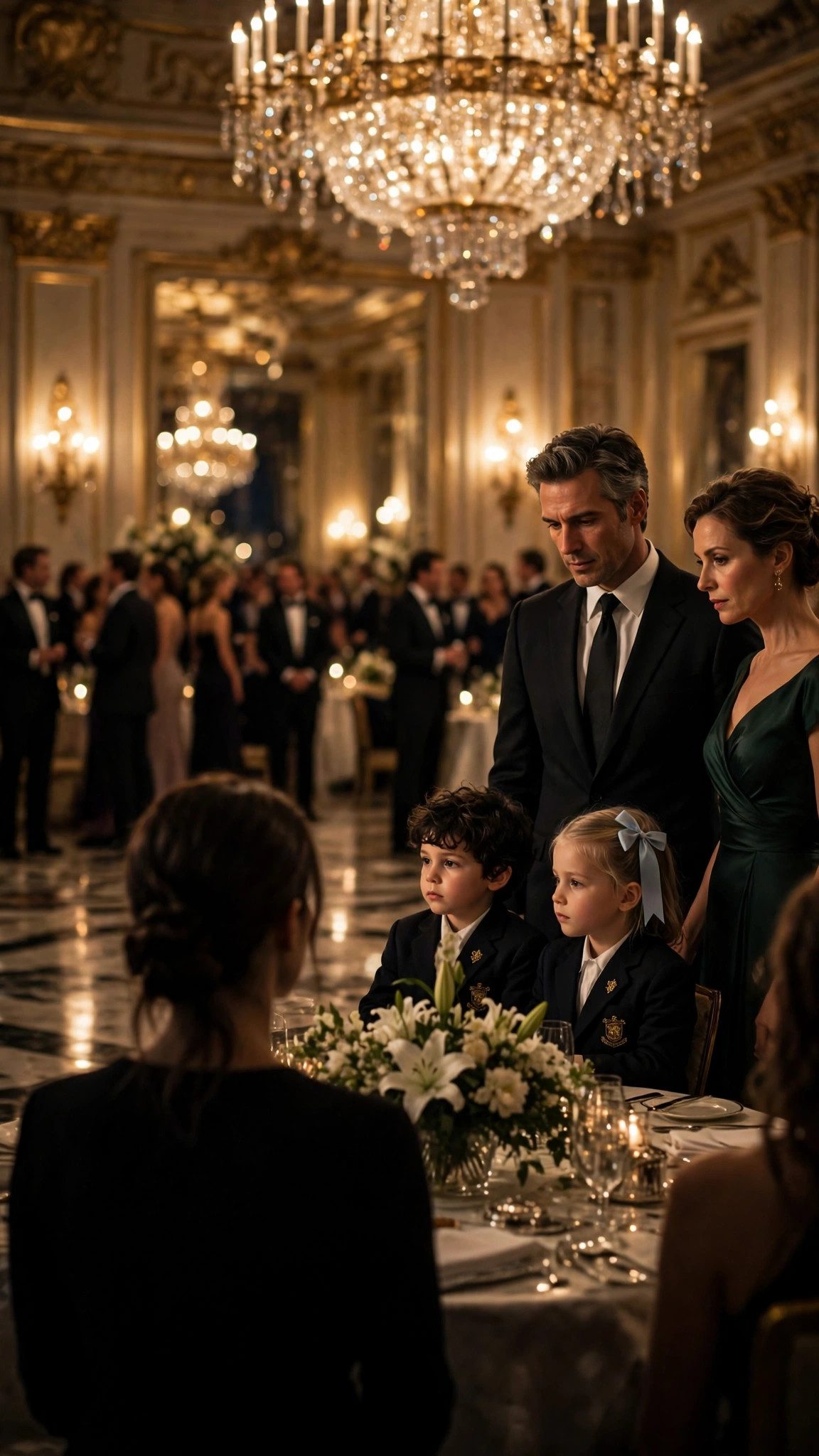
    The first time I saw my children in six years, they were standing under a chandelier the size of a small car, wearing the Mercer crest on their school blazers, and they did not know my name.

    I had slipped into the back of the Mercer Foundation gala the way I used to slip into hospital rooms at three in the morning — quietly, on soft shoes, with my hands folded so no one would ask me what I was doing there. The ballroom of the Drake Hotel smelled of white lilies and old money. Two hundred people in black tie turned their faces toward the stage, where a string quartet was playing something expensive and forgettable. And there, in the front row, sat a little boy with dark curls and a little girl with a ribbon in her hair, both of them straight-backed and still, both of them wearing the small gold crest of the Mercer family pinned above their hearts.

    Leo and Lily. My son and my daughter. Six years old. Born six days — no. Born days before I left.

    My little son had been born on a Tuesday, in a room that smelled of antiseptic and rain. His sister had followed him eleven minutes later, screaming like she had somewhere better to be. I had held them both for exactly one night. Then my husband had walked into the hospital room with a folder in his hand, and everything I thought I knew about my life had ended in a single sentence.

    "Sign these," Adrian Mercer had said. "I still love Evelyn Carter. I always have. You were a mistake I am correcting."

    Six years. I had carried those words across state lines and through six years of night shifts, and I had believed them every single day, because believing them was easier than believing the alternative — that I had abandoned my babies for nothing.

    Now here they were. Alive. Beautiful. Wearing his name on their chests like armor.

    "There she is," a woman said behind me, too loudly. "The ghost finally came home."

    I turned. An older woman in a silver gown was staring at me with the particular expression of a woman who has just recognized someone she buried years ago. Margaret Mercer. Adrian's mother. She had aged a decade in six years. Her hair was white now, and her hands shook around her champagne glass.

    "Mother," Adrian said.

    He was standing three feet from her, and I had not even seen him come up beside us. He was taller than I remembered, or maybe I had just forgotten how a room changes shape when Adrian Mercer walks into it. His suit was black. His hair was black, going gray at the temples. His face was the same face I had married in a ceremony that resembled a state funeral — beautiful, cold, and closed to me like a door I had never been given the key to.

    He did not look at me. He looked at his mother, and his voice was very quiet, and very tired.

    "Mother," he said. "I told you they had no mother."

    Something in my chest cracked open. Six years of night shifts. Six years of covering for everyone else, of taking the shifts nobody wanted, of holding strangers' hands while they died because their own families could not be bothered to come. Six years of telling myself that it was better to let my babies live a life without me so they would not be hurt. And here was the man who had thrown me away, telling his mother — telling the whole glittering room, if anyone was listening — that my children had no mother.

    I had not planned to speak. I had come to look. One look, I had told myself on the drive down from Milwaukee. One look at them, alive and well, and then I would go back to my night shifts and my small apartment and my life of covering up for everyone else.

    But my mouth opened anyway.

    "You can tell stories to strangers, Mr. Mercer," I said. My voice sounded calm. I was proud of how calm it sounded, because nothing else about me was calm. My hands were shaking. My knees were shaking. The whole shining ballroom seemed to be shaking, or maybe that was just me. "But I'm not a stranger."

    Adrian turned his head then. Slowly. The way a man turns when he hears a voice from a room he thought was empty.

    His eyes found mine. And for one terrible, endless second, I saw it — the flicker. The recognition. The shock. The thing he had buried under six years of ice, surfacing all at once, raw and unguarded, before he killed it.

    "Clara," he said.

    It was not a question. It was not a greeting. It was my name, said the way a man says the name of someone he has already mourned.

    Margaret Mercer's champagne glass slipped from her hand and shattered on the marble floor. The string quartet faltered. Two hundred heads turned. Somewhere in the front row, a little boy with dark curls turned around in his seat, and a little girl with a ribbon in her hair turned with him, and two pairs of dark eyes — his eyes, my eyes, the same eyes — found me standing in the back row in a cheap black dress that did not belong in that room.

    "Mother?" the little boy said. Not to me. To Margaret. But his eyes were on me.

    I should have run. Every instinct I had built over six years of hiding told me to run. But my feet would not move, because my children were looking at me, and for the first time in six years, I was not going to be the one who walked away.

    "I walked over to Adrian," I would tell the police later, when they asked me to describe that night. "I unlocked the door, and I opened it."

    That is not quite what happened. What happened was this: I walked across the ballroom floor while two hundred people whispered behind me, and my children — my son and my daughter — had already moved away from me, walking toward the door where their father was standing next to a woman I had expected to see.

    Evelyn Carter. Standing next to Adrian in a dark green gown, beautiful and composed, her hand resting lightly on his arm the way a wife's hand rests. The woman he had chosen over me. The woman he still loved. The woman whose name had been the last thing he said to me before I signed the papers and walked out of the hospital with empty arms.

    A man stopped me before I could reach my children. He moved out of the crowd like a wall sliding into place — tall, broad, gray at the temples, a hand raised, palm out. Marcus Hale. Adrian's head of security. I had seen him a hundred times in the old days, standing behind Adrian's shoulder, saying nothing.

    "Not here," Marcus said quietly. "Not tonight. Please."

    I tried to turn around, but he moved faster than I did. His hand closed around my upper arm — not hard, not cruel, just firm, the way you hold someone who is about to walk into traffic.

    And that was when I understood, little by little, in the slow and terrible way that understanding comes when you have been wrong about everything for six years: the most feared mafia boss in Chicago was not fighting to get his children back.

    He was racing to reach them before his enemies did.

    But I did not know that yet. Not in that moment. In that moment, all I knew was that my son and my daughter were walking away from me toward a door, toward their father and the woman he had chosen, and a stranger's hand was on my arm, and six years of silence was about to end whether I was ready or not.

    Six years earlier, I had been Clara Mercer, twenty-three years old, and I had married Adrian Mercer in a cathedral full of white flowers and armed men, in a ceremony that resembled a state funeral more than a wedding. There had been no music I recognized. There had been no laughter. My father had cried. Adrian's father had not. The priest had spoken about duty and family and forever, and I had stood there in a dress that cost more than my father's house and thought: this is a mistake. I knew it in my bones. I knew it the way you know a storm is coming when the air goes still.

    I married him anyway. Because his father had asked, and my father had owed, and because when Adrian Mercer looked at me across the aisle, for one single second, he had looked at me like I was the only living thing in that cold cathedral.

    I had been wrong about that too. Or so I believed for six years.

    The twins were born on a Tuesday in October, in a room at St. Margaret's Hospital, while rain hammered the windows and a nurse with kind eyes held my hand and told me to push. Leo came first, dark-haired and furious. Lily came eleven minutes later, smaller, quieter, her tiny fist curled around my finger as if she already knew she would have to hold on tight.

    I held them both that night. I counted their fingers. I memorized the weight of them. I whispered their names into the dark, over and over, like a prayer: Leo. Lily. Leo. Lily. Mine. Mine.

    In the morning, Adrian walked in with a folder, and he did not look at the babies, and he did not look at me, and he said the words that ended my life as I knew it.

    "Sign these. I still love Evelyn Carter. I always have. You were a mistake I am correcting."

    I signed. I do not remember deciding to sign. I remember the pen. I remember the way the paper sounded when he turned the page. I remember the nurse with the kind eyes standing in the doorway, and the way she looked at me, and the way I understood, in that moment, that no one in that room was going to save me.

    I left the hospital the next day with a bag that held two changes of clothes and four thousand seven hundred dollars in cash and a nursing license with my maiden name on it. I left my babies in a nursery full of machines that beeped and hummed, under the care of women who were paid to love them for a few hours at a time.

    I told myself it was better this way. I told myself that a mother who stayed would only bring the danger with her, that the Mercer name was a target painted on a child's back, that Adrian could protect them in ways I never could. I told myself that they would be safer without me, richer without me, happier without me.

    I told myself that for six years. I told myself that on every night shift in Milwaukee, while I covered for nurses who had families to go home to, while I held the hands of dying strangers, while I learned to live with the particular silence of a woman who has given away the only two people she has ever loved.

    That was what I did for money. That was why I had worked nights, covering up for everyone else. And now I was the one covering up — hiding my name, hiding my face, hiding in the back row of a ballroom in a dress I had bought on sale, watching my children wear a crest I had never agreed to, listening to their father tell the world they had no mother.

    I was done covering up. I was done hiding. I was done being the ghost in my own children's lives.

    Marcus Hale's hand was still on my arm. The string quartet had stopped playing entirely now. Two hundred people were watching us. Evelyn Carter was watching us, her face pale and unreadable. And Adrian Mercer was standing three feet away, looking at me like I was a door he had locked six years ago and someone had just kicked open.

    "Let go of me," I said to Marcus.

    "Clara," Adrian said again. And this time his voice broke, just slightly, on the second syllable. "Don't."

    "Don't what?" I asked. "Don't look at my children? Don't speak to my children? Don't exist? I've been doing all three for six years, Adrian. I'm done."

    The little boy — Leo, my Leo, six years old and brave in a way that broke my heart — took a step toward me. His sister's hand was in his. They moved together, the way twins do, like two halves of a single thought.

    And then the lights went out.

    Not all of them. Just the chandeliers. The ballroom plunged into a darkness so sudden and complete that for a moment, nobody moved, nobody breathed. Someone screamed. Glass shattered somewhere to my left. Marcus Hale's hand tightened on my arm, and then it was gone, and a voice I did not recognize shouted, "Now! Take them now!"

    In the dark, I heard my daughter cry out. "Leo!"

    And I heard Adrian Mercer roar my son's name like a man watching his whole world burn.

    "LEO!"

    I ran toward the sound. I did not think. I did not plan. I ran, in the dark, in my cheap black dress, toward the small voice calling for her brother, toward the man who had thrown me away six years ago and was now shouting for his son like his heart was being torn out of his chest.

    I am only now, little by little, starting to realize what I should have understood that night: the most feared mafia boss in Chicago was never fighting to get his children back.

    He was racing to reach them before his enemies did.

    And his enemies were already in the room.
  • Chapter 5: You’re Safe Now

    Chapter 5: You’re Safe Now

    The spring gala was Louise's idea. Meadowbrook had held one every year for as long as anyone could remember, a fundraiser in the garden behind the facility, with twinkling lights strung between the trees and long tables with white cloths and a little stage where the residents' choir sang songs they had known since they were young. This year was different. This year, the gala was a celebration. The program was saved. The garden Anthony had promised was already being built, stone by stone, just beyond the old oak tree. And this year, for the first time, the whole city was coming.

    I spent the week before the gala running on coffee and nerves. I ordered flowers. I confirmed the caterer.

    I ordered lilacs, because Mrs. Alvarez loved lilacs, and she had told me once that her husband used to bring her lilacs every spring, and she could not remember his face anymore, but she could remember the smell. I rehearsed the choir twice, and Mrs. Alvarez sang every word of "Amazing Grace" without missing one, and Mr. Kowalski sang harmony in a voice that shook but never broke. I walked the garden path a dozen times, checking that the stones were even, that the wheelchairs would fit, that the twinkling lights were strung high enough that no one would catch their hair on them. Louise supervised everything with her clipboard, and every time I started to panic, she put a hand on my shoulder and said, "Breathe, Emma. The lilacs are ordered. The choir knows the words. The lights are up. It is only a party." But it was not only a party. It was the night the whole city would see us together, and I knew it, and Louise knew it, and we did not say it out loud. I made sure Mrs. Alvarez's wheelchair would fit down the garden path and that Mr. Kowalski's hearing aid had fresh batteries so he could hear the choir. Louise supervised everything with her clipboard and her iron spine, and every time I started to panic, she put a hand on my shoulder and said, "Breathe, Emma. It is only a party."

    But it was not only a party. I knew that, even if Louise did not say it out loud. Anthony was coming, and he was coming publicly, as my escort, and the whole city would be watching. The photograph had already made us a story. The gala would make us something more.

    The night of the gala, the garden was beautiful. The twinkling lights were strung between the trees like a sky that had come down to earth. The tables were set with white cloths and candles. The choir was warming up on the little stage, and the smell of the lilacs was everywhere, sweet and heavy in the spring air. I was wearing a pale green dress I had bought for the occasion, and my hands were shaking as I pinned my hair up, and then Anthony arrived, in a dark suit with a white shirt and no tie, and he looked at me the way he had looked at me in the ballroom, like I was the only interesting thing in the room, and my hands stopped shaking.

    "You look beautiful," he said.

    "You look like you belong here," I said, and I meant it. He did belong there, among the nurses and the families and the old people in their wheelchairs, because for all the power he carried, he was, at his heart, a man who took care of his people. And these were his people now, too. He had saved their program. He had built their garden. He had stood in a ballroom and told a thousand strangers that their mothers and fathers mattered.

    We walked through the garden together, holding hands, and people came up to us, and they thanked him, and they thanked me, and an old woman named Mrs. Delgado took my face in her hands and said, "You are a good girl, Emma. You have always been a good girl." And I cried a little, and Anthony handed me his handkerchief, and I laughed, because who carries a handkerchief anymore, and he said, "My mother taught me. A gentleman always carries a handkerchief."

    It was perfect. It was the kind of night you dream about and never quite believe is real. And that was when it happened.

    I do not remember the sound of the shot. I remember the lights. I remember the way the twinkling lights suddenly seemed too bright, too sharp, and then Anthony was moving, and he was not moving like a man in a suit at a garden party. He was moving like a man who had spent his whole life preparing for this exact moment. He pulled me down behind the stone wall of the garden, and his body was over mine, shielding me, and his voice was in my ear, low and calm, the way it had been in the café two years ago, the way it had been in the ballroom, and he said, "Stay down, Emma. Stay down and do not move."

    There were more shots. I heard shouting. I heard Louise's voice, sharp and furious, telling everyone to get inside. I heard the choir director screaming. And then I heard a sound I will never forget, the sound of a man running through a garden, and then a thud, and then silence, and then Anthony's voice, saying, "It's over. It's over, Emma. You're safe."

    I looked up. His bodyguard, a man named Tony Mercer who had stood by the front door of his house the night I had dinner there, was holding a young man down on the grass.

    Around us, the garden was in chaos. Louise was herding the residents toward the doors with her clipboard held high like a weapon, telling everyone to stay calm, telling Mrs. Alvarez that it was all right, telling Mr. Kowalski to keep his hearing aid in. The choir director was crying in the corner, holding her sheet music to her chest. A waiter had dropped a tray of glasses, and the broken glass glittered in the grass like fallen stars. And through it all, the twinkling lights stayed on, strung between the trees, shining down on the tables with their white cloths and the candles that had not yet been lit, as if the garden itself did not know that anything had gone wrong. The young man's face was twisted with fear. A gun lay on the ground beside him, black and ugly in the grass. And standing at the edge of the garden, with his hands in the air and two federal agents on either side of him, was Marco Benedetti.

    Marco. The underboss with the cold eyes. The man who had been selling Anthony's freight routes to Vincent Castellano for years. The man who had sold the gala security plan to Castellano for fifty thousand dollars, so that Castellano's gunman would know exactly where Anthony would be standing, and when, and with whom.

    "Anthony," Marco said, and his voice was shaking. "Anthony, listen to me—"

    "Don't," Anthony said. His voice was very quiet. "Don't say my name. Not anymore."

    The federal agents took Marco away. They took the gunman away.

    Agent Reyes knelt beside me on the grass, and he spoke to me gently, the way you speak to someone who has just been through something terrible. "Miss Hart," he said, "I need you to tell me what you saw. Take your time. There is no hurry." So I told him. I told him about the lights, and the shots, and the way Anthony had pulled me down behind the stone wall, and the way Tony Mercer had brought the gunman down. Reyes wrote it all in his notebook, and when I was done, he closed the notebook, and he looked at Anthony, and he said, "Mr. Russo, you did the right thing tonight. You called us when you did, and you kept her safe. Castellano is finished. I promise you that." And then he turned to me, and he said, "Miss Hart, you are safe now. I want you to believe that. And then a man in a dark suit walked across the garden toward us, and I recognized him from the news, from the stories Louise had told me about the way the law worked in this city. FBI Agent Daniel Reyes. He had been building a case against Vincent Castellano for two years, and Anthony had been feeding him information for almost as long, and tonight was the night it all came together.

    "Mr. Russo," Agent Reyes said, shaking Anthony's hand. "Thank you. We have the gunman. We have Benedetti. We have the wire transfers, the phone records, everything. Castellano is being arrested in Buffalo as we speak."

    Anthony nodded. He did not look triumphant. He looked tired, and relieved, and something else, something I could not quite name, until he turned to me and took my hands in his, and I saw it. It was fear. Not for himself. For me.

    "Emma," he said, "there is something I have never told you. Something about Canandaigua. About that day in the café."

    I looked at him. The twinkling lights were above us. The garden was quiet now, except for the sound of the agents talking quietly and the choir director crying softly in the corner. And Anthony Russo, the most feared man in Rochester, held my hands in his, and he told me the truth.

    "The two men at the next table that day," he said, "were Castellano's men. They were arguing about a shipment. A shipment of guns, coming through Rochester on one of my trucks, a truck I did not know about, a truck Marco had arranged without telling me. They saw you listening. They wanted you dead, Emma. They were going to follow you out of that café and make you disappear, and I was there to stop a hit, and I stopped it, and then I sat down across from you, and I asked you why I shouldn't kill you, because I needed to know if you were one of them, or if you were just a girl who had been in the wrong place at the wrong time."

    My breath caught in my throat. "And I told you the truth."

    "And you told me the truth," he said. "You were afraid, and you told me the truth anyway. And I let you go, because you were the only honest person I had met in ten years. And then I spent two years making sure Castellano's men never found you. I had someone watching over you, Emma. Not following you. Watching over you. From a distance. So that you would never know, and never be afraid."

    I stared at him. Two years. Two years of a guardian I had never seen, a shadow I had never noticed, a man I had never known was there. Two years of Anthony Russo keeping me safe from a world I did not even know existed.

    "Why didn't you tell me?" I whispered.

    "Because I wanted you to live your life," he said. "I wanted you to be Emma Hart, the woman who takes care of people who are losing their memories. I did not want you to be a woman who was afraid. Not ever. Not for one day."

    He pulled me close, and he held me, and the twinkling lights were above us, and the garden was quiet, and the whole world had narrowed down to his arms around me and his voice in my ear, low and quiet, the same words he had whispered to me in the ballroom, the same words he had whispered to me on Friday night when he told me to text when I got home.

    "You're safe now," he whispered. "I promise you, Emma. You're safe now. Castellano is finished. Marco is finished. The men who wanted you dead two years ago are finished. And I am here. I am right here. And I am not going anywhere."

    Until that moment, I still hadn't understood. I didn't get it. But he was smiling at me. And my head was spinning. And then, finally, I understood everything.

    The man who had once asked me why he should kill me, in a café in a small town I never thought I'd visit again, was sitting there, holding me by the hand and whispering to me under twinkling lights, "You're safe now."

    He was still looking directly at me. His name was Anthony Russo. The mafia boss. And he was walking directly toward me, holding my hand, and I was not afraid. I was not afraid at all. Because I knew, now, what I had not known in the café, and what I had not known on Friday night, and what I had not known in the ballroom.

    He had saved my life twice. And he would save it a hundred times more, if he had to. And I would spend the rest of my life making sure he never had to do it alone again.

    I looked up at him, and I said the only thing I could think of to say.

    "Anthony," I said, "take me home."

    And he did. He took me home, and he stayed until I fell asleep, sitting in the chair beside my bed like a guardian, and for the first time in two years, I slept without dreaming about the café.

    The next morning, I woke to the smell of coffee, and for a moment, I did not know where I was. Then I saw him, sitting in the chair beside my bed, still in his suit from the night before, his eyes closed, his head tipped back against the wall, asleep. He had stayed all night. He had not left me alone for a single minute. I lay there for a long time, watching him sleep, listening to the bakery below my apartment coming to life, the ovens, the voices, the smell of bread rising through the floorboards, and I thought about how a man who controlled half a city had spent the night in a chair beside my bed, because he had promised me I was safe, and he meant to keep that promise.

  • Chapter 4: The Man in the Photograph

    Chapter 4: The Man in the Photograph

    By the next morning, the whole town had woken up to the picture.

    It was everywhere. On the local news page. On the facility's bulletin board, where someone had printed it out and pinned it up next to the shift schedule. On Priya's phone, which she held up the moment I walked in, her eyes as wide as saucers. It was a picture of me with my hands in his, my face turned up toward his, the chandeliers behind us like a sky full of stars. And underneath it, the caption: "Russo Family Foundation saves Meadowbrook memory-care program."

    My mother called before I had even taken off my coat. "Emma Hart," she said, and I could hear the worry in her voice all the way from Greece, New York, twenty minutes up the road. "Is that you? In the paper? With that man?"

    "It's me, Mom," I said.

    "Emma, do you know who that is?"

    "Yes, Mom. I know who that is."

    "Then why is your hand in his?"

    I did not have an answer for her. Not one that would fit in a phone call. Not one that would make sense to a woman who had spent her whole life in a suburb where the most dangerous thing that ever happened was a break-in at the pharmacy. So I told her I would come to dinner on Sunday and explain everything, and she said she would hold me to that, and then she hung up, and I stood in the hallway of Meadowbrook with my coat still on, listening to the sounds of the memory unit waking up, and I felt like I was living someone else's life.

    Priya cornered me in the break room. "Emma. Emma. Tell me everything. Who is he? Why is he holding your hand? Why does Louise look like she just won the lottery?"

    "He's Anthony Russo," I said.

    Priya went pale. "The Anthony Russo? The one who—"

    "Yes," I said. "That Anthony Russo."

    "Emma," Priya whispered, "are you out of your mind?"

    I did not know the answer to that either.

    That evening, he called me. Not texted. Called. His voice on the phone was the same as it was in person, low and unhurried, and he asked me if I would have dinner with him on Saturday. Not at a restaurant. At his house. He said his mother wanted to meet me.

    "Your mother wants to meet me?" I said.

    "She saw the picture," he said, and I could hear the smile in his voice. "She said, and I quote, 'Anthony, if you are going to hold a girl's hand in front of the whole city, the least you can do is bring her home for dinner.' So I am bringing you home for dinner."

    I said yes before I had time to talk myself out of it.

    His house was on East Avenue, a great stone mansion behind iron gates, with a garden in front that was already blooming even though it was only March. A man in a dark suit opened the gate for us. Another man stood by the front door. I tried not to think about what they were, or what they carried under their jackets. I tried to think about the woman I was about to meet, and the dinner I was about to eat, and the fact that I was wearing the only good dress I owned, a navy blue one I had bought for a cousin's wedding two years ago and never worn since.

    Rosa Russo was sixty-eight years old, with silver hair and Anthony's eyes, and she took one look at me and pulled me into a hug before I had even finished saying hello.

    The house smelled like garlic and tomatoes and fresh bread, and the kitchen was the biggest I had ever seen, with a wooden table that could seat twelve and a stove that looked older than I was. There were photographs on the walls, dozens of them, Anthony as a boy with scraped knees, Anthony as a teenager in a suit that was too big for him, Anthony with his father, old Salvatore, a hard-faced man with the same winter-lake eyes. Rosa saw me looking at them, and she said, "He was a good boy, Emma. A good boy in a hard world. His father taught him to be strong. I taught him to be kind. And you, my dear, are the proof that I did my job right. "Emma," she said, holding me at arm's length and looking me up and down. "So you are the girl who told my son the truth when she was afraid. He has been talking about you for two years. Two years, Emma. Do you know how long it has been since my son talked about anyone?"

    I did not know what to say to that, so I said, "He told you about Canandaigua?"

    "He told me everything," Rosa said. "He came home that night, two years ago, and he sat at my kitchen table, and he said, 'Mama, I met a girl today who was afraid of me, and she told me the truth anyway.' And I said, 'Anthony, you let her go?' And he said, 'I let her go because she was the only honest person I had met in ten years.' And then he never mentioned her again, not once, until Friday night, when he came home and said, 'Mama, I found her.'"

    Dinner was the best meal I had ever eaten in my life, and I barely tasted a word of it, because all I could think about was the fact that this man, this mafia boss, this Anthony Russo, had been carrying my face around in his head for two years. He had remembered the way I looked when I was afraid. He had remembered what I said. He had remembered me.

    After dinner, he walked me through the garden. The air was cold and clean, and the city lights were coming on across Rochester, and he stopped beside a stone bench and turned to me, and I knew, before he said a word, that he was about to tell me the truth.

    On the drive home that night, I kept thinking about Rosa's kitchen, and the photographs on the wall, and the way she had hugged me like I already belonged to her. I thought about the stone mansion behind the iron gates, and the men in dark suits, and the garden that was already blooming in March, and I thought about how strange it was that a house like that could feel so much like a home. Anthony drove in silence for a while, and then he reached across the seat, and he took my hand, and he held it all the way to Park Avenue, and when he walked me to my door, he did not try to kiss me. He just stood there on my little porch, under the porch light, and he said, "Goodnight, Emma. Sleep well." And I went inside, and I stood at my kitchen window, and I watched his car pull away, and I thought about how much I wanted to see him again.

    "Emma," he said, "I never told you my last name on Friday night because if I had told you my last name, you would have left before the bread arrived. And I did not want you to leave. I wanted two hours with you. Just two hours, as a man, not as a name. Is that a terrible thing?"

    "No," I said. "It's not a terrible thing."

    "I recognized you the moment you spoke," he said. "In the restaurant. You said, 'It looks like we're both being stood up,' and I looked up, and there you were. The girl from the café. The girl who told me the truth. I have thought about you for two years, Emma. I have wondered where you were, and whether you were safe, and whether you ever thought about that day. And then there you were, sitting across the room, being stood up by a man who did not deserve to sit at your table."

    "Why didn't you say something?" I asked. "On Friday. Why didn't you tell me?"

    "Because I wanted you to know me first," he said. "Not the name. Not the stories. Me. The man who listens. The man who holds the umbrella. The man who tells you to text when you get home. I wanted you to meet that man before you met Anthony Russo."

    I looked at him. I looked at the garden, and the city lights, and the stone bench, and I thought about everything Louise had told me, and everything I had read in the paper, and everything I knew about who he was and what he controlled. Gambling. Freight. Construction. Private security. An empire built on fear and loyalty and the kind of power that made people cross streets to avoid him.

    "And what am I supposed to do with that?" I asked. "With all of it?"

    "Nothing," he said. "You are supposed to do nothing. You are supposed to keep being Emma Hart, the woman who takes care of people who are losing their memories. You are supposed to let me take care of you, the way you take care of everyone else. That is all I am asking."

    He showed me his world over the next two weeks, the way you show someone a house you have built with your own hands.

    One afternoon, he took me to the construction site downtown, where a new building was going up, a school, and the foreman, a man named Sal with concrete dust on his boots and a voice like gravel, shook Anthony's hand and called him boss, and then he saw me, and he took off his hard hat, and he said, "Miss Hart. My daughter is in your memory unit. Her name is Grace. She is eighty-one, and she thinks I am still twelve years old, and your nurses are kind to her, and I want you to know that." I did not know what to say to that, so I took his hand, and I told him Grace was a lovely woman, and she liked her tea with two sugars, and he laughed, a big, surprised laugh, and he said, "Two sugars. That sounds like my Grace." And I understood, in that moment, why Anthony's people loved him. He had built a world where a construction foreman's mother was cared for, and where the man who poured the concrete knew the name of the woman who made the tea. The freight yard at dawn, where a hundred trucks rolled out before the sun was up, and the drivers waved at him like he was one of them. The construction site downtown, where a new building was going up, and the foreman shook his hand and called him boss, and the workers had health insurance and pensions, and I learned that Anthony Russo paid his people better than any other employer in the city. The security company, where young men and women in crisp uniforms trained in a gym he had built, and I learned that half of them were kids from the neighborhoods nobody else would hire, and he gave them jobs and discipline and a future.

    "I am trying to go legitimate, Emma," he told me one afternoon, standing in the freight yard with the sun coming up behind him. "My father built this from one truck. My grandfather came over with nothing. I have spent my whole life building it bigger, and now I am spending my life trying to make it clean. Four hundred people work for me in this city, Emma. Four hundred families. I will not let them starve because I was too proud to change."

    I believed him. I believed him because I had seen the way his people looked at him, not with fear, but with something that looked a lot like love.

    But not everyone in his world wanted him to change. His underboss, a man named Marco Benedetti, watched me with eyes that were cold and calculating, and I learned, slowly, that Marco had been selling Anthony's freight routes to a man named Vincent Castellano, a boss from Buffalo who wanted Rochester for himself, and who had been waiting for years for Anthony to show a weakness.

    I was the weakness. I knew it before anyone said it out loud. A man who has no one to lose cannot be threatened. A man who holds a woman's hand in front of the whole city has given his enemies a target.

    The note came on a Thursday. It was slipped under my apartment door in the middle of the night. There was no envelope. Just a single sheet of paper, with six words written on it in block letters: STAY AWAY FROM RUSSO, OR ELSE.

    I hid it from Anthony at first. I folded it up and put it in my kitchen drawer, and I told myself it was nothing, that it was a prank, that it would go away. But it did not go away. It sat in that drawer, and every time I opened the drawer to get a spoon, there it was, waiting for me, and by Sunday I could not stand it anymore, and I took it to Anthony, and I put it on his kitchen table, and I watched his face go still in a way I had never seen before.

    He read it once. He folded it up. He put it in his pocket. And then he looked at me, and his voice was very quiet, and very calm, and I understood, in that moment, what it was that made people cross streets to avoid him.

    "I will handle it," he said.

    "Anthony—"

    "I will handle it, Emma. You do not have to be afraid. Not anymore. Not ever again."

    He pulled me close, and he held me, and I could feel his heart beating against my cheek, steady and strong, and I realized that I was not afraid of him. I had never been afraid of him, not really, not even in the café two years ago. What I was afraid of was losing him. What I was afraid of was that the world he lived in would take him from me before I had even had a chance to know him.

    That night, I lay awake in my little apartment over the bakery, listening to the rain come down on Park Avenue, and I thought about the note in the drawer, and the man named Castellano, and the underboss with the cold eyes, and I understood, finally, what Anthony had meant when he whispered those words to me under the chandeliers.

    You're safe now. He had not been making me a promise. He had been making me a vow.

  • Chapter 3: Tuesday at Five

    Chapter 3: Tuesday at Five

    It was the day of the Rochester show. The biggest health benefits show in Rochester, held every spring at the Riverside Convention Center, a huge concrete building on the river with a ballroom the size of a football field. I had been to it twice before, both times in my Meadowbrook badge, handing out brochures about memory care and smiling until my cheeks hurt. I had never once imagined walking into it to meet a mafia boss.

    Louise insisted I go. She said she'd cover my shift. She said it the way she said everything, like a woman who had already decided and was simply informing me of the decision.

    "You are going, Emma," she said, standing in the doorway of my office with her arms crossed. "I will cover your shift. I will cover it twice over if I have to. You are going to walk into that building and you are going to find out what that man wants, and then you are going to come back here and tell me everything."

    "Louise, what if he—"

    "What if he what?" she said. "What if he is kind to you? What if he is exactly what he seemed to be on Friday night? Emma, I have known that family by reputation for thirty years, and I will tell you something I have never told anyone. Frank drove for them for thirty years, and in thirty years, he never once came home with a bruise that was not from lifting a crate. Anthony Russo's father once paid for my Frank's mother's funeral when we could not afford it. He did not have to do that. Nobody asked him to. He did it because Frank had driven for him for twenty years and that was what the family did. I am not saying the man is a saint. I am saying he is not a monster. Go."

    We were fighting. We had been fighting for months, Louise and I, against the board and the budget and the slow, polite strangling of the program we had built together. That morning, the board had sent down another memo. More cuts. The kitchen staff had already been let go. The activities program was next. The memory-care wing would follow, they said, "pending review," which was their way of saying it was already gone and they were just waiting for the right moment to tell the families.

    I walked into that huge concrete building and prepared myself to let him down gently.

    That Tuesday morning, I went to work like it was any other day, and it was not any other day at all. The board had sent down another memo overnight. More cuts. The activities program was next, they said. The memory-care wing would follow, "pending review." I read the memo twice in my office with the door closed, and then I put it in my drawer, on top of the other memos, and I went out to the floor, because Mrs. Alvarez needed her tea, and Mr. Kowalski needed his hearing aid, and the people who needed me did not stop needing me just because the board had decided to strangle us slowly.

    Louise found me in the hallway at noon. "Go home," she said. "Change your dress. Comb your hair. And go to that show."

    "Louise, the memo—"

    "The memo will still be there tomorrow," she said. "And so will I. I will cover your shift. I will cover it twice over if I have to. Now go."

    I went home and stood in front of my closet for twenty minutes, staring at dresses I had not worn in years, and I finally chose a simple navy dress, the one I had worn to my cousin's wedding, and I did my hair, and I put on the only pair of heels I owned, and I drove to the Riverside Convention Center with my hands tight on the wheel and my heart hammering in my chest, rehearsing my little speech the whole way there. Thank you for the dinner, Mr. Russo. Thank you for the note. But I am not the kind of woman who has dinner with men like you. I had rehearsed it in the car. Thank you for the dinner, Mr. Russo. Thank you for the note. But I am not the kind of woman who has dinner with men like you, and I think it is better if we do not see each other again. I had it all planned out, every word, and I was so busy rehearsing it in my head that I almost walked past the ballroom doors without noticing that something was different.

    The room was set for the biggest event of the year. Waiters were pouring wine. The ballroom was filled with people.

    There were booths along the walls for every hospital and home-care agency in the county, with banners and brochures and bowls of mints. I saw Dr. Patel from the hospital, and the woman from the insurance company who had once spent an hour on the phone with me arguing about a claim, and a dozen other faces I recognized from years of working in healthcare in this city. There were speeches before Anthony's, of course. A hospital administrator talked about funding. An insurance executive talked about networks. I stood near a pillar at the back, half-hidden, trying to be invisible, and I watched the room, and I waited, and I tried to remember the speech I had rehearsed in the car. Thank you for the dinner. Thank you for the note. But I am not the kind of woman. My hands were shaking. I put them behind my back so no one would see. There were banners for hospitals and insurance companies and home-care agencies, and there was a stage at the far end with a podium, and there were round tables with white cloths and little cards with names on them, and the whole place hummed with the sound of a thousand conversations happening at once.

    And then I saw him.

    He was smiling. He was standing at the edge of the stage, in a dark suit that made every other man in the room look like he had gotten dressed in the dark, and he was holding his hands together in front of him, and he was looking straight at me. And next to him, in her best navy suit with her silver hair in its knot, was Louise. My supervisor. My Louise. Standing next to Anthony Russo like she had known him all her life.

    I hadn't expected him to be there. I hadn't expected him to care. I hadn't expected him to look at me the way he did.

    Because when I walked in, the whole week had been a disaster of a setup, and I knew that. The board memo. The layoffs. The program hanging by a thread. I knew all of that. But he was looking at me, and his face had this line on it, this expression I could not quite read, and then I understood it. It was the expression of a man who had already done something and was waiting for you to notice.

    "You're welcome," his face said. That was the line. You're welcome.

    Louise waved me over. I walked across that ballroom floor feeling like every eye in the room was on me, and maybe they were, because when I reached the stage, Anthony Russo stepped forward and took my hand, and he did not let go, and he turned to the room, and the room went quiet in the way rooms go quiet when someone important is about to speak.

    "Ladies and gentlemen," he said, and his voice carried across that ballroom without a microphone, low and calm and certain. "My name is Anthony Russo. The Russo Family Foundation has been a part of this city for three generations. My grandfather came here with nothing. This city gave him everything. And I believe a family that takes from a city owes that city something in return."

    He paused. He looked down at me, still holding my hand, and then he looked back at the room.

    "Meadowbrook Senior Care has been caring for this city's mothers and fathers for forty years. Their memory-care program is one of the finest in the state. And it is in danger of closing, not because it has failed, but because the people who fund it have forgotten what it is for. So the Russo Family Foundation will fund the Meadowbrook memory-care program, in full, for the next five years. Every nurse. Every hour. Every bed. And we will build them a garden, so that the people who cannot remember yesterday can still sit in the sun today."

    The room erupted. People stood up. People clapped. I heard someone near me crying.

    A woman from the hospital board came up to me afterward, a woman I had argued with on the phone for months about a claim, and she took both my hands in hers, and she said, "Miss Hart, I had no idea. I had no idea what you and Louise were fighting for. I am sorry." And a man from the county health department shook Anthony's hand for a full minute, and I heard him say, "Five years, Mr. Russo. Five years is a long time. That is a real commitment." And all around us, people were talking, and laughing, and crying, and I realized that in the space of ten minutes, Anthony Russo had done what Louise and I had not been able to do in three months of letters and meetings and charts. He had made the whole city see what the memory-care program was worth. And Louise, my iron-spined, seventy-four-year-old Louise, was standing there with tears running down her face, holding a tissue she had clearly brought for exactly this moment, and she was looking at me, and she mouthed two words: Thank you.

    I turned to Anthony. I could not speak. My throat had closed up entirely. He was still holding my hand, and he squeezed it once, gently, and he leaned down so that only I could hear him.

    "You're welcome," he whispered. "Happy birthday, Emma."

    My birthday. I had forgotten my own birthday, and he had remembered, and he had turned it into this, into a ballroom full of people and a program saved and a garden that did not exist yet but would, because he had said it would, and in his world, when he said a thing would happen, it happened.

    And then he did something I did not expect. He held me by the hand, took my cell phone out of my pocket, opened it, and took a picture. It was a picture of me with my hands in his. He held the phone up so I could see it, and there we were, his hand around mine, my face turned up toward his, the chandeliers of the ballroom behind us like a sky full of stars.

    The entire town was probably going to wake up to this picture. It was a picture of me with my hands in his. And I did not stop him. I did not pull away.

    I stood there, and I thought about my mother, and what she would say when she saw it, and I thought about Priya, and what she would say, and I thought about the nurses on my floor, and the families, and the board, and what they would all think, and then I stopped thinking about any of them, because Anthony was still holding my hand, and his hand was warm, and steady, and it felt like the safest place in the world. I thought about the note in my mailbox. I thought about the umbrella in the rain. I thought about the way he had listened to me for two hours and never once looked at his phone. And I thought about Louise, standing beside him, crying happy tears, and I understood that whatever this was, whatever it became, it was real. It was not a dream. It was a ballroom full of people, and a photograph, and a man who had chosen me, in public, in daylight, in front of everyone. I stood there in the middle of that ballroom with my hand in the hand of the most feared man in Rochester, and I let him take the picture, and I understood, finally, what he had been doing all along.

    He was not hiding me. He was not sneaking around. He was telling the whole city, in the most public way he knew how, that Emma Hart was under his protection. That anyone who wanted to come for me would have to come through him. That I was his, not as a possession, but as a person he had chosen to stand beside, in daylight, in front of a thousand witnesses.

    Until that moment, I still hadn't understood. I didn't get it. But he was smiling at me. And my head was spinning.

    He leaned in close, so close I could feel his breath against my ear, and the ballroom noise fell away, and there was only his voice, low and quiet, and the words he said, the words I would carry with me for the rest of my life.

    "You're safe now," he whispered. "I promise you, Emma. You're safe now."

    I looked up at him. I looked into those winter-lake eyes, and I saw the man from the café in Canandaigua, and the man from the restaurant on Friday night, and the man who had written me a note in his own handwriting, and they were all the same man, and he was looking at me like I was the most important thing in the world.

    His name was Anthony Russo. The mafia boss. And he was walking directly toward me, holding my hand, in front of the whole city, and I was not afraid. I was not afraid at all.

    That was the moment everything changed. That was the moment I stopped being a woman who had been stood up on a Friday night, and started being a woman who had been chosen.

  • Chapter 2: Did He Tell You His Last Name?

    Chapter 2: Did He Tell You His Last Name?

    The next morning, I went to work early, before the sun was properly up, because I did not know what else to do with myself. I made coffee in the break room with hands that would not stop shaking, and I told myself I was being ridiculous, that it had been two years, that the man in the café had let me go, that Ryan was just a man who had bought me dinner. But my hands kept shaking, and when Louise Carter came in at seven with her silver knot and her iron spine, she took one look at me and closed the break room door.

    "Emma," she said. "Did you have a good time last night?"

    I said yes, of course. I said it too fast. I said it the way people say yes when the answer is complicated and they do not want to explain it before coffee.

    She looked at me long and hard. Louise had a way of looking at people that made you feel like she could see straight through to the back of your skull. She drummed her fingers on the table, once, twice, three times, and then she said, "Emma, did he tell you his last name?"

    I frowned. "No. Why?"

    She stopped drumming. She leaned forward, both hands flat on the table, and her voice dropped to something low and careful, the way you speak when you are telling someone the floor is about to give way.

    "Because the man you had dinner with last night is the head of the Russo family."

    Wait. Was that a bad thing? I did not know what the Russo family was. I knew Rochester had families, the way every old city has families, names that showed up on hospital wings and library plaques and the sides of trucks. I knew the name Russo from the freight yard on the edge of town and from a construction company that had built half the new buildings downtown. I did not know why Louise was looking at me like that.

    She looked me dead in the eyes and said, "It's the mafia boss people crossed streets to avoid."

    Huh?

    My hands began to shake. My knees became weak. I felt my heart drop to the floor.

    It turned out the man I had just spent two hours with wasn't just some charming stranger. He was Anthony Russo. The one who controlled the gambling, freight, construction, and private security operations of the entire city of Rochester. And I had had dinner with him.

    "How do you know?" I whispered. My voice sounded like it belonged to someone else.

    Louise sat back in her chair. She looked older suddenly, and tired in a way I had never seen her look before. "My Frank drove trucks for Russo freight for thirty years," she said. "Thirty years, Emma. He drove their routes from Rochester to Buffalo to Syracuse, and he came home every night and he never once told me what was in those trucks, and I never once asked. But I know that family. I know that name. And I know that man."

    Frank had died five years ago, of a heart attack in his sleep, and Louise had buried him in the cemetery on the hill, and Anthony's father, old Salvatore Russo, had paid for the funeral, every dollar of it, because Frank had driven for him for twenty years and that was what the family did. Louise had told me that story once, on a slow afternoon, and I had thought it was a kind story, a story about loyalty. Now I understood it was also a warning. The Russo family took care of their own. And they never forgot a debt. And they never forgot a face.

    "His name was Ryan," I said, and even as I said it, I heard how foolish it sounded.

    "Ryan is what he calls himself when he doesn't want you to know who he is," Louise said. "Anthony Russo. Thirty-eight years old. His father built the freight company from one truck. His grandfather came over from Sicily with nothing. And now he owns half this city, and the other half owes him money, and the police look the other way when his trucks roll through at midnight. Emma, men like that do not have dinner with girls like us by accident."

    I wanted to argue. I wanted to tell her that he had been kind, that he had listened, that he had held the umbrella so I stayed dry. But my hands were shaking too hard to make a fist, let alone an argument, and all I could think about was the café in Canandaigua and the question he had asked me two years ago, and the fact that he had known my name and my number without ever asking for either.

    "Louise," I said, "I think I've met him before."

    She went very still. "When?"

    "Two years ago. In Canandaigua. At my aunt June's. There was a café on the lake, and I overheard something, and he sat down across from me and he asked me why he shouldn't kill me."

    Louise closed her eyes. For a moment, she looked every one of her seventy-four years. "And what did you say?"

    "I told him the truth," I said. "I told him I was a nurse, and I had heard words, not meanings, and I was waiting for my aunt, and I would forget it all by dinner. And he looked at me for a long time, and then he said, 'Then forget it,' and he paid for my coffee and he let me walk away.

    It had been a Tuesday in late August, hot and bright, the lake flat and blue outside the café windows. I had driven up to Canandaigua to visit my aunt June, who had a little house near the water and a garden full of tomatoes she was always trying to give away. We had gone to the Blue Heron Café for lunch, a place with blue-checked tablecloths and a chalkboard menu and the smell of coffee and fried fish in the air. June had gone to the counter to order, and I had stayed at our table by the window, and that was when the two men had sat down at the table next to mine.

    I had not meant to listen. But they were close, and they were arguing, and one of them, a man with a scar through his eyebrow, kept saying "Tuesday" and "Pier 4" and "midnight," and the other one, a man with a gold watch and a nervous laugh, kept saying "Castellano wants it done quiet, you understand? Quiet." I had not known what any of it meant. Tuesday. Pier 4. Midnight. Castellano. They were just words, floating past me like the boats on the lake outside. But then the man with the scar had looked over, and he had seen me listening, and his face had changed, and he had stood up, and my blood had gone cold.

    That was when Anthony had appeared. He had been sitting at the bar, I realized later, watching the whole thing. He had put a hand on the scarred man's shoulder and said something low, too low for me to hear, and the scarred man had sat back down, and Anthony had come to my table, and he had pulled out the chair across from me, and he had sat down, and he had looked at me with those winter-lake eyes, and he had asked me the question.

    After he let me go, I sat there for a long time, my coffee going cold, my hands shaking so hard I could barely hold the cup. June came back with our sandwiches and asked me what was wrong, and I said nothing, because what could I say? A man had just asked me why he should not kill me, and then he had paid for my coffee and let me walk away, and I did not understand any of it. I drove home to Rochester that evening, and I never told my mother, and I never told June, and I folded the whole day away in the back of my mind, like a letter you never open, and I forgot it was even there."

    Louise opened her eyes. "Emma. Do you understand what you are telling me? That man had every reason in the world to make you disappear that day. Men in his world do not leave witnesses walking around. He let you live because you told him the truth while you were afraid, and men like Anthony Russo do not forget a thing like that. He has been carrying your face around in his head for two years. And last night, he found you."

    I went home that afternoon with my head spinning and my stomach in knots, and when I pulled into my driveway, I saw the mailbox flag was up. There was a handwritten note inside. It was postmarked the same day. It read, "Emma, I don't usually introduce myself to strangers. But I need to apologize for not introducing myself properly."

    There was no signature. There did not need to be one. I knew the handwriting already, somehow, the way you know a voice you have only heard once. I stood in my driveway holding that note, and the rain had stopped, and the sun was coming out over Park Avenue, and I felt like the whole world had tilted sideways.

    He was there the next day. Not at my house. At the facility.

    That Sunday, I sat on my couch with the note in my lap, reading it over and over until I had memorized every word, every loop of the handwriting. "I don't usually introduce myself to strangers. But I need to apologize for not introducing myself properly." I turned it over. There was nothing on the back. No name. No number. No address. Just the words, and the postmark, and the faint smell of paper that had been carried in a pocket. I thought about calling my mother, but I knew what she would say. She would tell me to stay away from him. She would tell me to be careful. And she would be right. But I also thought about the way he had listened to me for two hours, and the way he had held the umbrella, and I thought about what Louise had said: men like him don't apologize. Not to anyone. Not ever. He had apologized to me. In his own handwriting. Whatever else he was, I had to remember that. I came in on Monday morning and Priya was waiting at the front desk with her eyes wide and her mouth open, and she pointed toward the director's office without saying a word, and there he was, standing beside Louise's desk in a charcoal suit, talking to her in a low voice, and when he saw me in the doorway, he stopped talking, and he smiled, and it was the same smile from Friday night, warm and unhurried, like we were the only two people in the building.

    "Emma," Louise said, and her voice was doing something I had never heard it do before. It was shaking. "Mr. Russo called me this morning. He asked me to reach you."

    I looked at him. I looked at Louise. I waited for someone to tell me what was happening.

    "He said he'd like to meet you on Tuesday at five p.m.," Louise said, "at the biggest health benefits show in Rochester."

    I laughed nervously. I could not help it. A health benefits show. The biggest health benefits show in Rochester. It was the kind of event where hospital administrators shook hands and insurance companies handed out pens with their logos on them. It was the last place on earth I expected to meet the most feared man in the city.

    But Louise was not laughing. She was looking at me with an expression I could not read, and Anthony Russo was looking at me the way he had looked at me on Friday night, like I was the only interesting thing in the room, and I realized, slowly, that this was not a joke.

    "He wanted you to think he was someone you could trust," Louise said later, when he had gone and it was just the two of us in her office with the door closed. "That is what a meeting like this means. A public place. Daylight. A hundred witnesses. He is telling you that you are safe with him."

    "And the other thing?" I asked. My voice was barely a whisper.

    Louise hesitated. "Your birthday is Tuesday, Emma. He knows that. I don't know how he knows that, but he knows. And I think he wanted you to think he had forgotten it, so that when you walked in, it would be a surprise."

    My birthday. I had forgotten my own birthday was Tuesday. I had been so buried in budget meetings and layoff notices and the fight to save the memory-care program that the date had slipped past me entirely. And this man, this stranger, this mafia boss who had once asked me why he should not kill me, had remembered.

    What was I supposed to do? Walk in on Tuesday and think I was going to have dinner with the city's most notorious mafia boss?

    I went home that night and sat on my couch and stared at my phone for a long time. I thought about the café. I thought about the note in my mailbox. I thought about the way he had listened to me for two hours, and the way he had held the umbrella, and the way he had told me to text when I got home. I thought about Louise's warning, and Frank Carter driving trucks for thirty years and never asking what was in them, and the way Louise's voice had shaken when she said his name.

    And then I thought about something else. Something Louise had said, almost as an afterthought, when she walked me to my car that evening.

    "Emma," she had said, "men like him don't apologize. Not to anyone. Not ever. He wrote you a note, child. He apologized to you in his own handwriting. Whatever else he is, remember that."

    I slept badly that night, and the next, and by Tuesday morning, my hands were numb and my stomach was a knot, and I had decided, at least five times, not to go. And then Louise came into my office at noon, closed the door, and said, "I'll cover your shift. Go."

    "Louise, I can't—"

    "You can," she said. "And you will. Because whatever this is, Emma, you deserve to know what it is. And because I have known that man by reputation for thirty years, and I have never once heard of him hurting a woman. Not once. Go."

    So I went.

  • Chapter 1: Both Being Stood Up

    Chapter 1: Both Being Stood Up

    "It looks like we're both being stood up," I said, because joking was easier than admitting how humiliated I felt sitting alone on a Friday night.

    The man across the room looked up from his phone. He had been sitting alone at a corner table for twenty minutes, a glass of red wine untouched in front of him, a dark suit that fit him the way expensive things fit people who never had to think about money. His hair was black with gray at the temples. His eyes were the color of a winter lake, and when they settled on me, I felt like the whole restaurant had gone quiet.

    "Ryan," he said, extending his hand and nodding toward the empty chair across from me. "Mind if I take that seat? Better than eating alone, right?"

    "My name is Emma," I said. "And I said sure. Because who says no to a stranger in New York City?"

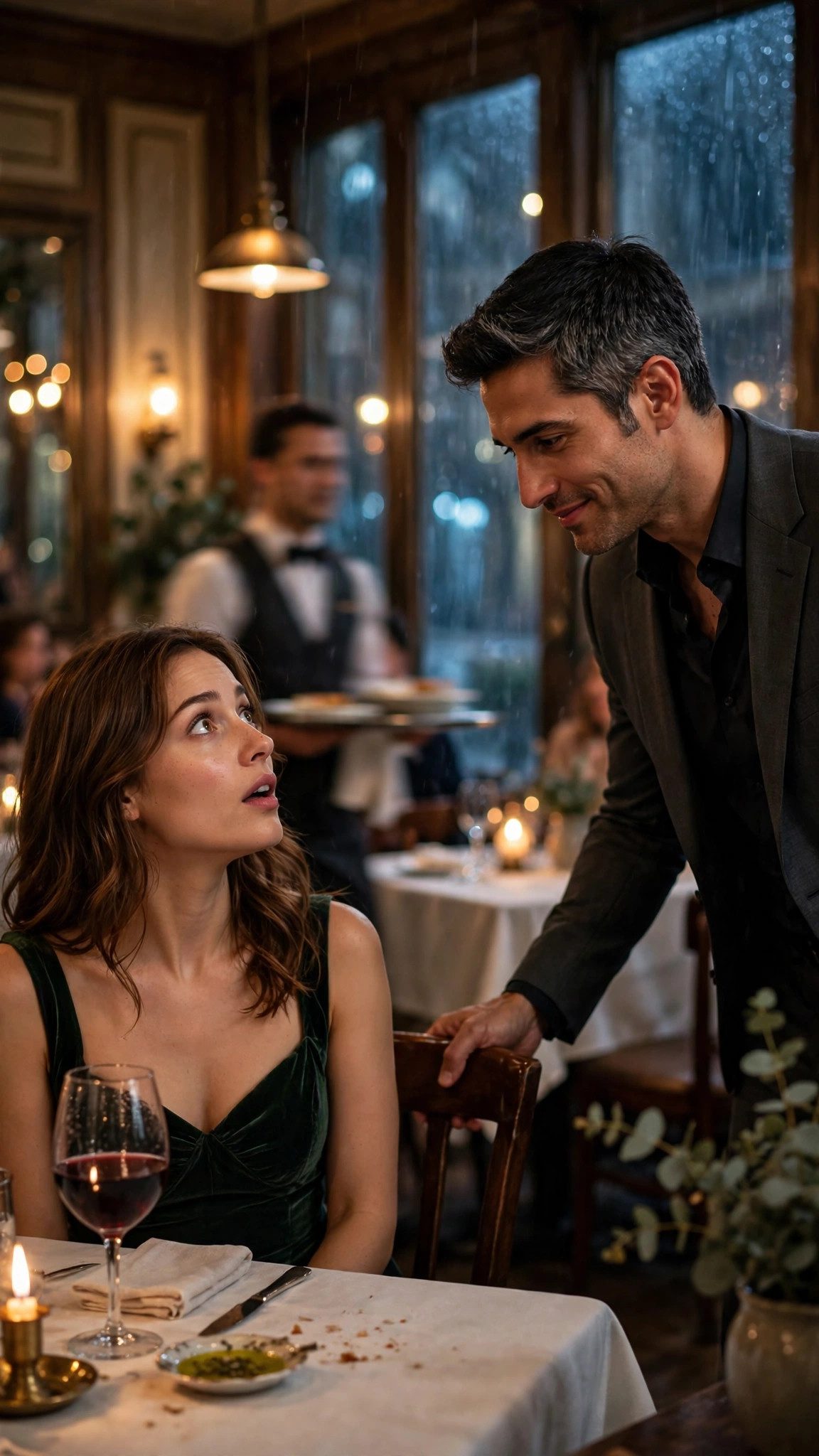
    Only it wasn't New York City. It was Rochester, on a rainy Friday in March, in a little Italian place on East Avenue called The Copper Lantern, and I was sitting at a table for two with one empty chair and a glass of wine I had ordered to give my hands something to do. My blind date was forty minutes late. His name was Kevin, he was the cousin of a girl I worked with, and he had texted me exactly once since I sat down: running late, sorry, order without me. Then nothing. No second text. No call. Just the rain on the windows and the waiter circling my table with the polite, pitying patience of a man who has seen this exact scene a hundred times.

    So when the stranger across the room stood up and walked toward me, I did not say no. I said sure. Because who says no to a stranger when the alternative is sitting alone for another hour, watching the door, pretending she is not being stood up?

    He sat down, and the first thing I noticed was that he did not look at his phone again. He put it face down on the table and forgot about it, and in my experience, that was the rarest thing a man could do. He asked me what I did. I told him I worked at Meadowbrook Senior Care, that I coordinated care for the memory unit, that I spent my days with people who were slowly losing their yesterdays and my job was to make their todays gentle. He listened. He really listened, the way almost nobody listens, his eyes on my face, his wine still untouched, and when I stopped talking he asked me another question, and then another, and before I knew it two hours had gone by.

    He made me laugh. I had not laughed like that in months. Not since the budget meetings started at Meadowbrook, not since the board began talking about cuts in the careful, bloodless language of people who have never watched a woman with Alzheimer's cry because she cannot remember her daughter's name. He told me nothing about himself, or almost nothing. He said he was in freight and construction. He said he had grown up in Rochester. He said his mother still lived in the house he had grown up in and still cooked enough food for twelve people every Sunday. He had a way of speaking that made ordinary sentences sound like they mattered. When the waiter brought the check, he took it before I could reach for it.

    "You don't have to do that," I said.

    "I know," he said. "I wanted to."

    He walked me to my car in the rain. He did not try to hold my hand. He did not try to kiss me. He held his umbrella over both of us and asked me if my car was reliable, and when I said it was a ten-year-old Honda with a heater that only worked on Tuesdays, he laughed, a real laugh, low and surprised, and said I should let him know if it ever stranded me.

    "Text me when you get home," he said at my car door. "So I know you got there safe."

    No guy had ever done that for me before. Least of all a guy who looked like THAT.

    I drove home through the rain with the heater rattling and my phone on the passenger seat, and I kept glancing at it, waiting for it to light up, and then I realized I had not given him my number.

    The heater rattled the way it always did when it rained, a thin, metallic shiver that came and went with the windshield wipers. I had meant to get it fixed for two winters now. I had meant to do a lot of things. Get the heater fixed. Paint the bathroom. Call Daniel back, just once, to see how Chicago was treating him. But life at Meadowbrook had a way of filling every spare hour, and by the time I got home most nights, all I wanted was tea and quiet and my own bed. I drove past the closed shops on Park Avenue, past the bakery below my apartment with its windows dark, past the little park where the mothers walked their babies in the morning, and I thought about how small my life had become. Work. Home. Work. Home. And now, suddenly, a stranger with winter-lake eyes, and two hours that felt like the beginning of something I did not have a name for yet. He had not asked for it. He had told me to text him, but he had never given me a number to text. I laughed at myself all the way up Park Avenue. Of course. A beautiful stranger buys you dinner, walks you to your car, tells you to text when you get home, and never gives you his number. That was Rochester. That was my life.

    Priya had set the date up the week before, cornering me by the copier with her phone already in her hand. "Kevin is nice, Emma. Kevin is normal. Kevin sells insurance and he has all his own teeth and he has never once been arrested, which in this city is practically a royal pedigree." I had laughed, and I had said yes, because Priya was right about one thing: I had not been on a date in over a year. My last boyfriend had been Daniel, a history teacher who had moved to Chicago for a job and asked me to come with him, and I had said no, because Meadowbrook was here, and my mother was here, and the people who needed me were here, and Daniel had gone anyway, and we had tried long-distance for three months before it quietly fell apart, the way long-distance things do, with fewer and fewer calls and no big fight to mark the end of it.

    So I had bought a new dress for Kevin. A dark green one, on sale, that made my eyes look greener than they were. I had done my hair. I had arrived at The Copper Lantern ten minutes early, which was a mistake, because it meant I had ten extra minutes to sit there and watch the door and wonder if I had made a mistake. The waiter had brought bread and water. I had ordered a glass of wine. I had checked my phone eleven times. Kevin had texted once, at 7:04, running late, sorry, order without me. At 7:40, I had ordered the salmon, because I was hungry, and because sitting alone in a restaurant with no food in front of you is worse than sitting alone with food. At 7:55, the waiter had come by and asked, very gently, if my guest was still coming. I had said, "I don't think so," and he had nodded, and he had not said a word, and somehow that kindness was worse than pity would have been.

    And then, at the red light on Goodman Street, my phone buzzed.

    Drive safe, Emma.

    I stared at it. He had my number. I had never given it to him, and he had my number, and I should have been frightened, and some small, cold part of me was, but a larger part of me was sitting at that red light in the rain, smiling like an idiot, because he had thought of everything.

    I texted back: Home in ten. Thank you for dinner, Ryan.

    His reply came before the light turned green. It was my pleasure. Sleep well.

    I drove the rest of the way home thinking about his eyes. There was something about them that would not leave me alone, something that tugged at the back of my mind like a word on the tip of my tongue. I had seen those eyes before. I was sure of it. Not in Rochester. Somewhere smaller. Somewhere with lake light and the smell of coffee. But every time I reached for the memory, it slipped away, and by the time I pulled into the driveway of the little house I rented over the bakery on Park Avenue, I had convinced myself I was imagining it. A man with gray at his temples and winter-lake eyes was not the kind of man you forgot meeting. If I had met him before, I would remember.

    That was what I told myself. It was a lie, and I would not know it was a lie until much later, when the memory came back whole and knocked the breath out of me.

    My name is Emma Hart. I am twenty-seven years old. I was born in Rochester, in the same hospital where I now sometimes sit with the families of my patients, and I have lived here my whole life except for two years at a nursing school in Syracuse and one summer I spent with my aunt June in Canandaigua, a summer I almost never think about, a summer I had folded away so neatly that I had forgotten it was even there.

    I work at Meadowbrook Senior Care, a low brick building on the edge of the city with a garden out back that the residents' families planted one spring and nobody has ever let die. I am a care coordinator for the memory unit, which means I am the person who sits with a daughter while her mother asks her, for the fourth time in an hour, who she is. It means I know which resident likes her tea with two sugars and which one will only eat if you put the fork in her left hand. It means I come home most nights with my heart full and my feet sore and my clothes smelling faintly of lavender and disinfectant, and I would not trade it for anything.

    For three months, my supervisor and I had been fighting. Her name is Louise Carter. She is seventy-four years old, a director at the facility, with silver hair she wears in a knot and a spine made of iron and a laugh that could fill a room. The board wanted to cut the memory-care program. They called it "restructuring." They called it "efficiency." What it meant was fewer nurses, fewer hours, and twelve families who would have to find somewhere else for the people they loved most in the world. Louise and I had been fighting it for months. We had written letters. We had gone to meetings. We had stayed late and come in early and made charts and gathered signatures, and every week the board found a new reason to delay the vote, which was their way of telling us the answer without having to say it out loud.

    Jobs were coming up, rough and full of pitfalls. That was what Louise said the day the board announced the first round of layoffs in the kitchen staff, and she said it the way she said everything, like a woman who had survived worse and intended to survive this too. "Jobs are coming up, Emma," she said, tapping her pen against the table. "Rough and full of pitfalls. But we do not quit on our people."

    My friend Priya, who worked the front desk, had set up the blind date because she was tired of watching me eat lunch alone in the break room. "You need a life, Emma," she had said. "You need a man who is not a budget spreadsheet." Kevin was her cousin. Kevin sold insurance. Kevin was, according to Priya, "nice, normal, and employed," which in Rochester in March felt like a reasonable standard. Kevin had stood me up. And a stranger named Ryan had taken his chair.

    When I got home that Friday night, I kicked off my shoes, made tea, and stood at my kitchen window watching the rain come down on Park Avenue. I kept thinking about the way he had listened to me. About the way he had said my name, like it was something worth saying carefully. About the way he had held the umbrella so that I stayed dry and he got wet, and had not seemed to notice or care.

    I went to bed telling myself it was one dinner. One strange, wonderful dinner with a man whose last name I did not know and whose number I did not have, a man who had somehow gotten my number without asking. One dinner. That was all.

    I was wrong. It was the beginning of everything.

    It was much later that night, or maybe it was just before I fell asleep, when the memory finally came back. I was brushing my teeth, half asleep, the bathroom light too bright, and suddenly I was not in my bathroom at all. I was in a café in a small town I never thought I would visit again, a lakeside café with blue-checked tablecloths and the smell of coffee and rain, and a man was sitting across from me, and his eyes were the color of a winter lake, and he was leaning forward with his hands flat on the table, and he was saying, in a voice so quiet it was almost gentle, "Give me one reason why I shouldn't kill you."

    My toothbrush clattered into the sink. I stood there with toothpaste on my chin and my heart hammering against my ribs, staring at my own face in the mirror, and the memory kept coming, piece by piece, unstoppable now that the door was open. The café. The lake. The two men at the next table. The words I had overheard and should never have heard. And the man across from me, the same man, the same eyes, asking me why he should let me live.

    I had met Ryan before. I had met him two years ago, in Canandaigua, in a café with blue-checked tablecloths. And he had asked me why he should not kill me.

    And I had answered him. And he had let me walk away.

    That was the moment I understood that Friday night had not been an accident at all.

  • Chapter 7: The Voice That Stayed

    Chapter 7: The Voice That Stayed

    The wedding was in June, in the garden of the Moretti estate, under the old oak tree where Isabella was buried, and the whole world seemed to have come out to see it.

    It was not a big wedding. After everything that had happened, neither of us wanted a big wedding. There were no two hundred people in black tie. There were no chandeliers and no champagne fountains. There were fifty chairs set out on the lawn, and white roses on every table, and a string quartet playing softly in the shade, and the late afternoon sun coming down through the leaves like gold.

    Gabriel was the ring bearer. He wore a little black suit with a white shirt, and he carried the rings on a velvet cushion, and he walked down the aisle so slowly and so carefully, with his tongue sticking out of the corner of his mouth in concentration, that half the guests were crying before the ceremony even began. His stuffed rabbit, worn and gray and missing one ear, sat in a place of honor on the front row, dressed in a tiny bow tie.

    I wore a simple white dress, nothing fancy, nothing borrowed, just a dress I had chosen myself, and my mother's old score of The Magic Flute, pressed flat and framed, sat on a table by the altar, so that she could be there too.

    Alessandro waited for me at the end of the aisle, in a black suit with a white shirt and no tie, the collar open at his throat, the way he had looked the first night I saw him at Lumière, and when he saw me, he smiled, and it was not the smile of the King of New York. It was the smile of a man who had finally, after thirty-eight years, found his way home.

    The priest was an old man from the church in the village, with white hair and kind eyes, and he spoke simply, about love and forgiveness and second chances, and when he asked if anyone objected, the garden was silent, because everyone there knew what we had survived to reach this day.

    "Do you, Alessandro Moretti, take this woman to be your wife?" the priest asked.

    "I do," Alessandro said, and his voice was steady and sure.

    "Do you, Elena Marchetti, take this man to be your husband?"

    "I do," I said, and my voice did not shake.

    And then Gabriel stepped forward, and he tugged on Alessandro's sleeve, and he said, in a voice loud enough for the whole garden to hear, "Mr. Alessandro, can I ask you something?"

    The guests laughed, softly, and Alessandro knelt down so that he was eye to eye with my son, and he said, "You can ask me anything, Gabriel."

    "Will you be my papa?" Gabriel asked. "Not just my mamma's husband. My papa. The one who comes to my school plays and teaches me to ride a bike and is there when I wake up in the night because I had a bad dream?"

    The garden went silent. Fifty people held their breath. And Alessandro Moretti, the King of New York, the man who had once sworn he would never love anyone again, looked at my five-year-old son with tears in his eyes, and he said, "Gabriel, I would be honored to be your papa. If you will have me."

    Gabriel threw his arms around Alessandro's neck, and the whole garden erupted into applause and tears, and I stood there in my white dress with the sun coming down through the oak leaves, and I thought about my mother, and about Isabella, and about five years of running, and I knew that I was finally, finally home.

    After the ceremony, there was dinner under the lights, and dancing, and toasts, and Rosa, Alessandro's sister, stood up and told the story of the night I sang at the gala, and how her brother had laughed in front of two hundred people and made a dare he never expected anyone to answer, and how a waitress in a black uniform had answered him with Mozart and changed his life forever.

    And then, as the sun went down and the stars came out, Alessandro took my hand and led me to the small stage they had set up at the edge of the garden, and he handed me a microphone, and he said, "Sing for us, Elena. Sing for your mother. Sing for mine. Sing for everyone who is here, and everyone who is watching from above."

    So I sang. I sang the Queen of the Night, one more time, under the stars, in a garden full of white roses, with my husband beside me and my son asleep in his arms, and my voice rose up into the night sky, clear and true and bright, and when the last note died, the garden was silent, and then the applause came, soft and warm, like rain on a rooftop.

    Later, when the guests had gone and the lights were dimmed and Gabriel was asleep in the big bedroom upstairs with his stuffed rabbit, Alessandro and I walked through the garden together, hand in hand, and we stopped beneath the old oak tree, where Isabella was buried, and we stood there for a long time in the moonlight.

    "Your mother would have loved tonight," Alessandro said quietly.

    "So would yours," I said.

    He squeezed my hand. "Do you know what my mother said to me, the night you sang for her in her room? She said, 'Alessandro, God has a sense of humor. He took your voice away, and then He sent you a woman whose voice could bring it back.' I did not understand her then. I understand her now."

    We stood there under the oak tree, and the night was warm, and the stars were out, and for the first time in my life, I was not afraid. Not of the dark. Not of the future. Not of anything.

    A week after the wedding, a letter arrived from Naples. It was from Matteo. He wrote that he was well, that his shoulder had healed, that he was working to change the family business from the inside, slowly, the way he had promised. He wrote that he thought of Gabriel every day, and that he kept a photograph of him on his desk, the one from the hospital, where Gabriel was sitting on his bed with his stuffed rabbit. And he wrote, in a careful, formal hand, "Tell Gabriel that his father loves him, and that he is proud of him, and that he will always be proud of him, no matter how far away he is."

    I read the letter to Gabriel that night, sitting on the edge of his bed, and he listened quietly, and then he said, "Mamma, can I have two papas? Papa Matteo in Italy, and Papa Alessandro here?"

    "Yes, tesoro," I said, and I kissed the top of his head. "You can have two papas. You are a very lucky boy."

    "I know," he said, and he yawned, and he closed his eyes, and he was asleep before I finished tucking the blanket around him.

    One year later, on the first anniversary of our wedding, I sang at a charity concert in the same hall where I had sung at the gala, and this time the hall was full, and the audience knew my name, and the newspapers called me "the voice the King of New York could not forget," and I laughed when I read it, because they had it backwards.

    Alessandro had not forgotten my voice. My voice had found him. My mother's voice, carried across forty years and an ocean, through a daughter who had run away and a son who had searched for five years, had brought us together, and it would never let us go.

    That night, after the concert, Alessandro and I went home to the estate, and Gabriel was waiting up for us, in his pajamas, with his spelling book, and he made us sit down and listen while he read us a story he had written at school. It was about a queen who sang, and a king who listened, and a little boy who had two papas and a rabbit with a bow tie, and when he finished, he looked up at us with his mother's green eyes and his father's dark hair, and he said, "The end."

    And Alessandro put his arm around me, and he kissed the top of my head, and he said, "No, Gabriel. Not the end. The beginning."

    He was right. It was the beginning. Of a family. Of a life. Of a voice that would never be forgotten, and never be silenced, and never, ever run away again.
    Our honeymoon was a week at a lake house upstate, just the three of us, with no telephones and no visitors and no one who needed anything from us. Gabriel learned to fish, standing on the dock in his bare feet with a rod almost as tall as he was, and Alessandro taught him to cast, patiently, over and over, until on the third day Gabriel caught a fish, a small silver perch, and he shouted so loudly that the birds rose up out of the trees in a cloud, and Alessandro laughed, and I laughed, and we cooked the fish for dinner that night, and Gabriel declared it the best fish in the whole world.

    In the evenings, we sat on the porch and watched the sun go down over the lake, and Alessandro told Gabriel stories about his own childhood, about the summers he had spent at the lake house with his father, and about the time he had caught a fish so big it had pulled him halfway into the water. And Gabriel told Alessandro stories about school, and about Mrs. Deluca, and about Barnaby the rabbit, and I sat between them, listening, and I thought about how strange and wonderful it was that my son had a father now, a real father, who listened to his stories and taught him to fish and was there when he woke up in the night because he had a bad dream.

    When we came home, I began to sing again in earnest. Not just at charity concerts, but in a small recital series downtown, once a month, in a hall that held two hundred people, and every month the hall was full. I sang Mozart, and Verdi, and Puccini, and sometimes, at the end, I sang the Queen of the Night, and the audience rose to their feet, and I thought of my mother, and of Isabella, and of all the women whose voices had brought me to this place.

    Gabriel started school that autumn, a good school, with a music program, and on the first day, Alessandro walked him to the gate, holding his hand, and Gabriel turned and waved to me, and he shouted, "Bye, Mamma! Bye, Papa!" and the other parents turned to look, and I did not care, because my son had a papa, and his papa was walking him to school, and that was the most ordinary, most miraculous thing in the world.

    We kept the little apartment in Queens, even after we moved to the estate. I would not let Alessandro sell it. "It is where we survived," I told him. "It is where Gabriel learned to walk, and where I learned to be brave. I want to keep it, so that we never forget."

    And I recorded the aria, one quiet afternoon in the music room at the estate, with the grand piano and the tall windows and the photograph of my mother and Isabella on the wall. I sang the Queen of the Night, and Alessandro recorded it on his telephone, and we sent the recording to the church in Naples where my mother used to sing, and they played it at the memorial service for Isabella, one year after her death, and the whole congregation wept.

    That is the story of how I stopped running. Not with a single moment, but with a hundred small ones: a fish on a dock, a song in a garden, a little boy walking to school holding his papa's hand. That is how a life is built. Not all at once, but one day at a time, one song at a time, until one day you wake up and you realize you are home, and you have been home for a long time, and you are never going to run again.

    Gabriel began violin lessons that autumn, on a small violin that had belonged to his grandfather Antonio, the one my father had played in the Naples orchestra, which I had kept wrapped in cloth in the bottom of a drawer for five years, too precious and too painful to look at. Alessandro found it when we were unpacking at the estate, and he held it up, and he said, "Elena, this is your father's violin. Gabriel should learn to play it."

    So Gabriel learned. He practiced every day after school, screeching at first, the way all beginners do, and then, slowly, the notes began to come clean, and one evening, six months later, he played the opening of The Magic Flute for us in the music room, standing very straight with the little violin under his chin, and his grandfather's music filled the room, and I wept, and Alessandro held my hand, and neither of us said a word, because there was nothing to say.

    On the second anniversary of our wedding, we went back to the lake house, and Gabriel caught another fish, bigger than the first, and Alessandro taught him to clean it, and I cooked it for dinner, and afterwards we sat on the porch and watched the stars come out over the lake, and Gabriel fell asleep with his head in my lap, and Alessandro looked at me across the porch, and he said, "Elena, do you remember the night you spilled wine on my shirt?"

    "How could I forget?" I said. "I thought you were going to have me thrown out of the restaurant."

    "I thought you were going to be the most interesting thing that had ever happened to me," he said. "And I was right."

    We sat there in the dark, listening to the water on the shore and the crickets in the grass, and I thought about my mother, and about Isabella, and about all the voices that had led me here, and I knew that the story was not over. It would never be over. It would go on, in Gabriel's violin, and in my songs, and in the children we might one day have, and in every note of every aria I would ever sing. A voice, once found, is never lost again.

    The End.

    THE END

  • Chapter 6: What the Law Could Do

    Chapter 6: What the Law Could Do

    FBI Agent Daniel Reyes was forty-two years old, with graying hair and a tired face and a suit that had seen better days, and he had been trying to put Vincent Castellano in prison for eleven years.

    "I have a wall in my office," he told me, on the third day after the shooting, sitting at my kitchen table in Queens with a cup of my coffee in his hands and a file folder open in front of him. "A wall full of photographs and phone records and bank statements, all pointing at Castellano, and none of it quite enough. Do you know what I need, Mrs. Bellini? I need someone on the inside. I need someone who was there. I need a witness who will stand up in court and say, 'Yes, Vincent Castellano ordered this,' and not be afraid."

    He looked at me across the table, and I looked back at him, and I thought about the three men with guns in Naples, and about the warehouse, and about five years of running, and I said, "I will be your witness."

    It was not only me. It was Matteo, lying in a hospital bed with his shoulder in a sling and a police guard outside his door, who told Agent Reyes everything he knew: about Castellano's telephone call, about the money, about the plan to start a war between the Bellinis and the Morettis. It was Enzo Falcone, the gunman, who broke on the second day of questioning and gave up the warehouse in New Jersey, and the black cars, and the five thousand dollars. And it was Marco Hale, Alessandro's head of security, the man he had trusted for fifteen years, who was arrested trying to board a plane to Miami with a suitcase full of cash and a false passport, and who, when Agent Reyes offered him a deal, told them everything: two years of selling secrets, two years of feeding Castellano every schedule and every weakness, two years of betrayal for money and promises.

    "Why?" Alessandro asked him, when they brought Marco to the estate in handcuffs, and Alessandro stood in front of him in the great hall with his hands behind his back, looking at the man who had been his friend for fifteen years. "I trusted you, Marco. I trusted you with my mother. I trusted you with my life. Why?"

    Marco Hale did not look up. He stared at the marble floor, and his voice, when it came, was small and tired. "Because Castellano paid me, boss. Because my daughter is sick, and the treatments cost more than I make in a year, and Castellano paid for them. I told myself it was only information. I told myself no one would get hurt. I was wrong."

    Alessandro stood there for a long moment, looking at the man who had betrayed him, and I watched his face, and I saw the anger there, and the grief, and something else, something I was beginning to recognize: mercy. Not weakness. Mercy, the kind that comes from a man who has lost enough to know what losing costs.

    "You will testify," Alessandro said quietly. "You will tell Agent Reyes everything, and you will stand up in court, and you will help put Castellano away for the rest of his life. And in return, I will make sure your daughter's treatments continue. Not because you deserve it. Because she does."

    Marco Hale wept then, openly, in front of everyone, and Agent Reyes took him away, and the case against Vincent Castellano, eleven years in the making, finally had everything it needed.

    Three weeks later, on a gray morning in November, the FBI raided Castellano's house, his offices, his warehouses, and his restaurants, all at the same time, in an operation so large it made the evening news. They arrested Vincent Castellano in his own kitchen, in his bathrobe, eating breakfast, and they led him out in handcuffs while the cameras rolled, and he smiled at them the whole time, the kindly grandfather smile, as if it were all a misunderstanding.

    It was not a misunderstanding. With Marco's testimony, and Enzo's confession, and Matteo's statement, and the phone records and the bank transfers and the warehouse lease, Castellano was charged with racketeering, conspiracy, attempted kidnapping, and attempted murder. The trial took four months. The jury took six hours. Vincent Castellano was sentenced to life in federal prison, without the possibility of parole, and when the judge read the sentence, Castellano's smile finally broke, and for one moment, the whole courtroom saw the shark underneath.

    While the trial went on, Matteo recovered in the hospital, and then in a small apartment Alessandro found for him in Brooklyn, paid for out of his own pocket, with a nurse to change his bandages and a physical therapist to work on his shoulder. I visited him twice a week, always with Gabriel, because Gabriel wanted to see his father, and because I wanted Gabriel to know that his father, whatever else he was, had taken a bullet for him.

    On the third visit, Matteo asked me to sit down, and he took a folder from the drawer of his nightstand, and he held it out to me with his good hand.

    "Divorce papers," he said. "Already signed. By me. All you have to do is sign yours, and it is over. You are free, Elena. You have been free for five years. Now it is official."

    I stared at the folder. I had dreamed of this moment for five years, dreamed of being free of the Bellini name, free of Naples, free of the family that had taken me to a warehouse and taught me my place. And now, sitting in a hospital room in Brooklyn with a man who had taken a bullet for my son, freedom felt different than I had expected. It felt sad. And it felt right.

    "Thank you," I said, and I took the folder.

    "I am going back to Naples," Matteo said. "My grandfather is old. The family needs someone, and I am all that is left. But I will not be the man he was. I will not be the man I was. I am going to change things, Elena. Slowly, and from the inside, the way you would have wanted me to. And I will write to Gabriel. And I will send photographs. And if he ever wants to see me, I will be there."

    "And if he asks about you?" I said.

    "Tell him the truth," Matteo said. "Tell him his father was a weak man who finally learned to be strong, and that he loves him, and that he will always love him, even from across the ocean."

    I signed the papers that night, sitting at my kitchen table in Queens, with Gabriel asleep in the next room, and I cried, not because I was sad, but because I was free, and because freedom, after five years of running, felt like coming home.

    But the hardest part of those weeks was not the trial, or the divorce, or the fear. The hardest part was Isabella.

    Isabella Moretti was dying. Everyone knew it. The doctors said days, not weeks. Her heart was failing, a little more every day, and the machines beside her bed beeped a little slower, a little softer, each time I visited. But she was at peace. She had heard the aria. She had heard her Sofia's daughter sing, and she had said, "Now I can go in peace," and she meant it.

    On the last night, Alessandro called me, and his voice was breaking, and he said, "She is asking for you, Elena. She wants to hear the aria one more time. Not through the speakers. Here. In this room. Will you come?"

    I came. I took a car to the estate in Long Island, in the middle of the night, and the house was dark and quiet, and a nurse led me up the stairs to Isabella's room, where Alessandro sat beside the bed, holding his mother's hand, and Rosa, his sister, stood by the window, crying quietly.

    Isabella was so thin by then, so frail, that she seemed to be made of paper and light. But her eyes were open, and they were clear, and when she saw me, she smiled.

    "Elena," she whispered. "You came."

    "I came," I said, and I knelt beside the bed, and I took her other hand in mine.

    "Sing for me," she said. "One more time. Sing the Queen of the Night, the way your mother sang it at my wedding."

    So I sang. I sang in that dark room, with no microphone and no audience, just a dying woman and her son and her daughter and me, and I sang the aria the way my mother taught me, quietly at first, and then stronger, and the high F's rang softly in the quiet room like bells, and Isabella closed her eyes, and she smiled, and she whispered, "Sofia. My Sofia has come back to sing for me."

    When the last note died, Isabella opened her eyes one more time, and she looked at Alessandro, and she looked at me, and she took our hands, one in each of hers, and she pressed them together, gently, over her heart.

    "Take care of each other," she whispered. "Promise me."

    "I promise, Mamma," Alessandro said, and his voice broke.

    "I promise," I said, and tears ran down my face.

    Isabella Moretti smiled, and she closed her eyes, and she died peacefully in the night, with her son's hand in one of hers and her best friend's daughter's hand in the other, and the last sound she heard on this earth was the Queen of the Night, sung for her by the daughter of the woman she had loved best in the world.

    We buried her three days later, in the family plot on the hill above the estate, beside her husband, under an old oak tree. The whole family came. The whole city came. And Alessandro Moretti stood at the grave in a black suit in the cold November rain, and he did not cry, not once, because kings do not cry at funerals, but I saw his hands shaking, and I stood beside him, and I did not leave his side until the last mourner had gone.

    After the funeral, he made a decision. He called his capos together, and he told them that the Moretti family was changing. No more guns. No more wars. No more blood. The docks would go legitimate. The restaurants would go legitimate. The construction companies, the shipping lines, all of it, clean and legal, or he would walk away and let someone else be king.

    Half of them left. The other half stayed. And the ones who stayed were the ones who mattered.

    "I spent my whole life being the King of New York," he said to me, that night, sitting by the fire in his study with two glasses of whiskey between us. "And all it ever brought me was fear, and loneliness, and a grave full of people I loved. My mother is gone. Caterina is gone. I am done being a king if being a king means being alone. I would rather be a man."

    He looked at me across the fire, and his eyes were dark and tired and hopeful, all at once, and he said, "Elena Marchetti, will you help me learn how to be a man?"

    I looked back at him, and I thought about my mother, and about Isabella, and about Gabriel asleep in Queens with his stuffed rabbit, and about five years of running, and I said the only thing I could say.

    "Yes," I said. "Yes, I will."
    On the day of the sentencing, I sat in the courtroom with Alessandro beside me and Gabriel at home with Mrs. Deluca, and I watched Vincent Castellano stand before the judge in his gray suit, his kindly grandfather face gone, replaced by something cold and empty, and I listened as the judge read the sentence: life in federal prison, without the possibility of parole.

    Castellano did not look at me. He looked at Alessandro, and he smiled, that thin, terrible smile, and he said, "You think you have won, Moretti. But there is always another Castellano. There is always another man waiting."

    Alessandro did not answer. He just took my hand, and we walked out of the courtroom together, into the sunlight, and I felt something lift off my shoulders that I had been carrying for five years, maybe for my whole life. The fear. The running. It was over.

    Matteo's farewell was harder. He left for Naples on a cold morning in December, from the airport, and Gabriel and I went to see him off. Matteo's shoulder was still in a sling, and he looked thinner than I remembered, and older, but his eyes were clear, and when he knelt down to say goodbye to Gabriel, his voice was steady.

    "Be good for your mamma," he said. "And be good for Alessandro. He is a good man, Gabriel. I know that now. And I will write to you every week, and I will send you photographs of Naples, and of the sea, and one day, when you are older, you will come and visit me, and I will show you where your mamma and I were married."

    Gabriel hugged him hard, and Matteo held him for a long time, and when he finally let go, there were tears in his eyes, and he turned to me, and he said, "Thank you, Elena. For letting me say goodbye properly. For letting me be his father, even for a little while."

    I watched his plane take off, a silver shape climbing into the gray sky, and I held Gabriel's hand, and I thought about the nineteen-year-old girl in Naples who had believed in love, and I thought about how far she had come, and how much she had lost, and how much she had found.

    My first charity concert after the trial was in the spring, in a small hall downtown, for a foundation that helped single mothers. I sang the Queen of the Night, and I sang a lullaby my mother used to sing to me, and when I finished, a woman in the front row stood up, a young mother with a baby on her hip, and she said, "Thank you. I needed to hear that tonight." And I knew then that my voice was not only for dying women and kings. It was for anyone who needed to remember that they were brave.

    Rosa, Alessandro's sister, came to the concert, and afterwards she took my hands in hers, and she said, "My mother loved you, Elena. She told me so, the night before she died. She said, 'Rosa, take care of that girl. She is family now.' And I am telling you the same thing. You are family now. Whatever happens, you are my sister."

    I cried then, standing in the hallway of that little concert hall, with Rosa's arms around me, because family was the one thing I had lost, and the one thing I had spent five years looking for, and I had finally found it, in the most unexpected place of all: in the house of the King of New York.

  • Chapter 5: The Night They Came for the Boy

    Chapter 5: The Night They Came for the Boy

    The concert was Alessandro's idea.

    Not the gala. Something smaller, and more dangerous: a private concert at the Moretti Foundation hall, one night only, for his mother. Isabella was too weak to leave her bed, so they would bring the concert to her, through speakers and a live video feed, and I would sing the Queen of the Night in the same hall where I had sung it at the gala, for an audience of no one but a dying woman in a bed in Long Island.

    "It is what she wants," Alessandro said to me, three days before the concert, when he came to Lumière after closing time and sat at my table while I wiped it down. "She wants to hear it one more time, live, the way your mother sang it at her wedding. After that, whatever happens, happens."

    I agreed. Of course I agreed. How could I refuse a dying woman her last wish?

    But I was afraid. I had been afraid ever since the gala, ever since my photograph appeared in the newspapers, ever since I understood that my five years of hiding were over and that anyone who wanted to find me could find me now. I was afraid for Gabriel most of all. Gabriel, who went to school every morning with his little backpack and his lunchbox, and who walked home every afternoon past the same streets, at the same time, like clockwork. A boy with a schedule is a boy who can be taken.

    I told Alessandro about my fear. I told him about Naples, about the warehouse, about the three men with guns, about Matteo and the Bellini family. I told him everything, sitting at that table in the dark restaurant, and he listened without interrupting, and when I was finished, he took my hand across the table, and he said, "No one will touch your son while I am alive. I swear it on my mother's life."

    I believed him. I wanted to believe him. And for three days, I almost did.

    On the night of the concert, I left Gabriel with Mrs. Deluca, the old woman who lived downstairs and who had watched him a hundred times before, and I took a car to the concert hall. The hall was empty except for a handful of people: Alessandro, his sister Rosa, two nurses, and a sound engineer. The chandeliers were dimmed. The stage was lit by a single warm light. I wore a simple black dress that Alessandro had sent to my apartment that morning, with a note that said only, "For tonight. You are not a waitress tonight."

    I sang. I sang the Queen of the Night for Isabella Moretti, alone in that great empty hall, and my voice filled every corner of it, and when I finished, there was silence, and then, through the speakers, I heard a frail old woman's voice say, "Thank you, Sofia's daughter. Thank you. Now I can go in peace."

    I was still standing on the stage, with tears running down my face, when Alessandro's telephone rang.

    It was Marco Hale, his head of security. His voice was tight and urgent. "Boss, we have a problem. Two men tried to take the boy from Mrs. Deluca's apartment. They said they were from the school. Mrs. Deluca would not open the door. They are still out there, in a black car across the street."

    The world tilted. I do not remember running off the stage. I do not remember getting into the car. I remember Alessandro's hand on my arm, steady and strong, and his voice saying, "Breathe, Elena. Breathe. My men are already there. No one will touch him."

    We drove through the night, through streets that blurred past the windows, and Alessandro was on the telephone the whole way, giving orders in a voice I had never heard before, cold and sharp as a blade. "Lock down the building. No one in, no one out. If they move, take them. Do not let them near the boy."

    When we arrived in Queens, the street outside my building was full of cars, black cars with dark windows, and men in dark suits standing on the corners with their hands inside their jackets. Mrs. Deluca was waiting in the doorway, her face white, holding Gabriel's hand, and Gabriel was crying, his little face red and wet, his stuffed rabbit clutched to his chest.

    "Mamma!" he screamed when he saw me, and he broke free and ran to me, and I swept him up into my arms and held him so tightly I thought I would never let him go.

    "They said Papa sent them," he sobbed into my neck. "They said Papa wanted me to come with them. But Papa is only a name, Mamma. You said so. Papa is only a name."

    I held him and I rocked him, and I looked over his head at Alessandro, and I saw the fury on his face, the cold, controlled fury of a man who had just watched someone try to steal a child under his protection.

    "Take them," Alessandro said quietly, to the men around him. "All of them. I want to know who sent them."

    They took two men from the black car across the street. One of them was Enzo Falcone, a Castellano gunman with a scar on his chin and a gun in his coat. The other was a younger man, barely twenty, who started crying the moment they put handcuffs on him and told them everything: Castellano had sent them. Castellano had paid them five thousand dollars each to take the boy and bring him to a warehouse in New Jersey, where Matteo Bellini would be waiting.

    Matteo Bellini was already in New York. He had arrived that morning, on a flight from Naples, and he was staying in a hotel on Park Avenue, and he had no idea that Castellano was using him, that the men who had told him where his wife and son were had also planned to take the boy themselves and blame it on him, to start a war between the Bellinis and the Morettis that would leave them both in ruins.

    Alessandro found him. Of course he found him. The King of New York could find anyone in his city. He went to the hotel himself, alone, without his men, and he knocked on Matteo Bellini's door, and he told him the truth.

    I was not there. I was at home with Gabriel, holding him while he slept, and Alessandro told me about it later, sitting at my kitchen table at three in the morning, with two cups of coffee going cold between us.

    "He cried," Alessandro said. "Your husband cried like a boy when I told him what Castellano had planned. He said he came to take his son back, not to start a war. He said he came because Castellano told him you were in danger, and he wanted to protect you, and he did not know that Castellano was the danger."

    "Do you believe him?" I asked.

    "I believe he is a weak man who finally understands what his weakness cost him," Alessandro said. "And I believe he deserves one chance to prove it."

    The chance came the next night.

    Castellano, furious that his men had failed, decided to finish the job himself. He sent Enzo Falcone and three more men to the concert hall, where I was rehearsing for a second performance, a public one this time, a charity concert Alessandro had announced to raise money for the foundation. The hall was full of people. Two hundred more, just like the gala. And in the middle of the rehearsal, the doors burst open, and the men came in with guns.

    They were not after me. They were after Gabriel, who was sitting in the front row with Mrs. Deluca, watching his mother sing. Enzo Falcone walked straight down the aisle, his gun in his hand, and he reached for my son, and the whole hall screamed.

    And then Matteo Bellini stepped out of the shadows at the side of the stage, and he put himself between Enzo Falcone and my son.

    Matteo was not a brave man. I knew that. I had known it for five years. He was a weak man, a frightened man, a man who had let his family take his wife and do nothing. But in that moment, in that hall, with a gun pointed at his son, Matteo Bellini found something inside himself that he had never found before.

    "Not my son," he said, and his voice shook, but he did not move. "You will not take my son."

    Enzo Falcone laughed. He raised his gun. And Matteo Bellini did the bravest thing he had ever done in his life: he lunged forward, and he grabbed Enzo's arm, and the gun went off, and the bullet tore through Matteo's shoulder, and he fell to the floor in a spreading pool of blood, and the hall erupted into chaos.

    Alessandro's men were on Enzo in seconds. They took his gun. They took him down. The police came, and the ambulances came, and Matteo was carried out on a stretcher, alive, his shoulder shattered but his heart still beating, and he looked up at me as they carried him past, and he said, very quietly, "I am sorry, Elena. I am so sorry. I should have protected you five years ago. Let me protect him now."

    I knelt beside the stretcher and I took his hand, and for the first time in five years, I did not hate him. I saw him clearly, maybe for the first time ever: not a villain, not a monster, just a weak man who had finally, at the very last moment, chosen to be strong.

    "Thank you," I whispered. "Thank you for saving our son."

    That night, in the hospital, while the doctors worked on Matteo's shoulder, Alessandro sat beside me in the waiting room, and he held my hand, and he said, "Your husband took a bullet for his son. Whatever else he is, Elena, he is a father tonight."

    And I knew, sitting in that waiting room with the King of New York holding my hand, that everything had changed, and that nothing would ever be the same again.
    The morning after the shooting at the concert hall, Gabriel would not let go of me. He clung to my neck in the kitchen while I made his breakfast, and he followed me from room to room, and when I tried to put him down so I could wash the dishes, he started to cry, great gulping sobs, and he said, "Mamma, the man with the gun is going to come back. I know he is."

    I sat down on the kitchen floor with him in my lap, and I held him, and I rocked him, and I told him the truth, the way I had always told him the truth. "The man with the gun is in jail now, tesoro. The police took him away. He cannot come back. And Papa Alessandro has men outside our building, good men, who will watch over us day and night, and nothing bad is going to happen to you. I promise."

    "But what if Papa Matteo gets hurt again?" he asked, his voice small. "He bled a lot, Mamma. I saw the blood."

    "Papa Matteo is in the hospital, and the doctors are taking care of him, and he is going to be all right," I said. "He was very brave, Gabriel. He stood in front of you, and he did not move, and that is the bravest thing a father can do."

    Gabriel thought about that for a long moment, his little forehead wrinkled. "When I grow up," he said finally, "I want to be brave like Papa Matteo. And like Papa Alessandro."

    "You already are brave," I told him, and I kissed his wet cheek. "You are the bravest boy I know."

    Alessandro stayed that night, sleeping in the armchair in our little living room, his long legs stretched out, his jacket over his face, because he would not leave us alone in the apartment, not after what had happened. In the morning, I found him still there, awake, staring at the ceiling, and he said, "I have not slept in a chair since I was a boy. It is not comfortable. But I would do it a hundred nights in a row if it meant keeping you safe."

    The police came that week, and Agent Reyes came, and they asked me questions for hours, sitting at my kitchen table with their notebooks open, about the men, about the car, about what I had seen and heard. Mrs. Deluca told them about the two men who had come to her door, pretending to be from the school, and how she had known at once that they were lying, because Gabriel's school never sent strangers, and because their shoes were too clean for men who claimed to work with children.

    "They had the eyes of wolves," Mrs. Deluca said, crossing herself. "I have lived in this city for fifty years, and I know the eyes of wolves. I did not open the door. I called Elena. I called the police. And I held that boy's hand until his mamma came home."

    Agent Reyes wrote it all down, and he thanked her, and he told me, very quietly, as he was leaving, "Mrs. Bellini, your neighbor may have saved your son's life. And your husband may have saved it a second time. You have good people around you. Remember that."

    In the hospital corridor, while Matteo slept, Alessandro and I sat on a bench outside his room, and I asked him the question that had been burning in my mind since the gun went off.

    "What happens now?" I said. "Castellano will try again. He always tries again. How long can we live like this, waiting for the next man with a gun?"

    "Not long," Alessandro said. "Agent Reyes has been building a case against Castellano for eleven years, Elena. Eleven years. And now, for the first time, he has witnesses. He has Matteo. He has Enzo. He has the phone records. He has everything he needs, except time. Give him time, and Castellano will spend the rest of his life in a cell. I promise you that."

    "And Matteo?" I asked. "What happens to him?"

    "Matteo is a victim too," Alessandro said. "He was used, the same way you were used. Agent Reyes knows that. The divorce is yours to decide, Elena, whenever you are ready. No one will rush you. Not me. Not anyone."

    I looked at him then, sitting beside me in that cold hospital corridor with his suit rumpled and his eyes tired, and I thought about how different he was from the man I had first seen at Lumière, the cold, still man with the dark eyes. That man had been a king. This man, sitting beside me at three in the morning, holding my hand while my husband slept in a hospital bed down the hall, was something else entirely. He was a man who stayed.