Story Genres: Mafia Romance

  • Chapter 2: The Girl with the Blue Thread

    Chapter 2: The Girl with the Blue Thread

    My father died on a Tuesday in March, two years before the gala, in a hospital room that smelled of disinfectant and old coffee. He was sixty-one years old. He had worked the subway tunnels for thirty-one years, and his lungs had never been right after that, and his heart had been tired for a long time, and in the end it simply stopped, quietly, in the middle of the night, while my mother held his hand and I stood in the doorway because I couldn't bear to watch and couldn't bear to leave.

    The morning after the funeral, my mother and I went through his things. His closet was small. A few shirts. Two pairs of work boots, both worn thin at the heels. And his navy uniform jacket, the one with the transit authority patch on the sleeve, folded neatly on the top shelf where he always kept it, even though he hadn't worn it in years.

    My mother held it up, and the fabric was thin at the elbows, and there was a frayed thread hanging from the cuff — one short length of navy blue thread, coming loose from the seam.

    "Your father wore this jacket the night he saved that man's life," my mother said. She didn't look at me. She was looking at the jacket, at the thread. "He never told anyone. He came home that night with his hands shaking, and he wouldn't eat, and when I asked him what happened, he only said, 'A man fell, Rosa. I pulled him back. That's all.'"

    "What man?" I asked.

    "I don't know," she said. "He never said his name. He said it didn't matter. A man fell, and he pulled him back, and that was all."

    She cut the thread from the cuff with her little sewing scissors, and she handed it to me, and she said, "Take this, Elena. Your father is with you."

    I sewed it into the lining of my apron pocket that same night, with a needle and a knot so tight it would never come loose. And I have carried it into every room I have ever worked in since — every wedding, every gala, every charity ball where I was nobody and the people around me were somebody.

    My mother Rosa is a seamstress. She is fifty-eight years old, with hands that have mended a thousand hems and eyes that have gone a little soft around the edges from years of close work. After my father died, she took in sewing from the neighbors — hems and buttons and the occasional wedding dress — and she kept our little apartment in Queens going, and she never once complained, not even when the winter was cold and the rent went up and the medicine for her knees cost more than we had.

    "Your father would be proud of you," she told me on the morning of the gala, standing in our kitchen in her housecoat, watching me tie my apron. "You work hard. You don't lie. You don't steal. That's worth more than all the diamonds in Manhattan."

    "I just carry trays, Mama," I said.

    "You carry yourself," she said. "That's harder."

    I kissed her cheek and caught the bus to Manhattan, and I told myself what I always told myself on the way to a big job: keep your head down, keep your hands steady, don't look anyone important in the eye unless they speak to you first, and never, ever make a scene.

    Sterling Events had sent twelve of us to the Plaza Grand that night. The job was the engagement party of Bianca Romano and Dante Moretti — the wedding of the year, the papers said, the merger of two of the most powerful families in New York. We were told to arrive at three, to wear our black uniforms with white aprons, to keep our hair tied back, to wear no perfume and no jewelry, and to remember that we were invisible.

    "You're not guests," the supervisor, a sharp-eyed woman named Mrs. Delaney, told us in the service corridor, her voice low and hard. "You're furniture that moves. You don't speak unless spoken to. You don't look at the guests. You don't eat the food. And if Miss Romano says jump, you ask how high on the way up. Do you understand?"

    We all nodded. We understood. Girls like us always understand.

    The ballroom was the most beautiful room I had ever been in. Chandeliers hung in rows, each one bigger than the last, throwing light across marble floors polished to a shine so bright you could see your own reflection in them. White lilies stood in tall vases on every table. The head table was draped in gold cloth, and the chairs were gold, and the plates were gold-rimmed, and everything glittered, and I thought, standing there in the service doorway with my tray in my hands, that I had never felt so small in my life.

    I worked the room for three hours before anything went wrong. I carried trays of champagne. I refilled water glasses. I cleared plates. I smiled at people who didn't look at me. I did my job the way my father taught me to do every job: quietly, carefully, like it mattered, because it did.

    And then, at half past seven, Mrs. Delaney sent me down the back hallway to fetch a fresh case of champagne from the service pantry, and that was when I found Bianca Romano in the hallway.

    She was not alone. She was standing close to a man I had never seen before — a tall man in a waiter's uniform that didn't fit him quite right, with a hard face and eyes that kept moving toward the ballroom doors. Bianca was holding an envelope. She pressed it into the man's hand, and she said something I couldn't quite hear, and then she saw me standing at the end of the hallway with an empty tray in my hands, and her face went cold.

    "What are you doing here?" she said.

    "Fetching champagne, miss," I said. My voice came out steady, which surprised me, because my heart was beating very fast. "Mrs. Delaney sent me."

    Bianca walked toward me slowly, her emerald gown whispering against the floor, and she stopped so close to me that I could smell her perfume — something expensive and sharp, like crushed flowers and ice.

    "You didn't see anything," she said. Her voice was low and sweet and absolutely certain. "Do you understand me? You didn't see anything, and you didn't hear anything, and if you ever breathe a word about this hallway to anyone — anyone — I will make sure you never work in this city again. Not at a gala. Not at a wedding. Not at a diner. Nowhere. Do you understand?"

    I understood. I understood perfectly. Women like Bianca Romano didn't make threats they couldn't carry out.

    "Yes, miss," I said.

    "Good girl," she said, and she smiled, and she turned and walked back toward the ballroom, her gown sweeping the floor behind her, and the man in the waiter's uniform was gone, vanished down the service stairs like he had never been there at all.

    I stood in the hallway for a long time after she left, holding my empty tray, thinking about the envelope and the man and the way Bianca's hands had shaken, just slightly, when she pressed it into his hand. I thought about telling Mrs. Delaney. I thought about telling someone. But I needed this job, and my mother needed her medicine, and girls like me don't accuse women like Bianca Romano of anything, ever, unless they want to lose everything.

    So I fetched the champagne. I went back to the ballroom. I did my job. I carried trays and refilled glasses and smiled at people who didn't look at me, and I told myself that the hallway had never happened, and that the envelope didn't matter, and that Bianca Romano was none of my business.

    I was wrong about that, too. The hallway mattered more than anything else that happened that night — more than the heel, more than the glass, more than the wedding being called off in front of three hundred people — because the hallway was where it all began, and because three weeks later, when Dante Moretti asked me if I was the one who found Bianca in the hallway, I finally understood that he had known about it all along, and that he had been waiting for someone to tell him the truth.

    But that night, I knew none of that. That night, I was just a girl with a blue thread in her apron pocket, carrying a tray through a ballroom full of chandeliers, trying very hard to be invisible.

    It didn't work. I was never invisible to Dante Moretti. Not for a single second. I just didn't know it yet.

    I had not always worked for Sterling Events. I started when I was twenty-two, fresh out of a waitressing job at a diner in Queens that had closed when the owner retired, and I had no references and no experience with galas, and Mrs. Delaney had looked at me the way a woman looks at a stray dog — half pity, half suspicion — and said, "We will try you for one night. One mistake, and you are gone."

    My first night was a charity ball at a hotel downtown, and I was so nervous that I dropped a spoon during the soup course, and the sound of it hitting the floor felt like a gunshot. An older waitress named Gloria — sixty years old, with grey hair in a tight bun and hands that had carried a thousand trays — caught my arm before I could panic, and she whispered, "Pick it up, honey. Smile. Nobody saw. The rich don't see us, and that is our power and our curse. They don't see us, so they don't watch us. And because they don't watch us, we see everything."

    Gloria became my friend after that. She taught me everything: how to carry a tray with one hand and pour with the other, how to disappear into a corner when the guests started arguing, how to smile with your mouth while your eyes stayed somewhere else entirely. She had worked galas for thirty years, and she had seen everything — proposals and breakups, deals made over dessert, men crying in hallways, women slapping their husbands behind potted plants — and she had never told a soul, because that was the rule, the first rule, the only rule that mattered: what happens in the ballroom stays in the ballroom.

    "The girls who talk," Gloria told me once, over coffee in a service pantry, "are the girls who don't work again. The girls who keep their mouths shut work forever. Remember that, Elena. Your silence is your paycheck."

    I remembered it. I kept my silence for four years. I kept it through a hundred galas and a hundred weddings and a hundred nights of carrying trays for people who never learned my name. I kept it the night I found Bianca Romano in the hallway with a man in a waiter's uniform and an envelope full of secrets. I kept it because Gloria was right — my silence was my paycheck, and my paycheck was my mother's medicine and our rent and the food on our table.

    But there was one thing Gloria didn't know, one thing I had never told anyone at the agency: why I sewed a blue thread into my apron pocket, and where it came from. That was mine. That was my father's. And I kept it the way Gloria taught me to keep everything that mattered — quietly, and close.

    My father used to come home from the night shift and sit at our kitchen table with his thermos, and he would tell me about the people he saw on the platforms — the musicians with their battered cases, the tired nurses coming off the night shift, the kids going to school with their backpacks half open — and he always said the same thing: "Elena, the city is full of people nobody sees. You see them. That's your job in this world."

    I thought about his words every night I worked a gala. I thought about them the night a bride cried in the pantry of a hotel downtown — a beautiful girl in a white dress, twenty-four years old, hiding behind the dessert trays twenty minutes before her own wedding, crying because her mother had just told her she was making a mistake. I didn't say anything. I just handed her a glass of water and a clean napkin, and I stood in the doorway so no one would come in, and I waited with her until she was ready. She looked at me afterward, with her makeup fixed and her dress straightened, and she said, "Thank you. Nobody else even noticed I was gone."

    "Nobody notices us," I said. "But we notice them."

    That was the job, as far as I was concerned. Not the trays. Not the champagne. The noticing. Gloria taught me the trays. My father taught me the noticing.

    Gloria taught me other things, too. She taught me how to handle a drunk groomsman who grabs your wrist — you smile, you step back, you say, "Congratulations, sir, let me get you some water," and you never, ever make a scene, because a scene is what he wants and a scene is what will get you fired. She taught me how to handle a guest who snaps her fingers at you like you are a dog — you walk over, you smile, you say, "Yes, ma'am, right away," and you remember her face, and you never forget it, because people who snap their fingers at waitresses will snap their fingers at anyone, and one day they will snap at the wrong person.

    "Watch them, Elena," Gloria told me once, over coffee in a service pantry, her voice low and her eyes sharp. "The rich think we are furniture. Furniture doesn't have eyes. Furniture doesn't remember. But you remember everything, honey. You remember who was kind and who was cruel, and you keep it all in here." She tapped her temple. "Because one day, it matters. One day, somebody asks, and you are the only one who knows."

    I didn't understand what she meant, not then. I was twenty-two years old, and I thought she was just talking — the way old waitresses talk, the way people talk when they have seen too much and said too little. But I remembered her words. I kept them in the same place I kept my father's thread — close, and quiet, and where nobody could see them.

    And three weeks before the gala, in the hallway of the Plaza Grand, when Bianca Romano pressed an envelope into a stranger's hand and told me I had seen nothing, I understood Gloria at last. I understood that my silence was my paycheck, and that my memory was the one thing nobody could take from me, and that one day — one day — somebody was going to ask me what I had seen.

    That day came sooner than I expected. It came in a ballroom full of chandeliers, with a broken tray at my feet and three hundred people watching, when Dante Moretti looked at me and said, "You're the same one who found Bianca in the hallway, aren't you?"

    And I knew, in that moment, that Gloria had been right all along. One day, somebody asks. And you are the only one who knows.
  • Chapter 7: The Price of a Slice

    Chapter 7: The Price of a Slice

    Ethan Hart came home from the hospital on a Saturday morning in early spring, when the rain had finally stopped and the sun was shining on Maple Street for the first time in weeks, and the whole neighborhood seemed to have come out to see it.

    He was still small, and still pale, and still tired easily — the doctors had warned them all about that, in their gentle voices, with their careful lists of what he could do and what he could not do yet. But he was alive. He was awake. He was wearing a new blue coat that Maria had bought with money that had not come from cleaning offices at night, and he was holding his sister's hand, and his stuffed dog with one missing eye was tucked under his arm, and he was smiling.

    Claraara walked beside him, her dark hair in a neat ponytail, her coat buttoned to the top, her eyes bright with a hope she had not allowed herself to feel for a very long time. She had been the one to decide the route home from the hospital. She had insisted on it, in her quiet, stubborn way. Not the short way, down the main road. The long way. Past the park. Past the school. And past the little corner cafe on Maple Street, where the windows glowed amber in the morning light, and where a new sign hung above the door, painted in cheerful yellow letters.

    CLARAARA'S CORNER, the sign said. And underneath, in smaller letters: Fresh bread. Fresh cake. Everybody welcome.

    Maria stopped on the sidewalk, and she looked at the sign, and she laughed — a real laugh, the first one Claraara had heard from her mother in a very long time — and then she took both of her children's hands, and she walked them through the door, and the little bell rang above their heads.

    The cafe was full. Antonio was behind the counter, in his white shirt and black apron, smiling so widely that his lined face seemed ten years younger. Luca Marchetti was there too, sitting at a table by the window with his wife, home from the new life Gabriel had helped him start, come back for the opening day. The two old men from the back table were there. The woman with the newspaper was there. And in the corner booth, with his back to the wall and his face to the door, sat Gabriel Rossy, in his charcoal suit, with a cup of coffee in front of him and a small white box on the table beside it.

    He stood up when they came in. He did not know what to say. He had rehearsed a dozen speeches on the drive over, and all of them had sounded wrong — too grand, too formal, too much like a man making a speech. So he said nothing. He simply stood there, looking at the little boy in the blue coat, and the girl with the bright hope in her eyes, and the mother who had cleaned offices at night and never once complained, and he felt the weight of Daniel Hart's note in his pocket, lighter now, as if some part of the debt had finally been paid.

    Ethan tugged at his sister's hand. "Clara," he whispered, loudly enough for the whole cafe to hear, "is this our cafe?"

    "It is our cafe," Claraara said. "Mama owns it. And I am going to bake the cakes. Just like Daddy did."

    Ethan nodded solemnly, as if this were the most natural thing in the world, and then he looked at Gabriel, and he pointed at the white box on the corner table.

    "Is that for me?" he asked.

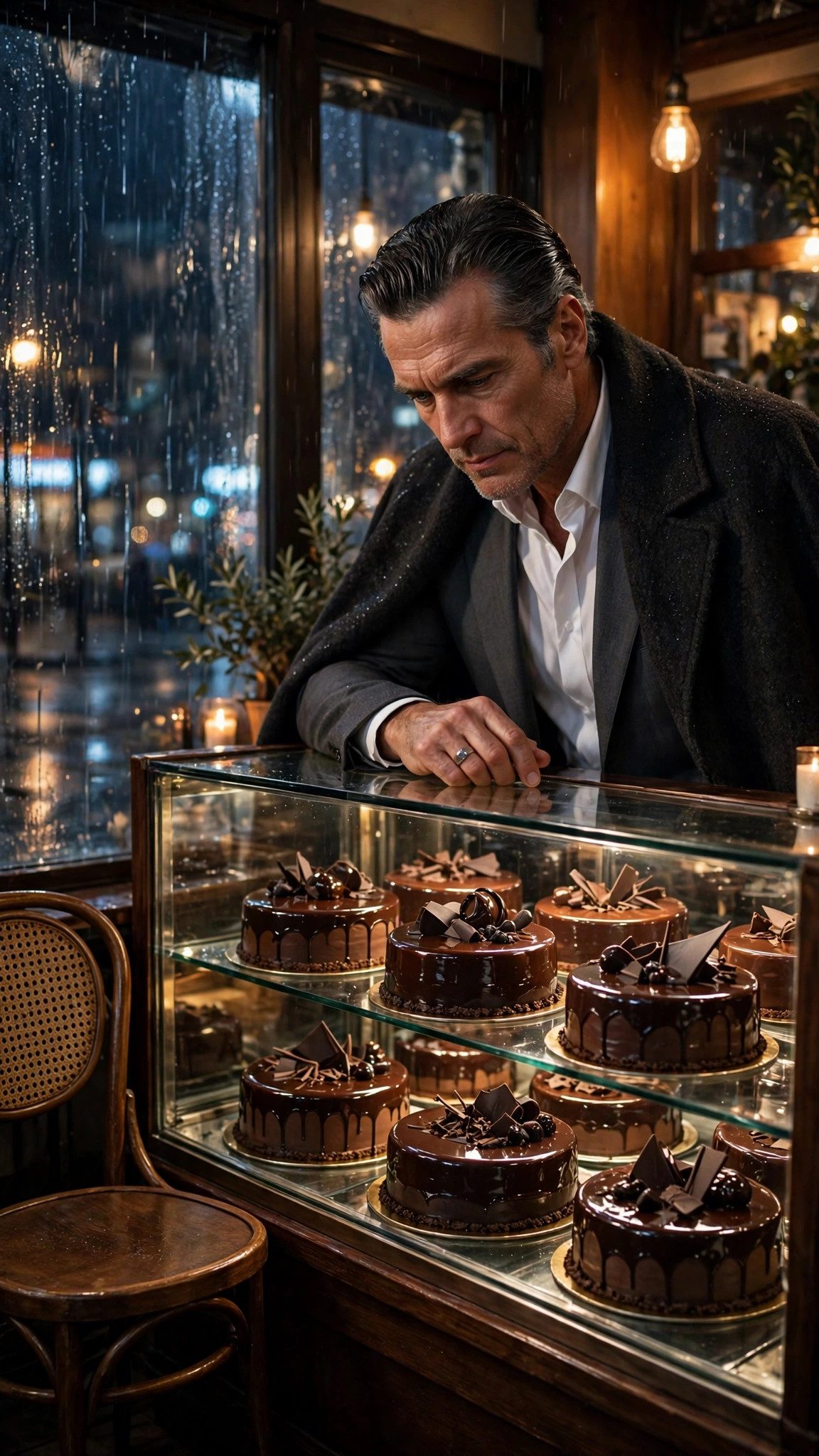
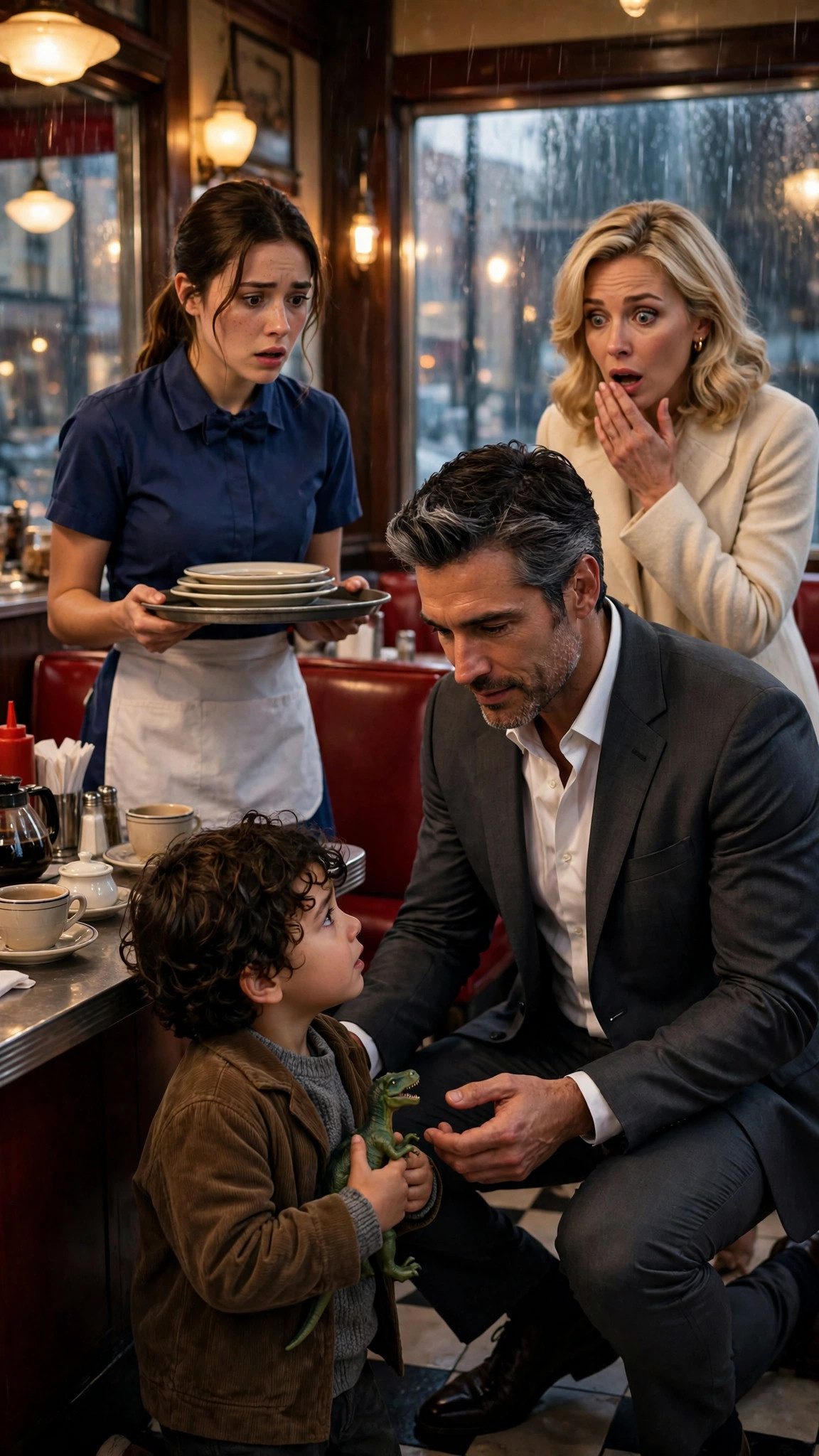
    Gabriel picked up the box and carried it to the boy, and he knelt down — Gabriel Rossy, the most feared man in the neighborhood, kneeling on the floor of a little cafe in his charcoal suit — so that he was at eye level with a three-year-old boy, and he opened the box, and inside was a slice of chocolate cake. A fresh slice. The big one from the middle. The frosting smooth and dark, shining like polished wood.

    "It is for you," Gabriel said. "Your sister baked it this morning, in your own kitchen, with your father's recipe. It is the first cake Claraara's Corner has ever made. I think you should be the first person to taste it."

    Ethan looked at the cake for a long moment. Then he looked at his sister. Then he picked up the little plastic fork that Antonio had set beside the box, and he took one small bite, and he chewed it slowly, carefully, the way you would taste something precious, something you had waited a very long time for.

    And then his whole face lit up, like a lamp being switched on, and he laughed — a big, surprised, chocolate-covered laugh — and the whole cafe laughed with him, and Maria put her hand over her mouth and cried, and Claraara laughed too, and Gabriel Rossy sat back on his heels on the floor of a little cafe on Maple Street, with chocolate cake on his cuff and tears in his eyes that he did not bother to hide, because there was no one left in the room he needed to frighten.

    That was the beginning. Not the end. The beginning.

    On the first morning, the line stretched out the door and down the sidewalk — neighbors who had known Daniel Hart, and neighbors who had only heard of him, and people from three streets away who had heard that the best chocolate cake on Maple Street was back. Claraara stood behind the counter in her too-big apron, and she served the first slice herself, to old Mrs. Delaney, who had bought bread from her father for thirty years, and who took one bite and closed her eyes and said, "Just like Daniel's. Just like his." And Claraara smiled, and her hands stopped shaking, and she knew, in the way you know things when you are ten years old and the whole world is watching you, that she was exactly where she was supposed to be.

    In the months that followed, Claraara's Corner became the heart of Maple Street again, the way Hart's Bakery had been before it. Maria ran the front of the house, greeting customers by name, remembering who liked their coffee strong and who liked it sweet. Claraara baked in the back kitchen, on a stool, in a too-big apron, with her father's recipe book open on the counter and chocolate on her nose, learning — the way her father had taught her — that you cannot rush a cake, and you cannot rush a person, and that both of them know when you are impatient.

    Ethan grew stronger every week. He went back to the park, and he chased the pigeons, and he fell down and got up laughing, and on Sundays he sat on a stool in the back kitchen and watched his sister bake, his stuffed dog tucked under his arm, asking a hundred questions, the way little brothers do.

    On Saturdays, Ethan sat on a stool in the back kitchen, and Claraara taught him to stir the batter, slow, because the chocolate is shy and you have to coax it, and Ethan stirred with great seriousness, his tongue stuck out in concentration, and more batter ended up on his face than in the bowl, and Claraara laughed until her sides hurt, and Maria, watching from the doorway with a dish towel in her hands, thought about her husband, and about the Saturday mornings in the old bakery, and she felt, for the first time since Daniel died, that the circle had closed — that what had been taken from them had been given back, not the same, not ever the same, but enough. More than enough.

    And Gabriel Rossy came to the cafe every morning, and he sat in the corner booth, and he drank his coffee, and he watched the street come back to life — the shops reopening, the shutters coming up, the neighbors nodding to each other on the sidewalk like people who had remembered, all at once, that they belonged to each other.

    He did not go back to the warehouse. He did not go back to the old ways. He kept his word to Agent Reyes, and he kept his word to himself, and one by one, over the months that followed, he did what Daniel Hart would have done: he went to the florist on Fifth Street, and the tailor, and the grocer, and all the others whose names were written in his father's ledgers, and he paid their debts, and he tore up their notes, and he told them that the Rossy family owed them an apology, and that he was there to deliver it.

    Some of them slammed their doors in his face. Some of them wept. Some of them took a long time to forgive him, and some of them never did, and Gabriel understood that, and he did not argue, because forgiveness is not something you can buy, even with all the money in the world. But most of them — most of them looked at him, and they looked at the little cafe on Maple Street, and at the girl who baked the cakes, and at the boy who had come home from the hospital, and they saw that something had changed, and they gave him a chance.

    The Rossy family businesses were legitimized, one by one — the shipping, the restaurants, the properties, all of it brought into the light, all of it run clean, all of it paying taxes and wages and doing honest work. Tommy Rizzo, who had kept the books for thirty years, grumbled about the paperwork and then stayed to do it, because someone had to, and because, in his careful way, he had always hoped for this. Marco stayed too, no longer a bodyguard with a gun, but a driver and a friend, the man who took Ethan to the park on Saturdays and taught him to throw a baseball.

    And Danny Cole — the boy who had stood in the doorway of the closed bakery with a gun in his coat — testified against the men who had sent him, and he was given a second chance, and he took it, and he came to work at the cafe, washing dishes in the back kitchen, learning, slowly, how to be a person who was not afraid all the time.

    Ethan's fourth birthday came in the spring, and Claraara baked the cake herself — a chocolate cake, of course, with four candles, and Ethan blew them out in one breath and wished, out loud, for a bicycle, and then he whispered to his sister, so quietly that only she could hear, that his real wish was that she would never stop baking cakes. She promised him she never would. And in the summer, Danny Cole wrote Gabriel a letter from the work program where he was learning to be a carpenter, and in the letter he said that his mother was doing better, and that he thought about that night on Maple Street every day, and that he would never forget the man who had talked him out of killing someone with empty hands. Gabriel kept the letter in his desk drawer, next to Daniel Hart's note, and sometimes, late at night, he took them both out and read them, and he thought about how strange it was that the two most important pieces of paper in his life were a dead man's promise and a living boy's thank-you.

    On a warm evening in late summer, six months after Ethan came home, Gabriel Rossy sat in the corner booth of Claraara's Corner, watching the sun go down over Maple Street, when Claraara came out of the back kitchen carrying a white plate, and she set it down in front of him, and on it was a slice of chocolate cake. A fresh slice. The big one from the middle.

    "For you, Mr. Rossy," she said. "On the house."

    Gabriel looked at the cake, and then he looked at her — nine years old, no, ten now, taller than she had been in the rain, her dark hair in a neat ponytail, her quiet eyes bright with the hope she had never lost, not once, not even in the darkest days — and he thought about the night she had walked into this cafe and asked for the slice nobody wanted, and about the question she had asked him as she walked out the door with the box held tight against her chest.

    You can buy the cake, but who has the money to buy you?

    He picked up the fork, and he took a bite, and it was the best chocolate cake he had ever tasted in his life — dark and dense and rich, the way her father had made it, the way she made it now — and when he had swallowed, he set the fork down, and he looked at her, and he answered the question, six months late, in the only way he knew how.

    "Nobody, Claraara," he said. "Nobody has the money to buy a person. Not me. Not Castellano. Not anyone. A person is not for sale. Kindness is not for sale. And a slice of chocolate cake —" He smiled, the real smile, the startled one, the one that had surprised him the night she first walked into his life. "A slice of chocolate cake is not something you buy, Claraara. It is something you give. And something you are given. That is the price of it. That is the whole price. A promise, kept."

    Claraara smiled — the bright smile, the one that made strangers want to help her — and she sat down across from him in the corner booth, and she told him about the cake she was going to bake for Ethan's fourth birthday, and about the new recipe she was trying, and about the customer who had asked for a wedding cake, a real wedding cake, for his daughter —

    And Gabriel Rossy listened, and the amber light of the little cafe glowed warm against the dark, and the smell of chocolate and coffee filled the air, and outside, on Maple Street, the rain had stopped, and the streetlamps were coming on, one by one, like stars.

    The End.
    THE END

  • Chapter 6: What the Law Could Do

    Chapter 6: What the Law Could Do

    The knock came again — three slow knocks, patient, certain — and then the door handle turned, slowly, testing the lock.

    I pressed my hand over Leo's mouth, gently, and shook my head. He nodded, his eyes wide, and buried his face against my shoulder. I could feel his heart hammering against my chest, fast as a bird's, and I thought: this is what I ran from. This is the thing I was afraid of. Men at the door in the dark, coming for my child.

    And then, from the street below, came the sound of car doors slamming, and footsteps — many footsteps, fast and heavy — and a voice shouting, "Federal agents! Step away from the door!"

    The handle stopped turning. There was a scuffle on the stairs, and shouting, and the sound of someone being pushed against a wall, and then silence. A long silence. And then a knock on the door — a different knock, quick and light — and a voice said, "Mrs. Vieri? Mrs. Hart? It's the FBI. You're safe now. You can open the door."

    I didn't move. I couldn't move. My legs wouldn't work.

    "Sofia," said another voice — a voice I knew, a voice that made my whole body go weak with relief. "Sofia, it's me. It's Matthew. Open the door. Please."

    I stood up on shaking legs, still holding Leo, and I unlocked the door, and there he was — Matthew, in a charcoal suit, his hair wet from the rain, his face white, with two FBI agents behind him and Marco Bellini, his driver, standing on the stairs with his arms crossed. And behind them, on the landing, handcuffed and furious, were the two men who had knocked on my door.

    Matthew stepped inside and closed the door behind him, and he looked at me, and he looked at Leo, and his whole body seemed to fold in on itself with relief. "You're all right," he said. "You're both all right."

    "How did you—" I started.

    "I called the FBI on the way here," he said. "Agent Reyes. I've been working with him for two years. The family, the business — I've been building a case. Against Castellano. Against all of them. I just needed the last piece, and tonight, they gave it to me. They came here, to my son's home. That's attempted kidnapping. That's federal."

    He knelt down then, in front of Leo, and he put his hands on Leo's shoulders, and he looked into my son's face with an expression so gentle it broke my heart. "Leo," he said. "I'm your father. I know that's a big thing to hear. And I know I wasn't there. I wasn't there because I didn't know. But I know now. And I'm here. And I am never going away again. Do you understand?"

    Leo looked at him for a long moment, and then he held out Rex, his green dinosaur, and said, "This is Rex. He protects me. But you can protect me too, if you want."

    Matthew took the dinosaur very carefully, as if it were made of glass. "I would like that very much," he said.

    That night, after Leo finally fell asleep — in my bed, between me and the wall, with Rex tucked under his chin — Matthew and I sat at the kitchen table, and he told me everything.

    He told me about the letter. The second letter, the one in my handwriting, the one that said I never loved him. He told me that Tony Russo had brought it to him, a year after I left, and that he had believed it, because the handwriting was mine, and because he could not imagine any other explanation.

    "Tony copied your hand from old birthday cards," Matthew said, his voice flat and cold. "He kept them. He practiced for weeks. Castellano needed me alone. A man with a family is a man with something to lose. A man alone is a man who can be broken."

    I stared at him. "You believed I never loved you?"

    "I believed the letter," he said. "I believed it for six years. And every day, I asked myself what I had done wrong, and I never found an answer, because there was no answer. You loved me. You left because you were afraid. Not because you didn't love me."

    "I left because I was pregnant," I whispered, "and because a bullet went through our kitchen window, and because I knew that if I stayed, our child would grow up behind a gate with guards at the door, and I couldn't do that to him. I couldn't do that to you, either. You were disappearing, Matthew. Day by day, you were disappearing into that life, and I couldn't watch it happen to our son, too."

    "I know," he said. "And you were right to be afraid. But the life has changed, Sofia. I've changed it. For two years, I've been working with the FBI. I've been moving the business into legitimate shipping, legitimate trucking, legitimate everything. I've been cutting ties with the old ways, piece by piece. Tony didn't know. Castellano didn't know. They thought I was still the man they could control."

    "Why didn't you tell me?" I asked. "Why didn't you come and find me?"

    "Because I believed the letter," he said simply. "Because I believed you didn't want me. And because a man who believes that doesn't go looking. He just… stops."

    We sat in silence for a while, at the small kitchen table, with the rain falling outside and our son asleep in the next room, and I thought about six years of running and six years of hiding, and about a letter I had never written, and about a man who had believed it because he had no reason not to.

    "There's one more thing," Matthew said quietly. "Vivian."

    I stiffened. "The woman from the diner."

    "My fiancée," he said. "The council's choice. I was going to marry her. I had agreed to it, because I thought there was nothing left for me. But there is something left for me. There's you. There's Leo. And I won't marry her. I've already told her. She took it… better than I expected. She said she always knew I was married to a ghost."

    "I'm not a ghost," I said.

    "No," Matthew said. "You're not. You're here. You're real. And you're the mother of my son. And if you'll let me, I'd like to spend the rest of my life proving that the man you ran from is not the man I am anymore."

    At dawn, the FBI moved on Castellano. I learned the details later, from Reyes, over coffee at my kitchen table — the way you learn about a storm after it has already passed. They hit the docks at five in the morning, and the warehouses at five-fifteen, and Castellano's house at five-thirty, and by seven o'clock it was over. Forty years of an empire, ended before breakfast.

    Tony was arrested at his office, in front of his secretary, in front of men who had feared him for twenty years. He did not fight. He did not run. He put his hands on his desk, very calmly, and said, "I want a lawyer. And I want to talk about a deal." Reyes told me later that men like Tony always talk, in the end. They talk because they have spent their whole lives making sure other people take the fall, and when the fall finally comes for them, they have nothing left to hold on to.

    Matthew called his mother that morning, from our kitchen, while Leo ate cereal at the table. I heard his voice from the next room — low, steady, tired. "Mother," he said. "It's over. Castellano's finished. Tony's finished. And Sofia — Mother, Sofia is alive. She has a son. My son. He's five years old, and he has my eyes."

    There was a long silence on the other end of the line. And then Elena said something that made Matthew close his eyes and put his hand over his face, the way a man does when he is trying not to cry. "Bring them home, Matthew," she said. "Bring my daughter and my grandson home."

    The next morning, Agent Daniel Reyes came to the apartment. He was a tall man in his forties, with tired eyes and a kind voice, and he sat at our kitchen table and drank Rosie's coffee — I had made a pot, out of habit, because that was what I did when people came to my home — and he laid out the case.

    "Tony Russo has been on our radar for three years," Reyes said. "Phone records, bank transfers, meetings with Castellano's people. But we never had enough to move on him. Tonight, we do. His men came to your door, Mrs. Vieri. That's attempted kidnapping of a minor. That's federal time. And when we picked up his phone, we found the calls to Castellano. Forty-seven calls in the last month."

    "And Castellano?" Matthew asked.

    "We're moving on him at dawn," Reyes said. "The docks, the warehouses, the accounts. Tony's going to testify — we've already offered him a deal. Eight years, in exchange for everything he knows. He took it. He took it fast."

    "Eight years," Matthew repeated. "For six years of lies."

    "Eight years is what we can give him," Reyes said. "Castellano gets life. That's the one that matters."

    I looked at Matthew. His face was very still, but I could see the war happening behind his eyes — the old Matthew, the one who would have handled this himself, the one who would have made Tony disappear and settled the score the way his father would have settled it, and the new Matthew, the one who had spent two years building a case, the one who had called the FBI instead of calling his men.

    "Let the law have them," I said quietly. "Please, Matthew. Let the law have them. Leo doesn't need a father who settles scores in the dark. He needs a father who comes home for dinner."

    Matthew looked at me for a long moment. Then he looked at Reyes, and he nodded. "Let the law have them," he said.

    Reyes stood up. "Then it's done," he said. "Mr. Vieri, Mrs. Vieri — thank you. You did the right thing. Both of you."

    After he left, Matthew and I sat at the table for a long time, not speaking, just listening to the sound of Leo breathing in the next room, and the rain on the window, and the quiet of a house that was, for the first time in six years, safe.

    "There's one more thing I need to tell you," Matthew said finally. "Your note. The one you left on the kitchen table. I kept it. I carried it in my wallet for six years, next to your photograph. I read it a hundred times. And every time, I thought the same thing: she loved me. She said she loved me. And then she left anyway. I never understood it."

    "I left because I loved you," I said. "I left because loving you meant losing myself, and I was afraid that if I lost myself, there would be nothing left to give our son. But I was wrong. Running didn't save me. It just made me smaller. It made my whole world small enough to hide in. And Leo deserved better than a small world. He deserved a father. He deserved a home."

    Matthew reached across the table and took my hand. His hand was warm, and steady, and it was the same hand that had caught my oranges in the rain six years ago, outside a flower shop on Madison Avenue.

    "Then come home," he said. "Both of you. Come home."

    And for the first time in six years, I didn't say no. I didn't run. I didn't hide.

    I said yes.

    The next day, I went to the diner to tell Rosie. She was behind the counter, wiping down the coffee machine, and she looked up when I came in, and she knew before I said a word. She always knew.

    "So," she said. "The man in the charcoal suit. He's the one you've been hiding from."

    "He's Leo's father," I said. "His name is Matthew. And I'm going home with him. We're going home."

    Rosie put down her cloth. She came around the counter, and she took my face in her hands, the way a mother would, and she looked at me for a long moment with those sharp old eyes that missed nothing. "I knew," she said. "Five years ago, the first week you worked here, I knew. A woman doesn't flinch every time the door opens unless she's afraid of who might walk through it."

    "I'm not afraid anymore," I said.

    "I know," Rosie said. "I can see it. You're standing up straighter, Sofia. You haven't stood up straight in five years."

    She hugged me then, hard, and she whispered in my ear, "You come back and visit, you hear me? And you bring that boy. And you bring that man. I want to meet the man who finally came to his senses."

    Leo said goodbye to his classroom the next morning. He stood in front of his teacher and his friends, in his blue backpack, and he said, very solemnly, "I'm going to live with my daddy now. He has a big house and a garden. And Rex is coming too." His teacher hugged him, and his friends gave him drawings, and one of them — a little girl named Maya — gave him a rock she had painted like a ladybug, and Leo carried it home in his pocket like treasure.

    That night, we packed the apartment. It did not take long. Six years of a life fit into three boxes and a duffel bag, and that was the strangest thing of all — how small a life could be, when you built it to be small on purpose. I stood in the empty apartment for a long time, looking at the bare walls and the marks on the floor where Leo's bed had been, and I thought about the woman who had arrived here six years ago, pregnant and afraid, with three hundred dollars and a bus ticket stub.

    She had done her best. She had kept her son safe. And now it was time for her to go home.

  • Chapter 1: The Heel Beneath the Chandeliers

    Chapter 1: The Heel Beneath the Chandeliers

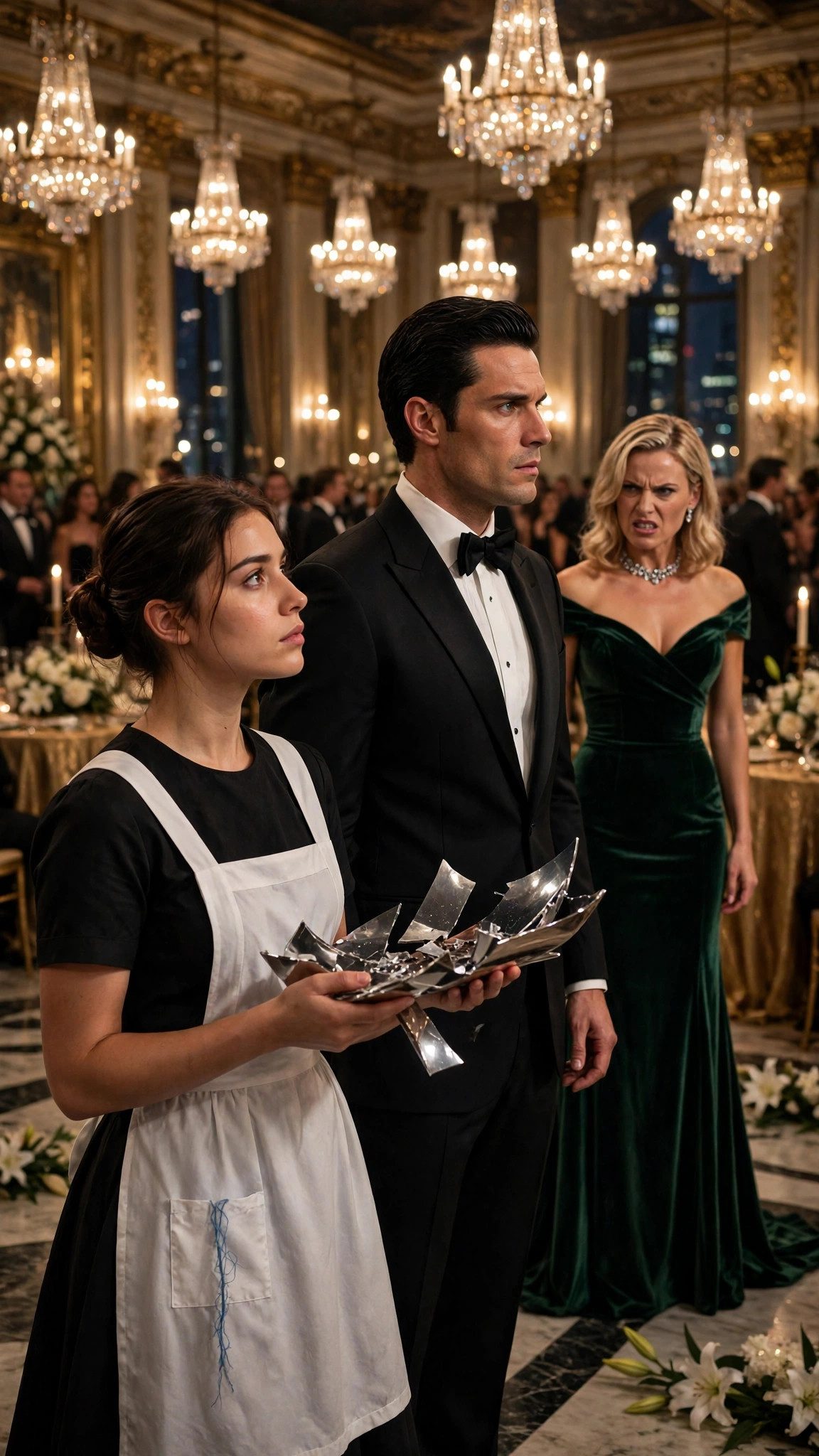
    Three hundred guests watched the fiancée of New York's most feared mafia boss swing her jeweled heel at the maid nobody dared to defend.

    I was the maid.

    The ballroom of the Plaza Grand glittered above us like a second sky. Chandeliers hung in rows down the ceiling, each one dripping crystal, each one throwing light across marble floors and white tablecloths and three hundred faces turned toward the head table. The air smelled of white lilies and expensive perfume and the roast duck the kitchen had been plating since four in the afternoon. A string quartet played something soft near the far windows. And in the middle of all that beauty, Bianca Romano lifted her foot, aimed the pointed heel of her silver shoe at the serving tray I was holding, and smiled at me the way a cat smiles at a bird it has already caught.

    "Oops," she said.

    Her crystal glass slipped from her hand. It did not fall. She let it fall, tipping it with two fingers as deliberately as a woman signing her name. Red wine splashed across the golden rim of the glass serving dish on my tray and ran down in thin red lines over the white porcelain, over my wrist, over the cuff of my black uniform.

    A woman nearby shrieked. A fork clattered. The quartet played on for two more bars and then stopped, the violin dying in the middle of a note.

    "This is why hired help should never serve while Diamond Malhotra is at the table," Bianca said, loud enough for the whole head table to hear. Her voice was sweet and cold at the same time, the way only a woman who has never been told no can make her voice sound. "Diamonds don't tolerate clumsiness."

    I did not know who Diamond Malhotra was. I knew only that Bianca Romano, twenty-nine years old, blonde hair swept into an elegant updo, cold blue eyes, a floor-length emerald-green gown that probably cost more than I made in a year, and a diamond choker around her neck that caught the chandelier light every time she moved, was looking at me like I was something she had found on the bottom of her shoe.

    "I'm sorry," I said quickly. "I'm so sorry, I'll—"

    Before I could finish, the tray slipped from my hand. I still don't know, even now, whether my hands were shaking so hard that I lost my grip, or whether Bianca's friend at her elbow — a thin woman in a red dress whose name I never learned — knocked my wrist as she pulled away. Bianca and her friend pulled back so quickly, all at once, that the tray dropped and shattered on the table. Glass everywhere. Porcelain in pieces. Wine spreading across the white tablecloth like blood.

    The room went still. Three hundred people, and nobody breathed.

    "Leave no stone unturned," Bianca shouted, and her eyes didn't leave mine. She placed her foot on the tray — on the broken pieces of it, on the shattered glass, grinding her heel down as if she were crushing a cigarette. "Pick it up."

    My hands were shaking. I could feel my face burning. I bent down, slowly, because my knees felt like they might give out, and I reached for the largest piece of the broken tray.

    "Bianca Romano," a voice called from the far end of the ballroom. "Don't kick the maid."

    The voice was deep and quiet and it cut through the silence like a knife through silk. Every head in the room turned.

    Dante Moretti stood at the far end of the head table. New York's most feared mafia boss. Thirty-four years old, slicked-back black hair, a sharp jaw, intense grey eyes, a black tuxedo with a white shirt and a black bow tie, standing perfectly still with one hand resting on the back of his chair. I had seen photographs of him in the newspapers, always from a distance, always looking like a man carved out of marble. Up close, under the chandeliers, he looked even less like a man and more like a storm deciding whether to break.

    "What did you say, Anatole?" Bianca shouted. She called him Anatole sometimes — a pet name from some old joke I didn't understand, a name that sounded wrong in her mouth now, sharp and mocking.

    "I said don't kick the maid," Dante said, and he started walking around his table toward us. He didn't hurry. He didn't raise his voice. He walked the way a man walks when he knows the whole room is watching and he doesn't care.

    "Why?" Bianca shouted. "She's just a maid."

    Dante stopped between Bianca and me. He didn't look at her. He looked at me first — one long look, grey eyes taking in my face, my shaking hands, the wine on my cuff — and then he turned to Bianca.

    "Because where I come from," he said, "a man who stays silent while a woman is humiliated is worse than the man doing it."

    Other men stepped back. I saw it from the corner of my eye: two men in dark suits at the next table, men I recognized as Dante's people, moving back half a step, giving him room. Nobody spoke. The chandeliers hummed faintly above us, the way they do when a room goes completely quiet.

    Bianca's face went white, then red. She reached up with one hand and tore the diamond earring from her left ear and threw it at me. It struck my shoulder and fell to the floor with a tiny, bright sound.

    "That maid — she just wrecked my party. Can't you see it?" she said, her voice rising. "My party. My engagement party. And she ruined it."

    Dante didn't move. "No," he said. "I can't see it. Because it never happened."

    Bianca's voice fell off a cliff. For a second she had nothing to say at all, and in that second the whole ballroom seemed to lean forward, waiting.

    "Don't kick the maid," Dante said again, quietly.

    The room hushed. I could hear my own breathing. I could hear the blood in my ears.

    "I won't let you make my wife feel insecure," Bianca said then, her voice shaking, and I didn't understand what she meant — I wasn't her wife, I wasn't anyone's wife, I was a waitress holding a broken tray — but she went on, her hand dropping to her side. "Hiring you was the mistake."

    "She was never meant for me," Bianca said, looking at me now, her eyes full of fury and something else underneath it, something frightened. "She was always plain."

    Dante looked at me. Really looked at me, the way nobody had looked at me in years — not as a uniform, not as a pair of hands carrying a tray, but as a person.

    "What's your name?" he asked.

    "Elena," I said. My voice came out smaller than I wanted it to. "Elena."

    I was about to say something else — I don't remember what, something about being sorry, something about leaving — when Dante spoke to Bianca, and his voice had changed. It was colder now. Final.

    "Bianca, the answer is no."

    Bianca's smile twisted. "What did you say?"

    "You heard me."

    "You're not the one to decide," Bianca said, but her voice was thinner now, and I could see her hands trembling at her sides.

    Dante cut her off. "I just freed myself from a prison where I wasn't allowed to defend anything but a man's ego." He pointed at her, one finger, steady as a gun barrel. "The wedding is off."

    "You can't be serious," Bianca gasped.

    I looked at Bianca as she stepped back, her expression full of fury, and I looked at Dante, and I thought about how strange it was that a man I had never met was standing between me and the most powerful woman in the room, and that he was doing it over a broken tray and a spilled glass of wine.

    "Who is Elena?" Dante asked then, and for a moment I thought he was asking Bianca, but his eyes were on me. "Are you trying to protect your family?"

    "She's just a maid," Bianca said.

    "Why are you acting like she matters?" Bianca snapped. "Did you not understand? You don't get to call me a liar!"

    Dante spoke over her, calm and flat. "Bianca, the wedding is off."

    All ears turned toward Bianca. Three hundred guests, and you could have heard a pin drop on the marble floor.

    "It makes me an accomplice," Dante said. "It makes the wedding a business transaction. Only one with a much higher price tag."

    Then he looked back at me. "That's not your problem," he said.

    "You're not my problem," I said, and I don't know why I said it — maybe because I was terrified, maybe because nobody had ever defended me before and I didn't know what to do with it. "I'm nobody's problem."

    Bianca's eyes met his. "How did this happen?" she said, and her voice had gone quiet now, almost a whisper. "How did you end up being a witness to such a thing?"

    Dante drew a breath. His brow furrowed. "I don't know you," he said to me, "but I know a woman who doesn't lie when it's easier. You're the same one who found Bianca in the hallway, aren't you?"

    My chest tightened. My heart was beating so hard I was sure everyone in the ballroom could hear it.

    "You were there," he said. "You know how this began."

    I did know. God help me, I knew exactly how it began, and I had been carrying it in silence for three weeks because I needed this job and because women like me don't accuse women like Bianca Romano of anything, ever, unless they want to lose everything.

    He hesitated then, and his eyes searched my face, and something in his expression felt familiar, like I had seen him before, like I had known him in some other life. But I decided to ignore it. I had bigger problems. I had a broken tray at my feet and three hundred people staring at me and a diamond earring on the floor beside my shoe.

    "What's your name?" he asked again.

    "Elena," I said. I didn't hesitate. I liked this man. I didn't know why, but I did — something in the way he had stepped between me and Bianca without a second thought, the way he hadn't asked permission from anyone in the room to do it.

    He hesitated. "Was your father," he said slowly, "the man who saved a stranger outside the Astoria subway station six years ago?"

    The ballroom tilted. The chandeliers swung, or maybe it was just me. The wine on my cuff. The broken glass. The blue thread sewn into the inside pocket of my apron, the thread I had carried with me every single day for two years, the thread from my father's old navy uniform — and suddenly Dante Moretti was looking at me like he was seeing a ghost.

    I didn't answer him. I couldn't. Because the last thing I had expected, standing in the middle of the most humiliating night of my life, was for the most feared man in New York to ask me about my father.

    But that was later. That was after the heel and the glass and the wedding being called off in front of three hundred people. Before any of that, there was the morning, and the agency, and the bus, and the ordinary day that turned into the night that changed everything.

    It started the way all my days started: at five in the morning, in a small apartment in Queens, with my mother asleep in the next room and the smell of coffee I couldn't afford to waste.

    My name is Elena. I am twenty-six years old. I am plain, with dark brown hair I wear in a low bun because it keeps it out of the food, warm brown eyes, no makeup because makeup costs money and smears under a hot kitchen light anyway. I wear a simple black maid uniform with a white apron. I work for an agency called Sterling Events that sends girls like me to galas and weddings and charity balls all over New York, and I take every shift they offer, because rent in Queens does not wait and my mother Rosa's medicine does not pay for itself.

    My father was Thomas. He was a subway maintenance man for thirty-one years, and he was the kindest man I ever knew, and he died two years ago, and I have missed him every day since. He used to come home with grease under his fingernails and a thermos that smelled of coffee, and he would sit at our kitchen table and tell me about the people he saw on the platforms — the musicians, the tired nurses, the kids going to school — and he always said the same thing: "Elena, the city is full of people nobody sees. You see them. That's your job in this world."

    The morning of the gala, I woke at five and stood in the kitchen in the dark, and I did what I always did before a big job. I took my apron off its hook. I checked the hem. I checked the pocket. And inside the pocket, sewn into the lining where nobody could see it, was a short length of frayed blue thread — the exact navy blue of my father's old subway uniform. When the uniform was finally thrown away after he died, my mother had cut one thread from the cuff and given it to me, and I had sewn it into every apron I owned since, because it was the only piece of him I could carry into rooms where I was nobody.

    "For luck," my mother used to say. "Your father is with you."

    I didn't believe in luck. But I believed in my father. So I put the apron on, and I tied it, and I went to catch the bus to Manhattan, and I told myself it was just another gala, just another night of carrying trays and smiling at people who would never remember my name.

    I was wrong. It was the night Dante Moretti looked at me, under the chandeliers, and asked me who I was.

    And it was the night Bianca Romano decided to destroy me.

    The bus ride to Manhattan that morning took almost an hour, and I spent most of it watching the city slide past the window — the brick buildings of Queens giving way to the bridges, the bridges giving way to the towers of glass and steel that rose over the river like something out of a dream. The other agency girls sat around me, chatting about their boyfriends and their rent and the shoes they wanted to buy, and I listened with half an ear, because my mind was somewhere else entirely.

    I was thinking about the thread. I always thought about the thread on the way to a big job. I would press my hand against my apron pocket, just for a second, just to feel it there, and I would think about my father coming home from the night shift with grease under his fingernails and a thermos in his pocket, and I would tell myself what he always told me: "Elena, the city is full of people nobody sees. You see them. That's your job in this world."

    The bus stopped at the corner of Fifth Avenue, and we all got off, twelve girls in black uniforms with white aprons, and we walked the last two blocks to the Plaza Grand together, our shoes clicking on the pavement, our breath making little clouds in the cold air. The hotel rose above us, gold and white and impossibly grand, and the doorman held the door open for us, and we went in through the service entrance, the way girls like us always go in — not through the front, never through the front — and Mrs. Delaney was waiting for us in the corridor with her clipboard and her sharp eyes.

    "Remember," she said, looking at each of us in turn. "You are invisible tonight. The guests are celebrating an engagement. The most important engagement this city has seen in years. Nothing goes wrong. Nothing spills. Nothing breaks. Do you understand?"

    We all nodded. We understood.

    I understood, too. I just didn't know yet that by the end of the night, everything would be broken — the tray, the glass, the engagement, and the whole careful order of the world I thought I lived in.

  • Chapter 6: What the Law Could Do

    Chapter 6: What the Law Could Do

    Agent Daniel Reyes had been trying to put Vincent Castellano in prison for three years, and he had gotten nowhere, because nobody on Maple Street would talk to him.

    It was not that the people of the neighborhood liked Castellano. They did not. They feared him, which was different, and worse. Fear made people lock their doors and close their shutters and pretend they had seen nothing, heard nothing, known nothing. Reyes had knocked on a hundred doors, and a hundred doors had opened a crack and closed again. He had left a hundred business cards on a hundred doorsteps, and none of them had ever been answered.

    So when his phone rang at eleven o'clock on a rainy Tuesday night, and the voice on the other end said, "Agent Reyes, this is Gabriel Rossy. I have a gunman for you, and a ledger, and a story you will want to hear," Reyes thought, for one wild moment, that someone was playing a cruel joke on him.

    He drove to Maple Street anyway, because that was his job, and when he got there, he found Gabriel Rossy standing in the rain outside a little corner cafe, with a young man named Danny Cole sitting on the curb in handcuffs that were not police handcuffs but the plastic kind that Gabriel's men carried, crying quietly into his hands, and a gun in a paper bag on the pavement beside him.

    "He was sent to kill me," Gabriel said, as if he were reporting the weather. "He has agreed to tell you everything he knows about Eddie Krol and Vincent Castellano. In return, I want your word that he will be protected, and that he will get a fair deal. He is twenty years old, Agent Reyes. He is a boy who was given a gun by men who did not care whether he lived or died. I will not have his blood on my hands."

    Reyes looked at Gabriel for a long moment. He had spent three years building a picture of this man from files and photographs and whispered reports, and the picture had been simple: a dangerous man, a criminal, a boss. Now the man standing in front of him in the rain was handing him a gunman and offering to help, and Reyes did not know what to make of it.

    "Why?" Reyes asked. "Why now, Mr. Rossy?"

    "Because of a slice of chocolate cake," Gabriel said, and when Reyes stared at him, Gabriel almost smiled. "I will explain. But first, take the boy. Take his statement. And tomorrow morning, come to my house. I have ledgers for you. Twenty years of ledgers. And I have names."

    Reyes took Danny Cole away that night, and by morning Danny had told him everything — the debts, the threats, the fires, the men who had been bought and the men who had been broken, the whole long machinery of how Vincent Castellano had taken Maple Street apart, shop by shop, family by family, buying their debts for pennies and squeezing them until there was nothing left.

    And the next morning, Agent Reyes came to the big house on the hill, and Gabriel Rossy sat him down in his father's study, and he opened the ledgers, one by one, and he showed him the notes.

    "This one," Gabriel said, laying Daniel Hart's note on the desk, "is a baker who signed for his friend's debt and lost everything. He died for it. His little boy is dying in St. Agnes Hospital right now. This one is a florist on Fifth Street. This one is a tailor. This one is a grocer. All of them borrowed from my father. All of them were called in. All of them lost everything. And all of them —" Gabriel set down another stack of papers, newer ones, with Castellano's name on them. "All of them had their debts bought by Vincent Castellano for pennies on the dollar, after my family had already broken them. He did not destroy them, Agent Reyes. We did. My family did. He only picked up the pieces."

    Reyes looked at the papers spread across the desk, at twenty years of ruin written in neat columns, and he felt something he had not felt in three years of knocking on locked doors: hope.

    "Mr. Rossy," he said slowly, "do you understand what you are giving me? These ledgers implicate your family as well as Castellano's. If I take these, I cannot protect you from what they show."

    "I understand," Gabriel said. "I have spent twenty years telling myself that my father did what men in his position did. That it was business. That Daniel Hart chose to sign. It was not business, Agent Reyes. It was theft, with a kind face. And I have spent twenty years profiting from it. If there is a price to pay, I will pay it. But Castellano pays first. He pays for all of it — for the debts, for the threats, for the boy he sent to kill me last night, for the cafe he tried to burn down. He pays for all of it."

    Reyes nodded, and he began to pack the ledgers into evidence bags, carefully, one by one, and as he worked, Gabriel stood at the window of his father's study, looking out at the city below, at the wet streets and the little shops and the cafes, and he thought about the long road that had brought him here — from a hungry boy on Maple Street to the most feared man in the city to a man standing in his father's study, giving away everything his father had built, because a nine-year-old girl had asked for the slice nobody wanted.

    Tommy stood by the door, watching, and when Reyes had finished, Tommy said, in his careful, quiet voice, "Agent Reyes, there are other families. Other streets. Other ledgers, in other houses, belonging to other men who will not give them up as easily as the boss has. If you want them, I can tell you where to look." Reyes looked at the small, neat man with the silver hair, and he understood that the night had given him more than a case against one man — it had given him a door into a world that had been closed to him for three years. "I will take all the help I can get, Mr. Rizzo," he said. And Tommy Rizzo nodded, once, and went downstairs to make the calls.

    It took three weeks. Three weeks of statements, of warrants, of arrests made quietly in the early morning, before the newspapers got hold of it. Eddie Krol was arrested first, at the warehouse, with a gun in his coat and a ledger in his office that matched Gabriel's, page for page. Then came the others — the collectors, the enforcers, the men who had delivered the threats. And then, on a grey Thursday morning, with cameras waiting outside the courthouse, Vincent Castellano was arrested as he left his house, in a suit that cost more than most people on Maple Street earned in a year, his face white with fury, his lawyers already shouting.

    The charges were long enough to fill a page: extortion, fraud, arson, conspiracy, attempted murder. Danny Cole testified, his voice shaking but clear, about the night he had been sent to kill Gabriel Rossy, and about the man who had talked him out of it with empty hands. The ledgers testified too, in their neat columns, about twenty years of debts bought and sold like cattle. And when it was over, Vincent Castellano was sentenced to life in prison, without the possibility of parole, and Eddie Krol was sentenced to thirty years, and the street that Castellano had taken apart, shop by shop, began — slowly, cautiously, like a person learning to walk again — to breathe.

    On the day the verdict was read, the courtroom was full of people from Maple Street — shopkeepers and waiters and mothers and old men, people who had locked their doors for twenty years and had finally come out to watch the man who had frightened them be led away in handcuffs. Antonio was there. Luca was there. Maria was there, holding Claraara's hand, and when the judge said the word "life," Claraara squeezed her mother's hand so hard that Maria winced, and then they both cried, quietly, in the back row, where no one could see them except the people who understood exactly why. Outside the courthouse, the rain had stopped, and the sun was shining, and the people of Maple Street stood on the steps for a long time, talking to each other like neighbors again, like people who had remembered, all at once, that they belonged to each other.

    Gabriel Rossy was not charged. Agent Reyes had made his case, and the case was against Castellano, and Gabriel's cooperation — his ledgers, his testimony, his men standing down — was the reason the case had held together. There were questions, of course. There were always questions, when a man like Gabriel Rossy walked away from a case like that. But Reyes had his convictions, and the neighborhood had its street back, and Gabriel had something else, something he had not expected to find at the end of it.

    He had a debt to pay. And for the first time in his life, he knew how to pay it.

    He bought the cafe on Maple Street from Luca Marchetti — not for Castellano's price, not for a thief's price, but for a fair price, more than fair, enough for Luca and his family to start again wherever they wanted, with his blessing and his protection.

    Luca tried to refuse the money. "You do not owe me anything, Mr. Rossy," he said. "My father owed your father, and my family has carried that shame for twenty years." Gabriel shook his head. "Your father owed my father nothing, Luca. My father took what was never his to take, and he called it a debt. Take the money. Start again. And if you ever want to come back to this street, there will always be a table waiting for you here, in your father's cafe." Luca took the money then, and he shook Gabriel's hand, and he went home to his wife and told her that for the first time in twenty years, the street felt like it belonged to the people who lived on it. And then he took the deed, and he had his lawyer draw up new papers, and he signed the cafe over to Maria Hart, in her name, free and clear, with a note attached that said only: For Daniel. For Ethan. For Claraara. Paid in full.

    He did not tell Maria in advance. He simply had Tommy bring the papers to the hospital, on a quiet afternoon when Ethan was sleeping and Claraara was doing her homework at the little table by the window, and he watched from the doorway as Maria read them, and read them again, and then put her face in her hands and wept — not the quiet, hidden tears of the hospital stairwell, but great, shaking sobs of relief, as if twenty years of weight had come off her shoulders all at once.

    Claraara looked up from her homework, and she looked at the papers, and then she looked at Gabriel, standing in the doorway in his charcoal suit, and she said, in her small, clear voice, "Does this mean we own the cafe now?"

    "It means your mother owns the cafe now," Gabriel said. "And it means no one can ever take it from her. Not Castellano. Not anyone. It is yours, Claraara. It was always yours. Your father's name is on the first page of the recipe book, and now your mother's name is on the deed. That is how it should have been all along."

    And then there was the matter of Ethan.

    The doctors had found a donor. It had taken three weeks of searching — three weeks in which Gabriel's people had called every registry, every hospital, every foundation in the country — and in the end, the match had been closer than anyone had dared to hope. It had been sitting in the next room all along, doing her homework at a little table by the window.

    Claraara was a match for her little brother.

    The doctors explained it carefully, in their gentle voices, with diagrams and pamphlets: a bone-marrow transplant, a small procedure, a needle, a few days of feeling tired, and then her brother would have her strong, healthy blood inside him, fighting the sickness the way her blood had always fought for him, the way she had always fought for him, since the day he was born.

    Claraara did not hesitate. She did not cry. She looked at the doctors with her quiet eyes, and she said, "When can we do it?"

    They did it on a Tuesday morning, in a bright, clean room on the fourth floor, with her mother holding her hand on one side and Gabriel Rossy standing in the doorway on the other — because he had asked if he could be there, and Maria had said yes, and Claraara had said yes, and the doctors had said that a familiar face in the doorway could only help.

    It went well. The doctors said it went very well. And three days later, Ethan Hart opened his eyes, and he looked around the room, and he saw his sister sitting beside his bed, pale and tired but smiling, and he said, in his small, hoarse voice, "Clara? Did you bring the cake?"

    Claraara laughed, and then she cried, and then she laughed again, and Maria held them both, and Gabriel stood in the doorway with his hands in his pockets, feeling something in his chest that he had not felt in twenty years — something warm and unfamiliar, something that might have been the beginning of being a different kind of man.

  • Chapter 5: The Test

    Chapter 5: The Test

    I did not call the number for three days.

    I told myself I was waiting because I needed time to think. The truth was, I was waiting because I was afraid — afraid of what would happen if I called, and afraid of what would happen if I didn't. Afraid that Matthew would take Leo from me. Afraid that he wouldn't want him at all. Afraid that the life I had built in Millbrook would disappear, and afraid that it wouldn't, and that I would spend the rest of my life wondering what would have happened if I had been braver.

    On the third night, Leo climbed into my bed after a bad dream — a dream about a storm, he said, and a house with no doors — and he curled up against me with Rex tucked under his chin, and he said, in a sleepy voice, "Mommy, is the man from the diner going to come back?"

    "I don't know, baby," I said.

    "I hope he does," Leo said. "He has eyes like mine. And he was nice. He got down on his knee like a prince."

    "He's not a prince, Leo."

    "He knelt, Mommy. Only princes kneel."

    I held him a little tighter. "Go to sleep, baby."

    But I didn't sleep. I lay awake listening to the rain on the window, and I thought about the card sitting on the counter at the diner, with a phone number written in black ink, and I thought about the boy in my arms, and the man who had knelt to him, and the six years I had spent running from a truth that had finally caught up with me.

    In the morning, I called the number.

    Matthew answered on the first ring. "Sofia," he said, as if he had been sitting by the phone for three days waiting for it to ring. Maybe he had. "Thank you for calling."

    "I want a test," I said. My voice was steadier than I felt. "A DNA test. Before anything else. Before you talk to Leo again, before you come near him again. I want proof, and I want it done properly, by a doctor, with papers. And I want it to be my doctor, not yours."

    "Done," Matthew said immediately. "Whatever you want. I'll pay for it. I'll do whatever you want."

    "I don't want your money," I said. "I want the truth. That's all I've ever wanted."

    The test was done the next day, in a small clinic on the edge of town, by a doctor named Dr. Patel who had kind eyes and did not ask why a waitress and a man in a charcoal suit needed a paternity test. Leo was brave about it — braver than I was. He held out his arm for the blood draw without flinching, and then he asked Dr. Patel if the needle was going to turn him into a superhero. Dr. Patel said it might, and Leo nodded gravely, as if that settled it.

    Matthew stood in the corner of the room the whole time, very still, very quiet, watching Leo with an expression I could not read. He did not pace. He did not check his phone. He did not speak to anyone. He simply stood there, with his hands clasped in front of him, watching my son the way a man watches a sunrise he thought he would never see — afraid to blink, afraid it might disappear.

    While we waited for the nurse, Leo asked Dr. Patel a dozen questions — how the machine worked, whether the blood went into a little bottle, whether the bottle had his name on it — and Dr. Patel answered every one of them patiently, the way good doctors do with brave children. Leo nodded at each answer, very seriously, and then he looked up at Matthew and said, "Mister, are you scared of needles too?"

    Matthew crouched down so that his face was level with Leo's. "A little," he admitted. "But brave people get scared too. That's what makes them brave."

    Leo considered this with great seriousness. "Then you're brave," he decided. "And I'm brave. And Mommy is the bravest, because she does everything."

    Matthew looked up at me then, and for a moment, the room went very quiet, and I saw something in his eyes that I had not seen in six years — not the stillness, not the control, but the man underneath it, the man who had caught my oranges in the rain and danced with me in his mother's kitchen. And I thought, for the first time since the diner door opened, that maybe — just maybe — this could work. Maybe we could be a family. Maybe the six years had not broken us beyond repair.

    When it was over, he knelt down in front of Leo and said, "Thank you for being so brave."

    Leo looked at him solemnly. "Are you going to be my daddy?" he asked.

    Matthew's face did something then — something I had never seen it do, not even on our wedding day. It broke open, just for a second, and underneath the stillness I saw a man who was terrified. "I hope so," he said quietly. "More than anything in the world, I hope so."

    The four days of waiting were the longest of my life. Longer than the bus ride to Millbrook. Longer than the nights Leo had a fever. Longer than the whole first year, when I did not know if I would make rent or if Rosie would keep me on.

    Leo asked questions I could not answer. "Mommy, is the man from the diner going to be my daddy?" "Mommy, if he is my daddy, does that mean I have to move to his house?" "Mommy, does he have a dinosaur too?" I answered each one as honestly as I could, and every answer felt like stepping onto ice I could not see through.

    I worked my shifts with shaking hands. I dropped a plate on the second day, and Rosie came over and put her hand on my shoulder and said, "Sofia. Whatever it is, you tell me when you're ready. Not before." I nodded, and I did not tell her, not yet, because saying it out loud would make it real, and I was not ready for it to be real.

    Matthew waited in a hotel on the edge of town — the only hotel in Millbrook, a low building with a flickering sign and a clerk who asked no questions. He told me later that he barely slept for those four days. He sat by the window of his room and watched the rain, and he thought about the letter in his desk drawer, and the photograph in his wallet, and the boy with the grey eyes, and he did the arithmetic over and over, the way a man counts the same money twice because he cannot believe how much there is.

    On the third night, Leo climbed into my bed again, and he said, "Mommy, if the man is my daddy, will he stay? Or will he go away like the other daddies in my books?" And I held him, and I said, "I don't know, baby. But I promise you this: no matter what happens, you will always have me. Always." And Leo nodded, and he fell asleep with his head on my shoulder, and I lay awake for a long time, listening to him breathe, and wondering if I had been wrong about everything — about running, about hiding, about what it meant to protect my son.

    The results came back in four days. Four days that felt like four years. I went to pick them up alone, early in the morning, before my shift, because I needed to know first. I needed to read the words with my own eyes before anyone else could say them to me.

    Dr. Patel handed me the envelope. I opened it in the parking lot, standing beside my car, with my hands shaking so hard I could barely hold the paper.

    Probability of paternity: 99.99%.

    I stood there for a long time, staring at those numbers, and I felt something inside me let go — something I had been holding tight for six years, something that had kept me running and hiding and afraid. It let go, all at once, and I started to cry, right there in the parking lot, in front of anyone who might have been watching.

    Leo was his. Matthew was his father. The eyes had not lied. The arithmetic had not lied. My son had a father, and his father had been looking for him for six years without knowing he existed.

    I called Matthew from the parking lot. "It's yours," I said. "Ninety-nine point nine nine percent. He's yours."

    There was a long silence on the other end of the line. And then Matthew said, in a voice so quiet I almost couldn't hear it, "Thank you. Thank you for telling me. Thank you for keeping him safe all these years."

    "I didn't keep him safe from you," I said. "I kept him safe from your world. There's a difference."

    "I know," Matthew said. "And I'm going to prove it to you. I'm going to prove that the world has changed. That I've changed."

    That was the moment everything went wrong.

    Because while Matthew and I were talking on the phone, while I was standing in a clinic parking lot crying over a piece of paper, Tony Russo was sitting in an office in New York, reading a report from one of his men, and learning that Matthew Vieri had found his wife and son in a small town called Millbrook.

    Tony had been feeding information to Vincent Castellano for six years. He had been the one who told Castellano's men where to find the Vieri house that dawn morning, the one who had made sure the bullet went through the kitchen window. He had been the one who forged the second letter, copying Sofia's handwriting from old birthday cards, because Castellano needed Matthew isolated, grieving, and weak. A man with a family is a man with something to lose. A man alone is a man who can be broken.

    And now Matthew had a family again. A wife. A son. A reason to be strong.

    Castellano could not allow that.

    The call came that night, while Leo and I were eating dinner in our small apartment. My phone rang, and it was Rosie, and her voice was shaking. "Sofia," she said. "There are men at the diner. Two of them. They came in asking about you. About Leo. They said they were friends of your husband's. Sofia, they didn't look like friends."

    I dropped the phone. I grabbed Leo. I ran to the window and looked down at the street, and there it was — a black car with tinted windows, parked across from our building, its engine running, its headlights off.

    They had found us. They had found my son.

    I ran to Leo's room and pulled him out of bed, still in his pajamas, and I carried him to the living room, and I locked the windows, and I turned off every light in the apartment, and I sat on the floor with my back against the couch and my son in my arms, and I listened. The street below was quiet. Too quiet. The black car was still there, its engine running, its headlights off, waiting in the dark like a held breath.

    Leo whispered, "Mommy, why are the lights off?"

    "Because we're playing a game," I whispered back. "A hiding game. And we have to be very, very quiet."

    "Is it a fun game?" he asked.

    "The funnest game," I said, and my voice shook, and he must have heard it shake, because he put his small arms around my neck and held on tight, and he whispered, "Don't worry, Mommy. Rex will protect us. Rex is the bravest dinosaur in the whole world."

    I closed my eyes. I held my son. And I thought about the man who was driving through the night toward us, through the rain, with the FBI on the phone and twenty minutes between us and whatever was waiting outside. Twenty minutes. I had waited six years. I could wait twenty minutes. I had to wait twenty minutes.

    I called Matthew. My hands were shaking so hard I could barely hold the phone. "They're here," I whispered. "At the diner. Asking about Leo. Matthew, they're going to take him."

    "Stay inside," Matthew said, and his voice had gone very calm, very cold, the voice of a man who had just become dangerous. "Lock the door. Don't open it for anyone. I'm on my way. I'm already on my way."

    "How long?" I whispered.

    "Twenty minutes," he said. "Sofia, listen to me. I need you to listen. Whatever happens, don't open that door. Do you understand?"

    "Yes," I whispered.

    "And Sofia — I'm sorry. I'm sorry for everything. For the letter. For the six years. For all of it. But I swear to you, on my life, on my mother's life, no one is going to touch our son. Not while I'm breathing."

    He hung up. I locked the door. I turned off the lights. I sat on the floor of our small apartment with Leo in my arms, and I held him, and I listened to the footsteps on the stairs below, and I prayed — to God, to my mother, to anyone who might be listening — that twenty minutes would be fast enough.

    Leo looked up at me with those grey eyes, his father's eyes, and whispered, "Mommy, are the bad men here?"

    "No, baby," I whispered, lying to him for the last time. "No bad men. Just go to sleep. Mommy's got you."

    But the footsteps kept coming. Closer. Closer. And then there was a knock on the door — three slow knocks, patient, certain — and a voice said, "Mrs. Vieri. Open the door. We just want to talk."

    I held Leo tighter. I did not answer. I did not move. And I thought about the man who was driving through the night toward us, the man I had run from six years ago, the man who had knelt in a diner in front of strangers and taken my son's hand.

    And for the first time in six years, I was not afraid of him.

    I was afraid of what would happen if he didn't get here in time.

  • Chapter 5: One of Us Was About to Die

    Chapter 5: One of Us Was About to Die

    The rain had stopped by evening, but the streets were still wet, shining under the streetlamps like black mirrors, and the air smelled of rain and cold stone. The little corner cafe on Maple Street glowed in the dark, its windows warm, its door open a crack to let in the night air, and inside, Antonio Marchetti was wiping down the tables for the last time, thinking about closing early, thinking about the two men who had come that morning with their threats, thinking about the look on Gabriel Rossy's face when he had said, "Keep the cafe open. I will be back."

    Luca Marchetti stood behind the counter, his hands flat on the wood, staring at the papers in front of him — a purchase agreement, already filled in, already waiting for his signature. Vincent Castellano's offer. A sum of money that was less than the cafe was worth and more than Luca could afford to refuse, if refusing meant a fire in the night and his family with nowhere to go. He had been staring at those papers for three hours, and he had not signed them, and he did not know why.

    "Luca," Antonio said quietly, "you should go home. Your wife is waiting. I will close up."

    "I cannot go home," Luca said. "If I go home, I will sign this in the morning, and I will hate myself for the rest of my life. If I stay here, I will not sign it, and they will burn the cafe down. Either way, Antonio — either way, I lose."

    Before Antonio could answer, the little bell above the door rang, and Claraara Hart came in out of the dark, carrying something in her hands, wrapped in a clean white cloth.

    She was not supposed to be out. Her mother had told her to stay home, to do her homework, to go to bed early, because tomorrow was a hospital day and hospital days started before dawn. But Claraara had not been able to sleep, and she had not been able to stop thinking about the man in the charcoal suit, and the fresh slice of chocolate cake, and the way he had said, "My revenge comes in a different way," as if the words meant something she was supposed to understand.

    So she had gone to the kitchen, and she had taken out her father's recipe book — the one with the chocolate stains on the corners and his handwriting in the margins — and she had baked a cake. A small one, in the little tin pan her father had used for birthday cakes, with the frosting spread as smoothly as she could manage with a butter knife. It was not perfect. The edges were a little uneven. The frosting had a fingerprint in it, where she had touched it to see if it was set. But it was hers, and it was her father's recipe, and she had carried it through the wet streets in a white cloth, all the way to the cafe, because she wanted to give it to the man who had bought her brother a fresh slice.

    "Mr. Antonio," she said, "is Mr. Rossy here? I made him a cake. I wanted to say thank you."

    Antonio stared at her. Then he looked at Luca, and Luca looked at the door, and both men understood, in the same instant, that the little girl should not be here — not tonight, not with Castellano's men watching the street, not with the meeting at the warehouse ten o'clock, not with a price on Gabriel Rossy's head and a gunman somewhere out in the dark.

    "Claraara," Antonio said, coming around the counter quickly, "you must go home now. Right now. It is late, and your mother —"

    The door opened again, and Gabriel Rossy walked in, and behind him came Marco, and behind Marco came Tommy Rizzo, and the cafe, which had been quiet a moment before, suddenly felt very small and very full.

    Gabriel stopped when he saw Claraara. For a moment — just a moment — his face did what it had done the night before in this same cafe: it softened, startled, as if he had not expected to find her here and did not know what to do with the fact that she was.

    "Claraara," he said. "What are you doing here?"

    "I made you a cake," she said, holding out the white cloth bundle with both hands. "It's my father's recipe. It's not perfect. The frosting has a fingerprint in it. But I wanted to say thank you. For Ethan's cake. He ate one bite, and he smiled, and he said it tasted like Daddy's cake."

    Gabriel took the bundle from her, slowly, with both hands, as if it were something fragile and holy. He unwrapped the cloth, and there it was — a small chocolate cake, a little uneven at the edges, frosting smooth and dark, with a fingerprint in the top where a nine-year-old girl had touched it to see if it was set. It was the most beautiful thing Gabriel Rossy had seen in twenty years.

    "Thank you," he said, and his voice was rough. "Thank you, Claraara."

    And then Marco's phone buzzed, and Marco looked at it, and his face changed, and he leaned in close to Gabriel and spoke in a voice so low that only Gabriel could hear.

    "Boss. Eddie Krol's man is outside. Across the street. In the doorway of the closed bakery. He has a gun. He has been there for twenty minutes, waiting for you to come out."

    The cafe went very quiet. Antonio froze where he stood. Luca's hands tightened on the counter. Claraara looked from Marco to Gabriel, and her quiet eyes were wide, and she understood, in the way children understand danger before grown-ups have time to explain it, that something was wrong.

    Gabriel set the little cake down on the counter, carefully, next to the display case. He took off his overcoat, folded it over the back of a chair, and he looked at Claraara, and he smiled — the real smile, the startled one, the one that had surprised him the night before.

    "Claraara," he said, "I need you to do something very important for me. I need you to go into the kitchen with Antonio, and I need you to stay there until I come and get you. Can you do that?"

    She nodded. She did not argue. She did not ask why. She trusted him, and that trust — that absolute, unquestioning trust from a nine-year-old girl who had known him for one day — was heavier than any gun Gabriel had ever carried.

    Antonio took her hand and led her into the kitchen, and the swinging door closed behind them.

    In the kitchen, Antonio set Claraara on a stool by the big oven, where it was warm, and he gave her a glass of milk and a small plate with a slice of cake on it — a fresh slice, the big one from the middle — and he told her, in his most reassuring voice, that Mr. Rossy was a very important man and that important men sometimes had important conversations outside, and that she was safe here, and that her cake was safe in the oven, keeping warm.

    "Mr. Antonio," Claraara said, swinging her legs, "is Mr. Rossy in trouble?"

    Antonio thought about the gunman across the street, and about the two men who had come that morning with their threats, and about the look on Gabriel Rossy's face when he had talked about his revenge coming in a different way. "No, Clara," he said, and he was surprised to find that he believed it. "I think Mr. Rossy is finally getting out of trouble. I think tonight is the night he stops being in trouble."

    "Good," Claraara said, and she took a bite of her cake, and she told him about the cake she had baked for Mr. Rossy, and about how the frosting had a fingerprint in it, and Antonio listened, and he thought about her father, Daniel Hart, who had once supplied the bread for this very cafe, and who had been the kindest man Antonio had ever known — and he thought that Daniel would have been proud of his daughter tonight, sitting on a stool in a warm kitchen, eating cake, trusting a feared man to keep her safe.

    Gabriel turned to Marco and Tommy, and his face was the face the neighborhood knew — cold and grey and still, the face of a man who had built his power on the backs of other people's pain.

    "How many?" he asked.

    "One that we can see," Marco said. "Maybe more. Eddie Krol is not here himself. He sent a boy. Young. Nervous. He keeps checking his phone."

    "A boy," Gabriel repeated. "How young?"

    "Twenty, maybe. Twenty-one. He has done this before, boss, but not like this. Not a Rossy. He is scared."

    Gabriel nodded slowly. He thought about the warehouse, two miles away, where he had planned to be at ten o'clock with a gun in his own coat. He thought about Eddie Krol, waiting there for a meeting that would never happen. He thought about the note in his pocket, and the little cake on the counter, and the little girl in the kitchen who had baked it with her father's recipe book.

    "Here is what we are going to do," Gabriel said. "We are going to walk out that door, the three of us, and we are going to cross the street, and we are going to talk to that boy. We are not going to shoot him. We are not going to hurt him. We are going to talk to him, and then we are going to call Agent Reyes, and we are going to hand him over. Do you understand me?"

    Marco stared at him. In fifteen years, he had never heard Gabriel Rossy give an order like that. "Boss —"

    "Do you understand me, Marco?"

    Marco swallowed. "Yes, boss."

    They walked out of the cafe together, into the wet dark street, and the boy in the doorway of the closed bakery saw them coming, and his hand went to his coat, and his face went white in the streetlight.

    "Don't," Gabriel said, holding up one hand, palm out, the way you would calm a frightened animal. "Don't do it, son. I am not armed. Look at me. I am not armed."

    The boy's hand shook. The gun was half out of his coat. His eyes darted from Gabriel to Marco to Tommy, and back to Gabriel, and he was breathing too fast, and Gabriel could see it all — the fear, the youth, the orders he had been given by a man who did not care whether he lived or died.

    "What is your name?" Gabriel asked.

    The boy blinked. "What?"

    "What is your name, son?"

    "Danny," the boy said, and his voice cracked. "Danny Cole."

    "Danny," Gabriel said, and he took one slow step closer, his hands where the boy could see them, empty and open. "I know who sent you. I know what he told you. He told you that if you killed me tonight, you would be a made man. He told you that the Castellanos take care of their own. He lied to you, Danny. He sent you here to die. If you had shot me, my men would have killed you before I hit the ground, and Eddie Krol would have gone home and had a drink and forgotten your name by morning. Do you understand that?"

    Danny's hand was still on the gun, but it was not moving anymore. His eyes were wet. ""He said — he said it was the only way. He said I owed him."

    "He paid for my mother's medicine," Danny said, and the words came out in a rush, as if a dam had broken. "My mother is sick. She needs medicine every month, and I could not afford it, and Eddie said he would pay for it if I did jobs for him. Small jobs, at first. Driving. Watching. And then bigger ones. And then tonight. He said if I did this one, the debt would be finished. He said I would be a made man."

    Gabriel looked at the boy — twenty years old, shaking in the rain, his mother's medicine held over his head like a leash — and he saw himself at that age, hungry and desperate and willing to do anything for the people he loved, and he understood, with a sudden and terrible clarity, exactly how the Castellanos had built their empire: not with strength, but with other people's love, turned into a weapon."

    "You don't owe him anything," Gabriel said. "You owe yourself a life. Put the gun down, Danny. Put it down, and walk away from this street, and never come back. Or stay, and talk to a man named Agent Reyes, and tell him everything you know about Eddie Krol and Vincent Castellano, and let the law do what I will not do tonight."

    For a long moment, nothing happened. The street was silent. The rain had started again, thin and cold, pattering on the awnings. And then Danny Cole took his hand out of his coat — slowly, carefully — and he set the gun down on the wet pavement, and he stepped back from it with his hands raised, and he began to cry, quietly, like a boy who had been holding his breath for a very long time and could finally let it out.

    Marco picked up the gun. Tommy made the call. And from the kitchen doorway, Claraara peeked out, her eyes wide, and Gabriel saw her, and he held up one hand — wait, it is all right, it is over — and she nodded, and she went back inside, trusting him, the way she had trusted him from the first night, when she had told a feared man that he was nothing like her father. Gabriel watched the door swing shut behind her, and he thought about how strange it was that the bravest person he knew was nine years old, and how the whole of his life had led him to this street, on this night, in the rain, to be worthy of that trust.

    And Gabriel Rossy stood in the middle of Maple Street, in the rain, looking up at the cafe windows, where the amber light glowed warm against the dark, and where a nine-year-old girl was waiting in the kitchen with a cake she had baked with her father's recipe book —

    And he understood, with a clarity that felt like the rain washing the street clean, that one of them had been about to die that night.

    Him, or the boy. And the girl with the cake had just saved them both.

  • Chapter 4: The Letter

    Chapter 4: The Letter

    Matthew Vieri had not believed in ghosts until the morning his wife disappeared.

    He woke that morning to an empty bed and a cold house, and for a moment he thought she had simply gone downstairs early to make coffee. Sofia always woke before him. She liked the quiet of the house before the guards changed shifts, before the phones started ringing, before the day became what the day always became. He lay in bed for a moment, listening for the sound of her moving around downstairs, and when he heard nothing, he got up.

    He found the note on the kitchen table. He read it three times before the words made sense.

    "Matthew, I love you. I have always loved you. But I can't live in this life anymore, and I can't raise a child in it. Don't look for me. I'm sorry. — Sofia."

    A child. She was pregnant, and she was gone, and she had left him a note on the kitchen table like a woman leaving a hotel room.

    He read the note a fourth time, and then a fifth, and then he put it down very carefully on the table, as if it might break, and he walked to the window and looked out at the garden where they had married, and he did not move for a very long time.

    Tony Russo found him there an hour later. Tony had been his father's right hand for thirty years, and Matthew's underboss for six, a broad, grey-haired man with a voice like gravel and hands that had done things Matthew preferred not to think about. Tony took one look at the note on the table and said, "Boss. I'm sorry."

    "Find her," Matthew said. His voice sounded very far away, even to himself. "Find her and bring her home."

    "I will," Tony said. "I'll put every man we have on it."

    And Tony did — or at least, that was what he told Matthew. For a year, Matthew paid for private investigators, for informants, for men who knocked on doors in three states and asked about a young woman with dark hair and brown eyes. For a year, he waited for the phone to ring. For a year, he slept in the guest room because he couldn't bear to sleep in their bed alone.

    And then, one morning, Tony came to his office with a second letter.

    It was in Sofia's handwriting. Matthew knew her handwriting the way he knew his own name — the neat, slanted letters, the way she crossed her t's, the small loop she made on the letter y. The letter said:

    "Matthew, stop looking for me. I meant what I wrote. I never loved you. I married the name, not the man. I have a new life now, and I don't want you in it. Don't send your men. Don't call. Let me go. — Sofia."

    Matthew read it twice. Then he folded it very carefully, put it in the top drawer of his desk, and said, "All right."

    "Boss—" Tony started.

    "All right," Matthew said again, and his voice was so quiet that Tony took a step back. "Stop the search. Pay the investigators. Close it."

    "Are you sure?"

    "I'm sure," Matthew said. "She doesn't want to be found. I won't chase a woman who doesn't want me."

    That night, Matthew went home to the big house on the hill, and he walked through the rooms that still smelled faintly of her — the kitchen where she used to hum while she made coffee, the garden where she used to read in the afternoons, the bedroom where her side of the bed was still empty — and he understood something he had not understood that morning six years ago when he found the note on the kitchen table.

    Sofia had not left because she was afraid. She had left because she had never loved him. The white roses, the coffee with one sugar, the way she looked at him as if he were the only steady thing in the world — all of it had been a performance. She had married the name. She had married the money, the house, the power. And when she got tired of it, she had walked out the door and never looked back.

    That was what the letter said. That was what he believed.

    For six years, he believed it. He buried himself in the family — in the docks, in the trucking routes, in the endless meetings with men who wanted something from him and were afraid to ask for it directly. He became colder. Quieter. The stillness that had always been a part of him hardened into something that made even his own men nervous. His mother, Elena, watched him with worried eyes and said, "Matthew, you are disappearing. I can see you going, day by day, and I don't know how to stop it."

    "I'm fine, Mother," he said, the way he always said.

    "You are not fine," she said. "You are a ghost in your own house."

    She was right. He was a ghost. He moved through the big house like a man haunting a place he no longer lived in. He ate alone. He slept alone. He worked until two in the morning because sleep brought dreams, and dreams brought her face, and her face brought the question he could not answer.

    Why? Why had she left? Why had she said she never loved him? What had he done wrong?

    He asked himself that question a thousand times, and he never found an answer, because there was no answer in the letter. There was only the handwriting, and the handwriting was hers, and the handwriting did not lie.

    Except it did lie. He would not learn that for six years.

    In the sixth year, the council came to him. The council was five old men who had served his father and who believed that a family without an heir was a family without a future. They sat in his study, in their dark suits, with their hands folded, and they told him what they had been telling him for two years.

    "You need a wife, Matthew," said old Don Ferrante, who was eighty-one and had buried two wives and three sons. "A man in your position cannot be alone. It makes people nervous. It makes them think you are weak."

    "I'm not weak," Matthew said.

    "No one is saying you are weak," said another, a man named Carlo, who had known Matthew since he was a boy. "But a family needs a future. You need a son. And the Cross family has a daughter."

    Vivian Cross. Thirty years old, beautiful, educated, the daughter of Charles Cross, who owned half the real estate on the East Side. A good match, the council said. A strong alliance. A woman who understood the life.

    Matthew did not love Vivian Cross. He did not dislike her, either. She was pleasant. She was patient. She understood when he was quiet, and she did not ask him questions he did not want to answer. When she touched his arm, he did not pull away. When she talked about the wedding — a big wedding, four hundred guests, the cathedral — he nodded, the way a man nods when he has agreed to something he does not care about.

    His mother hated the idea. "You don't love her," Elena said flatly, the night he told her.

    "I don't need to love her," Matthew said. "I need a wife. The council needs a wife. Vivian is a good woman."

    "She is a good woman," Elena agreed. "And you will make her miserable, the way you have made yourself miserable for six years, because you are still married to a ghost."

    "I am not married to a ghost," Matthew said. "My wife left me. She told me she never loved me. She is gone."

    "Then why do you still carry her photograph in your wallet?" Elena asked.

    Matthew said nothing. He did not need to say anything. They both knew the answer. He carried the photograph because it was the only thing he had left of her — a small, creased photograph from their wedding day, Sofia in her simple dress, smiling at him the way she used to smile, as if he were the only steady thing in the world.

    He carried it for six years. He carried it to meetings, to dinners, to the docks at dawn.

    He met Vivian Cross properly at a council dinner in the spring of the sixth year — a long table, twenty guests, crystal glasses, and conversation that never once said what it meant. She sat across from him, in a pale blue dress, and she asked him about the shipping business, and she listened to the answer, and she did not flinch when old Don Ferrante told a joke about a man who had crossed the family and never been seen again. After dinner, she found him on the terrace, alone with a glass of whiskey he had not touched, and she said, "You look like a man who would rather be anywhere else."

    "I would," he said honestly.

    "So would I," she said, and smiled. "My father arranged this. He thinks a marriage will make us both stronger. I think it will make us both lonelier. But I have learned not to argue with my father."

    Matthew looked at her then, really looked at her, and saw a woman not unlike himself — a person who had been handed a life and told to live it, whether she wanted it or not. He felt something close to pity, and something close to respect, and neither of them was love.

    "I'll treat you well," he said. "That's the best I can promise."

    "That's more than most men in our world promise," Vivian said. "I'll take it."

    That night, alone in his study, Matthew took the photograph out of his wallet and set it on the desk in front of him. Sofia, in her simple dress, smiling at him in Elena's garden, the white roses everywhere. He looked at it for a long time, the way a man looks at a door he has locked and lost the key to.

    He thought about the letter in the top drawer of his desk — the second letter, the one that said she never loved him. He had read it a hundred times, and every time, the same question came back, the one he could never answer: if she never loved me, why did she stay for six years? Why did she learn my mother's lasagna? Why did she dance with me in the kitchen when no one was looking?

    He had no answer. He had never had an answer. And so he put the photograph back in his wallet, and he poured himself a glass of whiskey he did not drink, and he sat in the dark of his study until two in the morning, listening to the silence of a house that had been empty for six years.

    He carried it for six years. He carried it to meetings, to dinners, to the docks at dawn. He carried it the way a man carries a wound he has stopped trying to heal.

    And then, on a rainy afternoon in October, he carried it to Millbrook.

    He had not planned to go to Millbrook. The family was buying a trucking depot there, part of the slow, careful work of making the business legitimate — a project Matthew had started two years ago, because he was tired of the guns and the guards and the men who disappeared. Vivian had insisted on coming with him. "You've been working too hard," she said. "Let me take you to lunch. There's a little diner in town. It will be charming."

    It was not charming. It was a low brick building with a striped awning and a buzzing neon sign, and the air smelled of coffee and bacon, and the fluorescent lights hummed over the counter. Matthew did not want to be there. He wanted to be back in New York, in his office, where the world made sense.

    And then he saw the boy.

    The boy was sitting on the last stool at the counter, doing his homework with a pencil that was missing its eraser, and he looked up when the door opened, the way children do. He had dark curls. He had a small, serious face. And he had eyes the color of storm clouds — grey and deep and exactly like Matthew's own eyes, staring back at him from the face of a child he had never seen before.

    Matthew stopped walking. The room went very quiet, or maybe that was only inside his own head. He looked at the boy. And then his gaze moved across the counter, across the booths, and it stopped on the waitress carrying a tray of plates — dark chestnut hair in a low ponytail, warm brown eyes, a navy uniform with a white apron — and his heart stopped beating entirely.

    Sofia.

    His wife. The ghost he had carried in his wallet for six years. Standing ten feet away, in a diner in a town he had never heard of, carrying plates, alive, real, breathing.

    And beside the counter, the little boy with his eyes looked up at him and asked, in a clear, curious voice, "Mister… why are your eyes just like mine?"

    Matthew did not answer. He could not answer. He was too busy doing the arithmetic — five years old, six years gone, the letter, the note, the baby she had mentioned in the note on the kitchen table — and the arithmetic added up to something so enormous, so impossible, that for a moment he could not breathe.

    A child. She had been pregnant when she left. And the child was here. Five years old. With his eyes. With his hair. With his chin.

    His son.

    The word hit him like a physical blow, and he took a step forward without thinking, and then Sofia said "Stop," and the whole diner turned, and the boy — his son, his son — stepped forward holding a little green dinosaur and whispered the question that broke six years of silence wide open.

    "Are you my daddy?"

    And Matthew Vieri, the most feared man in New York, the man who had never once in his life knelt to anyone, dropped to one knee in the middle of a diner in Millbrook, in front of strangers, in front of his fiancée, in front of the entire world, and took his son's small hand in his, and whispered the only honest thing he had said in six years.

    "I don't know yet. But if you are mine… then I have been missing the only thing I never knew I wanted."

  • Chapter 4: The Man Who Owed

    Chapter 4: The Man Who Owed

    St. Agnes Children's Hospital was a low, white building with wide windows and a garden that nobody used in the rain. Gabriel Rossy stood in the lobby for a long time, his overcoat dripping onto the polished floor, looking at the directory on the wall — Oncology, third floor — and wondering what he was doing here. Men like him did not visit children's hospitals. Men like him did not stand in lobbies holding a dead baker's promissory note in their coat pocket, trying to find the words to say to a dying boy's mother.

    But he had come this far, and there was no going back. Not now. Not after the note.

    A nurse at the desk looked up at him, and her face went through the same quick change that everyone's face went through when they recognized Gabriel Rossy — a flicker of fear, quickly hidden behind professionalism.

    "I am here to see Ethan Hart," he said. "I am a friend of the family."

    The nurse hesitated. "Visiting hours —"

    "I am not here to visit," Gabriel said. He kept his voice low and even. "I am here to speak with his mother. Maria Hart. Please tell her Gabriel Rossy is here. She may say no. If she says no, I will leave."

    The nurse picked up the phone with a hand that was not quite steady, and spoke quietly into it, and a minute later she nodded toward the elevator. "Third floor. Room 312. Mrs. Hart is with him now."

    Gabriel rode the elevator alone. He watched the numbers climb — one, two, three — and he thought about the last time he had been in a hospital. It had been twenty years ago, when his father was dying, and he had stood at the foot of the bed while the old man gripped his hand and told him, in a voice like gravel, "Never trust a stranger. Never let your guard down, son. Never show weakness." He had obeyed his father then, and he had obeyed him ever since, and it had made him the most feared man in the city, and it had left him standing alone in a hospital elevator with nothing to offer a dying child except money and guilt.

    The doors opened. The third floor smelled of disinfectant and warm food and something else underneath, something sad and clean, the smell of a place where people tried very hard to be hopeful. Gabriel walked down the corridor, past rooms with drawings taped to the doors — crayon suns, stick-figure families, a dog with too many legs — until he came to room 312.

    Maria Hart sat beside the small bed, reading aloud from a picture book in a low, steady voice. She was a small woman, thinner than she should have been, with dark hair in a braid down her back and shadows under her eyes that spoke of nights spent cleaning offices and days spent in hospital chairs. She looked up when Gabriel stopped in the doorway, and her face went very still.

    In the bed, Ethan Hart slept. He was three years old, small and pale, with his father's dark hair and tubes taped to his thin arm, and a stuffed dog with one missing eye tucked under his chin. On the bedside table stood a white box with a ribbon, unopened, and beside it, a single slice of chocolate cake on a paper plate, with one small bite taken out of it.

    Gabriel looked at the cake for a long moment. Then he looked at Maria Hart, and he did the hardest thing he had done in twenty years.

    "I owe your husband a debt," he said quietly. "And I have come to pay it."

    Maria stared at him. She did not scream. She did not call for help. She simply set the picture book down on the bed, very carefully, and stood up, and folded her arms, and looked at the most feared man in the city as if he were any other man who had walked into her son's room uninvited.

    "My husband is dead, Mr. Rossy," she said. Her voice was steady, but her hands were shaking. "He has been dead for a year. Whatever debt you think you owe him, he cannot collect it."

    "The debt is not his," Gabriel said. "The debt is mine. My family took his bakery. My family took his house. My family took everything he had, for a debt that was not his to pay. I found the note this morning. In my father's ledger. Forty thousand dollars. I want you to know that I know. And I want you to know that I am going to make it right."

    Maria was quiet for a long time. The machines beside Ethan's bed hummed softly. Outside the window, the rain fell on the hospital garden.

    "Why?" she said at last. "Why now? Why would a man like you come here and say these things to me?"

    "Because of your daughter," Gabriel said. "Because last night, in a cafe on Maple Street, your nine-year-old daughter asked a waiter for a slice of expired chocolate cake for her little brother, and she looked at me with her father's eyes, and she told me I was nothing like him. And she was right. I am nothing like him. Your husband was a better man than I have ever been, Mrs. Hart. He signed a note to save his friend. I have spent twenty years signing papers to ruin mine."

    Maria's eyes filled with tears, but she did not let them fall. She looked at her sleeping son, and at the slice of cake with one small bite taken out of it, and when she spoke again, her voice was barely a whisper.

    "He ate one bite," she said. "Just one bite. And then he fell asleep, smiling. He said it tasted like Daddy's cake." She looked back at Gabriel. "Do you understand what you are saying to me, Mr. Rossy? Do you understand that my husband died because of your family's name? Do you understand that my son is dying in this bed, and that the treatment he needs costs more than I will earn in ten years of cleaning offices at night? Do you understand that my daughter walks through the rain with four dollars in her pocket because that is all we have?"

    "I understand," Gabriel said. "That is why I am here."

    He reached into his coat and took out a card — a plain white card with a phone number written on it in his own hand — and he set it on the bedside table, beside the white box with the ribbon.

    "This is my number," he said. "It is answered day and night. From this moment, Ethan's treatment is paid for. All of it. The transplant. The doctors. The medicines. Whatever he needs, for as long as he needs it. I have already spoken to the hospital's director this morning. There will be no more bills. There will be no more waiting lists. If there is a donor to be found, my people will find him. If there is a trial, a specialist, a hospital in another city — whatever it takes, Mrs. Hart. It will be done."

    Maria stared at the card as if it might disappear. "Why would you do this? What do you want from us?"

    "Nothing," Gabriel said. "I want nothing from you. I want only to pay a debt that should have been paid twenty years ago. Your husband paid it with his life. I will pay it with mine — with what is left of it, and with what it is worth."

    Before he left the room, the door opened softly, and Dr. Alvarez, Ethan's doctor, came in with a chart in her hands. She was a small woman with grey-streaked hair and tired, kind eyes, and she looked at Gabriel the way she looked at everyone in the hospital — as if she were too busy saving children to be afraid of anyone.

    "Mr. Rossy," she said, "the nurse told me you were here. I want you to understand something about Ethan's treatment. The transplant is not just expensive. It is a search. We need a donor, and the registries are slow, and every week we wait, his chances get smaller. Money does not buy a match, Mr. Rossy. But money buys time — the best team, the newest trial, a hospital in another city if we need one. And time is what this boy needs most."

    "Then he will have it," Gabriel said. "Whatever it costs. Whatever it takes. I have people, Doctor. I have people who can search faster than any registry. Give me the names, the blood type, the markers — all of it. By tomorrow morning, every hospital in the country will know this boy's name."

    Dr. Alvarez studied him for a moment, and then she nodded, once, the way a doctor nods when she decides to trust a stranger with a child's life. "I will have the papers ready by morning," she said.

    Maria looked at Gabriel then, really looked at him, and for the first time since he had walked into the room, her voice shook. "I clean offices at night, Mr. Rossy. Ten o'clock until four. In the tower on Fifth Street. I mop the floors of men who have more money than I will ever see, and then I come here and I hold my son's hand. That is my life now. That is what is left of it."

    Gabriel felt something twist in his chest, sharp and unfamiliar. A widow of a man his family had ruined, scrubbing floors at night while her son died in a hospital three blocks from the cafe where it had all begun. "Not anymore," he said quietly. "From tonight, that is not your life anymore."

    He turned to go, and then he stopped, and he looked back at the small boy sleeping in the bed, with his stuffed dog and his one bite of chocolate cake.

    "Tell Claraara," he said, "that the cake was a good choice. And tell her —" He paused. He had not planned what to say next, and the words came out rough and unpolished, like something he had not said in a very long time. "Tell her that her father would be proud of her. And that I am sorry. Tell her I am sorry."

    He left the room then, before Maria could answer, before she could tell him to go or to stay, and he walked down the corridor past the crayon suns and the stick-figure families, and he rode the elevator down alone, and he stood in the lobby for a moment, looking out at the rain, feeling the weight of Daniel Hart's note in his pocket like a stone.

    Marco was waiting by the car, and Tommy Rizzo was waiting beside him, and the look on Tommy's face told Gabriel that something had happened while he was upstairs.

    "Boss," Tommy said quietly, "Castellano's men came to the cafe this morning. Two of them. They told Luca Marchetti that the offer to buy the cafe expires tonight. They said if he does not sign, they will burn it down with him inside it."

    Gabriel's face went very still. "And the warehouse?"

    "The meeting is still on for tonight, boss. Ten o'clock. Vincent's lieutenant, Eddie Krol, will be there. He is the one who has been buying up the debts. He is the one who put the price on your head."

    Gabriel nodded slowly. He had known Eddie Krol for twenty years. Eddie had been a small-time enforcer when Gabriel was a boy, a man who collected for the Castellanos and smiled while he did it. Now Eddie was Vincent Castellano's right hand, and the man who had ordered the hit on the street's small shops, one by one, buying their debts for pennies and squeezing them dry.

    For twenty years, Gabriel had planned to kill Eddie Krol. He had imagined it a hundred times — the warehouse, the gun, the look on Eddie's face when he understood that the Rossys were not finished yet. He had told himself that killing Eddie would be justice. He had told himself that it would be revenge for his father, for the kiosk, for the street.

    Now he stood in the rain outside a children's hospital, with a dead baker's note in his pocket and a little girl's words in his ears — You can buy the cake, but who has the money to buy you? — and he understood, finally, what revenge really was.

    Revenge was not a gunshot in a warehouse. Revenge was not a body on a concrete floor. Revenge was what Daniel Hart had done — signing a note to save a friend, paying a debt that was not his, dying for it, and leaving behind a daughter who still believed that a feared man could be kind.

    "My revenge comes in a different way," Gabriel said, half to himself.

    "Boss?" Tommy said.

    "Tonight," Gabriel said, "I am not going to the warehouse to kill Eddie Krol. I am going to the cafe. And I am going to buy it. And then I am going to give it to Maria Hart, in her name, free and clear, so that no one — not Castellano, not his men, not anyone — can ever take it from her again. And then I am going to take everything I have on Vincent Castellano — the debts, the ledgers, the names, all of it — and I am going to give it to the FBI."

    Tommy stared at him. "Boss, the FBI —"

    "The FBI has a man named Reyes," Gabriel said. "Agent Daniel Reyes. He has been trying to build a case against Castellano for three years, and he has been getting nowhere because nobody on this street will talk to him. Tonight, somebody will talk to him. Me."

    Marco shifted uneasily. "Boss, if you do this, Castellano will know. He will come for you."

    "Let him come," Gabriel said. "One of us was about to die tonight. I have decided it will not be me. And it will not be Eddie Krol either — not by my hand. If Eddie Krol dies, it will be in a prison cell, of old age, after a fair trial. That is my revenge, Tommy. That is the different way."

    He got into the car, and as Marco drove him back toward Maple Street, Gabriel took Daniel Hart's note out of his pocket and looked at it one more time — at the neat, plain handwriting, at the signature of a good man — and he folded it carefully and put it back, next to his heart.

    Tonight, he would buy a cafe. Tonight, he would pay a debt. And tomorrow, if he was still alive, he would start paying the rest of it — one shop, one family, one name at a time.