Story Genres: Mafia Romance

  • Chapter 6: What the Law Could Do

    Chapter 6: What the Law Could Do

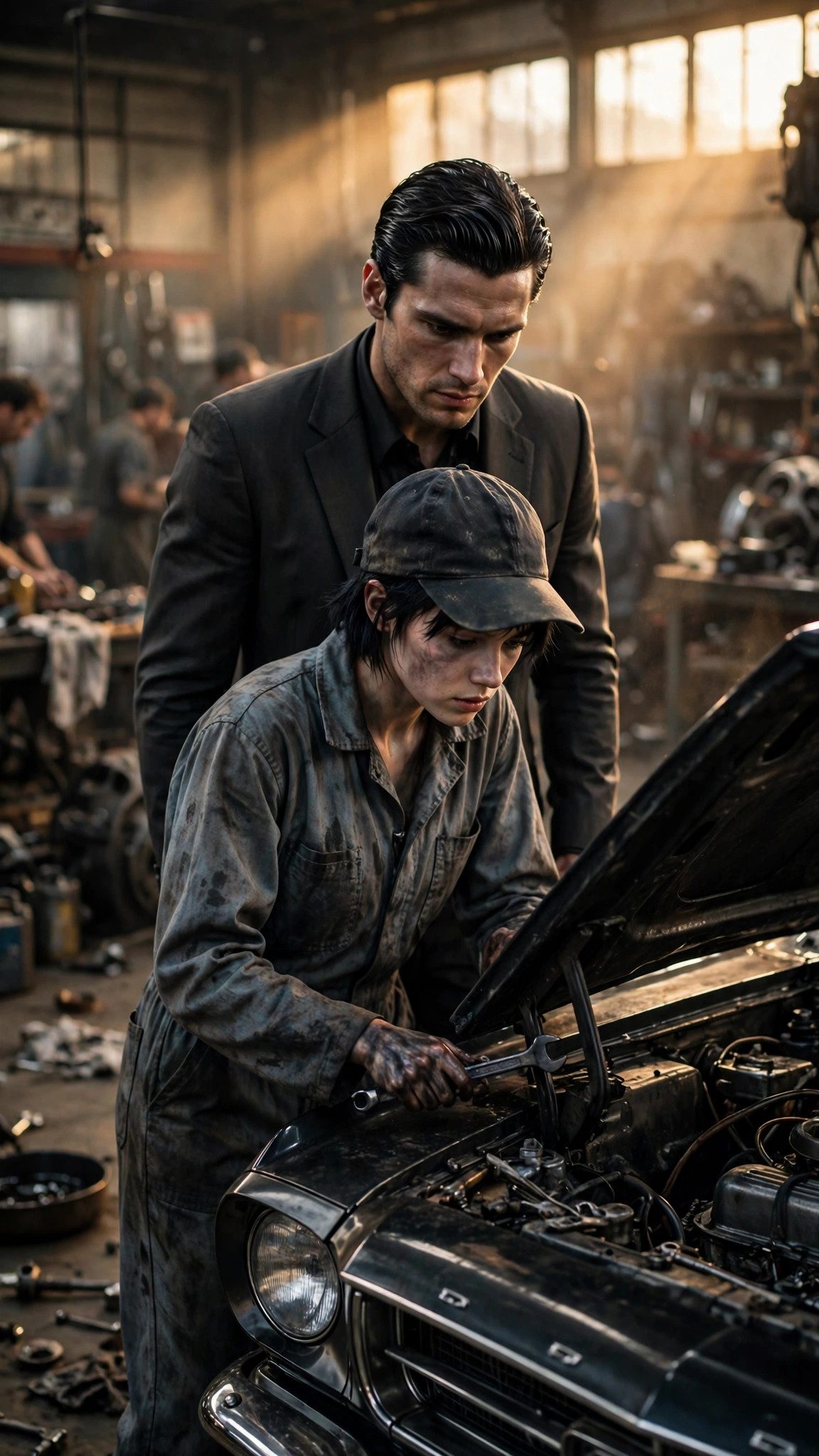
    The morning after Marcus Bellamy walked into my shop, Dante Moretti called a man I had never heard of, and by noon, that man was sitting in Dante's office, drinking coffee out of a paper cup, and looking at me like I was the most interesting thing he had seen all week.

    "Agent Daniel Reyes," Dante said. "FBI. Organized crime. He has been building a case against Marcus Bellamy for two years, and he has been getting nowhere, because nobody who knows anything about Marcus Bellamy is willing to talk."

    Agent Reyes was in his forties, with gray at his temples and tired eyes, and he looked like a man who had spent a very long time waiting for someone to tell him the truth.

    "Miss Russo," he said, "I want you to understand something before we start. Everything you tell me today is voluntary. You can stop at any time. You can leave at any time. And nothing you say here will be used against you. I am not interested in you. I am interested in Marcus Bellamy, and in the men who protect him. Do you understand?"

    "Yes," I said.

    "Good. Then let's start at the beginning. Tell me about the dinner."

    So I told him. I told him about the dinner table, and Marcus's hand on my wrist, and the whisper in my ear. I told him about my father's silence. I told him about the three refusals, and the wedding that had been arranged without my consent, and the night I cut my hair, and the laundry-room window, and the $684, and the bus to the West Side. I told him about Michael's tool roll, and the room above the laundromat, and the seven months I had spent as Eli Ross, fixing engines in Dante Moretti's garage.

    Agent Reyes listened without interrupting, and he took notes, and every so often he asked a question — a date, a name, a place — and I answered, and the more I talked, the easier it got, like a door opening a little wider with every word.

    When I was finished, he put down his pen, and he looked at me, and he said, "Miss Russo, do you know what Marcus Bellamy's trucking companies actually move?"

    "No," I said. "I know he owns them. I don't know what they carry."

    "They carry whatever pays," Reyes said. "Stolen goods. Untaxed cigarettes. Weapons, sometimes. And for the last three years, they have been carrying something else — fentanyl, coming up from Mexico through Texas, hidden in legitimate shipments, distributed through warehouses that Marcus owns. We have known it for two years. We have never been able to prove it, because every driver who might have talked has either disappeared or changed his story."

    He leaned forward.

    "But you are not a driver, Miss Russo. You are his intended wife. You sat at his dinner table. You were inside his house. You heard things. And more importantly, your father —" He paused. "Your father is a city alderman with connections to the zoning board, the building permits office, and the police department's licensing division. Marcus Bellamy's warehouses did not get their permits by accident. Somebody signed for them. Somebody looked the other way. And I think you know who that somebody was."

    I did know. I had always known. My father had spent twenty-five years telling me that politics was about relationships, and that relationships were about favors, and that favors were about family. I had never understood what he meant until now. He meant that he had traded his daughter for warehouse permits and trucking contracts, and he had called it love.

    "I will testify," I said. "I will tell the truth about everything I saw and heard. But I want something in return."

    "What?" Reyes asked.

    "I want my father to have a chance to do the right thing," I said. "Before you arrest him. I want to talk to him first. Alone."

    Reyes looked at Dante. Dante looked at me. And then Dante nodded, slowly.

    "That can be arranged," Reyes said.

    It was arranged for the next day, at noon, in Dante's office. My father came alone, in a black car, and he walked up the metal stairs with his shoulders hunched, and he looked smaller than I remembered. Smaller, and older, and more frightened than I had ever seen him.

    He sat down across from me, and he looked at my short hair, and my coveralls, and my grease-stained hands, and his face crumpled.

    "Elena," he said. "My God. What have you done to yourself?"

    "I saved myself," I said. "That is what I did."

    He was quiet for a long time. Then he said, "Your mother would be ashamed of you."

    "No," I said, and my voice was steady, and I was surprised by how steady it was, because I had waited seven months to say this, and now it was finally coming out. "My mother would be ashamed of you. She told me once, on the last good day before she got sick, that a woman's life belonged to her, and nobody else had the right to spend it. Do you remember that, Father? Do you remember the day she said that? Because I do. I remember every word."

    His eyes filled with tears. "I was trying to protect this family," he said. "Marcus Bellamy is a powerful man. If I had refused him, he would have destroyed us. The construction contracts. The political connections. Everything your grandfather built. Everything I built. I did what I had to do."

    "You sold me," I said. "You heard him grab my wrist at your own dinner table, and you said nothing. You watched him whisper in my ear, and you said nothing. You arranged my wedding to a man who frightened me, and you said nothing. You did not protect this family, Father. You protected yourself."

    He put his face in his hands, and his shoulders shook, and for a moment he looked like a man who had finally understood what he had done.

    "I am going to give you a choice," I said, "because nobody ever gave me one. Agent Reyes is going to arrest Marcus Bellamy. He is going to arrest the men who work for him. And he is going to come for you, too, because you signed the permits and you took the favors and you looked the other way. But if you cooperate — if you tell the truth about everything, about the permits, about the contracts, about Marcus — then maybe, just maybe, you will not spend the rest of your life in prison. That is your choice, Father. Not mine. Yours."

    He looked up at me, and his face was wet, and he said, "Why are you doing this? After everything, why are you giving me a chance?"

    "Because I am not you," I said. "And because my mother raised me better than that."

    He nodded, slowly, and he wiped his eyes, and he said, "I'll do it. I'll tell them everything."

    Agent Reyes came in then, and my father went with him, and I stood at the window of Dante's office, watching them walk out to the black car, and I felt something I had not felt in a very long time: not relief, exactly, and not happiness, but something quieter. Something like the end of a long, loud noise. Something like silence, after seven months of holding my breath.

    Before the raid, there were two days of waiting, and waiting was the hardest part. Agent Reyes interviewed Tony and Ray as witnesses — they had seen Marcus in the shop, they had heard the threats — and both men told the truth, plainly and without embellishment, the way mechanics talk about engines: this is what happened, this is what I saw, this is what he said.

    "He threatened my daughter," Tony told Reyes, and his voice shook a little when he said it. "He said accidents happen to men who get in the way. I have a daughter in college, Agent. I am not a brave man. But I stood there, and I did not move, because that girl — Elena — she works in my shop, and she is one of mine, and nobody threatens one of mine."

    Reyes wrote it all down, and he thanked them, and he told them they might have to testify, and Tony said, "Then I'll testify," and Ray said, "Me too," and Eddie, who had come in even though nobody had asked him to, said, "Me too. I was there. I heard him."

    On the second day of waiting, Dante drove me to Lake Forest, to my father's house, to collect my mother's things. I had not been back since the night I crawled through the laundry-room window, and the house looked smaller than I remembered, and colder, and the garden my mother had loved was overgrown with weeds.

    Dante waited in the car while I went inside. The house was empty — my father was staying with his lawyer, preparing his statement — and I walked through the rooms slowly, touching the furniture, looking at the photographs on the walls. My mother's piano was still in the living room, covered with a white sheet, and I lifted the sheet, and I ran my fingers over the keys, and I could almost hear her playing, the way she used to on Sunday afternoons, when the whole house smelled like her cooking and the world still made sense.

    I went up to her bedroom, and I opened her closet, and I found the box she had kept on the top shelf — letters, photographs, a small gold locket with my picture in it, and a note she had written to me on my sixteenth birthday, the last birthday before she got sick. The note said: "Elena, my love. Be brave. Be kind. And never let anyone make you smaller than you are. Your life belongs to you. Love, Mama."

    I sat on her bed with the note in my hands, and I cried, for the first time since the night I cut my hair. I cried for my mother, and for Michael, and for the girl I had been, and the woman I was becoming, and for all the years I had spent being small because someone else needed me to be.

    When I came out of the house, Dante was standing beside the car, waiting, and he did not ask me what had happened inside. He just opened the car door for me, and he said, "Take your time, Elena. There is no hurry."

    On the drive back to the city, I told him about my mother — about the piano, and the garden, and the note — and he listened, the way he always listened, like every word mattered, and when I was finished, he said, "Your mother sounds like she was a wise woman."

    "She was," I said. "She was the wisest person I ever knew. And my father —" I stopped. "My father forgot everything she taught him, the day she died. I think that is the saddest thing about all of this. Not what he did to me. That he forgot her."

    Dante was quiet for a long time. Then he said, "You didn't forget her, Elena. And that is what matters."

    When we got back to the shop, Agent Reyes was waiting in Dante's office with a folder full of papers, and he laid them out on the desk — photographs of the warehouses, bank records, phone logs — and he said, "Tomorrow morning, Miss Russo. Six a.m. We move at six. And when it's over, Marcus Bellamy will never frighten you again."

    I looked at the photographs, and the bank records, and the phone logs, and I thought about the night Marcus had squeezed my wrist under a dinner table and whispered in my ear, and I thought about my mother, and Michael, and the note in the box on the top shelf of her closet, and I said, "Good. Let it be tomorrow."

    Three days later, the FBI raided Marcus Bellamy's warehouses. They found the fentanyl, hidden in crates of restaurant supplies, exactly where Agent Reyes said it would be. They found the ledgers, and the bank records, and the phone calls, and the drivers who were finally willing to talk, now that someone had gone first.

    Marcus Bellamy was arrested at his office in the Loop, in front of his lawyers and his secretaries and the men who had once lowered their voices when they said his name. He was charged with drug trafficking, racketeering, and conspiracy. The news ran the story for a week. The powerful man who owned trucking companies and warehouses and restaurants turned out to be a criminal, and the city was shocked, and I was not shocked at all, because I had known it since the night he squeezed my wrist under a dinner table and whispered in my ear.

    My father cooperated. He told Agent Reyes everything — the permits, the contracts, the favors, the money. He resigned from the city council. He pleaded guilty to corruption, and he was sentenced to three years in federal prison, with the possibility of parole after eighteen months. It was more mercy than he had ever shown me, and I did not know how to feel about that, except that it felt like justice, and justice was something I had not believed in for a very long time.

    I visited him once, before he went away. He was sitting in a small room in a federal building downtown, in a suit that did not fit him as well as it used to, and he looked at me, and he said, "I am proud of you, Elena. I know I have no right to say that. But I am."

    "Thank you, Father," I said, and I meant it, because even broken things can be true.

    After that, I went back to the shop. I went back to the engines. I went back to the work that had saved me, and I did it as Elena Russo now, not as Eli Ross — my hair growing out, my voice my own again, my name my own again. Tony Mercer did not say a word about it. He just handed me a work order one morning and said, "The Ferrari's back, Elena. It's yours."

    And Dante Moretti — Dante watched me, the way he had always watched me, but now there was something different in the way he looked at me. Not suspicion. Not curiosity. Something softer. Something that made my heart beat faster when he walked into the garage, and made me stand a little straighter when he came to my bay, and made me wonder, for the first time in seven months, whether being seen was really the danger I had thought it was.

    Or whether it was the beginning of something I had never dared to hope for.
  • Chapter 5: The Night the Truth Came Out

    Chapter 5: The Night the Truth Came Out

    It happened on a Friday, at the end of the day, when the shop was almost empty and the light coming through the high windows had turned the color of old gold.

    I was under the hood of a 1972 Corvette, finishing the last job of the day, when I heard the steel door open and three sets of footsteps cross the concrete. I did not look up. Eli Ross did not look up when men walked into the shop. Eli Ross kept his head down and his hands busy.

    Then I heard Tony's voice, tight and low: "Mr. Moretti is not here. You'll have to come back."

    "I'm not here for Moretti," a voice said. A voice I knew. A voice I had heard in my nightmares for seven months, whispering under a dinner table.

    "You'll learn that saying no to me is just another way of asking me to be patient."

    Marcus Bellamy was standing in the middle of Moretti Motorworks, in a suit that cost more than my room above the laundromat, with two men behind him who had the flat, bored eyes of men who were paid to find people who did not want to be found.

    I froze. My hands were still on the engine, and my heart was beating so hard I was sure the whole garage could hear it, and I did not move, because moving would have meant being seen, and being seen would have meant the end of everything.

    "Elena," Marcus said, and his voice was soft, and patient, and terrible. "Elena Russo. I know you're here. My investigator has been very thorough. Seven months, Elena. Seven months of looking. Do you have any idea how much money I have spent looking for you?"

    I did not move. I did not breathe. I stood under the hood of the Corvette with grease on my hands and my cap pulled low, and I prayed to a God I had not spoken to in years that he would not recognize me.

    "Come out, Elena," Marcus said. "Your father is waiting in the car. He wants to take you home. The wedding is still on. We have simply moved it to next month. Everything is forgiven. Everything is forgotten. All you have to do is come home."

    My father was in the car. My father, who had heard Marcus squeeze my wrist under the dinner table and said nothing. My father, who had sold me for trucking routes and warehouse contracts. My father was sitting outside in a black car, waiting to take me home, and I knew that if I walked out of that garage with Marcus Bellamy, I would never be free again.

    Tony stepped forward. "I told you, Mr. Moretti is not here. And there is no woman working in this shop. You need to leave."

    Marcus smiled, and it was not a kind smile. "Tony Mercer," he said. "Shop manager. Fifty-two. A daughter in college. You should be careful, Tony. Accidents happen to men who get in the way of other people's business."

    Tony did not move. He was fifty-two years old, and he was built like a refrigerator, and he was standing between Marcus Bellamy and me, and he did not move an inch.

    "Get out of my shop," Tony said.

    Marcus laughed. "Your shop? This is Dante Moretti's shop. And Dante Moretti is not here. So I think —"

    "I'm here."

    The voice came from the top of the metal stairs, low and calm, and the whole garage went silent.

    Dante Moretti was standing at the top of the stairs, looking down at Marcus Bellamy, and his face was completely still, and his hands were behind his back, and he looked like a man who had been waiting for this moment for a very long time.

    He walked down the stairs slowly, one step at a time, and the sound of his shoes on the metal was the only sound in the garage. When he reached the floor, he stopped ten feet away from Marcus, and he looked at him, and he looked at the two men behind him, and then he looked at me, still frozen under the hood of the Corvette, and his eyes found my face, and he held my gaze for one long second.

    "Marcus Bellamy," Dante said, turning back to Marcus. "You are in my shop. You are threatening my people. And you are looking for someone who does not want to be found by you. So I am going to give you one chance to walk out of here, and I am going to give it to you only once."

    Marcus smiled. "Dante. We are both businessmen. We both understand how the world works. The girl belongs to her father. Her father has promised her to me. That is a contract. You are a man who respects contracts."

    "I respect contracts that are made freely," Dante said. "A twenty-five-year-old woman who has refused you three times has not made a contract. She has made a decision. And you are not going to overturn it in my shop."

    "Her father —"

    "Her father is sitting in a car outside," Dante said, and his voice dropped lower, and the temperature in the garage seemed to drop with it. "Her father sold his daughter to a man old enough to be her father, a man who grabbed her wrist at his own dinner table and told her she would learn to stop saying no. Her father can sit in that car for as long as he likes. He is not coming in here. And neither are you, ever again."

    Marcus's face changed. The smile went away, and underneath it was something cold and ugly, something I had seen at that dinner table seven months ago, when he had squeezed my wrist and whispered in my ear.

    "You don't understand what you're doing, Moretti," he said. "I own half the trucking in this city. I own warehouses from here to Milwaukee. I have friends in the mayor's office. I have friends in the police department. You do not want me as an enemy."

    "I already have you as an enemy," Dante said. "You made me your enemy the moment you walked into my shop and threatened my people. Now walk out, before I decide to make it worse."

    For a moment, nobody moved. Marcus looked at Dante, and Dante looked at Marcus, and the two men behind Marcus shifted their weight, and I could see their hands moving toward their jackets, and I knew, I knew, that this was about to become something terrible.

    Then Marcus laughed — a short, sharp sound, like a door slamming — and he held up his hands.

    "Fine," he said. "Fine. We will do this another way. Elena will come home eventually. They always come home. And when she does, Dante, I will remember this day. I will remember that you stood between me and what was mine."

    "She was never yours," Dante said.

    Marcus turned and walked out, and his two men followed him, and the steel door closed behind them, and the garage was silent.

    But before I could move, Tony stepped forward, and Ray stepped forward, and Eddie stepped forward, and suddenly all three of them were standing between me and the door Marcus had just walked out of, like a wall made of coveralls and grease-stained hands.

    "Nobody is taking her," Tony said, and his voice was rough, and I realized he was shaking, just a little, the way I was shaking. "Not from this shop. Not while I'm standing here."

    Ray put a hand on my shoulder — gently, the way a father would — and said, "You're one of us now, kid. Whatever that man wanted, he doesn't get it. Not here."

    Eddie, who was twenty-four and talked too much and had once asked me to a Cubs game, looked at the door and then at me, and he said, "If he comes back, I'll be here. We all will."

    I looked at them — these men who had barely known me, who had known me only as the quiet kid who never talked and never laughed — and I felt something crack open in my chest, something I had been holding shut for seven months. These men did not know my real name. They did not know my story. But they had stood between me and Marcus Bellamy without being asked, and that was more than my own father had ever done.

    "Thank you," I whispered, and my voice broke, and I did not care that it broke, because Eli Ross was gone now, and Elena Russo was standing in the middle of Moretti Motorworks with tears on her face, and nobody looked away.

    Dante watched all of this from the bottom of the stairs, and he did not say a word, and his face was still, but there was something in his eyes I had never seen before — something that looked almost like pride. Not in himself. In them. In us. In the shop he had built, and the men who worked in it, and the way they had closed ranks around a girl they barely knew.

    "Lock the gates," he said to Tony, quietly. "Double the men on the door tonight. Nobody comes in without my say-so. Not a delivery driver. Not a customer. Nobody."

    "Yes, sir," Tony said.

    "And Tony —" Dante paused. "Thank you. For standing where you stood."

    Tony nodded, and he did not say anything, because there was nothing to say, and Dante turned to me, and he said, "Come to my office, Elena. Now."

    I stood under the hood of the Corvette, and my hands were shaking so badly I had to put them in my pockets, and I looked at Dante, and he looked at me, and he walked over to me, slowly, and he stopped in front of me, and he said, "Come to my office, Elena. Now."

    I followed him up the metal stairs, and my legs felt like they were made of water, and when we got to his office, he closed the door, and he turned around, and he looked at me, and for the first time since I had known him, his face was not still. It was alive with something I could not name — anger, and fear, and something else, something that looked almost like relief.

    "Are you all right?" he asked.

    I nodded. I could not speak.

    "He will come back," Dante said. "Men like Marcus Bellamy do not walk away. He will come back with more men, or with lawyers, or with your father, or with the police. He will come back, and next time he will not walk into my shop and ask politely. So we need to decide, right now, what we are going to do about it."

    "What do you mean?" I asked, and my voice came out small and raw.

    "I mean that I can protect you, Elena. I can keep you safe in this shop, behind these gates, for as long as you need. But that is not a life. That is a prison with better lighting. And you did not cut off your hair and crawl through a laundry-room window to trade one prison for another."

    He walked to the window and looked out at the garage below, at the cars, at the men working, at the life he had built.

    "Or," he said, "we can end this. Not with guns. Not with threats. With the law. Marcus Bellamy owns trucking companies and warehouses and restaurants. Men like that always have something to hide. If I find it, and I give it to the right people, Marcus Bellamy will spend the rest of his life worrying about his own freedom instead of yours. And your father —" He paused. "Your father will have to answer for what he did, too. Are you prepared for that?"

    I thought about my father, sitting in the black car outside, waiting to take me home. I thought about the way he had looked at me the last time I refused Marcus, the way you look at a child who does not understand the price of things. I thought about my mother, who had died when I was sixteen, and who had once told me, on the last good day before she got sick, that a woman's life belonged to her, and nobody else had the right to spend it.

    "Yes," I said. "I am prepared."

    "Good," Dante said. "Then we start tomorrow. And Elena —" He turned around, and his eyes found my face, and he held my gaze. "From tonight on, you do not sleep above the laundromat. You do not walk twelve blocks in the dark. You stay here, in the apartment above the shop. It is mine, and it is safe, and no one will find you there. Is that clear?"

    "Yes, sir," I said.

    "And one more thing." He walked over to me, and he stopped in front of me, close enough that I could see the flecks of gold in his dark eyes, and he said, very quietly, "You are not Eli Ross anymore. Not to me. You are Elena Russo. And Elena Russo does not hide. Not in my shop. Not ever again."

    I nodded, and I could not speak, because my throat had closed up, and because for the first time in seven months, someone had said my name like it was something to be proud of, and not something to be hidden.

    That night, I moved my duffel bag and Michael's tool roll into the apartment above the shop. It was small and clean, with a real bed and a window that looked out over the West Side, and I stood in the middle of it, and I took off my baseball cap, and I looked at myself in the bathroom mirror — short black hair, dark eyebrows, a face that had not been Elena Russo's face for seven months — and I thought about the girl in the mirror at 12:43 a.m., the night I cut my hair, and how frightened she had been, and how brave.

    I slept that night without my shoes on, for the first time in seven months. I slept with the door unlocked. I slept, and I dreamed about engines that ran clean, and a black Mustang that purred like a sleeping animal, and a man standing at the top of a metal staircase, looking down at the world, and saying, "I'm here."

    When I woke up, the sun was coming through the window, and for the first time since the night I left Lake Forest, I was not afraid.

  • Chapter 4: The Man Who Never Looked

    Chapter 4: The Man Who Never Looked

    The second time Dante Moretti asked me to come to his office at six, I thought he was going to fire me.

    I had spent the whole day waiting for it. The investigator had come to the shop. He had looked at me. He had left a card. And I knew that Dante Moretti did not miss things like that. He had been watching me for weeks, and he had seen the investigator, and he had put the pieces together, and now he was going to ask me the question I had been dreading for seven months.

    Instead, he poured two glasses of whiskey, pushed one across the desk toward me, and said, "Sit down, Eli. I want to tell you something."

    I sat down. I did not touch the whiskey. Eli Ross did not drink whiskey with the boss. Eli Ross did not drink whiskey with anyone.

    "My father bought that Mustang in 1967," Dante said, looking out the window at the garage below. "He was twenty-four years old, and he had just come to America from Sicily with nothing but a suitcase and a name nobody in Chicago had ever heard. He worked in a garage, like this one. He fixed cars. He saved every dollar. And when he had enough, he bought that Mustang, brand new, off the lot. He drove it for forty years."

    He was quiet for a moment.

    "My father taught me two things," he said. "The first was that a man is only as good as his word. The second was that you never lie to the people who trust you with their lives. He said those were the only two rules that mattered, and everything else was just noise."

    He turned his chair around and looked at me.

    "I broke the first rule once," he said. "When I was twenty-two, I made a promise to a man I had no business making a promise to, and when it came time to keep it, I couldn't. A good man died because of it. I have carried that with me for sixteen years, and I will carry it for the rest of my life. That is why I do not lie. That is why I do not let the people around me lie. Because I know what a lie costs."

    I swallowed. "Why are you telling me this, sir?"

    "Because I want you to understand something," he said. "I know you are lying to me, Eli. I have known since the day you fixed the Mustang. And I have not thrown you out, because the work you do is honest, even if the name you do it under is not. But I need to know what I am protecting. Because that is what I am doing, whether you understand it or not. I am protecting you. And I do not protect people I do not understand."

    My hands were shaking. I put them under the desk where he could not see them.

    "I'm not a criminal, sir," I said. "I haven't stolen anything. I haven't hurt anyone. I'm just —" I stopped. "I'm just a girl who didn't want to marry a man who frightened her. That's all."

    Dante was very still. "A girl," he said. Not a question. A statement. As if he had already known, and was simply waiting for me to say it out loud.

    I nodded. I could not speak. Seven months of holding it in, and now it was out, and the whole world felt like it was tilting sideways.

    "How old are you?" he asked.

    "Twenty-five."

    "And the man? Marcus Bellamy. How old is he?"

    "Forty-six."

    "And your father arranged it."

    "Yes."

    "Why?"

    "Because Marcus owns trucking companies and warehouses and restaurants, and my father owns construction and politics, and together they would own more of Chicago than either of them could own alone." I took a breath. "I was the price. I was always the price."

    Dante was quiet for a long time. Then he stood up and walked to the window again, and he stood there with his hands behind his back, looking out at the garage, and I sat in his office with my heart hammering, and I waited for him to tell me to leave.

    "You know what my father used to say about the Mustang?" he asked, without turning around. "He said a car will tell you the truth about the man who owns it. If he takes care of it, it runs clean. If he neglects it, it falls apart. He said you can learn everything you need to know about a man by listening to his engine."

    He turned around.

    "I have been listening to you for seven months, Eli. And your engine runs clean. You show up on time. You do the work right. You don't steal. You don't cause trouble. You fix things nobody else can fix. That tells me everything I need to know about who you are — whatever your name is."

    "My name is Elena," I said. "Elena Russo."

    "Elena," he said, and the way he said it — slow, careful, like he was trying it on — made something in my chest ache. Nobody had said my real name in seven months. Nobody had said it like it belonged to me.

    "Elena Russo," he said again. "Well, Elena. You can keep working here. But from now on, there will be no more lies between us. If Marcus Bellamy's men come back, you tell me. If your father comes looking, you tell me. If anything changes, you tell me. Do you understand?"

    "Yes, sir."

    "And one more thing." He walked back to his desk and sat down, and his eyes found my face, and he held my gaze, and he did not look away. "I don't want you to be afraid in my shop. Fear makes people careless. Careless people make mistakes. And mistakes get people killed. So whatever you are afraid of, you bring it to me, and we will deal with it together. Is that clear?"

    "Yes, sir," I said, and my voice broke a little on the last word, and I hated that it broke, because Eli Ross never let his voice break, but Elena Russo had been holding hers together for seven months, and it was getting harder every day.

    I left his office that night and walked down the metal stairs, and the garage was empty and dark, and I stood in the middle of it, surrounded by cars I had fixed and engines I had saved, and I realized something that frightened me more than Marcus Bellamy ever had.

    I was starting to trust Dante Moretti.

    It was a terrible thing to realize, because trust was the most dangerous thing a person in my position could feel. Trust meant letting someone close. Trust meant giving someone the power to hurt you. And Dante Moretti was the most dangerous man in Chicago, and he had just told me he was protecting me, and some part of me believed him.

    I went back to my room above the laundromat, and I sat on my mattress, and I took Michael's tool roll out of my duffel bag, and I opened it, and I looked at his wrenches, and I thought about what he would say if he were here.

    He would say: "Listen. The engine tells you what's wrong."

    And I listened. I listened to my own heart, hammering in my chest, and I listened to the fear, and the hope, and the guilt, all tangled together, and I tried to figure out what was wrong.

    What was wrong was that I was lying to the one man who had ever told me the truth about himself. Dante Moretti had told me about his father, and the Mustang, and the promise he had broken, and the man who had died because of it. He had shown me something real. And I had shown him almost nothing.

    What was wrong was that I wanted to tell him everything. I wanted to tell him about the night I cut my hair, and the laundry-room window, and the $684, and the bus to the West Side. I wanted to tell him about Michael, and my mother, and the father who had sold me to Marcus Bellamy for trucking routes and warehouse contracts. I wanted to tell him all of it, and I wanted him to look at me the way he had looked at me in the garage — like he had finally seen me — and not look away.

    But I could not. Not yet. Because the moment Dante Moretti knew everything, the moment he knew who Elena Russo really was, he would have to choose what to do about it. And men like Dante Moretti did not make choices lightly. And whatever choice he made, it would change everything.

    So I kept working. I kept fixing his cars. I kept my head down, even though he had told me I did not have to be afraid, and even though some part of me wanted to believe him. I fixed the Lamborghini. I fixed the armored SUV. I fixed a vintage Ferrari that had not run in eleven years, and when the engine finally turned over, Dante was standing behind me, and he put his hand on my shoulder — just for a second, just a brief, warm weight — and he said, "Good work, Elena."

    He said my name. My real name. In front of the whole garage.

    And nobody in that garage said a word, because nobody in that garage was stupid enough to ask Dante Moretti why he had just called his quiet young mechanic by a woman's name.

    But Tony Mercer looked at me, and his eyes were wide, and I saw him put the pieces together — the cap, the silence, the showers I never took, the hands that were too small, the voice that was too careful — and I saw the moment he understood.

    He did not say anything. He just nodded, once, slowly, and he went back to work.

    The test drive happened on a Wednesday, three days after Dante called me Elena for the first time in front of the whole garage. The Mustang was finished — the vacuum line replaced, the engine tuned, the oil changed — and Dante came down to the floor in the late afternoon, and he stood beside the car, and he said, "Come with me, Elena. I want to hear it on the road."

    I had never been in a car with Dante Moretti before. I had never been anywhere with him except his office and the garage floor. I got into the passenger seat, and he got behind the wheel, and he turned the key, and the engine came alive — smooth, deep, no hesitation, no cough — and he smiled, just a little, and he pulled out of the garage and onto the street, and we drove.

    We drove west, out of the city, toward the lake, and the sun was going down, and the Mustang ate the road like it had been waiting sixteen years to run free. Dante did not speak for a long time. He just drove, with one hand on the wheel, listening to the engine the way I listened to engines — the way Michael had taught me to listen.

    "My father drove this car to my mother's funeral," he said finally, without looking at me. "Forty years old, and he drove it himself, because he said she would have wanted it that way. She loved this car. She used to say it was the only thing he owned that had never lied to him."

    "Is that true?" I asked. "That a car never lies?"

    "A car can't lie," he said. "It can break. It can fail. But it can't pretend to be something it's not. People do that. Cars don't."

    We drove in silence for a while after that, and I watched the city slide past the window, and I thought about the night I had cut my hair, and the laundry-room window, and the $684, and how far I had come from that night — from a girl who was afraid of her own shadow to a woman sitting in a 1967 Mustang beside the most dangerous man in Chicago, talking about his father, and not being afraid at all.

    "Thank you," I said, finally. "For fixing — for letting me fix it. For trusting me with it."

    He glanced at me, just for a second, and then he looked back at the road. "You earned it, Elena," he said. "Nobody gives you anything in this world. You earn it, or you don't have it. Remember that."

    "I will," I said, and I meant it.

    When we got back to the shop, Tony was waiting by the steel door, and he looked at the Mustang, and he looked at me getting out of the passenger seat, and he looked at Dante, and he did not say a word. He just nodded, once, slowly, the way he had nodded the day Dante called me Elena in front of everyone.

    Later that week, Tony told me something else, when we were alone in the shop after closing, putting tools away. He told me about the day Salvatore Moretti died, and how Dante had taken over the family business at twenty-two, and how the older men — the capos, the lieutenants, the men who had worked for his father for decades — had looked at this twenty-two-year-old boy and decided he was too young, too soft, too much like his mother.

    "They tested him," Tony said, wiping down a workbench. "One of them — I won't say his name — he skimmed money from the docks. Thought the kid wouldn't notice. Dante noticed in three days. He called the man into his office, and he laid the numbers out on the desk, and he gave him a choice: pay it back, every dollar, and leave Chicago, or face the family. The man paid it back. He left that night. And after that, nobody tested Dante Moretti again."

    "Why are you telling me this?" I asked.

    "Because I want you to understand who you're dealing with," Tony said. "Dante Moretti is not a cruel man. But he is not a soft man, either. He notices things. He remembers things. And when he decides something, it stays decided. So if he has decided to protect you, Elena — and I think he has — then you are safer than you have ever been in your life. But don't mistake his protection for permission to lie to him again. He will not forgive that twice."

    "I won't," I said. "I promise."

    Tony nodded, and he picked up his lunchbox, and he walked to the door, and before he went out, he turned back and said, "Your brother would be proud of you, kid. The way you fixed that Mustang. He'd be proud."

    I stood in the empty garage after he left, with tears running down my face, and I did not wipe them away, because there was nobody there to see them, and because for the first time in four years, someone had said Michael's name like he was a person who mattered, and not just a memory I carried alone.

    That night, I lay awake on my mattress, staring at the water stain on the ceiling, and I thought about Dante Moretti's father, and the Mustang, and the two rules that mattered. A man is only as good as his word. You never lie to the people who trust you with their lives.

    I had broken both rules, every day, for seven months.

    And Dante Moretti had looked at me anyway, and he had said my name, and he had not looked away.

    I did not know what that meant. But I knew it meant something. And I knew that whatever happened next, I would not be invisible anymore.

    I just didn't know whether that was going to save me — or destroy me.

  • Chapter 3: The Mustang

    Chapter 3: The Mustang

    The black 1967 Mustang belonged to Dante Moretti the way a man's hands belong to him — it was not a car, it was a part of him, and everyone in the shop knew it.

    It had come into the garage on a Tuesday morning, towed in on a flatbed, and Tony had stood in front of it with his arms crossed for a full minute before he said a word.

    "That's Mr. Moretti's car," he told us. "His father's car, actually. His father bought it new in 1967 and drove it until the day he died, and Mr. Moretti has kept it running ever since. It does not leave this shop until it runs perfect. Not good. Perfect. Understand?"

    We understood. For three days, the Mustang sat in bay four, and one mechanic after another tried to find out why it was misfiring, and one after another, they failed.

    Ray tried first. He replaced the spark plugs, the wires, the distributor cap, and the fuel filter, and the engine still hesitated every time it turned over. Eddie tried next. He cleaned the carburetor, checked the timing, replaced the ignition coil, and the engine still stumbled, just for a fraction of a second, like a man catching his breath before a lie.

    Tony tried last. He spent a whole afternoon under the hood, and when he came out, his face was gray, and he wiped his hands on a rag and shook his head.

    "I don't know what's wrong with it," he said, and that was the first time I had ever heard Tony Mercer say those words. "I've been fixing engines for thirty years, and I don't know what's wrong with this one."

    I was working ten feet away, on a pickup truck with a bad transmission, and I was not supposed to be listening. Eli Ross did not listen. Eli Ross kept his head down and his hands busy. But I had been listening anyway, because the Mustang's engine had been turning over all morning, and every time it did, I heard something the other mechanics had missed.

    It was not a misfire. Not exactly. It was a hesitation, so small you could miss it if you were not listening for it — a tiny pause hidden beneath the growl of the engine, like a heartbeat skipping once and then catching itself. I had heard that sound before. Michael had taught me that sound, years ago, on a summer afternoon in our father's garage, when a customer's old Ford kept stalling and nobody could figure out why.

    "Listen," Michael had said, putting his hand on my shoulder. "It's not the spark. It's not the fuel. It's air. Something's letting air in where it shouldn't. A vacuum line. Probably cracked. Probably old. Find the crack, and you find the problem."

    I stood at my bench with a wrench in my hand, and I listened to the Mustang turn over again, and I heard it — the hesitation, the tiny gasp of air where it did not belong — and before I could stop myself, before Eli Ross could remind me to keep my mouth shut, I said, "Again."

    Tony frowned. "What?"

    "Start it again."

    He stared at me. The whole garage stared at me. I had never spoken to Tony like that. I had never spoken to anyone in that shop like that. Eli Ross did not give orders. Eli Ross did not tell the shop manager what to do.

    But the words were already out, and I could not take them back, so I put down my wrench and I walked over to the Mustang, and I said, "Start it again. Please."

    Tony looked at me for a long moment, and then he nodded at Ray, and Ray turned the key, and the engine growled, and there it was — the hesitation, the tiny gasp, the crack in the vacuum line letting air in where it should not be.

    "Eleven minutes," I said, and I went to work.

    It took me eleven minutes to find it. A hairline fracture in an old vacuum line, buried under the intake assembly, so fine you could miss it if you blinked. I pulled the line out, held it up to the light, and showed Tony the crack.

    "Well, I'll be damned," he said.

    A smile escaped me before I could stop it. That was my mistake. Eli Ross never smiled. Eli Ross kept his head down and his mouth shut and his hands busy, and Eli Ross never, ever smiled at his own work in front of the boss.

    The garage went silent. Heavy footsteps crossed the concrete behind me, slow and deliberate, and every mechanic suddenly found something else to look at. Tony's expression changed first, and the blood drained from my face before I even turned around.

    Dante Moretti was standing directly behind me. And for the first time in seven months, the most dangerous man in Chicago was looking at Eli Ross like he had finally seen me.

    I already told you what happened next. He asked me my name. He told me to come to his office at six. I told him the truth — the first piece of it — about the man who wanted to marry me. I told him his name.

    Marcus Bellamy.

    Dante Moretti stared at me for a long time after I said it, and his face did not change, and that frightened me more than anger would have. Anger I understood. Anger was honest. This was something else. This was a man filing a name away in a place where names went to be dealt with.

    "How long has he been looking for you?" he asked.

    "Seven months," I said. "Since the night I left."

    "And your father?"

    "My father arranged the marriage," I said. "He thinks Marcus is good for the family. He thinks I am ungrateful."

    "Are you?"

    "No," I said. "I am twenty-five years old, and Marcus Bellamy is forty-six, and he grabbed my wrist under a dinner table and told me I would learn to stop saying no to him. I am not ungrateful. I am afraid."

    Dante was quiet for a moment. Then he stood up from his desk and walked to the window, and he looked out at the garage below, at the men working under the cars, at the Mustang sitting in bay four with its hood open.

    "Do you know what I do, Eli?" he asked, without turning around.

    "I know you own this shop," I said.

    "I own more than this shop," he said. "I own a great deal of Chicago. And I have built everything I own on one rule: nobody lies to me. Not my men. Not my enemies. Not the people who work under my roof."

    "I understand, sir."

    "Do you?" He turned around. "Because you have been lying to me for seven months. Every day. Every hour. And I want to know why I should let you keep working here."

    My throat closed up. I had rehearsed this moment a hundred times, lying awake on the thin mattress above the laundromat, and in every version I had a better answer than the one I had now, which was no answer at all.

    "I fix your cars," I said finally, and my voice was barely above a whisper. "I fix them well. Nobody else could fix the Mustang. I did. That is the truth. Everything else —" I stopped. "Everything else is the lie I had to tell to stay alive."

    He looked at me for a long time. Then he sat back down behind his desk, and he folded his hands, and he said, "Come back tomorrow at six. We will talk again."

    "Yes, sir."

    "And Eli —" He paused. "From now on, you work on the cars I bring in personally. Not the walk-ins. Not the regulars. My cars. Understand?"

    "Yes, sir."

    I walked out of his office on legs that did not feel like mine, and I went down the metal stairs, and I went back to my bench, and I worked until the shop closed, and I did not speak to anyone, and nobody spoke to me.

    That night, I lay awake on my mattress above the laundromat, staring at the water stain on the ceiling, and I thought about what had just happened. Dante Moretti knew I was hiding. He knew I was lying. And instead of throwing me out — instead of doing what a man like him was supposed to do — he had given me his cars. He had moved me closer, not further away.

    I did not know what that meant. I did not know if it meant he was curious, or suspicious, or if he had already decided what to do with me and was simply waiting for the right moment. All I knew was that the invisible days were over. Dante Moretti had finally seen me, and there was no going back to being unseen.

    The next morning, I came to work at six, and Tony was waiting for me at my bench with a set of keys in his hand.

    "Mr. Moretti wants you on the Ferrari," he said. "The red one. It came in last night. He says it's yours."

    "The Ferrari?" I stared at him. "Tony, I've never worked on a Ferrari."

    "You fixed the Mustang," Tony said. "That's all he needs to know. Go."

    The Ferrari was a 1988 Testarossa, red as blood, with an engine that purred like a sleeping animal when it ran and coughed like a dying one when it didn't. It took me two hours to find the problem — a failing fuel pump, starving the engine at high revs — and when I was done, the engine sang, and I stood there with my hands on my hips, and I felt something I had not felt in seven months: pride. Not the pride of Elena Russo, the obedient daughter, who had never been allowed to be proud of anything. The pride of a mechanic who had fixed something hard, and fixed it well, and knew it.

    Dante came down to the floor that afternoon, and he walked over to the Ferrari, and he stood beside me, and he did not say anything for a long time. Then he said, "Start it."

    I started it. The engine turned over clean, no hesitation, no cough, just a smooth, deep growl that filled the whole garage. Dante listened with his eyes closed, the way a man listens to music, and then he opened his eyes, and he looked at me, and he nodded once.

    "Good," he said. "Tomorrow, the Lamborghini."

    And that was how it went, day after day, week after week. The Mustang. The Ferrari. The Lamborghini. The armored SUV with the bulletproof glass. Each car harder than the last, each one a test, and I passed every test, because engines did not lie, and I did not lie to engines. I gave them everything I had, and they gave me the only thing I had left: a reason to get up in the morning.

    But Dante was watching me now, and I knew it. I could feel his eyes on me when he walked the floor. I could feel him studying my hands, my face, the way I moved. He was looking for the lie, and he was patient, and he was thorough, and I knew that sooner or later, he was going to find it.

    There was one afternoon, about two weeks after the Mustang, when Dante came down to the floor while I was working on the Ferrari, and he stood beside me for a long time without saying anything, and then he asked me a question no one in that shop had ever asked me before.

    "Where did you learn to do this?" he said. "Not the basics. Anybody can learn the basics. I mean the listening. The way you hear things other mechanics miss. Where did you learn that?"

    I kept my eyes on the engine. "My brother taught me," I said, and it was the first time I had said the word "brother" out loud in seven months, and it hurt more than I expected it to. "He died four years ago. A drunk driver. On the Kennedy."

    Dante was quiet for a moment. "I'm sorry," he said, and he said it like he meant it, like it was not just something people said when they did not know what else to say.

    "He taught me everything," I said. "He said an engine tells you what's wrong if you know how to listen. He said most people don't listen. They guess. And guessing is how you break things worse."

    "He was right," Dante said. "Most people don't listen. Not to engines. Not to anything."

    He stood there for a moment longer, and then he nodded, once, and he walked away, and I went back to work, and my hands were shaking, and I did not know why. It was just a question. It was just a few words. But nobody had asked me about Michael in four years, and nobody had ever listened to the answer the way Dante Moretti listened — like every word mattered, like he was filing it away somewhere safe.

    What I did not know was that someone else was looking for me too — and they were closer than I thought.

    It was a Thursday, three weeks after the Mustang, and I was working on a Bentley in bay two when a black car pulled up outside the shop, and a man got out who did not belong there. He was not a mechanic. He was not a customer. He was wearing a suit that cost more than my room above the laundromat, and he had the flat, bored eyes of a man who was paid to find people who did not want to be found.

    He walked into the shop, and he looked around, and his eyes passed over me once, and then came back, and stopped.

    "I'm looking for someone," he said to Tony. "A young woman. Twenty-five. Black hair. About five foot six. She disappeared from Lake Forest seven months ago. Her family is very worried about her."

    My hands went still on the engine. My heart was beating so hard I was sure everyone in the garage could hear it.

    Tony frowned. "We don't have any women working here, pal. Just mechanics."

    The man smiled, and it was not a kind smile. "Are you sure about that? Because I've been to twelve garages this month, and this is the first one where somebody got very quiet when I walked in."

    He looked straight at me. And I looked straight back at him, and I kept my face blank, and I kept my voice low, and I said, "I don't know any woman, sir. I'm just a mechanic."

    He studied me for a long moment. Then he nodded, slowly, and he handed Tony a card.

    "If you see her," he said, "call this number. There's a reward. A large one."

    He walked out, and the garage exhaled, and Tony looked at me, and I looked at Tony, and neither of us said a word.

    But that night, when I got back to my room above the laundromat, I packed my duffel bag. Just in case. Because Marcus Bellamy's men had found Moretti Motorworks, and that meant they were close, and close was too close, and I had to be ready to run again.

    I did not run that night. I stayed, because running meant giving up the only safe place I had ever had, and because Dante Moretti had finally seen me, and some part of me — the part I did not want to name — did not want to disappear again.

    But I slept with my shoes on, and my duffel bag by the door, and Michael's tool roll under my pillow, and I dreamed about engines that would not start, and men in suits who knew my name, and a black Mustang that kept misfiring no matter how many times I fixed it.

  • Chapter 2: Eli Ross

    Chapter 2: Eli Ross

    The first week at Moretti Motorworks, I learned that a lie is not one thing you say. It is a thousand small things you do, every day, without stopping, and the moment you get tired and let one of them slip, the whole thing falls apart.

    I woke at 4:45 every morning in the room above the laundromat, in the dark, and I bound my chest before I did anything else. The strips of sheet were rough against my skin, and by the end of the day they itched so badly I wanted to tear them off, but I never did. Not in the shop. Not ever. I pulled on Michael's old work pants and a flannel shirt two sizes too big, darkened my eyebrows with the pencil I kept in my tool roll, and tucked what was left of my hair under a baseball cap. I practiced my voice in the cracked mirror over the sink — low, flat, bored — until it stopped sounding like a woman pretending and started sounding like a young man who did not care about anything.

    "My name is Eli Ross." I said it to the mirror every morning, the way other people said a prayer.

    Then I walked the twelve blocks to the shop in the dark, and I was Eli Ross by the time I pushed through the steel door.

    Tony Mercer ran the floor. He was fifty-two, built like a refrigerator, with hands that had been fixing engines since before I was born, and he had exactly three rules for his mechanics: show up on time, do the work right, and don't ask questions about the cars that came in after dark.

    "Some of these cars belong to men who don't want their business discussed," he told me on my first day, jerking his thumb at a black armored SUV with bulletproof glass that had come in on a flatbed at midnight. "You fix what's broken. You don't look in the trunk. You don't read the paperwork. You don't remember the license plates. Understand?"

    "Yes, sir."

    "Good. And one more thing. Mr. Moretti owns this place. He comes in most days, but he doesn't talk to the mechanics. He watches. If he ever looks at you twice, you're done. Understand?"

    I understood. I had spent my whole life being looked at — at parties, at dinners, at the country club, at my father's table — and being looked at had never once kept me safe. Being invisible was the only thing that ever had.

    So I became invisible. I kept my head down. I worked fast and clean and I never complained. I never stayed after work. I never drank with the other mechanics when they went to the bar on Fridays. I never used the locker-room showers — I told Tony my skin broke out from the soap, which was a lie, but it was a small lie, and small lies were the ones I could afford. I ate lunch alone on the loading dock, a sandwich I made in my room the night before, and I watched the pigeons on the power lines and tried not to think about the life I had left behind.

    The other mechanics were decent men, mostly. There was Ray, who was sixty and had a bad knee and a daughter in college. There was Marcus — no, not Marcus, I could not hear that name without my stomach turning — there was a mechanic named Eddie, who was twenty-four and talked too much and asked me once if I wanted to come to a Cubs game with him and his brother. I said no. I said no to everything. Eli Ross said no to everything, because yes was a door, and doors led to questions, and questions led to the truth.

    "You're a strange kid, Eli," Eddie said one afternoon, wiping his hands on a rag. "You never talk. You never laugh. You work like a machine. What's your story?"

    "I don't have a story," I said.

    "Everybody has a story."

    "Not me," I said, and I went back to the engine I was working on, and Eddie got the message, and after that he left me alone. Mostly.

    The work itself was the only part that felt honest. Engines did not care who I was. A misfiring cylinder did not care about my name. A cracked gasket did not care about my past. There was a problem, and there was a reason, and the reason could always be found if you listened carefully enough. Michael had taught me that when I was twelve, sitting on a stool in our father's garage while he took apart a carburetor and explained what every sound meant.

    "Listen," he used to say, tapping the side of his head. "The engine tells you what's wrong. You just have to learn how to hear it."

    Michael had been the only person in my family who ever really saw me. He was four years older, and he was supposed to take over my father's business one day, and instead he spent his weekends in the garage with grease on his hands and me on the stool beside him, teaching me everything he knew. When he died on the Kennedy Expressway — a drunk driver, a rainy night, a phone call at 2 a.m. that split my life in half — I lost the only person who had ever asked me what I wanted.

    After Michael died, my father stopped looking at me altogether. I think I reminded him too much of what he had lost. And then Marcus Bellamy came into our lives, and my father saw a way to turn his remaining daughter into something useful, and the wedding was arranged, and nobody asked me anything at all.

    I thought about Michael every day in that garage. I wore his clothes. I carried his tool roll. I used the wrench he had given me on my sixteenth birthday, the one with my initials scratched into the handle — E.R., Elena Russo, which was convenient, because Eli Ross had the same initials, and nobody ever noticed. Sometimes, when I was alone under a hood with an engine humming in front of me, I could almost hear him: "Listen. The engine tells you what's wrong."

    Dante Moretti came into the shop most mornings at nine. I learned his routine the way I learned everything in that place — by watching without being seen. He arrived in a black car with a driver, walked through the steel door without looking at anyone, and went straight up the metal stairs to his office. Sometimes he came down to the floor in the afternoon and walked slowly between the bays, his hands behind his back, looking at the cars. He never spoke to the mechanics. He never raised his voice. He did not need to. The whole garage changed when he was on the floor — men stood straighter, worked faster, stopped talking. It was not fear, exactly. It was something quieter than fear. It was the knowledge that this man had built an empire on noticing things, and nobody wanted him to notice them.

    For seven months, he never noticed me. I made sure of it. When he walked the floor, I kept my head under a hood. When he passed my bay, I turned my back. I was a shadow in coveralls, and shadows do not get looked at twice.

    But there were close calls. There were always close calls.

    The first one came in my second week. I was working under a lift, and my cap slipped off, and my hair — what was left of it, short and ragged from the scissors — fell across my forehead. Ray was standing three feet away. He glanced at me, and I saw his eyes narrow, just for a second, and then he looked away, and I shoved the cap back on with hands that were shaking.

    "Your hair's getting long, kid," he said, not unkindly. "You should get it cut."

    "I will," I said, and that night I took the scissors to it again, in the bathroom above the laundromat, cutting it shorter and shorter until it looked like a boy's haircut done by a boy who did not care.

    The second close call was worse. It was a hot day in July, and the garage was like an oven, and I was sweating through my flannel shirt, and Eddie came up behind me and clapped me on the shoulder, hard, the way men do with each other.

    "Jesus, Eli, you're built like a —" He stopped. His hand was still on my shoulder. I froze. I could feel his fingers pressing against the binding under my shirt, and I knew, I knew, that he could feel something wrong, something that did not belong on a young man's chest.

    He pulled his hand back slowly.

    "Like a what?" I asked, and my voice came out steady, somehow, steady and low and bored.

    "Like a stick," he said, and he laughed, a little too loudly. "You need to eat more, kid. You're all bones."

    "Yeah," I said. "My mother used to say the same thing."

    It was the first true thing I had said to anyone in weeks, and it almost broke me. My mother had said that. She had said it while she put extra food on my plate, while she laughed, while she was still alive and the world still made sense. I turned back to the engine and I did not say another word for the rest of the day, and Eddie did not touch me again.

    My first payday came at the end of my second week, and Tony handed me an envelope with cash in it — four hundred and sixty dollars, counted out in twenties — and I stood there holding it like it was something holy. It was the first money I had ever earned that was entirely mine. Not my father's money. Not Marcus Bellamy's money. Mine. I had fixed engines, and someone had paid me for it, and nobody had asked me to smile for photographs or sit beside a man I feared.

    That night I walked to the grocery store and bought real food for the first time since I had left Lake Forest — bread, and eggs, and a small bag of apples, and a bar of chocolate I ate standing in the doorway of the laundromat, because I could not wait until I got upstairs. I sat on my mattress with the chocolate and the apples and the envelope with the rest of the money in it, and I counted it three times, and I thought about Michael, who had always told me that the best feeling in the world was finishing a job with your own two hands and getting paid for it honestly.

    "You'll see," he used to say, wiping grease off his forehead with the back of his wrist. "One day you'll fix something nobody else can fix, and you'll know. You'll know you're good at this, Elena. And nobody will ever be able to take that away from you."

    He was right. Nobody could take it away from me. Marcus could take my name, and my father could take my home, but they could not take the fact that I could hear what was wrong with an engine and fix it. That belonged to me, and only to me.

    The other thing I learned in those early weeks was the history of the shop itself, and I learned it from Ray, who had worked there longer than anyone except Tony. Ray told me, over lunch on the loading dock one afternoon, that the shop had belonged to Dante's father before Dante, and that the old man had built it with his own hands, brick by brick, after coming to America with nothing.

    "Salvatore Moretti," Ray said, squinting into the sun. "That was his name. He fixed cars for thirty years in this very building. And when he died, Dante took over. He was twenty-two years old. Twenty-two, and already running the family business, and this shop, and everything else. He never had a chance to be young, that one. He went straight from being a son to being a boss."

    "Does he ever talk about his father?" I asked, before I could stop myself.

    Ray shook his head. "Never. Not a word. But he kept the Mustang. His father's car. He keeps it running, and he brings it in here himself, and he watches every bolt that goes into it like it's made of gold. That car is the only thing in this whole building he cares about the way his father did."

    I thought about that for a long time afterward. I thought about a twenty-two-year-old boy who had lost his father and inherited an empire, and who had kept one old car running for sixteen years because it was the only piece of his father he had left. And I thought about my own father, who was still alive, and who had sold me to a man I feared, and I wondered which of us had really lost a father, and which of us had only lost the idea of one.

    The third close call was the worst of all, and it had nothing to do with the shop.

    It was a Saturday morning, my day off, and I was buying groceries at the corner store in a baseball cap and sunglasses, and I heard a voice behind me say, "Elena?"

    I did not turn around. I did not move. I stood in front of the canned beans with my hand frozen in midair, and I waited, and the voice said it again, closer this time: "Elena Russo? Is that you?"

    It was a woman from my father's world — a charity gala woman, diamonds on her fingers, a voice I had heard a hundred times at parties I had not wanted to attend. I kept my back to her. I kept my head down. I picked up a can of beans and I put it in my basket, and I walked to the next aisle, and I did not look back.

    "I'm sorry," I said, in Eli's voice, low and flat. "You have the wrong person."

    "Oh," she said, and I could hear the doubt in her voice. "I'm sorry. You just — from behind, you looked like someone I used to know."

    I paid for my groceries and walked out of the store, and I did not run, because running would have given me away, and I walked all twelve blocks back to my room above the laundromat, and I locked the door, and I sat on the floor with my back against it, and I shook for an hour.

    That was the night I almost left Chicago. I sat on my mattress with my duffel bag half packed, and I thought about getting on a bus to somewhere nobody had ever heard of Elena Russo — St. Louis, or Kansas City, or Denver — and starting over again as someone else entirely. But Eli Ross had a job, and Eli Ross had a room, and Eli Ross was surviving, and starting over meant giving up the one thing that was working. And besides, I thought, where would I go? Marcus had investigators. My father had connections. The only place Elena Russo could hide was inside Eli Ross, and Eli Ross lived in Chicago, in a garage on the West Side, under the roof of a man who had never once looked at him.

    So I stayed. I went back to the shop on Monday morning, and I kept my head down, and I fixed engines, and I told myself that if I was careful enough, and quiet enough, and invisible enough, I could do this forever.

    I was wrong. I just didn't know it yet.

    The thing about being invisible is that it works until the day it doesn't. And the day it stops working is never the day you expect. It is an ordinary Tuesday, with an ordinary car, and an ordinary problem that nobody else can solve, and you open your mouth before you think, and you say, "Start it again," and the whole garage goes quiet, and the most dangerous man in Chicago turns around and looks straight at you.

    And for the first time in seven months, someone finally sees you.

    And you realize, too late, that being seen was the one thing you were afraid of — and the one thing you had been waiting for all along.

  • Chapter 1: The Night She Left

    Chapter 1: The Night She Left

    Seven months after I cut off my hair, bound my chest, and vanished before my forced wedding, Chicago's most feared crime boss finally looked straight at me.

    I was standing under the hood of his black 1967 Mustang with grease on my hands and my heart hammering against my ribs, and the whole garage had gone silent behind me. Tony Mercer, the shop manager, was staring at me like I had just pulled a bullet out of the engine with my bare hands. The other mechanics had found sudden, urgent reasons to look at the floor.

    And then I heard the footsteps. Heavy. Slow. Deliberate. Crossing the concrete behind me, the way a man walks when he owns every inch of ground under his shoes.

    I did not turn around. I could not turn around. For seven months I had lived with one rule carved into the inside of my skull: never let Dante Moretti look at you. Never let him see you. Because the moment he really looked at Eli Ross, the quiet young mechanic who never caused trouble, he would see the lie underneath.

    But I had already fixed his car, and there was no way to unfix it.

    "Again," I had said, ten feet away from the Mustang, my voice low and rough the way I had trained it to be. "Start it again."

    Tony had frowned. "What?"

    "Start it again."

    The engine had growled, and there it was, a tiny hesitation hidden beneath the sound, so small that three mechanics had missed it and I had heard it from across the shop. Eleven minutes later I had found it: a hairline fracture in an old vacuum line buried under the intake assembly, a crack so fine you could miss it if you blinked.

    "Well, I'll be damned," Tony had said.

    A smile had escaped me before I could stop it. That was my mistake. Eli Ross never smiled. Eli Ross kept his head down and his mouth shut and his hands busy, and Eli Ross never, ever smiled at his own work in front of the boss.

    The footsteps stopped directly behind me.

    "Turn around, mechanic."

    His voice was low and calm, and somehow that was worse than shouting. I wiped my hands on a rag that was already black with grease, and I turned around, and Dante Moretti was standing two feet away from me, and for the first time in seven months, the most dangerous man in Chicago was looking at Eli Ross like he had finally seen me.

    I had rehearsed this moment a hundred times in my head, lying awake on the thin mattress in my rented room above the laundromat on Division Street, staring at the water stain on the ceiling. In every version, I kept my face blank and my voice steady and I said something short and forgettable, and he moved on. In every version, I survived.

    But in none of those versions had I counted on his eyes. They were dark, and still, and they did not blink, and they were studying my face the way a man studies an engine he cannot figure out — not angry, not suspicious, just certain that something here did not fit, and determined to find out what it was.

    "What's your name?" he asked.

    "Eli Ross," I said. My voice came out lower than usual, rough from seven months of practice, and steady. Thank God it was steady.

    "How long have you worked here, Eli Ross?"

    "Seven months, sir."

    "And in seven months, you have never spoken to me."

    "No, sir."

    "Why did you speak today?"

    I swallowed. "Because the car was going to keep misfiring, sir. And nobody else heard it."

    He was quiet for a moment, and the silence in the garage felt like a held breath. Then he looked past me, at the Mustang, and back at my face.

    "Come to my office at six," he said. "When the shop closes."

    "Yes, sir."

    He turned and walked away, and the garage exhaled, and Tony Mercer grabbed my arm the second Dante was out of earshot.

    "Do you have any idea what you just did?" he whispered. "He never asks anyone to his office. Nobody. Not in six years."

    I nodded, because my throat had closed up and I could not speak. I went back to my bench and I picked up a wrench and I tried to work, and my hands were shaking so badly I dropped it twice.

    Six o'clock. His office. I had seven months of lies stacked between me and that door, and in three hours I would have to walk through it and stand in front of the one man in Chicago who had built his whole empire on a single rule: never lie to Dante Moretti.

    Every breath I had taken beneath his roof for seven months was a lie.

    I thought about the night I became Eli Ross, because when you are about to lose everything, your mind goes back to the night you chose to lose it all on purpose.

    The night I disappeared, fifty guests were asleep inside my father's Lake Forest mansion, waiting to celebrate the future everyone had chosen for me. By noon the next day, I was supposed to sit beside Marcus Bellamy, smile for photographs, and listen while our fathers finalized the wedding I had already refused three times.

    Marcus was forty-six. I was twenty-five. People called him powerful because he owned trucking companies, warehouses, restaurants, and enough influence across Chicago to make grown men lower their voices when they said his name. To me, he was simply the man who once squeezed my wrist under a dinner table and whispered, "You'll learn that saying no to me is just another way of asking me to be patient."

    My father heard him. He said nothing. My father never said anything when it mattered. He had spent my whole life saying nothing, and calling it love, and calling it protection, and calling it the way the world worked.

    My mother had died when I was sixteen, and after that there was no one left in that house who would say the word no for me. So I learned to say it myself, three times, and each time my father looked at me the way you look at a child who does not understand the price of things.

    "You don't understand what this marriage means for this family," he said, the last time. "Marcus Bellamy is not a man you refuse."

    "He is forty-six years old, Father. He grabbed my wrist at dinner."

    "He was testing you," my father said, and he did not look at me when he said it, which told me everything I needed to know about what he really thought.

    That night, at 12:43 a.m., I locked my bedroom door and stood in front of the mirror with scissors in my hand. Long black hair framed the face of Elena Russo — the obedient daughter, the bargaining piece, the woman Marcus expected to own by summer. I looked at her for a long time. I had spent twenty-five years being her, and she had never once saved me.

    The first lock of hair hit the marble counter. By the fourth, my hands had stopped shaking.

    Running as Elena would have been useless. My father would search airports, hotels, train stations, college friends, and every place I had ever mentioned. Marcus had investigators, my father had political connections, and together they could drag Elena Russo back before she made it out of Illinois.

    So Elena Russo had to disappear completely.

    I pulled on my dead brother Michael's loose work pants and flannel shirt. Michael had been twenty-two when a drunk driver took him on the Kennedy Expressway, four years ago, and I had kept his clothes in the back of my closet because throwing them away felt like burying him twice. Now his clothes were going to save me. I bound my chest with strips of an old sheet, darkened my eyebrows with a pencil, hid my ruined hair beneath a baseball cap, and forced my voice lower.

    "My name is Eli Ross." Too soft. "Eli Ross." That sounded believable. Barely.

    At 3:17 a.m., I crawled through the laundry-room window carrying $684, Michael's old tool roll, and one duffel bag. The tool roll was the most important thing I owned. Michael had taught me to fix engines when I was twelve years old, sitting on a stool in our father's garage while he explained what every sound meant, and I had never forgotten a single lesson. Engines did not lie. Engines did not want anything from you. Engines either worked or they didn't, and if they didn't, there was always a reason, and the reason could always be found.

    By sunrise, Elena Russo no longer existed.

    I took a bus to the West Side and found a room above a laundromat on Division Street, paid two weeks in advance in cash, and told the landlady my name was Eli Ross and I was a mechanic looking for work. She did not ask questions. People on the West Side rarely did.

    On my third day, I walked into Moretti Motorworks with Michael's tool roll under my arm and asked Tony Mercer if they needed a mechanic.

    Tony looked me up and down — the loose coveralls, the cap pulled low, the thin frame, the hands that were too clean — and he laughed.

    "You're a kid," he said. "How old are you, nineteen?"

    "Twenty-three," I lied. I had decided Eli Ross would be twenty-three, old enough to be taken seriously, young enough that nobody would wonder why he had no history.

    "Can you actually fix anything, or are you just carrying that roll to look the part?"

    "Give me something broken," I said.

    He gave me a 1974 Corvette with a dead starter and a fuel line full of rust, and I had it running in forty minutes. He watched the whole thing with his arms crossed, and when the engine turned over clean, he nodded once.

    "Five days a week. Six in the morning. Don't be late, don't steal, don't lie to Mr. Moretti, and don't ask questions about the cars that come in after dark."

    "Yes, sir."

    "And Eli —" He paused. "Mr. Moretti owns this place. He comes in most days, but he doesn't talk to the mechanics. He watches. If he ever looks at you twice, you're done. Understand?"

    I understood. For seven months, I made sure he never looked at me twice. I kept my head down. I never stayed after work. I never drank with the other mechanics, never used the locker-room showers, never took off my cap indoors, never let anyone get close enough to ask questions. I ate lunch alone on the loading dock. I spoke only when spoken to, and then only in short sentences, in the low voice I had practiced in the mirror until it stopped sounding like mine.

    The disguise became second nature. Loose coveralls hid everything. The cap hid my hair. The lowered voice hid my real one. The silence hid the rest. Eli Ross was quiet, careful, forgettable — and that was exactly the point.

    Moretti Motorworks was a restoration shop only on the surface. Behind its steel gates came vintage Ferraris, armored SUVs, rare muscle cars, and men nobody asked questions about. The owner was Dante Moretti. Half of Chicago feared him. The other half worked very hard not to offend him. Everyone in that garage knew one rule: never lie to Dante Moretti.

    Every breath I took beneath his roof was a lie.

    But engines don't care who you are. Engines don't care about your name or your past or the men looking for you. For seven months, the engines were the only honest thing in my life, and I gave them everything I had. I fixed things nobody else could fix, and I did it quietly, and I told myself that was enough. I told myself that if I stayed quiet and small and invisible, I could survive like this forever.

    Then his black 1967 Mustang started misfiring.

    Three mechanics failed to fix it, including Tony Mercer. While working ten feet away, I heard the engine turn over and felt every nerve in my body sharpen. "Again," I said. "Start it again." And eleven minutes later, I found the hairline fracture in the old vacuum line, and Tony stared at me, and the garage went silent, and Dante Moretti turned around and looked straight at me for the first time.

    Now it was 3:47 in the afternoon, and I had a little more than two hours before I had to walk into his office at six o'clock, and I did not know what he wanted, and I did not know how to survive it.

    I went back to work. There was nothing else to do. I changed the oil on a Bentley. I replaced a brake line on a pickup. I kept my hands busy and my head down, and every few minutes I caught one of the other mechanics watching me out of the corner of his eye, the way people watch someone who has just been noticed by a dangerous man.

    At five o'clock, Tony came to my bench.

    "Eli," he said, quietly. "Whatever he asks you in there, tell the truth. I mean it. Mr. Moretti can smell a lie from across a room. I've seen men try it. It never ends well."

    "I don't lie, Tony," I said, and the words tasted like ash in my mouth, because I had done nothing but lie since the night I cut my hair.

    Tony looked at me for a long moment, and something in his face shifted, like he was seeing me for the first time too. "You're a good mechanic, kid," he said. "The best I've seen in years. Whatever happens in there, remember that."

    He walked away, and I stood there with a wrench in my hand, and I thought about Michael, who had taught me everything I knew about engines, and who had died before he could teach me how to survive the men who owned them.

    At 5:55, I washed my hands, put on a clean shirt from my locker, and walked up the metal stairs to Dante Moretti's office. The door was open. He was sitting behind his desk, looking out the window at the garage below, and he did not turn around when I knocked.

    "Come in, Eli Ross," he said. "Close the door."

    I closed the door. My hands were shaking, and I hid them behind my back, and I stood in the middle of his office, and I waited.

    He turned his chair around slowly, and his eyes found my face, and he looked at me the way he had looked at me in the garage — like a man studying an engine he could not figure out.

    "Seven months," he said. "Seven months you have worked in my shop, and today is the first day I have ever heard your voice."

    "Yes, sir."

    "Do you know why that is, Eli?"

    I swallowed. "Because I keep my head down, sir."

    "No," he said. "That is not why." He leaned forward, and his voice dropped lower. "It is because you are hiding something. And I want to know what it is."

    My heart stopped. For one terrible second, the whole world went silent, and all I could hear was my own breathing, too fast, too shallow, giving me away.

    And then I did the only thing I could think of to do. I told him the truth — or at least, the first piece of it.

    "I'm hiding from a man who wants to marry me, sir," I said. "A man I refused three times. And if he finds me, he will take me back, and my father will let him."

    Dante Moretti stared at me. And for the first time since I had walked into his office, his face changed.

    "Tell me his name," he said.

    And I did.

  • Chapter 7: The Rose Garden

    Chapter 7: The Rose Garden

    Hazel did not answer at first.

    She lay in the hospital bed, and she looked at the man kneeling beside her, and she looked at the boy asleep in the chair, and she looked at the morning sun coming through the window, and she thought about the five years she had spent loving him in silence, and about the night she had left without saying goodbye, and about the cancer, and about the treatment, and about everything that had happened, and she thought that it was too much, all at once, and that she did not know how to hold it.

    "Gabriel," she said, very softly. "I am sick. The doctors say the cancer has spread. I do not know if the treatment will work. I do not know if I will live to see the summer. How can I marry you, when I do not know if I will be here?"

    "Because I am not asking you to promise me forever," Gabriel said, and his voice was steady, and his eyes were clear. "I am asking you to promise me today. And tomorrow. And the day after that. One day at a time, Hazel. That is all any of us can promise anyone. I will be beside you for every treatment. I will be beside you for every surgery. I will be beside you on the good days and on the bad days. And if the treatment works, then we will have years, and if it does not, then we will have whatever days we are given, and I will not waste a single one of them. Will you marry me, Hazel? Will you let me love you, out loud, for as long as we have?"

    Hazel looked at him. She looked at Sebastian, asleep in the chair, his dark hair sticking up on one side. She looked at the sun coming through the window. And she thought about the rose garden, and about the man who had once held her bleeding hand, and about the five years of warm food and quiet mornings, and she thought about how she had spent her whole life being invisible, and how this man was asking her to be seen, finally, and forever.

    "Yes," she whispered. "Yes, Gabriel. I will marry you."

    Gabriel stood up, and he took her hand, and he kissed it, very gently, and Sebastian woke up in the chair, and he rubbed his eyes, and he said, "Did she say yes, Dad? Did Hazel say yes?"

    "She said yes," Gabriel said, and he picked his son up, and he held him, and the boy threw his arms around Hazel, very carefully, so as not to hurt her, and he said, "You are going to be my mother now. A real mother. Not just Hazel. My mother."

    And Hazel held him, and she cried, and she said, "I have always been your mother, Sebastian. In my heart, I have always been your mother."

    The treatment began the next day.

    It was not easy. The doctor had told them it would not be easy, and the doctor had been right. There were days when Hazel was so tired she could not lift her head from the pillow. There were days when the medicine made her sick, and Gabriel sat beside her bed all night, holding a basin, wiping her forehead, reading to her in a low voice until she fell asleep. There were days when she cried, and days when she was angry, and days when she said she wanted to give up, and on those days Gabriel held her hand, and he said, "One more day, Hazel. Just one more day. That is all I am asking."

    And there were good days, too. Days when the sun came through the window, and Sebastian brought her drawings from school, and Rosa brought her soup from the kitchen, and the nurses told her that the numbers were moving in the right direction, and the doctor at Northwestern said that the surgery had gone well, and that the immunotherapy was working, and that there was reason to hope.

    Slowly, week by week, month by month, Hazel got stronger. Her hair grew back. Her color came back. Her hands stopped shaking. And one morning, six months after the night she had left without saying goodbye, the doctor came into the room with a folder, and she sat down beside the bed, and she smiled, and she said, "Hazel, the scans are clear. The cancer is gone. You are in remission. You are going to live."

    Hazel did not believe her at first. She asked the doctor to say it again. The doctor said it again. Hazel asked her to say it a third time. The doctor laughed, and she said it a third time, and Hazel began to cry, and Gabriel held her, and Sebastian jumped up and down on the bed, and Rosa cried, and the nurses cried, and the whole fourth floor of the hospital sounded like a celebration.

    They were married in the rose garden.

    It was a small wedding, because that was what Hazel wanted. No cathedral. No ballroom. No four hundred guests. Just the rose garden behind the Rossi house, on a warm afternoon in late spring, with the roses in full bloom, and the sun shining through the trees, and twenty people who loved them standing in a circle on the grass.

    Hazel wore a simple white dress, and she carried a bouquet of red roses, and her hair was down, for the first time in five years, dark and shining around her shoulders, and she walked down the path between the rose bushes on Gabriel's arm, and Sebastian walked ahead of them, carrying the rings on a small velvet cushion, very solemnly, very carefully, as if the whole world depended on him not dropping them.

    Gabriel wore a black suit, and he stood at the end of the path, under the old oak tree, and he watched her come toward him, and his eyes were wet, and he thought about the first time he had seen her in this garden, kneeling in the dirt with her sleeves rolled up, a thorn in her finger, and he thought about how strange it was that a man could hold a woman's hand once, for three seconds, and change the entire shape of his life.

    The minister was an old man with a kind face, and he spoke simply, and when he asked Gabriel if he took Hazel to be his wife, Gabriel said, "I do," and his voice was steady, and when he asked Hazel if she took Gabriel to be her husband, Hazel said, "I do," and her voice was steady too, and then Gabriel put the ring on her finger, a simple gold band, and Hazel put the ring on his finger, a matching band, and the minister said, "You may kiss the bride," and Gabriel kissed her, gently, in the rose garden, in front of everyone, and Sebastian cheered, and Rosa cried, and the roses smelled sweet in the warm air.

    After the ceremony, they had dinner in the garden, at a long table under the oak tree, with candles and white tablecloths and the lemon cake that Angela had once taught Hazel to make, and Gabriel stood up, and he raised his glass, and he said, "Five years ago, a shy maid came into my house, and she kept my food warm, and she kept my house clean, and she kept my son safe, and she never asked for anything. And I was too blind to see what she was. She was not my maid. She was my heart. And I am the luckiest man in Chicago, because she stayed, and because she forgave me, and because she said yes."

    Hazel stood up, and she raised her glass, and she said, "I left without saying goodbye, once, because I thought that was the kindest thing I could do. I was wrong. The kindest thing I could do was to stay, and to tell the truth, and to let this man love me. So thank you, Gabriel, for running through the rain to find me. Thank you for begging me to marry you. And thank you for teaching me that a woman who has spent her whole life being invisible can still be seen."

    And then they danced, in the rose garden, under the oak tree, while the sun went down and the candles burned low, and Sebastian fell asleep on a blanket under the table, and Rosa hummed an old song, and the roses smelled sweet, and the house behind them, the big house with the old wooden stairs, stood quiet and warm in the evening light.

    The weeks that followed were the happiest of Hazel's life, and also the strangest, because she had to learn how to live in a house where she was no longer the maid.

    The first morning after the wedding, she woke up in Gabriel's bedroom, in the big bed with the white sheets, and she lay there for a long time, listening to the house waking up around her, and she thought about getting up to make the coffee, the way she had done for five years, and then she laughed at herself, very quietly, because there was a new housekeeper now, a kind young woman named Maria, and it was Maria's job to make the coffee, and Hazel's job, her only job, was to be Gabriel's wife.

    It was harder than she had expected. She kept reaching for the tray. She kept folding the napkins. She kept checking that Sebastian's lunchbox was on the second shelf. And every time, Maria would smile, very gently, and say, "Mrs. Rossi, I have it. You go and sit in the garden. The roses need you more than the kitchen does."

    Mrs. Rossi. It took her weeks to answer to the name. The first time the postman called her Mrs. Rossi, she looked around for someone else. The first time Sebastian introduced her at school as "my mom," she cried, right there in the schoolyard, in front of all the other mothers, and Sebastian hugged her, very proudly, and said, "That is my mom. She used to be our maid, and now she is my mom, and she is the bravest woman in the whole world."

    Rosa, the old housekeeper, who had known Hazel since she was a girl, took her aside one afternoon in the kitchen, and she held her hands, and she said, "Your mother would be so proud of you, Hazel. She told me once, when you were a little girl, that you would marry a prince. I told her there were no princes in Chicago. She said, 'Then she will marry a man who acts like one.' And look at you now. You married a man who ran through the rain to find you. That is a prince, Hazel. That is the only kind of prince that matters."

    Hazel hugged her, and she cried, and Rosa cried, and the kitchen smelled of soup and fresh bread, and the house felt like a home in a way it had never felt before, not even in Angela's time, because this time, the woman who kept the house was not invisible. This time, everyone saw her.

    A year passed. Then another. Hazel went for her checkups every three months, and every three months the doctor smiled, and said the same words: "The scans are clear. You are still in remission." And every time, Gabriel held her hand, and Sebastian cheered, and they went home, and they had cake, because that was their tradition now, cake after every good scan, lemon cake, the cake Angela had taught Hazel to make, and they ate it in the rose garden, and they talked about the future.

    The docks went legitimate. Gabriel kept his promise to the family, and to himself. The shipping company became a real shipping company, with real contracts and real accountants, and the men who had once carried guns now carried clipboards, and the money was clean, and the family was clean, and old Don Enrico said, at the second anniversary dinner, "Your father would be proud of you, Gabriel. He wanted this, in the end. He wanted the family to be something a child could be proud of."

    And Sebastian grew. He grew taller, and braver, and kinder, and he learned to play the piano, and he learned to ride a bicycle, and he learned to read whole books by himself, and every night, Hazel sat beside his bed, the way she had done for years, and she told him stories, and he fell asleep, and she kissed the top of his head, and she thought about how lucky she was, to have a son who had chosen her, and a husband who had run through the rain to find her, and a house full of roses.

    On the second anniversary of their wedding, Gabriel took her back to the rose garden, to the exact spot where they had first met, where she had been kneeling in the dirt with a thorn in her finger, and he took her hand, and he looked at the small white scar on her finger, the scar the thorn had left, and he said, "Do you remember what I said to you that day?"

    "You said, 'Be careful. The roses here have thorns,'" Hazel said, and she smiled.

    "I was wrong," Gabriel said. "The roses here do not have thorns. They have roots. Deep roots. And so do we, Hazel. You and me. And Sebastian. And this house. We have roots now. And nothing will ever pull us up again."

    He kissed her hand, very gently, the way he had kissed it five years ago, and Hazel looked up at the stars coming out over Chicago, and she thought about her mother, and about Angela, and about the five years she had spent loving a man in silence, and she thought about how her heart's happiness had come a little late, but it was finally there, and it was real, and it was hers, and it was going to last.

    The stairs were new now. Gabriel had torn out the old ones, every last board, and burned them, and built new stairs, stairs that had never known a murder, stairs that Sebastian could run down in the morning without the house remembering. And in the hall, where the wine glass had shattered on the night Hazel left, there was a new rug, a soft red rug, and on the wall beside the front door, there was a small brass plaque, and on the plaque were the words Hazel had written in her note, the words that had started everything.

    "Thank you for five years."

    And below them, in Gabriel's handwriting, were the words he had added, the morning after the wedding.

    "And thank you for fifty more."

    Hazel stood in the rose garden, in her white dress, with her husband's arms around her, and she looked up at the stars coming out over Chicago, and she thought about her mother, and about Angela, and about the five years she had spent loving a man in silence, and she thought about how her heart's happiness had come a little late, but it was finally there, and it was real, and it was hers, and it was going to last.

    She was home. She was loved. She was seen.

    And she would never leave without saying goodbye again.

    The End.

    THE END

  • Chapter 6: What the Stairs Remember

    Chapter 6: What the Stairs Remember

    Vittorio Rossi came to the hospital at midnight, and he came the way he always came to places where he did not belong, smiling, unhurried, with two of his men behind him, as if he were arriving at a dinner party and not walking into the ruin of his life.

    He had heard about the gunman, of course. Men like Vittorio always hear about everything. Eddie Russo had been picked up by the police two blocks from the hospital, and he had talked, and the talk had traveled, the way talk always travels in their world, fast and unstoppable, and by midnight the whole family knew that Hazel the maid had spoken, and that Gabriel knew, and that the night Angela Rossi died was no longer a closed book.

    Gabriel met him in the hallway outside Hazel's room. The FBI agents were already there, standing quietly by the elevators, and Daniel Reyes was there, and the nurses had cleared the corridor, and the only sound was the rain against the windows and the soft beeping of the machines behind Hazel's door.

    "Gabriel," Vittorio said, and he smiled his thin smile, the smile that had never reached his eyes. "My boy. I heard about the maid. I heard she is sick. I came to see if there was anything I could do."

    "Do not call me your boy," Gabriel said, and his voice was very quiet, and very cold. "And do not pretend you came here for Hazel. You came here to find out what she told me. So let me save you the trouble. She told me everything, Vittorio. She told me about the stairs. She told me about the folder. She told me about the money you were stealing from the docks. She told me about the night you pushed my wife down the stairs and watched her die."

    Vittorio's smile did not move. It stayed exactly where it was, thin and practiced, and his eyes stayed calm, and he said, "The maid is sick, Gabriel. She is dying. Dying people say strange things. They dream. They imagine. You cannot believe the word of a dying maid over the word of your own blood."

    "I believe her," Gabriel said. "And I have more than her word."

    He held out his hand. In his palm, wrapped in a piece of white cloth, was a small gold earring shaped like a rose.

    Hazel had given it to him an hour earlier, in the hospital room, with shaking hands, and she had told him where she had found it, on the top step of the old wooden staircase, the morning after Angela died, and she had told him what it meant, and Gabriel had held it in his hand, and he had felt the weight of five years of silence in that one small piece of gold.

    "Angela lost this earring the night she died," Gabriel said. "She lost it at the top of the stairs, in the struggle, when you grabbed her. Hazel found it the next morning. She kept it for five years. She kept it because she knew, even then, that one day the truth would matter. And today, Vittorio, the truth matters."

    Vittorio looked at the earring. For the first time in the conversation, his smile faltered, just a little, just for a second, and his eyes went to the floor, and then back to Gabriel, and he said, very softly, "You have always been sentimental, Gabriel. Your father was the same. It will be the death of you."

    "No," Gabriel said. "It will be the death of you. Because I am not going to kill you, Vittorio. I want you to understand that. I have wanted to kill you since the moment Hazel told me. I have imagined it a hundred times in the last hour. But I am not going to do it. I am going to let the law take you. I am going to let the police arrest you, and I am going to let a jury hear what you did, and I am going to let you spend the rest of your life in a prison cell, thinking about the woman you murdered on those stairs."

    Vittorio laughed, a short, sharp laugh. "The law? You are a Rossi, Gabriel. We do not use the law. The law is for other people. We settle our own debts."

    "We settled our debts the old way for a hundred years," Gabriel said, "and look where it brought us. My father murdered on the docks. My wife murdered on the stairs. A maid dying in a hospital bed because she was too afraid to tell the truth. No more, Vittorio. It ends tonight. It ends with you."

    Daniel Reyes stepped forward then, and he was a tall man with grey hair and tired eyes, and he had been waiting for this moment for a very long time, and he said, "Vittorio Rossi, you are under arrest for the murder of Angela Rossi, and for conspiracy, and for the attempted murder of Hazel Marino. You have the right to remain silent."

    Vittorio looked at Reyes. He looked at the FBI agents. He looked at Gabriel. And then he did something Gabriel had never seen him do before. He looked afraid.

    "You cannot do this to me," Vittorio said, and his voice was shaking now. "I am the underboss of this family. I built the docks with your father. I made you what you are, Gabriel. Without me, there is no family."

    "Without you," Gabriel said, "there is a family. A family that does not murder its own wives on the stairs. A family that does not threaten its maids into silence. A family that my son can be proud of. Take him away, Agent Reyes."

    The agents came forward. They put the handcuffs on Vittorio Rossi, and they led him down the hallway, past the nurses and the security guard, past the window where the rain was falling, and Vittorio looked back once, over his shoulder, and he said, "You will regret this, Gabriel. The family will not follow a man who turns his own blood over to the police."

    "The family will follow a man who tells the truth," Gabriel said. "And if it does not, then it is not a family worth leading."

    In the days that followed, Gabriel learned that he had been right, and that he had been wrong, both at once.

    He called a meeting of the capos, the heads of the family, in the dining room of the Rossi house, the same room where Vittorio had spread the wedding contracts across the table, and he told them everything. He told them about Angela. He told them about the stairs. He told them about the money Vittorio had been stealing from the docks for years, the money Angela had found in the folder she had been carrying the night she died, the folder Vittorio had taken from her body and burned. He told them about Hazel, and about the earring, and about Eddie Russo, and about the five thousand dollars.

    He expected anger. He expected shouting. He expected half the room to walk out.

    Instead, there was silence. And then old Don Enrico, who had known Gabriel's father, who had been at the docks for fifty years, stood up, slowly, and he said, "I have known for five years that Angela did not fall. I have known it in my bones. I did not say it, because I was afraid, and I am ashamed of that fear. But I am not afraid anymore. Gabriel is right. The family that murders its own wives is not a family. It is a curse. And I will follow the man who broke the curse."

    One by one, the other capos stood. One by one, they said the same thing. And by the end of the morning, the Rossi family had voted, eleven to one, to stand behind Gabriel, and to turn the docks legitimate, and to cut every tie with the old ways, and to let the law do what the law was meant to do.

    The one vote against was cast by a man named Sal Ferraro, who had been Vittorio's closest friend for thirty years, and who left the house that morning without a word, and who was never seen in Chicago again.

    Eddie Russo told the police everything. He sat in a small room at the federal building with Agent Reyes, and he talked for six hours, and he told them about the night Angela died, and about the money Vittorio had paid him over the years to keep his mouth shut, and about the men Vittorio had hired to watch Hazel, and about the five thousand dollars for the hospital job, and about the daughter in Ohio, and by the end of it, the agents had enough to charge Vittorio with murder, and with conspiracy, and with the attempted murder of Hazel Marino, and with a dozen counts of fraud and theft from the docks.

    "Will I go to prison?" Eddie asked Reyes, at the end of it, and his voice was very small.

    "You will testify," Reyes said. "And if you testify truthfully, and if you go to Ohio, and if you never come back to Chicago, the judge will take that into account. I cannot promise you freedom, Eddie. But I can promise you a chance. That is more than Vittorio ever gave anyone."

    Eddie nodded. He signed his statement. And the next morning, he got on a bus to Ohio, and he went to see his daughter, and he did not look back.

    Three months later, Vittorio Rossi stood in a courtroom in downtown Chicago, and a jury of twelve men and women listened to Hazel's testimony, and to Eddie's testimony, and to the evidence of the stolen money, and to the story of the gold earring, and they found him guilty on every count. The judge sentenced him to life in prison, without the possibility of parole, and Vittorio stood in the dock in his grey suit, and he looked at Gabriel across the courtroom, and he said nothing at all, and the guards led him away, and Gabriel watched him go, and he felt no triumph, and no joy, only a great, quiet sadness, for the uncle he had once loved, and for the wife he had lost, and for the five years that could never be given back.

    When they were gone, Gabriel stood alone in the hallway for a long time, listening to the rain, and thinking about the stairs. The old wooden stairs in his house, the stairs that had creaked under his feet that morning, and under Hazel's feet that night, and under Angela's feet five years ago, on the last night of her life. He thought about how much those stairs had seen, and how much they remembered, and he thought about how he was going to tear them out, every last board, and burn them, and build new stairs, stairs that had never known a murder, stairs that his son could run down in the morning without the house remembering.

    He went back into Hazel's room. She was awake, and Sebastian was asleep in the chair beside her bed, and Rosa was dozing on the bench by the window, and the machines were beeping softly, and the room was warm and quiet.

    "It is done," Gabriel said, very gently, and he sat down beside her bed, and he took her hand. "Vittorio has been arrested. He will never hurt you again. He will never hurt anyone again."

    Hazel looked at him, and her eyes were full of tears, and she said, "I was so afraid, Gabriel. For five years, I was so afraid. And now it is over, and I do not know how to feel."

    "Feel safe," Gabriel said. "That is all you have to feel. Safe. You are safe now, Hazel. I promise you. No one will ever threaten you again. No one will ever make you afraid again. Not while I am alive."

    She nodded, and she closed her eyes, and she slept, and Gabriel sat beside her bed all night, holding her hand, watching the machines, listening to the rain, and thinking about the morning, and about what he was going to do when the sun came up.

    In the morning, Andrea Bellini came to the hospital. She came alone, without her driver, without her handbag, in a plain grey coat, and she asked the nurse for Hazel's room, and she stood in the doorway for a moment, looking at the sleeping woman in the bed, and at Gabriel sitting beside her, and she understood, finally and completely, that she had never had a chance, and that she had never really wanted one, because a marriage made of contracts and warehouses was not a marriage at all.

    "Gabriel," she said, very quietly. "I came to tell you that I have spoken to my father. The engagement is over. The alliance is over. There will be no wedding, and there will be no hard feelings. My father understands. He has seen the way you look at her. Everyone has seen it. Everyone except you."

    Gabriel stood up. He went to the door. He looked at Andrea, this beautiful, expensive woman who had been chosen for him by his family, and he said, "I am sorry, Andrea. I truly am. You deserved better than a man who was already in love with someone else."

    "You did not choose me," Andrea said, and she smiled, a real smile this time, the first real smile Gabriel had ever seen on her face. "And that is all right. I did not choose you either, Gabriel. My family chose you. And now I am free to choose for myself, for the first time in my life. So thank you. Thank you for being honest with me. And take care of her. She is the bravest woman I have ever met."

    She turned, and she walked down the hallway, and Gabriel watched her go, and he thought about how strange it was that the end of his engagement felt like the beginning of his life.

    He went back into the room. Hazel was awake. Sebastian was awake. The sun was coming up outside the window, pale and gold, and the rain had stopped, and the city was shining, and Gabriel Rossi, who had spent five years not seeing the woman who loved him, looked at her, and he said, "Hazel. I have something to ask you. And this time, I am going to ask it properly, in the daylight, with no guns and no secrets between us."

    He knelt beside her bed. He took her hand. And he said, "Will you marry me?"

  • Chapter 5: The Man with the Gun

    Chapter 5: The Man with the Gun

    The man in the doorway was not a professional. Gabriel knew that the moment he looked at him, because professionals do not shake, and professionals do not drink before a job, and this man was shaking so hard that the gun in his hand moved in small circles, and the smell of whiskey came off him in waves.

    His name was Eddie Russo. Gabriel knew him. Everyone in the Chicago docks knew him. He had been an enforcer once, twenty years ago, a good one, a man with sharp eyes and fast hands, and then the drink had taken him, the way it takes so many men in their world, and now he was a ghost, a man who did odd jobs for whoever would pay him, a man with nothing left to lose.

    "I was given an order to kill her," Eddie said, and his voice was shaking too. "And nobody is going to stop me. You stay where you are, Rossi. You stay right there."

    Gabriel did not move. He stood between the bed and the door, his body between Hazel and the gun, and he kept his hands where Eddie could see them, and he spoke the way he had spoken to a hundred dangerous men in his life, low and steady, as if they were discussing the weather.

    "Eddie," he said. "Put the gun down. You do not want to do this."

    "You do not know what I want," Eddie said, and the gun moved in its small circles. "He paid me. He paid me five thousand dollars. He said she was going to talk, and if she talked, everything would fall apart, and I was to make sure she never talked again."

    "Who paid you, Eddie?" Gabriel asked. "Who gave you the order?"

    Eddie laughed, a short, broken laugh. "You know who. You have always known who. The man who pays for everything in this family. The man who has been paying since the night your wife died."

    The room went very still. Hazel, in the bed, closed her eyes. She had known this moment would come. She had known it for five years, ever since the night on the stairs, and she had prayed that it would never come, and now it was here, and there was nowhere left to hide.

    "Gabriel," she whispered. "Do not move. He is here to kill me. And if you move, he will kill you too."

    "I am not moving," Gabriel said, and he did not take his eyes off Eddie. "Eddie, listen to me. You are drunk, and you are frightened, and you have a gun in a hospital room, and there are nurses in the hallway, and there are cameras in the hallway, and if you pull that trigger, you will never walk out of this building. Put the gun down. Tell me who sent you, and I will make sure you walk out of here alive."

    Eddie looked at the gun in his hand as if he had only just noticed it was there. His eyes were wet. His hands were shaking harder now.

    "I have a daughter," he said, very quietly. "She is in Ohio. She does not speak to me. He said if I did this, he would give me the money to go to her. He said it was one job. One woman. One bullet. He said nobody would miss a maid."

    "Nobody will miss a maid," Gabriel repeated, and his voice was very cold now, and very quiet. "Is that what he said?"

    "He said she knew something," Eddie said. "He said she saw something, five years ago, the night your wife died, and that she was going to tell you, and that if she told you, the family would fall apart. He said she had to be silenced. He said it was the only way."

    Gabriel turned his head, very slowly, and looked at Hazel. She was lying in the hospital bed, pale and small, and her eyes were open, and they were full of tears, and she was looking at him the way she had looked at him on the night she had left, as if she were memorizing his face.

    "Hazel," he said, very gently. "Is it true? Did you see something, five years ago, the night Angela died?"

    She did not answer at first. She looked at the gun. She looked at Eddie. She looked at Gabriel. And then she nodded, once, very slowly, and the tears ran down her face, and she said, in a voice so quiet that Gabriel had to lean closer to hear it, "Yes. I saw it. I was in the hall. I saw your uncle push her down the stairs. I saw it, Gabriel. I have carried it for five years. And I am sorry. I am so sorry I never told you."

    The words hung in the air like smoke. Gabriel stood very still, and his face did not change, and for a moment Hazel thought that he had not heard her, or that he had not understood, and then she saw his hands begin to shake, and she saw his eyes fill with tears, and she understood that he had heard her, and that he had understood, and that the truth had broken his heart the way she had always known it would.

    "Vittorio," Gabriel said, and the name came out of him like something torn. "My own uncle. My father's brother. The man who sat at my table. The man who held my son. He killed my wife."

    He turned back to Eddie, and his voice was shaking now, and his eyes were wet, and he said, "Put the gun down, Eddie. Put it down now, and walk out of this room, and go to your daughter in Ohio, and never come back to Chicago. Do you understand me? I am giving you your life. Do not waste it."

    Eddie looked at Gabriel. He looked at the gun. He looked at Hazel. And then, very slowly, he lowered the gun, and he set it down on the floor, and he put his hands up, and he began to cry, great shaking sobs that bent him double, and he said, "I am sorry. I am sorry. I did not want to do it. He said it was the only way. I am sorry."

    And that was when the hallway outside erupted.

    Andrea Bellini came running down the corridor in her cream coat, her hair coming loose, her face streaked with tears, and she was crying out, "Gabriel! Gabriel, where are you? I followed you! I saw you leave! What is happening?"

    And behind her came Rosa, the old housekeeper, holding Sebastian by the hand, and Sebastian was crying too, and he was calling out, "Where is Hazel? Where is she? I could not find her! I looked everywhere!"

    Gabriel heard his son's voice in the hallway, and he turned toward the door, and his voice trembled as he called out, "Where is my son? Bring him here. Bring him to me."

    "He is here," Rosa said, and she brought Sebastian into the room, and the boy ran past everyone, past the gun on the floor, past Eddie Russo on his knees, and threw himself onto Hazel's bed, and buried his face in her shoulder, and said, "Hazel! You are here! I could not find you! I kept looking for you! Do not leave again! Please do not leave again!"

    Hazel held him with her thin arms, and she cried, and she said, "I am here, Sebastian. I am here. I will not leave you. I promise."

    And Andrea stood in the doorway, and she looked at the scene in the room — the gun on the floor, the weeping hitman, the boy on the bed, the maid in the hospital gown, and Gabriel Rossi standing over them all with tears running down his face — and she understood, all at once, everything she had suspected for weeks, and she began to cry too, not with anger, but with a desperate, helpless sadness, because she had come to this hospital to fight for a man, and she had found a man who had already been lost to someone else, five years ago, in a rose garden, over a thorn in a finger.

    "She's gone," Andrea whispered, and she was not talking about Hazel. She was talking about her own future, the wedding, the four hundred guests, the north warehouses, all of it, gone in a single second, because the man she was supposed to marry was standing in a hospital room holding a dying maid's hand, and he was crying, and he had never cried for her, not once.

    Gabriel looked at Andrea, and he saw her tears, and he saw her understanding, and he said, very quietly, "Andrea. I am sorry. I should have told you weeks ago. I should have told you the moment I understood it myself. I cannot marry you. I have never been able to marry you. My heart has belonged to someone else for five years, and I was too blind to see it. Forgive me."

    Andrea looked at him for a long moment. She looked at Hazel. She looked at Sebastian. And then she nodded, once, very slowly, and she wiped her eyes, and she said, "I know. I have known for weeks. I only came here tonight to hear you say it. Go to her, Gabriel. Go to the woman you love. I release you."

    And then she turned, and she walked out of the hospital room, and her footsteps went down the hallway, and the sound of them faded, and Gabriel Rossi stood in the silence, and he looked at the gun on the floor, and at Eddie Russo weeping on his knees, and at Hazel holding his son, and he understood that everything had changed, and that nothing would ever be the same again.

    He knelt beside Hazel's bed, and he took her hand, and his voice was trembling with emotion when he said, "Please, Hazel. I am asking you to trust me. I just wanted to say I missed you. I need you. This is the first time I have ever begged a person for anything. I am begging you to marry me."

    Hazel looked at him, and her eyes were wide, and her heart was racing, and she said, "Tell me something, Gabriel. I have never been given respect like this before. Are you sure? Are you sure it is me you want? Not the family. Not the alliance. Me?"

    "I just need you," Gabriel said. "I do not need to marry someone who will be a good match for the family, Hazel. I just need you."

    And while Gabriel Rossi was waiting for her answer, the old wooden stairs of her mother's little house, far away on the south side, made a creaking sound in the wind, as if the house itself were listening, and Hazel looked at the man kneeling beside her bed, and at the boy in her arms, and at the gun on the floor, and she thought about the five years she had spent loving him in silence, and she opened her mouth to answer.

    But before she could speak, Eddie Russo, still on his knees, looked up, and his face was wet with tears, and he said, "Mr. Rossi. I will tell the police everything. I will tell them about Vittorio. I will tell them about the money. I will tell them about your wife. I swear it on my daughter's life. Just let me go to Ohio. Just let me see her one more time."

    Gabriel looked down at him, and he nodded, very slowly, and he said, "Go, Eddie. Go to your daughter. And when the police come, you will tell them the truth. All of it. That is the price of your life."

    Eddie nodded. He stood up. He walked out of the room, past the nurses gathering in the hallway, past the security guard who had finally arrived, and out into the rain, and he did not look back.

    Gabriel stepped into the hallway for a moment, and he took out his phone, and he called the one man in Chicago he trusted with the law, FBI Agent Daniel Reyes, a man he had known for years, a man who had been building a case against the corruption in the docks for a long time, and who had always told Gabriel that when the day came, the law would be ready.

    "Reyes," Gabriel said, and his voice was steady now, the voice of a man who had made a decision. "It is Gabriel Rossi. I need you at St. Margaret's Hospital, fourth floor, tonight. I have a witness to a murder, and I have a hitman who will testify, and I have the name of the man who ordered both. His name is Vittorio Rossi. He is my uncle. And I want him arrested, not killed. Do you understand me? Arrested. By the law. Tonight."

    There was a silence on the other end of the line, and then Reyes said, "I understand. I will be there in twenty minutes. Do not let anyone leave the building, Gabriel. And Gabriel — I am sorry about your wife. We always suspected it was not an accident."

    Gabriel put the phone away. In the hallway, Andrea was standing by the window, and Rosa was sitting on a bench with Sebastian asleep against her shoulder, and the nurses were moving quietly, and the rain was falling outside, and Gabriel understood that the family he had run for twelve years was about to change forever, and that he was the one who was going to change it.

    He went back into the room, and he sat down beside Hazel's bed, and he took her hand, and the doctor came in, the older woman with the kind eyes, and she looked at the gun on the floor, and at the tears on Gabriel's face, and she said, very gently, "Mr. Rossi, I need to speak with you about Hazel's treatment. The immunotherapy can begin tomorrow. The surgeon at Northwestern has agreed to see her this week. It will be a long road. But she has a real chance, Mr. Rossi. A real one. And she will need someone beside her on that road."

    "I will be beside her," Gabriel said, and he did not hesitate, not for a second. "Whatever it costs. Whatever it takes. I will be beside her."

    And Gabriel Rossi turned back to Hazel, and he waited for her answer, and the whole world held its breath.