Story Genres: Mafia Romance

  • Chapter 7: His Thirty-Seventh Birthday

    Chapter 7: His Thirty-Seventh Birthday

    One year later, on the night Gabriel Hayes turned thirty-seven, he did not hide in his study.

    The house was full of light and music. The ballroom was crowded, but not with politicians and judges and men who owned things they were not supposed to own. It was crowded with people Gabriel actually liked. Thomas, standing near the grand staircase, smiling for the first time in nine years. Dr. Patel, dancing badly with his wife. Benedetti, the old capo, telling stories in the corner to anyone who would listen. And Sophie Dawson, twenty years old now, healthy and strong, her dark hair shining, laughing with a group of nursing students from St. Jude's, wearing a blue dress that made her look like the future she had almost lost.

    Gabriel stood beside the fireplace with a crystal glass of water in his hand. He did not drink alcohol. It dulled reflexes and loosened tongues. Some things never changed. But other things had changed, more than he had ever thought possible.

    The docks were his. The river routes were his. The family was his. But for the first time in twelve years, the chair did not feel like a prison. It felt like a place he had chosen, not a place he had been trapped in. He had spent the year cleaning house, quietly, carefully, the way his father had taught him. He had ended the family's dealings with the men who used children as leverage. He had paid off the debts of three families Sullivan had threatened. He had funded a small foundation, in Anna's name, that paid hospital bills for families who could not pay them. The Anna Hayes Foundation. It had paid thirty-seven bills in its first year. Gabriel kept the list in his desk drawer, and on bad nights, he read it, and he remembered why he was doing this.

    "Happy birthday," a voice said beside him.

    Clare stood there, wearing a dark green dress that made her eyes look like summer leaves, her hair pinned up the way it had been on the night they met, except now it was pinned up neatly, and there was no mascara running down her face, and her left heel was whole and unbandaged. She held a glass of champagne in one hand, and in the other, she held a small velvet box.

    "What is this?" Gabriel asked.

    "Open it," Clare said.

    Gabriel opened the box. Inside, on a bed of dark velvet, lay a small gold locket. It was old, and worn, and the clasp was slightly bent. Gabriel stared at it. He knew this locket. He had seen it once before, in a pawnshop window, years ago, when he had been a boy with no money and a sister in a hospital bed. No. That was not right. He had never seen this locket before. But he knew what it was. He knew what it meant.

    "It was my grandmother's," Clare said. "I sold it two years ago, to pay for Sophie's medicine. I thought I would never see it again. Thomas found it. He bought it back. He said you told him to look for it."

    "I did," Gabriel said. His voice was rough. "I told him to find it. I told him to buy it back, no matter what it cost. I told him that some things should not have to be sold."

    Clare took the locket out of the box. She opened it. Inside, on one side, was a tiny photograph of a young woman with dark hair and a gap between her front teeth. On the other side, in small, careful handwriting, were the words: "For Sophie. Be brave."

    "She would have liked you," Clare said softly. "My grandmother. She would have liked you very much. She always said that the coldest men are the ones who feel the most, because they have to work so hard to hide it."

    Gabriel closed the box. He put it in his pocket. He looked at Clare, standing beside him in the ballroom of his house, on his thirty-seventh birthday, and he thought about the night a year ago, when a crying girl had walked into his study by mistake, and sat on his floor, and fallen completely apart, and changed everything.

    "I have something for you too," he said.

    He took her hand. He led her through the ballroom, past the dancing couples, past the waiters with their silver trays, past the grand staircase, and up the narrow private stairs concealed behind the library. The sounds of the party diminished with every step. The brass instruments became a low thrum. The laughter faded to a distant murmur. They reached the second floor. The private wing. His sanctuary.

    Gabriel opened the heavy oak door to his study. The room was warm. The amber light was on. The leather-bound books stood in their rows. The heavy oak desk stood in its place. And on the floor, beside the door, where Clare had sat and cried a year ago, there was a small table, and on the table there was a vase of white roses, and beside the vase there was a ring box.

    Clare stared at it. Her hand went to her mouth.

    "Gabriel," she whispered. "What is this?"

    "A year ago," Gabriel said, "you walked into this room, and you sat on my floor, and you cried for your sister. And I pointed a gun at you. And then I listened to you. And you saved my life, and you did not even know it. And I have spent a year trying to be the man who deserves to have you in this room, not as a stranger, and not as a debt, but as the woman I love."

    He opened the ring box. Inside was a simple gold ring, with a single small diamond, the kind of ring a man buys when he does not care about impressing anyone, only about asking honestly.

    "Clare Dawson," Gabriel Hayes said, and his voice, the coldest voice in the room, shook. "Will you marry me? Will you stay in this house, not because you owe me anything, but because you choose to? Will you let me spend the rest of my life making sure that no one you love ever has to cry alone on the floor of a stranger's house again?"

    Clare looked at the ring. She looked at the white roses. She looked at the place on the floor where she had sat and cried, a year ago, with a bleeding heel and mascara down her face, and she thought about everything that had happened since. The hospital. The private room. The fever coming down. The sit-down. The warehouse. The hand in his, in front of forty dangerous men. The year of learning to live in a house that had once been a fortress, and was now, slowly, becoming a home.

    "Yes," she said. "Yes. I will stay. I choose to stay."

    Gabriel slid the ring onto her finger. It fit perfectly. He had measured it in secret, three weeks ago, while she was asleep, using a ring she had left on the bathroom counter. He had been terrified the whole time that she would wake up and catch him. He had faced down assassins and capos and poison, and nothing had frightened him as much as measuring a ring in the dark while the woman he loved slept in the next room.

    Downstairs, the band struck up a slow song. The clock above the fireplace read eleven fifty. Ten minutes to midnight. The toast was scheduled for midnight exactly, a tradition Gabriel's father had started and Gabriel had never bothered to stop.

    But this year, there would be no toast to Gabriel's health, and his long life, and his continued good fortune. This year, Gabriel Hayes was going to walk downstairs with Clare Dawson on his arm, and he was going to raise his glass of water, and he was going to drink to something else entirely.

    He was going to drink to the girl who had cried in his study. To the sister who had lived. To the man who had finally learned that being strong did not mean being cold. To the night the coldest man in the room had refused to leave a stranger behind, and had found, in refusing, everything he had spent eighteen years trying not to need.

    They walked down the grand staircase together, hand in hand, into the light and the music and the warmth of the ballroom. Sophie saw them first. She saw the ring. She screamed, a happy, startled scream that made everyone turn and look, and then she was running across the ballroom, her blue dress flying, and she threw her arms around her sister, and around Gabriel, both of them at once, and she laughed, and she cried, and she said, "Finally. Finally. I knew it. I knew it from the first night."

    Thomas raised his glass. Benedetti raised his glass. Dr. Patel raised his glass. Every person in the ballroom raised a glass, and at midnight, Gabriel Hayes raised his glass of water, and he looked at Clare, and at Sophie, and at all the people he had chosen to let into his life, and he smiled, a real smile, the kind of smile that reaches a man's eyes.

    "To family," he said. "To the ones we are born with. To the ones we find. And to the ones who refuse to leave us behind."

    The room erupted. Glasses clinked. Music swelled. Laughter filled the ballroom, loud and uninhibited and warm.

    And upstairs, in the dark study of a man who had once been the coldest in the room, the white roses stood on their small table beside the door, and the amber light glowed softly through the keyhole, and the house that had once been a fortress was, at last, a home.

    Gabriel Hayes had spent eighteen years believing that survival meant never showing mercy.

    He had learned, on the night he turned thirty-six, that survival meant something else entirely.

    It meant opening the door.

    It meant listening to a stranger cry.

    It meant refusing to leave her behind.

    And it meant, in the end, letting her stay.

    Later that night, after the toast, after the music had slowed and the lights had dimmed, Gabriel found Sophie standing alone by the window, looking out at the garden where the first snow of the year was beginning to fall, soft and slow, dusting the dark hedges white.

    "May I have this dance?" Gabriel asked.

    Sophie turned. She laughed, a bright, startled laugh, and she put her hand in his, and he led her onto the empty floor, and they danced, slowly, carefully, because she was still thin, and still tired, and he did not want to wear her out. But she danced well, and she smiled the whole time, and when the song ended, she stood on her toes and kissed his cheek.

    "Thank you," she said. "For my sister. For all of this. For giving her a home. For giving me a home too."

    "You gave it to yourself," Gabriel said. "You fought for it. Every day in that hospital bed, you fought for it. I only paid the bill. You did the rest."

    Sophie shook her head. "You did more than pay a bill, Gabriel. You taught her that the world is not always cold. You taught me that too. And I am going to spend the rest of my life making sure other people learn it. That is what nurses do. We tell sick kids that they are not alone. We sit beside them, and we hold their hands, and we stay."

    Gabriel looked at her, this twenty-year-old girl who had almost died, and who was now standing in his ballroom in a blue dress, talking about spending her life beside sick children so they would not have to be scared alone, and he thought about Anna, fifteen years old, dying in a crowded ward because nobody came. He thought about how different the world might have been, if someone had come for Anna the way he had come for Sophie.

    "Your sister chose to stay," he said. "I hope you will stay too. This house is your home now, for as long as you want it. That is my word."

    Sophie smiled. "I am not going anywhere. I have a sister here. I have a brother now too, I think. Whether he likes it or not."

    Gabriel laughed. It was a real laugh, deep and surprised, the kind of laugh he had not heard from himself in eighteen years. He put his arm around Sophie's shoulders, and together they walked back across the ballroom, toward Clare, who was waiting for them by the fireplace with a glass of champagne in her hand and a ring on her finger, and the snow fell outside, soft and slow, and the house was warm, and the music played on, and the night went on, and Gabriel Hayes, the coldest man in the room, stood in the middle of his own birthday party, surrounded by the people he loved, and he was not cold at all.

    He was home.

    Later, when the guests had gone and the lights had dimmed and the house was quiet, Gabriel and Clare stood together on the terrace, looking out at the garden where the snow lay white and unbroken under the moon. Clare leaned her head against his shoulder. The ring on her finger caught the moonlight, small and bright, and Gabriel took her hand in his, and held it, and thought about the year that had passed, and the girl who had cried on his study floor, and the sister who had lived, and the man he had been, and the man he was becoming.

    "Do you remember the first thing you said to me?" Clare asked softly.

    "I said you were crying in my study," Gabriel said.

    "And the second thing?"

    "I asked who you were crying for."

    Clare smiled. "And I said my sister. And you listened. That was the moment everything changed. Not the gun. Not the money. Not the sit-down. You listened. That was all it took."

    Gabriel kissed the top of her head. "Then I will spend the rest of my life listening," he said. "To you. To Sophie. To anyone who walks into my study and needs someone to hear them. That is my promise. Not the cold one. A new one."

    The snow fell, soft and slow, over the garden, over the house, over the city, and inside, the amber light glowed in the study window, and the white roses stood on their small table beside the door, and Gabriel Hayes held the woman he loved in his arms, and he knew, with a certainty he had never felt before, that he would never spend another birthday alone.

    The End.
    THE END
  • Chapter 6: What Mercy Costs

    Chapter 6: What Mercy Costs

    Mercy, Gabriel Hayes learned, was more expensive than revenge.

    Revenge was simple. Revenge was a bullet, a body, a message. Revenge took an afternoon and a shovel. Mercy took weeks. Mercy took lawyers, and phone calls, and meetings, and men sitting in rooms arguing about what was fair, and what was just, and what would keep the peace. Mercy took patience, and Gabriel Hayes had never been a patient man.

    But mercy, he was learning, was also the only thing that left you able to look at yourself in the mirror the morning after.

    Sullivan left the city before dawn, as the council had ordered. He took one suitcase and his two men, and he drove south in a black car with the headlights off, and by the time the sun came up over the river, he was gone. Gabriel did not watch him go. He did not need to. He had Thomas confirm the departure, and then he put Sullivan out of his mind, the way a man puts a closed book back on a shelf.

    Higgins was harder.

    Higgins had tried to kill him. Higgins had taken twenty thousand dollars and poured poison into a glass and carried it across a ballroom, and if a crying girl had not walked into the wrong room on the wrong night, Gabriel Hayes would be dead. By every rule Gabriel had ever lived by, Higgins should have been dead too. That was the rule. That was the world. A man who sells out his boss does not get to walk away.

    But Higgins had a twelve-year-old daughter. And Higgins had told the truth when it mattered. And Higgins had cried in the library, not for himself, but for his daughter, and Gabriel had seen his own face in that fear, the face of a seventeen-year-old boy sitting beside his sister's bed in a crowded ward, promising her that someone would come and fix everything.

    So Gabriel did something he had never done before. He called a lawyer. A real lawyer, not a family lawyer, a man with a clean suit and a quiet office downtown, and he asked the lawyer what would happen to a man who confessed to attempted murder, cooperated fully, and testified against the man who had paid him.

    "Eight years," the lawyer said. "Maybe less, with good behavior. He would be out in five."

    Gabriel thought about five years. He thought about a twelve-year-old girl growing up without her father for five years. He thought about Sophie Dawson, nineteen years old, lying in a hospital bed, and Clare Dawson, twenty-four years old, working three jobs and sleeping four hours a night, and he thought about how many ways a family could be broken by a bill, or a bullet, or a bad decision made in a moment of fear.

    "Make it happen," Gabriel said. "He testifies. He cooperates. He goes to prison, and when he comes out, he has a job. Not in my house. Not near me. A job at the docks, under Thomas's eye, where I can see him. And his daughter's school fees are paid. All of them. Until she graduates."

    The lawyer stared at him. "Mr. Hayes, are you sure? This is not how these things are usually done."

    "I am sure," Gabriel said. "This is how I am doing it now."

    He hung up. He looked out the window of his study, at the garden below, where the first leaves of autumn were beginning to fall. He had spent twelve years in the chair, and in twelve years he had never once shown mercy to a man who tried to kill him. He had never once wondered whether that made him strong or simply afraid.

    Now he was wondering.

    Clare came to the house three days after the sit-down. She came in the grey sedan, with Thomas driving, and she walked up the front steps in a simple dark coat, her hair loose, her bandaged heel in a soft shoe, and she knocked on the front door like a guest, not like a woman who had saved a man's life.

    Gabriel met her in the library. He did not sit behind his desk. He sat in the armchair across from her, the way two people sit when they are trying to be honest with each other.

    "Sophie is home," Clare said. "She came home yesterday. The doctors say the infection is gone. She is weak, but she is going to be all right. She is going to be a nurse. She told me this morning. She said she wants to work in the children's ward, so sick kids don't have to be scared alone."

    Gabriel nodded. "I am glad."

    "I came to thank you," Clare said. "For the hospital. For the money. For everything. I don't know how to thank you. I don't know how anyone thanks a man for saving her sister's life."

    "You already thanked me," Gabriel said. "You cried in my study. That was enough."

    Clare laughed, a small, surprised sound. "That is the strangest thank-you anyone has ever given me credit for."

    "It was the truest thing I have seen in eighteen years," Gabriel said.

    They sat in silence for a moment. The library was quiet. The old paper and leather smell wrapped around them like a blanket. Outside, the leaves fell in the garden, gold and red, drifting down through the afternoon light.

    "I have to ask you something," Clare said. "And I need you to tell me the truth."

    "Ask me," Gabriel said.

    "Why did you do it? Why did you pay the bill? Why did you protect us? You didn't know me. You didn't know Sophie. You are a man who points guns at strangers in his study. Why did you help us?"

    Gabriel looked at her. He thought about Anna, fifteen years old, dying in a crowded ward because a hospital wanted a deposit first. He thought about the promise he had made at her funeral, standing in a black suit that was too big for him. He thought about eighteen years of being the coldest man in the room, and how tired he was of being cold.

    "Because once," he said, "there was a girl in a hospital bed, and nobody came. And I have spent eighteen years making sure I would never be the man who did not come."

    Clare's eyes filled with tears. She did not cry. She blinked them back, hard, the way a woman does when she has cried enough for one lifetime and refuses to cry anymore.

    "I have to tell you something too," she said. "I am not going to be your kept woman. I am not going to live in your house and wear your clothes and be grateful. I work. I have always worked. If I stay, I stay because I choose to stay, not because I owe you thirty thousand dollars."

    Gabriel nodded. "I would not want you any other way."

    "I mean it," Clare said. "I will work in your kitchen. I will run your household. I will earn my place here, the way I have earned everything in my life. And if one day I decide to leave, I will leave. And you will let me go."

    "I will let you go," Gabriel said. "But I hope you do not leave."

    Clare stood up. She walked to the door. Then she stopped, and she turned around, and she looked at him, and she smiled, a real smile, the first real smile Gabriel had seen from her, and it changed her whole face.

    "My sister is going to be a nurse," she said. "And I am going to be the woman who stood in a warehouse on Pier Nine and held your hand in front of forty dangerous men. I think we are both going to be all right."

    She left. Gabriel sat in the library, alone, in the amber light, and he thought about mercy, and what it cost, and what it was worth.

    Mercy had cost him a poisoned glass, a sit-down, a council vote, a lawyer's fee, and eighteen years of being the coldest man in the room.

    Mercy had given him a girl who cried in his study, and her sister who lived, and a hand in his in front of forty dangerous men, and a reason to wake up in the morning that had nothing to do with survival.

    Gabriel Hayes had spent eighteen years believing that being strong meant never needing anyone.

    He was beginning to understand that being strong meant something else entirely.

    It meant refusing to leave someone behind.

    Sophie came home on a Tuesday, in the grey sedan, with Thomas driving and Clare sitting beside her in the back seat, holding her hand the whole way. The apartment was small, two rooms above a bakery, with a window that looked out over the street and a radiator that made terrifying noises every winter. Clare had cleaned it the night before, scrubbed the floors, changed the sheets, put fresh flowers on the table. Sophie walked in slowly, leaning on Clare's arm, and she stopped in the doorway, and she looked around, and she started to cry.

    "It is so good to be home," she whispered. "I thought I would never see this place again."

    Clare helped her to the couch. She made tea. She put a blanket over Sophie's legs. She sat beside her, and they did not talk for a long time. They did not need to. They simply sat together, in their small apartment above the bakery, listening to the sounds of the street below, alive, both of them alive, and that was enough.

    The next morning, Clare went to the house for the first time as an employee, not as a stranger crying on a study floor. Thomas met her at the door. He showed her the kitchen, a vast room with copper pots hanging from the ceiling and a stove big enough to cook for fifty people. He introduced her to the cook, an older woman named Mrs. Alvarez, who had worked in the house for twenty years and who looked Clare up and down with sharp eyes and then nodded, once, as if to say that she would do.

    "You will run this household," Gabriel had told her. "The kitchen, the staff, the accounts. Mrs. Alvarez will teach you. You will earn your place here, the way you have earned everything in your life. And you will be paid fairly, and on time, and no one will ever shout at you in this house again."

    Clare took the job seriously. She learned the household the way she had learned everything in her life: by watching, by asking, by working harder than anyone else. Within a month, the kitchen ran like a clock. Within two months, the staff came to her with their problems, because she listened, and because she fixed things, and because she never once used her position to make anyone feel small.

    Gabriel watched all of this from a distance, the way he watched everything, quietly, carefully, filing it away. He watched Clare teach Mrs. Alvarez how to make Sophie's favorite soup. He watched her stay late to help a young maid study for her driving test. He watched her stand in the garden one evening, her face turned up to the sky, breathing in the autumn air, and he thought about how strange it was that a house that had been a fortress for twelve years was slowly, quietly, becoming a home.

    The Anna Hayes Foundation paid its first bill in October. A mother at St. Jude's, a woman named Rosa, whose son needed surgery and whose insurance had run out. Gabriel did not meet her. He did not need to. He signed the check, and Thomas delivered it, and the boy had his surgery, and he lived. Gabriel kept the letter Rosa wrote him in his desk drawer, next to the list of the other bills, and on bad nights, he read it, and he remembered why he was doing this.

    One cold morning in November, Gabriel drove to the small cemetery on the edge of the city, alone, before the sun was fully up. He parked the black car at the gate, and he walked between the rows of stones, and he stopped at the small white marker half-hidden under the old oak tree. He laid white roses on the stone. He stood there for twenty minutes.

    "I met someone, Anna," he said quietly, to the stone, to the oak tree, to the cold morning air. "Her name is Clare. Her sister is Sophie. She reminds me of you. She is brave the way you were brave. I think you would have liked her. I think you would have liked her very much."

    He stood there a moment longer. Then he turned, and he walked back to the car, and he drove home, to a house that was no longer a fortress, and to a woman who had chosen to stay, and to a life he had never thought he would have.

    That winter, Clare started a small tradition of her own. Every Sunday morning, she cooked breakfast in the big kitchen, pancakes and bacon and fresh coffee, and she invited the staff to sit down at the long table and eat together, all of them, no one standing, no one serving, everyone equal for one hour. Mrs. Alvarez grumbled at first, said it was not proper, said the staff ate in the kitchen and the family ate in the dining room, and that was how it had always been. But by the third Sunday, Mrs. Alvarez was the one flipping the pancakes, and by the fifth, she was the one telling the young maid stories about the house in the old days, laughing so hard she had to sit down. Gabriel would come downstairs on Sunday mornings and stand in the doorway, unnoticed, watching them eat and talk and laugh, and he would think about how strange it was that the thing he had feared most in his life, letting people in, had turned out to be the thing that saved him.

  • Chapter 5: The Sit-Down

    Chapter 5: The Sit-Down

    Pier Nine smelled of river water and diesel and rust. The warehouse was a long, low building with a corrugated roof and a concrete floor stained dark by forty years of cargo, and on the night of the sit-down it held forty of the most dangerous men in the city, sitting in a wide circle of folding chairs under hanging work lights, smoking and talking in low voices, waiting for Gabriel Hayes to speak.

    Gabriel stood at the head of the circle. Thomas stood behind him, massive and silent. Higgins sat in a chair to Gabriel's left, his hands folded in his lap, his face pale, his eyes on the floor. On the table in front of Gabriel sat three things: a small glass vial, a crystal glass of water, and a black envelope full of cash.

    "Gentlemen," Gabriel said, and the warehouse went quiet. "Thank you for coming. I know it is unusual to call a sit-down on a Sunday. I would not have called it if it were not important."

    He looked around the circle. He knew every face. Capos from the North Side and the South Side, from the docks and the warehouses and the clubs. Men who had known his father. Men who had tested him when he took the chair at twenty-four. Men who had decided, over twelve years, that Gabriel Hayes was too cold, too careful, and too dangerous to challenge directly.

    All except one.

    "Sullivan," Gabriel said, and every head turned toward the aging capo sitting on the far side of the circle, his two men flanking him. "Stand up."

    Sullivan did not stand up. He stayed in his chair, his arms crossed, a thin smile on his face.

    "I am sitting, Gabriel," he said. "I am an old man. I do not stand for theatrics."

    "This is not theatrics," Gabriel said. "This is evidence."

    He picked up the vial and held it up to the light. "This is poison. A slow poison. Tasteless in water. It would have taken six to eight hours to work. By morning, I would have been too weak to stand. By tomorrow night, my heart would have stopped. My doctor tested it. He will tell you the same thing."

    He set the vial down. He picked up the crystal glass.

    "This is the glass it was poured into. On my birthday. At midnight. In my own house. In front of my own guests. The man who carried it was Higgins, the floor manager of the catering company. He is sitting right here. He will tell you who paid him."

    Gabriel looked at Higgins. Higgins looked at the floor. His hands were shaking.

    "Higgins," Gabriel said, quietly. "Tell them."

    Higgins took a deep breath. He looked up. His voice shook, but he spoke clearly, and every man in the warehouse heard him.

    "Sullivan paid me," he said. "Twenty thousand dollars in cash, in an envelope, six weeks ago. He said there would be twenty thousand more after. He said the poison would only make Mr. Hayes sick for a few days. He said nobody would die. He swore it."

    A murmur ran through the circle. Men shifted in their chairs. Men looked at Sullivan. Men looked at Gabriel.

    Sullivan stood up slowly. He was an aging brute, his shoulders still broad, his hands still thick, but his hair was grey and his face was lined, and when he stood, Gabriel could see that his left knee was stiff, the way old men's knees get stiff when they have spent too many winters standing on cold concrete.

    "Higgins is a liar," Sullivan said. "He is a frightened man with gambling debts. He would say anything to save himself. You all know that."

    "I know that poisoned water does not lie," Gabriel said. "And I know that Higgins's daughter is twelve years old, and that your bookmaker threatened to go to her school. And I know that you have been testing me for three months. The veiled threats in my trophy room. The shipment that went missing in March. The men asking questions at my docks. You want the South Side docks. You want the river routes. You want my chair. And when I did not give them to you, you decided to kill me on my birthday, in my own house, in front of my own guests, and call it an illness."

    Sullivan's face darkened. "You have no proof that I paid anyone. A frightened catering manager's word is not proof. It is gossip."

    Gabriel reached into his jacket and took out a folded sheet of paper. He held it up.

    "This is a bank record," he said. "It shows a withdrawal of twenty thousand dollars in cash from an account held by a shell company called Lakeshore Holdings. The withdrawal was made six weeks ago, on a Tuesday, at a branch on the South Side. The signature on the withdrawal slip belongs to your accountant, Mr. Sullivan. I have his statement as well. He was very cooperative, once Thomas explained the situation to him."

    He set the paper down on the table, next to the vial and the glass and the envelope.

    "And this," Gabriel said, picking up the black envelope, "is the twenty thousand dollars you paid Higgins. He gave it to me. Every bill is marked. Every bill matches the serial numbers on the withdrawal record."

    The warehouse was silent. The work lights hummed overhead. Somewhere outside, a ship's horn sounded on the river, low and distant.

    Sullivan looked around the circle. He looked at the faces of the men he had known for thirty years. He saw no sympathy. He saw calculation. Men deciding which side of the line to stand on. Men who had seen this before, and knew how it ended.

    "You think this changes anything?" Sullivan said, and his voice was low and rough, the voice of a man who has run out of room. "You think these men care about a glass of water? They care about strength. They care about who holds the docks. I have been in this city for forty years, Gabriel. You have been in the chair for twelve. You are a boy who got lucky. Your father built everything you have, and you have done nothing but sit on it."

    "I have done more than sit on it," Gabriel said. "I have kept it. I have kept it through twelve years of men like you testing me. And I am still here."

    Sullivan's hand moved. It was a small movement, almost casual, his right hand drifting toward the inside of his jacket. Thomas saw it. Thomas took one step forward. But before Thomas could reach him, before anyone could move, a voice spoke from the doorway of the warehouse.

    "Stop."

    Every head turned.

    Clare Dawson stood in the doorway, her hair loose around her face, wearing a simple dark coat over her catering uniform, her bandaged heel in a soft shoe. Behind her stood a young woman in a hospital gown under a heavy coat, pale and thin, leaning on Clare's arm, her dark hair falling around her face. Sophie Dawson. Nineteen years old. Alive.

    Thomas had brought them. Gabriel had not told him to. Gabriel had told him to keep them safe. Thomas had decided, in his own quiet way, that the safest place for them was here, where every man in the city could see that Gabriel Hayes had something worth protecting, and that anyone who touched them would answer to all of them.

    Clare walked into the warehouse. She did not hurry. She walked straight through the circle of dangerous men, her sister leaning on her arm, and she stopped beside Gabriel. She looked at Sullivan. She looked at the vial on the table. She looked at the glass. And then she looked at Gabriel.

    "You told me to stay in the room," she said, quietly, so that only Gabriel could hear. "But Thomas said you would need me here. He said these men needed to see what you were protecting. So here I am."

    Gabriel looked at her. He looked at Sophie, pale and thin and alive, standing on her own two feet for the first time in three weeks. He looked at Sullivan, whose hand was still inside his jacket, frozen, caught between reaching for a gun and knowing that forty men were watching him.

    "Sullivan," Gabriel said, and his voice filled the warehouse. "Take your hand out of your jacket. Slowly. And then sit down."

    Sullivan's hand came out of his jacket. It was empty. He sat down.

    "The council will decide," Gabriel said, looking around the circle. "Not me. The council. Sullivan tried to kill the head of this family on his birthday, in his own house. The evidence is on this table. Higgins has spoken. The bank records speak. The poison speaks. I ask the council to strip Sullivan of his territory, his routes, and his chair. I ask that he be exiled from this city by dawn. And I ask that no one in this room ever again use a man's family against him, because from tonight on, that is a line no one crosses."

    The oldest capo in the circle, a man named Benedetti with white hair and a voice like gravel, stood up slowly.

    "The council agrees," Benedetti said. "Sullivan is finished. He leaves by dawn. His territory goes to the family. His men are free to choose their own path."

    Sullivan stood up. He looked at Gabriel. He looked at Clare. He looked at Sophie. And for a moment, something crossed his face that Gabriel had never seen there before. Not anger. Not hatred. Something that looked almost like regret.

    "You were right, Gabriel," Sullivan said quietly. "Your father did warn me. He said you had a soft spot. He said it would get you killed one day."

    He turned and walked out of the warehouse, his two men following him, their heads down, their hands empty.

    Gabriel stood at the head of the circle, the vial and the glass and the envelope on the table in front of him, and he felt Clare's hand slip into his. Her fingers were cold. Her grip was strong.

    He did not pull away.

    He had spent eighteen years being the coldest man in the room. He had spent eighteen years keeping a promise he had made at his sister's funeral. And tonight, in a warehouse on Pier Nine, in front of forty of the most dangerous men in the city, Gabriel Hayes held a catering waitress's hand, and he did not feel cold at all.

    He felt, for the first time in eighteen years, like he was exactly where he was supposed to be.

    The vote was not quick. Benedetti stood, and after him, one by one, the other capos rose from their chairs and spoke. A man from the North Side, his voice rough, said that a man who poisons a toast in another man's house has broken every rule the families have lived by for fifty years. A man from the docks said that Higgins's confession was enough, and the bank records were enough, and the poison in the vial was enough. A younger capo, barely thirty, said that if Sullivan could do this to Gabriel Hayes, he could do it to any of them, and that was a thing none of them could afford to allow.

    One by one, they voted. One by one, they agreed. Sullivan was finished.

    Sullivan's two men stood frozen by the door. They had come in as Sullivan's soldiers, and they were leaving as free men, if they chose to be. Gabriel looked at them, and he saw fear in their faces, and something else too. Relief. The relief of men who have been waiting for permission to walk away from a sinking ship.

    "You are free to choose," Gabriel said to them. "You can go with Sullivan, or you can stay. If you stay, you work for the family, and you are judged by what you do from tonight on, not by who you stood beside yesterday. No one will hold Sullivan's crimes against you. That is my word."

    The older of the two men swallowed. He looked at Sullivan. He looked at Gabriel. Then he nodded, once, and stepped away from Sullivan's side, toward the circle. The younger man followed him a moment later.

    Sullivan watched them go. He did not speak. He did not call them cowards. He simply stood there, an aging brute with grey hair and a stiff knee, watching his whole world walk away from him one man at a time, and for the first time that night, Gabriel felt something close to pity for him.

    Clare and Sophie were given chairs. Someone brought them water. Sophie sat carefully, her hospital gown hidden under her heavy coat, her face pale but her eyes bright, taking in the warehouse, the circle of men, the hanging work lights, as if she were memorizing it all to tell someone about later. Clare sat beside her, her hand on her sister's arm, her eyes on Gabriel, and when Gabriel looked at her, she nodded, once, the smallest nod in the world, and it meant everything.

    Thomas moved to stand behind their chairs, massive and silent, his arms crossed, his eyes on the door. No one would touch them. No one would ever touch them. That was understood now, by every man in the room, without a word being spoken.

    Benedetti raised his hand for silence. "It is done," he said. "Sullivan leaves by dawn. His territory goes to the family. And from tonight on, no man's family is a weapon. That is the new law. Anyone who breaks it answers to all of us."

    The men nodded. The work lights hummed overhead. Somewhere outside, a ship's horn sounded on the river, low and distant, and the night went on, and Gabriel Hayes stood at the head of the circle, holding a catering waitress's hand, and he knew that everything had changed, and that nothing would ever be the same again.

  • Chapter 4: The Man Who Sold the Toast

    Chapter 4: The Man Who Sold the Toast

    The library was the quietest room in the house. It smelled of old paper and leather and the faint tobacco that had soaked into the walls over forty years. Gabriel had spent half his childhood in this room, hiding behind the tall shelves while his father held meetings at the big table. He knew every inch of it. He knew which floorboard creaked. He knew which shelf hid the narrow staircase to the second floor. He knew that the room had only one door, and that the man sitting in the chair by the fireplace had nowhere to run.

    Higgins sat with his hands folded in his lap, shaking. Thomas stood by the door, massive and silent, his arms crossed. The family doctor, a thin man named Dr. Patel with tired eyes and steady hands, stood beside the table, holding a small glass vial up to the light.

    "It is a poison," Dr. Patel said quietly. "A slow one. Tasteless in water. It would have taken six to eight hours to work. By morning, Mr. Hayes would have been too weak to stand. By tomorrow night, his heart would have stopped. It is a professional's poison. Expensive. Difficult to trace."

    Gabriel nodded. He did not look at the doctor. He looked at Higgins.

    "Tell me everything," Gabriel said. "From the beginning. And do not leave anything out."

    Higgins talked for twenty minutes. He talked the way drowning men talk, in a rush, gasping, trying to get it all out before the water closed over his head. Sullivan had approached him six weeks ago, at a bar on the South Side, after Higgins's shift. Sullivan had known about the gambling debts. Higgins owed forty thousand dollars to a bookmaker who worked for Sullivan's people. Sullivan had offered him a choice. The debt would disappear. In exchange, Higgins would do one small thing. One small thing, and nobody would get hurt.

    The small thing was the glass. On Gabriel's birthday, at midnight, Higgins was to carry a glass of water to the fireplace and hand it to Gabriel Hayes. The water had been prepared in advance. A man Higgins had never seen before had given him a small vial in the alley behind the catering company's warehouse and told him to pour it into the glass an hour before the toast. The man had said it would only make Gabriel sick for a few days. Just sick enough that Sullivan could take the docks while Gabriel was weak. Nobody would die. The man had sworn it.

    "Did you believe him?" Gabriel asked.

    Higgins looked up at him. His eyes were red. "I wanted to believe him, Mr. Hayes. I have a daughter. She's twelve. The bookmaker said he would go to her school. I didn't know what else to do."

    Gabriel said nothing for a long time. He walked to the window and looked out at the dark garden. Somewhere across the city, in a hospital called St. Jude's, a nineteen-year-old girl named Sophie Dawson was lying in a bed with an infection in her body and a bill that her sister could not pay. Somewhere in this house, a twelve-year-old girl's father was sitting in a chair, shaking, because a man named Sullivan had used his daughter the way a man uses a key.

    Sullivan had used everyone's family. That was his weapon. He found the person you loved most, and he put a price on them, and he waited to see what you would do.

    Gabriel had spent twelve years in the chair, and he had seen this trick a hundred times. He had never once felt sorry for the man who fell for it. A man who sells out his boss for his family is still a man who sold out his boss. That was the rule. That was the world.

    But tonight, Gabriel Hayes was tired of the rule. Tonight, a girl had cried on the floor of his study, and he had knelt down and bandaged her heel, and something in his chest had cracked open like ice on a river in spring.

    "How much did Sullivan pay you?" Gabriel asked.

    "Twenty thousand dollars," Higgins whispered. "In cash. In an envelope. He said there would be twenty thousand more after. After it was done."

    "And the man in the alley? The one with the vial?"

    "I never saw his face. He wore a cap. He had a scar on his left hand. That is all I remember."

    Gabriel nodded. He turned to Thomas.

    "Take him to the small room downstairs," Gabriel said. "Keep him there. No phone. No visitors. He stays until I say otherwise. And Thomas, call the bookmaker. The one Higgins owes. Tell him the debt is paid. Tell him that if he ever goes near Higgins's daughter again, I will come to his house myself, and I will not bring a glass of water."

    Thomas nodded. He took Higgins by the arm, gently, almost kindly, and led him out of the library.

    Gabriel stood alone. He picked up the vial Dr. Patel had left on the table. He held it up to the light. Clear liquid. Tasteless. Invisible. A professional's poison.

    His phone buzzed. A text from Thomas.

    "At the hospital. Bill paid. Thirty thousand. Private room. Sophie is stable. Fever down. Clare is with her."

    Gabriel closed his eyes. He let out a breath he had not realized he was holding. Thirty thousand dollars. A private room. A fever coming down. A nineteen-year-old girl who was going to live, because her sister had cried in the wrong room on the wrong night, in the house of the coldest man in the room.

    He texted back. "Stay with them until I call. No one in or out without my word."

    Then he went back to the ballroom.

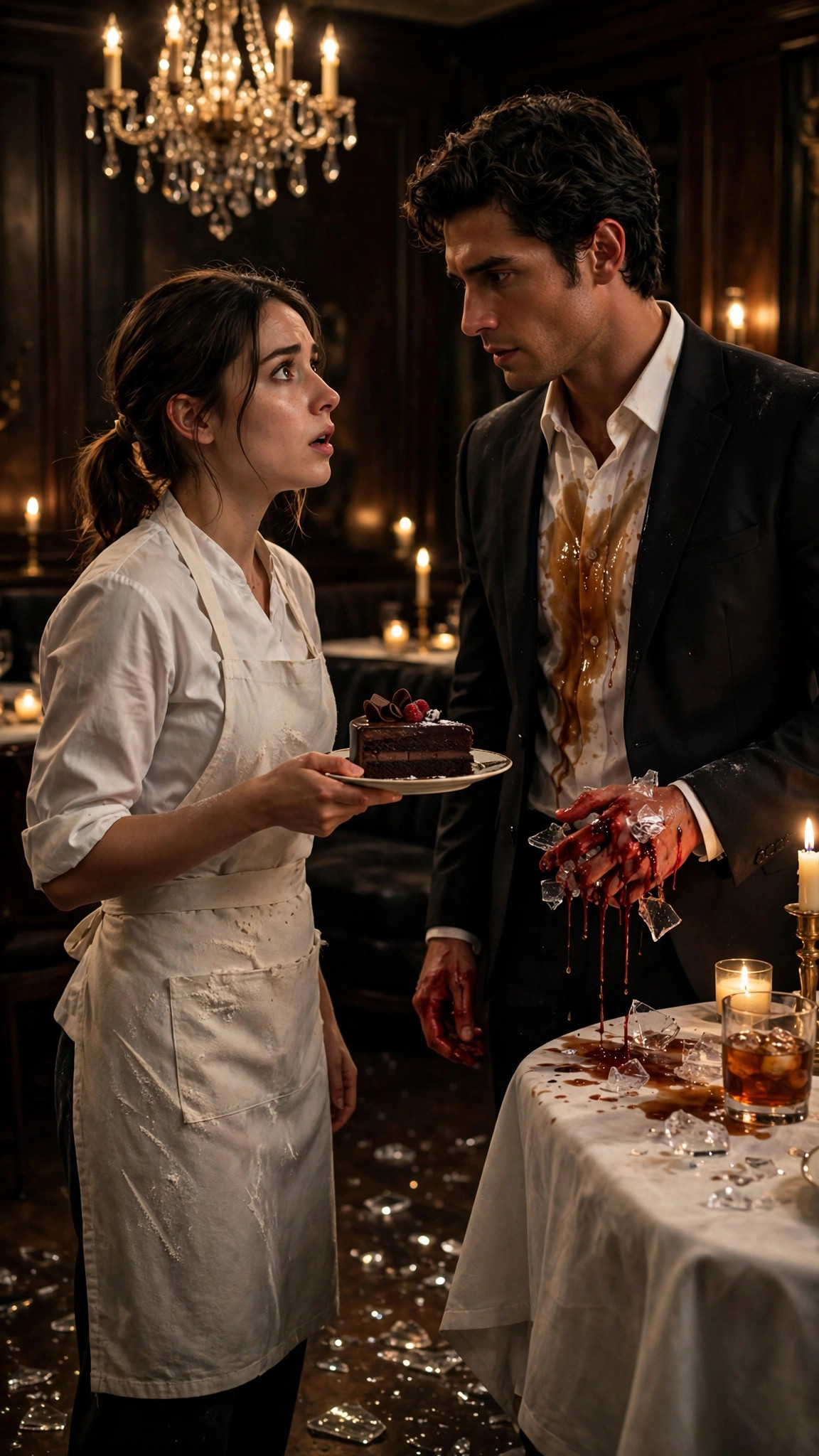
    The party was winding down. The band had packed up. The guests were leaving in ones and twos, shaking hands, calling cars, pretending they had not seen anything. Sullivan was still there, standing by the fireplace with his two men, a fresh glass of Scotch in his hand, smiling like a man who had just won a game.

    Gabriel walked straight toward him. He did not hurry. He did not raise his voice. He stopped three feet away, close enough that Sullivan could see his eyes, far enough that Sullivan's men would have to take a step to reach him.

    "Happy birthday, Gabriel," Sullivan said. "I was sorry to miss the toast."

    "There was no toast," Gabriel said. "Higgins is in my library. He told me everything. The vial. The twenty thousand dollars. The man in the alley with the scar on his left hand. He told me about your plan to make me sick for a few days, so you could take the docks while I was weak."

    Sullivan's smile did not move. "Higgins is a frightened man, Gabriel. Frightened men say anything. You know that."

    "I know that poisoned water does not lie," Gabriel said. "And I know that my doctor tested the glass. And I know that the tray your man prepared never reached me, because a girl I had never met cried in my study, and I went upstairs to find out why."

    Sullivan's eyes narrowed. "A girl?"

    "A catering waitress," Gabriel said. "Twenty-four years old. She works three jobs. Her sister is dying in a hospital. She walked into my study by mistake, and she cried, and I listened to her. And because I listened to her, I was not standing by the fireplace at midnight. And because I was not standing by the fireplace, your poison is sitting in a vial on my library table, and Higgins is sitting in my small room downstairs, and you are standing here, smiling, pretending you do not know what I am talking about."

    Sullivan set his glass down on the mantelpiece. Very carefully. The way a man sets down a glass when he is about to do something he cannot take back.

    "You always were sentimental, Gabriel," Sullivan said. "Your father warned me about that. He said you had a soft spot. He said it would get you killed one day."

    "My father is dead," Gabriel said. "You will not use him against me. You will not use anyone against me. Not anymore."

    He turned and walked away, leaving Sullivan standing by the fireplace, his smile finally gone.

    Behind him, Thomas appeared at his shoulder, silent as always.

    "The sit-down," Gabriel said. "Tomorrow night. Eight o'clock. The warehouse on Pier Nine. Every capo in the city. I want Sullivan there. I want his men there. I want everyone to hear what Higgins has to say."

    Thomas nodded. "And the girl?"

    Gabriel paused. He thought about Clare Dawson, sitting in a hospital room across the city, holding her sister's hand, her heel bandaged, her phone finally silent.

    "She stays under my protection," Gabriel said. "Her sister stays under my protection. Anyone who touches either of them answers to me. Do you understand?"

    Thomas nodded. "Understood."

    Gabriel walked up the grand staircase, past the portraits, past the dark wood paneling, and into his study. He sat down in the leather chair behind his desk, the same chair his father had sat in, the same chair he had sat in on the night his father died. He looked at the place on the floor where Clare had sat and cried, and he looked at the small red smear on the wood where her bleeding heel had rested.

    He had spent eighteen years being the coldest man in the room. He had spent eighteen years keeping a promise he had made at his sister's funeral. Never be helpless again. Never need anyone's mercy. Never care about someone you cannot protect.

    Tonight, he had broken that promise. And for the first time in eighteen years, he did not feel cold at all.

    Across the city, in a private room on the fourth floor of St. Jude's Hospital, Clare Dawson sat in a chair beside her sister's bed and held Sophie's hand, and watched her breathe.

    The room was quiet. The machines hummed softly. A nurse came in every hour, checked the monitors, wrote numbers on a chart, and left. The fever had come down. Sophie's skin was no longer burning to the touch. Her breathing was slow and even, the breathing of a girl who was finally, after three weeks of fighting, winning.

    Clare had not slept. She had not eaten. She had not left the chair since Thomas brought her here, except once, to wash her face in the small bathroom, where she had looked at herself in the mirror and barely recognized the woman staring back. Her hair was loose. Her mascara was gone. Her left heel was bandaged, and her shoe sat on the floor beside the bed, and she was wearing a hospital blanket around her shoulders because someone, a nurse whose name she did not know, had draped it over her without a word.

    Sophie stirred. Her eyes opened, slowly, the way a person's eyes open when they have been asleep for a long time and are not sure where they are.

    "Clare?" she whispered. Her voice was rough, barely there.

    "I'm here," Clare said. She leaned forward. She took Sophie's hand in both of hers. "I'm right here. You're all right. You're in a private room. The fever is down. You're going to be okay."

    Sophie blinked. She looked around the room, at the machines, at the window, at the blanket around Clare's shoulders.

    "How?" she asked. "How did we pay for this? Clare, how much did this cost?"

    Clare hesitated. She did not know how to explain it. She did not know how to tell her nineteen-year-old sister that a mafia boss had knelt on the floor of his study and bandaged her heel, and then paid thirty thousand dollars to save a stranger's life, because once, a very long time ago, his own sister had died in a crowded ward because nobody paid.

    "Someone helped us," Clare said finally. "A good man. I will tell you everything when you are stronger. Right now, you need to rest."

    Sophie closed her eyes. She squeezed Clare's hand, weakly, but it was a squeeze, and Clare felt it all the way down to her bones.

    "Don't leave," Sophie whispered.

    "I won't," Clare said. "I am not going anywhere. I am right here. I will always be right here."

    She sat back in the chair. She watched her sister breathe. And for the first time in three weeks, Clare Dawson allowed herself to believe that Sophie was going to live.

    In the library, Gabriel Hayes picked up his phone and dialed a number he had not dialed in years. The bookmaker answered on the third ring, his voice wary, his words careful, the way a man's words get careful when he knows who is calling.

    "Mr. Hayes," the bookmaker said. "To what do I owe the honor?"

    "Higgins," Gabriel said. "The floor manager. He owes you forty thousand dollars. The debt is paid. I am paying it. Tonight. In cash. Thomas will bring it to you within the hour."

    There was a long silence on the other end of the line.

    "Mr. Hayes," the bookmaker said slowly, "with respect, that is not how this works. Higgins owes me. He pays me. That is the arrangement."

    "The arrangement has changed," Gabriel said. His voice was flat and cold, the voice he used when a conversation was over and the other man had not yet realized it. "The debt is paid. Higgins owes you nothing. And if you ever go near his daughter again, if you ever stand outside her school, if you ever say her name to anyone, I will come to your house myself, and I will not bring a glass of water. Do you understand me?"

    Another silence. Longer this time.

    "I understand, Mr. Hayes," the bookmaker said quietly. "The debt is paid. I will not go near the girl."

    Gabriel ended the call. He set the phone down on his desk. He looked out the window at the dark garden, and he thought about a twelve-year-old girl he had never met, sleeping in her bed tonight, safe, because her father's debt was paid and no one would ever threaten her again.

    Mercy, he was learning, was more expensive than revenge. But it was also the only thing that left you able to sleep at night.

  • Chapter 3: Thirty Thousand Dollars by Six in the Morning

    Chapter 3: Thirty Thousand Dollars by Six in the Morning

    Thomas arrived at the study door less than two minutes after Gabriel called him. He was a massive man, six foot five, with shoulders like a doorway and hands that had broken bones for a living, and he filled the doorframe the way a wall fills a room. He took one look at Clare, sitting in the leather armchair with a bandaged heel and mascara down her face, and one look at Gabriel, standing behind his desk with his gun lying on the wood, and his face did not change at all. Thomas had worked for Gabriel Hayes for nine years, and in nine years he had learned that the only safe response to something he did not understand was to wait for orders.

    "Thomas," Gabriel said. "This is Clare Dawson. She works for the catering company. Her sister is at St. Jude's. I need you to do three things. First, take her to the hospital. Not in my car. In the grey sedan, the one nobody knows. Drive her yourself. Second, pay the hospital bill. All of it. Thirty thousand dollars, before six in the morning. Use the Meridian account. Third, do not let anyone see her. Do not let anyone talk to her. Do you understand?"

    Thomas nodded once. "Understood."

    "Wait," Clare said. She stood up too fast, and her heel screamed, and she caught herself on the arm of the chair. "I can't just leave. I have a shift. Higgins will fire me. I need this job. I need—"

    "Higgins will not fire you," Gabriel said. "Higgins will not say a word to you again unless I tell him to. Thomas will bring you back here before dawn. Your sister will be in a private room by the time you return. Go with him. Now."

    Clare looked at Gabriel. She looked at Thomas. She looked at the door. Then she picked up her shoe, held it in her hand because her heel hurt too much to put it back on, and followed the massive head of security out of the study in her stocking feet.

    Gabriel stood alone in the amber light. He picked up his gun, checked it, and slid it back into his shoulder holster. Then he walked to the window again and looked down at the ballroom.

    The party was reaching its peak. The jazz band had moved into a fast number. Couples were dancing. Waiters moved through the crowd with silver trays. At the far end of the room, near the fireplace, Sullivan stood with two of his men, a glass of Scotch in his hand, watching the staircase. Waiting for Gabriel to come back down.

    Gabriel did not go back down. He went to the small safe behind the painting of the river, opened it, and took out a thin folder he had kept there for three months. Inside were photographs, bank records, and a single sheet of paper with a list of names. At the top of the list, in Gabriel's own handwriting, was a name: Sullivan.

    For three months, Gabriel had known that Sullivan was testing him. The veiled threats. The men who had started showing up at Hayes docks asking questions. The shipment that had gone missing in March, and the driver who had sworn he had never seen the men who took it. Sullivan wanted the South Side docks, and he wanted the river routes, and he wanted Gabriel's chair. He was an aging brute, and he was running out of time, and aging brutes with no time left are the most dangerous men in the world.

    Gabriel had been planning to deal with Sullivan after the birthday party. He had been planning a quiet conversation, a warning, a line drawn in the sand. He had not planned for a crying girl in his study, or a hospital bill, or the strange, unfamiliar feeling in his chest that had started the moment he lowered his gun.

    He put the folder back in the safe and closed the painting. Then he went downstairs by the private stairs, through the library, and into the ballroom from the side door, where nobody would notice him entering. He needed to see the room. He needed to see Sullivan's face when he realized Gabriel was not coming down for the toast.

    He found a place near the bar, in the shadow of a pillar, and he watched.

    The clock above the fireplace read eleven forty. Twenty minutes to midnight. The toast was scheduled for midnight exactly, a tradition Gabriel's father had started and Gabriel had never bothered to stop. At midnight, the head of the house would raise a glass, and every man in the room would drink to his health, and his long life, and his continued good fortune.

    Gabriel never drank at the toast. He raised a glass of water, and everyone pretended not to notice.

    He watched the waiters moving through the crowd. He watched Higgins, the perpetually sweating floor manager, standing near the kitchen doors with a clipboard, his eyes flicking around the room. Higgins looked nervous. More nervous than a floor manager should look at a party that was going well. Gabriel filed the observation away. Gabriel filed everything away. That was how he had survived twelve years in the chair.

    At eleven fifty, a waiter carrying a silver tray loaded with crystal champagne flutes moved toward the fireplace. Gabriel watched him. The waiter was young, new, his hands shaking slightly under the weight of the tray. Gabriel had seen him earlier that evening, carrying trays to the west wing. He did not know the boy's name.

    At eleven fifty-five, Higgins crossed the ballroom to the bar. He spoke to the bartender. The bartender nodded and set a single crystal glass of water on the bar, separate from the champagne. Gabriel's glass. The glass he raised every year at midnight, the glass everyone watched him drink from.

    Higgins picked up the glass himself. He did not hand it to a waiter. He carried it across the room, toward the fireplace, toward the place where Gabriel was supposed to stand.

    Gabriel stepped out of the shadow of the pillar.

    "Stop," he said.

    Higgins froze. The glass trembled in his hand. Water sloshed against the rim.

    "Mr. Hayes," Higgins said, his voice cracking. "I didn't see you there. I was just bringing your glass. For the toast. It's almost midnight."

    "I know what time it is," Gabriel said. He held out his hand. "Give me the glass."

    Higgins hesitated. His eyes darted toward Sullivan, standing by the fireplace. Sullivan was watching them. His face was very still.

    "Give me the glass, Higgins," Gabriel said, very quietly.

    Higgins handed it over. His hand was shaking so badly that water spilled over the rim and onto Gabriel's fingers. Gabriel took the glass, held it up to the light, and looked at it. It looked like water. Clear, still, ordinary. But Gabriel had spent twelve years learning to see the things that were not there, and there was something about the way Higgins was breathing, and the way his eyes would not meet Gabriel's, and the way Sullivan had gone very still by the fireplace, that told him everything he needed to know.

    "Thomas," Gabriel said into his phone, without taking his eyes off Higgins. "The tray. The one Clare left in the kitchen. The silver tray with the champagne flutes. I need it tested. Now. And I need the doctor. The one on call tonight. Bring him to the library."

    He ended the call. He looked at Higgins.

    "Who paid you?" Gabriel asked.

    Higgins's face went white. "I don't know what you mean, Mr. Hayes. I swear. I just brought the glass. It's water. It's only water."

    "Then drink it," Gabriel said, and held the glass out to him.

    Higgins stared at the glass. He did not take it. His hands hung at his sides, shaking. Sweat ran down his face in thin lines. Around them, the ballroom had gone quiet. The band had stopped playing. The dancers had stopped dancing. Every man in the room was watching.

    "Drink it, Higgins," Gabriel said again, his voice flat and cold. "If it is only water, you have nothing to fear."

    Higgins took a step backward. His foot caught on the edge of the carpet, and he stumbled. A waiter caught his arm. Higgins pulled free.

    "I can't," he whispered. "I can't. He said it was only to make you sick. He said it would only make you sick for a few days, so he could take the docks while you were weak. He said nobody would die. He swore nobody would die."

    "Who said that, Higgins?" Gabriel asked.

    Higgins's eyes flicked toward the fireplace. Toward Sullivan. And Sullivan, standing with a glass of Scotch in his hand, smiled a thin, cold smile, and raised his glass in a small, mocking toast.

    Gabriel did not move. He did not raise his voice. He did not reach for his gun. He stood in the middle of his own ballroom, holding a glass of poisoned water, and he looked at the man who had tried to kill him on his birthday, and he thought about a girl crying on the floor of his study.

    If Clare had not abandoned that tray in the kitchen, the poisoned glass would have reached him an hour ago. If Clare had not walked into his study, crying for her sister, Gabriel would have come downstairs at midnight, raised the glass, and drunk.

    A crying girl in a catering uniform had saved his life, and she did not even know it.

    "Thomas," Gabriel said into his phone, his voice calm and even. "Take Mr. Higgins to the library. Keep him there. Do not let him speak to anyone. I will be there in five minutes."

    He set the poisoned glass down on the bar, carefully, as if it were made of thin ice. Then he turned to the room full of watching men, and he smiled, a slow, cold smile that did not reach his eyes.

    "The toast is cancelled," he said. "Enjoy the party."

    Then Gabriel Hayes walked out of his own ballroom, through the library door, and went to find out exactly how much Sullivan had paid to have him killed on his thirty-sixth birthday.

    He did not know it yet, but the night was only beginning.

    His phone buzzed as he crossed the ballroom. A text from Thomas, sent from the hospital parking lot.

    "Bill paid. Thirty thousand. Private room, fourth floor. Sophie is stable. Fever down to 100.4. Clare is holding her hand. The nurse says she will make it through the night."

    Gabriel stopped walking. He stood in the middle of his own ballroom, surrounded by music and laughter and expensive perfume, and he read the text a second time. Fever down. She will make it through the night. He thought about the deposit, and the crowded ward, and the nurse pulling a sheet over a fifteen-year-old girl's face, and he felt something loosen in his chest, something that had been tight for eighteen years.

    He texted back. "Thank you. Stay with them. If the fever spikes again, call me first, then the doctor."

    He put the phone away. He looked around the ballroom, at the men drinking Scotch and the women in glittering dresses, and he felt very far away from all of it, as if he were watching the party through a thick pane of glass. None of these people knew what had just happened upstairs. None of them knew that a girl had cried on his study floor, or that a hospital bill had been paid, or that a nineteen-year-old nursing student was going to live to see the morning. None of them knew that the man they feared, the coldest man in the room, had knelt on the floor and bandaged a stranger's heel.

    Gabriel walked to the kitchen. He needed to see the tray. The silver tray Clare had abandoned on the stainless steel counter, loaded with crystal champagne flutes. He found it where she had left it, untouched, the flutes still standing in their neat rows. He lifted one. He held it up to the light. It looked like champagne. Pale gold, still, ordinary.

    Dr. Patel arrived ten minutes later, carrying his black bag, his face tired but his hands steady. Gabriel handed him the flute. The doctor took a small kit from his bag, drew a thin strip of paper from a vial, and dipped it into the glass. He waited. He watched. The paper turned a faint, unmistakable blue.

    "Same poison," Dr. Patel said quietly. "In the champagne. Whoever prepared this tray meant for it to reach the toast. If you had drunk from this glass at midnight, Mr. Hayes, you would not have woken up this morning."

    Gabriel nodded slowly. He looked at the tray, at the neat rows of flutes, at the kitchen around him, all stainless steel and steam and shouting chefs who had no idea what had almost happened in their own room.

    "Test them all," Gabriel said. "Every glass on that tray. Every bottle it came from. I want to know how many were poisoned, and which ones, and who poured them."

    Dr. Patel nodded. He set to work, methodical and silent, while Gabriel stood in the doorway of the kitchen and watched the party through the swinging doors, and thought about Higgins, and Sullivan, and the man in the alley with the scar on his left hand, and the girl crying on his study floor who had saved his life without knowing it.

    The toast was scheduled for midnight. It was eleven forty-five. In fifteen minutes, the head of the house was supposed to stand by the fireplace, raise a glass, and drink to his own health, while every man in the room watched him swallow.

    Gabriel Hayes was not going to drink anything that night. Not from that tray. Not from any tray. He was going to find the man who had tried to kill him, and he was going to make him understand, very clearly, what happened to men who poisoned a Hayes in his own house.

    But first, he was going to make sure that a nineteen-year-old girl named Sophie Dawson lived to see the morning. Because that, he was beginning to understand, was the only thing that mattered.

  • Chapter 2: The Coldest Man in the Room

    Chapter 2: The Coldest Man in the Room

    Gabriel Hayes had not always been the coldest man in the room. Once, a very long time ago, he had been a boy who believed that being strong meant never needing anyone, and that needing anyone was the same thing as being weak.

    He had learned that lesson the way his family taught all its lessons: with a loss that could not be undone.

    His father, Frank Hayes, had been a careful man. Not a kind man, but a careful one. He had built the Hayes family from a single dockside warehouse into something that controlled half the shipping on the river, and he had done it by never taking a risk he had not already priced. He had taught Gabriel three rules. Never drink when you are working. Never let anyone see you afraid. Never love anything you cannot afford to lose.

    Gabriel had been twenty-four years old when his father was shot in the parking lot of a restaurant on the South Side, on the night of Gabriel's thirtieth birthday. No. That was wrong. He had been twenty-four when his father died, and thirty when the men who killed him finally stopped trying to finish the job. The dates blurred together now, the way dates do when every year brings another attempt on your life. What Gabriel remembered clearly was the phone call, and the drive to the hospital, and the doctor standing in the hallway with his hands in his pockets, telling him that his father had been dead before the ambulance arrived.

    He remembered the chair. The big leather chair behind his father's desk, in this same study, with the same brass switch and the same smell of old paper and tobacco. He remembered sitting in it that night and understanding, with a clarity that felt like ice water in his veins, that from that moment on, every man in the city would be watching him to see whether he was strong enough to hold what his father had built, or whether he was simply the next body in the parking lot.

    He had held it. For twelve years, he had held it. He had done it by being colder than every man who tested him. He had done it by never drinking, never sleeping more than five hours a night, never letting anyone close enough to learn where he was vulnerable. He had done it by turning his birthday into a performance — a grand party, a ballroom full of politicians and judges and men who owned things they were not supposed to own, all of them smiling and all of them watching for weakness.

    He hated his birthday. To him, it was simply an annual reminder of how many people had failed to put a bullet in his head.

    But there was another reason he hated it, one he had never told anyone, not even Thomas, who had been his head of security for nine years and knew more about him than any living man.

    His sister Anna had died on the night before his eighteenth birthday.

    Anna had been fifteen years old, all elbows and laughter, with their mother's dark hair and a gap between her front teeth that she refused to let a dentist fix. She had come home from school one Friday with a fever, and by Sunday she could not stand up. The infection had spread fast, faster than anyone expected. The family doctor had been away that weekend, visiting his daughter in another state, and the hospital had wanted a deposit before they would move her to the intensive care ward. A deposit. A piece of plastic with a high enough limit. Frank Hayes had been away on business, unreachable, and the money in the house had been tied up in a shipment that had not yet cleared the docks.

    Gabriel had been seventeen years old. He had sat beside Anna's bed in a crowded public ward, holding her hand, watching her breathe, and he had promised her that their father would come and fix everything. He had promised her that she would be all right. He had believed it, because he was seventeen and he still believed that the people who loved you could fix anything if they tried hard enough.

    Anna had died at four o'clock in the morning, while Gabriel was asleep in the chair beside her bed. He had woken up to a nurse gently pulling the sheet over her face, and he had understood, in that moment, that his father had not come, and the money had not come, and the promises had not mattered. Nobody had come. Nobody had paid. And a fifteen-year-old girl had died in a crowded ward because a hospital wanted a deposit first.

    Gabriel had not cried at her funeral. He had stood beside his father in a black suit that was too big for him, and he had watched them lower the small coffin into the ground, and he had made himself a promise. He would never be helpless again. He would never need anyone's mercy. And he would never, ever let himself care about someone he could not protect.

    It was a promise he had kept for eighteen years.

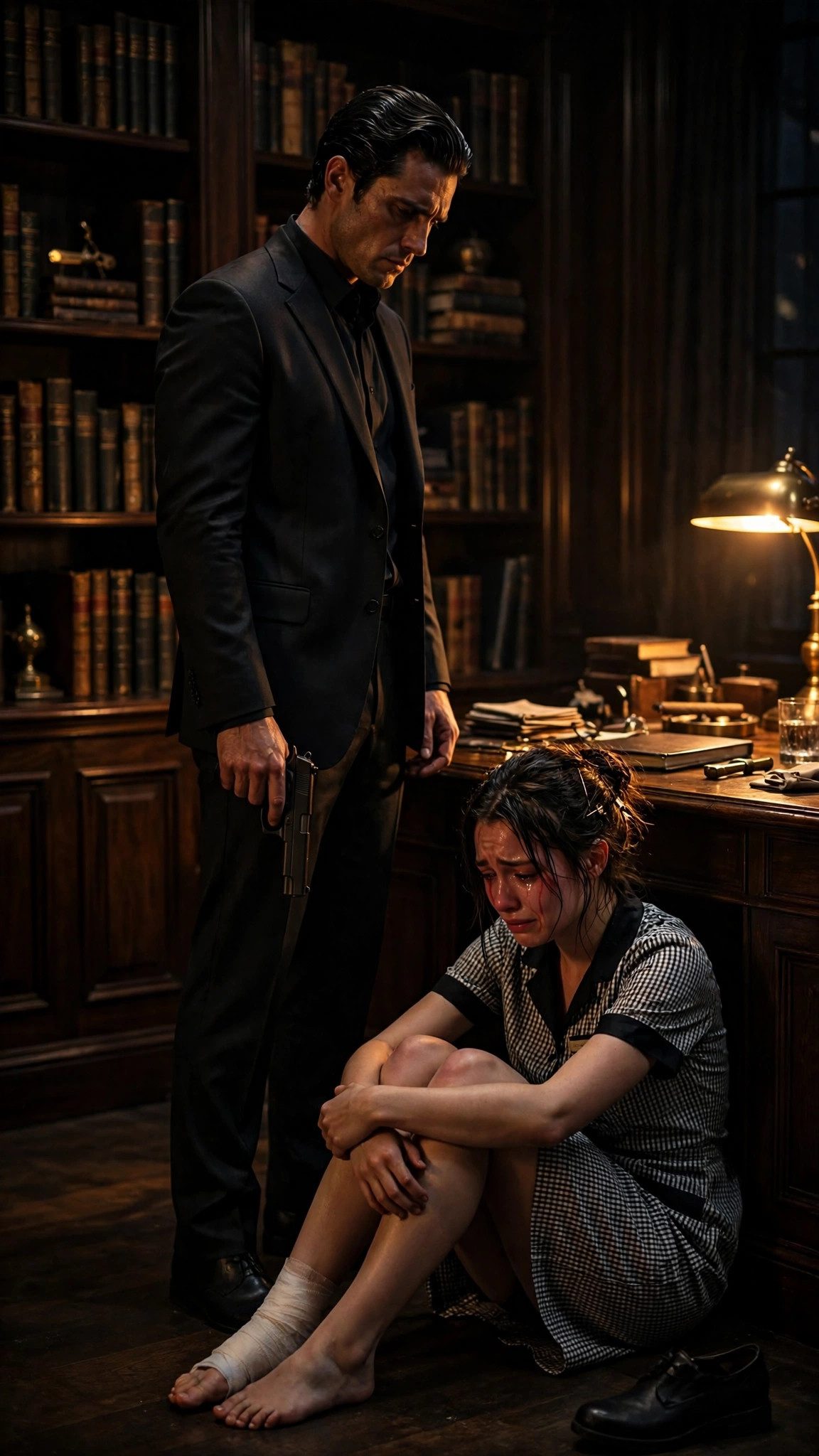
    Now he was standing in his study on his thirty-sixth birthday, with a gun in his hand, and a crying girl in a catering uniform was telling him that her nineteen-year-old sister was going to die in a hospital because nobody had paid the bill in time.

    "Her name is Sophie," Clare said. She was sitting in the leather armchair across from his desk now, because her legs had given out halfway through her story and Gabriel had caught her elbow and steered her into the chair before she could fall. A glass of water sat untouched on the desk beside her. Her hands were wrapped around each other in her lap, white-knuckled and shaking. "She's a nursing student. She was going to be a nurse. She wanted to work in the children's ward. She said sick kids shouldn't have to be scared alone."

    Gabriel stood behind his desk, the gun now resting on the polished wood, safety on, barrel pointed at the wall. He did not sit down. Sitting down felt like surrender, and Gabriel Hayes did not surrender.

    "How much?" he asked.

    Clare looked up at him. Her eyes were swollen, her face still blotchy, but the crying had stopped, and in its place there was something harder. Something that looked almost like anger.

    "Thirty thousand dollars," she said. "That's what they want by six in the morning. Thirty thousand, or they move her to a lower-priority ward. Do you know what that means? It means the nurses check on her less. It means if her fever spikes again in the middle of the night, nobody notices for an hour. It means she dies because I didn't have a piece of plastic with a high enough limit."

    Gabriel said nothing. He walked to the window and pulled the heavy curtain aside a fraction of an inch. Below, in the ballroom, the party was still going. He could see the lights, the movement, the glittering crowd. Somewhere down there, Sullivan was waiting for him to come back. Somewhere down there, a toast was being prepared for midnight. Somewhere down there, men were drinking Scotch older than Sullivan's operation and deciding whether Gabriel Hayes was still strong enough to be feared.

    "I work three jobs," Clare said behind him. Her voice was steadier now, as if telling the story had given her back some small piece of herself. "I waitress at a diner in the morning. I clean offices in the afternoon. I cater at night, when there's work. I sleep four hours. I sold my mother's piano. I sold my car. I sold my grandmother's locket. I sold everything except the phone, because the hospital needs to reach me, and the shoes, because I need them to work. And it still wasn't enough."

    She laughed, a short, broken sound that was not really a laugh at all.

    "My mother died when Sophie was eight. My father left before that. Sophie is the only family I have. She is the only person in the world who ever looked at me and thought I was enough. And now she's dying in a hospital bed, and I'm sitting on the floor of a stranger's study, crying, while a man points a gun at me."

    Gabriel turned away from the window. He looked at her for a long time. He thought about Anna, fifteen years old, dying in a crowded ward because a hospital wanted a deposit first. He thought about the promise he had made at her funeral, standing in a black suit that was too big for him. Never be helpless again. Never need anyone's mercy. Never care about someone you cannot protect.

    He had kept that promise for eighteen years. He had kept it by never letting anyone close enough to matter. And now a stranger had walked into his sanctuary, sat on his floor, and cried for her sister, and the promise was cracking open like ice on a river in spring.

    "Your heel is bleeding on my floor," Gabriel said.

    Clare looked down at her shoe. The dark stain had spread. She started to apologize, but Gabriel held up one hand.

    "Take the shoe off," he said.

    She stared at him. Then, slowly, she bent down and pulled off the left shoe. Her sock was soaked through with blood. The skin of her heel was split open, raw and angry, the blister torn clean away. Gabriel walked to the cabinet beside the fireplace, opened it, and took out a first-aid kit. He set it on the desk and opened it with hands that had done this before, on men who had been shot and stabbed and broken in his service.

    "Sit still," he said.

    Clare sat very still while Gabriel Hayes, the coldest man in the room, the man who had ordered men killed before breakfast and never lost a night of sleep over it, knelt on the floor of his study and cleaned the blood from a catering waitress's heel with a cotton pad and antiseptic, his movements careful and precise, as if the wound were the most important thing in the world.

    "Why are you doing this?" Clare whispered.

    Gabriel did not answer at first. He wrapped a clean bandage around her heel, taped it in place, and helped her ease her foot back into the shoe, gently, the way a man handles something fragile.

    "Because once," he said, very quietly, "there was a girl in a hospital bed, and nobody came. And I have spent eighteen years making sure I would never be the man who did not come."

    He stood up. He walked to his desk. He picked up his phone.

    "Stay here," he said. "Do not leave this room. Do not open the door for anyone except me or Thomas. Do you understand?"

    Clare nodded, too stunned to speak.

    Gabriel dialed a number. He spoke in a low, clipped voice, the voice he used when he gave orders that were not to be questioned.

    "Thomas. Come to the study. Alone. Bring the car keys and the black bag. And tell the kitchen I will not be coming down for the toast. If Sullivan asks, tell him I am indisposed. If anyone else asks, tell them nothing."

    He ended the call. He looked at Clare.

    "Your sister's name is Sophie Dawson," he said. "St. Jude's Hospital. Thirty thousand dollars by six in the morning."

    Clare's eyes went wide. "How did you know her last name? I never told you my last name."

    "You didn't have to," Gabriel said. "Your uniform has a name tag. It says Clare D. The hospital will have the rest. I am going to pay the bill. All of it. Tonight."

    Clare stared at him. Her mouth opened. No sound came out.

    "Why?" she whispered, when she finally found her voice. "You don't know me. You don't know her. Why would you do that?"

    Gabriel Hayes looked down at the crying girl in his study, at the bandage on her heel and the mascara on her cheeks and the cracked phone in her apron pocket, and he told her the truth.

    "Because I have spent eighteen years being the coldest man in the room," he said. "And tonight, for the first time, I am tired of being cold."

    Downstairs, the jazz band played something upbeat and brassy. The laughter drifted up through the floorboards, loud and uninhibited and expensive. And upstairs, in the dark study of a man who had never shown mercy to anyone, Gabriel Hayes picked up his phone and began to save a nineteen-year-old girl he had never met.

    He did not know it yet. But the girl crying on his floor had already saved his life.

    Every year, on the morning of his birthday, Gabriel Hayes drove to a small cemetery on the edge of the city, before the sun was fully up, before anyone could see him. He parked the black car at the gate, and he walked alone between the rows of stones, and he stopped at a small white marker half-hidden under an old oak tree. Anna Hayes. Beloved daughter and sister. Fifteen years old, forever.

    He never brought flowers from a shop. He brought white roses from his own garden, cut the night before, because Anna had loved white roses, and because buying them felt like a transaction, and this was not a transaction. He laid them on the stone. He stood there for ten minutes, sometimes twenty, and he did not pray, because Gabriel Hayes had stopped praying the morning a nurse pulled a sheet over his sister's face. He simply stood there, and he remembered.

    He remembered the way Anna laughed when she beat him at cards. He remembered the gap between her front teeth, and the way she refused to let a dentist fix it, because she said it made her smile hers and nobody else's. He remembered sitting beside her bed in the crowded ward, holding her hand, promising her that their father would come and fix everything. He remembered waking up to the nurse, and the sheet, and the silence.

    Thomas always waited in the car. Thomas never asked where they were going. Thomas had been there the night Anna died, a young enforcer then, standing in the hospital hallway with his hands in his pockets, watching a seventeen-year-old boy walk out of a ward with his sister's death on his face. Thomas had never spoken of it. Thomas never spoke of anything that mattered, which was why Gabriel trusted him more than any man alive.

    This morning, Gabriel had gone to the cemetery as always. He had laid the white roses on the stone. He had stood there for twenty minutes. And then he had gone home, put on his black suit, and walked downstairs into a ballroom full of people who wanted something from him, and he had smiled, and he had shaken hands, and he had waited for the night to end.

    He had not expected to find a crying girl in his study. He had not expected to kneel on the floor and bandage a stranger's heel. He had not expected to feel the promise he had made at Anna's funeral crack open in his chest like ice on a river in spring.

    But standing in the amber light of his study, with the smell of old paper and leather around him, Gabriel Hayes understood something he had not understood in eighteen years. Anna had died because nobody came. Nobody paid. Nobody listened. And tonight, a girl had come to his house, and she had cried, and he had listened, and for the first time since he was seventeen years old, Gabriel Hayes had done the one thing he had sworn he would never do again.

    He had cared.

  • Chapter 1: The Girl on the Floor of His Study

    Chapter 1: The Girl on the Floor of His Study

    The man who had pointed a gun at her face on his thirty-sixth birthday looked down at Clare Dawson and said, "You are crying in my study."

    It was not a question. It was not an accusation either, though it should have been. It was a statement of fact, delivered in a voice so cold and so calm that it sounded like a man reading a weather report. The gun did not waver. The amber light from the brass wall switch fell across the dark wood paneling and the leather-bound books and the heavy oak desk, and it fell across Clare's face, red and blotchy and wet, with mascara running down her cheeks in crooked black lines.

    Clare did not scream. She did not beg. She looked at the barrel of the gun, and then she looked into the eyes of the man holding it, and for a long moment she felt nothing at all except a deep, bone-weary surrender. She had been running for so long, working three jobs and sleeping four hours a night, selling nearly everything she owned that was worth anything, and it had not been enough. It was never enough. So she sat on the floor of a stranger's house in the darkness and looked at a gun, and she thought, with a strange and terrible clarity, that at least this would be quick.

    "Please," she whispered. Her voice came out cracked and raw from crying. "I didn't steal anything. I just needed somewhere quiet. I'll go. I'll leave right now."

    The man did not lower the gun. He studied her the way a man studies a lock he has never seen before, trying to decide whether it is a trap or simply a door. He was tall, broad-shouldered, dressed in a black suit that fit him like it had been sewn onto him by someone who knew exactly how dangerous he was. His dark hair was combed back from a face that might have been handsome if it had ever learned how to soften. His eyes were grey, and they did not blink.

    "Your shoes are bleeding," he said.

    Clare looked down. Her left heel had blistered and split open sometime around nine o'clock that evening, and by eleven the cheap fabric of her slip-resistant shoes had felt wet and raw, scraping against exposed skin with every step. She had stopped feeling it properly an hour ago. Now there was a dark stain spreading through the fabric, and a thin red smear on the polished wood floor where her foot had rested.

    "I'm sorry," she said. "I'll clean it. I swear I'll clean it."

    "Stand up," he said.

    Clare tried. Her legs shook so badly that she had to brace one hand against the wall, and the other against the doorframe, and even then she swayed. The gun followed her up. She pressed her back against the door and waited for him to decide what she was.

    It had started, like everything in Clare's life lately, with a phone call she could not afford to miss and a bill she could not afford to pay.

    Three weeks earlier, her sister Sophie had gone into St. Jude's Hospital with a fever that would not break. Sophie was nineteen years old, a nursing student with a laugh that could fill a whole apartment, and the doctors had found an infection deep in her abdomen after her appendix burst. They had operated. They had told Clare the surgery went well. And then the fever had come back, and the infection had spread, and the billing office had started calling.

    Thirty thousand dollars. That was the debt. Clare had managed to scrape together enough money for the baseline treatments by working three jobs, sleeping four hours a night, and selling nearly everything she owned that was worth anything. She had sold her mother's piano. She had sold her car. She had sold the small gold locket her grandmother had left her, and she had cried in the pawnshop and then gone straight to her next shift because crying did not pay hospital bills.

    It was not enough. It was never enough.

    The catering company did not provide names for jobs like this. Employees received only an address and a time. The pay was triple her normal hourly rate, delivered in crisp, untaxed bills at the end of the night. That was the only reason Clare had accepted the shift at the sprawling estate on the edge of the city, a house so large it had wings, and a ballroom, and a private study on the second floor that the staff had been explicitly instructed to avoid.

    She did not know whose house it was. She did not care. She needed the money desperately.

    Her phone had vibrated inside her apron pocket at half past ten. A short, sharp buzz. Clare had ignored it. The floor manager, a perpetually sweating man named Higgins, had already warned her twice about looking at her phone. She had kept her eyes on the polished marble floor and continued toward the kitchen service doors with a massive silver tray loaded with crystal champagne flutes, its weight digging a dull ache into her forearm.

    Her phone had buzzed again. Then a third time.

    A cold spike of dread had struck her chest. Three texts in succession. That was the code she had arranged with the night nurse at St. Jude's.

    Clare had pushed through the swinging kitchen doors and entered the chaotic heat beyond them. She had placed the tray down on a stainless steel counter and scrambled to a quiet corner behind the industrial-sized fridge. Her hands had shaken as she pulled the cracked phone from her apron.

    The messages were from the hospital. Her sister's temperature had spiked again. The infection was spreading. Billing had flagged the account. If the next payment was not received by six o'clock in the morning, her sister would be moved to a lower-priority ward.

    The nurse was sorry. She asked Clare to call.

    Clare had stared at the glowing screen. The words blurred. Around her, pans clanged, chefs shouted, and steam hissed, but the noise gradually disappeared into a dull, distant hum. She could not breathe. The air felt as if it had thickened into wet cotton.

    Now, because she did not possess a piece of plastic with a high enough limit, her sister was going to die.

    Higgins had demanded to know whether she was deaf. He needed two trays of tartlets delivered to the west wing immediately. Clare had not moved. He had stepped toward her and told her to look at him when he was speaking. Clare had turned, shoved past him, and walked out through the back of the kitchen.

    She did not know where she was going. She only needed air. She needed quiet.

    She had followed a long, dimly illuminated hallway lined with dark wood paneling and antique portraits. She had entered the private wing, an area the staff had been explicitly instructed to avoid. At the end of the hallway, Clare had found a heavy oak door. She had turned the brass knob. It had opened with a smooth, heavy click.

    Clare had slipped inside and closed the door behind her. The room was completely dark. It smelled of old paper, leather, and faint tobacco. She had leaned against the solid wood door and slowly slid to the floor, pulling her knees against her chest. Her left heel had throbbed in sharp, pulsing waves.

    She did not want to cry. Crying was useless. Crying did not pay hospital bills. Crying did not cure infections.

    But the dam broke anyway. It was not quiet or delicate. The sobs tore through her throat and left her gasping. Her chest heaved as if she were drowning. Her eyes burned. Everything was collapsing. The sheer weight of her life seemed to press down on her in the darkness.

    Clare was twenty-four years old and entirely alone in the world except for a sister fading away in a sterile hospital bed. She had nothing left to give.

    So she sat on the floor of a stranger's house in the darkness and fell completely apart.

    Downstairs, Gabriel Hayes had been planning a murder.

    He did not want to. It was his birthday, after all. He had turned thirty-six that day, a minor miracle in his line of work. But the capo from the South Side, an aging brute named Sullivan, had spent the previous forty minutes dropping veiled threats in the trophy room. It was a test. In Gabriel's world, a test left unanswered became an advertisement of weakness.

    Gabriel stood beside the fireplace with a crystal glass of water in his hand. He did not drink alcohol. It dulled reflexes and loosened tongues. The ballroom surrounding him was crowded with the city's elite: politicians, judges, and men who owned things they were not supposed to own. Every one of them wanted something.

    Sullivan clapped a heavy hand against Gabriel's shoulder and congratulated him on the party, calling it the event of the season. His breath smelled of expensive cigars and cheap intentions. Gabriel thanked him and told him to enjoy the Scotch. It was older than Sullivan's operation. Sullivan's smile tightened. His hand left Gabriel's shoulder.

    Gabriel handed his water to a passing waiter and excused himself. He needed to get out. The ballroom felt suffocating, thick with perfume, cologne, and the invisible burden of constant vigilance. Across the room, Gabriel caught the eye of Thomas, his head of security, a massive man standing quietly near the grand staircase. Gabriel gave him a brief two-finger gesture toward the ceiling. He was going upstairs. Do not follow. Thomas gave an almost imperceptible nod.

    Gabriel avoided the grand staircase and took the narrower private stairs concealed behind the library. The sounds of the party diminished with every step. The brass instruments became a low thrum. The laughter faded to a distant murmur. He reached the second floor. The private wing. His sanctuary. Nobody came up here. Everyone on his payroll understood the rule, from his highest lieutenant to the lowest cleaner. The consequences of violating it were immediate and severe. Gabriel valued privacy more than he valued most human lives.

    He followed the carpeted hallway until he reached the heavy oak door to his study. At first, he did not hear anything. The house was old and filled with the natural groans of settling wood. Then his hand touched the brass knob.

    Gabriel stopped. A faint, muffled sound came from inside.

    He did not gasp or freeze. His body simply entered a state of relaxed readiness. His right hand moved beneath his suit jacket and closed around the textured grip of the nine-millimeter inside his shoulder holster. He drew it smoothly. Then he turned the knob.

    The study was dark, its curtains closed. The familiar scents of tobacco and leather filled the room, but beneath them Gabriel detected something else. Fear. Sweat. A wet, ragged gasp came from the floor just left of the doorway.

    Gabriel stepped inside and flicked the safety off his weapon. With his left hand, he reached for the brass switch. Amber light flooded the room.

    Gabriel leveled the gun toward the corner. There was no assassin. No rival enforcer. There was a girl.

    She sat on the floor with her knees drawn against her chest, dressed in the cheap standard uniform of the catering company. Her hair had probably been neatly pinned hours earlier, but damp strands now hung around her face. She looked up at him. Her skin was red and blotchy. Her eyes were bloodshot and wet with tears. Mascara had run down her cheeks in crooked black lines. She looked entirely destroyed.

    Clare stared at the weapon pointed at her face. She did not scream. She did not beg. She looked at the barrel and then into Gabriel's eyes. For a long moment, Gabriel saw something in her expression he had not seen in years. It was more than fear.

    It was exhaustion. A deep, bone-weary surrender.

    And now she was standing, shaking, pressed against his study door, waiting for him to decide whether she lived or died, and Gabriel Hayes realized with a cold shock that he had no idea what to do with her.

    He had planned for an assassin. He had planned for a thief. He had planned for a rival's spy. He had not planned for a crying girl in a catering uniform with a bleeding heel and mascara down her face, who looked at his gun the way a drowning woman looks at the surface of the water — not with fear, but with a terrible, quiet relief.

    "Who are you crying for?" Gabriel asked.

    The question surprised them both. Clare's breath caught. She stared at him, and for a moment the tears stopped, as if her whole body had forgotten how to cry.

    "My sister," she whispered. "Sophie. She's nineteen. She's in the hospital. She's dying, and I can't pay, and by six in the morning they're going to move her, and I don't know what to do, and I don't know what to do."

    The words came out in a rush, tumbling over each other, and then she was crying again, harder than before, her shoulders shaking, her hands pressed over her mouth as if she could hold the sobs inside her body by force.

    Gabriel Hayes stood in the amber light of his study with a gun in his hand, and he listened to a stranger cry for her sister, and he thought about a girl named Anna who had died when she was fifteen years old because nobody in his family had been able to pay a hospital bill in time.

    He lowered the gun.

    "Tell me everything," he said. "From the beginning. And do not leave anything out."

    As Clare began to speak, Gabriel's eyes dropped to the cracked phone lying on his desk, where she had set it down when Thomas helped her into the chair. The lock screen showed a photograph of two girls laughing on a fire escape, one with dark hair and a gap between her front teeth, the other younger, with Clare's eyes. Sophie, in a nursing student's uniform, holding up a stethoscope like a trophy. Gabriel picked the phone up carefully, as if it might break further in his hands, and turned it over. On the back, in faded marker, someone had written a phone number and three words: "Call if fever spikes."

    "She wrote that herself," Clare said, following his gaze. "Sophie. The night before she went into the hospital. She said, 'Clare, if anything happens, you call this number, and you tell them I am your sister, and you do not take no for an answer.' She was nineteen years old, and she was already giving me instructions, like she was the older one."

    Gabriel set the phone down gently. He looked at the name tag on Clare's uniform. Clare D. He thought about how little a name tag tells you about a person. It did not say that she worked three jobs. It did not say that she had sold her mother's piano. It did not say that she was the only thing standing between her sister and a crowded ward where nobody would notice if her fever spiked in the middle of the night.

    "Go on," Gabriel said. "I am listening."

  • Chapter 7: Mine, If You Ask

    Chapter 7: Mine, If You Ask

    The next night, I walked into Lorenzo Moretti's house with my grandmother's notebook under my arm, and I understood, for the first time, who he really was.

    The house was not what I had expected. It was not a fortress. It was not dark and cold. It was a warm, old house on a quiet street, with a garden in the back and photographs on the walls, and in the kitchen, there was a stove that had been used every day for thirty years, and a table where a family had once eaten together.

    "This was my mother's kitchen," Lorenzo said quietly, standing in the doorway. "She cooked here every Sunday. Enzo and I used to sit at that table and steal cake with our fingers. After she died, I kept the house, but I stopped cooking in this kitchen. I told myself it was because I was too busy. The truth was that it hurt too much to be in here."

    He looked around the room, at the old stove and the worn table and the photographs, and his voice grew rough.

    "I have not baked anything in this kitchen in seven years," he said. "But tonight, you are going to. And I am going to sit at that table and watch you, the way I used to watch my mother, and I am going to remember what it felt like to be part of a family."

    I opened Rosa's notebook on the counter, and I started to work. I measured the chocolate, and the butter, and the eggs, and the sugar. I brewed the espresso, strong and bitter. I mixed the batter by hand, the way Rosa had taught me, listening to it, feeling it, knowing when it was right. I poured it into the pans and put them in the oven, and the kitchen filled with the smell of dark chocolate, and Lorenzo sat at the table and watched me, and neither of us spoke, because we did not need to.

    When the cakes came out of the oven, I let them cool, and then I made the ganache, and I brushed the layers with bourbon syrup, and I put the cakes together, layer by layer, and I finished them with a pinch of flaky sea salt on top, the way I always did.

    And then I cut two slices, and I put them on plates, and I sat down across from Lorenzo at his mother's table, and I watched him take the first bite.

    He closed his eyes. He was quiet for a long time. And when he opened them again, they were shining.

    "It tastes the same," he said quietly. "After seven years, it tastes exactly the same."

    "It is not the same cake," I said. "It is my cake. My grandmother's recipe, my hands, my kitchen. But I am glad it reminds you of home, Lorenzo, because that is what a cake is supposed to do. It is supposed to taste like the people you love."

    He reached across the table then, slowly, and he took my hand, and his hand was warm, and the scar across his palm was smooth under my fingers.

    "Camila," he said, "I have something to ask you, and I want you to know that this is not a claim. I ended the claim. You are free. You will always be free. This is a question, and you can say no, and if you say no, I will accept it, and I will still rebuild your kitchen, and I will still make sure you and Sofia are safe, and nothing between us will change. Do you understand?"

    "I understand," I said, and my heart was beating so hard I thought he could hear it.

    "Then here is my question," he said. "Will you let me court you? Properly. Slowly. Dinners, and walks, and conversations. No claims, no orders, no men outside your door unless you ask for them. Just a man who tasted your cake and remembered what it was like to feel alive, asking a woman if she will give him the chance to earn what he once tried to take."

    I looked at him for a long time, at his dark eyes and his scarred hand and the kitchen around us, at the photographs of his mother and his brother on the wall, and I thought about everything that had happened, from the glass exploding in his hand to the fire to the hospital room, and I thought about Rosa's words, and about the life I had built out of flour and early mornings, and about how small that life had been until a man walked into my restaurant and smiled at my cake.

    "Yes," I said. "Yes, Lorenzo. I will let you court me. Properly. Slowly. And we will see where it goes."

    He smiled then, a real smile, the kind that reached his eyes and stayed there, and he lifted my hand to his lips and kissed the back of it, very gently, like a man touching something precious.

    "Thank you," he said. "Thank you, Camila."

    That was the beginning. Not of a claim, but of a courtship.

    Over the next two months, while the Imperial was rebuilt, Lorenzo courted me the way he had promised. He took me to dinner, and he walked with me along the river, and he came to my apartment on Sundays and helped Sofia with her homework, and he sat in my kitchen and watched me bake, and he asked me questions about Rosa, and about my mother, and about my life, and he listened to the answers like they mattered, because to him, they did.

    He told me about Enzo, more and more, until the grief in his voice softened into something like peace. He told me about his mother, and about Palermo, and about the house he had grown up in. He told me about the business, honestly, about the parts he was proud of and the parts he was trying to change, and about his plan to make the Moretti family legitimate, to leave the old world behind, the way he had left the claim behind.

    One Sunday afternoon, he asked me to teach him to bake the cake. He stood in my kitchen in his shirtsleeves, with flour on his hands and chocolate on his cheek, and he measured everything wrong, and he burned the first batch, and the second batch came out lopsided, and he looked at it with the same serious face he used in business meetings, and he said, "This is harder than negotiating with the Castellanos."

    "It is," I said, laughing. "The cake does not negotiate. It either rises or it doesn't."

    On the third try, it came out right, and he cut himself a slice, and he tasted it, and he closed his eyes, and he said, very quietly, "I understand now. I understand why you love this. It is not about the cake. It is about making something good with your own hands, and giving it to someone, and watching their face change. That is what my mother used to do. That is what Enzo used to steal. That is what you do, every single morning, for strangers. And I think that is the bravest thing I have ever seen."

    He put his arms around me then, there in my kitchen, with flour on both of us and the smell of chocolate in the air, and he held me, and I held him back, and I thought about how strange it was that the most dangerous man in Chicago was also the gentlest man I had ever known, and that I had found that out because of a cake.

    And I told him about Rosa, and about the bakery on 18th Street, and about Sofia, and about the cake, and about the life I wanted to build. I told him I wanted my own bakery one day, a small one, with Rosa's name on the sign, and he said, "Then you will have it," and I believed him, because he was a man who kept his promises.

    Two months later, the Imperial reopened. The kitchen was new, bigger and brighter than before, with new ovens and new shelves and a pastry station built exactly the way I had drawn it. Rosa's photograph hung on the wall where everyone could see it, and on the menu, under the desserts, there was a new line, written in elegant script: "The Midnight Chocolate Cake. Our head pastry chef's signature. Ask about the story behind it."

    On opening night, the dining room was full, and Lorenzo was there, sitting at the head of the private dining room table, and he ordered the cake, and he ate two slices, and he smiled, and everyone in the room saw it, and no one was afraid anymore.

    After dinner, he came into my kitchen, the way he had come into it a hundred times by then, and he waited until the staff had gone home, and then he took my hand, and he got down on one knee, right there on the kitchen floor, in front of the ovens and the flour and Rosa's photograph on the wall.

    "Camila Williams," he said, and his voice was steady, but his hands were shaking, just a little. "I once stood up in a dining room and told you that you belonged to me. I was wrong. You never belonged to me. You belonged to yourself, and to your sister, and to your grandmother's memory. But tonight, I am asking you, not telling you, not claiming you, asking you, if you will belong with me. Not to me. With me. As my wife, as my partner, as the woman who taught me how to smile again. Will you marry me?"

    I looked down at him, at this tall, dark, dangerous man kneeling on my kitchen floor with flour on his shoes, and I thought about the first night, and the glass, and the blood, and the bourbon, and how far we had come from that room.

    "Yes," I said. "Yes, Lorenzo. I will marry you."

    He stood up, and he took my face in his hands, and he kissed me, there in my kitchen, with the ovens still warm and the smell of chocolate in the air, and it was the first time he had ever kissed me, and it felt like coming home.

    We were married three months later, in the garden behind his mother's house, with Sofia as my maid of honor and Marco as his best man, and Priya crying in the front row, and Marcus Hale raising a glass to us, and the whole city, it seemed, talking about the mafia boss who had married a pastry chef.

    The wedding was small, the way I wanted it. White flowers, a string quartet, a cake I had made myself, three layers of dark chocolate with espresso ganache, the same cake that had started everything. Lorenzo cried when he saw me walk down the aisle, and he did not try to hide it, and Marco, who had known him for thirty years, told me afterward that he had never seen Lorenzo cry before, not even the night Enzo died.

    "Do you know what he said to me this morning?" Marco told me at the reception, his voice rough with emotion. "He said, 'Marco, I spent seven years being a ghost, and this woman brought me back to life with a cake.' And I told him, 'Then you had better spend the rest of your life making sure she never regrets it.' And he said, 'I will. Every day. For the rest of my life.'"

    Sofia graduated from culinary school the following spring, and she came to work with me at the Imperial, and then, a year later, Lorenzo kept his promise, and we opened a small bakery on 18th Street, in the same building where Rosa's bakery had been, with a sign painted by hand that read "Rosa's," and Sofia ran it, and I taught there on Sundays, and the line went out the door every morning.

    On the first anniversary of the night we met, Lorenzo took me back to the Imperial, to the same private dining room, and he ordered the same dinner, and the same cake, and when I came out of the kitchen in my white blouse, the way I had that first night, he stood up from the table, in front of all his men, and he said, very clearly, so that everyone in the room could hear him, "A year ago, I stood in this room and told this woman she belonged to me. I was wrong. She belonged to no one. But she chose me, and I have spent every day since trying to deserve that choice. Camila Moretti, will you dance with me?"

    And there, in the private dining room of the Imperial, with the crystal glasses shining and the white linen glowing in the soft light, Lorenzo Moretti took me in his arms and danced with me, slowly, while his men watched and smiled, and I thought about how far we had come from the night a glass had exploded in his hand.

    And every morning, before dawn, I still went to the Imperial, and I still made the Midnight Chocolate Cake, with the espresso and the sea salt and the bourbon syrup, the way Rosa had taught me, and Lorenzo still came to the restaurant sometimes, and he still ordered two slices, and he still smiled when he tasted it.

    People in Chicago still tell the story of the night Lorenzo Moretti claimed a pastry chef in front of a room full of his men. They tell it as a story about power, and danger, and a man who took what he wanted.

    But that is not the real story. The real story is about a cake, and a grandmother's notebook, and a man who had not smiled in seven years, and a woman who answered a question honestly.

    He asked me if I had a boyfriend. I said, "Not yet."

    And he said, "Then you will be mine."

    But in the end, I was never his. I was mine. And I chose him. And that made all the difference.

    The End.

    THE END