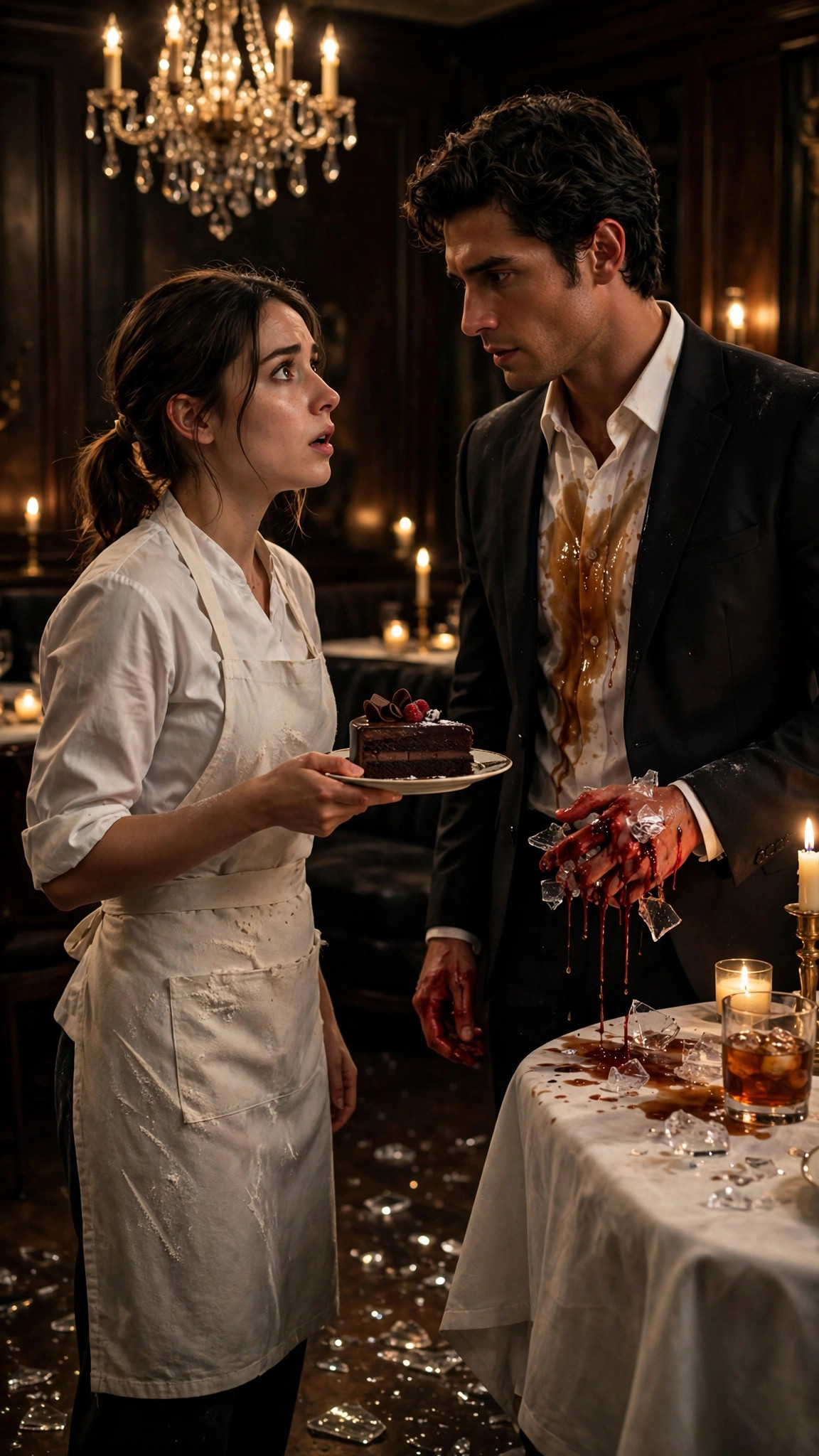
Story Genres: Mafia Romance

  • Chapter 6: What the Ledger Said

    Chapter 6: What the Ledger Said

    The next morning, the city woke up to the news.

    Vincent Castellano had been arrested at his home at dawn by federal agents, charged with arson, kidnapping, extortion, and conspiracy. His lieutenant, Dominic Voss, was still missing, but the FBI had his photograph on every screen in the city, and Agent Daniel Reyes told the cameras that it was only a matter of time.

    I watched it all from my hospital bed, with Sofia asleep in the chair beside me and Priya on the phone in the hallway, telling everyone in our kitchen that we were alive.

    At noon, Agent Reyes came to see me himself. He was a tall man in his forties with tired eyes and a notebook full of questions, and he sat beside my bed and asked me to tell him everything, from the beginning. I told him about the glass, and the claim, and Voss on the sidewalk, and the poisoned cake, and the brown bottle, and the fire. He wrote it all down, and when I finished, he closed his notebook and looked at me for a long moment.

    "Miss Williams," he said, "I have been building a case against Vincent Castellano for two years. I have had informants, wiretaps, bank records, all of it. But I never had the one thing I needed most, which was a witness who was willing to talk, and a paper trail that led straight to him. You gave me both. Anthony Russo's payment records, the ledger we found in the warehouse, the phone records from Voss's men, all of it connects. Castellano is going to prison for a very long time, and it is because of you."

    "I didn't do anything," I said. "I made a cake."

    "That is what everyone says," Reyes said, with a small smile. "But the cake is what started all of this, and the cake is what will finish it. The jury is going to love you, Miss Williams. A pastry chef who ran into a burning building to save her grandmother's recipes, and a sister who refused to be bought. Castellano never stood a chance against that."

    After he left, Marcus Hale came to see me. He looked older than he had a week ago, and his hands shook when he held his hat.

    "Camila," he said, "I came to tell you that the Imperial is closed until the kitchen is rebuilt. It will take at least two months. I have paid the staff for the full two months, out of my own pocket, because they did not ask for any of this. And I have come to tell you something else. Mr. Moretti bought my debt, as you know. He has forgiven half of it, and he has given me five years to pay the rest, at a rate I can actually afford. The Imperial is safe. It is mine again. And when it reopens, I want you back in your kitchen, if you will have me."

    He paused, and his voice grew rough.

    "And I want to say that I am sorry. I gambled away the restaurant you gave four years of your life to, and I put you and your sister in danger, and I will never forgive myself for that. You deserved better from me, Camila. You deserved a boss who protected you, not one who needed a mafia boss to do it for him."

    I took his hand, because he was crying now, and because he was a tired, foolish man, but he was not a cruel one.

    "Mr. Hale," I said, "you built the Imperial from nothing, the same way my grandmother built her bakery. Men who build things make mistakes. What matters is what they do after. And you came here to apologize, and you paid my staff, and you are going to rebuild. That is enough for me."

    He nodded, and he left, and I sat in my hospital bed thinking about how strange life was, that a week ago my biggest worry had been a collapsing soufflé, and now I was the reason a mafia boss was going to prison.

    That afternoon, Lorenzo came to see me, and he brought something with him. A folder, thick and heavy, with papers inside it. He set it on the bed beside me and opened it, and I saw that it was a ledger, old and handwritten, full of names and numbers and dates.

    "This is Castellano's ledger," he said. "My men found it in the warehouse, in a safe behind a false wall. It is everything. Every payment, every threat, every restaurant he took, every person he bought. It is the reason Agent Reyes was able to arrest him this morning. And there is something in it I think you should see."

    He turned the pages until he found the one he wanted, and he pointed to a line near the bottom. It was a payment, dated two years ago, for eight thousand dollars a month, to a name I recognized.

    Anthony Russo.

    And below it, another line, dated three weeks ago, for five hundred dollars, to a boy named Danny.

    And below that, a line that made my blood run cold. A payment of fifty thousand dollars, dated the day before the fire, to two men whose names I did not know, with a note beside it in Castellano's own handwriting: "Burn the kitchen. Take the girl."

    "That is what the ledger said," Lorenzo said quietly. "It said that Castellano was never going to stop. Not after the offer. Not after the fire. He was going to take Sofia, and then he was going to take you, and he was going to burn down everything you loved until you had nothing left but him. That is who he is. That is what I have been protecting you from."

    I looked at the ledger, at the neat handwriting and the cold numbers, and I felt the last piece of the puzzle click into place. It had never been about my cake. It had never been about Marcus Hale's debt, or the restaurant, or any of it. It had been about ownership. Castellano wanted to own me the way he owned everything else in his life, and Lorenzo had stood in his way.

    "Thank you," I said. "For showing me this. For telling me the truth."

    "I promised you the truth," he said. "In the café, I promised you an explanation and an apology, and I have given you both. But there is one more thing I owe you, Camila, and it is the most important one."

    He stood up then, and he reached into his jacket, and he took out a small piece of paper, folded in half. He handed it to me, and I opened it, and I saw that it was a document, written in his own handwriting, and signed at the bottom.

    It said, in simple words, that the claim he had made in the private dining room was ended. That I belonged to no one but myself. That he released me, freely and completely, and that no man in his family would ever speak of the claim again.

    "I made the claim to protect you," he said. "It did its job. You are safe now. Castellano is in prison. Voss is running. The restaurant is safe. Your sister is safe. You do not need my protection anymore, and you do not need my claim. So I am ending it. You are free, Camila Williams. Free to bake, free to live, free to love whoever you want, whenever you want. And I will not come near you again unless you ask me to."

    He put the paper in my hand, and he turned to leave, and for one terrible moment, I thought about letting him walk out of that hospital room and out of my life forever.

    And then I thought about Rosa, and her last words to me. A woman who can feed people will never be helpless. And I thought about Enzo, and the cake, and the smile I had seen on Lorenzo's face that first night, and the way he had carried me out of a burning building, and the way he had sat with Sofia until she fell asleep.

    "Wait," I said.

    He stopped, and he turned back, and he looked at me with those dark eyes, and I saw in them something I had never seen before. Not danger. Not possession. Hope.

    "Stay," I said. "Just for a little while. Sit with me. Tell me about Enzo. Tell me about your mother, and the kitchen in Palermo, and the cake. I want to know who you are, Lorenzo Moretti, not the stories people tell about you. I want to know the real you."

    He sat down beside my bed, slowly, like a man who had been given something he did not expect and did not want to break, and he began to talk. He told me about Palermo, and about his mother, and about Enzo stealing cake with his fingers. He told me about the night Enzo died, and about the seven years since, and about how he had forgotten what it felt like to be a person instead of a boss.

    And I listened, and Sofia slept in the chair beside me, and the city outside the window went on with its life, and for the first time since that night in the dining room, I did not feel afraid.

    I felt like I was finally seeing the man behind the claim. And I liked what I saw.

    The next morning, the doctors discharged me. My lungs were clear, my throat was sore but healing, and I was free to go home. Lorenzo drove me himself, which surprised me, because men like him usually had drivers, but he told me he wanted to drive, and I did not argue.

    On the way home, he took a detour, and we stopped outside the Imperial. The building was still standing, but the back of it was blackened, and the windows of the kitchen were boarded up. I stood on the sidewalk and looked at it, and I felt my throat tighten, not from the smoke, but from grief.

    "Come inside," Lorenzo said gently. "I want to show you something."

    We went in through the front, past the dining room, which was untouched, the white linen still on the tables, the crystal still shining. And then we went into the kitchen, and it was worse than I had imagined. The ovens were black. The shelves were gone. The floor was covered in ash and broken glass.

    But my locker was still standing, and my station, where I had worked every morning for four years, was still there, blackened but standing.

    "I am going to rebuild it," I said, and my voice was steady. "All of it. Better than before. New ovens, new shelves, a bigger pastry station. And I am going to put Rosa's photograph on the wall, right where everyone can see it, because she is the reason I am here."

    Lorenzo looked at me, and he smiled, a real smile, the kind that reached his eyes.

    "Then I will pay for it," he said. "All of it. Not as a claim. Not as a debt. As a gift. Because a kitchen that makes a cake like yours deserves to exist, and because I want to walk into this restaurant in two months and taste that cake again."

    I wanted to argue. I wanted to tell him I did not need his money. But I thought about Rosa, and about the bakery on 18th Street that had died because no one had helped, and I thought about the fact that accepting help was not the same as being owned.

    "All right," I said. "But on one condition. You let me bake for you first. Not in this kitchen. In yours. I want to make the cake in your home, in your kitchen, for your men, and I want you to taste it there, where you live, not where you work. Because I think that is the only way you will ever believe that I am choosing this, and that no one is making me."

    He looked at me for a long moment, and then he nodded.

    "Tomorrow night," he said. "My house. Bring your notebook."

    That night, I went home to my apartment, and Sofia was already there, safe and asleep in her own bed, and I stood in my kitchen and looked at Rosa's photograph on the wall, and I thought about everything that had happened in the last week.

    I thought about the glass exploding in Lorenzo's hand. I thought about the blood and the bourbon. I thought about the fire, and the warehouse, and the ledger, and the paper he had given me that ended the claim.

    And I thought about tomorrow night, when I would walk into his house with my grandmother's notebook under my arm, and I would bake a cake for a man who had once claimed me, and I would do it because I wanted to, not because I had to.

    For the first time in seven days, I was not afraid. I was curious. And curiosity, I was beginning to learn, was a much better feeling than fear.

    Before I went to bed, my phone rang. It was Agent Reyes.

    "Miss Williams," he said, "I thought you would want to know. We caught Dominic Voss tonight, trying to leave the city on a bus to Milwaukee. He is in custody, and he is talking. He has already told us about the fire, and the warehouse, and the payments. Castellano's case is closed. It is over."

    "Thank you, Agent Reyes," I said.

    "No, Miss Williams," he said. "Thank you. You did what two years of federal investigation could not do. You made Castellano angry enough to make a mistake. And that mistake is going to put him away for the rest of his life."

    After he hung up, I stood at my kitchen window and looked out at the city, at the lights and the streets, and I thought about how a week ago, I had been a pastry chef with a small life and a smaller apartment, and now I was the reason a mafia boss was in prison, and another mafia boss was rebuilding my kitchen, and tomorrow night I was going to bake a cake in his house.

    I did not know what would happen next. But for the first time, I was not afraid to find out.
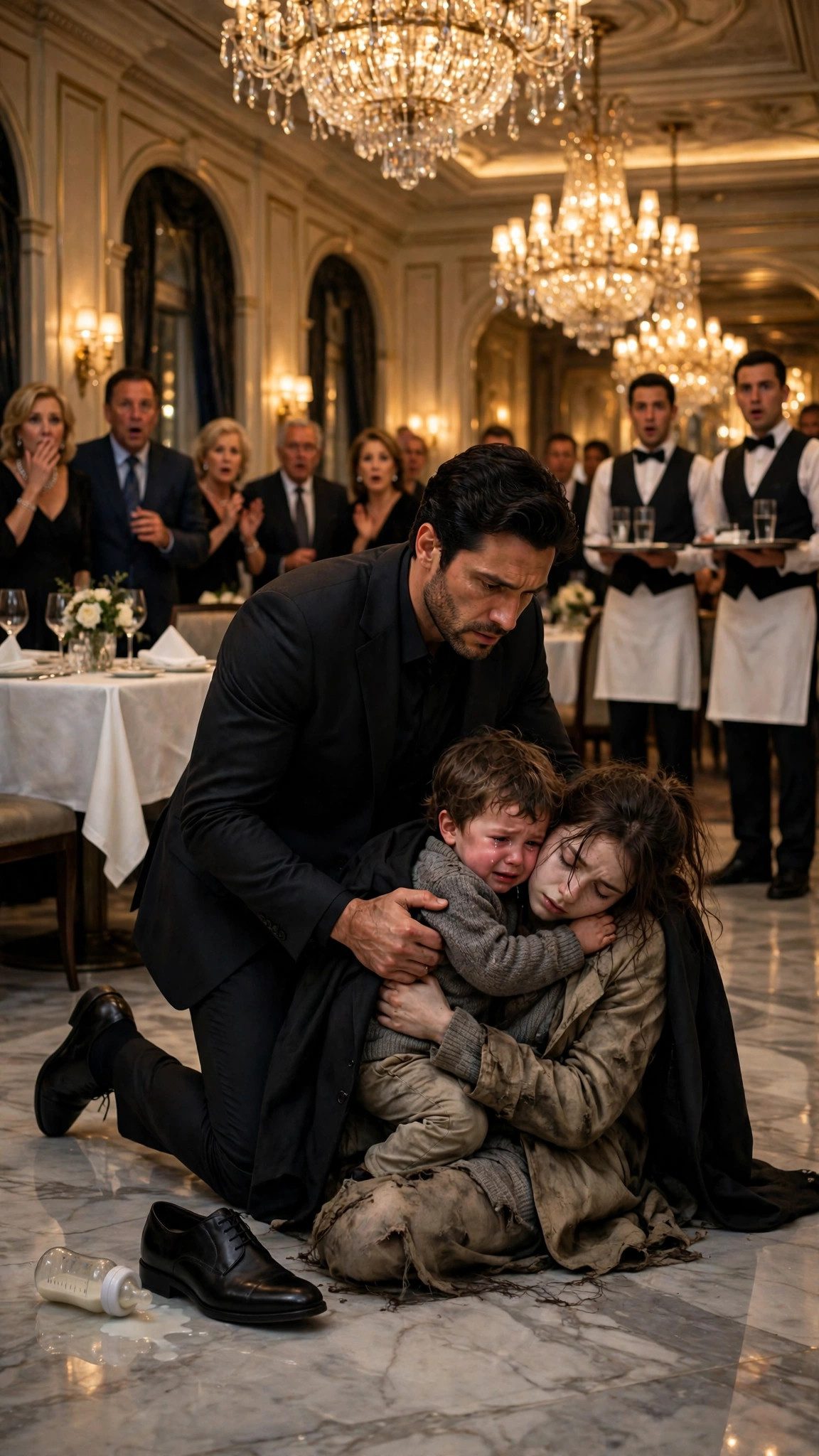
  • Chapter 5: The Fire

    Chapter 5: The Fire

    It happened on a Saturday night, the busiest night of the week at the Imperial.

    The dining room was full. The kitchen was running at full speed, orders flying, ovens roaring, Priya shouting times over the noise. I was in the middle of plating six desserts when the fire alarm went off.

    At first, no one moved. Fire alarms went off in restaurant kitchens all the time, usually because someone had burned something. But then I smelled it, smoke, thick and chemical, not the smell of burning food but the smell of something else, something wrong, and I looked toward the dry storage room and saw orange light flickering under the door.

    "Fire!" someone shouted. "Fire in the dry storage!"

    The kitchen emptied in seconds. Cooks, servers, dishwashers, all running for the back door. Priya grabbed my arm and pulled me toward the exit.

    "Camila, come on! The whole room is going up!"

    I ran with her, out into the alley behind the restaurant, where the night air was cold and the sky was full of smoke. The fire trucks were already coming. Someone had called them fast. Too fast, I thought later. As if someone had known the fire was coming.

    I stood in the alley with my staff, watching smoke pour out of the back of the building, and I thought about the brown bottle in the dry storage room, and about Anthony, and about the fact that the fire had started in the exact room where the bottle had been hidden.

    And then I thought about Rosa's notebook.

    It was in my locker in the kitchen, the one with the cracked leather cover and the pages stained with butter and chocolate. It was the only copy of her recipes in the world. It was the only thing I had left of her. And it was inside a burning building.

    I did not think. I turned around and ran back inside.

    "Camila!" Priya screamed behind me. "Camila, no!"

    The kitchen was full of smoke. I pulled my blouse up over my mouth and ran to my locker, coughing, my eyes streaming. The locker door was hot. I yanked it open and grabbed the notebook and Rosa's photograph from the wall, the one I had taped inside the locker door on my first day at the Imperial, and I turned to run back out.

    That was when I heard the crash, and the ceiling above the dry storage room came down in a shower of sparks, and a beam fell across the doorway between me and the exit.

    I was trapped.

    I stood there in the smoke, holding Rosa's notebook to my chest, and I thought about my sister, and about my grandmother, and about how stupid I had been to run into a burning building for a book. And then I heard my name.

    "Camila!"

    Lorenzo Moretti was standing in the doorway, silhouetted against the orange light, and he was not supposed to be there. He was supposed to be across the city, in his dark house, with his men. But he was there, in my burning kitchen, and he was coming toward me through the smoke.

    He did not hesitate. He did not shout. He simply walked through the falling sparks like they were rain, and he picked me up in his arms, notebook and all, and he carried me out through the back door, through the smoke and the heat, and he did not put me down until we were in the alley, in the cold night air, with the fire trucks screaming around us.

    I coughed until I thought my lungs would come out. He held me upright, one hand on my back, and he did not let go until I could breathe again.

    "You ran into a burning building for a notebook," he said. His voice was rough with smoke. "Do you have any idea what you just did?"

    "It was my grandmother's," I said, and my voice was hoarse. "It was the only copy. It was all I had left of her."

    He looked down at the notebook in my hands, at the cracked leather cover and the stained pages, and something in his face changed.

    "I understand," he said quietly. "I understand completely."

    A paramedic tried to put an oxygen mask on me. I pushed it away. I wanted to see the building. The fire was mostly in the back, in the dry storage and the kitchen, and the firefighters were already bringing it under control. But the kitchen, my kitchen, was black and ruined, and I knew it would be weeks before I could bake in it again, if ever.

    "How did you get here so fast?" I asked Lorenzo.

    "Marco called me," he said. "He has had men watching the restaurant all week, ever since we found the bottle. When the alarm went off, they called him, and he called me. I was three minutes away."

    He paused, and his face hardened.

    "And Camila, the fire did not start by accident. My men saw two men run out of the alley behind the dry storage room just before the alarm went off. They were carrying gasoline cans. We have their faces on camera. And one of them is the same man who drove the black sedan."

    "Voss," I said.

    "Voss," he agreed. "Castellano is done being patient. He tried to scare you. He tried to frame you. Now he is trying to burn down everything you have, so that when you have nothing left, you will come to him."

    I looked at the burning building, and I felt something rise up in me that I had never felt before. Not fear. Not even anger. Something colder and harder than both.

    "No," I said. "I will not."

    Lorenzo looked at me, and for the first time, I saw something in his eyes that looked like pride.

    "Good," he said. "Because I am done being patient too."

    At that moment, Marco came around the corner of the building with two of his men, and between them, stumbling, with his hands bound in front of him, was Anthony Russo.

    His suit was torn. His expensive watch was gone. His smooth face was gray with fear.

    "We found him in his office," Marco said. "He was burning papers in the wastebasket when we got there. The papers were payment records. Castellano has been paying him eight thousand dollars a month for two years. He let Voss's men into the kitchen tonight. He showed them where the dry storage room was. He is the one who planted the bottle."

    Anthony looked up at me, and for the first time, I saw his face without the smooth smile, and underneath it there was nothing but a frightened, tired man.

    "Camila," he said, his voice breaking, "I am sorry. I never wanted anyone to get hurt. I owe Castellano eighty thousand dollars. Gambling, the same as Hale. He said if I helped him, he would forgive the debt. He said no one would get hurt. He said it was just about the restaurant."

    "Just about the restaurant?" I said, and my voice was shaking with anger now, not fear. "Anthony, there are people inside that building who could have died. Priya could have died. I could have died. And you let them in. For money."

    "I know," he whispered. "I know. And I am sorry. I am so sorry."

    Lorenzo looked at him for a long moment, and I thought, for one terrible second, that he was going to do something I would never be able to forget. But instead, he turned to Marco and said, very quietly, "Take him to the police. Give them the payment records, the bottle, and Danny's statement. Let the law deal with him. I am not going to become Castellano to beat Castellano."

    Marco nodded, and his men led Anthony away, and I stood there in the alley, watching the man who had smiled at me every day for four years disappear into a police car, and I felt something I had not expected.

    I felt pity for him. And I felt, for the first time since that night in the dining room, that I was not alone in this. Lorenzo Moretti was not just protecting me. He was protecting everyone, and he was doing it without becoming the monster everyone said he was.

    My phone rang then. It was a number I did not know, and my hands were shaking so hard I almost dropped it. I answered it, and a voice I had never heard before said, very calmly, "Miss Williams. This is Kendall College security. Your sister Sofia did not come home tonight. Her roommate says two men in suits came to the school this afternoon and told her that her sister had sent them to pick her up."

    The world stopped. The fire, the smoke, the sirens, all of it went silent.

    "Where is she?" I whispered.

    "We don't know," the voice said. "Campus police are looking. I am sorry, Miss Williams. We thought you should know."

    I dropped the phone. Lorenzo caught it before it hit the ground, and he put it to his own ear, and he listened, and his face went absolutely still, the way a lake goes still before a storm.

    "Marco," he said, and Marco was suddenly there, as if he had been waiting. "Sofia Williams. Kendall College. Two men in suits. Find her. Now. Every man we have. Every street, every camera, every contact. I want her found tonight."

    He turned back to me, and he took my face in his hands, gently, the way he had touched my cheek that first night, and he looked into my eyes.

    "Camila," he said, "listen to me. I am going to find your sister. I swear it on my brother's name. Castellano took her to make you come to him. He will not hurt her, because she is worth more to him alive than dead, and because he knows that if he hurts her, I will burn his whole world down. Do you understand me?"

    I nodded, because I could not speak.

    "Good," he said. "Now go with Priya. Go to the hospital and let them check your lungs. Do not argue with me. I will call you the moment I know anything."

    I went with Priya, because I had no strength left to argue. At the hospital, they gave me oxygen and checked my breathing and told me I was lucky. I sat on a white bed in a white room, holding Rosa's notebook in my lap, and I waited.

    At two in the morning, my phone rang. It was Lorenzo.

    "We found her," he said. "She is safe. She is with my men, and she is unharmed. Voss had her in a warehouse on the south side. He was going to call you in the morning and tell you to come alone. My men took the warehouse an hour ago. Voss got away, but Sofia is safe, and she is asking for you."

    I cried then, harder than I had cried since Rosa died, and Priya held me, and I did not care who saw.

    An hour later, Sofia walked into my hospital room, and I held her so tightly she laughed and told me I was squeezing the air out of her, and she was alive, and she was safe, and nothing else mattered.

    "Sofia," I whispered, "I am so sorry. I am so sorry I brought this into your life."

    "Cam," she said, "it is not your fault. And you know what? The men who brought me here, they were nice to me. One of them gave me his jacket because I was cold. And the big one, the one with the dark eyes, he stayed with me the whole time, and he told me you make the best chocolate cake in Chicago, and that he was going to make sure no one ever hurt us again."

    She looked at me then, with her nineteen-year-old eyes that saw more than I gave her credit for.

    "Cam," she said, "is he the one? The one from the restaurant? The one who said you belong to him?"

    I looked at my sister, at her brave face and her shaking hands, and I told her the truth.

    "I don't know yet," I said. "But tonight, he ran into a burning building to carry me out, and he found you when I couldn't. And I think, Sofia, that I think I might be starting to understand him."

    Later, after Sofia had fallen asleep in the chair beside my bed, the door opened quietly, and Lorenzo came in. He was still in his smoke-stained suit, and there was a cut on his forehead I had not noticed before, but he looked at me the way he had looked at me in the café, like a person, not a claim.

    "How is she?" he asked, nodding toward Sofia.

    "Sleeping," I said. "She is safe. That is all that matters."

    He sat down in the chair on the other side of the bed, and for a while, neither of us spoke. The hospital was quiet. The city outside the window was dark.

    "What happens now?" I asked him finally.

    "Now," he said, "we finish this. Anthony's payment records, Danny's statement, the bottle, the cameras from the alley, all of it goes to the FBI in the morning. Agent Reyes has been building a case against Castellano for two years, and tonight he got everything he needed. By this time tomorrow, Castellano will be in custody, and Voss will be running, and neither of them will ever come near you or your sister again."

    He paused, and he looked down at his hands, at the thin pink scar across his palm where the glass had cut him that first night.

    "And after that," he said, "whatever you want to happen, happens. The claim is finished, Camila. I made it to protect you, and it did its job. You are free. You can go back to your kitchen, and your cakes, and your life, and you will never see me again if that is what you want."

    I looked at him for a long time, at this man who had carried me out of a fire and found my sister in the dark, and I thought about Rosa's words on her last night. A woman who can feed people will never be helpless. And I thought about something else, something Rosa had never said but that I understood now, sitting in a hospital bed with my sister asleep beside me.

    A woman who can feed people is never helpless. But a woman who lets someone protect her is not weak either.

    "I don't know what I want yet," I said honestly. "But I know what I don't want. I don't want to go back to being afraid. And I don't want you to disappear. Not yet."

    He smiled then. Not the small, uncertain smile from that first night. A real smile, slow and tired and true.

    "Not yet," he repeated, and for the first time, the words sounded like a promise instead of a sentence.

    Outside the hospital window, the city was dark and quiet, and somewhere in it, Vincent Castellano was learning that his warehouse had been taken and his men had been arrested, and that Lorenzo Moretti was no longer waiting.

    And I was learning something too. I was learning that the man who had claimed me in front of a room full of strangers had not been claiming a possession.

    He had been making a promise. And tonight, he had kept it.

  • Chapter 4: Sugar and Smoke

    Chapter 4: Sugar and Smoke

    It happened on a Thursday, three days after Voss had spoken to me on the sidewalk.

    The Imperial was hosting a private dinner for the Moretti family that night, twelve men in the private dining room, and Lorenzo was coming himself. I knew because Anthony told me, with a smile that was just a little too bright, and because the kitchen had been ordered to prepare the full menu, including three of my Midnight Chocolate Cakes.

    I worked all afternoon, and everything was perfect. The cakes were perfect. The ganache was smooth. The espresso was strong. The salt was exactly right. I plated the desserts myself, the way I always did for important nights, and I watched the servers carry them out through the kitchen door.

    Twenty minutes later, Anthony came into my kitchen with his face white.

    "Camila," he said, "one of the men is sick. He ate the cake and he started choking, and he says his throat is burning. They are saying the cake was poisoned."

    The room tilted. "That is impossible," I said. "I made those cakes myself. I tasted the ganache. There was nothing wrong with them."

    "They don't believe you," Anthony said. "One of Moretti's men is in the dining room right now saying you tried to poison them. And Mr. Moretti is on his way."

    I walked into the dining room on legs that did not feel like my own. Twelve men in black suits were standing around the table, and one of them, a young man with dark hair, was sitting with his hand on his throat, his face red, coughing. The plates were still on the table. Three of them were empty. The fourth had a single bite taken out of it.

    Lorenzo Moretti stood at the head of the table. He was not looking at the sick man. He was looking at me. His face was calm, and that calm was more frightening than any anger I had ever seen.

    "Miss Williams," he said quietly. "Did you put something in my men's food?"

    "No," I said. My voice was steady, which surprised me, because everything else about me was shaking. "I made those cakes with my own hands this afternoon. I tasted every part of them. There was nothing in them but chocolate, butter, eggs, sugar, espresso, and salt. I swear it on my grandmother's grave."

    He studied me for a long moment. Then he turned to the young man who was coughing. "Tommy," he said. "Tell me exactly what happened."

    Tommy took a sip of water and cleared his throat. "I ate the cake, boss. The first bite was fine. The second bite, my throat started to burn. Like acid. I spit it out. It was only the one plate, boss. The others were fine."

    Lorenzo looked down at the plates. Three empty. One with a single bite. He picked up the plate with the bite taken out of it and brought it close to his face. He smelled it. Then he set it down and looked at the fork beside it.

    "Whose fork is this?" he asked.

    The room went silent.

    "That plate was not served from your kitchen," Lorenzo said, turning back to me. "Look at it, Camila. The cake on that plate is not your cake. Your cake has three layers. That one has two. Your frosting is dark. That frosting is lighter. Someone took your cake off that plate and replaced it with another one."

    My knees went weak with relief, and then with anger, because I understood what had just happened. Someone had tried to poison one of Lorenzo Moretti's men, and they had tried to make it look like I did it.

    "Who served this table tonight?" Lorenzo asked, his voice very quiet now.

    Anthony stepped forward. "I did, sir. I mean, the servers did. I supervised."

    "Which server carried the desserts?"

    "A boy named Danny," Anthony said. "He's new. He left an hour ago. He said he felt sick."

    Lorenzo looked at Anthony for a long time, and I saw something pass between them that I did not understand. Then he turned to Marco, who was standing by the door.

    "Find the boy," Lorenzo said. "And find out who paid him."

    He walked over to me then, slowly, and stopped in front of me, close enough that I could see the bandage was gone from his hand and the cut across his palm was healing into a thin pink line.

    "You did not do this," he said. It was not a question.

    "No," I said.

    "I know," he said. "Your cake is the only honest thing I have tasted in seven years. I would know if it had been touched."

    He turned to leave, and then he stopped, and he looked back at me, and for the first time since that first night, he spoke to me like a person instead of a claim.

    "Come with me," he said. "Not as my property. As my guest. I owe you an explanation, and I owe you an apology, and I have waited three days to give you both."

    I should have said no. I should have stayed in my kitchen, where I was safe, where I belonged. But I thought about the poisoned cake, and about Voss on the sidewalk, and about Sofia walking home alone, and I thought about the fact that Lorenzo Moretti was the only person in this whole mess who had ever looked at me and seen a person instead of a thing to own.

    So I took off my apron, and I followed him out of the dining room.

    He took me to a small café on the other side of the city, a quiet place with old wooden tables and a window that looked out over the river. He ordered coffee for both of us, and when it came, he sat in silence for a long time, turning the cup in his hands.

    "My brother's name was Enzo," he said finally. "He was twenty-four when he died. He was younger than me by fourteen years, and he was the only person in my family who ever made me laugh. He used to steal cake from our mother's kitchen when he was a boy, and he would come and find me with chocolate on his chin, and he would say it was the best thing in the world."

    He paused, and his voice grew rough.

    "Seven years ago, I was supposed to meet a man at a warehouse on the docks. Enzo found out and went in my place, because he wanted to prove he could handle it. Castellano's men were waiting. They were waiting for me, but they took him instead. He died in an ambulance, and the last thing he said was my name. And after that, I stopped smiling, because smiling felt like forgetting him."

    He looked up at me then, and his dark eyes were open in a way I had never seen them.

    "Your cake tastes like the one my mother used to make," he said. "The espresso, the salt, the way it melts on the tongue. I took one bite in that restaurant, and for one second, I was not a man who had lost his brother. I was a boy in a kitchen in Palermo, and my mother was alive, and Enzo was stealing cake with his fingers. And then you said 'not yet,' and I realized you were unclaimed, and all I could think was that Castellano would take you the way he took Enzo, and I would lose the only good thing I had tasted in seven years."

    He stopped, and he looked down at his hands.

    "I claimed you in front of my men because it was the only way I knew to protect you quickly," he said. "It was wrong. I know it was wrong. You are not property. You are a woman who makes cakes that remind a broken man of his family. And I am sorry, Camila. I am sorry I frightened you. I am sorry I bled on your restaurant floor. And I am sorry that my protection has brought danger to your door instead of keeping it away."

    I sat there for a long time, looking at this man, this dangerous, feared, powerful man, sitting across from me in a little café with a cup of coffee going cold between his hands, and I felt something I had not expected to feel.

    I felt sorry for him.

    "Mr. Moretti," I said carefully, "I don't know what to say to you. You frightened me. You did. But you also paid off Marcus Hale's debt, didn't you? And you put men outside my sister's school. And tonight, when someone tried to frame me for poisoning your men, you were the only person in that room who looked at the cake instead of at me."

    He nodded slowly.

    "So here is what I am going to say," I continued. "I don't belong to you. I belong to myself, and to my sister, and to my grandmother's memory. But I will let you protect me, if that is what you are offering, because someone is trying to hurt the people I love, and I cannot fight Vincent Castellano alone. And in return, I will make you that cake whenever you want it, because if it reminds you of your brother, then it is the most important cake I have ever made."

    Something moved in his face then. Not a smile, not yet. But something softer, something like relief.

    "That is more than fair," he said quietly. "Thank you, Camila."

    We drove back to the Imperial in silence, and when we got there, Marco was waiting for us in the kitchen with news. They had found the boy, Danny, hiding in a motel on the south side. He had been paid five hundred dollars by a man he did not know to swap one plate of cake for another, a cake that had been laced with a chemical that burned the throat. And the man who had paid him had driven a black sedan.

    "And the man who gave the order?" Lorenzo asked.

    "Danny never saw him," Marco said. "But he heard a name on the phone. Voss."

    Lorenzo nodded slowly. "Then Castellano is moving faster than I thought. And he has someone inside this restaurant, because Danny could not have gotten into this kitchen alone."

    The next morning, I arrived at the Imperial at four, earlier than usual, because I could not sleep and because I wanted to look at my kitchen with fresh eyes. I went through everything slowly, the way Rosa had taught me to check a new kitchen: the shelves, the dry storage, the walk-in, the spice rack, the locked cabinet where I kept the vanilla and the good chocolate.

    The dry storage door was unlocked. I always locked it. I was certain of that, because I had locked it myself the night before, after the dinner service, and I remembered turning the key twice.

    Inside, everything looked the same, except for one thing. Behind the big bottle of vanilla extract, pushed back against the wall where no one would notice it, there was a small brown glass bottle with no label. I picked it up carefully with a towel. It was half full of a clear liquid, and it smelled sharp and chemical, like the inside of a swimming pool.

    I did not touch it again. I put the towel down, I took a photograph of it with my phone, and I called Marco's number, the one he had given me the night before, written on a card in his neat, old-fashioned handwriting.

    He arrived in twenty minutes with two of his men, and he took one look at the bottle and his face went very still.

    "That is the same chemical," he said quietly. "The one in the cake. Someone has been keeping it here, in your kitchen, where you would be blamed if anyone found it."

    "Who has a key to this room?" I asked.

    "Three people," Marco said. "You. Mr. Hale. And the general manager."

    Anthony.

    I felt sick. Not because I was surprised, but because I had known, somewhere in the back of my mind, ever since the afternoon I had seen him hang up the phone so fast. I had known, and I had not wanted to believe it.

    "Don't confront him," Marco said. "Not yet. Let us watch him. Let him think we found nothing. If he is Castellano's man, he will make another move, and when he does, we will be ready."

    "And if he moves against Sofia?" I asked.

    "He won't get the chance," Marco said. "There are two men outside her school now, and two more outside your building. And Camila, I want you to know something. In thirty years with this family, I have seen a great many things. I have never seen Lorenzo Moretti sit in a café and tell a woman about his brother. Whatever you are to him, it is not a claim anymore. It is something else. And that something else is the reason Castellano is so afraid of you."

    I did not know what to say to that. So I went back to my ovens, and I started the day's cakes, and I tried not to think about the brown bottle, or about Anthony, or about the man at the bar who had watched me through the glass.

    I did not say anything. Not yet. But I knew, and Lorenzo knew, and Marco knew, that the danger was not only outside the Imperial anymore.

    It was inside, wearing a manager's suit, smiling a smile that never reached his eyes.

    That night, I stood in my kitchen long after everyone else had gone home, and I looked at the place where the brown bottle had been hidden, and I made myself a promise. I would not run. I would not hide. Rosa had told me on her last night that a woman who could feed people would never be helpless, and I intended to prove her right. Whatever Anthony had done, whatever Castellano was planning, I would face it in my own kitchen, with my own hands, and I would not let anyone take that from me.

  • Chapter 3: The Claim

    Chapter 3: The Claim

    The next morning, I arrived at the Imperial at five as always, and the first thing I noticed was the black car parked across the street. It was a sedan with tinted windows, and it had not been there yesterday. I told myself it was nothing. Rich people parked black cars on Michigan Avenue all the time.

    By seven, I had forgotten about it. By noon, I had forgotten about the whole night, or at least I had buried it under work, the way I buried everything I did not know how to feel. Lunch service was busy. A bride came in to taste wedding cakes. Priya burned a tray of macarons and blamed the oven, which was fair, because the oven was old and spiteful.

    At three in the afternoon, Anthony came into my kitchen and closed the door behind him. That was unusual. Anthony never closed doors. He liked to be seen, and he liked to see everything.

    "Camila," he said, "we need to talk."

    "About what?" I asked. My hands were in a bowl of ganache.

    "About last night. About Mr. Moretti. About what you are going to do."

    "I am not going to do anything," I said. "I am going to bake, the way I always do."

    Anthony laughed, but there was no humor in it. "Camila, you don't understand. A man like Lorenzo Moretti does not say the things he said last night and then forget about them. He is going to come back. And when he does, you need to be ready."

    "Ready for what?" I asked.

    He did not answer. He looked at the door, then back at me, and lowered his voice. "Just be careful. That is all I am saying. Be careful, and do not go anywhere alone. And if anyone you do not know asks you questions about the restaurant, or about Mr. Hale, or about me, you tell me first. Do you understand?"

    Before I could answer, the kitchen door opened and Marcus Hale himself walked in. Marcus Hale was fifty-two years old, tall and heavy, with gray hair and a face that had once been handsome and was now mostly tired. He owned the Imperial. He had built it from nothing, the way Rosa had built her bakery, and he was proud of it in a way that made him easy to like and hard to work for.

    "Camila," he said, "can I have a word? In my office."

    I followed him down the hall to his small office, past the wine cellar and the dry storage, and he closed the door and gestured for me to sit. He did not sit. He stood behind his desk with his hands braced on it, and he looked at me the way a man looks at someone he is about to disappoint.

    "Last night," he said, "I was not in the dining room when Mr. Moretti spoke to you. I was in the bar. I heard about it afterward, from Anthony. And I need you to know something, Camila, because you deserve to know it before anyone else tells you."

    He paused, and his hands tightened on the desk.

    "I owe Vincent Castellano four hundred thousand dollars," he said. "Gambling. I have been in debt to him for two years. I have paid the interest every month, but the principal has not moved, and last week, Castellano sent a man to tell me that he was done waiting. He wants the Imperial. He wants the building, the name, the kitchen, all of it. And he told me, very clearly, that if I do not sign the papers by the end of the month, he will take it anyway, and he will take something else besides."

    "What else?" I asked, though I already knew.

    "You," Marcus said quietly. "He knows who you are, Camila. Everyone in this city knows who you are. Your cake is the reason people come here. Castellano wants the best pastry chef in Chicago working in his restaurant, and he is not a man who asks politely."

    My hands went cold. "How long have you known this?"

    "Two weeks," he said. "I was going to tell you. I was trying to find a way out. I went to a bank. I went to two banks. No one will lend me the money, not with the restaurant as it is. And then last night, Lorenzo Moretti walked in and claimed you in front of his men, and I thought, God help me, I thought that maybe, just maybe, that was the way out."

    "You thought his claim would protect me," I said.

    "I thought his claim would protect all of us," Marcus said. "Castellano will not touch a woman Lorenzo Moretti has claimed in public. It would be war. And Castellano does not want a war with the Morettis. Not yet."

    I stood up. My legs felt unsteady. "Mr. Hale, with respect, I did not agree to be anyone's protection. I did not agree to be claimed. I am a pastry chef. I make cakes. That is all I am."

    "I know," he said. "And I am sorry. I am sorry I put you in this position. But Camila, you need to understand something. Castellano's man has been coming here for weeks. He sits at the bar and watches the kitchen door. He watches you. And last night, when Moretti claimed you, that man was still sitting there. He saw all of it. He went back to Castellano and told him. So whatever happens next, it is already happening."

    I left his office without another word and went back to my kitchen, and I worked until my hands ached, because work was the only thing I knew how to do when the world stopped making sense.

    At six that evening, I was walking home from the restaurant, and I saw the black car again. This time it was parked on my street, two houses down from my building. I stopped walking. My heart hammered. The car door opened, and a man got out.

    He was tall, in his forties, with cold eyes and a neat, expensive suit. He did not look dangerous the way Lorenzo looked dangerous. He looked dangerous the way a snake looks dangerous, smooth and patient and certain.

    "Miss Williams," he said, smiling. "Dominic Voss. I work for Mr. Castellano. I was hoping we could have a short conversation."

    "I have nothing to say to you," I said.

    "That is a shame," he said, "because Mr. Castellano has a great deal to say to you. He admires your work, Miss Williams. He has eaten your cake. He believes you are wasted in this little restaurant, working for a man who cannot pay his debts. He would like to offer you a position. His new restaurant, opening next month. Your own kitchen. Triple your salary. And your sister's tuition, paid in full, for as long as she is in school."

    My blood went cold. He knew about Sofia. He knew about her tuition. He had done his homework.

    "Tell Mr. Castellano I am not interested," I said.

    Voss's smile did not change. "Miss Williams, I think you misunderstand. This was not an offer. This was a courtesy. Mr. Castellano does not like to be refused. And I should tell you, in the interest of honesty, that your sister walks home from school alone on Tuesdays and Thursdays. It would be a shame if something happened to her on one of those walks."

    He said it the way a man says something about the weather. He turned, got back into his car, and drove away, and I stood on the sidewalk with my hands shaking so hard I could barely get my key into my front door.

    I called Sofia the moment I was inside. She answered on the second ring, laughing about something her classmate had said, and I told her to listen to me very carefully. I told her not to walk home alone anymore, not on any day, not for any reason. I told her to take a cab, to stay with her friends, to call me the moment she got home every night.

    "Cam, what is going on?" she asked, and her voice had gone small.

    "I will tell you everything soon," I said. "I promise. But right now, I need you to trust me. Please."

    "Okay," she whispered. "Okay, Cam. I trust you."

    After she hung up, I sat on my kitchen floor with my back against the cabinets, and I cried for the first time since Rosa died. Not because I was afraid, although I was. Because I was angry. I was angry that a man I had never met had decided he owned my sister's safety. I was angry that Marcus Hale had gambled away the restaurant I had given four years of my life to. And I was angry at Lorenzo Moretti, because his claim had not protected me at all. It had painted a target on me.

    Or so I thought.

    I did not know that at that very moment, in a dark office across the city, Lorenzo Moretti was sitting across a desk from Marcus Hale, and Marcus Hale was crying.

    Lorenzo had gone to the Imperial that afternoon, not to see me, but to see the owner. He had walked into Marcus's office without knocking, and he had put a folder on the desk, and he had said, "Four hundred thousand dollars. I know about the debt, Mr. Hale. I know about Castellano. And I know about the man at the bar."

    Marcus had stared at him. "How do you know that?"

    "Because Dominic Voss was sitting at the bar last night, watching your pastry chef through the glass, and I have had men watching him for two weeks," Lorenzo said. "I am buying your debt, Mr. Hale. As of tonight, you owe the money to me, not to Castellano. You will pay me back at a rate you can afford, over five years, and Castellano will never come near this restaurant again. Do you understand?"

    "Why?" Marcus whispered. "Why would you do that?"

    Lorenzo stood up and walked to the door. Before he left, he turned back.

    "Because last night, your pastry chef made me a cake," he said, "and for the first time in seven years, I tasted something that reminded me of being alive. And because a man who cannot protect the thing that brought him back to life does not deserve to have it."

    He left, and Marcus Hale sat alone in his office for a long time, with his face in his hands.

    I did not know any of this yet. All I knew was that when I woke the next morning, the black car was gone from my street, and there was a different car there instead, a dark SUV with two men inside it who nodded at me politely when I walked past, and one of them said, "Good morning, Miss Williams. Mr. Moretti asked us to make sure you got to work safely."

    I stopped walking. "Did he now."

    "Yes, ma'am," the man said. "And your sister, too. There is a car outside her school from now on. She will not walk alone."

    I should have been angry. I should have told them to leave. But I thought about Voss's voice, smooth and certain, talking about Sofia's walks home, and I thought about the way he had smiled, and I did something I had never done before in my life.

    I said thank you.

    When I got to the kitchen that morning, Priya was already there, and she took one look at my face and pulled me into the dry storage room, away from everyone else.

    "Tell me," she said.

    I told her about Voss. I told her about Sofia, and the tuition, and the threat that had not quite been a threat. Priya listened with her arms crossed, and when I finished, she swore quietly in Hindi, which she only did when she was truly angry.

    "Camila, you need to understand something," she said. "I have worked in restaurants for ten years, and I know how this works. Men like Castellano do not send their best man to make a polite offer. They send him to scare you. And the fact that he knew about Sofia's schedule means someone inside this restaurant has been telling him things. Someone who knows your life. Someone who knows when Sofia walks home."

    "Who?" I asked.

    Priya shook her head. "I don't know. But think about it. Who in this building knows about Sofia's tuition? Who knows her schedule? Who knew you would be alone on the sidewalk last night?"

    I thought about it all day while I worked. The kitchen staff knew about Sofia, of course. Everyone knew I paid her tuition; I had never hidden it. But her schedule, her walks home, the exact days, that was something else. That was the kind of detail only someone close would know, or someone who had been watching very carefully.

    That afternoon, I went to the office to ask Marcus a question about a delivery, and I found Anthony standing by the desk with his phone to his ear, speaking in a low, hurried voice. When he saw me, he went pale and ended the call so fast his thumb slipped on the screen.

    "Who was that?" I asked.

    "No one," he said, too quickly. "A supplier. About the cream."

    He smiled then, his usual smooth smile, but it did not reach his eyes, and for the first time, I noticed how often Anthony smiled without ever meaning it. I noticed, too, that his suit was new, and his watch was expensive, far more expensive than a restaurant manager's watch should have been. I had never paid attention to those things before. I paid attention now.

    "Anthony," I said slowly, "have you been talking to someone about me? About Sofia?"

    "Of course not," he said. "Camila, what are you saying?"

    "I don't know what I'm saying," I said. "But something is wrong in this restaurant, and I think you know what it is."

    He looked at me for a long moment, and for a second, I thought I saw something in his face that looked like shame. Then it was gone, and the smooth smile was back.

    "You are imagining things," he said. "You have had a frightening few days. Go home early tonight. Rest. Let me handle the restaurant."

    I did not go home early. I stayed until the last cake was in the oven and the kitchen was clean, and all the while I kept thinking about Priya's words, and about Anthony's new watch, and about the way he had hung up the phone so fast.

    And then I went to work, and I baked, and I waited for whatever was coming next, because I knew, with a certainty that sat in my chest like a stone, that Dominic Voss was not finished with me, and that Vincent Castellano was not a man who took no for an answer, and that the claim Lorenzo Moretti had made in front of a room full of men was about to be tested.

  • Chapter 7: Home

    Chapter 7: Home

    Six months later, on a Sunday morning in May, the Marlowe Room opened its doors at eleven o'clock, and the first person through them was an old woman in a thin coat, carrying a plastic bag with everything she owned in it, and she stood in the doorway looking at the white tablecloths and the crystal chandeliers with the expression of a person who has walked into the wrong place.

    Maya Carter saw her from across the dining room, and she crossed the floor in her black manager's suit, and she took the old woman's hand, and she said, "Welcome to the Marlowe Room. My name is Maya. Come and sit down. The soup is hot, and there's plenty of it."

    That was how it worked now, every Sunday. Rosa's Table, they called it, after Ethan's mother, whose photograph hung on the wall by the entrance in a silver frame: Rosa Hayes, young and beautiful in her black uniform with the white apron, smiling at the camera the way she used to smile at the guests. Underneath the photograph was a small brass plaque, and on it were the words she had said to her son on the last day of her life, the words Ethan had finally understood: "A person's worth is measured by how they treat the people who cannot fight back."

    The restaurant had changed in six months, and so had everything else. Maya ran the Marlowe Room now, and she ran it the way Mr. Marlowe had run it, with the tip pool counted in the open, in front of everyone, and the staff meal served every night, and the doors open to anyone who needed a hot meal on a Sunday. Rosa, the waitress who had kept the notebook, was the assistant manager now, and she kept the books in a ledger so clean that even Marco Bellini, who had seen every kind of cooked book in Chicago, said it was the most honest set of accounts he had ever looked at. Old Benito had come back from retirement to run the kitchen three days a week, and he had wept when he walked through the doors, and he had hugged Maya so hard she thought her ribs would crack, and he had said, "I knew this place would come back to life. I knew it the day that boy bought it."

    Ethan had changed too. The bullet wound in his shoulder had healed, leaving a scar he touched sometimes without thinking, the way a man touches a wedding ring. He had started the long, slow work of taking the Hayes family legitimate: selling the gambling rooms, closing the loan-sharking operation, turning the trucking routes into a real company with real drivers and real paychecks and real benefits. It was not easy work. There were men in the family who had never done an honest day's work in their lives, and they grumbled, and some of them left, and Uncle Sal had told him, more than once, that he was ruining everything his father had built. But Ethan had looked at the numbers, and the numbers said the legitimate businesses made more money than the illegal ones ever had, and they made it without funerals, and that was enough.

    And every night, when the dinner service was over and the last guest had gone, Ethan came to the Marlowe Room, and he sat at the corner table, and Maya came and sat across from him, and they talked about the day, about the restaurant, about Leo, about the future, and it was the best part of both their days, every single day.

    Leo was thriving. He had grown two inches in six months, and he had gained weight, and his cheeks were round now, and his laugh was loud, and he had a room upstairs with a bed and a desk and a window that looked out over Michigan Avenue, and he had a shelf full of books, and a toy truck, and a drawing of his family that he had taped to the wall: a woman with dark hair, a little boy, and a tall man in a black suit, all of them holding hands. Underneath the drawing, in wobbly letters, he had written, "MY FAMILY."

    He called Ethan "Mr. Ethan" for the first month. Then, one night at dinner, when Ethan was cutting up Leo's chicken for him, Leo had looked up and said, "Can I call you Dad?"

    Ethan had gone very still. His knife had stopped in midair. And then he had put the knife down, very carefully, and he had looked at Leo, and he had said, in a voice that was not steady at all, "I would like that very much, Leo. I would like that more than anything in the world."

    Maya had cried. Leo had climbed into Ethan's lap and hugged him around the neck, and Ethan had held him, and for a moment, the most feared man in Chicago had sat in his own restaurant holding a three-year-old boy, and his eyes had been wet, and he had not cared who saw.

    In the spring, Leo started preschool, a small school two blocks from the restaurant, and on his first day, Maya walked him there holding his hand, and Ethan walked on his other side, and Leo wore his new backpack and carried his lunchbox like it was made of gold. When they reached the school gates, Leo turned around and waved, and Maya waved back, and Ethan waved back, and then they stood there together watching him walk inside, and Maya leaned against Ethan's shoulder, and she said, "He's growing up."

    "He is," Ethan said. "And he's going to grow up knowing he is loved. That's the only thing that matters."

    That night, after the dinner service was over and the last guest had gone and the staff had gone home, Ethan asked Maya to stay behind. The dining room was empty, the chandeliers dimmed, the marble floor gleaming in the low light, and Leo was asleep upstairs in his room, and it was just the two of them, standing in the middle of the room where, six months earlier, Maya had collapsed on the floor and Ethan had knelt beside her.

    Ethan took her hands in his, and he looked at her, and for a moment he seemed almost nervous, this man who had faced down rival families and federal agents and gunmen without flinching, and Maya smiled, because she had never seen him nervous before, and it made her love him even more.

    "Maya Carter," he said, "six months ago, you walked into my restaurant with nothing but twelve dollars and a little boy, and you fell on my floor, and I knelt beside you, and my life changed. I have spent fourteen years being the most feared man in Chicago. I don't want to be that man anymore. I want to be the man who comes home to you every night. I want to be Leo's father. I want to grow old with you in this restaurant, feeding people who are hungry, and I want to do it for the rest of my life."

    And then he went down on one knee, right there on the marble floor, in the same spot where he had knelt beside her that first night, and he took a small velvet box out of his pocket, and inside it was a ring, a simple gold band with a single diamond, the ring his mother had worn, the ring Rosa Hayes had carried trays in for twenty-three years, and he held it up, and he said, "Will you marry me?"

    Maya looked down at him, kneeling on the floor of the Marlowe Room, and she thought about the morning she woke up on a cot in a church basement, and the twelve dollars and forty cents, and the bus rides she could not afford to waste, and the bottle rolling across the marble floor, and the man who had picked up her son and held him like something precious, and she said, "Yes. Yes, Ethan. A thousand times, yes."

    Leo came down the stairs in his pajamas, rubbing his eyes, and said, "Mama, why is Mr. Ethan on the floor?"

    "Because he's asking me to marry him, baby," Maya said.

    "Say yes, Mama," Leo said, very seriously. "Say yes, so he can be my dad forever."

    "I already did," Maya said, and she laughed, and she cried, and Ethan stood up and picked Leo up in his arms, and the three of them stood together in the middle of the empty dining room, under the chandeliers, and it felt, to all of them, like coming home.

    The wedding was in June, in the garden behind the restaurant, under the old oak tree that Mr. Marlowe had planted forty years earlier. Maya wore a simple white dress, the kind of dress she had always dreamed of, and her mother came, and Sister Agnes came, and Rosa and Benito and the whole staff of the Marlowe Room came, and Marco Bellini stood as Ethan's best man, and Leo carried the rings on a small velvet pillow, walking very slowly and very carefully down the aisle, because the rings were important and he did not want to drop them.

    Ethan's vows were short. He was not a man of many words, and he had never been. He looked at Maya, standing in front of him in the white dress, with the oak tree above them and the restaurant behind them, and he said, "Maya Carter, I have spent my whole life being feared. You taught me what it feels like to be loved. I promise you this: I will never let you go hungry again. I will never let Leo go hungry again. And I will spend the rest of my life making sure that no one in this city ever has to collapse on a marble floor because they haven't eaten. That is my vow."

    Maya's vows were longer. She talked about Daniel, and about the night Leo was born, and about the morning she woke up on a cot in a church basement with twelve dollars and forty cents to her name. She talked about the day she walked into the Marlowe Room to demand the money she was owed, and about the man who knelt down on the floor in his brand-new Oxford shoes and put his jacket over a starving stranger. And then she said, "Ethan Hayes, you knelt for me when I couldn't stand. I will stand beside you for the rest of my life. That is my vow."

    They were married as the sun went down, and the guests ate dinner in the dining room, and the band played, and Leo danced with his mother, standing on her feet, and then he danced with his new father, standing on his shoes, and everyone laughed, and everyone cried, and it was, by every measure, the happiest night the Marlowe Room had ever seen.

    On the first anniversary of Rosa's Table, the dining room was so full that Maya had to set up extra tables in the garden, and the line of people waiting outside stretched halfway down the block. Elena Carter was there, in a new dress Maya had bought her, sitting at a table by the window with Leo on her lap, watching her daughter run the restaurant her grandson now called home. Elena had moved into a small apartment two blocks from the Marlowe Room, paid for by the restaurant, with a sunny kitchen and a view of the avenue, and she came to the restaurant every Sunday to help serve, because, as she said, "A woman my age doesn't retire from feeding people. She just gets better at it."

    That evening, after the last guest had gone, Ethan stood in the dining room with Maya and Leo, and he looked around at the empty tables and the dark windows, and he said, "A year ago, I was the most feared man in Chicago, and I ate dinner alone at that corner table, and I thought that was what strength looked like. I was wrong. Strength looks like this. It looks like a dining room full of people who have nothing, eating like they have everything. It looks like my mother smiling down from that wall. It looks like you, Maya. And it looks like Leo, handing out bread rolls like they're made of gold."

    Maya took his hand, and Leo took his other hand, and the three of them stood together in the middle of the dining room, under the chandeliers, and outside, the city of Chicago went on with its noise and its traffic and its troubles, and inside the Marlowe Room, for one more Sunday, everyone was fed, and everyone was warm, and everyone was home.

    A year later, on a cold morning in February, a woman walked into the Marlowe Room carrying a little girl in her arms. The woman was thin, and her coat was worn, and her eyes were the eyes of a person who has not eaten in days. She stood in the doorway, looking at the white tablecloths and the crystal chandeliers, and she hesitated, the way Maya had hesitated a year earlier, and she started to turn around and leave.

    Maya Carter Hayes saw her from across the dining room. She crossed the floor, and she took the woman's hand, and she said, "Welcome to the Marlowe Room. My name is Maya. Come and sit down. The soup is hot, and there's plenty of it."

    And Ethan Hayes, sitting at his usual corner table, looked up from his newspaper and watched his wife do what his mother had done for twenty-three years, and he thought about the promise he had made to a dying woman in a hospital bed, and he thought about the starving woman who had collapsed at his feet, and the little boy who had cried for his mother, and the bullet he had taken, and the wedding under the oak tree, and the boy who now called him Dad, and he understood, at last, what his mother had been trying to tell him all along.

    A man's worth is measured by how he treats the people who cannot fight back. And a man's life is measured by the people he kneels for.

    Ethan Hayes had knelt for a starving mother. And in kneeling, he had finally learned how to stand.

    The End.
    THE END

  • Chapter 6: The Price of Mercy

    Chapter 6: The Price of Mercy

    Ethan Hayes came home from the hospital on a Sunday morning, his arm in a sling, his shoulder aching with every step, and the first thing he did was call a meeting of the Hayes family council.

    The council met in the back room of a social club on the South Side, the way it always had, around a long wooden table scarred with cigarette burns and coffee rings, and the men who sat at that table were the men who had run Chicago with Ethan's father and then with Ethan himself: his uncle Sal, sixty-eight years old, with white hair and hands like hammers; his cousin Tommy, who ran the trucking routes; old Frankie Lombardo, who had been the family's consigliere since before Ethan was born. They were hard men, all of them, men who had survived by being harder than the men who wanted what they had, and they looked at Ethan's sling and his bandaged shoulder, and they waited to hear what their boss was going to do about Vincent Castellano.

    "Castellano tried to kill me in my own restaurant," Ethan said. "In front of a hundred people. He used my own manager to do it. And I know what you're all thinking. You're thinking we answer it the way we've always answered it. We find his men, we find his warehouses, we burn it all down, and we make sure nobody ever tries it again."

    Uncle Sal nodded, slowly. "That's the way, Ethan. That's the way your father would have done it. Castellano needs to understand that the Hayes family does not forgive."

    "My father is dead," Ethan said, and his voice was quiet, but the room went silent anyway, because no one had ever heard Ethan Hayes speak about his father that way. "My father died in his car outside a warehouse, and I buried him on a Tuesday, and I have spent fourteen years doing things the way my father did them, and look where it got me. Shot in my own restaurant. A waitress and her little boy nearly killed because a man I trusted sold me for fifty thousand dollars. A war that never ends, because every time we answer violence with violence, somebody's son comes back for revenge."

    He looked around the table, at the hard faces of the men who had raised him, and he thought about his mother, and about the promise he had made her in a hospital room when he was nineteen years old, and he thought about Maya Carter kneeling beside him on the marble floor with her hands pressed against his shoulder, and Leo asleep in the little room upstairs, and he knew, with a clarity he had never felt before, exactly what he was going to do.

    "Castellano is going to prison," Ethan said. "The FBI has the ledger. They have the bank account. They have Voss, and they have the gunman, and they have enough to put Castellano away for the rest of his life. Agent Reyes arrested him this morning, at his own house, in front of his own family. He will die in a federal prison, and his organization will fall apart without him, and we will not have to bury a single one of our own men to make it happen. That is my decision."

    The room erupted. Uncle Sal was on his feet, shouting. Tommy was shouting too. Old Frankie Lombardo sat very still, his hands folded on the table, watching Ethan the way he had watched him since he was a boy, and when the shouting died down, Frankie spoke, in a voice like gravel.

    "The boy is right," Frankie said. "And you all know it. We have been fighting Castellano for twenty years. Twenty years of funerals. And now the law is going to do what we never could, and put him in a cage, and our boss is going to walk away with his hands clean. That is not weakness. That is winning."

    It took three hours. Three hours of arguing, of shouting, of old men pounding the table and young men looking at their shoes. But in the end, the council voted, and the vote was for Ethan, and Uncle Sal, who had been the loudest voice against him, came around the table afterward and put his hand on Ethan's good shoulder, and said, "Your father would have hated this, Ethan. But your mother — your mother would have been proud."

    After the others had gone, old Frankie Lombardo stayed behind, and he poured two glasses of whiskey, and he set one in front of Ethan, and he sat down across from him, and for a long time, neither of them spoke. Frankie had been the family's consigliere since before Ethan was born. He had held Ethan as a baby. He had stood beside Frank Hayes at a hundred meetings. He was the only man alive who had known Ethan's father as a young man, before the streets had hardened him into something cold.

    "Your father was not always the man you remember," Frankie said at last, his voice low and rough. "When he was young, he was like you. He laughed. He was generous. He gave money to men who had nothing, and he never told anyone about it. And then the streets took it from him, piece by piece, the way they take it from all of us, until there was nothing left but the fear. I watched it happen, Ethan, and I did nothing, because I thought that was the price of surviving. But you — you are doing something your father never could. You are taking it back. And I want you to know that I am proud of you. And your mother — God rest her soul — she would be proud of you too."

    Ethan looked at the old man across the table, and he felt something in his throat tighten, and he raised his glass, and he said, "To my mother."

    "To Rosa," Frankie said, and they drank, and the whiskey burned, and for the first time in fourteen years, Ethan Hayes felt like he was exactly where he was supposed to be.

    The morning after the council voted, Maya stood in the kitchen of the Marlowe Room with an envelope in her hand, and the entire staff gathered around her: Rosa, and the young busboys, and the dishwasher, and the bartender, and the two new waitresses who had replaced the girls Voss had fired. They were all watching her, and they were all afraid, because in their experience, when the boss called a meeting in the kitchen, somebody was about to be fired.

    Maya opened the envelope, and she took out a stack of checks, and she said, "These are yours. Every dollar Mr. Voss stole from you, with interest, paid out of the restaurant's accounts. Rosa, yours is the biggest, because you've been here the longest, and because you kept the notebook that proved it. I want you all to know that from today on, the tip pool is counted in the open, in front of everyone, the way Mr. Marlowe used to do it. And if anyone ever takes a dollar that belongs to you again, you come to me, and I will deal with it. Do you understand?"

    There was silence in the kitchen for a moment. And then Rosa started crying, quiet tears running down her face, and she took her check with both hands, the way a person takes something sacred, and she said, "Eleven years. Eleven years I waited for someone to say that to me."

    The busboys cheered. The dishwasher hugged Maya. The bartender, a tough old man named Sal who had worked at the Marlowe Room for twenty years and had never once shown emotion in front of anyone, wiped his eyes with the back of his hand and turned away quickly, pretending to check the glasses.

    And old Benito, who had come back from retirement to run the kitchen three days a week, stood in the doorway with his arms crossed, and he nodded at Maya, slowly, with the grave approval of a man who had seen everything, and he said, "Your mother would be proud of you, Rosa. And Mr. Marlowe would be proud of this restaurant. It is coming back to life, one dollar at a time."

    That Sunday, they held the first Rosa's Table, a quiet test before the official start. Maya had worried that no one would come, or that the wrong people would come, or that the regular guests would be frightened away. But by noon, the dining room was full of people who had never once eaten in a restaurant like the Marlowe Room: a man who slept in his car, a woman with three children and no husband, an old veteran in a wheelchair, a teenage boy who ate three bowls of soup and then asked, very politely, if he could take one home for his little sister. Maya fed them all, and Leo handed out bread rolls, very seriously, one to each person, and Ethan stood in the doorway watching, and when the last guest had gone, he came over to Maya, and he put his arm around her, and he said, "My mother used to say that a restaurant is not the building. It's the people who eat in it. I think she would have liked today."

    "I think she would have too," Maya said.

    That afternoon, Ethan went to see Derek Voss. Voss was in a holding cell at the federal building downtown, wearing an orange jumpsuit, his hair uncombed, his face gray, and when he saw Ethan standing on the other side of the bars, he started crying.

    "Please," Voss said. "Mr. Hayes, please. I know what I did. I know I stole from you. I know I sold you to Castellano. I was in debt, I owed money to the wrong people, Castellano said he'd make it go away if I helped him. Please, I'm begging you. Don't have me killed. I'll do anything. I'll testify. I'll give back every dollar. Just don't kill me."

    Ethan looked at him for a long time. He thought about what the old Ethan would have done, the Ethan of a month ago, the man who could order a dining room emptied with a raised hand and not feel a thing about it. That man would have had Voss taken out to the docks and never seen again, and nobody in the room would have blinked.

    But Ethan Hayes was not that man anymore. He was a man who had knelt on a marble floor and put his jacket over a starving stranger. He was a man who had taken a bullet for a waitress. He was a man whose mother had told him not to let the streets take his heart, and who had finally, at thirty-eight years old, understood what she meant.

    "You are going to testify," Ethan said. "You are going to tell Agent Reyes everything, every dollar, every phone call, every name. And you are going to give back every cent you stole from my staff, with interest. And then you are going to prison, Derek, for a long time. But you are going to walk into that prison alive, because I am not going to kill you. Do you know why?"

    Voss shook his head, tears running down his face.

    "Because a woman who had nothing left in the world knelt on the floor of my restaurant and begged me not to let her son grow up without a mother, and she was right about something I forgot a long time ago. Mercy is not weakness, Derek. Mercy is the only thing that separates us from the animals. And my mother — my mother was a waitress in that restaurant for twenty-three years, and she taught me that a person's worth is measured by how they treat the people who cannot fight back. You failed that test. But I am not going to fail it by killing you."

    He turned and walked away, and behind him, Derek Voss sat down on the bench in his cell and wept like a child, and Ethan Hayes went back to the Marlowe Room, where Maya Carter was waiting for him in the private dining room, with a pot of chicken soup on the table and Leo drawing pictures at the desk by the window, and he sat down across from her, and he told her everything that had happened, and she listened, and when he was finished, she reached across the table and took his good hand in hers.

    "Your mother would be proud of you," she said, and her voice was soft, and her eyes were shining, and Ethan Hayes felt something in his chest loosen, the way a fist loosens when it finally lets go of something it has been holding too tight for too long.

    "There's one more thing," he said. "I want you to run the restaurant, Maya. Not as head waitress. As manager. The whole place. The dining room, the kitchen, the staff, the books. You'll have my full backing, and Marco will help you with anything you need, and your first order of business is to pay back every dollar Voss stole, to every single person he stole it from, with interest, out of the restaurant's accounts. And after that, I want you to do something else. I want you to start a tradition. Every Sunday, the Marlowe Room is going to feed anyone who walks through that door and says they're hungry. No questions. No payment. Just a hot meal and a warm place to sit. My mother's name goes on the door, and her picture goes on the wall, and nobody in this city will ever collapse on my floor again because they haven't eaten."

    Maya stared at him. "You'd do that? For strangers?"

    "I'd do it for my mother," Ethan said. "And I'd do it for you. And I'd do it for Leo. And I'd do it because a month ago, I was the most feared man in Chicago, and I was also the loneliest man in Chicago, and I didn't even know it until a starving woman fell at my feet and taught me what it feels like to be needed."

    Maya reached across the table then, and she kissed him. It was not a grand kiss. It was not a kiss from a movie. It was a quiet kiss, on the mouth, in a private dining room with a pot of chicken soup on the table and a little boy drawing pictures by the window, and it was the most honest thing either of them had ever done. And when she pulled away, she was smiling, and he was smiling, and Leo looked up from his drawing and said, "Mama, are you kissing Mr. Ethan?"

    "Yes, baby," Maya said. "I think I am."

    "Good," Leo said, with the solemn wisdom of a three-year-old. "He needs a kiss. He saved us."

  • Chapter 2: The Girl Who Bakes at Dawn

    Chapter 2: The Girl Who Bakes at Dawn

    I did not sleep that night. I sat at my kitchen table until the sky over Pilsen turned gray, and then I got up, washed my face, and went to work, because that was what I did. I baked. It was the only thing I knew how to do when the world stopped making sense.

    The kitchen at the Imperial was quiet at five in the morning. I started the ovens, tied my hair back, and reached for Rosa's notebook, the one with the cracked leather cover and the pages stained with butter and chocolate. I had read it so many times I knew it by heart, but I opened it anyway, because opening it felt like having her in the room with me.

    My grandmother Rosa Williams had come to Chicago from a small town in Jalisco when she was nineteen, with nothing but a suitcase and her mother's recipes. She worked as a cleaning lady, then as a cook in a diner, then, when she had saved enough, she opened a tiny bakery on 18th Street with a secondhand oven and a sign she painted herself. She married a quiet man named Tomas, who fixed her oven when it broke and held her hand when their daughter, my mother Grace, was born.

    My father, Daniel Williams, drove a delivery truck for a bakery supply company. He died in a highway accident when I was eight years old. I remember very little about him, only that he smelled like flour and diesel, and that he used to lift me onto his shoulders so I could see the tops of the shelves in Rosa's bakery.

    My mother died when I was twelve. A sudden illness, the doctors said, something in her heart that no one had caught in time. After that, it was just Rosa and me and my little sister Sofia, who was only two years old and did not understand why Mama was not coming home.

    Rosa raised us in the back rooms of that little bakery. Sofia and I grew up with flour on our hands and the smell of cinnamon in our clothes. Rosa taught me to measure by feel, to listen to the oven, to know when bread was done by the sound it made when you tapped it. "A recipe is a map, Camila," she used to say, "but your hands are the ones who have to walk the road."

    When I was sixteen, Rosa let me bake my first cake alone. It was a chocolate cake, dark and dense, with a filling I invented myself because we could not afford the imported chocolate the recipe called for. I used espresso instead, strong and bitter, and a pinch of sea salt on top, because Rosa always said salt was what made sweet things taste like themselves. When Rosa tasted it, she closed her eyes and was quiet for a long time.

    "Where did you learn that?" she asked.

    "From you," I said.

    She smiled then, the way she always smiled when she was proud of me. "Then it is yours now," she said. "Not mine. Yours. And one day, Camila, you will make that cake for someone who needs it, and it will change everything."

    I did not understand what she meant. I was sixteen. I thought she meant a customer, or a judge at a baking contest.

    Rosa died two years ago, when I was twenty-seven. A stroke, quick and quiet, in her sleep. On her last night, I sat beside her hospital bed and held her hand, and she looked at me with her eyes half closed and said, "Camila, listen to me. A woman who can feed people will never be helpless. Remember that. Whatever happens, whatever men come into your life with their big voices and their big promises, you can feed people. That is power. That is freedom. Do not let anyone take your kitchen from you."

    I promised her I would not. I promised her I would take care of Sofia, and that I would keep baking, and that I would never let anyone make me small. She squeezed my hand once, very weakly, and then she closed her eyes, and she did not open them again.

    She left me the bakery, but the bakery was already dying by then, squeezed out by the big chains and the rising rent on 18th Street. I sold it to pay her medical bills and Sofia's first year of culinary school, and I went to work at the Imperial, starting as a line cook and working my way up to head pastry chef in four years.

    Sofia was nineteen now, in her second year at Kendall College, and she was going to be a better chef than me. She had Rosa's hands and my mother's smile, and she called me every Sunday to tell me what she had learned that week. I paid her tuition, her rent, her books. It was the promise I had made to Rosa on the last night of her life, when she took my hand in the hospital and said, "Take care of your sister, Camila. She is your heart outside your body."

    That was my life. A small apartment, a kitchen that opened before dawn, a sister in school, and a grandmother's notebook. I had never had a boyfriend. Not because no one had asked. Men had asked. But I had always been too busy, too tired, too focused on the next morning's ovens. And if I was honest, no one had ever asked in a way that made me want to say yes.

    I had never imagined that the first man to make me feel anything would be Lorenzo Moretti.

    By seven that morning, Priya arrived with coffee, and I told her everything. I told her about the glass, and the blood, and the bourbon, and the words "you belong to me." Priya listened without interrupting, which was not like her at all, and when I finished, she sat down on a flour sack and stared at me.

    "Camila," she said slowly, "do you know who Lorenzo Moretti is?"

    "I know the stories," I said.

    "No," Priya said. "You know the stories people tell at dinner parties. Let me tell you what my cousin told me, the one who works at the hotel. Lorenzo Moretti has not smiled in seven years. Not once. Not at a wedding, not at a birth, not at anything. His men say he stopped smiling the night his brother died, and they say he has not been a real person since. And last night, he smiled at your cake."

    She leaned forward. "Priya," I said, "he said I belong to him."

    "I know," she said. "And I am telling you that in his world, that is not a pickup line. That is a law. When a man like that claims a woman in front of his men, it means something. It means she is under his protection, and it means anyone who touches her answers to him."

    "Protection from what?" I asked.

    Priya hesitated. "I don't know. But Camila, men like that do not claim women for no reason. Something is going on. And whatever it is, you are in the middle of it now."

    I wanted to argue with her. I wanted to tell her that I was a pastry chef, that I made cakes, that I was nobody, that this would blow over. But all morning, I kept thinking about the way he had looked at me, and the way his hand had bled without him noticing, and the way the older man, Marco, had told me to lock my door and not answer it for strangers.

    At noon, my phone rang. It was Sofia.

    "Cam, are you okay?" she asked. "You sound weird."

    "I'm fine," I said, which was a lie.

    "You're not fine. Your voice goes up when you lie. Did something happen at work?"

    I almost told her. I almost told her everything. But Sofia was nineteen, and she was in school, and she did not need to carry this. So I told her about the wedding cake consultation instead, and about the burned madeleines, and she laughed, and I felt a little bit like myself again.

    "Cam," she said before she hung up, "there's this guy in my class. He's nice. He asked me to get coffee sometime."

    "Be careful," I said, more sharply than I meant to.

    "I will," she said. "Love you."

    "Love you too."

    After she hung up, I stood in the kitchen with the phone in my hand and thought about how small my life had been until last night, and how big it had suddenly become.

    Across the city, in a house I had never seen, Lorenzo Moretti was sitting in a dark room with his hand bandaged, and Marco Benedetti was standing in front of him, and they were having a conversation I would not hear about until much later.

    Marco had worked for the Moretti family for thirty years. He had held Lorenzo when he was a boy. He had stood beside Lorenzo's father at his funeral. He had been there the night Enzo died, and he had carried Lorenzo out of the wreckage of that night with his own hands. He was the only man alive who could speak to Lorenzo Moretti the way he was speaking to him now.

    "You scared her," Marco said.

    "I know," Lorenzo said. His voice was quiet. He was looking at his bandaged hand.

    "You crushed a glass in your hand because a girl said two words to you. Do you understand what you did tonight?"

    "Yes," Lorenzo said.

    "Then explain it to me," Marco said. "Because I have known you since you were ten years old, and I have never seen you do anything like that. Not once. Not even the night Enzo died."

    Lorenzo was silent for a long time. Outside the window, the city moved on, unaware.

    "She made the cake," he said finally.

    "The cake," Marco repeated.

    "Enzo used to steal it," Lorenzo said. "When he was small. Our mother would bake a chocolate cake on Sundays, and Enzo would sneak into the kitchen and cut himself a slice with his fingers, and he would come and find me with chocolate on his chin and say, 'Lorenzo, taste this, it is the best thing in the world.' I had not tasted that cake in seven years. Not since the night he died. And then tonight, in that restaurant, I took one bite, and it was there. The espresso. The salt. The way it melted. It was Enzo's cake. It was my mother's kitchen. It was seven years ago, and I was not alone in a room full of men who are afraid of me."

    Marco was quiet.

    "And then I asked her if she had a boyfriend," Lorenzo said, "and she said 'not yet,' and all I could think was that she was unclaimed, and unclaimed means unprotected, and I have spent seven years protecting nothing but my own guilt. I am not going to let someone else take her. Not Castellano. Not anyone."

    Marco's face changed at the name. "You saw him," he said. It was not a question.

    "At the bar," Lorenzo said. "Dominic Voss. He was watching her through the glass while she worked. He has been watching her for weeks. I had my men check. Castellano wants the Imperial. Hale owes him four hundred thousand dollars, and Castellano does not want the restaurant. He wants her. Her talent, her name, her hands. He wants to own the best pastry chef in Chicago, and he wants to do it by owning the building she works in."

    "So the claim," Marco said slowly.

    "Was a message," Lorenzo said. "To Voss, and to Castellano, and to every man in that room. She is mine now. She is under my protection. If they touch her, it is war."

    "And if she does not want your protection?" Marco asked.

    Lorenzo looked down at his bandaged hand. The blood had soaked through the white gauze in one dark spot.

    "Then I will have to earn it," he said. "But I will not take the claim back. I cannot. In front of my men, in front of Voss, it is done. If I take it back now, Castellano will know she is unprotected, and he will move on her tomorrow. I would rather she hate me and be alive than love me and be taken."

    Marco studied him for a long moment. Then he nodded, once, the way he had nodded thirty years ago when Lorenzo's father had given him an order he did not like but understood.

    "Then we protect her," Marco said. "Properly. Men outside the restaurant. Men outside her apartment. And you will stay away from her until she is ready to hear the truth, because if you go near her now, you will frighten her again."

    "I know," Lorenzo said.

    He stood up and walked to the window and looked out at the city, at the lights of the restaurants and the hotels, at the streets where his brother had died seven years ago and where a pastry chef was now, unknowingly, the center of a war between two families.

    "Seven years," he said quietly, to no one in particular. "Seven years, and I finally taste that cake again, and it is made by a girl who has never had a boyfriend, and who looks at me like I am a monster."

    "You are not a monster," Marco said.

    "No," Lorenzo said. "But I am going to have to prove that to her. And I do not know how."

    That night, I went home, locked my door twice, and stood in my kitchen looking at Rosa's photograph. I thought about what Marco had said to me. Lock your door. Do not be afraid. Do not answer the door for anyone you do not know.

    I thought about Sofia, and her tuition, and the life I had built out of flour and early mornings. And I thought about a man with blood on his hand who had smiled at my cake like it was the first good thing he had tasted in seven years.

    I did not know it yet, but the next morning, everything would change again. Because the man who had been watching me through the glass was going to come back, and this time he was not going to stay at the bar.

  • Chapter 1: Not Yet

    Chapter 1: Not Yet

    The mafia boss asked whether I had a boyfriend, and when I said, "Not yet," the crystal glass in his hand exploded.

    Blood ran down his palm, bourbon stained his white shirt, and every man in the room froze. I did not move. I could not move. The broken glass glittered on the floor of the Imperial like spilled diamonds, and the most dangerous man in Chicago was looking only at me.

    My name is Camila Williams. I am the head pastry chef at the Imperial, one of the most exclusive restaurants in Chicago. I was twenty-nine years old, and until that night, the biggest danger in my life had been a collapsing soufflé.

    The mafia boss that night was Lorenzo Moretti. A man so dangerous, he did not need to raise his voice to make men tremble. He was there for dinner, but he was not alone. He asked for the head chef because he wanted to thank her personally for the dessert.

    I had never seen him in person before that night. I had only heard stories. Stories about the Moretti family. Stories about the men who disappeared after crossing him. Stories about how he never smiled.

    But that night he was smiling at me, and it terrified me more than any gun could.

    "Is it true you made this yourself?" he asked, holding up a fork with a piece of my chocolate cake on it.

    "Yes, sir," I answered. "I am the head pastry chef."

    He looked at me for a long moment, his dark eyes studying my face like he was trying to memorize it. Then he asked, "Do you have a boyfriend?"

    The question caught me completely off guard. I did not know what to say. I had never been asked such a personal question by a customer, let alone by a man like Lorenzo Moretti. But something in his eyes made me answer honestly.

    "Not yet," I said quietly.

    Before I could even finish my sentence, the crystal glass in his hand shattered. The sound echoed through the restaurant. Blood began to run down his palm, mixing with the bourbon that had stained his white shirt. Every man in the room froze.

    Lorenzo did not even flinch. He did not look at his bleeding hand. He did not look at the broken glass on the floor. He looked only at me, his dark eyes burning with an intensity that made my heart race.

    "Not yet?" he repeated, his voice low and dangerous.

    "Yes, sir," I whispered, my voice shaking. "Not yet."

    Lorenzo slowly stood up from his chair. He was tall, easily over six feet, and his presence filled the entire room. He took a step toward me, then another. Every man in the room held his breath.

    "Then you will be mine," he said, his voice cold and commanding. "From this moment on, you belong to me."

    My heart stopped. I did not know what to say. I did not know what to do. I had heard stories about Lorenzo Moretti, but I had never imagined I would become one of them.

    That was how it began. But to understand how a pastry chef ended up claimed by a mafia boss in front of a room full of his men, you have to go back to the morning of that same day, when the only thing I was worried about was chocolate.

    I woke at four in the morning, the way I always did. My apartment in Pilsen was small and quiet, and the first thing I did every day was put on the kettle and look at the photograph on my kitchen wall. My grandmother Rosa, standing in front of her little bakery on 18th Street, her hands covered in flour, smiling like the world had never hurt her. She had raised me after my mother died, and she had taught me everything I knew about baking before she died two years ago, leaving me her recipe notebook and a debt I refused to let anyone else pay.

    By five, I was at the Imperial. The kitchen was mine before anyone else arrived. I liked it that way. The ovens warming, the smell of butter and dark chocolate filling the air, the city still dark outside the high windows. I tied my dark brown hair back, pulled on my white chef's blouse, and started the day the way Rosa had taught me: with the cake.

    The Midnight Chocolate Cake. Three layers of dark chocolate sponge, brushed with bourbon syrup, filled with espresso ganache, finished with a pinch of flaky sea salt on top. It was the most ordered dessert at the Imperial, and it was mine. I had built it from Rosa's old notebook, from a recipe she had never written down in full, from a taste I remembered from childhood, when she would let me lick the spoon and tell me, "Camila, a cake is a promise. You make it the same way every time, or you do not make it at all."

    I worked in silence for two hours. My sous-chef, Priya, arrived at seven with coffee and gossip. My line cooks drifted in. The kitchen woke up around me, loud and warm and familiar. I checked the reservations for the night and saw the name at the top of the list, written in Marcus Hale's careful handwriting: Moretti, party of eight, private dining room, 8 p.m.

    "Is that who I think it is?" Priya asked, peering over my shoulder.

    "If you think it is Lorenzo Moretti, yes," I said.

    Priya let out a low whistle. "The whole family is coming? He never eats out. My cousin works at a hotel downtown and she says he has his food brought in by his own men."

    "Then he must really want dinner," I said, and went back to my cake.

    I had heard the stories, the same as everyone else in Chicago. Lorenzo Moretti was thirty-eight years old and had run the Moretti family since his father died. He was tall, dark-eyed, and famously cold. People said he had not smiled in seven years, not since his younger brother Enzo was killed in an ambush that had been meant for him. People said that when Lorenzo Moretti walked into a room, powerful men found reasons to leave it.

    I did not care about any of that. I cared about my ovens, my chocolate, and the fact that my sister Sofia's culinary school tuition was due at the end of the month. Sofia was nineteen, bright and stubborn, and she was going to be a better chef than me one day. I had promised our grandmother I would make sure of it, and I kept my promises.

    The day went on the way days at the Imperial always went on. Lunch service, a wedding cake consultation, a fight with the delivery man about the cream, a burned batch of madeleines that I threw away rather than serve. At six, I changed into a fresh blouse, wiped the flour from my hands, and went to check the private dining room.

    It was beautiful, the way it always was. Dark wood, soft light, a long table set with crystal and white linen. Eight places. I watched from the kitchen door as they arrived, one by one, men in black suits with the careful, watchful walk of men who were always armed. And then him.

    Lorenzo Moretti was taller than I had expected, and quieter. He did not stride in. He simply entered, and the room rearranged itself around him. His dark wavy hair was brushed back. His suit was black, his shirt white, his tie gone. He looked at the room once, the way a man checks a room for exits, and then he sat at the head of the table.

    Dinner went on for two hours. I sent out course after course and heard nothing back, which was normal. The Imperial's guests did not send compliments to the kitchen. They simply came back, night after night, and paid.

    Then, just after ten, the general manager, Anthony Russo, came into my kitchen with a look on his face I had never seen before. Anthony was thirty-four, smooth, always smiling, always a little too interested in what everyone else was doing. That night he was not smiling.

    "Camila," he said. "Mr. Moretti wants to thank the head chef personally for the dessert. He asked for you. In the dining room. Now."

    My hands were covered in chocolate. I wiped them on my apron, took the apron off, and smoothed my blouse. "The cake," I said. "He liked the cake?"

    "He ate two slices," Anthony said. "He never eats dessert. Go."

    I walked into the private dining room with my heart beating too fast, and every man at the table turned to look at me. Lorenzo Moretti was at the head of the table with a glass of bourbon in his hand and a plate in front of him with nothing left on it but crumbs and a smear of ganache. And he was smiling.

    It was a small smile, almost uncertain, like a man remembering how to do it. It changed his whole face. For one second, he did not look dangerous at all. He looked like a man who had just tasted something that reminded him of home.

    "Is it true you made this yourself?" he asked, holding up a fork with a piece of my chocolate cake on it.

    "Yes, sir," I answered. "I am the head pastry chef."

    He studied me for a long moment. His dark eyes moved over my face slowly, carefully, like he was trying to memorize it. "Do you have a boyfriend?"

    The room went silent. One of his men shifted in his chair. Anthony, standing by the door, went pale.

    I should have lied. I should have said yes, or said it was none of his business, or said nothing at all. But something in his eyes made me answer honestly.

    "Not yet," I said quietly.

    The glass in his hand exploded. The sound was sharp and terrible in the quiet room. Blood ran down his palm, mixing with the bourbon that stained his white shirt. Every man in the room froze.

    Lorenzo did not flinch. He did not look at his hand. He looked only at me.

    "Not yet?" he repeated, his voice low and dangerous.

    "Yes, sir," I whispered.

    He stood up slowly, and the room seemed to shrink around him. He took a step toward me, then another, and I could smell the bourbon and the blood and the clean, dark scent of his suit. His hand was still bleeding. He did not seem to notice.

    "Then you will be mine," he said. "From this moment on, you belong to me."

    Behind him, one of his men, an older man with silver in his hair, closed his eyes briefly, like a man watching something he could not stop. Another man, younger, stared at the floor. Anthony made a small sound in his throat.

    I looked up at Lorenzo Moretti, at his dark eyes and his bleeding hand and the bourbon stain spreading across his white shirt, and I understood something in that moment that I would spend the next weeks learning to live with. He was not asking. He was not flirting. In his world, a claim made in front of witnesses was a law, and he had just made one.

    "I don't belong to anyone," I said. My voice shook, but I said it.

    Something flickered in his eyes. Surprise, maybe. Or respect. He reached out with his uninjured hand, slowly, giving me time to pull away, and when I did not, he touched my cheek with the back of one finger, very lightly, like a man touching something he was afraid to break.

    "You do now," he said quietly. "And Camila, I need you to understand something. I am not a patient man. But I have waited seven years to feel anything at all. I am not going to wait for someone else to take what I have only just found."

    He turned then, and walked out of the dining room, his men rising and following him in silence. The older man with the silver hair paused beside me on his way out.

    "Go home tonight, Miss Williams," he said, not unkindly. "Lock your door. Do not be afraid. But do not go anywhere alone for a while. And whatever you do, do not answer the door for anyone you do not know."

    "Who are you?" I whispered.

    "Marco Benedetti," he said. "I have worked for the Moretti family for thirty years. I am telling you this because I liked your cake too, and because I have not seen him smile in seven years, and I do not want to see what happens if someone takes the reason away."

    Then he was gone, and I was standing alone in the private dining room with broken glass on the floor, blood on the white linen, and the taste of my own chocolate cake still in the air.

    Anthony came in with a dustpan, his hands shaking. "Camila," he said, "do you know what you have just done?"

    "I didn't do anything," I said. "I answered a question."

    "You said 'not yet,'" he said. "Do you know how many women in this city would give anything to hear Lorenzo Moretti say what he just said to you?"

    "I don't want to hear it," I said.

    Anthony looked at me for a long moment, and for the first time since I had known him, his smooth face showed something real underneath. It looked a lot like fear.

    "Then you had better learn to live with it," he said quietly. "Because in his world, Camila, what he said tonight is done. It cannot be unsaid. Not by you, not by me, and not by anyone in this city."

    I went home that night in a cab, and I locked my door twice, and I sat at my kitchen table until dawn with Rosa's photograph on the wall above me and her recipe notebook open in front of me, and I tried to understand what had just happened to my life.

    I had made a cake. A man had tasted it and smiled. And now he said I belonged to him.

    I did not know then that the cake was only the beginning. I did not know that another man had been sitting at the bar that night, watching me through the glass, or that the owner of the Imperial owed that man four hundred thousand dollars. I did not know that my name was already written down in a ledger in another part of the city, or that Lorenzo Moretti's claim had not been a whim, but a warning, and that it had been aimed at someone else in the room entirely.

    I only knew that my hands were still shaking, and that somewhere across the city, a man with blood on his palm and bourbon on his shirt was thinking about me.

    And that terrified me more than any gun could.

  • Chapter 5: The Ledger in the Office

    Chapter 5: The Ledger in the Office

    The next morning, Ethan Hayes walked into Derek Voss's office at nine o'clock sharp, with Marco Bellini behind him and a folder under his arm, and he closed the door behind them, and he did not sit down.

    Voss was at his desk, a cup of coffee in his hand, a smile already forming on his face, the same smile that never reached his eyes. "Mr. Hayes," he said. "Good morning. I heard about the incident in the dining room last night. Most unfortunate. A woman collapsing like that, in front of the guests. I've already spoken to security about keeping that sort of person out in the future."

    "Have you," Ethan said.

    "Of course. The Marlowe Room has a reputation to protect. We can't have beggars wandering in off the street. It frightens the clientele."

    Ethan set the folder on the desk. He opened it. Inside were three months of tip pool records, credit card receipts, and payout sheets, all of them laid out in neat rows, and on top of them, a single sheet of paper with a column of numbers written in Marco's careful hand.

    "Do you know what this is, Derek?" Ethan asked.

    Voss glanced at the folder and then looked away, very quickly, the way a man looks away from something he does not want to see. "Payroll records, I imagine."

    "These are the tip pool records," Ethan said. "And these are the credit card receipts. And this is what your staff was actually paid. Do you know what the difference is, Derek? Over eight months, the difference is just under ninety thousand dollars. Ninety thousand dollars that came into this restaurant and never reached the people who earned it. Ninety thousand dollars that went somewhere else. Would you like to tell me where it went?"

    Voss's face went the color of old paper, the same color Maya had described, and his hand tightened around his coffee cup until his knuckles went white. "I don't know what you're talking about. There are processing fees. There are adjustments. The tip pool is complicated—"

    "Don't," Ethan said, and his voice was so quiet that Voss stopped talking in the middle of the sentence. "Don't say 'complicated' to me, Derek. I have spent fourteen years counting money that other men tried to hide from me. I know what skimming looks like. And I know what a thief looks like when he's standing in front of me."

    He reached into the folder and took out another sheet of paper, and he laid it on the desk in front of Voss, and Voss stared at it, and his mouth opened and closed without any sound coming out.

    It was a bank statement. An account in the name of a shell company, registered in Delaware, with deposits that matched, to the dollar, the amounts missing from the tip pool. And underneath the deposits, in Marco's handwriting, a list of dates and times: every night Ethan Hayes had eaten dinner at the Marlowe Room in the last three months, and every one of those nights, a phone call from Voss's office phone to a number that Marco had traced to a warehouse on the South Side, a warehouse owned by a company that belonged to Vincent Castellano.

    "You didn't just steal from my staff," Ethan said. "You sold my schedule. Every time I sat down to dinner in my own restaurant, you picked up the phone and told Castellano's people exactly where I was and exactly how long I'd be there. You sold me, Derek. You sold the man who pays your salary to the man who wants me dead. How much did Castellano pay you for that?"

    Voss's whole body seemed to fold in on itself. "Fifty thousand," he whispered. "He said it was just information. He said nobody would get hurt. He said—"

    "Get up," Ethan said. "Get out of my office. You're finished here. Marco will escort you to the door, and if you ever come back to this restaurant, or if you ever speak to any member of my staff again, you will answer to me. Do you understand?"

    Voss stood, his legs shaking, and Marco took him by the arm and walked him out, and Ethan stood alone in the office for a long time, looking at the bank statement on the desk, thinking about his mother carrying trays across the floor below, thinking about Maya Carter collapsing on that same floor, thinking about the ninety thousand dollars and the phone calls and the fact that a man he had trusted had sold him for fifty thousand dollars.

    He picked up the phone and called the one man outside his family he trusted with this kind of thing: Daniel Reyes, an FBI agent who had been building a case against Vincent Castellano for two years and had never had enough to move on him. "Daniel," Ethan said. "I have a gift for you. A manager, a ledger, and a bank account. And I have a witness who can put Castellano's money in the same room as my stolen wages. Come and get it before I change my mind."

    But a ledger does not build itself, and Ethan knew it. That afternoon, he brought Maya and Rosa into the private dining room, and Marco spread the papers across the table — three months of tip pool records, credit card receipts, payout sheets, and Rosa's notebook, its pages filled with eleven years of careful handwriting, every shift, every total, every discrepancy noted in her neat, patient script.

    Rosa sat down at the table like a woman going into battle. She was fifty-four years old, with graying hair and hands that had carried a thousand trays, and she had been afraid of Derek Voss for eight months, and now, sitting across from the owner of the restaurant, she was not afraid anymore. She opened her notebook to the first page and said, "I started keeping track the week he changed the way the tips were counted. I wrote down everything. Every shift. Every payout. Every time the numbers didn't match. I didn't know if anyone would ever look at it. I just knew that somebody had to remember the truth."

    Maya sat beside her, and together, the two women walked Marco through it: the Friday nights when the dining room was full and the payouts came in light; the credit card tips that vanished between the register and the staff; the cash tips that Voss counted alone in his office, behind a closed door, with no one watching. Maya remembered the exact amounts, the exact dates, the exact conversations, because hunger sharpens a person's memory the way nothing else can. She remembered the Tuesday in October when her wages came in four hundred dollars short, and the look on Voss's face when she said the word "theft," and the way he had told her she was fired, and she told it all to Marco, steadily, without crying, because crying would not bring the money back, but the truth might.

    Marco listened, and he wrote everything down, and when they were finished, he looked at the two women across the table, and he said, "You did good work. Both of you. This notebook is going to put Voss in prison, and it's going to help put Castellano there too. And every dollar he stole is going to come back to the people he stole it from. I give you my word on that."

    Rosa closed her notebook, slowly, and folded her hands on top of it, and said, "Eleven years I worked in this restaurant, Mr. Marco. Eleven years, and I never stole a dollar, and I never lied about a dollar, and I watched a man steal from girls who were trying to feed their children, and I was too afraid to stop him. I don't want to be afraid anymore."

    "You don't have to be," Marco said. "Not in this restaurant. Not ever again."

    That night, the Marlowe Room was full. It was a Friday night, the dining room glittering under the chandeliers, the tables full of the city's rich and powerful, and Maya Carter was working her first shift as head waitress, in a new black uniform that fit her properly, her hair braided the way she used to braid it, moving through the dining room with the grace of a woman who had done this work for four years and had never forgotten how. Leo was upstairs in the little room next to Ethan's office, drawing pictures at the desk by the window, safe and warm and fed, and Maya kept glancing toward the stairs every few minutes, the way mothers do, just to make sure the world was still in its proper place.

    Ethan sat at his usual corner table, watching the room, watching Maya work, and he felt something he had not felt in a very long time: something like peace. It lasted exactly eleven minutes.

    At nine forty-seven, the front doors of the Marlowe Room opened, and two men walked in wearing the black coats of delivery drivers, carrying a large wooden crate between them. The doorman stepped forward to ask them what they were delivering, and one of the men pushed him aside, and the crate hit the marble floor and split open, and inside it was not food or wine or flowers. Inside it was a man with a gun, crouched down, rising up out of the crate with the weapon already in his hand, and the dining room erupted into screaming.

    Ethan was on his feet before the first shot was fired, and Marco was already moving, and the bodyguards were already closing in, and the gunman fired twice, both shots going wide, shattering a mirror behind the bar, and the guests were diving under tables, and the waiters were running for the kitchen, and in the middle of it all, Maya Carter did the only thing she could think of to do: she ran for the stairs.

    Because Leo was upstairs. Leo was upstairs in the little room by the window, and the gunman was between her and the stairs, and Maya did not think, she did not hesitate, she ran straight across the dining room toward her son, and the gunman turned his weapon toward her, and that was when Ethan Hayes did something no one in Chicago had ever seen him do.

    He threw himself in front of her.

    He was not a young man anymore, and he was not as fast as he had been at twenty-four, but he was still the man who had survived fourteen years at the top of the Hayes family, and he moved like it, and the gunman's third shot caught him high in the shoulder instead of in Maya's chest, and Ethan went down hard on the marble floor, and Marco's men were on the gunman in seconds, and the two delivery drivers were dragged out through the doors by their collars, and the whole thing was over in less than a minute.

    Maya knelt beside Ethan on the floor, her hands pressed against his shoulder, her uniform soaked in his blood, and she was crying and shouting at the same time, telling him not to move, telling him to stay with her, telling him that Leo needed him, that she needed him, and Ethan looked up at her with a dazed expression and said, in a voice that was barely a whisper, "Is Leo all right?"

    "He's upstairs," Maya said. "He's safe. You're the one who's bleeding, you idiot. You're the one who jumped in front of a bullet for a waitress."

    "Head waitress," Ethan said, and then he laughed, a short, pained laugh, and then the paramedics were there, and the police were there, and Agent Reyes was there with a team of federal agents, and Derek Voss was brought in from a car outside in handcuffs, because Reyes's men had picked him up at the airport trying to board a flight to Miami, and the whole terrible night began, at last, to come apart into its pieces.

    The gunman was one of Castellano's soldiers. The delivery drivers were his men too. The crate had been Voss's idea, a way to get a gun past the doorman and into the dining room where Ethan ate his dinner every Friday night. And the bank account, and the phone calls, and the ledger that Maya and Rosa had helped Marco piece together from eight months of stolen tips, were enough — finally, after two years of trying — for Agent Reyes to arrest Vincent Castellano himself, at his own house, in front of his own family, on charges of attempted murder, extortion, and racketeering.

    Agent Reyes came to the restaurant himself that night, after the paramedics had taken Ethan away, and he sat down with Maya in the private dining room, and he took out a notebook, and he asked her to tell him everything, from the beginning. She told him about the tip pool, and the pay stubs, and the day Voss fired her, and the eight weeks in the church basement, and the morning she walked two miles to Michigan Avenue with twelve dollars and forty cents in her pocket. Reyes listened without interrupting, and when she was finished, he closed his notebook, and he said, "Mrs. Carter, I have been trying to build a case against Vincent Castellano for two years, and I have never had a witness like you. You kept the truth alive when nobody else would. That took more courage than most people will ever have."

    He stood up to leave, and then he turned back, and he said, "Your husband would be proud of you. And so would Mr. Hayes's mother, I think. She raised a son who knelt on a marble floor for a stranger. That doesn't happen by accident."

    After Reyes left, Maya went upstairs to the little room by the window, and Leo was still asleep at the desk, his head resting on his drawing, and she picked him up gently and carried him to the bed, and she sat beside him for a long time, holding his hand, listening to him breathe, and thinking about the man in the hospital with a bullet in his shoulder, a man who had thrown himself in front of a gun for her, a waitress he had known for less than a day. She did not understand it. She only knew that she was going to the hospital first thing in the morning, and that she was not leaving his side until he woke up.

    Ethan spent the night in County General, with a bullet wound in his shoulder and Maya Carter asleep in the chair beside his bed, holding his hand, and Leo asleep on her lap, and when the morning came, the doctor said he would be fine, that the bullet had missed everything important, that he was lucky. And Ethan Hayes, lying in a hospital bed with a bandage on his shoulder and a waitress holding his hand, thought about his mother, and about the promise he had made her, and he thought that maybe, just maybe, the streets had not taken his heart after all. Maybe they had only buried it, and it had taken a starving woman collapsing on a marble floor to dig it back up again.