Story Genres: Western

  • Chapter 6: The Paper in the Recipe Book

    Chapter 6: The Paper in the Recipe Book

    In the morning, the storm had broken.

    The sky was a hard, clear blue, and the snow lay deep and white and glittering across the whole mountain, and the sun came up over the peaks like a blessing. Matilda got up before dawn, as she always did, and she lit the stove, and she set the coffee on, and she took her mother's recipe book from the drawer, and she opened it to the page for venison stew, and she took out the folded paper, and she held it in her hand for a long moment, looking at it, before she put it in her apron pocket, where it would be close to her heart.

    She did not know if it would be enough. She knew only that it was the truth, and that the truth was the only weapon she had.

    At breakfast, when the men were at the table and Abigail had come out of her parlor with her face pale and her eyes red from a sleepless night, Matilda stood up, and she took the paper from her apron pocket, and she unfolded it, and she laid it on the table in front of Silas McCready.

    "Mr. McCready," she said, "you can read. Will you read this aloud, please? So that everyone can hear it."

    Silas picked up the paper, and he held it close to his face, squinting, and he read it, slowly, in his deep, careful voice:

    "'Received, this fifteenth day of October, in the year of our Lord eighteen hundred and seventy-five, from Mr. Edmund Thatcher, the sum of four hundred dollars, in full payment of the mortgage on the Thatcher Boarding House, Cutthroat Creek, Colorado Territory. Signed, Cornelius Vane.'"

    The silence that followed was so complete that Matilda could hear the clock ticking in the parlor, and the fire crackling in the hearth, and her own heart beating in her chest.

    "Four hundred dollars," Silas said again, wonderingly. "In full payment. Dated three weeks before Mr. Edmund died."

    Tom Ellery let out a whoop that made the lanterns swing. "Did you hear that? The house is ours! I mean — the house is Mrs. Thatcher's! It was never his at all!" Wade Conroy pounded the table with his fist, hard enough to make the mugs jump, and Ephraim Doyle bowed his head and murmured, "Thank the Lord. Thank the Lord for the truth, and for this woman who found it."

    Abigail stared at the paper, and her face went white, and her hands flew to her mouth, and she whispered, "Where did you get that?"

    "I found it in the attic," Matilda said. "In Mr. Edmund's Bible. He folded it inside the front cover, and no one ever looked. He paid the mortgage, ma'am. He paid it before he died. The house is yours. It has always been yours. Mr. Vane has been collecting money on a debt that was already paid."

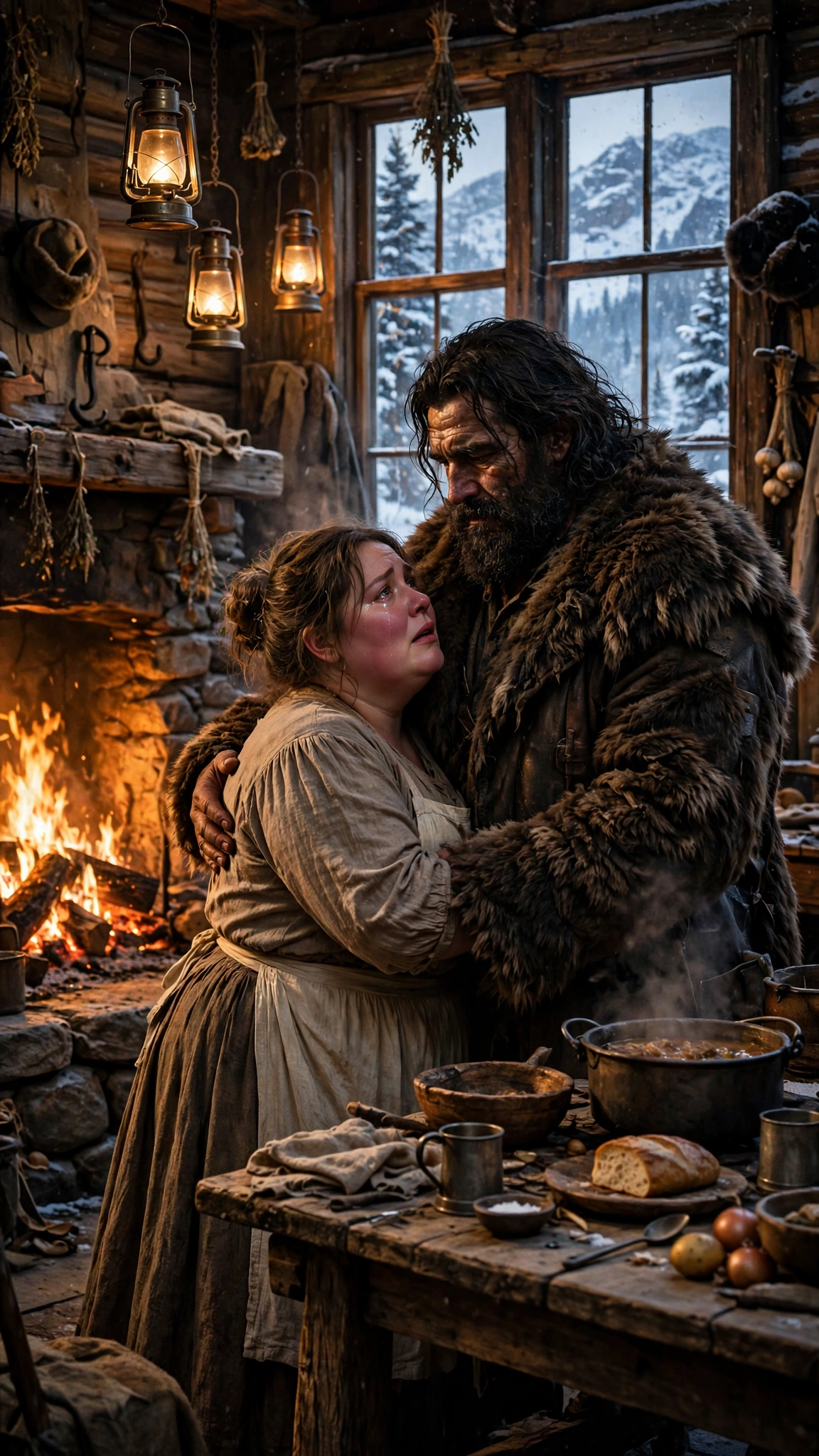
    Abigail sank into a chair, and her shoulders shook, and for the first time since Matilda had known her, Abigail Thatcher wept — not the cold, controlled tears of a woman holding herself together, but great, shaking sobs, the sobs of a woman who has carried a weight for three years and has just set it down.

    "Edmund," she whispered. "Oh, Edmund. You paid it. You paid it, and you never told me. You let me believe —" She covered her face with her hands, and her voice broke. "He was a careless man, my Edmund, always borrowing, always dreaming of silver. But he was not a dishonest man. He would never have left me in debt if he could help it. And all this time — all this time I thought he had left me nothing but a mortgage and a house I could not keep. I thought —" She looked up at Matilda, her eyes streaming. "I thought I had to clear this house to survive. I thought I had to send you away. And all the time, the house was mine. All the time, I was free, and I did not know it."

    Matilda knelt beside her chair — awkwardly, heavily, the way she did everything — and she took Abigail's cold hands in her own warm ones, and she said, "You know it now, ma'am. That is what matters. You know it now."

    Jedodiah stood up from the table, and he walked to the window, and he looked out at the white mountain, and he said, without turning around, "Then Mr. Vane is a thief. He has been taking money from a widow for a debt that does not exist. That is a crime, in any territory, and the law will want to hear about it."

    And as if the words had summoned him, the sleigh bells sounded outside again, and Cornelius Vane came up the porch steps, stamping snow from his boots, with Mr. Pritchard behind him and a third man — a broad, red-faced fellow with a sheriff's star pinned to his coat.

    Vane came into the dining room with his leather case under his arm, and he saw the paper on the table, and he saw Abigail's tear-streaked face, and he saw Jedodiah standing by the window, and he stopped in the doorway, and his face went the color of old paper.

    "Mr. Vane," Silas McCready said, standing up, and his voice was very calm, and very dangerous, "we have been reading a receipt. A receipt for four hundred dollars, paid in full, signed by you, dated October of 1875. Would you like to explain to the sheriff why you have been collecting payments on a mortgage that was paid off three years ago?"

    The sheriff — a man named Holt, from Fairplay, who had known Silas for twenty years — picked up the paper, and read it, and read it again, and then he looked at Vane, and he said, "Mr. Vane, is this your signature?"

    Vane's mouth opened and closed. "That — that paper is a forgery. That woman stole it. She is a thief. She stole my —"

    "She stole nothing," Jedodiah said, and he stepped forward, and his shadow fell across the table, and Vane went very still. "The receipt was in Edmund Thatcher's Bible, in the attic of this house, where it has been for three years. The cook found it. And the only thief in this room is you."

    The sheriff folded the paper, and he put it in his coat pocket, and he said, "Mr. Vane, I think you had better come down the mountain with me. We will sort this out in Fairplay, in front of a judge. And Mr. Pritchard, you will come too."

    Vane's face twisted. "You cannot do this. I own the mines of Leadville. I own —"

    "You own nothing here," the sheriff said. "Not anymore. And I will tell you something else, Mr. Vane. I have known Silas McCready for twenty years, and I have known Mrs. Thatcher for ten, and I have never known either of them to lie. But you —" He looked Vane up and down, slowly. "You I have heard of. And what I have heard is not good."

    Pritchard, who had stood silent through all of it, with his shoulders hunched and his eyes on the floor, finally spoke, in a small, miserable voice. "I told him, Sheriff. I told Mr. Vane, two years ago, that the mortgage was paid. I found the entry in the books myself. He told me to forget I had seen it. He said —" Pritchard swallowed. "He said a widow would never know the difference."

    "Well," the sheriff said, "now she knows. And now a judge will know, too."

    Vane opened his mouth once more, and then closed it, and the fight went out of him all at once, like air out of a punctured bellows, and he allowed the sheriff to take his arm and lead him out into the snow, Pritchard trailing behind, and the sleigh bells jingled away down the mountain road, and the house was quiet.

    And then, in the quiet, Abigail Thatcher did a thing no one expected.

    She stood up from her chair, and she walked across the kitchen to where Matilda stood by the stove, and she took Matilda's hands in her own — her hands, thin and cold and shaking — and she said, "I accused you of stealing my husband's watch. I had men search your room. I tried to throw you out into a blizzard. And all the time, you were the one who saved my house."

    Matilda shook her head. "Ma'am —"

    "No," Abigail said. "Let me finish. I was afraid. I have been afraid for three years — afraid of losing the house, afraid of being alone, afraid of growing old with nothing. And fear made me cruel. It made me cruel to the one person in this house who never did me any harm." She took a breath, and her voice steadied. "I am sorry, Matilda. I am sorry for all of it. Will you forgive me?"

    Matilda looked at her — at this tall, stiff, proud woman, standing in her own kitchen with tears on her face, asking forgiveness from a cook — and she thought about her mother, who had always said that forgiveness is the one thing a person can give that costs nothing and means everything. And she squeezed Abigail's hands, and she said, "Yes, ma'am. I forgive you."

    And then — because the morning had already held more miracles than any morning had a right to hold — Matilda went to mend Abigail's dress, the dark blue dress with the torn hem, and she picked up the sewing basket to find a needle, and she lifted the folded cloth at the bottom of the basket, and there, underneath it, winking in the lamplight, was Edmund Thatcher's silver pocket watch.

    She held it up, and the whole room went still, and Abigail stared at it, and then she laughed — a short, startled laugh, the first laugh Matilda had ever heard from her — and she said, "It was in my own basket. All this time. I accused you, and it was in my own basket."

    She took the watch, and she wound it, out of habit, and to everyone's astonishment, it began to tick — a small, steady ticking, like a heart starting to beat again after a long silence.

    "It kept time all along," Abigail said softly, holding the watch to her ear. "I only had to look in the right place."

    That night, the house ate supper together — Abigail at the table, not standing in the doorway; the cowboys telling stories; Jedodiah by the fire — and Matilda served the stew, and the stew was good, and the fire burned warm, and outside, the snow lay white and clean over the whole mountain, and the house on Cutthroat Creek stood firm, and free, for the first time in three years.

    The next morning, Abigail rose before dawn for the first time in weeks — not to add columns in her ledger, but to wind the silver watch and set it on the mantel where the whole room could see it ticking. She came into the kitchen while Matilda was kneading bread, and without a word she took an apron from its hook and tied it on, and began setting the table herself, plate by plate, the way a woman sets a table in a house that is finally, truly hers. Matilda watched her for a moment, and then she went back to the bread, and neither of them said anything, because there was nothing that needed saying: the house was free, the watch was ticking, and the kitchen belonged to both of them now.

    Before supper, Abigail had come into the kitchen while Matilda was stirring the pot, and she had stood there for a moment, watching, and then she had said, very quietly, "Edmund would have liked you, Matilda. He liked people who worked hard and complained little. He used to say that a house is not made of logs and stone, but of the people who keep it warm. I forgot that, for a while. You reminded me."

    Matilda had not known what to say to that, so she had ladled stew into a bowl and set it in front of Abigail, and Abigail had eaten it, sitting at the work table in the kitchen, like a boarder, like a friend, and they had talked — about Edmund, and about the house, and about the spring, when the road would open and new boarders would come — and for the first time, the kitchen had felt like a room where two women could simply be together, without fear between them.

    Silas McCready raised his mug at supper, and he said, "To the Thatcher Boarding House — and to the woman who saved it." And every man at the table raised his mug, and every man drank, and Tom Ellery, his eyes shining, said, "And to the cook. To the best cook in the territory." And Matilda, who had never been toasted in her life, pressed her hand to her chest, and laughed, and cried, a little, all at once, and the fire burned warm, and the house stood firm, and free, for the first time in three years.

    === STEP 7 — APPEND Chapter 7 ===
  • Chapter 5: The Man from Leadville

    Chapter 5: The Man from Leadville

    The second storm came on a Tuesday, and it came fast.

    In the morning the sky was grey and still, and by noon the wind had risen, and by supper the snow was falling sideways, and Silas McCready, standing at the window with his hands on his hips, said, "That is the same storm as before, boys, only angrier," and everyone laughed, but the laughter was thin, because the road had barely been dug out from the first storm, and no one wanted to be snowed in again so soon.

    Matilda was setting the table for supper — six places, the stew pot on the stove, the bread in the oven — when she heard the sleigh bells.

    She stopped with a plate in her hand, and she listened, and the bells came again, faint and far away, and then closer, and then she heard the horses stamping outside, and the barn door opening, and a man's voice, sharp and impatient, giving orders to someone in the yard. The men at the table looked up from their supper, spoons halfway to their mouths, and Silas McCready frowned at the window, and Tom Ellery said, "Who would come up this mountain in a storm like this?"

    No one answered him. The stew sat steaming on the stove, and the bread sat cooling on the table, and the whole house held its breath, listening to the sleigh bells come closer, and closer, until they stopped right outside the door.

    Cornelius Vane had arrived.

    He came into the house like a man entering a property he already owned — tall, thin, wrapped in a fine black coat with a fur collar, his boots polished, his gloves spotless, a leather case under his arm, Mr. Pritchard scurrying behind him like a shadow. He did not stamp the snow from his boots. He did not nod to the men. He looked around the dining room with the slow, assessing gaze of a man pricing furniture — the tables, the fireplace, the lanterns, the windows — and then he looked at the cowboys, one by one, the way a man looks at cattle he means to sell, and then he looked at Matilda, standing by the stove with a plate in her hand, and his lip curled, just a little, the way a man's lip curls at something unpleasant on his shoe. Then he turned to Abigail, who stood in the parlor doorway with her hands clasped tight, and he said, "Mrs. Thatcher. I trust the house is ready."

    Abigail's face was pale. "Mr. Vane. You are early. The spring —"

    "The spring is a long way off, and I am a busy man," Vane said, setting his leather case on the table with a thump that made the mugs rattle. "I have come to settle the matter now. The note is due. The house is mine. I have the papers here." He opened the case and took out a sheaf of documents, tied with ribbon, and he laid them on the table like a winning hand of cards, smoothing them flat with a thin, pale hand, and Pritchard hovered at his elbow, nodding eagerly, as though the papers themselves were proof enough of anything.

    "Here is the mortgage," Vane said, tapping the topmost sheet with one long finger. "Signed by your late husband, Mrs. Thatcher, in the year 1875. Four hundred dollars, at interest, secured against this house and the land it stands on. Here is the record of payments — or rather, the record of the payments you have not made. And here —" He drew out a second sheaf, tied with red ribbon, and laid it beside the first with a flourish. "Here is the transfer. Sign it tonight, and the debt is forgiven, and you will have your two hundred dollars, and you will be on the morning stage to Denver. Refuse, and I will call in the note in full, and the house will be sold at auction, and you will have nothing."

    The cowboys stared at the papers, and no one touched them. Silas McCready leaned forward, squinting at the topmost sheet, and his lips moved as he read, slowly, the way a man reads something he does not trust. Tom Ellery's hands were clenched in his lap. Wade Conroy muttered, "Four hundred dollars," under his breath, as though the number itself were a kind of curse. The stew on the stove began to scorch, filling the kitchen with a bitter smell, and no one moved to save it.

    Abigail looked at the papers, and her face was the color of the snow outside, and her hands, clasped tight in front of her, were shaking so hard that the lace at her cuffs trembled. Three years. Three years of fear, of adding columns in her ledger book late at night, of lying awake wondering how she would pay, and now the man who owned her fear was standing in her dining room, laying it out on her own table, like cuts of meat in a butcher's shop.

    "You will sign the transfer tonight, and you will have your two hundred dollars, and you will be on the morning stage to Denver. And the house will be cleared — tonight."

    "Tonight?" Abigail said. "Mr. Vane, it is a blizzard. The road —"

    "The road is my concern, not yours," Vane said. "The house will be cleared tonight. All of it. The cowboys can go to the mines. And the cook —" His eyes found Matilda, standing by the stove with a plate in her hand, and his lip curled, just a little, the way a man's lip curls at something unpleasant on his shoe. "The cook will go first. I will not have a fat widow in my club. Get her out of my sight."

    The room went very still. Silas McCready set down his coffee cup. Tom Ellery stood up from his chair. Wade Conroy and Ephraim Doyle looked at each other, and then at the floor.

    Abigail took a step forward, and her hands were shaking, and her voice, when she spoke, was thin and high, the voice of a woman who has rehearsed a thing many times and still cannot believe she is saying it.

    "Matilda Hart," she said. "You heard Mr. Vane. You will pack your things and leave this house tonight. Your week is up. I will not have you here a day longer."

    "Ma'am," Silas said, standing up, his face dark, "it is a blizzard out there. You cannot send a woman out into that. She will die."

    "She should have thought of that before she stole from me," Abigail said.

    "I did not steal anything," Matilda said, and her voice shook, but she did not back down. "I have never stolen anything in my life."

    "Then where is my husband's watch?" Abigail cried. "Where is it, if you did not take it?"

    "I do not know," Matilda said. "But I did not take it. And I will not walk out into that storm to die for something I did not do."

    Vane laughed — a short, cold sound, like a door slamming. "Then she will be carried out. Pritchard, fetch the sheriff's man from —"

    "There is no sheriff here," Jedodiah Boon said.

    He had come in from the barn so quietly that no one had heard him, and now he stood in the doorway, snow on his shoulders, his great frame filling the door, his icy-blue eyes fixed on Vane. He did not raise his voice. He did not move. He simply stood there, and the room seemed to rearrange itself around him, the way a river rearranges itself around a stone.

    "Mr. Vane," he said. "You are a guest in this house. You will behave as a guest. You will not order a woman out into a blizzard in my presence."

    "And who are you?" Vane said, drawing himself up. "Some trapper? Some mountain man who smells of bear grease? I am Cornelius Vane. I own the silver mines of Leadville. I own the mortgage on this house. I do not take orders from trappers."

    "You do not own this house," Jedodiah said. "Not yet. And you do not own the people in it."

    "I own the debt," Vane said, tapping the sheaf of papers on the table. "And the debt is due. The law is on my side. If the woman will not leave, I will have the law remove her."

    "The law," Jedodiah said, "is ten miles down a mountain in a blizzard. The law is not coming tonight. And neither is that woman leaving."

    He stepped forward, into the room, and his shadow fell across the table, and Vane took a step back, and Pritchard took two, and the cowboys — Silas first, then Tom, then Wade, then Ephraim, one by one, like men making up their minds — stood up from their chairs and moved to stand behind Jedodiah, between Vane and the kitchen door.

    Silas was the first. He pushed his chair back slowly, the legs scraping on the wooden floor, and he stood, and he folded his arms, and he looked at Vane the way a foreman looks at a man who has just insulted his crew. Tom was next, young and shaking and furious, his jaw set, his fists clenched at his sides, the boy who had offered to walk down the mountain with Matilda now standing like a man twice his age. Wade rose with a sigh, as though he had been waiting all day for someone to give him a reason, and Ephraim stood last, bowing his head for a moment — a prayer, or a decision — before he stepped forward to join the line.

    It was not a fight. There was no shouting, no shoving, no raised fists. It was something quieter and stronger than a fight: a room full of men, standing together, saying, without a word, that this would not happen here.

    Abigail watched them, and her face was a battlefield — fear and pride and shame, all at once. She had wanted this. She had asked for this. Vane was her way out, her two hundred dollars, her sister in Denver. And yet, watching her boarders stand against him, watching the trapper stand like a wall between Vane and her cook, she felt something she had not expected to feel: a small, cold shame, settling in her chest like a stone in a well. These were her men. This was her house. And she had invited a stranger in to clear it out.

    Vane saw the line of men, and his thin face went red. "You are all fools," he said, his voice rising. "You are cowboys and trappers, and you know nothing of business. This house is mortgaged. The debt is mine. The law is mine. I will have the sheriff up here, and I will have every one of you thrown off this mountain —"

    "The law," Jedodiah said, "is ten miles down a mountain in a blizzard. The law is not coming tonight. And neither is that woman leaving."

    Vane looked at them — at the trapper and the foreman and the young cowboy and the old ones — and his face went red, and then white, and he snatched up his papers, and he pointed a thin, shaking finger at Abigail, and he said, "You will regret this, Mrs. Thatcher. I will be back with the sheriff. I will be back with the law. And when I come back, this house will be mine, and that woman will be gone, and you will have nothing — nothing at all."

    He swept out of the house, Pritchard scurrying after him, and the sleigh bells jingled away down the mountain road, and the storm swallowed them, and the house was quiet.

    Abigail stood in the middle of the dining room, and her hands were shaking, and her face was white, and she looked at Matilda, and she looked at Jedodiah, and she looked at the cowboys, and she said, in a voice that was barely a whisper, "You have ruined me. All of you. You have ruined me."

    And then she turned, and she went into her parlor, and she closed the door, and Matilda stood in the kitchen with a plate still in her hand, and she looked at Jedodiah, and she said, "He will come back. With the sheriff. With the law."

    "Let him come," Jedodiah said. "We will be ready."

    Matilda nodded, and she set the plate down, very carefully, and she went to her small room, and she took her mother's recipe book from the drawer, and she opened it to the page for venison stew, and she looked at the folded paper tucked between the stew page and the chokecherry jam page, and she thought, "Tomorrow. Tomorrow, when the storm breaks, I will show them what I found."

    She slept that night with the recipe book pressed against her chest, and outside, the blizzard raged, and inside, the fire burned low and steady, and the house — her house, for one more night at least — stood firm against the storm.

    === STEP 6 — APPEND Chapter 6 ===

  • Chapter 4: The Recipe Book

    Chapter 4: The Recipe Book

    The next day, the sun stayed out, and the snow began to settle, and the mountain was so quiet that Matilda could hear the creek running under the ice, far below the house.

    Jedodiah spent the morning mending the barn door, and Matilda spent it baking — bread, and a pan of apple cake from the last of the dried apples, because Tom Ellery had asked for something sweet, and because baking was the one thing that made her hands stop shaking. At noon, when the men had eaten and gone back out to the road, Jedodiah came into the kitchen and stood by the stove, warming his hands, and he said, "Show me the book."

    Matilda looked up from the dishwater. "What book?"

    "Your mother's book. The recipe book. Thomas told me about it, on the river. He said his wife carried it everywhere, and that it was worth more to her than gold."

    Matilda dried her hands on her apron, and she went to her room, and she came back with the cracked red leather book, and she laid it on the work table between them, and she opened it, carefully, the way one opens something sacred.

    The pages were soft as cloth, stained with butter and gravy and years of use, and the handwriting was small and neat and slanting — her mother's hand, from a kitchen in St. Louis, a lifetime ago. Recipes for bread and stew and pie, for pickles and preserves, for cough syrup and poultices, for everything a woman might need to keep a family fed and alive. And between the pages, pressed flat, were small things: a dried flower, a lock of hair tied with thread, a newspaper clipping about a flood, a letter from a sister in Ohio who had died before Matilda was born.

    "This is my mother," Matilda said, touching the pages with one fingertip. "Eliza Hart. She cooked for a rich family in St. Louis, and she taught me everything. She used to say, 'A good stew can hold a family together, Matty.' And when she died, this was all I had left of her. Thomas said I should keep it close, and I have. I have kept it close through everything."

    Jedodiah turned the pages slowly, with great care, his huge hands gentle on the fragile paper, and he stopped at the venison stew — the page stained dark with gravy, the handwriting a little larger there, as though her mother had been proud of it — and he read the last line aloud, in his deep, slow voice: "'And at the end, a spoonful of chokecherry jam, to give the broth its depth. Do not skip this. The jam is the secret.'"

    "That is how he knew," Matilda said softly. "Thomas. He ate my stew on our wedding day, and he said he had never tasted anything like it, and I told him about the jam, and he laughed, and he said, 'Then I will marry the jam, too.'"

    Jedodiah closed the book, and he set it back in her hands, and he said, "Your mother was a wise woman."

    They sat by the fire that evening, after supper, when the men had gone to their rooms — Matilda in the warm chair, Jedodiah on a stool by the hearth, the firelight playing across their faces — and for the first time, Jedodiah told her about Sarah.

    He told it plainly, the way a man tells a thing he has carried too long to dress up. Sarah had been the daughter of a preacher in Golden, and she had laughed easily, and she had loved the mountains, and she had married him in the spring of 1869, and she had died in the winter of 1871, giving birth to a child who had never drawn breath. He had been sixty miles away, checking his traps. He had come home to two graves in the frozen ground.

    "I never forgave myself," he said, looking into the fire. "I told myself I would never love anyone again, because loving someone means being there, and I was not there. So I went up the mountain, and I stayed there, and I told myself the mountain was enough."

    He was quiet for a moment, and then, to Matilda's surprise, he went on — slowly, the way a man speaks of something he has not spoken of in years.

    "I met her in Golden, in the spring of 1868. She was the preacher's daughter, and she laughed — Lord, how she laughed. She laughed at my size, the first time she saw me, and then she laughed at herself for laughing, and then she invited me to supper, and I went, and I never really left. We married in the spring of 1869, in her father's church, and we built a cabin together, with our own hands, on a creek where the trout ran thick, and she planted a garden, and she sang while she worked, and she used to say that the mountains were God's own church, and that she had never been so happy in her life. She was carrying our child when the winter came, and the snow came early that year, and I went out to check the traps, because we needed the money, and I told myself I would only be gone a week. I was gone nine days. The storm —" His voice caught, just once, and he stopped, and looked into the fire, and when he spoke again his voice was steady. "The storm kept me on the mountain. By the time I got home, the neighbor woman had already dug the graves."

    Matilda reached out, very slowly, and laid her hand on his arm — his great, scarred forearm, resting on his knee — and she left it there, and neither of them moved, and the fire crackled between them.

    "It is not enough," Matilda said quietly. "A mountain cannot cook for you. A mountain cannot ask you how your day was."

    "No," Jedodiah said. "It cannot."

    They sat in silence for a while, and the fire popped, and the wind moved softly around the eaves, and Matilda thought about Thomas, and about the wagon, and about the pine tree beside the creek, and she said, "I used to think that grief was like a wound — that it would heal, and there would be a scar, and that would be the end of it. But it is not like a wound. It is like a room in your house. You learn to live with the room. You learn to walk past it without going in every time. But the room is always there."

    She thought, too, about her mother's kitchen in St. Louis — about standing on a stool beside the stove, so small she could barely see over the pot, while her mother guided her hands on the spoon and said, "Slow, Matty. A stew cannot be hurried. A stew takes its own time, like a good life." She thought about her mother's hands, floury and strong, and about the way the kitchen had smelled on baking days, and about how she had believed, when she was a girl, that her mother would live forever, and that the kitchen would always be warm, and that nothing would ever change. And then her mother had died, of a cough that would not leave her chest, and Matilda had married Thomas, and Thomas had died, and the kitchen in St. Louis was gone, and all she had left of any of it was the book.

    "This book," she said, touching the red leather cover, "is my mother. And Thomas is in it, too — in the margins, where he wrote little notes. See? Here, beside the bread recipe: 'Too much salt, Matty!' And here, beside the stew: 'Best stew in the territory. Do not tell Silas.' He wrote in my book as though it were his, too. As though we were —" Her voice broke, just a little. "As though we were a family. And we were. For a little while, we were."

    Jedodiah nodded, and he looked at her, and in his icy-blue eyes there was something she had never seen there before — not pity, but recognition. The recognition of one person who had lost everything, looking at another person who had lost everything, and finding that the losses were the same shape.

    "Thomas saved my life," he said. "On the river. I owe him a debt, and I mean to pay it. Not because he asked me to. Because it is the only way I know to honor him."

    "You are paying it already," Matilda said. "You stood up for me. You gave me your coat. That is more than anyone has done for me since Thomas died."

    "It is not enough," Jedodiah said. "Not yet."

    The next morning, Mr. Pritchard came up the mountain from Leadville.

    He arrived in a sleigh with two horses, wrapped in a fine wool coat and a fur hat, with a leather case full of papers, and he asked for Mrs. Thatcher, and Abigail received him in her parlor with the door closed, and they talked for an hour. When Pritchard left, his sleigh bells jingling down the road, Abigail came out of the parlor with a face like stone, and she went into the kitchen, and she looked at Matilda, and she said, "Mr. Vane will come himself, before the next storm. He will bring the papers. You would do well to be gone before he arrives."

    Matilda said nothing. She went on kneading bread. But that night, when the house was quiet, she went up to the attic — the cold, dark attic where the old things were kept, where she had cleaned and swept three weeks before, when Abigail had asked her to make room for the winter stores — and she stood among the trunks and the broken chairs and the boxes of Edmund Thatcher's books, and she thought about what Jedodiah had said: that a house does not turn on its cook for nothing, and that there is always something underneath.

    She did not know what she was looking for. She only knew that the attic was where the past was kept, and that the past was where the truth lived. She moved a trunk. She opened a box of books. She found Edmund Thatcher's Bible — a big, heavy book with a leather cover gone soft with use — and she opened it, and inside the front cover, folded small, was a piece of paper.

    She took it out. She unfolded it. She held it up to the lantern light, and she read it, slowly, twice, because she did not understand it the first time.

    It was a receipt. A receipt for money paid — a large sum, in full — against the mortgage on the Thatcher Boarding House, signed by Cornelius Vane himself, and dated three weeks before Edmund Thatcher died. The mortgage, the debt that Abigail believed would take her house, had been paid in full. Edmund had paid it. He had paid it before he died, and he had folded the receipt inside his Bible, and no one had ever known.

    Matilda's hands began to shake. She folded the paper again, very carefully, and she did not put it back in the Bible. She slipped it inside her mother's recipe book, between the page for venison stew and the page for chokecherry jam, where it would be safe, where no one would ever think to look, and she put the Bible back in its box, and she went downstairs to her small room, and she sat on her bed with the recipe book in her lap, and she thought, very hard, about what she had found, and about what it meant, and about what she would do with it.

    She did not tell Jedodiah. Not yet. She needed to be sure. She needed to understand exactly what the paper said, and what it meant for the house, and for Abigail, and for Mr. Vane.

    She stood a moment longer in the attic, among the dust and the old trunks, and she thought about Edmund Thatcher — a man she had never met, who had borrowed too much and dreamed too big, and who had, in the end, quietly done the one right thing that mattered, and then folded the proof inside his Bible and told no one. She thought about how a house could be saved by a single piece of paper, and how a man's whole life could come down to one honest act that no one ever saw. The lantern light flickered on the boxes, and the wind moved softly against the roof, and she pressed the recipe book a little tighter against her chest, because it held two truths now — her mother's stew, and a dead man's receipt — and both of them were worth keeping safe.

    But she slept that night with the recipe book pressed against her chest, and in the morning she got up before dawn, and she lit the stove, and she began her day, and she waited for the storm that was coming — not the storm in the sky, but the storm that was coming up the mountain road from Leadville, in a sleigh with two horses, carrying a man who believed he owned her home.

    === STEP 5 — APPEND Chapter 5 ===

  • Chapter 3: The Silver Watch

    Chapter 3: The Silver Watch

    The storm lasted three days.

    For three days the snow fell without stopping, and the wind piled it against the doors and windows until the house was half-buried, and the men took turns digging out the barn and feeding the horses, and Matilda cooked from dawn until dark — stew and bread and beans and coffee, pot after pot, for men who came in shaking snow from their shoulders and stamped their feet and held their hands out to the fire. Jedodiah Boon was everywhere: splitting wood with an axe as if the logs were made of paper, hauling water from the creek through snow up to his knees, mending the barn door where the wind had torn it half off its hinges. He spoke little, but he was always where the work was hardest, and the cowboys, who had at first been wary of the giant in the grizzly coat, began to follow his lead without thinking about it, the way men follow a man who knows what he is doing.

    And Matilda — Matilda in the trapper's coat, which she had folded carefully and laid across the foot of her bed, because it was too fine a thing to wear while scrubbing pots, and too heavy a thing to wear while kneading bread — Matilda cooked, and the house ate, and for three days the boarding house on Cutthroat Creek was the warmest place in the whole of the Colorado mountains.

    On the fourth day, the sky cleared. The sun came out, white and hard, and the snow glittered so bright it hurt to look at, and Silas McCready stood on the porch and said, "Well, boys, we lived through it," and everyone laughed, and the tension of the storm broke like a fever breaking.

    Abigail Thatcher did not laugh.

    She had watched the three days of the storm from her parlor window, and she had seen the trapper work beside her boarders, and she had seen Matilda feed them all, and she had seen the way the house had settled around the two of them — the cook and the trapper, the kitchen and the woodpile — like a family settling around a hearth. And she had made up her mind.

    That afternoon, when the men were out digging the road and Matilda was alone in the kitchen kneading bread, Abigail came in and stood in the doorway with her arms folded, and her face was white and set, and she said, in a voice that carried through the whole house:

    "My husband's silver pocket watch is missing."

    Matilda looked up, her hands deep in the dough, flour on her forearms, and she said, "Ma'am?"

    "Edmund's watch," Abigail said. "The silver pocket watch he carried every day of his life. I keep it in my sewing basket, in my room. I wound it on Sunday, as I always do. This morning it was gone." She took a step into the kitchen, and her eyes were cold and steady. "You are the only person who has been in my room this week. You went in on Tuesday to mend the curtain."

    "I did, ma'am," Matilda said, and her heart began to beat very fast. "You asked me to mend the curtain, and I did, and I came straight out again. I never touched your basket, ma'am. I swear it on my mother's grave."

    "Then you will not mind if we look," Abigail said. "Silas! Tom! Come here."

    The men came in from the porch, stamping snow from their boots, and Abigail told them, in a clear, carrying voice, that the watch was missing and that the cook's room must be searched. Silas McCready's face went dark. Tom Ellery looked at the floor. Wade Conroy shifted his weight from one foot to the other and would not meet Matilda's eyes.

    "Ma'am," Silas said slowly, "Matilda Hart is no thief. I have eaten at this table for three months, and —"

    "Are you calling me a liar, Mr. McCready?" Abigail said.

    "I am saying that a woman who cooks for us the way she does, who gets up before dawn and works until dark, is not the kind of woman who steals a dead man's watch."

    "Then the search will prove her innocent," Abigail said, "and we can all be satisfied. Unless she objects."

    Matilda stood with her hands in the dough, and her face burned, and her eyes filled, and she thought of all the times in her life when she had been accused of things she had not done — of eating too much, of taking up too much room, of being too much of everything — and she thought of Thomas, who had always said, "Let them look, Matty. An honest person has nothing to hide." And so she wiped her hands on her apron, and she lifted her chin, and she said, "Search, then. Search my room. Search the kitchen. Search everything I own. I have nothing to hide."

    They searched.

    Silas went through her small room at the back of the kitchen with a face like stone, opening the trunk where she kept her two dresses and her shawl, looking under the bed, looking in the drawer where she kept her mother's recipe book. Tom stood in the doorway, miserable, his hat in his hands. Wade searched the pantry. Abigail stood in the middle of the kitchen with her arms folded, watching it all, and her face did not change.

    They found nothing. Of course they found nothing. There was nothing to find.

    But the search itself was the wound. Matilda stood in her own kitchen and watched men go through her belongings — her dresses, her mother's recipe book, the little wooden cross Thomas had carved for her on their wedding day — and she felt something inside her go very still and very cold, the way the creek went still under the ice in January.

    She had been searched before, in a way. Not her room, but her person — all her life, people had looked her over and found her wanting. Too fat. Too slow. Too much room taken up at the table, too much food on the plate, too much woman altogether. In Denver, the hotel keeper's wife had weighed her with her eyes every morning, as though Matilda's body were a debt she owed. On the trail, a teamster had told her she ate enough for two men and worked like half of one. She had learned to make herself small — to take the smallest chair, to eat standing up, to apologize for her appetite, to laugh when men made jokes about her size, because laughing was easier than crying, and crying changed nothing.

    But no one had ever gone through her trunk. No one had ever laid hands on her mother's recipe book, on the little wooden cross, on the two dresses that were all she owned in the world. That was different. That was not a look. That was a hand, reaching into her life and turning it over, looking for something rotten.

    When Silas came out of her room, his face was the color of ashes, and he would not meet her eyes. Tom Ellery stood in the doorway with his hat crushed between his hands, and he said, in a voice barely louder than a whisper, "Ma'am, I am sorry. I am so sorry. I told her — I told her you would never —"

    "Hush, Tom," Silas said, not unkindly. "It is done now."

    But it was not done. Not for Matilda. That evening, after supper, when the men had gone to their rooms and the kitchen was quiet, she sat on her narrow bed and held her mother's recipe book against her chest, and she thought about all the kitchens she had worked in, and all the women who had owned them, and she wondered if there was any kitchen in the whole of Colorado where a woman like her could simply belong — where she would not be weighed, or searched, or told to make herself smaller.

    There was a knock at her door, soft, hesitant. She opened it to find Tom Ellery, holding his hat in his hands, his young face miserable.

    "Ma'am," he said, "I want you to know that none of us believe it. Not one of us. Silas says you are the finest cook in the territory, and I say you are the finest person in this house. And if Mrs. Thatcher throws you out, I will go with you. I mean it. I will walk down that mountain with you, wherever you go."

    Matilda looked at him — at this boy, barely a man, offering her the only thing he had, which was himself — and her throat closed up, and she could not speak for a moment. Then she said, "Thank you, Tom. That is the kindest thing anyone has said to me in a long time. But you will not walk down any mountain. You have work here, and a wage, and I will not take that from you."

    She closed the door, and she sat back down on her bed, and she held the recipe book tighter, and she thought, "One week. Seven days." And then she thought about Jedodiah Boon, and about the way he had stood in the doorway, and she thought that perhaps — just perhaps — one week was enough time to find the truth, if she had someone standing beside her.

    When it was over, Silas came out of her room and said, "Nothing, ma'am. There is nothing here."

    Abigail's mouth tightened. "Then she has hidden it somewhere else. In the barn, perhaps. Or under the floorboards."

    "That is enough."

    The voice came from the doorway, deep and quiet, and everyone turned. Jedodiah Boon stood there, snow on his shoulders, an armload of firewood in his arms, and his icy-blue eyes were fixed on Abigail, and his face was the face of a man who had just watched something he would not forget.

    He set the firewood down by the stove, very carefully, log by log, and then he straightened, and he looked at Abigail, and he said, "You searched an honest woman's room in front of her boarders, on nothing but a suspicion, and you found nothing. That is enough."

    "I am the owner of this house," Abigail said, and her voice shook, just a little. "I will decide what is enough."

    "Then decide," Jedodiah said. "But know this. If you throw her out, I go with her. And if I go, Silas goes, and Tom goes, and Wade goes, and this house will be empty before the week is out, and your Mr. Vane can buy an empty house in the middle of nowhere for whatever he likes."

    The silence that followed was worse than the storm. Abigail's face went white, and then red, and then white again, and for a moment Matilda thought she might strike him. But Abigail Thatcher was a woman who had survived the death of a husband and three years of carrying a house alone, and she did not strike people. She did something colder.

    "One week," she said, and her voice was steady now, and terrible. "You have one week, Matilda Hart. One week to find other work and be gone from this house. I will not have a thief under my roof, and I will not be threatened in my own home by a trapper who pays for a room by the week."

    She turned on her heel and swept out of the kitchen, and the door to her parlor closed behind her with a sound like a lid closing on a box.

    Silas McCready let out a long breath. Tom Ellery put his hat back on his head with shaking hands. Wade Conroy muttered something under his breath and went out to the barn.

    Matilda stood at the work table, and her hands were still covered in flour, and the bread dough sat half-kneaded in its bowl, and she looked at Jedodiah, and she said, in a voice so quiet he had to lean forward to hear it, "I did not take the watch."

    "I know," Jedodiah said.

    "Then why does she hate me so?"

    Jedodiah looked at the parlor door, and then he looked back at her, and he said, "Because you are the reason this house is still a home, and she is afraid of what will happen when it is not."

    That night, Matilda lay in her small room and listened to the wind, and she held her mother's recipe book against her chest, and she thought about one week. Seven days. Seven days to find work in the middle of winter, in the mountains, with no money saved and no one to take her in. Seven days, and then the road, and the snow, and the cold.

    She did not sleep. She counted the days on her fingers, over and over, as though counting them might make them more. And in the morning, when she got up before dawn to light the stove, she found Jedodiah Boon already in the kitchen, sitting at the work table with a cup of coffee, and he looked up at her, and he said, "We have a week. We will use it well."

    "What can we do in a week?" she asked.

    "We can find out the truth," he said. "About the watch. And about why Mrs. Thatcher wants you gone so badly that she would accuse an honest woman of theft. A house like this does not turn on its cook for nothing. There is something underneath it. We will dig it up."

    Matilda looked at him — at his great dark shape in the lamplight, at his beard and his quiet eyes — and she nodded, and she tied on her apron, and she set the coffee pot on the stove, and she began her day.

    She had one week. She would use it well.

    === STEP 4 — APPEND Chapter 4 ===

  • Chapter 2: The Stew That Brought a Dead Man Back

    Chapter 2: The Stew That Brought a Dead Man Back

    Jedodiah Boon had not planned to come down from the mountain that day.

    His cabin stood high on Cutthroat Creek, a single room of logs and stone with a roof of split shakes and a door that faced south, away from the wind, and he had lived there alone for seven winters. He trapped beaver and marten and fox, and he cut his own wood, and he spoke to no one for weeks at a time, and that was the way he wanted it. The mountain did not ask him questions. The mountain did not look at him with pity, the way people in town did when they learned his story. The mountain only gave him work, and cold, and silence, and those were things he could bear.

    But on the morning of the blizzard, he stood at his door and looked at the sky, and the sky was the color of a bruise, and the wind had a sound he had learned to respect — a low, rising moan that meant the storm would kill anything caught out in it. His firewood was stacked high. His cabin was tight. He could have stayed. He had stayed through worse.

    Instead, he saddled his mule, tied his bedroll and his rifle behind the saddle, and rode down the mountain toward the Thatcher Boarding House, and he did not entirely know why.

    He knew why, of course. He had known since the first night he had ever slept under that roof, three winters before, when a storm like this one had driven him down and Abigail Thatcher had taken his money with a stiff nod and pointed him to a room. He knew because of the way the house smelled — of bread and woodsmoke and stew — and because of something he had not felt in a long time, which was the feeling of being expected. The cowboys nodded at him. The fire was warm. Nobody asked him about his wife.

    His wife. Sarah.

    She had died in the winter of 1871, in a cabin not unlike his own, giving birth to a child who had never drawn breath. Jedodiah had been away, checking his trap line sixty miles from home, and by the time he got back the snow had covered everything, and the neighbor woman who had sat with Sarah had already dug the graves — two of them, side by side, small and smaller — in the frozen ground behind the cabin. He had stood over those graves until dark, and he had not wept, and he had never wept since, and he had never forgiven himself for being sixty miles away when his wife needed him.

    The winter after Sarah died, he shot the grizzly. It had been killing his traps and taking his bait, and one morning it came for his dog, and Jedodiah went after it with a rifle and a knife, and the bear nearly killed him — it took a piece out of his shoulder that still ached when the weather turned — but in the end he stood over it in the snow, and he skinned it, and he made the coat. He wore it the way other men wore armor. It was warm, and it was heavy, and it was his. He had never taken it off in another person's house. He had never lent it to anyone.

    And then there was Thomas Hart.

    Jedodiah had met Thomas in the winter of 1872, on the Arkansas River, when the ice gave way under Jedodiah's feet and the black water closed over his head. He remembered the cold like a fist. He remembered going under twice, and the third time he did not think he would come up at all. And then a hand — a strong, ordinary hand, the hand of a man who trapped and hauled and worked for his living — had closed around his wrist, and Thomas Hart, a lean young fellow with a scar on his chin and a laugh like a creek in spring, had dragged him out onto the ice and sat on his chest and pounded the water out of him and then built a fire and given him his own coat to wear while his clothes dried.

    "You owe me nothing," Thomas had said, when Jedodiah tried to thank him. "A man on the river is a man on the river. But if you ever meet my Matilda, you tell her you knew me. Tell her I talked about her stew every night on the trap line. Tell her I said it could bring a dead man back to the table."

    Jedodiah had never met Matilda. He had not even known, until that night at the boarding house, that Thomas Hart was dead, or that his widow was the woman in the kitchen with the trembling hands and the cream apron. But when the spoon went into his mouth, and the broth — venison and onion and potato, with that dark sweet depth underneath it, like nothing he had tasted in seven years — spread across his tongue, he knew. He knew before his mind had time to put the words together. His hand came down on the table before he could stop it, and the spoon cracked against the wood, and the whole room froze, and the only question in the world was the one that came out of his mouth.

    "Who cooked this?"

    Afterward, when the fire had burned low and the cowboys had gone to their rooms and Abigail had swept out of the dining room without a word, Jedodiah sat in the chair by the fireplace and looked at the woman in the grizzly coat, and he told her the story of the river.

    Matilda listened with her hands folded in her lap, and her eyes filled, and when he finished, she said, very quietly, "He talked about you, too. He said there was a trapper on the Arkansas who was the biggest man he had ever seen, and the quietest, and that you had a coat made from a bear, and that if I ever met you I should feed you first and ask questions later."

    "He was a good man," Jedodiah said.

    "He was," Matilda said. "He died of the fever, on the trail, in a wagon with a broken wheel. I buried him under a pine tree beside a creek. I do not know the name of the creek."

    Jedodiah nodded, and he looked into the fire for a long time, and then he said, "I owe him my life. A debt like that does not go away because the man is dead."

    Matilda shook her head. "You owe me nothing, Mr. Boon. Thomas would not want —"

    "I will pay Mrs. Thatcher for a room," Jedodiah said, as though she had not spoken. "For the winter. I will stay until the thaw. And while I am here, no one will throw you out of this house."

    It was the longest speech Matilda had ever heard him make, and she did not know what to say to it, and so she said nothing, and the fire crackled, and outside the blizzard howled against the walls, and for the first time since Thomas had died, she felt something she had almost forgotten how to feel.

    She felt safe.

    The next morning, before dawn, Jedodiah saddled his mule and rode out to check his trap line, the way he did every morning when he was on the mountain, and the cold air cut at his face, and the snow squeaked under the mule's hooves, and his mind went back — as it always did on cold mornings — to the river.

    He remembered the ice giving way with a sound like a rifle shot. He remembered the black water closing over his head, so cold it felt like fire, and the current pulling at his coat, and his hands clawing at the edge of the ice and finding nothing to hold. He remembered going under twice, and the third time, when his lungs were bursting and the light above the ice was going grey, a hand had closed around his wrist — a strong, ordinary hand — and Thomas Hart had hauled him out onto the ice and rolled him onto his back and pounded the water out of him with both fists, and then built a fire on the bank with hands that shook almost as much as Jedodiah's, and given him his own coat to wear while his clothes dried by the flames.

    "You owe me nothing," Thomas had said, grinning through chattering teeth. "A man on the river is a man on the river."

    But Jedodiah had never believed that. A life is a life. A debt like that does not wash away with the spring thaw. He had carried it for six years, through seven winters on the mountain, and he had begun to think he would carry it to his grave, because Thomas Hart was dead — or so he had believed — and there was no one left to pay.

    Now there was. A widow in a kitchen, with trembling hands and a recipe book, who cooked the stew Thomas had described a hundred times on the trap line. And Jedodiah Boon, riding through the cold dawn with the sun just touching the peaks, made up his mind about two things: he would stay at the boarding house until the thaw, no matter what Abigail Thatcher said, and he would find out why the woman who owned the house wanted her cook gone.

    A house does not turn on its cook for nothing. He had lived long enough to know that. There was something underneath it — something about money, or fear, or both — and he meant to dig it up, the way you dig a trap out of the snow: carefully, and all the way to the bottom.

    —

    Abigail Thatcher did not sleep that night.

    She sat in her small parlor with her ledger book open on her lap, and the lamp burning low, and she added the same column of figures three times, and three times they came out the same, and three times they told her what she already knew: the house was failing. The boarders paid late or not at all. The roof needed new shakes. The mortgage on the house — the mortgage her late husband Edmund had taken out in 1875, when the silver mines were booming and everyone believed the boom would never end — was held by Cornelius Vane of Leadville, and Vane had sent his clerk, Mr. Pritchard, up the mountain three weeks ago with a message, and the message had been very simple.

    Clear the house by spring, and I will forgive the debt and pay you two hundred dollars besides, and you may go and live with your sister in Denver. Refuse, and I will call in the note in full, and the house will be sold at auction, and you will have nothing.

    Two hundred dollars. A clean end. A sister in Denver with a spare room.

    It was a good offer. It was the only offer. And Abigail, who had buried her husband and carried this house alone for three years, who had scrubbed floors and cooked for cowboys and kept the ledger down to the last penny, had told herself that she would take it — that she would clear the house, room by room, boarder by boarder, until it was empty and ready for Vane's men.

    She had started with the easy ones. Old Ephraim Doyle's cousin had left in October. A drifter named Cole had moved on to the mines. That left Silas, and Tom, and Wade, and the cook.

    The cook. Matilda Hart. A fat widow in a stained apron, who had come walking up the mountain road with a carpetbag and a recipe book, and who had, in three short months, made herself the heart of the house. The cowboys loved her stew. They loved her bread. They carried her firewood and mended her stove and lingered at the table after supper, telling stories, and the house — Abigail's house — had begun to feel like Matilda's house, and Abigail, who had never had a rival in her life, found that she could not bear it.

    It was not only the offer. It was not only the money. It was the way Silas McCready smiled when Matilda set down his plate. It was the way Tom Ellery looked at her, like a boy looking at his mother. It was the way the trapper — a man who had never spoken ten words together in this house — had risen up like a mountain and said, "She stays," and the whole room had obeyed him, as though Abigail Thatcher were not the owner of the house at all.

    She closed the ledger and set it aside, and she sat in the dark parlor, and she thought about Edmund — her husband, dead three years, a kind man and a careless one, who had borrowed against the house to buy into a silver claim that had never paid a cent — and about the silver pocket watch he had left behind, the one she kept in her sewing basket, the one she wound every Sunday out of habit, though it had stopped keeping time the day he died.

    And she thought about the cook, asleep in the small room at the back of the kitchen, wrapped in a grizzly-fur coat that was worth more than everything in the house, and she made a decision.

    The trapper would leave when the storm passed. Trappers always left. And when he was gone, the cook would go too. One way or another, Matilda Hart would be out of this house before spring.

    She would see to it herself.

    In the kitchen, in the small back room, Matilda slept in the trapper's coat, and she dreamed of Thomas — not of the fever, not of the wagon, but of an evening long ago, in St. Louis, in her mother's kitchen, when she was a girl and the stew was on the stove and the whole world smelled of bread and chokecherries, and her mother had said, "A good stew can hold a family together, Matty. Remember that. A good stew can hold a family together."

    She slept, and the blizzard beat against the walls, and the house stood firm, and the fire burned low and steady in the hearth.

    === STEP 3 — APPEND Chapter 3 ===

  • Chapter 1: Who Cooked This?

    Chapter 1: Who Cooked This?

    The spoon came down on the table like a gunshot.

    It was a wooden spoon, heavy and worn smooth by years of stirring, and when the enormous man at the head of the table slammed it down beside the steaming iron pot, the metal mugs rattled in their places and every cowboy in the room froze with his spoon halfway to his mouth. The fire in the stone fireplace popped and hissed. Outside the big windows, the blizzard pressed its white face against the glass and howled.

    The man rose slowly from his chair, and the room seemed to shrink around him. He was seven feet tall if he was an inch, broad as a barn door, his long dark hair falling in waves over the shoulders of a coat made from the whole dark hide of a grizzly bear. His beard was thick and unkempt, and his eyes, when they found her, were the pale, piercing blue of ice on a river in January.

    Matilda Hart stood beside the table with the ladle still in her hand, and her heart beat so hard she could feel it in her throat. She was thirty-five years old, round and heavy, her brown hair coming loose from its messy bun, her cream apron stained with the day's work, and she had never in her life been looked at the way this man was looking at her — as though she were the only thing in the room, and as though the only thing in the room were a question.

    "Who cooked this?"

    His voice was deep and thunderous, and it seemed to come up out of the floorboards. The cowboys did not move. Silas McCready, the foreman, set his spoon down very carefully, as though the table might break. Young Tom Ellery stared at his bowl. The wind shrieked around the eaves of the boarding house, and the oil lanterns swayed on their hooks.

    Matilda pressed one trembling hand against her chest. Her lips parted, and her eyes filled with tears she did not want and could not stop. She had been afraid all day — afraid of the storm, afraid of the cold look Abigail had given her that morning, afraid of something she could not name — and now the fear rose up in her like water in a well.

    "I did, sir."

    It came out soft and shaky, barely louder than the fire. Behind her, she heard the sharp click of Abigail Thatcher's shoes on the wooden floor, and then Abigail was there, tall and stiff in her dark blue dress, her dark hair pinned back so tightly it pulled at the corners of her eyes, her face set in the cold, satisfied expression Matilda had come to dread.

    Abigail did not look at the trapper. She looked at Matilda, and her hand shot out and closed around Matilda's apron, twisting the cream cloth in her fist, and she jerked her toward the heavy entrance door.

    "Get out! Now!"

    The door swung partly open, and the storm came in — a white rush of snow and freezing wind that tore through the warm room and made the lanterns gutter and the fire bend sideways in the hearth. Matilda recoiled, clutching at her apron with shaking fingers, and the wind lifted the loose strands of her brown hair and threw them across her face. Tears gathered in her eyes, hot against the sudden cold, and she looked desperately toward the enormous man at the table, because there was no one else in the room to look toward, and no one else who might speak.

    "I'll die out there."

    She whispered it, and the whisper seemed louder than the wind. Outside, the world was white and blind and twenty below, and the road to Leadville had vanished under the snow hours ago, and there was no cabin, no barn, no shelter between this house and the next settlement ten miles down the mountain. A woman alone in that storm would walk until her legs gave out, and then she would sit down in the snow, and then she would not get up again. Everyone in the room knew it. Abigail knew it. The cowboys knew it. The trapper knew it.

    And then the chair scraped against the floor.

    Jedodiah Boon rose from his wooden chair, slowly, the way a mountain rises, and his massive fur-covered shoulders filled the whole end of the room. His jaw tightened. His icy-blue eyes turned from Matilda to Abigail, and the entire dining room fell silent — silent in a way it had never been silent before, as though even the fire had stopped to listen. He did not raise his voice. He did not raise his hand. He simply stepped forward, between Matilda and the open door, and his enormous frame blocked the freezing wind the way a wall blocks the wind, and he looked directly at Abigail, his expression controlled but unmistakable, firelight flickering across his rugged face.

    "She stays."

    The words landed in the room like stones dropped into still water. Abigail's mouth opened and closed, and no sound came out. The cowboys did not move. The wind beat against the trapper's back and found no way through.

    And then Jedodiah Boon did a thing Matilda would remember for the rest of her life, in every detail, down to the smell of woodsmoke and cold air on the fur.

    He shrugged out of his enormous grizzly-fur coat — the coat he wore through every storm, the coat no one had ever seen him take off in a house — and he laid it gently around her trembling shoulders. It was so heavy it nearly bowed her knees, and so warm it felt like stepping into sunlight, and it smelled of pine sap and snow and woodsmoke and the long clean winters of the high mountains.

    She looked up at him in stunned disbelief, her eyes glistening, her lips parted, and she could not speak at all. Behind them, Abigail stood speechless, her hand still half-raised toward the door, her face white. The cowboys watched in absolute silence. Jedodiah took Matilda's elbow with a gentleness that seemed impossible from hands so large, and he led her to the warm chair beside the fireplace, and he settled her into it as carefully as if she were made of glass, and the firelight played across her tearful, astonished face.

    She did not know it then. None of them knew it then. But the story of how Matilda Hart came to stay in that house — and of how a trapper's coat came to rest on her shoulders — had begun three months earlier, on a cold September morning, with a woman walking up a mountain road alone, carrying everything she owned in the world in a single carpetbag, and a recipe book held tight against her chest.

    —

    Three months earlier, the aspens on Cutthroat Creek had turned gold, and the air smelled of pine and woodsmoke and the first cold coming down from the peaks. Matilda Hart walked up the mountain road from the stage stop at Fairplay, and her shoes were caked with dust, and her carpetbag banged against her hip with every step, and her mother's recipe book — bound in cracked red leather, the pages soft as cloth from years of use — was pressed against her chest under her shawl, where no one could take it from her.

    She was thirty-five years old, and she was a widow, and she was alone in the world in a way that still surprised her every morning when she woke up. Her husband, Thomas Hart, had died of mountain fever in the summer of 1877, on the trail west, in a wagon with a canvas top and a broken wheel, and she had buried him under a pine tree beside a creek whose name she had never learned, and she had kept walking, because there was nothing else to do. She had cooked for mining camps and for stage stations and for a hotel in Denver that had paid her in promises and then closed its doors, and now she had walked fourteen miles up a mountain road because a man at the Fairplay stage stop had told her that the Thatcher Boarding House needed a cook, and that the woman who ran it paid eight dollars a month and a room of her own, and that the road to Leadville passed right by its door.

    Eight dollars a month. A room of her own. A roof before the snow came.

    She had not eaten since the day before, and her feet hurt, and her dress was damp with sweat under her shawl, and when the boarding house came into view around the bend — a big, square, two-story log house with a stone chimney and a barn behind it and smoke rising straight up into the blue September sky — she stopped in the road and pressed her hand to her chest, the way she always did when she was afraid, and she said a small prayer to her mother, who had taught her everything she knew about a kitchen and almost everything she knew about being brave.

    "Please," she whispered. "Please let them need me."

    The woman who opened the door was tall and stiff and fifty-five years old, with dark hair pinned back so tightly it seemed to pull her whole face upward, and a dark blue dress with a white apron, and eyes that went over Matilda from her dusty shoes to her messy brown bun and back again, and found everything wanting.

    "I am Abigail Thatcher," the woman said. "This is my house. You are the cook?"

    "Yes, ma'am," Matilda said. "Matilda Hart. I cooked at the stage station in Fairplay all summer, and before that at a mining camp on Clear Creek. I can bake bread and butcher a deer and keep a kitchen clean, and I do not drink and I do not steal and I do not —"

    "I am not interested in your history," Abigail said. "The kitchen is through there. The men eat at six in the morning and six in the evening. The boarders are cowboys. They are not particular, but they are hungry, and they will complain if the food is late. You will have the small room at the back of the kitchen. Eight dollars a month. You will take your meals standing. Do not speak to the boarders beyond what is necessary. Do not —" Her eyes flicked, very briefly, to Matilda's broad waist, to the way her dress pulled across her belly. "Do not make a spectacle of yourself."

    Matilda felt the heat rise in her face, and she pressed her hand to her chest, and she said the only thing there was to say.

    "Yes, ma'am. Thank you, ma'am."

    The kitchen was big and dark and cold, with a great iron stove and a work table scarred by a hundred knives and a window that looked out on the barn and the mountains beyond. It was the finest kitchen Matilda had seen in a year, and she stood in the middle of it with her carpetbag at her feet, and she took a long breath, and she began.

    She scrubbed the stove. She swept the floor. She found the flour bin and the salt pork and the dried beans, and she set a pot of beans to soak, and she mixed bread dough with her hands, the way her mother had taught her, pushing and folding until the dough went smooth and warm under her palms. By the time the cowboys came in for supper, the kitchen smelled of baking bread and simmering beans and fried salt pork, and the men fell on the food like wolves, and Silas McCready, the foreman, a man of fifty-five with a grey moustache and kind eyes, pushed his empty plate back and looked at her across the table and said, "Ma'am, that is the first decent meal I have had in this house in two years."

    Young Tom Ellery, who could not have been more than twenty-four, nodded so hard his hat nearly fell off. "Ma'am, if you stay, I will never leave."

    Abigail said nothing. She stood in the doorway with her arms folded, watching, and her face gave nothing away. But that night, when Matilda went to her small room at the back of the kitchen, she found a clean folded blanket on the bed and a chipped enamel mug of hot water on the table, and she did not know who had put them there, and she cried a little, quietly, into her pillow, because kindness, even a small one, had become a rare thing in her life.

    The weeks went by, and the gold left the aspens, and the first snow dusted the peaks. Matilda learned the house. She learned that Silas took his coffee black and that Tom would eat anything sweet if she let him and that Wade Conroy liked his biscuits burnt at the edges and that Ephraim Doyle said grace over every meal in a low, serious voice. She learned that Abigail rose before dawn and worked until midnight and kept a ledger book in the pantry where she wrote down every penny, and that she had not smiled once since Matilda had arrived. She learned that the house was cold at night and that the wind found every crack in the logs, and she stuffed the cracks with rags the way her mother had taught her, and she did not complain.

    She also learned, slowly, that Abigail watched her. Not the way a mistress watches a servant, but the way a woman watches a rival — with a cold, measuring attention that never quite went away. When the cowboys praised the stew, Abigail's mouth went thin. When Tom Ellery carried in Matilda's firewood without being asked, Abigail's eyes narrowed. When Silas McCready told a story at the table about a cook he had once known in Texas, and said, "She could make a boot taste good, that woman," and everyone laughed, Abigail left the room.

    Matilda did not understand it. She was a widow in a stained apron, too fat and too tired and too plain to be anyone's rival. She kept her head down and her hands busy, and she told herself that Abigail's coldness was only the way of a woman who had buried a husband and carried a house alone, and that it would pass.

    It did not pass. In November, Abigail began to find fault — the bread too dark, the beans too salty, the floor not swept to her liking — small things, said in front of the men, in a voice like the edge of a knife. Matilda took it, because she had nowhere else to go, and because the snow was coming, and because a room of her own and eight dollars a month were worth more than pride.

    And then, on a grey December morning, the sky turned the color of iron, and the wind began to come down from the peaks, and Silas McCready stood at the window and said, "That is a blizzard coming, boys. That is the big one. Batten everything down."

    Matilda set a pot of venison stew on the stove — the deer Wade had shot the week before, cut up fine, with onions and potatoes and carrots, and at the end, the way her mother had taught her, a spoonful of chokecherry jam stirred in, sweet and dark, to give the broth its depth. She kneaded bread. She set the table. She did not know that before the night was over, a seven-foot trapper would walk in out of the storm, shaking snow from a grizzly-fur coat, and that the whole course of her life would change in the space of a single spoonful of stew.

    She only knew that the wind was rising, and the house was warm, and the stew was on the stove, and that for the first time in a long while, she was exactly where she was supposed to be.

    === STEP 2 — APPEND Chapter 2 ===

  • Chapter 7: The Cook’s Table

    Chapter 7: The Cook’s Table

    Wyatt Granger rode out of the Bar R at dawn, the way Caleb had told him to, and nobody watched him go except Caleb himself, who stood in the yard with his arms crossed until Wyatt was a speck on the horizon, and then a smaller speck, and then nothing at all.

    The drive went out an hour later. Thirty men, a string of horses, a chuck wagon loaded with the food Abigail had saved from the fire — the bread, the coffee, the sugar, the salt, all packed in canvas sacks and tied down tight — and Caleb at the head of it, his brown hat pulled low against the morning sun, his fur vest dark against the pale sky. He did not look back. He did not wave. He rode out with his men, and Abigail stood in the yard with Martha beside her, and they watched until the dust of the drive had settled, and the prairie was empty again.

    The ranch was quiet for ten days. Quieter than it had ever been. The bunkhouse stood empty. The pens stood empty. The cookhouse stood with its back wall burned away and its roof half gone, open to the sky, and Abigail worked in it anyway, because the work did not stop just because the men were gone. She cooked for herself and Martha. She mended the men's shirts that had been left behind. She rebuilt the back wall of the cookhouse with the help of old Pete, who had stayed behind because his leg was bad, and she laid the new boards herself, and she hammered the nails herself, and Pete said, "You swing a hammer like a man, Mrs. Thornton," and she said, "I swing a hammer like a woman who has a cookhouse to rebuild," and Pete laughed until he coughed, and then he helped her carry the boards, and they worked together until the wall was up and the roof was patched, and the cookhouse stood whole again.

    On the third day, Hargrove came from the store with his ledger, and he sat at Abigail's kitchen table, and he showed her the numbers. Flour, coffee, salt, sugar — small amounts, every week, for months, all charged to the ranch account, all gone. And then he showed her the last page, where he had written, in his careful hand, "Settled in full — A. Thornton, by order of C. Reynolds." The forty-seven dollars was gone. The debt was wiped. Hargrove folded his hands on the table and said, "Mr. Reynolds paid it the morning after the fire, Mrs. Thornton. He said to tell you that a woman who carries ten days of food out of a burning cookhouse has earned more than a clean ledger. He said to tell you that."

    Abigail sat at the table for a long time after Hargrove left, and she looked at the ledger page, and she thought about the number forty-seven, and about the months she had spent doing sums in her head in the dark, and about the way the number had followed her everywhere, and about the fact that it was gone now, wiped clean, because a man had decided that she was worth more than a debt.

    On the fifth day, Martha's cough came back, and Abigail sat up with her through the night, and she made the bitter tea the doctor had prescribed, and she held the old woman's hand, and Martha said, in a voice thin as paper, "Girl. If that man comes back from the drive and asks you to stay, you say yes. Do you hear me? You say yes."

    "Martha," Abigail said. "He has not asked me anything."

    "He will," Martha said, and she closed her eyes, and she smiled, a small, tired smile. "I have lived on this ranch for forty years, and I know what a man looks like when he has found the thing he has been looking for. Caleb Reynolds has been looking for something for a long time, and he did not know what it was until you walked into his cookhouse at dawn with your mother's recipe book under your arm. So when he asks, you say yes. And you do not think about it first. You say yes, and then you think about it later, when you are already his wife."

    Abigail laughed, and she cried a little, and she held Martha's hand until the old woman fell asleep, and then she went to the kitchen, and she made the tea, and she thought about what Martha had said, and she thought about Caleb, and about the way he had looked at her in the cookhouse on the night of the tasting, and about the way he had held her hand in the yard on the day of the silver dollar, and about the way he had said her name — Abigail, not Mrs. Thornton — on the night of the fire, and she thought about the fact that her heart beat faster when she thought about him, and that she had not expected it to, and that she was not sorry that it did.

    On the tenth day, the drive came home.

    Abigail heard them before she saw them — the sound of hooves, far off, and the lowing of cattle, and the men's voices, and the creak of the chuck wagon — and she went out into the yard with Martha, and they stood together in the late-afternoon sun, and the dust rose on the horizon, and the drive came in, tired and dirty and triumphant, and Caleb rode at the head of it, and he saw her standing in the yard, and he rode straight to her, and he got down from his horse, and he stood in front of her, and he took off his hat, and he held it in his hands, the way he had held it in his hands on the day he had brought Thomas's hat back to the cabin, a year ago, in another life.

    "Abigail," he said. "I have been thinking about something for ten days, out on the trail, and I would like to say it now, before I lose my nerve."

    She waited. The yard was quiet. The men were watching. Martha was watching. The windmill turned slow.

    "I have run this ranch since my father died," Caleb said. "I have run it the way he ran it — hard, and cold, and alone. I thought that was the only way to run it. I thought a man who lets himself care about people is a man who will lose them. I thought that for a long time. And then you came into my cookhouse, and you stood across the table from me, and you looked me in the eye, and you said, 'Give me until sundown.' And I have not been able to think about anything else since."

    He took a breath. "You saved my goats. You counted my stores. You carried ten days of food out of a burning cookhouse. You fed thirty men with nothing but goat meat and your mother's recipe, and you made them stand up and take off their hats for you. And I have spent ten days on the trail trying to think of a reason why I should not ask you what I am about to ask you, and I cannot think of one."

    He looked at her, and his eyes were not cold, and they were not mocking, and they were not suspicious. They were the eyes of a man who had finally found the thing he had been looking for, and who was afraid, for the first time in his life, of losing it.

    "Abigail Thornton," he said. "Will you stay on the Bar R — as my cook, and as my wife?"

    The yard was silent. The men held their breath. Martha held her breath. The windmill turned. And Abigail Thornton looked at Caleb Reynolds — at the brown hat in his hands, at the fur vest, at the scarred hands, at the face that had mocked her and doubted her and defended her and believed her — and she thought about Thomas, and about the grave on the hill, and about the wooden cross with the words "He came home hungry," and she thought about her mother, standing on a stool in a kitchen in San Antonio, saying, "If it is made with care, it is enough."

    And she said, "Yes."

    She said it the way Martha had told her to say it — without thinking about it first, without weighing it, without counting the cost — and then she thought about it later, when she was already his wife, and she found that she did not regret it for a single moment.

    The wedding was held in the yard of the Bar R, on a Sunday afternoon in June, with the sun low and the dust turned to gold, and the whole ranch came — thirty cowboys, washed and shaved and wearing their cleanest shirts, and Hargrove from the store, and the doctor from town, and the preacher from the little church by the rail line. Martha sat in the front row in her best dress, with a shawl over her shoulders, and she cried through the whole of it, and she told everybody afterward that they were happy tears, and nobody doubted her.

    Abigail wore her light-blue floral dress, with the white lace at the collar that Martha had starched that morning, and her cream apron — because she had insisted on wearing the apron, and when Caleb had asked her why, she had said, "Because I am a cook, and a cook feeds people, and I am going to feed these people for the rest of my life, and I would like to begin as I mean to go on." And Caleb had laughed, and he had said, "Then wear the apron," and she had.

    After the ceremony, they ate in the yard, at the long tables, under the open sky. And what they ate was goat stew — her mother's stew, ribs and shoulder braised slow with onions and dried chiles and cumin and wild garlic, with dumplings, and molasses beans, and skillet cornbread — served in the heavy cast-iron pot that Abigail had dragged out of the burning cookhouse, the pot that had survived the fire, the pot that had fed thirty men on the night of the tasting. And the men ate, and they asked for seconds, and they raised their tin cups, and Eli stood up, and he took off his hat, and he said, "To the cook of the Bar R — and to the woman who taught this ranch what a meal is supposed to taste like."

    And Caleb Reynolds stood up beside his wife, and he lifted his cup, and he looked at her across the table, and he said, very quietly, so that only she could hear it, "Thank you for staying, Abigail."

    And Abigail Thornton — Abigail Reynolds now — looked at him, and she smiled, and she said, "I was never going anywhere, Caleb. I was only waiting for you to notice."

    The sun went down over the Bar R, and the dust in the yard turned to gold, and the windmill turned slow against a sky full of stars, and the cookhouse stood whole and warm behind them, and the smell of stew and cornbread drifted out across the prairie, and somewhere in the pens, a horse stamped, and the ranch settled into the quiet of the evening, and it was home.

    It had always been home. It had only been waiting for her to claim it.

    A year later, the Bar R was a different ranch. The beef herd had come back — Caleb had bought young stock with the drive money, and the pastures were full again, and the ranch account at Hargrove's store was paid up and running clear. The cookhouse had a new sign over the door, painted by Pete in his best handwriting: "Abigail's Kitchen." The men pretended to tease her about it, and then they ate three helpings of whatever she put in front of them, and nobody teased her twice.

    The goat stew had become famous. Travelers on the rail line asked about it. A cattle buyer from Fort Worth ate two bowls of it and offered Caleb fifty dollars for the recipe, and Caleb laughed and said, "That recipe is not mine to sell," and Abigail laughed too, because the recipe was her mother's, and her mother's recipe was not for sale at any price.

    Martha lived to see her great-grandchild born — a girl, with brown eyes and her grandmother's stubborn chin, named Rose after Abigail's mother. Martha held the baby in the cabin by the fire, and she said, "She looks like her grandmother," and Abigail said, "Which one?" and Martha said, "Both of them," and they laughed, and the baby slept, and the fire burned low.

    And on quiet evenings, when the work was done and the men had gone to the bunkhouse and the yard was empty, Abigail would stand in the cookhouse doorway with Caleb beside her, and they would watch the sun go down over the prairie, and the dust would turn to gold, and the windmill would turn slow, and Caleb would say, "Goat meat for thirty cowboys," and Abigail would say, "Give me until sundown," and they would both laugh, the way people laugh at a memory that once frightened them and now belongs to them, entirely, and forever.

  • Chapter 6: Fire in the Cookhouse

    Chapter 6: Fire in the Cookhouse

    The night before the spring drive, the ranch went to bed early, because the drive began at dawn, and a man who is going to ride all day needs his sleep. The bunkhouse went dark by nine o'clock. The yard went quiet. The windmill turned slow against a sky full of stars. And Abigail Thornton sat in the cookhouse long after supper, packing the food for the drive — hard bread wrapped in cloth, dried beef, coffee, sugar, salt, all measured out and tied up in canvas sacks — because the men would eat on the trail for ten days, and a cook who sends hungry men onto the trail has failed them before they ever leave the yard.

    She worked by lamplight, steady and unhurried, and the cookhouse was warm from the banked stove, and the smell of bread and coffee hung in the air, and she thought about the drive, and about the ten days the men would be gone, and about the quiet the ranch would have without them. She thought about Caleb, who would ride at the head of the drive, and about the way he had looked at her in the cookhouse on the night of the tasting — not mocking, not suspicious, but something softer, something she did not yet have a name for. She thought about the silver dollar in his pocket, and the ledger in hers, and the fact that Wyatt Granger was still on this ranch, and that a man like Wyatt does not stop because he has been embarrassed in front of thirty men. A man like Wyatt stops when he is made to stop. And nobody had made him stop yet.

    She finished the packing at half past ten. She banked the stove. She blew out the lamp. She went to the door — and she stopped, because she smelled something.

    Smoke.

    Not wood smoke. Not the clean, honest smoke of a banked stove. Kerosene. Sharp and chemical, cutting through the night air, coming from the back of the cookhouse, from the woodpile, from the place where the spare canvas and the kindling were stacked against the wall.

    She did not think. She did not hesitate. She ran to the back of the cookhouse, and she saw it — a dark shape moving away from the woodpile, low and fast, and a thin line of liquid shining on the ground in the moonlight, and the smell of kerosene so strong it made her eyes water. And then, with a sound like a match being struck, the woodpile caught.

    The fire went up fast. Too fast. Kerosene does not burn the way wood burns — it runs, it spreads, it finds every crack and every dry board, and in a minute the whole back wall of the cookhouse was alight, and the flames were climbing toward the roof, and the heat was already so strong that Abigail had to shield her face with her arm.

    She screamed. She screamed for the men, for Caleb, for anybody, and her voice went out across the dark yard, and then she did the thing she had been taught to do when there is a fire — she did not run away. She ran inside.

    The cookhouse was filling with smoke. The flames were at the back wall, and they were coming toward the stove, and toward the table where the food for the drive was packed, and toward the shelf where her mother's recipe book lay wrapped in oilcloth. She grabbed the book first — she did not think about it, her hands simply went to it, because it was her mother, and it was the one thing in the world that could not be replaced. She wrapped it in her apron and tucked it against her chest. Then she grabbed the pot — the heavy cast-iron pot, still warm from the stove — and she dragged it toward the door, because a cook without a pot is a cook without a trade, and then she went back for the sacks of food, one at a time, dragging them out into the yard, coughing, her eyes streaming, her dress soaked with sweat, until the men came running.

    They came from the bunkhouse in their nightshirts, barefoot, shouting, and Caleb was first among them, and he took one look at the fire and he shouted, "Water! Buckets! Form a line!" and the men formed a line from the well to the cookhouse, and the buckets went hand to hand, and the water flew, and Abigail stood in the yard with her mother's recipe book clutched to her chest and the soot on her face, and she watched her cookhouse burn, and she did not cry, because there was no time to cry, and because crying would not put out the fire.

    It took an hour to beat the fire down. An hour of water and shouting and men with wet blankets beating at the flames. When it was done, the back wall of the cookhouse was gone, and the roof was half gone, and the woodpile was ash, and the yard was full of steam and smoke and exhausted men. But the stove stood. The table stood. The pot stood in the yard, black and whole. And the food for the drive — the bread, the coffee, the sugar, the salt — sat in its canvas sacks in the yard, safe, because Abigail Thornton had carried it out one sack at a time while the fire was still burning.

    Caleb found her sitting on the well curb with the recipe book in her lap. He sat down beside her. He did not say anything for a long time. Then he said, "Are you hurt?"

    "No," Abigail said. Her voice was hoarse from the smoke. "I am not hurt."

    "Did you see who did it?"

    "I saw a shape," Abigail said. "Low and fast, going away from the woodpile. I did not see his face. But I smelled kerosene, and I saw the line of it on the ground, and whoever poured it came from the direction of the bunkhouse, and went back that way."

    Caleb nodded. He stood up. He walked to the back of the cookhouse, and he looked at the ground where the fire had started, and he looked at the line of kerosene, and he followed it with his eyes, and he found what he was looking for — a tin can, kicked aside in the dark, still smelling of kerosene, with a dent in one side. And beside it, in the soft earth, a boot print. Long and narrow. Heel worn down on the outside edge.

    He picked up the can. He looked at the boot print. He looked at the bunkhouse, where the men were standing in the yard in their nightshirts, watching him. And his face went cold — colder than Abigail had ever seen it, colder than it had been in the yard on the day of the goat meat, colder than it had been when he had gripped Wyatt's wrist over the pot.

    "Wyatt Granger," Caleb said. His voice was not loud. It was quiet, and it was terrible, and every man in the yard heard it. "Come here."

    Wyatt came. He came slow, the way a man walks when he knows what is coming and cannot stop it, and he stopped in front of Caleb, and his black hat was in his hands, and his face was white, and for the first time since Abigail had known him, there was no smile on it at all.

    Caleb held up the kerosene can. "Is this yours?"

    Wyatt looked at the can. He looked at the boot print. He looked at the burned wall of the cookhouse. He looked at Abigail, sitting on the well curb with her mother's recipe book in her lap and soot on her face. And he said, in a voice that was barely a whisper, "I did not mean for it to go so far. I only meant to scare her. I only meant —"

    "You meant to burn down my cookhouse," Caleb said. "You meant to destroy the food for the drive. You meant to drive off the woman who feeds thirty men, because you could not stand the fact that she is better at her job than you are at yours. And you have been stealing from my store for months, and you planted a stolen coin on her, and you opened the gate and drove off my goats, and you tried to poison her stew with salt. Is there anything else, Wyatt? Have I missed anything?"

    Wyatt said nothing. The yard was silent. The men stood in a ring, the way they had stood in a ring on the day of the goat meat, and this time nobody was smiling, and nobody was nudging anybody, and nobody looked at the sky. They looked at Wyatt Granger, and they waited.

    Caleb was quiet for a long moment. Then he said, "You are my cousin. My mother's sister's son. And because of that, I am not going to do what the law would do. I am not going to hang you, and I am not going to hand you to the sheriff. I am going to give you a horse, and a canteen, and twenty dollars, and you are going to ride out of this ranch at dawn, and you are never going to come back. If I ever see your face on my land again, I will shoot you on sight, and I will not warn you first. Do you understand me?"

    Wyatt nodded. He could not speak. He turned, and he walked back to the bunkhouse, and the men parted to let him through, and nobody said a word, and Abigail sat on the well curb and watched him go, and she felt something inside her chest loosen — something that had been tight since the day she had walked into the cookhouse at dawn, something that had been tight for a year, since the day they had brought Thomas's hat back to the cabin.

    Caleb sat down beside her again. He looked at the burned wall. He looked at the pot in the yard. He looked at the recipe book in her lap.

    "You saved the pot," he said.

    "I saved the book first," Abigail said.

    "And the food," Caleb said. "You saved the food for the drive. Ten days of food, carried out one sack at a time, while the fire was burning."

    Abigail looked at him. "A cook feeds people, Mr. Reynolds. That is the whole of it."

    Caleb was quiet for a moment. Then he said, very quietly, "Abigail." He had never called her by her given name before. "When I come back from the drive — in ten days — I would like to talk to you. About the cookhouse. About the ranch. About… things."

    She looked at him, and she saw something in his face that she had seen once before, on the night of the tasting, and she thought she knew what it was now, and her heart beat hard, and she said, "I will be here, Mr. Reynolds. I will be here when you come back."

    He nodded. He stood up. He went to organize the men, and to count the damage, and to make sure the drive could still go out at dawn. And Abigail sat on the well curb a little longer, with her mother's recipe book in her lap and the soot on her face and the stars overhead, and she thought about the fire, and about the man who had set it, and about the man who had stopped him, and she thought about the fact that, for the first time in a year, she was not afraid of the morning.

    She thought about Thomas, too. She thought about the stampede, and about the way the herd had gone over him like a river going over a rock, and about the fact that she had not been there, and that there had been nothing she could do, and that she had carried that helplessness with her for a year like a stone in her pocket. But tonight, when the fire had come, she had not been helpless. She had run toward it. She had carried out the book, and the pot, and the food, one sack at a time, while the flames were still burning, and she had saved the things that mattered. She could not save Thomas. She had saved everything else. And that, she understood now, was enough. It had to be enough. Because a woman cannot spend her whole life mourning what she could not save. Sooner or later, she has to turn around and save what is still standing.

    At dawn, the drive went out. Abigail stood in the yard with a bundle of food in her arms — bread, coffee, dried beef, wrapped tight in canvas — and she handed it up to Caleb where he sat on his horse, and their hands touched for a moment, and neither of them said anything about the night before, and neither of them needed to. He tucked the bundle behind his saddle, and he looked down at her, and he said, "Ten days, Mrs. Thornton. Keep the cookhouse standing."

    "I will," Abigail said. "And Mr. Reynolds — come back hungry."

    He smiled then. A real smile, not the cold one, not the mocking one — a real smile, small and tired and true. "I will," he said. And he rode out, and she stood in the yard until he was gone, and the cookhouse stood behind her with its new wall and its patched roof, and the morning sun came up over the prairie, and she was not afraid of it.

  • Chapter 5: Sundown

    Chapter 5: Sundown

    The day of the tasting dawned hot and still, and the air over the prairie shimmered, and the windmill turned slow against a white sky.

    Abigail had been awake since four o'clock. She had gone to the cookhouse in the dark, and she had lit the stove, and she had begun, because the meal she was going to serve that evening was not an ordinary meal. It was the meal Caleb Reynolds had given her one chance to make. It was the meal thirty men would judge. And it was the meal Wyatt Granger had tried, twice now, to destroy.

    She had chosen her mother's stew. She had chosen it because it was the best thing she knew how to make, and because it was the only thing that could turn a scrawny goat into a feast. Goat ribs and shoulder, browned hard in the pan until the edges were dark and crisp, then laid into the pot with onions and water, and left to cook slow all day, until the meat fell off the bone and the broth turned rich and dark. Dried chiles, crushed between her palms. Cumin, wild garlic, a pinch of sugar to balance the heat. And at the end, when the stew was nearly done, she would stir in the dumplings — small, soft, made from cornmeal and lard — and let them swell in the broth until they were tender. Beside it, molasses beans, slow-baked in the oven. And skillet cornbread, golden and crisp at the edges, made in the big iron skillet that had belonged to Silas and that Silas had left behind because he could no longer lift it.

    She worked all day. She worked the way her mother had taught her to work — steady, unhurried, with care in every movement — and she did not think about Wyatt, and she did not think about the silver dollar, and she did not think about the boot print or the open gate. She thought about the pot. She thought about the fire. She thought about the salt, measured out in her own hand, and the cumin, and the chiles, and the dumplings, and nothing else. A cook feeds people. That is the whole of it.

    At four o'clock, Caleb came to the cookhouse door. He did not come inside. He stood in the doorway, and he looked at her, and he said, "Sundown is at seven."

    "I know," Abigail said.

    "The men will be here at seven," Caleb said. "All thirty of them."

    "I know," Abigail said.

    He was quiet for a moment. Then he said, "Mrs. Thornton. Whatever happens tonight — you did your best. I want you to know that I know it."

    She looked at him, and she saw something in his face that she had not seen before — not mockery, not suspicion, not cold command. Something softer. Something that looked, for all the world, like respect. And she said, "Thank you, Mr. Reynolds. But I did not do my best. I did better than my best. You will see."

    He nodded once. He went away. She went back to the pot.

    At six o'clock, Wyatt came.

    He came when the yard was empty and the men were still out in the fields, and he leaned in the cookhouse doorway the way he always did, with his arms folded and his black hat pulled low, and he said, "Smells good, Mrs. Thornton. For goat."

    Abigail did not look up from the pot. "Thank you, Mr. Granger."

    "I was just thinking," Wyatt said, and his voice was casual, the way a man's voice is casual when he is about to do something cruel. "Thirty men are a lot of men to feed with one pot of goat stew. And goat is such a poor meat. Stringy. Tough. The men have been eating beans and hard bread for weeks now, and they are hungry, and hungry men are not kind to a cook who disappoints them. I would hate to see what happens tonight if that stew is not as good as you think it is."

    Abigail set down her spoon. She turned around. She looked at him, and her face was calm, and her voice, when she spoke, was calm too, because she had decided, a long time ago, that she was not going to be afraid of this man.

    "Mr. Granger," she said. "You have tried to drive me off this ranch three times now. You opened the gate. You planted a silver dollar in my pocket. And you came here today to frighten me before sundown. I am telling you now, so that there is no misunderstanding between us: it is not going to work. I am going to serve that stew tonight, and the men are going to eat it, and whatever they think of it, they will think it because of what is in the pot — not because of anything you have done."

    Wyatt's smile flickered. "You are a bold woman, Mrs. Thornton."

    "I am a cook," Abigail said. "And a cook feeds people. That is the whole of it."

    Wyatt looked at her for a long moment. Then he tipped his black hat — a mocking little gesture, nothing like Caleb's silent tip — and he went away, and Abigail stood in the cookhouse with her hands on the table, and her heart beat hard, and she took a deep breath, and she went back to the pot.

    At seven o'clock, the sun touched the horizon, and the yard filled with men.

    Thirty cowboys came in from the fields, dusty and tired and hungry, and they washed their hands at the pump, and they came into the cookhouse, and they sat down at the long tables, and the room went quiet. Not the quiet of men who are angry. The quiet of men who are waiting. Caleb sat at the head of the table. Wyatt sat halfway down, with Jed beside him, and his arms were folded, and his smile was ready.

    Abigail stood at the stove with the ladle in her hand, and she looked out at the room — thirty faces, thirty pairs of eyes, thirty hungry men — and for one moment, she was afraid. Not of Wyatt. Not of failing. She was afraid of the silence, and of the weight of all those eyes, and of the knowledge that everything she had — the cabin, the debt, Martha, the grave on the hill, the whole of her life on this ranch — depended on what was in that pot.

    Then she thought of her mother, standing on a stool in a kitchen in San Antonio, saying, "If it is made with care, it is enough." And she lifted the ladle, and she began to serve.

    She went down the table with the pot, and she filled every bowl, and the steam rose, and the smell filled the room — rich, dark, spiced, the smell of meat cooked slow and long — and the men watched her, and nobody spoke, and nobody moved, until every bowl was full. Then she set the pot down, and she stepped back, and she folded her hands in front of her apron, and she waited.

    Caleb lifted his spoon. He took a bite. He chewed, slow. He swallowed. He took another bite. And then he looked up, and he looked around the room, and he said, in a voice that every man in the room could hear, "Eat."

    The room erupted. Not in words — in spoons. Thirty men bent over their bowls and ate, and the sound of it filled the cookhouse, spoons against tin, bread tearing, men reaching for the cornbread, and nobody spoke for a long time, because nobody could speak with their mouths full, and nobody wanted to stop eating long enough to try. Eli finished his bowl and held it up without a word, and Abigail filled it again. Sam did the same. Dutch did the same. One by one, the bowls came back empty, and one by one, Abigail filled them, and the pot went down, and down, and down, until there was nothing left but the broth at the bottom, and the men were leaning back in their chairs, and the room was full of the sound of men breathing, and somebody — she never knew who — said, very quietly, "God bless the cook."

    And then Wyatt stood up.

    He stood up slow, and the room went quiet, and his smile was on his face, and he said, in a voice that carried across the whole cookhouse, "Well. I suppose even a blind hog finds an acorn now and then. But I wonder —" and he paused, and he looked around the room, and he said, "I wonder where a widow gets meat like that. Goat meat, in a ranch that has no goats left. Unless she bought it with money that is not hers."

    The silence that followed was worse than any shouting. Thirty men looked at Wyatt. Thirty men looked at Abigail. And Abigail stood at the stove with the ladle in her hand, and she felt the room tilt, and she felt her face go hot, and she felt the old familiar fear — the fear of being accused, the fear of being disbelieved, the fear of being a woman with no husband and no money and nothing but a cabin and a garden and a dead man's name — rise up in her throat like bile.

    And then Caleb Reynolds stood up.

    He stood up slow, and he was taller than Wyatt, and his face was cold, and his voice, when he spoke, was low, and it carried across the whole room, and every man in the room heard it.

    "Wyatt," he said. "Sit down."

    Wyatt did not sit down. "I am only asking —"

    "Sit down," Caleb said. "And listen to me, because I am only going to say this once. The goats were driven off by a man who opened the gate in the night. The silver dollar in Mrs. Thornton's pocket was planted there by a man who steals from the store. And the meat in this pot was bought with my money, from a trader in town, because this ranch has no beef left and I would rather feed my men goat stew made by a good cook than beef made by no cook at all."

    He looked around the room. "Mrs. Thornton cooked this meal. She cooked it with meat I bought, in a pot she scrubbed herself, with spices she ground with her own hands. And every man in this room has just eaten two bowls of it. So if any man here has a complaint about this meal, he can make it to me. Now."

    Nobody spoke. Wyatt stood there for a moment longer, and his smile was gone, and his face was white, and then he sat down, slow, and he did not look at anyone, and Jed stared at his own hands, and the room stayed quiet for a long moment, and then Eli — big, slow, honest Eli — pushed his chair back, and he stood up, and he took off his hat, and he said, "Mrs. Thornton. That was the best meal I have had on this ranch in eleven years. And I would like to thank you for it."

    One by one, the men stood up. One by one, they took off their hats. And Abigail Thornton stood at the stove with the ladle in her hand and tears in her eyes, and she looked out at thirty men standing in her cookhouse with their hats in their hands, and the sun went down outside the window, and the room went gold, and she knew — she knew, the way you know a thing in your bones — that she had won.

    Not the job. The ranch. She had won the ranch.

    Afterward, when the men had gone back to the bunkhouse and the cookhouse was quiet, Caleb stayed behind. He stood in the doorway with his hat in his hands, and he looked at her across the room — at the empty pot, at the wiped tables, at the woman standing at the stove with flour on her apron and tears drying on her face — and he said, very quietly, "Sundown came, Mrs. Thornton. And you were right."

    Abigail looked at him. She thought about the morning she had walked into the cookhouse at dawn, and about the goat meat on the table, and about the words "One chance," and about everything that had happened since. She thought about the open gate, and the silver dollar, and the ledger, and the thirty men who had stood up and taken off their hats for her. And she said, "Thank you, Mr. Reynolds. For believing me. For stopping his hand. For all of it."

    Caleb nodded once. He put his hat back on. He went out into the yard, and the door closed behind him, and Abigail stood in the cookhouse alone, and she banked the stove, and she washed the pot, and she hung her apron on its hook, and she went home to the cabin in the dark, and the stars were out over the prairie, and the windmill turned slow, and she was tired in every bone of her body, and she had never felt so alive.